Allison Gilbert's Blog, page 3
October 30, 2020
NY Times: Pandemic Grandparenting, Beyond the Dreary Video Calls
 As a veteran television journalist, Sally-Ann Roberts knows how to tame an unsteady landscape and will it into submission. She survived 40 years reporting and anchoring the news for WWL-TV in New Orleans, covering 10 races for mayor and in 2005, Hurricane Katrina, a storm that submerged four-fifths of the city in water and left her rebuilding her home for nearly two unforgiving years. But as far as grandparenting during the coronavirus pandemic, she says she’s met her match….Continue Reading


October 6, 2020
Bob Woodruff on How His Near-Death Experience Changed His Life
In 2006, while in Iraq covering the U.S transfer of power to Iraqi security forces for ABC News, Bob Woodruff suffered a life-threatening brain injury. His armored vehicle was hit by a roadside bomb. In that one moment, Bob’s life, and the lives of his wife and four children, were changed forever. He was transferred to Walter Reed National Military Medical Center and spent 36 days in a medically-induced coma. And while he recovered, relearning...
The post Bob Woodruff on How His Near-Death Experience Changed His Life appeared first on Allison Gilbert.
Bob Woodruff on how his near-death experience changed his life
In 2006, while in Iraq covering the U.S transfer of power to Iraqi security forces for ABC News, Bob Woodruff suffered a life-threatening brain injury. His armored vehicle was hit by a roadside bomb. In that one moment, Bob’s life, and the lives of his wife and four children, were changed forever. He was transferred to Walter Reed National Military Medical Center and spent 36 days in a medically-induced coma. And while he recovered, relearning how to walk and overcoming significant gaps in his memory, Bob’s family grieved the husband and father they no longer had.
The experience inspired the Woodruffs to launch the Bob Woodruff Foundation, a non-profit that helps wounded veterans and their families access quality care long after they return home. (I first learned about the Foundation’s inspiring work through my Advisory Board role with TAPS.) Fast forward more than a decade, Woodruff and his oldest son Mack are still feeling the effects of Bob’s near-death experience. So determined to live life to the fullest, the pair decided to go on an international father/son adventure, documenting it all for Rogue Trip, their new show for National Geographic.
I am thrilled Bob and Mack agreed to chat with me about their experience filming the series, their relationship, and the lessons each has learned about resilience.
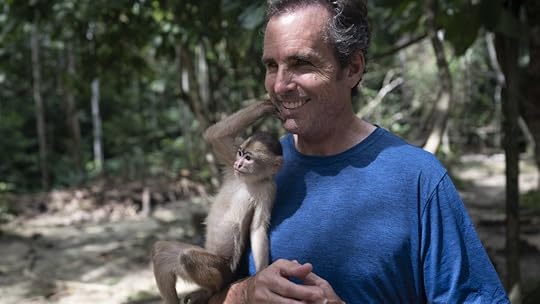
Bob at the Maikuchiga Monkey Sanctuary in the Amazon of Columbia. (Disney Enterprises/Mack Woodruff)
Allison Gilbert: Bob, is there a link between the bomb attack that nearly took your life and your interest in carving out this special time with Mack?
Bob Woodruff: I thought it would be great to revisit some of the countries where I had reported about wars and conflicts and get a look at the fascinating and beautiful spots that never became part of the news. When we thought about covering some countries in Asia, we realized that since Mack is a photographer and living in Australia, perhaps we should include him in that episode. That’s when we realized the series would be a perfect father/son adventure because I had spent so much time on the road when he was young. It was such a gift to be able to show him what I did all those years while at the same time learning new elements together.
Allison: Before shooting the series, when was the last time you and Mack lived in the same time zone?
Bob: Like so many families, Mack and I geographically split apart after he graduated high school. He headed off to college, then to jobs in California, Boston, and Sydney. It was remarkable to get this chance again to be together all day and all around the world.
Allison: Mack, how old were you when your father was injured, and what was your relationship like before the trip, and how did it change because of it?
Mack Woodruff: I was 14-years-old when my dad was injured, and he and I have always been very close. I’m his only son and I’m his oldest kid, so I think we’ve taught each other a lot over the years. But this series was the first time we’ve ever been colleagues and saw how one another works. That was a very eye-opening experience for both of us because I got to see how hard my dad works to create these stories I’ve grown up seeing him tell on TV, and he got to see his son in a work environment, too.
Allison: Mack, you were forced to confront mortality at a young age, I imagine, younger than most of your friends. How did that experience shape your world view?
Mack: I think my dad’s accident made me want to travel more and see as much as possible during my short stint on earth. It didn’t hit me like that immediately, it took some time to marinate and take hold of me. But once I started making my own money and could begin traveling myself, I never stopped. Life is way too short to live scared – and my dad has taught me that throughout his life, but also in near-death.
Allison: This series reveals locations around the world that you believe deserve a second look. What are the lessons you hope to pass along to viewers about second chances and resilience?
Mack: The main lesson is that nothing can be defined by one narrative. No matter what country you travel to, you will always be shocked by how different that place is from what you expected. If you don’t have a surprising experience, then you probably didn’t dig deep enough. People have concepts of what a country will be like, mostly through what they see on the news or read in a book, but nothing is that simple – mystery awaits even in the most well-explored places.
Bob: Covering wars is never fun. But we often find examples of resilience and recovery that give us so much hope. Sometimes I wonder why people who are living in dangerous places just don’t want to leave. I learned long ago, most people believe that despite the current tragedy they are in, they will recover. Because of that, they have the desire to live and remain where they are as long as they can until the crisis settles down. Mack and I (and our crew team of 10) heard constantly from locals that they have never had a strong desire to flee their countries. They all wanted desperately to remain in their backyards. Of course it is never easy to flee and there are always restrictions about movement. But strength and resilience is everywhere.
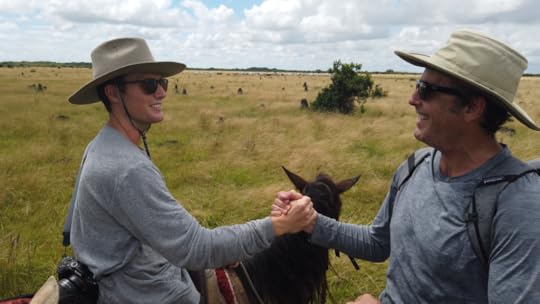
Bob and Mack spend time in Eastern Columbia. (Disney Enterprises Inc.)
Allison: Loss is a great teacher. In what way have you derived greater joy and meaning from life because of the 2006 injury?
Mack: Time spent with my dad now is definitely more special because I don’t take it for granted. With Rogue Trip, we both got to do what we love and we got to do it together. And in a broader sense, spending time with family, experiencing the world, and finding my creative calling have all become the biggest priorities in my life. I don’t know how my dad’s accident truly affected these priorities, but I do think that it made me prioritize them at an earlier age than I would’ve otherwise.
Bob: It was a blessing to nearly die but then live. I do think about mortality differently than I did before. Of course I fear death like everyone, but I am much more comfortable than I was before the injury. I also enjoy spending time with individuals who are suffering more than I did before this injury. For those whose lives change in an instant because of a diagnosis, a car crash, or any other kind of disaster, there is a need to find others who have experienced the same. It is like building a new team. You realize your true friends are still at the center of your heart but there is a brand new wave washing in. My family and I started the Bob Woodruff Foundation, just after I began to recover, because we realized wounded veterans were not getting enough. We have become members of this new team and that gives us a mission. We have a new purpose.
Special note: Finding purpose is key to healing after loss and other adverse events. David Kessler’s book, Finding Meaning: The Sixth Stage of Grief is a fantastic resource.

September 17, 2020
5 Amazing Photo Gift Ideas
Password:

September 4, 2020
uncertainty distress. yes, it’s a thing.
Like so many parents who’ve had the opportunity to drop off kids at college these past few weeks, I’m wrestling with familiar empty nest questions about what’s ahead for me. But I’m also struggling, because of the anxiety brought on by Covid-19, with a new type of syndrome, more akin to the phantom pain we associate with the amputation of a limb than letting go of a burgeoning adult.
The first few nights without my children at home I was jolted awake by imaginary text messages. But each time there were no new words written by my son worried about a rising fever or my daughter concerned about a tickle in her throat. So far, they are fine. It was me who’d become temporarily unable to sleep through the night.
Early research on the effects of the coronavirus pandemic suggests I am not alone with this type of restlessness and unease. Researchers are leaning on data on grief and anxiety following natural disasters like Hurricane Katrina, where similarities such as rising death toll, fear for the well-being of loved ones, and disruption of everyday life fueled anxiety, panic, disturbed sleep, and symptoms of PTSD. This kind of upheaval has been called uncertainty distress and in some cases prolonged grief disorder.
If you are feeling overwhelmed right now, please remember you can always call the Substance Abuse and Mental Health Services Helpline. Professionals are available 24/7. The number is 1-800-662-HELP (4357).
If your experience of grief and anxiety is feeling less severe but still a pressing concern, please take advantage of my e-course, Grief & Anxiety: Best Ways to Survive & Thrive. In addition to the video course, you’ll get bonus materials, including “5 Strategies to Calm Anxiety and Curb Anxious-Thinking” and “Allison’s Favorite Grief & Anxiety Resources,” a curated review of best books, articles, and must‑try apps. I’ll also reveal opportunities for remembering loved ones, even during Covid‑19.
You’ll be able to view and rewatch the course anytime, whenever you need it. You are not alone.

July 28, 2020
Why Bereavement Care Should Receive Federal Funding
As Covid-19 deaths continue to rise, a conversation is bubbling up in Washington about what kind of support is available to grieving families, and whether bereavement care, like other forms of healthcare, should receive federal funding, and if so, how much. In March, as much of the nation was shutting down due to the coronavirus pandemic, nine key U.S. Department of Health & Human Service agencies, including National Institutes of Health, Substance Abuse and Mental...
The post Why Bereavement Care Should Receive Federal Funding appeared first on Allison Gilbert.
why bereavement care should receive federal funding
As Covid-19 deaths continue to rise, a conversation is bubbling up in Washington about what kind of support is available to grieving families, and whether bereavement care, like other forms of healthcare, should receive federal funding, and if so, how much.
In March, as much of the nation was shutting down due to the coronavirus pandemic, nine key U.S. Department of Health & Human Service agencies, including National Institutes of Health, Substance Abuse and Mental Health Services Administration, and Centers for Disease Control and Prevention, were pushed by Evermore, a non-profit advocacy group, to report to Congress what grief-specific resources are available right now to Americans in need. Follow-up came Sunday evening, July 12 when the House Committee on Appropriations made the same request as lawmakers debate the 2021 federal budget. Both requests are historic, marking the first attempts to get federal agencies to report on the state of bereavement care in the United States.

Joyal Mulheron, founder of Evermore, believes not enough is being done. “Demonstrating the absence of bereavement care in our healthcare system will create momentum towards a more comprehensive public health strategy,” she says. “This is the only way professionals will receive the quality tools and resources they need and vulnerable families will get timely and substantive support, rather than the current method of solving these challenges with thoughts and prayers sent to survivors through Twitter and press conferences.”
Inadequate bereavement support can be detrimental to the health and well-being of survivors, putting them at risk of premature death and significant emotional challenges.
“Nearly every American will experience bereavement at some point in their life, yet appropriate care for survivors is not yet a nationwide public health priority,” Ms. Mulheron explains.
Below are statistics that reflect the urgency of Evermore’s campaign. For more data, click here.
Bereaved children (1 in 14 children in the U.S) experience lower self-esteem and their grades suffer in school. They are at higher risk of depression and substance abuse.
Nearly 90 percent of detained youth have experienced the death of a loved one and 25% subsequently joined a gang.
Bereaved parents are at risk of premature death, as early as age 40.
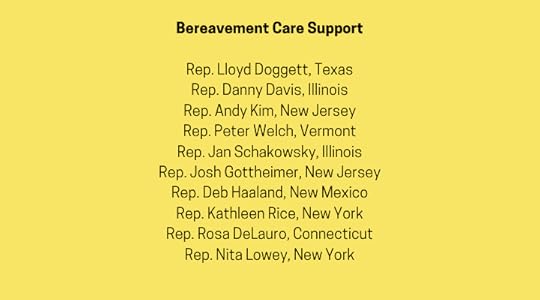
Feeling moved to help? Make your voice known in Congress. Share with your representatives why bereavement care is important to you. Tell them to support bereavement care in the FY21 health appropriations report. Don’t know who to call? Look here.

July 10, 2020
Modern Loss Cofounder Rebecca Soffer Shares Stories From Her Post-loss Life
After losing both of her parents, Rebecca Soffer started having monthly dinner parties with a group she named WWDP (Women With Dead Parents). These raw and often irreverent gatherings eventually became Modern Loss, a vibrant community that offers support and validation via blog posts, advice columns, and events. Its most enthusiastic supporters now have the opportunity to become Patreon members, receiving access to exclusive benefits. Rebecca’s first book, Modern Loss: Candid Conversation About Grief. Beginners...
The post Modern Loss Cofounder Rebecca Soffer Shares Stories From Her Post-loss Life appeared first on Allison Gilbert.
Modern Loss cofounder Rebecca Soffer shares stories from her post-loss life
After losing both of her parents, Rebecca Soffer started having monthly dinner parties with a group she named WWDP (Women With Dead Parents). These raw and often irreverent gatherings eventually became Modern Loss, a vibrant community that offers support and validation via blog posts, advice columns, and events. Its most enthusiastic supporters now have the opportunity to become Patreon members, receiving access to exclusive benefits.
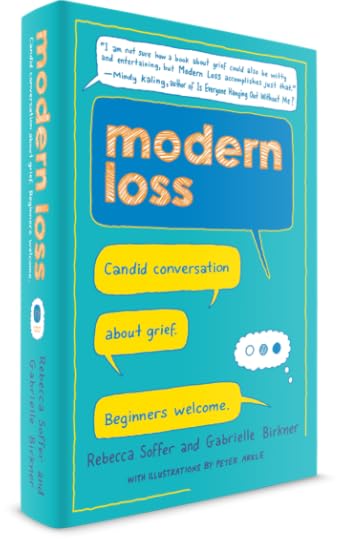
Rebecca’s first book, Modern Loss: Candid Conversation About Grief. Beginners Welcome, coauthored with Gabrielle Birkner, was a smashing success. Now, while she continues providing resources to the bereaved, she’s working on her next book: The Modern Loss Handbook, an interactive guide that helps individuals move through grief and build up their resilience. It will be published in 2021 by Running Press, an imprint of Hachette Book Group, the same publisher of my books, Passed and Present, Always Too Soon, and Parentless Parents. I hope you enjoy this Q & A with Rebecca as much as I enjoyed speaking with her.
Allison Gilbert: What one memento reminds you most of your parents?
Rebecca Soffer: So many physical things evoke memories of my mom and dad. But I’d say the one that offers the biggest connection is a beautiful aglaonema planted in a pretty pot that was in their home for years. Mercifully, it’s idiot-proof with regard to care (I have a notoriously not green thumb) and has managed to not only survive but thrive in my possession for more than a decade. Deep down I know eventually it will die; but as long as it’s still going, it feels good to know something my parents cared for is still thriving in my presence. And the fact that I’ve inadvertently ignored it at times and it’s still miraculously alive is a bit of a metaphor for the parent-child bond: sometimes you argue, sometimes life pulls you in different directions, but you’re always there for each other. At least, we were. [This added post may also be of interest! Read about the healing power of gardening here.]
Allison: Where do you keep your plant?
Rebecca: It’s in my living room.
Allison: What is the most satisfying way you’ve developed for keeping your parents’ memories alive?
Rebecca: My dad instilled in me a deep love of all things outdoors; especially camping, to which he introduced me when I was only two months old! When I had kids, I promised myself it would be something I would teach them to love, too. And I have.
With regard to my mom and grandmom – who died within six months of each other – I loved their food so much; especially the traditional Jewish food they’d make with each other on holidays as they laughed and teased each other in the kitchen. It equates pure love to me. Before they died I hadn’t even thought to attempt making a brisket or kugel or kasha and bowties, but afterward I felt this deep urgency to learn how to carry the tradition forward. Cooking is already a very meditative exercise for me, so just the process of making that stuff for myself and people I love is so meaningful, even if it doesn’t turn out perfectly.
[AG note: Gwyneth Paltrow feels super connected to her dad when she cooks. Learn more here.]
When it comes to remembering random anecdotes about both of my parents, I developed a little trick during the bedtime routine with my kids (I have 3 and 6 year old boys). Sometimes I tell them stories about one or both of their grandparents (who they never met) based on their personalities or funny memories and experiences I cherish. Sometimes I even turn them into superheroes to make it extra fun. It’s become a wonderful practice for me because when I’m laying in their darkened room, trying to come up with ideas, it jogs my memory and recollections I thought I might have forgotten just kind of naturally come to the surface. As a byproduct, my kids get to learn all these neat little details about their grandparents.
Allison: Being proactive about remembering loved ones drives resilience and sparks happiness. Have you found this to be the case?
Rebecca: Look, there have been plenty of times when I’ve gone to great lengths to avoid remembering certain things about my parents, especially in those early days after they died. It’s just human nature to have that stuff hurt more than help sometimes. I even have a piece of furniture that stores some of the more sentimental documents I have – their postcards, birthday letters to me, etc. – and to this day, there are some that feel too painful to go through.
That said, the more time that goes by without them, the more I feel the need to remember them as fully as possible. Not just their very best qualities but their flaws, as well. As I move through life, it’s a lot better for me to see them as human beings who were trying their best and not just parents I’d hoped were perfect. It assures me I’m doing the best I can, too. And that makes me feel stronger and more resilient.
Allison: Loss is a great teacher. In what way have you derived greater joy and meaning from life following loss?
Rebecca: I tended to live in the moment beforehand – jump first, look later – but there’s no doubt I’m even more adherent to a carpe diem attitude now. I’m highly aware we aren’t promised any particular period of time on Earth and I just want to make sure that if something moves me to act — an idea, a project, an opportunity to do something meaningful — that I have the guts to just go for it. That’s not to say that I don’t have the tendency to be neurotic and worry about the future. Trust me, I do that all the time!
When it comes to focusing on what’s important: one million percent. I’ve made some of the best friends in my life post-loss and have had some people I thought were close friends fade away in the wake of it. I put a lot of energy into my personal relationships; into maintaining contact and remembering important dates and just gathering random friends who I think would like each other for dinners and drinks. And when it comes to my family, I do think I’m able to be a bit more in the moment with my kids; notice things they’re doing, enjoying, and achieving. I just want to remember as much as I can.
With regards to creativity and meaning, I’m confident there is no way I’d have launched Modern Loss without having experienced profound loss in my life. It’s just not a thing that was on my radar until it was and I realized how incredibly isolating it could be. It’s been such an honor to help launch and run this publication and really grow this community. It’s been humbling and educational and, yes, even really fun. The grief club is full of pretty amazing people and there’s an enormous opportunity for creativity and humor and inspiration within this conversation.
And when it comes to compassion, absolutely: the realization that you just never know what someone else is going through is always top of my mind. It helps me take a beat and a breath before responding to someone who may not be on my wavelength. If you get people to start sharing their story by opening up a bit about yours, it’s astounding what types of bridges can be built.

May 29, 2020
Judith Warner Shares Memories of Her Dear Friend, Gone Too Soon
Judith Warner is a senior fellow at the Center for American Progress and a frequent contributing writer for The New York Times. Her latest piece, “The War Between Middle Schoolers and Their Parents Ends Now,” shares how the coronavirus lockdown is an opportunity for a reset with your children. She and I met in 2011 when she did a book talk for We’ve Got Issues: Children and Parents in the Age of Medication, which followed her best-seller,...
The post Judith Warner Shares Memories of Her Dear Friend, Gone Too Soon appeared first on Allison Gilbert.