Allison Gilbert's Blog, page 6
March 4, 2019
Kathryn Harrison on the Loss of Her Grandparents and How a Figurine and Louis Vuitton Luggage Keep Their Memory Alive
New York Times bestselling author Kathryn Harrison was raised by her maternal grandparents. The tragic relationship she endured with her parents was heartbreakingly chronicled in her memoir, The Kiss (about her father’s sexual abuse), and her collection of essays, Seeking Rapture: Scenes From a Woman’s Life (various stories, including recollections of her mother’s anger and absence).
Kathryn’s grandparents died decades ago, and in her latest book, On Sunset: A Memoir, she recalls her unusual childhood living in her grandparents’ mansion above Hollywood’s Sunset Boulevard, surrounded by mementos of their far-flung travels. Our Q&A includes private aspects of Kathryn’s life she’s never revealed before (quite a feat after writing four memoirs!), such as how gardening has taken on special meaning since her grandfather died.
Allison: What one memento reminds you most of your grandfather?
Kathryn: My teenage mother’s parents raised me as their own. When I was a young child, my grandfather used objects to prepare me for his death. He’d say of something I loved, like a piece of scrimshaw from his years spent trapping in Alaska, “This will be yours someday.”
As it is, the little Aleut in a kayak is now in my study, on top of a filing cabinet, one object among many that amounts to a shrine of mementos of family and close friends. Some of these family and friends are still among the living, others long dead. My feelings for the little Aleut in his boat were complicated—and heightened—by my grandfather having presented it to me as a premature “Memento mori”: a ready-made relic. (Read my Q&A with author Gretchen Rubin to learn about the tiny “odd” figurine she keeps that belonged to her grandparents.)
Allison: What one memento reminds you most of your grandmother?
Kathryn: My grandmother, who grew up in Shanghai, the daughter of a tai-pan, was born into great wealth and luxury; when she traveled she did so by rail or by ship, a tower of Louis Vuitton steamer trunks in tow. I have two of them, and I use them for tables in our living room.
Allison: What is the most satisfying way you’ve developed for keeping their memory alive?
Kathryn: My grandfather was a dedicated gardener in the last decades of his life, and I was often left in his care. He built a rolling playpen and pulled it after him through our trees, flowers, and the kitchen garden. I literally came to consciousness in his garden, learned to stand up alongside a gardener, and find gardening deeply calming; my breathing changes when I’m planting flowers. Every time I water a plant I feel a tug, feel my deep connection to him. And as for honoring memories of my grandmother? Cats.
Allison: What do you know now about keeping the memory of your grandmother and grandfather alive that you didn’t know when the losses occurred?
Kathryn: As I am the sole surviving member of my family of origin, I am also the one who has inherited virtually all of my grandparents’ material history. I live in the embrace of objects from a household assembled 75 years ago; rugs, furniture, dishware, paintings, letter openers, shoe trees, slotted spoons, shoehorns, fountain pens, jewelry—everything from valuable antiques to tchotchkes. The past saturates our home; for me there is a constant tension between a sense of loss and that of redemption.
Allison: Loss is a great teacher. In what way have you derived greater joy and meaning from life following loss?
Kathryn: My grandfather’s death had a profound effect on me. My mother’s parents were 71 and 62 at my birth. By the time I was ten, I knew I would lose the people I loved most, far sooner than most children. So, I grew up trying to hold tight to all I had, and his death was my first experience of deep, elemental loss. At the time, I was 23, too young to be consumed by thoughts of death. But I was shaken—both by the anguish of losing him, and perhaps even more by my abrupt awareness of my own mortality, which came as I was sitting by his body, laying my head on his chest, now silent, still, cold.
All my friends believed they’d never die; at least they lived as though they did. From one minute to the next, I was transformed into someone who knew she would die, perhaps before she was ready. The awareness came as an epiphany—a word I use sparingly—a jolt of profoundly felt truth, as though I’d just discovered a thing as elemental as gravity; and I had. The awareness was indelible, and it both overshadowed me and arrived as a jolt of energy. It sharpened my determination to make the most of everything, sharpened my ambition. I became someone who, as a friend observed, behaved as though I didn’t have a minute to waste, ever.


January 30, 2019
Supporting Widows and Widowers on Valentine’s Day
Not too long ago, I featured a Q & A on my blog with New York Times bestselling author Joyce Maynard. We discussed the death of her husband, the isolation she felt afterward, and ultimately, how she grew from the experience, feeling more joy than she ever thought possible. We never spoke about Valentine’s Day, but I’ve learned over time this holiday is particularly charged for widows and widowers, just as Mother’s Day and Father’s Day is often so challenging for individuals, like me, who’ve lost their parents.
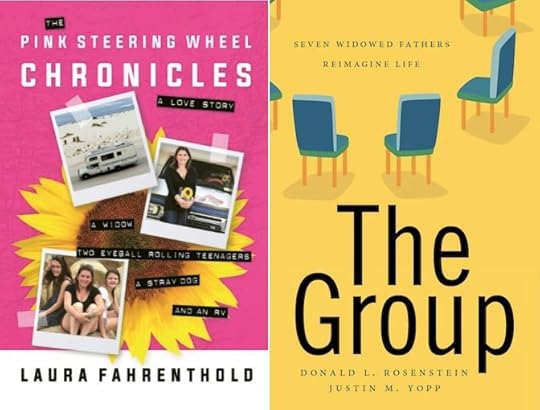
Losing a life partner is wrenching but learning how others have coped with similar experiences helps. That’s why I’m highlighting two books worth knowing about right now: Laura Fahrenthold’s The Pink Steering Wheel Chronicles: A Love Story, and Donald Rosenstein and Justin Yopp’s The Group: Seven Widowed Fathers Reimagine Life. Each book digs meaningfully into the experience of losing a spouse (Laura’s husband died suddenly at home in New York; Rosenstein and Yopp oversee support groups for widowed parents in North Carolina) and provides much-needed solace and practical guidance.
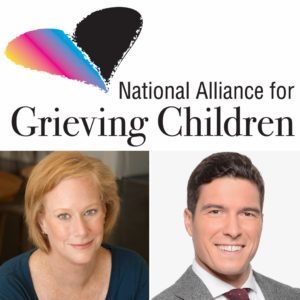
If you would like resources to help children navigate the loss of their mom or dad, the National Alliance for Grieving Children has numerous resources you can trust. You can find them listed here. I was recently honored to join Will Reeve, son of Christopher Reeve and Dana Reeve, on NAGC’s Board of Directors. Will and I both lost our parents and we’ll continue to use our experiences of loss and resilience to help grieving children across the country. Will’s outsize energy already does so much good for the world. His indefatigable work with the Christopher & Dana Reeve Foundation is inspiring. I’m thrilled we’re on Team NAGC together.
For strategies and opportunities for remembering loved ones, including ideas that will help children remember a parent, check out my book, Passed and Present: Keeping Memories of Loved Ones Alive. You know and I know Valentine’s Day can be hard. But let’s reframe it. Let’s use this day to keep the memories of those we loved most alive.

January 4, 2019
How Orange is the New Black’s Alysia Reiner Uses Her Star Power to Honor Her Father’s Memory
What a thrill for me to feature actress Alysia Reiner in this Q & A! You no doubt know Alysia from her role as “Fig” in Orange is the New Black. She also stars in the movie Egg, alongside her husband David Alan Basche (The Blacklist, NCIS), Christina Hendricks (Mad Men), and Anna Camp (Pitch Perfect).
During our talk, Alysia revealed that her decision to sign on as one of the film’s producers was prompted, at least in part, by the death of her father. Our conversation is especially meaningful to me because not only have Alysia and I both lost our dads, but we also went to high school together.
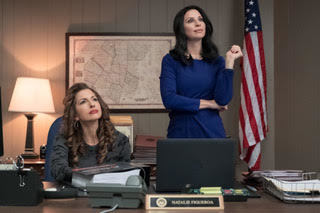
Allison: Thank you for giving me permission to share such a personal story surrounding your involvement in the film Egg. This is the first time you’ve mentioned publicly that part of the reason you joined the project is to honor your father’s memory. Why would this movie have meant so much to him? How much of your work as an artist has been influenced by losing your dad?
Alysia: My dad so wanted to be a producer and I feel like I may not have had the courage and desire to make my own work had he not died, sparking my desire to create to honor his memory. I also love that in producing I have the opportunity to hire more women and make a difference that way.

Allison: What one memento reminds you most of your father?
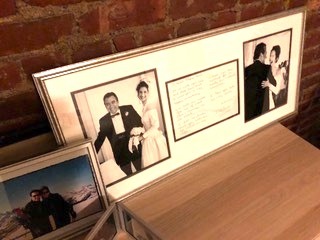
Alysia: The card he wrote David and me on our anniversary. David had it framed with a picture of my dad and me at our wedding. It’s one of my most prized possessions.
Allison: Where did you put it?
Alysia: It’s in our guest room on the second floor. You see it the moment you walk in. It welcomes you, and everyone comments on it. In a way, he’s always here with us. It brings me so much joy to share that story with you.
Allison: Have you ever “repurposed” an item that belonged to your father (e.g., taken a cufflink and made it into a charm for a necklace, or taken clothing to sew into a quilt)?
Alysia: What a great idea! But not really – I do wear some of his shirts and David wears his watch.
Allison: Being proactive about remembering loved ones drives resilience and sparks happiness. Have you found this to be the case?
Alysia: Absolutely! We traveled to Paris – my dad’s favorite city. It was a doubly joyful trip because it was a direct way for me to connect with him, and for my daughter to connect with her grandfather. And before we left, out of the blue, my daughter Liv said to me, “Momma, can we open Grandpa Chuckie’s jewelry box tonight? I want to find something to wear or bring to Paris so he is with us.” That really made me smile.
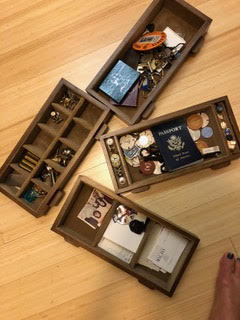
Allison: What do you know now about keeping the memory of your father alive that you didn’t know when the loss occurred? How did you help Liv develop her own relationship with your dad? What can you share that readers could use as a template and inspiration?
Alysia: I think because both David and I lost our dads, it’s always been really important for us to share stories about each of them with Liv. I also sing a song about angels watching over her every night (even at 10!). When she was smaller, I would specifically talk about Grandpa Chuckie being one of those angels. She always felt like he talked to her and tickled her in her sleep. She has her own relationship with him even though they never met. (To learn more about how Alysia and David keep their fathers present in their lives, read this post.)
Allison: Loss is a great teacher. In what way have you derived greater joy and meaning from life following loss? Do you live more in the moment? Are you more compassionate? Do you focus more on what’s really important and less on what’s not? Has it fueled creativity or driven you to a new purpose?
Alysia: There are so many unexpected ways loss can bring deeper joy. I think if we allow it, it cracks us open. It makes every moment a bit more precious and sweeter because we know tangibly that it can truly be taken. Additionally it has made me risk more and be willing to fail more because I know on a deeper level that I would prefer to try and fail than regret not trying.

December 5, 2018
artist emily mcdowell reveals the deeply personal reasons she launched her empathy cards collection, what spurred her relationship with Sheryl Sandberg’s OptionB team, and the one memento that reminds her most of a very dear friend
Pinch me! I am super excited to share my latest Q&A with you – a conversation with the incomparable Emily McDowell. Don’t know her name? I can nearly guarantee you know her artwork – fun, whimsical, and often sassy and irreverent. Slate named her Empathy Cards, a line of greeting cards crafted to help family and friends connect around illness and loss, one of the top designs making the world a better place. And no, I’m not getting paid to say any of this!
Emily was driven to make these cards after one of her best friends died of cancer. She was also inspired because of her own battle with the disease.
I’ve chosen to feature Emily now, during the holiday season, because her cards can help individuals who are sick or mourning feel supported this time of year. Receiving one of these cards will help them feel understood. I hope you enjoy my conversation with Emily as much as I did.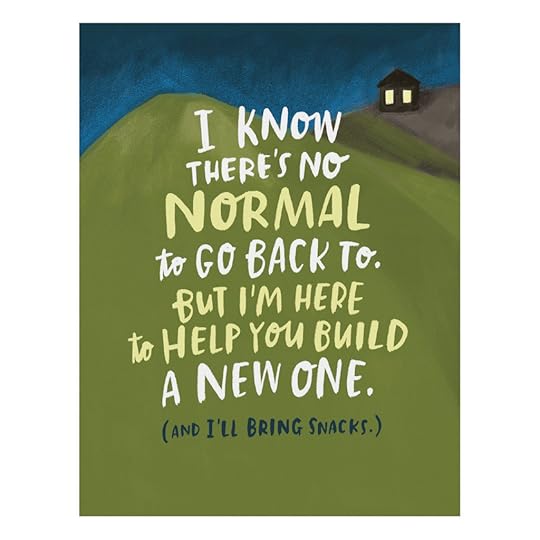
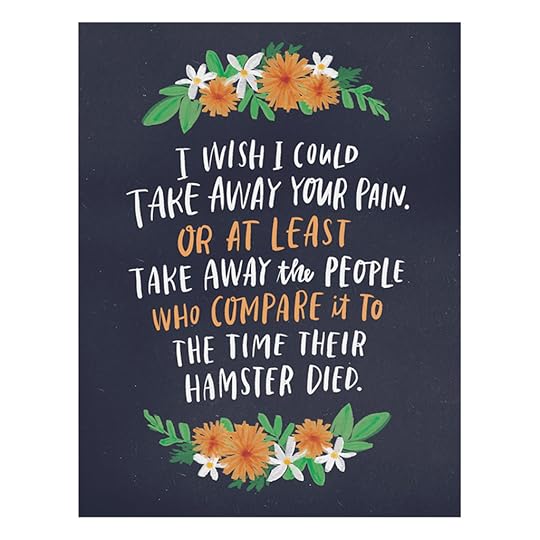 Allison: Before you started painting cards about grief and loss, you focused on illness. What was it about your own cancer experience that prompted you to tackle these challenging subjects?
Emily: The hardest thing for me about having cancer wasn’t something I expected: it was the loneliness and isolation I experienced when people disappeared because they didn’t know what to say. Traditional get-well cards weren’t helpful — a “get well soon” message doesn’t really apply if you might not, and pictures of flowers don’t help the person sending the card with finding the right words, which is the biggest struggle. With Empathy Cards, I wanted to make something that helped people going through illness feel seen, heard, and understood, and at the same time, give card options to their friends and family that helped open the door to conversations.
Allison: Your Empathy Cards don’t offer platitudes or silver linings. When it comes to the death of a loved one, your messages are striking because they’re opposite of what we’ve come to expect from sympathy cards — brutal honesty. Why take this approach?
Emily: When you’re grieving, platitudes aren’t actually helpful. You can’t solve someone’s grief, and there’s nothing you can say that will take it away. The most supportive thing you can do is to be present and willing to bear witness to their pain. Our cards don’t shy away from the reality of grief, and this comes as a relief to folks going through it, because it honors and acknowledges their experience instead of trying to plaster over it with a platitude.
Allison: Let’s talk about Sheryl Sandberg and her meaningful initiative, OptionB.org. I was honored to be part of Option B’s launch, and thrilled to interview Rachel Thomas, president of LeanIn.org, and OptionB.org, for this blog. I also wrote a review about Sandberg and Adam Grant’s book, OptionB. You’ve created a special line of cards for Sandberg called #OptionBThere. How did this partnership develop and what’s your number one goal for the collection?
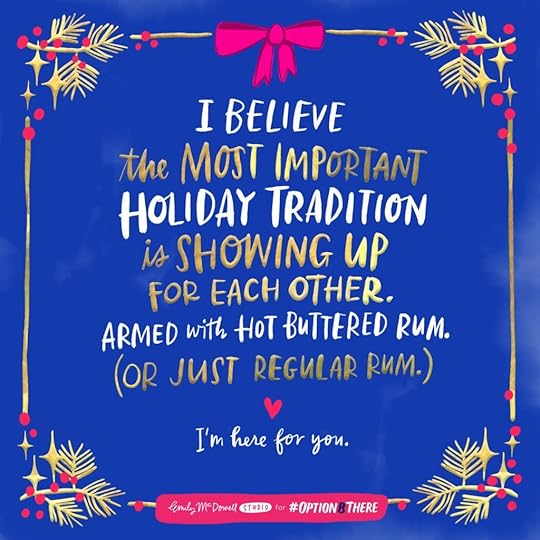
Emily: Option B actually reached out to us and asked if we would partner with them to create some digital cards — basically images — that could be shared and sent to people who were struggling with grief and loss during the holiday season. This is an especially hard time to be struggling, because it’s basically a cultural mandate to be festive and filled with cheer, and everywhere you turn there’s an emphasis on love, family, and togetherness. So I created the original collection in 2017, with the goal of providing something that acknowledged the difficulty of the season for a lot of people, and helped those folks feel supported and seen.

Allison: Have you lost someone close to you?
Emily: In 2011, one of my best friends died of cancer. That’s the loss that’s hit me the hardest.
Allison: Were you able to save a special memento of your relationship, and where do you keep it?
Emily: She gave me a charm the last time I saw her, and I keep it on my altar at home.

October 24, 2018
Making Meaning and Purpose Out of Tragedy
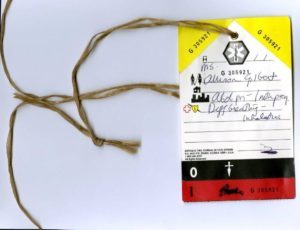
On 9/11, I was a television news producer for NBC New York. Dispatched to the World Trade Center, I was covered by debris when the second tower collapsed and taken to Bellevue Hospital. ER doctors cut off my clothes to assess my injuries and tubes were put down my throat to help me breathe. I thought I was pregnant. (To round out the week, my father died of cancer that Friday, September 14, 2001.)
Yet I was one of the lucky ones. I survived.
It’s with this experience that I am both honored and deeply humbled that the National September 11 Memorial & Museum has named me official narrator of its first audio tour of the primary Historical Exhibition, the only journalist and eyewitness to be so honored. My personal story is featured throughout, and my recollections are also revealed in “Witnessing History,” an overview of 9/11 and its aftermath, narrated by Robert De Niro.
 The Historical Exhibition audio tour is 40 minutes long. Since the Museum opened, visitors (and individuals offsite) have downloaded the Audio Guide app more than 900,000 times.
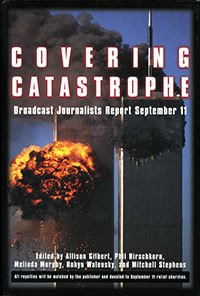
Narrating this new audio guide (listen to a sneak preview clip) was a deeply personal and profound experience. Giving voice to my memories of that day, in addition to co-writing Covering Catastrophe (and other books on grief, loss, and resilience), has helped me make meaning and purpose of tragedy.

To learn more about my 9/11 experience, please explore the links below:
CNN: Journalist and survivor: The rules blurred on 9/11
Daily Beast: How 9/11 Made Journalists Part of the Story
The Huffington Post (plus on-camera interview): Why I’m Giving It All to the National September 11 Memorial & Museum
Westchester Magazine: 9/11 Survivor Allison Gilbert On The New September 11 Museum And Covering Catastrophe
And if you go to the museum, give me a listen.

October 1, 2018
Claire Bidwell Smith Shares the Everyday Ways She Honors Her Parents
Claire Bidwell Smith is an author and grief therapist based in California. Her latest book, Anxiety: The Missing Stage of Grief, is an important exploration of how grief and anxiety are so commonly intertwined. Claire approaches each chapter from a raw, intimate vantage point: her parents were each diagnosed with cancer when she was 14, and by the time she was 25, they were both gone. Along the way and later, she developed severe, life-altering panic attacks.
Claire says she felt life was wholly out of her control. An only child, she felt alone and afraid and turned to alcohol to calm her anxiety. She eventually took leave from college. For our Q & A, Claire discusses the strategies that helped her heal, including keeping her parents’ memories alive. (Spoiler Alert! There’s a section in Anxiety called, “Allison Gilbert’s Suggestions for Keeping Memories Alive.) Claire also asked me to share a personal experience with anxiety following the loss of my mother and father. (Hint: My son was a new driver and missed his curfew by a few minutes. How did I react? Not well.)
Read my far-reaching Q & A with Claire here.
Allison: What one memento reminds you most of your mother and father?
Claire: I have a beautiful marble coffee table they bought in Oaxaca early in their marriage. It’s impossibly heavy and unwieldy, yet I’ve dragged it cross-country through several moves.
Allison: Where do you keep the table?
Claire: This coffee table is always holding court in my living room, stacked with current books and interesting objects from recent travels. My parents raised me to value both travel and books so this feels like a nice way to stay connected and honor them.
Allison: Is there anything you do outside of holidays and anniversaries to keep your parents present?
Claire: Yes! Always. Both cooking and traveling are important parts of my life. My father instilled in me the desire to explore the world and my mother taught me the art of nurturing through food.
Allison: What are the most satisfying ways you’ve developed for keeping your parents’ memories alive?
Claire: My favorite thing to do is tell stories about my parents to my two young daughters. I also love to cook my mother’s recipes with them.
Allison: Being proactive about remembering loved ones drives resilience and sparks happiness. Have you found this to be the case?
Claire: Absolutely. I think it’s very important to find ways to stay connected to our loved ones. I believe our relationships with our deceased loved ones continue long after they are gone, and the more we can stay connected the more healing our grief process will be.
Allison: Loss is a great teacher. In what way have you derived greater joy and meaning from life following loss?
Claire: Loss has been my greatest teacher. I often find myself grateful for all the ways grief has transformed me into a more compassionate and present person. There is very little I take for granted and I feel that even though the process has been painful, my heart is bigger and more open than ever.

September 17, 2018
Secrets Revealed in My Father’s Handwriting
I was 31 when my father died, just beginning to know him as an adult gets to know another adult. We had a tumultuous relationship. My dad and I loved each other completely yet we got into more than our fair share of arguments. The most memorable happened in Moscow, in the middle of Red Square, when I was 17 years old. We were at the end of a peace march, during the height of the Cold War, and I wanted to go to a party. He was not going to let that happen. He roared his disapproval. I exploded. So did he. Our fight was so epic it would later become #1 in my Top 10 Memories of Dad I shared at his memorial service.
My father died of cancer when he was 63. He was always short-tempered, but I didn’t know why. I never got to know what truly made him tick because I was too young to ask the right questions, and I was his daughter, after all, not his confidant. So when an opportunity showed up a few weeks ago to get to know him a little better, nearly 20 years after his death, I was very excited and intrigued.
Handwriting Analysis
I had recently gotten in touch with Ruth Brayer, founder of Brayer Handwriting International, to identify the authorship of a few documents on a work-related project. Ruth is a court-qualified handwriting expert and forensic document examiner, providing sought-after opinions on forged signatures and anonymous letters. Unrelated to our initial engagement, I asked Ruth to review my father’s handwriting.
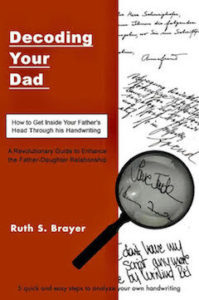
In addition to her forensic work, Ruth is also a graphologist, reviewing patterns in handwriting to determine a writer’s behavioral and emotional profile. Ruth became interested in graphology because she, too, had lost her father. In her book, Decoding Your Dad: How to Get Inside Your Father’s Head Through His Handwriting, she writes “. . . I didn’t really know exactly who he was. What did he like? Dislike? What drove him? Was he a rebel? A conservative? A little bit of both? I had no way to know… until I stumbled upon graphology, the scientific study of handwriting as a projection of personality traits.”
I must admit reviewing my father’s handwriting to uncover secrets of his personality seemed far-fetched to me. But, I was game. She asked for two handwritten letters. I scanned and emailed Ruth a two-page letter my father had written me in college and a short note he’d written his mother.
From these documents, Ruth conducted four hours of analysis and took six pages of notes. She says when she’s analyzing handwriting she considers as many as 100 indicators, including the shape, spacing, and relative size of letters. She even studies the pressure used when putting pen to paper.
The Findings
Ruth provided numerous observations about my father that rang absolutely true: He was “decisive,” “independent,” and had a “take charge” personality. He was “creative,” “driven,” and a “fast-thinker.” My dad was a “non-conformist,” saw the “big picture,” and oh, he had “strong emotions.”
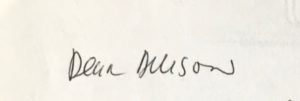
The observation that particularly struck me was that my father’s fierce independence, his unwillingness to rely on others for help, caused him great internal strife. His ego was such that he believed he was better off doing everything on his own. This must have been especially hard for him because, according to Ruth, my father’s confidence was inconsistent. My father must have wanted to ask others for support but never gave himself the opportunity.
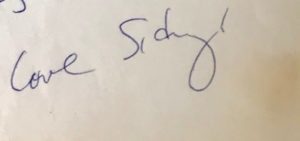 This realization is deeply significant to me. It explains, at least in part, my father’s emotional reactions and how I may have been at the receiving end, not because he was always frustrated with me, but rather, himself. I feel a greater sense of tenderness toward my father with this new information. Ruth told me I’m not alone; She says her unbiased insights have proven transformational for many women.
***
I’m lucky I got to be my father’s daughter for three decades. I realize there are many individuals who never knew their fathers. If you’re interested in getting your father’s handwriting analyzed (or any other loved one), Ruth is offering her expertise FREE to the first two readers of my blog who request it. Additional readers will receive a 10% discount.
Contact Ruth at ruth@ruthbrayer.com and write “Allison’s Blog” in the subject line. For more information, here’s her website.

August 28, 2018
Author and Poet Meghan O’Rourke on Living Life in Honor of Her Mother
Award-winning author, editor, literary critic, and poet Meghan O’Rourke‘s work has appeared in Slate, The New Yorker, The New York Times Magazine, The New York Times Book Review, and many other publications. While pursuing her extraordinary career, O’Rourke was faced with traveling back and forth from home to care for her mother, who died at age 55 of metastatic colorectal cancer. My mother also died young (57), and also from cancer (ovarian). And similar to Meghan, I was a journalist (working as a television news producer) while helping to care for my mom in her final days.
After Meghan’s mother passed away, she found solace writing her poetry collections, Once and Sun in Days (to be published in paperback this fall), and her gripping memoir, The Long Goodbye. She is currently working on a nonfiction book about chronic illness.
In our interview, Meghan discusses the many ways she keeps her mother’s memory alive, including safeguarding a lock of her hair. I’m thrilled Meghan joined me for this revealing Q & A.
Allison: What one memento reminds you most of your mother?
Meghan: It’s not a surprising one: I have a few photographs of her that are really meaningful to me – one of the two of us at my wedding, one of her laughing with her best friend. I keep them on the bookshelf in my bedroom and my two year old sees them all the time. He started calling my mother “Lolo” on his own a few months ago, right around the time I was wondering how to explain who she was, and what name to refer to her by. (She wasn’t a “Grandma” sort of person, and his other grandmother is called “Mimi.”) She also had gorgeous hair, and I did keep a lock of it, but oddly this reminds me more of her death than of her life.
Allison: Where do you keep such an intimate possession?
Meghan: The lock of hair is in an ornamental box I’d given my mother and now own.
Allison: Is there anything you do outside of holidays and anniversaries to keep your mom present?
Meghan: Mostly I just think about her a lot: she’s someone who really enjoyed living and I try to remember her laugh, her sarcasm, her warmth. She was a great cook, so I do think about her (and my father, who also was a wonderful cook) when I cook. I do reread letters she wrote me in college.
Allison: What is the most satisfying way you’ve developed for keeping your mother’s memory alive?
Meghan: Living in honor of her: I try to keep her death close to mind as a way of thinking about what really matters. She died at 55, way too young, and I’m now 42, ten years after she died. When the small stuff starts to get me down, or I lose my sense of humor because I’m overtired and overcommitted, I think about her, and it really helps me both remember what she meant to me and feel that I’m keeping her alive – because I know that if she were here she would tease me or suggest we go shopping or to a museum: small things that bonded us.
Allison: Being proactive about remembering loved ones drives resilience and sparks happiness. Have you found this to be the case?
Meghan: To some degree, yes: it keeps me focused on what’s important.
Allison: Loss is a great teacher. In what way have you derived greater joy and meaning from life following loss?
Meghan: Loss is double-edged. I have found more humor in the day to day since she died. But her death also took many things from me. Right now, what I wish most is that she could meet my sons, her grandsons. That said, I hear her in me when I speak to them.

August 1, 2018
Preventing Cancer – What I Did to Stay Alive
I woke up this morning without breasts. Not a surprise. This is how it’s been for six years – ever since I underwent a prophylactic double mastectomy on August 7, 2012 to prevent getting breast cancer. I still think, as I imagine Angelina Jolie believes of her life-affirming surgery, it’s the best decision I ever could have made.

Angelina Jolie Photo by Carlo Allegri, AP
For more than a decade, my gynecologist warned me I was high-risk for developing cancer. My mother had died of ovarian cancer and I tested positive for BRCA1, the genetic mutation that bumps lifetime risk of breast cancer from 12% (the general population) up to 85%. Couple all of this with the knowledge my grandmother died of breast cancer, and surgery actually felt like an opportunity, not a sentence. Doctors promised the 11.5-hour procedure (the plastic surgeon created breast “mounds” out of my own belly fat so I could avoid getting implants) would free me from many more years of medical surveillance – a battery of non-stop breast exams, mammograms, and MRIs. And it did. Even better, when the anesthesia wore off, the relentless fear of being diagnosed with breast cancer was gone. I was free.
Aggressive cancer avoidance is the right choice for me, though I recognize it’s not for everyone. On November 29, 2007, I underwent a complete hysterectomy – my ovaries, fallopian tubes, cervix, and uterus all gone, just in case.
In some ways, despite the relative speed of this surgery (about one hour), the operation had a bigger impact on my life: I woke up in menopause. Night sweats, hot flashes, the works. I was only 37, and my doctor was counseling me about the possibility of decreased libido and painful intercourse. I didn’t experience either, but hormone-deficient mood swings affected my self-image and relationships with my husband and children. Until I began taking a safe, doctor-approved hormone replacement, I was often short tempered, even by my usual redhead standards. Some days, I still am. But I’m alive, and hopefully on my way to meeting my grandchildren one day. My mother didn’t get that chance; she died before my children, both teenagers, were born.
I’m ecstatic that upon the 6th and 11th anniversaries of my cancer prevention surgeries I’m healthy and happy and 100% cancer-free. Most importantly, life now seems more possible to me than death. I’ve replaced fear with hope.
To mark these milestones, for the first time, I’ve uploaded my entire HuffPost series, “My Journey to Prevent Ovarian Cancer,” chronicling every intimate detail of that remarkable experience. I hope you’ll find it helpful if you’re contemplating a similar path.
For more information, below are links to additional writing and interviews I’ve done on BRCA, cancer prevention, and my surgeries:

What I Share with Angelina Jolie
 Angelina Jolie: More ‘Common’ Than Any Celebrity Would Like to Be

From Angelina Jolie to Me: Facing the Risk of Cancer

Why Allison Gilbert, Mom, Made the Same Choice as Angelina Jolie
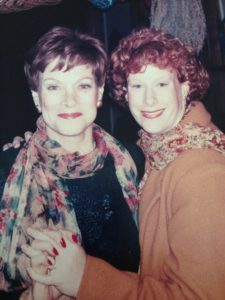 There is so much I inherited from my mother and grandmother. Their strength. Their sense of humor. And, unfortunately, the risk of breast and ovarian cancer. But here is something I’ve come to understand over the past few years: If they hadn’t died young, I am certain I never would have undergone genetic testing. Somehow, if they’d lived longer, their deaths would have seemed more normal, less scary. But, the truth is, I still would have had BRCA1, and the mutation still would have been lurking inside my body. And because of that, I vow to give life everything I’ve got – scars be damned.

July 20, 2018
The Upside of Getting Dirty: How Gardening Boosts Memories of Loved Ones
Getting outside is healing. In fact, being outdoors has been proven to increase creative thinking, decrease stress, and heighten our senses.
With this in mind, why not take advantage of the sights and smells of nature to honor and celebrate the friend, spouse, parent, or sibling you never want to forget? Below are four of my favorite ideas for doing just that.
Create a Memory Garden. First, visit your local nursery to buy your loved one’s favorite herb, plant, or flower. Or, simply pick combinations of these that feature his or her favorite colors, tastes and smells. Second, add several “Love Rocks” to make this space even more special.
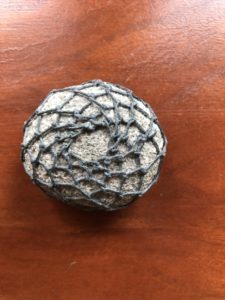 “Love Rocks” are easy and inexpensive to make. If you crochet or know someone who does, use wool or cotton from a loved one’s cherished sweater to make a simple net to cover a small stone. Or take a piece of fabric and cut it into the shape of a heart. (I like the idea of repurposing a shirt that belonged to your loved one, even a pair of jeans.) Next, glue the fabric heart onto a smooth stone with craft adhesive. Since the stones are going to be used outdoors, make sure to also use an acrylic sealer.
Create an Outdoor Refuge. Choose a quiet spot for remembering. After my father died, my stepmother longed for a relaxing and private space to think about my dad. She decided the best spot was also the closest; she cleared out a few weeds from her backyard and then bought an iron bench at a garage sale. That was about it. A refuge for silent reflection was born.
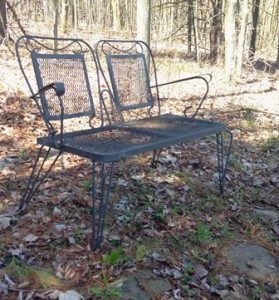
Building an outdoor refuge doesn’t require a lot of effort. You can use a chair instead of a bench or simply spread a blanket on the ground. The goal is to give yourself uninterrupted time for remembrance and a location to be alone with your thoughts. You can read more about this idea here.
Grow Daffodils. The bright yellow pop of daffodils reminds me of one of the most creative ideas I’ve come across for keeping memories of loved ones alive. Plant one daffodil bulb for every year your loved one lived. This is a great activity to involve friends, family, and neighbors. Not only will you benefit from the extra hands, you’ll be able to use the time to invite conversation and share stories about your loved one.
 Daffodils are the perfect flower for such a happiness-inducing project; as perennials, they’ll come back spring after spring. They’re also virtually indestructible.
Establish a New Ritual. This final idea is for anyone who doesn’t want to get quite so messy. Every year I look forward to buying Forget Me Not flowers. These delicate blooms come in pink and white — as well as the familiar blue — and I place the terra cotta pot somewhere I’ll see all day.
 During the time the flowers last, I enjoy the living, physical reminder of the relationships I had with those I’ve lost. During the course of writing Passed and Present, the poignant symbolism of this ritual really took hold of me, and I decided to call every strategy for remembering loved ones in the book Forget Me Nots. There are 85 Forget Me Nots in Passed and Present. Some involve planning and patience; others require hardly any effort at all. Each embraces the essential concept that moving forward doesn’t have to mean leaving your loved one behind.
Do you have a favorite gardening activity that makes you feel closer to your loved one? Share it with me here. I may feature your idea in my next newsletter, or on Facebook. And if you want even more warm weather ideas for strengthening memories of loved ones, read this post.