Allison Gilbert's Blog, page 9
August 13, 2017
How Tapping Into Creativity Boosts Happiness
This post was created in partnership with Jean Mellano, author of Slipped Away.
Jean Mellano wrote Slipped Away after the love of her life, Steve Tarpinian, took his own life. Together for 33 years, Jean’s memoir reads less like a book about suicide and more like a private love letter.
The most remarkable part of the book, at least to me, is that she includes remembrances from other people who also adored Steve — his colleagues, students, and members of his beloved triathlon community. And then she published it. Without an agent. Without a book deal. A self-published endeavor that keeps Steve’s memory alive.
Harnessing creativity (of all kinds, not just with writing) is an uplifting and empowering path to finding resilience after loss. I explore 85 inspiring opportunities for remembering and celebrating loved ones in Passed and Present: Keeping Memories of Loved Ones Alive. Self-publishing is just one outstanding idea. So is making a film. Read on for more strategies. Perhaps you’ll be inspired to pursue your own passion project in celebration of your loved one.
Nancy Borowick is a professional photographer. She’s also the author of The Family Imprint, a beautiful book she funded through Kickstarter. In 200 deeply intimate pages, Nancy reveals the story of her parents’ simultaneous treatments for stage-four cancer. The book is both a raw look at the ravaging effects of the disease and a tribute to her mother and father’s spirited relationship. It’s also about Nancy’s enduring love for her parents who died less than one year apart.
Nancy couldn’t find a publisher willing to take a chance on her project. “This sparked a fire in me and I decided that partner or no partner, I was going to make this book,” she told me enthusiastically. “I just had to start thinking creatively.” She raised $65,313 on the online crowd-funding platform – enough to get the project off the ground. Nancy then leveraged the funds to hire a publisher (Hatje Cantz) to handle distribution. The book has since been featured on NPR’s All Things Considered and CBS Sunday Morning.
Molly Gandour used Indiegogo to fund a documentary about the death of her sister. The film is called Peanut Gallery and it’s a heartening exploration of sibling relationships, grief, and love. (Molly’s mother self-published Heart Work in memory of her daughter via Amazon’s CreateSpace.) The movie is available through iTunes.
One final and timely note:
Jean is also using Slipped Away to give back to the community in Steve’s memory. Through the end of this month, all net proceeds from the sale of the book will be donated to Project9line, a non-profit supporting veterans suffering from PTSD.


July 31, 2017
Robin Romm Discusses the Loss of Her Mother and How Writing and Having a Baby Keeps Her Memory Alive
I’ve had a writer’s crush on Robin Romm ever since I read her scorching memoir, The Mercy Papers. The book is about the last three weeks of her mother’s life. It is unsentimental and raw, ricocheting furiously between anger, sadness, love, and humor. I’m always asked to recommend books on mother loss. The Mercy Papers continually tops my list.
Robin has just published another work and it’s altogether different. It’s called Double Bind: Women on Ambition. Featuring essays written by writers, actors, professors, and CEOs, the anthology explores the complicated relationship women have with professional striving.
In our conversation about grief and resilience, Robin returns to the subject of loss and reveals the most satisfying and empowering way she keeps her mother’s memory alive.
Allison: What one memento reminds you most of your mother?
Robin: This might not be a memento, per se, but clothes remind me of my mom. She had such a love of texture and color. She filled her closets with tailored suits and blazers while mine have vintage dresses and natural fibers, but I get the love of clothes from her.
Allison: Do you have sentimental objects that belonged to her?
Robin: I have an old perfume bottle of hers and a gold necklace she wore when I was a child. The perfume bottle is in a box in the closet and the necklace hangs with all my necklaces in the bathroom.
Allison: Is there anything you do outside of holidays and anniversaries to keep your mother present?
Robin: My mom is always present, especially now that I have a new baby daughter. I think of her a lot—just the way that she would look at me, with a heated sort of love, the way she would call me Petunia or Sweet Pea. The way she read to me, helped me with school projects, encouraged my passions and inserted plenty of her own! I want to transmit that passion and warmth to my own baby, and in that way, I keep my mother present.
Allison: Does anything interfere with your ability to keep your mom’s memory alive?
Robin: Life has a way of moving pretty swiftly and I get busy, like everyone. But I don’t find it hard to think about my mother a little bit, many times a day—even years and years after her death. She was a huge presence in my formative years, and I carry that with me. I used to feel her absence—and even a strange presence—more acutely than I do now. Now, I feel her more diffusely.
Allison: What is the most satisfying way you’ve developed for keeping your mother’s memory alive?
Robin: I think that writing about my mother is the most satisfying way of keeping her alive. Writing is a kind of resurrection.
Allison: Being proactive about remembering loved ones makes you happier. Have you found this to be the case?
Robin: Sure. I think that being a fiction writer and memoirist makes this easier, since I go over and over memories as part of the job.
Allison: What do you know now about keeping the memory of your mother alive that you didn’t know when the loss occurred?
Robin: I really hated when people would say, “Her memory will live inside you,” and all that platitudinous jazz. I wanted my mom to LIVE, not live inside of me like some kind of vapor. And I won’t lie, her memory is a pale substitute for her actual vibrant, opinionated, hard-to-contain self. But, I suppose there is truth to the idea that a person you dearly love will always live inside of you. As I said earlier, I see this in the way that I mother my daughter. My mother is in there—her warmth and intuition, her compassion. And there’s a deeply beautiful quality to this.
Allison: Loss is a great teacher. In what way have you derived greater joy and meaning from life following loss?
Robin: I think that my mother’s prolonged illness and death made me aware of the depth of all kinds of suffering, and more empathic. It also made me able to stare down trauma—both mine and other people’s—because I’m not easily frightened by the pain of others. This emotional gut of steel makes me a brave and avid reader. And I hope, a brave writer, too.

July 17, 2017
Photographs Fuel Happiness. Here’s How.
On my grief and resilience blog, I write extensively about innovative ways photographs can be used to remember and celebrate family and friends we never want to forget. Pictures spark memories, and feelings of nostalgia can make us happier. I call this little known upside of nostalgia the Reflection Effect, and I wrote about the phenomenon for O, the Oprah Magazine. But looking at photographs isn’t the only tool for embracing the past. Another great opportunity is taking photos. Here are some fun and creative ideas for using photos to make you happier:
Use Photos Intentionally, Amplify Their Power
Loss brings a flurry of emotions and oftentimes an avalanche of papers, books, jewelry, clothing, and photo albums. Rearranging objects and taking them out of their original context can be a game changer in how remembering makes us feel. Bit by bit, remembering can and should feel good.
This is why a few days I ago I felt compelled to do something I’d never done before: I uploaded photographs to Legacy Republic and created a photo cube with snapshots of my family, making sure to include images of living family members and those who’ve died. The most visible picture (shown above) is of my father and me at the pool. There’s also a great shot of Mom and me at the beach. I included both my parents because my kids never got to know them. My mother died before they were born and my father passed away when my son, my oldest, was just 18-months old. By integrating all my loved ones, I’m teaching my children an essential lesson — that absence and presence can coexist. Recognizing this tends to decrease pain associated with loss and boost feelings of gratitude and joy.
Take a Photography Class, Focus on Grief
The act of taking photos can also be enormously healing. What’s Your Grief offers a six-week online photography course for individuals coping with loss. Instructors Eleanor Haley and Litsa Williams, founders of the pioneering platform, believe photography helps participants express emotion. They also believe that taking pictures of poignant symbols (or objects found at home or in nature) helps keep memories of loved ones alive. It’s that renewed sense of connection, they say, that fuels post-loss happiness.
Hire a Photographer, Create Commemorative Art
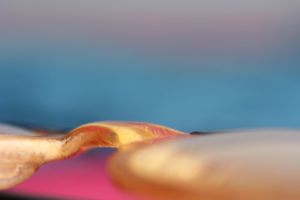
Eyeglasses, 2017, Mindy Stricke
If you’re less of a Do It Yourselfer, then consider working with photographer Mindy Stricke. As part of her extraordinary Memory Landscapes series, Mindy creates bold, highly imaginative photographs of sentimental objects. Items are shot in extreme close-up so they become abstract shocks of color, virtually unrecognizable. Items have included a bathrobe, eyeglasses, baseball, and wrench.
Each photograph is informed by an in-depth conversation between Mindy and her client. “Instead of asking questions about the person’s grief, I’m asking questions about their happiest memories,” Mindy tells me. “The image that is produced is less a reflection of their grief and more a reflection of their important and enduring relationship.”
Mindy works with personal mementos as well as carefuly chosen objects that reflect an individual’s interestes and passions.

June 16, 2017
Father’s Day Musings: Thoughts On Remembering Dads Gone Too Soon and One Exceptional Idea for Celebrating Fathers Still With Us
This post was created in partnership with NFDA.
Ten years ago on The Huffington Post, I shared the eulogy I gave at my father’s funeral. The speech was unusual – a Top 10 List of our most unusual father-daughter relationship quirks. I was moved to share my reflections because I hoped they’d stir future conversations with my children. When my dad died, just three days after September 11, my son was 18-months-old. My daughter wasn’t born.
In my book, Passed and Present: Keeping Memories of Loved Ones Alive, I reveal 85 ideas for remembering and celebrating the family and friends we never want to forget. Writing stories down (and making sure to share them, too) is just one powerful tool. My son and daughter, now teenagers, have read my reflections and have a better sense of their grandfather as a result. Other strategies include Building a Refuge and Turning My Father’s Ties Into a Quilt.
With Father’s Day upon us, here are a few more creative and uplifting opportunities for remembering and honoring our dads.
 1. Use the day to celebrate your father’s memory. Rejoice in what your dad still means to you. Prepare his favorite meal. Enjoy his favorite dessert. For me, this involves making a grocery run to buy lemon ice cream. My father loved lemon ice cream, lemon ices, lemon meringue pie – anything lemon! The smell and taste of lemon make me smile. They make my dad feel especially close.
 2. Listen to music your father enjoyed. Every time I hear The Hustle, I’m immediately transported to a wonderful and warm memory from my wedding. My dad was a great dancer (think a wannabe John Travolta in Saturday Night Fever), so he chose that famous 1970s tune for our father/daughter dance. Consider putting together a playlist of your father’s favorite music to spark joyful memories.
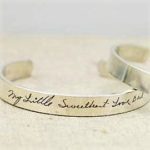
3. Remember your dad through his handwriting. Emily Jane Designs is an innovative jewelry company that takes your father’s handwritten words and engraves them onto bracelets, necklaces, and cufflinks. Custom pieces are wonderful conversation starters, especially useful (and sentimental) on Father’s day.
A final important musing as I end today’s post:
 If your father, grandfather, or father-in-law is still alive, I urge you to use this Sunday for a singular purpose: have what National Funeral Directors Association calls, The Talk of a Lifetime. The NFDA created the Have the Talk of a Lifetime Conversation Cards, each card printed with a different question, to get meaningful conversations going. Topics are silly and serious, prompting short answers or longer responses. Questions like: If you could have only five possessions, what would they be? What was your first job? What does your perfect day look like?
Too many of us think we’ll remember all our dad’s funny reflections, or we’ll have ample time to listen to stories he’s yet to pass along. Make this Sunday count. Take advantage of Father’s Day to celebrate dads gone too soon. And use the moment to strengthen the connections you’re fortunate to still have.

June 6, 2017
Benilde Little on Her Mother’s Death, How Gladys Knight Helps Her Remember, and Why Cooking One Specific Recipe Makes Her So Happy
Benilde Little and I met years ago in Montclair, New Jersey. We belonged to a local writers’ group and our friendship grew from many shared relationships and interests. Our sons also brought us together. They’re about the same age and both play a lot of baseball. I’m also a huge fan of her work.
Benilde is the bestselling author of the novels Good Hair, The Itch, Acting Out, and Who Does She Think She Is? Most recently, she published her fearless memoir, Welcome to My Breakdown. This stirring book reveals the death of Benilde’s mother and the agonizing, nearly paralyzing, depression it caused her. Benilde’s writing ultimately explores how she dug her way through this heartbreaking time to become a better wife, mother, and friend. Her transformation is an outstanding example of the many ways adversity helps us bounce forward, as Sheryl Sandberg and Adam Grant tell us in Option B. I’m thrilled Benilde agreed to be part of my grief and resilience blog.
Allison: Harnessing loss and embracing nostalgia not only heighten connections to the past – but strengthen relationships to family and friends in the present. (This is based on my essay in O, the Oprah Magazine and my book, Passed and Present: Keeping Memories of Loved Ones Alive.) Did you find this to be the case after losing your mom?
Benilde: Losing my mother (and my father-in-law who died two months before her) made me much more compassionate. Now when I hear that a friend has lost a parent or any loved one, I make a point of showing up — whether it’s going to the service, bringing food, a hug, a card or all of the above. If I can’t do any of those things, a phone call at least. I resist sending a Facebook comment. It seems an insufficient way to let them know that I see them and understand that the pain of loss can feel unfathomable.
Allison: Loss is a great teacher. In what way have you derived greater joy and meaning from life following loss?
Benilde: It took a long time to look at the lessons my mother’s death taught me. The realizations were slow and nuanced; like that I became the matriarch of my family. I’ve realized that I’m it in terms of making sure my kids, my nephews, my nieces, the generation behind me, have a rich memory of my mother and father-in-law. The two of them were much loved. They were the most present grandparents, so the loss was really hard for the kids, as it was for us. With that, I’ve tried to be more present, upbeat, and involved.
Allison: What one memento reminds you most of your mom?
Benilde: There are several that mean a lot to me. My mother didn’t keep a lot of objects or jewelry, but she did have a gold bracelet with one large locket charm that was given to her for her many years of service as head of her beloved PTA. It’s engraved with her name and it’s wearing off a little. It’s something that I cherish. We also have a lot of photographs.
Allison: Where do you keep your mother’s bracelet and those photos?
Benilde: I don’t wear the bracelet often and don’t display it. I keep it put away in a safe place. The pictures, on the other hand, are all over the house. One picture of my mom is in a frame that I keep on my nightstand. I sometimes touch her face and say hello or just tell her that I miss her. Sometimes I ask her what to do about a particularly difficult decision. This year I put an old picture of my parents (from the early 50s) in a frame along with my mother and father-in-law and put it in the dining room during Thanksgiving dinner.
Allison: What is the most satisfying way you’ve developed for keeping your mother’s memory alive?
Benilde: My mother loved Gladys Knight so whenever I play her music, I happily think of my mom.
I also make my mother’s collard greens recipe every Thanksgiving and Christmas, exactly as she used to—same brands —Wesson Oil, not Crisco. I cut them exactly the way she taught me —rolled into small strips and then cut with a steak knife into 2-inch pieces. It was one of the last things she taught me to do before she died, our last Thanksgiving we had together. I cherish the memory of the day she taught me to cook those greens.
I love having this specific food as a legacy. Collard greens are such a part of Black America, actually all of the American south, which was influenced by Black folks who were doing much of the cooking and creating delicious food from scraps. I taught my daughter how to cut them and I look forward to her making them for her family one day. This year my grand-niece, who’s almost 10, sat next to me at Thanksgiving and said “I just love these collard greens.” I said to her, “Well, I’m going to teach you how to make them.” I look forward to passing on this legacy.

May 15, 2017
My Next Move: Surging Forward By Looking Back
After I graduated college, and for the next twenty years, I worked as a television news producer in New York. Never would I have imagined a career transition into writing full-time, yet the early deaths of my parents (my mother died when she was 56, my father passed away when he was 63) pushed me into unanticipated terrain.
My sorrow drove me to write. And giving myself time to investigate subjects that were increasingly important to me (cancer prevention and preventative surgery because both my parents died of cancer) made me happier. It also propelled me into writing books about grief and the unobvious ways embracing the past helps individuals and families thrive.
Grief experts have long argued that sustaining connections to loved ones is essential for moving forward. This concrete roadmap for healing is what gave me the idea for Passed and Present: Keeping Memories of Loved Ones Alive, and it’s why I’m relishing my decision to become Executive Family & Memories Editor for a company I really adore. It’s called Legacy Republic.
I’m hooked on Legacy Republic because its mission is making fun, social experiences out of digitizing memories. I steadfastly believe keeping the memory of loved ones alive builds happiness and resilience after loss. It’s what I wrote about for O, the Oprah Magazine, the launch of Sheryl Sandberg’s Option B, and it’s the focus of my grief and resilience blog. No other company embraces this idea more than LR. Its very mission is making memory-preservation an uplifting experience to be shared with friends, family, and neighbors — both in person and online.
Below is a portion of what I wrote about Legacy Republic in my book Passed and Present:
If you’ve ever been to a party where the goal was hanging out with neighbors while buying kitchen gadgets, you have a pretty good idea how Legacy Republic works.
A Legacy Republic representative comes to your home to make one-stop shopping out of digitizing film, video, photos, slides, even entire scrapbooks and albums. The consultant walks participants through the process, packages up their pictures and other media, and sends them to its facilities in California or Georgia. I found the process entertaining and casual — friends got to eat and hang out while the adviser peeled us off one by one to discuss our options and place our order.
Three weeks after my gathering, Legacy Republic provided a link to a private online account where all my information is stored. I can log in, drag my cursor to a section of video I like, mark beginning and end points, and upload the snippet directly to Facebook. I also got my original material back, along with a DVD.
At this exhilarating inflection point in my career, I’m reminded of what Gandhi has said: “Happiness is when what you think, what you say, and what you do are in harmony.” Yes! I’m so there.

May 10, 2017
Hope Edelman on Being a Motherless Daughter, Her Mother’s Cookbook, and the Surprising Way Her Daughter Stays Connected to the Grandmother She Never Knew
In March 1996, just a few weeks after my mother died, I was given a copy of Hope Edelman’s pioneering book, Motherless Daughters. How could this book exist?! I thought to myself. Hope put into words what I was unable to articulate myself. Yes, I was a daughter without a mother and that’s why I hurt so much.
Hope’s mother died of breast cancer when she was in high school. After the overwhelming success of her first book, she went on to write many other influential works, including Letters from Motherless Daughters and Motherless Mothers. In quick order, she became an icon to many motherless daughters, including me. She’d suffered early, and hard, and came out the other side a well-adjusted and happy wife and mother of two beautiful girls. If she could thrive after loss, so could we.
Hope continues to write and is now a coach specializing in early loss. She also leads, along with author and therapist Claire Bidwell Smith, three-day healing retreats for motherless daughters. Taking place in several locations across the country, these meaningful getaways vary in focus – some are for women who were 18 and under when their mothers died, others are for women who were into their early 20s.
They also offer a retreat once a year centered on adult mother loss. Learn more here: www.motherlessdaughtersretreats.com.
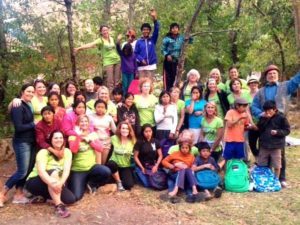 It brings me enormous joy to also let you know that Hope and I are dear friends. She and I even shared a tent at 13,500 feet when we were leading our first Motherless Daughters and Parentless Parents trek to Peru. In many ways, Hope inspired me to write Passed and Present. It was over coffee, in a tiny café in Cusco, that we began brainstorming the book. Hope offered her enthusiasm, suggestions, and leads for essential interviews. She then honored me by writing the Foreword.
In Hope’s interview with me about grief and resilience, she reveals the two items in her kitchen that keep her most connected to her mother and one imaginative way she uses photography to help one of her daughters know the grandmother she never got to meet.
Allison: What one memento reminds you most of your loved one?
Hope: I have my mother’s Better Homes and Gardens loose-leaf style cookbook from the 1960s, the one decorated with red and white diamonds on the cover, and I use it with my daughters to make some of the recipes from my childhood. They’re all loaded to the hilt with butter and sugar, so we don’t make them often, but every time we take the cookbook out (and use my mother’s rolling pin) it’s an occasion to talk about her. Though my daughters never got to meet her, it’s a way to bring them all together into my kitchen, as I imagine I might have done if she’d lived.
Allison: Where do you keep the cookbook?
Hope: The cookbook is in the cabinet with all the other cookbooks, spine out, so I can easily see it. The rolling pin is kept in a kitchen drawer with my other baking implements. Funny story: I once brought the rolling pin in my suitcase up to the San Francisco Bay Area for one of author Joyce Maynard’s pie-baking parties, so the rolling pin has been up and down the length of California, a state my mother visited once and loved.
Allison: Would you describe yourself as someone who uses photographs creatively? What ideas can you pass along for making photos more meaningful? (Here’s an example from my blog.)
Hope: One of my favorite photos of my mother was taken of her at about age two, banging on a piano in her family’s house. It became a famous family photo because my mother went on to become an accomplished pianist and music teacher in her 20s. When my older daughter was two, I posed her in a similar position, in profile, and took her photo. It looked so much like the photo of my mother at the same age that I had both photos framed similarly and hang them side by side in our home.
Allison: What do you know now about keeping the memory of your loved ones alive, particularly your mother and father, that you didn’t know when these losses occurred?
Hope: How important it would become once I had children. Some days I’m so sad that my daughters never got to have a relationship with their maternal grandmother, and that they were both so young when my father died. I understand how important it is to talk about my parents all the time so my children feel a sense of heritage. Otherwise, their only roots on my family’s side are through my siblings and me, and though I have amazing an amazing brother and sister, we can’t offer them the experience of knowing the prior generation. Stories, photos, items, and videos are all we have to work with.
Allison: Loss is a great teacher. In what way have you derived greater joy and meaning from life following loss?
Hope: My mother only lived to be 42, and I’ve now outlived her for an entire decade. That’s a mind-blowing realization to me, every day. I don’t take being here for granted, and I really try not to focus on small disappointments or setbacks. I mean, I’m here, I’m healthy, I’ve lived to see my first child graduate from high school — something my mother never got to do — and I’m on track to see the second one graduate, too. To me, that’s huge. I try to approach each day with positivity and gratitude and a zest for life. I recently arrived at a conference in the Midwest one day late, and when I got there someone said, “Hope’s here! The energy has arrived!” and I thought, well, if that’s the one thing I can offer to a room, I’ll take it.

Transitioning from passive mourning to active remembering is key to building resilience after loss
 If you’re lucky, like me, soon after your loved one dies, a swarm of friends will embrace you in all sorts of meaningful ways. They’ll pack the funeral home, attend the wake or shiva, and a few may even leave homemade meals wrapped in tin foil by your front door so you won’t have to cook for a while. Rituals surrounding loss tend to kick into gear automatically and I benefitted from being the passive recipient of support when each of my parents passed away. Yet my greatest fortune ultimately caused me the most pain…Continue Reading

5 Ways Spring Cleaning Can Help You Build Resilience After Loss
 After my parents died, I felt a responsibility to hang on to nearly all their belongings – my father’s neckties, my mother’s scarves, their mortgage records, car titles, passports, books, home videos, photographs, and more. For a while, keeping these possessions made me feel closer to my mom and dad. But years later, doing so became a burden and certainly didn’t bring me pleasure. Over time, I figured out that repurposing objects, or simply parting with them, made me feel happier and more connected.
Purging objects (and upcyling others) enhances our connection to loved ones and drives our sense of resilience…Continue Reading

May 5, 2017
Henry Louis Gates, Jr. on Losing His Mother, the Heirloom He Adores Most, and How Staying Connected to Loved Ones and Ancestors Makes Us Stronger
Henry Louis Gates, Jr. is an American treasure. The first time we met was when I interviewed him for “The Reflection Effect,” an essay I wrote for O, the Oprah Magazine about the power of nostalgia to drive happiness and build resilience after loss. As host of the PBS show “Finding Your Roots” and director of the Hutchins Center for African and African American Research at Harvard University, Professor Gates steadfastly believes embracing the past has the life-altering capacity to bring enormous joy.
Gates is currently gearing up for Season 4 of “Finding Your Roots” which airs Fall 2017, and he just completed “Africa’s Great Civilizations,” a six-hour PBS series exploring 200,000 years of African history.
Our Q & A marks the first time Gates shares such intimate details about the loss of his mother and why one family heirloom means more to him than any other. I am deeply humbled Professor Gates took the time to share his reflections on my grief and resilience blog.
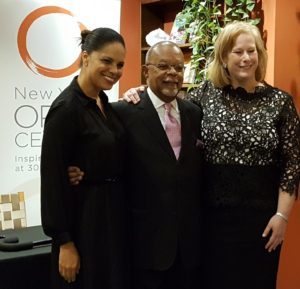 Keeping Alive the Memories of Lost Loved Ones for Healing and Resilience,” a panel discussion at the New York Open Center. Our co-panelist, former CNN anchor and founder of Starfish Media Group, Soledad O’Brien, joined me for a Q & A earlier. You can read O’Brien’s Q & A here.)
Allison: What one memento reminds you most of your loved one?
Henry: I am standing in the kitchen of my house in Harvard Square and looking at the Gates family’s most precious heirloom – an original photograph of the oldest ancestor in our family tree, Jane Gates. She was my great, great, grandmother.
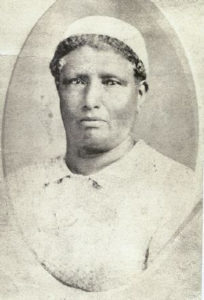
Photo courtesy of Henry Louis Gates, Jr.
Jane Gates was born in 1819 and died on January 6, 1888 in Cumberland, Maryland. I first saw this photo on the day my grandfather was buried. My father took my brother and me upstairs in his parents’ house and, after searching through seven or eight old bank ledgers which he had transformed into scrapbooks, he found Jane Gates’ obituary, tucked safely between the pages. He told us the clipping is of the oldest Gates on record. She was a slave. Then she became a midwife. My father never wanted us to forget her name or what she looked like. Years later, to my enormous surprise, my father’s aunt, my great aunt, who’d graduated as a nurse in the early part of the 20th century, gave me a photo as gift, the one I now have of Jane Gates in my kitchen. I had it restored and framed. It’s my most valuable family heirloom, my most priceless possession.
Allison: What is the most satisfying way you’ve developed for keeping your loved one’s memory alive?
Henry: I find researching my family tree, with the help of experts, enormously satisfying.
Just around the corner from Jane Gates’ portrait, I see my largest family tree. Seeing the names of all my identified ancestors, going back to three sets of my four great grandparents (two sets on my mothers side, one set on my father’s) is very reassuring to me, grounding me on the firmest of foundations, which is one’s ancestral heritage. I know who I am because I know from whom I’m descended. I can trace my history back to six African American individuals born in the 18th century, one of whom served in the Continental Army. It’s because of him that my brother and I are members of the Sons of the American Revolution and my daughters are members of the Daughters of the American Revolution. I’m extremely fortunate and blessed to have access to this knowledge. My family tree keeps their sacrifices and their attainments alive for me every day.
Three individuals have spent an enormous amount of time discovering the ancestors of my family tree – Johni Cerny, Chief Genealogist for Finding Your Roots, Jane Ailes, a superb researcher who was born near Cumberland, Maryland (the Gates family home), and CeCe Moore, the Genetic Genealogist for Finding Your Roots.
Allison: Being proactive about remembering loved ones boosts happiness and resilience. Have you found this to be the case?
Henry: Yes, I certainly have. I first visited the family history library in Salt Lake City long before I got the idea that would become Finding Your Roots. I went there because I had a free Saturday morning before catching a flight home. And I was curious. I got there about 30 minutes after it opened and was surprised to see it was packed. And packed with people of all colors, ethnicities, nationalities, and religions.
The second thing that surprised me was a sudden emotional outburst. When I turned to see what it was, I thought I’d been transported to a Black Evangelical church because a woman was standing with her arms extended toward the ceiling with tears streaming down her face. She hollered “I’ve found, her, I’ve found her, I’ve found my great grandmother!” Then, virtually everyone in this microfilm reading room rushed to her and embraced her. There was so much joy in that room. It was deeply moving to me. I remember thinking there is something powerful in this genealogy business. And I feel that same joy when I see that picture of Jane Gates. And I feel it as I gradually learn the names and circumstances of many more of my ancestors, too.
Allison: Loss is a great teacher. In what way have you derived greater joy and meaning from life following loss?
Henry: I think the death of my mother affected me most profoundly because it introduced me to an awareness of death’s finality. It made me regret not having done this or that, or not having said this or that to her. Simple things like, “I love you.” So this has given me a greater a sense of urgency than I had before. James Baldwin loved to paraphrase a line from the Bible. He’d urge, “Work! For the night cometh.”