Tim Patrick's Blog, page 27
February 22, 2012
Review #30: William Tell

The Swiss have chocolate and watches and cheese, but they also have William Tell, national hero from the early fourteenth century. The 1804 play bearing this champion's name, by Friedrich von Schiller, tells of his most heroic deed in defense of the Swiss people.
The independent Cantons of Schwytz, Uri, and Unterwald are suffering. Although they are supposed to be free under orders from the Holy Roman Emperor himself, the King of Austria has decided otherwise. He has sent his soldiers, bureaucrats, and his most vile viceroy, Hermann Gessler, to oppress and control the Swiss. When the people are commanded to bow down and honor a cap on a stick that represents the authority of the king, tempers flare. But when a respected elder has his eyes gouged out after his son prevents soldiers from stealing some oxen, the Canton leaders make plans to rebel. Although he is not one of the official leaders, Tell plays a major role in battling the viceroy and freeing the Swiss from tyranny.
In the play, William Tell (also known as Wilhelm Tell, Guillaume Tell, Guglielmo Tell, and Guglielm Tell in the various official Swiss languages) is cast in the form of a Robin Hood or one of the Three Musketeers, a rich landowning gentleman whose love for his country compels him to take bold actions at the risk of his own life. Although respected in his community, he is not a political leader, and does not take part in the negotiations between the Canton leaders that forms a major part of the play. Instead, he acts as a lone ranger (perhaps the basis for using "The William Tell Overture" for The Lone Ranger TV show), coming out of nowhere to rescue Swiss citizens and eliminate sworn enemies of the region.
While Tell plays a pivotal role in overcoming the enemy, his bravest act doesn't occur until after the leaders have already set into motion plans to defy the Austrian king. The hero of the story is simply one of many heroes, all of whom risked their names, their lands, and their futures to retain their freedom. And the structure of the play seems to agree with this fact, since William Tell himself only shows up in a few key scenes.
The exciting moment when Tell shoots an apple off of his son's head is included in the story. There's much drama to enjoy. But the bulk of the play is consumed with long discussions about historical realities to detailed for most modern viewers to care about. It's like a history book on stage, and the size of the cast competes favorably with the current population of Switzerland. Even with these limitations, and while the research is still unclear about whether William Tell even existed, the play does succeed in providing an entire country with a rousing hero narrative.


February 14, 2012
Review #29: Misanthrope
Lies, lies, lies! When someone lies to your face, it can be painful and frustrating. But what do you do when an entire society uses lies as the partial basis for its daily interactions? That's the question that seventeenth century playwright Molière asks in his play The Misanthrope.
The play follows the difficulties of Alceste, a French gentleman who interacts with the upper classes and those intimate with the royal court. Alceste hates dissemblance—the use of flattery, false sentiments, and outright lies to curry favor with others and to maintain one's position in society. Instead, he believes in telling it like it is. The problem is that he is in love with Célimène, perhaps the biggest dissembler in all of France. By the final act, Alceste's honesty has brought him nothing but lawsuits, financial ruin, and a life of solitude, while the flatterers—the liars—continue their courtly ways.
Molière's play centers on the lies told among a small group of the upper classes. But as a satirist, his story actually reaches beyond this group to society at large. Through the language of a comedy of manners, Molière identifies the tragedy of using flattery to support key cultural norms. The lies work for a while to maintain civility. But when the lies are exposed, civility breaks down.
While the lies are bad, the core problem is the desire to be lied to. In the play Alceste tells Oronte truthfully that the latter's poetry stinks. Naturally, Oronte sues Alceste. When Célimène praises Oronte's writings, he offers her his love. His writing still stinks—Célimène says as much in a letter to a friend—but his desire to have comfort surpasses his interest in the truth. He wants to be lied to, as long as the lies bring comfort. It's praise without accuracy, esteem without truth.
Although we in the US live without royal courts, Molière's warnings about flattery and dissemblance are just as valid. Every time a politician spins the truth, every time an advertisement overpromises—every time we turn a blind eye to the truth and instead rest on the comfort of the lie—society takes a serious and painful hit. But it's hard to see the damage when we rest in the comfort of those lies.
Our political language is filled with expressions like "hard working Americans," "investments in our future," and "the ninety-nine percent." These terms of dissemblance feel good; they make us part of a just cause despite carrying almost no information at all. It is important to come to terms with the economic and political forces that drive our society. But it is more important to do so without dissembling.
February 6, 2012
Review #28: Hamlet, Prince of Denmark
I have always known Hamlet as "the play where everyone dies at the end." That moniker isn't far off the mark, and almost from the first scene, you can tell that something being rotten in the state of Denmark will lead ultimately to death, death, death.
As the play begins, the ghost of Prince Hamlet's father appears to some soldiers, and eventually to Hamlet himself, bringing the news that he was poisoned—murder most foul—by his brother Claudius, the current usurper of Denmark and new husband to young Hamlet's mother, the queen. The late king didn't come all that way just to correct the record. He wants revenge, and his son vows to provide it.
Hamlet hits upon a bold plan: pretend to be crazy. Despite it being a major plot point, his supposed lack of sanity doesn't itself lead to any revenge. But with the help of a local theater troop, some friendly palace guards, a misguided army from nearby Norway, and a chance encounter with pirates in the North Sea, the young prince manages to kill everyone (and then some) even remotely attached to the new king's control of the throne. Before Hamlet himself shuffles off this mortal coil, he is preceded in death by King Claudius, Queen Gertrude, Hamlet's girlfriend Ophelia (along with the girl's brother, Laertes, and father, Lord Polonius), and two friends who were used by the king as spies against Hamlet.
Despite it being known as Shakespeare's greatest play, I wasn't as impressed with the story as I have been with other of the Bard's stories. But I did enjoy stumbling across one famous English expression after another that came from this play, including some now used as movie and book titles. Here are a few of the famed phrases you might recognize:
Frailty, they name is woman!
Neither a borrower nor a lender be
To thine ownself be true
To be, or not to be: that is the question
The slings and arrows of outrageous fortune
There's the rub
What dreams may come
The undiscover'd country
Get thee to a nunnery
The lady protests too much, methinks
I must be cruel, only to be kind
Infinite jest
The play is filled with important lessons, but few of them apply to my daily life. Don't kill your brother and usurp his throne; that's always good advice. If you put poison in a drink, make sure you keep it away from loved ones. I'll keep that in mind. But perhaps the most important point is one of self-awareness, or the lack of it in Hamlet's case. If you are in a place in life where pretending to be insane seems like a good strategy, then perhaps you weren't really pretending.
February 1, 2012
Review #27: Oedipus Rex
I recently started watching the TV series 24 on Netflix. The show centers around federal agent Jack Bauer and his team at the Counter-Terrorist Unit. Unorthodox and sometimes illegal in his methods, Jack's high-adrenaline task is to find and eliminate evil doers, always managing to kill a few major characters in the process. Surprisingly, that's pretty much the plot of the Greek tragic play Oedipus Rex.
As the play begins, there is trouble in the land: mothers are delivering stillborn children. Fields are failing. Terrorists are hiding a nuclear bomb somewhere in the city. But Jack—I mean Oedipus—is ready to take on the baddies. But in this season's plot, Oedipus himself is the baddie. When he was born, there was a prophecy that he would kill his father and marry his mother. So his parents took him to the mountains to let him die. But through a series inexplicable turns of fate, Oedipus grows up, returns to his homeland, kills his father, and marries his mother, fathering two daughters with her.
The prophecy is all news to Oedipus, and each new revelation of the story comes with gasps from characters and the audience alike. It is the murderous, incestuous evil of Oedipus' life that has cursed the land and its people. The solution is to mete out justice on the guilty parties, which Oedipus does with the finesse of Jack Bauer with a cell phone and a machine gun, leaving most of the major players dead and himself blinded.
As in 24, the events of Oedipus Rex occur more or less in real time throughout the one-act play. And while the excitement and anticipation of the story comes from its shock value, the underlying focus is on pride and the conceit of a life lived in opposition to the dictates of the gods. Behind the action, the play has an inquisitive philosophical core: Can you reject God's will and expect to get away with it? King Oedipus could not. Jack Bauer? Tune in next time.
January 25, 2012
Making the Complex Simple
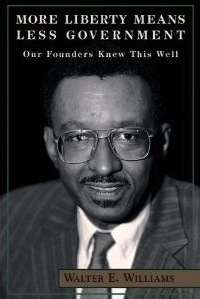
I'm a big fan of simplicity. Currently, I'm in the middle of reading The Logic of Scientific Discovery, by Karl Popper, book 34 in the Well-Read Man Project. In Chapter 7 of that book, the author discusses solutions to the "problem of simplicity" by referencing one-parametric logarithmic curves and the intersection of light-rays in space. That is not simple. In fact, the farther you go into the chapter, the less simple simplicity becomes.
That's why I liked More Liberty Means Less Government, a collection of articles by Walter E. Williams, professor of economics at George Mason University. If you judge books by their covers, you won't like this book. It's completely covered with the face of an economist. But if you reach into the pages, you find a world were complex issues like race relations, crime, health care, and even economics are discussed in simple, pleasant terms. Williams is a master at taking a subject–such as whether it is fair that some people are rich and others are poor–and turning it into a story about how women decide who to date. In short, he takes details only an economist could love, and communicates them in a way that touches the everyday lives of everyday folks.
As you can probably tell from the title, Williams is a Libertarian. He even ends the book with an article on one of the touchstones of the Libertarian movement: the legalization of drugs. And while many (including your humble reviewer) won't agree with some of his positions, every reader will fall in love with his presentation abilities. After reading an article, something inside of you wants to shout, "Grandpa Williams, tell me that story again." It's the simplicity that does it. And it's a benefit to both his supporters and detractors. By breaking a topic down to its most basic and easy-to-understand components, readers can make clear, thoughtful decisions about whether they agree or disagree. The choices are not clouded with political rhetoric or spin. Instead, the core issues are laid bare, allowing even those without strong backgrounds in how an economy or political system works to come to valid, informed conclusions.
This particular book by Williams is based on newspaper articles he wrote back in the mid-1990s. Some of the specifics included in the book are outdated. But his general points are just as fresh today as they were back in the Clinton era. Whether he's speaking about corporate welfare or public schools, the simplicity of his content makes each topic timeless.
January 18, 2012
Review #26: The Spy Who Came In from the Cold
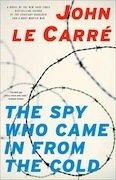
I was really looking forward to reading The Spy Who Came In from the Cold. Written by John le Carré in 1963, this spy novel is probably the most modern, mainstream book in the Well-Read Man project. But I didn't add it at the project's halfway mark just for fun. The relatively short work really does belong among classics, with the majority of the text devoted to spying on the human heart rather than on enemy agents.
As the book begins, Alec Leamas, the head of British intelligence in Cold War Germany, witnesses one of his agents gunned down just a few feet from safety. And it hasn't been the first time. Hans Mundt, Leamas' counterpart in East Germany, has been very busy eliminating the competition. Back in London, Leamas and Control (his boss) devise a plot to eliminate Mundt from the equation. The plan is so covert, so diabolical, and so morally questionable that even upstanding Leamas isn't told what the plan and its aims really are. By the end of the book, Leamas discovers that you can't trust East Germans…any more than you can trust your own spy agency.
While there are moments of tense spy-on-spy action, most of the book consists of long secrets-free discussions between secret agents. The book is a drama of the Cold War era, but its core focus is fresh and relevant in a post-9/11 world. As the story unfolds, Leamas is forced to ponder a world where security takes precedence over loyalty, where the expediency of temporarily alliances trumps trust and honesty, and where moral choices are governed not by right and wrong, but by what actions will maintain stability.
As a spy novel, The Spy Who Came In from the Cold is just OK. The guns, the gin, and the girl are all there, but this isn't a slick James Bond entertainment piece. In fact, it's not really a spy novel at all, which is good news, because most of us can't relate to the world of covert intelligence. The book, instead, is a treatise on the human condition, and no matter how much we try to hide it from our enemies, we are all too human.
January 12, 2012
Halfway!

While Dick Clark was ringing in the New Year, I was celebrating the passage of the Well-Read Man Project's halfway mark. It was six months ago that cracked open the virtual spine of my first of fifty electronic and paper classic books. While I still have six more months to look forward to in this quest, the journey so far has stirred up thoughts that have made the project worthwhile.
One of my biggest discoveries is that reading two hours per day is a lot of work. In my caffeine-dosed freeway-speed media-covered Southern California life, carving out a couple of hours of prime evening time for every spin of the earth is hard to do, especially with the rest of the family standing nearby tapping their collective feet on the cold floor. Some days, when I am in the middle of an especially boring so-called classic, I really want to click over to Netflix and tell the authors of antiquity to take up any gripes they have with Jack Bauer. But a promise is a promise, even if it is to dead white guys. And so I read.
Despite all of the insights it provides, reading is a lonely hobby. Not only is reading a solitary process, reading the classics must be done this way to provide the full effect. Book clubs exists, and some people have reached out to me to let me know they will join in this project with a book or two. But to get the most out of a book, it must be processed internally, in the secret recesses of the soul. The mind, it seems, is a tool with but a single handle.
A third discovery is that the 42-page-a-day habit is both too much and too little. At that rate, some of the deeper insights pass by too quickly for serious inspection. To get the most out of these books, a second, slower reading is a must, especially with the poetry and religious selections. But this speed also provides access to themes and inter-book links not readily accessible in detail mode. By reading Max Havelaar and Invisible Man quickly and in close proximity to each other, my mind automatically discerned the common elements between them despite their storylines dwelling on events half-a-world apart.
The next six months will draw out these experiences even more in my life. And as significant as these discoveries are, I am still anticipating the "aha" moment when I will finally understand the reading truths my literature teachers hoped to impart to me. My disappointment at never really understanding Albert Camus' The Plague, despite getting a reasonable grade on a high school exam about the work, was part of the reason for starting this project. So far, I don't see that I have gained the depth needed to grasp French Absurdist ideas at a glance. But if all I get from this project is a heightened awareness of the ideas that mankind struggles with, this year will not have been spent in vain.
January 5, 2012
Review #25: A Day in the Life of Ivan Denisovich

The recent death of North Korean leader Kim Jong-Il once again raises the question of how an entire nation can continue to live under an economic, political, and technological facade. From the viewpoint of someone in a First World nation like the United States, a country that exists for the sole benefit of a handful of leaders—or even one somewhat chubby leader in a tan jumpsuit—boggles the mind. Although North Korea is shut tight to the prying eyes of outsiders seeking to comprehend the Asian nation, a look back at Cold War-era Russia can provide a good study into why such systems continue.
A Day in the Life of Ivan Denisovich, a 1962 novel by Alexander Solzhenitsyn, documents totalitarian communism from the viewpoint of a political prisoner. Solzhenitsyn himself spent many years in a Soviet prison camp, and provides a shocking yet subdued look at communism's basic failures. The novel's protagonist, Ivan Denisovich Shukhov, narrates one day of his life in 1951 Siberia. Everything about life in the camp reeks of injustice: food, clothes, shelter, communication with the outside world and with each other. But even beyond the injustice, the story is one of hopelessness. Even the structure of the printed book screams despair: the text is one long chapter, a literary parallel to what the author saw as the never-ending plight of his target audience.
Life is harsh in the camp, yet the story includes no specifically cruel events. This isn't Schindler's List. Instead, Solzhenitsyn communicates a slice of life in a system where actions are pointless, nobody matters, and nobody cares. Everyone in the story is in a prison: Ivan and the other inmates, the guards, their families living back in communist-run cities. There is no escape. They are all starving, all cold, all hounded by guards, all experiencing a system of forced superiority. While they are all equal, they are all equally destitute.
In the introduction to the book, Yevgeny Yevtushenko says that "The system, for all its cruelty and deceitfulness, turned out to be stupid. It had taught its future gravedigger how to wield a shovel." Another book in The Well-Read Man Project, Max Havelaar raises a similar point in how the Dutch colonizers indirectly taught the local Indonesian natives how to fight back at their oppressors. It provides a glimpse of hope. But for Soviet Russia and its satellite nations, it took three more decades for the gravediggers to wield their shovels. And in this we perhaps can understand a country like North Korea. Someday, the people will care again, they will revolt against the injustice, and they will fight back against their oppressors. But first, they might need someone to write a book for them that quietly and solemnly screams out for justice.
December 27, 2011
Review #24: Invisible Man
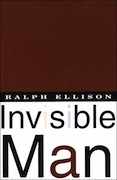
In the introduction to Invisible Man, author Ralph Ellison presents the book's hero as "a fictional character who was bent upon finding his way in areas of society whose manners, motives and rituals were baffling." It's a somewhat generic description that could apply to titles like Harry Potter and Fifty Things To Do in Los Angeles with Kids. Fortunately for readers of the classics, the book delves a little deeper into the human condition than does the typical travelogue.
Published in 1947, the main story takes place between the World Wars, near the end of the 1920s. The main narrative revolves around an unnamed young black man who is expelled from a Southern blacks-only college after accidentally exposing some of the shocking truths of the nearby post-slavery community to one of the school's white trustees. Sent to New York City as punishment, the anonymous hero experiences the joy and eventually the disillusionment of interacting with whites who claim to help the black citizens of Harlem. Throughout the text, the author presents a character who is unjustly and repeatedly humiliated for no other reason than that he is black.
Ellison saw his literary task as one of "revealing the human universals hidden within the plight of one who was both black and American." But a more accurate purpose of the book seems to be a determination of whether slavery can still be de rigueur and the cultural norm fifty or more years after all slaves have been officially emancipated. His answer: yes. Whites are still the masters; blacks are the slaves. In fact, they are worse than slaves: they are invisible. "I am invisible, understand, simply because people refuse to see me." For Ellison's protagonist, this invisibility is a natural answer to the reality of ongoing cultural slavery.
It's a troubling conclusion, but not as troubling as Ellison's use of stereotypes and broad generalizations to make his claim. In other books that deal with race in America, such as Uncle Tom's Cabin, specific individuals adhere to varying degrees of moral or immoral behavior. In Invisible Man, by contrast, the characters in each race are much more monolithic, regularly lining up with the "yes-masre" image of Deep South slavery. In the narrative, all white males consciously or unconsciously long for the oppression of the blacks; each white woman longs for a few minutes alone in bed with those same strong, husky black men. Blacks, through their slavery conditioning, have no choice but to acquiesce to the exploits and charms of the white males and females respectively. Those that don't adhere to this rule exhibit a form of race rebellion that nonetheless is still under the control of the all-power dominate European colonizers.
Different black characters do respond differently to this invisibility. Dr. Bledsoe, the college dean, manipulates the invisible nature of blacks for his own advancement and power. Ras the Exhorter, a violent black nationalist, seeks to remove all blacks back to Africa and make them literally invisible on the American continent. Tod Clifton, a disillusioned fighter for black equality, embraces his slave nature with renewed vigor. But each of these options is simply a reaction to white oppression. For the narrator, the best choice is to live invisibly, surviving in the dominant culture but having no influence on it, nor letting it have any influence on you.
Existing as I do in the post-Civil-Rights era, I found it difficult to empathize with the author or his anonymous character. And as a white man living in an increasingly minority-dominated region of the United States, spending the majority of my time as a white minority in my wife's own non-Caucasian and foreign-language enclave, I seriously doubt that Ellison's ultimate response to racism—dropping out—has any positive long-term benefits for oppressed communities. Perhaps the author agrees, for far from being invisible, his book—named by Time magazine as one of the hundred best novels written between 1923 and 2005—succeeded in pulling back the veil on black experiences in white America. Whether he had a serious desire to have African-Americans escape society or not, Ellison's book played an important role in bringing them back to visibility.
December 21, 2011
Review #23: Cry, the Beloved Country
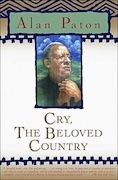
"There is a lovely road that runs from Ixopo into the hills." So begins Alan Paton's 1948 classic Cry, the Beloved Country. From its beginnings in these same hills of rural South Africa to the hustle of Johannesburg, "lovely" is the right word to describe Paton's text. It's not lovely in its subject matter; the book deals with racism, exploitation of humans, fear, violent crimes, and the transformation of decent people into society's forgotten. But on every page, Paton's gentle words drag you through the crimes of humanity with kindness and deference. By providing this peaceful narrative, he prepares you to feel the full pain and weight of a system where the abuse of one man by another is commonplace and legal.
The story follows Stephen Kumalo, a black priest from rural South Africa, as he travels to Johannesburg and back in an attempt to save his family members. A few years earlier, Stephen's brother-in-law went to work in the mines, but never returned. Stephen's sister, Gertrude, and his son, Absalom, left for the capital to see if they could determine what happened, but they also never returned. One day, a letter arrives from another priest, calling Stephen to come and rescue his sister.
His sister, found! It sounds like partial good news, but this short-term gain is masked by the depravity and sin that slowly takes his family away. When Absalom is accused of the murder of a white man, Stephen experiences the weight that is simultaneously crushing the entire nation: fear. The blacks fear having everything they have lost when the physical and societal floods wipe out their towns and their souls. The whites fear the loss of their power, and they fear the crime that stems from that same power held over urban and rural blacks.
"Cry, the beloved country, for the unborn child that is the inheritor of our fear. Let him not love the earth too deeply. Let him not laugh too gladly when the water runs through his fingers, nor stand too silent when the setting sun makes red the veld with fire. Let him not be too moved when the birds of his land are singing, nor give too much of his heart to a mountain or a valley. For fear will rob him of all if he gives too much." (Chapter 12)
The book does end on a hopeful note. A crime that should have increased the fear brings Stephen and a neighboring white man closer together in purpose. But it would take nearly five decades before that hope narrative from Paton's pen made its way into South African reality through the end of the Apartheid system. Cry, the Beloved Power is a powerful book, but it was limited in the change it could bring to Africa. In the book, Paton cries for the lack of strong voices against an unjust system. He cries for the government and tribal choices that keep the people and the land broken. And above all, he cries for his beloved country, Africa.