Tim Patrick's Blog, page 23
September 7, 2012
A Reading Party
Being well read isn’t only about consuming the classics and masterpieces from Ancient Greeks and European philosophers. It also means partaking of serious, important content from this present age. For the upcoming presidential election, there are things you can read that will keep you from being an advertising-directed mindless voting machine. Two documents in particular—the Democratic and Republican party platforms—are important if uninspiring primary sources.
Polls that ask “If the election were held today…” typically show large swings in the months leading up to an election. If the two parties present very different solutions on a wide range of important issues—and they do—why would someone vacillate between two unrelated choices? Either undecided voters don’t really know what they want or expect from their leaders, or they don’t know what the leaders and parties have to offer. The apathy of the first option is perhaps unsolvable. But the second issue can be resolved, by reading.
Each political party publishes a platform document that lays out their vision for the upcoming four years. I’ve never read a political party platform before this election season, and chances are you haven’t, either. But this year I decided to try them out. Here are links to the Democratic and Republican platforms, in HTML and PDF format.
Democratic Platform
Republican Platform
I’ve only read parts of each document so far, but differences already stand out. The Democratic platform, true to the image of the party, is more demonstrative and emotional, invoking feelings of party and American unity around the current president and his vision for the nation. Nearly every paragraph recalls the things done over the past four years, a natural method since their candidate occupied the Oval Office.
Likewise, the Republican platform plays to its expected aspirations. With more numbers and more PowerPoint-style action items, the document has a more business-like feel to it. Surprisingly, it mentions President Obama by name just once, in a discussion about military spending. (Romney only appears in the introduction.) “Obamacare” makes half-a-dozen appearances, always in a negative light. The term is nonexistent in the Democratic statement.
I always heard about “party planks,” and I expected these platform documents to be simple lists of positions on various important topics. The topics are all in there, but covered up with wordsmithing and non-specific promises. Despite this, it is possible to see differences in philosophy and policy positions between the texts. For instance, here is what the Republicans had to say about Medicare.
We will save Medicare by modernizing it, by empowering its participants, and by putting it on a secure financial footing…. The first step is to move [Medicare and Medicaid] away from their current unsustainable defined-benefit entitlement model to a fiscally sound defined-contribution model. This is the only way to limit costs and restore consumer choice for patients and introduce competition; for in healthcare, as in any other sector of the economy, genuine competition is the best guarantee of better care at lower cost. It is also the best guard against the fraud and abuse that have plagued Medicare in its isolation from free market forces, which in turn costs the taxpayers billions of dollars every year. We can do this without making any changes for those 55 and older. While retaining the option of traditional Medicare in competition with private plans, we call for a transition to a premium-support model for Medicare, with an income-adjusted contribution toward a health plan of the enrollee’s choice. This model will include private health insurance plans that provide catastrophic protection, to ensure the continuation of doctor-patient relationships. Without disadvantaging retirees or those nearing retirement, the age eligibility for Medicare must be made more realistic in terms of today’s longer life span.
While far from specific, it does lay out some generic-sounding steps the party plans to take if or when they assume power. The Democratic equivalent is less forthcoming about future plans, likely because the passage of the president’s healthcare initiative early in his term already established the party’s intentions. The Democratic document also includes more contrasts between party visions than does the Republican text.
Democrats adamantly oppose any efforts to privatize or voucherize Medicare; unlike our opponents we will not ask seniors to pay thousands of dollars more every year while they watch the value of their Medicare benefits evaporate. Democrats believe that Medicare is a sacred compact with our seniors. Nearly 50 million older Americans and Americans with disabilities rely on Medicare each year, and the new health care law makes Medicare stronger by adding new benefits, fighting fraud, and improving care for patients. And, over 10 years, the law will save the average Medicare beneficiary $4,200. President Obama is already leading the most successful crackdown on health care fraud ever, having already recovered $10 billion from health care scams. We will build on those reforms, not eliminate Medicare’s guarantees. The health care law is closing the gap in prescription drug coverage known as the “doughnut hole.” More than five million seniors have already saved money – an average of $600 last year – and the doughnut hole will be closed for good by 2020.
The two documents aren’t short; each one is several dozen pages in length. And they aren’t exciting; even Moby-Dick was a better read. But in this important election cycle, they are the clear means to being well read and informed.
[Image Credits: Microsoft Office clip art]


September 4, 2012
Books for All, or None
Have you heard about these ebook things? They’re very popular, and publishers are scrambling to make their booklists available electronically. With the success of Apple’s iPad, more and more people are reading new and previously published works on their tablet devices. So it makes sense that the Sacramento, California public library would test out book lending via these very same devices. The library gets books into the hands of readers. Authors find their texts reaching a wider audience. Older patrons who have difficulty finding the books they like in large-print editions can now read nearly any book on a size-adjusting device. Barnes & Noble (whose Nook devices are being used for the pilot program) gets to promote its wares and reading in general. It sounds like a winning program all around.
Unless you’re a grouch who hates happy readers, that is. That’s the impression I got from the National Federal of the Blind, the organization that filed a Department of Justice complaint against the Sacramento library, upset that the devices included in the lending program couldn’t be used by the blind. I’m not complaining about blind patrons who seek access to library books. Anything that the library can do to expand the scope of its reading programs, including to those unable to easily access printed content, is tax money well spent in my mind. I’m complaining about organizations that use the courts and the power of the government to throw a temper tantrum and get their way.
Never mind that the ebook offering in Sacramento was a pilot program, the very purpose of which was to determine if such devices met the needs of its patrons. If blind readers walked up to the librarian and said that the devices did not meet their needs, that would be good and effective feedback. Never mind that the library has shelves and shelves of printed books that have always been difficult or impossible for the blind to use and enjoy, books the library continues to buy. Never mind that Barnes & Noble, as a corporation seeking to expand its share of the reading device market, would likely have swapped out some or all of the devices lacking blind-friendly features with those that have them if the National Federation of the Blind had simply asked nicely. Never mind that the Federation itself could have ponied up money for the more advanced devices for its constituents. But no, they had to threaten a lawsuit, toss the pilot program into legal limbo, and take a new opportunity to read away from the vast majority of the patrons who could have benefited from the reading platform.
The library, of course, had no choice but to submit to bully tactics. According to the summary on the Department of Justice web site, the library settled with the Federation, agreeing to never again purchase those evil, disgusting, rotten devices that brought joy to adults and kids alike, and only purchase the more expensive devices that meet the needs of a tiny minority of patrons. Why can’t the library obtain a mix of devices: a large hoard of units that include the basic features for the ninety-five percent of patrons with basic needs, and a handful of more expensive devices with enhanced features for those with enhanced reading needs? Because that would be normal and logical.
August 27, 2012
Review: Lucky Man
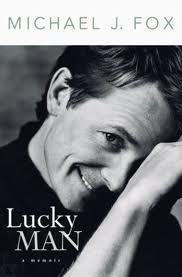
I’m a history buff, and not much into pop culture or modern celebrities. Each time I look through movie listings, I have to keep asking my son if the star of the latest Hollywood flick is well known. But I’m also a sucker for feel-good stories that show someone overcoming the odds, and doing so with a modicum of joy and peace. So when Amazon offered Michael J. Fox’s decade-old biography Lucky Man to me for $2, I clicked the Download button without much hesitation.
For those looking for a star-studded book, full of dropped names and the latest gossip on who slept with whom, there is a lot of disappointment to be had in these pages. Fox, of course, has rubbed shoulders, sometimes unconsciously, with famous people. Former Clinton adviser George Stephanopoulos gets a surprise mention; Alan Alda shows up twice. But Fox didn’t write Lucky Man to wow you with stories of his Hollywood career. Christopher Lloyd, his costar in the Back to the Future franchise, for example, isn’t mentioned at all. Instead, the star of this book, in addition to Fox’s immediately family, is Parkinson’s disease, or as Fox calls it, P.D.
The book includes the obligatory history of the autobiographical author’s life. You find out quite a bit about his parents and siblings, and especially his grandmother Nana. But all of that background exists to help the reader understand how P.D. impacted Fox as both a person and an actor, and why he made each decision he did in terms of treatment, disclosure, and even denial. Fox’s descriptions of the specific symptoms he encountered, the types of medication involved in symptom treatment, and even (spoiler alert) his brain surgery experience were clear and meaningful for readers, like me, who know those with the same brain disorder.
Lucky Man is by no means a literary classic. But for anyone looking for a pleasant read from a cultural icon that contains actual respect for the human condition instead of the low-IQ drivel parsed out by current pop culture fads and their ghostwriters, Michael J. Fox’s 2002 biography is still a meaningful and timely read.
August 21, 2012
Saturday Morning Classic Books
Of course I read comic books as a child. I mostly stuck with the tame, humorous fare: Archie, Casper, Richie Rich, nothing too serious for an eight year old. But I, like all those who pass into adulthood, put off such childish things, or so I thought. For those who can’t decide between Middlemarch and an X-Men comic book, now you don’t have to.
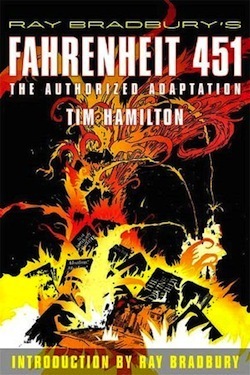
Several classics have been adapted to the panel-based comic book style, making these works available to those who might otherwise avoid books with dense text and nothing to stimulate the visual sense. Passing through a bookstore near the start of the Well-Read Man project, I picked up a graphic novel version of Ray Bradbury’s Farenheit 451. Drawn by Tim Hamilton, this 150-page colorful implementation of Bradbury’s classic is an “authorized adaptation.” Bradbury blessed the genre, calling this edition a “further rejuvenation” of his original story.
Several books from this project have made the transition over to illustrations, including some of the most serious and non-comical works every written: The Jungle, The Metamorphosis, even The Origin of Species. In Japan, you can find a manga version of the Bible that churches actually use for evangelical purposes. Oh brave new world that has such comics in it!
August 16, 2012
Grover Cleveland Exposed!
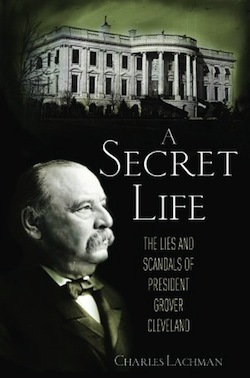
Now that the reading portion of the Well-Read Man project is at an end, I’ve started looking for other edifying content to fill my text-consumption hours. With the 2012 election in full swing, I’m on an American president kick. I’m reading books by and about the presidents, and one of my first targets is Grover Cleveland, POTUS number 22 and 24 for those keeping track.
The only Democratic Party president between the Civil War and World War I, Cleveland was known as a no-nonsense leader who rode into Washington through his anti-corruption efforts. As the sheriff of Erie County, New York, and later as mayor of its county seat of Buffalo, the future president put into practice his anti-bad-guy beliefs. As sheriff, he even personally carried out the hangings of three convicts. As my son quipped when I told him this bit of history: “Cleveland is a BAMF.”
But he may have been a few worse things, if A Secret Life, Charles Lachman’s 2011 exposé on Cleveland, is to be believed. In this biographical sketch of the split-term president, Lachman portrays Cleveland as draft dodger, rapist, and kidnapper. The second charge receives the bulk of the focus. In 1873, Cleveland began a public relationship with Maria Halpin, a widow who had recently moved to Buffalo. According to the charges, Cleveland forced himself on her, leading the birth of a son nine months later. To keep the story under wraps, Cleveland had the child put in an orphanage, kidnapped Halpin, and had her forcibly committed to a mental institution.
Other scholars humbly disagree with Lachman’s assessment, chalking up Cleveland’s admitted alone time with Ms. Halpin to nothing more than youthful indiscretion. Allan Nevins, the leading published authority on all things Grover, downplays the entire affair, but in a way that would never end up on TV’s Inside Edition, of which Lachman is the executive producer.
Perhaps Lachman put the most exciting spin possible on what certainly was shocking news for the late nineteenth century. But in our century, where the smallest misspoken quote by a presidential candidate can appear just hours later as the scandal of the century, A Secret Life is sure to fit right in.
August 13, 2012
Review #50: War and Peace
War and Peace is a long book. At more than 1,400 pages in the edition I read, it is nearly double the length of the nearest page-count runner-up in the Well-Read Man project. You already knew it was a long book. But what you might not know is that the book is really only about 70 pages long, with a 1350-page introduction.
Most of the book tells the story of Napoleon’s invasion of Russia in 1812, and how that war impacted the lives of some upper class Russian citizens. The story begins seven years before the war, in 1805, and follows the lives of a dozen or so characters from five aristocratic families through 1820. During that time, the characters fall in and out of love, join and leave the army, have children, die peaceful and painful deaths, and bump in to Napoleon and Russia’s Emperor Alexander in the most unexpected places. Some of the characters are actual people from history, and Tolstoy does a good job weaving the family dramas into a background of accurate journalism.
The story, though incredibly long, is still an easy read. Tolstoy has a light touch, and each chapter, despite the sometimes-heavy subject matter, is fresh and clear. And yet, none of this content really matters, for the real text of War and Peace is the treatise on history, free will, and political and military power that fills most of the last two epilogues of the book. It’s actually one of the most bizarre reading experiences I’ve ever had. Here you are, thinking that, with only 100 pages to go, you are finally going to see where the main characters’ lives take them, when BOOM, the story ends and a philosophical treatise appears.
The treatise isn’t bad; Tolstoy makes many interesting points about the role of the historian and the nature of trying to assess the meaning of societal changes through the lens of historical narrative. But the farther you get into the treatise, the more you realize that this is the book Tolstoy wanted to write, not the story of emperors and princes and peers and serfs.
One of Tolstoy’s core ideas is that powerful leaders like Napoleon do not bring about major societal changes, but that the individuals within the society collectively bring about the changes, sometimes in response to the leader’s will, but more often in response to contemporary events that are out of the control of that leader. He dedicates dozens of pages to explaining this idea, but it is dry, scholarly content. I think that Tolstoy realized this, and therefore, to demonstrate his theory, he wrote a compelling story about Napoleon and his invasion from the perspective of the individuals who, more than Napoleon, brought about the changes in Russia in response to the events surrounding Napoleon’s invasion. In that regard, it is a rich and complex book, deep with human drama and existential meaning, which is a good thing since there are some characters in the book to which you really don’t make much of an emotional connection.
War and Peace is a good book. But it is also very long. It took me around 60 hours to read carefully, plus another 15 hours to type up my notes. To be honest, I’m actually glad that the book ended with a long philosophical monologue. The main tale of the Franco-Russian conflict, while interesting, didn’t really teach me much beyond the bits of history that I didn’t learn in school. But when this story was paired with Tolstoy’s digression on free will and inevitability, the simple novel became something that made me ponder, think, and reflect on mankind and his history, and on how such things show up in modern world events. For all that, it was a brilliant and fitting end to a one-year, fifty-book reading extravaganza. Thank you, Leo.
August 9, 2012
Writing: There’s an App for That
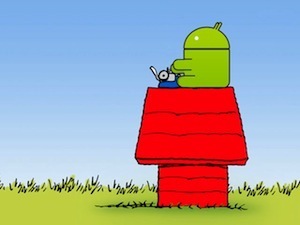
The Brothers Karamazov is a masterpiece of Russian literature, rich with human drama and its overlapping family and religious themes. Dostoevsky clearly poured his heart and soul into the effort, and it shows. But what if he had been able to offload some of the writing chores to an app on his iPhone?
Ridiculous, you say? Not according to a recent article in The Atlantic. As documented in “Can the Computers at Narrative Science Replace Paid Writers?” by creative writing professor Joe Fassler, computers are now capable of generating press releases, news articles, and business documents automatically based on stores of relevant data. If you have this month’s sales figures in a spreadsheet, it’s just a simple push of a button to create a ten-page narrative that summarizes the results, complete with grammatically-correct flowing paragraphs analyzing the numbers.
Should readers—or better yet, writers—of classics-level content be concerned? Will “being well-read” soon mean little more than scanning the SIRI-generated news each evening? Personally, I’m not concerned. In fact, I’m somewhat delighted. Having worked with computer software for decades, I’m constantly surprised at the mediocre forms of displayed and written communication that software applications routinely pass off as information. While “garbage in, garbage out” may be true, the fact is that most of what we got from the software products of the past was borderline meaningful. “Abort, retry, fail?”
There is the risk that computers will take over writing jobs formerly “manned” by human writers. But it has always been the case that technology supplants some of the more mundane tasks, freeing people up to develop new fields and new technologies, including computers, and including writing tools and forms. It’s just more personal to authors when it happens to them rather than factory workers.
Anyway, I think this is an exciting new adventure for computers everywhere.
Sincerely,
HAL 9000
[Image Credits: lifehacker.com]
August 6, 2012
Reading the News – August 5, 2012 Edition
Mars landings are old news, not just for Americans more in tune with Olympic races than space races, but also for the scientists trying to land the Curiosity rover on Mars last night. I watched Curiosity’s landing as it was broadcast live from the Jet Propulsion Laboratories control center in California. Because of the red planet’s distance from that control center, the several dozen engineers and millions of dollars in equipment monitoring the landing didn’t have much more control over its descent than I did watching the event on my iPad.
The problem is the fourteen-minute time it takes for radio waves to reach the Earth from Mars based on their current relative positions to each other. Because of the nearly half-hour communications round trip, controlling the Curiosity rover mission is like playing chess by mail, or like waiting for a book to come out about some recent event. At least that’s the way it used to be. In a publishing world increasingly dominated by easily produced e-books, it should only be a matter of days before someone comes out with a standard-sized book detailing the events of the landing itself.
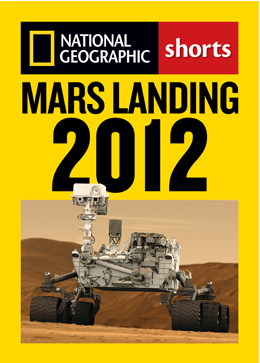
Until then, you can read up on the mission via another downloadable book that came out just two weeks ago. Mars Landing 2012: Inside the NASA Curiosity Mission, from the publishers of National Geographic, provides an overview of the mission, its goals, and a look forward to the now-completed landing of NASA’s latest Mars vehicle. Here’s a description of the book from Amazon.com’s web site.
National Geographic presents the science, the goals, and the anticipation of humankind’s most ambitious planetary expedition ever: the Curiosity mission to Mars. On August 6, 2012 (EST), NASA’s Curiosity spacecraft will complete its 255-day, 354-million-mile journey and plunge down into Gale Crater, its target on the martian surface, decelerating from 13,200 to 0 mph in 7 minutes. The whole world will be watching this, the most complicated and precise landing ever undertaken, and wondering: What’s the inside story on this Curiosity mission, and what do NASA scientists hope Curiosity will find? In this e-short, written by Washington Post science correspondent Marc Kaufman and published just as the suspense builds, with Curiosity hurtling toward Mars, space science readers, techies, and informed news junkies will find answers to these and other fascinating questions about the red planet.
I haven’t read this book, but it seems interesting, and at the $2.99 price listed today, purchasing it is less of a risk than traveling millions of miles across space for your news.
Buy from Amazon.com (Kindle only)
Buy from Barnes & Noble
Buy from iTunes (iBooks only)
July 31, 2012
Pre-Review: War and Peace
This is not my review for War and Peace. That review is several weeks away. Why? Because Tolstoy’s book is as crazy long to review as it is to read. I estimate it will take me about eighteen hours to type of my notes for the book. Eighteen hours! That’s about how long it would take me to watch the entire Star Wars double-trilogy, including the many hours spent in self-recrimination for watching Episode II again.
All this is to say that my review of War and Peace will come, but not yet. Until then, here are a few interesting items about the book to tide you over.
It does have both war and peace, so there’s no false advertising here.
It’s got Napoleon Bonaparte. And some other characters.
There are two characters named Boris and Natasha, but sadly no Moose and Squirrel.
If you printed out the book and laid all the pages end to end, it would certainly take even longer to read.
July 24, 2012
Jeeves and Ye Olde Bookstore
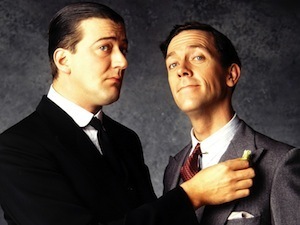
They say that the early bird catches the worm, but I personally can’t see the attraction in either part of the story. I mean to say, if the only thing you have to look forward to on cracking open the eyelids is a dirt-encrusted worm, well, what’s the point of waking up at all. By the time I rose up this morning at ten chimes, the smell of bacon and eggs were scenting the atmosphere for possibly miles around. Jeeves is a master with the eggs and b.
It grieves me to say this, but it must be said: There had been a rift forming re Jeeves and I for some days. A trip to the south of France was on that fish-fed mind of his, and once Jeeves gets an idea into his head, it’s held there like a trap. But the British Empire would come to an end if valets were allowed to roam free unchecked, so check him I did, putting the kibosh on that voyage. As Jeeves shimmered in with the morning restorative, I could see that the dark clouds of our conflict lingered. His left eyebrow was raised in a most astonishing manner about one-twentieth of an inch above its right-side counterpart.
“Jeeves,” I opened, “I heard the most disturbing news yesterday at the Drones Club. It seems there is some chappy by the name of P. G. Wodehouse who is writing stories about me, Bertram Wooster. The harrowing thing about it…if harrowing is the word I’m looking for…is that they all appear to be spot on.”
“Yes sir, I was aware of the publication of several works by one Pelham Grenville Wodehouse, many of them bearing an striking likeness to the events of your own life.” Jeeves knew all. And still the man continued. “It is possible that his name is merely a nom de plume, that the true author is a member of the Junior Ganymede Club, and that he has been using the club book, in violation of the rules for gentlemen’s gentlemen, for his primary research. I regret any inconvenience the club rules concerning documentation may have caused you, sir.”
“Well what am I to make of these things, Jeeves?” I responded. “It’s not just stories of me. This Wodehouse fellow has made a fine ballyhoo out of Madeline Bassett, Tuppy Glossop, Gussie Fink-Nottle and his newts, Catsmeat Potter-Pirbright, and even Spode. The blighter even included the goods on my deserving Aunt Dahlia. I predict this very moment, Jeeves, that I will be bared from Anatole’s nosebag for years. It sort of gives one pause, even two pauses, what?”
“Precisely, sir.”
“And from what I hear, these books can be found at a shop called Amazon. Is it possible, Jeeves, that large, muscular women are able to make a decent income selling wares in the rain forests of South Africa?”
“You may have been misinformed, sir, concerning the current whereabouts of the Amazon River. It is located in South America, passing through the nations of Peru, Columbia, and Brazil. Additionally, stories of Amazonian females tend to lean toward the apocryphal side, sir.”
“That’s all fine about the rivers, Jeeves, but concerning Amazonian females, if Aunt Agatha ever found out about these ruddy writings, she’d put me in the soup for sure.”
The phone range, and Jeeves wafted out before my brain had acclimated to dawn’s early light. When he returned, I saw figurative doom on the horizon. A certain je ne sais quoi filled the room, and I downed the bracer before Jeeves had come to his customary halt.
“That was Lady Worplesdon on the telephone, sir. Her ladyship informed me of her intention to visit here within the hour. She mentioned that it had to do with a recent literary purchase from an establishment called Barnes & Noble. I fear that her ladyship may have discovered the volumes by Wodehouse. I think it was Cicero who once said…”
“Blast your Cicero, Jeeves. Aunt Agatha will be here before the armed forces of the nation have had a chance to assemble. What say you?”
“I suggest a quick escape, sir. I happen to be in possession of two tickets for a steamer heading to the south of France this very afternoon. If you were to vacate the premises and hire a cab to the train station, I could meet you there with luggage in hand in thirty minutes.”
He had done it again. As for sheer brainpower, the man is head and shoulders above a weary world. Perhaps a trip to the Mediterranean coast would answer the problem. “Right ho, Jeeves. On your way, could you pick up a few of those Wodehouse books? We may have to hide out of the country for quite a while, and it won’t do to be unprepared.”
“Very good, sir.”
Wodehouse’s command of the English language for storytelling is second to none, and in the Jeeves stories his efforts find their zenith. In a typical tale, young Bertie Wooster, a rich, loveable, and sometimes not so bright gentleman living in a posh London apartment finds himself trapped in the most farcical and inextricable predicaments, only to be rescued by his genius butler Jeeves. If you would like to experience the world of Bertie and Jeeves for yourself, I recommend these items from the Well-Read Man’s personal library.
Joy in the Morning
The Cat-Napper – Sadly, this book is out of print!
The Return of Jeeves
The World of Jeeves – A large collection of short stories, also out of print. You can find a smaller collection of Jeeves stories under the title My Man Jeeves.
Jeeves and Wooster: The Complete Series – A BBC television series derived from the books, with Bertram and Jeeves played expertly by Hugh Laurie and Stephen Fry.
The World of Jeeves and Wooster – The soundtrack from the television series. Don’t miss Hugh Laurie’s humorous introduction to the famous 1920s song Nagasaki.