
Nava Atlas's Blog, page 97
December 13, 2017
A Time to Dance, No Time to Weep by Rumer Godden (1987)
Rumer Godden (1907 – 1998) was a British-born author who spent much of her childhood in India. She lived an multifaceted life and wrote prolifically. A Time to Dance, No Time to Weep (1987), which came out the year she turned eighty, was the first of a two-part memoir, followed by A House With Four Rooms (1989). Her best-known novels, including Black Narcissus and In This House of Brede explore the religious life of nuns; many of her other novels, including The River, are set in India.
Once, when Godden was a child, the Arabian pony she was riding bolted and threw her. The injuries she sustained included a concussion. But her father compelled her to get back on the horse as soon as she was able to, despite her fear. He told her: ”If you are frightened of anything, you must do it.” And that was exactly how she lived her life.
From the 1987 Beech Tree Books / William Morrow edition: The first volume of this beloved writer’s autobiography is endowed with all the joy, elegance, honesty, courage, and humanity that distinguish Rumer Godden as a novelist.
Spanning the years 1907 – 1946, A Time to Dance, No Time to Weep tells the story of her beguiling childhood in India, her marriage to a charming but weak stockbroker, her life bringing up two children alone and in poverty after his abandonment, and periods of great distress punctuated by the publication and success of her early novels.
It illuminates Rumer Godden’s understanding of the darker side of life, of tragedy, loss, suffering, and long endurance bravely borne.
A Time to Dance, No Time to Weep is an extraordinary story that give context to this author’s novels, enlarging and enhancing them while shedding light on the moments and events in her life that inspired them. It’s a captivating portrait of a time, a woman, and an outlook.
From the author: “This book is my life as a young writer; to me and my kind life itself is a story and we have to tell it in stories — that is the way it falls. I have told the truth and nothing but the truth, yet not the whole truth, because that would be impossible.”
From the Prologue of A Time to Dance, No Time to Weep:
Jon and I stood together on the quay at Plymouth watching as the luggage was unloaded into the Customs Shed from the line the had brought us from India. It was March 1920, the chill grey of a Devon morning with a sharp wind blowing from the sea. Everything was wet and colourless and we were cold to our bones — not only with the cold; we had already had a taste of England.
In 1920 we, the two elder sisters of our family of four were the shocking ages of thirteen an twelve, shocking because we belonged to an era in which every English or Western family of any standing living in India sent their children ‘home’, as it was called, at five or six years old, no matter what the heartbreak on both sides; it was partly the climate, the dread of catching a chi-chi accent — we already had one — and partly the lack of suitable schools, so that when we too, were six and five we had been left in London with our Godden grandmother and our four maiden aunts in their tall dark house in Randolph Gardens.
It was only for eighteen months; our mother, Mam, had grown nervous of Zeppelins — this was in 1915, the second year of the First World War — and we had been reprieved for five halcyon years in the Indian sun (that was the title Jon and I gave to the book about those years of our childhood, Two Under the Indian Sun).
More about A Time to Dance, No Time to Weep by Rumer Godden
A Time to Dance, No Time to Weep on Amazon
Reader discussion on Goodreads
Review in the New York Times
Review on Kirkus Reviews
*This post contains affiliate links. If the product is purchased by linking through, The Literary Ladies Guide receives a modest commission, which helps maintain our site and helps it to continue growing!
The post A Time to Dance, No Time to Weep by Rumer Godden (1987) appeared first on Literary Ladies Guide to the Writing Life.


December 11, 2017
Virginia Woolf: A Biography by Quentin Bell (1974)
Quentin Bell (1910-1996), the author of Virginia Woolf: A Biography, was the son of Virginia Woolf’s sister, Vanessa Bell. He was an artist like his mother, working across several media, and like his father Clive Bell, he was a writer and art critic. Quentin Bell also held posts as Professor of Fine Art at several prestigious universities in England.
He once recalled: “Virginia Woolf was my aunt and as a child I illustrated and to some extent inspired some rather fanciful biographies of her friends and relations. Hence the fact that I am mentioned in the preface of Orlando as ‘an old and valued collaborator in fiction.’” In producingVirginia Woolf: A Biography, he possessed the access and family lore that made this biography a more intimate expression than another biographer may have achieved. Here’s a description of this fascinating biography:
From the 1974 Harcourt Brace Jovanovich edition of Virginia Woolf: A Biography by Quentin Bell: “Virginia Woolf was a Miss Stephen.” So begins Virginia Woolf: A Biography, the first truly full-scale treatment of the writer’s life to be published. As a nephew of Virginia Woolf, Quentin Bell brings to his book the authority that family intimacy affords, but he does so without bias, evasion, or sentimentality; and as an observer rather than as a participant.
Virginia Woolf was one of four children, born into a gifted family whose ancestors included generations of writers. As a child, Virginia is remembered for her beauty — flame-cheeked an green-eyed —as well as her terrible rages, and her precocious command of language. She was the family storyteller who could make everyone laugh. It was decided early that her sister Vanessa would be a painter and Virginia a writer. Her first efforts at composition are seen in a letter written at the age of six to her godfather, James Russell Lowell.
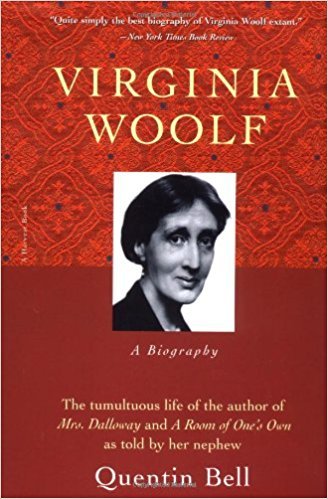
Virginia Woolf: A Biography by Quentin Bell on Amazon
The account continues through her adolescence and the first serious breakdown, to her awkward introduction into London society, the Bloomsbury years, and marriage to Leonard Woolf — “the wisest decision of her life.” The author candidly discusses the question of her sexuality and her mental illness and their effect on her marriage and her other close relationships.
While the ordinary events of her life unfold, the great novels are seen taking shape, accompanied by the anguish of a creative genius that was closely allied to her madness, the terrors of publication and reviews, and periods of enjoyment of her growing fame. The book concluded, simply and movingly, with her suicide in 1941.
Many other well-known writers appear in these pages — among them, Henry James, George Bernard Shaw, Lytton Strachey, John Maynard Keynes, E.M. Forester, Rupert Brooke, Katherine Mansfield, Harold Nicolson — but it is Virginia Woolf who holds the reader throughout, attracting with her intellect and wit, as she did those who were privileged to know her.
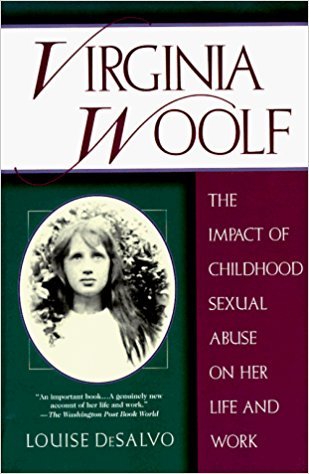
See also: Virginia Woolf:
The Impact of Childhood Sexual Abuse on Her Life and Work
*This post contains affiliate links. If the product is purchased by linking through, The Literary Ladies Guide receives a modest commission, which helps maintain our site and helps it to continue growing!
The post Virginia Woolf: A Biography by Quentin Bell (1974) appeared first on Literary Ladies Guide to the Writing Life.
December 9, 2017
Rumer Godden
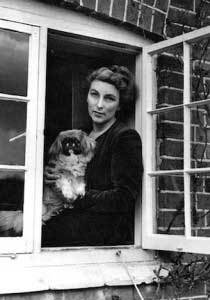
Rumer Godden (December 10, 1907 – November 8, 1998) was novelist and memoirist born in Eastbourne, Sussex (England) and raised mainly in India at the height of colonial rule. She and her three sisters spent an idyllic childhood in the Bengal region, now actually part of Bangladesh. From an early age, she knew she wanted to be a writer. She was sent to be educated in Britain, as was the custom at the time, and traveled back and forth from England to Britain frequently.
After being trained to be a dance teacher in Eastbourne, Rumer returned to India in 1925 and, at age 18, started a dance school in Calcutta. The school allowed both English and Indian children to attend together, something that was scandalous for its time and place. Despite this impediment to success, she and her sister Nancy kept the school running for some twenty years.
The start of a prolific writing career
Within this time period, Rumer married Laurence Foster in 1934. She was pregnant when they married, and it was an ill-fated relationship from the start. The couple had two daughters and for the most part lived separate lives.
In 1939, her first novel, Black Narcissus, was published to immediate acclaim and became a bestseller. After eight years of marriage, she and Foster split up, and she took their daughters to live in Kashmir. They first lived on a houseboat, then on a farm. It appeared that a servant attempted to poison her and her daughters; this incident was later fictionalized in her 1953 novel Kingfishers Catch Fire. It was enough to send them briefly back to the more familiar territory of Calcutta in 1945, and the next year, she and her daughters moved back to England.
You might also like:
Quotes by Rumer Godden, Author and Spiritual Seeker
A feature film
Black Narcissus was released in 1947 as a film, becoming the first of nine adaptations of Rumer Godden’s novels for the movies or television.
In the late forties, Rumer remarried, and also collaborated on the script for a film version of The River, based on her novel of the same title. A coming-of-age story set in India, the film was very true to the book. It was directed by Jean Renoir and released in 1951. It was well received and won the international award at the Venice Film Festival that year. It later became a great favorite of Martin Scorsese, and influenced director Wes Anderson as well.
The influence of religion
In the early 1950s, Rumer became interested in Catholicism. Shifting from the lyrical and atmospheric novels set in India that she’d become known for, she began exploring themes of secular life in her novels. These included Five for Sorrow, Ten for Joy and In This House of Brede. In these works of fiction, she explores the spiritual side of human nature, and what it means to commit to a life devoted to religion. She officially converted to Catholicism in 1968.
Children’s Books and Memoirs
In her nearly 60-year writing career, Rumer produced dozens of books in many genres. She wrote more than two dozen books for children, and her memoirs, A Time to Dance, No Time to Weep and A House With Four Rooms are fascinating glimpses into an extraordinary woman’s life. She wrote a number of other works of nonfiction that weren’t memoir, including a biography of Hans Christian Andersen.
In 1994, when she was already elderly, she returned to Kashmir, India for the last time, to be interviewed for a BBC documentary about her life and work. Rumer Godden’s emotional, witty, and energetic prose spanned the bridge between real life and fiction. Though not as well known as they once were, a number of her books are still read and relevant today. She died in 1998 at the age of 90.
More about Rumer Godden on this site
Quotes by Rumer Godden, Author and Spiritual Seeker
Obituary (1998)
Major Works
As mentioned above, Rumer Godden was incredibly prolific. Those listed below are among the best known of some twenty-five novels she wrote for adults. And in addition, as also noted, she wrote some two dozen books for children as well.
Black Narcissus (1939)
Gypsy, Gypsy (1940)
Kingfishers Catch Fire (1953)
An Episode of Sparrows (1956)
The Greengage Summer (1958)
In This House of Brede (1969)
The Peacock Spring (1975)
Five for Sorrow, Ten for Joy (1979)
Thursday’s Children (1984)
Coromandel Sea Change (1991)
Autobiographies and biographies
A Time to Dance, No Time to Weep by Rumer Godden (1987)
A House with Four Rooms by Rumer Godden (1989)
Rumer Godden: A Storyteller’s Life by Anne Chisholm (1999)
More Information
Wikipedia
Rumer Godden Literary Trust
Reader discussions of Godden’s books on Goodreads
Rumer Godden page on Amazon
Articles, news, etc.
Rumer Godden: Influential but Underrated
Rumer Godden’s Life Story is a Story in Itself
Rereading the India Novels of Rumer Godden
Television and film adaptations of Godden’s novels (selected)
Black Narcissus (1946)
The River (1951)
Loss of Innocence (1961) – retitled from The Greengage Summer
In this House of Brede (1975)
The Peacock Spring (1996)
*This post contains affiliate links. If the product is purchased by linking through, The Literary Ladies Guide receives a modest commission, which helps maintain our site and helps it to continue growing!
The post Rumer Godden appeared first on Literary Ladies Guide to the Writing Life.
December 5, 2017
Miniseries and Film Adaptations of Pride and Prejudice by Jane Austen
If you’re the kind of Jane Austen fan who reads Pride and Prejudice every year or two, chances are good that you’ve seen at least one of its miniseries or film adaptations. Considering the unabated reverence for this novel, it’s somewhat surprising that there haven’t been more. For many devotees, there can never be Too Much Jane.
In addition to the miniseries and film adaptations of Pride and Prejudice listed here, there was also a 1967 British TV adaptation which seems to have been lost to time. Which of these have you seen? Which do you think is most faithful to the original spirit of the novel?
2005 film — a British and American collaboration
How do you encapsulate Pride and Prejudice in a 2-hour film? The 2005 version starring Kiera Knightley as Elizabeth and Matthew Macfayden as Darcy manages to do just that. It was a collaboration between British and American film production companies. Ms. Knightly is splendid, though for me, a bit too distinctive for the role — my preference is for an unknown. Evidently, I’m in the minority, as 5-star viewer ratings, at least on Amazon, are the rule. It’s hard to believe, but this was and continues to be only the second movie version of P & P (not counting the miniseries) since the 1940 Hollywood film.
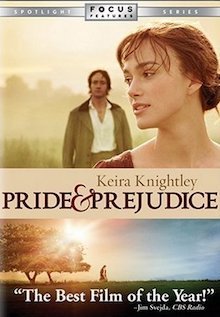
More about this adaptation
Wikipedia
Review in the New York Times
IMDB
Watch or buy on Amazon
1995 BBC / A & E miniseries
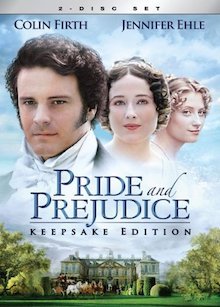
The 1995 BBC/A&E production is considered by many the definitive adaptation, though those of us who prefer the 1980 BBC miniseries might argue with this. Jane Austen aficionados might not particularly like it has come to be defined by Colin Firth in a wet shirt, because it has much more than this in its favor. Jennifer Ehle is a splendid Elizabeth, and the cast of actors brings all the beloved characters to life. This 6-part miniseries is packed with period detail, including the lush English countryside and plush English manses.
More about this adaptation
Wikipedia
Review on AustenProse
IMDB
Watch or buy on Amazon
1980 BBC mini-series
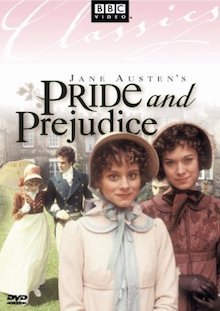
This excellent 5-part 1980 BBC adaptation is my personal favorite. It features a delightful portrayal of Elizabeth Bennet by a namesake, British actress Elizabeth Garvie. The pace and dialogue were beautifully captured in the screenplay by British author Fay Weldon. I’d argue that this is the most faithful and respectful adaptation of Pride and Prejudice. Perhaps it has been eclipsed by the 1995 miniseries, not only due to its fresher date, but that David Rintoul’s portrayal of Darcy wasn’t quite as smoldering as that of Colin Firth’s.
More about this adaptation
Wikipedia
Review on Silver Petticoat
IMBD
Buy on Amazon (not available for streaming)
1940 Hollywood film
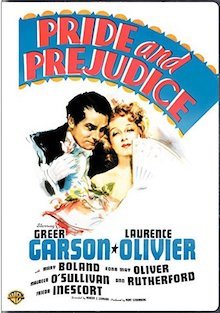
The 1940 adaptation from the golden age of the Hollywood studio era stars Greer Garson as Elizabeth Bennett and Laurence Olivier as Darcy. As is to be expected, the studio heads altered much about the original so that this black-and-white film would be more glitzy. It was set in a later period, for example, and some of the plot lines were altered. Still, the reception by critics and the public alike was positive. Today, it might be viewed far more as a novelty than as another means to enjoy the iconic story of Pride and Prejudice. It’s not readily available to buy or stream, but you might check your public library system.
More about this adaptation
Watch the trailer on YouTube (absurd!)
One more: Pride + Prejudice + Zombies
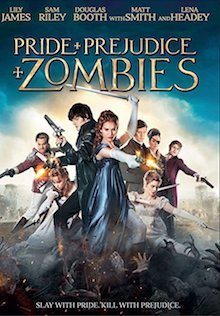
If you want to go further afield we dare not call Pride and Prejudice and Zombies (2016) an adaptation of the original P & P. Rather, it’s an outgrowth of the 2009 book of the same title. It’s safe to say that this is the most bizarre piece of Jane Austen fan fiction ever. In this reimagining, our heroine Elizabeth Bennett is a martial arts expert, and Mr. Darcy is a ferocious zombie. Together, they set our to vanquish the undead.
More about Pride and Prejudice and Zombies
Wikipedia
Reviews on Rotten Tomatoes
IMDB
Watch or buy on Amazon
*This post contains affiliate links. If the product is purchased by linking through, The Literary Ladies Guide receives a modest commission, which helps maintain our site and helps it to continue growing!
The post Miniseries and Film Adaptations of Pride and Prejudice by Jane Austen appeared first on Literary Ladies Guide to the Writing Life.
Pride and Prejudice in 61 Haiku (1,037 Syllables!): The Flutter Effect
Contributed by James Gaynor, author of Jane Austen’s Pride and Prejudice in 61 Haiku (1,037 Syllables!): In my last post on this site, I shared three things I learned writing Pride and Prejudice in 61 Haiku (1,037 Syllables!) Shortly after that appeared, I was invited to Fordham University to talk to English Literature majors about my take on the poetry / intent of the 61 chapter-opening lines of Pride and & Prejudice.
I found the students particularly responded to my point about Austen’s use of “flutter” in the first line of Chapter 43.

Chapter 43 (The flutter effect)
Elizabeth, as they drove along, watched for the first appearance of Pemberly Woods with some perturbation; and when at length they turned in at the lodge, her spirits were in a high flutter.
Elizabeth Bennet, as we all know is not a flutterer — and this is the only time in the book the world appears to describe her. Why use a word more familiarly reserved for heroines who find themselves about to sweep from a sudden attack of love at first sight? Because this is when Austen reveals that Elizabeth has fallen in love with Darcy — not because of any romantic Colin-Firth-in-a-wet-shirt moment but as she begins to realize the sense of order Pemberley represents, the purpose Darcy fulfills as its master — and what it might mean to join him in his duties.
Elizabeth has indeed fallen in love at first sight and therefore is in a “high flutter” — but the object of her emotion is a stately home, order established by architecture, coming into view as she drives through the untamed (albeit contained) nature of Pemberly Woods.

An unromantic interpretation
In light of this decidedly unromantic interpretation of how and when Elizabeth fell in love with Darcy, I was able to share one of my favorite Austen quotes (letter to her sister, Cassandra (Steventon, 27 November 1798):
“Mrs. Hall, of Sherborne, was brought to bed yesterday of a dead child, some weeks before she expected, owing to a fright. I suppose she happened unawares to look at her husband.”
Given the high mortality of childbirth in the late 18th century, Austen’s attitude is not particularly remarkable — yet it does reveal a less-than-empathetic view of life. For me, this is the voice that comes through, particularly in Pride and Prejudice’s chapter-opening lines, and it is important characteristic to remember when discussing her work.
After the Fordam lecture, one young woman told me the tone of the narration we discussed in light of the above quote was exactly the voice she needed guiding her love life. All of which confirms for me that, 200 years after her death, Austen continues to exert her subtle, ironic influence. But first, we have to get past Colin Firth and his wet shirt …

Pride and Prejudice in 61 Haiku by James Gaynor on Amazon
About the author
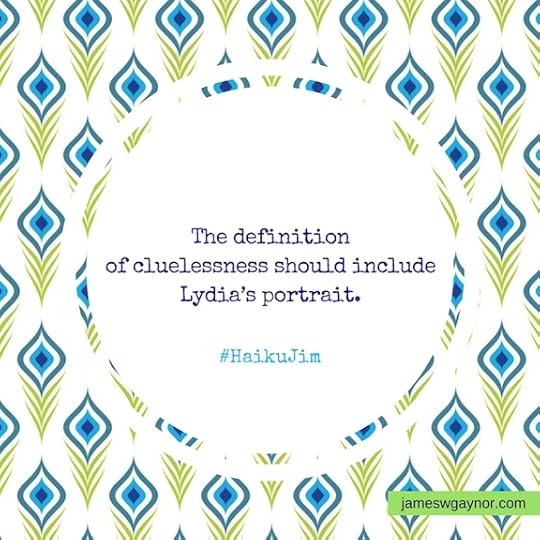
James W. Gaynor (#HaikuJim) is a poet, artist, editor, and writer. A graduate of Kenyon College, he lived in Paris, where he taught a course on Emily Dickinson at the University of Paris, studied the development of the psychological novel in 17th-century France, and worked as a translator.
After returning to New York, Gaynor worked as an editor at Grosset & Dunlap, Cuisine magazine, Scriptwriter News and Forbes Publications. His articles, book reviews, poems and essays have appeared in The New York Observer, The Gay and Lesbian Review Worldwide, Peeking Cat Poetry Magazine, and Peeking Cat Anthology 2017.
As #HaikuJim, Gaynor is a regular columnist for OTVmagazine.com, where his haiku commentaries have a devoted following. His collection of poetry, Everything Becomes a Poem, was published in 2016 (Nemeton Press) and won the 2017 American Graphic Design Award for its creative interplay of design and text. He also leads a haiku workshop (Can You Haiku?), which uses 17th-century Japanese poetry techniques to improve digital communications. Jane Austen’s Pride and Prejudice in 61 Haiku (1,037 Syllables!) is his latest book (Nemeton Press).
*This post contains affiliate links. If the product is purchased by linking through, The Literary Ladies Guide receives a modest commission, which helps maintain our site and helps it to continue growing!
The post Pride and Prejudice in 61 Haiku (1,037 Syllables!): The Flutter Effect appeared first on Literary Ladies Guide to the Writing Life.


