
Darcy Pattison's Blog, page 28
January 13, 2014
Selfie: Are you Outdating Your Novel?
QUIZ: ARE YOU READY TO WRITE A CHILDREN'S PICTURE BOOK?
How many pages are in a typical children’s picture book?
Who is the audience of a children’s picture book? Hint: It's not just kids.
Are there restrictions on the vocabulary you use in a picture book?
Do I have to write in rhyme? Do manuscripts written in rhyme sell better?
Do EPUB books have to the same length as printed books?
Don't start writing that picture book until you know these crucial concepts. GET THE ANSWERS HERE.
Are you outdating your book? It’s easy to do. Books are the archival medium of our culture. Their production time is the longest partly because of their archival nature.
Instant. If you want something published instantly, you should use a blog post, a newspaper article, or a radio report. This type of information has a short shelf-life and has information that relates mostly to the current day.
Intermediate Time Frame. Some mediums that take a longer view of information and stories are weekly newspapers and magazines (on or off line). These formats offer a wider view of a story and provide more in-depth analysis and discussion of the ramifications of the story.
Long-term. Books are the long view of a story or information. Some books are only viable for a limited amount of time; but many are timeless, meant to be a classic view of a subject.
Let’s assume that you want to write a classic book. You are in danger of outdating your story if you use these things:
Jargon, slang or just-for-this-moment-in-time language. The Oxford Dictionary declared “Selfie,” as the Word of the Year for 2013.
SELFIE: Darcy Pattison, January 2014.
selfie noun, informal
(also selfy; plural selfies)
a photograph that one has taken of oneself, typically one taken with a smartphone or webcam and uploaded to a social media website
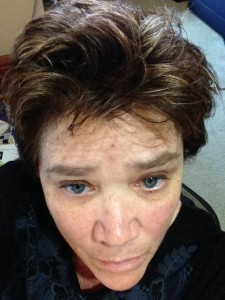
If you include the word “selfie” in a book this year, will it be outdated in ten years? That’s the question you must ask yourself. While taking photographs of yourself and posting them is current HOT today, will it be hot in ten years or 100 years? Will this blog post be outdated by 2015?
There’s a trade-off, of course. You want to sound contemporary; however, you don’t want to be so contemporary that you’re outdated in a decade.
It’s a judgment call. To prevent being outdated, make sure you consider the long-term ramifications of your language.
What’s your favorite contemporary word? And have you used it in your current WIP?


January 6, 2014
If You Only Do One Revision, Do This
QUIZ: ARE YOU READY TO WRITE A CHILDREN'S PICTURE BOOK?
How many pages are in a typical children’s picture book?
Who is the audience of a children’s picture book? Hint: It's not just kids.
Are there restrictions on the vocabulary you use in a picture book?
Do I have to write in rhyme? Do manuscripts written in rhyme sell better?
Do EPUB books have to the same length as printed books?
Don't start writing that picture book until you know these crucial concepts. GET THE ANSWERS HERE.
Quick. What is the one thing you can do to improve your writing the most?
The answer isn’t sexy. It’s not flashy.
Instead, it’s a back-to-basic answer that directly relates to the underlying structure of your sentences.
The Answer? Improve your verbs.
I told you it wasn’t sexy. But it’s true.
I recently listened to the books-on-tape version of Red Moon, by Benjamin Percy, a hard-hitting werewolf story. Percy narrates and his deep bass voice is amazing to listen to, but his prose is even more amazing. Master of the VERB, Percy enlivens even small things. This small bit of action – getting his suitcase out to the truck – isn’t crucial to the story, but notice the great verb.
“The suitcase chews its wheels through the gravel and Patrick struggles two-handed with its weight.” From the Prologue of Red Moon, by Benjamin Percy.
How else could you write that?
The suitcase rattled through the gravel. . .
The suitcase wheels dragged through the gravel. . .
Gravel kicked up as the suitcase. . .
Clattering wheels jarred Patrick. . .
I could go on, but why? Doesn’t that verb “chew” say it all? Such economy of language! Percy is full of such gems.
I recently helped a local first-grade teacher as her class did a research paper. Yes! Under the new Common Core State Standards, first graders must do a research paper. We discussed appropriate writing goals for six-year-olds and I suggested focusing on verbs. The research topic was nutrition, so we created a Word Wall with verbs about eating. We were giving the kids words, but also modeling the importance of using the right verb. The teacher talked with the kids about verbs and then handed them a piece of aluminum foil and asked them to shape it into something that showed a particular verb. One student brought back a silver butterfly.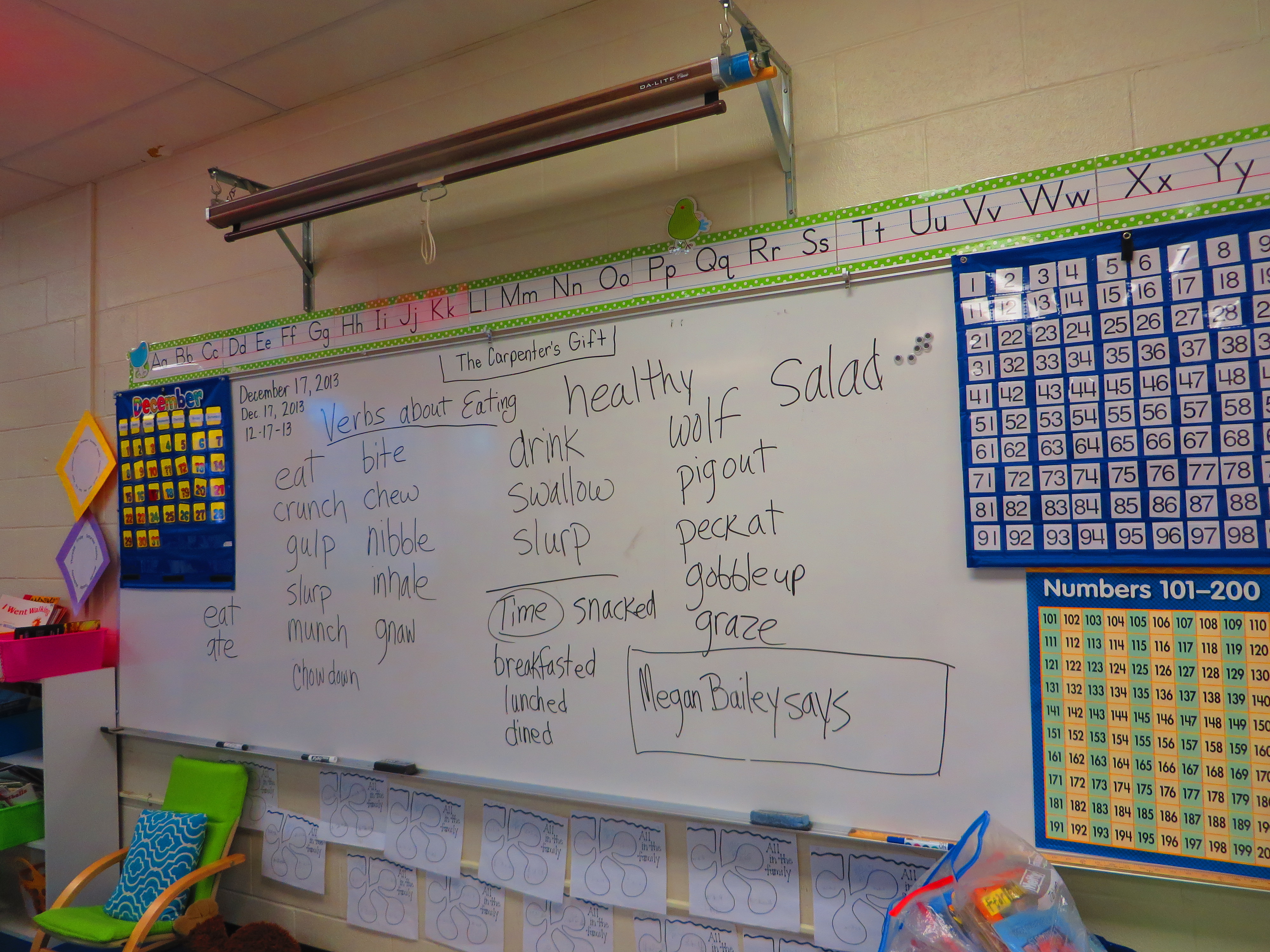
Word Wall for First Grade Class: a thesaurus for the word “eat.”
“What verb does that show?” asked the teacher.
“The butterfly is eating.”
“Then, can you shape its mouth? It needs a tiny tube for eating.”
Wow, we got in a biology lesson, an art lesson, and by the way, a writing lesson!
How did this play out in the student writing? After discussing great strategies to open a paper, one student wrote this:
One day, I ate three strawberries.
Then, we asked students to circle ONE verb. Notice that we made this a very manageable task, they only had to find one. When they had circled a verb, we asked the students to replace that verb with a stronger one. The student wrote this:
One day, I nibbled three strawberries.
WOW! The first grade student revised her work and added a stronger verb. The first grade research papers were enhanced by using one single strategy: use great verbs.
From Percy to first grade, it matters little what you’re writing, the idea is the same. One great verb elevates a sentence, a paragraph or a chapter faster and easier than anything else. We can forgive many other lapses of writing skill, if you master this one. Use great verbs.
December 31, 2013
13 Blast it Out of the Park Posts of 2013

Yes, Darcy! I want to share the story
of the Oldest Wild Bird in the World
with a special child(ren).
"On Dec. 10, 1956, early in my first visit to Midway, I banded 99 incubating Laysan Albatrosses in the downtown area of Sand Island, Midway. Wisdom (band number 587-51945) is still alive, healthy, and incubating again in December 2011 (and in 2012 and in 2013). While I have grown old and gray and get around only with the use of a cane, Wisdom still looks and acts just the same as on the day I banded her. . .remarkable true story. . . beautifully illustrated in color." -- Chandler S. Robbins, Sc.D., Senior Scientist (Retired), USGS Patuxent Wildlife Research Center, Laurel, MD.
CLICK BELOW to view
the story of the 63-year-old bird
in your favorite store.
KindlePaperback on AmazonHardcover on AmazonBarnes & Noble (Nook)
It’s a time to look backward. What are the 13 most popular posts on Fiction Notes in 2013? Here’s the countdown!
Posts Written in 2013
13. 63 Character Emotions to Explore When your character gets stuck at sad, even sadder and truly sad, explore these options for more variety.
12. 5 Quotes to Plot Your Novel By. We always like to know what other authors think about writing and how they work. These quotes are a tiny insight into the writing process.
11. 5 More Ways to Add Humor. Ever popular, but hard to get right, I always need help being funny.
10. Nonfiction Picture Books: 7 Choices. What types of nonfiction picture books are popular now, especially with the Common Core State Standards.
9. Why Authors Should Believe in Their Websites. This was a response to a posting on Jane Friedman‘s website that challenged why authors need a website at all.
8. Help Me Write a Book. A list of suggested resources that will help you write a book.
7. 7 Reasons Your Manuscript Might Be Rejected. A discussion of the rejection cycle and how to defeat it.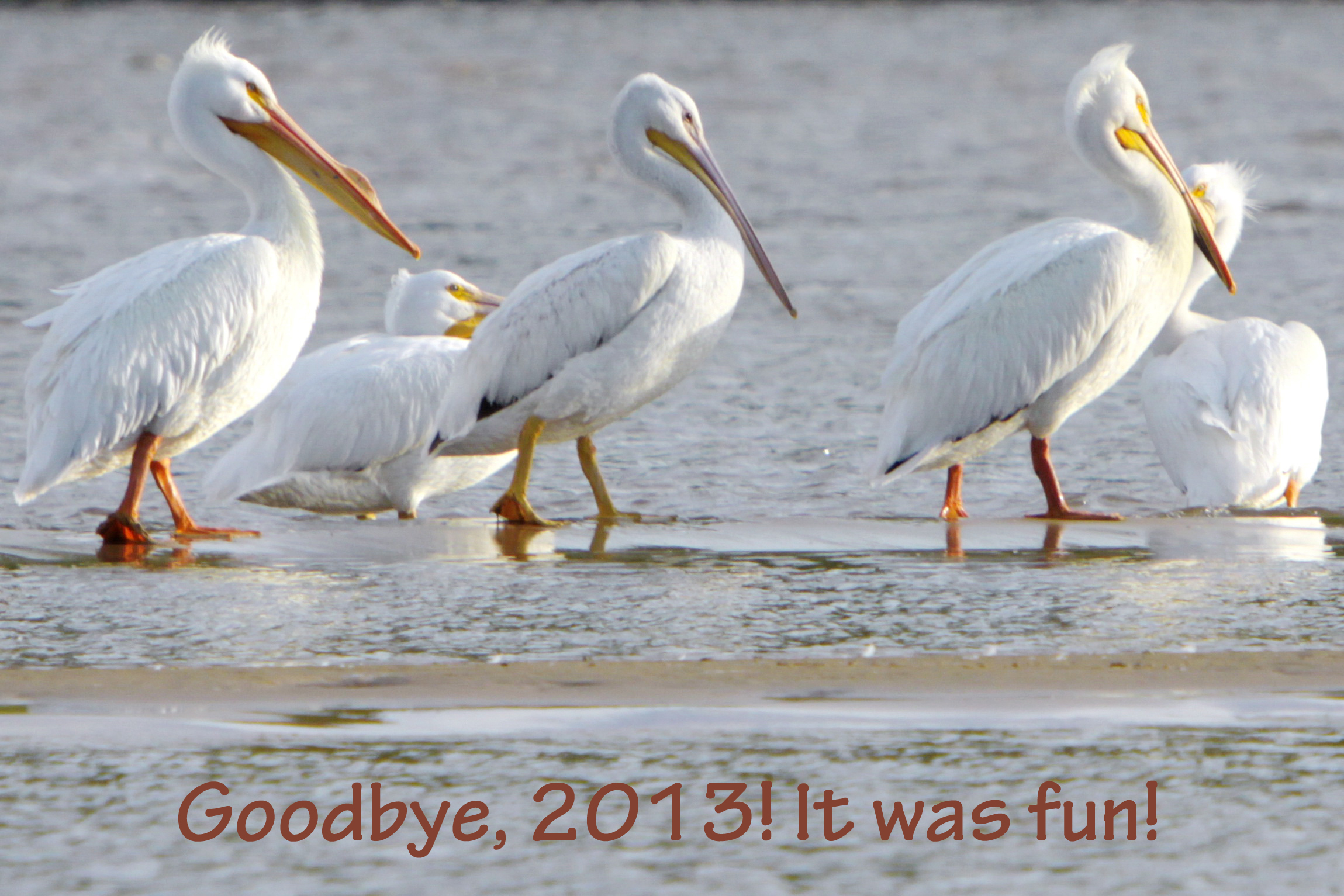
c. Dwight Pattison. My favorite picture that my husband took this year. Pelicans along the Arkansas River
Classic Posts
6. 9 Traits of Sympathetic Characters. How to make that protagonists a nice-guy or nice-girl.
5. 29 Plot Templates. Lost on where to start plotting? Consider one of these options.
4. 30 Days to a Stronger Novel. This series continues to be popular. It’s 30 days of tips for making your novel into the story of your dreams.
3. 30 Days to a Stronger Picture Book. Likewise, 30 days of tips for writing a picture book is hugely popular.
2. Picture Book Standards: 32 Pages. The most frequent question people ask about picture books is how long should they be. Here’s the standard answer, with explanations for why 32 pages is the standard.
1. 12 Ways to Start a Novel. 100 classic opening lines are categorized into twelve ways of opening a novel.
This list reflects the range of topics that consume me and that I want to write about. But it’s not just about me. Please leave a comment with one topic you’d like to see discussed this year.
December 30, 2013
How to Write an Intriguing Elevator Pitch–HINT: Hype it, Baby!
Yes, Darcy! I want to share the story
of the Oldest Wild Bird in the World
with a special child(ren).
"On Dec. 10, 1956, early in my first visit to Midway, I banded 99 incubating Laysan Albatrosses in the downtown area of Sand Island, Midway. Wisdom (band number 587-51945) is still alive, healthy, and incubating again in December 2011 (and in 2012 and in 2013). While I have grown old and gray and get around only with the use of a cane, Wisdom still looks and acts just the same as on the day I banded her. . .remarkable true story. . . beautifully illustrated in color." -- Chandler S. Robbins, Sc.D., Senior Scientist (Retired), USGS Patuxent Wildlife Research Center, Laurel, MD.
CLICK BELOW to view
the story of the 63-year-old bird
in your favorite store.
KindlePaperback on AmazonHardcover on AmazonBarnes & Noble (Nook)
When you transition from writing to marketing, it’s important to be able to talk about your book in a succinct way. You spend three months or three years writing the thing; but you’re lucky to get 30 seconds to pitch it to an editor, agent, or even to a reader. An elevator pitch is a short description–you only have as long as it takes an elevator to go from one floor to another, maybe 30 seconds–that summarizes and entices as the same time. Folks want to know immediately if this is the sort of thing they want to read.
What Do Editors, Agents and Readers Want to Know About Your Book
Genre. When I hear something about World War II and army men, I know it’s not for me, but for my husband. I don’t enjoy military history. When he hears something about space travel and alien civilizations, he knows that I love science fiction and it might be a great book for me. Research says that somewhere around eighth grade, people fall in love with certain genres and pretty much read that genre for life. A good elevator pitch establishes genre.
 Hook. Bait a hook with something interesting or something smelly or something tasty. Elevator pitches really do fish for readers. Given your genre and other particulars of your audience, what interests them? Now, normally, I am not interested in military history, World War II history, etc. But one of my favorite books is THE BOOK THIEF, which is firmly a World War II story. But I wouldn’t rise to that bait. If instead, you tell me that Death is the narrator of the book, I would pause and want a bit more information. That’s a really unusual, but appropriate, twist on a narrator. It’s not enough by itself to get me to pick up the book, but it’s a good start.
Teaser. Leave the reader wanting more! In 30-seconds, you cannot explain the origins of this character, summarize the plot or talk about subplots. Instead, you need to leave the reader wanting more. Editors and agents should ask to see the whole manuscript. Readers should flip to the opening chapter and dip a toe into the waters of this story. 30 seconds, a hundred words or so–you don’t have time for the whole kitchen sink. Instead, tease. What tidbit can you offer that will get a reader wondering about your story?
Creating the Perfect Elevator Hook
Well, you can’t create the absolute perfect elevator hook. Instead, create ten good ones. In tasks like this, it’s a good practice to ask yourself to write multiple iterations and variations. A dozen or so is great because you get past the cliches of the first couple and find yourself doing something unexpected.
Compare. One popular shortcut for a story is to compare it to something popular. Here is the movie trailer for Tom Cruise’s 2014 movie, “Edge of Tomorrow.” Watch the trailer and then try to compare it to a couple other movies.
If you can’t see this movie, click here.
When we saw this trailer recently, my son quipped, “It’s Starship Troopers plus GroundsHog Day.”
That’s apt, easy to remember and a great elevator pitch!
Theme. You may want to concentrate on the story’s theme.
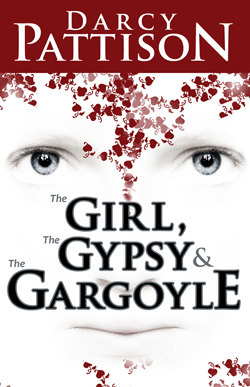 For a forthcoming novel, THE GIRL, THE GYPSY AND THE GARGOYLE, here’s my elevator speech:
Michelangelo once said, “Every block of stone has a statue inside it and it is the task of the sculptor to discover it.” But what if an unscrupulous sculptor could trap someone inside a block of stone, just so he could carve them?
Find out more about this book here. Coming March, 2014.
Did you click on the “Find Out More” above? Why or why not? This pitch won’t resonate with everyone; you only need the elevator pitch to resonate with the RIGHT readers!
Emotion. You DO want to put some sort of emotional spin on the hook. This is a “heartwarming” story. It’s an “unscrupulous” sculptor. The action-adventure story is a “thrilling” ride. Look for places to replace boring words with something laden with action. Readers go along on the ride a story offers so they can FEEL something. Hint at the overall tone or emotional content of the story by using the right emotional words.
Exaggerate. Finally, don’t be shy. This is the time to pull out the modest hyperboles, to cast your story as something unusual and interesting. Author Dean Wesley Smith recommends that all writers watch the following video, “Five Guys in a Limousine” as an example of how to take something tame and pump it up. It’s hilarious–but instructive. Watch it multiple times!
If you can’t see this video, click here.
In the comments below, leave a short (no more than 3 sentences) elevator pitch for your work-in-progress novel. If you add the words, FEEDBACK PLEASE, we’ll try to give you one person’s reaction to the pitch!
December 23, 2013
Fiction Notes Named in Top 10 Writing Blogs of 2013
Yes, Darcy! I want to share the story
of the Oldest Wild Bird in the World
with a special child(ren).
"On Dec. 10, 1956, early in my first visit to Midway, I banded 99 incubating Laysan Albatrosses in the downtown area of Sand Island, Midway. Wisdom (band number 587-51945) is still alive, healthy, and incubating again in December 2011 (and in 2012 and in 2013). While I have grown old and gray and get around only with the use of a cane, Wisdom still looks and acts just the same as on the day I banded her. . .remarkable true story. . . beautifully illustrated in color." -- Chandler S. Robbins, Sc.D., Senior Scientist (Retired), USGS Patuxent Wildlife Research Center, Laurel, MD.
CLICK BELOW to view
the story of the 63-year-old bird
in your favorite store.
KindlePaperback on AmazonHardcover on AmazonBarnes & Noble (Nook)
Thank you to all my readers! You’ve been terrific in supporting the Fiction Notes Blog. Thank you for nominating it for one of the Top 10 Writing Blogs of 2013. We won!
Each year, the Write to Done blog opens for nominations for the best blogs and this year, there were 1100 entries. The award is for Writing Blogs, not for writing about freelancing or business-related posts. At least half of a blogs posts needed to be about the writing process itself. And that’s exactly what Fiction Notes tries to do.
Thank you for your support!
Fiction Notes is named a Top Writing Blog of 2013
December 18, 2013
Writing Out of Sequence
Yes, Darcy! I want to share the story
of the Oldest Wild Bird in the World
with a special child(ren).
"On Dec. 10, 1956, early in my first visit to Midway, I banded 99 incubating Laysan Albatrosses in the downtown area of Sand Island, Midway. Wisdom (band number 587-51945) is still alive, healthy, and incubating again in December 2011 (and in 2012 and in 2013). While I have grown old and gray and get around only with the use of a cane, Wisdom still looks and acts just the same as on the day I banded her. . .remarkable true story. . . beautifully illustrated in color." -- Chandler S. Robbins, Sc.D., Senior Scientist (Retired), USGS Patuxent Wildlife Research Center, Laurel, MD.
CLICK BELOW to view
the story of the 63-year-old bird
in your favorite store.
KindlePaperback on AmazonHardcover on AmazonBarnes & Noble (Nook)
An odd thing is happening on my current WIP: I am writing the story out of order.
Here’s the process for this story–which will change, of course, for the next story.
Jot down rough ideas for the story. This project is book 3 in a series, so I knew the characters and setting. I just needed to sketch out the main conflict and how it fit into this world.
Check continuity issues. Of course, this mean that I had to check continuity issues. What was the name of the homeroom teacher and how is she described. In other words, I had to dip back into the previous stories and re-immerse myself in the milieu.
Expand the ideas. Next, I expanded the ideas to a paragraph or more for each of the ten chapters.
Check the narrative arc and strengthen. At this level, it’s easy to see flaws in plotting: not enough tension, not enough suspense, not enough at stake, etc. I worked with story line, actually struggling for about two weeks, trying to get all the elements to work together. The result was about ten pages, or one page per chapter. These consist of snippets of setting, dialogue, or character emotions. I know roughly what story beats will be involved, though each chapter needs expansion.
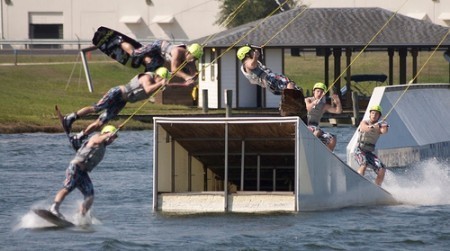
Some sequences are easy to write out of order; some sequences must be written in order or the author gets confused.
Expand. With that foundation, I am now writing out of order. The narrative arc is strong, so I’m confident that the planned scenes will actually fit into the story about where I have them now. I am confident of the content that belongs in each chapter. I’m not worrying about fine-tuning each scene, I just want something down and I can turn to any chapter/scene that I want at this point.
Integrate. I have about six of the ten chapters written and already much has been revised. I reread the whole thing each day and find weak places to edit and continuity issued to address. This time, I mean continuity within this novel, not necessarily within the series. But I am also going back to Books 1 and 2 to change things for series continuity.
Repeat steps as needed. I am working all over the landscape of this short novel and it’s interesting to see it unfold and how connections are creeping into the draft, making it stronger.
Will I use this process again? I don’t know. Maybe for Book 4 of this series, but maybe not for another genre or other series. Usually, each project needs its own trajectory and working method. All I know is that this is moving me forward. For now.
December 17, 2013
A Normal Day of Writing: Find Your Natural Rhythms
Yes, Darcy! I want to share the story
of the Oldest Wild Bird in the World
with a special child(ren).
"On Dec. 10, 1956, early in my first visit to Midway, I banded 99 incubating Laysan Albatrosses in the downtown area of Sand Island, Midway. Wisdom (band number 587-51945) is still alive, healthy, and incubating again in December 2011 (and in 2012 and in 2013). While I have grown old and gray and get around only with the use of a cane, Wisdom still looks and acts just the same as on the day I banded her. . .remarkable true story. . . beautifully illustrated in color." -- Chandler S. Robbins, Sc.D., Senior Scientist (Retired), USGS Patuxent Wildlife Research Center, Laurel, MD.
CLICK BELOW to view
the story of the 63-year-old bird
in your favorite store.
KindlePaperback on AmazonHardcover on AmazonBarnes & Noble (Nook)
What is a normal day like for me?
I get up early and exercise, sometimes taking a two mile walk, and sometimes going to the gym to bike and lift weight. Home again to get ready for the day.
I actually go to an office to work–lucky, I know. In the attic of our blue Victorian house–Mims House, in the Quapaw Historical District of Little Rock–I flip on my computer and get busy. I sort of ease into the day by answering email, checking stats on my blog and other business activities.
Then, I try writing for a couple hours. Lately, I’ve been using a Mac App called Freedom, which turns off access to the Internet for a specified length of time. When I’m disciplined enough to do that, I get in a couple hours of writing. But my stomach always interferes–lunch time.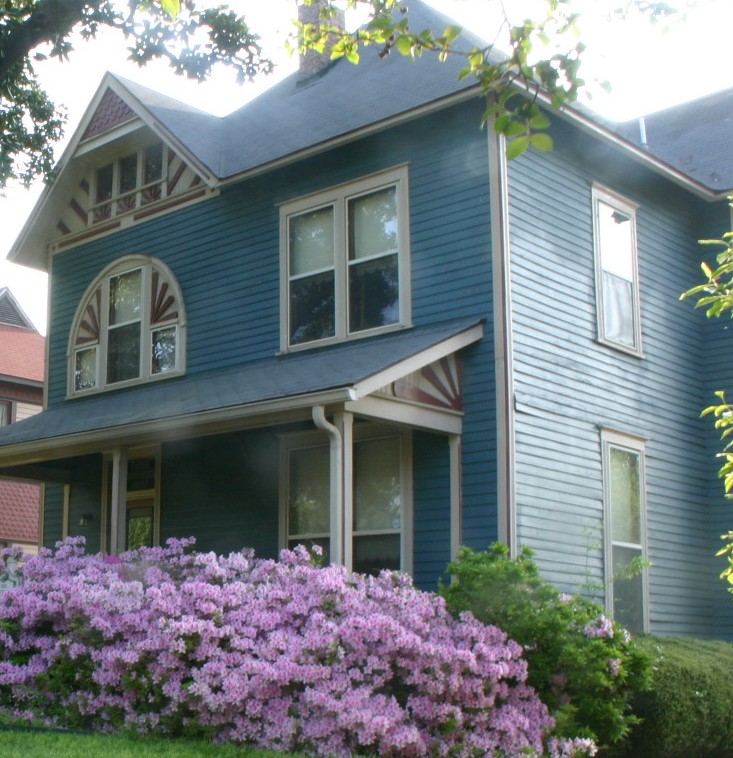
Mims House. I work on the 3rd floor of this Victorian House in the historic Quapaw District of Little Rock.
After lunch, on a good day, I’ll get in another couple hours of work. But usually there are more emails, responding to Re-tweets and such. I also allow some afternoons to go to marketing tasks: creating marketing materials, writing blog posts, or responding to questions or requests for speaking. Or, I may use the afternoon for research on topics related to my current writing project.
In other words, my natural rhythms are to be most alert and productive about mid-morning. I can and will work other times, but I don’t feel as productive. Afternoons, if I try to do too much editing, I get sleepy. That’s when it’s best to keep the mind in motion by researching or other tasks. Editing tasks are essentially boring for me, which is why I’m not great at grammar and I need those of you who are grammar witches.
I leave the office about 4 pm and do whatever errands need to be done–grocery shopping, dry cleaning, miscellaneous shopping, stop by the library, etc. Then home to fix supper. Evenings, I read. And I read almost anything. Currently reading a couple sff novels, a business book on marketing, and looking for a book about the health benefits of juicing.
It’s a rhythm that fits me and my work. What sorts of rhythms fit your work? When do you work best? When do you produce the most writing? When do you edit best? It’s worthwhile to notice and plan around it.
December 16, 2013
Novelists: You are Gifted & Talented
Yes, Darcy! I want to share the story
of the Oldest Wild Bird in the World
with a special child(ren).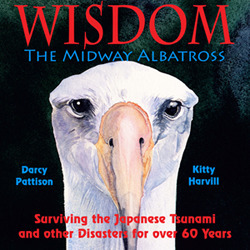 2007 annotated version). It often takes the work of years to hit your stride and produce your best work. We are in this for the long haul and this current book is just one of the waystations. Think career. Get stubborn. Persevere!
How do you deal with those deadly rejections?
December 11, 2013
GOTTA KEEP READING video
MIMS HOUSE: Great NonFiction for Common Core

The story of the oldest known wild bird in the world. At 62+, she hatched a new chick in February, 2013. Read her remarkable story. A biography in text and art.
Kindle
Paperback
Hardcover
Here’s an adorable video “Gotta Keep Reading,” a variation of “I Gotta Feeling,” with teachers and kids from New Academy Canoga Park. THIS is why we write!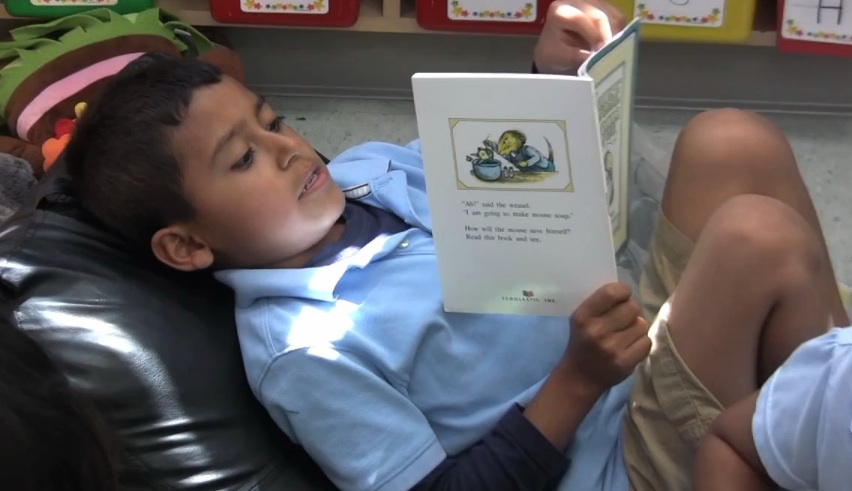
‘Gotta Keep Reading’ Music Video from NACP School on Vimeo.
If you can’t see this video, click here.
December 9, 2013
Hope, Optimism, Despair: Writer’s Emotional Roller Coaster
MIMS HOUSE: Great NonFiction for Common Core
The story of the oldest known wild bird in the world. At 62+, she hatched a new chick in February, 2013. Read her remarkable story. A biography in text and art.
Kindle
Paperback
Hardcover
Hope
Once we finish a draft of a novel and start thinking about revising, there is hope. In her slim volume, Writing Past Dark: Envy, Fear, Distraction and Other Dilemmas in the Writing Life, Bonnie Friedman starts like this:
The happiest I’ve even been was departing before dawn to the bus station in Madrid. The tiny bread shop and the tobacconist were still dark. The wet pavement gleamed when a city bus heaved past. Ahead of me lay unknown towns and countrysides that matched names I knew only from a map, and a new friend who was herself departing just then from across Madrid clutching a plastic bag like mine that was filled, like mine, with an egg-and-potato sandwich and a tangerine. The world was doors opening in all directions. I felt free, and awake, and full of laughter. Writing has often been just like that for me.
That’s hope.
It’s the feeling that we are at the top of our game and building on this solid draft, we can accomplish something unique, special, earth-shattering.
We need that hope at the beginning, or else we wouldn’t start. We know that it will be long and involved and at times discouraging to dig into this story and start messing with it. We know that the results are uncertain. We need that hope.
When Pandora opened the forbidden box, she released all the world’s evils. It sent the world into despair. But then, Pandora opened the box once more and found Hope waiting. Though Hope seemed weak, it was the strongest of the things released that day.
Hope, not optimism.
 Optimism is a general outlook on life, or is based on positive thinking. Hope is an emotional response, in our case, the response to a specific task of recasting a story into a stronger form. It is based not on positive thinking: I know I can do this revision well. For me, it’s based on my hope that the writing process will come through for me again.
Hope, not despair.
Despair has enough play in the life of a writer: witness the steady stream of rejection letters that we receive. It’s enough to send me into a writer’s block. But when I face my story, I forget all that. It belongs to the world of submissions and that’s not the world that concerns me when I?m revising. While revising, my loyalty is to the story, the characters, the language–what does this story need to come alive? How can I tell this now familiar story in the strongest way possible? I hope that the process will reveal the best way to tell this story.
Not false hope.
Am I indulging in false hope? No. False hope would be based on laziness, unwillingness to try. I approach revision with an open attitude and try to find ways to work with the story better. I use a variety of writing strategies to find new ways into the story. I may fail, yes. But my hope is based on process, work, past experience of struggling through difficulties in telling a story.
Here is hope: When I look at my story I realize that there’s one more thing for me to try. Hope sends me forward into revision.
Emily Dickinson on Hope


