
Darcy Pattison's Blog, page 27
February 11, 2014
Idea to Book: Outline + Character
READ A SAMPLE CHAPTER: Now Available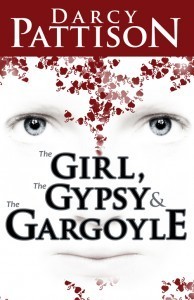 .
.
How do you take an idea to a book? I am just starting the process again and every time, it overwhelms me. I know the process works, but it seems so daunting at this first stage. So, I only look forward to the next task, knowing that taking the first step will lead me onward.
For this story, I’ll approach it on several levels at once:
Outlining. This is the fourth book in an easy-reader series, so I know the general pattern that the book will follow over its ten chapters. Chapter one will introduce the story problem and chapter ten will wrap it up. That leaves eight chapters and each has a specific function in this short format. Chapter 2 introduces the subplot, chapter 4 intensifies it and chapter 6 resolves it. That leaves chapters 1, 3, 5, 7-10 for the wrap-up. Chapters 9 and 10 are the climax scene, split into two, with a cliff hanger at the end of chapter 9. In other words, I can slot actions into the functions of each chapter and make it work. Knowing each chapter’s function makes it easier–but not automatic. I’ll still need to shift things around and make allowances for this individual story.
Character Problem. Making my characters hurt is the second challenge. Squeezing them, making them uncomfortable, making them cry, dishing out grief and mayhem–it’s all part of the author’s job. I tend to be a peace-maker and find this to be quite difficult. But if I can manage to bring my character’s emotions to a breaking point by chapter 8, I’ll be able to move the reader. I’ll be searching for the pressure points for the character as the outline progresses. Hopefully, the emotional resolution in chapter 9-10 will be a twist, something unexpected by the reader.
Back and Forth Between Outline and Characters. The nice thing about focusing on just this much at first is that it is interactive. I’ll go back and forth between plot, character and the structure demanded by this series until the story starts to gel. Will it be easy and automatic? Oh, no. I’ll be pulling out my hair (metaphorically) for a couple days. But by the end of the week (I hope) there will be progress.
How do you start your story? Do you free-write, create a character background, or outline? Which parts interact as you create the basis for a new story?
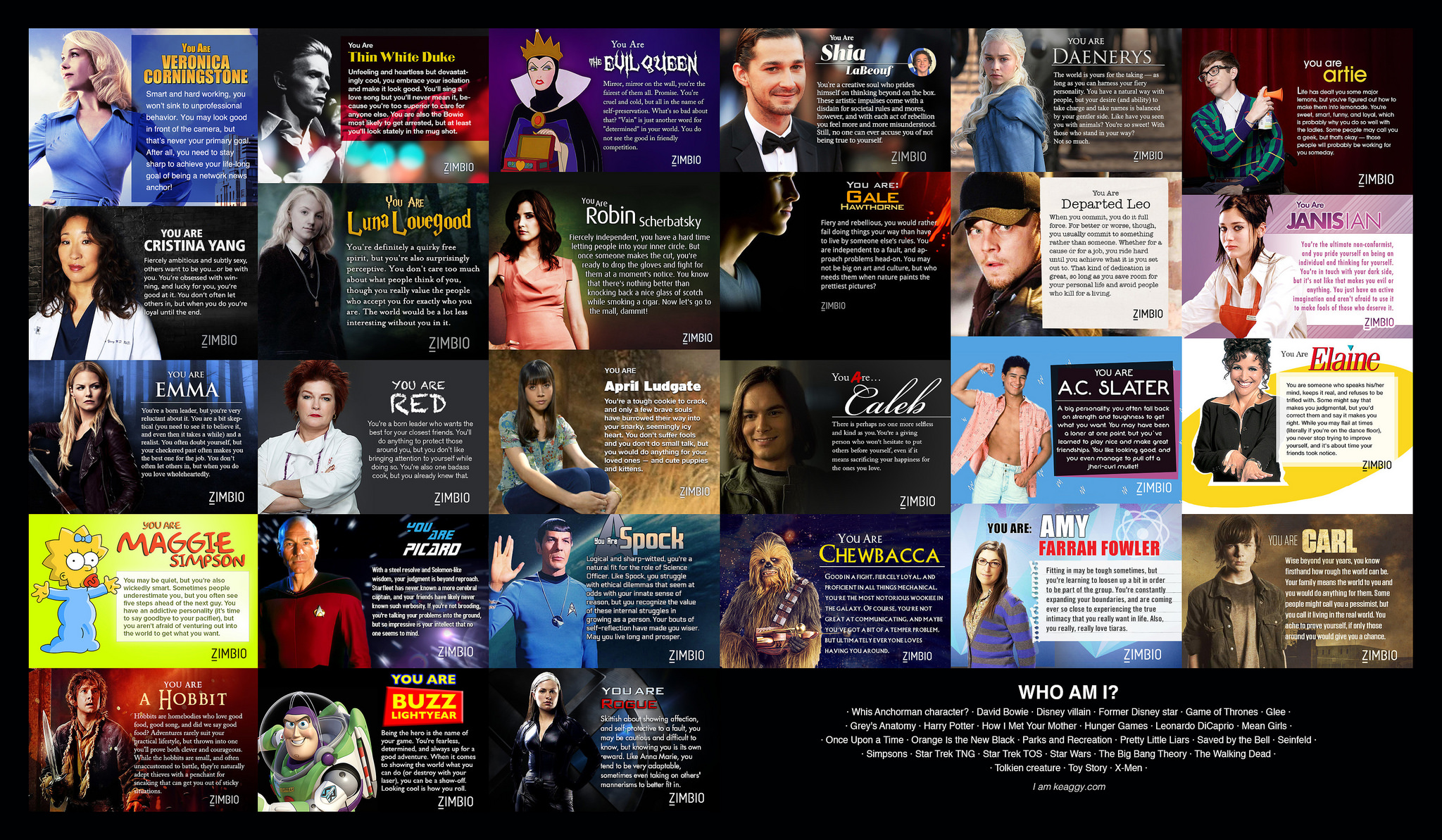
What Character Are You? Click to Enlarge. Photo Credit: http://www.flickr.com/photos/bk/12392...


February 9, 2014
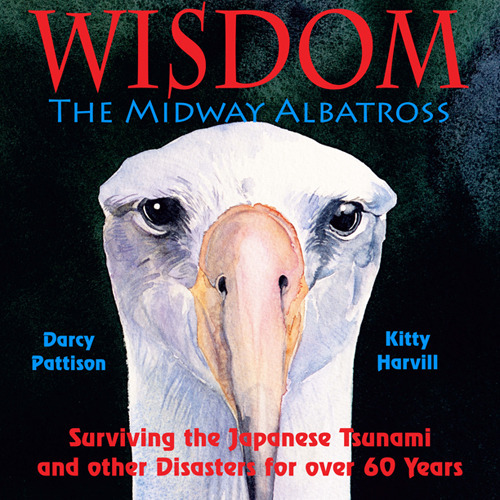
Wisdom, the Oldest Bird in the World Hatches New Chick
READ A SAMPLE CHAPTER: Now Available.
Wisdom, the oldest known bird in the world at age 63, has just seen her newest chick hatch! Wow!
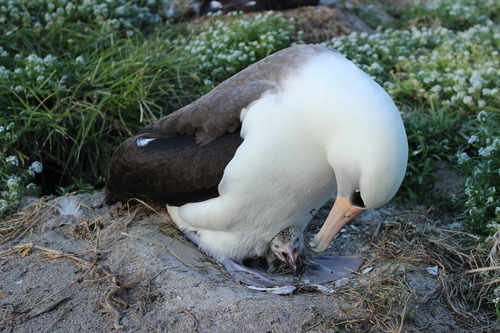
Wisdom and her chick on Midway Atoll NWR. Photo credit: Ann Bell/USFWS
One of the surprising things about writing a nonfiction piece is that the story isn’t finished yet. Our world doesn’t just stop, it’s not stagnate. Life goes on. And that means that Wisdom has yet another chick.
Laysan albatrosses are known to take a year off now and then, usually at 4-5 year intervals. Wisdom has continuously hatched a chick since 2008, so she’ overdue for a sabbatical. This year, I was worried that she might not return and that could mean she was taking a break; or, it could mean that she died somewhere, lost at sea. Instead, Wisdom is breaking all records and teaching scientists so much about the life of an albatross. Before Wisdom–banded since 1956–scientist believed that Laysan albatrosses lived to be about 25 years old. We still don’t know if her life is an aberration or the norm. Scientists have banded Wisdom’s chicks for the last few years to follow the life of her chicks. They could fall prey to predators, storms, pollution or fishing. Or, they could live as long as Wisdom, or longer. This story is far from over. And that makes it even more exciting to me than when Wisdom first captured my attention. When will her story end? No one knows. Cool!
Cornell Bird Lab maintains a web-cam of a Laysan albatross nest on Kauai, Hawaii. Watch it here.
February 6, 2014
OutTakes: Publicity for Your Book
READ A SAMPLE CHAPTER: Now Available.
When you buy a DVD these days, you expect something extra than what you saw in the store. You expect to see a Director’s Cut, interviews with cast/crew/directors/critics, insider info or jokes, deleted scenes and outtakes. What’s your favorite kind of ancillary materials? What do you buy the DVD for? And how can you translate this to your own book marketing?
As you are writing, think about these extras that you can add on your author website. Here are some things you can do as you write your story:
Stop and Write an Essay. In the midst of writing your novel or picture book, stop and write an essay. We know that stories shouldn’t preach, but should tell a story. So write an essay that delves deeply into the themes of your story. Why does this story hold passion for you? Here’s Kate DiCamillo talking about the super squirrel in the 2014 Newbery award book, Flora and Ulysses. Yes. Think about what you might write for a newspaper article! But strike while the moment is hot, while you are writing the story. Then you’ll be ready when the invitations for featured articles come your way.
Recipes, coloring pages, play lists. What sorts of things relate to your story? If you like to doodle, but you know you’re not ready for prime time, use the doodles to create a coloring page, or a creative coloring page. My current series about aliens on Earth involves recipes and I’m gathering great ones for the launch of that book. Many authors create playlists they listen to when they write a particular story.
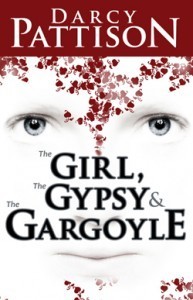 Outtakes or deleted scenes. Personally, I think this takes guts! But I am trying this on my new novel, THE GIRL, THE GYPSY AND THE GARGOYLE. I wrote a prologue for the book, even though I knew I probably wouldn’t use it. That’s what we do, we try different directions and try new things. For this story, there’s a Gargoyle Man whose face is scarred and I felt a need to know him better. So, I wrote the prologue about how he and his brother–the Gimpel brothers–discovered a magical stone. Read the outtake and a sample chapter here.
Just out of curiosity, I’d love to see a “Director’s Cut” for a novel, the novel the way the author him/herself might have edited it. Sure, I know that’s probably not possible; and it would be a gutsy thing to do. But it would be fascinating.
February 4, 2014
Gender and the ALA Awards
READ A SAMPLE CHAPTER: Now Available.
The Newbery, Caldecott, Printz, Siebert and other awards for the best books of children’s/teen literature were announced recently. And every year the question of gender bias is raised. Overwhelmingly, the industry is dominated by female authors/illustrators, yet the awards go to male authors/illustrators.
This year the Caldecott went to 75% male illustrators, with the winner a male.
The Siebert is 20% male, with the winner a female.
The Newbery is 40% male, with the winner a female.
The Siebert is 20% male, with the winner a male.
Except for the Caldecott, it seems the awards are spread out.
Considering the possibility of gender bias–which is generally skewed toward male authors/illustrators, it’s interesting to read this article by Lilit Marcus, who spent 2013 only reading female authors. She was accused of being sexist, reverse sexist, and misandrist. “One Flavorwire commenter dismissed the significance of focusing on female authors and announced that he would only be reading books by authors who were tall.”
And yet, many readers are now contacting Lilit and asking for recommendations for women authors.
I wonder what it would look like to only read women’s fiction and nonfiction for a year. What picture books would emerge as winners? What middle grade novels would you champion? What YA novels would rise to the top? What if you spent the next year only reading men’s fiction and nonfiction? What would you learn from each year’s experiences?
Do you feel that the world of children and teen publishing carries gender biases? Where do you see it most?
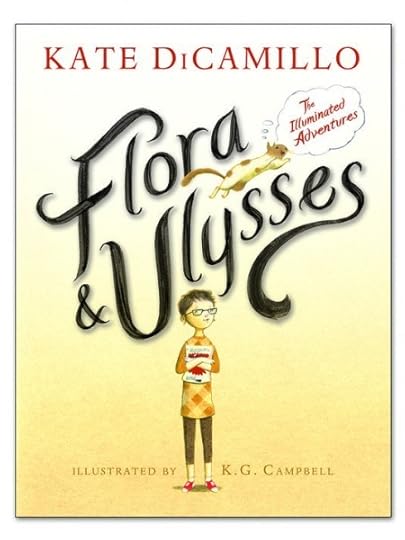
Winner of the 2014 Newbery Medal for Distinguished Contribution to Children’s Literature.
February 3, 2014
NonFiction Picture Books: Research Required
QUIZ: ARE YOU READY TO WRITE A CHILDREN'S PICTURE BOOK?
How many pages are in a typical children’s picture book?
Who is the audience of a children’s picture book? Hint: It's not just kids.
Are there restrictions on the vocabulary you use in a picture book?
Do I have to write in rhyme? Do manuscripts written in rhyme sell better?
Do EPUB books have to the same length as printed books?
Don't start writing that picture book until you know these crucial concepts. GET THE ANSWERS HERE.
How much research do you need to do for a children’s nonfiction picture book? Tons!
Nonfiction means that you have the facts straight, ma’am.
3 sources agree. Traditionally, writers look fora at least three sources to back up each piece of information. This means the content isn’t just a personal opinion or a poorly researched fact. Facts should be replicated in multiple studies and corroborated by multiple experts.
Primary sources. Just as in any nonfiction writing,it’s important to go to the primary source of information. Talk to scientists, look up research reports and email the authors of the study, go out and try something for yourself.
Dig deeper. Nonfiction picture books should dig deeper for information, for the meaning and interpretation of the facts, and for context. A biography of Shirley Temple, for example, would likely consider the Depression Era and the effects it had on the burgeoning film industry. For some, Temple’s films were seen as a cheap escape from the harsh realities. President Franklin Delano Roosevelt said about her, “When the spirit of the people is lower than at any other time during this Depression, it is a splendid thing that for just 15 cents, an American can go to a movie and look at the smiling face of a baby and forget his troubles.” And of course, if I was writing a book with that quote, I would have to tell you where I found it. (It’s quoted here in the UK Guardian.)
Tools for Research
My favorite tools for researching for a nonfiction children’s book include:
Google, GoogleScholar, and more. Here are tips and more tips for searching on Google. Did you know you can restrict the search to a certain website or ask Google to only tell you about information posted in the last year? GoogleScholar searches research journals. See the full list of Google products here.
Wikipedia. I know, people feel that Wikipedia is unreliable. But Clay Shirky argues in his book, Here Comes Everybody, that over the long run, it’s more reliable because so many people are able to edit it. Crowd-writing-and-editing is both the strength and weakness of Wikipedia. And yet, I find it great for an initial look at a topic; and the references are often the primary sources that I need. Don’t discount this one.
Library Databases. I recently taught essay writing to a group of home-schoolers and we took a field trip to a public library to look at their databases. These are databases that either aren’t available on the web, or cost too much for an individual to subcribe to. Most public libraries subscribe to an incredibly rich set of databases that offer a world of information; often these are available online through your library’s website. It’s one of the first places I look for info.
Follow up leads. Often these resources will send me off in multiple directions scrambling for more information, emailing scientists, reading dense research reports and so on. It’s not where you start, but where you end up that matters. Follow the trails, question everything and search for answers.
Two Nature Books as Examples of Research
My two recent nature books took different tracks for their research.
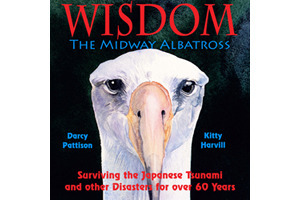
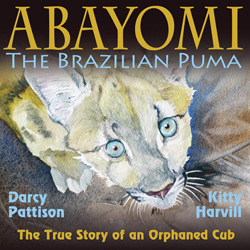 Research for my latest nature picture book took a different tack. Abayomi, the Brazilian Puma: The True Story of an Orphaned Cub The illustrator, Kitty Harvill lives in Brazil half the year and is involved in the environmental art community there. She heard about an orphaned puma cub and suggested the story. Because she knew the scientists involved, it meant lots of interviews, including Skyping with the scientists.
 The reports about where the cub was orphaned included coordinates for the chicken farm where the mother was killed. I looked on GoogleEarth and found images of the exact locale, which helped me describe the events in more detail. Harvill actually visited the site and took photographs for reference for the art.
For this story, the context meant even more research. Why are pumas important in the Brazilian ecosystem? It turns out that there has been an increase in Brazilian Spotted Fever (similar to Rocky Mountain Spotted Fever in the U.S.). The largest rodent in the world, the capybara is the primary host for the ticks that carry the fever; and the biggest predator of capybaras are pumas. I researched ticks and tick-borne diseases, checking the World Health Organization to confirm that the fever has increased in Brazil. I looked at capybaras and their habitats. Puma diet consists of many other small mammals, including rodents. Were capybaras a large portion of what they ate? The questions went on and on.
Through it all, though, there was this main question: where is the story?
For me, it’s not enough just to recite facts. I want the emotional impact of those facts, the story. I found it in the original report of the cub who was orphaned. The owner of the chicken farm where the mother was killed said that he had no idea pumas might be involved in stealing his chickens. He said, “I’ve lived here for over 40 years and I’ve never seen a puma.”
That thought sat around for a long time, before it became the basis of the story: pumas were invisible.
Nonfiction picture books require meticulous research and each project takes on a life of its own.
Check out other 2nd Grade Picture Books for examples of nonfiction titles to study.
January 27, 2014
How I got 57 Reviews on Amazon
QUIZ: ARE YOU READY TO WRITE A CHILDREN'S PICTURE BOOK?
How many pages are in a typical children’s picture book?
Who is the audience of a children’s picture book? Hint: It's not just kids.
Are there restrictions on the vocabulary you use in a picture book?
Do I have to write in rhyme? Do manuscripts written in rhyme sell better?
Do EPUB books have to the same length as printed books?
Don't start writing that picture book until you know these crucial concepts. GET THE ANSWERS HERE.
Guest post by Hope Marston, an Amazon Top Reviewer
My thirty-second children’s book was released a few days before the War of 1812 Bicentennial Celebrations began. Thirty of my titles had been published by traditional companies. When I finished revising Sackets Harbor Powder Monkey – The War of 1812, it was too late to find a publisher who could release it by July 19, 2012. Consequently I would have to spend the bicentennial years marketing the book myself. I needed a plan, one without pitfalls, but with pleasant perks and plentiful publicity.
My Marketing Plan
As I was developing my plan, I read several articles online stressing the importance of having one’s books reviewed on Amazon. On Fiction Notes, I read that a writer should strive for 25 posted reviews. I decided to aim for 50. I invited my friends, neighbors, people who purchased my new book at signings, and anyone who expressed interest in it to post a review on Amazon. When people mentioned my new book, I would ask them to share their thoughts by writing a review.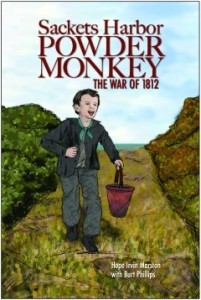 Since I was asking others to review my book, I set a second goal. I would read 50 books ASAP and post reviews for them. Off I went to my local library to choose new books to read. Meanwhile wherever I met teachers, librarians or historical museum personnel, I gave them an autographed copy of Sackets Harbor Powder Monkey and requested an Amazon review in return.
A friend who teaches ESL students in Ho Chi Minh City, Viet Nam, told me one of her sixth grade students liked my story. She agreed to help him post a review on Amazon. Seeing his review online encouraged Minh–and me.
Pitfalls of Asking to Trade Reviews
Well-meaning folks oft times neglect to keep the enthusiastic promises they make. I gave away more than 100 books with the understanding that the receiver would post a review. Two of my best friends, a public librarian and one who is retired, keep promising “to get to it” but they never followed through. Perhaps they could not conscientiously recommend my book and chose not to post a negative review.
As I worked toward my goal of reviewing 50 books, I watched for intriguing titles on line. When I found a book that looked inviting, I contacted the author and asked if we could swap books and post reviews for each other. Not a good idea. Despite glowing reviews already posted on their websites, I received a number of self-published books that were poorly written. If I wrote honest evaluations, most of my comments would have been negative.
I wanted to keep my promise to review these books, but I did not want to discourage the authors. As a respected reviewer, how could I handle those less than stellar books? With the most difficult situations I explained to the writers that in my judgment there were major problems with their books. Rather than post negative reviews, I chose to critique these books privately.
Such touchy situations forced me to rethink my motive for writing reviews in the first place, besides getting reviews in return. My decision to post negative reviews hinged on my answer to two questions. Was my purpose to help an author gain readers? Or was I attempting to help readers find books they would enjoy as well as alert them to ones they probably would not appreciate?
When the late JoAnn Daly was my editor at Cobblehill/Dutton, I received a couple of scathing reviews. The first time one was published in Booklist, she told me to ignore it, that it was but one reader’s opinion. The second time one of my books was severely criticized, JoAnn responded to the reviewer by pointing out the factual errors in the published review. (I loved my editor!)
Though I am not comfortable writing negative reviews (my mother taught be keep quiet if I couldn’t say something nice), I appreciate it when a reviewer notes such concerns as a weak plot, foul language, profanity, or careless editing.
If I look hard enough, I can usually find something good to say about a particular title. If I ever decide to post a negative review, I will explain what I perceive to be faulty about the book and/or how it is written.
The Perks of Asking for Reviews: Name Recognition
Book Trailer for Sacketts Harbor – Powder Monkey.
If you can’t see this video, click here.
Seeking reviews for my War of 1812 book while helping other readers find books they’d enjoy has been a satisfying experience. It’s been pleasant to build friendships with authors I might never have met otherwise.
Another perk is having people email me saying they appreciated my reviews and asking if I would review their new books. One such request came from a writer who lives in Spain.
Before I agree to review a stranger’s book, I find out as much as I can about it. If it sounds like a title I’d enjoy, I request a hard copy. I usually refuse to review books on Kindle since I can’t flag passages and then flip back to them when I write my review.
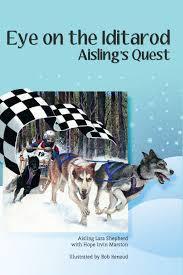
A huge incentive for posting reviews on Amazon is name recognition. When I began posting reviews, Eye on the Iditarod: Aisling’s Quest was my newest release. To my surprise Amazon listed me as author of that book right after the title of the book I was reviewing. Wonderful, free advertising!
When Sackets Harbor Powder Monkey – The War of 1812 was released, I asked Amazon to switch to the new title. No problem. Every time readers online read my latest review, they saw my name along with the title of my latest book. That made me smile because the more often readers see my name and the title of one of my books, the more apt they are to eventually check me out.
About four months ago I was informed by the folks at Amazon that I was breaking the rules by listing a title of one of my books along with my name. Therefore they were removing those titles from all of my reviews. SAY WHAT?
I responded that this was something that their staff had instituted. Since I was the wrong person being scolded, I wrote for clarification of the rules. I learned it is permissible to mention the title of one of my publications in the body of my review. Now I look for a tie-in for one of my books with the new review I am posting. That’s a fun challenge, and sometimes an easy one as well.
Posting reviews on Amazon for the world to read is good writing practice for me. When I observe faults in the works of others, I am more apt to catch a similar problem with my own writing. Yes, it eats into my time, but it’s worthwhile for me and my readers. I enjoy the challenge of analyzing a story and how the author writes it. Most of us who enjoy reading never have time to read all the books we’d like to read. By posting my reviews on Amazon, I help Internet readers find books they are most apt to enjoy.
Publicity Results
 To date I have posted 129 reviews on Amazon. When I submit a new review, it is usually posted a few minutes after I have emailed it. People who read Amazon reviews have the opportunity to tell if a review is helpful or not. Thus far 77 reviewers have clicked the button at the end of my reviews indicating they were helpful. I consider that a good barometer of my ability to write them.
Amazon lists me as a Top Reviewer. Frequently the company sends me a request to review books I have purchased, but not yet reviewed. While I appreciate the invitation, I don’t accept it if it was a book not to my liking. I choose what I will review regardless of where the book came from.
Recently I read an article about Amazon’s book review process. According to the author, the review staff at Amazon was impressed by a certain title that was not selling well. To give the book the press they thought it deserved, they contacted 100-300 potential online reviewers. They offered to send a PDF of the book to those who expressed an interest in reading it and would consider posting an honest critique. The staff expected 40 to 50 responses resulting in possibly 35 reviews. The writer of the article considered that a satisfactory number. That’s a speedy, inexpensive way to solicit reviews. I could have used it if I had a PDF of Sackets Harbor Powder Monkey.
That said, 57 reviews in exchange for 100 books given away is not a shabby response. It encourages me to press on in my quest for new reviews of this book until the War of 1812 bicentennial celebrations end on December 24, 2014.
So, how did I get all of those reviews for Sackets Harbor Powder Monkey – The War of 1812?
I asked for them.
Since it’s more blessed to give than to receive, I will continue to post reviews on Amazon. I will keep asking readers to review my book until December 24—unless I reach my new goal of 100 reviews sooner. Of course I would welcome reviews from you who are reading this blog. You may contact me at hopemar7@twcny.rr.com Many thanks.
–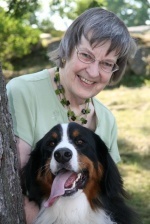 Hope has written more than thirty children’s books and two books for adults. My Little Book Series of wildlife picture books, with over 125,000 copies in print, has won numerous awards. My Little Book of Bald Eagles received the 2010 Next Generation INDIE Book Award in the Best Children’s/Juvenile Non-Fiction category. Her historical novels for Young Adults include Against the Tide: The Valor of Margaret Wilson (2007), Sackets Harbor Powder Monkey – The War of 1812 (2012), and Eye on the Iditarod: Aisling’s Quest (2011), which is the true biography of an eleven-year-old Maine musher.
Hope and her husband of more than fifty years share their Black River (NY) home with Heidi, a lovable Bernese mountain dog. For more, see her bio in Something about the Author (Gale), or her website, www.HopeIrvinMarston.com .
January 22, 2014
Creativity: 8 Ways to Keep the Stories Coming
QUIZ: ARE YOU READY TO WRITE A CHILDREN'S PICTURE BOOK?
How many pages are in a typical children’s picture book?
Who is the audience of a children’s picture book? Hint: It's not just kids.
Are there restrictions on the vocabulary you use in a picture book?
Do I have to write in rhyme? Do manuscripts written in rhyme sell better?
Do EPUB books have to the same length as printed books?
Don't start writing that picture book until you know these crucial concepts. GET THE ANSWERS HERE.
If you want a career in writing, you must keep the stories coming. In the midst of life, with all its ups and downs, words need find their way onto paper. Here’s how to keep the characters talking to you.
Create an office. Even if you don’t have a separate room, create some sort of office space. You need a consistent place to keep your computer, your drafts and supplies. Even if it’s a box that sits under your bed until you need it, don’t waste your precious time collecting supplies.
Instant Success. Do something small that will give you success. Perhaps just a character description or a description of a setting. A bit of dialogue. Start and end each day with something that you know you can complete.
Use psychology. Tell yourself that you only need to write for five minutes. Quickly get into the flow and when you finally stop, you’ve likely done twenty minutes. The key is to keep writing no matter what. If you don’t’ know what to type, try this: I don’t know what to write next. Repeat that 100 times if you have to until it turns into something else. Believe me, you’ll get so bored with that phrase that you’ll write something else.
Plan marathons. Kids are spending the night with someone and the hubby is going hunting? Bingo. It’s time for a writer’s marathon. Star as soon as the house clears out and write until late into the night. Get up early and repeat as long as you can. Marathons like this can jump start a big project, or get you through those rough spots.

Plan a writing marathon to jump start a project or to finish your novel.
Turn off the internal editor. Write, do not revise. Keep the flow of writing going and ignore the internal editor when s/he wants to stop and look up facts or check a dictionary for spelling. This isn’t the time for that. Instead, let the story flow.
Stop early. Some writers swear by this technique: stop writing in the middle of a sentence and pick up right there on the next day. It makes sense. Just competing the thought gets your head back into the story and it’s easy to move on from there.
Don’t wait. Are you waiting until you get answers to a bit of research or until you figure out a plot point? Instead, write and trust the process. Trust that there will be tidbits to save out of whatever you write.
Trust your instinct. Don’t worry so much! And certainly don’t think about what a reader or an editor will say at this point. Just write. Trust your storytelling ability and write. Trust your sense of story. Trust your choice of words. Write, write, write.
January 21, 2014
Begin in the Muggle World: Opening Scenes
QUIZ: ARE YOU READY TO WRITE A CHILDREN'S PICTURE BOOK?
How many pages are in a typical children’s picture book?
Who is the audience of a children’s picture book? Hint: It's not just kids.
Are there restrictions on the vocabulary you use in a picture book?
Do I have to write in rhyme? Do manuscripts written in rhyme sell better?
Do EPUB books have to the same length as printed books?
Don't start writing that picture book until you know these crucial concepts. GET THE ANSWERS HERE.
Where should your novel begin? The Harry Potter series doesn’t start with the death of Harry’s parents, because Harry wasn’t old enough to remember that. It doesn’t start with the first day in Hogwarts School because it wouldn’t bring us into Harry’s world with a strong enough sense of character and a strong sympathy for Harry.
Instead, JK Rowling begins the whole series in the Muggle world, with a misfit Harry trying to survive while living under the stairway.
Build Sympathy. One crucial goal of openings is to create sympathy for a character that will carry through many challenges and events. An orphaned child who is forced to live with disagreeable parents will most certainly get sympathy. Poor thing, to be treated so shabbily; it’s not fair. We love our underdogs, don’t we?
Start with the Normal World. For Harry and for the reader, the normal world is the Muggle world where there is no magic. It’s the right place to start, but the wrong place to linger. Readers should understand exactly what the normal situation is before something comes along to shake up the world of the story.
Start with a Day that is Different. Harry’s under-the-stairs world is normal, but it doesn’t stay normal. Immediately something is different. It’s a delicate balance to make sure the contrast is set up between normal and the exciting world introduced in the story. You want enough of the normal to set up the contrast, but too much gets boring. Normal is boring. Think hard about where you might start the story and what are the first small inklings (or big huge inklings, if you choose) of change. Start there or a bit later.
January 17, 2014
5 Secrets to Selling More Books
QUIZ: ARE YOU READY TO WRITE A CHILDREN'S PICTURE BOOK?
How many pages are in a typical children’s picture book?
Who is the audience of a children’s picture book? Hint: It's not just kids.
Are there restrictions on the vocabulary you use in a picture book?
Do I have to write in rhyme? Do manuscripts written in rhyme sell better?
Do EPUB books have to the same length as printed books?
Don't start writing that picture book until you know these crucial concepts. GET THE ANSWERS HERE.
Everyone wants to know the secret ingredients to sell books. What should you put in your cover letter, your blurb, your flap copy, or your book jacket? Whether you are selling to an editor, an agent or a reader, what will earn your book a second look?
No one knows for sure. But BookBub’s Unbound has some intriguing facts that hint at the answers.
BookBub describes itself this way:
BookBub is the leading service for publishers and authors looking to reach new readers through limited-time eBook deals. Our 2 million+ subscribers turn to BookBub’s daily email to find free and deeply discounted eBooks that match their interests.
In other words, an author agrees to lower the price of an ebook for a certain time period; during that time, BookBub sends out an email about your book (along with promos on other books, as well). It means that BookBub has an incredible data source that can tell them when a promo is clicked on and when it converts to a sale.
BookBub.com suggests five things are helpful in book marketing:
Reviews. Listing the number of Amazon or GoodReads reviews can result in 20-30% better results. This is one type of “social proof,” which means that when other people do something, you’re more likely to go along. We use social proofs all the time. When you see the widget on my site that says I have 1164 Followers on Pinterest, you’re more likely to check me out and follow me there. That’s social proof. On your site, you could add info on the number of Amazon or GoodReads reviews you get to encourage readers to click through and check it out. Or consider other means of social proofs that could help–and use all you can. Cite stats from your previous book in cover letters; use for book descriptions.
Best-sellers and Awards. Yes, these matter. Any recognition that pulls you out of the crowd will help. However, some awards get more respect–and therefore, get more sales results. Bookbub says a “New York Times BestSeller” wins over a “bestselling author.” Recently, one of my how-to-write books, Start Your Novel, climbed to the top of its category on Amazon/Kindle, making it an “Amazon BestSeller.”
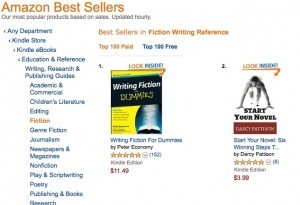 That’s good! It’s not as good as a “New York Times Bestseller,” but it’s better than no awards; it pulls the book out of obscurity. Use for book covers, author bio, book descriptions and cover letters.
 Character Names. My forthcoming novel, SAUCY AND BUBBA: A HANSEL AND GRETEL TALE, puts the character’s names in the title itself. If you can’t manage that, use names in the blurb itself. NOT: a brother and sister. INSTEAD: Saucy and Bubba. Use in cover letter, flap copy, and book description.
Hilarious. According to BookBub, it only happened to one novel. But the single additional word, “Hilarious,” gave one book promo 4000 more clicks (we don’t know percentages, but 4000 clicks is significant!). Will it help your story? Not if hilarious doesn’t properly describe your novel. Instead, BookBub suggests you find other descriptive language that will intrigue the reader: heart-warming, intriguing, a night to remember, etc. Work hard to use the strongest language possible. Use in cover letters, flap copy, book description and covers.
 Comparison Title. No. Do not compare your book to Harry Potter. But DO describe your book in comparison to other stories. For example, for one forthcoming novel, VAGABONDS, I am using this comparison: In the tradition of Charlotte’s Web or The Underneath, this American fantasy . . .” This lists two well-known American fantasies, stories that take place in America and draw upon the American landscape. It’s a positioning statement, or a way to tell readers in shorthand what they can expect. Use in cover letters, book descriptions and flap copy.
Read the BookBub article for more on exactly how much each of these strategies can improve your results.
January 15, 2014
Let’s Meet in 2014
QUIZ: ARE YOU READY TO WRITE A CHILDREN'S PICTURE BOOK?
How many pages are in a typical children’s picture book?
Who is the audience of a children’s picture book? Hint: It's not just kids.
Are there restrictions on the vocabulary you use in a picture book?
Do I have to write in rhyme? Do manuscripts written in rhyme sell better?
Do EPUB books have to the same length as printed books?
Don't start writing that picture book until you know these crucial concepts. GET THE ANSWERS HERE.
Dear Friends:
The watchwords of my website are “Believe in Your Story.” Everything I do as a writing teacher is devoted to help YOU take your story from a dream to reality. This year, I hope you’ll let me become a small piece in your journey toward publication. Here’s a brief schedule of speaking engagements for the year. Notice that there are limited spots in most of the workshops.
BEGINNER’S GUIDE TO BLOGGING
Baxter County Library, Mountain Home, AR
Contact: darcy@darcypattison.com
NOVEL REVISION RETREAT June 6-8, 2014. Tacoma, Washington.
Originally, this was open to only 8 people, but the response has been great, so it is open to 12. Only 2 spaces left.
For information on the Novel Revision Retreat, see here.
Download full information on the Tacoma retreat here.
Contact: Claudia Finseth.
PICTURE BOOKS AND ALL THAT JAZZ, June 12-15, Highlights Foundation Workshop.
Full information on the Highlights Foundation website.
Darcy Pattison says:
“One of the joys of traveling the U.S. to teach is meeting amazing authors like Leslie Helakoski, who has served as the Society of Children’s Bookwriters and Illustrators Regional Advisor in Michigan. This transplanted Cajun takes a delightful and insightful look at picture books. We’ll be team-teaching, riffing off one another, in this intensive picture book workshop for dedicated writers. I’ll crack the whip; Leslie will crack the jokes. Did I mention that it will be intensive? Expect to revise your gem a dozen times until it gleams. And sells.
My ebook, How to Write a Children’s Picture Book has sold worldwide, from South Africa to Canada to Arkansas. The book covers picture book genres, picture book basics, the actual writing process, the revision process, and the submission process. Leslie and I will cover all these topics—and more. Writing rhymed picture books, dummy your manuscript, phonics for picture book writers, tips on getting a reader to turn the page, and fine-tuning for that crucial read aloud quality—we go in-depth and help you jazz up your story. We’ll go far beyond the basics.”
Want to host a retreat in your area, or invite Darcy to speak at your conference? Email Darcy for more details.
This is a special four days of workshops with three options.
August 22-25. Rolling Ridge Retreat and Conference Center, North Andover, MA.
Contact: Anne Broyles
Choose one or all of the following three workshops, all of which are held at Rolling Ridge.
BUILD AN AUTHOR WEBSITE. Friday, August 22, 2014. 9 AM-3 PM
In this hands-on seminar, we’ll set up your domain/blog and learn four strategies for maintaining a strong blog with a minimum of effort. Darcy Pattison’s website (darcypattison.com) receives half a million visits/year. Learn from her mistakes and triumphs as she walks you through the process of developing a viable website. Computer access required—bring your own computer; you will be paying for your domain (about $12) and webhosting (about $80/year), so you’ll need to be prepared to sign up for services with a credit card or PayPal.
Limited to 8 participants.
Contact: Anne Broyles
NOVEL REVISION RETREAT. Friday, August 22, 2014, 4 pm to Sunday, August 24, 11 am.
Darcy will share her unique revision methods and give concrete tools for writers who have finished a middle grade or young adult novel manuscript. The goal of the retreat is that every author will go home with strategies for revising their own particular novel. The retreat is designed for maximum participation and advance preparation is required. Writers will be in critique groups with three other writers, and are expected to have read their group members’ complete manuscripts, as well.
Limited to 20 participants.
Contact: Anne Broyles
SUNDAY, AUGUST 24 OVERNIGHT Dedicated Writing Time Meals will be available for those who want to stay at Rolling Ridge to write/canoe or kayak/have a massage/hang out with other writers.
PICTURE BOOK WORKSHOP. Monday, August 25, 2014. 9 AM-3 PM
Picture books demand strong, creative storytelling. Join picture book author Darcy Pattison to work on your word choices, story structure, pacing, addressing different audience, and the possibilities—and pitfalls—of rhythm and rhyme. You will focus and shape that vague idea into a lively story with great illustration possibilities and interactive read-aloud fun. Bring a story in progress. You’ll need to purchase the ebook, HOW TO WRITE A CHILDREN’S PICTURE BOOK, by Darcy Pattison.
Limited to 16 participants.
Contact: Anne Broyles
Want to host a retreat in your area, or invite Darcy to speak at your conference? Email Darcy for more details.


