
Darcy Pattison's Blog, page 26
March 5, 2014
Author Website Content: ABOUT Page
READ A SAMPLE CHAPTER
.goodreadsGiveawayWidget { color: #555; font-family: georgia, serif; font-weight: normal; text-align: left; font-size: 14px;
font-style: normal; background: white; }
.goodreadsGiveawayWidget img { padding: 0 !important; margin: 0 !important; }
.goodreadsGiveawayWidget a { padding: 0 !important; margin: 0; color: #660; text-decoration: none; }
.goodreadsGiveawayWidget a:visted { color: #660; text-decoration: none; }
.goodreadsGiveawayWidget a:hover { color: #660; text-decoration: underline !important; }
.goodreadsGiveawayWidget p { margin: 0 0 .5em !important; padding: 0; }
.goodreadsGiveawayWidgetEnterLink { display: block; width: 150px; margin: 10px auto 0 !important; padding: 0px 5px !important;
text-align: center; line-height: 1.8em; color: #222; font-size: 14px; font-weight: bold;
border: 1px solid #6A6454; border-radius: 5px; font-family:arial,verdana,helvetica,sans-serif;
background-image:url(https://www.goodreads.com/images/layo... background-repeat: repeat-x; background-color:#BBB596;
outline: 0; white-space: nowrap;
}
.goodreadsGiveawayWidgetEnterLink:hover { background-image:url(https://www.goodreads.com/images/layo...
color: black; text-decoration: none; cursor: pointer;
}
Goodreads Book Giveaway
The Girl, the Gypsy and the Gargoyle
by Darcy Pattison
Giveaway ends March 21, 2014.
See the giveaway details
at Goodreads.
Enter to win
This month-long series of blog posts will explain author websites and offer tips and writing strategies for an effective author website. It alternates between a day of technical information and a day of writing content. By the end of the month, you should have a basic author website up and functioning. The Table of Contents lists the topics, but individual posts will not go live until the date listed. The Author Website Resource Page offers links to tools, services, software and more.
All ABOUT You!
In the introduction to this series of posts, I referred to a '+msg+'
';
var input_id = '#mc_embed_signup';
var f = $(input_id);
if (ftypes[index]=='address'){
input_id = '#mce-'+fnames[index]+'-addr1';
f = $(input_id).parent().parent().get(0);
} else if (ftypes[index]=='date'){
input_id = '#mce-'+fnames[index]+'-month';
f = $(input_id).parent().parent().get(0);
} else {
input_id = '#mce-'+fnames[index];
f = $().parent(input_id).get(0);
}
if (f){
$(f).append(html);
$(input_id).focus();
} else {
$('#mce-'+resp.result+'-response').show();
$('#mce-'+resp.result+'-response').html(msg);
}
}
} catch(e){
$('#mce-'+resp.result+'-response').show();
$('#mce-'+resp.result+'-response').html(msg);
}
}
}


March 4, 2014
Author Website Tech: Domain and Hosting
READ A SAMPLE CHAPTER
.goodreadsGiveawayWidget { color: #555; font-family: georgia, serif; font-weight: normal; text-align: left; font-size: 14px;
font-style: normal; background: white; }
.goodreadsGiveawayWidget img { padding: 0 !important; margin: 0 !important; }
.goodreadsGiveawayWidget a { padding: 0 !important; margin: 0; color: #660; text-decoration: none; }
.goodreadsGiveawayWidget a:visted { color: #660; text-decoration: none; }
.goodreadsGiveawayWidget a:hover { color: #660; text-decoration: underline !important; }
.goodreadsGiveawayWidget p { margin: 0 0 .5em !important; padding: 0; }
.goodreadsGiveawayWidgetEnterLink { display: block; width: 150px; margin: 10px auto 0 !important; padding: 0px 5px !important;
text-align: center; line-height: 1.8em; color: #222; font-size: 14px; font-weight: bold;
border: 1px solid #6A6454; border-radius: 5px; font-family:arial,verdana,helvetica,sans-serif;
background-image:url(https://www.goodreads.com/images/layo... background-repeat: repeat-x; background-color:#BBB596;
outline: 0; white-space: nowrap;
}
.goodreadsGiveawayWidgetEnterLink:hover { background-image:url(https://www.goodreads.com/images/layo...
color: black; text-decoration: none; cursor: pointer;
}
Goodreads Book Giveaway
The Girl, the Gypsy and the Gargoyle
by Darcy Pattison
Giveaway ends March 21, 2014.
See the giveaway details
at Goodreads.
Enter to win
This month-long series of blog posts will explain author websites and offer tips and writing strategies for an effective author website. It alternates between a day of technical information and a day of writing content. By the end of the month, you should have a basic author website up and functioning. The Table of Contents lists the topics, but individual posts will not go live until the date listed. The Author Website Resource Page offers links to tools, services, software and more.
The first step of creating an author website is to buy a domain.
OK, we’re jumping into the technical part of starting an author domain. If you’re only along for writing specific pages on your Author Website, you get a pass today. But come back tomorrow for writing.
Buy A Domain
Domain: A domain name is a unique name that identifies a website. It is usually precede by www and followed by .com, .net, .org or other specific designations.
Authors should own their own domain because it’s the most reliable way to build traffic and establish relationships with fans. You should buy and establish a domain in your name first; later, if you wish, you can add other domains for the titles of your book. For example, I own WWW.DARCYPATTISON.COM; but I also own domains for some of my picture books such as WWW.OLIVERKWOODMAN.COM.
The basic domain, though, should be your name with a .com ending. If the domain for your name is taken, you can consider using your initials and your last name, or other variations. Or, you can also try a .net, but this will automatically cut down on your traffic; you’ll have to work harder to get visitors to your site.
For the rest of these tutorials, I will refer to FamousAuthor.com, but that’s just a placeholder for your name. You should replace “FamousAuthor” with the domain you wish to buy.
Join me in August, 2014 the Boston area for a one-day workshop, BUILD YOUR AUTHOR WEBSITE. I’ll also be teaching a Novel Revision Retreat and a one-day Picture Book Workshop. Get the details here.
Let Your Hosting Company do the Paperwork
The easiest way to buy your domain is to combine this step with choosing a hosting company and allow the hosting company to handle the registration. This tutorial will walk you through doing this at two companies, AnHosting and Blue Host, but the process is similar at all hosting companies.
Hosting Company: When you have a website, it consists of a set of special files and those files must sit on some computer somewhere. A hosting company has sets of servers, the computers that connect to the Internet and serve up files. It’s a real, physical computer.
There are many hosting companies and many of them meet the minimum requirements for a WordPress site. However, WordPress recommends these: http://wordpress.org/hosting/. I recommend Anhosting.com and Bluehost.com as excellent starting places for your site. While these are two common hosting companies, you can also look at other companies recommended by WordPress..
HINT: When you start the process of setting up your website, you’re likely to use several Internet services. Take the time now to think about how you will save the login/password information. Both PC and Mac have “keychain” programs that provide a master password that accesses your passwords. It’s time well spent to set this up early.
CHOOSING A DOMAIN NAME
Before you start, decide what name you would like to use for your website. Usually an author’s website should be their name, as used on your book. If you use a pen name, you’ll want to use that name. Sometimes, however, your name isn’t available. Try other variations of your name until you find one that isn’t taken.
Avoid using hyphens in the name, even if you have a hyphenated last name, because it’s non-standard and harder to remember. Whatever name you finally decide upon, the main criteria is a domain name that is short and easy to remember.
ANHOSTING
I’ve had my blogs at Anhosting.com for several years and have always been happy. We’ll walk through the hosting set up for them first, and then for Bluehost.
Go to http://www.anhosting.com and choose your domain name.
Sign up for the basic package. At the time of writing, it’s only $5.95/month. (SPECIAL: 3 Months Free Web Hosting & 25% Off AN Hosting)
You will receive an email from AnHosting.com with information on how to log into the back end of your site.
Great! Now, you have a domain and it is hosted at a great company. Time to set up the website.
BLUEHOST
Another option for hosting is BlueHost.com
Go to http://www.BlueHost.com.
Sign up for the basic package, which at the time of writing is $5.95/month for 12 months. CLICK HERE TO SIGNUP FOR BLUEHOST.COM
You will receive an email from BlueHost.com with information on how to log into the back end of your site.
Great! Now, you have a domain and it is hosted at a great company. Time to set up the website.
When I first signed up for a domain and hosting company about seven years ago, I cried all weekend because I couldn’t figure out what to do next. These days, hosting companies have tons of tutorials and videos to help you get settled in your new home. Tomorrow, we’ll write the About Page and the next day, we’ll go over important parts of the CPanel, the back end of your site. So, chill out and don’t cry. We’re taking it slow and easy.
Meanwhile, here are some tutorials from BlueHost:
BlueHost
BlueHost Tutorials
Bluehost on YouTube with tons of tutorials.
March 3, 2014
Author Website: HOW?
READ A SAMPLE CHAPTER
.goodreadsGiveawayWidget { color: #555; font-family: georgia, serif; font-weight: normal; text-align: left; font-size: 14px;
font-style: normal; background: white; }
.goodreadsGiveawayWidget img { padding: 0 !important; margin: 0 !important; }
.goodreadsGiveawayWidget a { padding: 0 !important; margin: 0; color: #660; text-decoration: none; }
.goodreadsGiveawayWidget a:visted { color: #660; text-decoration: none; }
.goodreadsGiveawayWidget a:hover { color: #660; text-decoration: underline !important; }
.goodreadsGiveawayWidget p { margin: 0 0 .5em !important; padding: 0; }
.goodreadsGiveawayWidgetEnterLink { display: block; width: 150px; margin: 10px auto 0 !important; padding: 0px 5px !important;
text-align: center; line-height: 1.8em; color: #222; font-size: 14px; font-weight: bold;
border: 1px solid #6A6454; border-radius: 5px; font-family:arial,verdana,helvetica,sans-serif;
background-image:url(https://www.goodreads.com/images/layo... background-repeat: repeat-x; background-color:#BBB596;
outline: 0; white-space: nowrap;
}
.goodreadsGiveawayWidgetEnterLink:hover { background-image:url(https://www.goodreads.com/images/layo...
color: black; text-decoration: none; cursor: pointer;
}
Goodreads Book Giveaway
The Girl, the Gypsy and the Gargoyle
by Darcy Pattison
Giveaway ends March 21, 2014.
See the giveaway details
at Goodreads.
Enter to win
This month-long series of blog posts will explain author websites and offer tips and writing strategies for an effective author website. It alternates between a day of technical information and a day of writing content. By the end of the month, you should have a basic author website up and functioning. The Table of Contents lists the topics, but individual posts will not go live until the date listed. The Author Website Resource Page offers links to tools, services, software and more.
The series will present technical information on setting up a WordPress site, but will also suggest content for your author website. You can read just the the technical stuff about setting up a website; or, you can read just the content ideas; or, you can read along with both technical and content. If you are starting from scratch, with no website at all, you’ll want to do both. If you already have a site set up and want to focus on content, you can do that. Or, if you have a website with content, but you want to move over to a self-hosted WordPress on your own domain, just read through the technical stuff. Here are some FAQs.
Join me in August, 2014 the Boston area for a one-day workshop, BUILD YOUR AUTHOR WEBSITE. I’ll also be teaching a Novel Revision Retreat and a one-day Picture Book Workshop. Get the details here.
The Technical Side of a Website: Why I Recommend a WordPress site
These tutorials will explain how to set up a specific type of website, a WordPress installation that acts as both site and blog.
Why not start with social media?
Because your website/blog is Owned media, you decide what content is included and how you will promote your work on the site. All other social media are subject to a corporation’s goals for the platform. As a corporation’s goals evolve and change, the tools available to you on that platform will also change. For those reasons, I recommend a website/blog as the home base for authors. After you develop a strong home base, you can branch out to other social media, as you have time and inclination.
If you don’t want a WordPress site, you can skip the technical tutorials on WordPress and go directly to the posts on what pages and content your website should contain and why.
If I am going to do a WordPress site, why not just get a WordPress blog from WordPress.com? Or can I do a blog from BlogSpot.com or other blogging platforms?
Of course, you can do a blog at any of the companies who host blogs. However, I don’t recommend it because it will not be on your own domain. Website traffic will flow to wordpress.com not famousauthor.com. You want to be in control of your own traffic. You also have more options (and more responsibility) with your own self-hosted WordPress installation. For example, you can add any kind of advertising you want, which gives you the possibility of another income stream.
FUNCTION FIRST; THEN DECORATE
I want my site to look like it has been professionally designed. The look of the site is extremely important.
My philosophy is function first; then decorate. You are right, the look and operation of a website is extremely important. You should look professional and up-to-date, and this is simple with WordPress. Themes are WordPress’s way of changing how the site/blog looks. They don’t change the bones of the site, just the skin, or how it appears.
In the early days of your website, I recommend that you start with a minimalist theme that gives clean and easy to use lines. Master the website and blogging essentials, making the site’s functionality the priority. Does the site allow the reader to do what they want and need? Once the website is functioning well, then move on to fancier designs.
Actually, authors should be used to this idea. For us, the story comes first, then the layout and design. In a similar way, concentrate on the content for a while before you spend too much on the design.
Of course, another option is to have your website professionally designed. But this can be expensive. I recommend that you start and maintain a website for a while before you consult a website designer. That way, you’ll have a better idea of what works for you and what you want from a professional. When you are happy with the functionality and you’ve maintained the site for a while, then you can spend the thousands of dollars on how it looks. You can go as fancy as you like, because the site functions well. While you are getting going, start a Pinterest board and pin ideas for your website that you can implement down the road.
ASSIGNMENT: Meanwhile, one main reason to go with a WordPress site is the extensive support you’ll find for the themes without spending a fortune. Over the next few days, while we are dealing with technical aspects of getting a website set up, spend some time clicking on and checking out the various free themes available: http://wordpress.org/themes/
Or, many sites offer premium or paid themes. For some, you can pay a minimal fee sometimes for customization. For example, Themeforest(affiliate link) has a wide variety of themes. Look at these themes created with the author in mind (affiliate link). For custom modifications, try Odesk.com, Elance.com or similar sites to find freelance coders who are familiar with WordPress.
Find more website theme options on the Author Website Resource page.
March 2, 2014
Author Website: WHEN to Start?
READ A SAMPLE CHAPTER
.goodreadsGiveawayWidget { color: #555; font-family: georgia, serif; font-weight: normal; text-align: left; font-size: 14px;
font-style: normal; background: white; }
.goodreadsGiveawayWidget img { padding: 0 !important; margin: 0 !important; }
.goodreadsGiveawayWidget a { padding: 0 !important; margin: 0; color: #660; text-decoration: none; }
.goodreadsGiveawayWidget a:visted { color: #660; text-decoration: none; }
.goodreadsGiveawayWidget a:hover { color: #660; text-decoration: underline !important; }
.goodreadsGiveawayWidget p { margin: 0 0 .5em !important; padding: 0; }
.goodreadsGiveawayWidgetEnterLink { display: block; width: 150px; margin: 10px auto 0 !important; padding: 0px 5px !important;
text-align: center; line-height: 1.8em; color: #222; font-size: 14px; font-weight: bold;
border: 1px solid #6A6454; border-radius: 5px; font-family:arial,verdana,helvetica,sans-serif;
background-image:url(https://www.goodreads.com/images/layo... background-repeat: repeat-x; background-color:#BBB596;
outline: 0; white-space: nowrap;
}
.goodreadsGiveawayWidgetEnterLink:hover { background-image:url(https://www.goodreads.com/images/layo...
color: black; text-decoration: none; cursor: pointer;
}
Goodreads Book Giveaway
The Girl, the Gypsy and the Gargoyle
by Darcy Pattison
Giveaway ends March 21, 2014.
See the giveaway details
at Goodreads.
Enter to win
This month-long series of blog posts will explain author websites and offer tips and writing strategies for an effective author website. It alternates between a day of technical information and a day of writing content. By the end of the month, you should have a basic author website up and functioning. The Table of Contents lists the topics, but individual posts will not go live until the date listed. The Author Website Resource Page offers links to tools, services, software and more.
WHEN to Start your Online Presence? NOW! Why?
It might help you sell a book!
Here are the stories of how Ruth McNally Barshaw and Greg Pincus turned an online presence into a contract.
Ruth McNally Barshaw: Author/Illustrator
Ruth’s road to publication took an upturn when she attended the 2005 SCBWI Winter Conference. Tell us about what happened:
Upon returning home from the 2005 SCBWI Winter Conference (which Tomie dePaola had told me I HAD to go to) and feeling like a failure (because no publisher showed an interest in me), I uploaded the 180 pages of sketches onto my website, http://ruthexpress.com/
(Note from Darcy: The site has undergone a major remake and she haven’t reposted all of her sketchbooks. Notice that the purpose of a website may change as your career develops and that’s great!)
I sent a link to the Children’s Writers list on Yahoo — the big one Jon Bard started, Peter Davis helped run, and Jan Fields moderated till a few years ago when she started working for ICL. It went viral — I got a thousand emails about the sketches.
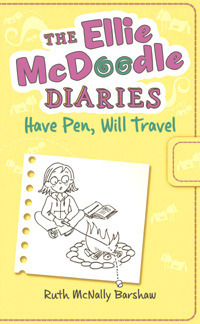 Some of the emails (especially from Mary Siddals, Roxyanne Young, and Kelly Milner Halls) pushed me to do a kids’ book in that sketchbook style, instead of the picturebooks I’d been doing. It all unfolded online — I told the CW list I was working on something in my sketchbook style; it eventually became the first Ellie McDoodle book.
Susan Vaught (author of Trigger, My Big Fat Manifesto and other YA novels) saw the discussion on the CW list, checked out my sketchbook on my website and pointed her agent, Erin Murphy, to it. Erin wrote to me — I had no idea who she was (nor Susan!). I wrote to my most connected writer friends to see if they’d heard of Erin — they were all excited.
Erin and I signed to work together, she sent it out right away, and it sold pretty fast. (I got to meet Susan 2 years later at Erin’s first client retreat in 2007. She’s brilliant and gracious and I’m forever grateful to her!) I didn’t know about Diary of a Wimpy Kid back then — I think it was an online comic. His first book came out one month before the first Ellie. There are now five Ellie books, and the sixth comes out in fall, 2014. Ruth is working on a few picturebook series at the moment.
Greg Pincus – Poet
On April 1, 2006, Greg Pincus wrote a blog post about a new type of poetry form, “the fib.” Greg described it as a “six line, 20 syllable poem with a syllable count by line of 1/1/2/3/5/8 – the classic Fibonacci sequence.” The blog post went viral. It was picked up by Slashdot on the 7th of the month and was in the New York Times on the 14th.
That was exciting enough, but it wasn’t the end. Instead, publishers started bidding on a book contract for Pincus, something that would include the Fib poetry form. Greg tells the whole story here, but the bottom line was a two-book contract with Arthur Levine Books/Scholastic.
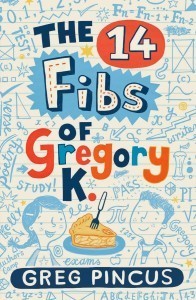
Greg said, “Yes, of course, it was surprising…though it was also the hoped for result. I mean, I did have intent when I launched The Fib.”
An author website can help you GET published. And when you DO sell, you’ll be well on your way to developing an audience!
Building a successful blog can take 3 years. Surprised?
Think about it—the amount of content on a beginning blog is small, so there’s nothing for a reader to DO when they come to your site. Usually, you’ll need a significant amount of info to bring readers to your site on a regular basis. That takes time. Posting 5x/week for a year gives you 260 posts; after two years you would have 520 posts; and, after posting 5x/week for 3 years you’ll log 780 posts. With a blog that deep you have a chance of hooking a reader and keeping them on your site reading for a long time. Over time, you pick up readers who like your way of discussing things and you grow an audience. But it doesn’t happen over night.
Do you want to sell a single book or do you want a career? If you want a career, start now to network, to find readers, to build an audience. Think about it this way: you are a small business. In the US, it usually takes a small business three to five years to turn a profit. Three years to build a good blog audience is about normal!
This is a screenshot of this blog’s statistics for traffic from 2007-2012. As you see, it took a long time to build to an audience of about half a million per year.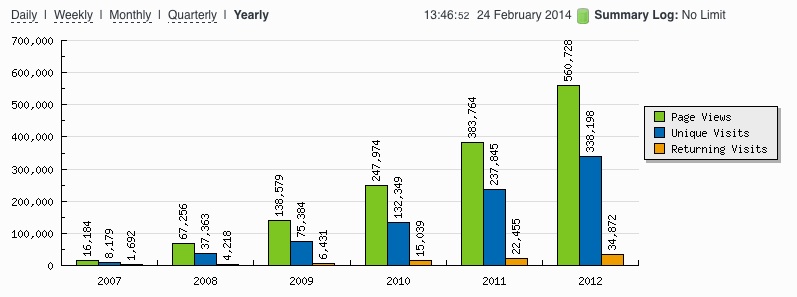
2007-2012 Blog Growth for Fiction Notes.It took several years to build a good audience and it was a slow build.
You Must Start Now!
Jane Friedman said this about the importance of a direct marketing strategy: “Authors are in a key position to reach readers directly, but most are ignorant of its importance, and of how to turn reader contact today into revenue tomorrow.”
Authors must begin to develop an audience long before they need an audience!
Here’s Jane talking about the slow build to growing an audience.
If you can’t see this video, click here.
How has your website helped your career? Leave a comment with your experience Pre-Publication.
March 1, 2014
Author Website: Resources
READ A SAMPLE CHAPTER
.goodreadsGiveawayWidget { color: #555; font-family: georgia, serif; font-weight: normal; text-align: left; font-size: 14px;
font-style: normal; background: white; }
.goodreadsGiveawayWidget img { padding: 0 !important; margin: 0 !important; }
.goodreadsGiveawayWidget a { padding: 0 !important; margin: 0; color: #660; text-decoration: none; }
.goodreadsGiveawayWidget a:visted { color: #660; text-decoration: none; }
.goodreadsGiveawayWidget a:hover { color: #660; text-decoration: underline !important; }
.goodreadsGiveawayWidget p { margin: 0 0 .5em !important; padding: 0; }
.goodreadsGiveawayWidgetEnterLink { display: block; width: 150px; margin: 10px auto 0 !important; padding: 0px 5px !important;
text-align: center; line-height: 1.8em; color: #222; font-size: 14px; font-weight: bold;
border: 1px solid #6A6454; border-radius: 5px; font-family:arial,verdana,helvetica,sans-serif;
background-image:url(https://www.goodreads.com/images/layo... background-repeat: repeat-x; background-color:#BBB596;
outline: 0; white-space: nowrap;
}
.goodreadsGiveawayWidgetEnterLink:hover { background-image:url(https://www.goodreads.com/images/layo...
color: black; text-decoration: none; cursor: pointer;
}
Goodreads Book Giveaway
The Girl, the Gypsy and the Gargoyle
by Darcy Pattison
Giveaway ends March 21, 2014.
See the giveaway details
at Goodreads.
Enter to win
This month-long series of blog post will explain author websites and offer tips and writing strategies for an effective author website. It alternates between a day of technical information and a day of writing content. By the end of the month, you should have a basic author website up and functioning. The Table of Contents lists the topics, but individual posts will not go live until the date listed. This Author Website Resource Page offers links to tools, services, software and more.
Resources:
(Disclosure: Some of the following are affiliate links and when you click on links here, I will receive a commission, AT NO EXTRA COST TO YOU. I’ve used most resources listed here, and recommend them because they are helpful not just because I receive a commission. If you find this series on Author Websites helpful, I would appreciate the support. But you’re also welcome to visit any site directly. Please do not spend any money unless you need them or think it will help you build a successful author website.)
DOMAINS AND HOSTING
A is the common name for your website. Technically, it’s a way of identifying a set of files that belong to a certain Internet address. Domains can end in .com, .org, .us and many other options. Authors generally like to use their name or book title as their domain name.
To obtain a domain name, you use a , which takes care of all the paperwork and technical settings. Often, a hosting company will also act as a registrar, making it a one-step process to obtain a domain and sign up for hosting.
Internet hosting services are the places where the digital files for your site live on real computer servers. From the many hosting companies available that can host WordPress installations, I’ve listed two below because they are cater to WordPress installations and are generally considered reliable. My domain is hosted on AnHosting.com and it’s been reliable for years.
Blue Host . Simple, easy and highly recommended for your first blog.
AN Hosting My sites are on AnHosting and I love their customer service.
WORDPRESS
For any questions related to how WordPress operates, visit the Codex.
FREE WordPress Themes from WordPress.org. Designers post an incredible array of free themes here, with more added weekly. Don’t see what you like? Check back next week.
PREMIUM (Paid) Themes
ThemeForest Themes
Check out these WordPress ThemeForest themes designed with authors in mind. They add extras that you won’t find in a free theme.
WRITING A BLOG – GOING DEEPER
After your website it up and going, you may still want some hints and advice on building a strong blog. Darren Rouse, owner of Problogger.net has this great tutorial that will keep you going for the second month. And by then, you’re well on your way to success!
Darren Rouse’s 31 Days to a Better Blog
EMAIL SUBSCRIPTIONS AND MARKETING
Every website needs a way to collect names of fans. After you finish your first month or two, you should look into getting this set up. Own your audience!
Mailchimp is my preference because it’s easy to set up and it’s free until you get 2000 subscribers. After that, the prices go up on $5 increments as your list expands, so it’s easy to live with.
WEBSITE STATISTICS
You should be measuring everything about your website and standard statistic programs make this simple. I use both of these free services.
Statcounter captures stats in real time and has an incredible amount of information. This is great for beginners.
Google Analytics is a powerhouse of statistics, with so many options you can easily get overwhelmed. Start slow, with just basic stats and add more as you learn.
SELLING BOOKS
To sell books, you need to consider how to list books on your site and how to link the book information to an online store. I wish I could point you to a great study of all the options and tell you that THIS is the perfect way to sell books. In fact, even Amazon continually tests it’s layout and design and is constantly optimizing it. That means you’ll have to experiment on your site and find what works for YOUR audience. This article discusses some of the WordPress Plugins that automate the process of selling books from your site. If you choose one of these plugins, I’d love to know how it works for you!
This resource page will be updated periodically. If you have something to recommend, please email me!
Author Website: Why You Should Have a Website
READ A SAMPLE CHAPTER
.goodreadsGiveawayWidget { color: #555; font-family: georgia, serif; font-weight: normal; text-align: left; font-size: 14px;
font-style: normal; background: white; }
.goodreadsGiveawayWidget img { padding: 0 !important; margin: 0 !important; }
.goodreadsGiveawayWidget a { padding: 0 !important; margin: 0; color: #660; text-decoration: none; }
.goodreadsGiveawayWidget a:visted { color: #660; text-decoration: none; }
.goodreadsGiveawayWidget a:hover { color: #660; text-decoration: underline !important; }
.goodreadsGiveawayWidget p { margin: 0 0 .5em !important; padding: 0; }
.goodreadsGiveawayWidgetEnterLink { display: block; width: 150px; margin: 10px auto 0 !important; padding: 0px 5px !important;
text-align: center; line-height: 1.8em; color: #222; font-size: 14px; font-weight: bold;
border: 1px solid #6A6454; border-radius: 5px; font-family:arial,verdana,helvetica,sans-serif;
background-image:url(https://www.goodreads.com/images/layo... background-repeat: repeat-x; background-color:#BBB596;
outline: 0; white-space: nowrap;
}
.goodreadsGiveawayWidgetEnterLink:hover { background-image:url(https://www.goodreads.com/images/layo...
color: black; text-decoration: none; cursor: pointer;
}
Goodreads Book Giveaway
The Girl, the Gypsy and the Gargoyle
by Darcy Pattison
Giveaway ends March 21, 2014.
See the giveaway details
at Goodreads.
Enter to win
This month-long series of blog posts will explain author websites and offer tips and writing strategies for an effective author website. It alternates between a day of technical information and a day of writing content. By the end of the month, you should have a basic author website up and functioning. The Table of Contents lists the topics, but individual posts will not go live until the date listed. The Author Website Resource Page offers links to tools, services, software and more.
But I Just Want to Write: The Ordinary Problem of Marketing our Art
I hear authors saying, “I just want to write.”
Wrong. You want to write and then have a lot of readers for your work. You just want those reader to find you automatically; you don’t want to work to get your writing in front of the reader. Or really, you want to work on your work, not on the work of getting readers.
David Bayles and Ted Orland, in their book, ART AND FEAR: OBSERVATIONS ON THE PERILS (AND REWARDS) OF ARTMAKING, touch on these issues in chapter which discusses the outside world: “Once the art has been made, an entirely new set of problems arise, problems that require the artist to engage the outside world.”
They call these ordinary problems, to emphasize that every artist/writer faces these problems and they are nothing new or different now than they were centuries ago.
“Among other things, they (ordinary problems with the outside world) consume the larger part of almost every artist’s time. One well-known painter, after several months of careful record keeping, reached the discouraging conclusion that even at best he could free up only six or seven days a month for actually painting, while the remaining twenty-odd days inevitably went to gallery business, studio clean-up, UPS runs and the like. Moral: There’s one hell of a lot more to art than just making it. In many cases, the art you make today will reach its audience tomorrow only because of a vast societal network geared to arts education, funding, criticism, publication, exhibition and performance.” (p. 65-66)
Sure, you can “just write” if you want. But then, no one will read what you wrote. How then do you connect to the outside world in such a way that you will find the legion of readers you want and your words deserves?
I Don’t Have Time for This
The biggest argument I hear against networking or marketing, especially doing it by using social media, is that it is a time drain.
In 1986, Richard B. Sewall talked about his biography of Emily Dickinson. He said she wrote “warm, loving, marvelous letters.” At the time, there were three published volumes of letters, but they represented “only about a tenth of what we know she wrote. She was a people person. Never mind that poem about selecting her own society and shutting the valves of her attention like a stone; her life revolved around people.” (Sewall, Richard B. The Life of Emily Dickinson. Harvard University Press, 1998.)
Other writers of the 18th and 19th century talk about spending an hour or two a day writing letters to keep those connections with people vibrant. Some devoted an entire half-day to correspondence, especially right after a book was published.
In her book, Charles and Emma (Henry Holt, 2009), Deborah Heligman says this about Charles Darwin’s correspondence after the publication of Origin of Species.
“Every day the postman brought bundles of letters to Down House—letter in reaction to the book. There were five hundred a year, every year, after The Origin of Species was published. Charles answered all of the—even the ones from quacks. He had lifelong correspondents, he had fans, he had critics, he had people who wrote asking to meet him, to give him gifts, to take his photograph. He took each letter seriously and gave it the time he felt it needed. During his lifetime he had two thousand correspondents. He wrote at least seven thousand letters and received as many. “ (Heligman, Deborah. Charles and Emma. New York, NY: Henry Holt, p. 195)
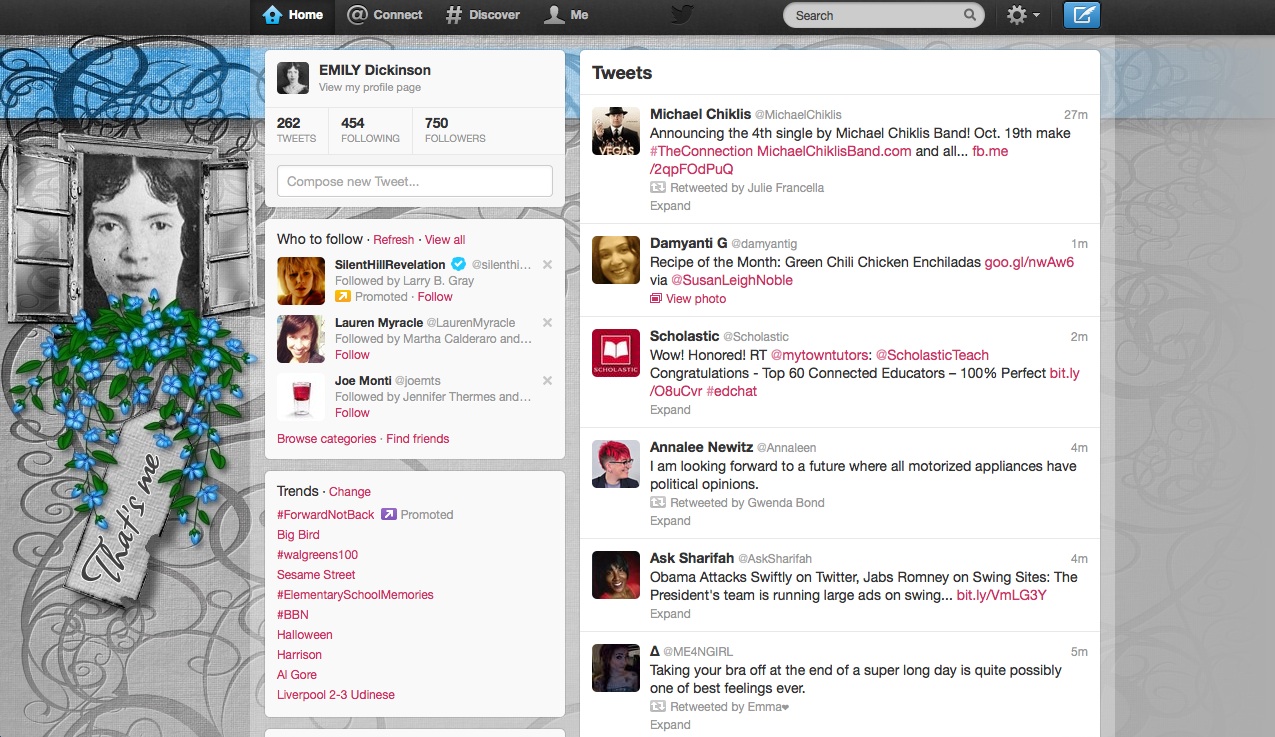
@EmilyD Would this poet be a Twitter fan if she was alive today? Yes!
It’s likely that Emily Dickinson would have loved Tweets! Especially because she was an expert in short verse! 140 characters? A perfect medium for Emily! It’s likely that Charles Darwin would have maintained a blog.
Connecting with People Takes Time
In other words, people connections have always taken large amounts of time for writers. Why do we think it’s any different today? We write in our caves, and we want to live there. But in order for our writing to speak to today’s society, we must connect with others for many reasons: to think through ideas and discuss contemporary issues; to hook up with those who can put our work in front of others; to be bolstered by other writers, even as we encourage; to live in the midst of a literary community that is firmly nestled within the very fibers of our nation.
If the recluse poet’s life revolved around people, why do we balk so at social media? If a scientist can answer every single letter he received about a controversial book, why do we balk about putting up a website?
Today, social media enables a connected life, a life that revolves around people. The medium of letters has changed to blogs, tweets, Facebook posts, Pinterest boards and the latest social media platforms—but the reason we do these things hasn’t changed. Perhaps the medium also affects how shallow or deep those connections are, but that’s a different issue. Social media is social: people.
The question then becomes this: Do you want to connect with the people who will be reading your book?
The Nature of the Ordinary Problem
In a 2012 presentation, Jane Freidman, who worked for a decade at Writer’s Digest, updated this issue for today’s publishing climate by commenting:
“As Clay Shirky has said, it is no great or important thing to ‘publish’ something in a digital era. You can publish at the click of a button. The difficult work lies in getting attention in a world of cognitive surplus. Accordingly, more and more, respect tends to go toward those who earn the attention of readers, not those who pass muster with the gatekeepers.”
(Friedman, Jane. The Future of the Author-Publisher Relationship. September 28, 2012. LitFlow Magazine.
Again, Friedman:
“The biggest problem that authors must solve for themselves, year after year, is
(1) staying competitive, current and discoverable in a shifting digital landscape,
(2) having the right tools to be effective and in touch with their readers, and
(3) having a strong network of connections that helps them better market and promote.”
One of the biggest problem for today’s authors is Discoverability.
Discoverability demands that you have direct relationship with your audience. But how do you develop these relationships? What tools are best?
Word of Mouth—Still the Best Way to Sell
According to data from Bowker presented by the company’s vice president of publishing services Kelly Gallagher at the Digital Book World Discoverability and Marketing, there are now at least 44 different ways that people discover a book. And while publishers and marketers try to sift through the data and develop strategies, one thing remains constant:
“Amid all the change in how readers read and discover books, one thing has remained constant: in-person, personal recommendations are the No. 1 way people discover books, no matter who they are or how they read.”
(Greenfield, Jeremy. Book Discovery Landscape Becomes More Complicated as Reader Behavior Fractures. DigitalBookWorld.com. September 24, 2012.
In 2012, I recommended that a friend listened to the audio version of The Orphan Master’s Son by Adam Johnson (Random House, 2012). When it won the 2013 Pulitzer Prize, we were both thrilled; it was as if we had a personal stake in the book winning the award because we had read it before it won. Since the Prize, we’ve both recommended the book to several others—who are recommending it to their friends. It’s a slow process, yes. But it’s the most reliable process for spreading the word about a book.
The question is always, how can you get Word of Mouth (WOM) recommendations? So, how do you do that?
Earned, Owned and Paid
A useful concept from marketing people is the idea that there are three ways to reach people: earned, owned and paid media.
Earned Media is the traditional press release, earning the right to be heard by having something interesting to put in front of journalists. Today, this includes the wide world of social media. Owned media means things in your direct control. Today, this means your website and your profile on numerous online accounts. Paid media is the traditional advertising.
In the old days—twenty or twenty-five years ago—there was just earned and paid.
Advertising drove all marketing campaigns, you started and ended there.
Today—the Modern Marketing Campaign—starts with Earned Media, especially what you can Earn through social media.
Owned media, which is easily available, cheap and totally under your control, is where potential customers go to find information. What do you want your customers to know about you and your book(s)? That is what you should have on your website, your profile pages of various social media, and on any marketing information you hand out such as postcards. You should be the master of your the Owned Media; don’t leave this to the publishers, else they will own your audience exclusively. Beyond the Owned Media, publishers will be glad of anything you can do to help them Earn media attention. If there is any Paid media, publishers will take care that—with more dollars going to the high concept or high profile books of the season and less dollars to the midlisters, the newcomers and the rest.
Or, to say it a different way, we used to talk about these ways of promoting a book.
5 Options for Promoting Your Book
• Print: flyers and posters, ads in magazines/newspapers/specialized publications, sample chapters, direct marketing, newsletter, interviews, business cards, slogans/pitches
• Audio: radio or online interviews, read samples of your work, give reader’s reactions and comments
• Web: website and/or blog, email marketing, online ads, sample chapters, RSS, feeds, bulletin boards or forums, ezine or newsletter, affiliate programs, online contests, webinars, advertisements (from Craigslist to GoogleAds), ebooks, podcasts, vlogging, internet memes
• Personal appearances: BEA, ALA, local library, bookstore signings, literary festivals, teaching, school visits, speaking engagements, seminars, conferences, asking for referrals, elevator pitches, personal PR
• Social Media: Facebook, GoodReads, Twitter, LibraryThing, delicious.com, StumbleUpon.com; spending enough time to become part of the community; using announcements, contest, giveaways
If we re-categorize these for OWN media:
Owned media attracts customers: flyers, newsletter, interview, business card, slogan/pitch, podcasts, website and/or blog, email list, RSS, bulletin board followers, newsletter, affiliate programs, online contests, webinar, internet memes and the whole category of personal appearances
Earned media attracts fans: Interviews, comments/likes/shares, conversation online, GoodReads/LibraryThing/Amazon reviews, community endorsements
Paid media attracts strangers: posters, advertising in print or online, direct marketing, high profile interviews, high profile personal appearances, eligibility for some awards.
This series will talk about the basics of creating the most important part of your online presence, the Owned media or your web site. The best thing is that it is entirely within your control.
What Should be on an Author Website?
In 2008 Codex Group, a company that regularly studies characteristics of book audiences, surveyed about 21,000 people who buy books. Its objective was to “understand the relative effectiveness of author sites among shoppers and to determine the elements that will keep them coming back to the site.” The Codex study reported that 7.5% of readers visit an author website before they purchase a book.
“The Codex report found that visiting an author’s website is the leading way that book readers support and get to know their favorite authors better. And this is true regardless of age.”
Wow, don’t we want fans who will “want to get to know you better”? Of course.
What are these customers and fans looking for? According to the Codex report, these are things that will keep fans coming back.
Exclusive, unpublished writing. 43% of survey respondents said they return regularly for exclusive content. This could include related short stories, but might also include a short essay on your cats. An interesting blog could do this, as well.
Author Schedules. 36% want to know the author’s schedule of tours, book signings, and area appearances. In other words, is there any way that a fan could meet-up, get a signed book, watch you speak, etc.
Author’s Literary Tastes. Readers want lists of the author’s favorite writers and recommended books. Younger fans are also more interested in knowing about their favorite authors’ book, music, and movie recommendations.
Insider Information. 36% of readers (especially men) want “insider” tidbits. YOU know why you killed off that mother in chapter three; explain that to the readers on your website. Include things such as: Background info–where and how you did research; important inspirations for the story; your biggest struggles and biggest successes as you wrote this book.
Freebies. 33% want downloadable extras like icons and sample chapters.
Regular contact. 33% of readers want weekly e-mail news bulletins with updates on tours, reviews, and books in progress.
Fans under the age of 35: contests, puzzles, and games, with prizes like autographed copies of books.
Let me re-emphasize the most important reason to create an author website and online social media accounts: YOU, the author, OWN these. Your publisher does not. If and when you move on to another publisher (or to Indie Publishing) you still own your audience.
From a publisher’s point of view, they want to own the audience, so they can sell more books. From the author’s point of view, you want to own your audience, so you can continue to write and have a career and sell more books. The publisher has an interest in your overall career, but not like you do. Only YOU are more passionate about your career than anyone else, certainly more passionate than an agent with dozens of other clients or a publisher with dozens of other authors.
You OWN this channel of information going out to readers. Why not take advantage of it? Where ELSE will reader find this information if not on your website?
Author Website Planning Checklist
Where on your website COULD you include these things? List all the appropriate page(s). If you listed more than one appropriate page, will you put the information on multiple pages or just on one page? Circle the page where you plan to include this information.
Exclusive unpublished writing: ______________________
Author Schedules: ________________________________
Author’s Literary Tastes:___________________________
Insider Information: _______________________________
Freebies: ________________________________________
Regular Contact: __________________________________
Contests, puzzles, teacher’s guides, book club discussion guides, puzzles, playlists, coloring pages, etc.__________________________________
Author Website Series: Table of Contents
READ A SAMPLE CHAPTER
.goodreadsGiveawayWidget { color: #555; font-family: georgia, serif; font-weight: normal; text-align: left; font-size: 14px;
font-style: normal; background: white; }
.goodreadsGiveawayWidget img { padding: 0 !important; margin: 0 !important; }
.goodreadsGiveawayWidget a { padding: 0 !important; margin: 0; color: #660; text-decoration: none; }
.goodreadsGiveawayWidget a:visted { color: #660; text-decoration: none; }
.goodreadsGiveawayWidget a:hover { color: #660; text-decoration: underline !important; }
.goodreadsGiveawayWidget p { margin: 0 0 .5em !important; padding: 0; }
.goodreadsGiveawayWidgetEnterLink { display: block; width: 150px; margin: 10px auto 0 !important; padding: 0px 5px !important;
text-align: center; line-height: 1.8em; color: #222; font-size: 14px; font-weight: bold;
border: 1px solid #6A6454; border-radius: 5px; font-family:arial,verdana,helvetica,sans-serif;
background-image:url(https://www.goodreads.com/images/layo... background-repeat: repeat-x; background-color:#BBB596;
outline: 0; white-space: nowrap;
}
.goodreadsGiveawayWidgetEnterLink:hover { background-image:url(https://www.goodreads.com/images/layo...
color: black; text-decoration: none; cursor: pointer;
}
Goodreads Book Giveaway
The Girl, the Gypsy and the Gargoyle
by Darcy Pattison
Giveaway ends March 21, 2014.
See the giveaway details
at Goodreads.
Enter to win
Author Website Series: Why, When, How, How-to, What
This month-long series of blog posts will explain author websites and offer tips and writing strategies for an effective author website. It alternates between a day of technical information and a day of writing content. By the end of the month, you should have a basic author website up and functioning. The Table of Contents lists the topics, but individual posts will not go live until the date listed. The Author Website Resource Page offers links to tools, services, software and more.
Please do not click a link until the date listed, or you’ll get an error message!
Table of Contents
Resources Page
TABLE OF CONTENTS
THEORY – The Why, When and How of an Author Website
March 1 Why Should You Have a Website?
March 2 When Should You Start Your Website?
March 3 How Should I do a Website/Blog?
March 19 To Blog or Not to Blog
TECHNICAL – The Specific How-tos of an Author Website
March 4 Buy a Domain
March 6 Cpanel Basics
March 8 Professional Email
March 10 WordPress Installation and Setup
March 12 WordPress Plugins
March 14 Themes
March 16 Statistics
March 18 Affliliates
March 20 Posts
March 22 Checklist #1
March 24 Checklist #2
March 27 Blog Launch
SEO
CONTENT – The What of an Author Website, What Goes on an Author Website, Writing the Content for Your Website
March 5 The ABOUT page
March 7 The BOOKS Page
March 9 The NEWS Page
March 11 The HOME Page
March 13 The CONTACT page
March 15 The 404 Page
March 17 Pages
March 21 First Blog Posts
March 23 Blog Posts 6-10
March 25 Blog Posts 11-15
March 26 Beta Readers
March 28 Keep the Blog and Website Going
February 24, 2014
False Teeth and Blue Eyes: Keeping Track of Characters
READ A SAMPLE CHAPTER
.goodreadsGiveawayWidget { color: #555; font-family: georgia, serif; font-weight: normal; text-align: left; font-size: 14px;
font-style: normal; background: white; }
.goodreadsGiveawayWidget img { padding: 0 !important; margin: 0 !important; }
.goodreadsGiveawayWidget a { padding: 0 !important; margin: 0; color: #660; text-decoration: none; }
.goodreadsGiveawayWidget a:visted { color: #660; text-decoration: none; }
.goodreadsGiveawayWidget a:hover { color: #660; text-decoration: underline !important; }
.goodreadsGiveawayWidget p { margin: 0 0 .5em !important; padding: 0; }
.goodreadsGiveawayWidgetEnterLink { display: block; width: 150px; margin: 10px auto 0 !important; padding: 0px 5px !important;
text-align: center; line-height: 1.8em; color: #222; font-size: 14px; font-weight: bold;
border: 1px solid #6A6454; border-radius: 5px; font-family:arial,verdana,helvetica,sans-serif;
background-image:url(https://www.goodreads.com/images/layo... background-repeat: repeat-x; background-color:#BBB596;
outline: 0; white-space: nowrap;
}
.goodreadsGiveawayWidgetEnterLink:hover { background-image:url(https://www.goodreads.com/images/layo...
color: black; text-decoration: none; cursor: pointer;
}
Goodreads Book Giveaway
The Girl, the Gypsy and the Gargoyle
by Darcy Pattison
Giveaway ends March 21, 2014.
See the giveaway details
at Goodreads.
Enter to win
Traditionally, novelists have been told to keep track of their characters with a Character Bible. Especially for a series that features the same characters, it’s important that a blue-eye beauty in Book 1 is still a blue-eyed beauty in Book 3. To maintain consistency, authors often need to keep detailed lists of characters and his/her characteristics. Of course, it’s not hard to track main characters, but the minor characters can run together in a blur.
Enter, the Character Bible. Often this is a physical notebook that gives each character a page(s) where you jot down important notes about physical or psychological details, along with notes on his/her back story.
But in these high-tech days, there are other ways to do this.
Spreadsheet. Create a spreadsheet with columns for important details. Rows are the names of the characters. One advantage of this is the ability to sort alphabetically. You can see at a glance if every one of your beauties is blue-eyed or brown-eyed or an interesting mix. It’s clumsy when every character’s name sounds like every other one. Just skim the names and try to make sure that names begin with different letters.
Wikis. Wikis are collections of information that allow collaborative editing. What you care about here, though, is that you can organize the data in any way you wish. Perhaps, you want a page for every character, for every family, for different chapters, or specific to one title in a series. It’s up to you. This article explains four options for a personal wiki.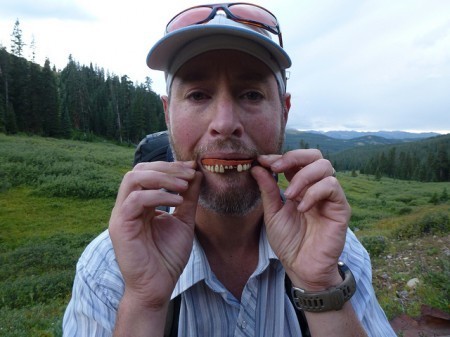
Keep track of your character’s false teeth and blue eyes with these tech toys.
Evernote is a popular software that allows you to capture websites, add files and stay organized and synced across various platforms via the Cloud. Uber-fans of Evernote use it to organize their entire life: they store recipes, organize trips, and keep track of homework assignments. The novelist can use it only for work, or extend it into other areas of life. For keeping characters straight, use tags and keywords for eye and hair color, save photos of clothes that Sally might wear, and clip a website article about grieving. Read more about Evernote.
Scrivener is a writing software that allows you to write without worrying about formatting. But it’s far more than that, with the ability to use tags and keywords, to clip websites and store photos or other research materials. It has the added bonus of outlining with text or a simulated cork board with index cards. Though we’re talking about keeping track of characters, this program goes so much farther, even tracking daily quotas of writing. Writers swear by this one, too.
Intro to Scrivener Video
If you can’t see this video, click here.
Pinterest Boards. If you are visually oriented, try creating a Pinterest board for your series and Pin photos of characters, clothing, recipes, setting, etc. Here’s an example of a Character board, and another, and another. These also seems like great ways to promote your book. If you have a character Pinterest board, please leave a link in the comments.
HOW DO YOU KEEP TRACK OF YOUR CHARACTERS?
February 14, 2014
How to Ruin Your Novel’s Opening with a Few Wrong Words
READ A SAMPLE CHAPTER: Now Available .
.
Choosing the right set of words–the diction of your novel–is crucial, especially in the opening pages of your novel. Novels are a context for making choices, and within that context, some words make sense and some don’t.
A novel sets up a certain setting, time period, tone, mood and sensibilities and you must not violate this. If you are writing a gothic romance, the language must reflect this. For thrillers, the fast paced action demands a certain vocabulary. Violating these restrictions means a bump in the reader’s experience that may make them put down the book.
Let’s look at some examples. This is from my book, SAUCY AND BUBBA: A HANSEL AND GRETEL TALE. Just from the title you know that this is a contemporary retelling of Hansel and Gretel and this sets up expectations for the language that will be used. This is a first look at Krissy, the stepmother.
Krissy was singing to herself. Gingerbread days were filled with music, too. Once a month, Krissy made a gingerbread house and took it into town to sell to the bakery for $200. The bakery displayed it in their picture window for a month, and then donated it to a day care. Each month, Krissy checked out a stack of architecture books and pored over them.
Let’s substitute a couple words and see if it bothers you as a reader:
Krissy was caterwauling to herself. Gingerbread days were crammed with music, too. Once a month, Krissy slapped together a gingerbread house and took it into town to peddle to the bakery for $200. The bakery displayed it in their picture window for a month, and then dumped it off at a day care. Each month, Krissy checked out a stack of architecture books and flipped through them.
I’ve been extreme here in word choice, of course. The key is to listen to your story. Where are the places where a single word might interrupt the narrative? Work hard to control your word choices and the overall diction of your story. And I’ll stay with you for the whole book.
February 11, 2014
Shirley Temple: A Biography
READ A SAMPLE CHAPTER: Now Available.
I just heard that Shirley Temple Black passed away last night. She was an amazing child actress and went on to a great career in politics as a U.S. Ambassador. I am offering here an original story that puts her early life into the context of the Great Depression. Enjoy!
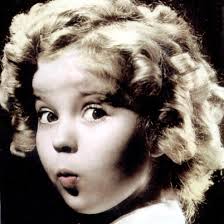
Download: SPARKLE, SHIRLEY! SPARKLE!: How Shirley Temple Brought Hope to the Great Depression.


