
Darcy Pattison's Blog, page 31
October 21, 2013
Book Affiliates: ITunes Changes Partner
Now available!

Kindle
Paperback
In August, iTunes changed affiliate partners to PHG, which means that if you want to provide affiliate links for people to buy your books in the iBookstore, you had to change all your links. Updating has been a breeze and it makes book marketing more efficient.
First, why add links to your website, blog or your social media platforms? The links take readers directly to the iTunes page about your book. Not only does it encourage readers to buy your book for the iBookStore, it also gives you a small commission. I am currently earning about $100/month on this type of affiliate and by adding in the iTunes affiliate, I hope that figure goes up. (Thanks for your support!)
If you just want a link to your book and don’t care about the affiliate links, then use the iTunes Link Maker tool. If you are writing books for children or teens, this is a great time to add these links because more and more schools are adopting iPads in their classroom. For example, the Los Angles School District spent more than $30 million this summer to purchase iPads for every student. Of course, on the iPad, you can choose to read books from the Kindle or Kobo apps; however, the iBookstore is becoming easier and easier and I expect Apple to start pushing it more.
Becoming an iTunes affiliate is now an easy task: simply apply now. It’s free.
After your application is approved and you provide the proper financial information, you just need to snag links to your books. This used to be a cumbersome process and I was lousy at doing it. With the switch to PHG, it’s as simple as any Amazon affiliate links. More on creating affiliate links.
You simply login to your iTunes Affiliate Dashboard and click on the iTunes Link Maker Tool; it will take you directly to the tool, but this time, it will automatically add in your affiliate ID. The resulting links will still take readers to your iBook page, but will also record that they came from your affiliate link.
As always, if you use affiliate links, you should update your privacy policy to let users know what you are doing.
So, here’s the list of my books now available on the iBookStore. For more information on each title, see here.
Common Core ELA Activities
Prewriting for the Common Core
11 Ways to Ruin a Photograph – Darcy Pattison & Michael Jeter
Wisdom, the Midway Albatross – Darcy Pattison & Kitty Harvill
Prairie Storms (English) – Darcy Pattison & Kathleen Rietz
Las tormentas de la pradera (Prairie Storms in Spanish) – Darcy Pattison & Kathleen Rietz
Desert Baths – Darcy Pattison & Kathleen Rietz
Start Your Novel – Darcy Pattison
How to Write a Children’s Picture Book – Darcy Pattison


October 18, 2013
Writing with Fans in Mind: What Will I Put on the Website?
Now available!
NOW ON THE APPLE IBOOKSTORE!
Kindle
Paperback
Last week, I wrote a post about author websites and decided this week that I and better take my own advice! First, I updated the theme of this blog and added a homepage and a homepage for the blog. There are other behind-the-scenes improvements, mostly improving the way the site displays on mobile devices. (If you notice any problems with the website update, I’d appreciate an email!)
Second, last week, I quoted a study that said fans come looking for certain things on an author’s website. I am working on a draft of my new story this week and that study keeps haunting me. Am I providing any of these things on a regular basis? Is there any reason for a fan of my writing to keep coming back to my website?
These thoughts are starting to change how I write. Now, I also have open a second file that is a list of things to put on the website to go with this book.
Specifically, let’s go through the list of what fans want on an author website and see how you might plan for this as you write.
Exclusive, unpublished writing. 43% of book fans surveyed said they return regularly for exclusive content. While I am writing, I am keep a radar out for writing ideas that take off on a tangent. It may be a topic that doesn’t belong in the book because it would destroy the pacing. But it might work perfectly on the website as Exclusive Content. Maybe a short vignette, a short story, an episode. Maybe it’s a letter that the character might write to another character. For my current WIP, it’s recipes. One character refuses to eat eggs of any kind, so we have eggless cakes and such.
Author Schedules. 36% of book fans surveyed want to know the author’s schedule of tours, book signings, and area appearances. I couldn’t figure out how to plan for this one while I wrote. I did, however, add a News page to my blog, where I plan to regularly post the small successes that come my way.
Author’s Literary Tastes. Readers want lists of the author’s favorite writers and recommended books. Younger fans are also more interested in knowing about their favorite authors’ book, music, and movie recommendations. This one is a bit harder, too, because it doesn’t relate directly to the current WIP. For me, it will probably take the form of a focus on Pinterest. I need to spend an evening creating a couple boards of Recommended Books, Favorite Music, Movie Recommendations. And to complement my current WIP, I need to do something related to it. Maybe eggless recipes again. Or the story has aliens, so maybe a board of Alien Pics, UFOs, etc. I’ve always liked it when authors post a playlist of music for a book. I shouldn’t be surprised when kids like this, too.
Insider Information. 36% of readers (especially men) want “insider” tidbits. This is one of the main changes I am trying to make as I write. I am trying to notice where I do research and capture the URLs of interesting websites. Later, I’ll write about the inspiration I found from these sites. For example, one setting in the current WIP is a City Hall and I needed something interesting to happen there. What could be weirder than the truth?
Freebies. 33% want downloadable extras like icons and sample chapters. I am sorta lumping this in with the exclusive, umpublished writing above. I hope to have a couple side stories and/or recipes as freebies. But I am also paying attention to ideas for free wallpapers and such. I’ll look for easy ways to add things like that. Any suggestions?
Regular contact. 33% of readers want weekly e-mail news bulletins with updates on tours, reviews, and books in progress. I already have this covered. See the signup in the sidebar to get on my mailing list.
Fans under the age of 35: these fans like contests, puzzles, and games, with prizes like autographed copies of books. Well, this is hard, too, to plan for as I write. I am keeping a radar out, though, for contest, puzzle and game ideas. And I’ll certainly offer book giveaways when it’s appropriate. But overall, I’m not sure this one really affects my writing process much.
Overall, then, it is the extra writing and the insider information that needs to run parallel to my writing process. By the time this next book is written, I’ll have plenty of material for the website. Only time will tell if the fans come.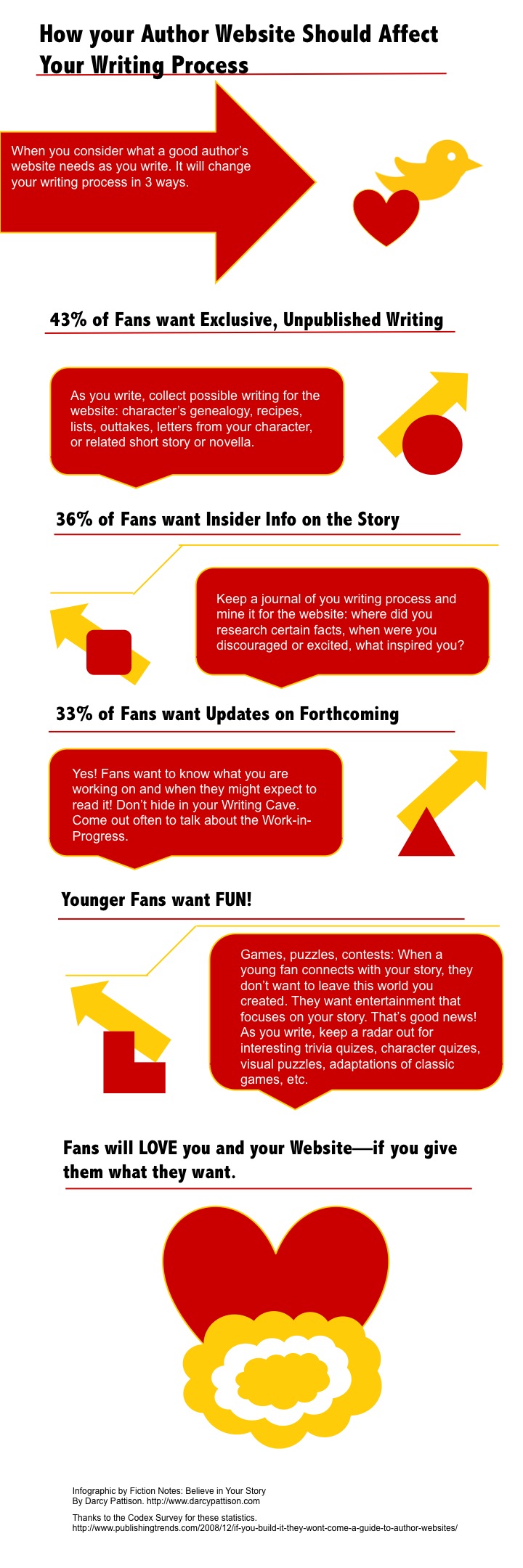
October 17, 2013
The SCBWI Sparks Award: Recognizing Excellence in Self-Published Books
Now available!
NOW ON THE APPLE IBOOKSTORE!
Kindle
Paperback
The Society of Children’s Bookwriters and Illustrators has recently announced the formation of a new award, the Spark Award, which is designed to recognize excellence in books published in a “non-traditional publishing route.”
As the 2013 winner of the Writer’s Digest Self-Published award for children’s picture books, I find this announcement an exciting development. The push toward self-publishing in the adult world has been slower to move into children’s books in a serious way. The old stigmas about vanity presses and poor quality are hard to shake. Indeed, some reports say a majority of self-published authors are just hobbyist. But even that has changed dramatically in the last few years. This new award from the SCBWI is an acknowledgment that many self-publish by choice and that they turn out excellent work.
The Pros
The biggest plus for the Spark Award is that it is designed to recognize good books by amazing authors/illustrators. Hurrah! This overcomes almost every objection. And likewise, this award shows that the SCBWI is responding to the needs of its members. As the only professional organization devoted to those who write and illustrate books for children, it’s an important step for the industry.
Winner of the 2013 Writer’s Digest Self-Published Books award for children’s picture book category. Received a Starred Review in Publisher’s Weekly.
The Cons
Still, the award isn’t without controversy. There’s only one award for toddler to YA books; the judges will have a hard time comparing apples and oranges. But it’s still a reasonable step for the SCBWI to take; they are establishing one award and when they see the response to this one, they can make adjustments in the future. If only a dozen books are submitted, one award may suffice; if 1200 books are submitted, they will want to rethink.
The Spark award requires that you provide proof of copyright registration. It’s hard to fault the idea behind this requirement; registering copyright is a solid and professional business practice for a publisher. And yet, this requirement is also odd because copyright registration is a business practice. Instead, I’d rather see all the emphasis put on the quality of the book.
Finally, I’m just a little uncomfortable with the idea of the award itself. Segregating self-published books into a separate award could, under the wrong circumstances, label the books submitted there as second-class citizens. It implies that these books can’t compete for the other SCBWI awards because of quality issues. While quality may vary wildly in self-published books, they also vary widely in traditionally published books. It’s an unsettling assumption. The best scenario would be for the SCBWI to remove barriers for self-published books to be considered for all eligible awards. In the absence of this, the winner of the SPARK should automatically be considered for any eligible Golden Kite or other awards.
Still, the Spark award a positive step toward recognizing excellence in children’s literature, regardless of where it comes from. And for that, we say, “Thank you, SCBWI.” This will be an award to watch!
See full information on the Spark Award here. You (both writer and illustrator) must be a member of SCBWI to be eligible.
October 8, 2013
The Author Died of Exposure
ONLY 3 DAYS LEFT
.goodreadsGiveawayWidget { color: #555; font-family: georgia, serif; font-weight: normal; text-align: left; font-size: 14px;
font-style: normal; background: white; }
.goodreadsGiveawayWidget img { padding: 0 !important; margin: 0 !important; }
.goodreadsGiveawayWidget a { padding: 0 !important; margin: 0; color: #660; text-decoration: none; }
.goodreadsGiveawayWidget a:visted { color: #660; text-decoration: none; }
.goodreadsGiveawayWidget a:hover { color: #660; text-decoration: underline !important; }
.goodreadsGiveawayWidget p { margin: 0 0 .5em !important; padding: 0; }
.goodreadsGiveawayWidgetEnterLink { display: block; width: 150px; margin: 10px auto 0 !important; padding: 0px 5px !important;
text-align: center; line-height: 1.8em; color: #222; font-size: 14px; font-weight: bold;
border: 1px solid #6A6454; border-radius: 5px; font-family:arial,verdana,helvetica,sans-serif;
background-image:url(https://www.goodreads.com/images/layo... background-repeat: repeat-x; background-color:#BBB596;
outline: 0; white-space: nowrap;
}
.goodreadsGiveawayWidgetEnterLink:hover { background-image:url(https://www.goodreads.com/images/layo...
color: black; text-decoration: none; cursor: pointer;
}
Goodreads Book Giveaway - ONLY 3 DAYS LEFT
Start Your Novel
by Darcy Pattison
Giveaway ends October 01, 2013.
See the giveaway details
at Goodreads.
Enter to win
“You may not get paid, but it’s great exposure.”
How many times have you heard that? Every time you “volunteer” to work with certain organizations?
In the small state of Arkansas, there are many ways that I could potentially get exposure:
Education groups. Schools, libraries, reading associations, librarian associations, teacher associations, day cares, non-profit education groups; conferences for any or all of these.
Community groups. Clubs who need speakers, literary festivals, youth activities groups, senior citizen groups.
Professional groups. Writing groups, publishing groups. Conferences for any and all of these.
Besides the HUGE task of keeping up with all the possible groups, who is currently president, who is currently chairing what committee, etc, there’s the question of my involvement. Do I get paid or not?
Yesterday, I attended the ArtLinks conference from the Arkansas Arts Council and was struck by the work of the Creative Economic Action Group (CEAG) of Fayetteville, Arkansas. They work to help creative people of all ilk find a way to live and work in the community in such a ways that they make a living. They have no budget, they just work to help people find ways to accomplish creative goals. For example, the city is now festooned with a Pigshibition of painted fiberglass pigs (The Razorback pig is the mascot of the University of Arkansas, which has its main campus in Fayetteville), much like Chicago has been decorated by Bulls.
Sonia Davis Gutierrez, head of the CEAG, spoke the need to change attitudes. Once, local organizations asked artists to donate works of art that could be auctioned off in a fund-raiser. But the CEAG says that helps the organizations but it only gives the artist EXPOSURE. Tax write offs are limited to the cost of materials. Instead, CEAG talks to groups about asking donors to buy a work from an artist and donate it to the organization, either for display, or for a fundraising auction. Or, perhaps, they can sponsor a writer’s presentation with a modest honorarium. Then, the donor gets a tax write-off, the artists gets paid and the organization benefits. It’s a win-win-win.

Kevin Boggs of SpeakEasyDC spoke at ArtLinks about telling your artistic story and how to use that story in fundraising, on your website and other marketing efforts.
The promise of exposure is always a two-edge sword for writers and artists. Sure, we need the general public to know we exist, to know what our work is like, and where they can buy our works. But we also have to pay our bills. Yes, the electric company still expects to be paid!
The tricky thing is to find those win-win situations. You can’t visit every classroom free, speak at every conference free, and so on. It might be possible, IF you could sell enough books to make it worth while. But that’s tricky for many reasons, not the least of which is the hassle of carrying books everywhere.
When Sonia spoke about artists “dying of exposure,” it really struck a chord for me. What are some ways that you turn these requests into a win-win? How can we change attitudes so that artists–especially authors–can make a living at telling stories?


October 7, 2013
Awful First Draft: It’s Hard to Trust the Process
ONLY 3 DAYS LEFT
.goodreadsGiveawayWidget { color: #555; font-family: georgia, serif; font-weight: normal; text-align: left; font-size: 14px;
font-style: normal; background: white; }
.goodreadsGiveawayWidget img { padding: 0 !important; margin: 0 !important; }
.goodreadsGiveawayWidget a { padding: 0 !important; margin: 0; color: #660; text-decoration: none; }
.goodreadsGiveawayWidget a:visted { color: #660; text-decoration: none; }
.goodreadsGiveawayWidget a:hover { color: #660; text-decoration: underline !important; }
.goodreadsGiveawayWidget p { margin: 0 0 .5em !important; padding: 0; }
.goodreadsGiveawayWidgetEnterLink { display: block; width: 150px; margin: 10px auto 0 !important; padding: 0px 5px !important;
text-align: center; line-height: 1.8em; color: #222; font-size: 14px; font-weight: bold;
border: 1px solid #6A6454; border-radius: 5px; font-family:arial,verdana,helvetica,sans-serif;
background-image:url(https://www.goodreads.com/images/layo... background-repeat: repeat-x; background-color:#BBB596;
outline: 0; white-space: nowrap;
}
.goodreadsGiveawayWidgetEnterLink:hover { background-image:url(https://www.goodreads.com/images/layo...
color: black; text-decoration: none; cursor: pointer;
}
Goodreads Book Giveaway - ONLY 3 DAYS LEFT
Start Your Novel
by Darcy Pattison
Giveaway ends October 01, 2013.
See the giveaway details
at Goodreads.
Enter to win
I am in the midst of a truly awful first draft. Really. I have NEVER written such a bad first draft.
This is a sequel and it must be written to roughly follow an outline, but the outline seems sorta dead.
Here’s what I am doing: Push on. I am pushing forward, trying to write something, anything. Sometimes, the story is flat and sometimes it sings. Doesn’t matter. My goal this week is to finish a draft.
Trust the process. I am trusting the process. I know that the story won’t end with this draft; there will be multiple drafts after this, plenty of time to fix the glaring problems of this draft. It’s the only reason I am allowing myself to forge ahead, because I know that this is a process, not a static thing that I work on once and never again.
Update: As I pushed forward this week, the story did indeed start to connect as a whole. There are still many elements that are unconnected, but I am confident that I can get there. I keep thinking about Linda Sue Parks comments about her Newbery title, A SINGLE SHARD (Clarion, 2001). She says that she tried to make sure each chapter has something that looks forward and something that looks backward. For example, if she has a character use a gourd to get a drink from a spring in one chapter, she makes it her rule to use that gourd again somewhere else. The story starts with a basket-backpack leaking rice; partly, it starts there because the main character uses a basket-backpack to carry his master’s pottery to the capitol. If the backpack was necessary to the story, according to her rules, she had to use it somewhere else. THAT is what is missing in my story right now. There are elements that I threw into the first draft–because that’s what first drafts are for–but I’m not sure yet, if they will weave into the fabric of the story. For example, the main character notices in chapter one that someone has a nickname and realizes that he doesn’t have one. Right now, the story doesn’t resolve that. I need to either remove the reference entirely–or the story has to deliver him with a really great, appropriate nickname.
Experiment. Everything is going so badly anyway, that I feel free to experiment. I am throwing in snatches of conversation, snippets of a scene, trying out wording for actions–in other words, experiment. I would say that I am playing, but this time, there is just the hint of despair in the writing, since it is going so very badly. I am really searching for a voice that works. Maybe it needs another narrator? Maybe it needs a different setting? Anyway, I am allowing tangents that I would normally cut off.
Role of First Drafts. Most of all, I remember: the purpose of the first draft is to figure out what story you are telling. The purpose of all other drafts is to figure out the most dramatic way to tell that story. I remember that I am figuring out what story I am telling. So–I allow myself to, well, to figure it out. Slowly, painfully–the story is starting to shine through. It will be there within this draft, waiting for me to recognize it and polish it. I am just trusting the process and writing a really lousy first draft.


September 27, 2013
Why Authors Should Believe in Their Websites
.goodreadsGiveawayWidget { color: #555; font-family: georgia, serif; font-weight: normal; text-align: left; font-size: 14px;
font-style: normal; background: white; }
.goodreadsGiveawayWidget img { padding: 0 !important; margin: 0 !important; }
.goodreadsGiveawayWidget a { padding: 0 !important; margin: 0; color: #660; text-decoration: none; }
.goodreadsGiveawayWidget a:visted { color: #660; text-decoration: none; }
.goodreadsGiveawayWidget a:hover { color: #660; text-decoration: underline !important; }
.goodreadsGiveawayWidget p { margin: 0 0 .5em !important; padding: 0; }
.goodreadsGiveawayWidgetEnterLink { display: block; width: 150px; margin: 10px auto 0 !important; padding: 0px 5px !important;
text-align: center; line-height: 1.8em; color: #222; font-size: 14px; font-weight: bold;
border: 1px solid #6A6454; border-radius: 5px; font-family:arial,verdana,helvetica,sans-serif;
background-image:url(https://www.goodreads.com/images/layo... background-repeat: repeat-x; background-color:#BBB596;
outline: 0; white-space: nowrap;
}
.goodreadsGiveawayWidgetEnterLink:hover { background-image:url(https://www.goodreads.com/images/layo...
color: black; text-decoration: none; cursor: pointer;
}
Goodreads Book Giveaway
Start Your Novel
by Darcy Pattison
Giveaway ends October 01, 2013.
See the giveaway details
at Goodreads.
Enter to win
Jane Friedman regularly writes about the author-publisher relationship and today’s post struck a odd chord for me. She writes about “Why Don’t Publishers Believe in Author Websites?” (Thanks, Jane for a provocative essay.)
Basically, she says that publishers have three reasons for this attitude:
Publishers see author websites as a time sink: they must train each new author on best practices and then many authors flub it, or once set up, they ignore the website.
Publishers believe that social media is more effective.
Publishers are building an audience that THEY own; there’s not much use for an audience that the author owns.
I would like to argue, though, that author websites are essential FOR THE AUTHOR.
Paid, Owned, and Earned Media (POEM)
When discussing book marketing, a useful concept from marketing people is the idea that there are three ways to reach people.
Paid media, which is the traditional advertising. This type media will attract strangers who originally knew nothing about you and your book.
Owned media, which means things in your direct control. Today, this means your website, your profile on numerous online accounts. This type media tends to attract customers who have already bought something and want to know more about you and your book. This will, in the long run, feed a career, not just support one book.
Earned Media, which is what others say about you because you are interesting in some way. This is the traditional press release, or earning the right to be heard by having something interesting to put in front of journalists. Today, this includes the wide world of social media. This type media attracts fans who want to follow your career and know you more intimately.
In the old days—twenty years ago—there was just earned and paid. Advertising drove all marketing campaigns, you started and ended there.
Today—the Modern Marketing Campaign—starts with Earned Media, especially what you can Earn through social media. But it is a mistake to only camp there, even though some publishers think that an author website is unnecessary.
I would argue, that you should first be the master of your Owned Media, especially your own website. A website is easily available, cheap and totally under your control.
5 Options for Promoting Your Book
Traditionally, we might talk about these ways of promoting a book, and separate it into categories based on media.
Print: flyers and posters, ads in magazines/newspapers/specialized publications, sample chapters, direct marketing, newsletter, interviews, business cards, slogans/pitches
Audio: radio or online interviews, read samples of your work, give reader’s reactions and comments
Web: website and/or blog, email marketing, online ads, sample chapters, RSS, feeds, bulletin boards or forums, ezine or newsletter, affiliate programs, online contests, webinars, advertisements (from Craigslist to GoogleAds), ebooks, podcasts, vlogging, internet memes
Personal appearances: BEA, ALA, local library, bookstore signings, literary festivals, teaching, school visits, speaking engagements, seminars, conferences, asking for referrals, elevator pitches, personal PR
Social Media: Facebook, GoodReads, Twitter, LibraryThing, delicious.com, StumbleUpon.com; spending enough time to become part of the community; using announcements, contest, giveaways
If we recategorize these with a POEM outlook, you get this:
Paid Media, which attracts Strangers: posters, advertising in print or online, direct marketing, high profile interviews, high profile personal appearances
Owned Media, which attracts Customers and Fans: your website and/or your blog, flyers, newsletter, interview, business card, slogan/pitch, podcasts, email list, RSS, bulletin board followers, newsletter, affiliate programs, online contests, webinar, internet memes and the whole category of personal appearances
Earned Media, which attracts Customers and Fans: Interviews, comments/likes/shares, conversation online, GoodReads/LibraryThing/Amazon reviews, community endorsements
What Should be on an Author Website?
A 2012 Codex study surveyed about 21,000 people who buy books. Its objective was to “understand the relative effectiveness of author sites among shoppers and to determine the elements that will keep them coming back to the site.” The Codex study reported that 7.5% of readers visit an author website before they purchase a book.
“The Codex report found that visiting an author’s website is the leading way that book readers support and get to know their favorite authors better. And this is true regardless of age.”
Wow, don’t we want fans who will “want to get to know you better”? Of course.
What are these customers and fans looking for? According to the Codex report, these are things that will keep fans coming back.
Exclusive, unpublished writing. 43% of survey respondents said they return regularly for exclusive content. This could include related short stories, but might also include a short essay on your cats. An interesting blog could do this, as well.
Author Schedules. 36% want to know the author’s schedule of tours, book signings, and area appearances. In other words, is there any way that a fan could meet-up, get a signed book, watch you speak, etc.
Author’s Literary Tastes. Readers want lists of the author’s favorite writers and recommended books. Younger fans are also more interested in knowing about their favorite authors’ book, music, and movie recommendations.
Insider Information. 36% of readers (especially men) want “insider” tidbits. YOU know why you killed off that mother in chapter three; explain that to the readers on your website. Include things such as: Background info–where and how you did research; important inspirations for the story; your biggest struggles and biggest successes as you wrote this book.
Freebies. 33% want downloadable extras like icons and sample chapters.
Regular contact. 33% of readers want weekly e-mail news bulletins with updates on tours, reviews, and books in progress.
Fans under the age of 35: contests, puzzles, and games, with prizes like autographed copies of books.
There’s one last reason to create an author website and online social media accounts: YOU, the author, OWN these. Your publisher does not. If and when you move on to another publisher (or to Indie Publishing) you still own your audience.
From a publisher’s point of view, they want to own the audience, so they can sell more books. From the author’s point of view, you want to own your audience, so you can continue to write and have a career and sell more books. The publisher has an interest in your overall career; but not like you do. Only YOU are more passionate about your career than anyone else, certainly more passionate than an agent with dozens of other clients or a publisher with dozens of other authors.
You OWN this channel of information going out to readers. Why not take advantage of it? Where ELSE will they find this information?
Yes, building an audience is slow. Watch Jane Friedman talking about the slow growth of her audience.
If you can’t see this video, click here.


September 22, 2013
Traveling: Denver’s Tattered Cover Bookstore
.goodreadsGiveawayWidget { color: #555; font-family: georgia, serif; font-weight: normal; text-align: left; font-size: 14px;
font-style: normal; background: white; }
.goodreadsGiveawayWidget img { padding: 0 !important; margin: 0 !important; }
.goodreadsGiveawayWidget a { padding: 0 !important; margin: 0; color: #660; text-decoration: none; }
.goodreadsGiveawayWidget a:visted { color: #660; text-decoration: none; }
.goodreadsGiveawayWidget a:hover { color: #660; text-decoration: underline !important; }
.goodreadsGiveawayWidget p { margin: 0 0 .5em !important; padding: 0; }
.goodreadsGiveawayWidgetEnterLink { display: block; width: 150px; margin: 10px auto 0 !important; padding: 0px 5px !important;
text-align: center; line-height: 1.8em; color: #222; font-size: 14px; font-weight: bold;
border: 1px solid #6A6454; border-radius: 5px; font-family:arial,verdana,helvetica,sans-serif;
background-image:url(https://www.goodreads.com/images/layo... background-repeat: repeat-x; background-color:#BBB596;
outline: 0; white-space: nowrap;
}
.goodreadsGiveawayWidgetEnterLink:hover { background-image:url(https://www.goodreads.com/images/layo...
color: black; text-decoration: none; cursor: pointer;
}
Goodreads Book Giveaway
Start Your Novel
by Darcy Pattison
Giveaway ends October 01, 2013.
See the giveaway details
at Goodreads.
Enter to win
I am traveling this week, visiting family in Denver. And we went to visit the Tattered Cover independent bookstore.
I like to visit indie bookstores when I travel because it gives me a better idea of the industry as it plays out across the nation. And it’s fun to see all the different ways that people display books.
Here are a couple pics of different areas of this great indie bookstore. Click to see the photos full size.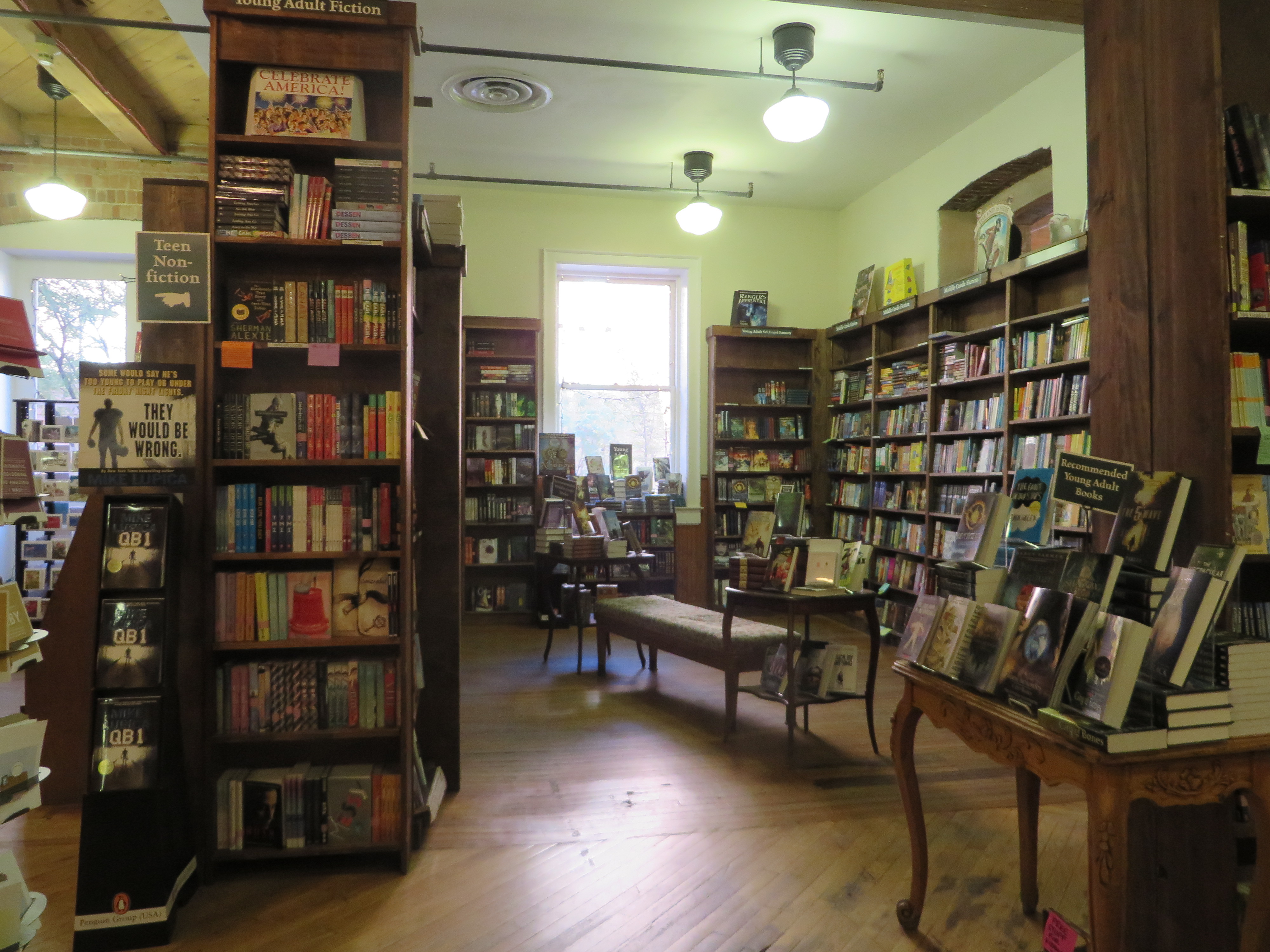
Tattered Cover Indie Bookstore, Denver, CO.
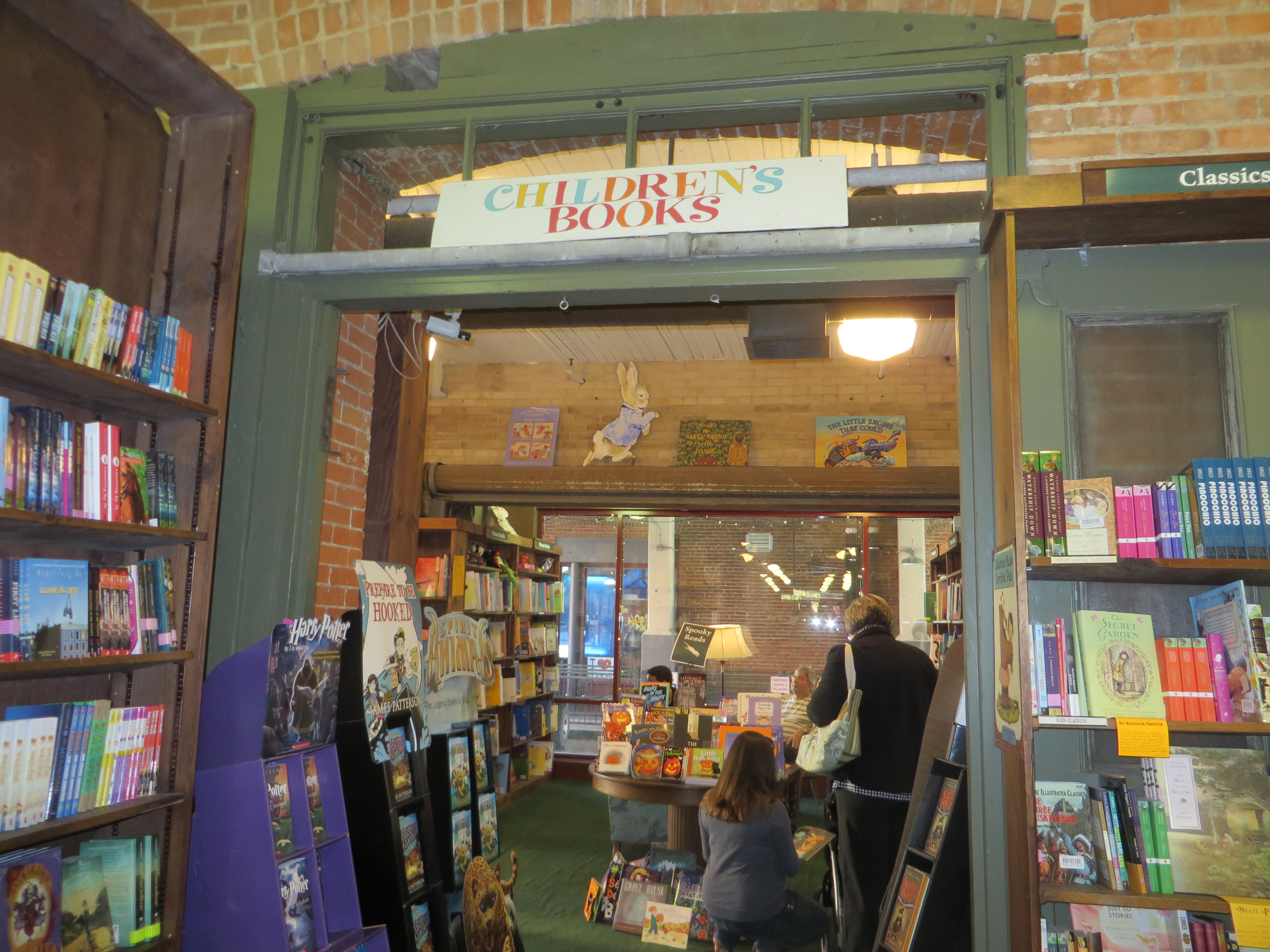
Tattered Cover, Indie Bookstore, Denver, CO. Children's section.
One of the interesting things at Tattered Cover was the Espresso Book Machine. This is a print-on-demand printer that both prints and binds a book while you watch. I’ve heard of them for several years, of course, but never seen one. It’s large. Watching the pages flip through the printer is fascinating. Tattered Cover Press is the official designation of books printed here.
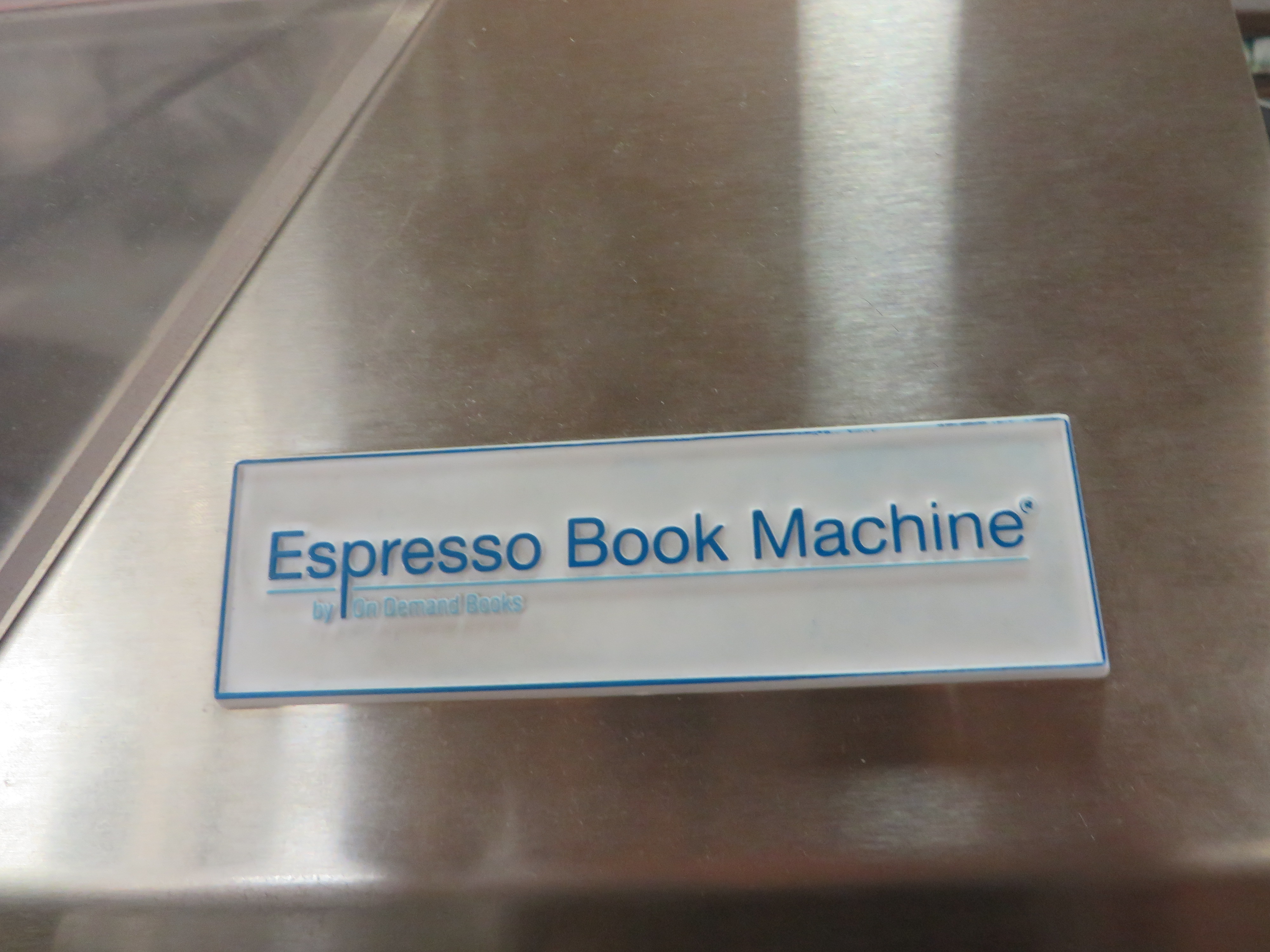
Espresso Book Machine: POD Printer
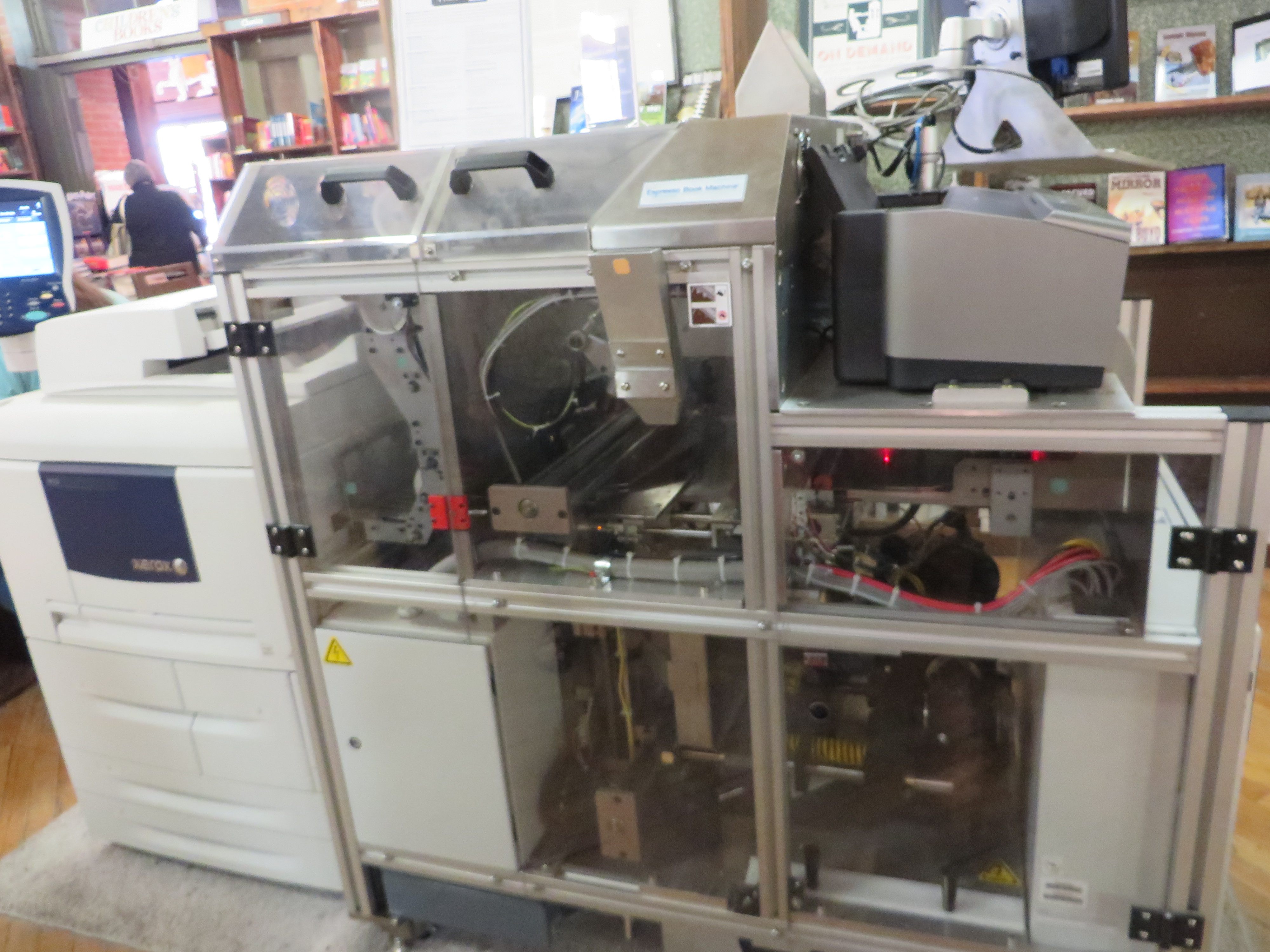
Tattered Cover Press print-on-demand Espresso Book Machine.
I also stopped by the Kobo ebook reader section and checked out all of their selection. (Read my recent post about why you should pay attention to Kobo. Hint: It has to do with indie bookstores.) Buy my books in Kobo format!
Of course–one of the best reasons to visit Colorado this time of year is the aspens!

The best reason to visit Denver this time of year: aspens turning golden.
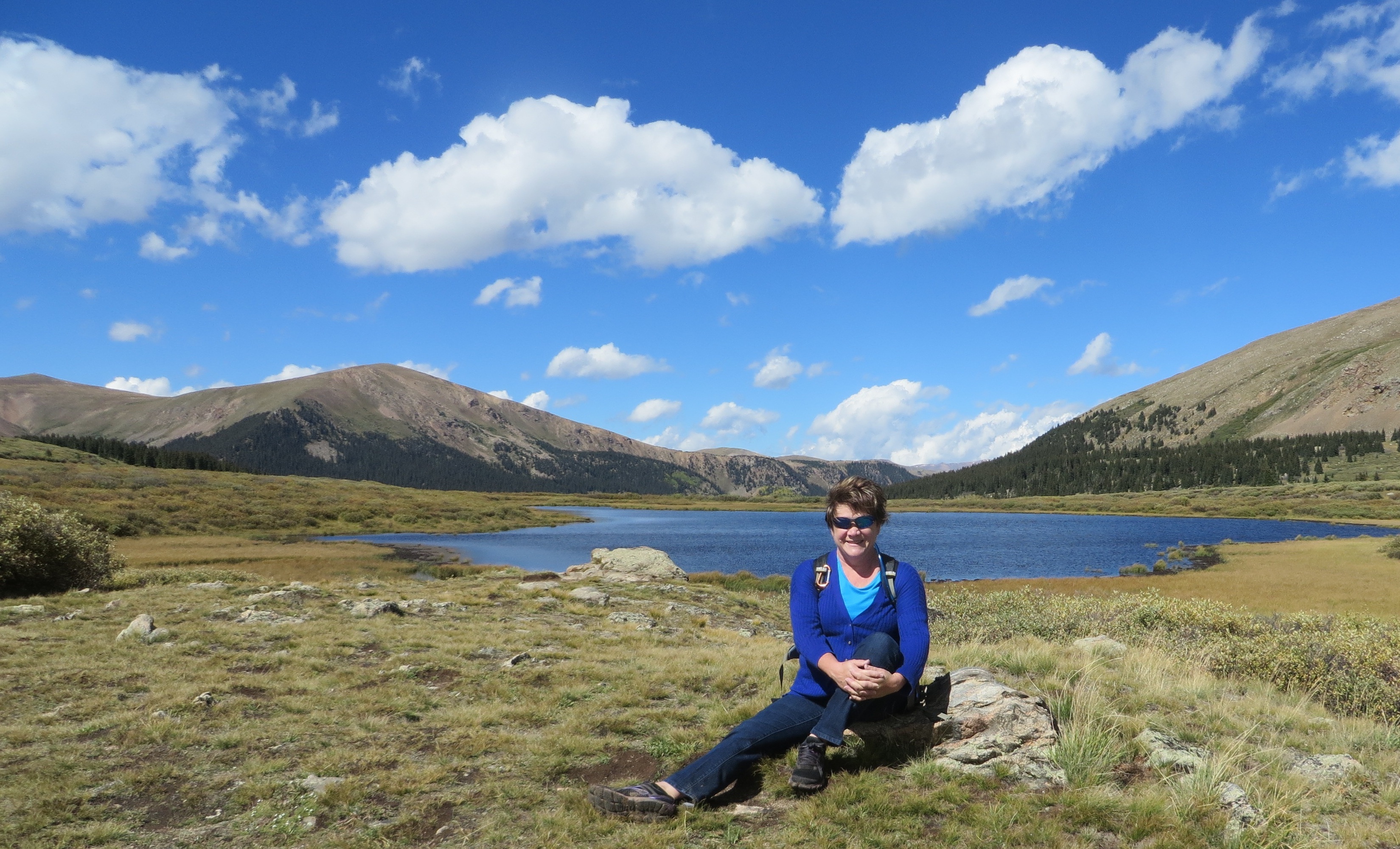
Darcy at Mt. Bierstadt in the Rocky Mountains. We accidently tried this 14er (14,000 ft) hike and because we weren't prepared, we only made it to about 13,000 ft. Great day!


September 18, 2013
Deadlines are Useful
.goodreadsGiveawayWidget { color: #555; font-family: georgia, serif; font-weight: normal; text-align: left; font-size: 14px;
font-style: normal; background: white; }
.goodreadsGiveawayWidget img { padding: 0 !important; margin: 0 !important; }
.goodreadsGiveawayWidget a { padding: 0 !important; margin: 0; color: #660; text-decoration: none; }
.goodreadsGiveawayWidget a:visted { color: #660; text-decoration: none; }
.goodreadsGiveawayWidget a:hover { color: #660; text-decoration: underline !important; }
.goodreadsGiveawayWidget p { margin: 0 0 .5em !important; padding: 0; }
.goodreadsGiveawayWidgetEnterLink { display: block; width: 150px; margin: 10px auto 0 !important; padding: 0px 5px !important;
text-align: center; line-height: 1.8em; color: #222; font-size: 14px; font-weight: bold;
border: 1px solid #6A6454; border-radius: 5px; font-family:arial,verdana,helvetica,sans-serif;
background-image:url(https://www.goodreads.com/images/layo... background-repeat: repeat-x; background-color:#BBB596;
outline: 0; white-space: nowrap;
}
.goodreadsGiveawayWidgetEnterLink:hover { background-image:url(https://www.goodreads.com/images/layo...
color: black; text-decoration: none; cursor: pointer;
}
Goodreads Book Giveaway
Start Your Novel
by Darcy Pattison
Giveaway ends October 01, 2013.
See the giveaway details
at Goodreads.
Enter to win
Do you find deadlines inspiring or stressful?
I have recently set some deadlines for myself for finishing a couple projects. For me, deadlines aren’t inspiring or stressful; they are useful.
One deadline was this weekend, September 15. The last couple days of last week, I realized the deadline was near and, WOW!, did I get working hard on the project. Yes, it was a self-imposed deadline, but that didn’t matter, it was a deadline. I was actually two days late meeting the deadline–September 17–but without the deadline, the project would still be languishing.
One reason it is useful is that it forced me to prioritize this project. At any one time, I might have 5-6 projects ongoing that I could work on. That includes things like writing for this blog, nonfiction projects, freelance projects and a couple fiction projects. What bubbles to the top of my To-Do list is anyone’s guess. Unless, I set a deadline. The self-imposed deadlines help me determine what to do each day or week.
 Deadlines are also useful in fiction. This is the idea of a time bomb that will explode unless the characters accomplish something. There may be a real time bomb if you’re writing a thriller. Or, it may be a deadline such as an event; the character must accomplish such and so before the Halloween party, or the end of school, or before someone finds out something.
Time bombs and deadlines are useful in fiction because they up the tension. Time is short. How can the characters possibly accomplish everything in such a short time period? They can’t. Except, of course, they do. But not till the timer is at 0:01 seconds left. It’s important to give the reader frequent updates on the time frame, so the tension stays high.
Deadlines–for your writing or in your story–
September 16, 2013
National Book Award 2013: Long List
.goodreadsGiveawayWidget { color: #555; font-family: georgia, serif; font-weight: normal; text-align: left; font-size: 14px;
font-style: normal; background: white; }
.goodreadsGiveawayWidget img { padding: 0 !important; margin: 0 !important; }
.goodreadsGiveawayWidget a { padding: 0 !important; margin: 0; color: #660; text-decoration: none; }
.goodreadsGiveawayWidget a:visted { color: #660; text-decoration: none; }
.goodreadsGiveawayWidget a:hover { color: #660; text-decoration: underline !important; }
.goodreadsGiveawayWidget p { margin: 0 0 .5em !important; padding: 0; }
.goodreadsGiveawayWidgetEnterLink { display: block; width: 150px; margin: 10px auto 0 !important; padding: 0px 5px !important;
text-align: center; line-height: 1.8em; color: #222; font-size: 14px; font-weight: bold;
border: 1px solid #6A6454; border-radius: 5px; font-family:arial,verdana,helvetica,sans-serif;
background-image:url(https://www.goodreads.com/images/layo... background-repeat: repeat-x; background-color:#BBB596;
outline: 0; white-space: nowrap;
}
.goodreadsGiveawayWidgetEnterLink:hover { background-image:url(https://www.goodreads.com/images/layo...
color: black; text-decoration: none; cursor: pointer;
}
Goodreads Book Giveaway
Start Your Novel
by Darcy Pattison
Giveaway ends October 01, 2013.
See the giveaway details
at Goodreads.
Enter to win
For the first time, the National Book Award committee is issuing a “long list” of candidates for the award. As of 2013, each panel will now compile a “longlist” of ten titles, to be announced in mid-September. They will then narrow down that list to five Finalists, to be announced this year on October 16, 2013. The National Book Awards Ceremony and Benefit Dinner will take place on November 20, 2013.
Categories include Young People’s Literature, Poetry, Nonfiction and Fiction. The NBA Longlist for Young People’s Literature was announced today:
The nominees are:

Kathi Appelt, The True Blue Scouts of Sugar Man Swamp (Atheneum Books for Young Readers/Simon & Schuster)

Kate DiCamillo, Flora and Ulysses: The Illuminated Adventures (Candlewick Press)

Lisa Graff, A Tangle of Knots (Philomel Books/Penguin Group USA)

Alaya Dawn Johnson, The Summer Prince (Arthur A. Levine Books/Scholastic)

Cynthia Kadohata, The Thing About Luck (Atheneum Books for Young Readers/Simon & Schuster)

David Levithan, Two Boys Kissing (Alfred A. Knopf/Random House)

Tom McNeal, Far Far Away (Alfred A. Knopf/Random House)

Meg Rosoff, Picture Me Gone (G.P. Putnam’s Sons/Penguin Group USA)

Anne Ursu, The Real Boy (Walden Pond Press/HarperCollinsPublishers)

Gene Luen Yang, Boxers & Saints (First Second/Macmillan)
Have you read any of these books yet? Which is your favorite? Which do you think should win the National Book Award for Young People’s Literature?


September 10, 2013
Chase: A Fast-Paced Plot
.goodreadsGiveawayWidget { color: #555; font-family: georgia, serif; font-weight: normal; text-align: left; font-size: 14px;
font-style: normal; background: white; }
.goodreadsGiveawayWidget img { padding: 0 !important; margin: 0 !important; }
.goodreadsGiveawayWidget a { padding: 0 !important; margin: 0; color: #660; text-decoration: none; }
.goodreadsGiveawayWidget a:visted { color: #660; text-decoration: none; }
.goodreadsGiveawayWidget a:hover { color: #660; text-decoration: underline !important; }
.goodreadsGiveawayWidget p { margin: 0 0 .5em !important; padding: 0; }
.goodreadsGiveawayWidgetEnterLink { display: block; width: 150px; margin: 10px auto 0 !important; padding: 0px 5px !important;
text-align: center; line-height: 1.8em; color: #222; font-size: 14px; font-weight: bold;
border: 1px solid #6A6454; border-radius: 5px; font-family:arial,verdana,helvetica,sans-serif;
background-image:url(https://www.goodreads.com/images/layo... background-repeat: repeat-x; background-color:#BBB596;
outline: 0; white-space: nowrap;
}
.goodreadsGiveawayWidgetEnterLink:hover { background-image:url(https://www.goodreads.com/images/layo...
color: black; text-decoration: none; cursor: pointer;
}
Goodreads Book Giveaway
Start Your Novel
by Darcy Pattison
Giveaway ends October 01, 2013.
See the giveaway details
at Goodreads.
Enter to win
My current WIP novel has a subplot of a chase, which is one of the 29 possible plot templates. Chase Plots are pretty straight forward. There’s a person chasing and a person being chased, the Chaser and the Victim. It’s an action plot, not a character plot (though always, character should be as strong as possible.)
The Chase plot has one major imperative: The Chaser must constantly catch sight of the Victim and the Victim always escapes by the narrowest margin. Otherwise, it’s boring. This subplot must tantalize the reader with the possibility of Chaser actually catching Victim.
My first draft of chapter one completely omitted the Chase subplot, so the first revision I did was to revisit the idea of a Chase Subplot. Yes, the story still needs it. Then, I had to decide how to add in the Chase subplot in an exciting way. What could I add that would give the Chaser a glimpse of her target? My twist on the Chase Plot is the Chaser doesn’t always recognize the Victim. So, I gave Chaser a smart phone app that identifies the Victim. Now, Chaser walks up to a table where Victim is sitting and the app starts to go off, but. . .Chaser is interrupted.
The Car Chase is a staple of Chase Plots. You can choose any form of chase, though, and still up the tension of your story.
Victim is almost caught and only escapes by chance. Because the story is in Victim’s point of view, this works because Victim realizes the danger he was in. Chaser is still clueless, of course, but that’s OK, because it’s not her POV.
Having a chance escape also works this initial time, because the scene introduces the rules of the Chase scene. But now, Victim KNOWS there’s a smart phone app and will have to use his ingenuity to stay out of range of that app. It will, of course, be easier said than done.
The whole scene has upped the stakes in the story as a whole. The other subplots are now free to carry on as needed, because at the right moments the Chase Subplot will be there to add to the story’s tension. Will Chaser actually CATCH Victim? Who know? Stay tuned!
What subplot(s) are you adding to you story to keep the tension high?


