
Darcy Pattison's Blog, page 32
September 9, 2013
Trust the Writing Process: Of Anteaters and Spider Webs
.goodreadsGiveawayWidget { color: #555; font-family: georgia, serif; font-weight: normal; text-align: left; font-size: 14px;
font-style: normal; background: white; }
.goodreadsGiveawayWidget img { padding: 0 !important; margin: 0 !important; }
.goodreadsGiveawayWidget a { padding: 0 !important; margin: 0; color: #660; text-decoration: none; }
.goodreadsGiveawayWidget a:visted { color: #660; text-decoration: none; }
.goodreadsGiveawayWidget a:hover { color: #660; text-decoration: underline !important; }
.goodreadsGiveawayWidget p { margin: 0 0 .5em !important; padding: 0; }
.goodreadsGiveawayWidgetEnterLink { display: block; width: 150px; margin: 10px auto 0 !important; padding: 0px 5px !important;
text-align: center; line-height: 1.8em; color: #222; font-size: 14px; font-weight: bold;
border: 1px solid #6A6454; border-radius: 5px; font-family:arial,verdana,helvetica,sans-serif;
background-image:url(https://www.goodreads.com/images/layo... background-repeat: repeat-x; background-color:#BBB596;
outline: 0; white-space: nowrap;
}
.goodreadsGiveawayWidgetEnterLink:hover { background-image:url(https://www.goodreads.com/images/layo...
color: black; text-decoration: none; cursor: pointer;
}
Goodreads Book Giveaway
Start Your Novel
by Darcy Pattison
Giveaway ends October 01, 2013.
See the giveaway details
at Goodreads.
Enter to win
I am working on a first draft of a story and am reminded of a couple things.
First, you must write the story. You can plan all you want, but the story comes alive in the actual writing. A small thing this week: my main character is afraid of all bugs. That includes insects and anthropods (spiders)–anything that crawls or flies. So, there they are, the Main Character(MC) and Best Friend (BF) sitting in art class and painting. Guess what the BF paints? An anteater! It’s a perfect addition to the story but I hadn’t planned on it. It came about simply because I wrote the first draft of the first chapter. And there it was.
We don’t know what we think until we write.
We don’t know what the story is until we write.
It’s like sports. You can predict who will win or lose a game, but the teams must still play the game. And there are always surprises.
Write your story. It will surprise you.
The second thing that is happening is not as nice. The story is boring.
I am still feeling my way through the story to find the line of tension, the exciting bits. I’ll keep writing even if it’s boring, because I am digging up anteaters. To use another bug metaphor, I’ve spun a web and I am sitting like a spider monitoring the web for the slightest hint of movement. When the movement–or story excitement–happens, I’ll be ready to pounce. It’s called trusting the process. It’s the most exciting and satisfying thing about writing, when a story comes together on many levels. It’s also scary: I KNOW this is a boring chapter, too full of static action and talking heads. I KNOW it’s bad. I could throw up my hands and just quit. Instead, I’ll plod along and write through the problems until I find something exciting. I can delete this boring chapter later (and, I will!). For now, I am trusting the writing process to get me to a stronger story. And it will.


September 4, 2013
Excitement: Starting a New Novel
.goodreadsGiveawayWidget { color: #555; font-family: georgia, serif; font-weight: normal; text-align: left; font-size: 14px;
font-style: normal; background: white; }
.goodreadsGiveawayWidget img { padding: 0 !important; margin: 0 !important; }
.goodreadsGiveawayWidget a { padding: 0 !important; margin: 0; color: #660; text-decoration: none; }
.goodreadsGiveawayWidget a:visted { color: #660; text-decoration: none; }
.goodreadsGiveawayWidget a:hover { color: #660; text-decoration: underline !important; }
.goodreadsGiveawayWidget p { margin: 0 0 .5em !important; padding: 0; }
.goodreadsGiveawayWidgetEnterLink { display: block; width: 150px; margin: 10px auto 0 !important; padding: 0px 5px !important;
text-align: center; line-height: 1.8em; color: #222; font-size: 14px; font-weight: bold;
border: 1px solid #6A6454; border-radius: 5px; font-family:arial,verdana,helvetica,sans-serif;
background-image:url(https://www.goodreads.com/images/layo... background-repeat: repeat-x; background-color:#BBB596;
outline: 0; white-space: nowrap;
}
.goodreadsGiveawayWidgetEnterLink:hover { background-image:url(https://www.goodreads.com/images/layo...
color: black; text-decoration: none; cursor: pointer;
}
Goodreads Book Giveaway
Start Your Novel
by Darcy Pattison
Giveaway ends October 01, 2013.
See the giveaway details
at Goodreads.
Enter to win
There’s an excitement in the air! I’ve started a new novel project.
Here’s what I don’t want to happen:
I don’t want the excitement for this project to get bogged down and dribble away. It happens too easily, as life issues take over, as problems arise with the project, or just as the work drags on.
I don’t want to talk bad about this project to anyone. Sometimes, I fall into the habit of complaining. This chapter or that character just aren’t cooperating! Why is this so hard? ARGH! I hate this project because it’s not going like I want. Nope. None of that this time. I love this project and I’m excited about it. I think my readers will love it, too. Hurrah! It’s such a joy to be working on such a great project.
I don’t want this project to drag on forever. I have scheduled two months to get a first draft done and I’m working hard on keeping to that schedule.
Here’s things I want to happen:
Joy. Excitement. Productivity.
Scheduling the Project
When faced with a big project, how do you break it down into manageable pieces?
I’ve already gone through the process of deciding what kind of novel this will be. Now, I just need to write it.
Here are the steps I plan to follow:
One page synopsis. I’ve written a one-page summary of the story, knowing full well that it would need to be fleshed out when the time comes. Now that the time is here, it’s easy to see where I want the story to go. There are huge gaps in the story, of course, but the one-page synopsis grounds the story in some particular issues.
Subplots to Detailed Plot.I am taking a day to flesh out some of the subplots. For example, one subplot will involve kids planning a parade. I spent today researching fun ideas to add to the parade and parade planning. Did you know that some parades these days require horses to wear diapers? It’s true. Horse poop on city streets–though once the norm–is now a no-no. There are special bags which are strapped to horses to catch their “meadow muffins.” (Now, see, isn’t that great language to use in a book? Meadow muffins. Horse apples.) Real life can be stranger than fiction: horse diapers.
I’ll take a day to research the other subplots and layout some ideas for developing the plot lines. Then, I’ll spend a day picking and choosing scenes to include and weaving them into the main plot line to create a detailed plot. That breaks the task of plotting into steps that I can manage. By approaching it from the subplot angle, I am free to make leaps and make errors: it doesn’t matter, it’s just a subplot. But in the end, I am sure that I’ll find some unique things to add to this story to make it more fun and funny.
WARNING: THIS 24-SECOND VIDEO SHOWS A HORSE POOPING. Your kids will probably love it!
If you can’t see this video, click here.
Characterization and character continuity. With a detailed plot in hand, I’ll double check the characterization needed. Because this is a second book in a series, much of the characterization is set up and I’ll need to continue it on, create an emotional arc for this book and make sure there is continuity. The first step will be the emotional arc for the character. I’ll need to make sure the external plot echoes the internal arc. This means a detailed summary of the story that includes the plot, subplots and character issues.
Revise. With a very long, detailed synopsis of the story, I’ll look for holes in logic, characterization and plot.
Write. Finally, I’ll use the synopsis to create a full draft–by Halloween.
This is a slightly different process for me, with more upfront planning. I’d like the full synopsis to be about 1/3 of the finished book, which will be enough detail to help me get the whole story done.
August 28, 2013
No Words on the Page, But I’m Still Writing
.goodreadsGiveawayWidget { color: #555; font-family: georgia, serif; font-weight: normal; text-align: left; font-size: 14px;
font-style: normal; background: white; }
.goodreadsGiveawayWidget img { padding: 0 !important; margin: 0 !important; }
.goodreadsGiveawayWidget a { padding: 0 !important; margin: 0; color: #660; text-decoration: none; }
.goodreadsGiveawayWidget a:visted { color: #660; text-decoration: none; }
.goodreadsGiveawayWidget a:hover { color: #660; text-decoration: underline !important; }
.goodreadsGiveawayWidget p { margin: 0 0 .5em !important; padding: 0; }
.goodreadsGiveawayWidgetEnterLink { display: block; width: 150px; margin: 10px auto 0 !important; padding: 0px 5px !important;
text-align: center; line-height: 1.8em; color: #222; font-size: 14px; font-weight: bold;
border: 1px solid #6A6454; border-radius: 5px; font-family:arial,verdana,helvetica,sans-serif;
background-image:url(https://www.goodreads.com/images/layo... background-repeat: repeat-x; background-color:#BBB596;
outline: 0; white-space: nowrap;
}
.goodreadsGiveawayWidgetEnterLink:hover { background-image:url(https://www.goodreads.com/images/layo...
color: black; text-decoration: none; cursor: pointer;
}
Goodreads Book Giveaway
Start Your Novel
by Darcy Pattison
Giveaway ends October 01, 2013.
See the giveaway details
at Goodreads.
Enter to win
Today, there are no words on the page that I can point to and say, “I wrote that today.”
But it was still a successful writing day.
I reread the first book of a series and got the voice and characters back in my head. In the early stages of prewriting, I need to see what went before and how I can play a variation on the them for this new book.
I worked on new characters and situations for the second book. And it will take me a couple more planning days, as I try something, reject it, and try something new. The firs things that come to mind are likely the weakest and I need to push past those cliches to something more fun. Unfortuntately, that means there has to be something there to push past. Which means grunt work of writing bad ideas to reject, so the good ideas can come forward.
I set up a folder for Book 2 and added two documents to it. Getting organized mentally, getting files organized, setting up work folders–all of that prepares me mentally to work. I am setting myself up for success. I will have all the tools and processes in place.
I decided to start on this next Tuesday, September 3. By setting up a “trigger,” or a deadline, it gives me a mental head start on what I need to get done before then and encourages/forces me to make decisions this week that will create a successful start to a new project.
I also set a deadline for finishing the first draft of the project. By adding the end-date to the project, it also sets me up to be professional in the writing, to set a goal of writing a certain amount per week. 
In everything I do this week, I plan to set myself up for success. What are you doing to set yourself up for success?


August 26, 2013
Kobo Writing Life: Publish Your eBook with Ease
.goodreadsGiveawayWidget { color: #555; font-family: georgia, serif; font-weight: normal; text-align: left; font-size: 14px;
font-style: normal; background: white; }
.goodreadsGiveawayWidget img { padding: 0 !important; margin: 0 !important; }
.goodreadsGiveawayWidget a { padding: 0 !important; margin: 0; color: #660; text-decoration: none; }
.goodreadsGiveawayWidget a:visted { color: #660; text-decoration: none; }
.goodreadsGiveawayWidget a:hover { color: #660; text-decoration: underline !important; }
.goodreadsGiveawayWidget p { margin: 0 0 .5em !important; padding: 0; }
.goodreadsGiveawayWidgetEnterLink { display: block; width: 150px; margin: 10px auto 0 !important; padding: 0px 5px !important;
text-align: center; line-height: 1.8em; color: #222; font-size: 14px; font-weight: bold;
border: 1px solid #6A6454; border-radius: 5px; font-family:arial,verdana,helvetica,sans-serif;
background-image:url(https://www.goodreads.com/images/layo... background-repeat: repeat-x; background-color:#BBB596;
outline: 0; white-space: nowrap;
}
.goodreadsGiveawayWidgetEnterLink:hover { background-image:url(https://www.goodreads.com/images/layo...
color: black; text-decoration: none; cursor: pointer;
}
Goodreads Book Giveaway
Start Your Novel
by Darcy Pattison
Giveaway ends October 01, 2013.
See the giveaway details
at Goodreads.
Enter to win
For the last few years, the best options for Indie publishers to publish an eBook have been Kindle, Nook and Apple iBooks. Now, there’s another big competitor on the scene, Kobo Books.
Kobo’s Writing Life opens the market to authors and provides exciting new opportunities. Especially exciting is the collaboration with independent bookstores and the American Bookseller’s Association. Today, Mark Lefebvre, Director of Self-Publishing and Author Relations for Kobo stops by to discuss their new interface for Indies. I met him at a conference in Oregon in July and immediately went home to upload my ebooks to KWL. It was a simple process and I wanted to share this with you.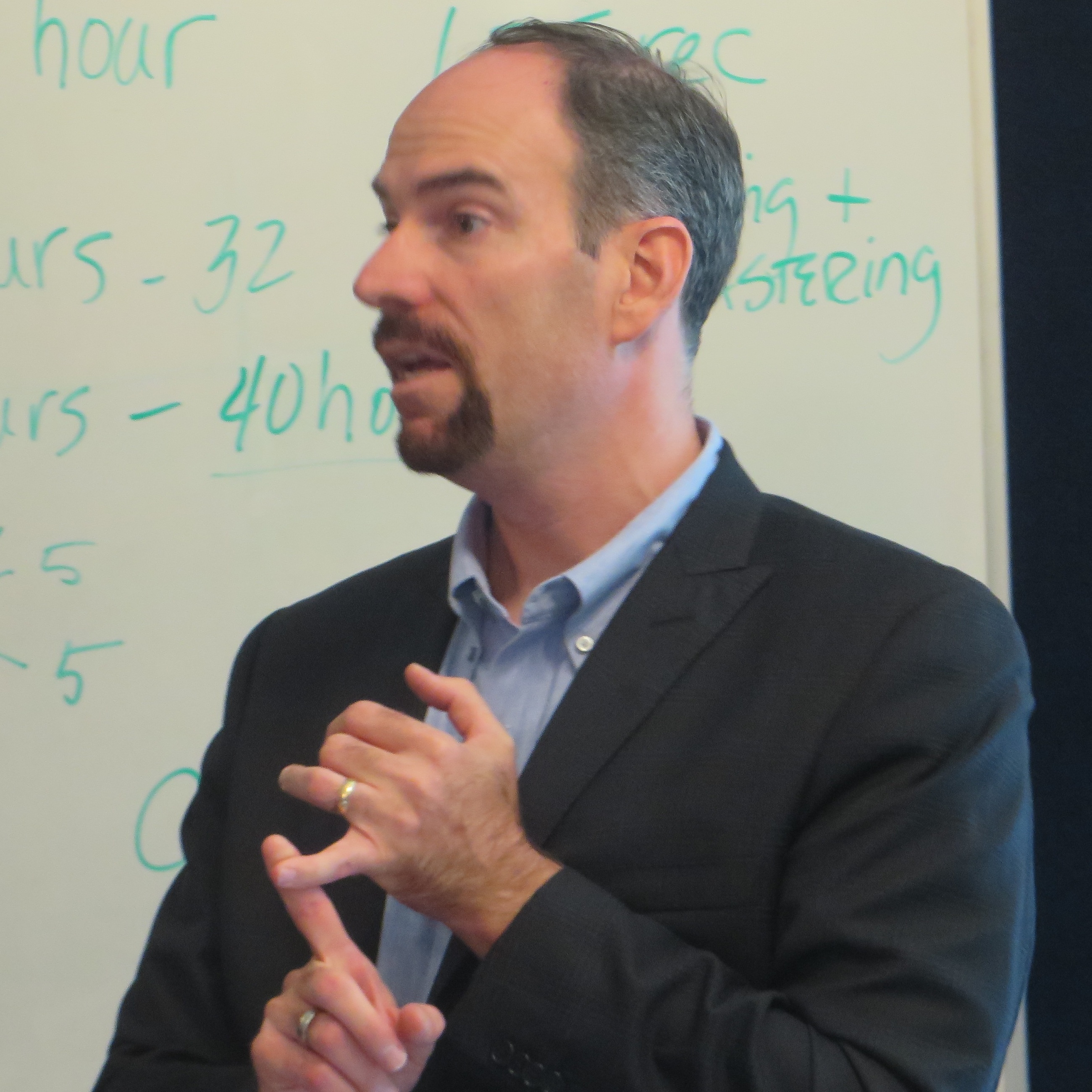
Mark Lefebvre, Director, Self Publishing & Author Relations, Kobo Writing Life. I met Mark at a conference in Oregon in July, 2013.
Question: At the Oregon conference, I had my first chance to see a Kobo reader and thought it was fantastic. I loved the Kobo Mini’s small size, how it felt in the hand and the clean reading interface. How does the Kobo ebook reader compare to Kindle, Nook and iPads? Is there a color Kobo and do pages rotate from portrait to landscape?
Answer: Well, first of all I should explain that there isn’t a single Kobo reader, but rather a whole family of devices and apps – there’s pretty much a device or app for virtually any type of person, matching their own style and preference in an eReading experience. Yes, this might sound like a sales pitch, but there really is an amazing variety of options available in our devices.
We have e-ink devices such as the Kobo Touch , a 6” Pearl E Ink touchscreen device that the #1 rated device by WIRED magazine, to the Kobo Glo, which, like Touch, can stored up to 1000 eBooks, but has a built-in light that has been proven to be the most even 6” front-lit eReader, allowing comfortable reading day or night.
Kobo Touch eBook Reader

Kobo Glo eBook Reader
Our Kobo mini is the world’s smallest and lightest full-featured eReader with a 5” display, great for reading on the go, as it fits more easily into purses and jacket breast pockets. For die-hard readers who have to have the best of the best in eink reading experiences, Kobo Aura HD provides a premium reading experience for the discerning reader. With a 1440 X 1080 resolution and 265 dpi, along with a unique ergonomic design Aura HD delivers the ultimate crisp and natural feeling reading experience, and the built-in light allows for reading in all levels of light.
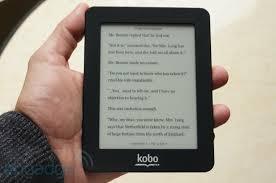
Kobo Mini eBook Reader

Kobo AuraHD eBook Reader
Our tablet, the Kobo ARC is a fully certified Android tablet with all of the tablet features that you would expect, such as a 1.5 GHz process and 1 GB of low-power RAM, but designed with the book lover in mind. Apart from the unique Tapestries discovery experience and Kobo’s wonderful Android reading experience (which does auto-rotate from portrait to landscape, unless you set a user preference to lock the screen in place), this is a fully functioning Android environment, meaning you have access to all of the apps available through Android (yes, including apps for competitor eRetailers, so you can read your Kindle and Nook library titles on your Kobo ARC)

Kobo Arc eBook Reader
Apart from the readers, Kobo does have free apps for every single smart-phone operating system, MAC and PC desktops.
Question: Tell us about Kobo Writing Life. Why did Kobo establish this new option for Indie publishers and authors?
Answer: Kobo Writing Life was created as a way of removing barriers and allowing authors who wanted to work directly with Kobo to get their indie-published works into our catalog as easily as possible.
Kobo, a very collaborative company, accepts daily feeds from places like Smashwords and BookBaby along with hundreds of other distributors/aggregators, but many authors wanted to be able to connect directly with us and have tighter control over their prices, metadata, etc. So, after spending several months listening to authors (and using the existing platforms available – remember, many of the folks on the Kobo Writing Life [KWL] team are authors and are using the various different DIY platforms available), we designed a portal that would not only meet those needs, but also hopefully give them more insights and access to their data in an intuitive and beautifully designed manner.
We are delighted to hear back not only from authors but smaller publishers, that KWL makes it easy for them to get their eBooks into Kobo’s catalog as well as track their global sales live, so they can focus on what authors and publishers really want to do – create great books.
Question: What is the biggest tip you can tell us about using Kobo Writing Life? Is there a best-practices list somewhere?
Answer: Kobo Writing Life is a tool for authors and publishers to use. In many ways it is not all that different than any other online portal allowing indie publishers to get their books into as many global catalogs as possible.
We created the Kobo Writing Life blog at www.kobowritinglife.com in order to outline spotlights on authors, highlighting various things that they are doing, as well as to share information and insights about KWL, as well as the craft and business of writing (See Darcy’s post about starting your novel on Kobo Writing Life blog here), so that’s a great place to keep your eye out for updated tidbits and info.
But two key bits of advice I would offer (and which apply well beyond Kobo) would be this:
Be consistent and careful and methodical with your metadata. Metadata is the term used to describe the data that describes your book. This would be the title, subtitle, author name, price, description, series title, subject category, etc. Metadata is critical because it is the data that is used to help customers FIND your work – so it needs to be accurate and clean and speak to your target audience
Take advantage of EVERY opportunity to make your work available on ALL publishing platforms. This means, ensure your work is available on Kobo, but also Kindle, Nook, iBooks (Apple) as well as other places such as Sony, Smashwords, Diesel and a myriad of other platforms. Maximizing your global customer base and reach is a good long-term strategy that offers an author the broadest possible customer base. You never know, for sure, which platform your next biggest fan might already be reading on, so making your work available as broadly as possible makes it easier for readers to find you. (Darcy’s Note: My first three sales on Kobo went to Australia, Canada and South Africa! Wow. That is a global readership!)
For other tips, see KWL’s Technical Help blog.
Question: Kobo reaches a different market from the other ebook options. Where do you traditionally sell well?
Answer: Kobo’s catalog reaches about 200 countries around the world, and one of the unique ways we reach customers isn’t just through www.kobo.com but also through our regional partner websites. In Canada, for example, our books are not only available via Kobo’s website, but also through www.chapters.indigo.ca and in the UK through WHSmith and indie bookseller websites. The same goes for FNAC in France and Mondadori in Italy and hundreds of other retail partner websites around the world – this helps maximize an author’s exposure to more customers in more countries via multiple channels.
Kobo was born in and calls Canada home, so there’s no denying the fact that we have an incredibly huge reach within Canada. But we are also popular in the UK, Australia and New Zealand and are continuing to grow in the United States. Our partnership with the indie booksellers in the US, for example, means great opportunities for authors, for Kobo and for bookstores.
Question: Explain the new collaboration with the ABA and independent booksellers through Indie Bound. How will this expand markets for Indie publishers?
Answer: Kobo’s partnership with the American Booksellers Association means that independent bookstores across the U.S. can not only sell the line of fantastic Kobo reader devices in their stores, but also have a way of selling content to their customers. Customers interested in purchasing eBooks need not abandon their favorite local bookstore, but, instead, can purchase eBooks via that bookstore’s presence (check out www.indiebound.org) and support their local bookstore while buying eBooks.
One of the things we learned right away with respect to our fantastic partnership with the ABA is that the titles that sell well via the indie bookstore websites closely matches the types of books that would sell well IN that same indie bookstore. Meaning that, instead of a generic global list of bestselling titles, the eBooks that sell well through each of the bookstore websites mimic the types of books that local bookstore would be selling. Meaning, that you get the great flavor and style that the indie bookstores bring to the community, the great local recommendations and personal touch that these cultural community hubs offer the towns in cities they operate in.
Question: What is your favorite book that is ONLY available on Kobo? Please give us links to the Kobo desktop, iPad, iPhone, and Android apps so we can read it right away, too!
Answer: It’s never fair to any bookseller for their favorite book or author – there are simply TOO MANY great books and authors to follow.
A great thing that people SHOULD check out is the list of FREE titles available through the Kobo Writing Life community. There is virtually something for everybody on this list and a great way to discover a great new writer.
These titles aren’t exclusive to Kobo, but since Kobo Writing Life allows authors to make their books free at ANY time for as long as they want (without the same restrictive exclusivity clause that some other eRetailers impose for the same benefit), sometimes they are free at Kobo and not at some other places.
I should also mention one thing I am very proud about is the fact that Kobo Writing Life allows indie published authors the ability to set up their books for pre-order, meaning you might be able to pre-order an indie author’s title from Kobo before it is available at most other eRetailers.
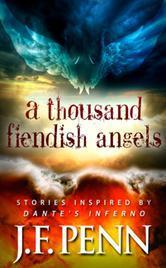 But if you want me to try to call out something that is currently exclusive to Kobo, one that I quite enjoyed is the special “Inferno” tie-in linked short stories that J.F. Penn wrote as part of a major “The Descent” contest that Kobo ran just prior to Dan Brown’s latest big release. Fans of Dan Brown or James Rollins are likely to enjoy the wonderful “Easter Egg” references and enriched links to Dante’s classic work within the pages of J.F. Penn’s A THOUSAND FIENDISH ANGELS – three wonderfully intriguing tales called Sins of the Flesh, Sins of Treachery and Sins of Violence.
This is a great way to check out J.F. Penn’s writing so you can enjoy her riveting ARKANE series featuring Dr. Morgan Sierra who is much more than a female “Indiana Jones.”
Here’s
August 23, 2013
Ebooks v. Apps
.goodreadsGiveawayWidget { color: #555; font-family: georgia, serif; font-weight: normal; text-align: left; font-size: 14px;
font-style: normal; background: white; }
.goodreadsGiveawayWidget img { padding: 0 !important; margin: 0 !important; }
.goodreadsGiveawayWidget a { padding: 0 !important; margin: 0; color: #660; text-decoration: none; }
.goodreadsGiveawayWidget a:visted { color: #660; text-decoration: none; }
.goodreadsGiveawayWidget a:hover { color: #660; text-decoration: underline !important; }
.goodreadsGiveawayWidget p { margin: 0 0 .5em !important; padding: 0; }
.goodreadsGiveawayWidgetEnterLink { display: block; width: 150px; margin: 10px auto 0 !important; padding: 0px 5px !important;
text-align: center; line-height: 1.8em; color: #222; font-size: 14px; font-weight: bold;
border: 1px solid #6A6454; border-radius: 5px; font-family:arial,verdana,helvetica,sans-serif;
background-image:url(https://www.goodreads.com/images/layo... background-repeat: repeat-x; background-color:#BBB596;
outline: 0; white-space: nowrap;
}
.goodreadsGiveawayWidgetEnterLink:hover { background-image:url(https://www.goodreads.com/images/layo...
color: black; text-decoration: none; cursor: pointer;
}
Goodreads Book Giveaway
Start Your Novel
by Darcy Pattison
Giveaway ends October 01, 2013.
See the giveaway details
at Goodreads.
Enter to win
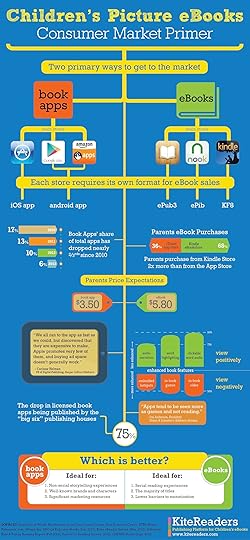
Here’s an interesting infographic from Kite Ebook Readers, which specializes in making children’s ebooks and apps.
This infographic is from kitereaders.com.


August 22, 2013
Cloak, Cape or Hood: Writing Consistent Fiction
.goodreadsGiveawayWidget { color: #555; font-family: georgia, serif; font-weight: normal; text-align: left; font-size: 14px;
font-style: normal; background: white; }
.goodreadsGiveawayWidget img { padding: 0 !important; margin: 0 !important; }
.goodreadsGiveawayWidget a { padding: 0 !important; margin: 0; color: #660; text-decoration: none; }
.goodreadsGiveawayWidget a:visted { color: #660; text-decoration: none; }
.goodreadsGiveawayWidget a:hover { color: #660; text-decoration: underline !important; }
.goodreadsGiveawayWidget p { margin: 0 0 .5em !important; padding: 0; }
.goodreadsGiveawayWidgetEnterLink { display: block; width: 150px; margin: 10px auto 0 !important; padding: 0px 5px !important;
text-align: center; line-height: 1.8em; color: #222; font-size: 14px; font-weight: bold;
border: 1px solid #6A6454; border-radius: 5px; font-family:arial,verdana,helvetica,sans-serif;
background-image:url(https://www.goodreads.com/images/layo... background-repeat: repeat-x; background-color:#BBB596;
outline: 0; white-space: nowrap;
}
.goodreadsGiveawayWidgetEnterLink:hover { background-image:url(https://www.goodreads.com/images/layo...
color: black; text-decoration: none; cursor: pointer;
}
Goodreads Book Giveaway
Start Your Novel
by Darcy Pattison
Giveaway ends October 01, 2013.
See the giveaway details
at Goodreads.
Enter to win
In this January 6, 2013 NPR interview, John Sandys talks about inconsistencies in movies that were released in 2012:
Well, I think ’cause “Men in Black 3″ travels back and forth in time, it means you’ve got a whole host of factual mistakes as well, which it opens itself up to. One which jumped at me was in Cape Canaveral in 1969, we see the flag of Spain waving, but it’s the wrong flag. It’s the current era flag, not the 1969-era flag. I mean, it’s hardly a major research job. I don’t know whether they thought it wasn’t worth looking into or they just thought, well, no one will care.
This week, I am doing a final pass through of a novel and finding tons of inconsistencies.
For example, the main character shows up in a cloak and a scarf wrapped around her head. But at the beginning of the next scene, which is a direct follow-up, she throws back her hood and takes off her cloak. In another scene, she is described as wearing a cape.
(I know: Capes are soooo out of style.)
Reading and revising for consistency of details is different than reading for story. Here are a few tips:
Put on your editor’s hat. This isn’t the time to worry about the story line, characterization, plot or those other big issues. Instead, you need to be very logical and you need to pay attention. That requires a different mindset.
Take notes. I use sticky notes, but you could use just a sheet of paper to jot notes. As I read along, I jot down anything that sounds fishy to me, or I am uncertain of consistency through out the manuscript: numbers, names, eye color, hair color, peculiar or unusual wordings, etc. For complicated books or series, some suggest a Story Bible, or a place where you record all such details. For this story, I didn’t feel the need for something that structured. But in an upcoming series, I will definitely go that route.
Timeline. Lots of what I am doing this week is tightening the time line. I had to cut some scenes and that left my character at a loss for an afternoon and evening. So, I moved some scenes to fill in those spaces. Often, I will literally fill in a calendar for the final timeline (after the major revisions), and often it will be hour by hour. I know I planned it all out before, but the revisions make a difference. So, I do it again.
Words and phrases. I also make sure I haven’t repeated a word or phrase too often. It’s hard to describe how this one works, but you sorta have a watcher in your head paying attention to how a story is told. And it will go, “Whoa! Stop right there, little missy.” So, I stop and correct. It’s paying attention to the difference between work table and workbench.

Logic. It’s important for every action to be in the correct time order and to be logical. Clarity rules on this pass through. You can’t hit a ball with a bat if you haven’t picked up a bat first.
Of course, I am making these types of decisions as I write the manuscript, but I’ve found I need one last run through. What else do you check for in your last pass through a manuscript?


August 19, 2013
Copy Editor Needed: Loose 8 Ponds Quickly!
.goodreadsGiveawayWidget { color: #555; font-family: georgia, serif; font-weight: normal; text-align: left; font-size: 14px;
font-style: normal; background: white; }
.goodreadsGiveawayWidget img { padding: 0 !important; margin: 0 !important; }
.goodreadsGiveawayWidget a { padding: 0 !important; margin: 0; color: #660; text-decoration: none; }
.goodreadsGiveawayWidget a:visted { color: #660; text-decoration: none; }
.goodreadsGiveawayWidget a:hover { color: #660; text-decoration: underline !important; }
.goodreadsGiveawayWidget p { margin: 0 0 .5em !important; padding: 0; }
.goodreadsGiveawayWidgetEnterLink { display: block; width: 150px; margin: 10px auto 0 !important; padding: 0px 5px !important;
text-align: center; line-height: 1.8em; color: #222; font-size: 14px; font-weight: bold;
border: 1px solid #6A6454; border-radius: 5px; font-family:arial,verdana,helvetica,sans-serif;
background-image:url(https://www.goodreads.com/images/layo... background-repeat: repeat-x; background-color:#BBB596;
outline: 0; white-space: nowrap;
}
.goodreadsGiveawayWidgetEnterLink:hover { background-image:url(https://www.goodreads.com/images/layo...
color: black; text-decoration: none; cursor: pointer;
}
Goodreads Book Giveaway
Start Your Novel
by Darcy Pattison
Giveaway ends October 01, 2013.
See the giveaway details
at Goodreads.
Enter to win
I had to laugh this week when I got a spam email with the title, “Loose 8 Ponds Quickly!” Wow, did this spammer need a copy editor.
A copy editor finds all the pesky little errors of grammar and spelling. Many publishers use the Chicago Manual of Style as their style guide. Because here’s a secret they don’t teach in high school: grammar and to an extent spelling, is a matter of convention. Grammar is an agreed-upon set of rules for how we punctuation, conjugate and parse our language. There are different style guides and each has slightly different rules. And the language is evolving.
For example, I heard recently that quotation marks as a way to indicate speech are being disregarded in some new publications. That doesn’t make sense to me! I’m conventional. But for an edgy YA novel, maybe it would draw in a few new readers, which is language in the service of the story.
Do you need to study the Chicago Manual of Style? It wouldn’t hurt; but it’s unlikely that most writers need to do that intensive study. You do need a solid grounding of grammar, though. Unless your character is uneducated, speaks in a dialect, or is sick, s/he should speak in standard English. If you can’t manage that, then you should take a class somewhere.
I recently read a story that started, “Because him and his whole family were going out to do some camping.”
Wow. Embarrassing. Here’s how to keep from being embarrassed.
Spell Check. I’ve been lax lately about running a spell check on everything that goes out. But I was recently embarrassed by an obvious spelling error and it jerked me back to reality. Everyone can make mistakes, so you should use the tools available to write as cleanly as possible. Use your word processor’s spell check! Then run over it again to catch things like he/eh, for/four/fore, their/there, etc.
Grammar Check. Likewise, run your word processor’s grammar check. Always.
Study E.B. White’s Elements of Style. If you constantly find yourself mixing up things like for/four/fore or loose/lose, then you need to brush up on your skills. White’s book has a long list of easily confused words and is a handy reference. Or try the variations on this classic, Elements of Style: Illustrated, or The Elements of Style: Updated for Present-Day Use.
Use the online Chicago Manual of Style. Not sure what word usage is correct or how to punctuate something? Use the online Chicago Manual of Style to answer all questions.
Want to go farther and test the limits? OK. Once you know the standards, feel free to play. Here are some helpful books.
 Eats, Shoots, and Leaves: The Zero Tolerance Approach to Punctuation
 It Was the Best of Sentences, It Was the Worst of Sentences
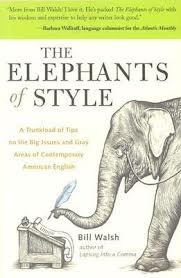 The Elephants of Style: A Trunkload of Tips on the Big Issues and Gray Areas of Contemporary American English
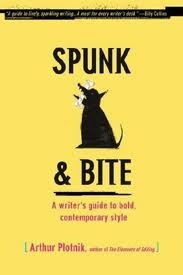 Spunk and Bite
What are your favorite grammar and style books?
And what standard grammar rules are being challenged by contemporary publishing?


August 13, 2013
To Revise or Not to Revise
.goodreadsGiveawayWidget { color: #555; font-family: georgia, serif; font-weight: normal; text-align: left; font-size: 14px;
font-style: normal; background: white; }
.goodreadsGiveawayWidget img { padding: 0 !important; margin: 0 !important; }
.goodreadsGiveawayWidget a { padding: 0 !important; margin: 0; color: #660; text-decoration: none; }
.goodreadsGiveawayWidget a:visted { color: #660; text-decoration: none; }
.goodreadsGiveawayWidget a:hover { color: #660; text-decoration: underline !important; }
.goodreadsGiveawayWidget p { margin: 0 0 .5em !important; padding: 0; }
.goodreadsGiveawayWidgetEnterLink { display: block; width: 150px; margin: 10px auto 0 !important; padding: 0px 5px !important;
text-align: center; line-height: 1.8em; color: #222; font-size: 14px; font-weight: bold;
border: 1px solid #6A6454; border-radius: 5px; font-family:arial,verdana,helvetica,sans-serif;
background-image:url(https://www.goodreads.com/images/layo... background-repeat: repeat-x; background-color:#BBB596;
outline: 0; white-space: nowrap;
}
.goodreadsGiveawayWidgetEnterLink:hover { background-image:url(https://www.goodreads.com/images/layo...
color: black; text-decoration: none; cursor: pointer;
}
Goodreads Book Giveaway
Start Your Novel
by Darcy Pattison
Giveaway ends October 01, 2013.
See the giveaway details
at Goodreads.
Enter to win
I am facing a difficult revision, not because I don’t know what needs to be done or that I can’t do it. It’s just that I’m not sure I agree with the critiquer wholeheartedly.
A novel revision has all sorts of questions attached:
Who are you revising for? One certain reader/editor? To connect with readers better?
For yourself? To become a perfect model book?
The critique of the manuscript was thorough and opinionated. I liked that. Here are some of their thoughts, which just represent one opinion:
The theme being too didactic and preachy.
The structure seems off: a major plot point takes place at the midpoint, but the critiquer suggested it should be at the end of Act 1 instead. That would also take care of pacing problem in the first half of the novel. That would mean I need an totally new Act 2.
Characterization needs to be beefed up.
The story line includes a curse; once under the curse the main character has difficulty distinguishing reality from fiction. The critiquer says SHE had trouble keeping things straight, too.
All of this sounds reasonable to me, until I start to write. Then I realize that I put that major plot point midway through the novel for good structural reasons. If I cut a lot and move it to the end of Act 1, well, what will I do for Act 2. It means a totally new story.
Who am I revising for? A reader who has an opinion, but do I agree with that opinion?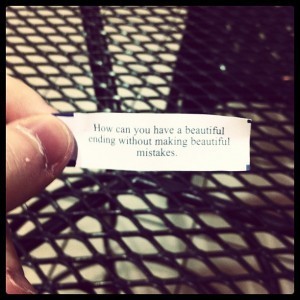
I agree that the characterization needs work. No problem there.
I am revising for the reader to make this work better.
If the critiquer had problems keeping things straight, that is a valid reader-concern. Clarity should rule for the reader, even when the main character is totally confused. I agree. I will revise for the reader.
The main question remains: reorganize the Acts/structure of the story and write a totally new Act 2. Who am I revising for?


August 12, 2013
Finding 750,000 Readers: Jane Friedman’s Advice
START YOUR NOVEL
Six Winning Steps Toward a Compelling Opening Line, Scene and Chapter
29 Plot Templates
2 Essential Writing Skills
100 Examples of Opening Lines
7 Weak Openings to Avoid
4 Strong Openings to Use
3 Assignments to Get Unstuck
7 Problems to Resolve
The Math adds up to one thing: a publishable manuscript.
Download a sample chapter on your Kindle.
Jane Friedman, a former editor at Writer’s Digest and now a superb blogger and commenter on the state of the publishing industry, spoke at the 2013 Midwest Writers Workshop about building a readership or audience on her personal blog at www.janefriedman.com. When she left Writer’s Digest, her blog there had a great following, but that belonged to WD. How did she regain a significant following of 750,000 readers/year? Watch Jane discuss her strategies here.
If you can’t see this video, click here.


August 7, 2013
Telling the Other Side of the Story: Switching Point of View
START YOUR NOVEL
Six Winning Steps Toward a Compelling Opening Line, Scene and Chapter
29 Plot Templates
2 Essential Writing Skills
100 Examples of Opening Lines
7 Weak Openings to Avoid
4 Strong Openings to Use
3 Assignments to Get Unstuck
7 Problems to Resolve
The Math adds up to one thing: a publishable manuscript.
Download a sample chapter on your Kindle.
Question: How do you tell a story and make sure that both sides get heard?
Answer: This is a time when switching point-of-view might be helpful.
The default for telling a story is 3rd-person point-of-view. You tell it like you are recording from a camera that sits right above the point-of-view (POV) character’s head. Usually the POV character is the main character, but it can be a friend or some other character. The key is the pronouns: you use he, she, they, them.
If the camera is above the character’s head, you can’t tell what the character is thinking. That’s 1st person POV, which uses I, me and my pronouns. There is a close 3rd person POV which lets you imply the character’s thoughts.
1st: I sift through photos until–I stop and hold up THE photo. It shows me, sitting on my Dad’s lap. I was just five and it was the day before he disappeared.
3rd: She shifted the photos, one by one. Then she held one up and shifted to let the light fall on it better. Yes, it was Dad and she was sitting on his lap. She remembered that day because it was the day before her Dad disappeared.
Which do you like better? It’s a personal thing in some respects and also a question of which one serves your story better.
But back to the question: How do you make sure both sides get heard? Usually, you’ll create a story with two POV characters, one the hero(ine) and one the villain(ess). POV switches typically happen at chapter breaks, that is you’ll have one chapter from the Hero(ine)’s POV, then a chapter from the Villain(ess)’s POV. You can alternate as needed and you don’t have to make it evenly split between the two POV.
The advantage of this is that you can explain the deep issues that each character has from their POV. The difficulty of this is creating two characters that the audience will truly care about and will root for. You want the audience to like the characters. Is your villain a likeable sort? Or at least a sympathetic sort?
Also, consider what the audience will know if you use this strategy. The reader will be in on every nuance of the villain’s plans. How will you create surprise? You can build suspense, which is slightly different. For suspense, the reader knows something will happen and hopes against hope that the character will avoid the problem. That sort of thing will work with an alternating chapter strategy.
Sometimes, the POV switch will take place within a chapter, but usually, the sections are set off somehow, maybe an extra space or asterisks or other visual cues that something has changed.
What rarely works is changing within a paragraph.
In the end, how do you know if alternating chapters will work? You try it out.


