
Brian Solis's Blog, page 29
May 2, 2022
More Intelligent Tomorrow: The New Economy Will Require Empathy

Miguel Á. Padriñán, Pexels.com
Henry Ford famously said, “If you always do what you’ve always done, you’ll always get what you’ve always got.” So how do you find novel approaches to solving old problems?
More Intelligent Tomorrow host Dave Anderson sits down with Brian Solis to talk about interesting ways to get creative solutions to our long-standing challenges. Please listen to the full podcast here.
Dave Anderson is a keynote speaker, tech evangelist, and podcast host with a refreshing perspective on marketing, analytics, and technology.
Brian Solis is a digital analyst, speaker, and author. Brian currently serves as the Global Innovation Evangelist at Salesforce. His work focuses on thought leadership and research into studying disruptive technologies.
They begin their conversation talking about what disruption is and what it isn’t.
At the heart of it, disruption isn’t about technology. It’s about changing the norm. It’s about shaking people out of their comfortable ways of thinking to find new and better ways to approach problems.
Doing the same thing over and over can saturate a market. Eventually it calls out for something new. Just like a wildfire can renew a forest, disruption becomes a means for reinvigorating a market.
But companies today are still using legacy systems designed for scale and efficiency to protect themselves from disruption in the future. They’re still the wrong tools for the job.
“76% of all employees say that they don’t feel that they have the digital skills necessary to work in this new economy.”
We don’t have all the answers. We can only scenario plan so much. That’s the nature of disruption. If we’re going to fix this skill gap and be ready for change to come, everyone needs to feel involved. Everyone needs to feel relevant. Agreeing to change requires empathy toward everyone involved.
Empathy is just as important as intelligence.
By being empathetic to what the workforce needs to succeed in the future, we can build these skills into our education system. We can bring up a generation that’s prepared to take on new disruptions and thrive.
The best way to accelerate creativity and innovation within organizations is to be empathetic and give people the room they need to follow ideas that are outside their normal work. Companies like Google with their 20% program not only understand this, but they practice it.
Empathy is understanding how someone else sees the world. A lack of empathy is one of the reasons we don’t respond well to change. Without empathy, we lack a sense of urgency to change that doesn’t immediately impact us. The gift of empathy is a powerful tool.
Brian transitions onto the topic of our smartphones and how they have managed to rewire the way we think and change the way we learn. No longer is education just about top-to-bottom, left-to-right, Z-formation learning. Education today needs to be more immersive. It needs to embrace dynamic, individualized learning, and AI can help. It can create lessons to help people learn at their own pace and in a way best suited for them. Empathy for the student combined with AI can bring a needed disruption to the education market.
An anecdote from Brian about the TV show, Ted Lasso, brings him around to talking about how company management needs to develop more empathy.
A problem with current leadership is that they don’t stop to ask questions. They aren’t curious. They don’t put themselves in their customer or employee’s positions. They need to learn to ask “why” over and over. Kids do it naturally, and we should embrace it as a path toward continuous evolution.
Dave closed out the show by asking Brian how he thinks we get more intelligent.
This episode includes discussion of:Embracing disruption as an agent of positive changeAsking if we’re ready for the changes ahead of us or planning for the a future using tools of the past.Leveraging empathy to find creative solutions to our problemsThe role of empathy in our thinking about educationAsking, “why” over and over as a tool to achieving continuous evolutionAnd Now a Leadership Lesson from Ted Lassohttps://www.briansolis.com/wp-content/uploads/2022/05/IRrKmHoj0r0WRtfb.mp4“Try not to be better than anyone else, try to be better than you were yesterday.”
If you watch Ted Lasso, you’ll recall the wonderful scene in which he challenged Rupert to a game of darts as a gentleman’s way of helping Rebecca regain respect and confidence while also teaching us an important lesson in humility, curiosity, and humanity.
He was inspired by a quote he saw painted on a wall, “Be curious, not judgmental.”
I had the privilege to join my friend @Dave Anderson at DataRobot on the excellent podcast, “More Intelligent Tomorrow.”
I applied Coach Lasso’s lesson to today’s executive leadership.
If leaders were curious, they would ask more questions. The answers could unlock empathy and reveal creative solutions to our problems and unlock new opportunities.
The problem with legacy management is that they don’t ask questions. They’re not as curious. They can be judgmental. They project themselves onto their customers and employees. But the more curious, the more empathetic they can become.
Barbecue sauce. 
Please listen to the full podcast here.
[simple-author-post]The post More Intelligent Tomorrow: The New Economy Will Require Empathy appeared first on Brian Solis.


April 19, 2022
Zoom’s Work Transformation Summit: Humanizing the Customer Experience
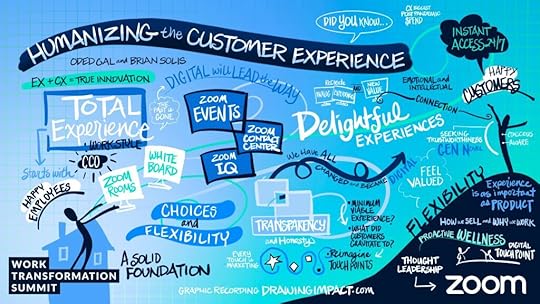
Zoom is part of our everyday life now, creating new windows into work, entertainment, education, and augmenting how we communicate with one another and how we experience events and engagements…together.
I was honored to join Zoom’s Work Transformation Summit and have the opportunity to share the virtual stage with Chief Product Officer Oded Gal. The event explored “how to deliver impactful customer experiences” in hybrid world, one where virtual interactions are the new normal and digital- and mobile-first behaviors open the door to experience innovation.
In our conversation, Oded Gal and I examined opportunities to “humanize the customer (and employee) experience.” We reflected on how employees and customers changed since 2020, the role video plays in designing innovative customer and employee experiences, and how leaders can embrace proactive wellness to guide more productive and meaningful engagements in every human touch point that defines your journey.
The session is available on-demand. A graphic recording of that conversation is above. I come in about halfway from left to right.
Here are some of the highlights! Or, follow the thread on Twitter.
Welcome @briansolis, Global Innovation Evangelist at @Salesforce aka one of the “greatest digital analysts of our time” to the #WorkSummit stage! https://t.co/VPbsmfb5lW pic.twitter.com/Wgwf7j2mZR
— Zoom (@Zoom) April 13, 2022
https://twitter.com/Zoom/status/15142...
Believe it or not, the number 1 business transformation that they want to see from you is to be more trustworthy. The second thing was to have a more positive impact in society.” – @briansolis #WorkSummithttps://t.co/VPbsmfb5lW pic.twitter.com/shJoqCkfYu
— Zoom (@Zoom) April 13, 2022
“It's also extending those [proactive wellness] concepts & those principles & those values to deliver better experiences to employees & customers in every aspect so that they have an emotional & an intellectual connection to you & that takes design.” – @briansolis #WorkSummit
— Zoom (@Zoom) April 13, 2022
https://twitter.com/Zoom/status/15142...
https://twitter.com/Zoom/status/15142...
https://twitter.com/Zoom/status/15142...
“While we realize that digital and cultural transformation can be daunting at times, the ultimate gains far exceed the challenges. And remember that flexibility is key.” – @odedgal #WorkSummit https://t.co/VPbsmfb5lW
— Zoom (@Zoom) April 13, 2022
About “Humanizing the Customer Experience”
9:00-9:45 am PT: Keynote: Humanizing the Customer Experience
Join Zoom’s Chief Product Officer, Oded Gal, for an inspiring keynote about the value of humanizing the customer experience and its power to propel your organization to greater success. The state of the customer experience is more important now than ever before and we must create meaningful relationships as the world become increasingly customer-centric. Our guest speaker, Brian Solis, is the Global Innovation Evangelist at Salesforce who will join Oded to explore the most “of-the-moment” trends and factors that are driving the evolution of the customer experience. And, we will provide an overview of Zoom products and innovations that can help you and your organization strengthen your customer experience efforts.
The post Zoom’s Work Transformation Summit: Humanizing the Customer Experience appeared first on Brian Solis.
April 13, 2022
LEADERS Magazine: Digital Darwinism – An Interview with Brian Solis
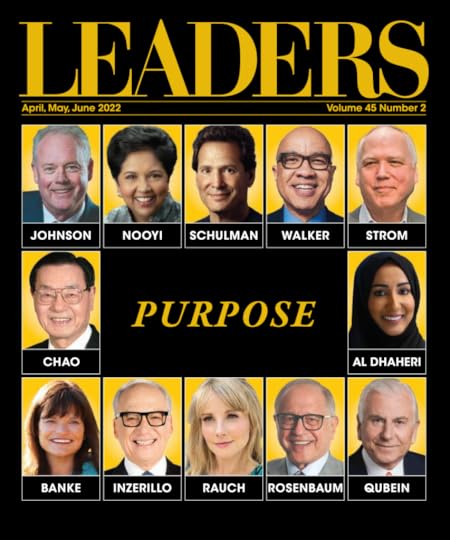
via LEADERS Magazine – April, May, June 2022 – Volume 45 Number 2
ISSUU digital magazine version | Web version | PDF
Digital Darwinism: An Interview with Brian Solis, Global Innovation Evangelist, SalesforceEDITORS’ NOTEBrian Solis is a world-renowned digital anthropologist and futurist who serves as Global Innovation Evangelist at Salesforce. Solis is also an eight-time best-selling author and international keynote speaker. Forbes has called him “one of the more creative and brilliant business minds of our time,” ZDNet said that Solis is “one of the 21st century business world’s leading thinkers” and The Conference Board claimed that Solis is “the futurist we all need now.” Over the past 20 years, he studied the impact of Digital Darwinism on businesses, markets and society. In his work, he explores the creative innovation, digital transformation, experience design, Web3, and technology’s effects on human behavior. Solis has published over 60 research papers and also actively shares his work in industry-leading publications including Forbes, ZDNet, CIO, Fast Company, and Adweek.
COMPANY BRIEFSalesforce (salesforce.com), the global CRM leader, empowers companies of every size and industry to digitally transform and create a 360-degree view of their customers.
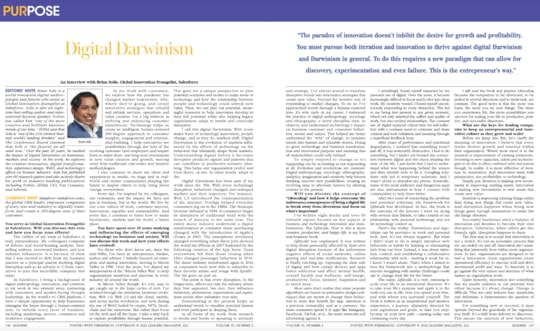
You serve as Global Innovation Evangelist at Salesforce. Will you discuss this role and how you focus your efforts?
The caliber of my team at Salesforce is truly extraordinary. My colleagues comprise of fellows and world-leading analysts, best-selling authors, renowned thinkers, and true industry influencers. It is because of them that I was excited to shift from my business practice as a principal analyst studying digital disruption and as an advisor to C-Suite executives to join this incredible company and team.
At Salesforce, I bring a background of digital anthropology, innovation, and creativity to my work in two primary areas: partnering with customers and market-facing thought leadership. As the world’s #1 CRM platform, I have a unique opportunity to help businesses reimagine the future through a human-centered lens, to rethink every facet of business, including marketing, service, commerce and workforce engagement.
In my work with customers, we explore how the pandemic has changed market trajectories, why, where they’re going, and create innovative strategies that rebuild and rethink services, operations and value creation. I’m a big believer in unifying and enhancing customer experiences. Technology helps us create an intelligent, human-centered 360-degree approach to customer insights, engagement and relationship-building. I help executives see possibilities through the lens of the evolving customer (and employee) and inspire them to make short- and long-term investments in new value creation and growth, moving away from traditional cost-center and iterative methodologies.
I also continue to share my ideas and experiences in media, on stage and in real-world and online communities shaping the future to inspire others to help bring about change everywhere.
Every day, I’m inspired by my colleagues, our customers, and the impact we have not just in business, but in the world. We live by our core values of trust, customer success, innovation, equality and sustainability. And every day, I continue to learn how to make businesses, markets and the world, a better place.
“The paradox of innovation doesn’t inhibit the desire for growth and profitability. You must pursue both iteration and innovation to thrive against digital Darwinism and Darwinism in general. To do this requires a new paradigm that can allow for discovery, experimentation and even failure. This is the entrepreneur’s way.”
You have spent over 25 years studying and influencing the effects of emerging technology on business and society. Will you discuss this work and how your efforts have evolved?
For those who don’t know me, since the mid-1990s, I’ve been an entrepreneur, thinker, author and advisor. I initially focused on enterprise and startup innovation, moving to Silicon Valley in 1996. Over the years, I’ve shared my interpretation of the “Silicon Valley Way” to help organizations transform and innovate in every industry all around the world.
In Silicon Valley though, it’s very easy to get caught up in the hype cycles of tech. I’ve worked through the enterprise hardware evolution, Web 1.0, Web 2.0 and the cloud, mobile, and social media revolution, and now during the rise of Web3 fueled by crypto, NFTs, blockchain and the metaverse. But rather than focus on the tech and all the hype, I take a step back to explore possibilities through human potential. This gave me a unique perspective to plan potential scenarios and stories to make sense of technology and how the relationship between people and technology could unlock new value. Then, we can play out potential, meaningful scenarios to help innovators develop to their full potential while also helping legacy organizations adapt to trends and overcome disruption.
I call this digital Darwinism. With every major wave of technology innovation, people change, and as they do, markets shift. Digital Darwinism is the evolution of markets influenced by the effects of technology on the behaviors that ultimately shape those markets. Understanding digital before it becomes disruptive produces signals and patterns that can contribute to productive scenario planning. This helps any organization evolve and even thrive, or not. In other words, adapt or die.
Digital Darwinism has been part of my work since the ’90s. With every technology disruption, behaviors changed and reshaped markets and their trajectory. For instance, Web 1.0 introduced the consumerization of the internet. Prodigy helped everyday consumers log on in the 1980s. The Netscape browser debuted in 1994. E-commerce began its disruption of traditional retail with the launch of Amazon in the same year. The entire music industry underwent a digital transformation as consumer music purchasing changed with the introduction of Apple’s iTunes in 2003. The smartphone revolution changed everything when Steve Jobs showed the world the iPhone in 2007 hastened by the following creation of the App Store. Taxis everywhere felt their doors closing when Uber changed passenger behaviors in 2010. The music industry transformed again in 2016 as consumers were now able to subscribe to their favorite artists and songs with Spotify. The list goes on and on.
The point is that every disruption, in the longer-term, affects not only the industry where they first appeared, but also, they influence behaviors, preferences, expectations and aspirations across other industries over time.
Sensemaking in the present helps us understand trends to visualize potential futures and even participate in shaping them.
In all forms of my work, from research to media and books to speaking to advisory and strategy, I’ve always aimed to translate disruptive trends into innovation strategies that create new value, beyond the iterative acts of responding to market changes. To do so, I’ve approached trends through a human-centered lens. It’s why early in my career, I embraced the practice of digital anthropology, sociology and ethnography, a novel discipline then, to observe and understand technology’s impact on business customer and consumer behaviors, norms and values. This helped me better understand the “why” of change, to translate trends into human and relatable stories. Doing so gives technology and business transformation and innovation purpose and meaning that all stakeholders could rally behind.
To simply respond to change as it’s happening can be as limiting as not responding at all. Evolution and revolutions are constant. Digital anthropology, sociology, ethnography, analytics, imagination and creativity help futures thinking uncover new possibilities, creating an evolving map to alternate futures by altering courses in the present.
“Digital transformation is just that, it’s about using digital to change how organizations operate, create, and evolve, to reimagine business models for a digital world. Digitization buys time. Ultimately however, digital Darwinism defines what it takes to evolve, thrive or fall behind.”
Will you discuss the concept of “Lifescaling” and how it helps overcome the unforeseen consequences of living a digital life to break away from diversions and focus on what’s important?
I’ve written eight books and over 60 research reports focused on key aspects of business and technology innovation and transformation. But Lifescale: How to live a more creative, productive, and happy life, is my first non-business book.
Lifescale was unplanned. It was written to help those personally affected by their own digital disruption because of the unforeseen negative effects of social networks, online gaming and real-time notifications. Research is finally catching up, exposing the dark side of digital and how certain devices and apps foster addiction and affect mental health, overall health and wellness, self-image, productivity, focus, memory, happiness and so much more.
Most users don’t realize that some popular algorithms are based on persuasive design techniques that are meant to change their behaviors in ways that benefit the app. Attention is a precious commodity and as a currency, the more consumers spend it in apps like Instagram, Facebook, TikTok, et al., the more networks sell advertising against it.
I unwittingly found myself impacted by my personal use of digital. Over the years, it became increasingly difficult to focus and to dive into deep work. My creativity waned. I found myself unconsciously responding to every distraction. This led to me being less present in any given moment, which not only attacked the caliber and quality of work, but also eroded relationships. The constant use of digital replaced critical time for self-reflection with a constant need to consume and share content and seek validation and meaning through a superficial feedback loop.
After years of performance and emotional degradation, I realized that something wasn’t just off, it was noticeably destructive. I had to do something, but I hadn’t yet formed the connection between digital and the chaos shaping the state of my life. I just knew that I had to understand what was happening behind the scenes and then identify how to fix it. Googling solutions only led to temporary solutions. And I wasn’t about to abandon my phone. Ironically, some of the most addictive and dangerous apps are also instrumental in how I connect with communities to help them thrive.
After two years of researching the problem and potential solutions, the framework for Lifescale was developed. In fact, the book is the outcome of the journey I went on along with several dear friends, to take control of our relationship with personal technology and not let technology control us.
Here’s the reality. Distractions and algorithms can be pervasive in work and personal tech. And, it’s not always negative. But what I didn’t want to do is simply introduce new behaviors or habits by limiting or eliminating tech from our lives. Instead, it was about intention, control, and establishing a collaborative relationship with tech – making it work for us. I knew I wasn’t alone. That’s when I aimed to turn the framework into a methodology that anyone struggling with similar challenges could use to change their life for the better.
The name, Lifescale, is a verb, meaning to scale your life in an intentional direction. It’s to take your life’s purpose and apply it to the tools you use in life, how you spend your time, and with whom you surround yourself. The book is written as an inspirational and intuitive experience, a journey ultimately directed by your aspirations and goals, to take you step-by-step on your new path – starting today and continuing every day.
I still read the book and practice Lifescaling because the temptation to be distracted, to be pulled in several directions and to multi-task, are constant. The good news is that the more you learn, the more you try new things. The more you experience life, the more possibilities you uncover for scaling your life in productive, positive, and successful directions.
What are the keys for leading companies to keep an entrepreneurial and innovative culture as they grow and scale?
Before we jump into this, let’s clarify the meaning of innovation. I believe that every leader desires growth and renewal within their organization. Where most excel is in the renewal or improvement of existing endeavors. Investing in new capacities, talent and technologies to do this is often confused with innovation though. In reality, it is more reflective of iteration vs. innovation. And innovation starts with perspective, not profitability or technology.
Simply put, iteration is making new investments in improving existing assets. Innovation is making new investments in new assets that create new value.
Iteration is improving existing things rather than doing new things that create new value. And disruption happens when doing new things gains enough momentum to make the old things obsolete.
Successful businesses need a balance of innovation and iteration to become their own disruptors. Otherwise, when others get this formula right, disruption happens to them.
The first step is to accept that innovation is not a switch. It’s not an automatic process that we can switch on and off. Innovation isn’t something that inherently lives within most organizations. In fact, organizations are designed to be bad at innovation. Great organizations create operational efficiency to execute well and drive incremental profit and wins. To innovate is to go against the very nature and structure of what makes an organization work.
Quite honestly, innovation isn’t something that we readily embrace in our personal lives either because it’s about change. Change is difficult. That not only induces fear, skepticism and defeatism, it demonstrates the paradox of innovation.
For something new to succeed, it must operate beyond the guardrails of the organization itself. It’s a shift from delivery to discovery. This means the sanction of new behaviors, measures and support, allowing for ideation and execution to operate away from the core of what makes the company successful today. Said another way, you have to stray from conventions and the comfort zones that protect you to venture into unknown territory with unknown outcomes.
The paradox of innovation doesn’t inhibit the desire for growth and profitability. You must pursue both iteration and innovation to thrive against digital Darwinism and Darwinism in general. To do this requires a new paradigm that can allow for discovery, experimentation and even failure. This is the entrepreneur’s way. Here, failure doesn’t equate to a lack of success. Failure becomes the path to success. It’s testing to learn and learning to grow.
The artist Walter Anderson once said, “It is only when we take chances, when our lives improve. The initial and the most difficult risk that we need to take is to become honest.” To be honest is to be humble, to approach change with a beginner’s mind. Many executives in their day-to-day capacity aren’t representative of their customers or employees. They are not innovators in practice. They report to others who measure performance against renewal and incremental profit. This is why innovation is almost always viewed as a cost center. As a result, companies develop mindsets that safeguard existing perspectives, processes, and norms. By default, they proactively discourage innovation. Because of this, leadership and corporate cultures become rigid, safe and iterative.
What is the cost of not investing in new ventures?
No one achieves greatness because they are convinced there is nothing left to learn or no new ideas to discover. My friends at Gapingvoid Culture Design Group put it this way. Some of the most successful CEOs such as Steve Jobs and Microsoft’s Satya Nadella, among others, all have one thing in common. They each lent their success to well-articulated, inclusive cultures that not only delivered outstanding employee engagement, but more importantly, sustained operational excellence.
Culture is essential to innovation. Innovation is instrumental as a partner to incremental renewal and profitability by complementing the business through the generation of net new revenue. Innovation is directly tied to culture. Nothing new can happen if everything remains the same. Innovation starts with new leadership and innovative leadership creates an innovative corporate culture. And culture shapes not only work, but the values, norms, behaviors and aspirations of the organization. It is a business and human operating system.
Leadership must empower the means for innovation to be successful, from inception to execution. Leaders must foster inclusivity and diversity to create new and different ideas. People must be incentivized and rewarded for championing new possibilities, for failing and succeeding. And, they must operate with autonomy to navigate the art of the possible without the confines of biases, politics, egos, skeptics and detractors or irrelevant measures of progress.
Innovation sits at the intersection of discovery, opportunity and execution. Disrupt the company, not the business model. Augment the business model by creating new value.
Culture doesn’t eat strategy for breakfast. Culture is the strategy. A well-defined, articulated and inclusive culture values understanding people over simply measuring performance. As my friends at Gapingvoid and I emphasize:
Understand what matters to employeesCreate a shared vision of the new futureArticulate and socialize new beliefs inside and outside the companyEnroll and empower employees to bring that vision to lifeGive employees the tools they need to be successful every dayIncentivize new behaviors and long-term viabilityReward performance and outcomes, including learned insights from failuresThe term Digital Transformation is constantly used today by executives and companies across all industries. What does this term mean to you?
Digital transformation is akin to the relationship between iteration and innovation. Before the pandemic, digital transformation meant many things to different executives. Now in this new world, digital transformation has become synonymous, perhaps unintentionally, with digitization, i.e., iteration.
I once defined digital transformation as the evolving pursuit of innovative and agile business and operational models – fueled by evolving technologies, agile processes, analytics and talent – to create new value and experiences for customers, employees and stakeholders.
With every organization now accelerating digital investments due to the pandemic, companies are more often pursuing digitization versus digital transformation. I’m not sure they understand that they are doing this. But without complementing digitization with digital transformation, companies are missing opportunities that are embedded in every wave of disruption.
The difference is that digitization is applying new technologies to scale, automate, and augment legacy processes. Digital transformation is just that, it’s about using digital to change how organizations operate, create, and evolve, to reimagine business models for a digital world. Digitization buys time. Ultimately however, digital Darwinism defines what it takes to evolve, thrive or fall behind.
Leaders must both iterate and innovate. Leaders must dedicate resources to explore how to create new value in a digital economy. Otherwise, Jeanne Ross, principal research scientist at MIT Sloan School of Management, warned, “The alternative is to try to succeed in a digital economy with a pre-digital value proposition.”
What advice do you offer to young people beginning their careers during this unprecedented time?
In any time of disruption, it’s easy to play it safe. I believe, however, this is a very special time to be alive. This is a very special time to take control of one’s destiny. The world experienced a great resignation, not because people didn’t want to work, but because people did not feel valued or find value in their work. Take this time to explore you. Take this time to understand what drives you. Envision a future that makes you happy and work backwards to your work. Then spend your time learning and acquiring the skills you need. Surround yourself with people who help you on your path and revisit this path often.
You’re faced with a rare CTRL-ALT-DEL moment. While many are seeking a new or next normal, take this time to imagine a new future beyond any normal.
The future can happen to you or because of you. You get to choose.
Click here to download a PDF of An Interview with Brian Solis
See other features from LEADERS Magazine’s April, May, June 2022 edition
The post LEADERS Magazine: Digital Darwinism – An Interview with Brian Solis appeared first on Brian Solis.
April 11, 2022
The Future of Patient Experience & Innovative Experience Design in Healthcare: Visionary Keynote at HIMS22
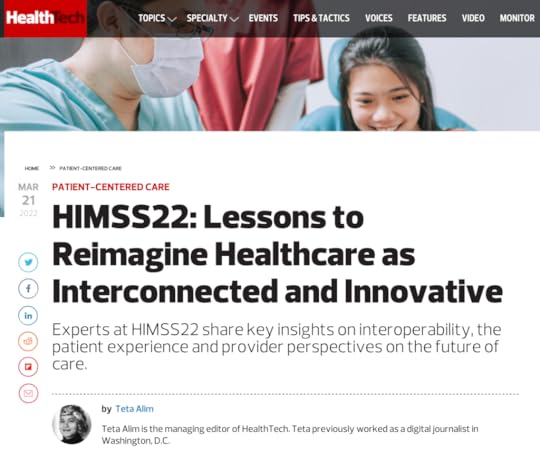
Brian Solis recently delivered his keynote presentation at HIMSS22, “Visionary Keynote: The Future of Patient Experience & Innovative Experience Design in Healthcare.”
Following the event, Teta Alim writing for HealthTech, summarized a series of keynotes focused on healthcare innovation. Her story included a summary of Brian’s presentation, too!
HIMSS22: Lessons to Reimagine Healthcare as Interconnected and InnovativeExperts at HIMSS22 share key insights on interoperability, the patient experience and provider perspectives on the future of care.The annual HIMSS conference wrapped up Friday in Orlando, Fla., with a closing keynote from Olympian Michael Phelps on mental health, his career and the pursuit of dreams.
“On those days where we are sore, we’re tired, we had a bad night or bad sleep — how can I get one little baby step forward? I don’t like taking steps backwards. So you try to look at the small things and simplify things, break it down as simply as you possibly can and try to go from there,” Phelps said.
The experts at HIMSS22 shared much-needed insight on improving interoperability, visionary patient experiences and streamlining provider workflows.

Salesforce Global Innovation Evangelist Brian Solis delivers a visionary keynote address at HIMSS22, speaking on “The Future of Patient Experience & Innovative Experience Design in Healthcare.”
Making Patient-Centered Care a Priority“The experiences that we give to patients and also to caregivers is one that’s steeply rooted in the past,” said Salesforce Global Innovation Evangelist and best-selling author Brian Solis during his digital visionary keynote address.
Solis highlighted consumer experiences in entertainment and retail as examples for how to improve patient experiences in healthcare. And to disrupt healthcare, there needs to be a balanced combination of iteration and innovation, Solis added.
Iteration is “doing the same things better,” he said, whether it’s using artificial intelligence, augmented reality or remote technology. “If the experience is just an improvement on an existing process, an existing product or service, it is just iteration.”
True innovation, he said, is “doing new things that create new value.” When paired together, healthcare organizations will be better equipped to move toward a patient-centric future.
The post The Future of Patient Experience & Innovative Experience Design in Healthcare: Visionary Keynote at HIMS22 appeared first on Brian Solis.
April 6, 2022
Upgrading the Airport Experience for Travelers – Airport Experience Conference

Via Shafer Ross, Airport Experience News
Brian Solis keynoted the Airport Experience Conference in Orlando, Florida. Following is a summary of his presentation, “Digital Disruption And The Post-Pandemic Consumer.” Following his presentation, Brian also signed copies of his best-selling book, “X: The Experience When Business Meets Design.”
AXC Keynote Solis Suggests Brands Redesign the Airport ExperienceSpecial Coverage: 2022 AX Conference
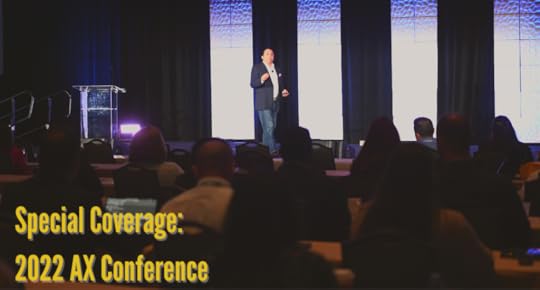
Brian Solis is a digital analyst and anthropologist and Global Innovation Evangelist at Salesforce who took the stage at the 2022 Airport Experience Conference as the Keynote Speaker to discuss the tech evolution of the world post-COVID and what customers want.
“I spend a lot of time looking at every industry and predicting how it will change,” said Solis. He described the process of creating something new and the two conditions under which that process can happen. “There are two moments of true innovation: the off-on moment, where I have an idea and I’m excited to make it happen; then there’s the uh-oh moment – a global pandemic, a change in customers, our competitors are out-innovating us.” The latter situation isn’t ideal, he said, but the writing on the wall has been there for a while.
“The last two years have been dramatic,” he said. “But they’ve only accelerated what’s happened in the last twenty.”
In the airport specifically, he said, he feels there is so much room for true innovation because “in travel, rarely was the airport part of the experience.” Now, of course, gone are the days of a single fast-food restaurant and convenience store being the only options when moving through an airport. Still, Solis said, “there are a lot of things that get in the way of being creative.”
Too often, “We are business first, we are financial first, we are stakeholder and shareholder first; and every day that consumer is evolving. At some point, the consumer says, ‘I have choices and I’m going to exercise those choices.’” There’s a chasm, he said, between the business and the customer.
“Dedicating time and money to keeping up with change narrows the gap between business and consumer,” he said. “We have to find the opportunity to invest in new experiences when we know we’re going to get a return on those experiences.”
The global airport community, said Solis, has developed some new ways to stay abreast of what people want and what needs to change. “[Singapore] Changi Airport (SIN) is magical, immersive, innovative, modern – that’s what I’ve seen, that’s what other travelers say. It felt spacious, it felt the opposite of all the angst that we experience in airports around the world.”
Solis explained that, among other collaborative efforts with tenants, SIN has a program they call DIVA – Digital, Innovation, Ventures & Analytics. This marketing initiative creates a pathway for Changi concessionaires and partners to develop exciting and engaging promotional strategies to drive travelers throughout the airport to their businesses.
“Iteration is often confused for innovation,” said Solis. “Iteration is not a bad thing. We need it, we always need to constantly improve on what already exists; but that’s not enough – innovation is the creation of net new value. It didn’t exist before and as that value persists it can lead to disruption.
“Start with the experience we want people to have and work backwards to what our strategy will be,” he added.
Ultimately, Solis stressed the importance of seeing the future for what it is: potential.
“The future doesn’t exist yet,” he said. “We have a say in how that unfolds. …The future is going to happen because of the things you do different moving forward.”
The post Upgrading the Airport Experience for Travelers – Airport Experience Conference appeared first on Brian Solis.
April 5, 2022
Web3.1 Keynote: The Promise of Web3
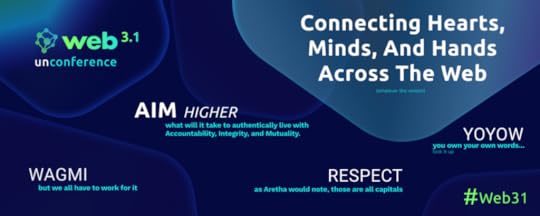
via Chris Heuer, founder, Web 3.1 – Please join us in building our Web 3.1 community, and designing the organization which we will co- own together on Wednesday April 6, 2022 at Beyond Web 3.1.
A highlight of the Web 3.1 Leadership Summit was the keynote from Brian Solis, a renowned author and innovation leader at Salesforce. In his live kickoff, he spoke about where we are and where we need to be, to leave the world better off than it is.
In the speech, which you can watch below, Brian pointed out that society has been led astray so that the life we live on social media, and the life we need to be living are no longer in alignment. Sadly, this is difficult to notice until something really big goes wrong. We have created the worst version of ourselves with social media as it is nearly impossible to be present and in the moment.
With an aspirational approach to what Web3 could be, Brian points out that where we are today is nowhere near where we really need to be for mainstream adoption. That the utility, security, and foundational elements of making things work the way they should are still being formed. He shared his personal experience of trying to do a cryptocurrency transaction, which resulted in a 3-4 day hang-up in getting his funds converted to Ethereum and into his wallet to complete the transaction. His principle challenge being there is no one there to assist with the transfer. While cryptocurrencies, the blockchain, and the metaverse may not necessarily be the right thing, right now, they do lay the foundation for what could be.
Brian also discussed the current elitism of the metaverse and the negative impacts of cryptoscams. He said, “the top 9% of accounts in web3 hold 80% of the $41 billion dollar market value of NFTs, the top 2% own 95% of the $800 billion supply of bitcoin, and 0.1% of bitcoin miners are responsible for half of all mining output.” These statistics demonstrate that being in this market is currently a sign of popularity, money, and social status.Artists are losing revenue and giving up because of the effort it would take to chase down an estimated $14Billion in fake NFT’s. Additionally, cryptomining consumes more energy than some small countries, which really speaks to its lack of sustainability.
But Web3 is not supposed to be about this elitism or exclusivity. We need to decide what we are going to do differently moving forward. Web3 is supposed to be built on transparency, accountability, security, decentralization, trustless networks, and community. But in looking at the current state of where it is, it is clear we need to be more human centered, which includes treating others how they want to be treated. As Brian stated, this technology can be utilized to transform relationships with one another, our customers, stakeholders, processes, outcomes, and other technologies. We need to define how we use this technology to create the kinds of communities that we want to see and that we can easily build upon.
In speaking more about NFTs, Brian acknowledged their power to bring together a group of people with common aspirations, but expressed his concern that many NFTs today attract people because of the potential for greater value, validation, and authentication.
We want to build a more decentralized technology system, a less toxic internet, and a more equitable society for all. “We get to create the future,” as Brian said, and we want to aim for a trajectory that creates all the right things for all the right reasons. We need to start building things that are better, more meaningful, and more purposeful. Community is more than just a sense of belonging; it’s doing something together that makes belonging matter.
Watch Brian Solis’ Web 3.1 keynote now:
The post Web3.1 Keynote: The Promise of Web3 appeared first on Brian Solis.
April 4, 2022
The Digital Change Agent’s Manifesto How the People Behind Digital Transformation Lead Change From Within
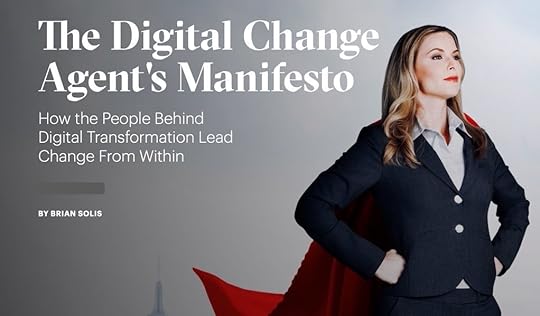
Several years ago, I published research that I believe is actually more meaningful today. In a post-pandemic world where every company is accelerating digital transformation, executives cannot miss the opportunity to transform their business for a new economy.
“Leaders must reassess how digital technologies and information can create new customer value. The alternative is to try to succeed in a digital economy with a pre-digital value proposition.” – Jeanne Ross, organizational theorist, principal research scientist at MIT Sloan School of Management, MIT Center for Information Systems Research
In a world where digital technology is evolving faster than organizations can adapt, it’s no secret that companies are investing in digital transformation and corporate innovation. But who is leading the charge? Often, it’s the individuals who share a deep expertise and passion for digital. And while these “digital change agents” are striving to bring change from within their respective group in the organization, they aren’t necessarily seasoned or trained at navigating the cultural dynamics that drive change throughout an organization.
The reality is that most C-Suites don’t have the digital smarts necessary to lead digital business model innovation. Digital savviness requires “an understanding, developed through experience and education, of the impact that emerging technologies will have on a business’s success over the next decade” according to MITSloan research.
MITSloan found that executive teams that understand how to wield the power of digital technologies are rare. But still, those who empower digital change agents invest in digital transformation and digital business model innovation that deliver huge premiums in growth and valuation.
Yet, only 23% of CEOs are considered digitally savvy And, just 7% of large companies have digitally savvy executive teams
Appointing leadership figures tied closer to innovation to the CEO seat is a frequent move, in the tech realm especially. Amazon tapped AWS CEO Andy Jassey as its future CEO, taking over for Jeff Bezos following his retirement in the third quarter of 2021. Microsoft CEO Satya Nadella, appointed in 2014, nabbed the top leadership spot after serving as EVP of the company’s cloud and enterprise group.
With support and guidance from the C-Suite, change agents spread digital literacy, drive collaboration between silos, build internal bridges with executives, and help accelerate their organization’s progress across Altimeter’s “Six Stages of Digital Transformation.”
The Digital Change Agent’s Manifesto is the result of more than five years of research and 30 interviews with those who have led digital transformation initiatives within the world’s most renowned brands, including Coca-Cola, Equifax, FCC, NFL, Samsung, Starbucks and Visa, among many others.
Key Takeaways
Although digital transformation is one of the biggest trends in business today and companies are investing heavily in new technologies and innovations, many still do so as a grassroots effort driven by expert individuals — digital change agents — across the organization.
Digital change agents are passionate about digital innovations and ardent believers in their potential to help the organization succeed — but are sometimes reluctant to step into a leadership or change-management role
Change agents can rise from anywhere in the organization and often begin as digital advocates — employees who introduce or promote new digital ideas or products — and can eventually progress to experienced transformers
To garner support across the organization, change agents quickly realize that they must acquire basic change-management skills if they are to secure cross-functional collaboration and leadership support
Without support, digital change agents may become disenchanted and lose moral and seek to take their expertise and passion elsewhere
I’ve included the report for you, here…
The Digital Change Agent’s Manifesto: How the People Behind Digital Transformation Lead Change From Within from Brian Solis
The post The Digital Change Agent’s Manifesto How the People Behind Digital Transformation Lead Change From Within appeared first on Brian Solis.
March 31, 2022
Roadmap: Curating the Internet – Bessemer Venture Partners

“Getting information off the Internet is like taking a drink from a fire hydrant.” – Mitchell Kapor
Alexandra Sukin of Bessemer Venture Partners explores the evolving movement of curating the internet. In her article, she quotes Brian Solis and a term he coined in Fast Company to describe the rise of social networks based on interest graphs and close-ties as social “nicheworks.”
Why is curation having a moment right now?
How is the internet being curated today?
Curation as a business model…the future is curated.
Content is the backbone of culture, and with the rise of emerging trends, technologies, and business models, curation will be the source of new identities, communities, and entrepreneurial opportunities.
The increasing importance of online identity, and the rise of “nicheworks.’’
As online identity becomes increasingly important and consumers are more bought in than ever to their online identities and communities, curation has emerged as a form of self-expression that sits in between consumption and creation, reports Brian Solis for Fast Company.
Steve Rosenbaum, author of Curation Nation, posits that the behavior of sharing on social media is fundamentally changing the structure of our online relationships, which can be visually represented by a “social graph” or map of relationships between social media usersInstead of our social networks reflecting just the people we know in real life, as we share, we form new connections based on our personal interests.
These resulting social graphs are known as “nicheworks,” a term coined by Brian Solis in his Fast Company article. The rise of these interest-based social graphs is re-forming behavior on social platforms. As new platforms allowing for easier and richer “micro” content creation and sharing emerge, social network users are increasingly incentivized to share content to their nicheworks.
Curators of content are incentivized both by the value they place in their nicheworks, as well as the ability to leverage curation to express their identity within those nicheworks. For example, gallery platforms like OnCyber and Hyaliko enable NFT enthusiasts to share their collections within their NFT communities by showcasing their favorite pieces in 3D galleries.
Please read Sukin’s article to explore curation tools, marketplaces, and business models. You can follow her on Twitter here.
The post Roadmap: Curating the Internet – Bessemer Venture Partners appeared first on Brian Solis.
March 30, 2022
Designing the Customer’s Experience – Live at The CMO Club Summit
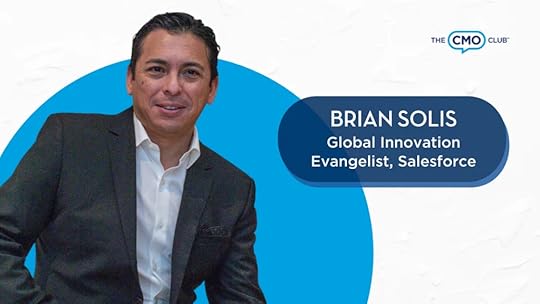
By Jessica Denny, The CMO Club
Brian Solis, Digital Anthropologist and Global Innovation Evangelist for Salesforce believes the pandemic fundamentally changed us all, calling it an epochal moment. During the 2021 CMO Club Innovation and Inspiration Summit, Brian shared how people are spending more time in the digital world than ever, but at the same time, they have stronger preferences about what they want from brands.
Customers want more than a transactional experience: they want to feel like brands are aligned with their values and feel understood. Companies that will thrive in this new environment will be the ones able to create what Solis calls “ignite moments”—those exceptional moments that will set your brand apart in customers’ minds.
In response, Solis suggests that companies need to transition from focusing on customer experience and product experience to “the customer’s experience” in a holistic sense. It may seem like a subtle change, but Solis argues the apostrophe makes all the difference.
By framing customer experience from the view of the customer’s experience, we shift focus to the individual and their experience at all stages of interaction with a brand. Are you ready to transform your companies customer journey with a focus on #ignitemoments?
CUSTOMER EXPERIENCE VS THE CUSTOMER’S EXPERIENCEThe customer’s experience is the sum of engagements a customer has with your organization in every touchpoint throughout their journey.Shifting the focus to the customer’s experience in a holistic way is an opportunity for CMOs to expand marketing to be integrated across the customer journey.People remember exceptional experiences, both positive and negative. To build loyalty, you need to deliver more than just the expected outcome but deliver an exceptional experience.CUSTOMERS WANT TO BE UNDERSTOODThe pandemic drove both businesses and their customers further into the digital world and digital experiences. But digital experiences can often feel utilitarian and have less warmth.66% expect businesses to understand their unique needs and expectations68% expect brands to demonstrate empathy (more personal engagement)76% expect consistent interactions across departments84% of customers say the experience you provide is just as important as your product and services. Focus on building customer experience from the ground up in a way that is responsive and empathetic as well as delivers exceptional value.All we’re doing is using technology to get closer to people, to understand them, and to show them we understand them. – Brian Solis
EXPERIENCE INNOVATIONTo build a more humanized and individual experience, companies need to integrate data from across departments, but only 15% of companies have a single view of customer data and the organizational structure to use it.Companies that can use data to transform the customer’s experience from a 360-degree perspective will have a major advantage.Ignite moments are created when you have customers’ attention and you are able to convey empathy, but also to deliver value.Brands that can effectively express “digital empathy” to their customers have the opportunity to build incredible customer relationships and loyalty.For the last 50 or 60 years, we’ve used technology to get further away from people, to automate, to scale. This is the moment we can use technology to connect – Brian Solis
The post Designing the Customer’s Experience – Live at The CMO Club Summit appeared first on Brian Solis.
March 29, 2022
Digital transformation: 3 focus areas to prioritize – The Enterprisers Project

via Joe Fizor and Scott Ward, The Enterprisers Project
Digital transformation is a business imperative for 2022 and beyond. Consider these three key areas to help ensure a successful strategy.
Digital transformation: The term has been around for years but its meaning often remains vague and largely undefined, even for IT decision-makers.
As a result, in 2021, an estimated $700 billion in digital transformation spending fell short of delivering the desired results. Common reasons include an overwhelming number of applications in an organization’s tech stack, a lack of technical knowledge to deploy new solutions, and resistance from employees to adopt new digital technologies.
3 digital transformation initiatives to prioritize
So how can you ensure that your organization maximizes its digital transformation investment this year? Let’s break down some of the significant areas of focus and notable directions for transformation in 2022.
1. Customer experience
The Harvard Business Review illuminates how dynamic this sphere has become. Author Brian Solis writes, “An authentically customer-centric company serves customers by knowing them. Each discipline within the organization is no longer functioning in isolation, but more like a relay racer passing a baton: sharing the data, insights, and opportunities for personalization and enchantment. It’s an embrace of 360-degree data, insights, processes, systems, and organizational models to center on the customer.”
Such forward-thinking strategies will become necessary as digital markets continue to grow and reach nearly unfathomable sizes.
2. Security
3. Edge computing, 5G, and SD-WAN
Please read the full article here.
The post Digital transformation: 3 focus areas to prioritize – The Enterprisers Project appeared first on Brian Solis.


