
Brian Solis's Blog, page 122
February 14, 2013
48 Hours: A humble request and a special offer
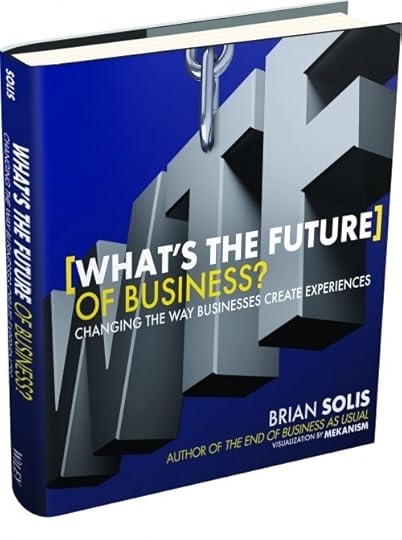
What’s the Future of Business: Changing the Way Businesses Create Experiences
I recently announced the title of my next book and also that it was already at the printer with delivery just around the corner. As an author, you put a lot of work, time, research, and passion into something and you only hope that when it finally comes out that others will share in the experience. This is that time.
My humble request and the special offer are intertwined…
Back in October, I partnered with Barnes and Noble to offer you a special 24-hour flash sale. Well, I’m proud to announce that B&N is bringing the promotion back to life for 48-hours only. In celebration of the release, which is just a few weeks away, you can now save 50% when you pre-order today and tomorrow (2/14 & 2/15).
How can you talk about the importance of experiences if the book isn’t “an” experience? This is a special book…at least I set out to do something special with it. The shape is square in shape and in full color throughout. An original book template was designed by my friends at Mekanism. @Gapingvoid contributes original art in every chapter. The flow is more like an analog version of a digital app. It’s immersive. It’s experiential.
I hope you love it.
Thank you for your support now and over the years.



February 11, 2013
Announcing my next book: What’s the Future of Business?

It is with great pleasure that I share with you the details of my next book published again by Wiley, What’s the Future of Business: Changing the way businesses create experiences. The book debut at SXSW on March 8th and will be officially available in stores on March 11th.
What’s the Future of Business is not a question. It’s an answer.
This new book continues where my last book, The End of Business as Usual, left off. What’s the Future of Business focuses on the importance of experience design. It explores the evolving landscape of new consumerism and how business and customer relationships unfold and flourish in four distinct moments of truth.
What’s the Future also takes readers on an uplifting “hero’s journey” to help them bring about change from the inside out. The end result demonstrates how experience design amplifies customer relationships, drives word of mouth, and fosters organic advocacy. The point is that experiences can often trump your product or service.
Here’s the exciting part…
The book is also an experience in of itself. It’s a visually rich, four-color journey…think digital app but in an analog format.
To bring the experience to life, I reached out to my friends at Mekanism, a well-known creative agency in SF and NY. Additionally, acclaimed artist (and also a good friend) Hugh Macleod (@gapingvoid) joined the team to add a witty and personalized touch to each chapter.
The result is, well, something I hope you will find engaging, entertaining and also useful.
#WTF





February 7, 2013
The diffusion of brand, ownership, and experience

Guest post by Ian Greenleigh, author of The Social Media Side Door (Fall 2013) and social strategist with Bazaarvoice. Follow him on Twitter @be3d
Products were once contained by physical ownership and access. To experience a product, you had to buy it or try it. Brands extended beyond the idea of physical products into other types of consumer exposure to companies. Non-customers have always had access to brands outside of the ownership capacity, through advertising, word of mouth, and any other manifestation of a company that didn’t require ownership of their product. But this brand experience lacked depth—you may have seen an ad for something, but without having consumed it as a product, it would be hard to argue that you really experienced it in any meaningful way.
The web and social punched a million holes through this idea. Experience has streamed through these holes and spilled out beyond physical ownership and captive audiences. People want to experience products and brands on their terms, in new ways, and meaningful experiences aren’t reliant anymore on that historically necessary condition: product ownership. Relationships between people and brands have gone from binary and transactional to complex, with a kind of depth once reserved for human relationships. Exhibit A of this shift is the Millennial generation, for which brand preference is the top online personal identifier—more important, in this respect, than religion and ethnicity.
We’re seeing a convergence of identities, brands, and products, and a decentralization and diffusion of the brand experience. It’s everywhere. Consumers watch unboxing videos of other people opening things. They listen to total strangers who know a lot, instead of just their friends and family, who may not. They stand in line for hours to get things first. They use brick-and-mortar stores as their personal showrooms, whether the retailers like it or not. They customize their shoes (and even their candy) online. In all these ways and more, they are interacting with products and brands without—or before—physically owning them, and often, without having paid a penny.
Many brands have embraced this to varying degrees. Consumers, they have realized, are their best marketers. They are the people best equipped to transmit the brand experience to other consumers so that it resonates, instead of being ignored, distrusted, and forgotten. These brands have taken steps to create more things worth experiencing and sharing. They move at the speed of social (or as close as they can get to it), putting out videos, tweeting, blogging, updating their Facebook pages more than a few times a day. Consumers are rewarding the good stuff by passing it along, and in doing so, they pass bits of the brand along with it. Companies and consumers are talking to each other beyond the call centers and points of sale for the first time in history. Real, authentic one-to-one and one-to-many communication is making relationships less transactional, and more like real relationships.
Suddenly, an idea that had applied mostly to commodities and luxury items applies to everyone. That idea? The experience you build around your product is often more important than the physical product itself. People are increasingly buying physical things due to the experiences they associate with them because the experiences that surround—but aren’t contingent on—product ownership are more frequent, accessible, and fulfilling. Consumers can get value, for example, out of reading Kate Spade’s excellent Behind the Curtain blog whether or not they’re shopping for or own any Kate Spade handbags.
Physical ownership no longer has a monopoly on meaningful experience. It’s an extension of that experience, the highest and best version of a brand. The act of purchase is being transformed from one of the only ways to access a product or meaningful brand experience, to the step consumers take to unlock the full or best experience.
Every brand is now in the experience business.
Image Credit: Shutterstock

February 5, 2013
Forget about Social Media for a moment. What’s your mobile strategy?

Facebook hit a billion users! Twitter is the new digital water cooler! Youtube is the future of TV! Ok, you get it right? Social media is transformative. So what? Every business that thinks about customer engagement through a technological lens will miss the very thing that will keep them in business for the long-term—the impact of technology on society and behavior and how it opens up new touch points and changes expectations as a result.
Depending on your business, you may or may not already have someone dedicated to your social media strategy. Whether it is aligning with your current business objectives and priorities is a different article. The focus for our time together right now is on how you will compete for the future of attention, wherever attention is focused. All signs at the moment point to mobile as the future of engagement and commerce as smartphones and tablets become the lens for how consumers see the digital and virtual worlds.
At the end of 2011, the U.S. alone was home to more than 100 million smart phone users. By 2014, 90 million people will use tablets in the U.S., which will represent 36% of the overall Internet population. Why is this important to your business? Regardless of size, the state of mobile now insists that you think through a dedicated experience for customer engagement and commerce alike.
For years, web designers would not only develop sites, but also test their aesthetics and functionality in multiple browsers using the most common operating systems. Additionally, user testing ensured that the desired click paths and outcomes were optimized. No site can truly launch until it performs as designed for the masses. As any designer will tell you, if the click path breaks down or introduces friction, visitor frustration and abandonment isn’t far behind.
Similar to the Web, mobile is now a dedicated channel that represents a means to an end. Or said another way, mobile has become an exclusive experience rather than a bridge between people and information on the traditional or desktop web. It is still largely assumed that people on mobile devices represent the minority of web users and thus require less focus and resources than those who use desktop or laptop PCs. But with the proliferation of smart phones and tablets, the balance is shifting. The question is; have you revisited your web and mobile strategies to meet the needs and expectations of your connected customers?
Let’s take Facebook as an example. The company faces a serious dilemma as its mobile site m.facebook.com, and its dedicated app for iOS, Android, Microsoft, and Blackberry, rival its classic website Facebook.com. In May 2012, comScore reported that for the first time, mobile users in the U.S. spent more time in Facebook than those using desktops and laptops, 441 minutes vs. 391 per month. While the company has designed successful mobile products to deliver optimized, on-the-go experiences for the small screens, it has not found a viable business model to monetize this profound shift. Facebook makes the lion share of its billion-dollar revenue by serving four to seven ads at a time on the desktop. On the mobile, it only presents a few per day in its micro news feed. If a tech-savvy company such as Facebook faces this quandary, chances are, you will as well.
In a mobile economy, apps become the currency of a new information exchange. One of the most fascinating and least understood aspects of apps is that they create a contained experience that essentially is its own Internet. Everything your customer needs or could possibly need should be included in the app. And those mobile browsers that need to hit the traditional web, visitors will expect to see a page optimized for the smaller screen. Think about it for a moment. How many times have you tried to hit a site from your phone or tablet only to quit in frustration when the site would not load correctly on your screen? You may or may not choose or remember to visit that site later and that’s just one example of how designing for experiences is as much a part of form and function as it is about platform-centricity.
That ‘s the point. Customer behavior is evolving. Technology is evolving. Is your digital strategy evolving? Is it considering shifts in attention, activity, and expectations and designing new experiences to react and lead accordingly?
The time is now to answer these questions and more…
Who on your team is thinking about designing mobile experiences? How is mobile tied to the overall digital strategy? How is social and mobile complementing your web strategy? More importantly, how are people connecting or attempting to connect with you and how would they define the experience?
Answering these questions will help you design for tomorrow’s digital strategy right now. The future of online experiences is distributed, but it is also integrated in its ability to tell your story while delivering exceptional experiences optimized for each channel. Like the classic web and social media, mobile is just one of the many channels that requires a dedicated approach. And, as we’re learning, mobile will become one of the most if not the most important channel for customer engagement.
Connect with me: Twitter | LinkedIn | Facebook | Google+
This is the End of Business as Usual…do something about it!
Image credit: Shutterstock

January 31, 2013
Transitional Marketing and the Connected Interface

Guest post by Scott Forshay, creator and editor of mobi.luxe. Follow him on Twitter @scottforshay
There is no first, second, or third screen; there are only screens. Regardless of their uniqueness in form factor or function, these connected screens are simply humanized interfaces allowing us to communicate with and experience a digitally optimized world.
While much has been made of defining the distinctions between the various connected interfaces, be they mobile devices, tablets, connected television, etc., what’s been lost in the debates over how best to utilize each distinctly is how best to address the radical shift in digital user experience expectations and screen agnosticism. How do we address this fundamental shift from a technology-centric marketing model to one of experience centricity?
In ignoring this experience-driven (r)evolution, marketers and technologists alike have chosen the path of least resistance and created additional siloed channels for consumer engagement, dismissing the subtly nuanced gray matter that exists between disparate channels made up of situational determinants and connected consumer behavior.
Existing models of ‘cross channel’ engagement, from a user’s perspective, render no more than a dizzying array of disconnected experiences, like random staccato plots on a digital map void of navigational directions for how to get from one point to another. Connected consumers require a seamless transitional experience from device to device, from interface to interface, therefore marketing strategies employed specific to a single device are fundamentally flawed. Each device sojourns the journey between consumer and brand, but this momentary device-specific experience does not define the experience.
Marketers in this new order of constant connectivity must devise strategies for a multi-screen consumer experience, allowing for the narrative of the brand to be transported from touchpoint to touchpoint in a transmedia engagement model where the technologies utilized are no longer the focal point. The consumer experience is the primary consideration and that experience is, by its nature, transitional. The success or failure of any future marketing effort will be defined in the execution of transitions; the transitions from medium to medium, dialogue to dialogue, and from context to context.
This new model of transitional marketing is dependent on accessibility and anticipation. Accessibility is the foundational concern addressed by mobile sites, tablet apps, optimized campaign microsites, etc., but the key to successful transitional marketing is anticipation. Anticipating that a consumer is on her tablet device when your commercial airs. Anticipating that the needs of consumers before 8:00am and after 5:00pm are more time sensitive and experiential in nature. Anticipating that entries in a consumer’s calendar could benefit from an additive offer. Accessibility requires an understanding of connectivity and content. Anticipation requires an understanding of character and context.
To flourish in this new transitional multi-screen environment, marketers must be prepared to provide the tools to allow consumers to pull information from them when required, but they must also be prepared to initiate engagement with contextual relevance and personalization. Anticipating transitions and communicating with consideration of context is where the battle for consumer hearts and minds will be won. Technologies and products can be commoditized, experiences cannot.
It is important to remember that experience is not a product of technology; it’s a product of emotion. From positive emotions come connections, and from connections come relationships. And isn’t building relationships with consumers the end goal anyway?
Image Credit:

January 29, 2013
Exploring the Fifth and Sixth P of Marketing

For years I’ve written about how the 4 Ps of Marketing, Product, Place, Pricing, and Promotion represented a dated perspective of customers and markets. In an era of connected consumerism, one could argue the merits of any of “Ps” and whether or not they’re still relevant. I suppose that’s a debate for another time. Instead, I’d like to introduce of two additional Ps that will propel a decades old concept and modernize it for a social economy.
Truth be told, there are many words that can find their way into this discussion. I’m sure we can find words that begin with the same consonant. But we now live in an era where customers are more connected, informed, and empowered, and as a result, their expectations amplify and modify. To adapt, new pillars are needed whether or not they start with the letter P. Rather than run through the dictionary, I would like to share two words that I believe are more important than ever before—people and purpose.
For those who’ve followed my work over the last decade, you’ll note that I’ve often referred to “people” as the “5th P of Marketing.” It wasn’t until recently however that I finally put all of the pieces together to consider a 6th P, in this case adding “Purpose” to the mix.
While on stage at the Pivot Conference, I had an opportunity to interview Leslie Gaines-Ross, Chief Reputation Strategist at Weber Shandwick, about the real world risks and opportunities of reputation warfare in a digital age. Somewhere in the middle of the conversation people and purpose emerged as key pillars to help businesses rally teams and build communities around common interests. The importance of purpose resonated with me. I’d always pushed leaders to consider purpose as they pursued innovation, transformation and inspiration. It didn’t dawn on me until that moment however that its place amongst the other P’s was in fact overdue.
People as the 5th P
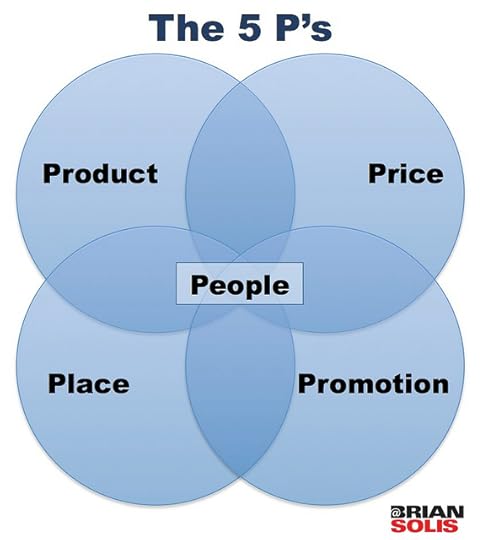
In a social economy, it’s practically absurd that this requires explanation. People should be or should have been at the center of everything. It’s been argued though that people are already at the core of each of the existing 4 P’s. But I disagree.
If we measure actions rather than intentions, it’s easy to overlook the importance of people in the mix. See, for the most part people are largely lumped into market segments, spoken to as audiences, and serviced as tickets. Honestly, we can do better. We must do better.
Understanding the needs and expectations of people inspires an important element often missing in day-to-day business strategy…empathy. It is empathy after all that unlocks ambition to do something that goes beyond the ordinary. It offers clarity to help see beyond routine roadmaps and reports. Empathy also channels aspiration to help teams strive to always do better. The result? Businesses will possess the means to develop more meaningful products and services as well as the procure confidence and resources to truly engage customers to build thriving communities.
Once you feel, really feel what people experience and what it is they need or do not know to need, innovation follows. And this is a time for innovation as people and how they connect, discover, communicate and share, is evolving. Technology continues to influence behavior and as behavior shifts, decision-making, preferences, expectations, and influence also progress. Understanding and appreciating people, and the individuals that make up our markets, teaches us how to in turn become more human…especially at a time when brands are becoming people and people are becoming brands.
At the end of the day, we are the very people we are trying to reach. You, me and the scores of people like us form the 5th P.
Purpose as the 6th P
When you work in the business of change, you eventually notice that regardless of the technology you adopt or the trends you pursue, one of the key things that’s often missing is a sense of direction or aspiration. I’m not referring to a common vision or mission statement though. Actions for the most part speak louder than words. Here, motive, objective, and resolve are paramount and they’re manifested in the leadership and its decrees to bring about real change.
I spend my time in the throes of digital transformation and as you can imagine, there’s a great deal of politics, emotion, and anxiety at work. In many cases, efforts to lead change are done so in the absence of bearing or alignment. Steps are taken simply because that’s what is supposed to happen not because a course was defined. As such, existing processes, philosophies and communications channels sometimes work against the quest to pursue the 5th and 6th P. In order to unite teams and decision makers around a common vision, that vision must be defined and it must resonate.
I’ve done my fair share of developing business transformation initiatives and seeing them through for longer than I care to count. Part of that work involves helping executives visualize and vocalize the future of customer engagement and experiences and translate this new direction as a matter of purpose. It’s imperative that this edict and the mission come from the top. For without it, change is stunted. It’s at this very point where I often see the difference between management and leadership rear its true colors. The reality is that not every executive is a leader. But like empathy, leadership is also a fundamental pillar in articulating a vision for transformation. Someone must rise to the occasion.
It’s not easy of course. It takes courage to see what others can’t and do what others cannot or won’t. You’re setting out to shock and reshape your company’s culture and to do so takes leadership, vision, and alignment to bring about sustainable change.
Start by asking and answering a few important questions:
1. What does are business stand for and what does it mean to a shifting consumer landscape now and five or ten years from now?
2. How does evolution in customer behavior and expectations affect our current business priorities and investments?
3. What are the challenges that hold back the organization from pursuing our existing and emerging goals?
4. What initiatives are underway within the organization that we can plug into, align, or reassign to pursue transformation?
5. What does the future of exemplary relationships with people (employees and customers) look like and what it is we want them to do, feel, share, and love about us?
I often think about a conversation that I had one night with good friend Tony Hsieh, CEO of Zappos. When I asked him about his inspiration for “delivering happiness” to customers, he turned and in a calm but assertive voice explained, “Companies that focused on customers and on a higher purpose outperformed those that focused on market leadership and profitability in the long run.”
I then asked him about the importance of vision and creating a supportive culture as he set out to deliver happiness. “Your culture is your brand. Customer service shouldn’t just be a department, it should be the entire company,” Hsieh revealed. He then shared the importance of unity in bringing about change and marching collectively in a new direction, “Customer service is about making customers happy, company culture is about making employees happy, so let’s just simplify it and at the same time, amplify our vision for our customers, employees, vendors, and peers.”
Whether or not you agree that People and Purpose officially earn a place among the traditional set of Ps is certainly open to discussion. But the impact of these two pillars in undeniable. By investing in People and Purpose, we will spark a revolution in not only business philosophy and supporting processes but more notably in the shift from a culture of management to leadership.
Originally appeared in AMA’s Marketing News magazine
Connect with me: Twitter | LinkedIn | Facebook | Google+
The End of Business as Usual is officially here…
Image credit: (edited)
exploring the Fifth and sixth Ps of marketing by Brian Solis

January 24, 2013
Welcome to the Revolution: Season 4 Coming Soon

In the four months since we wrapped Season 3 of Revolution, the production crew and I took some time to reflect on the last three years. We’ve come a long way but we believe we’re also just getting started. Changes are on the horizon for the show…and that’s a good thing. We moved the set thanks to the Four Seasons in San Francisco. We’re introducing a twist to our existing format. And the guests, well, they’re hand picked to help you navigate life both personally and professionally.
I’m proud to announce that a new series of Revolution will debut here on Mashable on January 30th.
- Craig Newmark Founder of Craig Connects
- San Francisco Mayor Ed Lee
- Behavior expert Kare Anderson
- Seth Combs Co-founder of SOL Republic
- Investor and entrepreneur Shervin Pishevar
- Wendy Lea CEO of Get Satisfaction
Here’s a preview of what’s to come…
Connected societies are leading to a connected world.
In a time when there are more questions than answers.
It takes a revolution to bring about meaningful change.
Subscribe here. In the mean time, make sure to catch the last episode with Joe Fernandez founder and CEO of Klout.


January 22, 2013
Social media is not your saving grace: Experiences should first be defined and supported

Social media experts will tell you, and they’ll make a pretty good case too, that it is the golden key to unlocking meaningful customer relationships and the gateway to surprising and delighting them over time. So how does social media do this? Well all it takes is to listen, be part of the conversation, curate great content, run native advertisements, and oh yeah, be transparent and authentic. Done and done.
Well, wrong and wrong.
Social media isn’t going to save your business nor is it going to make it. This may sound commonsensical, but to succeed in business takes much more than a Facebook or Twitter account. Hostess baked over 400,000 likes on Facebook and yet the iconic American brand is now shut down. Even small businesses are not immune to the real world. According to the SBA, over 50% of small businesses fail in the first five years. Social media isn’t saving those businesses either.
Michael Ames author of Small Business Management, assembled the top 8 reasons that contribute to small business failure and you’ll notice not embracing social media isn’t one of the contributors:
1. Lack of experience
2. Insufficient capital (money)
3. Poor location
4. Poor inventory management
5. Over-investment in fixed assets
6. Poor credit arrangements
7. Personal use of business funds
8. Unexpected growth
From experience, there are two other ingredients that serve as harbingers to the future of any business, under scoping or underestimating sales and marketing and underemphasizing product quality and customer experiences.
In any one of these scenarios, social media is not your saving grace—regardless of business size, number of followers, or however many viral videos you’ve introduced.
Am I saying that social media is useless?
No.
It is after all where connected consumers are spending a significant amount of time these days. Nielsen recently found that Americans spend 121 billion minutes per month in social networks, which is significantly up from 88 billion just one year ago.
I do believe that many experts are however taking their eye off of the ball in the name of social media. But, success takes design, intent, and the relentless pursuit of opportunities even when they are elusive. As a digital analyst and also an entrepreneur and investor, I’ve learned that technology is always going to introduce new channels for engagement. And, that’s a good thing. But they are not in of themselves channels for necromancy. The ability to surprise and delight customers starts with the ability to understand how to exceed expectations. And, even before that, it takes an understanding of what expectations are and where they’re met or missed.
So, here’s where social media can help.
Listening with Intent
Listening is among the most valuable ways to use social media for business relevance and ultimately success. However for it to offer true value begins with the questions you chose to answer. For example, in addition to asking, “what are people saying about me or my competitors,” also ask, “what are people saying or seeking in to improve what they’re doing today?” It’s the difference between information and insight and also listening to and hearing customers in a way that inspires innovation or iteration.
Designing the Experience
To deliver exceptional customer experiences takes experience design. You have to articulate, thoughtfully, what you want people to feel, say, and share. This is more than defining differentiators and value propositions. Businesses must think through how products and services evoke the original inspiration for starting or joining a company and the ongoing aspirations necessary to exceed expectations in the future. Social media then represents a series of open windows to engage customers during each and every moment of truth before, during and after transactions to reinforce experiences and desired sentiment. Think marketing, sales, service, support, and word of mouth.
Paying it Forward
If social media is about conversations you can bet that much of it is based on people asking questions. People are often looking for answers or direction. Rather than “Googling It,” it’s easier to ask those you trust. In this economy where trust is fleeting and transparency is elusive, there’s a tremendous opportunity to become the resource in your community. Don’t sell…instead; sell through the art of reciprocity. Customers feel a sense of appreciation for those who help and provide value.
The Power to Tell
As my good friend Peter Guber says, storytelling or Telling to Win helps people align with your mission through aspirations or solutions. Don’t sell just on price or features. Make your customers the hero by helping them see what they can accomplish simply by aligning with you. If you use social media, don’t just post questions, polls, or random pictures, unleash a gravity that pulls customers to you because they can clearly see that you “get” them and the things they struggle or hope to accomplish with or without you.
These are just a few ways to think about social media. But, there are many many other initiatives that you can consider that deliver value during each moment of truth. You have to consider though, that social media represents a series of new channels that complement other avenues that define your digital and real world opportunities. There is no one way to reach all of your customers and prospects.
Mobile.
Web.
Digital signage.
Geolocation.
Social.
And that’s what makes these times so challenging. You can’t assume however that building a distributed presence is good enough. You don’t have time for that. Growth and success are intentional, which means you can’t afford to stumble your way around them. There are customers to earn now and yes, technology is changing how you’ll reach them over time. See, the people who represent your customers 10 years from now are not the people who you reach today.
Ten years you say!?
Well, perhaps that’s too far to appreciate. The same is true though for three and four years from now.
Start with getting to know who your customers are and what they need…and how to help them. Then let it inspire you to create meaningful marketing strategies, relevant products and services, and desirable engagement channels in the moments of truth in the medium of preference.
If you don’t continually invest in the awareness of your value or experience you cannot benefit from consideration.
You are now perpetually competing for the future. Social media is one of the channels that now present you with yet another opportunity to truly engage with your customers. In the end, you have to think deeper about this opportunity. Just because you’re in business doesn’t mean you’ll stay in business. If you stop competing for attention and relevance you by default stop competing. This is your time to not just survive but thrive.
What do you think? How else can social media help businesses contribute to business success while helping foster customer and employee relationships and experiences?
Originally appeared in AT&T’s Networking Exchange Blog
Connect with me: Twitter | LinkedIn | Facebook | Google+
The End of Business as Usual is officially here…
Image credit:

January 17, 2013
Facebook: Can It Keep Growing?
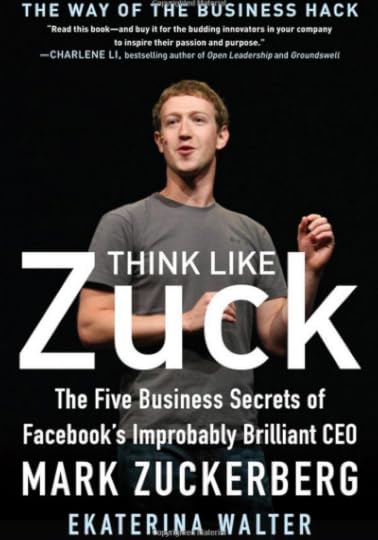
Guest post by Ekaterina Walter (@ekaterina), a social innovator at Intel and the author of “Think Like Zuck: The Five Business Secrets of Facebook’s Improbably Brilliant CEO Mark Zuckerberg”
This question has been of great interest to investors since the 2012 IPO that saw the company valued at $100 billion. Facebook already has 1 billion users worldwide and 44% of all internet users have a profile. Facebook pages make up one in five page views on the internet.
So is there a limit to this growth?
International growth
4 in 5 users are currently outside the US and that is where Facebook will see its biggest growth in sheer numbers. India already has 51 million Facebook users, but with a population of over 1 billion, the potential for growth is massive.
But growth cannot continue indefinitely: around 35% of the world’s 7 billion people have access to the internet, and China has blocked use of the site for now. The number of Facebook accounts could double, even triple as internet usage continues to grow, but there is still an upper limit.
So if there is a limit to the number of people who can have Facebook accounts, how can the site continue to grow once it reaches saturation point?
“[Facebook] is shaping a broader web,” says Facebook’s CEO, Mark Zuckerberg. “If you look back for the past five or seven years, the story about social networking has really been about getting people connected… But if you look forward for the next five years, I think that the story people are going to remember five years from now isn’t how this one site was built, it’s how every single service that you use is now going to be better with your friends… People are really going to look back and say ‘wow, over the last five years all these products have now gotten better because I am not doing all this stuff alone, I am doing it with my friends’. That’s what I am most excited about.”
The answer is the type of growth, not the scale of growth. Mark’s dream of connectivity means that Facebook will become more deeply embedded into the internet experience; users will continue to share more and more about their buying, entertainment and networking habits, and be able to feed back more information to the brands that supply them.
Greater integration
Farhad Manjoo, writer for FastCompany.com, predicts Facebook ‘will never sell your personal data to anyone–that’s one thing users would never accept. But it doesn’t need to; there are potentially huge markets for aggregated bundles of user info.’ As more and more apps are integrated onto Facebook there is a vast and growing source of data for the way users interact with everything from ads to pages to entertainment, with extensive demographic information on themselves and their networks. And Facebookers aren’t just clicking, they are actively commenting on and discussing what they are using. All this means greater revenue potential for Facebook, but also more relevance for users: no-one wants to be pressured by irrelevant ads, but they may want to know about the interests and recommendations of their friends.
Brand pages
8 out of 10 US companies now have Facebook pages, but the recent introduction of Facebook’s Global pages shows that the company is looking outside of the US to achieve the same sort of figures. Non-personal profiles represent an enormous area of growth for Facebook and with greater feedback into people’s Timelines when friends Like or Comment on brand profiles the potential for companies to reach new audiences is enormous.
f-commerce
Beyond Farmville, there is growing potential for third party apps. With everything from product purchasing to ticket booking, entertainment viewing and social interaction, the amount of time people spend accessing and sharing information via Facebook could soar. Beyond this, there is the opportunity for f-commerce, which in 2011 brought in $557 million, a fraction of their total income of their $3.7 billion. Facebook takes 30% of revenue from third party apps that use it as a platform for selling and is only just starting to exploit the possibilities.
Mobile
60% of Facebook users are accessing the site through mobile devices but Facebook has only just begun to explore the potential here. There are two major strands: one of revenue as mobile use is not yet monetized through advertising, and one of the opportunities for geo-located apps to create a whole new Facebook experience for users to interact with the world around them. The potential for brands is particularly exciting as marketing could be done in real time as people move around a Facebook-activated environment.
Paul Adams, the Global Brand Experience Manager at Facebook, describes the shift from the way people are using the internet and the move towards greater social networking: “[The web is] moving away from being built around content, and is being rebuilt around people.”
Facebook can continue to grow, but the definition of growth might not be a traditional one. As people spend more time on the network interacting with the world around them their experience of Facebook will change. There may be a limit to the absolute number of users, but Facebook’s growth can continue to penetrate more areas of people’s lives, and it is up to Mark Zuckerberg and his team to set the limit for how far that can go.

January 15, 2013
From the Big Screen to the Little Screen: The evolving relationship between TV and search

As a digital analyst, it’s my job to study how technology disrupts business markets and models. As an aspiring social scientist, I also study technology’s impact on culture and behavior. These two worlds are colliding with increasing velocity as each day passes. One of the trends I’ve been following over the last several years is the relationship between TV, smartphones, tablets and PCs.
There’s no longer a doubt that we are becoming a society of multiscreeners. The reality is that people will watch TV while multitasking on other devices. They do so now without benefit of your vision or direction. Their second and third screen experience is for the most part theirs to define and yours to study. At some point however, the multiscreen and viewer experience will benefit from your architecture and in doing so, your business will benefit as well.
Mobile apps, social ads, Twitter and Facebook engagement, these are all initial areas of investment. I’d like to take the next several hundred words to explore a much simpler but also important aspect of multiscreening. Here, I’m specifically speaking to any business that either creates programming, advertises on TV, places products in shows, or is active in any industry that popular shows touch upon.
Google published an in depth report on the new multi screening world that I’ve spent quite a bit of time reviewing. In just a few short but important slides (29 – 32), Google focuses on the changing role of television in a multi-screen environment. Specifically, Google focuses on how people, well, Google while watching TV.

There was a time, a long time at that, when TV was the epicenter of the home and the attention of those within it. The Internet however now rival TV, but the truth is the two will co-exist and over time, play a harmonious role in engaging consumers.
According to Google, 77% of TV viewers use another device while watching TV. As we see here with Lori’s example, people are shopping, emailing, surfing, etc.

Beyond the casual second screen engagement conveyed by Lori, people are taking specific actions based on what they see on TV. As we see with Kelly’s example, the desire to seek more information about people, products, places, events, etc., can prompt a view to learn more. And, those searches will take place in the traditional Google search box, as well as Google Images and also Youtube.
Naturally, Google found that TV is in fact a major catalyst for search.

Depending on the second screen, smartphones and PCs can trigger a variety of different actions based the occasion for search. For example, with smartphone users, 22% of viewers are promoted to search based on what they see on TV. 17% of those viewers will take action based on a TV commercial.
This leads to a new moment that Google calls “found time,” the combination of device accessibility and spur-of-the-moment usage to get something done in the moment. It is in these “micro-moments” that Google found viewers to search, shop, communicate and keep entertained across multiple screens. The result? Marketers and advertisers are now presented with additional touchpoints to engage consumers throughout the day.

In these moments, viewers will search using the screen that’s the closest to them. More often than not, that device is likely to be a smartphone or tablet. Some will however, go find their PC as it is a more familiar and capable device according to their preference.

Search is just the beginning however. Found time is the key driver for spontaneous search with 80% and 52% taking place on smartphones and PCs respectively. However, of those spontaneous searches upward of 44% do so to accomplish a goal.
Customer Journey Architecture and Optimization
Marketing around found time and these new micro-moments creates the need for customer experience and journey architecture. Knowing that a viewer can at any moment Google or Youtube your business, product or service on any one of three screens, what does that path, result, and experience look like today? Chances are it needs to either be designed and or optimized⎯for each screen. Additionally, the context and intention of the search should be considered to frame a dynamic and personalized journey. What’s most important is to design several journeys around the intention or possible state of the viewer to make it not only more efficient but also rewarding. If upward of 44% of those spontaneous searches are started to accomplish goals, then understand what those goals are and streamline them through a dedicated click path optimized for each screen and intention.
SEO and SEM is no longer good enough to cater to multiscreeners who engage in found time. Experiences and outcomes now count for everything. And, they require architecture and refinement over time. This requires what I believe to be a new role that looks beyond customer experience to include customer journey design and management.
Originally published at AT&T’s Networking Exchange
Connect with me: Twitter | LinkedIn | Facebook | Google+
The End of Business as Usual is officially here…
Image of TV/mobile device courtesy of Shutterstock


