
Brian Solis's Blog, page 28
June 22, 2022
MarketingFacts – Brian Solis (Salesforce): “Marketing kan zich heruitvinden als Customer Experience discipline”
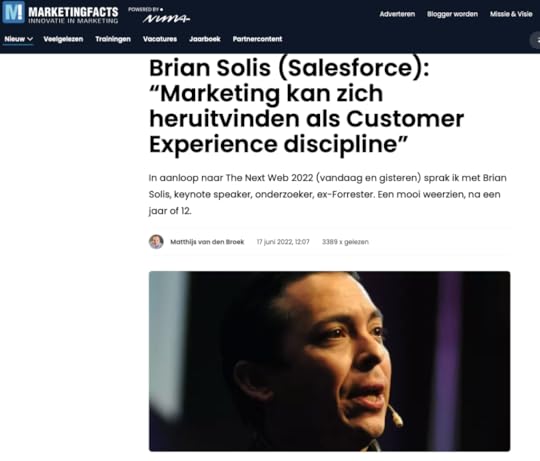
While in Brussels, I had a very welcome opportunity to speak with Matthijs van den Broek, MarketingFacts: Innovative in Marketing, after all of these years. What a pleasure!
In aanloop naar The Next Web 2022 (vandaag en gisteren) sprak ik met Brian Solis, keynote speaker, onderzoeker, ex-Altimeter. Een mooi weerzien, na een jaar of 12.
De carrière van Solis is tot nu toe best indrukwekkend, niet alleen gezien waar hij nu staat (high-end adviseur van Marc Benioff bij Salesforce). Hij is niet alleen keynote speaker in het hogere segment, maar ook een echte onderzoeker, een oprechte graver. We spreken over CX, over uitdagingen, over always-on leven, over personalisatie, onder anderen.
Over Brian SolisSolis spreekt veel over digitale transformatie, innovatie en disruptie, modern consumentisme, cultuur en werknemerservaring en digitale samenlevingen. Solis is sinds 2019 Global Innovation Evangelist bij Salesforce, waar hij zijn werk richt op thought leadership en onderzoek naar digitale transformatie, innovatie en disruptie, CX, commercie en de cognitieve onderneming.
Solis zet vaker voet op Nederlandse bodem, de mannen van CooPR spraken zo’n 12 jaar geleden een hele avond met hem, toen nog veel over PR. Ondergetekende deed toen de techniek van het interview dat we opnamen vooraf, dat lijkt ergens verloren gegaan in de geschiedenis.
Over Lifescale (2019)Het boek Lifescale (bol.com) schreef Solis toen hij vastliep (“I thought it was a writers block”) aan het prille begin van wat het volgende boek over digital transformation, tech en disruptive business had moeten worden. Doordat we always-on zijn, overprikkeld, altijd afgeleid, leven we eigenlijk niet meer het leven dat we willen of kunnen leven. In een interview een jaar geleden gaf Solis toe zich zelf “a victim of technology” te voelen, en daar wilde hij (vanzelfsprekend vanaf).
Niet door dan maar offline te gaan of zijn telefoon of laptop het raam uit te gooien. Solis is natuurlijk een tech-optimist, en deed een stevige soulsearch. Hij publiceerde het boek al in 2019, ruim voordat Corona ons in de digitale snelkookpan gooide.
In het interview bespreken we ook de negatieve gevolgen van de werking van de algoritmen van de grote social techreuzen die ons verslaafd maken en er eigenlijk voor zorgen dat we in een soort zombie-state terecht komen. Over de impact van het boek is Solis nog in dubio: “Mensen moeten begrijpen dat er iets mis is om te veranderen, om het beter en anders te doen. Je moet accepeteren dat de manier waarop jij je telefoon en social media gebruikt, onderdeel is van je eigen uitdaging”. Well said. Er is een grote mate van ontkenning en ook onwetendheid bij consumenten. Mensen zijn verslaafd, het is onderdeel geworden van onze dagelijkse routine waardoor je niet eens meer onderkent dat het een probleem is.
“You’re talking to a couple of billion addicts”, zeg ik tegen Solis. Gelukkig moet hij lachen, om later bloedserieus te stellen dat dezelfde algoritmen die ons verslaafd maken aan leuke video’s, ook verantwoordelijk zijn voor de totale polarisatie die nu overal in de wereld aan de gang is.
Over marketing en de uitdagingen voor marketeersDe uitdagingen voor marketing en marketeers zijn dezelfde als voor ons als privé personen: het is in tijden van info-overload, veranderende technologie en always-on moeilijk om te weten waar je nou precies moet zijn.
Bij Salesforce onderzoekt Solis de impact van de pandemie op ons gedrag en hij ziet een soort “overkoepelende generatie” ontstaan, de generatie Novel. Het is het idee dat iedereen die vanuit huis alles moest doen, een cross generational group werd met gelijkwaardige uitdagingen, aspiraties en wensen. “Iedereen werd een digitale narcist.”
We zijn veranderd, denkt Solis. Maar marketing niet. En daar ligt een enorme kans. We hebben data, we hebben tools, we kunnen toestemming vragen aan mensen en we kunnen de customer journey opnieuw definieren, one touchpoint at a time.
Marketing moet volledig ownership pakken op CXDit zijn de tijden waarin nieuwe leiders en methoden gaan opkomen, waarin alles aan het veranderen is. De meeste rollen van mensen en ook die van marketing, zijn gedefinieerd in het pre-Corona tijdperk. Solis: “Hoe zou jij je rol invullen als je hem vanuit een digital first wereld zou aanvliegen?” Dit is de kans voor marketing: “Marketing kan zich heruitvinden als een Customer Experience discipline”. Dat is echt een grote kans, vindt Solis.
Een goede CX en vertrouwen en transparantie, dat is wat consumenten willen. En als klanten in de lead zijn over hun eigen klantervaring, en als ze dat het allerbelangrijkste vinden, dan gaat het erom van wie die experience nu echt is, wie pakt daar het ownership? De marketing organisatie moet dat ownership gaan pakken.
Personalisatie als heet hangijzerIk wilde eigenlijk de strekking van dit artikel voorleggen aan Solis en eens horen hoe hij daarover dacht, maar hij onderbrak me vroegtijdig, “I gotta say this to you and I think you’ll appreciate”. Mooi heh hoe dat dan weer gaat, maar vooruit dan maar. Personalisatie voor marketeers, zegt Solis, is het juiste bericht versturen op de juiste tijd aan de juiste persoon. Maar personalisatie voor de gemiddelde consument betekent: “ken mij”. Solis: “Dat zijn twee totaal verschillende dingen.” True that. En doe er iets mee, marketeer.
The post MarketingFacts – Brian Solis (Salesforce): “Marketing kan zich heruitvinden als Customer Experience discipline” appeared first on Brian Solis.


June 21, 2022
ANA: How Do Marketers Express Digital Empathy?
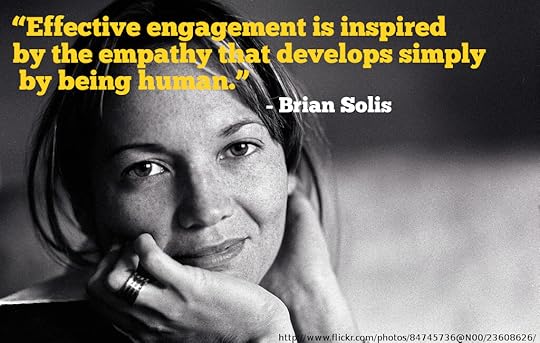
via ANA Champions of Growth podcast, Matthew Schwart, host
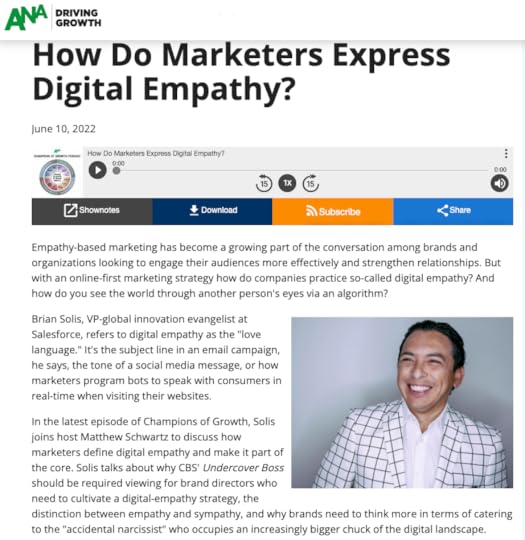
Empathy-based marketing has become a growing part of the conversation among brands and organizations looking to engage their audiences more effectively and strengthen relationships. But with an online-first marketing strategy how do companies practice so-called digital empathy? And how do you see the world through another person’s eyes via an algorithm?
Brian Solis, VP-global innovation evangelist at Salesforce, refers to digital empathy as the “love language.” It’s the subject line in an email campaign, he says, the tone of a social media message, or how marketers program bots to speak with consumers in real-time when visiting their websites.
In the latest episode of Champions of Growth, Solis joins host Matthew Schwartz to discuss how marketers define digital empathy and make it part of the core. Solis talks about why CBS’ Undercover Boss should be required viewing for brand directors who need to cultivate a digital-empathy strategy, the distinction between empathy and sympathy, and why brands need to think more in terms of catering to the “accidental narcissist” who occupies an increasingly bigger chuck of the digital landscape.
Listen here.
The post ANA: How Do Marketers Express Digital Empathy? appeared first on Brian Solis.
June 20, 2022
Frankwatching: 5 tech-trends met directe impact op je leven (& hoe je er gezond mee omgaat)
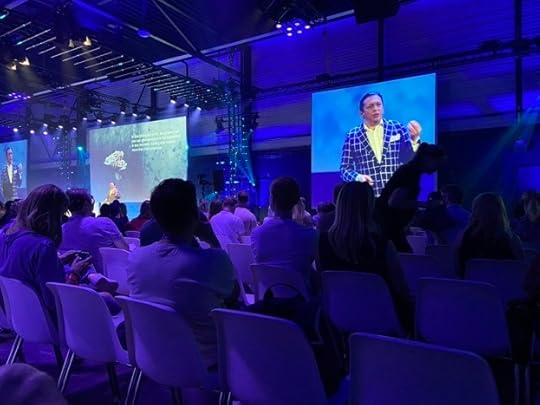
via Kim Pot, Frankwatching
De ontwikkelingen in tech-land gaan sneller dan we kunnen bijhouden. Dat is heel spannend, want het brengt ons letterlijk verder dan ooit, en dat is niet alleen de ruimte in. Tech dringt ook onze levens, en zelfs lichamen, binnen. Het maakt het leven veelal makkelijker, productiever en creatiever, maar het is belangrijk te blijven letten op de ongezonde kanten. We moeten als mens balans zien te vinden in de omgang met tech, want voor je het weet houden de algoritmes je non-stop aan het scherm gekluisterd. Op de The Next Web Conference 2022, signaleerde ik 5 tech-trends én verzamelde ik handvatten die je helpen om een gezond evenwicht te behouden.
Nieuwe routines in een digital first worldHoe spannend alle nieuwe tech-ontwikkelingen ook zijn, in een digital first world moeten we op de één of andere manier in balans blijven. “Digital is rewiring your brain and body”, zegt Brian Solis, Global Innovation Evangelist bij Salesforce. We krijgen 200 notificaties per dag en het kost 23 minuten en 15 seconden om na zo’n afleidingsmoment weer in je flow te komen. Daardoor leven we steeds minder in het nu en zijn constant aan het multitasken. Daar zijn we als mens niet voor gemaakt.

We kunnen de afleidingen die op ons worden afgeschoten niet controleren, maar wel hoe we ermee omgaan. In een digital first world moet je nieuwe routines ontwikkelen die zorgen dat je in balans blijft. “Don’t let society or algorithms strip away your imagination, individuality or potential”, sluit Solis zijn keynote af.
Lifescale in US
Lifescale in the Netherlands
The post Frankwatching: 5 tech-trends met directe impact op je leven (& hoe je er gezond mee omgaat) appeared first on Brian Solis.
June 15, 2022
CRYPTOGLOBE: Beyond Money-Motivated Projects – The State and Promise of web3

via Siamak Masnavi of CRYPTOGLOBE
On Monday (June 13), American serial entrepreneur and technology investor Kevin Rose commented on Ethereum, Web3, and the current crypto market conditions.
Rose currently works as a partner at True Ventures, where he is focused on “blockchain (NFTs, cryptocurrency, DeFi), consumer internet, and health/wellness.” He also hosts the “PROOF” and “Modern Finance” podcasts.
Some of Rose’s angel investments are Twitter, Square, Foursquare, Nextdoor, Blue Bottle Coffee, and Facebook.
On Monday, Rose told his over 1.6 million followers on Twitter that no matter how low the Ethereum ($ETH) price gets in the current bear market, projects that are more interested in the technology and the promise of Web3 — rather than focuses solely on how much money they can make — will continue to build.
https://twitter.com/kevinrose/status/...
On February 28, at the (virtual) Web 3.1 Leadership Summit, Brian Solis, who is a Global Innovation Evangelist at Salesforce, as well as an award-winning author and world-renowned futurist, gave the keynote speech.
In this speech, Solis “spoke about where we are and where we need to be, to leave the world better off than it is.”
He said, “the top 9% of accounts in web3 hold 80% of the $41 billion dollar market value of NFTs, the top 2% own 95% of the $800 billion supply of bitcoin, and 0.1% of bitcoin miners are responsible for half of all mining output.” He went on to say that “Web3 is not supposed to be about this elitism or exclusivity”, and in fact, it is “supposed to be built on transparency, accountability, security, decentralization, trustless networks, and community.”
The post CRYPTOGLOBE: Beyond Money-Motivated Projects – The State and Promise of web3 appeared first on Brian Solis.
June 13, 2022
Social is more about sociology and psychology than it is technology
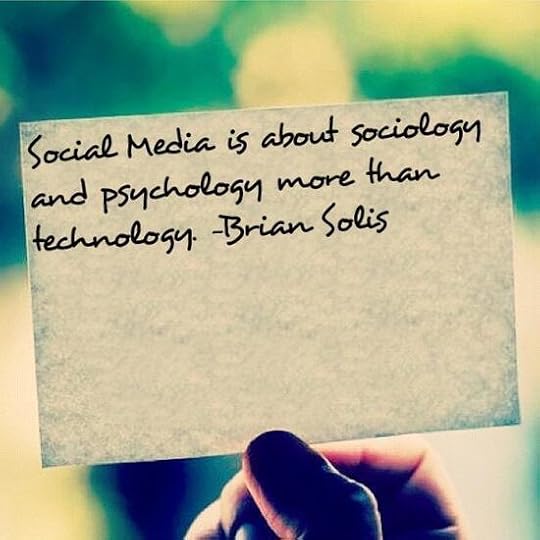
A quote I originally published circa 2007 was recently shared on Caso Cerrado on by the one and only Dra. Ana María Polo.
“Social is more about sociology and psychology than it is technology.”
Muchísimas gracias, Ana! 
The post Social is more about sociology and psychology than it is technology appeared first on Brian Solis.
June 8, 2022
The Importance of Digital Wellness, Self-Care, and New Skills in a Hybrid World

Photo by Luis Quintero, Pexels
This is a time for new leadership…
In March 2020, we became a digital-first world. We didn’t really have a choice otherwise. Everything changed overnight. We had to figure out how to keep up. We had to learn how to adapt. We’re still learning. We’re still trying to figure out what new role we’re supposed to play in this new future. As leaders, it’s not just about leading the accelerated digital transformation for our companies. It’s also about understanding and leading the digital transformation in our personal lives.
Don’t overlook the fact that we have changed and are changing as a result of digital’s effects on our lives. The key to mastering change and not being shaped by it, is to learn why and how.
This is a subject that’s near and dear to my heart.
I’ve studied the impact of mobile devices, social media, online worlds ad games, to understand how we changed. I learned that digital has a way of transforming us. And it’s not always for the better. Since 2020, we’ve had to embrace digital in our lives and work as a matter of survival and that too, changed us. Since then, we’re only moving faster, but we’ve not yet had a chance to slow down to understand how we’ve changed, what’s good and what’s taking away from our potential, what’s helping vs. what’s harming us, and what to do differently, intentionally, moving forward.
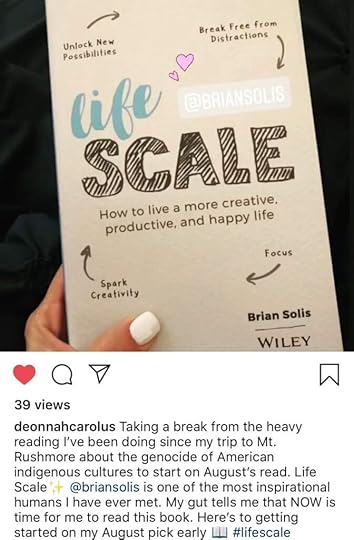
Before all of this, I wrote a book that seems more timely in this new world than it did then, LifeSCALE: How to Live a More Creative, Productive, and Happy Life. The book shared a research-based path for personal transformation in a digital-first world. That story, and our response to it, is more important now.
We need to reestablish the social contract that we have with our devices and our apps and the time they take from us in this new world.
We need to be in control of how digital plays a role in our life.
To be in control is to use digital with purpose, to set boundaries, to grow with intention, to be more mindful, and to be more present.
To be in control is not giving digital license to distract us in times of focus or presence, to make us feel less than who we are, or to hold us back from truly living our best lives.
To be in control is to use digital in ways that make us happier, more conscious, and open-minded. To be intentional with digital is to see what happiness and greatness looks and feels like, to become a better person, to be smarter, to learn, unlearn, and adapt to new ways of working and living. It’s about being more creative and less distracted or robbed of our potential.
Throughout this change, we can’t lose sight of our own wellbeing. With new digital devices and apps and experiences comes great responsibility and accountability. It also presents us with the need to learn new skills to not only work, but also how to understand and practice self-care.
Digital wellness is now something that’s going to be part of our everyday lives. And it has to be something that you and I decide that we’re going to own.
As leaders, we must help our teams, our employees, our communities, and our loved ones, especially our youth, learn to be more mindful, to embrace disciplines that embody well-being and unlock healthier, more purposeful lifestyles…because digital isn’t going away.
We’re now on a permanent path for accelerated digital revolutions, for better or worse. I think it’s a choice.
We’re already starting to see the line between digital and physical blur. We reach for our phones over 100 times a day and gaze through little windows into immersive worlds for hours a day. And just on the horizon, Apple will introduce its augmented reality glasses. Facebook and Ray Ban are already here their new digital glasses. Snap recently launched a pocked drone that goes with users to capture moments on demand. Meta’s Oculus and new virtual worlds, including the emerging metaverse, are only going to become more and more and more part of our lives.
It’s time to now take control of our well-being and help others navigate these new challenges and opportunities with new skills.
We need to take time to focus on our relationships with digital and each other. We need to reestablish our social contracts and how we use these devices in our lives and in our work. But more importantly, we all need to press pause, to breathe, to look up and become more present. We need to make time for more self-care, creativity, and originality in our routines.
The world is changing around us and we get to define who we want to be in this new world, where we want to go, and how we will SCALE our life toward those goals and aspirations, and the vision we have for a happier life, starting today.
Please watch this short video on the subject…
The post The Importance of Digital Wellness, Self-Care, and New Skills in a Hybrid World appeared first on Brian Solis.
June 7, 2022
INFOSECURITY Magazine: Solving the Gen-N Security Dilemma

Via Infosecurity – Simon Wilson CTO, UK and Ireland, Aruba Networks
No matter the industry you’re in, hybrid work is the talk of the town. How do you enable it? What considerations do you need to make for employees? There are a range of questions to ask, but perhaps one thing that is glanced over is how the behaviors of employees drive your hybrid strategy.
Cast your mind back a year and a half; likely you were working remotely. This dramatic and sudden shift in gear to our daily lives, like any significant change, shaped many of our characteristics, values and traits. In fact, it did this so much so that a new cross-generational cohort emerged – Generation Novel (Gen-N).
Coined by the digital anthropologist and Salesforce Global Innovation Evangelist Brian Solis, Gen-N all share a specific set of traits due to their shared experiences from the pandemic. They thrive on digital-first experiences, alongside placing greater value on personalization, flexibility and transparency.
Compared to other employees, Gen-N has a greater understanding of and demand for technology. In fact, a recent report found that many of today’s hybrid workers identify with these traits. For businesses and IT teams, this means adjusting to the new behaviors and needs Gen-N has. Most pressingly for the latter is that the behaviors of Gen-N may inadvertently open up an organization to a myriad of security risks.
A New Workforce Means New Needs and WantsMore so than any, Gen-N is comfortable and well-adjusted to using technology when working – which, understandably, comes with some level of increased confidence as 75% consider themselves to be ‘digitally savvy.’ All the while, Gen-N feel that the personalization of their workplace tech to suit their preferences is dear to their hearts.
However, this is coupled with a concern for mental health. Gen-N is mindful not to allow technology to dominate their lives, despite it being a major part of their day-to-day at work. The majority (80%) believe that it is the responsibility of their employers to maintain policies that actively encourage the healthy use of technology.
Unfortunately for business leaders, under half (48%) of Gen-N currently believe their organizations are falling short and that current workplace policies do not support good mental health. In this respect, employers must ensure they are not only providing the right technology to enable their workers but equally supporting their physical and mental wellbeing with the right policies for healthy technology use.
Risky Behavior Even Riskier BusinessGen-N knows what they want, and with this comes higher expectations on IT and leadership teams. Notably, if they don’t feel their needs are met, productivity worsens (dropping by 35%). The result can be a potentially risky mix as half of the survey respondents said they are more likely to try and resolve a tech issue themselves now than they would have been before the pandemic.
This should set alarm bells for decision-makers and IT teams worldwide ringing. Companies are left wide open to cybersecurity risks relating to where, when and how employees log on to their work devices. More so, Gen-N’s desire for hybrid and flexible work means the cohort is often logging into their work devices from a multitude of locations, and 27% use their own devices for work-related matters.
This risky behavior goes even further, as over half of Gen-N respondents admitted to connecting to non-password protected public networks at least once a week – and only a third thought about the security risks this meant.
The result is a potential nightmare for IT teams trying to meet hybrid working expectations while keeping operations secure, and means they need to be more on top of their network security than ever before.
Solving the Gen-N Security DilemmaDespite the risks that some Gen-N behaviors pose to IT security, over half (61%) reported feeling more secure working in a hybrid setting. With this in mind, for any business’s hybrid model to work – decision-makers must consider balancing the choice of technology and employee flexibility with security.
This begs the question, just what approach should business leaders take? A great place to start would be streamlining security operations with automated and zero trust security models. Couple this with real-time monitoring by IT teams and the detection, isolation and prevention of network breaches becomes much easier.
Gen-N’s tendency to work across different locations – while often using personal devices – be that their homes, the office or cafes, means that support and security visibility has never been more important. To give businesses greater visibility over their networks, a unified infrastructure centrally managed via a single point of control is the right route.
While this new cohort may have a unique set of demands, quirks and attributes, striking a balance between a secure network and the openness, flexibility and personalization that employees seek will be the difference between hybrid work working and failing. With the right technology solutions, decision-makers can make this a reality.
The post INFOSECURITY Magazine: Solving the Gen-N Security Dilemma appeared first on Brian Solis.
June 2, 2022
Digital transformation is more about humans than digital
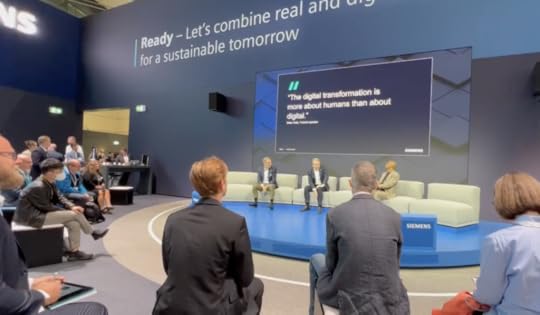
At Hannover Messe, the CEO and CTO of Siemens, Cedrik Neike and Peter Koerte, explored the roles of culture, human-centered design, and leadership in effective digital transformation.
At the beginning of the clip below, Neike and Koerte are presented with a quote from Brian Solis, “digital transformation is more about humans than about digital.” They then share their thoughts about why people have to be at the center of any digital transformation to be successful.
In his 2014 report on digital transformation, Solis originally said digital transformation is powered by the human side of business.
“Digital transformation is less about digital and more about people, culture, and new leadership to create business value in a post-industrial market.”
The post Digital transformation is more about humans than digital appeared first on Brian Solis.
June 1, 2022
Brian Solis Makes Inc. Short-List for Top Keynote Speakers
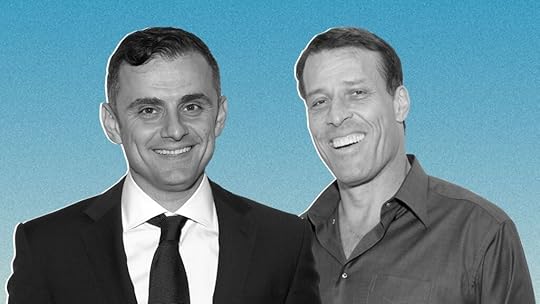
Brian Solis makes Inc.’s keynote speaker shortlist!
Original article by Shama Hyder in Inc. Magazine
There’s an industry out there that captures attention across all industries. The people who employ it are captivating. Their books are hard to put down. Their energy is infectious. Quite frankly, they’re hard to ignore. What am I talking about? The world of public speaking.
Here are the speakers I’ve been following in 2022:
Tony Robbins
Gary Vee
Dorie Clark
Donald Miller
Brian Solis:
Rounding out the list of my top five speakers to follow in 2022 is Brian Solis, a digital anthropologist, futurist, speaker, and best-selling author. He studies disruptive technology and its impact on businesses, and he shares his research and insights as a frequent keynote speaker at technology, business, and creativity events. Solis is credited with influencing the early digital and social media landscape by developing the conversation prism, a visual map that outlines and explains this digital landscape.
Early on, his digital media lab, FutureWorks, helped startups and global brands alike with digital and innovative marketing programs–and he’s often experimented with new channels and networks. While his numerous awards and accolades are obviously inspiring, it’s his innovative thinking, data-based research, and ability to engage on those topics and how they tie into business today that is really impressive.
These speakers each have a different way of addressing the audience, from direct and straightforward to soft-spoken and inspiring. I’ve learned a lot from all of these visionary speakers, and hearing their varied perspectives and voices has helped me reflect on my own voice and perspective in my speaking career. If you need some inspiration or want to get in on the important talks in your industry, check these speakers out.
You won’t be disappointed.
The post Brian Solis Makes Inc. Short-List for Top Keynote Speakers appeared first on Brian Solis.
May 3, 2022
The New Future of Work and the Importance of Self-Care, Well-Being, and Digital Wellness
The post The New Future of Work and the Importance of Self-Care, Well-Being, and Digital Wellness appeared first on Brian Solis.


