
Brian Solis's Blog, page 26
August 22, 2022
Why Web 3.0 Will Rewrite the Business Playbook: An Interview withBrad Howarth, CMO Australia

Original article written by Brad Howarth, CMO
What an extreme honor it was to visit Melbourne and Sydney after all this time. Following my presentation at the Salesforce Retail and Consumer Goods Industries Summit, I met with my new friend Brad Howarth of CMO Magazine. Over the course of one hour, we explored everything from the future of brands, the new role of marketing in 2030 organizations, and of course, the rising world of Web3 (Web 3.0), the next iteration of the web.
Brian Solis: Why Web 3.0 will rewrite the concept of marketingWhat if everything you knew about marketing stopped working? A conversation with Salesforce’s Brian SolisMarketing practices have changed dramatically in recent years as new technologies, channels and processes have rewritten rules of engagement and delivery. But at its core, many key concepts that underpin marketing – aggregating audiences, designing and delivering campaigns and driving conversion – remain essentially the same as they were when they were first refined in the 1950s and 1960s.
However, the world is changing rapidly, and is evolving towards what may be the next great revolution in digital technologies: Web 3.0. This promises to bring together concepts relating to identity, trust, decentralisation and immersive virtual environments.
While the true impact of Web 3.0 is impossible to predict at this time, its proponents speak of a decentralised world where control and ownership of data and digital assets resides with the individual, not the corporation. Should these prognostications translate into reality, they will have a profound impact on the relationship between organisations and their customers, redefining customers as community members or stakeholders, and eschewing campaigns in favour of ongoing relationships. This signals a tumultuous time ahead for marketers.
While this kind of fundamental change is hard to consider amidst the day-to-day stresses of running a marketing function, it is very much on the mind of Brian Solis, awarding-winning author and renowned digital anthropologist and futurist. In his current role as global innovation evangelist at Salesforce, Solis is tasked with exploring and interpreting the ramifications of digital transformation, innovation and disruption. And there are few bigger emerging disruptions than that threatened by Web 3.0.
What concerns Solis now is that many organisations – and especially those born before the digital revolution of the mid-1990s – are still coming to grips with what it means to be a digital enterprise. And even those born of the digital era are themselves still adapting to the social nature of the web’s second iteration from the mid-2000s.
“The promise of Web 3.0 is very powerful, and it is also inevitable,” Solis tells CMO. “The difference between Web 2.0 and Web 3.0 is increasing the chasm between what businesses need to do for this digital-first era, and what they still doing from the pre-digital era.”
He says this is reflected in the way consumers experience ecommerce – a development of the Web’s first era– which is fundamentally the same today as it was 20 years ago.
“If you look at the digitisation we are doing, whether that is retail or business in general, it is digitising siloed models, to do what they do at scale with greater efficiency and intelligence,” Solis says. “But it is now firing over to a group of customers for whom it is not as effective as it used to be.
“That says the time for change is really here, because customers are not going to go backwards.”
Exploring new modelsShould the promises of Web 3.0 hold true, Solis believes it will drive new forms of engagement between organisations and customers built around concepts of participation and value exchange, rather than mono-directional commerce.
“That trajectory is going to create a new level or standard of customer experience,” Solis says. “In this metaverse world, customers are going to have a much more immersive web. The Web 3.0 construct essentially promotes not just membership, but community.”
The greatest challenge Solis believes many executives will face will not be that of technology, but what will arise from their own experiences. These could create mindsets and processes optimised for a world that soon may not exist.
“In order to accelerate meaningful business transformation and customer relevance you have to start at a leadership level, and at a level that really questions your own assumptions of how to do things,” Solis says.
The challenge that emerges is that leaders who believe they are on the right path to digitisation today are only playing catch up, having spent the past few years modernising old processes rather than designing new ones.
“We didn’t accelerate digital innovation, we accelerated digitisation,” Solis says. “We are digitising pre-pandemic processes, supported by pre-pandemic organisational models. And many of these models are rooted in the 1950s and 1960s. We haven’t stopped to ask what else we can do.”
Innovator or fast followerThe challenge of Web 3.0 is reflected in the fact that for each generation of technology, much of the wealth has been created by entirely new entrants – Amazon and eBay for the Web’s first iteration, Facebook and Google for its second. While there are exceptions (Apple was formed in 1976, but subsequently underwent a renaissance with Steve Jobs’ return in 1996), organisations born prior to each wave have only succeeded through being fast followers.
Of course, history need not repeat itself, and the new giants of the Web 3.0 era are yet to emerge. That means opportunities exist for any organisation to take a leading role – if they start now.
“The ‘digital-first’ model has to be reimagined, and Web 3.0 preparation has to start now,” Solis says. “You have companies that are going to continue to digitise existing models. But you have another group of companies that are asking different questions now.
“You have to get back to basics and look at the construct of how you are connecting with your customers, and just find some pilots to test.”
For Solis, there are two factors that run in any traditional organisation’s favour. Firstly, he counsels the Web 3.9 revolution will not happen overnight, so agile organisations will have the opportunity to learn and adapt. Secondly, those that have invested to develop a 360-degree view of their customers, and organised their operations to utilise this perspective, will find their investments will be incredibly valuable in the Web 3.0 era.
“If you can know your customers, you can know what they value and how that value evolves over time, and how to organise around the delivery of that value now and over time,” Solis says. “It creates an agile, evolved model, so as the customer starts to taste the empowerment of what full Web 3.0 allows.
“What we are talking about is shift from being a consumer to being a stakeholder.”
Control-alt-deleteUltimately, Solis believes the transformation to Web 3.0 and concepts such as the metaverse will represent a reset for marketers and for the organisations that employ them – something he describes as a ‘control-alt-delete’ moment.
“This is a control-alt-delete moment – one without a playbook – that requires the imagination and the reinvention of what it means to be a business in this new world,” Solis says. “If you had to invent the business of 2030 you wouldn’t look to the 1950s and 1960s to learn how to market to this audience – you would invent it. And that is the opportunity we all face.
“We’re not going to solve for it by trying to adapt yesterday’s models for 2035. It is a moment for leaders to control-alt-delete leadership itself.”
The post Why Web 3.0 Will Rewrite the Business Playbook: An Interview withBrad Howarth, CMO Australia appeared first on Brian Solis.


August 18, 2022
Technology, Adaptation, and the Future of Employee Experience with Nathalie Nahai
 My dear friend Nathalie Nahai invited me on her popular podcast, The Hive, to discuss her new book and the future of tech, resilience, and leadership. I’d like to share that conversation with you here.
Today I speak with the inimitable Brian Solis, a world-renowned digital anthropologist and futurist. An award-winning author and global keynote speaker, Brian’s research, advisory and presentations humanise the relationship between disruptive innovation and its impact on institutions, markets and societies.
He not only helps audiences understand what’s happening and why, he also visualises future trends and inspires people to take leading roles in defining the future they want to see. Brian serves as Global Innovation Evangelist at Salesforce, and his work focuses on thought leadership and research that explores digital transformation, innovation and disruption, customer experience, commerce, and the cognitive enterprise.
He has advised leading brands, celebrities, and startups, and his ideas and work are consistently featured in the press. A regular contributor to leading business and industry publications including Forbes, Harvard Business Review, CMO.com, Adweek and others, Brian is also an official LinkedIn Influencer. His work is followed by over 700,000 people across social media.
The Hive Podcast · 66. Technology, Adaptation & The Future Of Employee Experience / Brian SolisLinks
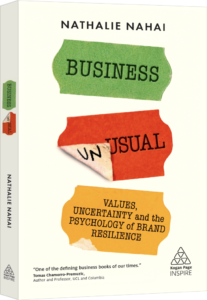
iTunesSoundCloudSpotifyStitcherPlayer.fmPlease do read her new book, “Business Unusual: Values, Uncertainty, and the Psychology of Brand Resilience.“
The post Technology, Adaptation, and the Future of Employee Experience with Nathalie Nahai appeared first on Brian Solis.
August 16, 2022
Brian Solis to Keynote the International Council for Shopping Centers (ICSC) Conference in DC, September 2022
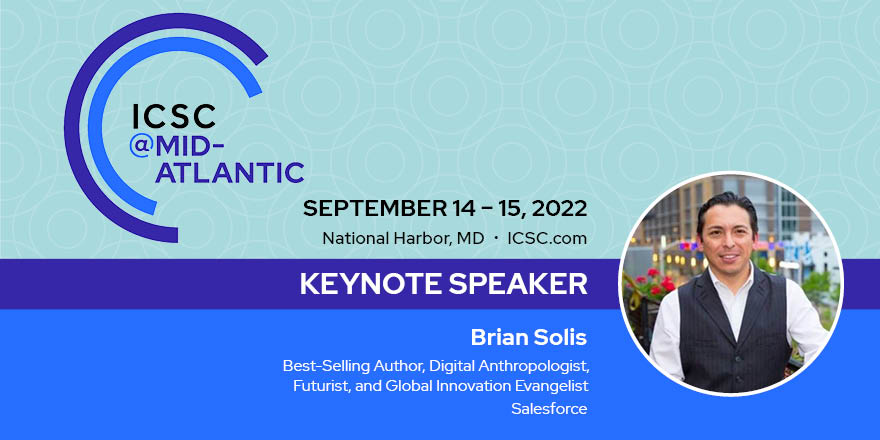
Brian Solis has been recruited for a second time in two years to keynote the International Council of Shopping Centers (ICSC) event. This time, Brian will share his vision for hybrid retail and the marketplaces industry.
The event will take place September 14-15, 2022 in National Harbor, Maryland. To learn more about the event, please click here.
The post Brian Solis to Keynote the International Council for Shopping Centers (ICSC) Conference in DC, September 2022 appeared first on Brian Solis.
August 15, 2022
The importance of retail experience design; Designing a valuable retail experience

via Lauren Mathews, LEAP
Author Lauren Mathews explores the importance of total experience innovation in a hybrid world. Solis’ book, X: The Experience When Business Meets Design, couldn’t be more timely.
In her article, she writes…
90% of purchases are researched online before being made in-store.
Customers expect a memorable experience when shopping in stores. A retail store experience brings a brand’s story and values to life.
But retailers can’t rely on Instagrammable moments and digital screens alone to make their stores stand out. While these can be vital tools, brands must consider how they use technology to enhance the customer’s experience.
How do you build a lasting connection with your customer? To create a store experience that resonates, brands must evaluate every step of the customer journey.
The store experience is critical for driving customer loyalty. A valuable store experience will increase traffic, conversion, and lifetime customer value.
To do this, she recommends that retailers, 1) build brand awareness, 2) meet new consumer habits, and 3) drive engagement and loyalty.
Brands can’t rely on one blueprint to create an authentic experience. When designing your store experience, you should consider how you communicate your brand’s story across every touchpoint.
1. Use store design to bring the brand to life
2. Encourage customers to interact with your product
3. Create opportunities for engagement
4. Focus on personalized customer service
5. Reimagine the fitting room
6. Use technology to enhance the customer journey
Brands must be thoughtful about how they integrate technology. For Brian Solis, who leads Global Innovation at Salesforce, digital tools should create a seamless customer journey.
Solis believes that technology brings otherwise transactional moments to life when it is invisible, designed to enhance the experience. He shared in a special McKinsey interview that explored retail in 2030, “Technology should not feel intrusive and suffocating. It should be in the background.”
Solis believes that the future of retail embraces a continuous practice of customer empathy, experience innovation, and the integration of seamless technology and digital solutions to reimagine stores and journeys forward…
“Retailers can no longer just build fixed structures and rely on a business model based on, “How much can we squeeze out of this design before we need a remodel?” The business model is remodeling. It’s about being agile, evolving, staying culturally relevant.”
Solis recently shared his views on CX at the Salesforce Retail and Consumer Goods Summit in Melbourne, Australia. CX is more than customer experience. We must remind ourselves that it’s the “customer’s experience.” The importance of this is emphasized by adding an apostrophe to make CX possessive.
The customer, after all, owns their experience. And the standard for mediocre and exceptional experiences is shaped by everything in their life, beyond retail. Your sources for inspiration starts by exploring the best and worst experiences in every facet of the consumer lifestyle as they evolve.
The post The importance of retail experience design; Designing a valuable retail experience appeared first on Brian Solis.
August 8, 2022
The CMO’s Guide to Understanding the Future of Brands, Consumers, and Community in a Web3 World
Buckle up, marketers. You are in a front row seat on a ride to the next revolutionary iteration of the internet: Web3.
Conceptually, Web3 is a decentralized, permissionless, trustless internet experience—not requiring the support of a trusted intermediary—that employs peer-to-peer interaction and meritocracy to put power and ownership in the hands of individuals rather than centralized entities. It’s envisioned as a digital space where services are operated, owned, and improved upon by communities of users.
Concretely, Web3 is a new technology platform that employs digital advancements such as blockchain, cryptocurrency, the metaverse, decentralized autonomous organizations (DAOs) and non-fungible tokens (NFTs) to create this vision for a new, better internet.
Much of what it will take to make Web3 fully scalable and operable does not yet exist. But make no mistake, Web3 is imminent. And it is inevitable. It will change the way consumers interact with brands and how brands approach customer lifetime value. Thus, it is imperative for CMOs to understand the inner workings, opportunities and consumer benefits of Web3 to lead their organizations on the journey into Web3—and to secure a relevant place in the future.
At a recent CMO Club Innovation Forum on Web3, marketing leaders explored the fundamental knowledge and perspective needed to ensure that Web3 is positioned and deployed correctly within their organizations. This guide incorporates the information and insights presented at the forum.
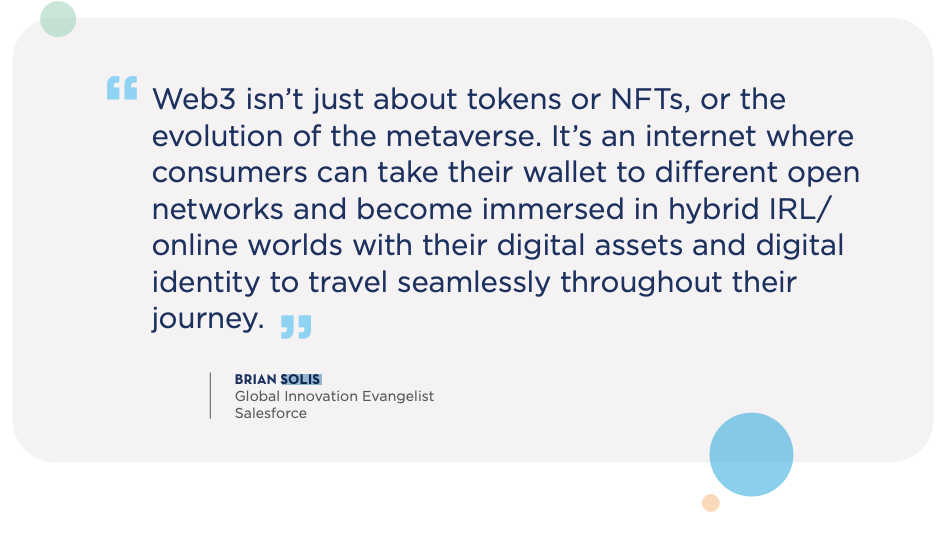
“Much of what you’re seeing today is actually Web 2.0 using the blockchain,” notes Brian Solis, global innovation evangelist with Salesforce. Blockchain technology enables many of the current and future components of Web3, from metaverses to DAOs and dApps.
Solis notes the importance of this distinction for marketers, “With Web3, we have an opportunity to change the hierarchy of how we view brand and customer—to shift from consumer to community.”
New ways of thinking…
“In a decentralized world, brands have to think experientially and also ‘immersively,'” advises Solis. “This calls for a shift into two areas beyond brand design: relationship design and experience design. Immersive experiences can only be imagined for a new web and have to be designed as such. We can’t take what used to exist and put it in an entirely new world and expect it to ‘work.’”
You can download The CMO Club Web3 Playbook here.
The post The CMO’s Guide to Understanding the Future of Brands, Consumers, and Community in a Web3 World appeared first on Brian Solis.
August 4, 2022
Seth Godin and Brian Solis Discuss How to Make Your Brand More Trustworthy

Savvas Stavrinos, pexels.com
by Ari Bendersky for Salesforce 360
A key to building more trust with customers? Be more human.
Marketing guru Seth Godin and Salesforce vice president and global innovation evangelist Brian Solis offer their take on how to build customer trust.
For many companies, being seen as trustworthy by customers is an ultimate goal. But what does it really mean to have trust and build trust with customers?
In a recent conversation on the Blazing Trails podcast, marketing guru Seth Godin and Salesforce vice president and global innovation evangelist Brian Solis discussed the issues around trust and how companies can get to know their customers better.
A main theme? Just be human.
That was a finding in Salesforce’s fifth edition of the State of the Connected Customer, a global survey of nearly 17,000 consumers and business buyers across 29 countries. Solis said 71% of consumers who responded to the survey said they switched brands at least once this year.
“If you ask them what was the most important thing they wanted to see from brand engagement, it was communicating honestly and transparently,” Solis said. “Another thing that was on the list was: treat me as a person, not a number.”
If you’re thinking about how your business can do more of that, here are a few places to start.
Create experiences to build better trustDuring the pandemic, people have had more time to think about what makes them happy. This created an opportunity for businesses to focus on relationships and build better experiences — not just promote a product or service.
“Experiences should have been a priority all along,” Solis said. “When we think about the word experience, what we’re really saying is people want to feel better as they engage with you. They want to leave that encounter with the sense of being valued or that their time was respected, or that their expectations were met or that businesses exceeded those expectations.”
When customers have a great experience and feel valued by the brand, they will return. But if they have a negative experience? People will walk away quickly. And if the experience is just mediocre, you may be forgotten.
“Clearly, the advantage is on building relationships with customers like you would with anybody else, making them feel better for it,” Solis said.
Make things personal, not personalizedMany companies have gotten better over the years at segmenting customers by demographics and data points. But all of that information hasn’t necessarily led to experiences in which customers feel like those companies truly know them.
“No one wants anything to be personalized,” Godin said. “They want it to be personal, and those are two totally different things.”
Companies that are more successful at getting personal not only have a 360-degree view of their customers. They also use that view with a focus on actually benefiting the customer.
“What we’re doing as marketers is spending all this time de-anonymizing people, and snooping on them and cookie-ing them, and then only using that information to help them, not to help the customer,” Godin said. “What we have to do instead is say, ‘What’s the story this person wants to tell themselves, and how do we become appropriately personal with them, with their permission?’ As opposed to saying, ‘What’s the easy, systemic, database-driven solution, so I can get this over with and go back to what I was doing yesterday?’”
State your values — and actually live by themThe State of the Connected Consumer report showed 66% of customers said they stopped doing business with the companies whose values didn’t align with theirs, up from 62% the previous year. That’s just the latest sign of the importance of not only communicating the values of your business, but also acting in a way that gives those stated values real credibility with customers.
“Some corporations have gotten good at telling stories and presenting a front to consumers that they’re living their values, but many corporations, particularly public ones, feel trapped and have no choice but to cut corners thinking that is their job,” Godin said.
If you’re not living by your values as a company, you can lose customers to competitors that do. While every employee can play a role in this, it often starts at the executive level.
“What I would say to the board, to the CEO, to the hangers-on, to anybody, is, ‘Who do we want to be like? Who is our role model here? Who came before us, or who is standing near us, that is doing it right?’” Godin said.
Listen to the full podcast episode here.
The post Seth Godin and Brian Solis Discuss How to Make Your Brand More Trustworthy appeared first on Brian Solis.
August 3, 2022
The big questions brands should ask before they jump Into Web3, NFTs, and the Metaverse
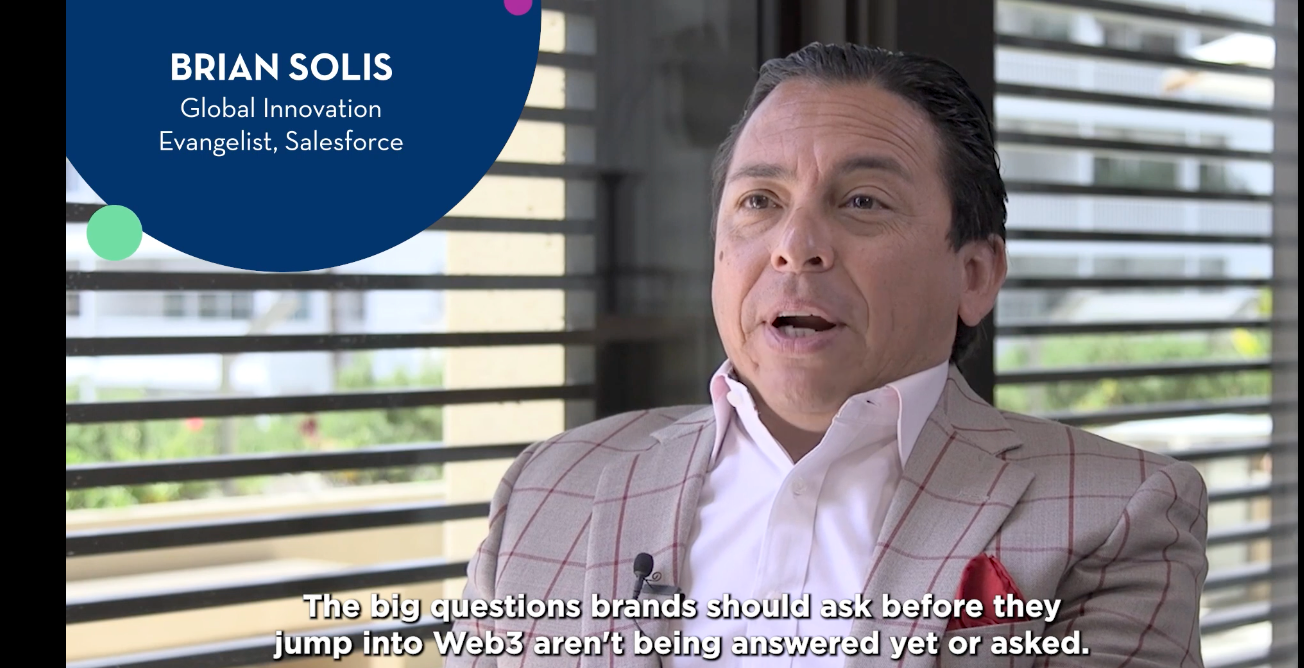
Video shot at The CMO Club Innovation Forum in West Hollywood, Calif.
If you’re given the choice between being a consumer or a stakeholder of your favorite brand…, which would you choose?
This is an important consideration for brands in the next web.
Oftentimes brands and businesses in general think transactionally.
Since the pandemic the digital transformation led to the digitalization of a lot of touchpoints in a customer journey.
But if you think about that, where’re digitalizing the analog process in a sort of catch up and offer touchpoints that consumers expect.
That’s not innovation, that’s iteration. Innovation is creating a new value: even before we get to Web3 we have to think about value.
What does the evolving consumer value? And what does the consumer not know to value so we can deliver the value to them and they’ll love it when they see it?
That’s really about experience and Web3 isn’t just about tokens or NFTs or this evolution of the metaverse, each of these decentralized platforms offer the ability to create immersive, hybrid, IRL/online experiences.
Think of an internet where you take your wallet to different open networks where you’re immersed in worlds where your digital assets and you as an individual travel seamlessly.
Brands will have to catch you and so that means that they can’t just think transactionally they’re gonna have to think experientially. This shifts in the two areas that are important for brands, beyond brand design.
We have to think about relationship design in the decentralized world and also experience design.
Those experience can only be imagined, we can’t take what used to exist and take it into an entirely new world.
That’s why I’m excited about the future.
The post The big questions brands should ask before they jump Into Web3, NFTs, and the Metaverse appeared first on Brian Solis.
August 1, 2022
Beyond the Hype of Web3: Delivering Utility, Value And Community in the Next Web
Photo by fabio on Unsplash
Originally published in Forbes
My dear friends Chris Heuer and Kristie Wells asked me to open Web 3.1 , a new unconference series they founded. The goal of the event was to explore ways to deliver the promise of web3. This article is inspired by the research that went into my presentation and the conversations that followed. You can watch the presentation here .
Since October 2021, Google Trends data shows that “web3” as a search term started to take off. The same is true for “NFT” and “metaverse.” And with all of the hype amplifying the web3 ecosystem, the divide between its current state and its potential will only widen before it begins to close. It means that progress lies ahead. But to close the gap requires vision, utility, value, and execution toward innovative possibilities and solutions.
This is about leading web3 technologies such as NFTs, blockchain, cryptocurrencies, smart contracts, DAOs, dApps, wallets, the metaverse, and trustless networks to a decentralized future that benefits everyone. Hype and failure are part of the path toward disruption. Think “dot bomb” in Web 1.0 before mainstream successes like Amazon, eBay, Slashdot, and Craigslist demonstrated value and scale.
Right now, much of what we see defined as web3 is actually similar to the principles of Web 2.0, with centralized applications, servers, and platforms tied to blockchain transactions. Centralization has its upsides. But data ownership and portability is where the future starts to really take shape. Like 5G, and the various frequency bands before it, the foundation is set before mass market killer apps are built upon it.
The Really Early State of web3There will be success stories in this initial phase of excitement of web3, but it will also set the stage for greater utility, access, and maturity. Gartner refers to this current state in its Hype Cycle framework as somewhere between the “Innovation Trigger” and the “Peak of Inflated Expectations.” Once web3 interest wanes as experiments and implementations fail to deliver or lose luster among the first wave of early adopters, we’ll then hit the “Trough of Disillusionment.” Following that, we’ll evolve into a “Slope of Enlightenment,” which reflects evolutions in web3 application development, more promising company charters, and more important industry and market benefits. Then mainstream adoption starts to take off in what represents, the “Plateau of Productivity.”
We’re just at the beginning when it comes to web3. Where we are isn’t yet where we need to be. As a longtime digital analyst and anthropologist who has studied tech milestones in and around Web 1.0, Web 2.0, and now Web 3.0, digital trends will ultimately affect how people shape markets. And it will evolve with each major iteration and innovation of technology progress.

The Gartner Hype Cycle
Getting Stuck in the Current Chapter of web3In 2021, investors poured a record $30 billion into crypto, more than the previous years combined. That same year, nearly $41 billion worth of cryptocurrency fueled the NFT market. Cryptocurrencies added 1.5 trillion in value heading into 2022.
The promise of web3 is more than the next big drop in trendy NFTs, a new alt-coin that will shoot to the moon with 1000% returns, and exclusive clout or elite clubs. Yet, as of this writing, .1% of Bitcoin miners are responsible for half of the mining output. The top 2% of accounts own 95% of the $800 billion supply of Bitcoin. The top 9% of web3 accounts hold 80% of the $41 billion market value of NFTs. And, browsing through the Forbes list of cryptocurrency billionaires, it’s problematic not to consider this early chapter of web3 as more elite than community driven.
There’s a saying, “what comes easy, won’t last. What lasts, won’t come easy.”
While this early incarnation of web3 is indeed exciting, it’s also exposing weaknesses such as NFT and crypto thefts, plagiarism and fakes, as well as exclusivity and elitism. But hey, this is a gold rush as Signal founder Moxie Marlinspike observed. The “beautiful” future of this chapter of the internet is currently in competition with those chasing money and clout, just like the early days of Web 1.0 and Web 2.0.
For example, losses from crypto scams this last year totaled $14 billion. As I was writing this, hackers stole over $600 million of NFTs from Ronin Network, the underlying blockchain that powers Axie Infinity. NFT copying is, also as of now, rampant. Marketplaces such as OpenSea and Rarible don’t yet have the security infrastructure
to alert artists that their creations are being copied, minted, and resold. The blockchain doesn’t verify that a person minting an NFT has the asset rights, so it’s really up to platforms to help protect owners and buyers. According to OpenSea’s research of its own marketplace in January 2022, over 80% of the NFTs listed were plagiarized art, fraudulent collections, or spam. There are cases where OpenSea has stepped in however. This makes it difficult, if not impossible, for artists to even know when copying is happening, let alone have a clear and consistent path to do something about it.
There’s also the issue of sustainability. Crypto mining consumes more energy than some small countries. The Cambridge Bitcoin Electricity Consumption Index reportedthat some miners purchased or built power plant plants dedicated to mining. As of now, only about 12% of mining energy comes from renewables. There are opportunities to invest in innovation that reduces the carbon footprint in every blockchain transaction.
The Next Chapter of web3If South Park is already tackling NFTs, then that means we have a lot of work to do. As a hopeless optimist, however, I want to envision and build a more decentralized technology ecosystem that contributes to the “slope of enlightenment,” beyond the hype. We must move beyond the dark side of social media and the elitism of big tech (and early web3). We must explore data democratization and ownership among internet users and communities. We must empower users with a new class of autonomy through wallets, soulbound identity portability, and dynamic communities. We must foster a more equitable and sustainable society and a better world for all.
I get that this sounds Pollyannaish.
Like every iteration of the web, the promise of web3 lies in what we decide we’re going to do differently together moving forward. As the Web3.1 event spotlighted, the point is people.
If this is about people, then the opportunity for innovation lies in what my colleague Henry King and I define as relationship transformation: it’s the “why” of technology, reimagining web3’s trajectory to design concepts, inventions, and businesses around user relationships, those between companies and assets and people, and also between people and communities. With relationship transformation, we can define how we use decentralized and trustless technologies to create new asset classes and productive, collaborative communities and platforms that turn users and consumers into stakeholders and owners.
We can reimagine every industry from finance and insurance to healthcare and education to gaming, media, and music to accounting and legal to politics and governance to royalties and loyalty programs to software and technology to retail, marketplaces, and consumer goods and everything in between.
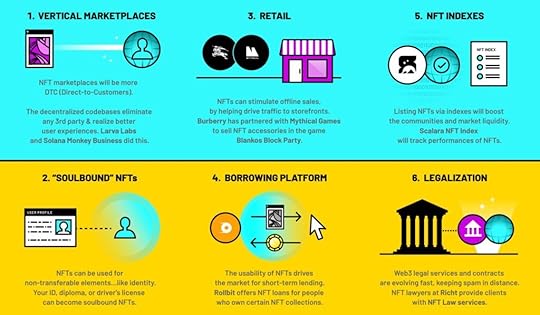
18 NFT predictions by Chris Cantino
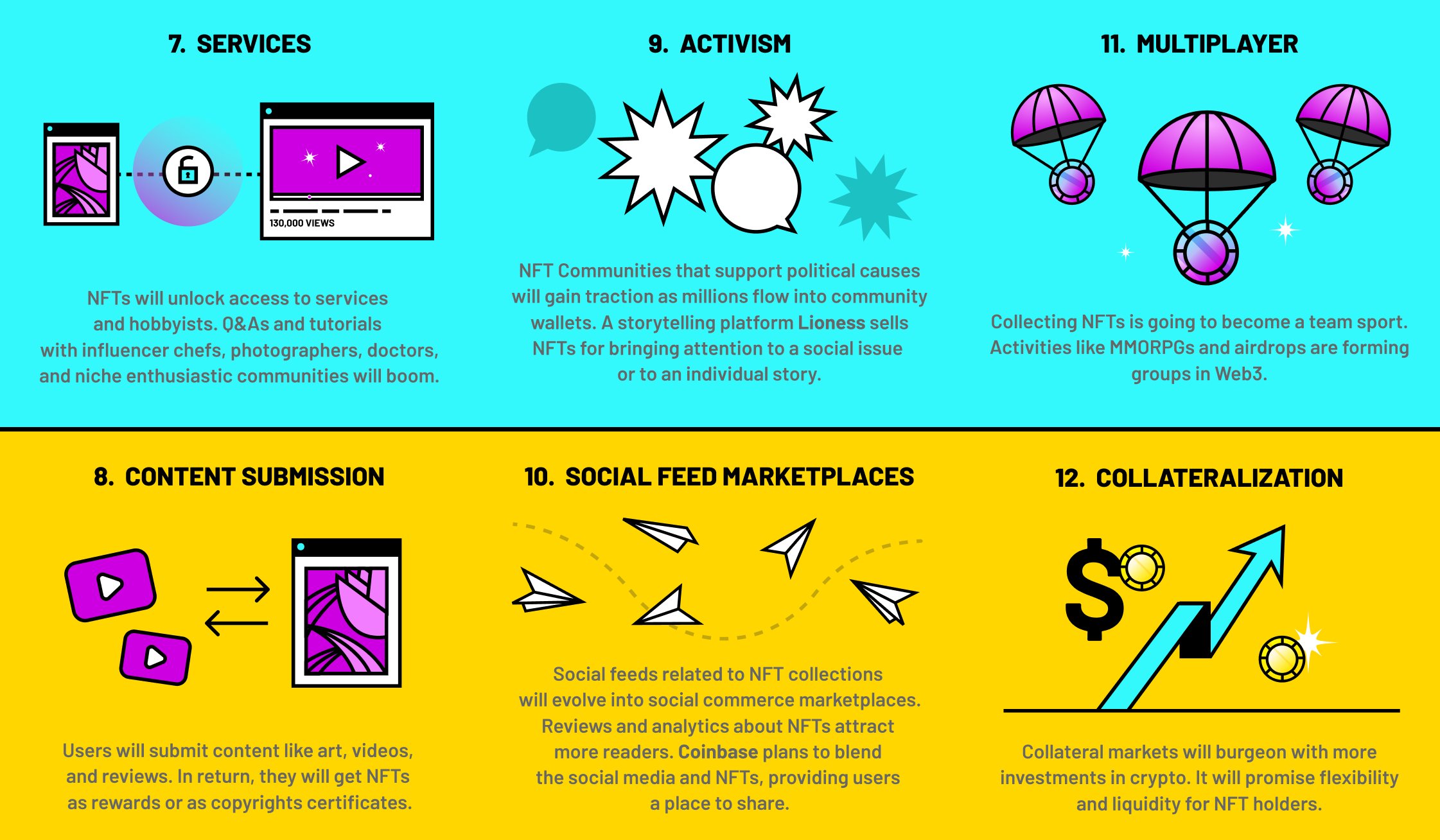
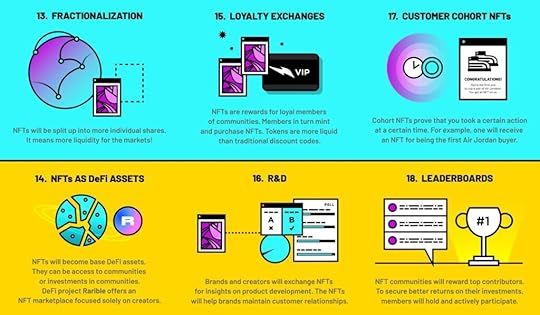
Therein lies the vast opportunity: we get to create the future. We get to define not only the trajectory that we’re on but an entirely new trajectory altogether. We’re not just striving to avoid web3’s equivalent of Web 1.0’s dot bomb phase, or the ethics failure and data conundrum of Web 2.0 to get us through the hype cycle. We’re striving for an alternate path that gives web3 utility and meaning, one that builds an equitable community and offers a more sustainable impact while giving access, power, autonomy, and portability to users.
Remember, community is so much more than belonging to something; it’s about doing something together that makes belonging matter. As Chris Cantino, founding partner in Color Capital, recently observed, you can extract utility, or you can create it.
The post Beyond the Hype of Web3: Delivering Utility, Value And Community in the Next Web appeared first on Brian Solis.
July 25, 2022
The Top 75 Speakers to Watch Today
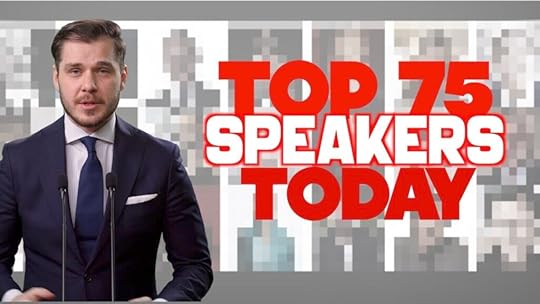
It’s a long list, but Brian Solis made the cut.
Via Motivator Music
You know the moment: You’re browsing through the Internet looking for inspiration until you run into a piece of golden content that gives you life. Someone on this list likely posted that content. It’s hard to maintain momentum without a daily dose of inspiration. When a speaker said, “Motivation is like bathing, it is recommend daily” that hit me.
Brian SolisBrian Solis is a modern day genius that has been trailblazing in the speaking business for years. We won’t know his true value until years from now but I have enough foresight to tell you to tell him you appreciate him today.
Click here for the full list.
The post The Top 75 Speakers to Watch Today appeared first on Brian Solis.
July 21, 2022
The Future of Work: Building a Mindset that Embraces Innovation
via Formstack
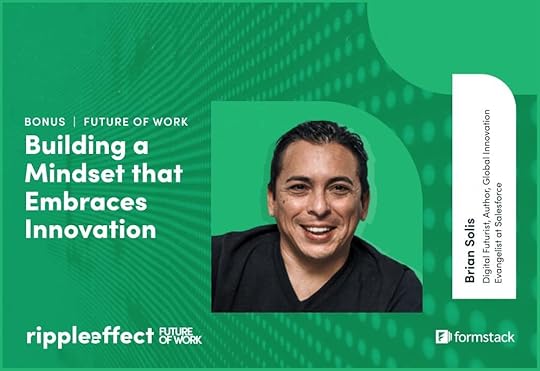
PODCAST Future of Work: Building a Mindset that Embraces Innovation with Brian SolisWhat’s the difference between innovation, iteration, and disruption? We brought digital futurist Brian Solis on to this episode to explain. The author and Salesforce Global Innovation Evangelist provides insights into how these topics are distinctly different yet interconnected. Brian breaks down how any organization—regardless of size, industry, or notoriety—can harness innovation through a simple shift in mindset. In less than 30 minutes, he shares ways to not only unlock genius at the workplace, but within yourself as well.
Episode HighlightsShift your mindset
You must overcome preconceived notions, challenge habits, and break rules to truly innovate.
Incentivize new ways of thinking
If employees don’t feel encouraged to explore new ideas, they’ll never think outside the box.
Practice creativity
You can improve your problem-solving and become more innovative by taking time to develop your creative skills.
Meet our guest
Brian Solis is VP, Global Innovation Evangelist at Salesforce. He’s an eight-time best-selling author, international keynote speaker, and digital anthropologist. Forbes has called him “one of the more creative and brilliant business minds of our time.” For more 20 years, he has studied Digital Darwinism to understand the impact of disruption on businesses, markets, and society. In his work, he humanizes technologies and trends to help leaders gain new perspectives and inspiration for the future. He has published more than 60 research papers on the future of technology and business trends, and he actively shares his work in industry-leading publications, including Forbes, ZDNet, CIO, eWeek, Fast Company, and Adweek.
Episode TranscriptBrian Solis: Innovation isn’t any one thing, but what it is consistently is new. It’s new value, it’s original ideas that carry new value.
Lindsay McGuire: I’m Lindsay McGuire, and we wanna change the narrative around the future of work. It’s not about adapting. It’s not about changing. It’s about creating the future of work that works for your organization. So let’s create it together. This is future of work, a Ripple ?Effect subseries from Formstack. What is the difference between innovation iteration and disruption? Did you know there was one, I don’t think I did. According to this episode’s guest, there are some pretty important differences between the three, but they all build upon each other. Brian Solis is a futurist and global innovation evangelist at Salesforce to round out our future of work. Subies he’s joining us to talk about how companies can embrace innovation, iteration and disruption. Here’s Brian talking about what being a futurist means to him and how it’s affected his work.
Brian Solis: I’m a practicing futurist. I’m also a digital anthropologist, which means that I study how technology affects markets, societies, behaviors in a variety of contexts. So oftentimes for example, it’s businesses wanting to understand how their customers are evolving how they make decisions, what are their values and norms and aspirations, and then sort of reverse engineer those things so that a company can devise a more meaningful engagement relationship, strategy, experience, strategy, how, how to use technology to bring those experiences to life. And then the Fust part is really more about scenario planning. So understanding those data points and understanding trends, you play out in a series of likely scenarios, what could happen? You know, what if this, or what if that, and you plan for those scenarios so that you can devise business strategies or investments that are going to be wise or prudence should any of those scenarios be likely, but more so the, the skill and the exercise of going through that, that process helps you become more aware, more empathetic, more mindful about all of the things that you don’t normally think about. And it helps you to be more prepared as a leader to essentially act outside of your own comfort zones and build the business. That’s gonna be more resilient and hopefully more agile and more lasting and relevant.
Lindsay McGuire: Yeah, it almost sounds like every organization needs a futurist, even someone with the tile futurist. I think that would be super helpful.
Brian Solis: It surprises me. It doesn’t, it doesn’t hurt. You know, I wrote an article recently that talked about why AI black boxes should also have a, a, a role in the C-suite essentially becoming an AI future, which is, you know, we have access to so much data. And once you become a data company, once you, once you develop an integrated data system and the ability to extract insights across the entire organization in real time, AI can be developed to not only understand, but start to predict and even play out these scenarios, not like a human being would, but it doesn’t hurt to constantly be thinking about this and build an infrastructure and have this, you know, quote unquote role for these types of conversations in the C-suite all the time, because, you know, no one saw pandemic coming, but some companies were actually prepared for global disruption and it’s not going to be the last disruption that happens.
Lindsay McGuire: Yeah. And when you talk about someone having this role at, at the C-suite, obviously what would play into that is talking a lot about innovation. So I really wanna talk about the impact of innovation on society as a whole. So what do you see happening right now on a broader scope with a focus on innovation?
Brian Solis: Well, let’s first kind of describe or define what innovation is. Oftentimes we talk about innovation and we’ll think about technology, or we’ll think about companies like apple or Tesla innovation isn’t any one thing, but what it is consistently is new, it’s new value, it’s original ideas that carry new value it’s products or services or technologies that unlock or create new value. Oftentimes when I work with companies or executives, or just EV you know, anyone in general, we’ll get confused with just something new, not necessarily creating new value as innovative. And so we might introduce it to our business, our business process, our operations, and if it doesn’t create net new value, but it does make something better, faster, more, scalable, more efficient that’s iteration. And it’s not a bad thing it’s just different. And so I, I call that difference out because when I’m working with companies, for example embedding AI or automation, they’ll say that it’s innovative because it’s new to them, but it isn’t necessarily creating new value because we’re taking for example, legacy or analog processes and digitizing them and automating them.
Brian Solis: But innovation is so important because what it does is it sort of forces this exercise of understanding, you know, what are the trends happening in the world? What are the new technologies coming out? What are the new behaviors that are evolving and where can we create net new business value? Where can we innovate? What can we do? That’s new, that’s going to change the game because the more you do that, the more you can be disruptive because disruption is defined as doing these new things that make the old things obsolete. And that’s what makes innovation so important. And in times of disruption, we also see times of great invention where people are pushed or inspired or driven to finally develop that new thing, that they didn’t necessarily have that fire or that passion to do before. But now, you know, under pressure, magical things happen.
Lindsay McGuire: What have some of the most innovative companies done? How do they look at innovation? Talk about innovation differently.
Brian Solis: Everybody talks about innovation with their sort of understanding of what they think innovation is going back to the last conversation. But let’s just say that innovation starts with the mindset. I call this sort of a prelude to innovation, which is understanding that within you, you get to decide what is the role you wanna play in any of this? Right? So for example, when we talk about something like innovation, we think it’s for somebody else, or we look to bring experts in to help guide us with innovation, or we’ll bring experts in to lead us through a workshop where we could practice design thinking, or explore creativity and all of these things, all of these things are good. But first we have to challenge ourselves with realizing that the way that we see problems today is applying our existing mindsets and our existing biases to something which is not bad.
Brian Solis: But what it means is when we apply it to an existing problem or an existing opportunity, we’re probably gonna fall into that cycle of iteration, just because of the nature of our work. If you think about companies in general, companies are designed to be horrible at innovation. And I know that sounds weird, but organizations are really designed to execute, to take what they’re good at and make it more efficient, more scalable to constantly renew it and find new ways to grow profitability from it. But innovation asks you to essentially break the rules that you were taught to follow, to break the processes that make you inherently good at what you do to innovate is to go against the very nature and structure of what makes the organization work so well. So that mindset, that prelude to innovation, that challenging of your own conventions and that learning of new skill sets and that unlearning of existing mindsets and processes and standards is how we get to move into a new direction and why it’s so important for things like creativity and empathy to be in our everyday lives, because it essentially pushes you out of your own comfort zone to see the world in ways you couldn’t see it before.
Lindsay McGuire: That is a very powerful statement, but I also think it can probably scare a lot of people and organizations, especially for ones who might be a little bit more quote, unquote traditional, or haven’t maybe focused on their own interpretation of innovation. So how might these organizations that fit into this more traditional setup start thinking about innovation and how they even can start approaching that topic.
Brian Solis: Everybody should invest in innovation. It’s the only way to constantly survive and thrive. This is a conversation. This preload to innovation that I really believe is a conversation that we have to have with ourselves. And to recognize that it, as hard as it is, innovation probably begins with humility. We tend to have everything working against us when we come to this conversation in that we’re successful, oftentimes in what we do, we’ve earned our position in whatever organization we’re in and we’ve been rewarded for, for how we’ve gotten to where we are today. And so to move towards innovation, which is to unlock new value when we haven’t gone through that personal transformation really is going to create that common series of challenges, which you don’t really bring out the best of people because you’re keeping that exercise within an existing hierarchy. For example, it’s like that old saying, let’s think outside the box.
Brian Solis: Well, if we haven’t changed the rules, if we haven’t changed incentivization and motivation, if we haven’t made it a very safe place, if we haven’t even said, we’re gonna reward ideas, even if they don’t work out, then we’ve just moved you from one box to another box. And that emphasis around personal transformation and recognizing that, you know, we’re all biased. Everything we’ve done up until this point is actually working against this opportunity to see a new solution or to solve a problem in a new way. But that also is its power. That’s, its super power is practicing things like creativity and empathy, investing in emotional intelligence, not only make you a better leader, but also a better human being and in life. And I, I think about one of my idols, sir, Ken Robinson may rest in peace. He, he said you know, a creative leader is someone who brings to life, the ideas, the creative ideas of, of other people, where they feel empowered to contribute and that they feel like they play a role in innovation or whatever’s new to the organization. And that, that changes the dynamics of, of leadership and the organization itself. It sort of flattens it if you will. And that’s a pretty powerful transformation, not just personally, but ultimately within the organization where the culture is empowering people that HR and incentives are empowering people to try and, and do new things. But this is essentially a new type of leadership versus the type of management that we see so often today.
Lindsay McGuire: And it also sounds like innovation truly begins with humans first versus I think how we might traditionally think about it with innovation stemming from tech.
Brian Solis: Yeah. Tech is, it’s like a wand you know, you, we, you, you wield it in whatever way you feel is going to create for you what you envision or what you want. And technology’s an enabler. It’s not the, the solution. It’s not the end in of itself. And even though technology in its own way is innovative. It’s how we use it. So for example, let’s look at the last 20 years of something I’ve studied quite a bit, which has been the mobile revolution, social media, the sharing economy now in, in an era of web three, you know, every one of those has been both iterative and innovative in terms of those technology revolutions, the technologies that power them have been iterative and innovative, but not all of them have been positive. Right? So for example, look at social media, Instagram, Snapchat, TikTok, you know, I’ve done extensive research that shows just how bad they are for human beings, what they do to children, what they do to a woman’s definition of beauty what it does to confidence, what it does to your brain and, and how it makes decisions or how it focuses or doesn’t focus what that does to your health and wellness over time.
Brian Solis: But originally they were a lotted this innovative and they can be, but it’s also in how we apply them and how we take these incredible opportunities to then reimagine their use for a more productive and beneficial world. So that ability to see that though would mean that mind has to be constantly open and optimistic and also not rooted in the ways that you believe that that is a new convention or that is a new standard, or that is the way that it’s supposed to be done.
Lindsay McGuire: Another thing you brought up too, was talking about how disruption has an impact on innovation. Can you talk a little bit about how those two pieces relate to each other?
Brian Solis: Absolutely. So let’s kind of back up again. So recapping, so iteration is doing new things. Innovation is doing new things that create new value and disruption is doing those new things that make the old things obsolete with innovation to scale then brings about that mass momentum, where everyone doing the same thing all at once creates that disruption where that new thing is the standard for whatever it is. So for example, when Uber launched, it was initially called Uber cab and it was a way of getting black car services, using an app at a better price than what, what it might have cost to book it through a limo booking company, for example, and that was iterative and innovative. But when they opened the gates to everyone could be a driver and launched Uber X on the platform that not only became innovative, but it brought the masses to something new with such great momentum that it became a standard. And for many people, it was very difficult to go back to using public transportation or traditional taxi services, just because of that empowerment changed the dynamics of how they made decisions. And so that’s disruption where it became new to the point that something before it was now obsolete,
Lindsay McGuire: How can people focus more on breaking out these habits to be more innovative?
Brian Solis: Innovation is a discipline. And I believe it starts more with this practice of creativity. I think the common notion is that to be creative, you have to be inherently talented or gifted and to be innovative, you it’s the same thing. You have to be Elon Musker or Steve jobs. But if you think about innovation with a small eye and creativity with a small sea, just the exercises of trying to be creative, the exercises of applying existing methodologies to be innovative, like ID, for example, has public facing free stuff of which you could practice on both creativity and, and innovation. What they do is they have a way of actually rewiring you. My last book’s called life scale, and it focuses on how digital living a digital life like Snapchat, TikTok, you know, et cetera, text messages, how they have a way of over time, rewiring your brain for distractions, and it teaches you to multitask.
Brian Solis: And it teaches you to jump from here to here. And we, we think of that as a superpower, but ultimately that rewiring strips you out of things, of focus or the ability to connect the flow or the ability to, to stoke your own originality. And those things are inherently part of creativity and going through these creative exercises where you’re rewiring your brain to be more present, to be more mindful, to solve a problem differently to see an opportunity differently over time, just these, these exercises help you show up differently. It actually changes the, the level and the depth or the caliber of the ideas you might have. It makes you more open to other things too, like optimism and empathy. And these are all positive things to move you in towards the practice of innovation. Now, from there, if you want to be innovative in a field, that’s where a particular discipline starts, but that prelude to innovation is really about how do you change your routines to make time for creativity to make time for introspection and expression. How do you make time to sharpen your EQ or your emotional intelligence? And you’ll find that not only in your work, but actually in every aspect of your life, you wind up being happier. You, you wind up being more mindful. You actually are in that process, practicing more wellness. And so the benefits aren’t just innovation towards your organization, but also towards your livelihood,
Lindsay McGuire: Who knew a conversation around innovation would lead us to talking about having a better EQ and, and being just better, I think, able to approach anything in life. So I love that. What is one common belief you think people have about innovation that is just completely wrong,
Brian Solis: That it’s inherently tied to technology like artificial intelligence, for example, so many companies I work with are deploying AI, using existing models to do old things, using new technologies. I think that’s the most common misinterpretation of innovation. Another one is that because you have an idea or because you have a startup that you might be innovative as well, but remember that when innovation creates new value, the irony of innovation is that to scale that idea and that new value is also powered by growth and that growth and what you build and how you organize around that growth is ultimately what creates a company that gets bat at innovation over time, keeping that dynamic or some, some aspects of the organization like apple does, or like Tesla does. That’s dedicated to creating that new value outside of the day to day operations that keeps you sharpened and focused on innovation and not everything’s gonna work out. But the last thing is that just because things don’t work out doesn’t mean it wasn’t innovative either. And that practice and that belief that you take those learnings and you apply it to the next thing you do that is innovation. Whereas some see that as failure.
Lindsay McGuire: I love that you bring up kind of the balancing act there because you can’t be full fledged on one side of the coin. You need to have that balance to be able to achieve both things successfully. And so I wanna wrap up our conversation with one question. I ask all of my guests this season, and that is when you think about the future of work, what do you think? What comes to mind?
Brian Solis: I just wrote this piece for Forbes. It’s called the great digital divide. And it talks about how the great resignation is actually just a precursor to this great digital divide. We had some new research come out at Salesforce that showed that 76% of employees feel like they do not have the skills to thrive in a digital first world. That I think it’s about 55% say that they feel like technology’s going to outpace their ability to keep up with new technologies. And oftentimes when we think about the future of work, we think about the workforce and we think about training skilling, reskilling. We think about education. We think about tools, technologies, collaborative technologies, devices, but we don’t often put leadership in the spotlight or the hot seat. I should say. Essentially, every leader that existed before the pandemic in their roles is technically not qualified to lead an organization in a digital first world, because they don’t technically have experience for it unless you are a digital first or a mobile first company to begin with.
Brian Solis: So leadership also has to go through all of those very same things to be part of the future of work. So the future of work is going to actually have to start with leadership as well. And then leadership will need to reimagine all things from human resources to culture, to employee experience and employee engagement and to the overall hierarchy and operations of a company. And that said with that though, come some very exciting things on the technology side for the future of work, where augmented reality, mixed reality, virtual reality, the metaverse all kinds of very cool technologies are going to make work both more fun and also more complicated in that you’ll have to learn new things to do new things, but that’s also part of the excitement, which is why we need a more empathetic genre of leadership so that people feel like, you know, they’re not gonna lose their jobs. They’re not gonna get outdated. They’re not gonna be replaced by robots and AI. If we have people rooting for them.
Lindsay McGuire: Thank you so much, Brian, for joining us today. If our listeners want to dig into more about what you think about the future of work and your work as a futurist, where can they find you?
Brian Solis: Well, they can find me at briansois.com or @BrianSolis pretty much across the social web. And I look forward to hearing from you.
Lindsay McGuire: I don’t know about you, but I had never even known futurists could be a job title. I think it’s really great that Brian could join us today to discuss more about this. I would love my son to someday think about being a futurist himself. And I’m glad we’re having this conversation to dig more into what that means and how can impact the future work for organizations. One thing Brian brought up that really hit home for me was that the digital transformation divide is real form. Sack release a report on this exact topic just a few years ago. I’m so glad we got a touch on this briefly at the end of our conversation. Brian talks about the digital divide in a way I think every organization should be thinking about it. There’s a huge urgency to fix this digital divide because it’s causing mayhem and organizations.
We’re talking technical delays, lengthy approval processes, bottlenecks, you name it. You can implement new tech, all you want, but the change has to start with the people. If your leaders aren’t digitally agile, you’ll lose to the digital divide. I think the most important thing Brian made clear in this episode is that iteration, disruption and innovation are all different, but yet they’re all important and they all work together, but they are different from each other.
I think Brian sums it up so perfectly. So I’m just gonna restate his definitions. Iteration is doing new things. Innovation is doing new things that create new value. Disruption is doing those new things that make old things obsolete. I can’t think of a more perfect way to end our future work. Subseries I encourage you to take some time now to think about how your organization can be innovative, iterative and disruptive.
I’m so thrilled that we were able to talk to Brian Jeanie and drew over the course of these past few weeks. I hope you feel more prepared than ever to create your own future of work. If you want an inside, look at how people are reimagining their world of work and making an impact, head over to formstack.com/practically-genius.
Thank you so much for joining us for the future of work, a subseries of ripple effect. Don’t go too far. We’ll be back on the feed soon with more.
The post The Future of Work: Building a Mindset that Embraces Innovation appeared first on Brian Solis.


