
Brian Solis's Blog, page 30
March 28, 2022
The Escalating Dilemma of Executive Out-of-Touchness

A few years ago, my dear friend Stowe Boyd reached out to ask an important question in regards to future of work and business transformation. His goal was to cast the light directly on the (r)evolution lead by those who want change within the organization and also expose (and inspire) those who don’t. It’s a subject I’ve extensively studied over the years. In fact, I recently published “The Digital Change Agent’s Manifesto” to help those fighting for change learn the art and science of human transformation. I wanted to share his question and my thoughts with you here. I hope it helps you!
Stowe Boyd: All of us — even those with the best perception — are always somewhat out of touch with the exact state of the world we live in. However, during times of great change, the degree of out-of-touchness across a company can grow significantly. Leaders who spend their time with senior staff, working on future-leaning initiatives, and attempting to accelerate adaptation to change may become out of phase with the perceptions of front line and more junior staff.
I’m looking for reflections on the core idea: the degree that companies can tolerate less than total alignment on goals and tactics. To what extent is it possible, beneficial, or desirable? When does creative and fruitful dissent become rebellion or anarchy?
Laggard Executives Put the Fun in Dysfunctional Business CultureCulture doesn’t eat strategy for breakfast, culture is the strategy.
Cognitive and philosophical dissonance exists in every institution at every level. Even orchestras don’t always communicate or agree in partisan yet operationally, they perform to high standards. In its own functionally dysfunctional way, people still work toward independent or collective goals that work in the short-term.
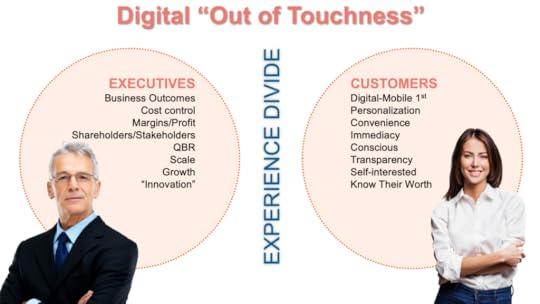
As the old prophecy goes, “may you live in interesting times.” It’s hard for anyone these days to argue that we don’t live in times where interesting barely describes the state of the world. One slice of this current reality is that we are witnessing the breakneck evolution of technology and society. I refer to this as digital Darwinism, where not only are times changing, but so are markets, human behaviors, values, preferences, etc. The question is however, to what extent does dissonance affect operational performance and potential in an era of digital Darwinism. If technology and society evolve, do businesses operate in unison enough to progress or does fractured or even divergent communication, purpose and efforts slow or completely hinder competition?
I think what we are witnessing in the disruption of businesses, governments and societies around the world makes the case for why organizations need to elevate the humanities to the C-Suite. What worked in the past was a function of the past. Digital Darwinism possesses no prejudice. You either adapt or you don’t. Because many executives are caught in either a state of future shock and/or are so caught up with delivering shareholder or stakeholder value quarter-to-quarter, the ability to lead digital transformation or innovation is constrained as a function of everyday out-of-touchness. But that’s still not an excuse. Times, tastes and behaviors change. Ignorance plus arrogance can only equate to irrelevance.
What we’re really talking about is not just functional dissonance but the need for real change and evolution in mindset and beliefs to survive and thrive. We all can attest that the need for change is easier to dismiss than it is to embrace. It’s only natural for people to only want to see a convenient lie over an inconvenient truth. But all things in time come to a head. It’s a matter of survival of the fitting.
Each of us do not see the world as it really is, we see it with us at the center of everything. Psychologists will show you every reason why organizations function but why many can’t excel in times of disruption. Whether it’s cognitive bias, validation, bias, frequency illusion, the lack of orchestrated harmony suffers from the lack of new vision, leadership and purpose in times of dramatic change and uncertainty.
Within every institution today, there are those who believe that new perspectives and ways are required to progress. Like digital illiteracy and lack of human empathy, dissent is rampant throughout the organization. Unfortunately, pseudo or full-blown ignorance is far more organized than those who do not believe in the current mission and resulting activities. But with structure comes strength and influence.
If you’re waiting for someone to tell you what to do, you’re on the wrong side of innovation. This is less about inspiring a resistance as it is about aligning people around a greater good for everyone inside and outside the organization. Like all great orchestras, evolution and even revolution need a conductor. Not everyone will see or agree on the need for change. But who see the need to fight for change are becoming increasingly inspired and resilient. Whether they succeed in their organization or not doesn’t matter. Darwinism will do what it always does. Dissonance either errs on the side of progress or regression. In either cases, it is the resilient who find a way to endure.
The Digital Change Agent’s Manifesto: How the People Behind Digital Transformation Lead Change From Within from Brian Solis
The post The Escalating Dilemma of Executive Out-of-Touchness appeared first on Brian Solis.


The Escalating Dilemma of Executive Out of Touchness
A few years ago, my dear friend Stowe Boyd reached out to ask an important question in regards to future of work and business transformation. His goal was to cast the light directly on the (r)evolution lead by those who want change within the organization and also expose (and inspire) those who don’t. It’s a subject I’ve extensively studied over the years. In fact, I recently published “The Digital Change Agent’s Manifesto” to help those fighting for change learn the art and science of human transformation. I wanted to share his question and my thoughts with you here. I hope it helps you!
Stowe Boyd: All of us — even those with the best perception — are always somewhat out of touch with the exact state of the world we live in. However, during times of great change, the degree of out-of-touchness across a company can grow significantly. Leaders who spend their time with senior staff, working on future-leaning initiatives, and attempting to accelerate adaptation to change may become out of phase with the perceptions of front line and more junior staff.
I’m looking for reflections on the core idea: the degree that companies can tolerate less than total alignment on goals and tactics. To what extent is it possible, beneficial, or desirable? When does creative and fruitful dissent become rebellion or anarchy?
Laggard Executives Put the Fun in Dysfunctional Business CultureCulture doesn’t eat strategy for breakfast, culture is the strategy.

Cognitive and philosophical dissonance exists in every institution at every level. Even orchestras don’t always communicate or agree in partisan yet operationally, they perform to high standards. In its own functionally dysfunctional way, people still work toward independent or collective goals that work in the short-term.
As the old prophecy goes, “may you live in interesting times.” It’s hard for anyone these days to argue that we don’t live in times where interesting barely describes the state of the world. One slice of this current reality is that we are witnessing the breakneck evolution of technology and society. I refer to this as digital Darwinism, where not only are times changing, but so are markets, human behaviors, values, preferences, etc. The question is however, to what extent does dissonance affect operational performance and potential in an era of digital Darwinism. If technology and society evolve, do businesses operate in unison enough to progress or does fractured or even divergent communication, purpose and efforts slow or completely hinder competition?
I think what we are witnessing in the disruption of businesses, governments and societies around the world makes the case for why organizations need to elevate the humanities to the C-Suite. What worked in the past was a function of the past. Digital Darwinism possesses no prejudice. You either adapt or you don’t. Because many executives are caught in either a state of future shock and/or are so caught up with delivering shareholder or stakeholder value quarter-to-quarter, the ability to lead digital transformation or innovation is constrained as a function of everyday out-of-touchness. But that’s still not an excuse. Times, tastes and behaviors change. Ignorance plus arrogance can only equate to irrelevance.
What we’re really talking about is not just functional dissonance but the need for real change and evolution in mindset and beliefs to survive and thrive. We all can attest that the need for change is easier to dismiss than it is to embrace. It’s only natural for people to only want to see a convenient lie over an inconvenient truth. But all things in time come to a head. It’s a matter of survival of the fitting.
Each of us do not see the world as it really is, we see it with us at the center of everything. Psychologists will show you every reason why organizations function but why many can’t excel in times of disruption. Whether it’s cognitive bias, validation, bias, frequency illusion, the lack of orchestrated harmony suffers from the lack of new vision, leadership and purpose in times of dramatic change and uncertainty.
Within every institution today, there are those who believe that new perspectives and ways are required to progress. Like digital illiteracy and lack of human empathy, dissent is rampant throughout the organization. Unfortunately, pseudo or full-blown ignorance is far more organized than those who do not believe in the current mission and resulting activities. But with structure comes strength and influence.
If you’re waiting for someone to tell you what to do, you’re on the wrong side of innovation. This is less about inspiring a resistance as it is about aligning people around a greater good for everyone inside and outside the organization. Like all great orchestras, evolution and even revolution need a conductor. Not everyone will see or agree on the need for change. But who see the need to fight for change are becoming increasingly inspired and resilient. Whether they succeed in their organization or not doesn’t matter. Darwinism will do what it always does. Dissonance either errs on the side of progress or regression. In either cases, it is the resilient who find a way to endure.
The Digital Change Agent’s Manifesto: How the People Behind Digital Transformation Lead Change From Within from Brian Solis
The post The Escalating Dilemma of Executive Out of Touchness appeared first on Brian Solis.
March 25, 2022
This mailing list is shutting down – Please subscribe here instead
Please resubscribe here.
I am turning off this feed because Google abandoned Feedburner support and I can no longer access the file.
Thank you for your support and I’ll see you in the new and improved list!
The post This mailing list is shutting down – Please subscribe here instead appeared first on Brian Solis.
March 23, 2022
Top Futurist Keynote Speaker Brian Solis – The Future Happens to Us or Because of Us
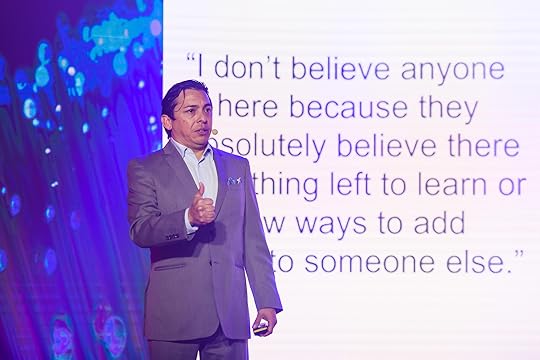
We’re living in a very disruptive time. Digital disruption is all around us. It’s happening to us and because of us.
So my message today is really about a choice. You have a choice as to what role you want to play in the future of the digital economy.
Do you want to shape it? Or do you want to be affected by it? It’s a matter of “adapt or die.”
All of the disruptive technology that’s happening in the post-pandemic world…ask yourself, how does that play out next year, in two years, or in 5, 10, 15 and 20 years from now?
Because you have to make decisions about that, especially since we don’t change overnight.
You play a role in defining the future. Those who react to it, will be left behind.
New Keynote Speaker Topics“Leaders must reassess how digital technologies and information can create new customer value. The alternative is to try to succeed in a digital economy with a pre-digital value proposition.” – Jeanne Ross, organizational theorist, principal research scientist at MIT Sloan School of Management, MIT Center for Information Systems Research
Welcome to the Novel Economy: Embracing a New Mindset for Leadership and Innovation.
Welcome to the Novel Economy, a time without precedence or a playbook for navigating disrupted and uncharted paths forward.
Novel means new and unusual and as such, we must reorganize for the next era of the economy and the role we want to play in it. This isn’t a “new normal” nor are we actually striving to the “next normal.” This is an interim normal. This is a once-in-a-lifetime event, our Ctrl-Alt-Del moment. Now’s the time to create the future we’ve always dreamed of. This is a time to learn and unlearn. The Novel Economy is yours to shape.
In this inspiring session, Brian will…
Share how we each play a role in the future of our organization.How customers and our teams can learn from one another to open new doors and create new value to survive and thrive in the #NovelEconomy.Highlight market dynamics already taking place since March 2020.Introduce the three phases that define the next 36 months and break down how to organize digital transformation and digital innovation initiatives to drive resilience, relevance, and growth.The Rise of ‘Generation-Novel’, the Connected and Conscious Customer Created by the Pandemic.
Many customers were already embracing digital rituals in every facet of their lives, but modern disruption in world affairs, the uncertainty and shifting climates of a pandemic, and the evolving economy has expedited the rate at which customers of all types and ages have become digital-first and conscious.
With the evolution of consumer habits and psychology comes adapted behaviors, preferences, and expectations, as well as a resetting of values and a willingness to experiment with other brands, retailers, and services.
In this session, Brian will…
Introduce Generation-N and their behaviors and characteristics changing the game for CX, business models, and products and services.Humanize the new customer to inspire innovative strategies in CX, sales, service, and marketing, and business models.Focus on how digital empathy and human-centered design will help you build resilience as markets continue to shift and evolve in new directions.WTF (What’s the Future) of… Web 3.0: Introducing the New Wave of Business Opportunities.
In 2011 Brian Solis authored a book on how Web 2.0 would signal the beginning of the “end of business as usual”. Now in 2022, it is the end of business as usual all over again. Yes, the pandemic accelerated the need for businesses to finally upgrade analog mindsets, processes, and success metrics with digital operating customers. With Web 3.0, we’ll need yet another upgrade.
This next iteration of the web, along with decentralized technologies and assets such as cryptocurrencies, NFTs, DAOs, blockchain, (and the promise of a metaverse), are already resetting the new normal while creating unprecedented market opportunities for not just startups, but also savvy and ambitious incumbents.
In this compelling and approachable session, Brian will…
Make sense of Web3 and every term defining it.Visualize what innovative products and services can look in business.Outline practical approaches to develop and market Web3 innovation.Introduce the roles everyone can play in defining this next chapter of the web.Every Business is Now a Digital Wellness Company: In a Work from Anywhere, Hybrid World, Employee Engagement Takes on New Significance.
In 2022, employee experience is becoming as instrumental in driving business growth as customer experience. New research shows that when companies invest in both EX and CX, they significantly outperform peers. But before we can design innovative employee experiences, leaders must first focus on employee wellness and wellbeing.
While advanced technologies such as AI and automation can improve employee productivity, understanding the impact of remote and hybrid working on employees will reveal a lot more than we realized about mental health, welfare, and performance in work. As Brian notes, we are not just working from home, we are at home, during a pandemic, trying to work and blend life and responsibilities without an instruction manual or guide. Even as the world opens up and new hybrid work models evolve, we’re still in uncharted territory. Brian Solis literally wrote the book on the human effects of living in an always-on digital world and how creativity, purpose, and wellness unlock potential.
In this highly motivational session, Brian will…
Help employees and leaders understand that changes happening to us and our teamsHelp audiences get a firm grasp on navigating the difficulties, insecurities, and opportunities arising in these novel times.Help attendees walk away with confidence in taking control of their days, devices, and habits.Help people visualize a new and brighter future for themselves and their teams (and loved ones).More popular speaking topics here.
Please reach out if you’d like me to speak at your next event or have me speak with your executives and teams to challenge and inspire new perspectives and approaches that drive radical innovation.
The post Top Futurist Keynote Speaker Brian Solis – The Future Happens to Us or Because of Us appeared first on Brian Solis.
March 22, 2022
What is Web3? The Definition of Web 3.0
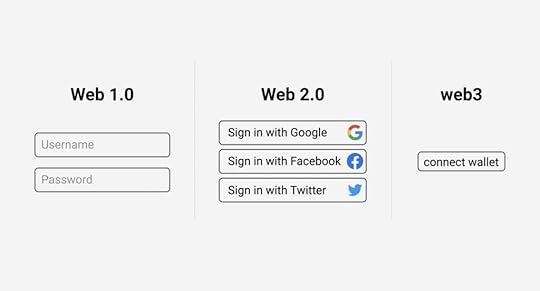
Cryptocurrencies, NFTs (nonfungible tokens), blockchain, DAOs (decentralized autonomous organizations), the metaverse, decentralized finance (DeFI), decentralized application (DApp). Buzzwords, yes, but they also represent important trends that are shaping the next iteration of the Web, aka Web3, aka Web 3.0.
Web 2.0 was largely recognized as an era of the social web or the web as a platform, combining the “golden triangle” of mobile, social and cloud computing.
Web 3.0 business models are built upon the core concepts of decentralization, openness, trustless networks, powered by encrypted, accountable distributed ledgers.
Cryptocurrencies such as Bitcoin and Etherium, represent digital currencies, encrypted, secure digital assets designed to be exchanged, monitored, and organized by a secure peer-to-peer ledger called a blockchain. Unlike traditional currencies, crypto is not not managed and controlled by a central authority like a bank or government authority.
Each user maintains a cryptocurrency wallet, an app that crypto holders use to store, spend, or exchange their digital assets, including NFTs. A crypto wallet contains pairs of public and price cryptographic keys. Public keys are used to make payments to the address derived from it, for example, one of my public keys is briansolis.eth. A private key enables the spending of crypto from that address.
NFTs represent more than digital art or music minted on the blockchain. Think of them as unique, one-of-a-kind digital assets that have real world value. NFTs are stored on public-facing digital ledgers called blockchains, which means they’re inherently tethered to a recorded history of ownership and worth, ensuring their authenticity. That value can go up or down based on perceived value and market conditions, just like any other asset. The difference is that value can be attached to an NFT beyond asset itself.
You can also imagine NFTs as digital keys to unlock access to other assets, events, communities, experiences, and even professional and economic opportunities. At a basic level, picture a membership with exclusive access. Your NFT is your access card. Your wallet in many ways, becomes your identity.
NFTs will eventually become “soulbound,” which means they aren’t meant to be resold. Starting with diplomas, certificates, even credentials, and eventually your online data and health records, could be stored as NFTs in your wallet. As you interact with other organizations, your soulbound NFT would facilitate exchanges that define personal and professional engagements.
NFTs, tokens, and other crypto-based assets could also be distributed as part of innovative loyalty programs where customers become stakeholders. Or imagine offering physical and digital products as NFTs, authenticated and minted on a blockchain during every sale or resale. Homes, cars, luxury goods, rare wines, can now all be tied to distributed systems of record that guarantee authenticity, linked to a historical value chain, providing individual ownership without any one centralized group facilitating each transaction.
DAOs are Web3 collectives that operate with specific purpose. Think of DAOs as a business classification such as an S-Corp or LLC, run by coin or token holders. Each offers certain rights, such as specific areas of management or voting. Some refer to DAOs as a crypto co-op or financial flash mob. The point is that a DAO is run by its members for a common purpose, for example investing in startups, crypto, NFTs, and other assets. In many cases, a smart contract are custom algorithms that govern the infrastructure of decision-making and operations outside of stakeholder engagement.
For example, Friends with Benefits ($FWB), is considered a social DAO where members purchase $FWB to gain access to the club at varying levels. FWB has been compared to a decentralized version of SOHO House, making it a digital VIP club for crypto’s creative class.
This is just the beginning.
Everything—art, banking, insurance, healthcare, government services, etc.—can be reimagined as value-added goods and services that are owned by a shared group rather than a traditional company structure. Imagine, in just one case, an employee-owned business, where you as a customer, also become a stakeholder in the organization. You can have a say in the development of the rules and policies, prices and even earn dividends.
Stay tuned for updates…
Source:
Wall Street Journal
“10 Tech Events of 2021 That Will Shape the Future”
When the next decade dawns, we’ll look back on this year as a pivotal one for businesses. A futurist explains why.
by Brian Solis
The post What is Web3? The Definition of Web 3.0 appeared first on Brian Solis.
March 21, 2022
Customers are the Ultimate Influencers; The Value of a Shared Experiences and How To Measure Them
After releasing, What’s the Future of Business: Changing the Way Businesses Create Experiences, I also published a secret “bonus” chapter for those who finished the book and found the Easter egg at the end. Now, I’m making the bonus chapter available for everyone.
Why?
Because the four moments of truth explored in WTF not only define the modern customer journey, the link between the Zero Moment of Truth (ZMOT) and what I call the Ultimate Moment of Truth (UMOT) is more influential today than when the book originally published?
ZMOT represents the beginning of the discovery process, i.e. search or a request for help or guidance.
UMOT is the moment when someone encounters shared experiences of other customers, i.e. reviews, videos, word of mouth.
For the most part, we leave that encounter to chance. We instead invest in branded assets to connect the dots back to owned media. Yet, we all value the experiences our peers share and they’re incredibly influential in shaping the ultimate decisions we make. Defining those shared experiences is an incredible opportunity for true human-centered customer experience (CX).
In this WTF bonus chapter, the conversation extends from connecting the dots to measuring the impact of shared experiences, both negative and positive.
So, what is the true value of a customer’s experience and the value of it once it’s shared?
In this special section, I introduce a new methodology for measuring the value of shared experiences, “Social Referral Value” or SRV.
I hope this helps you!
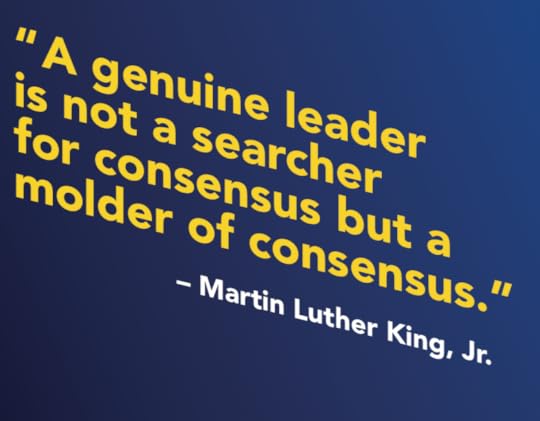
“A genuine leader is not a searcher for consensus, but a molder of consensus.” – Martin Luther King, Jr.
What is the true value of a customer? I guess it depends on whether you employ any one of the existing customer value analysis formulas to measure customer worth such as Customer Lifetime Value (CLV); Recency, Frequency, Monetary (RFM); Share of Wallet (SOW); Past Customer Value (PCV); and every variation in between. One of the key challenges of course is to link these numbers to actionable insights applied specifically to those they’re intended to benefit.
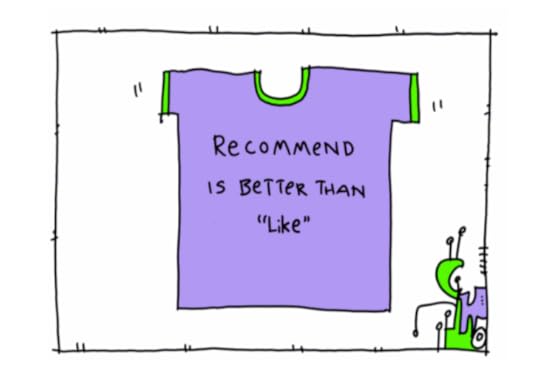
Whether you believe CLV, RFM, SOW, PCV1 or any of the other derivatives of quotients provides the best measure of the value of your customers; you may in fact be missing the true value of your customers.
Most businesses seek to quantify ROI as a way of substantiating an investment. Additionally, decision makers seek to project earnings and validate overall strategies.
For some, measuring ROI also provides insight into what is important to customers so businesses can more effectively compete for the future. In both cases, customer-centric mathematics are supposed to help businesses determine the effectiveness of past strategies as they consider future allocation of resources and investments in service, marketing, and product development programs.
In a social economy, customer value takes on a new dimension. Customers are sharing their intentions, experiences and outcomes in online communities, social networks and mobile apps for others to discover at every step of the dynamic customer journey. Because of the discoverability of these shared experiences, what turns up from other customers affects the journey of the next consumer. In this dynamic ecosystem, decisions are made for and against you in real-time. Understanding the state of these shared experiences introduces previously unforeseen windows of opportunity for customer engagement and ultimately opportunities within emerging platforms.

How customers feel when interacting with or around your business, at every stage of the journey, will dictate what they share about you online. Businesses need to monitor and assess these experiences, and ensure to craft experiences their customers enjoy. One of the key challenges facing businesses in a social economy, however, is that the behaviors of connected customers are no longer congruent with that of the traditional customers they were originally built to serve. In many organizations, customer service is still operated out of a call center; marketing is spread across multiple, yet siloed functions that follow the linear path within a traditional sales funnel; and product development follows a roadmap that looks so far ahead that it inevitably splits from evolving customer realities and expectations.
In the long run, this model in fact works against traditional businesses.
Why?New technologies and the channels that arise as a result are causing important shifts in behavior and decision-making. And, this requires a deeper appreciation and grasp to better evaluate, measure, and sculpt desired relationships, experiences, and results.
The value of the experiences that customers share within communities, networks, and apps
is largely unrecognized or appreciated by businesses today. I’m not just referring to review sites such as epinions and the like from the Web 1.0 days. We must now include the scores of budding social, shopping and comparison networks and apps that are consuming the attention and time of connected customers.
We cannot measure what it is we do not know to value. Therefore, we cannot bring about change nor improve experiences if we do not know what shared experiences are or aren’t in these new outlets today.
Yes, businesses track customer activity and sentiment among a more traditional and studied set of behaviors, but all customers aren’t created equal. There are traditional customers. There are also connected customers. Not every customer is connected and not every customer is reliant on new networks and online peers to help them make or validate decisions. And, not all customers influence the activities of others online.
Measuring the return on investment of traditional customers is no longer good enough. Merely asking what’s the ROI doesn’t take into account the net return of shared experiences, or worse, the loss, on those shared experiences. Fixating on ROI also doesn’t answer the question of how new technologies are impacting decisions for or against you. It’s not designed to.
Without ignoring the importance of striving to find the ROI in all we do, asking another question will also help us see what it is we do not see today…shared experiences and why they matter to your company. So, the question is, what’s the return on experience and, how do you measure it?
There’s immense value in asking this question if you can discover the answers to the questions you do not already know to ask. This is a time when asking new questions will help us find new metrics and behaviors.
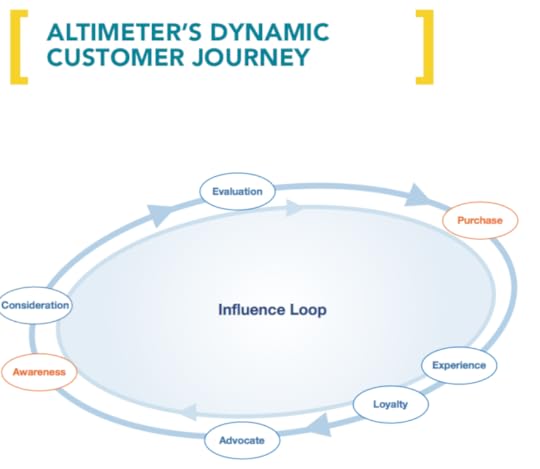
Even in the face of new technologies and subsequent consumer behavioral shifts, change cannot come about for the mere sake of change. Evidence must exist in proving that what could be is in fact as or more valuable than what is today. This is where mapping against the Dynamic Customer Journey comes in. It’s a form of digital ethnography that uncovers relevant interactions and transactions in rising online, social, and mobile networks and the new points and people of influence.
Customers represent a monetary value, whether negative, neutral or positive, and for the most part, the diverse array of metrics and formulas available to businesses today provide value and insight. Current customer metrics track everything from sentiment and satisfaction to revenue to perceived referral and loyalty value to lifetime value, but none of these metrics quantify how shared experiences within these networks add or subtract from the bottom line.
But customers and their shared experiences also represent a philosophical crux for businesses and the way executives view and value customers today.
While businesses are learning how to track the behavior and the value of their traditional customers, I’d argue that similar metrics and the philosophies governing them are dated. To compete for the future takes more than technology. It takes an understanding of how shared experiences affect consumer decisions within the customer journey. And it is in how these journeys unfold that reveal differences, not subtle nuances, but extreme dissimilarities in the decision-making process that requires a shift in perspective and approach.
Customer journey mapping is just the beginning. It’s the mindset that sees things through
a new lens and puts forth the changes necessary to engage customers in meaningful ways. This will only increase revenue and overall referral and lifetime value if businesses can better understand what customers actually value and how what they experience and in turn share impacts the decisions of others.
We need to evaluate these shared experiences and the extent of which we are in fact delivering against what it is we have stated in our brand promise. Doing so offers tangible insight rather than anecdotal assumptions on the relationship between customer satisfaction, peer-to-peer influence, and business performance.
So the question is, are you delivering a desired experience and if so, how are you measuring the way experiences and more importantly, shared experiences, are impacting your business?
But perhaps the real questions to ask are, have you articulated your brand promise and have you defined the experience you want customers to embrace, feel and endure. And, how does this experience trigger shared experiences to serve as a benchmark for which to measure against? Not only can you measure the value of shared experiences but you should also measure the integrity of the experiences you hoped to deliver.

In a time when the question of “What’s the ROI?” is as common in business as “How are you?” in interpersonal communications, we must now move from an era of soft business metrics to a more meaningful state to identify what’s really taking place, where, and what effect it’s having on the customer decision making process.
This move from intangible to tangible metrics and value is paramount as businesses have operated too long without it. Think about what decisions that are being made right now about the direction of your business without considering how the world is actually changing.
If businesses continue to pursue new technologies rather than focus on consumer behaviors, future strategies and investments will continually miss new targets and opportunities. Shared experiences in connected communities serve as the undercurrent for new consumerism. Customer journey mapping within new channels only reveals the context and influence of engagement that’s taking place today everywhere you’re not looking.
So what’s the return on shared experiences your connected customers are promoting, discovering, and valuing today?
Any standard search will reveal a host of formulas for calculating ROE. Rather than dive into the numbers, let’s build the case for its measurement and more so, a formal investment in experience!
How do you know today if your customer’s experience is as intended or hoped?
Satisfaction surveys?Referring sources?Complex computations to capture CLV, RFM, SOW, PCV?Blind faith?New philosophies and supporting models will help organizations compete not only against other companies but compete for the emerging class of connected and discerning customers. But, to truly measure the state of a brand or customer experiences and resulting relationships in this social economy is not only complicated, it’s also undervalued as a legitimate barometer.
These metrics are not easily compiled nor are their indicators and insights easily translated
into actionable and accountable areas of focus or responsibility. Instead of addressing these more complicated issues, businesses have been focusing on more accessible and approachable numbers. From conversational metrics such as sentiment to share of voice to customer-centric marks such as Net Promoter Score to Net Reputation Score; from Trust to Influence; and from engagement to advocacy and everything in between; businesses are keen to quantify relevance in new social channels even at the sacrifice of visceral outcomes.
New metrics systems and conversation tracking tools are showing increasing signs of promise every day. But once collected, what do these numbers actually mean and how do they translate into true business value or insights?
Again, there is measuring what is and also capturing what is…truly happening.
Jeff Bezos once famously said that your brand is what people say about you when you’re not in the room. We can now thank social networks, blogs and democratized content platforms such as YouTube for amplifying what people say when you’re not around. Why should you be thankful for these platforms?
The answer is, because you’re given the gift of access to the honest accounts of your customers’ experiences. And it is those experiences that are feeding interests, answering questions, and guiding and validating decisions.
This isn’t news; it also isn’t fully appreciated yet. What people say contributes to a collective consciousness that informs and influences customers who enter the awareness and consideration phases of the customer decision journey. As customers move through their journey it is their experiences that feed back into an ever-shifting influence loop.
Creating a comprehensive journey map would reveal nothing less than what the customer experience (CX) of your business actually is and where it’s happening.
Journey mapping reveals many things including:
Are customer expectations met or unsatisfied?Are your customers asking questions that go unanswered?Are there influencers who are pushing customers toward or away from you?Are there ideas or reactions that could improve what it is you do and how you do it today?Where are the networks, what are the apps, and which sites are impacting what my customers see, learn, and do?What do people really think about you and how do those reactions touch and inspire you to improve?That’s the power of shared experiences. And this is why becoming a digital ethnographer will shape your ability to create and steer future experiences in every moment of truth to your benefit.

Dubbed “the ultimate question,” the idea of whether or not people would refer your products to friends and family has given rise to a wildly popular benchmark for measuring customer satisfaction used by many business strategists today
Developed by Satmetrix2 , The Net Promoter Score3 (NPS) helps businesses assess customer satisfaction by asking one simple question. Typically presented through a survey or customer satisfaction form, the question of, “How likely is it that you would recommend [company] to
a friend or colleague?” assigns businesses an overall score. This score serves as a symbol of customer satisfaction and also an industry benchmark when compared to others in your sector.
The answer allows businesses to see the world through the eyes of their customer to measure performance and hopefully opportunities to explore ways to improve experiences. To do so, NPS categorizes customers into three categories: Promoters, Passives, and Detractors.
They are described as follows:
Promoter: A promoter is someone who is likely to recommend a product or service. They’re loyal enthusiasts who will keep buying and also refer others to do so, thus fueling overall business growth. In the realm of word of mouth, they are most likely talking positively about the product experience or would if prompted. They are, of course, among the most influential in the measurement of overall customer lifetime value.
Passives: Passives are customers who are indifferent. They are satisfied but fall into complacency lacking enthusiasm and open to competitive offerings. These customers do not necessarily add to or take away from decision-making.
Detractors: Detractors however, well, they’re the customers who would not recommend your product. Detractors are unhappy customers who can and will damage your brand every chance they get causing brand harm and risk through negative word-of-mouth.
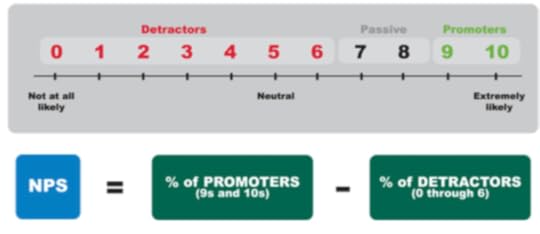
Customers respond on a 0-to-10 point rating scale. Customers who “take away” from shared positive sentiment are considered Detractors and they’re measured between 0-to-6 on the NPS scale. Customers who rate the likelihood of recommending your business at 7 or 8 are considered Passive. Those customers who say that they are “extremely likely” rate a 9 or a 10.
To calculate the NPS for your organization, simply subtract the percentage of Detractors from the Percentage of Promoters.
According to Satmetrix, leading businesses with the most efficient growth engines, those actively seeking to improve customer experiences, operate with an NPS of 50 to 80. Average companies tend to mosey along at an NPS of only 5 to 10, which translates into a reality where Promoters barely outnumber Detractors. As Satmetrix noted, Promoters barely outnumber their Detractors. And, companies with a better ratio of Promoters to Detractors exhibit tendencies to grow more rapidly than their competitors4.
In March 2012, Satmetrix released the results of its annual Net Promoter® Benchmark Study5. USAA, Amazon.com, Costco, Virgin America, Apple, Trader Joe’s, and Wegmans were among the highest in customer loyalty.
Equally, Satmetrix also found that a significant number of companies suffered from blasé or negative customer sentiment with companies spanning a range of industries including financial services, health insurance, telecommunications, Internet service providers, and cable and satellite TV. What are some of those companies who fell in at below the middle of the road? You might recognize a few…Wachovia, American Airlines, Sears, Mediacom and T-Mobile.
Whether real or perceived, these scores, which represent how customers rate experiences, are a measure of what’s deserved. Either way, perception is reality. And these scores say everything if someone is willing or unwilling to recommend your product or service.
But how does a score help plan for growth or improve performance, capabilities and ultimately experiences? And, in a real time social web, how do expressed sentiments and shared experiences contribute to the real world influence of customer decision making?

As you may or may not have heard me say before, I truly believe that context is king.
Perhaps NPS is showing its age, but if an experience economy is the successor to the social economy, expressions form impressions and impressions influence decisions. Therefore, something more substantial and directive is required.
What someone would say in a review of your product or service is dependent largely on the state or context of the experience and the relationship.
Here’s an example. Do you see a glass with water at the halfway mark as half full or half empty?
One way to look at the scenario is through a lens of context. Is someone pouring or drinking from it at the time.
The glass is half full until it’s half empty.
Or…
The glass is half empty until it’s half full.
In the real world, your product, service, or staff affect experiences before, during, and post transactions. Something could come along and change your perspective at any moment.
Let’s say you’re driving a new car. It drives well. Everything works as promised. You feel
amazing driving it. If you took the NPS survey at this point, you’d most likely give high marks. But then you take the car in for service and everything changes. The service manager is uncommunicative and dismissive. The repair is done haphazardly. The car is at the moment, not a pleasure to drive. Take the survey now, even if it’s something easily fixable through repair and/ or an apology, and you’re likely to not recommend this product.
It’s constantly a game of the state of the state.
With shared experiences in social media filling in the gaps between formal surveys, businesses must consider real-time sentiment in addition to other traditional customer satisfaction scores. What people feel or experience is shared in social networks. This isn’t new. But what we’re not considering is how these shared expressions impact NPS and ultimately the true state of customer satisfaction.
To help companies get a better view of social customer sentiment, Satmetrix introduced a more modern metric. Unlike NPS, SparkScore6 factors in social media’s role in the NPS ecosystem. “Ecosystem,” or, perhaps more accurately, “egosystem,” is where customers share experiences within their social networks. People are after all at the center of their own digital universe. As a result, the SparkScore is a collection of Total SparksTM representing conversations and activities across platforms including Twitter, Facebook, Google , LinkedIn, blogs, Pinterest, and others.
The SparkScore Sentiment Engine, powered by Metavana, combines the methodology of Net Promoter with expressed customer sentiments in the social graph and assigns businesses another performance score. As Satmetrix explains, “With SparkScore, brands are able to recover detractors and mobilize promoters at the speed of the social web, delivering customer love.”
Said another way, engaging unhappy customers can turn them into happy or tranquil customers. If you can identify your happy customers, you can engage them in advocacy programs. But again, this is more about managing “what is” instead of moving toward “what could be” by engaging customers to improve experiences.
If people express satisfaction, don’t you want to know why?
If people express discontent, wouldn’t you want to know the experiences behind this sentiment so you could fix it?
Now’s the time to explore the root causes of experiences to change them for the better or to encourage those that are already positive. Otherwise, we build a support and reward infrastructure that manages symptoms and not the problem.
This is why measuring NPS or SparkScore only tells part of the story. If you’re measuring the success of your business based on scores that are more immediate than they are telling, then you limit your efforts to changing only what is immediately relevant. If you only look for the “what” and not the “why,” your customers and your future bottom line will not be optimized.
See, customer experiences are incredibly emotional and people go out of their way to share those experiences when they really love or hate something. If you think about online ratings for a moment, there are really only two scores that count—5 stars and 1 star. So, in the social web, people are doing just that, adding color around the 5’s and 1’s and influencing people along the way. But why? Why are they sharing these experiences and how are they impacting those around them?
Remember, context is king.

Within social media, brands are presented with both risks and opportunities. All of the shared experiences that take place there become part of a collective index that influences customer decisions and impressions throughout the dynamic customer journey7. If you think back to the anecdote of most reviews reflecting sentiment of either 1’s or 5’s, it’s clear that people are either referring customers to your company or they’re convincing them to look elsewhere.
Suddenly the question of “would you” refer our business seems insignificant when a connected customer relies on the words and experiences of friends or like-minded individuals as they actively seek to make decisions in real-time. This new reality should motivate businesses to think beyond the number and look at what experiences are shared, surface patterns, and seek opportunities to exceed expectations.
It is this premise that inspired me to consider new metrics to justify experimentation, demonstrate performance and progress, and surface instances for innovation or co-creation.
I didn’t have to look very far to find the answers.
Several years ago, I studied real-time conversations and attempted to map expressions to the NPS framework. The work focused on manually scouring blogs, Twitter, YouTube, Facebook and other relevant social networks based on the market for each business. The key difference here is that I was capturing more than stated intent; I was analyzing honest sentiment shared in the moment, whether good, bad or indifferent.
If you’ve ever tried to measure sentiment, you know that its accuracy is questionable at
best. Yet businesses track customer sentiment in social media to assess promoters, passives and detractors as one big faceless group. Combined with NPS, sentiment simply provides a generalized state of emotion. As such, strategists are often left without any insight toward assessing experiences or feeling the empathy necessary to design and inspire more desirable experiences in the future.
Something more was needed.
I then looked at extracting shared expressions over the course of fixed periods of time, in most cases monthly or quarterly. I would then organize the conversations using Amazon Turks to manually assess positive, neutral, and negative conversations. This delivered a far more accurate depiction of customer sentiment, but it was only the beginning of what’s actually possible.
NPS and the measurement of intention or general sentiment are simply not good enough.
You’re either ready to do this work because you want to better understand customer experiences in order to improve them or you’re convinced that your organization can benefit from enhanced customer experiences and you need tangible evidence to create a sense of urgency. In each case, metrics such as NPS serve merely as a standing or rank. If you earn a high score, your strategies and approach are validated. If your score is low, your intentions, master plan, and supporting processes, people, and technology should come under review.
There’s more work to do.
To effectively create desired experiences takes understanding what customers actually experience and share with others. That feedback should inspire refinements or directional changes in any and all areas affected by research and analysis.
Introduced to me by my good friend Paul Greenberg, I was inspired by the work of Dr. V. Kumar. VK as he is more popularly known is one of the world’s foremost experts in customer and marketing strategies that improve experiences and profitability. He is the Richard and Susan Lenny Distinguished Chair Professor of Marketing, and Executive Director, Center for Excellence in Brand and Customer Management, Robinson College of Business at Georgia State University.
VK contributed an essay in the Harvard Business Review8 that discussed the value of word of mouth and how to measure customer lifetime value (CLV). While much of the article examines statistical models on how to measure CLV and also customer referral value (CRV), shared experiences aka referrals are pegged as instrumental in the ability to influence decisions for or against you.
In these interconnected days, how your customers feel about you and what they are prepared to tell others about you can influence your revenues and profits just as much.
Looking back to the question that drives NPS, “Would you refer us?” pales in importance to something far more substantial and tangible.
In an interview with CRMSearch9, Paul Greenberg explained how VK reframed the question and expanded the survey to four queries. The goal was to better assess a more tangible form of customer referral value.
Would you recommend the company to someone you know?Did you recommend this company to someone you know?Did they become a customer?Are they a profitable customer?These questions shifted the study of intention to that of action and value.
To be fair, Satmetrix agrees that NPS is not enough. As they share on the site for NPS, it’s more than a numbers game…
Net Promoter programs are not traditional customer satisfaction programs, and simply measuring your NPS does not lead to success. Companies must follow an associated discipline to actually drive improvements in customer loyalty and enable profitable growth. They must have leadership commitment, and the right software and business processes in place to deliver real-time information to employees, so they can act on customer feedback and achieve results.
Indeed.

The work presented by Dr. V. Kumar and also examined by Paul Greenberg introduced a more meaningful process to measure the state of customer intentions, experiences and customer value. It challenged me to take my experiments one step further.
Following the classification of manually assembled customer sentiment into three groups, positive, neutral, and negative, I then attempted to organize them by themes. This was done with the help of software of course, but it allowed me to see experiences that people loved, those they disliked, and where they were confused or challenged. I uncovered patterns in experiences that substantiated strategies, product designs, and business processes/resources and I also found series of opportunities to learn from or address these experiences.
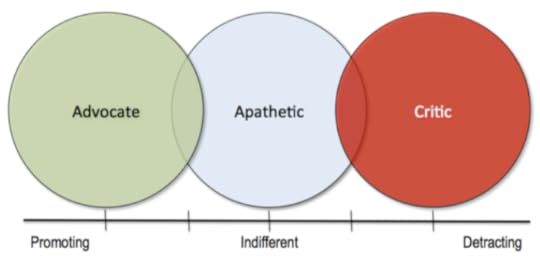
A simple way of looking at real-time promoters and detractors as highlighted by NPS is to look at conversations through the lens of social referral value (SRV). Now, I realize of course that the word “social,” at least in the echo chamber of which many of us live, is becoming the expressional equivalent of a persona non grata among experts. However, in this case, I don’t mean social as in social media. I am referring to social referral value in a literal context.
As such, the concept of SRV is proposed as a framework for consideration, not as the basis for yet another new trendy metric. Allow me to explain.
Up to this point, we’ve established that there are different types of customers doing things differently based on how and where they connect. We have metrics and ROI methodologies for traditional customers. It is the connected customer, who is arguably representative of the future, where new metrics and methodologies are required. Hence this SRV considers shared experiences in new networks that live online and influence actions and reactions in every moment of truth.
This isn’t based on theory; this is based on experience.
The SRV I experimented with (and still continue to) looked at all digital (social, mobile, community) conversations around a particular company over a fixed span of time. This netted out an entirely new world of experiences than were tracked by NPS or any other traditional process. And, that’s why this model is important for further study and expansion. You’re invited to join the effort.
To effectively score sentiment and shared experiences requires human analysis. For our experiments, we hired a team to review large sample sizes of dialogue. We then sorted conversations into three buckets. No score was necessary for each because it’s not a hypothetical measure. Either they did or did not endorse a brand.
First, those who expressed praise, support or an official recommendation for a product were considered Advocates. The second groups were those conversations that were Apathetic, those conversations that were neutral, indifferent or inconclusive. Most conversations fell in this category, which may or may not be a surprise. The last category of course are the Critics, those individuals who like NPS, are the Detractors of your market driven by the negative experiences they encountered.
With NPS, the Net Promoter Score = % of Promoters minus the % of Detractors.
With a simplified SRV metric, your score = the % of advocates minus the sum of Critics. Like Advocates and Critics, the Apathetic are also valuable. Studying themes within each group provides insights in how to move those in the middle and the right over to the left.

As Dr. V. Kumar shared in his Harvard Business Review article, “How your customers feel about you and what they are prepared to tell others about you can influence your revenues and profits…”
Shared experiences are in fact powerful and we are just now starting to better understand the extent of the social effect. It is perhaps more important and convincing than many businesses realize. To appreciate the impact of shared experiences starts with stepping outside of traditional NPS or sentiment metrics. To improve experiences and more positively influence what people say and share requires the study of shared experiences today. This will help you optimize the influence loop in the dynamic customer journey to contribute positively to each moment of truth.
Each moment of truth contributes to social touch points that test brand awareness and strength and also the strength of common customer experiences. What’s asked or shared and what surfaces at each step of the customer journey defines the next steps of your would-be customer.
Remember, at the center of the digital journey is the Influence Loop. Shared experiences are fed into the loop, forever indexed, and extracted during each moment of truth along the journey. Whether through traditional or social search, asking questions within one’s social graph, or simply reading reviews, shared experiences, whether good or bad, affect impressions and actions. The importance of the influence loop cannot be understated. What NPS, the SparkScore and SRV represent are both a state of customer sentiment and also a window to customer experiences. Doing so not only increases the score, it improves the quality and nature of customer relationships. It also sets the stage for bona fide advocacy to feed positive experiences back into the influence loop.

We are meandering through a market in transition with as much direction as one applies to an unfamiliar maze. To lead others through the maze you have to find a path of course. But naturally you will make mistakes. It’s time to put NPS, SparkScore or a general social score as proposed here to the test.
After conducting several studies on social scores and the dynamic customer journey, I can say with the utmost certainty that the results will be enlightening. The challenge of course remains, what to do with the insights?
After all, the scores will provide a benchmark and offer clarity as to where you are and where you can go. Additionally, by running comparative studies on competition and also companies deemed to be best in class in other industries will provide context on performance and also highlight what’s possible.
In the end, these scores and the accompanying insights will provide businesses the opportunity to inform and influence marketing, sales, service, and loyalty strategies that improve experiences. But it won’t stop there. The role social and mobile media plays in the dynamic customer journey is nothing short of transformative. Designing and re-aligning experiences is critical as it is those shared experiences that reverberate across the touch points in the influence loop. It is how other customers discover those experiences that defines outcomes. Through access to this research and social scoring, you’ve been given the gift of discovering the keys to relevance. You’ve also been given an invitation to help shape the new customer journey.
Yes, the amount of work was at the very least onerous. Part technology and part human, the process of gathering thousands of mentions, assembling a team to parse their feelings, and then harnessing the results was time-consuming. You have to actually care about customer experiences to perform this research. And, to do so means that your organization already possesses or is at the cusp of possessing a culture of customer-centricity.
Shared experiences are everything after all. Therefore put the time and passion in to study what “is” to define and reinforce what “should” be. This is why transformation must be less about technology and more about social science.
What’s the Future of Business Bonus Chapter by Brian Solis from Brian Solis
Footnotes
1 http://www.terry.uga.edu/~rgrover/cha...
2 http://www.netpromoter.com/about-satm...
3 http://www.netpromoter.com/why-net-pr...
4 http://www.netpromoter.com/why-net-pr...
5 http://www.satmetrix.com/company/pres...
6 http://www.spark-score.com/
7 http://www.briansolis.com/2012/04/the...
8 http://hbr.org/2007/10/how-valuable-i...
9 http://www.crmsearch.com/paulgreenber...
The post Customers are the Ultimate Influencers; The Value of a Shared Experiences and How To Measure Them appeared first on Brian Solis.
March 15, 2022
The Great Resignation is About Feeling Valued and Finding Value in Your Work
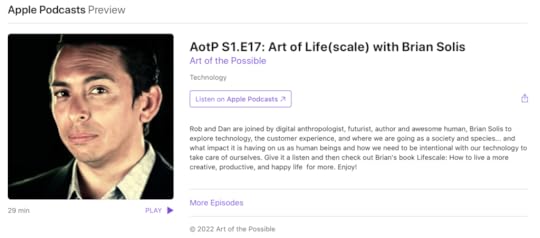
As the Great Resignation opens our eyes to the importance of being valued and finding value in our work, Brian Solis’ LifeSCALE is a essential book for anyone making a move.
Listen to Brian on the “Art of the Possible” with Dan Morrison and Rob Page break it all down.

Learn more about LifeSCALE by reading a third-party review here.
“The world is experiencing a #greatresignation, not because people don’t want to work, but because people did not feel valued or find value in their work.” – Brian Solis
The post The Great Resignation is About Feeling Valued and Finding Value in Your Work appeared first on Brian Solis.
March 14, 2022
Brian Solis to Deliver Visionary Keynote at HIMSS22
HIMSS will feature Brian Solis as a visionary keynote speaker at HIMSS22 Re-Imagine Health event in Orlando. Brian will share a reimagined view of patient and caregiver experience through the lens of design and experience innovation.
Visionary Keynote: The Future of Patient Experience & Innovative Experience Design in HealthcareMonday, March 14 at 3:50 PM – 4:15 PM EDT
Human beings crave special experiences. Yet, as patients, we tolerate mediocrity. In a world disrupted by a global pandemic, the one thing that won’t cancel, moving forward, is tolerance for mediocrity in any form. People have awakened to the vulnerability of disruption and expect experiences to be nothing less than convenient, efficient, and intuitive. Make no mistake, CX is the next competitive battleground for health providers. Innovation in patient experience will not only help set you apart, but also push healthcare forward by delivering new value and setting new standards for experience along the way.
The post Brian Solis to Deliver Visionary Keynote at HIMSS22 appeared first on Brian Solis.
Build Brand Awareness and Relevance Through Mobile-First Micro Moments
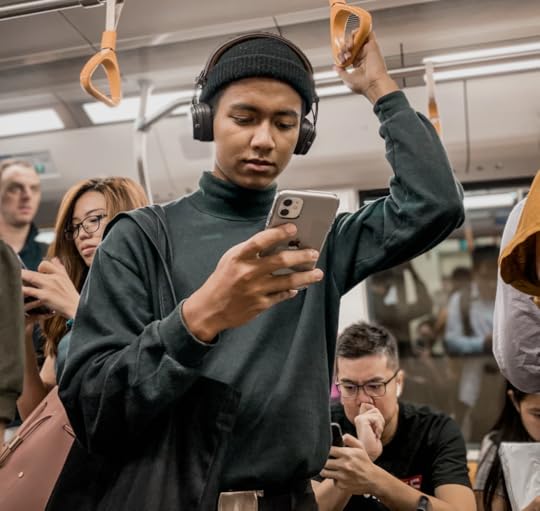
Rasheed Kemy, @_rxshxxd, Unsplash.com
Since 2020, every organization, all at once, was challenged to digitize customer journeys. From e-commerce to buy online pickup in store (BOPIS) to curbside to deliveries to buy now pay later (BNPL) to micro-fulfillment and everything in-between, digital transformation was no longer a competitive differentiator, it was a necessary business foundation just to compete on par with everyone else. But as digital-first buying behaviors became the new norm, customers quickly realized that “digital” itself isn’t a magic wand to deliver universally productive customer experiences.
While digital infers all screens, the reality is that customers who shop using mobile phones and tablets interact with their devices differently than they do with PCs and laptops. The very nature of Apple iOS and Android are designed to optimize small screens, hand gestures, and voice commands. Mobile CX (and UX) are now areas of digital differentiation and a paramount to delivering intuitive and delightful experiences.
Among the more progressive brands I work with, designing mobile-first and mobile-only customer journeys are now a top priority. In my work with Google over the years and now at Salesforce, I’m resurrecting the importance of micro-moments, mobile customer journey design, and a newly introduced concept of ignite-moments, to help marketing and CX professionals design end-to-end mobile journeys for their on-the-go customers.
My dear friend, colleague, WSJ best-selling author and keynote speaker Karen Mangia recently published an article that explores the importance of mobile CX and UX for Branding Strategy Insider.
I wanted to share it with you here…

How do you connect in a distracted world and engage with your customer? “Break down the journey into bite-sized pieces,” Brian Solis, VP, Global Innovation Evangelist at Salesforce says. “Make your way to identifying micro moments.”
Micro moments focus on intention, not demographics, because, as Solis points out, demographics can be deceptive. And not always predictive.
Consider, for example, two men, both born in England in 1948. They are both wealthy, married for the second time, and each has two children. They enjoy spending winter holidays in the Alps. Both of these men love dogs.
One man is Prince Charles, the heir to the British throne. The other is Ozzy Osbourne.
Demographics can be a bit of a crazy train. That’s why micro moments matter more: because they point to future intent, not past history, inside the context that matters most—the customer journey.
Think sentences instead of paragraphs. A 16-second video instead of a 5-minute one. “You’re essentially delivering messages for people in the way that they need to see them,” Solis explains, “and inviting them to that next step.”
Personal communications apps like Instagram, Snapchat, and TikTok rely on a persuasive and micro moment design. While I’m not suggesting that we use TikTok to market ERP systems or explain industrial logistics, there’s an opportunity to get granular using AI tools. Because AI can actually help you to quiet the noise.
“By taking UX (user experience) and UI (user interface) persuasive design techniques, we create what I call HX, which is a human experience design.”
Solis is describing his vision for the future: a human-centric experience designed to exist outside of bias but inside of a technologically advanced data engine. “I’m talking about blending the better parts of those design intentions and bringing people into the moment,” rather than losing the moment to the multitude of distractions that vie for everyone’s attention.
“We have to now expect that state of mind (how we talk, how we communicate, how we design touch points) is designed for micro moments. The available capacity is for customers to only be engaged for a split second, and then move them along.”
Because in the same way that you can distract a customer, you can pull them out of distraction. The idea is that you’re leading them back toward something that is in their best interest.
In an interview with David Baekholm Senior Vice President of HomeAway, Solis discovered some eye-opening statistics. The company got granular on their customer’s journey, discovering multiple micro moments where they could create new engagement and drive new levels of influence. The end result? A 200 percent lead conversion increase in just 12 days.
Rapid results. Powerful acceleration. That’s business at the speed of the customer, and the driver is human-centric design. Looking specifically at the challenges and the eddies within the customer journey, where do you see problems? How can you redirect your tech tools, like machine learning and AI, to identify those micro moments and develop new ways of engagement?
That innovation is within your grasp, right now.
“The challenge isn’t the technology,” Solis says, prophetically. “It’s the humanity.”
Next up: Connecting the dots between #micromoments and #ignitemoments and designing for extraordinary engagement!
The post Build Brand Awareness and Relevance Through Mobile-First Micro Moments appeared first on Brian Solis.
March 8, 2022
Futurist Keynote Speaker: The Rise of Generation-Novel, New Leadership, and How the Post-Pandemic Consumer and Employee has Changed Forever
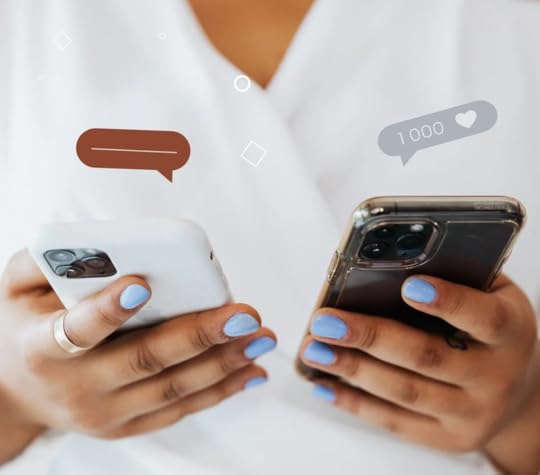
Karolina Grabowska, Pexels.com
Futurist keynote speaker Brian Solis introduces a new speech to his menu of popular topics.The Rise of Generation-Novel, New Leadership, and How the Post-Pandemic Consumer and Employee has Changed ForeverWe all know the story of how businesses experienced 10 years of digital transformation in the first several months following pandemic shutdowns. But companies weren’t alone in their digital disruption. People too had to learn how to adapt to a digital-first world practically overnight. Customers changed. Employees changed. Yesterday’s leadership is no longer going to be able to navigate the next normal without understanding the human side of digital disruption.Bringing a 2020 mindset to this new world will only make businesses irrelevant to new customers and employers disconnected to employees and prospects. A new genre of leadership is needed to thrive in this new world.World-renowned digital anthropologist, best-selling author Brian Solis will share his research at Salesforce during the pandemic documenting what he calls, “Generation-Novel” and the rise of a Novel Economy. In his presentation, he’ll share…The impacts of digital on customer behaviors, expectations, and valuesThe effects of living a digital-first life on mental health, wellness, and productivityThe growing digital skills divide following the great resignationIn-demand skill sets for an evolving workforceNew leadership traits and ways to thrive in the novel economyReach out to Brian directly to explore ideas for your next conference, event or executive engagement.The post Futurist Keynote Speaker: The Rise of Generation-Novel, New Leadership, and How the Post-Pandemic Consumer and Employee has Changed Forever appeared first on Brian Solis.


