
Brian Solis's Blog, page 32
February 1, 2022
Generation Novel hybrid workers bring new demands and risks

During the pandemic, Brian Solis’ research at Salesforce led him to coin two important trends, the Novel Economy and Generation-Novel, to describe how the pandemic reshaped customer behaviors to set the stage for a hybrid post-COVID 19 economy.
Ariba, a Hewlett Packard Enterprise company, cites his research in a new report, “A hybrid workplace for a hybrid workforce: Is your business ready to support Generation Novel?”
As coined by digital analyst Brian Solis, those who belong to Generation Novel are more than just digitally native, they’re driven by emotional factors that affect the relationship they have with their technology. From the way they purchase products to how they work with colleagues, their preferences are informed by their experiences during the COVID-19 pandemic. Our research identified three main areas where these evolving preferences are becoming visible in the workplace.
“Generation Novel has come out of the pandemic with a new set of expectations and a new identity as workers. People’s expectations have changed because they’ve been using technology so much more during the pandemic – particularly in terms of ecommerce and social media platforms. The amount of customization and personalization available in the consumer space has shifted attitudes to workplace technology. Tech skills have increased, but there has been a corresponding increase in impatience when these tools don’t work as expected.” Dr Eliza Filby
Computer Weekly also referenced Brian’s research supporting his finding with those published in Ariba’s report.
After years of responding to the needs of Gen X and Gen Y, employers have a whole new generation to grapple with following the pandemic – the emerging Generation Novel (Gen N). This generation, according to a survey by Aruba, will bring a whole new set of challenges to the workplace if their expectations continue to go unmet.
Coined by digital anthropologist Brian Solis, Gen N describes a cross-generational cohort of people who thrive on digital-first experiences and place greater value on personalisation, customisation and transparency from the brands they buy from, work for and support. Above all else, they understand, use and demand more from technology than ever before – at home and at work.
According to the Hewlett Packard Enterprise company’s study of 5,018 hybrid workers across Italy, France, Spain, Germany and the UK, 85% of hybrid workers identify with the traits of Gen N, with 78% of respondents using technology more now than they did before the onset of Covid-19.
The post Generation Novel hybrid workers bring new demands and risks appeared first on Brian Solis.


January 19, 2022
A New—and Timeless—Digital-First Consumer Is the Future
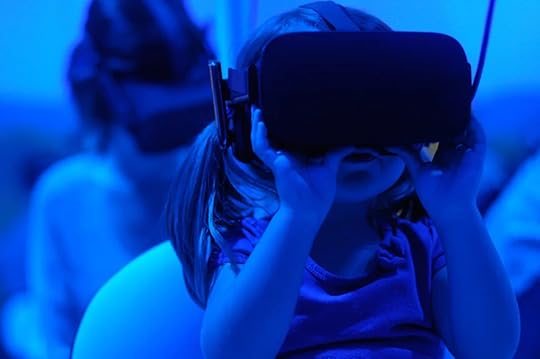
Giu Vicente, @giuvicente, Unsplash
via Lisa Boylan, Associations Now, published by ASAE: The Center for Association Leadership
Brian Solis keynoted the ASAE Technology Exploration Conference in Washington, D.C. To set the proverbial stage, Associations Now interviewed Brian on his thoughts on a new digital world ahead of his presentation.
Disruption can be a gift, according to Brian Solis, bestselling author, digital anthropologist, and futurist. Among the positives: It created an ageless consumer segment that is leading the way.
There’s a different, inclusive generational category that has nothing to do with birthyear span or the stereotypes and baggage they often carry, like baby boomers or millennials. Instead, meet Generation Novel. Coined by Brian Solis, global innovation evangelist at Salesforce, Generation N refers to a new kind of customer, perhaps forever changed by the pandemic.
Generation N is digital-first and cross-generational, so whether a consumer is 25 or 55, when they use their favorite app or online service, they are going to have similar interests, behaviors, and aspirations.
“What makes it so profound is that it’s a huge contingent of the market,” said Solis, a keynote speaker at next week’s ASAE Technology Exploration Conference. “Whereas before it might have been a sliver based on age, now it is a sweeping imperative.”
The Upside of DisruptionEverything was disrupted in the last two years. “It was very deep, and it left a somatic marker within each of us, which is a visceral emotional bookmark that we’ll hold onto forever,” Solis said. But people persevered, in some cases without even knowing it.
Solis regards such disruption as a gift. “When the market evolves, disruption becomes inevitable,” he said. “It’s a historical phenomenon called creative destruction. The old things make way for the new.” Research backs it up: According to McKinsey’s “Quickening” study, 75 percent of U.S. consumers have tried different stores, websites, or brands and most are going to stick with those new brands after the pandemic.
“The core of Generation N is essentially the core of what it takes to be in business today,” Solis said. “The digital-first world is a hybrid world—a conscious world where everything from communications, to the services that associations provide their members, to marketing—everything needs to be reimagined for this new world.”
Put an “S” in Customer ExperienceThe paradigm shift is perspective. “Technology is not the problem anymore,” Solis said. “Technology is actually here to make things not only more human, but special—even magical.” Now it comes down to how people want to deploy the technology. The number-one initiative businesses are investing in today, because of the pandemic, is customer experience (CX).
CX could be technologies to improve what the customer experiences, or it could be completely reimagined. “Let’s add an apostrophe ‘s’ to customer experience,” Solis said. “Let’s remind ourselves it’s the customer’s experience.”
It starts with understanding what customers value, what they don’t value, and what they’re getting elsewhere. The goal should be to design better experiences that benefit customers. Because if they don’t have a good experience, that’s what they’re going to remember, Solis said.
The post A New—and Timeless—Digital-First Consumer Is the Future appeared first on Brian Solis.
January 18, 2022
Financial Times: Maersk hits cultural storms en route to digital destination

FT author Peggy Hollinger explores Maersk’s attempt to rebrand as a technology-led, end-to-end logistics provider is creating tensions. Original story link.
An article in that appeared in FT (Financial Times) referenced award-winning research conducted by Capgemini and Brian Solis. The report, “The Digital Culture Challenge: Closing the Employee-Leadership Gap,” was an industry-first study that measured the digital divide between front-line change agents and executives.
How Maersk deals with the tensions that arise from these changes could determine the success or failure of its transformation. “It’s not the strategy that is wrong,” said Lars Jensen, chief executive of shipping consultancy Vespucci Maritime and author of a book on the Danish group. “It is more in the communication . . . How do you perceive yourself? What is the core business? Is it to move boxes or information?”
Four years ago, a study by technology consultant Capgemini and digital analyst Brian Solis highlighted a sharp difference in perception about digital transformation between company executives and those on the ground. Some 85 per cent of top executives believed their organisations promoted collaboration on digital transformation internally, but only 41 per cent of employees agreed. While 71 per cent of leaders said discussions about novel business initiatives using new technology were open to all employees, only 41 per cent of those workers felt this was true.
The original report is embedded below…
The Digital Culture Challenge: Closing the Employee-Leadership Gap from CapgeminiThe post Financial Times: Maersk hits cultural storms en route to digital destination appeared first on Brian Solis.
January 17, 2022
Is the Future of Business Growth Tied to a New Generation of 360 Experience Marketers?
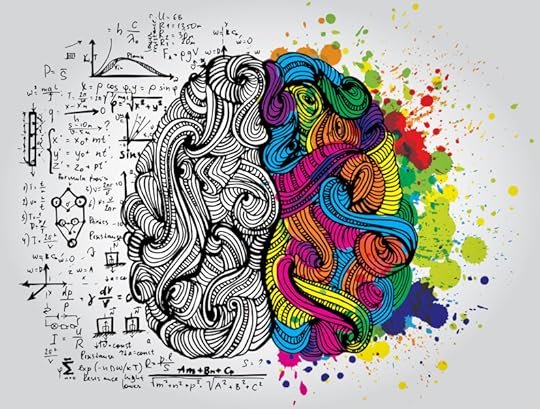
Executives across the globe are prioritizing investments and capabilities that help accelerate business growth. According to McKinsey research, 78 percent of CEOs are now banking on marketing leaders to drive growth. We aren’t talking about your everyday CMO, however. To drive business growth requires a new breed of 360 CMOs and marketers, those who take a holistic, data-driven, 360 approach to customer experience transformation and innovation.
McKinsey’s research uncovered three elements, a “growth triple play” of creativity, analytics, and purpose, that delivers at least two times the growth of peers who don’t invest in all three in tandem.
This new breed of growth engineers represent so much more than traditional marketing. They are the stewards for a more human-centered business that operationalize innovation and customer engagement around insights, creativity, and a pervasive understanding of “why” they do what they do.
The opportunity is profound.
McKinsey found that only 7 percent of companies are delivering on the growth triple play by unifying creativity, analytics, and purpose. They are driving average revenue growth of 2.3 times versus peers from 2018–19 (which increased to 2.7 times versus peers from 2019–20).
Between 2018–19, companies using just one of the capabilities—either creativity, analytics, or purpose—saw an average growth rate of more than 6 percent. Adding a second component saw growth rates climb to more than 7 percent. For those that employed the full triple play, growth rates climbed to more than 12 percent.
I had a wonderful opportunity to work with one of the reports co-authors and Partner at McKinsey & Company, Biljana Cvetanovski. Together, we presented on the future of business growth at Cannes Lions. We also joined the hosts of DisrupTV Ray Wang and Vala Afshar to discuss the research.
Steps to Become a 360 Growth Leader1) Know your customer. Then, explore opportunities to meet their basic expectations and imagine and pilot ways to enchant them.
2) Make creativity, analytics (i.e. insights), and purpose core to the company culture. And that starts with leadership and is reinforced in organizations norms and governance.
3) Empower teams to become part of the growth. Incentivize them to collaborate and experiment. Challenge them to uncover conventions and processes holding back transformation. Motivate the development of inventive approaches.
4) Re-organize customer-affecting teams around the new customer journey to optimize insights and engagement at every step, pre-, intra-, and post-purchase.
The post Is the Future of Business Growth Tied to a New Generation of 360 Experience Marketers? appeared first on Brian Solis.
January 13, 2022
McKinsey – The Growth Triple Play: Creativity, Analytics and Purpose
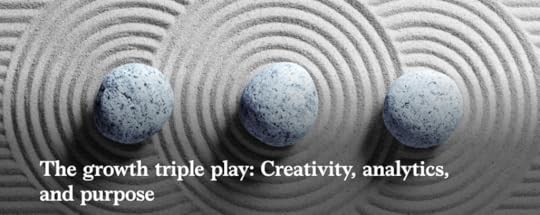
Brian Solis joined McKinsey at Cannes Lions, the International Festival of Creativity, to debut research that explores the high performing organizations that prioritize the “growth triple play” of creativity, analytics, and purpose.
The presentation is here (registration required).
Key Findings:
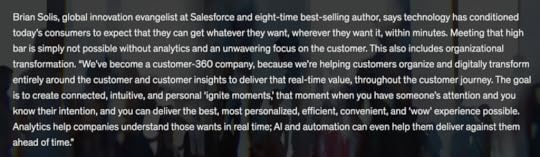
Only 7 percent of companies are delivering on the growth triple play by unifying creativity, analytics, and purpose. They are driving average revenue growth of 2.3 times versus peers from 2018–19 (which increased to 2.7 times versus peers from 2019–20).In the period 2018–19, companies using just one of the capabilities—either creativity, analytics, or purpose—saw an average growth rate of more than 6 percent. Adding a second component saw growth rates climb to more than 7 percent. For those that employed the full triple play, growth rates climbed to more than 12 percent.CMO’s have a once-in-a-generation opportunity to lead growth, as 78 percent of CEOs are now banking on CMOs and marketing leaders to drive growth.Brian Solis, global innovation evangelist at Salesforce and eight-time best-selling author, says technology has conditioned today’s consumers to expect that they can get whatever they want, wherever they want it, within minutes. Meeting that high bar is simply not possible without analytics and an unwavering focus on the customer. This also includes organizational transformation. “We’ve become a customer-360 company, because we’re helping customers organize and digitally transform entirely around the customer and customer insights to deliver that real-time value, throughout the customer journey. The goal is to create connected, intuitive, and personal ‘ignite moments,’ that moment when you have someone’s attention and you know their intention, and you can deliver the best, most personalized, efficient, convenient, and ‘wow’ experience possible. Analytics help companies understand those wants in real time; AI and automation can even help them deliver against them ahead of time.”
For CMOs, marketing + CX leaders, this is the moment to lead the growth agenda. Understand what your brand represents to deeply know and serve your customers and communities.
The #GrowthTriplePlay: 1)Creativity, 2)Analytics, 3)Purpose
https://t.co/IejPr8o09a #CannesLionsLive pic.twitter.com/XpEFaWMnlO
— Brian Solis – briansolis.eth (@briansolis) July 6, 2021
The post McKinsey – The Growth Triple Play: Creativity, Analytics and Purpose appeared first on Brian Solis.
January 12, 2022
Generation novel: How to engage the new post-pandemic customer

Following his keynote at ClickZ Experience, Brian Solis sat down with Elizabeth Roscoe to talk about Generation-Novel, the cross-generation psychographics segment of post-pandemic customers. The original interview is posted at ClickZ.
SummaryCustomer needs have changed as a result of the pandemic and so must the ways of marketing to them
Digital empathy is key to informing marketing decisions
Read on for valuable insight from digital pioneer and best-selling author Brian Solis
very brand has a style guide and every CMO has an entire set of teams that operate against those brand guidelines. While every company is accelerating digital transformation investments to upgrade customer experiences, two questions executives need to ask are “how did people and their core values and aspirations change in 2020-2021” and “how can our brand stand for something aspirational in a new world?”
In a special session at the 2021 ClickZ Experience, world-renowned digital pioneer and 8x best-selling author Brian Solis shared his research on how customers have changed at a human level and how brands must adapt down to their core.
Q: How do you see brands changing in the post-pandemic world?Brian: The customer experience is the number one area where brands are transforming for a post-pandemic economy. But customer experience itself is a vision and strategy and the processes of executing against that strategy. And added to that the digitization that’s unfolding at unprecedented levels at accelerated rates is, I can’t think of a nice way to put this, is making us overlook the humanity of this opportunity. It’s almost as if we’re trying to race into a new normal or next normal based on this, this previous normal, this concept of what marketing was when in fact, what marketing could be is entirely different. Essentially, brands are falling into a trap of digitizing dated processes and touchpoints, rather than reimagining engagement to deliver experiences not possible before the pandemic.
Q: Who do you believe is in charge of the customer experience?Brian: You (the marketer) own the customer experience! You know who doesn’t own the customer experience? Anyone who doesn’t touch the customer. Yes, I know that there are stakeholders that also want to own the experience, but somebody has to be the orchestrator, somebody has to be the lead, somebody has to say that this is the experience that we aim to deliver and this is how we’re going to coordinate together to do that.
Q: So then does the CMO control the experience?Brian: In a conversation that I had with Seth Godin recently, I asked him, ‘’Who owns the customer experience, in your view?” He said, ‘if it’s not the CMO, then I don’t know what the CMO is doing.’ He ended it with a message of empowerment saying that this is a time for you to lead change. This is a time to say, ‘yes, I am the one who’s going to blaze a new trail, even though this path doesn’t exist right now’. In his words, ‘if you’re not in charge of the customer experience, then you’re not the CMO.’
Q: What is digital empathy?Brian: In a world where we risk losing warmth during the massive, accelerated shift to digital, we must not over-invest in transactions over meaningful engagement and experience. One powerful opportunity is to embrace the sixth “love language” in marketing and experience design, which I call digital empathy. It’s this idea of understanding that digital itself has with it a different way of communicating and understanding how others want to communicate and how they want to be engaged.
Q: Is digital empathy a way of personalizing experiences?Brian: We all know the golden rule, “treat others how you want to be treated”. But I think in this world where we’re accelerating digital experiences, even hybrid experiences, there is a possibility now or I should say, a need, for marketers to embrace the golden rule of digital empathy. Treat others how they want to be treated- this is the foundation for data-driven empathy and true hyper-personalization.
Q: How has the pandemic impacted the customer?Brian: What happened in the last 18+ months, is that a new type of customer has taken shape- ‘generation novel’- that’s inspired by the novel Coronavirus. This is a unique cross-generation group that’s both digital-first and conscious of their newfound empowerment. More so, they’re conscious of this ctrl-alt-del moment to rediscover what really matters to them in terms of time, experiences, and relationships. ‘Novel’ itself simply means new and unusual. And as such, it is one without a playbook. The customer has changed and evolved. Think about it. You, me, our customers, we all had to learn how to work from home, you had to learn, to stay connected, to shop differently, everything from home, and it accelerated this digital transformation of…you.
Q: Does this new customer, this generation-novel, exhibit loyalty to brands differently than before?Brian: Honestly, loyalty is up for grabs. It started playing out immediately after March 2020. A vast majority of customers in every market around the world have started experimenting with new brands and are also exhibiting new shopping behaviors. As this continues to play out, without getting to the heart of “why”, these new activities represent the next wave of disruption. It also means that ‘acquisition’ is the new ‘opportunity’ and retention is a critical priority.
Essentially, Generation-Novel is a much more conscious consumer. They are, as I lovingly say, accidental or digital narcissists. Everything they do online, their favorite apps, social networks, games, services, remind them that they’re the most important person in the universe. And so the ways of engagement, the ways of designing experiences, the way of marketing, or selling, or communicating, or driving the next best action, or creating content, as a six love language now, digital empathy has to inform and guide our work to engage the very core of who the consumer is becoming.
Q: How has data changed and how important is it in this new world?Brian: Now is an opportunity to reimagine how we collect data and how we use data. Most importantly, we have to re-establish a social contract with our digital-first customers, with generation novel, with our more conscious, digital narcissist, and communicate proactively how we will use data to deliver more meaningful, personalized experiences in exchange for data. Look, we know that loyalty is up for grabs, as we discussed, but most consumers are going to spend more time online after the pandemic than they did before. They’re open to sharing more if they know that they’re going to receive better experiences. That’s important because that means that these behaviors are only going to continue to unfold and evolve. There are new and evolving standards for engagement. These are paths to learning, unlearning, and fostering stronger relationships.
Q: What do we as marketers need to do to engage with this new generation? What do they value most?Brian: The quick answer is that they want you to know them. They value empathy, they value personalization, and they value experiences. They value it as much or, even in some cases, more than your products and services. One important question to ask is what are the moments that define your signature experience? How are customers experiencing our touchpoints and the journey overall? What are the elements which convey to someone what it is that they’re going to remember- whether it’s good, or whether it’s bad? Where is that weak link in the journey? That’s marketing and that’s customer experience. In fact, customer experience is defined as the sum of all engagements a customer has with your brand. It’s not just one thing, it’s everything. So someone has to take accountability for that overall journey. As Seth Godin says, ‘marketing is experience’.
Q: As marketers, where should we be focusing our efforts?Brian: The next generation of marketing has to reimagine what it means to be a brand in 2030. All of this acceleration that’s happened is essentially playing out 10 years ahead of its time. This means that you can’t bring a 2019, 2020, 2021 mindset to this moment. You have to bring a 2030 mindset because you are designing for the future right now- you are the architects of the future (as marketers). A brand has to mean something now, and years from now, in a new world.
Q: Any final bits of advice?Brian: It comes down to being the light in every touchpoint, building trust, aligning with values, adding some magic to enchant, and not just transact, with customers. The goal is to really know what it is that matters to your customer, to coordinate cross-functional engagement as a part of marketing, and to create a consistent customer experience. But more so, this is an opportunity for marketing to design those experiences, holistically, and individually. To do so requires something new, an experience ‘Style Guide’ that complements your brand style guide, that conveys the experiences you want people to have. Enchanting experiences are what people remember, and it’s reflected in their expressions of those experiences, as well as your products, that become, collectively, your brand.
The post Generation novel: How to engage the new post-pandemic customer appeared first on Brian Solis.
January 11, 2022
The Importance of Digital Empathy in a Digital-First World
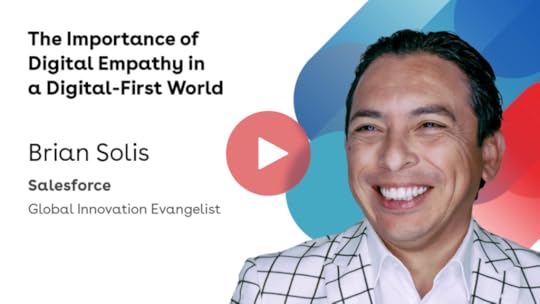
At CongaConnect, Brian Solis joined Serena Williams as keynote speakers. In his speech, Brian shared lessons from LifeSCALE: How to Live a More Creative, Productive, and Happy Life, for all leaders and employees to thrive in this new hybrid, work from anywhere world. His presentation is available online here [registration may be required].
Presentation OverviewWhile working digitally, it’s easy to forget we’re all human and that what we see on the screen doesn’t always reveal what people are really feeling. Join Brian Solis, Global Innovation Evangelist at Salesforce, 8-times best-selling author, and digital anthropologist, for a discussion on how we can better serve customers, teammates, and ourselves through our practice of digital empathy.
In these times of working, learning, shopping, and leisure from home, make time to recenter…you…for the next normal. Please also make sure to read LifeScale: How to Live a More Productive, Creative, and Happy Life.
The post The Importance of Digital Empathy in a Digital-First World appeared first on Brian Solis.
January 10, 2022
Humanizing AI, Automation, Robotics, and the Future of Business

My friend Rob O’Regan is my editor at CIO. He invited me to participate in a clever video series produced by CIO and Lenovo, Late Night I.T. When he told me that the show would be hosted by Emmy-nominated host, and my good friend, Baratunde Thurston, I jumped in with both feet.
Our particular episode focused on the state and future of artificial intelligence (AI), automation, and robotics. I was was joined by Anima Anandkumar, Director of Machine Learning Research, NVIDIA and Professor of Computing and Mathematical Science at Caltech. Together we explore the impact of AI on society, business, and creative output. As a digital anthropologist, I also apply a human lens to the conversation.
While it’s a deep and even technical conversation, it’s also a lot fun. Baratunde is an exceptional host and he keeps everything lively, meaningful, and full of laughs. I even flexed my robot dance moves!
In Baratunde words…
I’m laughing in an attempt to convince the machines that their jokes are indeed funny and ingratiate myself to them and their growing power. I’m signaling that I’m a “good” human ready to work with our robot overlords. I think it worked.
I was joined by @briansolis and Anima Anandkumar from @nvidia. In all this talk of “digital transformation” we often skip over the fact that PEOPLE are being asked to transform the most. Folks who have developed skills and habits and perspectives over years suddenly are expected to change because “progress.” We could be talking about technology or politics or both. And in this episode we did.
Please watch and let me know your thoughts.
Pictures from the shoot are available on Flickr.
The post Humanizing AI, Automation, Robotics, and the Future of Business appeared first on Brian Solis.
January 6, 2022
Healthcare Transformers: A Two-Part Series Defining the Future of Patient Experience by Brian Solis
What’s the future of patient experience?
What’s the future of caregiver experience?
Brian Solis penned an innovative two-part series for HealthcareTransformers that addresses the answers to these questions and more. Solis also explores the potential of digital, physical, and hybrid experience design in a digital-first world with mobile and Web 3.0 transforming patient expectations.
The ideas and lessons go beyond healthcare and affect customer experience innovation in industries including retail, travel and hospitality, automotive, and any customer-facing industry.
Part 1: A step-by-step guide to reinventing patient experience through human-centered innovation – linkExperience design is the next frontier for healthcare providers and those that master it will move beyond customer experience (CX) and patient experience (PX) to focus on the more important, yet complex, human side of experiences (HX).
Part 2: The four pillars of innovative patient experiences – linkNo more tolerance for mediocrity. The awakening to patient-focused experiences in healthcare.
The post Healthcare Transformers: A Two-Part Series Defining the Future of Patient Experience by Brian Solis appeared first on Brian Solis.
January 5, 2022
Verifone: The Ultimate List of 73 eCommerce Experts You Need to Follow

Via Raluca Bejgu, Verifone
Building an eCommerce business from scratch is a journey that many people before you have decided to take. And that’s a good thing because these folks now have something valuable to teach you.
By now, successful eCommerce businesses not only serve as an example for newbies but have also molded industry thought leaders who now have decided to share their knowledge and expertise.
Either if your goal is to learn more about scaling an early-stage eCommerce business, discover the key metrics to track, understand how to fight churn, or how to better promote your eCommerce business and which channels will work best, these people will surely have the tips and tricks to help you get started.
Social media definitely has its perks when it comes to networking and sourcing out information. Platforms like LinkedIn and Twitter can offer you the best methods of interacting with experts from your industry, ways to exchange tips and tricks related to everything eCommerce-wise, and all the trends in the biz. Blogs, on the other hand, are such a great way to learn more in-depth about the strategies the experts are using and their know-how.
If you are looking for eCommerce best practices, look no further, because these 71 experts will reveal all the information you need to succeed at selling online.
Brian is a blogger, keynote speaker and well-known author on topics like technology, business development, marketing, digital transformation and startup culture. In addition to being an expert in online businesses, he is also a huge social media influencer.
Connect with Brian
Twitter | LinkedIn
Books: Lifescale: How to Live a More Creative, Productive, and Happy Life
X: The Experience When Business Meets Design
The post Verifone: The Ultimate List of 73 eCommerce Experts You Need to Follow appeared first on Brian Solis.


