
Brian Solis's Blog, page 33
January 4, 2022
Web3 sets the stage for challenger and legacy brands to create new economic value and transform consumers into investors
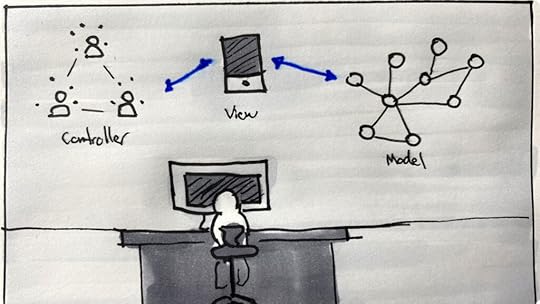
David Hoang, Proof of Concept
Beyond the hype, Web 3.0 is creating opportunities for incumbent and emerging businesses to reimagine operational models and products/assets that are open, collaborative, and collective. The same could also be true for governments. The difference with Web3 and previous incarnations of internet protocols models is that platforms are decentralized, open and ubiquitous, connected by trustless networks, and powered by encrypted, accountable distributed ledgers. Think Facebook or Google owning and monetizing content and data versus users. In these applications, user engagement and attention spans are the products.
NFTs, in some cases, are allowing communities to purchase digital assets that boast real world value, beyond the hype. NFTs, tokens, and other crypto-based assets could also be distributed as part of innovative loyalty programs where customers become stakeholders.
Or imagine offering physical and digital products as NFTs, authenticated and minted on a blockchain during every sale or resale. Homes, cars, luxury goods, can now all be tied to distributed systems of record that guarantee authenticity, linked to a historical value chain, providing individual ownership without any one centralized group facilitating each transaction.
The value proposition changes from one of consumption to that of ownership. For consumers, this becomes not only a matter of spending, but also investing in brands.
The New LLC, Decentralized Autonomous Organizations aka DAOsWith web3, everything—art, banking, insurance, healthcare, government services, etc.—can be reimagined as value-added goods and services that are owned by a shared group rather than a traditional company structure. Such is the promise with Decentralized autonomous organizations (DAOs). DAOs provide opportunities for companies to be created where customers and employees are stakeholders. Imagine, in just one case, an employee-owned business, where customers also become stakeholders in the organization. They have a say in the development of the rules and policies, prices and even earn dividends, by exercising their rights on the blockchain.
In a recent example, a DAO was formed as a collective effort to acquire a copy of the United States Constitution. Everyone who bought into the DAO earned ownership rights that would have guided the organization’s ownership of the asset had it been acquired.
From Web 3.0 to Web3We are in the early days of this current incarnation of Web 3.0, even though Sir Tim Berners-Lee first introduced the term in 2006 in reference to a “Semantic Web.” His vision was a Web based on universal data, machine learning, and ultimately AI. Perhaps this will be Web 4.0. The popular definition of Web3 goes to the crypto crowd with laser eyes in their avatars.  In this phase, the web is based on crypto and blockchain.
Gavin Wood, one of the co-creators of Ethereum, visualizes a more decentralized web, defining Web3 simply as, “less trust, more truth.”
In a world of walled gardens, bad actors, and centralized platforms where the favor of trust lies with big tech, more truth sounds incredibly promising.
More so, Web3 represents a promise of a new, more transparent, authenticated, decentralized, and accountable digital economy. I’m cautiously optimistic.
As explained on Ethereum.org:
Web2 refers to the version of the internet most of us know today. An internet dominated by companies that provide services in exchange for your personal data. Web3, in the context of Ethereum, refers to decentralized apps that run on the blockchain. These are apps that allow anyone to participate without monetising their personal data.
Cryptographic mechanisms ensure that once transactions are verified as valid and added to the blockchain, they can’t be tampered with later. The same mechanisms also ensure that all transactions are signed and executed with appropriate “permissions”
I was reading my old friend Tim O’Reilly’s take on Web3. His definition of Web 2.0 is pretty much the standard. So his impression is worth noting. The title of a recent article he wrote sums it up, for now, “Why it’s too early to get excited about Web3.”
As O’Reilly observed:
Keep in mind that it was still early when the dot-com bubble popped. Google Maps hadn’t been invented yet, nor had the iPhone and Android. Online payments were in their infancy. No Twitter or Facebook. No AWS and cloud computing. Most of what we rely on today didn’t yet exist. I suspect it will be the same for crypto. So much is yet to be created. Let’s focus on the parts of the Web3 vision that aren’t about easy riches, on solving hard problems in trust, identity, and decentralized finance. And above all, let’s focus on the interface between crypto and the real world that people live in…
While the get-rich-quick crowd is busy doing just that with crypto and NFTs, let’s play the long game for meaningful evolution. The path we’re on today is only sustainable at the cost of greater inequality, the erosion of trust and truth, compromised self-identity and values, and the further division within societies. Instead, let’s embrace the ethos, “less trust, more truth,” and create a more meaningful, scalable, and transformative next chapter of the web, our economy, and world.
The post Web3 sets the stage for challenger and legacy brands to create new economic value and transform consumers into investors appeared first on Brian Solis.


Entrepreneur: Your Top 4 Questions About 2022, Answered By the World’s Top Superforecasters
Adam Soccolich interviewed Brian Solis for the December 2021 issue of Entrepreneur. The article made the print edition and is also available at Entrepreneur.com (subscription required).
Your Top 4 Questions About 2022, Answered By the World’s Top SuperforecastersConsumer BehaviorWhat will customers want or expect more of?Beyond the oft examined categories of millennials and centennials, a new generation of consumers that I call Gen N — thatʼs N for ‘novelʼ — are now driving business transformation. It comprises everyone who became digital-first out of necessity during COVID-19, and was shaped by the emotional and psychological effects of navigating these stressful, frustrating, divisive, and also enlightening times. Brands will win them not just through digitization but through earning relevance and organizing around digital empathy, insights, and engagement. McKinsey data shows that loyalty is up for grabs all around the world. In the U.S., for example, 73 percent of consumers tried new shopping behaviors and brands, with up to 83 percent intending to stick with the new behaviors and brands post-pandemic. This means that retention is critical and acquisition is a growth opportunity.” — Brian Solis, global innovation evangelist at Salesforce
The post Entrepreneur: Your Top 4 Questions About 2022, Answered By the World’s Top Superforecasters appeared first on Brian Solis.
International Retail Design Conference Kicks Off with Keys to Surviving Digital Darwinism
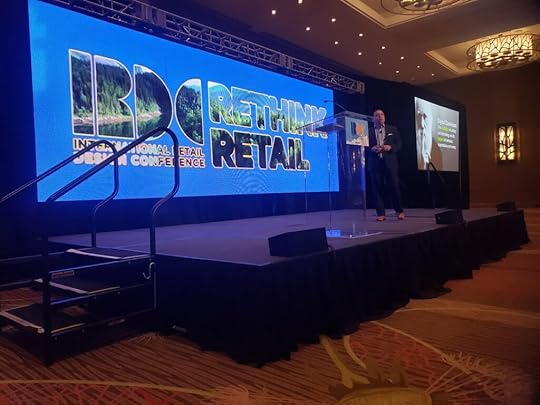
Via VMSD Magazine
The 21st annual International Retail Design Conference presented by VMSDmagazine played host to a throng of visual merchandisers, store designers and retail executives at the Sheraton Denver Downtown Hotel.
Centered around the theme “Rethink Retail,” the conference opened with keynote speaker and digital anthropologist Brian Solis, who shared how the emerging customer experience economy is transforming retail design. Among his insights were keys to surviving what he called “digital Darwinism.”
“With every tech revolution, society changes, business changes, life changes,” explained Solis. “We adapt and keep up, or we become obsolete.”
As a solution, he encouraged attendees to swim with the current of digital transformation and offer new experiences that speak to new consumer needs and behaviors.
He also shared some vital statistics, including how 84 percent of consumers say the shopping experience is as important as the product itself. “Look for places where friction exists, and use tech to take that friction away,” he advised.
IRDC 2021 Keynote: Retailers as Experience Designers – the Future of Retail
via VMSD Magazine, Jennifer Acevedo
What will the year 2030 bring the retail industry? The need to create an extraordinarily deep and meaningful customer experience. Your brand will be defined by those who experience it — and Brian Solis will help you be ready.
For almost 30 years, Brian has studied and influenced the effects of emerging technology on business and society. A world-renowned digital anthropologist and futurist, author, sought-after social media influencer and keynote speaker, and currently a Global Innovation Evangelist at Salesforce, he’s helped organizations worldwide understand and leverage innovation to create meaningful connections with customers, peers, and society at large.
In this must-see keynote, Brian’s eye-opening insights and guidance about the emerging customer experience economy will transform how you approach retail design.
Attendee BONUS: Each IRDC 2021 attendee will receive a copy of Brian’s bestselling book X: The Experience When Business Meets Design — a groundbreaking work on how the future of retail will be intensely experiential…and how to create and cultivate meaningful experiences with your own brand.
The post International Retail Design Conference Kicks Off with Keys to Surviving Digital Darwinism appeared first on Brian Solis.
December 30, 2021
CIO: Generation Novel – Survey Reveals Potential Opportunities and Security Threats CIOs Face with A Hybrid Workforce

via CIO
The workforce has learned from COVID-19 challenges, and now Generation Novel demands more flexibility, security, and digital-first experiences.
This shift in the traditional work environment, mindset, and experience of the workforce, has spawned an entirely new cross-generational cohort dubbed “Generation Novel,” or Gen-N, for short. Coined by digital anthropologist Brian Solis, Gen-N describes a collection of people who thrive on digital-first experiences, and place greater value on personalization, customization, and transparency from the brands they buy from, work for, and support. Above all else, they also understand, use, and demand more from technology – both at home and work.
Those changes are evident in a recent study conducted by Aruba, a Hewlett Packard Enterprise Company.
Aruba surveyed 5,018 hybrid workers across five of the largest markets in Europe, where 78% of respondents say they use technology more now than they did before the pandemic. 69% of respondents agree they now have more of an opinion on the technology they use at work and 71% feel it’s important to be able to customize their workplace tech set-up to suit their individual preferences—but within the structure, discipline, and security of a traditional office setting.
Read the article at CIO…
The post CIO: Generation Novel – Survey Reveals Potential Opportunities and Security Threats CIOs Face with A Hybrid Workforce appeared first on Brian Solis.
December 29, 2021
Lifehack: 50 LinkedIn Influencers To Follow, No Matter Your Industry

via Brian Lee, Lifehack
LinkedIn is an excellent platform to network with great people to help you in your career and businesses. However, with over 575 million people on the site, who should you follow? This list will steer you to the right people to follow, organized by categories of expertise.
Brian Solis often reflects on the future of business and how technology can disrupt our world.
Read Lifehack for the full list.
The post Lifehack: 50 LinkedIn Influencers To Follow, No Matter Your Industry appeared first on Brian Solis.
December 20, 2021
Generation C and why healthcare must adapt to meet their expectations
via Jason Considine, MedCityNews
Who is Generation C and how will healthcare adapt to meet their expectations? The term “Gen C” was first introduced circa 2012 by futurist Brian Solis as a way of describing a generation of connected consumers defined not by their age, geography, or income but by their hyper-connected, mobile-first mentality.
While the term “Gen C” was first introduced circa 2012 by futurist Brian Solis as a way of describing a generation of connected consumers defined not by their age, geography, or income but by their hyper-connected, mobile-first mentality, it’s increasingly being used to describe post-pandemic-born babies. It’s also been applied to the mindset and expectations of consumers in the wake of the pandemic. More recently, it has been used to label kids coming of age during the pandemic and how their expectations and experiences are different from ours.
But I’d argue that the pandemic has changed all of us. People have seen what’s possible by way of such pandemic-spawned conveniences as virtual visits, online scheduling, digital sharing of records and texting, while providers have seen more clearly than ever that convenience is the new currency.
In the broadest sense, we’re all Gen C now (Generation Covid). Our expectations of how we experience healthcare have been irrevocably altered, the differences only being ones of degree across demographics.
Solis doesn’t refer to today’s pandemic psychographic of consumers Generation Covid, instead he refers to this new market of decision-makers as Generation-Novel. He did so because novel, like the novel coronavirus, means new. And that’s what this new customer segment is…new.
You can read more of Solis’ work on the subject in Forbes among others.
—
Bonus: What is Generation C?Back in 2012, digital analyst Brian Solis defined Generation C as the “Connected Consumer.” He pointed out that anyone who integrates technology into their daily routine, regardless of age, shares certain qualities.
“It is how people embrace technology, from social networks to smartphones to intelligent appliances, that contributes to the digital lifestyle that is now synonymous with Gen C,” he wrote.
Source: Inc.
The post Generation C and why healthcare must adapt to meet their expectations appeared first on Brian Solis.
December 14, 2021
A New—and Timeless—Digital-First Consumer Is the Future

Original story by Lisa Boylan, Associations Now, ahead of Brian Solis’ keynote at #asaeTec21 in Washington, DC
Disruption can be a gift, according to Brian Solis, bestselling author, digital anthropologist, and futurist. Among the positives: It created an ageless consumer segment that is leading the way.
There’s a different, inclusive generational category that has nothing to do with birthyear span or the stereotypes and baggage they often carry, like baby boomers or millennials. Instead, meet Generation Novel. Coined by Brian Solis, global innovation evangelist at Salesforce, Generation N refers to a new kind of customer, perhaps forever changed by the pandemic.
Generation N is digital-first and cross-generational, so whether a consumer is 25 or 55, when they use their favorite app or online service, they are going to have similar interests, behaviors, and aspirations.
“What makes it so profound is that it’s a huge contingent of the market,” said Solis, a keynote speaker at next week’s ASAE Technology Exploration Conference. “Whereas before it might have been a sliver based on age, now it is a sweeping imperative.”
The Upside of DisruptionEverything was disrupted in the last two years. “It was very deep, and it left a somatic marker within each of us, which is a visceral emotional bookmark that we’ll hold onto forever,” Solis said. But people persevered, in some cases without even knowing it.
Solis regards such disruption as a gift. “When the market evolves, disruption becomes inevitable,” he said. “It’s a historical phenomenon called creative destruction. The old things make way for the new.” Research backs it up: According to McKinsey’s “Quickening” study, 75 percent of U.S. consumers have tried different stores, websites, or brands and most are going to stick with those new brands after the pandemic.
“The core of Generation N is essentially the core of what it takes to be in business today,” Solis said. “The digital-first world is a hybrid world—a conscious world where everything from communications, to the services that associations provide their members, to marketing—everything needs to be reimagined for this new world.”
Put an “S” in Customer ExperienceThe paradigm shift is perspective. “Technology is not the problem anymore,” Solis said. “Technology is actually here to make things not only more human, but special—even magical.” Now it comes down to how people want to deploy the technology. The number-one initiative businesses are investing in today, because of the pandemic, is customer experience (CX).
CX could be technologies to improve what the customer experiences, or it could be completely reimagined. “Let’s add an apostrophe ‘s’ to customer experience,” Solis said. “Let’s remind ourselves it’s the customer’s experience.”
It starts with understanding what customers value, what they don’t value, and what they’re getting elsewhere. The goal should be to design better experiences that benefit customers. Because if they don’t have a good experience, that’s what they’re going to remember, Solis said.
The post A New—and Timeless—Digital-First Consumer Is the Future appeared first on Brian Solis.
December 13, 2021
Digital futurist says the technology behind psychographic targeted can be used for good, evil or advertising
Original article written by Austyn Allison, Campaign Middle East
Brian Solis is Global Innovation Evangelist at Salesforce [previously principal analyst at Altimeter Group in the US], where he studies disruptive technology and works with companies around the world on business innovation and digital transformation strategies. He was introduced at last month’s OMD Predicts event in Dubai as “a keynote speaker, digital anthropologist and futurist,”and he has always looked at how technology affects society.
He began his career looking at ways to bypass the media most people were consuming in the early to mid-1990s. “I moved to Silicon Valley in 1996,” he says. The internet was growing more pervasive and “we started to see the onset of the consumerisation of technologies, and that led to a lot of experimentation. A lot of that experimentation was: could we bypass traditional intermediaries and go directly to people through [chat forums and message boards]?”
That sort of thinking spread throughout the Valley and gradually gave birth to social media. Today much of people’s news and information is gleaned not through television, radio and newspapers but through platforms such as Facebook, YouTube and Twitter.
People are using these channels on the go, through mobile phones in what Google likes to call ‘micromoments’. Solis says those micromoments are “really upsetting the balance” of marketing and “democratising branding”.
He explains: “In our research we found when people reach for their phone to make a decision [about where to go to dinner, for example], 90 percent of people in that moment are looking for information without a brand in mind, per se. And 73 percent make a decision about who they are going to work with or buy based on the information they find.”
That information isn’t necessarily from a website, he adds: “It’s from a YouTube video or an Amazon review.”
Today Solis says marketers should be wary of trying to pull people away from how they choose to connect.
“You can judge phone over-immersion all you want,” he told the audience at the OMD Predicts conference. “But that’s not going to change it”.
At the same event, marketing consultant Martin Lindstrom lamented that now we have smartphones we seldom get bored. Rather than looking around, pondering random thoughts or talking to strangers when we have down-time, we are more likely to check our screens.
And Solis also worries, telling Campaign: “As we heard Martin Lindstrom talk about, boredom and downtime are now being filled with connectivity, and that keeps us moving to the next, moving to the next…” He snaps his fingers on each “next”, but stops when he says: “I think we need time for reflection. At the end of the day we have other things that define who we are, and we have to bring that back online.”
We need to re-learn to connect better as people. Speaking on a day Mexico was rocked by a massive earthquake, and hurricanes were hitting the mainland US and its territory of Puerto Rico, he says: “I have a good friend who lost all her belongings and home in the Houston floods. And to see our community of friends help her out and bring her back to a home, you can see humanity can be good when technology is used.”
Even in the less selfless world of marketing, we can use cutting-edge data crunching to make things a little better. “Imagine if we are using the same techniques at scale, or branding at scale, that is more human or aspirational,” he says.
This shift all begins with “being smart about who we are and then bringing that back to work on how we control information and don’t let information control us”.
On the stage, he suggested: “What if a brand was built upon somatic markers, upon the things that you felt and that you shared because they meant something to you?”
This philosophy is of its time, he adds: “We are now living in an era where the experiences are the product; it’s more important than stuff.”
For this reason, smartly designed retail stores are more Instagrammable.
Kodak is often held up as a brand that didn’t evolve with the times, but often the reasons given for its decline stop at it failure to adapt to the old technology of film being surpassed by digital cameras and then smartphones.
Solis goes further, saying: “What happened to The Kodak Moment is we … stopped taking those pictures and using them as memories. Now our pictures become real-time experiences … or they become ephemeral. But they are just instances, and Kodak lost touch with what The Kodak Moment meant to a new generation of customers.”
He cites the Canadian academic Marshall McLuhan, who declared: “The medium is the message.” This applies today not only to the selfie culture of smartphone photography, but to social media in general.
“About 10 years ago I wrote a paper for a secret government entity that talked about how at some point social media could be used in ways to create information that– going back to bypassing the traditional intermediaries – could reach people directly and influence their perceptions and behaviours,” says Solis.
Much of what he anticipated a decade ago has since been used by the likes of Cambridge Analytica, the psychographic marketing firm that helped Donald Trump win last year’s US presidential election through microtargeting of voters, and may have been instrumental in steering the UK to vote to leave the European Union.
“I wrote that paper on a positive note, that we could do good for the world,” says Solis. “But I was interested to see how that [Trump’s] exact playbook was the opposite of that, in that we were using fake news, we were using consumer data and psychographic data as a way of creating content that could manipulate [voters] based on their weak points.”
Using psychographic data to sell products or to influence voters is ethically different, though, he says. “I think at the end of the day [the social networks that colluded] liked the revenue and the ability to show the muscle of Facebook with its own internet, if you will. In those cases there were moral challenges, and I think that’s what’s different from [selling] a soft drink.”
People are understandably much more cynical and sceptical now about their manipulation by marketers, through social media and the distribution of false information.
“But the problem is that [people] don’t know when they are being manipulated,” says Solis. “I hate to say that, but [the techniques] are so compelling, so efficient and so effective that it is scary. And, as I said as a result when I wrote that original paper, with this technology comes great responsibility.”
People are aware that fake news exists, but not necessarily when they are being manipulated by marketers and propagandists through social media. “Unfortunately, nobody is really unifying against it,” says Solis. “There’s a lot of little disparate things, but we are learning every day just how deep this was within Facebook, that the Facebook team met with the Trump campaign, that they helped guide the strategies, and that the YouTube team helped guide these strategies.”
But Solis still maintains he is an optimist.
“We need to learn and unlearn a bit about what’s happening, and to be a bit more open minded and maybe embrace a bit more critical thinking, which is so difficult to do,” he says.
The post Digital futurist says the technology behind psychographic targeted can be used for good, evil or advertising appeared first on Brian Solis.
December 7, 2021
Special Report: A Blueprint for Becoming a Customer-Unified Company; Making the Customer’s Experience the Heart of the Enterprise
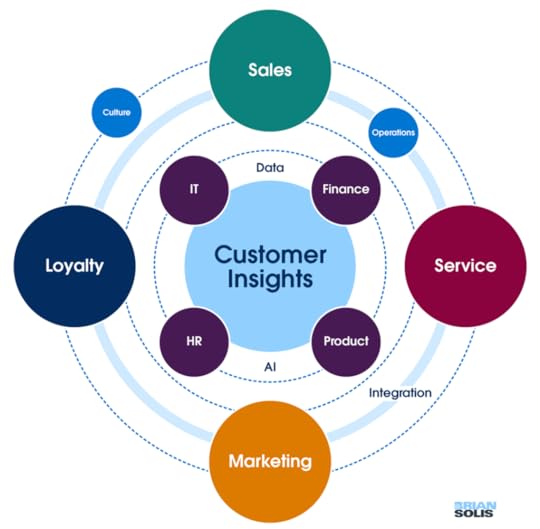
Customer experience is the number one priority as ranked by executives around the world. Even though most may say they’re already “customer-centric,” the reality is that only 15% say they have both a single (360-degree) view of customer data and the organizational structure to make use of those insights.
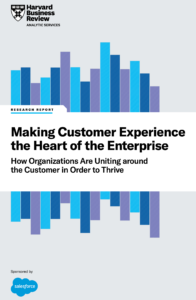
At Salesforce, I recently had the opportunity to work with Harvard Business Review Analytic Services (HBRAS) on a survey of 1,100 executives around the world exploring how to meet the future of customer experiences.
The new report, “Making Customer Experiences the Heart of the Enterprise: How Organizations Are Uniting around the Customer in Order to Thrive,” features companies such as Kellogg’s, Pacific Life, Kimberly-Clark and others. It shares how executives are effectively investing in improving both customer insight and customer engagement, and how they’re transforming with scale and speed.
The report is available for download, here.
Following the release of the report, I was invited to contribute a special series for Harvard Business Review.
The reality of executives prioritizing customer experience in their business transformation with such a small percentage of companies actually organized around their customer, inspired me to draft a blueprint for becoming a customer-unified company. The result is a five-part approach to customer-centricity.
As the world reopens, every organization faces a new opportunity to reimagine their business in the next normal. The time is now to transcend disruption into opportunity, to become customer-centered, organize around customer data, and deliver more personal experiences at scale, at every stage of the customer journey. Let’s unite around our customers and their single source of truth to reshape our businesses together.
The post Special Report: A Blueprint for Becoming a Customer-Unified Company; Making the Customer’s Experience the Heart of the Enterprise appeared first on Brian Solis.
November 17, 2021
Building brand loyalty with empathy
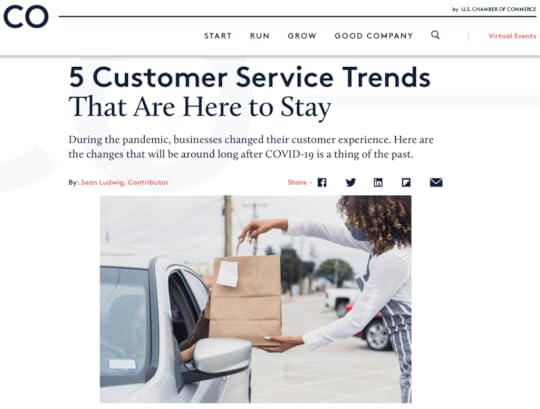
Thoughts about the future of customer service and experience published by Brian Solis in Forbes, was recently included in CO by the U.S. Chamber of Commerce, “5 Customer Service Trends That Are Here to Stay.” Author, Sean Ludwig.
During the pandemic, businesses changed their customer experience. Here are the changes that will be around long after COVID-19 is a thing of the past.
Building brand loyalty with empathyOne way customer service has notably changed during the pandemic that brands embrace empathy and human connections. This can be as simple as asking how customers are doing or as complex as slowing down complicated interactions to walk customers through step-by-step instructions. Basically, brands try to make customers feel like they are a part of the family, so they stay loyal.
“A positive customer experience comes down to making a customer feel valued in the moment,” Brian Solis, Global Innovation Evangelist at Salesforce, writes in Forbes. “Empathy has always been a key skill for customer service, but it’s become even more essential during an uncharted moment. Seventy-one percent of consumers say businesses that have shown empathy during the pandemic have earned their loyalty. … Now, service isn’t just about solving problems. It’s about enhancing relationships and enchanting customers.”
The post Building brand loyalty with empathy appeared first on Brian Solis.


