
Brian Solis's Blog, page 22
March 22, 2023
CNN Türk: Şirketteki değişimi siz başlatın – You ignite the change within the company
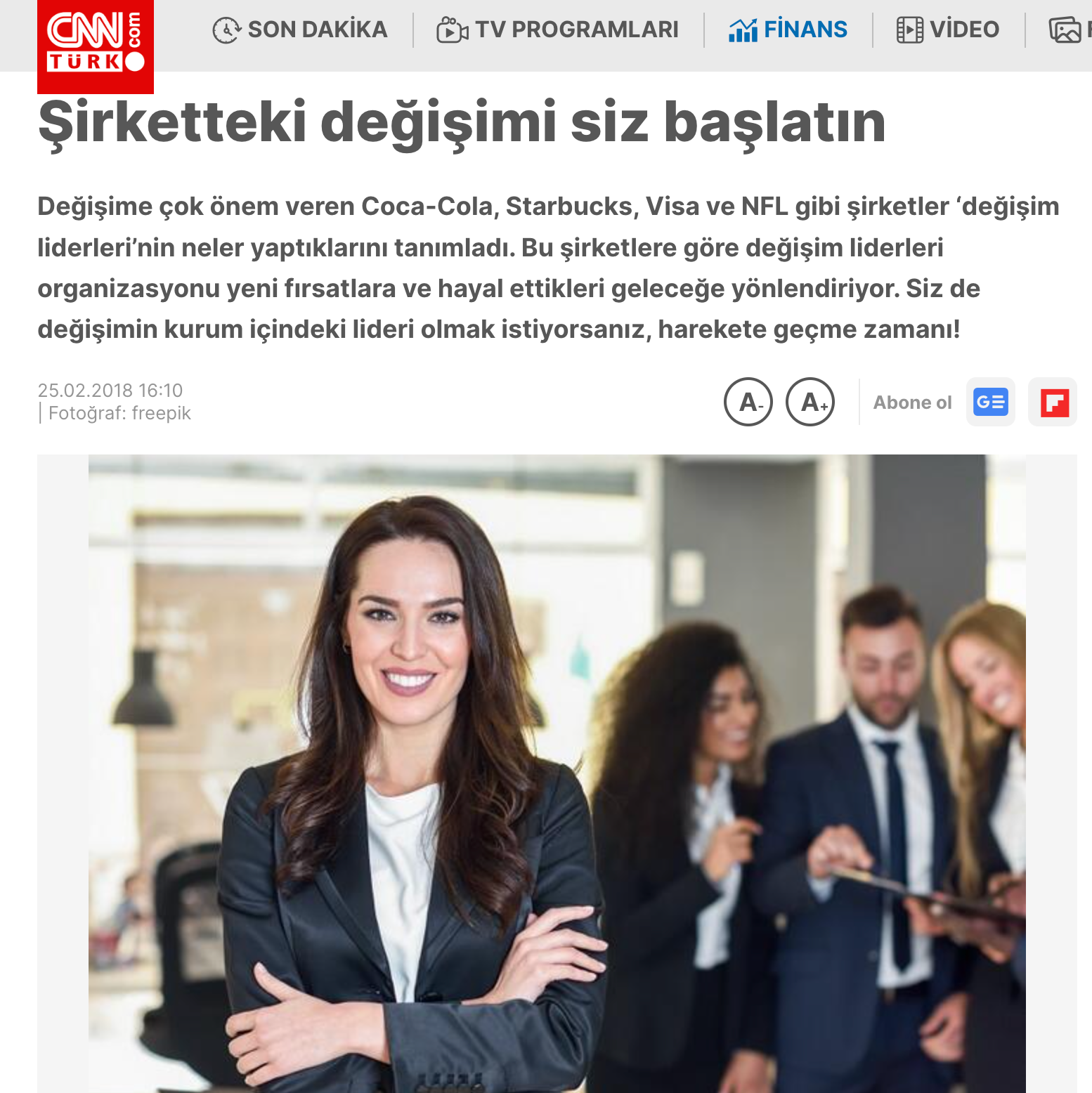
I’m not sure how I missed this story, but wow! CNN Türk covered the release of one of my favorite research reports I published as a Principal Analyst, “The Digital Change Agent’s Manifesto.”
The research was conducted over years of studying digital transformation at companies including Coca-Cola, NFL, Starbucks, and Visa. The result was a guide to help digital executives find a path to gain support from the C-Suite and lead total transformation. Re-reading the report, the insights serve as a path forward in this accelerated digital-first world. It’s probably more timely today and perhaps worthy of its own book!
I’ve included a translated version below using Google Translate. Please let me know if you find any errors. I’ll also include the original Turkish version below…
Start the change in the companyCompanies such as Coca-Cola, Starbucks, Visa and NFL, which attach great importance to change, defined what ‘change leaders’ do. According to these companies, change leaders lead the organization to new opportunities and the future they dream of. If you want to be the leader of change within the organization, it’s time to take action!
Change leaders are indispensable pioneers of digital transformation in small and large organizations. But what are the changes required to become a change leader in your company? Of course, just a strong desire for change is not enough. Brian Solis, principal analyst and futurist at Altimeter, has spent five years studying the world’s biggest brands. Coca-Cola has released a report that includes highlights from meetings with senior officials from leading companies such as Samsung, Starbucks, Visa and the NFL. According to the report, change leaders have 10 common traits.
1. TAKE CHARGE OF FACILITATING CHANGE
The first seems to be the most obvious, but it is not. Of course, if you’re going to act as a change leader, you better be prepared to embrace the role. But remember this: the change leader does not change the company. Rather, it acts as a catalyst for the company to change itself. This is a critical difference.
2. WORK WITH OTHER CHANGE LEADERS
Change leaders are not just cowboys. You will need help changing it. Is this one of the ways to get help? To give. “Change leaders take on functions that are not visible on paper, such as data collector and storyteller, example creator, relationship builder and promoter, to drive the human dimensions of business and digital transformation,” Solis writes in the report.
3. LEARN TO SPEAK THE LANGUAGE OF TOP MANAGERS.
Change doesn’t happen often without the support and encouragement of seniors. However, senior managers speak a different language and have a different mindset than the company’s mid-level employees. To be successful, make sure you understand and adapt to that language: quarterly goals, return on investment, organizational structure, etc.
4. WIN ALLIES
‘Don’t limit your digital transformation efforts to one department,’ says Solis. “Your transformation efforts often require support and cross-functional resources for proper execution and finance.” This happens when the change is for the benefit of others in addition to yourself. “Effective change leaders are ambassadors of empowerment and participation,” says Solis.
5. PROMOTE DIGITAL LITERACY
Change leaders must learn how to succeed in the new digital world. But they must also help others acquire the same skills. And order matters: Emery Skolfield, Foot Locker’s VP of Global Digital Marketing, said, “Education comes before day-to-day change advocacy” he says.
6. BUILD A ROADMAP OF DIGITAL TRANSFORMATION
Winners do not win by mere desire. Winners win by planning the work and then executing the plan. To balance short-term goals with long-term strategy, Solis recommends local pilot projects that can be done quickly and inexpensively. The experience gained can then be applied on a large scale.
7. LINK DIGITAL TRANSFORMATION EFFORTS TO BUSINESS AND INDIVIDUAL GOALS
No organization will change just to have changed. Change is difficult and expensive, and therefore change must serve the core goals of the organization. “In the end, you need to know what you want to achieve and why,” says Shiv Singh, Visa’s SVP of Innovation and Strategic Partnerships. “Digitalization is not enough for the sake of digitalization.”
8. SET MEASUREMENT CRITERIA AND MILESTONES
For similar reasons, change leaders should define success measurement criteria and milestones. All digital transformation has to be measured in terms of return on investment, Solis says. After all, businesses do business to make a profit.
9. ADVOCATE FOR EVERYONE’S OPINION
A change leader’s first lesson: it’s not about your personality. Second? We are smarter than just one of us if we all come together. Solis says, ‘Digital change leaders must play an important role in mainstreaming idea generation at all levels so that many ideas for digital transformation can be heard and used regardless of where the idea came from.’ says. “More importantly, change leaders must persuade managers so that the best ideas can be applied to formal pilot programs.”
10. TAKE ADVANTAGE OF YOUR NATURAL STRENGTHS
There’s a reason you’re a change leader. Maybe you naturally always look forward. Perhaps you are deeply concerned with the goals and success of your organization. Maybe you are a natural team builder. All change leaders are self-motivated. Some are introverts, some are extroverts. According to Solis, some find comfort in chaos, others seek to establish new organizational structure. Regardless, change leaders “don’t give up unless they are convinced that true innovation is not possible without serious compromise,” he says.
BEING A CHANGE LEADER CAN BE TOUGH, BUT THE REWARDS ARE HUGE.“Being a change leader is in your DNA, you have to be resilient and you shouldn’t worry too much about tipping,” says Julie Bowerman, Coca-Cola’s Vice President of Global E-commerce. “You can’t teach that: it’s about who you are. You’re an optimist who enjoys opportunities and doesn’t get bored when you’re stuck.” So it may be time to stop being shy and change something!
The Digital Change Agent’s Manifesto by Brian Solis from Brian Solis Şirketteki değişimi siz başlatın
via CNN TÜRK
Değişime çok önem veren Coca-Cola, Starbucks, Visa ve NFL gibi şirketler ‘değişim liderleri’nin neler yaptıklarını tanımladı. Bu şirketlere göre değişim liderleri organizasyonu yeni fırsatlara ve hayal ettikleri geleceğe yönlendiriyor. Siz de değişimin kurum içindeki lideri olmak istiyorsanız, harekete geçme zamanı!
Değişim liderleri, küçük ve büyük organizasyonlarda dijital dönüşümün vazgeçilmez öncüleridir. Ancak şirketinizde bir değişim lideri olmak için gereken değişiklikler nelerdir? Tabii ki, sadece değişim için güçlü bir arzu yeterli değil. Altimeter’in ana analisti ve fütüristi olan Brian Solis, beş yıl boyunca dünyanın en büyük markalarını inceledi. Coca-Cola, Samsung, Starbucks, Visa ve NFL gibi önde gelen şirketlerin üst düzey yetkilileri ile görüşmelerinden öne çıkanları içeren bir rapor yayınladı. Rapora göre, değişim liderlerinin 10 ortak özelliği var.
1. DEĞİŞİMİ KOLAYLAŞTIRMA İŞİNİ SEVEREK ÜSTLENİN
Birincisi en açığı gibi gözüküyor, ancak değil. Elbette, bir değişim lideri olarak görev yapacaksanız, rolü kucaklamak için hazır olmanız daha iyi olur. Ancak şunu unutmayın: değişim lideri şirketi değiştirmez. Daha ziyade, şirketin kendisini değiştirmesi için bir katalizör görevi yapar. Bu kritik bir fark.
2. DİĞER DEĞİŞİM LİDERLERİYLE BİRLİKTE ÇALIŞIN
Değişim liderleri yalnız kovboylar değildir. Değiştirmek yardıma ihtiyacınız olacak. Bu yardımı almanın yollarından biri mi? Vermek. Solis, raporda, “Değişim liderleri, işin insani boyutlarını ve dijital dönüşümü yönlendirebilmek için veri toplayıcı ve hikayeci, örnek yaratıcı, ilişki kurucu ve destekleyici gibi kağıt üzerinde görünmeyen işlevler üstleniyor” şeklinde yazıyor.
3. EN ÜST DÜZEY YÖNETİCİLERİN DİLİNİ KONUŞMAYI ÖĞRENİN.
Değişim üst düzeyin destek ve teşviki olmadan pek sık gerçekleşmez. Ancak üst düzey yöneticiler şirketin orta seviye çalışanlarından farklı bir dil konuşur ve farklı bir zihniyet sahibi olurlar. Başarılı olmak için o dili anladığınızdan ve uyum sağladığınızdan emin olun: çeyrek hedefleri, yatırımın geri dönüşü, organizasyon yapısı vb.
4. MÜTTEFİK KAZANIN
Solis, ‘Dijital dönüşüm çabalarınızı bir departmanla sınırlı tutmayın’ diyor. “Dönüşüm çabalarınız çoğunlukla destek ve düzgün icra ve finans için çapraz işlevsel kaynaklara ihtiyaç duyar.” Bu, değişim kendinize ek olarak başkalarının da yararınaysa gerçekleşir. Solis, “Etkili değişim liderleri yetkilendirme ve katılımın büyükelçileridir” diyor.
5. DİJİTAL OKURYAZARLIĞI YAYGINLAŞTIRIN
Değişim liderleri yeni dijital dünyada nasıl başarılı olacaklarını öğrenmeli. Ancak aynı zamanda başkalarının da aynı becerileri edinmelerine yardımcı olmalılar. Ve sıralama önemlidir: Footy Locker’ın Global Dijital Pazarlama Başkan Yardımcısı Emery Skolfield, “Eğitim günübirlik değişim savunuculuğundan daha önce gelir.” diyor.
6. DİJİTAL DÖNÜŞÜMÜN YOL HARİTASINI OLUŞTURUN
Kazananlar salt arzu ederek kazanamazlar. Kazananlar, işi planlayarak kazanır ve daha sonra planı uygularlar. Kısa vadeli hedefleri uzun vadeli stratejiyle dengelemek için Solis, hızlı ve ucuz yapılabilen yerel pilot projeleri önermektedir. Edinilen deneyim daha sonra büyük ölçeklerde uygulanabilir.
7. DİJİTAL DÖNÜŞÜM ÇABALARINI İŞ HEDEFLERİNE VE BİREYLERİN HEDEFLERİYLE İLİŞKİLENDİRİN
Hiçbir organizasyon sırf değişmiş olmak için değişmeyecek. Değişim zor ve pahalıdır ve bu nedenle değişim kuruluşun temel hedeflerine hizmet etmelidir. Visa’nın Yenilikçilik ve Stratejik Ortaklıklar SVP’si Shiv Singh “Sonunda neyi, neden başarmak istediğinizi bilmeniz gerekiyor” diyor. “Dijitalleşme uğruna dijitalleşme yeterli değil.”
8. ÖLÇÜM KRİTERLERİNİ VE KİLOMETRE TAŞLARINI BELİRLEYİN
Benzer sebeplerden dolayı değişim liderleri başarı ölçüm kriterlerini ve kilometre taşlarını belirlemelidir. Solis, tüm dijital dönüşümün yatırımın geri dönüşüne bağlı olarak ölçülmek zorunda olduğunu söylüyor. Sonuçta, işletmeler kâr sağlamak için iş yapıyorlar.
9. HERKESTEN FİKİR ALINMASINI SAVUNUN
Bir değişim liderinin ilk dersi: konu sizin kişiliğinizle ilgili değil. İkinci? Hepimiz bir olursak sadece birimizden daha akıllıyız. Solis, ‘Dijital değişim liderleri, fikir üretmeyi her seviyeye yaygınlaştırmada önemli bir rol oynamalı, böylece dijital dönüşüm için pek çok fikir duyulabileceği gibi, fikrin nereden geldiğine bakılmaksızın kullanılması mümkün olur.’ diyor. ‘Daha da önemlisi, değişim liderleri, en iyi fikirlerin resmi pilot programlara uygulanabilmesi için yöneticileri ikna etmelidir.”
10. DOĞAL OLARAK SAHİP OLDUĞUNUZ GÜÇLÜ YANLARINIZDAN YARARLANIN
Değişim lideri olmanızın bir sebebi var. Belki doğal olarak hep ileriye bakıyorsunuz. Belki organizasyonunuzun hedefleri ve başarısıyla derinden ilgileniyorsunuz. Belki de doğal bir takım kurucusunuz. Tüm değişim liderleri öz motivasyonludur. Bazıları içe dönük, bazıları dışa dönüktür. Solis’e göre, bazıları kaosta rahatlığı buluyor, diğerleri yeni organizasyon yapısı kurma arayışında. Ne olursa olsun, değişim liderleri ” gerçek yeniliğin ciddi bir taviz vermeden mümkün olmadığına ikna olmadıkça vazgeçmez” diyor.
BİR DEĞİŞİM LİDERİ OLMAK ZOR OLABİLİR, ANCAK ÖDÜLÜ BÜYÜKCoca-Cola’nın Global E-ticaret Başkan Yardımcısı Julie Bowerman, “Değişim lideri olmak DNA’nızdadır, dayanıklı olmak zorundasınız ve devrilmeyle ilgili çok fazla endişelenmemelisiniz” diyor. “bunu öğretemezsiniz: bu sizin olduğunuz kişiyle ilgili. Fırsatların tadını çıkaran ve sıkıştığınızda sıkıntı yapmayan iyimser birisiniz.” Bu yüzden utangaçlığı bırakıp bir şeyler değiştirmenin zamanı gelmiş olabilir!
The post CNN Türk: Şirketteki değişimi siz başlatın – You ignite the change within the company appeared first on Brian Solis.


March 21, 2023
Innovation Day: Brian Solis to Present to Leaders at the United Nations About Business Model (and Leadership) Innovation
Brian Solis will present to leaders at the United Nations as part of its Innovation Day on March 22nd, 2023.
Digitization vs. Digital Transformation: Rethinking business for a novel economyBrian Solis is a world-renowned digital analyst, futurist, and 8x best-selling author who’s been on the front lines of digital transformation and innovation for almost 30 years. He will share the human side of digital transformation and how we can use this moment to CTRL-ALT-DEL our perspective and mindset to unleash new possibilities and outcomes in this novel economy.
Innovation Day exposes United Nations staff to new ideas, processes, behaviours, and concepts. These briefings cover a wide variety of innovative and creative topics. They include internal briefings on innovation across the UN system, as well as briefings by external experts.
The post Innovation Day: Brian Solis to Present to Leaders at the United Nations About Business Model (and Leadership) Innovation appeared first on Brian Solis.
Liderler için yol haritası – An Interview with FAST COMPANY Turkey About Becoming a Customer Company
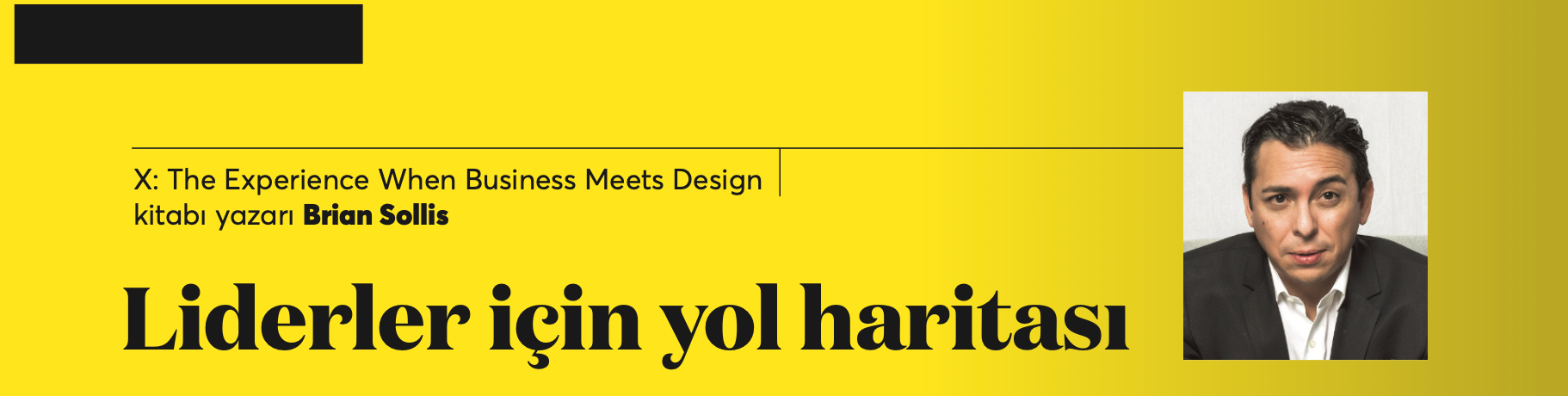
I had the pleasure of speaking with M.Rauf Ates, founder of Fast Company Türkiye about research I helped lead with Harvard Business Review Analytical Services.
In this conversation, we explore how to become a customer company, beyond the lip service. The research offers 8 steps to give meaning to business, operational, and digital transformation as informed by Ethan Allen, Kellogg’s, Kimberley-Clark, and Pacific Life.
Below, I’ve included a translation using Google Translate. If you find errors, please let me know! I’ve also included the original text and a downloadable PDF.
Roadmap for leadersCustomer-oriented companies point to the fact that they put the customer at the center of the organization, which is great. Brian monitors customer behavior and trends; “I reverse engineer their journeys, touchpoints, services, and products,” he shared.
First of all, we need to start with the definition of customer experience. Customer experience refers to the sum total of a customer’s interactions with your company, how they feel about your brand at each stage and how your brand stays in their minds and how all those steps affect the experience holistically. Adding the suffix – means the customer’s experience, returning our view of the customer experience (CX) to theirs.
Companies that convert with customersA different angle on this issue is that customer-oriented companies take the customer into orbit and transform with the customer. These companies both empathize with their customers and understand them in a technological sense. They are also ready to serve customers when they are ready to participate. This means that companies need to put customer insights and engagement at the center of the organization.
However, recent research by Salesforce, sponsored by Harvard Business Review Analytic Services (HBRAS), found that only 15 percent of companies worldwide have a single (360 degree) view of customer data and the organizational structure needed to leverage those insights.
Being integrated with the customer!When I look at it like this, the three elements of being a customer-integrated company are as follows:
1. Empathy Culture:
Understand that the customer you are really trying to reach is not managers. Ensure the practice of both empathy and digital empathy.
2. Insight Culture: Become a data-driven insight organization. Focus on relevant 360-degree customer data and understand the customer with data-driven insights.
3. A Culture of Participation and Interaction: Sponsored
In our HBR research, we learned about two aspects of CX: insight and engagement. Organize customer touchpoints around insights and leverage both regular and digital engagement to deliver personalized, relevant, integrated and efficient experiences.
Roadmap of being focusedIntegrating with the customer is an endless process; is infinite. The customer will continue to transform, and so should we.
Here are eight steps that can help you build a customer-engaged company where data, insights, and engagement deliver competitive customer experiences:
1. Listen and observe your customers.
2. Set standards for the end-to-end customer experience.
3. Build a framework for turning data into actionable insights that drive customer success.
4. Connect all the dots with technology powered by artificial intelligence.
5. Establish a leadership committee responsible for customer experience and data integration to bring together 360-degree customer insights and engagement.
6. Decide which touchpoints are important, what needs to be fixed and what is missing
7. Develop so that every employee has skills in the CX area.
8. Give each employee autonomy to succeed in the eyes of your customers.
In our work with HBRAS, we focused on a few companies and aimed to document their journey to become a 360-degree, customer-integrated company. These include Ethan Allen, Kellogg’s, Kimberly-Clark Corp. and Pacific Life Insurance. In addition to the 1,100 executives questioned, the report also featured best practices implemented by those who should serve on the CX steering committee, and a Customer Experience Excellence Checklist.
Liderler için yol haritası
Müşteri odaklı şirketler, müşteriyi organizasyonun merkezine koyduklarına işaret ederler ki bu harikadır. Brian müşteri davranışlarını ve eğilimlerini takip eder; yolculuklarını, temas noktalarını, hizmetleri ve ürünleri ters mühendislikle incelerim. Öncelikle müşteri deneyiminin tanımından başlamak gerek. Müşteri deneyimi, bir müşterinin şirketinizle etkileşimlerinin toplamını, her aşamada markanız hakkında nasıl hissettiklerini ve markanızın akıllarında nasıl kaldığını ve tüm o adımların deneyimi bütünsel anlamda nasıl etkilediğini ifade eder. -nin ekini ekleyerek müşterinin deneyimi demek, müşteri deneyimine (CX) dair bakış açımızı, onların bakış açısına döndürür.
Müşteriyle dönüşen şirketlerBu konuya dair farklı bir açı da, müşteri odaklı şirketlerin müşteriyi yörüngesine aldığı ve müşteri ile birlikte dönüştüğüdür. Bu şirketler, müşterileri ile hem empati kurar hem onları teknolojik anlamda anlar. Aynı zamanda katılım göstermeye hazır olduklarında onlar da müşterilere hizmet sunmaya hazırdır. Bu da, şirketlerin müşteri içgörülerini ve katılımını organizasyonun merkezine koymaları gerektiği anlamına geliyor.
Ancak Salesforce’un Harvard Business Review Analytic Services (HBRAS) sponsorluğunda yürüttüğü son araştırmada görüldü ki, dünya çapındaki şirketlerin yalnızca yüzde 15’i müşteri verilerinin tek bir (360 derece) görünümüne ve bu içgörülerden yararlanmak için gereken organizasyon yapısına sahip.
Müşteriyle bütünleşik olmak!Böyle bakınca bana göre müşteri ile bütünleşik bir şirket olmanın üç unsuru şöyledir:
1. Empati Kültürü:
Gerçekten ulaşmaya çalıştığınız müşterinin yöneticiler olmadığını anlayın. Hem empatinin hem dijital empatinin uygulanmasını sağlayın.
2. İçgörü Kültürü: Veriye dayalı bir içgörü organizasyonu haline gelin. İlgili 360 derece müşteri verilerine odaklanın ve veriye dayalı içgörüler ile müşteriyi anlayın.
3. Katılım ve Etkileşim Kültürü: Sponsorlu
HBR araştırmamızda, CX’in içgörü ve katılım olmak üzere iki yönünü öğrendik. Müşteri temas noktalarını içgörüler çerçevesinde düzenleyin ve kişiselleştirilmiş, alakalı, entegre ve verimli deneyimler sunmak için hem normal hem de dijital etkileşimden yararlanın.
Odaklı olmanın yol haritasıMüşteriyle bütünleşmek sonu olmayan bir süreçtir; sonsuzdur. Müşteri dönüşmeye devam edecek, biz de dönüşmeliyiz.
Verilerin, içgörülerin ve katılımın rekabet avantajı yaratan müşteri deneyimleri sunduğu, müşteriyle bütünleşik bir şirket oluşturmanıza yardımcı olabilecek sekiz adımı şöyle sıralayabilirim:
1. Müşterilerinizi dinleyin ve gözlemleyin.
2. Uçtan uca müşteri deneyimi için standartlar belirleyin.
3. Verileri müşteri başarısını artıran, eyleme geçirilebilir içgörülere dönüştürmek için bir çerçeve oluşturun.
4. Yapay zeka ile desteklenen teknolojiyle tüm noktaları birleştirin.
5. 360 derece müşteri içgörülerini ve katılımını aynı noktada buluşturmak için müşteri deneyimi ve veri entegrasyonundan sorumlu liderlik komitesi oluşturun.
6. Hangi temas noktalarının önemli olduğuna, nelerin düzeltilmesi gerektiğine ve nelerin eksik olduğuna karar verin
7. Her çalışanın CX alanında becerilere sahip olması yönünde geliştirin.
8. Müşterilerinizin gözünde başarılı olmak için her çalışana otonomi sağlayın.
HBRAS ile yürüttüğümüz çalışmada birkaç şirkete odaklandık ve 360 derece, müşteriyle bütünleşik bir şirket haline gelme yolculuklarını belgelendirmeyi amaçladık. Bunlar arasında Ethan Allen, Kellogg’s, Kimberly-Clark Corp. ve Pacific Life Insurance gibi şirketler vardı. Raporda sorular yöneltilen bin 100 yöneticinin yanı sıra, CX yönlendirme komitesinde görev yapması gereken kişilerin hayata geçirdiği en iyi uygulamalara ve bir Müşteri Deneyimi Mükemmelliği Kontrol Listesi’ne de yer veriliyordu.
The post Liderler için yol haritası – An Interview with FAST COMPANY Turkey About Becoming a Customer Company appeared first on Brian Solis.
March 17, 2023
Silicon: Technology Powering Business – Tech Trends in 2023

via Silicon: Technology Powering Business, According to Brian Solis…
Some companies are going to batten down the hatches and cut costs. Markets, though, will continue to evolve. Customers will continue to shop, make decisions, learn and exercise new behaviours, and gain new digital competencies. Competitiveness in this market becomes a matter of ‘digital Darwinism.’
To survive and thrive, businesses must adapt to the pace at which technology influences how society and technology evolves. And to do this, businesses need to be bolder, and wiser than their peers. Smart companies will reallocate resources to build the business of the future, today. Forward-looking executives will issue RFPs that seek vendor collaboration and solutions beyond immediate technological needs or basic automation. They will aim to develop customer-centred solutions that remove friction, effort, and emulate best-in-class experiences to compete.
The post Silicon: Technology Powering Business – Tech Trends in 2023 appeared first on Brian Solis.
March 9, 2023
CX Network: The top customer experience influencers to follow in 2023
Via CX Network
CX Network is delighted to present its guide to the top customer experience influencers we believe you should follow in 2023.
Spanning five of the world’s six continents (only Antarctica is missing so far – watch this space!), our list includes CEOs, media personalities, CXOs and thought leaders, all of whom are making a significant impact in the world of customer experience by bringing innovation to their field and inspiring the next generation of CX leaders.
The top CX influencers to follow in 2023 profiles 50 people who we believe are the most influential in CX today. It highlights why you should follow them and includes links to our pick of their top blog posts, podcasts and interviews.
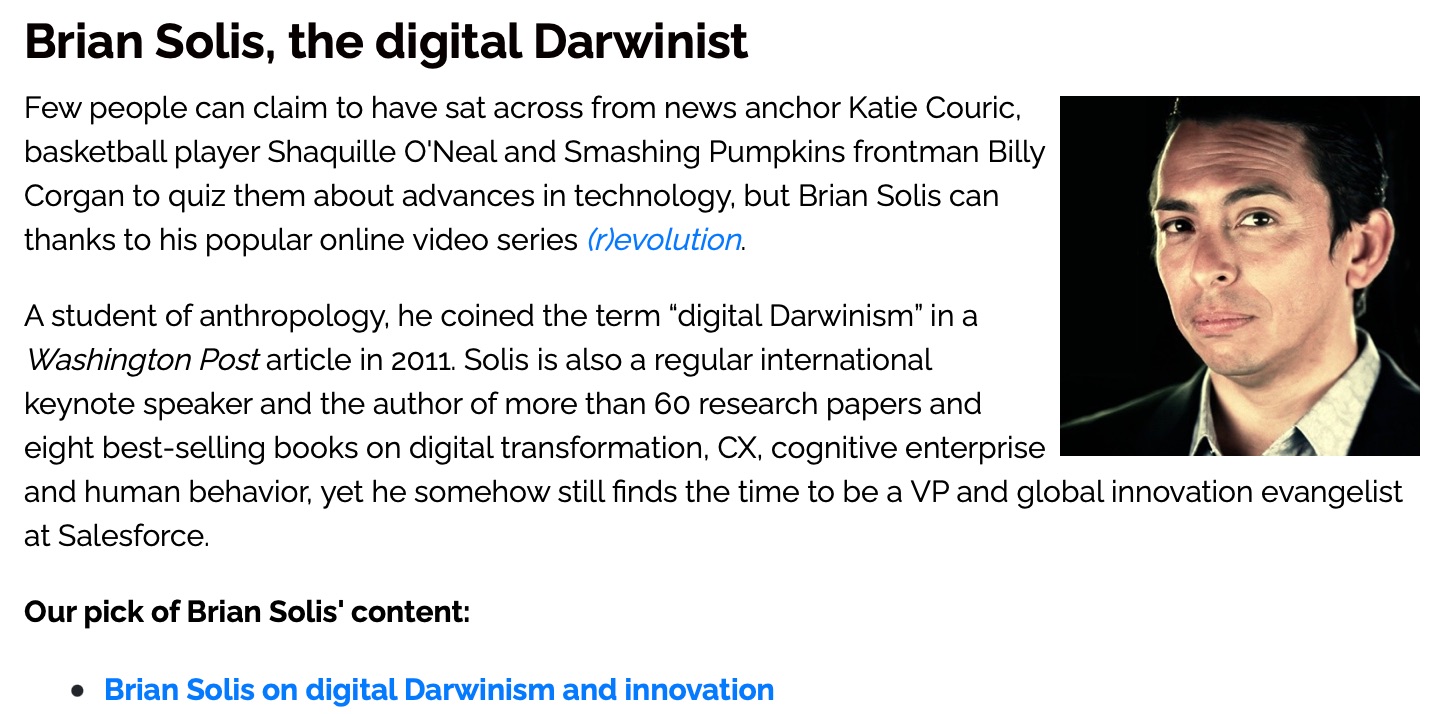
Brian Solis, the digital Darwinist
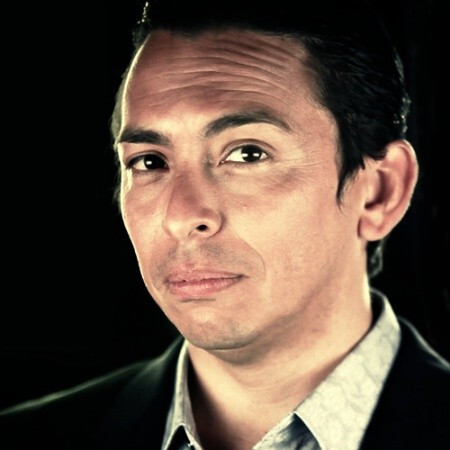
Few people can claim to have sat across from news anchor Katie Couric, basketball player Shaquille O’Neal and Smashing Pumpkins frontman Billy Corgan to quiz them about advances in technology, but Brian Solis can thanks to his popular online video series (r)evolution.
A student of anthropology, he coined the term “digital Darwinism” in a Washington Post article in 2011. Solis is also a regular international keynote speaker and the author of more than 60 research papers and eight best-selling books on digital transformation, CX, cognitive enterprise and human behavior, yet he somehow still finds the time to be a VP of global innovation at Salesforce.
Our pick of Brian Solis’ content:
Brian Solis on digital Darwinism and innovationPlease read the entire list for incredible people to learn from, at CX Network.
The post CX Network: The top customer experience influencers to follow in 2023 appeared first on Brian Solis.
March 8, 2023
What’s the Future of Business: 20 Updated WTF Lessons for a Hybrid World
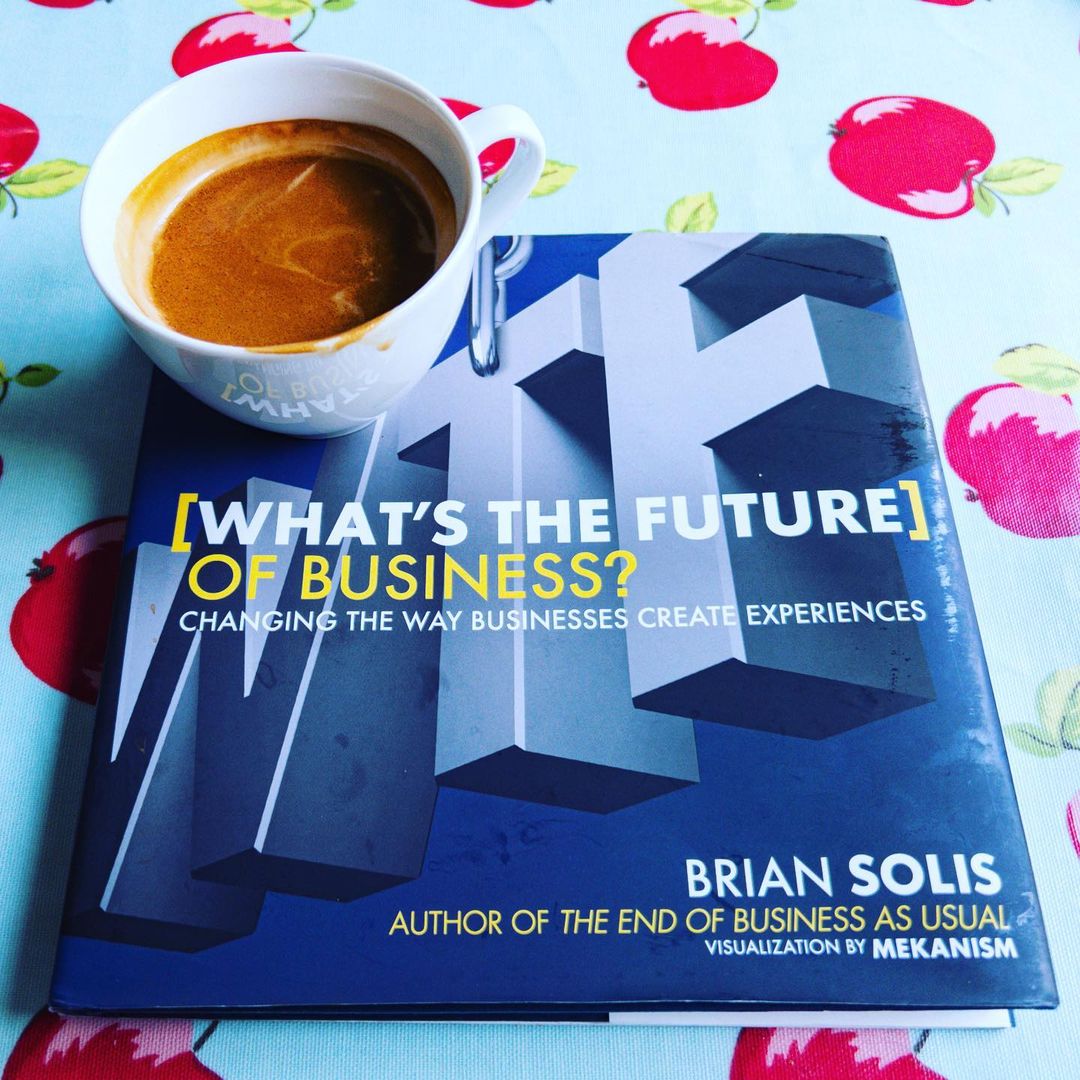
What’s the Future of Business (WTF) by Brian Solis, Photo Credit: Guy Spier (Instagram), author of the Education of a Value Investor
After all of this time, I’m not sure how I missed this. My friend Juan Carlos Giraldo published a compilation of 20 highlights after re-reading, What’s the Future of Business (WTF): Changing the Way Businesses Create Experiences.
In the last few weeks, I’ve been hearing about digital and business leaders revisiting WTF or those coming across it for the very first time.
It all makes me smile!
Here’s a fun fact, WTF wasn’t on my roadmap of books to write. Following the End of Business as Usual, Shannon Vargo over at Wiley and I were working on X: The Experience When Business Meets Design. Shannon pointed out that the leap between the books was pretty significant. She suggested an ebook to serve as a bridge between them. I paused writing X, and went on to create WTF.
Here’s the progression…
End of Business: A new customer is emerging and here is how your business and leadership needs to transform.
WTF: Let’s examine the new digital- and mobile-first customer journeys to reimagine the “cluster funnel” and create something more dynamic, personal, and intuitive.
X: Experience design in a hybrid world is the next frontier. Here’s how to design unforgettable, personal, and meaningful experiences that rekindle customer relationships in a new world.
WTF’s research-based exploration of the new journey and moments of truth was so significant, the book went on to become a print title. My friends at Mekanism designed the book (as well as X), and here we are…
Here’s another fun fact. WTF and X are designed to emulate mobile apps on paper for a more intuitive read. The lessons of the book are designed into the reader’s UX to serve as a meta experience. We call them analog apps.
20 WTF Lessons for a Hybrid WorldIn no particular order of importance:
The Future of Business comes down to relevance and the ability to understand how technology affects decision making and behavior. The recognition of new opportunities and the ability to strategically adapt to them becomes a competitive advantage.
Humility is a gift and it’s needed in business now more than ever.
Just because a business is embracing new technology doesn’t mean that it is creating meaningful, productive, or measurable experiences.
Customer-centricity starts with recognizing that customer experiences are owned by the customers. This is why I refer to CX as the “customer’s experience.”
Experiences are the new “relationship.”
As people research, read reviews, tweets, and blog posts, ask and answer questions in communities, watch videos, and simply learn from the experiences of others, these moments of the truth require study and definition. Think, “TikTok made me buy it.”
The best brands consistently win in this increasingly important, “Ultimate Moment of Truth.” When a customer experiences the product, from purchase, to unboxing/usage, to service, and everything in between, they feel those experiences. When they share those experiences with others, the next potential customer might follow their lead…to or away from you. Your customer’s experience and what they say when you’re not in the room shouldn’t be a surprise. You have to design it for what you want them to experience and share.
79% of consumers say they use a smart phone to help make a decision. In addition, 70% of customers look at product reviews before making a purchase.
You might think that because you have strong SEO and a social presence on Facebook, Twitter, TikTok, Instagram, YouTube, that you’re doing what you need to. But chances are, your customers are discovering solutions in ways and places where you may not appear. You have to link key words and phrases to the places, content, and people customers discover when seeking and considering new solutions and outcomes.
People are going to talk, so give them something to talk about. That’s the opportunity you have if you focus on creating memorable and shareable experiences .
Digital influence is expanding beyond the boundaries of digital screens, impacting business decisions online and offline, especially in this new hybrid world.
Engagement is as much art as it science. Understanding the behavior of your connected consumer takes a working practice of the social sciences — from digital anthropology and psychology to sociology and ethnography”.
Great products and services contribute to loyalty. Great engagement inspires advocacy. Underestimating experiences says everything about how you value customers. You reap what you sow. Shared experiences, whether good or bad, are what you earn or deserve. Design for the experiences you want people to feel, remember, and share.
“The power of peer-to-peer influence is perhaps at its greatest potency. Peer-driven word of mouth has always held a powerful relationship between cause and effect. Now, influence is everywhere and it manifests in all forms content, across all platforms.
Social media is more about social science than technology.
The brands that survive this era of economic disruption will be the ones that are best able to evolve because they recognize the need and opportunity to do so, before their competitors. This is the right side of digital Darwinism.
The primary function of UX is the development of an architecture that creates delightful, emotional, and sensory experience in every touch point, not just the design, but the experience itself..
Disruptive technology is the ongoing innovations that emerge without expectation to introduce a new capability or solution that creates a market and value network at the expense of an existing market and value network.
Remember, growth and value creation is at the top of the list of priorities for most CEO. When you seek to innovate and transform and secure new resources, represent the voice of the customer and speak the language of the C-Suite.
Disruptive innovation represents a shift in behaviors and value creation.
BONUS CHAPTER: A Special Surprise for WTF ReadersWhat’s the Future of Business Bonus Chapter by Brian Solis from Brian Solis
The post What’s the Future of Business: 20 Updated WTF Lessons for a Hybrid World appeared first on Brian Solis.
March 7, 2023
Doing CX Right: AI and the Human Element – How to Strike a Balance in the Workplace
On this episode, you’ll learn actionable tips from Stacy Sherman and Brian Solis, world-renowned digital anthropologist, futurist, 8x best-selling author, speaker, and VP of Global Innovation at Salesforce. They share tactics for leveraging AI and related tech without losing the human element. And how to build better relationships, experiences, and business models, emphasizing the importance of companies adopting a customer-centric approach to CX.
They also discuss the future of work and the trends that businesses need to consider, including web three, blockchain, virtual worlds or metaverse, immersive shopping and entertainment, and the impact of AI on the workplace.
You’ll also hear insights from Brian’s latest book, Life Scale, which provides a roadmap for people to recenter their lives for the new world while embracing technology.
More Topics Discussed:Who is Brian Solis and a fun fact.Why passionate about digital transformation and AI.Lessons from his book “What’s the Future of Business” and how businesses can adapt and thrive in a rapidly changing landscape.Ways ChatGPT and how artificial intelligence is rapidly changing the way we work.Tactics that AI is being deployed to improve customer service experiences and risk considerations.Advice to foster more creativity, focus, and better time management.Most valuable leadership advice received and given.And more




The post Doing CX Right: AI and the Human Element – How to Strike a Balance in the Workplace appeared first on Brian Solis.
March 2, 2023
Brian Solis to Keynote Digital Summit in Phoenix – The New Marketing Mindset: Marketing to the Customer of the Future, Today
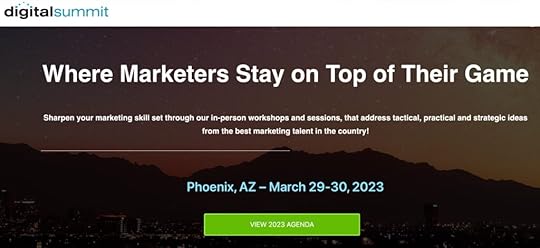
Brian Solis is excited to keynote the Digital Summit in Phoenix in March 2023!
Brian’s topic is meant to inspire marketers to become the leaders of the future.
He will be speaking about the new future of marketing and what it takes to bring it to life, now.
The New Marketing Mindset: Marketing to the Customer of the Future, TodayA look back in history shows you just some of the technology revolutions that changed the course of how we shop, connect, and navigate life: Amazon, iTunes, iPhone, Instagram, Uber, TikTok, and now ChatGPT.
With each event, the course of customer behavior shifts, and along with it, expectations and preferences, and standards for amazing experiences.
What technology and behavioral trends are predicted to impact the way people live and work in the next few years?
Brian Solis is a world-renowned digital futurist, best-selling author, and international keynote speaker. He was worked with some of the most recognized and innovative companies around the world. During this opening session, Brian will help you feel more prepared to thoughtfully approach future industry changes and develop more authentic relationships with your audience.
After this session, you’ll be able to:
– Explore the trends that are redefining the marketing landscape, from a human perspective
– Walk away with a mindset shift on how to connect with customers today
– Make the connection between mindset and customer experience to spotlight the divide between current strategies and customer expectations and how to close them
We hope to see you there!
The post Brian Solis to Keynote Digital Summit in Phoenix – The New Marketing Mindset: Marketing to the Customer of the Future, Today appeared first on Brian Solis.
March 1, 2023
LEADERS Magazine: Brian Solis on Digital Darwinism and Innovation
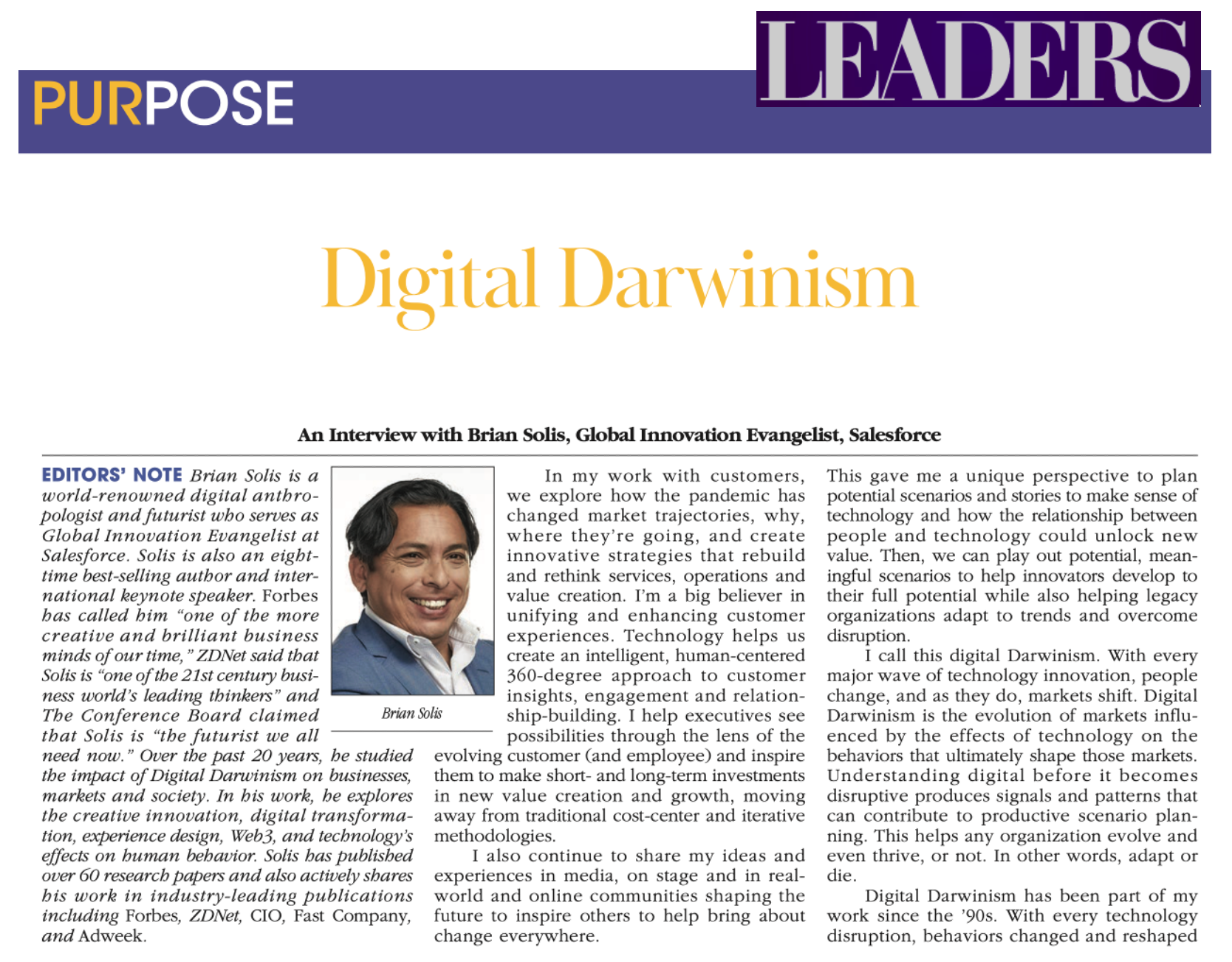
In this must read interview in LEADERS Magazine, Brian Solis explores the challenges and opportunities executives face in this Novel Economy. Brian also details how companies can create a culture of innovation to grow and scale in uncertain times. Full interview here or via PDF below…
“The paradox of innovation doesn’t inhibit the desire for growth and profitability. You must pursue both iteration and innovation to thrive against digital Darwinism and Darwinism in general. To do this requires a new paradigm that can allow for discovery, experimentation and even failure. This is the entrepreneur’s way.”
LEADERS Magazine Features Brian Solis on Innovation and Purpose from Brian Solis
The post LEADERS Magazine: Brian Solis on Digital Darwinism and Innovation appeared first on Brian Solis.
February 24, 2023
Designing the Brand Experience: From First Exposure To Advocate To Relationship

Credit: Ken Yeung, VentureBeat
I’d like to share a cool experience with you…
I was recently traveling from Denver to Florida. During my layover, I noticed a reference to “X: The Experience When Business Meets Design” pop up.
I clicked through and listened to a brilliant conversation between Alan Hart and Nick Horan, Global Brand Experience Lead for Vanish at Reckitt.
I listened, and found myself nodding along, with a lovely sense of familiarity, on his approach to total brand, product, customer, and user experience design. Especially in an omni-channel world, experience design and innovation is what brands must embrace to compete for attention and loyalty.
At the end of the conversation, he references X as a source of inspiration for his this thinking about experience design. It also inspired the agency’s overall design philosophy.
The book, regardless of date, is still well ahead of where brands and marketers need to be.
We recently went into reprint, and I’d love for you to experience, X. The book design itself, is an example of experience design. It’s meta, but part of the story.
I reached out to Nick to thank him for the reference. It’s leaders like him who can transform the sum of BX (brand) through experience design, UX, CX, SX (service).
His reply…
“Thank you so much for reaching out. X was fundamental to building my approach to brand building at Reckitt and has been adopted by the organisation to guide our creative process. Thank you for writing it and sharing it with the world.”
To quote the wonderful Maya Angelou…
“People will forget what you said, people will forget what you did, but people will never forget how you made them feel.”
That’s what experience actually means. It doesn’t mean touch point or conversion or personalization or loyalty program or omnichannel. Experience is a feeling in each moment. That’s what you’re designing for…a feeling. And that must be weaved into every touch point. It must inform your entire design, brand, marketing, service, product, commerce, loyalty, CX and UX strategy. It all starts with designing the experience, which then guides the rest of the work.
Thank you, Nick.
A little about Nick…
“He is passionate about using design as a tool to drive intentional brand experiences and understanding the consumption habits of consumers to identify the touch point that will have the most impact. Nicks’s role is to craft the entire brand experience framework from first exposure to becoming an advocate and repurchaser and translate this vision into a cohesive experience across various touchpoints in over 70 countries.”
The post Designing the Brand Experience: From First Exposure To Advocate To Relationship appeared first on Brian Solis.


