
Brian Solis's Blog, page 24
December 12, 2022
The Future of Tech – Predictions and Trends to Watch in 2023 According to Salesforce

The only constant in technology — as in life — is change. In this article, you’ll hear predictions from leaders across Salesforce for how technology will shape the future, including:
Technology predictions businesses should keep top of mind in the futureThe future of sales, service, and marketingWhat technologies will disrupt industries in the futureHow businesses will lead with their values in the futureSalesforce leaders are on the front lines of the latest trends, technologies, and challenges impacting businesses. They bring expertise and insight from market analysis, customer conversations, and more to help reveal what tomorrow might bring.
Five Technology Predictions Businesses Need to Know for 2023While a recession is not a foregone conclusion, 74% of CEOs expect economic conditions to worsen in the short term. Digital transformation is critical to navigating the growing economic turbulence businesses are experiencing today. Here’s five IT investment predictions heading into 2023.
1. Organizations that maintain digital transformation investments will outperform those that don’t
“In times of tough economic headwinds, the pressure to make cuts and deliver efficiency savings and productivity improvements is irresistible. However, the evidence of the economic downturns of 2008-2009 and 2020 from McKinsey and Bain suggests that only seeking efficiency savings during tough economic conditions comes at a risk: roughly one in 10 companies manages to outgrow its peers both during downturns and in the subsequent recovery. The big challenge for 2023 will be to avoid leaning too far in the direction of cost savings and efficiencies and so risk losing the advantage on that next economic upswing. As will the calculation of how much of the digital transformation projects can be cut without creating a bigger risk. The Great Recession brought us Uber, WhatsApp, AirBNB, Instagram, and the great resurgence of Amazon. Take your eye off of the ball, and you may be disrupted.” — Ed Thompson, SVP, Global Influencer Strategy, Salesforce
2. Investment in automation will surge as companies aim to do more with less
“In 2023, we’ll likely see a spike in automation spending. Everybody wants to automate the work they do, meanwhile we’re in an economic situation where businesses must prioritize cost efficiency. Automation is about creating ways of working that can save time while continuing to drive efficient growth, and simply doing more with less.” — Brent Hayward, CEO, MuleSoft
3. Introducing business intimacy will deliver business value and elevate the CIO’s seat at the table
“CIOs can increase their relevance and ability to deliver business value by bringing a new set of skills and operating processes to the executive table during a radically different business environment. This begins by truly understanding broader business needs — what are the priorities, the pain points, the processes, the investments and, most importantly, the technologies their colleagues are dealing with. This is called business intimacy, and it is key to better understanding the strategic priorities of business partners across sales, service, marketing, commerce, IT, HR, finance, and other teams.” – Juan Perez, CIO & EVP, Salesforce
Read more from Perez on how CIOs can fuel growth amid economic uncertainty here .
4. Staying competitive will require “digital Darwinism”
“Some companies are going to batten down the hatches and cut costs. Markets though, will continue to evolve. Customers will continue to shop, make decisions, learn and exercise new behaviors, and gain new digital competencies. Competitiveness in this market becomes a matter of ‘digital Darwinism.’ To survive and thrive, businesses must adapt to the pace at which technology influences how society and technology evolves. And to do this, businesses need to be bolder and wiser than their peers. Smart companies will reallocate resources to build the business of the future, today. Forward-looking executives will issue RFPs that seek vendor collaboration and solutions beyond immediate technological needs or basic automation. They will aim to develop customer-centered solutions that remove friction, effort, and emulate best-in-class experiences to compete.” — Brian Solis, VP, Global Innovation Evangelist, Salesforce
5. Composability will drive business innovation and agility
“Though demand on IT teams is increasing, resources remain constrained, so organizations will need ways of doing more with what they already have. In 2023, there will be a renewed focus on using a composable digital strategy to meet that need: creating reusable business capabilities to drive efficiency, agility, and optionality at scale.” — Matt McLarty, Global CTO, MuleSoft
Read more IT predictions from MuleSoft here .
Five Predictions on the Future of Sales and ServiceA new report from Salesforce found 82% of sales reps have had to adapt quickly to new ways of selling due to changing social and economic conditions. Here’s what five Salesforce executives see happening in 2023 to drive sales and service success.
1. Companies that invest in team selling will drive greater revenue, while also empowering the individual rep
“2023 will bring a period of ‘Great Retraining’ among sales professionals. Sales teams are the backbone of organizations and the pressure is on to keep revenue coming regardless of the macroeconomic climate.”
“To do this, we can expect leaders to lean in on sales enablement programs to make sure they’re caring for the reps who are at the frontlines of a tough selling climate, while also empowering them with AI and automation to drive productivity and efficiency throughout their day to day.” — Ketan Karkhanis, EVP & GM, Sales Cloud, Salesforce
2. Companies that prioritize sales enablement will see greater revenue
“The big move for 2023 will be connecting sales training with business outcomes, such as uplift in pipe generation or increased revenue. Traditionally there wasn’t an easy way to correlate whether time dedicated to learning and training impacted business outcomes. That’s why [Salesforce] created the world’s first accountability performance matrix, which allows us to establish a direct correlation between sales training and our KPIs. As Enablers [of sales], we have to hold ourselves accountable for moving the needle on pipe generation, revenue, and participation. The better prepared the sales team, the better they can serve as trusted advisors to customers.” – Jody Kohner, EVP, Global Enablement, Salesforce
3. Automation will revolutionize the customer experience and increase revenue
“2023 will be the year that service organizations begin viewing service automation capabilities as a ‘must have’ versus a ‘nice to have.’ Automation used to be viewed as an additive to service solutions. Now, with growing customer expectations, shrinking team sizes, and uncertain economic conditions, automation is at the center of every service leader’s mind when it comes to improving the customer experience, while also driving down the cost to serve.” – Clara Shih, CEO of Service Cloud, Salesforce
4. Phenomenal customer service will be intuitive, successful, and consistent
“True success does not come from the initial marketing and sales effort, but rather, growing the relationship with a customer for the long term. We say customer expectations have never been higher, and my position is that they aren’t — customers always wanted to be known and treated reasonably and consistently. What is new is the complexity of engaging customers consistently now that this communication can happen on one of a dozen channels. Customers expect that they will be able to interact easily and successfully. The message to heads of customer experience is to learn to actively listen to customers, and create processes that naturally draw the customer to a specific channel — one that feels it is their choice. Get this correct and you earn the right to customers for life.” — Michael Maoz, SVP, Innovation Strategy, Salesforce
5. The CDP industry will be one of the fastest growing enterprise markets this year
“Over half of customers expect every interaction to be personalized, and the way that companies can do this at scale is through a customer data platform (CDP). Salesforce Genie Customer Data Cloud is an absolute game changer on this front. I predict this technology will grow exponentially in importance as we head into 2023. Genie broadens the definition of CDP to power real-time experiences for all channels across the Customer 360. This is what our customers want now, because their customers expect ‘magical’ experiences that are automated, intelligent, and personalized.” — David Schmaier, President and Chief Product Officer, Salesforce
Four Predictions on Disruptive Technologies that will Shape the FutureIn 2021, AI/Machine Learning was rated by Statista as the most impactful disruptive technology. Here, Salesforce executives share five disruptive trends and technologies from 2022 that will shape the future in 2023.
1. Generative AI will empower mass customizations of experiences
“Generative AI uses machine learning algorithms that enable computers to use existing content like text, audio and video files, images, and even code to create new possible content. In 2023, generative AI will rapidly become a key tool for companies and ad agencies to implement mass customization of experiences — individuals with the highest customer lifetime value increasingly see machine-generated images and copy that are individually tailored to their unique profile.” — Mick Costigan, VP of Salesforce Futures, Salesforce
2. Employees will experience workplace culture — in the cloud
“Executives will finally realize that building connection and company culture doesn’t only happen ‘in real life,’ it thrives online — on platforms like Slack. The data shows investing in collaboration tools and techniques pays off, with digital leaders outpacing digital laggards on every dimension. Today, productivity scores are 59% higher in leaders than laggards in Future Forum’s Pulse survey. More surprising to many executives, a sense of belonging with one’s team is 2.2x higher for leaders versus the laggards.” – Brian Elliott, SVP, Future Forum, Slack
The data shows investing in collaboration tools and techniques pays off, with digital leaders outpacing digital laggards on every dimension.
BRIAN ELLIOTT, SVP, FUTURE FORUM, SLACK
3. Data will become more accessible and understandable for everyone
“Improvements in data literacy for the average employee will lead to more people making sense of data. Data will become more natural and more approachable, turning something that is for the few to something that’s for the many — all infused in the flow of work.” — Francois Ajenstat, Chief Product Officer, Tableau
4. We won’t be working in VR Offices
“While producers of ‘professional’ versions of VR headsets seem to think we will be interacting with each other’s avatars in virtual reality offices in the future — I think not. The technology is still too crude, the avatars unengaging, and people in VR headsets look silly. Nearly all the billions now being invested in VR (with the exception of gaming) are likely to be a total loss.” — Peter Schwartz, SVP Chief Futures Officer, Salesforce
Three Predictions on How Businesses will Prioritize Their Values in the FutureEighty-eight percent of customers expect companies to clearly state their values — but only 50% of customers say they do. Here’s three predictions about how companies will deliver on their values in the future and beyond.
1. Businesses will prioritize climate commitments — despite economic uncertainty
“Climate change won’t wait – even in times of economic uncertainty. In 2023 and beyond, corporate leaders must continue making progress towards their sustainability commitments, ensuring the long-term success of both their organizations and the planet. Salesforce technology can help customers increase the efficiency and profitability of their business while driving towards their environmental, social, and governance (ESG) goals for success, now.” — Suzanne DiBianca, EVP and Chief Impact Officer, Salesforce
2. Companies will approach consumer data with trust at the forefront
“Consumer data may be the next virtual currency, but with 75% of the world’s population expected to be covered under privacy regulations by 2026, it’s also the next regulated currency. Major global data privacy regulations are expected to pass in the next three years, and failure to navigate them will have major impacts on growth and reputation.” — Wendy Batchelder, SVP & Chief Data Officer of Trust, Salesforce
3. Regulation will help businesses better understand and embed tech ethics
“I’m encouraged by discussion here in the United States about a national privacy bill, as well as AI regulation being developed in Europe. While there are still important details to work out, moving towards a set of guardrails that everyone can follow will make acting responsibly in tech much, much easier. Together, we want to enable the future of AI and innovation, while also protecting everyone affected by it – and regulation can help us achieve that.” — Paula Goldman, Chief Ethical and Humane Use Officer, Salesforce
The post The Future of Tech – Predictions and Trends to Watch in 2023 According to Salesforce appeared first on Brian Solis.


December 6, 2022
Are Bots Coming For Your Job? With the Right Leadership, Human-Centered Innovation Will Help You Thrive

Photo by Tara Winstead, Pexels
Does it feel like robots are coming for your job? That doesn’t necessarily have to be the case. There is one thing that always differentiates us: our humanity.
f you’re like most people, you probably think there’s a good chance that artificial intelligence (AI) or automation will significantly impact the global job market. Yet surveys show that most of us think these disruptive technologies are primarily going to affect someone else — someone with a skill set or an educational background that lends itself to repeatable work. This is a risky assumption. Automation technology is evolving and getting more advanced every day.
Here’s the truth: the robots are not only coming — they’re already here. But that doesn’t mean we’re all out of a job. It means that we need to explore opportunities to humanize the future of work, to complement and even enhance AI, automation, and productivity.
So, what is automation technology and how do we solidify our jobs for the future? Can we collaborate with automation so it impacts our jobs in a positive way?
Let’s dig deeper into how automation and technology are affecting work for the long haul.
What is automation technology?Automation technology, simply put, puts machines to work with the least amount of human input. Automation reduces lead times and solves unique needs and goals — without you. It sounds just like a robot taking your job, right?
That’s why we invited award-winning New York Times technology columnist Kevin Roose to discuss the impact automation is likely to have on our livelihoods. Roose shared that AI and automation are already changing the way we work. So how are these technologies shaping the future of our work?
During the research for his book, “Futureproof: 9 Rules for Humans in the Age of Automation,” Roose found that for hundreds of years, we’ve been predicting what machines can and can’t do — and that overall, we’re usually wrong.
These quotes really stood out:
“I can state flatly that heavier-than-air flying machines are impossible.” — Lord Kelvin , 1895“There is no prospect whatsoever that the employment of electronic digital computers in the field of translation will lead to any revolutionary changes.” — Yehoshua Bar-Hillel , 1962“You won’t get the best seating or the best fares … what happens if you just press the wrong button?” —travel agency owner on automated ticketing, New York Times , 1984The disruptive technologies that would prove each of these predictions wrong went on to reshape economies and workforces forever. Yet at the time, each statement reflected widely-held beliefs.
In the 1950s, for instance, people were using tools like Rolodexes to manage their new leads. There was no way to find out more information about the potential customer or share it with a team. Today, with the evolution of powerful, automated CRMs, sales and support agents are working together to create a seamless customer experience for every new lead.
Outside of sales, there are many jobs that are being shaped by the changing landscape of automation information technology.
How are automation and technology affecting work?You may still think of robots on the assembly line as the typical agent of job displacement, however, AI has made advances in fields that many people never imagined were vulnerable to automation. Here are just a few:
Healthcare: Machine-learning algorithms can diagnose some cancers or perform x-rays more accurately than human radiologists. Other AI applications in the works can detect illnesses that range from cancer to Parkinson’s disease from simply smelling human breath.Creative: AI can compose music, write prose, build video-game levels, and write various types of content on the web.Software: With the help of automation technology, anyone can learn how to code. Low-code or no-code development platforms take the complexity out of writing computer programs.Data analysis: AI and machine learning analyze data sets to identify patterns and trends. With the advancements in automation information, they can report real-time insights and predict, in some cases, what’s likely to happen next.Social Influencers: Some of the biggest social-media influencers aren’t human — they are AI-designed models.Application Development: Given the ability AI has to quickly process large data sets, it’s able to create artificially intelligent applications that outperform human-created AIs.Speech Recognition: Whether it’s adding items to your shopping list, or producing meeting minutes from Zoom calls, AI applications can more accurately capture and process what they hear than many humans.As Roose was writing about the inroads AI was making, he began worrying about his own replaceability as a journalist. He embarked upon a path to research how we can avoid being replaced by robots, and how we can future-proof our careers while still using automation.
How to future-proof your career (and still embrace automation)What can we do to protect our jobs from being replaced by AI and robots?
There is good news and bad news. First, the bad news. Pretty much every job as it exists today can, in some way, be automated. In all honesty, there isn’t any technology-proof job or career path for the long-term.
The good news? Human creativity and resolve is at an all-time high. And it’s not limited to any job or role. By simply embracing your humanity (something a robot can never do) you have the power to connect with your career, your team and scale for the future.
This is not a time to panic — it’s a time to build on the roles and capabilities that can be automated to deliver new value at every level.
As AI drives down the price of goods and automated services, it also increases the value of human goods and human experiences. It rewards those who are good at creating these new things in collaboration with machines.
With this in mind, there is one primary thing you can do to make your job a little more future-proof, regardless of what it is: not so ironically, simply be human.
The best way to differentiate yourself is through your humanity and creativity, not your productivity. Accentuate the uniqueness of human labor involved in what you do or what you make — whether it’s creating a ceramic bowl, providing customer service, or selling a technology product. How you show up in any given moment to be present, aware, and ready to participate — that’s your human differentiator.
Think beyond using AI and automation to work as fast, at scale, and efficiently as possible. Make that human touch more visible and more valuable. This is what the human economy is about: experiences and feelings that machines cannot replicate.
The human connection is especially crucial in customer service. Our research shows that 76% of customers expect companies to understand their unique needs, yet only 34% feel like companies actually treat them as individuals.
“Any company that is not investing in this area is putting their entire business at risk,” Lidiane Jones, executive vice president and general manager of Salesforce Digital Experiences, told Forbes. Businesses can deliver personalized, connected experiences with customers by layering AI with powerful service and marketing innovations, she added.
Experiences are personal on every side. That’s what makes them special. They involve human beings and in reality, it’s that humanity combined with meaningful experiences that we’re going to seek out and pay for.
To outpace the bots, we encourage you to embrace the automation technologies that help your team grow. If you’re interested in hearing how automation can help scale your career, find out more about how we build humanity into our workflow.
Original post, Salesforce
The post Are Bots Coming For Your Job? With the Right Leadership, Human-Centered Innovation Will Help You Thrive appeared first on Brian Solis.
December 5, 2022
Customer service teams feel more empowered by automation and artificial intelligence

Via Salesforce
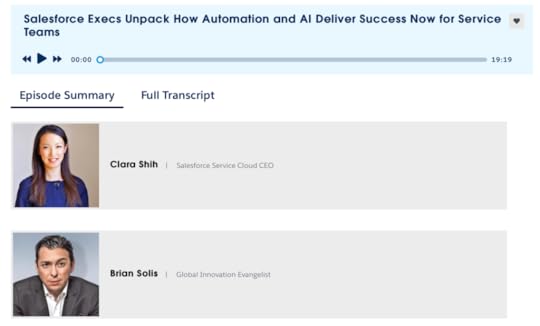
Today’s service leaders are struggling to meet growing customer expectations amid a 19% average annual turnover rate and tightening operational budgets. Salesforce Service Cloud CEO Clara Shihand Global Innovation Evangelist Brian Solis see automation and AI as a solution.
Why it’s important: Shih and Solis, who recently joined the Blazing Trails Podcast, discussed how service teams feel more empowered by technology, and backed their statements up with data from Salesforce’s latest State of Service report.
The Salesforce perspective: With automation and AI, Shih explained, organizations can drive growth by empowering agents to do more with less, increase efficiencies by streamlining time-intensive processes, and deliver immediate cost savings to organizations across every industry.
“Every organization is facing cost pressure right now, while also being asked to hire more service agents across field service, contact centers, and business-to-business support teams,” said Shih.
“To find efficiencies, we are seeing companies embrace automation and AI,” Shih observed. “These technologies free service professionals from mundane tasks so they can get back to customers faster, focus on higher-order problem solving, and build meaningful, long-term relationships with customers.”
Using automation and AI for service teams has another critical benefit: better customer service.
“Ninety-four percent of consumers say that good customer service makes them more likely to make another purchase. And in these times, the ‘Great Resignation’ isn’t just about employees, it’s also about customers — they’re willing to quit on you,” said Solis.
“So with service, using tools like automation can actually help you — to not only update dated processes — but also create the new types of processes that customers expect,” Solis continued.
Fast fact: The fifth edition of Salesforce’s State of Service report features perspectives from more than 8,000 customer service professionals in 36 countries.
Listen to the conversation here.
The post Customer service teams feel more empowered by automation and artificial intelligence appeared first on Brian Solis.
Press: McDonald’s Launches a Whole New Kind of Restaurant
The fast-food giant is trying an idea that Starbucks has already been successful with via Veronika Bondarenko, TheStreet.
Digital-forward restaurants are some of the fast-food industry’s most controversial new developments — some see them as a way to cut the use of staff and speed up the ordering process while others describe them as too automated and soulless for their tastes. In the last year, chicken chain Wingstop launched what it called its “restaurant of the future” — a small front area with ordering screens and no seats or tables and a cash-free concept. While passersby are currently able to use the screens to order, the chain’s goal is to eventually transition to only being the place to pick up orders placed online and through the Wingstop mobile app.
Yum! Brands-owned Taco Bell opened its first digital-only restaurant in New York’s Times Square at the start of 2021 and has since expanded to locations across the country.
Fellow Tex-Mex chain Chipotle Mexican Grill has “Chipotlanes,” which are similar to the traditional drive-thru but are independent rather than attached to a main restaurant.
McDonald’s Latest Step Into the FutureAs the country’s most popular and iconic fast-food chain, McDonald’s (MCD) – Get Free Report has been slower to embrace the digital-only concept. The format for new restaurants includes more screens and a smaller front-of-house but, at least until now, most restaurants had at least a small dining area.
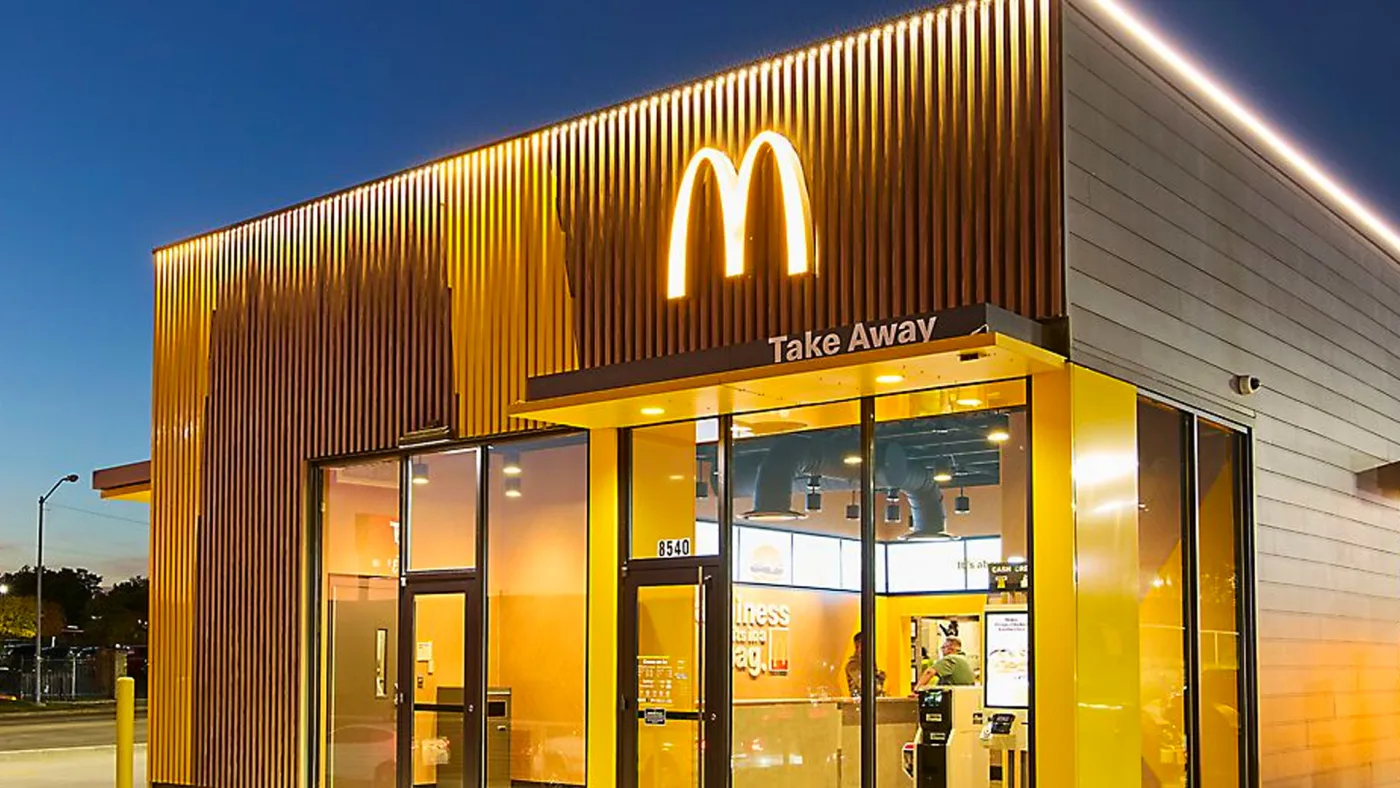
On Thursday, the Golden Arches announced that it was testing a new restaurant concept. The pilot location in Fort Worth, Texas is about half the size of a traditional McDonald’s and contains several features meant to serve different types of digital and pickup customers–a conveyor belt for picking up orders placed online, a shelving area for Uber Eats and other delivery couriers to pick up orders, and kiosks with screens for those who want to order there.
“At McDonald’s, we’ve been setting the standard for Drive Thrus for more than 45 years,” Max Carmona, senior director of global design and restaurant development, said in a statement. “As our customers’ needs continue to change, we are committed to finding new ways to serve them faster and easier than ever before.”
Digital-Only Restaurants, Fast-Food Automation and RobotsThe fast-food industry has been steadily driving its customers to order online and through its mobile app. McDonald’s already dominates the industry when it comes to app use–in 2021, it had more than 12 million more downloads than the next most commonly installed fast-food app–but investment in this type of concept shows that its leaders expect these types of orders to continue growing.
Features like cashless restaurants, 24-hour automated kiosks and food-delivery robots are also becoming increasingly more common across the industry. Fast food is particularly fitting for these types of developments as, unlike with sit-down and family-owned restaurants, fewer customers particularly value eating inside the store even if some there locations tailored for that will remain as well.
Over the last 12-24 months, technology systems were upgraded to facilitate mobile access, on-demand reservations, orders for delivery and pickup, contactless payments, digital menus, and loyalty programs to serve a ‘contactless’ dining experience,” Brian Solis wrote for Restaurant Dive at the start of 2022.
The post Press: McDonald’s Launches a Whole New Kind of Restaurant appeared first on Brian Solis.
December 2, 2022
Salesforce’s 11 Best Business Podcasts of 2022: How companies to build trust and better connect with customers
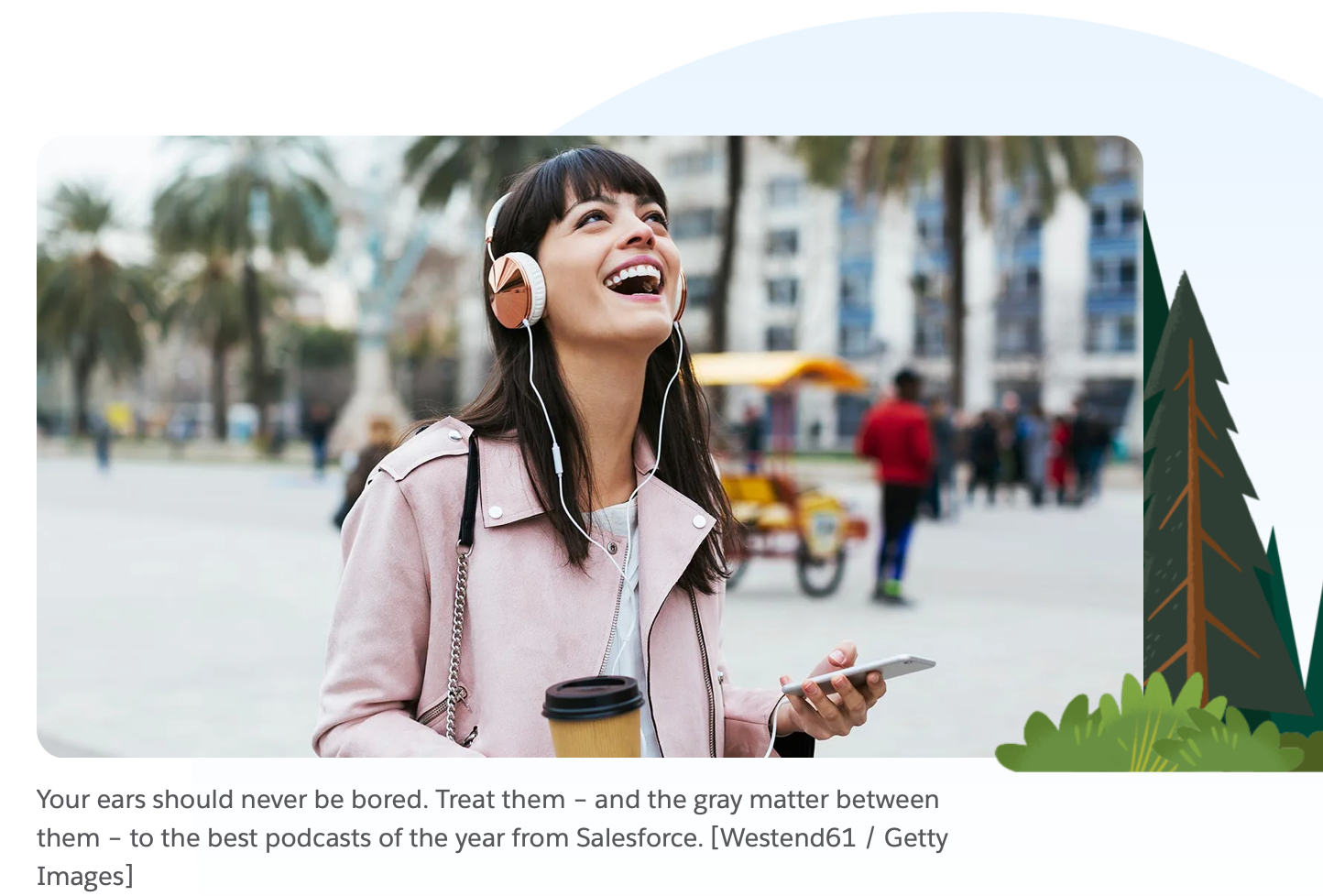
via Michael Rivo, Trail Blazers podcast,”Each autumn I have the chance to spotlight the best business podcasts from across the Salesforce network. I love the opportunity to reflect on the past year and revisit the compelling storytelling from my colleagues. Inevitably, I discover new ideas and mindsets, and have a laugh or two. Best of all, I get to share them with you. I hope you find something that speaks to you and carries you into 2023 feeling inspired.”
Educate and entertain yourself with this collection of some of our best podcast episodes from the last 12 months, curated by our own podcast team leader.
How companies can build trust and better connect with customersHow can companies better know and connect to their customers and build more trust? That’s a question Seth Godin, marketing guru and founding editor of The Carbon Almanac, and Brian Solis, vice president and global innovation at Salesforce and best-selling author, try to answer in this episode, one of the year’s best business podcasts. They discuss some fascinating findings from our just-released State of the Connected Customer report. It’s our fifth edition and features insights from nearly 17,000 consumers and business buyers worldwide. Tune in to find out what’s at the heart of it.
Podcast: Seth Godin and Brian Solis — How to better connect to your customers
The post Salesforce’s 11 Best Business Podcasts of 2022: How companies to build trust and better connect with customers appeared first on Brian Solis.
November 30, 2022
How do you design your company for a digital first world?
Photo by fauxels, pexels.com
My new friend Roy Edwards at Enterprise Times in the UK recently published a story on Salesforce’s, “State of the Connected Customer” report. We spent time discussing the research, which spotlights just how much customers have evolved in the past few years.
Key themes include…
The Trust-based economy moves to the forefrontDigital acceleration sparks personalisation at scaleNew realities test brand loyalty (loyalty is up for grabs and retention becomes mission critical)Digital-first experiences expand to meet the momentFollowing the conversation, Roy shared a few follow-up questions. That part of the conversation didn’t end up making into an article, but I was encouraged to share the discussion with you.
I hope it helps.
Q1: What are the top consumer behaviours that brands need to take note of now in order to survive and compete?
The goal is to have the answer to this question, in every function, and eventually cross-functionally, to create a platform that delivers a real-time, single-view of the customer and makes it possible to deliver a single customer experience, no matter where they are in the journey. Connected customers expect personalized, best-in-class experiences. As we found in our latest Salesforce “State of the Connected Customer[LINK]” research, 88% of business customers and consumers say that the experience your company provides is as important as your products and services. This is up from 80% in the prior report. Our research also found that they expect companies to understand their unique needs and expectations and even anticipate them. They want to feel an emotion connection to their favorite brands. And they want offers and engagement to always be personalized.
I think this is an important CTRL-ALT-DEL moment for businesses. It isn’t just about competing and surviving. It’s about turning disruption into an opportunity to be and do better, to build more meaningful relationships, a drive growth by putting people and experiences at the center of transformation. One important expectation that surfaced in our research really hits home when it comes to customer experiences and relationships, they told us that most companies “treat them as a number.”
We need to do more.
Q2: How do you design for a digital first world?
I recently had the opportunity to lead our Salesforce research partnership with Harvard Business Review Analytical Services for an important report on CX, “Making Customer Experience the Heart of the Enterprise.” One of the top findings that inspired the direction of the report was that more than half of executive respondents put CX in their top-five business priorities.
In the report, we learned that best-in-class CX has two sides, 1) insights, and 2) engagement. Designing for a digital first world means that we have to organize around a platform where customer data converts into real-time insights and actionable engagement in every state of the customer journey, i.e. discovery, marketing, sales/commerce, service and support, and loyalty. Companies also need to reimagine operational models to support integrated customer insights and engagement. Yet, we found that only 16% of companies report that they have a single 360-degree view of customer data but lack the organizational structure to make use of those insights.
There’s work to be done.
This is where the future of digital-first business design begins. We have to find opportunities to let go of industrial era designs, models, and mind-sets to write the new business leadership playbook for a digital-first era.
It takes courage to break the status quo and end business as usual, finally. It also takes an open, curious mind to become fascinated by innovation and visualize what “great can look like,” to do unprecedented things that create new value.
The post How do you design your company for a digital first world? appeared first on Brian Solis.
November 29, 2022
How to foster creativity and innovation by slowing down, reducing distractions, and single-tasking
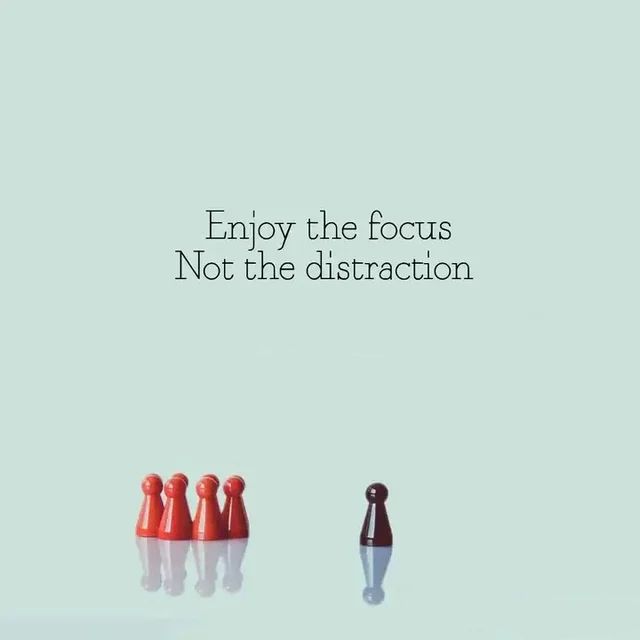
My dear friend, Elisa Camahort and author of Roadmap for Revolutionaries, invited me to speak at the 2022 Rise conference organized by PBWC, the Professional BusinessWomen of California. When we explored all the trends converging that affect business professionals heading into the next year, we decided to focus on the core of what will influence everything we do next across the board…ourselves.
In the days, months, and now years following our global CTRL-ALT-DEL moment, we have a choice in how we reboot. Do we reboot as our past selves, or do we upgrade for wellness, well-being, and new leadership?
This new journey for ourselves positively affects our relationships with our loved ones, our colleagues, our customers and partners, by changing how we show up and how we engage in each moment.
The topic we came up with is, “How to foster creativity and innovation by slowing down, reducing distractions, and single-tasking.” The art of slow, creativity, and wellness in this new ear is iInspired by the lessons and behaviors I learned in my ongoing “Lifescale” Journey.
When it comes to the important things, more is not better.
In this very special seminar, I share how embracing a quiet, slow and focused mind can be the greatest tool in finding space to enhance your creativity and innovation to #rise.
Together, we’ll learn how to reduce distractions and slow down to foster more creativity and innovation. It was exclusively developed for people who would so benefit from Brian’s message as a way to bring out the qualities that will help them be more effective leaders and have more chance of advancement, versus getting constantly de-focused and mired in distractions.
Please take a moment to learn how to foster creativity and innovation by slowing down, reducing distractions, and mastering single-tasking.
Thank you.
About Rise 2022
Rise, PBWC’s 33rd annual conference, advanced our collective power to make meaningful change by empowering authentic leaders at every level. Since 1989, PBWC has gathered thousands of professionals from diverse backgrounds, genders and ages united by a shared vision of equal access to opportunity. Our highly-anticipated annual conference delivers inspiration, skill-building and networking opportunities to women at all career levels.
In addition to Brian Solis, 2022’s Rise conference welcomed influential and engaging keynote speakers, including:
Mindy Kaling, Award-Winning Writer, Actor and Producer behind Kaling InternationalLena Waithe, Emmy®-Winning Writer, Producer, Actor, and Founder & Chair of Hillman GradRita Moreno, Multi-Award Winning Actress, Singer and DancerMellody Hobson, Co-CEO and President, Ariel InvestmentsReid Hoffman, Co-Founder of LinkedIn and a Partner at GreylockReshma Saujani, Author of “Pay Up”, Founder, Girls Who Code and the Marshall Plan for Moms Ai-Jen Poo, President, National Domestic Workers AllianceMelissa Stockwell, Patriot, 3-Time World Champion, Paralympic Medalist, Author, and Co-Founder, Dare2Tri#PBWC #PBWC2022
The post How to foster creativity and innovation by slowing down, reducing distractions, and single-tasking appeared first on Brian Solis.
November 22, 2022
Watch: The Future of Experience Design – exploring the need for human-centered experiences

Via Itamar Medeiros
Brian Solis explores the need for human-centered experiences and aims to help executives shift mindsets toward the future.
While everyone talks about Customer Experience (CX) as the new black, most companies miss the real opportunity to be customer-centric. They don’t actually think about experiences from the perspective of the people they want to reach. Customers are evolving. Business processes and mindsets are not keeping up. As a result, they’re limited in the ability to design experiences that matter to an increasingly evolving generation of connected customers.
In this presentation at NextCon in Phoenix, Brian Solis explores the need for human-centered experiences and aims to help executives shift mindsets toward the future.
The post Watch: The Future of Experience Design – exploring the need for human-centered experiences appeared first on Brian Solis.
November 1, 2022
Welcome to the Novel Economy
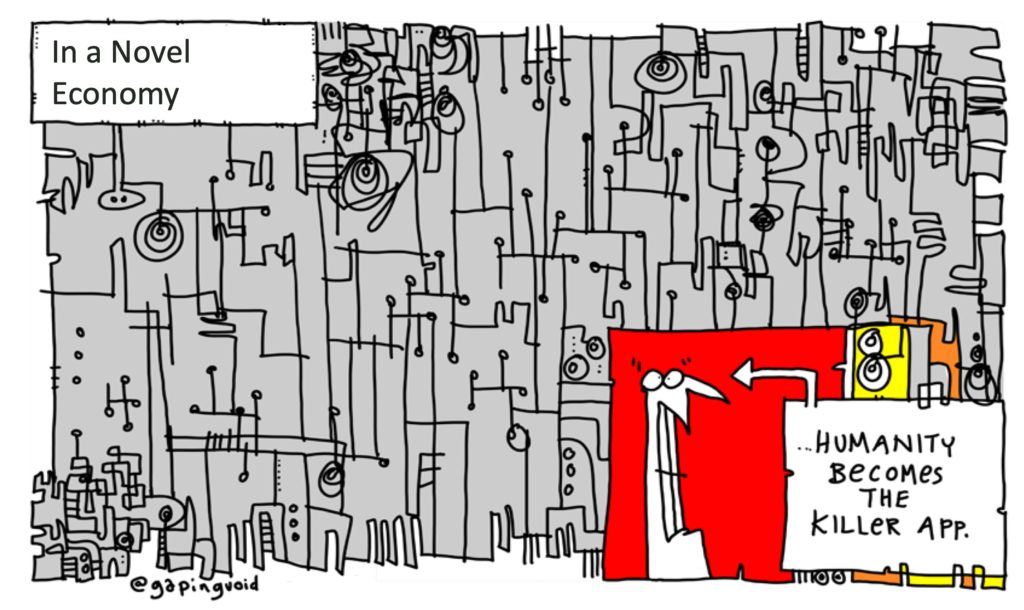
On average, it takes 66 days for new behaviors to become second nature. We have forever changed in the days, months, years following the global disruption of 2020. You can throw your business playbooks, operational checklists, and mindsets out the window.
This is now a Novel Economy. True to its definition, it’s a time that’s new and unusual. It’s not a new normal or a next normal.
While all this is scary for some organizations, it can also be wondrous for those who have long wondered about the possibilities of new ideas, new opportunities, new inventions. There is no going back to “normal”, but perhaps “normal” was what was wrong in the first place?”
What does this mean for an organization’s existing digital transformation?“Even before the disruption caused by the pandemic, there was a feeling that we were reaching a tipping point, both in terms of the global economic model and how organizations were modernizing. Many established organizations have been too focused on using IT to maintain operations and improving existing processes, instead of creating value to innovate and remain competitive.
The disruption has laid bare the shortcomings of existing business models and transformation efforts. And during the scramble to plug holes and fix what’s broken in their operations, they’re identifying areas that have been missing, including opportunities for real business transformation — both operationally and from a performance perspective, as well as keeping up to speed with today’s digital-first markets.
For too long, stakeholders have only been able to think iteratively to keep going, daunted by more ambitious thinking. “We can’t try that”….“That’s too big”….“That will never work”…“We haven’t got the money or resources”…“We won’t get approval.”
Well now you have no choice — you have to respond now and your response will dictate your performance and define your legacy in the future.”
How do organizations begin to adapt?“The challenge ahead of us is still huge. The disruption from the virus is still very much with us and is likely to be with us for at least the next 14-18 months. However, there are three key phases that organizations must pass through—Survive, Alive, and Thrive— starting with survival and the creation of a special task force.
This cross-functional team has a hypersensitive focus on reopening the economy by agreeing on immediate investments to be made without politics or agendas. This team works for the greater good to banish infighting and the delays that have historically prevented critical decisions from being made. This team is focused on triaging and setting out roadmaps for the coming days and weeks to support the transition.
The first phase, “Survive”, is a direct response to what’s going on. There has been a massive blow to our markets and how we operate. Organizations are currently treading water, just trying to keep their head above it, making sure everyone is safe, while at the same time trying to keep everyone productive and everything operational.
The next stage is “Alive”. That’s where you really think about the everyday behavior of customers and employees and look into how you scale up operations. What does your back-to-work plan really look like? How do you redesign an office to accommodate social distancing? Where do you put hand sanitizer, testing kits, and so on? How do we ensure the safety of your customers? For years we’ve said to everyone you must become a tech company. Now everyone must also become a health company.
The third stage is “Thrive”. That’s where you begin to rethink the future and begin building the right infrastructure to adapt to this Novel Economy.”
The post Welcome to the Novel Economy appeared first on Brian Solis.
October 31, 2022
Making The Business Case For The Metaverse: How Companies Can Create Value In The Next Web

The Metaverse and the Next Iteration of the Web, PHOTO BY PIXABAY, PEXELS
The metaverse represents an evolving version of the next web, creating immersive 3D experiences that evolve traditional 2D websites into a connected series of virtual worlds. Already, consumers and businesses are exploring ways to enhance their everyday activities, deepen connectivity, and unlock more exciting applications. New McKinsey research estimates that the potential economic value of the metaverse could generate up to $5 trillion by 2030. The report, “Value Creation in the Metaverse” also found that 57% of metaverse-aware companies say that they are adopters. The excitement is also on the demand side. 59% of consumers are excited about transitioning their everyday activities to the metaverse.
So, what will the metaverse be, what will it look like, and how will we interact in this next chapter of the web?
A separate report published by Salesforce that explored the “State of the Connected Customer” found that a majority of customers plan to spend even more time online than before 2020. And 90% claim that the “experience” they have with companies is as important as its products and services. The key to the metaverse and all online engagement is connected to the experience people have in each world and touchpoint. That’s where value creation starts.
The metaverse, even in its nascency, offers a glimpse of the next chapter of digital-first experiences. And unlike earlier digital revolutions like e-commerce, social media, and the mobile and app economy, businesses are investing early this time around.
In its report, McKinsey learned that consumers and executives are already engaging.
The top five activities consumers are most excited about:
SocialEntertainmentGamingTravelShoppingThe top five enterprise use cases companies are implementing today:
Marketing campaigns or initiativesLearning and development for employeesMeetingsEvents or conferencesProduct design or digital twinningDuring its research process, McKinsey interviewed executives and leading authorities to explore value creation in the metaverse, what the metaverse is and isn’t, and how it will evolve. Experts included Matthew Ball, Cathy Hackl, Marc Petit, John Hanke, Rob Lowe, Ken Wee, among others. I too, had the opportunity to share my thoughts with co-author and McKinsey partner, Hamza Khan.
What is the Definition of the Metaverse
Designing Digital Experiences in 3D, PHOTO BY UZUNOV ROSTISLAV, PEXELS
The metaverse doesn’t quite exist yet, but it is taking shape.
Some might visualize the metaverse as a single, universal virtual world that looks a lot like Ready Player One, where everyone lives their “second life” in one communal space. This is Meta’s vision for its Horizon Worlds platform. Other often cited examples point to popular virtual worlds and games such as Roblox, Minecraft, and Fortnite, and Web3 variants Decentraland and Sandbox.
In its essence, the metaverse represents the next era of the web. It transforms traditional 2D internet experiences into connected 3D, immersive, virtual worlds where users intuitively engage through VR and AR interfaces.
Add to that the rise of Web3, the next web also becomes powered by a blockchain (and its applications including cryptocurrencies, non-fungible tokens (NFTs), and others), self-sovereign identities, and more.
Next-web applications already include immersive e-commerce and shopping experiences, hyper-personalized, gamified learning and training, dynamic events and communal activities featuring holograms and user-driven experiences, and simulations or digital twins in manufacturing and operations.
As “killer” metaverse applications materialize, the metaverse or a 3D web won’t likely replace the internet as we know it today. They will coexist, much like Web 1.0 and social media (Web 2.0) and the mobile-app economy do today.
Why Businesses are Accelerating Experimentation
Businesses Feel a Sense of Urgency in the Next Web, PHOTO BY KELVIN HAN ON UNSPLASH
There’s a sense of excitement and urgency this time around. Businesses are increasingly shifting digital budgets to metaverse-related activities across almost every industry.
According to McKinsey research, more than $120 billion was invested into metaverse companies in 2022, which was more than double the $57 billion invested in 2021.
In addition to those digital investments, companies are also actively creating roles to lead metaverse initiatives.
Some examples include…
Disney appointed Mark Bozon to help oversee the company’s push into the metaverse. LEGO invested in Epic Games, makers of Fortnite. Luxury brand Balenciaga created a metaverse division. CAA named Joanna Popper as its Chief Metaverse Officer. Cathy Hackl was hired as the co-founder and chief metaverse officer at innovation and design consultancy Journey. Spanish telecommunications Telefónica hired Yaiza Rubio as its Chief Metaverse Officer.
This led The Drum to recently explore this trend asking, “Is there a new CMO (Chief Metaverse Officer) in town?”
Perhaps early adopters still feel the sting of past mistakes. For the most part, incumbent companies were a late to the party during the rise of Web 1.0, social media, and mobile.
For example, e-commerce continues to evolve slowly. Almost 30 years after the launch of Amazon.com in 1994, e-commerce sites are still mostly 2D digital catalogs connected by search and transaction capabilities. Events in 2020 forced companies to finally accelerate their digital investments, introducing new digital-first and hybrid models such as buy online pick up in-store (BOPIS), social commerce, live shopping, and delivery.
Perhaps the current excitement is also reflective of the continued momentum behind Web3 and nonfungible tokens (NFTs), where leading brands such as Nike and Gucci have generated significant new-revenue creation already.
Exploring Value Creation in the Metaverse
Exploring Value Creation in the Metaverse, PHOTO BY @JULIENTROMEUR, UNSPLASH
For organizations to deliver value in the metaverse, they must do more than just parlay legacy value propositions in these new worlds.
Value is in the eye of the beholder and is defined by what someone is willing to invest or pay. At the same time, not everything has to deliver direct ROI immediately. Learning, expertise, and experience also represent investments that lead to positive ROI over time.
As world builders explore value creation, they are also shaping the ecosystem for the exchange of value, including…
Platform players (for example, Meta, Decentraland, and Sandbox)Developers and creators that contribute assets, content, levels, immersive layers, and hardwareOrganizations and brands that connect with users in virtual worlds, build activations or destinations on virtual lands, set up shops for commerce, training, or recruitment, or even create their own purpose-built worldsInfrastructure and services enterprises that facilitate design standards, transactions, currencies, smart contracts, and blockchains.For developers and platforms, value can be defined by the economics of the virtual world they create, including subscriptions or memberships, land deals, and in-world transactions between platform and users and between users themselves.
For users, their time, attention, and engagement activities are also currencies. For them to invest in any virtual world, they have to find it entertaining, beneficial, productive, or relevant. What is it that they value and how is that value delivered in perpetuity? What’s going to compel them to pay to play, shift their attention to an experience, or engage with a brand’s products, services, or assets? Additionally, their data and content are also currencies. Social media has taught them that their data and content are valuable, and now they are looking for returns on their contributions.
Businesses and organizations know they have to be present where their customers, partners, consumers, and employees are active. To participate in virtual worlds or create purpose-built 3D destinations— whether for branding, e-commerce, talent recruitment, learning and development, product or digital-twin simulations, or research— they need to assess the ROI of their investments against user expectations, culture and technology trends, and mutually beneficial outcomes across the board.
Creative companies will also find opportunities to communicate and create personal value for users who provide data and content. It’s important to note that as Web3 technologies become part of the metaverse, user data, digital assets, and identity will become portable. Users’ Web3 wallets contain their assets, experiences, achievements, behaviors, credentials, affinities, and interest and social graphs. Users will become even more empowered.
How Businesses Can Approach the MetaverseThe metaverse will be about community. The value of belonging to any community is one where belonging matters to all stakeholders and collaborators, including world builders, creators, developers, brands, and users.
Sometimes executives and decision makers are not the ultimate users of the next web. This leads to adapting legacy engagement and business models for new opportunities without building upon the tenets of these emerging communities.
Experience and empathy are essential components of human-centered design and value creation. This is one of the reasons companies have started hiring metaverse-focused leaders and partnering extensively: to focus and accelerate efforts that are creative, native, and appealing to metaverse users.
Seek to understand what users value in early 3D virtual experiences, how preferences evolve as the metaverse evolves, what role your company will play now and over time, and how organize to meet and exceed user expectations in every iteration of the next web.
Originally published in Forbes
The post Making The Business Case For The Metaverse: How Companies Can Create Value In The Next Web appeared first on Brian Solis.


