
David Allen Sibley's Blog, page 16
April 13, 2012
Quiz 28: More Warblers
Update: Congratulations to Vjera, the winner of this week’s prize drawing! Thanks to all who entered. Watch for another giveaway next week.
The quiz prize drawing is back for another round
If you get all three questions correct, be sure to click the “Get Results” button at the end of the quiz and submit your results. Everyone who submits a perfect score by 6 PM Eastern Time today will be entered into a random drawing for the prize.
There is no limit to how many times you can attempt the quiz, so feel free to keep trying until you get all three questions right.1
The prize this week is an autographed set of my new Sibley Backyard Birding Flashcards: 100 Common Birds of Eastern and Western North America
Click START below to take the quiz, and good luck!

This quiz continues the week’s theme of warblers, in anticipation of the spring migration (which is already in full swing in some parts of the country).
With thanks, again, to Brian E. Small for providing the beautiful photos. You can see lots more at his website.
Warblers 3
Please wait while the activity loads. If this activity does not load, try refreshing your browser. Also, this page requires javascript. Please visit using a browser with javascript enabled.
If loading fails, click here to try again
Start
Congratulations - you have completed Warblers 3.
You scored %%SCORE%% out of %%TOTAL%%.
Your performance has been rated as %%RATING%%
Warbler Quiz Results
NameFirstLastEmailmTouch Quiz Populated FieldsmTouch Quiz will automatically populate the fields below. Feel Free to add additional fields for the Quiz Taker to complete using the "Add Fields" options to the right.Quiz NameThe name of the quizResults SummaryScoreThe number of correct answers. This has the same value as the %%SCORE%% Variable on the Final Screen.Total QuestionsThe total number of questions. This has the same value as the %%TOTAL%% Variable on the Final Screen.PercentageCorrect answer percentage. This has the same value as the %%PERCENTAGE%% Variable on the Final Screen.Wrong AnswersNumber of wrong answers. This has the same value as the %%WRONG_ANSWERS%% Variable on the Final Screen.
');jQuery('#gform_wrapper_2 .gform_previous_button').attr('disabled', true); jQuery('#gform_wrapper_2 .gform_next_button').attr('disabled', true).after('');});}jQuery(document).ready(function($){gformInitSpinner_2();jQuery('#gform_ajax_frame_2').load( function(){var contents = jQuery(this).contents().find('*').html();var is_postback = contents.indexOf('GF_AJAX_POSTBACK') >= 0;if(!is_postback){return;}var form_content = jQuery(this).contents().find('#gform_wrapper_2');var is_redirect = contents.indexOf('gformRedirect(){') >= 0;jQuery('#gform_submit_button_2').removeAttr('disabled');if(form_content.length > 0){jQuery('#gform_wrapper_2').html(form_content.html());jQuery(document).scrollTop(jQuery('#gform_wrapper_2').offset().top);if(window['gformInitDatepicker']) {gformInitDatepicker();}if(window['gformInitPriceFields']) {gformInitPriceFields();}var current_page = jQuery('#gform_source_page_number_2').val();gformInitSpinner_2();jQuery(document).trigger('gform_page_loaded', [2, current_page]);}else if(!is_redirect){var confirmation_content = jQuery(this).contents().find('#gforms_confirmation_message').html();if(!confirmation_content){confirmation_content = contents;}setTimeout(function(){jQuery('#gform_wrapper_2').replaceWith('
Your answers are highlighted below.
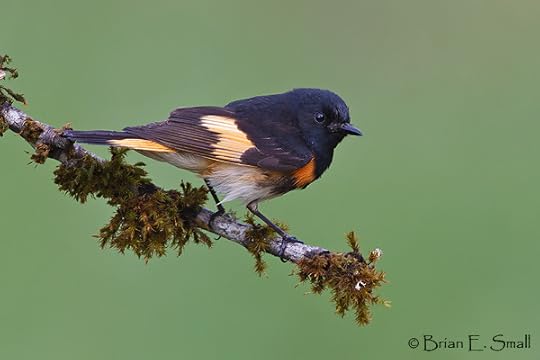
Question 1What is this species?
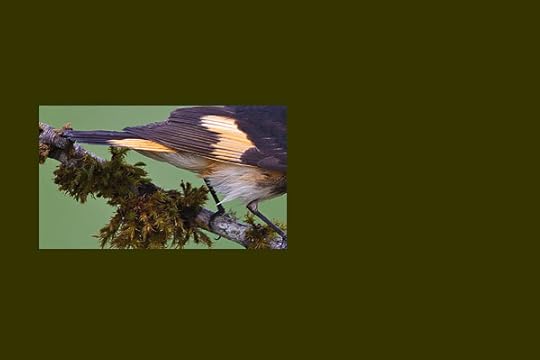 American RedstartBaltimore OrioleBlack-and-white WarblerBay-breasted WarblerQuestion 1 Explanation:
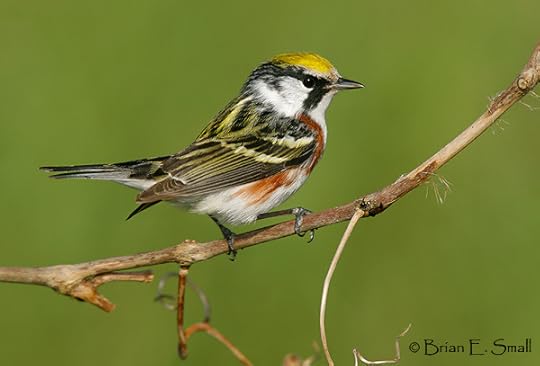
 Question 2What is this species?
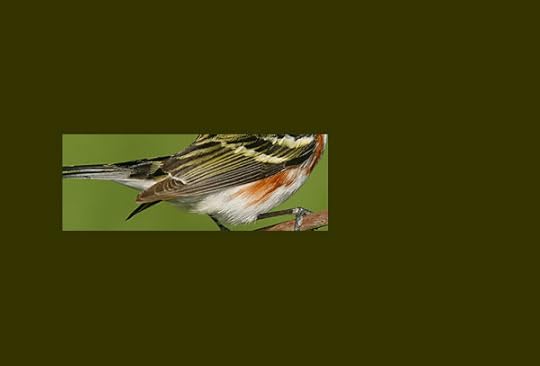 Chestnut-sided WarblerGolden-winged WarblerBay-breasted WarblerBlackburnian WarblerQuestion 2 Explanation:
 Question 3What is this species?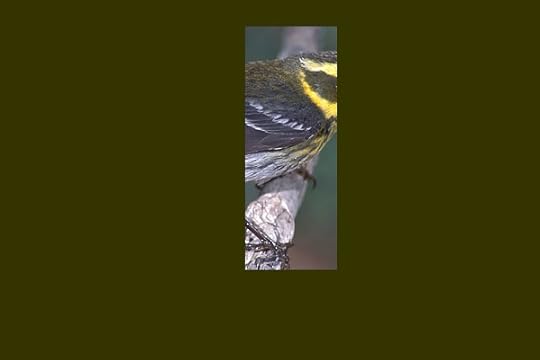
Blackburnian WarblerHooded WarblerTownsend's WarblerCommon YellowthroatQuestion 3 Explanation:
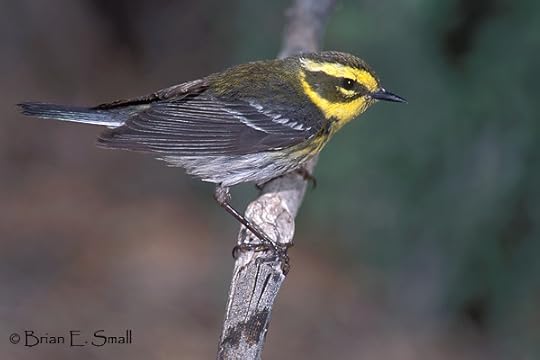 Question 4Of these three species, how many have mostly dark auriculars?onethreetwoQuestion 4 Explanation:Correct! The auriculars (or ear coverts) are the feathers behind and below the eye. The Chestnut-sided Warbler has black above and below the auriculars, but the auriculars themselves are mostly white.Question 5On the American Redstart, what color are the secondaries?Neither orange nor blackishOrange and blackishOnly orangeOnly blackishQuestion 5 Explanation:Correct! The greater secondary coverts are all black, and behind them we see the edges of the long secondary feathers stacked up on the folded wing. Each feather is orange at the base and blackish at the tip. The innermost secondaries (the tertials) are all blackish.
 Once you are finished, click the button below. Any items you have not completed will be marked incorrect.
Get Results
There are 5 questions to complete.
You have completed
questions
question
Your score is
Correct
Wrong
Partial-Credit
You have not finished your quiz. If you leave this page, your progress will be lost.
Correct Answer
You Selected
Not Attempted
Final Score on Quiz
Attempted Questions Correct
Attempted Questions Wrong
Questions Not Attempted
Total Questions on Quiz
Question Details
Results
Date
Score
Time allowed
minutes
seconds
Time used
Answer Choice(s) Selected
Question Text
All doneNeed more practice!Keep trying!Not bad!Good work!Perfect! Congratulations, and thanks for taking the quiz. The winner has already been selected, but watch this website for future contests.
Some more rules: This contest is open to anyone, however, the prize must be deliverable by the United States Post Office to an address in the United States or Canada only. No shipments outside of this area will be made.
The winner will be notified by email.
Entering your email address means that you might receive occasional emails from me in the future about upcoming Sibley Guides events, but I will never give your email address to anyone else.


April 11, 2012
Quiz 27: More Warblers and Color Patterns
This week's quizzes are looking at some warblers, in anticipation of the spring migration (which is already in full swing in some parts of the country).
With thanks, again, to Brian E. Small for providing the beautiful photos. You can see lots more at his website.
Warblers 2
Please wait while the activity loads. If this activity does not load, try refreshing your browser. Also, this page requires javascript. Please visit using a browser with javascript enabled.
If loading fails, click here to try again
Congratulations - you have completed Warblers 2.
You scored %%SCORE%% out of %%TOTAL%%.
Your performance has been rated as %%RATING%%
Your answers are highlighted below.
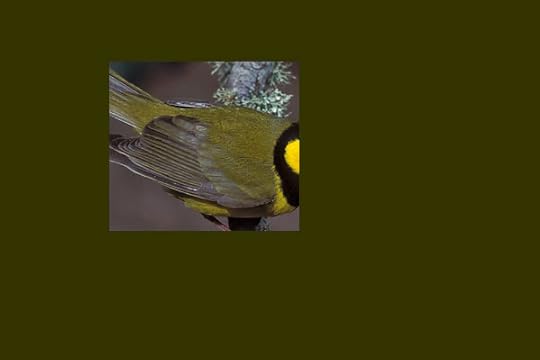
Question 1What species is shown in the photo above?
Hooded WarblerCommon YellowthroatKentucky WarblerWilson's WarblerQuestion 1 Explanation:
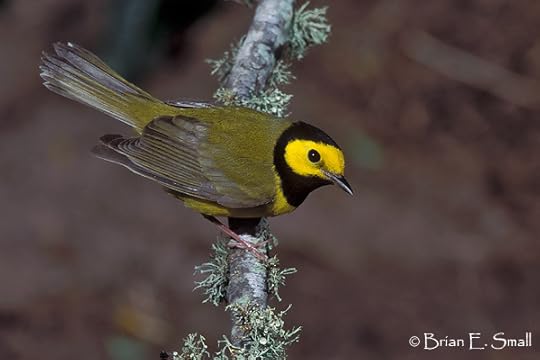 Question 2What color are the scapulars?OliveYellowGrayBlackQuestion 2 Explanation:The scapulars and the back are olive. The scapulars form a band on either side of the back, along the top edge of the folded wing, and contrast slightly with the more grayish wing coverts.
 Once you are finished, click the button below. Any items you have not completed will be marked incorrect.
Get Results
There are 2 questions to complete.
You have completed
questions
question
Your score is
Correct
Wrong
Partial-Credit
You have not finished your quiz. If you leave this page, your progress will be lost.
Correct Answer
You Selected
Not Attempted
Final Score on Quiz
Attempted Questions Correct
Attempted Questions Wrong
Questions Not Attempted
Total Questions on Quiz
Question Details
Results
Date
Score
Time allowed
minutes
seconds
Time used
Answer Choice(s) Selected
Question Text
All doneNeed more practice!Keep trying!Not bad!Good work!Perfect!
April 10, 2012
Quiz 26: Warblers and head patterns
This week's quizzes will be looking at some warblers, in anticipation of the spring migration.
With thanks, again, to Brian E. Small for providing the beautiful photos. You can see lots more at his website.
Warblers 1
Please wait while the activity loads. If this activity does not load, try refreshing your browser. Also, this page requires javascript. Please visit using a browser with javascript enabled.
If loading fails, click here to try again
Congratulations - you have completed Warblers 1.
You scored %%SCORE%% out of %%TOTAL%%.
Your performance has been rated as %%RATING%%
Your answers are highlighted below.
Question 1
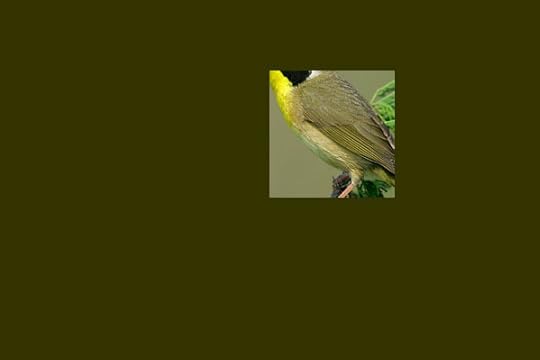
The species is:
Yellow-breasted ChatCommon YellowthroatHooded WarblerNorthern ParulaQuestion 1 Explanation:
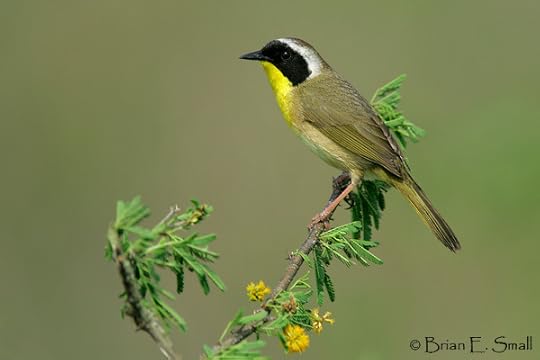 Question 2What color are the auriculars?olivegrayblackyellowQuestion 2 Explanation:The auriculars, or ear coverts (or cheeks) are all black. The black mask spreads onto parts of all the surrounding feather groups.
 Once you are finished, click the button below. Any items you have not completed will be marked incorrect.
Get Results
There are 2 questions to complete.
You have completed
questions
question
Your score is
Correct
Wrong
Partial-Credit
You have not finished your quiz. If you leave this page, your progress will be lost.
Correct Answer
You Selected
Not Attempted
Final Score on Quiz
Attempted Questions Correct
Attempted Questions Wrong
Questions Not Attempted
Total Questions on Quiz
Question Details
Results
Date
Score
Time allowed
minutes
seconds
Time used
Answer Choice(s) Selected
Question Text
All doneNeed more practice!Keep trying!Not bad!Good work!Perfect!
You can read more about bird topography in my book Sibley's Birding Basics.
April 6, 2012
Quiz 25: Wing patterns
Today's quiz introduces a new feature – a prize!
If you get all three questions correct, be sure to click the "Get Results" button at the end of the quiz and submit your results. Everyone who submits a perfect score by 5 PM Eastern Time today (April 6th, 2012) will be entered into a random drawing for the prize.There is no limit to how many times you can attempt the quiz, so feel free to keep trying until you get all three questions right.1
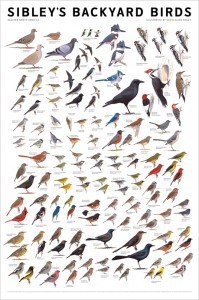
The prize is an autographed copy of my poster Backyard Birds of Eastern/Western North America. The winner will be able to choose either the Eastern or Western version of the poster. Beautifully designed and produced by Scott & Nix, this 24″ x 36″ poster shows about 100 species of the most frequently seen backyard birds. Sophisticated and functional, it could hang in any home or classroom.
Click START below to take the quiz, and good luck!
White wing patches 5
Please wait while the activity loads. If this activity does not load, try refreshing your browser. Also, this page requires javascript. Please visit using a browser with javascript enabled.
If loading fails, click here to try again
Start
Congratulations - you have completed White wing patches 5.
You scored %%SCORE%% out of %%TOTAL%%.
Your performance has been rated as %%RATING%%
Quiz Results
NameFirstLastEmailmTouch Quiz Populated FieldsmTouch Quiz will automatically populate the fields below. Feel Free to add additional fields for the Quiz Taker to complete using the "Add Fields" options to the right.Quiz NameThe name of the quizResults SummaryScoreThe number of correct answers. This has the same value as the %%SCORE%% Variable on the Final Screen.Total QuestionsThe total number of questions. This has the same value as the %%TOTAL%% Variable on the Final Screen.PercentageCorrect answer percentage. This has the same value as the %%PERCENTAGE%% Variable on the Final Screen.Wrong AnswersNumber of wrong answers. This has the same value as the %%WRONG_ANSWERS%% Variable on the Final Screen.
Your answers are highlighted below.
Question 1
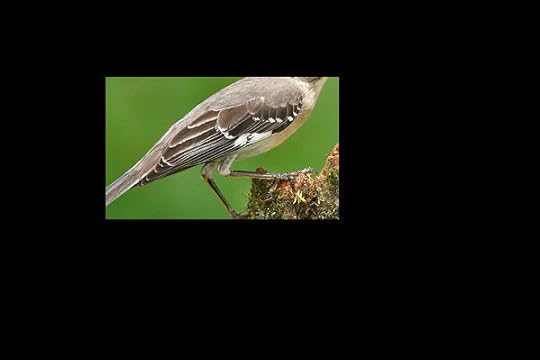
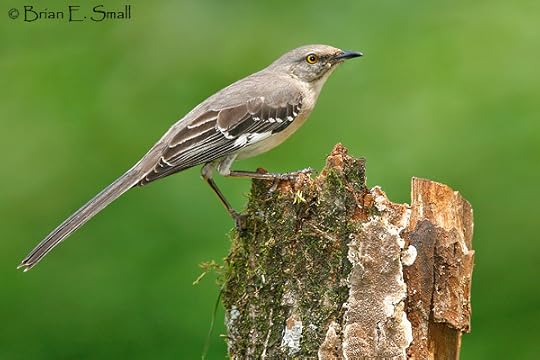
The species is:Northern MockingbirdTownsend's SolitaireEastern PhoebeLoggerhead ShrikeQuestion 1 Explanation:
 Question 2The primary coverts are mostly:darkwhiteQuestion 2 Explanation:
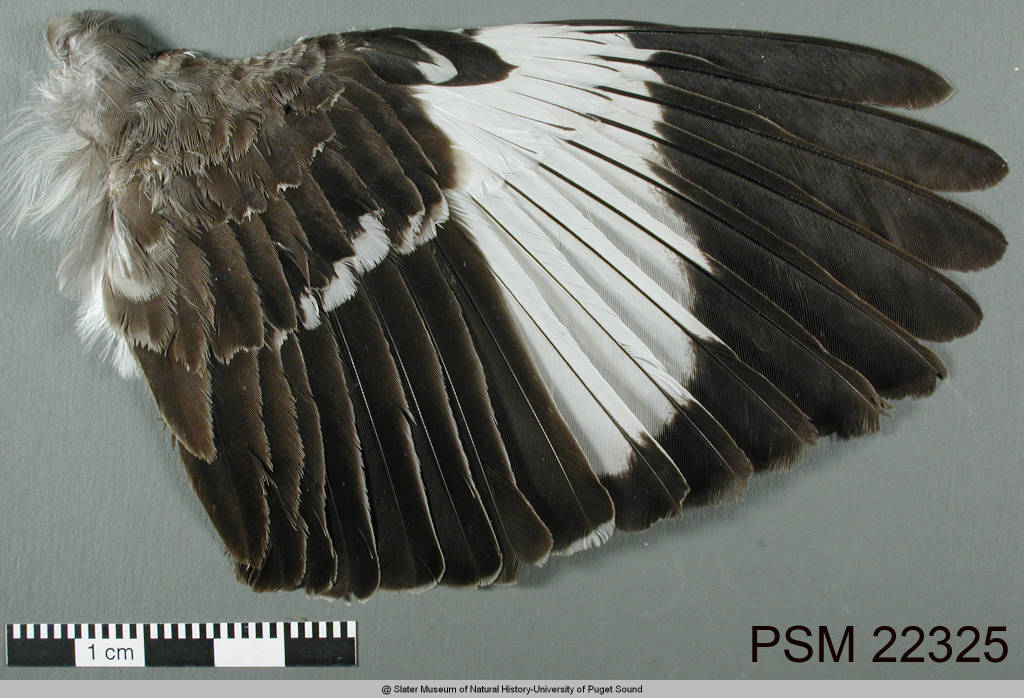
The primary coverts are essentially all white, with the mostly dark alula lying across them. All of the primaries are white at the base, with only a little white on the outermost and lots of white on the inner primaries. This means that only a small amount of white shows when the wing is folded (the inner primaries are hidden, stacked up underneath the secondaries) and a big white flash appears when the wing is spread.Question 3Comparing the two different birds in these photos (the perched bird in the explanation of question 1 and the spread wing in the explanation of question 2), is the pattern of white on the median secondary coverts the same on both of them?Yes, they both show the same pattern of white.No, the pattern of white is different.Question 3 Explanation:The folded wing of the perched bird shows obvious white tips on the median coverts, forming a second wingbar. On the spread wing these white tips have worn off (click the photo to see in more detail) leaving just a trace of the white wingbar. The presence of melanin actually strengthens a feather, so it is common to see this condition in which the white parts of each feather have disintegrated, leaving only the dark parts.
Once you are finished, click the button below. Any items you have not completed will be marked incorrect.
Get Results
There are 3 questions to complete.
You have completed
questions
question
Your score is
Correct
Wrong
Partial-Credit
You have not finished your quiz. If you leave this page, your progress will be lost.
Correct Answer
You Selected
Not Attempted
Final Score on Quiz
Attempted Questions Correct
Attempted Questions Wrong
Questions Not Attempted
Total Questions on Quiz
Question Details
Results
Date
Score
Time allowed
minutes
seconds
Time used
Answer Choice(s) Selected
Question Text
All doneNeed more practice!Keep trying!Not bad!Good work!Perfect!
To enter the drawing for the prize, just fill in your name and email address below and click "submit". The winner will be selected at random from all correct entries, and will be notified by email. Thank you for taking the quiz! %%FORM%%
Some more rules: This contest is open to anyone, however, the prize must be deliverable by the United States Post Office to an address in the United States or Canada only. No shipments outside of this area will be made.
The winner will be notified by email.
Entering your email address means that you might receive occasional emails from me in the future about upcoming Sibley Guides events, but I will never give your email address to anyone else.
April 5, 2012
Quiz 24: Wing Patterns
With thanks to the online wing collection of the Slater Museum of Natural History, University of Puget Sound for allowing the use of their wing photos.
With thanks, again, to Brian E. Small for providing the beautiful photos. You can see lots more at his website, and clicking any of his photos links there as well.
White wing patches 4
Please wait while the activity loads. If this activity does not load, try refreshing your browser. Also, this page requires javascript. Please visit using a browser with javascript enabled.
If loading fails, click here to try again
Congratulations - you have completed White wing patches 4.
You scored %%SCORE%% out of %%TOTAL%%.
Your performance has been rated as %%RATING%%
Your answers are highlighted below.
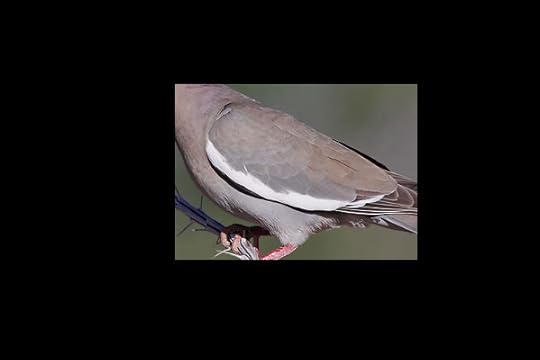
Question 1The species is:Common Ground-DoveNorthern MockingbirdWhite-winged DoveSoraQuestion 1 Explanation:
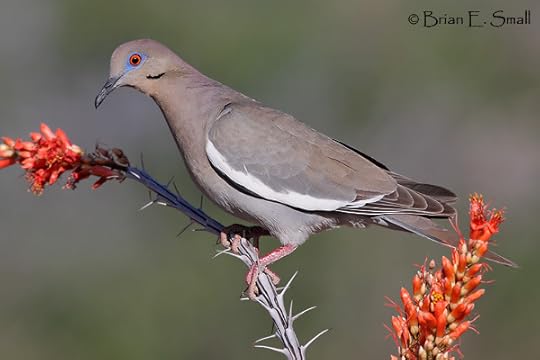 Question 2The white feathers on the wing include some or all of the following (check all that apply):Primary covertsGreater secondary covertsPrimariesMedian secondary covertsLesser secondary covertsQuestion 2 Explanation:
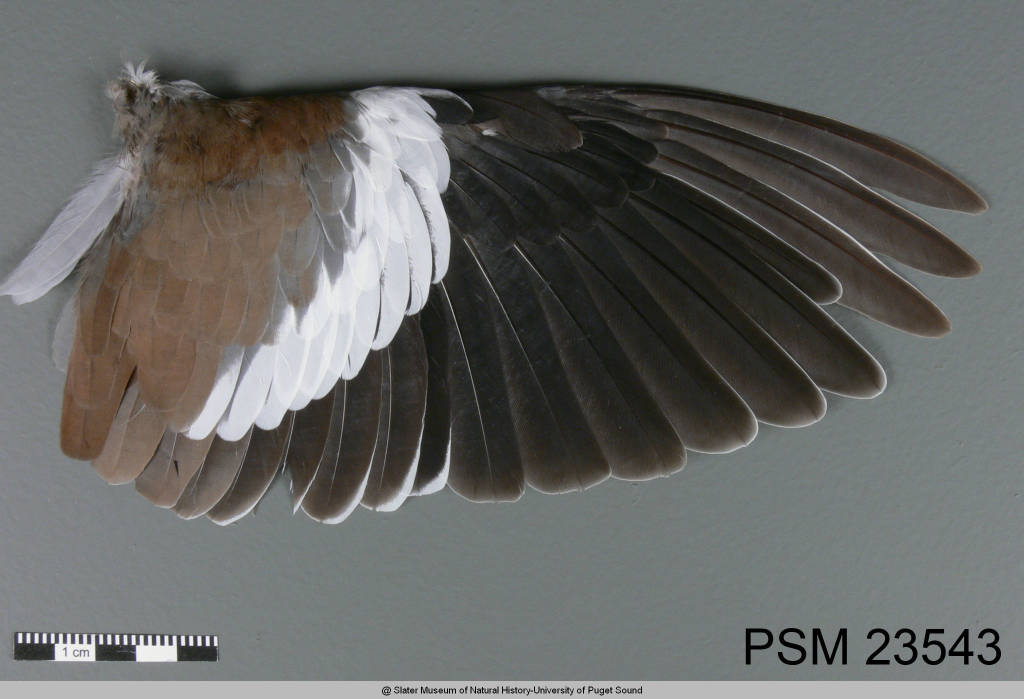
The wing structure of doves is a little different compared to songbirds, so that on the folded wing the secondary coverts hide almost all of the secondaries. The white patch includes almost all of the greater coverts, and then just the outermost feathers of each row of smaller coverts up to the leading edge of the wing. Most of this disappears under the other (inner) wing coverts in each row when the wing is folded. Also notice the thin white tips on the secondaries and look for those on the folded wing above.
Once you are finished, click the button below. Any items you have not completed will be marked incorrect.
Get Results
There are 2 questions to complete.
You have completed
questions
question
Your score is
Correct
Wrong
Partial-Credit
You have not finished your quiz. If you leave this page, your progress will be lost.
Correct Answer
You Selected
Not Attempted
Final Score on Quiz
Attempted Questions Correct
Attempted Questions Wrong
Questions Not Attempted
Total Questions on Quiz
Question Details
Results
Date
Score
Time allowed
minutes
seconds
Time used
Answer Choice(s) Selected
Question Text
All doneNeed more practice!Keep trying!Not bad!Good work!Perfect!
April 4, 2012
Quiz 23: Wing patterns
With thanks to the online wing collection of the Slater Museum of Natural History, University of Puget Sound for allowing the use of their wing photos.
With thanks, again, to Brian E. Small for providing the beautiful photos. You can see lots more at his website, and clicking any of his photos links there as well.
White wing patches 3
Please wait while the activity loads. If this activity does not load, try refreshing your browser. Also, this page requires javascript. Please visit using a browser with javascript enabled.
If loading fails, click here to try again
Congratulations - you have completed White wing patches 3.
You scored %%SCORE%% out of %%TOTAL%%.
Your performance has been rated as %%RATING%%
Your answers are highlighted below.
Question 1The species is:
Lesser GoldfinchAudubon's OrioleYellow-headed BlackbirdBlack-billed MagpieQuestion 1 Explanation: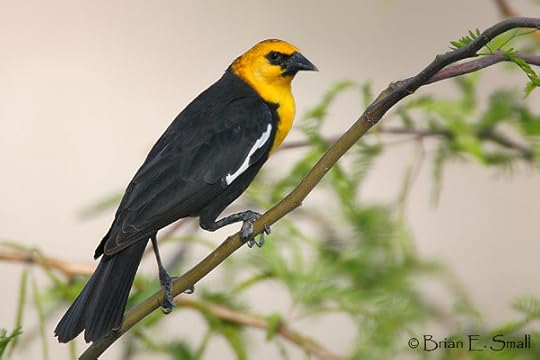
Question 2The white markings on the wing are on the:
PrimariesGreater secondary covertsPrimary covertsSecondariesQuestion 2 Explanation:
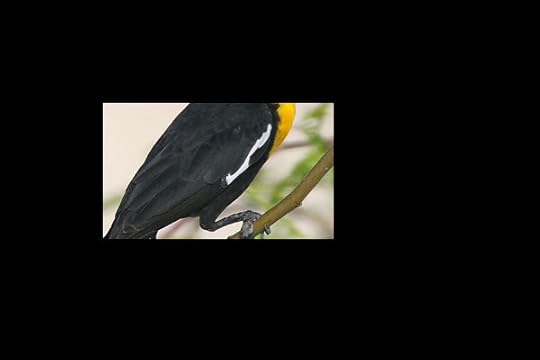
White is all on the "hand", and only on the smaller feathers covering the base of the primaries - the primary coverts. The black feathers that lie across these white primary coverts are the alula, which is analogous to our thumb, and rarely as conspicuous as it is in this species. Technically, it is not just the primary coverts that are white. A couple of the outermost greater and median secondary coverts are also white, and can be distinguished by their width and angle.
Once you are finished, click the button below. Any items you have not completed will be marked incorrect.
Get Results
There are 2 questions to complete.
You have completed
questions
question
Your score is
Correct
Wrong
Partial-Credit
You have not finished your quiz. If you leave this page, your progress will be lost.
Correct Answer
You Selected
Not Attempted
Final Score on Quiz
Attempted Questions Correct
Attempted Questions Wrong
Questions Not Attempted
Total Questions on Quiz
Question Details
Results
Date
Score
Time allowed
minutes
seconds
Time used
Answer Choice(s) Selected
Question Text
All doneNeed more practice!Keep trying!Not bad!Good work!Perfect!
$gf_formid_number
April 3, 2012
Quiz 22: Wing patterns
With thanks to the online wing collection of the Slater Museum of Natural History, University of Puget Sound for allowing the use of their wing photos.
With thanks, again, to Brian E. Small for providing the beautiful photos. You can see lots more at his website, and clicking any of his photos links there as well.
White wing patches 2
Please wait while the activity loads. If this activity does not load, try refreshing your browser. Also, this page requires javascript. Please visit using a browser with javascript enabled.
If loading fails, click here to try again
Congratulations - you have completed White wing patches 2.
You scored %%SCORE%% out of %%TOTAL%%.
Your performance has been rated as %%RATING%%
Your answers are highlighted below.
Question 1The species is:Red-bellied WoodpeckerRed-cockaded WoodpeckerRed-headed WoodpeckerRed-naped SapsuckerQuestion 2The large white wing patch covers all of the:
SecondariesGreater secondary covertsPrimariesSecondaries and primariesQuestion 2 Explanation:
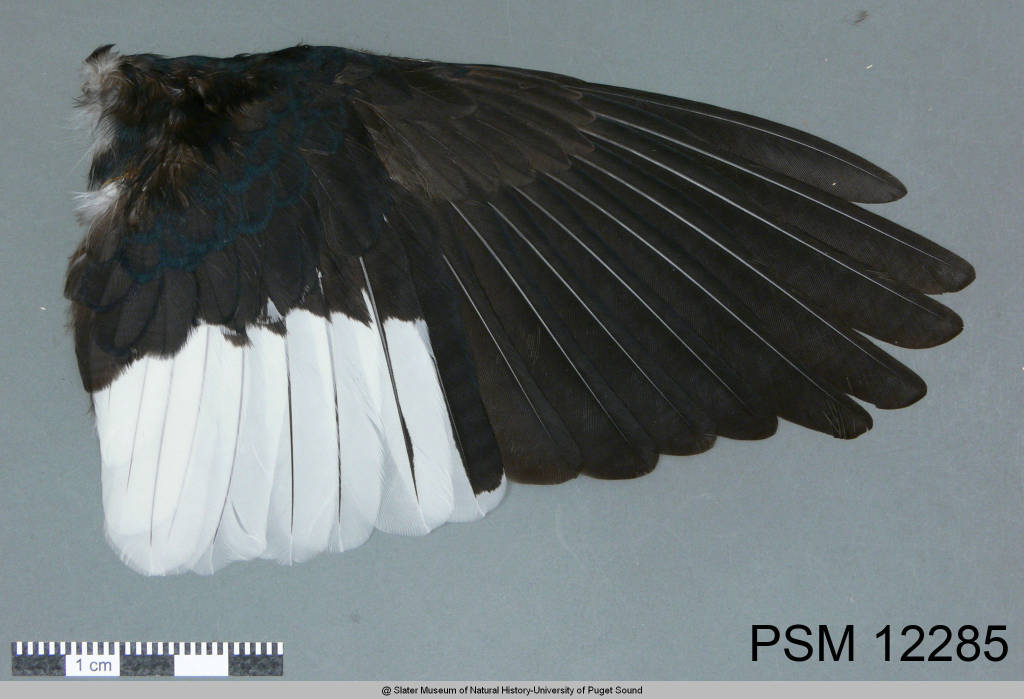
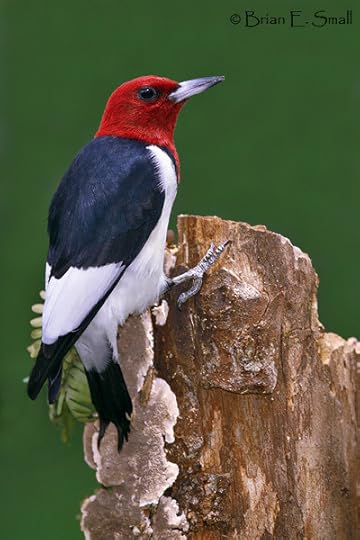
The secondaries (including the tertials - the innermost secondaries) grow from the "forearm" bones, and are essentially all white in this species. Technically, there is a little black on the bases of the outer secondaries, and the outer web of the outermost secondary is black. This color contrasts with the slightly browner primaries (which grow from the "hand" bones) and makes it easy to distinguish the two feather groups here. When the wing is folded the blackish primaries are almost completely hidden under the stack of white secondaries.
Once you are finished, click the button below. Any items you have not completed will be marked incorrect.
Get Results
There are 2 questions to complete.
You have completed
questions
question
Your score is
Correct
Wrong
Partial-Credit
You have not finished your quiz. If you leave this page, your progress will be lost.
Correct Answer
You Selected
Not Attempted
Final Score on Quiz
Attempted Questions Correct
Attempted Questions Wrong
Questions Not Attempted
Total Questions on Quiz
Question Details
Results
Date
Score
Time allowed
minutes
seconds
Time used
Answer Choice(s) Selected
Question Text
All doneNeed more practice!Keep trying!Not bad!Good work!Perfect!
$gf_formid_number
April 2, 2012
Quiz 21: Wing patterns
With thanks to the online wing collection of the Slater Museum of Natural History, University of Puget Sound for allowing the use of their wing photos.
With thanks, again, to Brian E. Small for providing the beautiful photos. You can see lots more at his website, and clicking any of his photos links there as well.
White wing patches 1
Please wait while the activity loads. If this activity does not load, try refreshing your browser. Also, this page requires javascript. Please visit using a browser with javascript enabled.
If loading fails, click here to try again
Congratulations - you have completed White wing patches 1.
You scored %%SCORE%% out of %%TOTAL%%.
Your performance has been rated as %%RATING%%
Your answers are highlighted below.
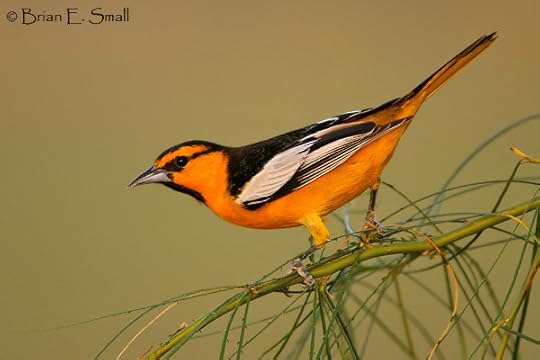
Question 1The species is:Baltimore OrioleAltamira OrioleSpot-breasted OrioleBullock's OrioleQuestion 2The big solid white patch on the wing is on the:Primary covertsScapularsSecondariesSecondary covertsQuestion 2 Explanation: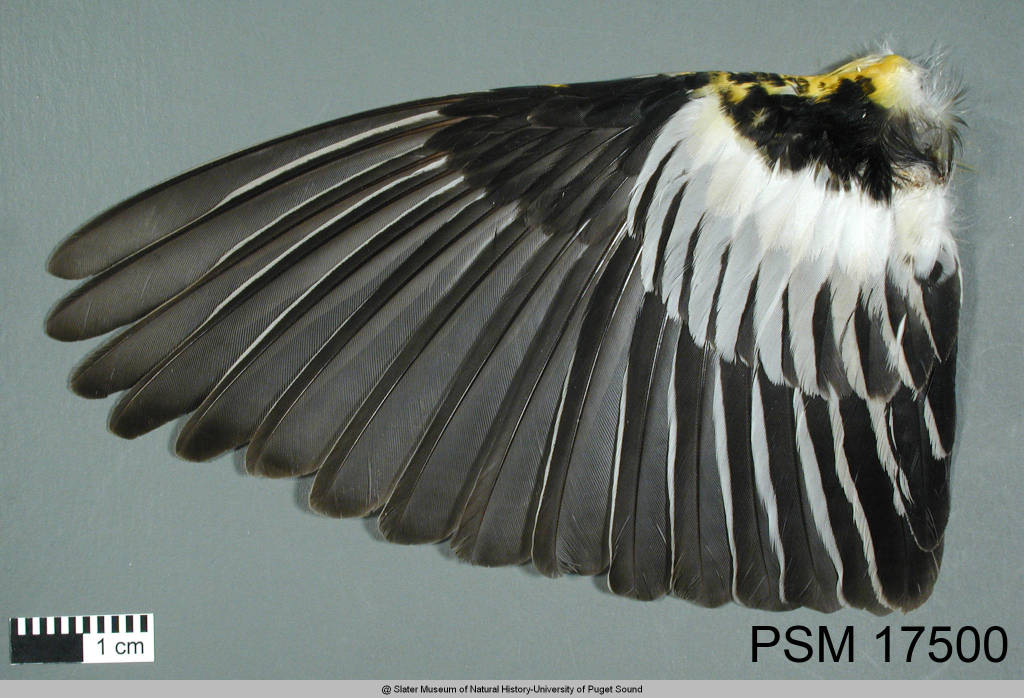
The white patch includes all of the median coverts and most of each greater secondary covert. When the wing is folded the broad white edges on each greater covert conceal the black parts of those feathers, although you can still see the ghost of the black parts showing through. Similarly, narrower white edges on the secondaries and tertials merge when the wing is folded to form a white streak back towards the tail.
Once you are finished, click the button below. Any items you have not completed will be marked incorrect.
Get Results
There are 2 questions to complete.
You have completed
questions
question
Your score is
Correct
Wrong
Partial-Credit
You have not finished your quiz. If you leave this page, your progress will be lost.
Correct Answer
You Selected
Not Attempted
Final Score on Quiz
Attempted Questions Correct
Attempted Questions Wrong
Questions Not Attempted
Total Questions on Quiz
Question Details
Results
Date
Score
Time allowed
minutes
seconds
Time used
Answer Choice(s) Selected
Question Text
All doneNeed more practice!Keep trying!Not bad!Good work!Perfect!
$gf_formid_number
April 1, 2012
Announcing my new video guide to bird songs!
Update: For future visitors I should explain that I posted this as an April Fool's Joke. This video converts the voice descriptions from the Sibley Guide to Birds from text-to-speech, and the results are pretty funny, and maybe even a little bit educational.
Today I'm very pleased to announce my latest major project. It's a bird song identification guide in a format – animated video – that has been entirely, and inexplicably, overlooked by bird guide authors. I've been working very hard on this for a while now, so I'm really excited to be able to show it.
Enjoy! And let me know what you think.
March 29, 2012
The Sibley eGuide is now available for Blackberry Playbook
 Just released and available for download at the Blackberry App World – The Sibley eGuide can now be used on any Blackberry Playbook tablet. All of the features of the eGuide on other platforms are included here:
compare any two images, maps, or sounds on a single screen
filter by state and by common species
view any of the over 6000 images of over 800 species and enlarge/reduce with a tap
over 2300 audio clips
and more
Click here to check it out at the Blackberry App World
Next up, we're investigating the possibility of converting the app to run on Barnes & Noble Nook tablets, stay tuned…
David Allen Sibley's Blog

- David Allen Sibley's profile
- 151 followers

