
David Allen Sibley's Blog, page 18
March 7, 2012
What is the submoustachial?
The feathers along the side of the lower jaw have a very confusing history of terminology. They've been called the malar stripe (in many early and mid 20th century bird books), the submoustachial1 stripe (in most bird guides published in the 1980s and later), and the malar again (in my Sibley Guide to Birds).

Savannah Sparrow with some head feathers and head feather markings labeled. Note that the moustachial stripe is part of the auriculars, not a distinct feather group. Original gouache painting and pencil outline copyright David Sibley.
The trouble really started in 1981 when – in an effort to standardize feather descriptions – "submoustachial stripe" was introduced and the term "malar stripe" was shifted down to describe a dark stripe on the side of the throat. That was wrong, so in 2000 I proposed the new term "lateral throat stripe", and reverted to the old use of malar (replacing the new "submoustachial").
All of that proved too confusing, and while "lateral throat stripe" has been adopted by many, the term malar has continued to have two meanings2, neither of which fits its dictionary definition of "related to the cheeks".
In a recent commentary in British Birds, Keith Vinicombe and Lars Svensson point to all of this confusion and suggest simply retiring the term "malar", and I agree completely. They go on to endorse the term "lateral throat stripe" and further suggest that, for the feathers on the side of the lower jaw, the best term is the already established "submoustachial".
After long consideration, I agree. My only hesitation comes from my personal bias against the word submoustachial. It seems unnecessarily complex and dependent, like describing our jaw-line as "below the moustache". It's a significant and always-recognizable feature. Why is it named with a reference to something less constant? I would like to see a new term like "jaw stripe" used for these feathers along the side of the lower jaw, but I understand that there really isn't a pressing need to fix this, and I will accept submoustachial.
Because this was a British proposal, the spelling is British "moustache" rather than the American "mustache", and American bird guides have continued to use that spellinge.g. the newest edition of the National Geographic field guide still calls the dark stripe on the side of the throat the "malar stripe"


March 6, 2012
Quiz 15: The submoustachial
Regardless of what you call them – submoustachial, malar, jaw stripe, mandibular stripe – the feathers along the side of the lower jaw are important for identification. Being able to distinguish this group of feathers, and confidently describe their color, is one of the trickiest and most useful skills in understanding head feathers.
Hopefully this short quiz will help.
With thanks, again, to Brian E. Small for providing the beautiful photos. You can see lots more at his website, and clicking any photo links there as well.
The color of the submoustachial
Please wait while the activity loads. If this activity does not load, try refreshing your browser. Also, this page requires javascript. Please visit using a browser with javascript enabled.
If loading fails, click here to try again
Congratulations - you have completed The color of the submoustachial.
You scored %%SCORE%% out of %%TOTAL%%.
Your performance has been rated as %%RATING%%
Your answers are highlighted below.
Question 1The submoustachial of this Tropical Parula is:
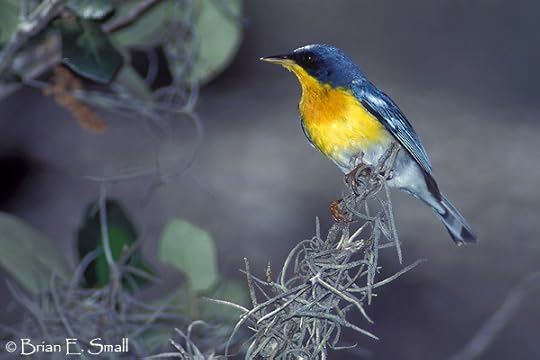 grayyellowblackQuestion 2The submoustachial of this Northern Parula is:
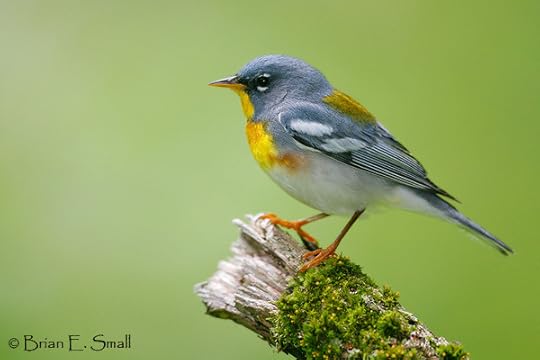 blackgrayyellowQuestion 2 Explanation:The photos below show these two species in song, and with the bill open it is easier to see that the Tropical Parula has dark color extending down onto the side of the lower jaw, below the mouth, while the Northern has only yellow feathers there.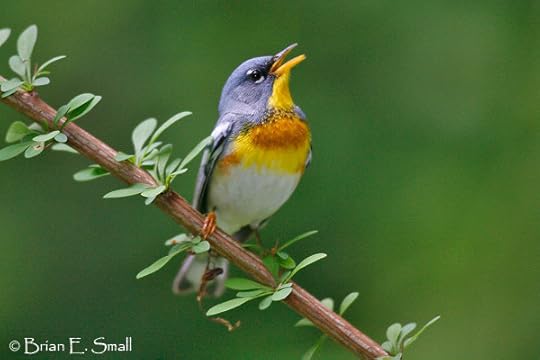
Northern Parula
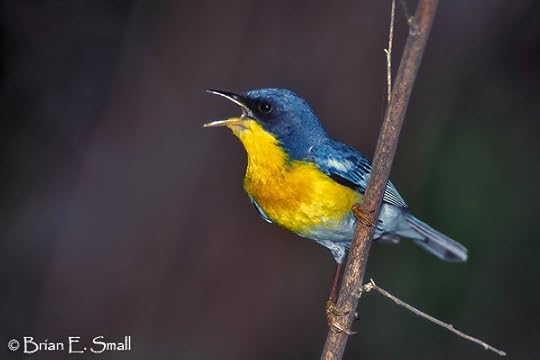
Tropical Parula
Question 3The submoustachial of this Nashville Warbler is: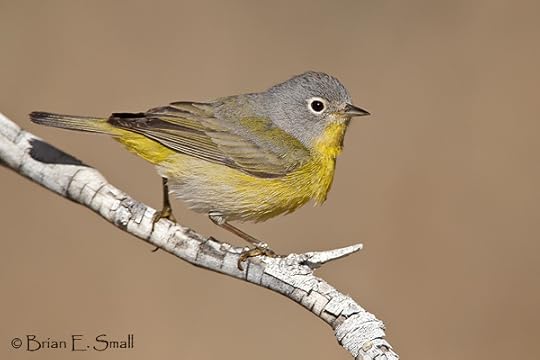 grayyellow
 Once you are finished, click the button below. Any items you have not completed will be marked incorrect.
Get Results
There are 3 questions to complete.
You have completed
questions
question
Your score is
Correct
Wrong
Partial-Credit
You have not finished your quiz. If you leave this page, your progress will be lost.
Correct Answer
You Selected
Not Attempted
Final Score on Quiz
Attempted Questions Correct
Attempted Questions Wrong
Questions Not Attempted
Total Questions on Quiz
Question Details
Results
Date
Score
Time allowed
minutes
seconds
Time used
Answer Choice(s) Selected
Question Text
All doneNeed more practice!Keep trying!Not bad!Good work!Perfect!
$gf_formid_number
March 5, 2012
Variation in head pattern
In recent posts and quizzes here I've been stressing the head feather groups, and how they provide a consistent structure for understanding the color patterns of birds. It is true that color patterns almost always follow the general arrangement of the feather groups, but there is a lot of variation in the details. The two photographs here show two species with head patterns that are the same, but different.
With thanks, again, to Brian E. Small for providing the beautiful photos. You can see lots more at his website, and clicking any photo links there as well.
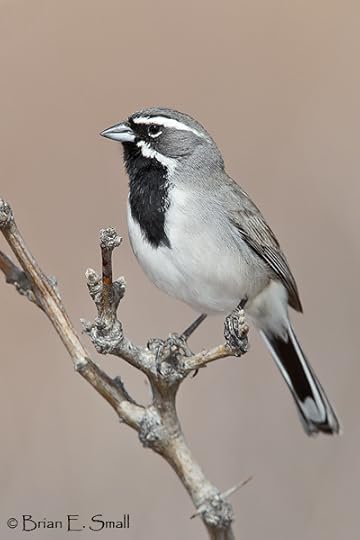
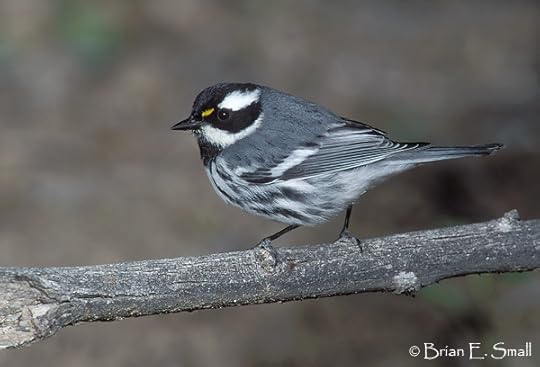
In simplest terms we would describe these head patterns the same way, from top to bottom:
dark crown
white supercilium
dark auriculars
white malar
dark throat
But the white stripes are much broader on the warbler, and looking more closely we see other differences as well. I should stress here that the underlying structure and arrangement of feathers is nearly identical on these two species.
Taking one feather group as an example, the supercilium is composed of several parallel rows of tiny feathers lined up from the bill to the back of the head. On Black-throated Gray Warbler all of the supercilium feathers are white, creating a broad pale eyebrow, while on Black-throated Sparrow only a couple of rows of feathers are pale, creating a narrow eyebrow stripe.
Another obvious difference is that, on the sparrow, the white eyebrow stripe continues all the way to the bill, while on the warbler it ends at the front of the eye. Technically, I would call everything in front of the eye the lores, so both of these birds have a white supercilium, but only the sparrow has white on the lores, where the warbler is black with a small yellow spot.
Looking at the white stripe along the lower jaw (the malar or submoustachial) we can see that it is much broader on the warbler, and also curves up to wrap around the back of the auriculars. At the forward end the warbler has a completely white malar stripe all the way to the base of the bill, while the sparrow has a small area of black feathers at the base of the bill.
It's hard to tell from these photos what is creating the difference in the width of the white malar stripe, but I suspect it is mainly at the lower edge. The warbler appears to have white spreading onto the sides of the throat, and the sparrow seems to show the opposite – black from the throat encroaching on the malar.
Variation like this makes a knowledge of feather groups even more useful. It is only by knowing the five major feather groups on the head that we can really understand the subtle differences between these two species.
March 3, 2012
The changeable shape of the supercilium
The feathers that grow on the sides of the head above the eyes of a bird are called the supercilium, and when they contrast in color with the adjacent feathers we call that an eyebrow stripe. There's lots of variation in the shape of the eyebrow stripe, and in some closely-related species this can be a useful field mark, e.g. Northern and Louisiana Waterthrush.
There is no difference in the underlying arrangement of feathers, however, and the broader pale eyebrow stripe of Louisiana Waterthrush is entirely the result of the pale color spreading onto more feathers.
One source of variation that should be considered when judging the width and prominence of the eyebrow stripe is how the feathers are being held. These two photos of Red-eyed Vireo show a dramatic change in the shape of the pale eyebrow as the crown feathers are raised and lowered.
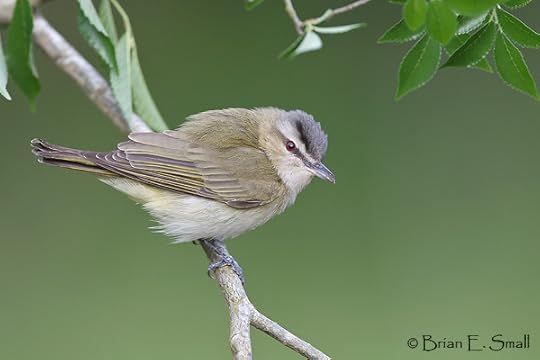
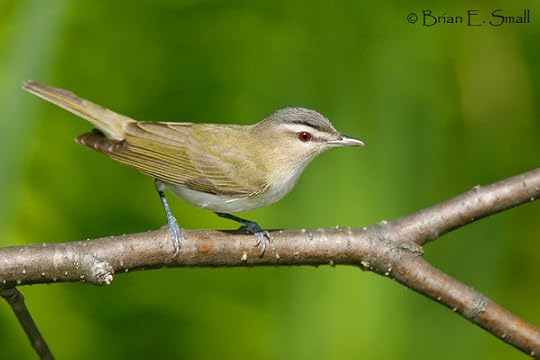
Notice that the shape of the pale eyebrow changes dramatically behind the eye, where the feathers are longer and have a wider range of movement. Above and in front of the eye, in contrast, the feathers are much shorter. These feathers move very little and therefore the shape of the eyebrow and other markings on the front of the head hardly changes.
With thanks, again, to Brian E. Small for providing the beautiful photos. You can see lots more at his website, and clicking any photo links there as well.
March 2, 2012
Quiz 13: Head pattern variations
Here are four more birds with questions about their head feathers.
With thanks, again, to Brian E. Small for providing the beautiful photos. You can see lots more at his website, and clicking any photo links there as well.
More head patterns
Please wait while the activity loads. If this activity does not load, try refreshing your browser. Also, this page requires javascript. Please visit using a browser with javascript enabled.
If loading fails, click here to try again
Congratulations - you have completed More head patterns.
You scored %%SCORE%% out of %%TOTAL%%.
Your performance has been rated as %%RATING%%
Your answers are highlighted below.
Question 1The two white stripes are the:
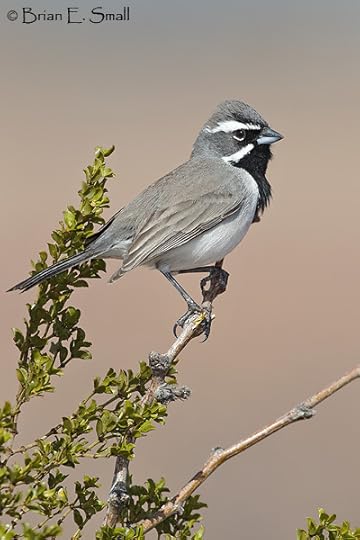 supercilium and malarauriculars and malarsupercilium and lateral throat stripeQuestion 2And the species is:Black-chinned SparrowDark-eyed JuncoFive-striped SparrowBlack-throated SparrowQuestion 3The black stripe on the head is on the: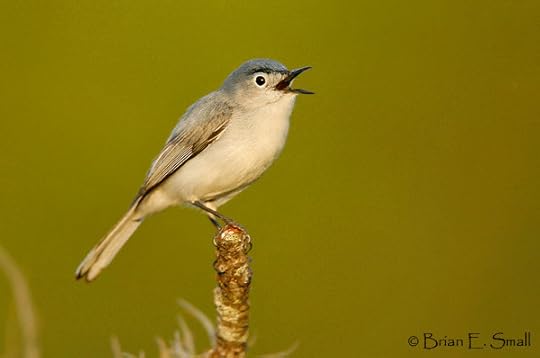
auricularssuperciliumcrownmalarQuestion 3 Explanation:Unlike most birds, which have a dark stripe on the side of the crown contrasting with a paler eyebrow stripe, this species has the black stripe shifted lower on the side of the head. The crown is completely blue-gray, and the supercilium is partly black. Actually I think you could say the black spreads up a little bit onto the edge of the crown, so I'll give partial credit for "crown".Question 4The species is:Northern MockingbirdBlack-tailed GnatcatcherBlue-gray GnatcatcherLucy's WarblerQuestion 5Is the throat paler or darker than the supercilium?
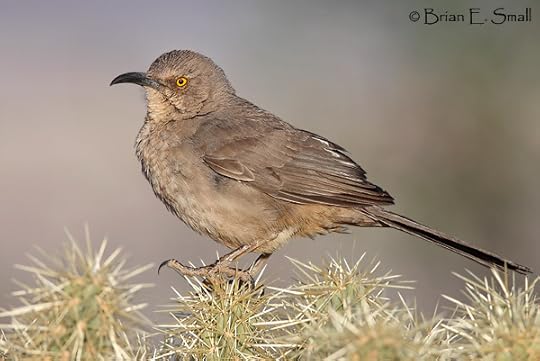
Is the throat paler or darker than the supercilium?palerdarkerabout the sameQuestion 6The species is:California ThrasherNorthern MockingbirdCanyon TowheeCurve-billed ThrasherQuestion 7The white stripe below the eye is on the:
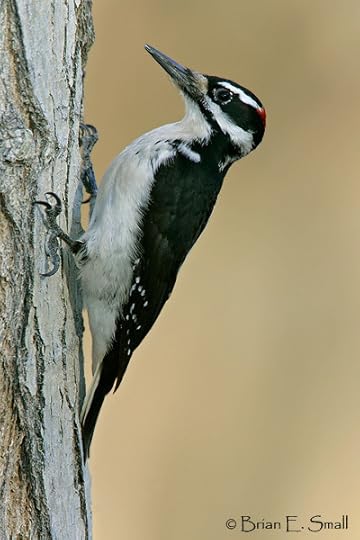
superciliumthroatmalarauricularsQuestion 7 Explanation:All woodpeckers that have a black-and-white pattern below the eye have the colors reversed from the norm (compare the position of the dark and light stripes with the Black-throated Sparrow above). On most birds the auriculars are dark, often with a darker lower border (called a moustachial stripe since it originates near the nostrils). If there is a paler stripe below the auriculars it is on the malar (submoustachial), and there is often another dark stripe below that on the side of the throat. Woodpeckers, however, have a pale moustachial stripe originating near the nostrils and extending back along the lower edge of the auriculars. The malar (submoustachial) feathers along the side of the lower jaw are dark, and the throat is entirely pale. Question 8The species is:Hairy WoodpeckerNuttall's WoodpeckerDowny WoodpeckerThree-toed Woodpecker
Once you are finished, click the button below. Any items you have not completed will be marked incorrect.
Get Results
There are 8 questions to complete.
You have completed
questions
question
Your score is
Correct
Wrong
Partial-Credit
You have not finished your quiz. If you leave this page, your progress will be lost.
Correct Answer
You Selected
Not Attempted
Final Score on Quiz
Attempted Questions Correct
Attempted Questions Wrong
Questions Not Attempted
Total Questions on Quiz
Question Details
Results
Date
Score
Time allowed
minutes
seconds
Time used
Answer Choice(s) Selected
Question Text
All doneNeed more practice!Keep trying!Not bad!Good work!Perfect!
$gf_formid_number
February 29, 2012
Quiz 12: More on head feathers
A teaser of spring wood-warblers on this bonus day of February. Two questions for each of the photos will help you practice applying your knowledge of head feathers.
Thanks to Brian E. Small for allowing the use of his beautiful photos. You can see lots more at his website, and clicking any photo links there as well.
Warbler head patterns
Please wait while the activity loads. If this activity does not load, try refreshing your browser. Also, this page requires javascript. Please visit using a browser with javascript enabled.
If loading fails, click here to try again
Congratulations - you have completed Warbler head patterns.
You scored %%SCORE%% out of %%TOTAL%%.
Your performance has been rated as %%RATING%%
Your answers are highlighted below.
Question 1
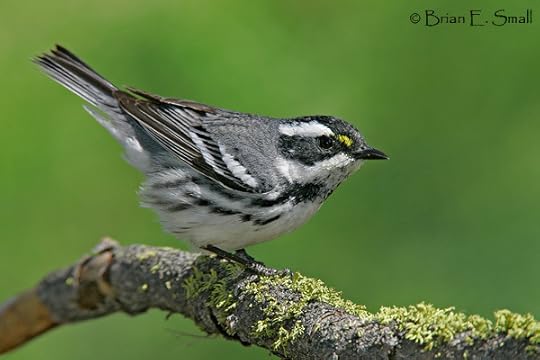
The supercilium is:mostly blackishmostly whiteQuestion 2And in the photo above, the malar (submoustachial) is:mostly whitemostly blackishQuestion 3
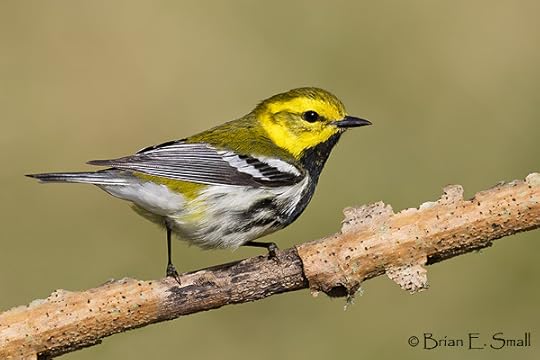
The auriculars are:bright yellowblackolive yellowQuestion 4In the photo above, the malar (submoustachial) is:bright yellowolive and yellowblackolive, yellow, and blackQuestion 5
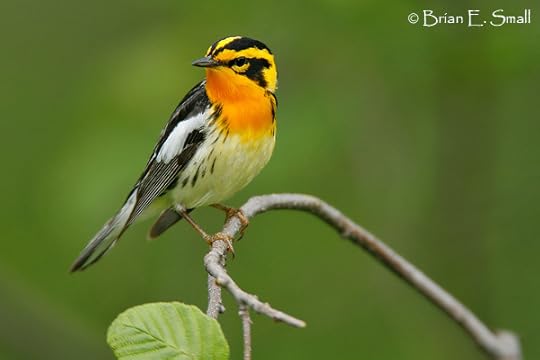
The malar (submoustachial) is:blackorangeorange and blackQuestion 6In the photo above, the crown is:orange and blackorangeblack
Once you are finished, click the button below. Any items you have not completed will be marked incorrect.
Get Results
There are 6 questions to complete.
You have completed
questions
question
Your score is
Correct
Wrong
Partial-Credit
You have not finished your quiz. If you leave this page, your progress will be lost.
Correct Answer
You Selected
Not Attempted
Final Score on Quiz
Attempted Questions Correct
Attempted Questions Wrong
Questions Not Attempted
Total Questions on Quiz
Question Details
Results
Date
Score
Time allowed
minutes
seconds
Time used
Answer Choice(s) Selected
Question Text
All doneNeed more practice!Keep trying!Not bad!Good work!Perfect!
$gf_formid_number
Trumpeter Swans, yellow bill spots, and leucism
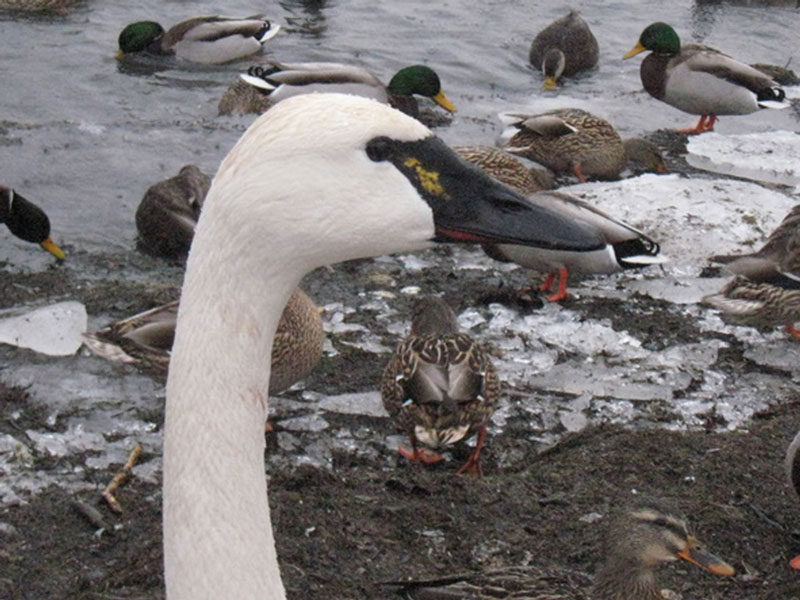
Trumpeter Swan with yellow patches on the bill, a well-known individual in Scarborough, Ontario. This photo taken in Jan 2012 by Jill Ramsay, used by permission.
In a previous post I've talked about Trumpeter Swans with yellow bill spots as a source of confusion with Tundra Swan. I speculated that the yellow spots might be showing because the birds are leucistic (lacking melanin). The responses to that post are worthy of a follow-up. Harry Lumsden, who has studied the reintroduced Trumpeter Swans of Ontario and knows them as individuals, says that yellow bill spots are rare but are shown by a small percentage of Ontario Trumpeters.
Leucistic swans do exist (Harry currently knows of three in Ontario) and can be recognized throughout their life by their pale yellowish legs. They show yellow and red patches on their bills until age two, some show yellow spots until age four, but otherwise their bills are all black like normal Trumpeters. Most of the swans showing yellow bill spots (like bird C24 shown in the photos here) have dark legs and are not leucistic.
Another interesting point is that this swan shows a rounded border of feathering on the forehead. This is typical of Tundra Swan, most Trumpeters have a more pointed extension of white feathers on the forehead. Harry Lumsden says this is another rare variation shown by some Ontario Trumpeter Swans.
Given the yellow bill spots and the rounded forehead feathering, it's no wonder birders have been confused by this individual. We might even start to consider the possibility of a hybrid, but Harry has watched this individual swan from hatching, he knows its parents and grandparents, and there is no question that it is a pure Trumpeter Swan. It's a good lesson in variation and the fallibility of field marks.

Trumpeter Swan showing unusually rounded border of feathering on the forehead. Same bird as above, photo taken in Jan 2012 by Jill Ramsay, used by permission.
February 28, 2012
Introduction to breast feathers

Belding's Savannah Sparrow showing the feather groups on the underside of the body. Moving the cursor over the image will show the outline of the breast feathers. Photo taken in San Diego CA, copyright David Sibley.
One of the well-defined groups of feathers on the underside of a bird is what we call the breast. In reality, on songbirds these feathers grow from the front of the neck, extending down so that the tips of the feathers (which is all we can see) cover the foreparts of the body – the breast. Given that they are attached to the neck, the breast feathers move around a lot depending on whether the neck is coiled or outstretched.
The breast feathers usually show a fairly sharp distinction from the throat and nape feathers above and a more subtle shadow where they meet the flank and belly feathers below. In the case of the Savannah (Belding's) Sparrow shown above notice that the brownish streaks on the breast feathers are not lined up with the streaks on the flanks.
Below are two more photographs showing the breast feathers. Moving your cursor over the images will show the outline of the breast feathers.

White-crowned Sparrow. Photo taken at Pine Butte Guest Ranch, Montana, copyright David Sibley.
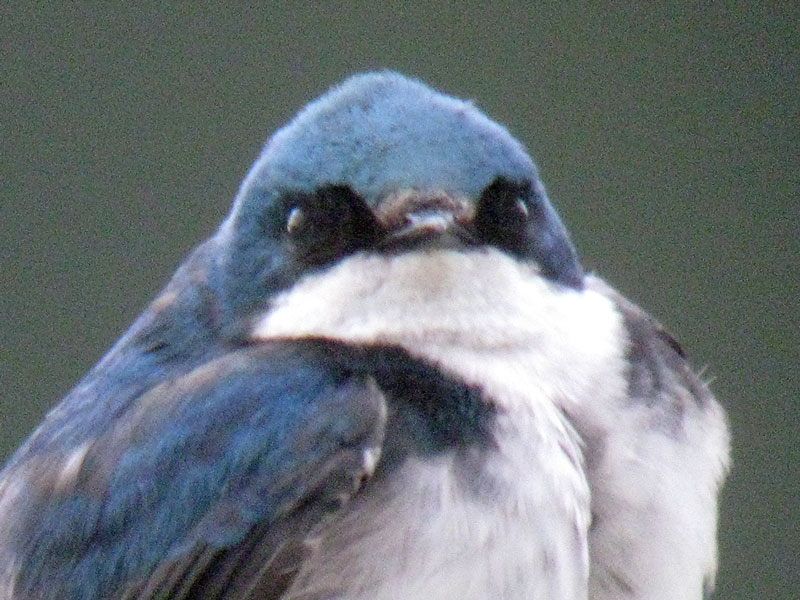
Tree Swallow. Photo taken at The Nature Conservancy's Pine Butte Guest Ranch in Montana, copyright David Sibley.
February 27, 2012
News about the eGuide to Birds
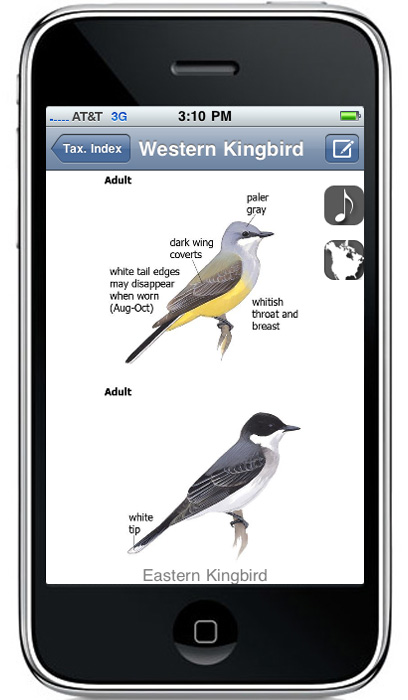
I'm happy to report some news about the Sibley eGuide to birds:
The price of the app in all versions has been reduced 30% to $19.99, and a new Lite version for iPhone and iPad is available for free at iTunes. This is a fully functional version of the app that includes only 30 species. So you can see how it works before you buy.
In development news, versions of the app for Windows Phone 7 and Blackberry Playbook are ready and should be available soon. The Kindle Fire edition has recently been released in the Amazon Android store.
As always, if you have any questions or problems with the app we are ready to help. Just leave a comment, contact me, or contact the developers directly at support@mydigitalearth.com
February 24, 2012
Rare birds "under the radar"
In previous posts here I've asked "How many rare birds do we miss?" and the related question "How many rare birds do we find?" Several recent rare bird discoveries provide a good chance to revisit these questions.
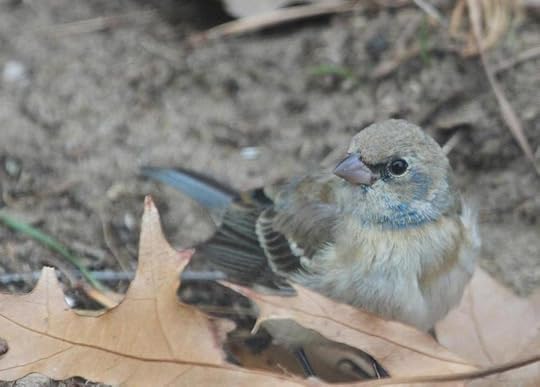
Lazuli Bunting at Mass Audubon's Wellfleet Bay Wildlife Sanctuary, Feb 2012. Photo by Mark Faherty.
Consider these recent discoveries:
While driving home on New Year's Eve, 2011, a resident of Cape Ann, Massachusetts photographed a Purple Gallinule as it stood in the road, illuminated by the headlights of his car. Even on heavily-birded Cape Ann, this bird was not seen for over seven weeks until February 23, 2012 when, remarkably but sadly, it turned up dead in the middle of the same observer's backyard!
Florida's seventh Neotropic Cormorant was found on January 23, 2012, in a nesting colony. It was apparently paired with a Double-crested and feeding a weeks-old youngster, and to be at that stage of the nesting cycle it must have been present for at least eight weeks before discovery.
Maryland's first Virginia's Warbler was identified February 15th, 2012. What was presumably the same bird had been seen (but not positively identified) at the same location on January 26th, 2012 – 20 days earlier.
The third Lazuli Bunting ever found in Massachusetts showed up at the feeders at Wellfleet Bay Wildlife Sanctuary on Cape Cod February 4th, 2012. Like many birds, the migratory urge in buntings is controlled by hormones, and during December they settle into their winter homes. It's likely that this bird had been present on Cape Cod for at least six weeks, enjoying the mild winter in one of the many weedy thickets nearby, and was only discovered when it found its way to the well-watched feeders at the Mass Audubon sanctuary.
When I wrote about these questions before I concluded that birders probably find well under 10% of all the rare birds that are out there. If each of the birds described above was present for about 60 days before discovery, that translates to less than a 2% chance of being found on any given day. Admittedly, these are some inconspicuous species. A flamingo or a Snowy Owl probably would have been found a lot sooner, but the bottom line is that even in late February, there's a good chance that right now, somewhere near you, there is a rare bird just waiting to be discovered.
David Allen Sibley's Blog

- David Allen Sibley's profile
- 151 followers


