Aidan Moher's Blog, page 20
June 24, 2014
One to Look Out For: Company Town by Madeline Ashby

I’m a working futurist, so I’m supposed to know all about it. The problem was, I didn’t really have any answers.
Madeline Ashby’s debut novel, vN, caught a lot a readers by surprise with its sophisticated take on humanity’s convergence with the technology we’ve created. Stefan Raets of Tor.com lauded it for examining “a fairly complex future almost exclusively from the limited perspective of an immature and confused non-human character,” and Cory Doctorow said, “Ashby’s debut is a fantastic adventure story [...] It is often profound, and it is never boring.”
The sequel, iD, established Ashby as one of the genre’s most exciting young writers. Now she’s back with a new novel, a standalone called Company Town.
“After I wrote the most fucked-up book about robot consciousness ever, followed by an even more fucked-up sequel, people started asking me about the Singularity,” Ashby told io9 when they asked about the inception of Company Town. “I’m a working futurist, so I’m supposed to know all about it. The problem was, I didn’t really have any answers. So I decided to write a fucked-up book about it. And sex work. And serial killers.”
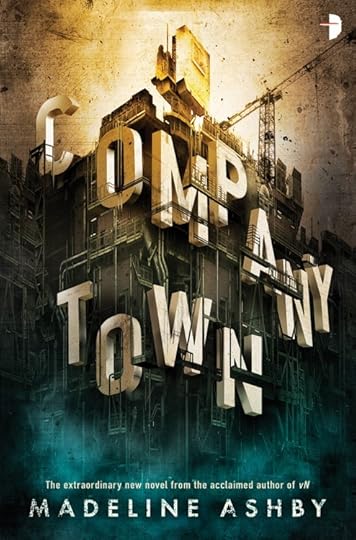
Erik Mohr‘s cover design is as gritty and darkly attractive as Ashby’s description of the book.
Best of all (if you ask this Canadian editor)? It’s set in Canada. “The protagonist, Go Jung-hwa, is an escort’s escort for the United Sex Workers of Canada, Local 314, which operates legally in [New Arcardia, Newdfoundland],” Ashby described. “As the novel opens, Hwa’s bodyguard job takes her to the formal handoff between the many companies that once owned New Arcadia, and Lynch Ltd, the family-owned company that has just bought the whole town lock, stock, and barrel.
“What follows is a story about being torn between your friends and your future: saving the people of a town that can’t be saved, or keeping your head down and saving yourself. It’s also about what it means to be the last ugly person in a city of beautiful people.”
We get asked when the Singularity will happen, which is basically like being asked when to expect the Second Coming of Christ.
Ashby understands that exploring the Singularity, a longtime tradition of science fiction writers, is tough business. “[We] enjoy the rare and compelling privilege of being asked where we think this whole thing is going. We get asked when the Singularity will happen, which is basically like being asked when to expect the Second Coming of Christ,” she said. Company Town looks to take that big idea and look for the solutions in the simplest of places: humanity.
“[Company Town] is a human story, about human beings,” Ashby said. “I was sick of humans being so fucking special all the time. [...] Deep down, I’ve always believed that the Terminators should have won. I mean, Skynet really only deploys the weapons that humans built decades ago. We kind of had it coming.”
Madeline Ashby discusses the novel in great depth over on io9 and I dare you not to get excited what you’ve read what she has to say. Company Town, published by Angry Robot Books, will be at the top of many “to read” piles when it hits store shelves this October.
Preorder Company Town by Madeline Ashby: Book/eBook
The post One to Look Out For: Company Town by Madeline Ashby appeared first on A Dribble of Ink.


June 18, 2014
This Emperor’s new clothes look a lot like the old ones
As epic fantasies so often do The Emperor’s Blades, a debut novel from Brian Stavely, begins with the death of a ruler, and continues to follow the fall-out as it consumes his realm and children. This pattern should be familiar to readers of everything from George R.R. Martin’s A Song of Ice and Fire, to David Anthony Durham’s Acacia Trilogy. In this case, Staveley begins with three children — two male heirs, Kaden and Valyn, and a daughter suited to rule in all ways but her gender, Adare. The boys are gone from court, sent away by their father to learn at the feet of other masters, both to groom them for rule and protect them from the court’s conspiracies. Kaden, first in line for the throne, is a monk. Not the sexy D&D-type, with fists of stone, but rather a contemplative ascetic seeking to understand the world from a different perspective. Valyn lives a different life among the Kettral, the Empire’s special forces. Most of the Staveley’s narrative is concerned with the brothers’ conflicts: Kaden to realize a state of mind his father sent him to learn, and Valyn to find acceptance in an elite brotherhood. Of course, the impact of their father’s death resonates throughout their stories, but only in an overarching way. The Emperor’s Blades is very much a coming of age story, and less about the epic struggle for the Unhewn Throne and the fate of the world.
It’s a complaint that can be lodged against the entire novel: Staveley telling the reader one thing, showing another, and ultimately providing a climax supported by neither.
It’s no coincidence that I haven’t mentioned the third sibling yet. Adare, daughter and eldest child of the dead emperor, is given only a fraction of the page time that her brothers receive. Conferred as Minister of Finance on her father’s death, Adare finds herself in the middle of a political firestorm as her father’s assassin seeks absolution in his faith. Among the three points of view, hers is most significant in relation to the overall arc of the coming epic confrontation. She is on the front lines of what will become the series’ focus once Kaden and Valyn resolve their own personal struggles to become the men their father wished them to be. Sadly, Adare’s capability is often impeached by committing impetuous and, occasionally, stupid acts for seemingly no other reason than furthering Staveley’s plot. It’s a complaint that can be lodged against the entire novel: Staveley telling the reader one thing, showing another, and ultimately providing a climax supported by neither. I don’t want to delve too deeply into this, as it would be rife with spoilers, but suffice to say, there are many conveniences in the story that lighten the author’s construction load. The result is a brisker but less satisfying narrative than similar epic fantasies.
Like Brandon Sanderson in Mistborn, or Patrick Rothfuss in Name of the Wind, Staveley’s work has the capacity to indulge reader speculation.
Putting these criticisms aside for a moment, as I’m willing to attribute them to debut author pitfalls, The Emperor’s Blades is mostly thrilling. It has interesting characters, (even if the most interesting of them is given short shrift, but I digress), and a magic system that invites reader investment. It’s the latter that may elevate Staveley’s novel above the sea of sameness. Like Brandon Sanderson in Mistborn, or Patrick Rothfuss in Name of the Wind, Staveley’s work has the capacity to indulge reader speculation.
In the World of Warcraft community, it’s called theory-crafting: the mathematical analysis of game mechanics to discover the best strategies and tactics to maximize player effectiveness. With this in mind, I’ve noticed that many of the most successful epic fantasies indulge their own form of theory-crafting. All of the aforementioned work of Rothfuss and Sanderson, Robert Jordan’s Wheel of Time, and Peter V. Brett’s Demon Cycle all invite the reader to speculate about the best configuration of the magic system. How would the world react if I did X, or Y, or X+Y? The Emperor’s Blade attempts the same trick, but twists it slightly by creating a magic system is simple in mechanics, but complex in its plot implications.
Without knowing the source of a leech’s power, the reader [becomes] a participant in the deduction, not merely a spectator, and it works fantastically well.
Magic is scorned and persecuted in Staveley’s world, not unlike the Salem witch trials in our own. Leeches, as the magic users in The Emperor’s Blades are known, can warp reality by pulling from their well, a random and unknown source of power that’s unique to each magic user. A well could be something as rare as diamond, as pervasive as sunlight, or as esoteric as love. Without knowing the source of a leech’s power, the reader is forced to look for clues, to deduct through the text how they gain their power, and how they might apply it against the various conflicts, large and small, within the novel’s plot. Although it isn’t quite as engaging as, say, the physical consistency of Sanderson’s Allomancy, Staveley’s magic system has a deep-seated charm all its own. The reader becomes a participant in the deduction, not merely a spectator, and it works fantastically well.
The Emperor’s Blades has a great deal to speak in its favor, and I enjoyed my time with it. Though the novel falls into several plot and character holes that invite the proverbial truck to drive through, Staveley impresses by immersing the reader in his rich world building, providing unconventional situations for conventional characters, and pulling it all together in a structure comfortable for genre fans. What it doesn’t do, however, is anything new. Brian Staveley’s debut is not the next big thing, but another solid addition to the last big thing – another epic fantasy trying to fill the Wheel of Time sized hole in your heart.
The post This Emperor’s new clothes look a lot like the old ones appeared first on A Dribble of Ink.

June 16, 2014
Kekai Kotaki’s One Thousand and One Knights
Last year was ink drawings of samurais, and this year it’s knights.
From the moment Seattle-based artist Kekai Kotaki posted the first of his thousand and one knights, I knew it’d become a weekly delight to see his new creations. Last Year, Kotaki did a small set of sketches featuring samurai designs, which featured stylish heavy inks, accented by bold colours, and showcased his ability to apply creative license to an iconic warrior. I loved the project so much, that I reached out to Kotaki to have a chat about his knights.
“I tend to try pick a theme each year and try to run with it as long as possible,” Kotaki explained when I asked him about the project’s origins. “Last year was ink drawings of samurais, and this year it’s knights.”
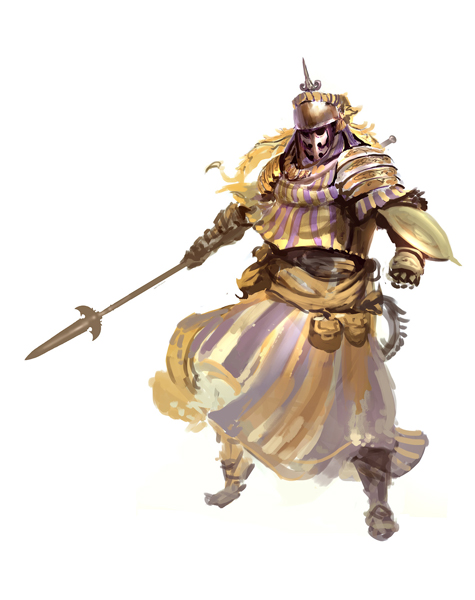
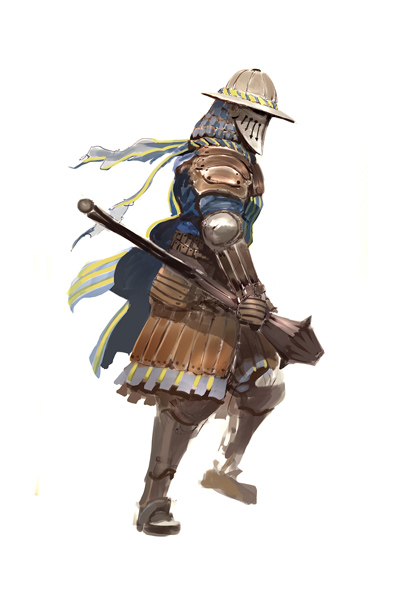
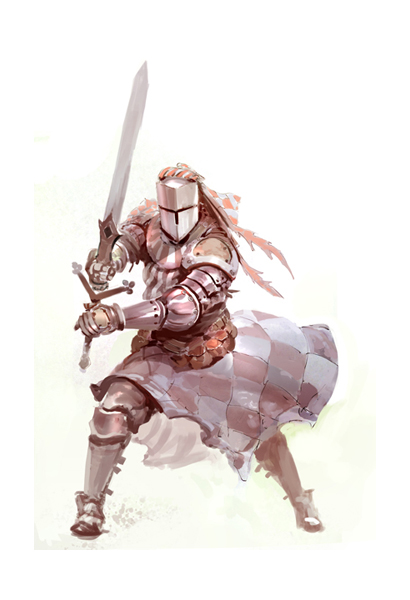
I even joke about making a book called The One Thousand and One Knights, but I had to hold off on it, because 1,001 is quite a lot of knights.
Most readers of A Dribble of Ink will know Kotaki for his work as a cover artist (notably, Peter Orullian’s The Unremembered, and The Malazan Book of the Fallen by Steven Erikson). In addition to his work as a cover artist, Kotaki is also known for his work on Guild Wars 2, ArenaNet’s popular MMORPG with some of the most iconic world and character design in the genre. Kotaki’s fans will recognize the abstract, ethereal concept art and landscapes from his time with Guild Wars 2. He does tone and epic encounters better than anyone else in biz, so these character studies — simple armoured knights, direct and full of personality despite their facelessness — are a pleasing diversion for the artist.
“This series of knights started simply because I really like drawing them to begin with and it sort of spiralled out from there,” he said, joking about the volume of sketches he done, and the rate at which he’s been posting them to his Tumblr page. “I even joke about making a book called The One Thousand and One Knights, but I had to hold off on it, because 1,001 is quite a lot of knights, and I really need to think about my approach and the reality of the project. One Hundred and One Knights doesn’t have the same ring to it. It sounds like a college course. Knights 101.”
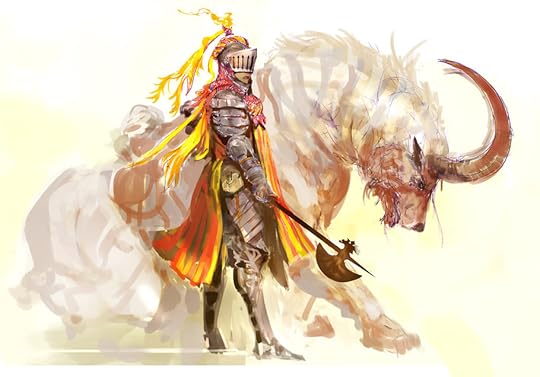
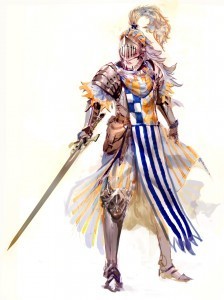
One thing that always stood out was the amount of colors and patterns used in the fashion and armor designs.
“In my role as a concept artist and illustrator, I’m constantly search for reference material. I often stumble onto great photo galleries of the various reenactment tournaments and fairs that go on celebrating medieval societies, and one thing that always stood out was the amount of colors and patterns used in the fashion and armor designs. This was great to play around with since I am always looking for new ways to play around with color in my work and designs.”
Kotaki left ArenaNet after five years as lead concept artist for Guild Wars 2, and is now pursuing new professional endeavours and to stretching outside the world of concept art to develop his “burgeoning illustration career.” Even after several years as a professional artist, Kotaki is quick to encourage artists to constantly improve themselves. “Practice is key,” Kotaki told The Ranting Dragon in a 2011 interview. “Work on the foundational skills first, then you can move onto creating things from your imagination.” To that end, these knight sketches are more than an exercise in creativity for Kotaki, they also provide him a playground to practice technique.
“Technically, I’ve been playing around with sketching the knights in ballpoint pen, then moving them onto the computer and playing around with them digitally,” he told me. “I’m applying a “softer” approach with these knight illustrations, and really trying for a light watercolor look. Also interesting has been the challenge in trying to balance digitally painting over the sketch completely, and keeping the original sketch lines. This approach is definitely influenced by some of the concept art you see in JPRGs where you still the line work with color washes used over top.”


Kotaki continues to work on his One Thousand and One Knights, posting them to his Tumblr account on a regular basis. If this is your first exposure to Kotaki’s project, I encourage you to check out his 1,001 Knights, and, while you’re at it, the rest of his tremendous gallery of work.
The post Kekai Kotaki’s One Thousand and One Knights appeared first on A Dribble of Ink.

Let’s Try This Again: Cover Art for Willfull Child by Steven Erikson
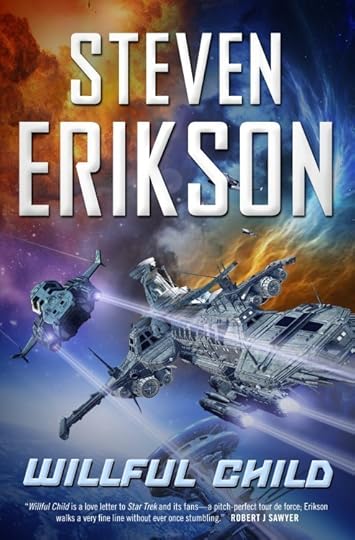
So, the first shot at a cover for Steven Erikson’s upcoming science fiction novel, Willfull Child, was a bit of a whiff. This new one is… better, at least?
The post Let’s Try This Again: Cover Art for Willfull Child by Steven Erikson appeared first on A Dribble of Ink.

June 13, 2014
New trailer unveils The Legend of Korra season 3
The first two seasons of The Legend of Korra were problematic for a few reasons. Chief among these is its lack of an identity and defined set of goals. Avatar: The Last Airbender established its goal in the first episode: save the world from the machinations of the Fire Nation and its power-hungry leader. The Legend of Korra, on the other hand, can’t decide if it’s a coming-of-age story, an exploration of social and political revolution, a buddy-cop comedy, or an epic fantasy. Instead of dedicating itself to a tight focus, it splits its attention between all of these themes and doesn’t do any of them particularly well.
Still, the back-half of Season 2 featured some of the show’s best moments, and offered hope for the future of the show. The new trailer for The Legend of Korra Season 3 is so damn fun, and full of so much variety and Avatar-y goodness that my enthusiasm refuses to be stamped down. Will The Legend of Korra finally reach the heights of its predecessor? Maybe, maybe not. But, there ain’t no shame in hoping.
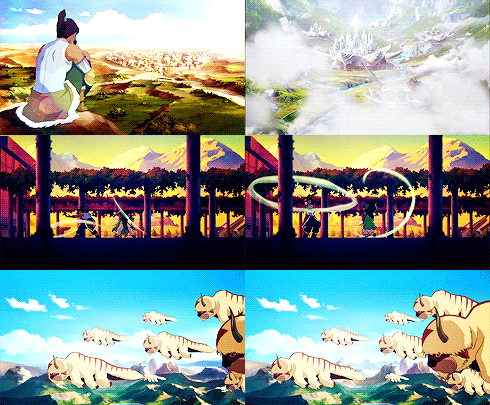




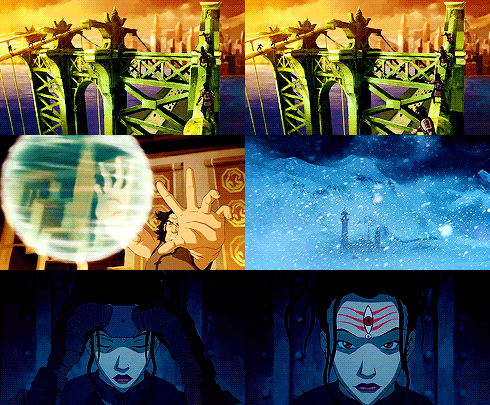
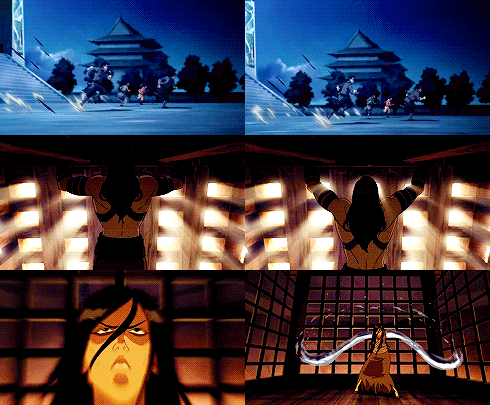

Images via Sokka’s Cactus Juice
As Saladin Ahmed so elegantly put it on Twitter, “Lavabending, Bumi, dragons, Lin Bei Fong, brown airbenders, and MOTHERFUCKING ZUKO. I’m in.” You and me both, Saladin. Surprisingly, as much as Zuko’s appearance is titillating, the highlights of the trailer for me aren’t returning characters and elements, but some of the new characters revealed. In particular, there’s a villainous-looking female Waterbender that looks tremendously fun, and a young Airbender (with hair!) that reminds of me Aang-mixed-with-Wan. So, fun times ahead.
The Legend of Korra Season 3 currently has no release date, but post-production has been completed, which indicates that it can’t be far off.
The post New trailer unveils The Legend of Korra season 3 appeared first on A Dribble of Ink.

June 11, 2014
Everything we know about The Slow Regard of Silent Things by Patrick Rothfuss
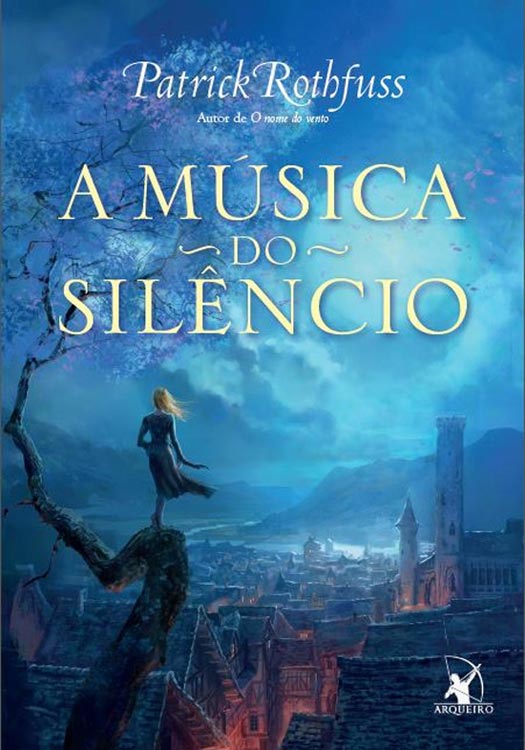
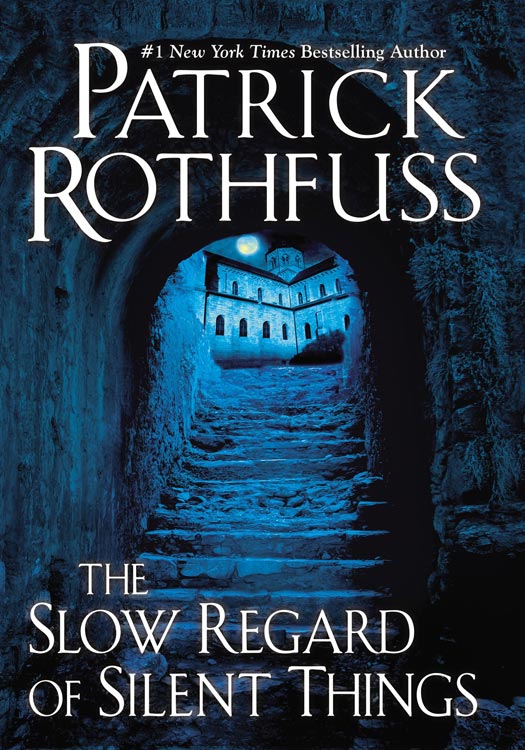
While fans wait patiently for The Doors of Stone, the third volume in Patrick Rothfuss’ massively popular Kingkiller Chronicles, the author has been busy on several projects, including work on the final volume, The Doors of Stone. The most imminent of these, due for release in November, is The Slow Regard of Silent Things, a novella announced by Rothfuss in April, 2014.
If there’s anything that Rothfuss wants to make clear about The Slow Regard of Silent Things, however, it’s that the novella is not the third volume in the Kingkiller Chronicles. “It’s not a mammoth tome that you can use to threaten people and hold open doors,” Rothfuss explained in his announcement post. “It’s a short, sweet story about one of my favorite characters. It’s a book about Auri.”
In the announcement post, Rothfuss revealed an early synopsis for the novella:
The Slow Regard of Silent Things is set at The University where the brightest minds work to unravel the mysteries of enlightened sciences, such as artificing and alchemy. Auri, a former student (and a secondary but influential character from Rothfuss’s earlier novels) now lives alone beneath the sprawling campus in a maze of ancient and abandoned passageways. There in The Underthing, she feels her powers and learns to see the truths that science—and her former classmates—have overlooked.
“I didn’t set out to write a book about Auri. I really didn’t,” admitted the author, alluding to the length of the novella, which originally began life as a short story for inclusion in Rogues, edited by George R.R. Martin and Gardner Dozois. “I’d had a story idea about Auri tickling around my head for a while,” he explained. “What’s more, I thought she would make a nice counterpoint to some of the other classic rogue-type characters in the anthology. Sort of a trickster rogue, as opposed to a thief, swashbuckler, or a con man.
“‘Besides,’ I thought to myself. ‘It’s just a short story. Three or four thousand words. Maybe 6 or 7 thousand if I run long. That’s about two week’s writing, tops.’”
But, as these things like to do, the story grew beyond Rothfuss’ early imaginings. “Eventually I hit about 15,000 words and forced myself to stop,” Rothfuss said, reflecting back on the time when he was writing the story before eventually realizing that the growing short story wouldn’t work for the anthology.
The Slow Regard of Silent Things by Patrick Rothfuss: Book/eBook
“It wasn’t going to work for the anthology, it was too long, and it wasn’t a trickster tale of the sort I initially expected it to be. Honestly didn’t know what the hell kind of story it was, but it wasn’t going to work for [Rogues]. [...] I realized who *really* belonged in an anthology about rogues: Bast. Once I figured that out, I wrote “The Lightning Tree” for the anthology, and it worked out really well.”
Rothfuss’ full account of The Slow Regard of Silent Things‘s origins is well worth reading. The novella will be available from DAW Books in November, 2014.
The Slow Regard of Silent Things is the second of three novellas announced by Rothfuss in a January 2014 AMA on Reddit. The first, The Lightning Tree, is available in Rogues, and the third, Rothfuss explained on Reddit, “tells the origin stories of one of the other legendary figures in my world: Laniel young-again.” Rothfuss guesses that the third story, which he describes as a “short novel,” will be 100-120k words, making it as long or longer than most novels. Tor.com speculates that this novel will be released in 2015.
The Doors of Stones has no released date, but there is still much for fans to look forward to in the coming months.
The post Everything we know about The Slow Regard of Silent Things by Patrick Rothfuss appeared first on A Dribble of Ink.

June 9, 2014
On Fanzines and the 2014 Hugo Awards Nominees
Download Best of ’13 — A Dribble of Ink Collection
Voting for the 2014 Hugo Awards opened on Friday, June 6th. I’m using this opportunity to reprint the introduction to A Dribble of Ink’s collection included in the voter packet provided to all eligible voters. Whether you’re a voter or not, you can download the collection below -ed.
Over the past several years, vast change has come to many of the fan categories at the Hugos.
The “Best Fanzine” category has seen a dramatic shift in the past two years, since SF Signal’s first nomination, and traditional zines are being replaced by blogs and online magazines. “So never the twain shall meet…,” said Mike Glyer, of the many-times nominated File 770, describing the seemingly impassable gulf that exists between the online community and the traditional fan community. I don’t believe Mr. Glyer. While this divide between the two fan communities is undeniable, genre fandom is ripe with opportunity for creating a global fan community that embraces diversity—of voice and publishing platform—and challenges readers, authors, and publishers to become more inclusive and welcoming than ever before.
Writers in the online SFF community have fought now for several years to encourage Hugo voters to recognize the work that their peers have been doing. The first step towards this future was the nomination (and win) for SF Signal. Two years later, I’m honoured to be on a ballot among four other fine online publications, and one of the best traditional zines around. Whatever happens in August, a rocket will end up in the hands of a first-time winner. That’s wonderful progress.
But, let’s stop drawing lines in the sand, and start blurring them instead. Fandom isn’t blogs and zines. It’s fans writing.
But, let’s stop drawing lines in the sand, and start blurring them instead. Fandom isn’t blogs and zines. It’s fans writing.
It’s important for fans and voters to continue to read widely and discover all of the wonderful voices within SFF fandom. If you’re a traditional fanzine reader, check out The Book Smugglers, Pornokitsch, and Elitist Book Reviews. I’m certain you’ll be surprised by the variety and quality of the writing. If you’re a blog follower, explore everything that Garcia, Bacon, et al. have to offer in Journey Planet, then head over to efanzines.com, where you’ll find some of the most passionate fan writers in the world.
Science fiction and fantasy are defined by their limitless possibilities, and their inherent need to embrace diversity—the weird, the wonderful, the impossible. The fan community must also embrace diversity with equal veracity. Read widely, tell your friends, ask for more.
Included here are ten essays and reviews from four of A Dribble of Ink’s contributors. From a rule of thumb for escapism, to reviews of some of 2013’s finest novels, a journey through one of India’s most epic tales, to Kameron Hurley’s Hugo Award-nominated essay, “We Have Always Fought”, this collection of writing highlights the finest of A Dribble of Ink in 2013.
I hope you enjoy it.
~Aidan Moher
May 6th, 2014
Victoria, BC
Download Best of ’13 — A Dribble of Ink Collection [66 Pages, PDF]
Table of Contents
Introduction by Aidan Moher, editor
‘We Have Always Fought’: Challenging the ‘Women, Cattle and Slaves’ Narrative by Kameron Hurley
The Desolation of Tolkien: A Review of The Desolation of Smaug by Aidan Moher
A Rule of Thumb for Escapism by Foz Meadows
The Republic of Thieves by Scott Lynch , Review by Aidan Moher
Broader Fantasy Foundations — Part Three: Mahabharata by Max Gladstone
Range of Ghosts by Elizabeth Bear , Review by Aidan Moher
A Single Dream is More Powerful than a Thousand Realities by Aidan Moher
The Violent Century by Lavie Tidhar , Review by Justin Landon
Ancillary Justice by Ann Leckie , Review by Foz Meadows
Avatar: The Last Airbender: An Exploration by Aidan Moher
Contributors
The post On Fanzines and the 2014 Hugo Awards Nominees appeared first on A Dribble of Ink.

June 5, 2014
Cover Art for Half the World by Joe Abercrombie
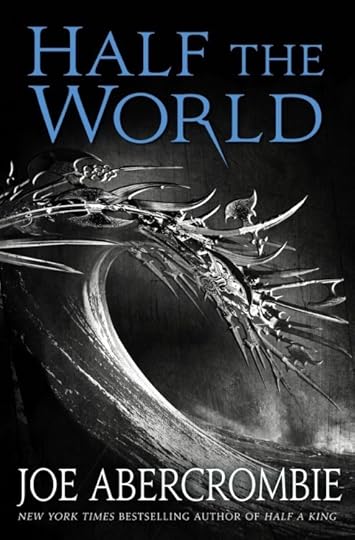
Surf’s up, boys and girls! Here’s the cover art for Half the World by Joe Abercrombie, sequel to his soon-to-be-released YA(ish?) novel, Half a King. Just remember to apply a healthy layer of sunscreen chain mail before hitting the waves.
What a weird cover.
The post Cover Art for Half the World by Joe Abercrombie appeared first on A Dribble of Ink.

June 3, 2014
“Bringing Life to the Spiritwalker World” by Kate Elliott
After I finished writing Cold Steel, the third and final book in the Spiritwalker Trilogy, I knew I wanted to add a coda. The trilogy is narrated in first person by Cat Barahal, but her close friendship with her cousin Beatrice is the central relationship in the series.
Bee happens to be an artist who carries a sketchbook with her everywhere, and I conceived of the idea of writing a journal as from Bee’s point of view, in which she relates the adventures she had as she sees them, since in the trilogy everything is seen through Cat’s eyes. Such a journal would necessarily need illustrations “as drawn by” Bee.
Because the story is set in an alternate history 19th century, the illustrations would need to have a realistic style (rather than a comics or manga style) of art. To that end, I commissioned Julie Dillon to create a set of 29 illustrations to accompany the story I wrote.
The Secret Journal of Beatrice Hassi Barahal is currently for sale in both a print and pdf version.
In honor of Dillon’s nomination as a finalist on the Hugo ballot for Best Professional Artist this year, I wanted to share some of the illustrations she did for the story because not only are they fabulous but they shed light on her versatility as an artist.
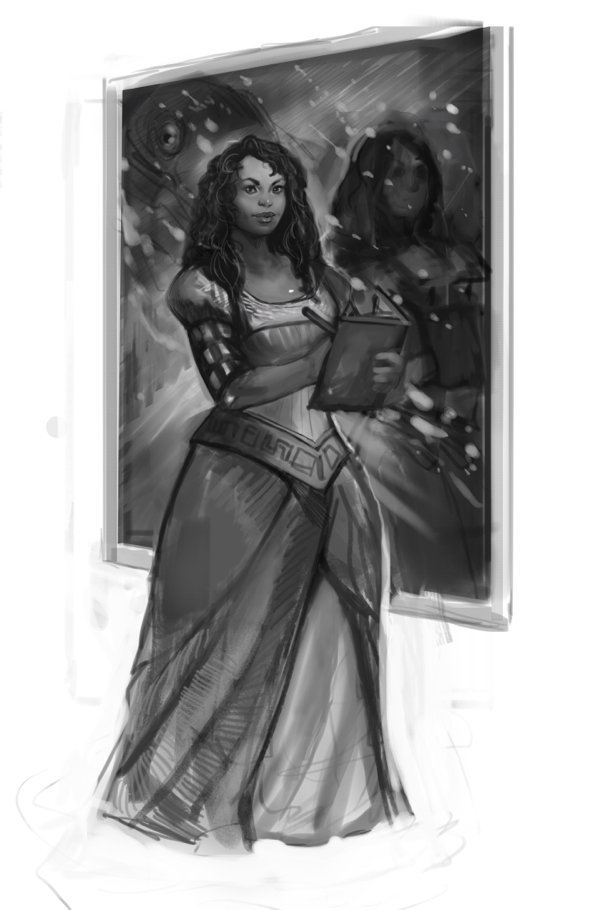
I particularly wanted two accurate portraits of the leads, Cat and Bee.

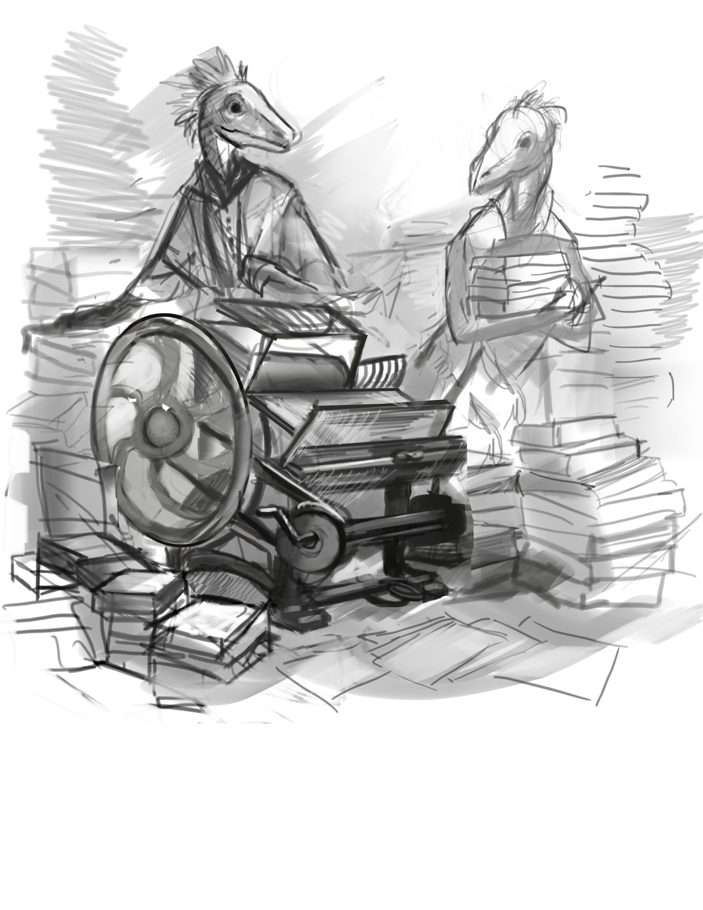
The Spiritwalker universe also includes the intelligent descendants of troodons, some of whom have have become lawyers and printers.
Spiritwalker explores serious themes and situations like revolution, sacrifice, coming-of-age, the physics of magic, and the legal question of how people can “own themselves.” Bee has a special and formidable destiny that puts her at risk. Yet besides all her many other aspects Bee also happens to be a young woman entranced by the idea of infatuation, which meant her journal had to include a lot of kissing with various swains. This illustrates Bee with an infamous Celtic revolutionary leader.
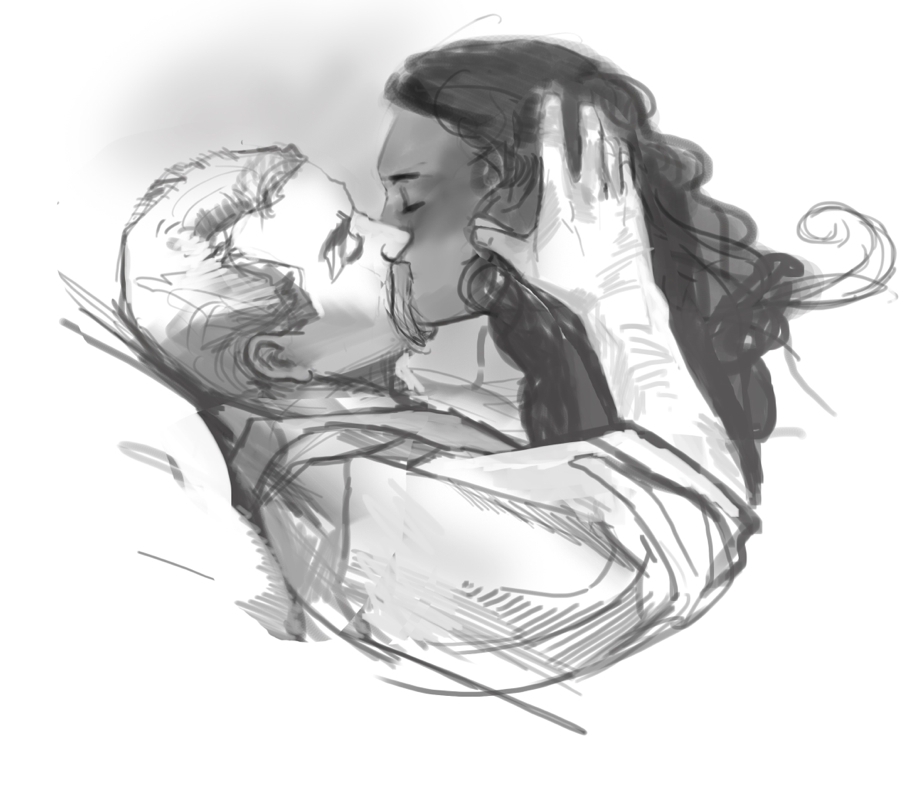
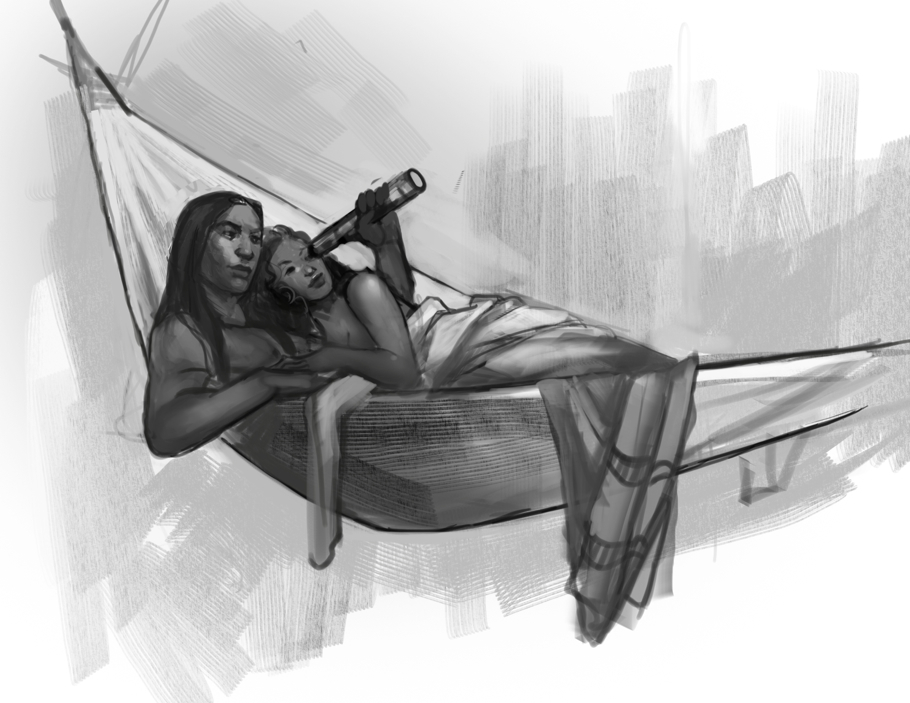
In fact, Julie eventually wrote to me that she could not stand to draw yet another kiss (there are multiple illustrated kisses), so she offered this adaptation of Bee and a Taino prince.
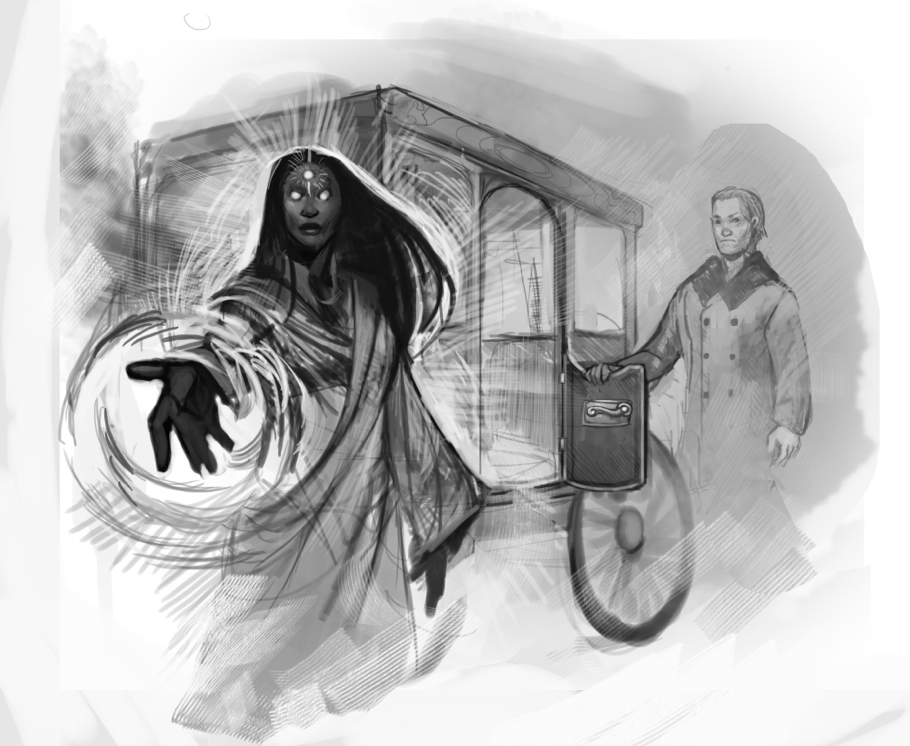
Cat and Bee are assisted in their adventures by various allies, including this supernatural pair.
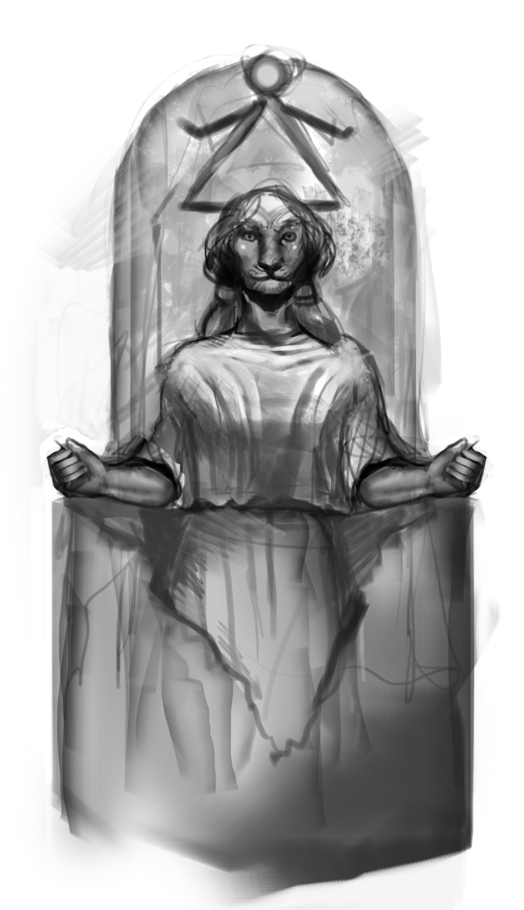
In the alternate history of the Spiritwalker world the Germanic/Northern European nations never existed, and the three major monotheistic religions (Judaism, Christianity, & Islam) never developed, so the major religions in the story are expanded outgrowths of religions known in the ancient world. Cat and Bee, as Kena’ani (Phoenicians), worship the Phoenician pantheon, including the Carthaginian Tanit in several of her aspects, here shown as the lion-headed goddess.
Surely no story is complete without a transformational illustration, in this case that of a man becoming a dragon.

Dillon also created two fabulous color illustrations based on scenes from Cold Steel. You can find an astoundingly gorgeous dragon here on A Dribble of Ink, and at the Orbit Books site a kickass scene of Amazons (note the three flags, whose symbols and colors all have meaning). Both of these stunning illustrations are available to purchase from Dillon via INPRNT.
The Secret Journal of Beatrice Hassi Barahal is currently for sale in both a print and pdf version.
The post “Bringing Life to the Spiritwalker World” by Kate Elliott appeared first on A Dribble of Ink.

June 2, 2014
“Storytelling for Losers: How We Write the Stories of Ourselves” by Kameron Hurley
Life is a game of chance, a series of lucky breaks and coincidences, cause and effect.
But fuck if we want to talk about it that way.
No, we’re humans. We like patterns. We like stories.
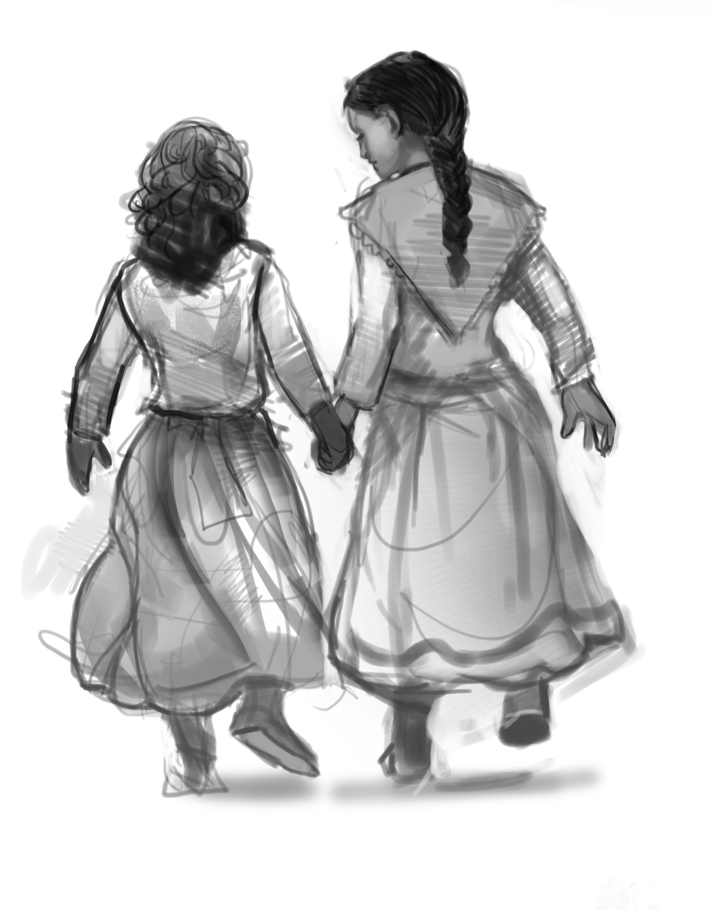
I careened into adulthood while bumbling around at a night club in South Africa, drinking whiskey and puffing endlessly at Peter Stuyvesant cigarettes. I sat at a table of people far more witty and interesting and worldly than I, and I tried and failed, in my young, drunken stupor, to understand how some rural hick fleeing a narrow little town and a failed abusive relationship had somehow ended up here on the other side of the world. I felt like a fake. A poser. A white American girl running around the world for the opposite reason most folks did.
See, I wasn’t running away to find myself. No. Indeed. I knew exactly who I was.
I was trying to run as far and as fast from myself as possible.
I knew that if I stopped running, my past would catch up with me. I’d go back to being the same person I hated, the fat kid with braces and glasses in grade school, the too-smart water buffalo with the bad hair, the obese woman with the ex-military boyfriend threatening to kill her. Who wanted that life? Who wanted to be that person?
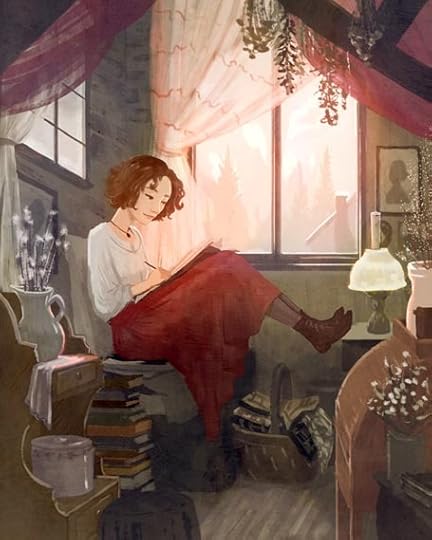
Art by Erin McGuire
I needed to tell another story.
I needed to become someone else.
Even if it meant I never stopped running.
Funny enough, it took nearly dying to shed the final vestiges of this self-hate.
This is my tenth year writing regularly online – and my twentieth writing fiction for publication in more permanent venues. When I first started writing publicly, I talked a lot more about the nuts and bolts of things: I turned day job meetings into rollicking drunken stories, railed on angrily about bad relationships, and told the world exactly what I felt about rejection slips and the industry pros who wrote them. I detailed dating nightmares, and wrote long, exhausted posts on running and boxing my way through overcoming a deep and abiding sense of self-hate.
It’s interesting to look back at it now, that driving sense of hatred that kept me rolling out of bed and powering through workouts even after I started the long, slow decline due to what I would later learn was the onset of a chronic illness.
Funny enough, it took nearly dying to shed the final vestiges of this self-hate. It was not the running, or the punching, the endless calorie-counting; it was not getting a better job, or making more money; it wasn’t the size of my ass or my blog stats.
It was knowing tomorrow I could get hit by a bus. It was knowing that all this corporeal flesh, and all these powerful feelings, meant nothing in the long game. It was all fake. It was all made up. We give it all far more power than it actually has. Real power, the only power, is life or death. You’re here or you’re not. What you choose to do in between is up to you.
That realization was the tipping point, for me.
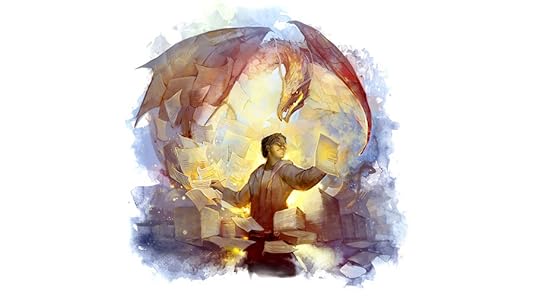
Art by Julie Dillon
I could keep running from the person I used to be. Or I could write another story.
I could keep running from the person I used to be, the fat kid with no confidence who bought every story about how that made her unlovable, worthless, no matter what she accomplished. Or I could write another story. I could list out all these events as they happened to me. I could piece them together and make sense of them.
I could write a better story.
Creating that story of my life through personal essays like this one, and the ones I share in the collection, We Have Always Fought: Essays on Craft, Fiction, and Fandom was a big part of how I transformed my life from being the one everyone wrote for me – the story everyone told me I was – to becoming the person I am.
We are suffused with stories, in media. We’re given visions of people who look like us, maybe – fat people, nerds, geeks, with bad skin and bad hair and bad social skills. And those stories tell us who we are – unlovable, not confident, losers.
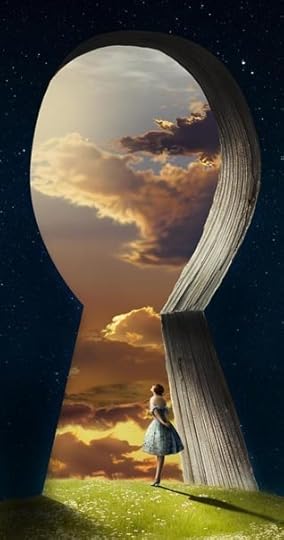
Art by Kinga Britschgi
I decided I was something else. I started to act like someone more confident, someone of worth. I traveled. I wrote. I took risks. I lived loud.
Most importantly: I started to write those stories in my own voice. I created the story of myself. I figured out who I was outside someone else’s story.
But no matter how many stories I told, no matter how much sense I tried to make out of what had gotten me to that bar in South Africa, I couldn’t stop running. Not until death caught up to me.
If I stopped running, I thought, that old person would be there; the weak, petty person who let herself get bullied and shat on, who put up with getting cheated on and talked down to. The one who swallowed all the bullshit people flung when they got horrified about the truth of their own stories.
But as long as I kept running, there were things in my life I wasn’t going to get. Because running fueled by fear means being ruled by fear. While I was running, I wrote some safe fiction. I ran from big ideas and relationships that got too close. I ran from responsibilities and opportunities, because they weighed me down; they slowed me down, and if I slowed down then I’d have to wonder who I would really be when I stopped running.
The extraordinary life I wanted would not come without risks, though: without writing edgy books, and letting partners get close.
Doing that felt too big, back then – insurmountable. But let me tell you… all that? The failure, shame, worry, the disappointment of those around you, the fear of getting hurt so badly that you never get up again? None of that matters when you’re on your death bed, staring at blood flowing freely from your arm as the ER doctor tries to get a line in you.
I came home from that experience weak and bloody and covered in bruises. I was pretty fucked up for a long time.
But I know what to do with being fucked up.
I turn it into a narrative. I paint a picture. Until it becomes narrative, a story, the things that happen to us have no meaning. They are random accidents of fate. Tactical strikes from fickle gods.
My life needed a story. Because the alternative, the randomness, was too much too bear.
So I wrote it.
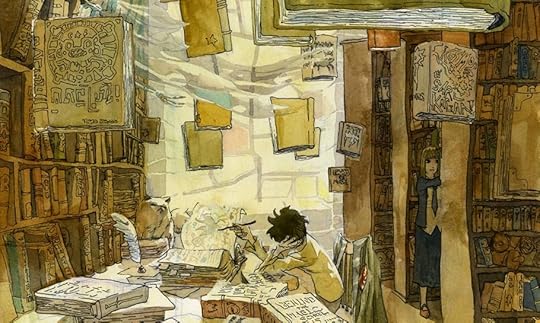
Art by Mr. Meh
That’s how the blogging started. For a long time it was just that – me reacting to what I’d read, the media I’d ingested. I worked to make sense of and challenge the assumptions of the world around me – and the assumptions the world made about me.
But over the last decade, my online ranting has become much more. It’s become a blatant fuck you in the face of people who want to erase people like me, and bundle me up into a neat box. It’s a fuck you in the face of every bully who tried to break me, every story that wrote women out, every magazine article that said love only comes to those who buy enough shoes and mascara.
It’s not so much that I learned we’re more than the sum of other people’s stories about us. It’s that blogging, telling stories, creating these narrative of my own life, made me realize that we are the stories we tell ourselves.
As long as I ran from myself, I didn’t have to face myself and my mewling bullshit. It wasn’t until I sat and held death’s hand that I realized it was me creating the mewling bullshit. I was creating this whole horrible image of myself to run from. I wasn’t running from my actual self, but from the story I’d internalized about who I was. Some of that was from media, some from bullies, some from that crazy ex, but it was me who bought into it. Internalized it. Fed it and nurtured it.
Taking control of the story of my life, and what it meant, where it was going, changed everything. I wrote throughout that time, piecing together what had happened to me over the last decade. I realized I could hunt and peck for all the terrible shit, or select for the moments of power and joy.
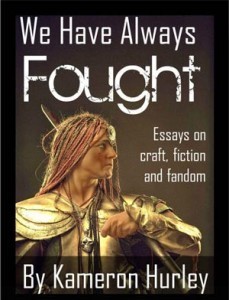
Buy We Have Always Fought by Kameron Hurley: eBook/Free PDF/ePub
Now, when the bad shit goes down in my life, I immediately know I can start building a horror out of it. It can be a shit story about all the mistakes I made, about what a loser I am, about how everything those people said about me is true.
Or I can build something different.
That’s what this essay collection is about: how we build narratives around random events, how we build the stories of ourselves, against incredible odds.
Some days I still feel like an impostor, a know-nothing writer with nothing to say. But I haven’t been that fearful runner in a long, long time.
Now, when I get off my ass to shuffle my feet, it’s because I’m running toward a future I’m building word by word – story by story.
The post “Storytelling for Losers: How We Write the Stories of Ourselves” by Kameron Hurley appeared first on A Dribble of Ink.