Aidan Moher's Blog, page 22
May 13, 2014
How to Behave Like a Princess: An exploration of gender in Tad Williams’ Memory, Sorrow, and Thorn” by Jenny Thurman
“I pretend I am a princess, so that I can try and behave like one.”
-Sara Crewe in A Little Princess
I had loved reading fantasy as a child, but even as an older teen I struggled to find speculative fiction that challenged me without making me feel unwelcome and unvalued.
In the early oughts, I nearly gave up on epic fantasy altogether. Until I stumbled across a copy of The Dragonbone Chair at a used bookstore. I can’t quite remember why I decided to give it a chance, but I’m incredibly glad that I did. My love for Tad William’s Memory, Sorrow, and Thorn isn’t unconditional, but it did a lot to restore my faith that I could find fantasy stories that I would enjoy as an adult. I had loved reading fantasy as a child, but even as an older teen I struggled to find speculative fiction that challenged me without making me feel unwelcome and unvalued. After all, Terry Brooks may have given me Brin Ohmsford, but he also turned Amberle into a tree. It wasn’t just that the lives of the girls and women in these novels seemed to revolve around men. What bothered me more was that they rarely acted in ways that seemed logical, consistent, or grounded in anything resembling human behavior. My problem was not that Amberle sacrificed herself, but that I was never convinced it was in character for her to do so, especially as described in the book. And we won’t speak of Piers Anthony, and what it was like to read his novels, which came highly recommended, while also trying to deal with grown men yelling things about my body at me while I walked home from the library.
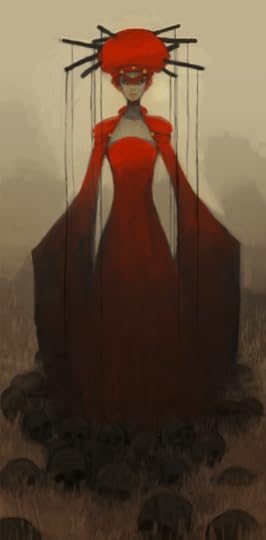
Art by Chaotic Muffin
I didn’t dream of being a farmer-boy-turned-king when I was younger, I dreamed of being a princess. Today, princesses often represent everything we don’t want our daughters to grow up to be: complacent, weak, frivolous, and lacking in ambition. But as a girl, the princesses that I looked up to were never any of these things – at least not to me. They were brave, like Irene from The Princess and the Goblin. Imaginative and kind, like Sara Crewe from A Little Princess. They commanded troops and were in charge of battle plans, like Mickle in the Westmark trilogy and Princess Leia in The Empire Strikes Back. They drew their pride and strength from the women who came before them, like Princess Eilonwy in The Prydain Chronicles. There’s certainly plenty to critique when it comes to princesses, the stories we tell, and how constricting these roles can be. But there’s also something to be said for including in that conversation how girls see themselves, and the role models we give them, and recognizing that this can be very different from how culture, as a whole, views girls who wear tiaras and fancy dresses.
My biggest disappointment, when I began reading epic fantasy novels marketed to adults, was not only how few women there were in these stories, nor even how much more constricted women’s roles often were compared to those I grew up reading about, but how condescending these stories often were towards girls – and princesses – in particular. I was still in my teens when I began reading The Belgariad, about the same age as Ce’Nedra when she first appears in the story. Not only was Ce’Nedra nothing like me, she wasn’t even like the popular, snobby girls at school. In contrast to well-rounded characters such as Lavinia, Sara Crewe’s jealous classmate, Ce’Nedra seemed to be made of nothing more than slander and lies about teenage girls. She came across as particularly designed to bolster male fantasies and egos, to provide excuses for Garion to shake his head and pout about girls. The fact that she was a princess made me especially angry. Like Sara Crewe, I pretended to be a princess because I wanted to be better than who I was. Pawn of Prophecy didn’t merely mock this childhood fantasy (while still supporting the very juvenile trope of the farmer boy who becomes king), it felt to me as though it was scorning the idea that girls had value at all.

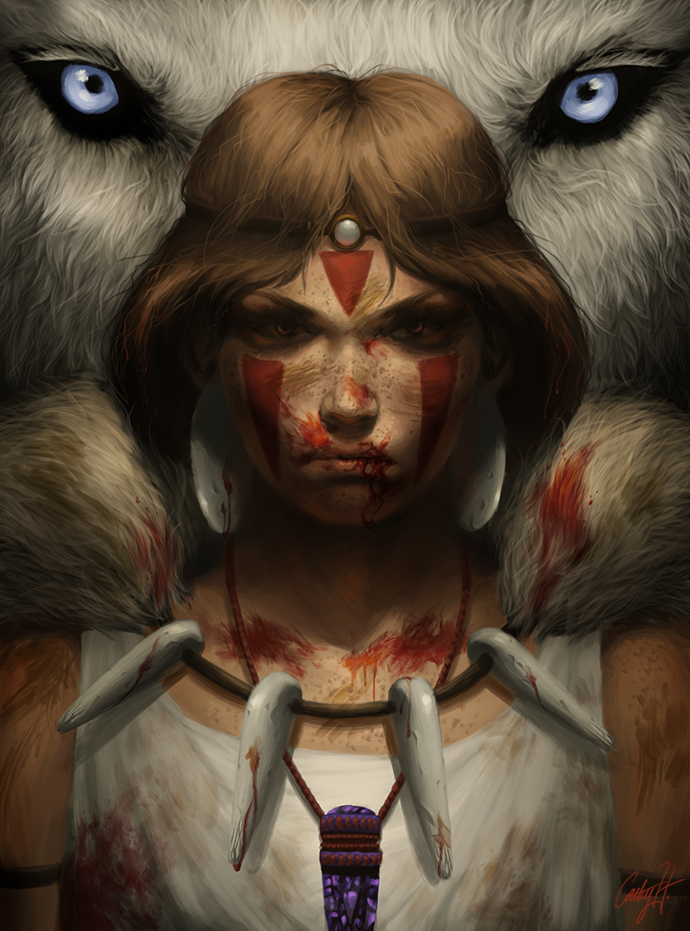
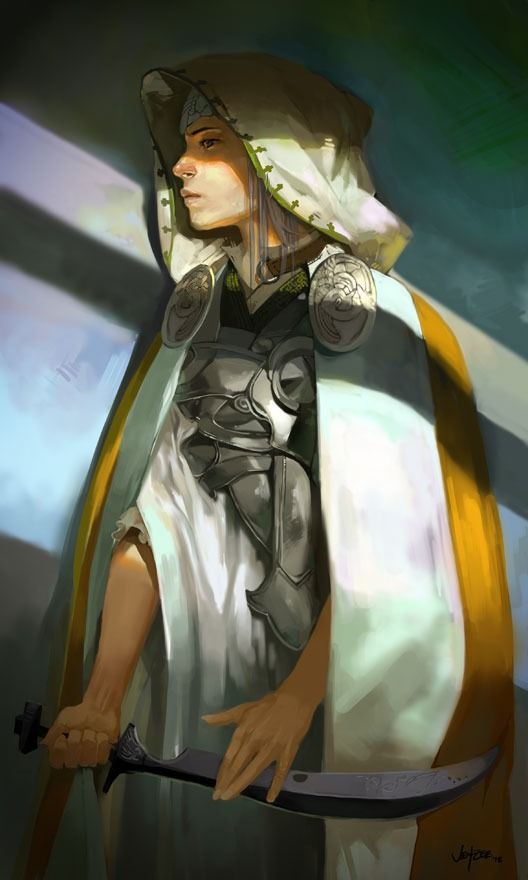
Art by: Lauren K. Cannon | Cathyrox | Jen Zee
I never felt as though Williams himself thought less of girls – or forgot that girls as well as boys might be reading his books.
Memory, Sorrow, and Thorn deserves praise for many things, but at the time what meant the most to me was the way that it shows Princess Miriamele as someone who is perceptive, intelligent, and eager to do right by her people – even if she needs to grow up a bit, just as Simon does. There are a lot of parallels in the relationships between Miri and Simon and Ce’Nedra and Garion. But where Ce’Nedra acted in ways that were hard for me as a reader to believe, Miri ‘s actions were simply difficult for Simon to predict or fathom. One of the things that Williams does well, when it comes to Miri at least, is showing us her interactions with Simon in such a way that it’s clear that his perceptions of her are merely that, rather than an absolute truth. We aren’t just given Simon’s view of the situation, but also the kind of small details (such as how sad Miri looks when Simon realizes she’s a princess) that allow us to make our own assessment about what she might be thinking and feeling. I may have wanted to shake Simon silly a few times (who didn’t?) but I never felt as though Williams himself thought less of girls – or forgot that girls as well as boys might be reading his books.
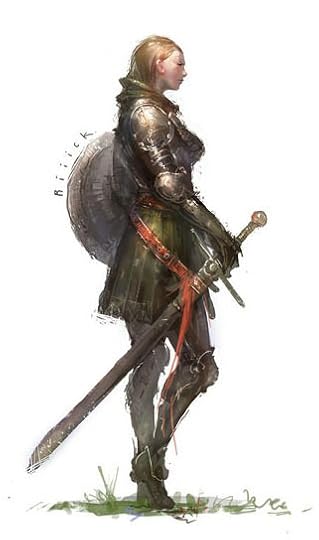
Art by Riiick
We see this same dynamic again in Simon and Jiriki’s interactions with Aditu. Simon is clearly overwhelmed by her company, but he’s also now mature enough to realize this and not blame her for it, even if he can’t always refrain from acting as if it’s her fault. We also get to see how Jiriki behaves towards his sister, and contrast Simon’s awkward admiration of Aditu with the way Jiriki treats her with familiarity and respect. It’s important to the story that Simon be uncomfortable around Aditu and that Aditu be shown as someone who is interesting in her own right, who has adult relationships with other people, and who is a warrior and noble with power and influence. She’s more than a prize Simon can never have; in fact, the narrative makes it clear that her interactions with Simon are a very tiny fraction of her own tale.
Even the story of Maegwin is one of a princess struggling to keep her people together and safe, despite her own grief and increasingly tenuous grip on reality. She may get left behind as her father and brothers and knight in shining armor ride off into battle, and her ending is so far from happy that it left me sobbing, but she’s hardly one to sit and do nothing. Wielding a sword is not the only way to fight battles, and Maegwin is stubborn and determined. Even more than Miriamele, I could see that Maegwin was desperately trying to be the princess her people needed her to be, and the part of me that reread my copy of a A Little Princess until it fell apart ached for her.
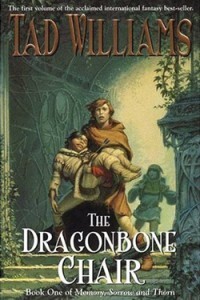
Buy The Dragonbone Chair by Tad Williams: Book/eBook
Memory, Sorrow, and Thorn is not perfect when it comes to female characters – I wouldn’t mind having a few words with Mr. Williams about Vorzheva, and how she’s characterized, for starters – but it is full of a great many of them, all complex and unique. It was also, to me, a breath of fresh air. While plenty of epic fantasy sagas that I would later read and love had been published in the 1980s and 1990s, that doesn’t mean that they were easy to find, promoted in bookstores, or included in suggested reading lists. And while the internet existed in 2001, I hadn’t yet stumbled across the parts of it that were talking about the works of Kate Elliott or Rosemary Kirstein. At the time, it felt to me as though the adult portion of the fantasy genre was more often than not a little confused about what the combination of “adult” and “fantasy” should mean, in terms of speculative fiction, and I wasn’t at all certain that this brave new world was anything that I was interested in. Reading The Dragonbone Chair, and the rest of the trilogy, took me back to what it felt like to read The Black Cauldron, The Beggar Queen, and The Princess and Curdie for the first time. Only much more complex and mature. For that, I will always be thankful.
The post How to Behave Like a Princess: An exploration of gender in Tad Williams’ Memory, Sorrow, and Thorn” by Jenny Thurman appeared first on A Dribble of Ink.


May 12, 2014
Cover Reveal: The Mirror Empire by Kameron Hurley
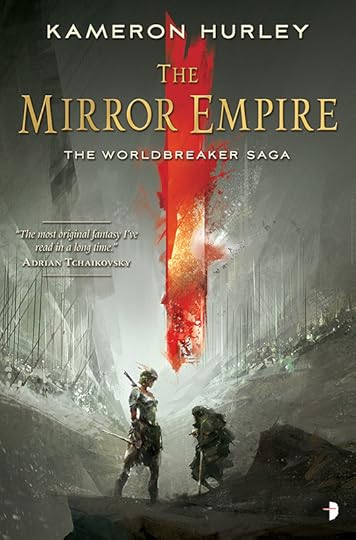
When Angry Robot Books announced that they had acquired Kameron Hurley’s The Worldbreaker Saga, the first epic fantasy from the author of God’s War, I knew readers were in for a treat. Hurley’s series, beginning with The Mirror Empire, is one of my most anticipated novels of 2014, and Angry Robot Books is known for their fun and progressive approach to cover art. It’s a match made in heaven, right?
Hurley describes the three volume epic fantasy as “Game of Thrones meets Fringe,” and promises that it’s the most intricate and complex book she’s ever written.
On the eve of a recurring catastrophic event known to extinguish nations and reshape continents, a troubled orphan evades death and slavery to uncover her own bloody past… while a world goes to war with itself.
In the frozen kingdom of Saiduan, invaders from another realm are decimating whole cities, leaving behind nothing but ash and ruin. At the heart of this war lie the pacifistic Dhai people, once enslaved by the Saiduan and now courted by their former masters to provide aid against the encroaching enemy.
Stretching from desolate tundra to steamy, semi-tropical climes seething with sentient plant life, this is an epic tale of blood mages and mercenaries, emperors and priestly assassins who must unite to save a world on the brink of collapse. As the dark star of the cataclysm rises, an illegitimate ruler struggles to unite a country fractured by civil war; a precocious young fighter is asked to betray his family to save his skin; and a half-Dhai general must choose between the eradication of her father’s people or loyalty to her alien Empress.
Through tense alliances and devastating betrayals, the Dhai and their allies attempt to hold against a seemingly unstoppable force as enemy nations prepare for a coming together of worlds as old as the universe itself.
In the end, only one world will rise – and many will perish.
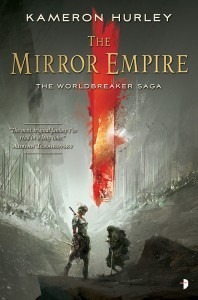
The cover features artwork by Richard Anderson, whose arresting and unique art has been featured on some of the most memorable fantasy and science fiction covers of the past few years, including Brian Staveley’s The Emperor’s Blades, and Peter Watts’ Echopraxia.
I caught up with Hurley to chat about the beautiful cover, and some clues about what fans can expect when the novel releases later this summer.
KH
Kameron Hurley
This cover is quite a departure from the Bel Dame Apocrypha. What does it say about The Mirror Empire?
It’s certainly more a departure from the U.S. covers than the UK covers, though I see what you’re getting at. It’s apt, though, because The Mirror Empire is a huge departure from my previous books – still subversive and a little dark, sure – but far more solidly over in the epic fantasy category, with huge stakes, blood mages, genocide, flesh-eating plants, and… unexpected social dynamics. What I really dug about this cover was that it very clearly conveys exactly what the book is – a shadowy epic fantasy with world-shattering stakes.
Richard Anderson delivered wonderful artwork for The Mirror Empire. What makes him such good fit for the book?
Richard Anderson has a powerful and unique way of representing light and motion. I love his style for this series in particular because it’s not realistic so much as… nightmarish? It’s a bit like viewing the world from a dirty or deeply aged mirror; a half-remembered dream. His use of color here is also striking. Writing a book where giant rifts open between worlds, I worried that the cover art would deliver a World of Warcraft-style portal. But Richard’s vision here – of a literal vertical wound between the worlds – was extraordinary. And thematically spot on.
What do you hope readers will think when they see the cover in bookstores? (Besides “I want to buy this book!”)
Buy a box of books? Seriously, though, the goal of a great cover is to connect the right audience to the right book. I hope this one says, “Holy shit we’re in for an epic ride.”
Any final thoughts?
Just thanks, as ever, to the Angry Robot Team, in particular Marc Gascoigne and of course Richard Anderson. This was the least fraught cover development process I’ve ever been through (and this is number six!). Every email Marc sent I was just like, “Yes, that’s perfect. Carry on.” It was a huge relief to know I was working with folks who totally understood the book and how it should be positioned. That’s rarer than it should be in this industry, and super refreshing.
Preorder The Mirror Empire by Kameron Hurley: Book/eBook
When I reached out to ask him about his work on The Mirror Empire, Anderson was quick to point out how much he enjoyed working the cover. “Working on the cover art for The Mirror Empire was a great experience,” he said. “Working with Angry Robot for the first time, I was really impressed with the amount of reference and research done, which really helps to inspire me, and really helped to capture the idea of what what Kameron Hurley would enjoy.”
“I love to work a little abstract at first and clear things up in the process, which I believe gives the viewer some space and guidance for there own imagination to play,” he finished.
2014 is proving to be an enormous year for Hurley. In addition to The Mirror Empire, Hurley is also nominated for two Hugo Awards: “Best Fan Writer” and “Best Related Work”, for her essay, “We Have Always Fought”. God’s War was a runner-up for the Arthur C. Clarke Award for “Best Novel”.
The Mirror Empire is set for release on August 26th, 2014, and is available for preorder.
The post Cover Reveal: The Mirror Empire by Kameron Hurley appeared first on A Dribble of Ink.

May 9, 2014
8-bit Studio Ghibli, a pixel art tribute to Hayao Miyazaki
Richard J. Evans, knows the way to my heart. Recently, the graphic artist from Birmingham, England released a collection of art based on Studio Ghibli’s popular films, including: Spirited Away, My Neighbour Totoro, Ponyo, and Princess Mononoke. I’m all a-flutter with delight.
“I’ve been experimenting in different styles lately, and I’ve always loved pixel art,” Evans told Wired. “I was trying to think of what to do, and I just thought there were already loads of 8-bit superheroes. Studio Ghibli would be something a bit different.”
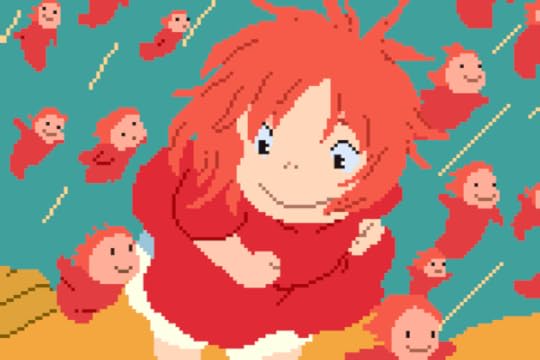
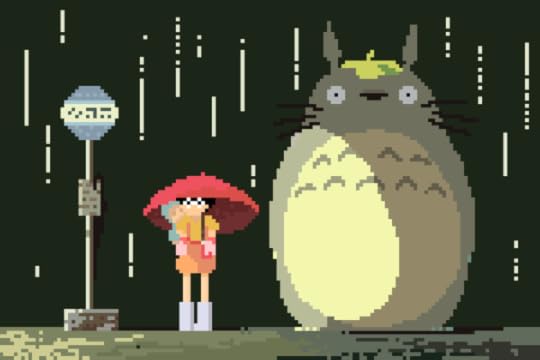
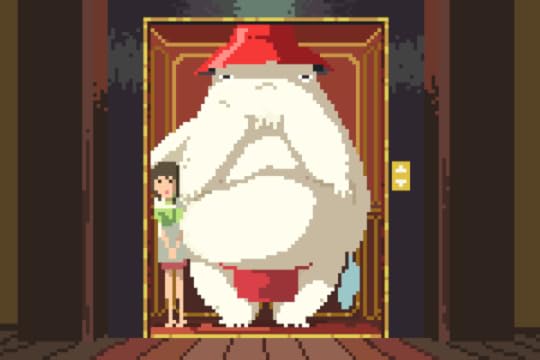
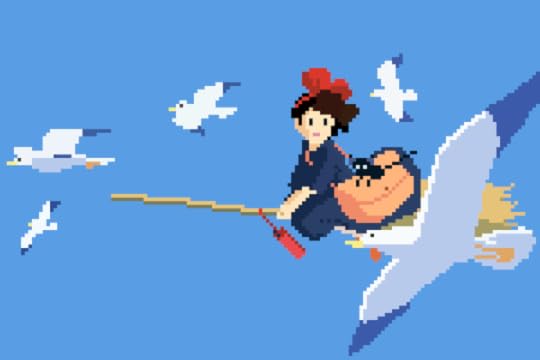
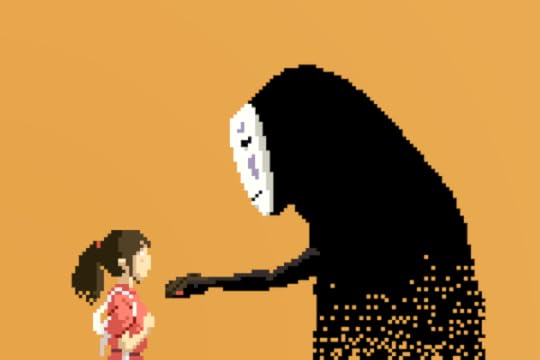
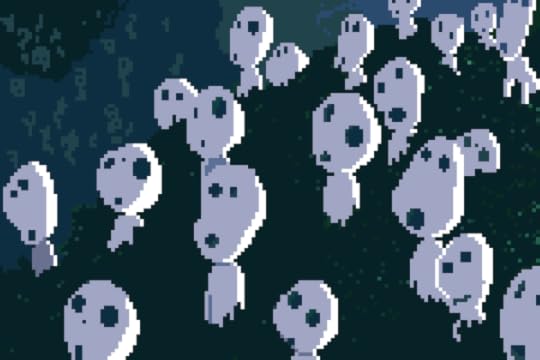
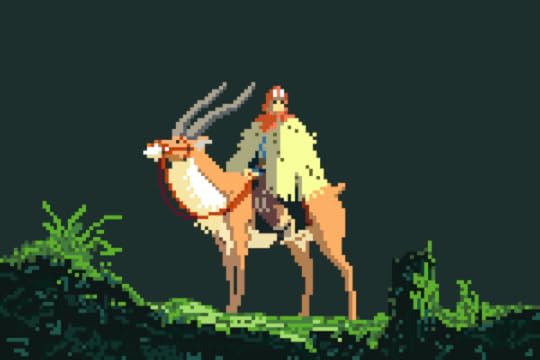
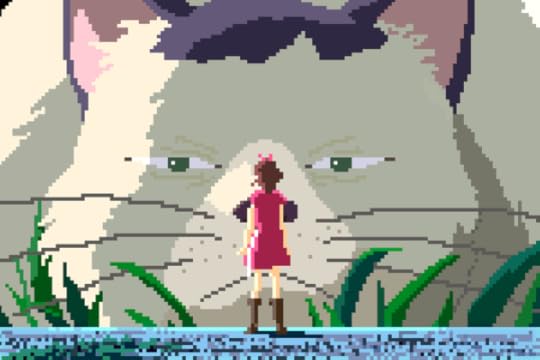
On his official Behance profile, where the full set of artwork can be found, Evans further described his choice to honor the work of Studio Ghibli and Miyazaki, one of Japan’s most revered film makers. “To celebrate the release of ‘The Wind Rises’, said to be the last animated feature from legendary director Hayao Miyazaki,” he said, “I wanted to pay tribute to the amazing work of Studio Ghibli by re-creating some of their most beloved characters in pixel art.”
You can find more of Evans’ art on his official website.
The post 8-bit Studio Ghibli, a pixel art tribute to Hayao Miyazaki appeared first on A Dribble of Ink.

May 7, 2014
Cover Art for George R.R. Martin’s The World of Ice & Fire
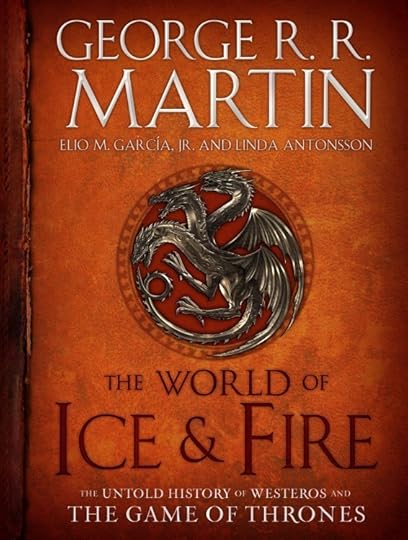
Via George R.R. Martin’s Not a Blog, we have what appears to be the final cover art for The World of Ice and Fire, a companion book to his popular A Song of Ice and Fire series. Martin describes The World of Ice and Fire as “a big coffee table volume with lots and lots of stunning artwork, and tons of fake history.” HE also admits that his contribution, which was supposed to ring in at around the length of a novella grew in size. “We were supposed to provide 50,000 words of text,” he said, “but… ah… I got carried away.”
Sounds like fans have a lot to look forward to. Now, here’s hoping the artwork in the The World of Ice and Fire is of a higher quality cut than that in The World of Robert Jordan’s Wheel of Time and Terry Brooks’ The World of Shannara. I still have nightmares about those books.
The post Cover Art for George R.R. Martin’s The World of Ice & Fire appeared first on A Dribble of Ink.

May 5, 2014
N.K. Jemisin announces The Awakened Kingdom, a sequel to the Inheritance trilogy
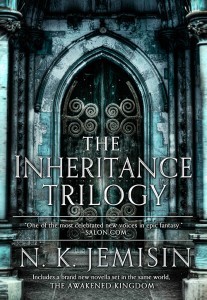
After teasing fans for a few weeks, N.K. Jemisin, award-winning author of The Hundred Thousand Kingdoms, announced that she is currently working on a sequel to her popular Inheritance trilogy. The novella, titled The Awakened Kingdom follows the events of the Inheritance trilogy, and is “a bit more lighthearted than the main trilogy,” Jemisin said.
“Please note,” she was quick to make clear, “this is a novella and not a full novel.” Fans of the trilogy might be disappointed that they aren’t getting a full-length novel, but Jemisin pointed out that while it’s set in the same world, and likely deals with the fallout from the end of the trilogy, The Awakened Kingdom is full of original content.
“A few old faves will appear, but for the most part this is a new story with new characters,” Jemisin said. “Shill is a true child god — unlike Sieh, who just played at childhood — and frankly I’m loving her; writing her basically means contemplating how a being with an adult-level intellect, Phenomenal Cosmic Power, and no freaking clue about anything blunders through complicated events.”
Jemisin also revealed the first blurb for the novella, which, if you’re sensitive to such things, contains spoilers for the Inheritance trilogy.
As the first new godling born in thousands of years — and the heir presumptive to Sieh the Trickster — Shill’s got big shoes to fill. She’s well on her way when she defies her parents and sneaks off to the mortal realm, which is no place for an impressionable young god. In short order she steals a demon’s grandchild, gets herself embroiled in a secret underground magical dance competition, and offends her oldest and most powerful sibling.
But for Eino, the young Darren man whom Shill has befriended, the god-child’s silly games are serious business. Trapped in an arranged marriage and prohibited from pursuing his dreams, he has had enough. He will choose his own fate, even if he must betray a friend in the process — and Shill might just have to grow up faster than she thinks.
“As the marketing text notes,” she continued. “A good chunk of the story will take place in Darr and focus on a young Darren man, in a society in which men have few rights and forced male circumcision is a thing — so still some Serious Stuff therein.”
In addition to The Awakened Kingdom, Jemisin also announced that Orbit Books will be publishing an omnibus edition of the Inheritance trilogy in print and eBook formats.
The Awakened Kingdom will be available on December 9th in eBook form.
The post N.K. Jemisin announces The Awakened Kingdom, a sequel to the Inheritance trilogy appeared first on A Dribble of Ink.

May 2, 2014
George R.R. Martin’s former assistant is working on Telltale Games’ adaptation of Game of Thrones
According to an interview with the New York Times, George R.R. Martin’s former personal assistant, Ty Franck, has partnered with Telltale Games as a story consultant for the developer’s upcoming adaptation of Game of Thrones. Also notable is that, in addition to his direct work with Martin’s series, Franck is also one-half of the Hugo Award-nominated “James S.A. Corey”, a pseudonym shared by him and Daniel Abraham, under which they write The Expanse, a popular science fiction series.
“Telltale has a story consultant assigned by HBO,” The New York Times reported, “the science-fiction author Ty Corey Franck, who is the personal assistant to George R. R. Martin, the author of the books that inspired the TV series and an executive producer on the show.” Franck has experience with adaptations from both sides of the table, having recently published, as James S.A. Corey, a Star Wars Legends novel, Honor Among Thieves.
Franck has joined with Telltale during the pre-production stage, presumably to help with story and character development, which are key to the success of the company’s adaptations. There have been adaptations of Martin’s work in the past, most of which are considered failures or only minor footnotes by A Song of Ice and Fire fans, but Franck’s involvement is another in a long line of decisions that suggests that Telltale is on a road to success.
Prior to Game of Thrones, Telltale has produced critically and commercially successful adaptations of many beloved franchises, including The Walking Dead, Monkey Island, and Fables. Dan Connors, a founder of Telltale, explains how the company has been successful in their adaptations of beloved franchies, where so many other companies fail. “We’re solving problems on a story level that other game companies don’t even realize are problems,” he told the New York Times. “We’re approaching this like it was a film or television series.”
HBO’s Josh Goodstadt is confident in Telltale ability to handle one of television’s largest IPs. “We were struck by the sophisticated level of work and high-quality approach to storytelling in all of their games,” he told the New York Times. “We quickly recognized that this same level of quality and dedication could be a great complement to the richness of Game of Thrones.”
The post George R.R. Martin’s former assistant is working on Telltale Games’ adaptation of Game of Thrones appeared first on A Dribble of Ink.

April 29, 2014
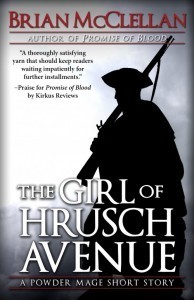
Free Readin’: The Girl of Hrusch Avenue by Brian McCLellan
Hi, all! My name’s Brian McClellan, author of the Powder Mage trilogy from Orbit Books. My second book, The Crimson Campaign, will hit bookshelves, e-readers, and MP3 players worldwide on May 6th, 2014. It’s the sequel to my flintlock epic fantasy debut, Promise of Blood. Needless to say, I’m a little excited.
The Crimson Campaign starts up where Promise of Blood left off and takes us deeper into the world of flintlock rifles, black powder sorcery, vengeful gods, political intrigue and international war. Inspector Adamat tracks a psychopath holding his family hostage, Field Marshal Tamas is cut off behind enemy lines with no hope of rescue, and Taniel Two-shot finds himself friendless in an army he once thought he knew.
To fill the time between the first and second novels, I wrote a number of pieces of short fiction set in the Powder Mage universe and featuring side characters from the novels. It started as a kind of a lark (hey, I have this story idea, I think I’ll write it and see if anyone likes it), and the response ended up blowing me away. People seemed to really love the idea of crawling deeper into the world. The first of these stories “The Girl of Hrusch Avenue” is available as a free download for the next eleven days courtesy of A Dribble of Ink. It features a young Vlora surviving on the streets of Adopest. I hope you enjoy it.
Download “The Girl of Hrusch Avenue”
ePub
Kindle (mobi)
If you’re not familiar with my novels, “The Girl of Hrusch Avenue” is a standalone story that occurs about ten years before the events in Promise of Blood, and is the perfect way to introduce yourself to my world.
Vlora is an orphan living at a boarding school as a ward of the state. Even at her young age, she already has enemies: the Bulldog Twins, Baron Fendamere, and her own headmistress. When a strange man offers to buy her, Vlora runs away and takes to the roofs above the gunsmithies of Hrusch Avenue. It is there that she meets a boy named Taniel and begins a friendship that will change her life forever.
I also have two more short stories set in the Powder Mage universe: Forsworn and “Hope’s End”.
If you enjoy “The Girl of Hrusch Avenue” and would like to support me, you can purchase a copy through your favourite eBook retailer: Amazon, Nook, Kobo, iTunes.
The post Free Readin’: The Girl of Hrusch Avenue by Brian McCLellan appeared first on A Dribble of Ink.

April 28, 2014
“They Are Not Ghosts: On the Representation of the Indigenous Peoples of North America in Science Fiction & Fantasy” by Maureen Kincaid Speller
Given my interests in Native American literature and genre fiction, it is inevitable that I’ve also become interested in the ways in which the indigenous peoples of North America are represented in science fiction and fantasy. For the purposes of this particular article I’m thinking primarily of their representation in Anglo-American sf and fantasy, and I’ll be focusing on, so far as I’m aware, representations by non-Native writers. (Nor is this intended to be a comprehensive survey of appearances by Native Americans in sf though that may be a project for the future.)
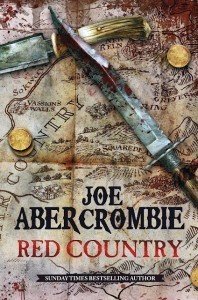
I want to begin with Joe Abercrombie’s Red Country (2012), where we meet Crying Rock, described as ‘an old Ghost woman with a broken sideways nose, grey hair all bound up with what looked like the tatters of an old Imperial flag, and a face so deep-lined you could’ve used it for a plate rack’ (p. 55). A couple of pages later, one character says of another, ‘His Ghosts massacred a whole fellowship o’ prospectors out on the dusty not two weeks ago. Thirty men, maybe. Took their ears and their noses and I shouldn’t wonder got their cocks besides’ (p. 57). A few pages later, ‘[t]he old Ghost woman had the reins, creased face as empty as it had been at the inn, a singed old chagga pipe gripped between her teeth, not smoking it, just chewing it’ (p. 64). Only on the following page is Crying Rock finally introduced by name, having said a few words ‘[s]o slow and solemn it might have been the eulogy at a funeral’ (p. 65). And much later still, we see Crying Rock as tracker: ‘’Til that moment Shy had been wondering whether she’d frozen to death hours before with her pipe still clamped in her mouth. She’d scarcely blinked all morning, staring through the brush they’d arranged the previous night as cover’ (p. 301).
Those who’ve read Red Country will know that in this novel, Abercrombie takes on the stereotypes of the Old West, particularly as represented in film: its gunslingers and scouts, bandits and prospectors, its taciturn reluctant heroes and its young women struggling to make a go of pioneer life after the death of a parent. And, as we’ve come to expect of Abercrombie, he happily sets about demolishing the myths of frontier life much as he has previously devoted his time to undermining the idea of epic fantasy. It is all very enjoyable, except for one thing, perhaps implicit in the title, but undeniably explicit in the presence of Crying Rock. The Ghosts are clearly the Native American analogues in Red Country but whereas Abercrombie seems willing to stand every other stereotype on its head, that of the Native American remains mostly untouched. There might be some novelty in the fact that this Native American happens to be female rather than male, but if that is so, it seems to me to be a very small subversion. Many people are familiar, after all, with the story of Sacagawea, who travelled with Lewis and Clark’s Corps of Discovery Expedition in the early 1800s.
Why, when Abercrombie had subverted everything else in sight, and often to great effect, he had nonetheless retained the image of the stoical, taciturn Native American?
All the way through the novel, I kept asking myself why, when Abercrombie had subverted everything else in sight, and often to great effect, he had nonetheless retained the image of the stoical, taciturn Native American, for that is what Crying Rock is, no matter her sex. Perhaps he had decided that writing Native American characters was something he could not undertake, and that to leave these Native American substitutes in silence was the simplest way of dealing with the difficulty. If so, I am entirely sympathetic to the problems that might be experienced by a white European man attempting to create acceptable Native characters but I nonetheless find it hard to be sympathetic to what amounts to a continued silencing of the Native American voice, first in the films themselves, and then through the perpetuation of that stereotype in Red Country.
Let’s think first about those westerns. There were Native American and First Nations actors in Hollywood almost from the inception of the film industry. However, within the mainstream film industry (there was also a small native film industry operating at this point) they worked mostly as extras, and were rarely if ever cast in speaking roles as Native Americans. There is more than one story of a Native American actor being refused a major role as an ‘Indian’ because he didn’t look ‘Indian’ enough, while non-Natives who looked ‘right’ got the work. Jay Silverheels (Mohawk First Nations) who played Tonto on tv and in film was something of an exception. Iron Eyes Cody, best known as the ‘Crying Indian’ in a 1970s environmental commercial, was despite claiming Cherokee-Cree ancestry, actually Tony Corti, the son of an Italian immigrant. Michael Zenon, who portrayed Joe Two Rivers (Metis-Ojibwe) in the Canadian Broadcasting Corporation’s The Forest Rangers is Ukranian. Johnny Depp’s casting as Tonto in the recent remake of The Lone Ranger has also drawn criticism (despite and indeed because of his claim to Cherokee ancestry) and there are currently numerous protests about Rooney Mara’s being cast as Tiger Lily in the latest remake of Peter Pan.
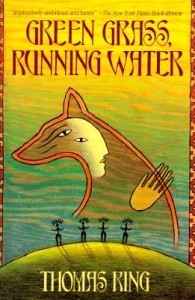
Buy Green Grass, Running Water by Thomas King
Thomas King tackles this phenomenon head-on in his novel Green Grass, Running Water, one strand of which tells the story of Portland Looking Bear, who becomes a wildly successful Native American actor only after he dons a false nose, to make him look more ‘authentically’ Native American, and takes on a more Indian-sounding name, Iron Eyes Screeching Eagle. When Portland and his son, Charlie Looking Bear, go back to Hollywood to start afresh, they find themselves dancing in strip shows or, in Charlie’s case, standing in front of Remmington’s steak house, waiting to park cars (the waiters needless to say are the cowboys). And, to make matters worse, his father reminds him, ‘Remember to grunt. […] The idiots love it, and you get better tips’ (p. 235). Grunting is of course what Indians are supposed to do, that or speak pidgin English, if indeed they speak at all.
When not being taciturn, Hollywood Indians are busy being savage, which brings us back to those Ghosts who ‘[t]ook their ears and their noses and I shouldn’t wonder got their cocks besides’. I’d be lying if I said that, so far as I’m aware, Native Americans never, ever mutilated the bodies of those they killed any more than Euro Americans never, ever mutilated the bodies of the Native Americans they killed. Scalping was less common than westerns would have you believe: if anything, the ear was the favoured trophy, taken by Euro Americans, seeking to claim a bounty for those Native Americans they’d killed. However, films about Native Americans, made mostly by white men, tell us that Native Americans scalped white men; and for many Europeans, pretty much all we have ever learned about Native Americans we learned from westerns. Consequently, Native Americans either look like Chuck Connors playing Geronimo, or else they are busy attacking wagon trains. For a little light relief, elderly Indians might provide a comic chorus, sitting wrapped in their blankets, smoking, wryly observing the white men. If you’re lucky, a film such as Little Big Man provides a more nuanced account of Native American life, or of the interactions between Natives and white settlers – (The Searchers would be a prime example (drawn from the novel of the same name, based in part on the kidnapping of Cynthia Ann Parker by Comanches in 1836) – but some of Hollywood’s more recent attempts to move away from Native American stereotyping nonetheless end up giving us Kevin Costner singlehandedly saving the Sioux Nation, or else we get Johnny Depp’s deeply problematic Tonto. (For a Native view of Native American stereotypes, the much-loved Smoke Signals is probably the best film to see.)
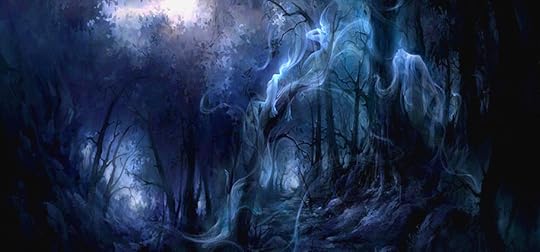
In the same way that Hollywood relegates Native Americans to the Old West, so the Ghosts exist mainly in the Empire’s past. They have no present, and apparently no future either.
As if all this weren’t enough, I am disturbed by the name that Joe Abercrombie uses for these Native American analogues: Ghosts. Within the context of the novel the name seems to come from the whiteness of the Ghosts’ skins, or perhaps from the way they appear and vanish, but I think inevitably of two things. First, there is the simple implication that they are a dead or dying race. Rather as the federal authorities sought to exterminate Native Americans, removing what they regarded as little more than vermin, and taking over their territories, so it seems that the Ghosts have little agency in this novel. We learn that Sweet and Crying Rock have been together for many years, the Lone Ranger and Tonto of this reworked western landscape, but it is difficult to avoid noticing just how few Ghosts actually appear in Red Country. They are mentioned in passing, and almost always in the past tense. In the same way that Hollywood relegates Native Americans to the Old West, so the Ghosts exist mainly in the Empire’s past. They have no present, and apparently no future either.
I think too of the Ghost Dance, a religious movement led by the prophet Wovoka, which arose in the western states of the USA in 1889, eventually spreading far beyond it. Wovoka argued that dancing would reunite the spirits of the dead with the living and lead to peace and unity among native peoples. This came at a time when tribal groups had already been forced onto reservations, given the poorest land to work, had their children taken from them and sent to residential schools, and it is no wonder that the Ghost Dance was taken up with such enthusiasm; it offered an opportunity, however illusory, for change. Officials began to take tribal leaders into custody in an effort to stop the practice, precipitating what is now known as the Wounded Knee Massacre, in which around three hundred mostly unarmed Lakota Sioux were shot dead. Wounded Knee symbolised for many, including a young L Frank Baum, what ought to happen to all Native Americans, advocating total extermination. As General Philip Sheridan, veteran of the American Civil War, allegedly remarked in 1869, ‘The only good Indians I ever saw were dead’.
This is by no means a new trope, needless to say. James Fenimore Cooper’s The Last of the Mohicans, one of the first novels featuring Native Americans, immediately presents the idea that they are dying out (as they inevitably must in order to facilitate the manifest destiny of the white settlers). It is, though a pity to see it being implicitly perpetuated in a novel that otherwise interrogates the myths of the West with considerable vigour.
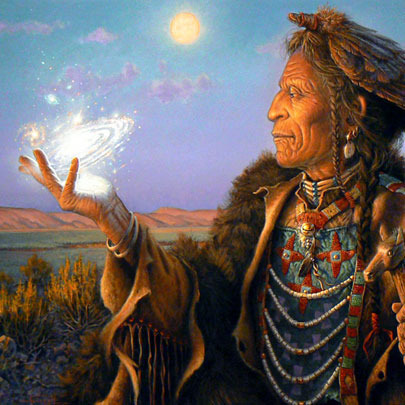
Art by Charles Frizzell
The catch here is that people have gone into space, only to discover that Mississippian Indians were there long before them, having discovered a ‘mental trick’ which means they could take their canoes into space.
To pick an older and actually rather curious example, we might turn to Tony Daniel’s Warpath, set in a far future in space which nonetheless looks suspiciously like the western frontier of the mid-1800s, as indeed the narrator himself freely admits. Oh yes, and the Indian village is called ‘Doom’. The catch here is that people have gone into space, only to discover that Mississippian Indians were there long before them, having discovered a ‘mental trick’ which means they could take their canoes into space. The inference here seems to be that the mound-building civilisation of Cahokia in the Mississippi river valley vanished because everyone went into space, which is in its way a pretty conceit. However, what is significant to my mind is that after 1400 years, the Mississippians are still using birch-bark canoes, and in many respects living much as they did back on Earth. Yes, there is sophisticated technology at work here – spears that explode – but we are encouraged to see the world of Candle and its inhabitants as though they were a little part of pioneer America transported across light years. As if we were in any doubt, an early event in the novel features an Indian raid, complete with a massacre.
We might also look at Orson Scott Card’s Red Prophet, one of his Alvin Maker novels, an alternate history in which Alvin meets Ta-Kumsaw, a Native American who wants the white man to leave the western lands to the ‘red men’. One might ponder the irony of Alvin’s curing Tu-Kumsaw’s brother, Lolla-Wissiky of his alcoholism (how did that alcohol get there in the first place?), but there is something especially pernicious in his being positioned as the one person who can keep Ta-kumsaw alive, playing into the idea of Native Americans requiring the blessing of the white man in order to survive.
Alternatively, we might look to Andre Norton’s Beastmaster series, with Hosteen Storm, the Navajo in space, in part a ‘noble savage’ who speaks to animals and controls them, and who has the ability to bond with the Norbies, the indigenous people he meets on the planet Arzor. Having said that, Storm is interesting in that he begins the series as a former soldier, acting as a reminder for all those Native Americans who have served in the armed forces. Earth has gone but unlike the other soldiers who can’t return home, Storm has not suffered a nervous breakdown, which seems intended to imply that he was from the beginning a loner, detached from the world (though this is a stance at odds with, for example, Leslie Marmon Silko’s Ceremony and N Scott Momaday’s A House Made of Dawn, both of which feature former soldiers and lay emphasis on their need to reconnect with the land as part of their healing). Similarly, Storm has elements of the ‘magical’ Indian about him, not least his ability to communicate with animals.
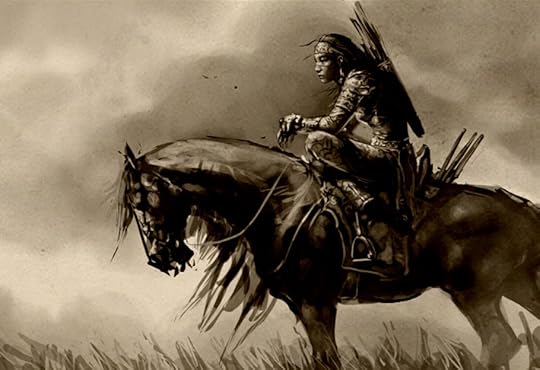
Art by Bitrix Studio
‘“That my valley be always wide and flourish and green and such stuff as that!” he orated in Pawnee chant style. “But that it be narrow if an intruder come.”’
I’ve focused deliberately on the ways in which Anglo-American writers, intentionally or otherwise, represent Native Americans using certain stereotypes, and in particular stereotypes that are recognisable from portrayals of Native Americans in film. To turn the tables a little, I’ll finish with a brief consideration of R.A. Lafferty’s masterly ‘Narrow Valley’. It’s a clever, knowing tale about a Native American family’s efforts to deter a white family’s attempts to settle a piece of land under the Homesteading Act. The story begins with Clarence Big-Saddle’s determination not to pay tax on the land allotted to him, which he anyway regards as his own. He performs an incantation: ‘“That my valley be always wide and flourish and green and such stuff as that!” he orated in Pawnee chant style. “But that it be narrow if an intruder come.”’ As he himself acknowledges, he’s not entirely sure of the incantation’s veracity as he’s used the wrong plants and the wrong words, but the point remains that no one else seems able to find the Narrow Valley, as a result of which Clarence doesn’t pay taxes, and nor, in turn, does his son, Clarence Little-Saddle.
And so things continue until the arrival of the Rampart family, led by Robert, who is determined to settle the piece of land that Clarence occupies. Except, of course, that Robert can’t see it. He can see where it should be, and the locals all know about the oddity of the valley that seems to be folded in on itself. Robert’s wife and children can walk down into the valley but somehow Robert himself just can’t enter it. What I find particularly interesting, though, is the way in which the Rampart children challenge Clarence, refusing to believe that he is Native American: ‘If you’re an Indian where’s your war bonnet?’ And the way that Clarence responds: ‘How come you’re not wearing the Iron Cross of Lombardy if you’re a white girl?’ before delivering a brief lecture on which tribes wear war bonnets – the Oglala Sioux, according to Clarence (a Pawnee), and again, it’s the Sioux we so often see in film (and, in the UK, in Buffalo Bill’s wild west shows). In fact, all through the story, Clarence challenges the Rampart family’s stereotypical notions of how a Native American looks and behaves, and this in a story published in 1966. It is a comic story but even the comedy reminds me strongly of the humour found in the work of people like Sherman Alexie and Thomas King, and the Fus Fixico letters; as many writers have suggested, there is a distinctive ‘Indian humour’ and Lafferty seems to be au fait with it.
But entertaining as this is, ‘Narrow Valley’ deals too with serious issues, about the allotment of their own land to Native Americans, the rest to be sold off to white settlers. For all the comic window dressing of spells that aren’t spells, it’s Clarence’s intent that is important; his desire to keep his land, and his cattle, for himself, and outside a federal system he clearly doesn’t recognise. In all, he is practising tribal sovereignty in miniature, and Lafferty’s story is clearly arguing in favour of his continuing to do that.
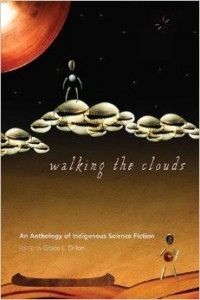
Buy Walking the Clouds, edited by Grace L. Dillon
There is no easy way to deal with this, other than to be mindful of the ways in which a story might be interpreted and to be cautious in approaching it as an outsider.
There are so many directions we could go in from here. What about Native writers writing sf and fantasy? As a starting point, I’d suggest Walking the Clouds: An Anthology of Indigenous Science Fiction, edited by Grace L Dillon, and [Mothership]: Tales From Afrofuturism and Beyond, edited by Bill Campbell and Edward Austin Hall. The problem is, of course, that not all fiction written by Native writers is intentionally written as fantasy or sf. That is, it may read as such to outsiders but a text such as Louise Erdrich’s The Antelope Wife, winner of a World Fantasy Award as it is, is still dealing with beliefs that are important to Native American lifeways; to read it as fantasy is, in a way, to appropriate its content. There is no easy way to deal with this, other than to be mindful of the ways in which a story might be interpreted and to be cautious in approaching it as an outsider. Having said that, neither are Native writers simply here to educate Euro American readers about their cultures. Reading The Antelope Wife will not give you a particular insight into a culture. How can it begin to?
Similar problems arise for outsiders who choose to work with Native American stories. The history of their gathering is often fraught: anthropologists and ethnologists often collected the stories in secret or through duress, and then published them against the wishes of the indigenous peoples. Often these stories were not meant to be heard outside the tribal band, or were reserved for particular situations. Often they formed part of a ceremony but have been stripped of context. To use them without understanding, to use them even with some sort of understanding, is to tread on dangerous ground. Whatever the portrayals of Native Americans and First Nations people in genre fiction might suggest, they are not all dead nor are their cultures simply exhibits in our museums. They are not Ghosts.
The post “They Are Not Ghosts: On the Representation of the Indigenous Peoples of North America in Science Fiction & Fantasy” by Maureen Kincaid Speller appeared first on A Dribble of Ink.

April 25, 2014
Saved by the Hound: Game of Thrones characters in the ’80s & ’90s

We’re all fans of Game of Thrones, right? If you’re in my age demographic (say, mid-twenties to late-thirties), you probably have some pretty strong opinions about pop culture in the ’80s and ’90s, right? Hell, if you’re older than that, you’re probably smart enough to shake your head at those strange days. From Teenage Mutant Ninja Turtles, to The Fresh Prince of Bel Air, and Bel Biv Devoe, I’m a fan. And, apparently, so is Mike Wrobel, of Moshi Studio, who took it upon himself to create these hilariously perfect renditions of the Game of Thrones cast if they lived in the ’80s and ’90s.
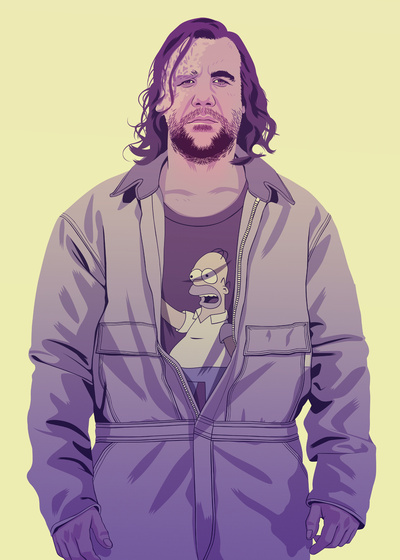

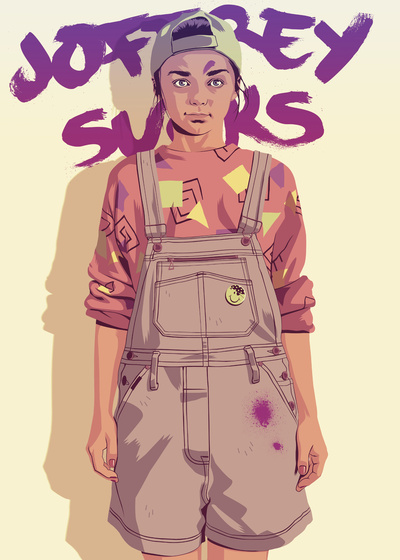
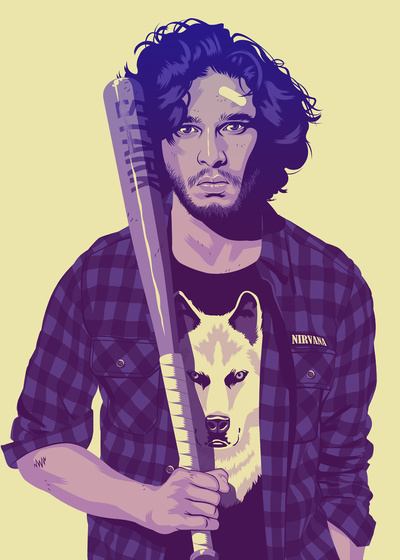
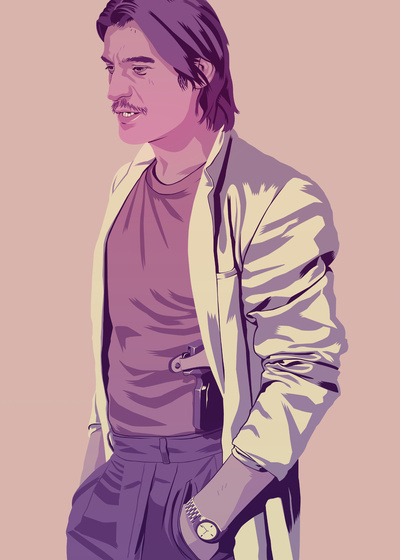
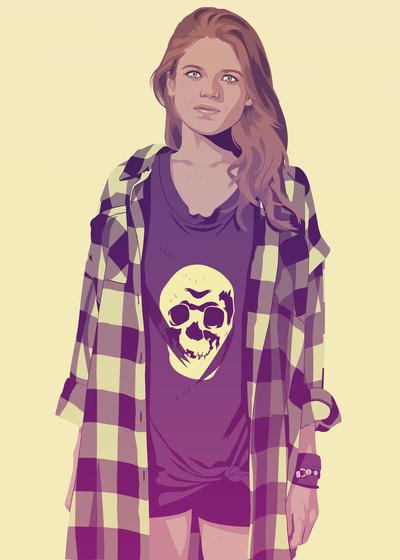


From Jaime’s dirt ‘stache, to Tywin’s stick-up-the-butt pose in a military uniform, to Arya’s graffiti, Wrobel nails it. If you like these, you can find more on Moshi Studios‘ official Tumblr page, or you can purchase prints through their online store.
Who’ll be hanging on your bedroom wall?
The post Saved by the Hound: Game of Thrones characters in the ’80s & ’90s appeared first on A Dribble of Ink.

April 24, 2014
When Harry Potter and Akira collide
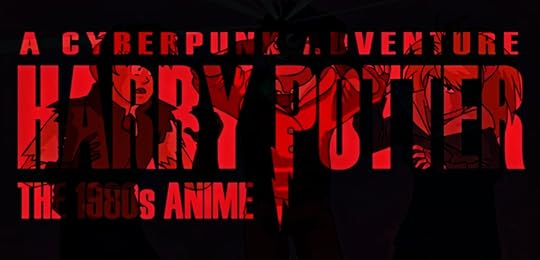
Anime was always a part of my life growing up. From Speed Racer as a kid, to Sailor Moon as a pre-teen, to the first time my friend and I discovered Akira as high schoolers, I’ve been attracted to their unusual fantasy and science fiction tales. I’m also a raving Harry Potter fan.
So, I sorta have to be obsessed with Nacho Punch‘s mashup of Harry Potter and post-apocalyptic/cyberpunk ’80s anime, right?
Oh, right, spoilers (if you’ve been living under a rock for a decade and haven’t read Harry Potter.)
The post When Harry Potter and Akira collide appeared first on A Dribble of Ink.