Shawna Coronado's Blog, page 16
January 16, 2017
American Horticultural Society Inspires Gardening

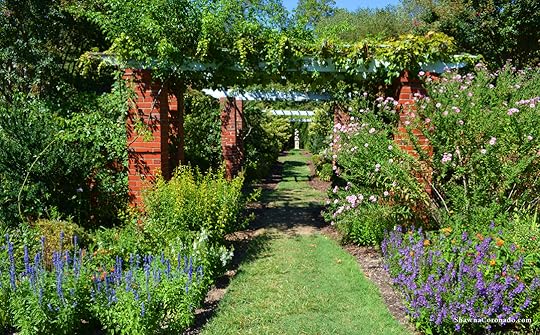
Last summer I was privileged to have an exciting #takeadaynow garden visit in Washington D.C. – part of this trip included visiting the American Horticultural Society‘s headquarters at River Farm in Alexandria, Virginia (below). This 25-acre property is historic and was originally a part of George Washington’s farm property. Founded in 1922, the non-profit American Horticultural Society (AHS) is a member-based national gardening organization. AHS is focused on gardening education and showcasing the science and art of horticulture.

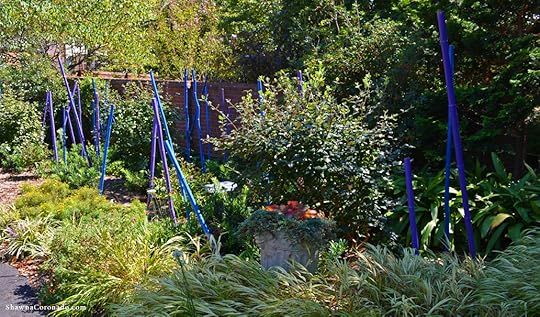
One of the creative and inexpensive ways they decorated their garden beds this season was by painting bamboo and placing the bamboo art directly in the soil (below) – so creative and easy for anyone to do. My favorite part of the farm property was the little shed they have covered with a green roof (top). Green roofs lower the temperature of buildings by insulating the roof – a great gardening idea.
If you want to learn more about gardening and horticulture, joining the AHS is super-easy and a great way to start the New Year out with learning. Follow this LINK and you can sign up for a membership which includes free admittance in 300 gardens in North America, discounts at many flower and garden shows, the society’s magazine delivered 6 times per year, and much more. Check out the American Horticultural Society and kick your gardening season off with a bang.
Save
Save
Save
The post American Horticultural Society Inspires Gardening appeared first on Shawna Coronado.


January 15, 2017
What is in Our Grain and Bread
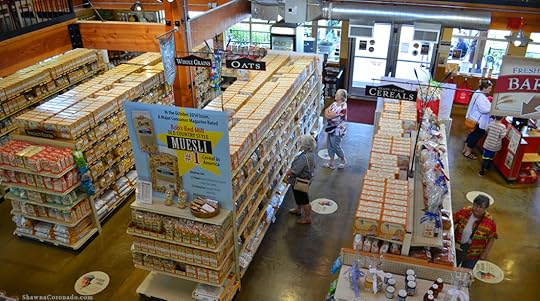
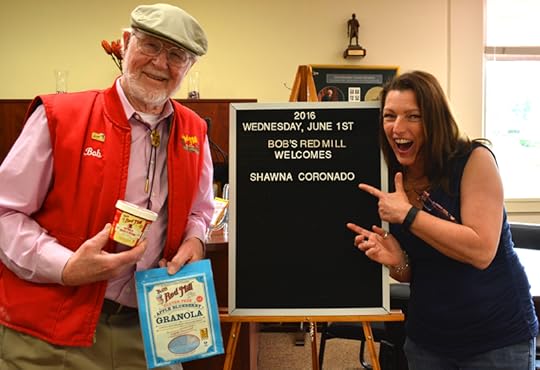
On a trip to Oregon’s Mount Hood Territory last season I was excited to learn from the PR team at Clackamas County Tourism & Cultural Affairs that I’d essentially won the organic/gmo-free lottery and got an interview with the famous Bob Moore from Bob’s Red Mill Natural Foods at his store and production facility to learn about grains and bread. The time spent with Bob and his team at his business quickly became one of the most inspiring meetings I have ever experienced (see us together in the photo on the right).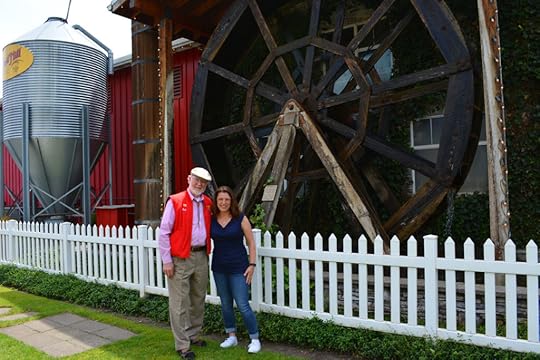
Bob is a wonder. He still continues to lead the team at Bob’s Red Mill Natural Foods after three decades. Bob has been committed to providing people everywhere with the best quality foods available. Most specifically his foods are organic and GMO free. His passion for health and belief in taking care of one another is as strong today as it was when he first started the business with his wife, Charlee, thirty years ago.
Bob’s Red Mill
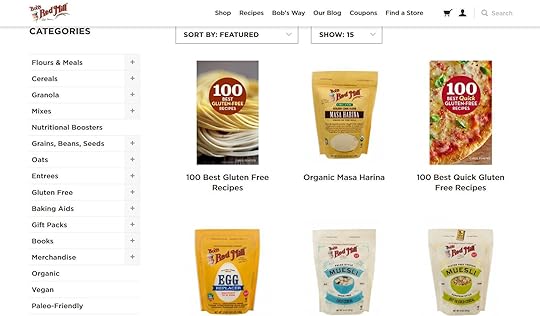
We started by having lunch at his restaurant and touring his store (above), which is filled with grains, flours, sugars, and all sorts of products that are organic and GMO free. Many of his products are in major grocery stores around the country and his foods are also shipped all over the country via his online store (see the image below). Categories for his foods on the Bob’s Red Mill website make it super-easy to find something for your unique diet. I particularly like the paleo-friendly category which includes coconut sugar, special flours, and even dried blueberries.
What Is In Our Grain?
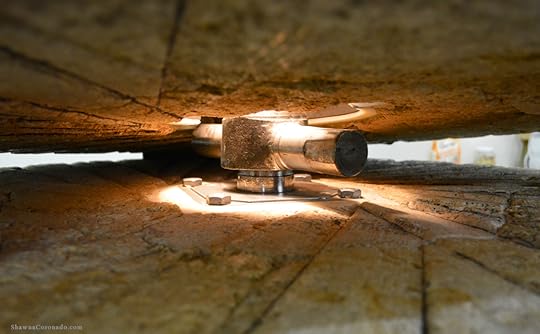
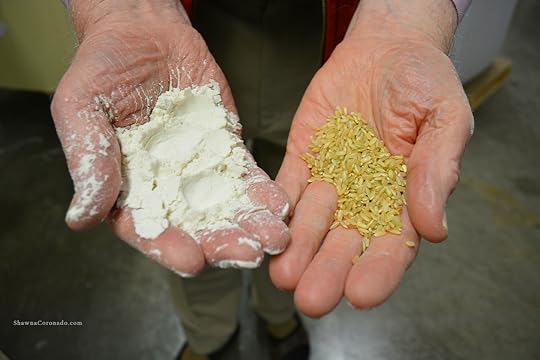
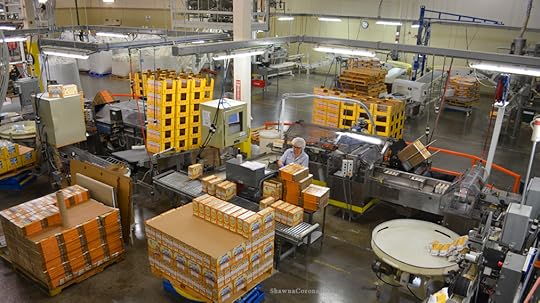
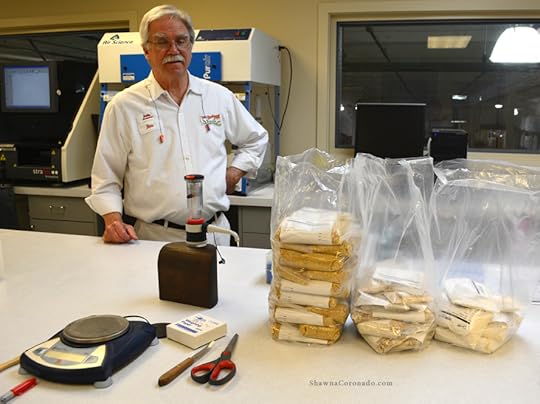
Bob showed me the heart and soul of his operation – grinding stones (above). His original business was founded on the legacy of these stones. His modern operation includes all kinds of whole grain grinding methods. Above you see Bob cradling gluten-free rice flour. I saw him pull the flour and rice directly out of the grinding machine. In fact, he surprised me and took me behind-the-scenes to places beyond the public tours – to his production, storage, scientific testing (below), and packing facilities (below).
During this tour, Bob and I talked. We talked about my diet which has been grain-free for a significant period of time. When I eat grains I get bloated and have abdominal trouble. I often have osteoarthritis pain in my back when I have grain-products. I have been using Bob’s chia seeds and coconut products for several years now and love them, but the conversation always returned to the grains and my current dietary restrictions. Knowing Bob has been an organic whole grain guy for most of his life, I would expect the conversation to return to grains, of course.
At one particular moment in our discussion he placed an ear worm in my brain that has become a passion in my heart. He leaned in, looked me right in the eye, and gently said, “Shawna, is it really the grains that are your larger gut problem?” I paused. I frowned. I thought. Bob continued, “Is it the grains, or IS IT WHAT IS IN THE GRAINS?” He leaned back and crossed his arms letting me remunerate the issue.
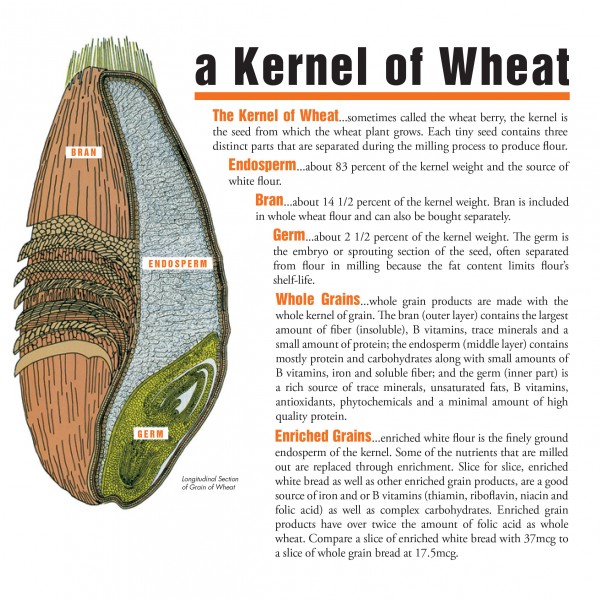
[A Kernal of Wheat special thanks and credit via KSWheat.com]
My immediate response was to think of the structure of a wheat berry, which is really a seed from a domesticated grass. There’s a germ, bran, and endosperm (above). I used to eat handfuls of wheat berries from my grandfathers wheat harvest fresh out of the truck when I was a little girl growing up in Indiana farm country. I have walked wheat fields and felt the grasses slapping my legs. I think I KNOW wheat at a level that other people do not because of that experience. Staring into Bob’s sincere face I knew that he did not mean the wheat berry, but something deeper. GMO grains such as rice, wheat, and corn are currently planted, harvested, and used in food products of all kinds, and therefore, consumed not only as bread, but in pasta and as additives in hundreds of other foods. Corn syrup, for instance, is used in thousands of products. I thought, then responded, “Do you mean GMO’s?”
Bob said, “Yes, GMO’s, but more critically, toxic chemicals that are used in the production of the growing plants and in factory production. By and large, whole grains are healthy for most people. You have told me you have suffered for allergies most of your life, so your system is sensitive to chemical influences. What if these toxic chemicals are what your body is really reacting to?” As obvious as it sounds, it was as if a grain and bread bomb went off in my noggin. I nodded and smiled and said, “Maybe!” Then I went home and did some serious research.
My Discovery About Grains and Breads
What I discovered is that many of the breads in our system are immensely processed. There is more than 140 million pounds of flour produced daily and much of that is bleached by various agents. Chlorine gas is a common chemical used and is approved by the Environmental Protection Agency (EPA) as a bleaching and aging agent, but has been proven to cause cancer. There are many other chemicals that can be used as well. Once the flour is processed, then the bread is made. There are preservatives, corn syrup, and frankly – lots of ingredients which I can’t even pronounce labeled on bread and other grain products. Why do I want to consume all these mysterious ingredients? What happened to bread being flour, water, yeast, and oil?
All breads and many other packaged products start with the grain itself – be it corn, rice, wheat, or some other grain. Beyond the GMO details, I also struggled to find out information in my research about what specific chemicals – fertilizers, pesticides, and processing chemicals – were used in growing the plants. No one can tell me the answers. Our food is not labeled to inform us of the details. We are an ignorant nation.
Which begs the larger question, “What is causing the epidemic of cancer Americans are now facing?” It’s a mystery. No one knows. We do not demand more knowledge about the processing of our grains. Of course, we also continue to put stuff in our bodies which we know nothing about. Do you know what ADA, BHA, BHT are? They are found in a lot of breads marketed in the American market. Do you know what 2- and 4-methylimidazole is? A caramel coloring that is used to color wheat and rye breads, but it’s been determined to cause cancer and yet it’s still allowed in many bread and wheat products. Why do we still eat these products? And on a very personal level – why do I still eat these products? Can it all be connected in a vast string of connectivity – food to cancer to wellness?
Bob’s question challenged me to see organic grains in a different light. Organic is not perfect, but when you have an organic product you get to understand far more about what is truly inside the grain product. According to the FDA, the term “organic” refers “…not only to the food itself, but also to how it was produced.” Bob believes less is more. He’s based his life’s work, not specifically on producing grain for our marketplace, but in trying to inspire a healthier nation. He is forcing people like you and me to answer the question, “What is really in our food and can it result in a healthier brain and body?”
You might ask why it took me so long from my visit date (see below) to write the story about Bob’s Red Mill Natural Foods. The answer is I’ve been thinking a lot about what Bob said to me about grains and bread, I’ve been doing research, I’ve been speaking with my nutritionist, and I’ve been asking myself how important food is to my future, and frankly YOUR future. This single meeting with Bob has inspired me to move my career more towards wellness and food. I’m currently working on my next book which focuses on wellness and food as much as gardening. I want to continue to grow food that is organic in my garden, but to also inspire others to think about the food they consume as a way to find better whole health. The lesson about food that we need to learn is simple and best expressed in Bob Moore’s words, “Less is more.”
Save
Save
Save
Save
Save
Save
Save
Save
Save
Save
Save
Save
Save
Save
Save
Save
Save
Save
The post What is in Our Grain and Bread appeared first on Shawna Coronado.
January 9, 2017
Office Desk Hack
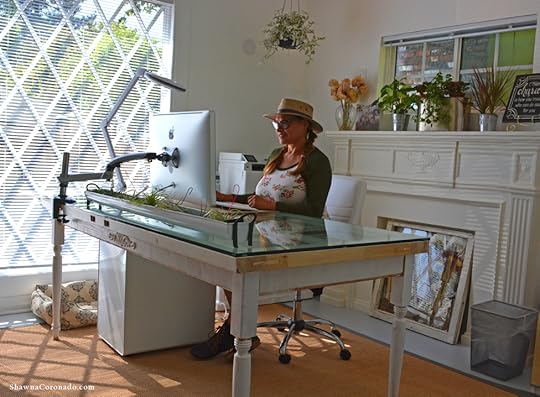
When I visited Shirley Bovshow this season, I loved going to her garden-themed office and teaching facility near Los Angeles, California where she teaches classes and goes about all her planning for the production of her television segment for the Home & Family show on the Hallmark Channel. Shirley recently opened the work space in order to expand her ability to hold classes, but also to find a healthy emotional space away from her home office. Her designer, Kevin Lambert, built her amazing desk and set up her office in a way that encourages Shirley to tap into less stressful resources. (You can find Kevin on Instagram at www.instagram.com/thegreatlambini – please give him a follow). Many of us that work out of our homes tend to work 24 hours a day, Shirley is no exception, so thanks to Kevin, the new office is a working retreat which is built to educate and make a difference in Shirley’s life as much as others.
One of the design highlights of her office which stands out is the use of an old door as her personal desk. I. Love. It. Doors as desks work because they create a six foot work space as well as a traditional computer desk area. Shirley feels as if the desk is quite large, yet the glass and sheer quality of the table top make the desk look as if it is floating and light.
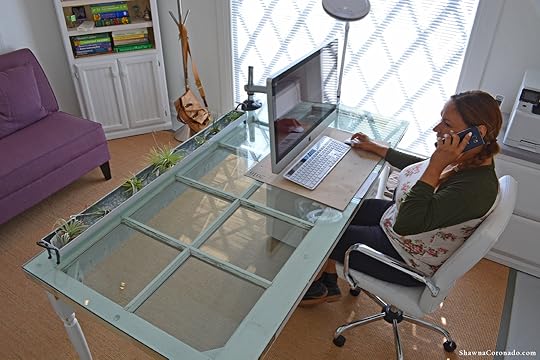
Do It Yourself
In order to build this office desk hack yourself, find an old door or window, then take off all the hardware off of the door, fill in holes with carpentry putty, let dry, and sand down any rough edges. Using the wood and legs from an old table, build a frame to attach the hardware-free door. Sand. Paint with primer, top coat, and clear coat. Then place a large piece of glass on top to create a level work surface which still shows the beauty of the window or door below it.
I find this office desk hack project beautiful and creative; just like Shirley Bovshow. Recycle something old and making it new helps the environment and adds a unique design touch to your world. Check out Shirley’s super-cool website and follow all her exciting adventures in California at http://edenmakersblog.com.
*Special thanks to the Visit California team that helped me with a rental car for my #takeadaynow trip so that I was able to come visit Shirley Bovshow and see her California garden and see her cool office desk hack. #hack #design #gardening #discoverla #visitcalifornia
Save
Save
Save
Save
Save
Save
Save
Save
Save
Save
Save
The post Office Desk Hack appeared first on Shawna Coronado.
January 6, 2017
RefrigiWear Winter Coat Product Review

One of the immensely huge challenges of my osteoarthritis is winter. Cold weather kicks my osteo so hard that I can end up cramped and limping. My neck, in particular, suffers because I tend to scrunch up my shoulders in the arctic Chicago-area weather which forms muscle and tendon strain. This, in turn, can give me a lot of pain. What I have discovered is wrapping my neck and keeping it warm can reduce my winter osteo pain significantly. So when RefrigiWear contacted me about reviewing one of their products, I agreed to test a coat if it enabled the wearer to keep warm above the neckline as much as below.
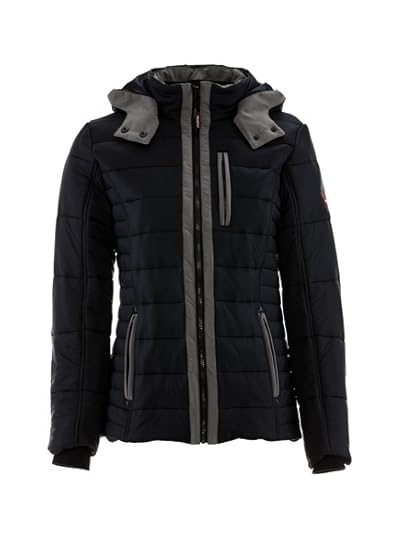
RefrigiWear sent out the Women’s Pure-Soft Jacket (right). Now you might think the word “jacket” means spring or summer use. Let’s get it straight – this coat is the warmest coat I have ever worn. Hands down. I tested it at the Lurie Garden in Chicago (bottom) on a -10 degree windchill day with much success (top).
 PROS –
Super warm coat perfect for winter. I had to take it off if I went into the grocery or a mall because it became excessively hot indoors.
Hood snaps closed around neckline or can be removed.
Coat zips up past the neckline and kept my neck and back very warm without the use of a scarf.
Multiple pockets – my favorite was a pocket inside the coat which I used for my cell phone.
Lined and easy to clean.
Sleeves seal shut so no cold air gets in through the arm cuffs.
CONS –
Size runs small, so normally I wear a medium, but I had to order a large in the jacket.
This is not a car coat. It is shorter than a parka and when you sit down, the bottom of the coat bunches up around your waist and becomes slightly uncomfortable.
My overall recommendation is that wearing this coat, which specifically zips up past your neck, is a very VERY good idea for spinal arthritis sufferers. Wearing the proper clothing for wellness makes sense. While I cannot guarantee a miraculous cure, it definitely kept my neck and back warm without the need for a heavy scarf. So much so that I have had less pain while doing outdoor chores when I wear the coat. It is warm, warm, warm and perfect for chilly weather. Wearing it in the car for extended lengths of time is uncomfortable because of the warmth and bunching effect around the waistline, so I take it off on car rides. I use this winter coat when I know I will be outside a lot in the cold, particularly when we are shoveling the walkway or going to an outdoor event. If you want a jacket length coat that will keep you warm in the colder winter months, this coat works wonderfully!

Save
Save
The post RefrigiWear Winter Coat Product Review appeared first on Shawna Coronado.
January 4, 2017
Jackfruit Meat Substitute is Only 20 Calories Per Serving
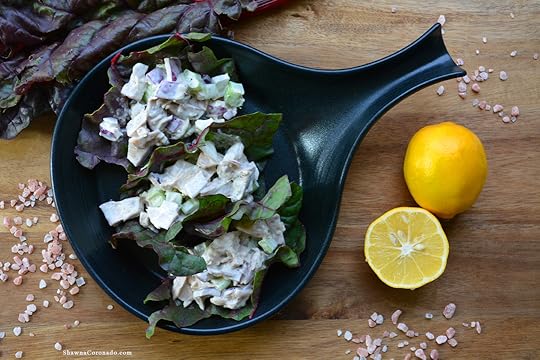
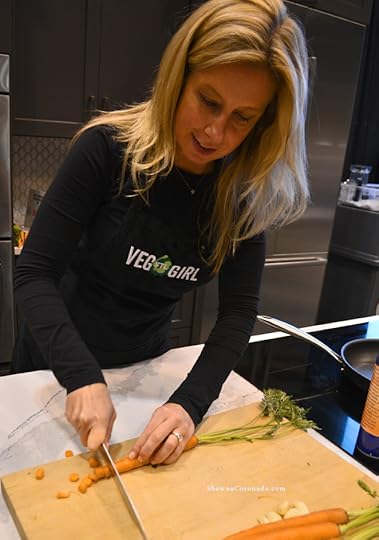
My first encounter with jackfruit was on a speaking junket at the St. Louis Home and Garden Show. I spoke 11 times in less than 4 days, rotating the stage with a rather magnificent St. Louis Veg Girl and plant-based chef Caryn Dugan, who prepared her world famous Jackfruit Tuna Salad on stage. I hoarded the leftover salad behind the curtain and scooped it all in my mouth with a huge smile on my face. She inspired me to think more about plant based foods and how my osteoarthritis diet might be effected by eating more plants. Caryn Dugan says “My mission is simple – a plant on every plate!” And indeed – my plates have far more plants on them then they did before I met her.
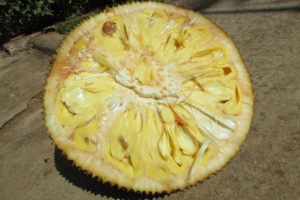
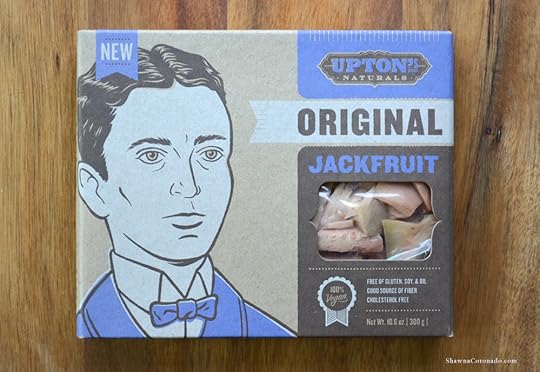
Jackfruit is typically grown in South or Southeast Asia and is a large knobby fruit similar to breadfruit (see photo below). It has a fleshy interior (right) which generates calcium and iron. The plant also provides a about 3 grams of dietary fiber per serving. Best yet, jackfruit only has about 20 calories per serving and works really well when used as a substitute for fish or pork dishes because, like tofu, it often takes on the flavor of what you are cooking.
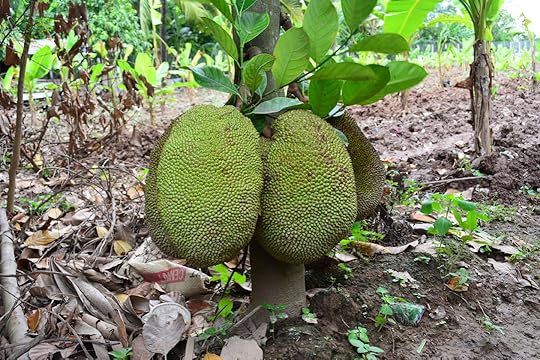
Jackfruit grows remarkably quickly and can produce up to 150 fruits per tree. Some jackfruits can get up to 100 pounds, so this plant offers an enormous amount of food grown in a relatively small area which could help feed millions of people around the world should it become more commonly consumed. Additionally, jackfruit can be a great contribution to a plant based diet or you can try eating it just for a nutritious calorie-saving lunch and keep your meats for the evening dinner.
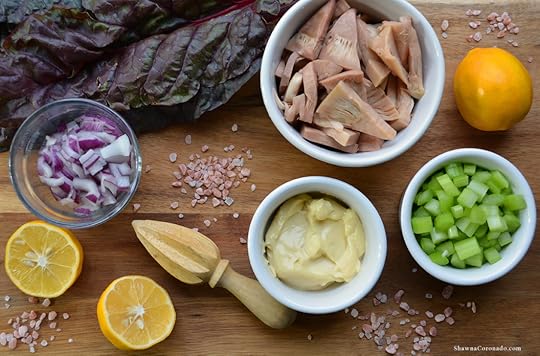 5.0 from 1 reviews Jackfruit Tuna Salad Wraps Print These delicious Swiss chard wraps are vegan and have an extremely low calorie count because jackfruit only has 20 calories per serving. Use fresh ingredients for a flavorful lunch or dinner treat. Make smaller versions for party appetizers. Author: Shawna Coronado at www.shawnacoronado.com Cuisine: Vegan Ingredients 10 oz jackfruit, chopped to desired consistency (Upton's Naturals works well fresh out of the package) ½ cup mayonnaise (use vegan mayo if you prefer) ½ cup celery ½ cup red onion 1 Meyer lemon, juiced Salt & Pepper to taste Swiss chard leaves, deveined and cut in wrap sized pieces Instructions Mix all ingredients except Swiss chard leaves together. Chill. Serve jackfruit "tuna salad" on Swiss chard leaves. 3.4.3177
This season my goal is to show you several recipes using jackfruit from Upton’s Naturals. They contacted me and asked me to come up with recipes throughout the season using fresh produce. This food is excellent for an anti-inflammatory diet to help with osteoarthritis and other inflammatory conditions as well as offering a strong fiber content. Since I first learned about jackfruit from my dear friend Caryn, I decided to start the recipe season out by preparing a Caryn Dugan inspired dish – my own version of jackfruit tuna salad. All the dishes in this post are Fiestaware from The Homer Laughlin company (love them!). The jackfruit meat substitute is only 20 calories per serving and offers some great benefits to your family’s diet – it will help you stick with your dietary New Years Resolutions!
 Save
Save
Save
Save
Save
Save
Save
The post Jackfruit Meat Substitute is Only 20 Calories Per Serving appeared first on Shawna Coronado.
January 2, 2017
Garden Clogs – A Review
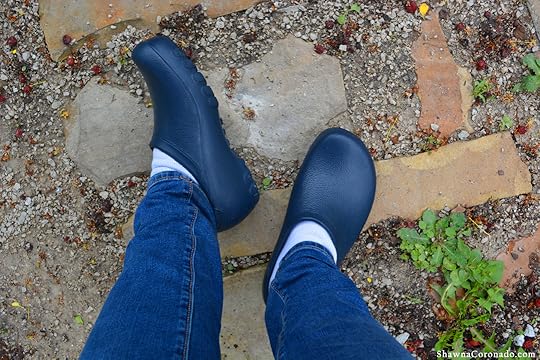
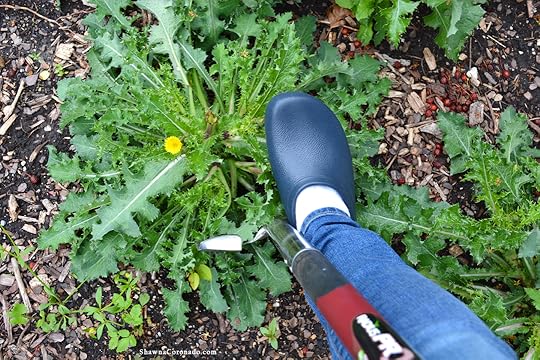
I’m a huge fan of rain boots in the garden, but garden clogs have an advantage over the boots of being quicker and easier in my opinion. I like to slip on a pair and dash out into the garden to make a quick adjustment, change the hummingbird feeders, run to the mailbox, or dig up a quick weed. Clogs that are floppy and slippy make me fall and therefore hurt my osteoarthritis condition. I’ve fallen several times with slick or uncomfortable shoes and frankly, that has to go. What I need are sturdy and secure garden clogs which enable a gardener to put pressure on a shovel without injuring the bottom of your foot yet still allows you to walk comfortably. These clogs certainly fit the bill.
Below (and above) you see me testing and wearing the Waterproof Women’s Clog from Gardeners.com. They ARE waterproof, but for gardener translation that means “MUD PROOF” and super-easy to clean. I’m always tramping through a ton of mud, muck, and wet – if I have a low rise clog on that’s floppy and flippy the wet seeps into my shoe and makes my foot miserable. These shoes are very strong and sturdy while still being high enough that I get no muck seepage. I like the molded cork interior, but found it more comfortable if I wear a sock with the shoe rather than go barefoot. The clogs are listed at $49.95 and come in 8 different colors. Overall I give these garden clogs a high score on the Shawna-marator Testing scale – check them out for yourself for this garden season at THIS LINK at Gardeners.com.
Save
Save
Save
The post Garden Clogs – A Review appeared first on Shawna Coronado.
December 23, 2016
Ron Finley in His South Los Angeles Garden

Back in 2008 I started growing where ever I could grow – front lawn, behind the fence, on my balcony – everywhere. Then I worked to donate the food I grew to local food pantries, eventually building up to 500 pounds per season. My city and homeowners association fought me and eventually I went on to speak at a TEDx about how growing unconventionally and donating food can truly make a difference for others. During this time I kept hearing about a man from Los Angeles who was breaking down growing barriers in California – he was growing on the street to help feed his community and teach them about gardening as the solution to food deserts across the nation.
His name is Ron Finley, and I knew from the minute I saw his TED.com speech that we were brother and sister in our beliefs. We both believe that all people should have access to healthy food, all people should understand where their food comes from, and that all people need to eat more REAL food. From the moment I saw his speech, I knew that I HAD to meet him so we might chat about making a difference. This summer I traveled to Los Angeles, California and made my dream come true and spent a day with him for one of my #TakeaDayNow adventures.
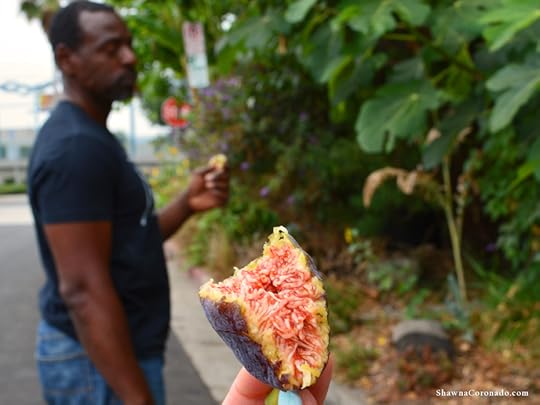
Ron Finley and I have been social media friends. We cheer each other online, but what would it be like to meet? When I pulled up to Ron’s home it was a hot and sultry August day. Before I said hello, before anything, Ron quietly handed me a fig from the tree in his hell strip garden (above). If you have never tasted an overly ripe fig picked fresh from the tree, you are missing something. Flavor exploded and I told him I’d never had a fig before. Ever. He handed me more while we stood in middle of the street and I ate until I could burst. Delicious overload!
 The Hell Strip Garden
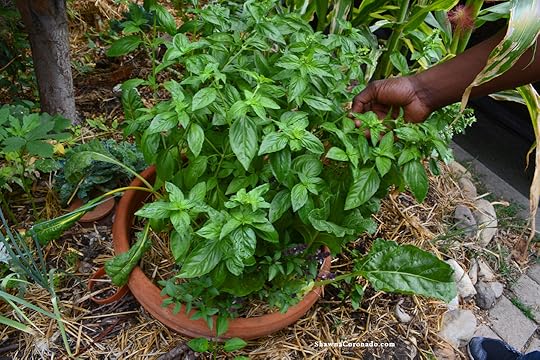
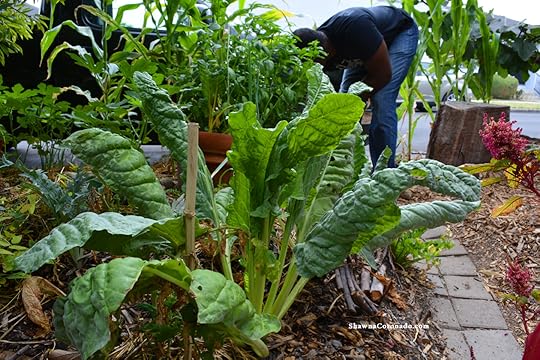
Essentially a food desert is an urban area where it is difficult or next-to-impossible to buy affordable or quality fresh food. As we walk along his street garden we discuss growing food and how Ron’s not-for-profit organization, The Ron Finley Project, was created to ignite a horticultural revolution where more children learn the benefits of growing healthy food in order to prevent food deserts. As we walk this wild garden that stretches a hundred feet along his property in South L.A. – he has an ear on our conversation, but an eye on his chard, basil, and kale (above).
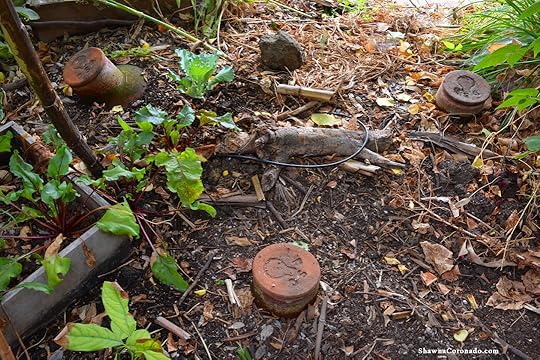
Ron uses techniques he has learned along the way; he does not have a specific horticultural education, yet he seeks out techniques and friends that help him to grow and supplement the garden. He has herbs growing in pots that are buried in the ground to offer better soil (above) and ollas are buried in the ground (below) to help with irrigation. Watering plants with ollas (pronounced “oy-yahs”) is an ancient tradition – the vessels are unglazed clay or terra-cotta pots buried in the ground with the top exposed above the soil level, then filled with water for underground irrigation of plants.
The Bad Ass Gangsta Swimming Pool Garden
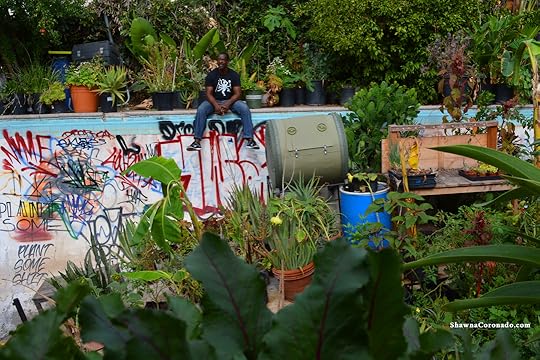
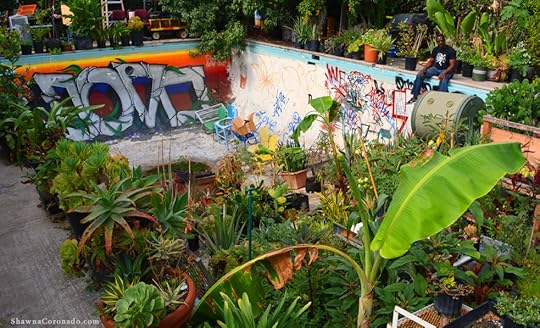
And then there is the totally bad ass gangsta swimming pool garden (bottom). You read it right – Swimming. Pool. Garden. Ron’s back yard is this giant empty swimming pool which he uses as a nursery for life. There is no chlorinated water, but there are hundreds and hundreds of plants of every imaginable type planted around the edge and dancing in the corners and layered in the pool as if they are living in a fancy greenhouse. Ron’s touch can be seen on everything; there’s graffiti on the walls and composters and a potting table and riots of color and madness every where you look. It is garden addiction and triumph all splayed out for every visitor to see. It is Ron’s heart and soul laid bare.
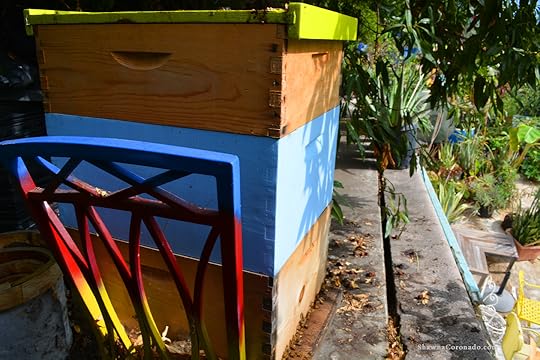
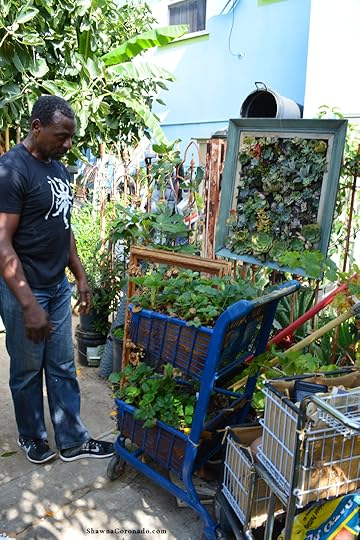
Hidden at the back of the pool area is a bad ass bee hive with little bad ass gangsta bee’s doing their thing (below). Ron and I spend the morning talking and wondering about the nature of the world. We share the same philosophy – more people need to understand the connection between food and health. There’s this amazing mix of reclaimed and reused garden containers because he loves to show people how to reuse something unlikely to transform it into something useful. My favorite is a cobalt-blue double-layered shopping cart that is filled with strawberries (below). Ron picks a strawberry for me. I eat it, smiling, in silence.
You Can Make a Difference
So much of the time we spend life saying, “What’s in it for me?”
Perhaps we should all be asking a larger question — “How can we make a difference for others?”
Ron is an astounding inspiration and clearly believes that doing something wonderful for your community can change a neighborhood for the better. Grow where ever you can, share your knowledge about food and planting, and find a way to help others do good. I believe in you – Ron believes in you – make a difference!
*Special thanks to the Visit California team that helped me with a rental car for my #takeadaynow trip so that I was able to come meet Ron Finley and his rock star California garden. #landscaping #gardening #discoverla #visitcalifornia
Save
Save
Save
Save
Save
Save
Save
Save
Save
The post Ron Finley in His South Los Angeles Garden appeared first on Shawna Coronado.
December 9, 2016
One Pot Meal Recipe Pork and Butternut Squash
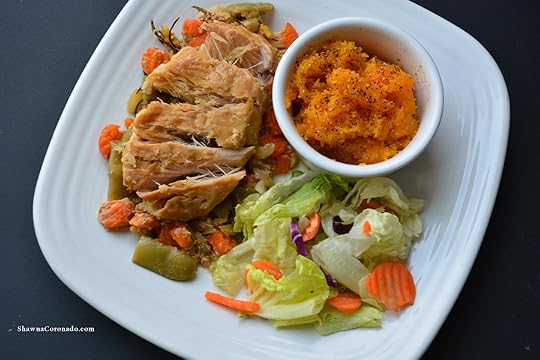
With the holidays upon us, we are all running around with very little time to prepare a good meal. I have your solution: a one pot meal recipe for your crockpot that takes minutes to prepare and is totally yummy. This one pot meal recipe has you crockpot a WHOLE butternut squash along with vegetables and meat – feel free to substitute chicken – and turn it into fabulous food for the busy holiday season.
The recipe is below and the video is above. If you cannot see the video, just LINK HERE.
One Pot Meal Recipe Pork and Butternut Squash Print Prep time 10 mins Cook time 7 hours Total time 7 hours 10 mins This healthy one pot meal recipe for a crockpot makes it very easy to cook dinner without spending a lot of time in the kitchen. Author: Shawna Coronado at www.shawnacoronado.com Recipe type: Crockpot Dinner Cuisine: Dinner Ingredients Frozen Vegetables Pork (substitute chicken if you like) Onion Powder Broth (your choice) Salt Pepper Rosemary Butternut squash Instructions Put ingredients in the crockpot in the order listed. Cook for 4 hours on high. Remove butternut squash, cool, slice, remove seeds. Continue to cook pork and remaining vegetables until done. Plate up, top with salt & pepper. Add salad on the side. 3.4.3177
This yummy recipe is served on Fiestaware dishes from the Homer Laughlin Co. – Square Fiesta white dinnerware plate and a white ramekin. Thanks Fiestware – for making my food look so beautiful!
Save
Save
Save
The post One Pot Meal Recipe Pork and Butternut Squash appeared first on Shawna Coronado.
December 5, 2016
Honey Bacon Wrapped Scallop Recipe

When I was diagnosed with severe degenerative osteoarthritis I thought my life was over, I walked hunched over, I couldn’t sleep, I was in so much pain the pain dictated my daily life. Then I met with a nutritionist, Deepa Deshmukh, MPH, RD, BC-ADM, CDE. She changed my life by putting me on an anti-inflammatory diet. This diet plus daily walking has reduced my pain level by about 80% – and my life has been so much better. Essentially the diet is an elimination diet of no dairy, no grains, no cane sugar, and a few other restrictions such as no shellfish or red meat. I have one exception to the shellfish which has been great – scallops. In fact, the Arthritis Foundation recommends fish and scallops as a part of The Ultimate Arthritis Diet.
In the photo above you see Bacon Wrapped Scallops I had the Village Social on the Biltmore Estate this season – so delicious and it makes a yummy treat for holiday guests. Bacon is not an anti-inflammatory food. However, I went from consuming bacon weekly to consuming bacon and pork irregularly. When I do consume pork as a splurge, I test to see if I have a pain flare up and as long as I keep pork as an infrequent addition to my diet, I can occasionally have it so would recommend your testing it out in your own arthritis and inflammation attempts to see if you should eliminate it entirely or just partially.
Below is a great holiday season recipe for Bacon Wrapped Scallops. The scallops, according to the Arthritis Foundation website, are “good sources of inflammation-fighting omega-3 fatty acids. A study of 727 postmenopausal women, published in the Journal of Nutrition in 2004, found those who had the highest consumption of omega-3s had lower levels of two inflammatory proteins: C-reactive protein (CRP) and interleukin-6. Best sources: Salmon, tuna, sardines, herring, anchovies, scallops and other cold-water fish.”
Honey Bacon Wrapped Scallops Print Prep time 20 mins Cook time 20 mins Total time 40 mins Delicious bacon wrapped scallops great alone as an appetizer or as a main course. Author: Shawna Coronado at www.shawnacoronado.com Recipe type: Seafood Ingredients 1½ to 2 pounds fresh large scallops, washed 1 pound bacon slices Honey in squirt bottle for drizzling Fresh ground black pepper Bamboo skewers, soaked in water 2 tablespoons melted coconut oil for drizzling Instructions Preheat oven to 425 degrees F Cut bacon strips in half or to size of scallops Lay bacon strips out flat and drizzle with honey, sprinkle with freshly ground pepper Wrap around scallops Secure with soaked bamboo skewers Place on top of pain which has been drizzled with coconut oil to prevent sticking Bake at 425 degrees F for 15 to 20 minutes or until bacon is at preferred done-ness level. 3.4.3177
Save
Save
Save
Save
Save
Save
The post Honey Bacon Wrapped Scallop Recipe appeared first on Shawna Coronado.
November 22, 2016
Recycle an Iron Arbor
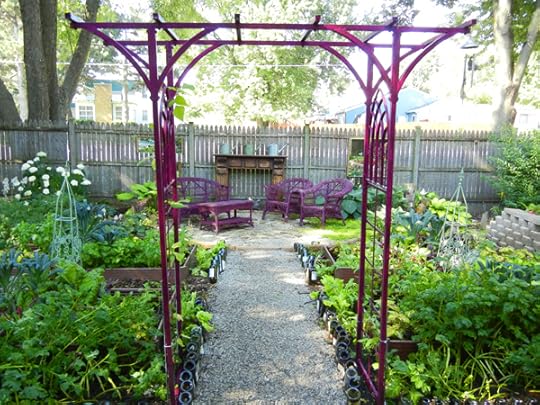
**This arbor story is a recycled post from 2010. I recently had a reader ask me to post it again — here it is my friends — RECYCLE, REUSE, REPOST!**
My ten year old daughter and I are driving to the grocery store on a cold day last fall when I look out the car window and see a wrought iron arbor laying on its side out by the street. I screech the car to a halt. SCREEEECHHHH!!
Both of us jump out and stare longingly at the arbor. My daughter says, “Mom, we have to take it home! It was meant to be.”
I knock on the door and ask if it is being thrown out. It is!! Hooray! Their trash is our treasure! The kiddo and I cannot get the full sized arbor on the roof of the car, so we leave the car sitting alongside the street and together manage to heft it back to the house, walking awkwardly on the sidewalk as we carry its bulk home.
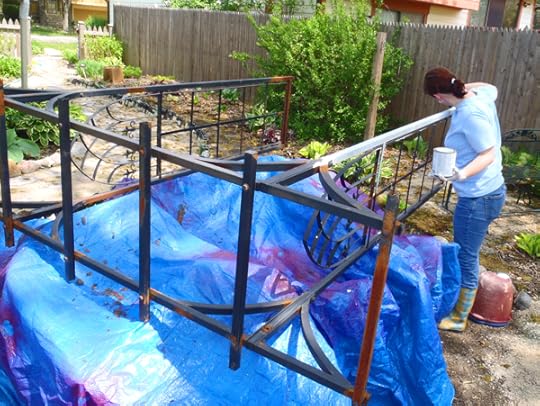
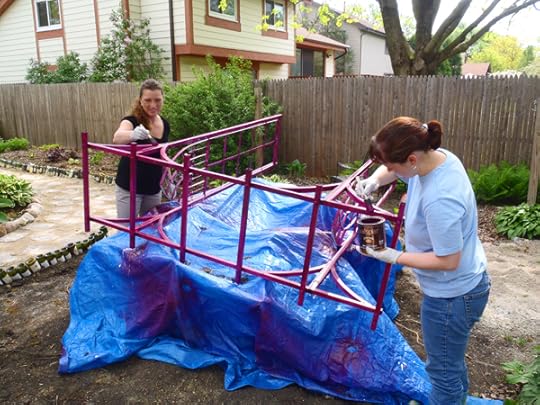
For six months the arbor sat on the side of my house awaiting a magical transformation. This Spring, my assistant Katie helped me lift it up onto a home made “horse” and we painted it in one coat of base paint and two top coats of “aubergine” (reddish purple). It is now a feature in the back French Potager garden, framing the ferns in bold colors, and adding a bit of “umph” to the wine bottle path.
Now the arbor sits in a quiet shade garden next to the feathery ferns and little wine bottle sentries. I love it when we rescue a dead wrought iron creature and bring it back to fabulous life.
Save
Save
The post Recycle an Iron Arbor appeared first on Shawna Coronado.