Allan Hudson's Blog, page 32
December 1, 2019
Guest G M Lupo of Atlanta, Georgia
 An award-winning playwright, actor, photographer and author, G M Lupo, is our special guest this week. Thanks to our mutual author friend Bobby Nash for bringing us together. Lupo’s website is titled Raised by Wolves – Musings of a Georgia writer. Going to be interesting. He has kindly agreed to a 4Q Interview and is sharing an excerpt from Atlanta Stories: Fables of the New South.
G. M. Lupo is an author and award-winning playwright, originally from Atlanta and currently living in Central Georgia. His play, Opposites Detract, premiered at AmpliFest, Merely Players Present, Doraville, GA in May 2019, and A Debt to Pay premiered at Tapas III, Academy Theatre, Hapeville, GA in June 2018. His most recent published work is a novel, Rebecca, Too (2018). Another Mother, his first full-length play, won the 2017 Essential Theatre Play Writing award and received its world premiere in Atlanta in 2017. He is a member of the Dramatists Guild and Merely Writers.
4Q: It’s a real treat having you as a guest this week GM. Let’s chat about your award-winning work as a playwright. I can’t imagine anything more difficult to write and you seem to be quite successful at it. Tell us about this experience.
 GML: It was a true honor to have my first full-length play, Another Mother, produced by The Essential Theatre not just in my hometown of Atlanta, Georgia, but in West End, the neighborhood where I was born and lived until I was twelve. In fact, the theater where the play premiered was once the home of the public library where I learned to read as a child, so it was a place that already held a lot of good memories for me. The Essential Theatre award is the only one given exclusively to new work by playwrights who reside in Georgia. The very first recipient of the award in 2001 was Lauren Gunderson who’s gone on to become the most produced playwright in the country, so it’s a great honor to be among the distinguished writers who’ve been recognized as such. Another Mother explores the question of what makes a mother, nature or nurture, and was based on an earlier, unproduced work that eventually became my novel Rebecca, Too. I took full advantage of the experience, attending every audition, rehearsal, and performance and I learned a lot, not just about writing, but what goes into producing a show. Since the premiere, I’ve made many revisions based on what came out of the process, so it was a rewarding experience for me on every front. Working with director Peter Hardy and the excellent cast was incredible, and I have a lot of great memories from the endeavor. I’ve sent it around to some other places and hopefully, it will get more performances in the not-too-distant future.
4Q: Please tell us about Atlanta Stories – Fables of the New South.
 GML: Fables of the New South, which takes its title from Henry Grady’s “New South” speech from 1886, was the first entry in what I refer to as the Expanded Universe of Fictional Atlanta. Many of these stories have been floating around in my head in some form for years, and in college, I conceived a series of stories set in a fictional town which eventually became a fictionalized version of my hometown.
 The stories are tied together by the central theme of characters coming to Atlanta to reinvent themselves. Early versions of some of them appeared on my blog, Raised by Wolves, and some of the characters originated with the play that became the novel Rebecca, Too. Most of the stories are set in the 1990s through approximately 2006, and feature references to events and places such as the 1996 Olympics, and the Braves. The excerpt I’ve submitted, Dead Man’s Hat, is set in 1966, the first year the Braves played in Atlanta, and features a kid from my home neighborhood of West End who may show up in future works.
In my writing, I’ve chosen to concentrate on telling stories, without worrying so much about medium, so a short story could inform a chapter in a novel or become a play. In fact, A Debt to Pay, one of the stories in Fables, became a ten-minute play that was produced at Academy Theatre in Hapeville, Georgia in 2018. I’m currently working on a follow up to Fables of the New South that will be titled Reconstruction and will expand on the characters and stories in Fables. My play, Rebecca, Too, became a novel that’s since been turned back into a play. The conventions of a play are very different from that of a novel, so quite a bit of juggling went into recreating the play, such as combining two characters into one and condensing the story quite a bit.
The Expanded Universe was born when I realized that there was a tie-in between my current work and a story I was writing in the late-90s or early-00s. It was about the tech boom in Atlanta around that time and featured a web developer who started a company and took it public, becoming a billionaire. In the story, he insults a real estate developer in town, and when I created the characters in Rebecca, Too, I made them the daughters of a real estate developer. I realized their father was the same person insulted by the main character of my earlier story. Nearly twenty years after creating him, that character finally made it into print in Fables of the New South.

4Q: Please share a childhood memory or anecdote.
GML: Most of my memories from childhood are tied to my grandmother, that is my mother’s mother, who lived down the street from us when we were in West End, so I spent a lot of time at her place. She’s the only one of my grandparents I really knew well. My mother’s father and my father’s mother died before I was born, and, though my father’s father lived with us when I was a child, he left around the time I was five or six, so I have very vague memories of him. My grandmother was a presence in my life from a very early age until I went to grad school, and when I was a child, we’d occasionally hop on a bus and head downtown to Rich’s and spend the afternoon roaming around downtown, usually having lunch at the S&S Cafeteria. She had this large steamer trunk full of clothes and games, and whenever I’d visit, she’d open it up. I have the trunk in my living room now only with my stuff in it.
4Q: Where is that favorite spot we might find G M Lupo, the author, when he’s writing a novel, story or a play. What writing habits make you productive?
 GML: My main computer for writing is my MacBook that sits on a table in my bedroom. That’s where I type everything into Word to edit it. I’m always writing, though, composing stories using Notes on my iPhone, making notes, or using the voice recorder when I’m walking, and ideas occur to me. I have a lot of helpful tools, such as Acrobat, which allows me to edit PDF files on my phone, and I have several Cloud accounts, which allows me to work on my writing from just about anywhere. When I’m ready to put a book together for publishing, I move over to a Dell laptop I have in my office, which has Photoshop and InDesign that let me typeset and create covers for my books. I do most of the graphics for my books, usually using photos I’ve taken in Atlanta or elsewhere.
I’ve developed a method of composing snippets of stories on my iPhone that I can then publish onto my blog in early drafts, and often I edit the text on my blog before I publish there. I then transfer the snippet to Word for expansion and editing, so what’s on my blog changes significantly once I start putting it into a publishable form. As I develop the stories, I save them as PDFs that I can markup with changes and corrections, which I make on the Mac. Basically, I write or edit anyplace I have a decent Internet connection.
I have no definitive style, just whatever works best for getting the story told. Sometimes I’ll have a beginning and will develop the story as I go along. For others, such as Phoenix in Fables, I develop the entire story in my head and flesh it out on paper. I may start with a title, a phrase, a snippet of dialogue, or a description of a character or event and build the story around it.
4Q: What do you do when you’re not writing?
 GML: One of my favorite activities is taking long walks, particularly in the woods. It’s not only good for my health, but I also find getting out and walking helps with the creative process. I can’t count the number of stories that have come to me in the woods at Stone Mountain, and I pay homage to this in the first chapter of Rebecca, Too. I also like to read, though I can sometimes be sporadic about reading, especially when I’m writing. I enjoy research and have been working on my family’s genealogy for more than twenty years. If a subject catches my attention, I’ll spend time researching it, sometimes obsessively.
4Q: Anything else you’d like to add? Raised by Wolves?
GML: I’ve decided, if I ever write an autobiography, I’ll entitle it Raised by Wolves. My name is the Italian word for “wolf” and my ancestors were Sephardic Jews of Spanish or Portuguese origin, who traveled to Milan, then Venice, and were recruited as viol and violin players to the court of Henry VIII in 1540. I’ve learned many Sephardic Jews identified with the Tribe of Benjamin, who’s identified in Genesis 49, verse 27 as a “ravenous wolf” so the origin of my family name appears in the Bible.
 I’ve also run across references in Shakespeare that sound suspiciously close to details about my ancestors. For instance, in the New Year’s gifts of 1585, where courtiers exchanged gifts with the monarch, my ancestor, Peter Lupo is identified as “Petruchio Lupo” and, at the time, his wife’s name was Katherine. Petruchio and Katerina (or Katherine) are the main characters of The Taming of the Shrew. In Elizabethan England, the Lupos, who played violin and viols, were closely allied to the Bassano family of recorder players, which included Amelia, who’s been identified by some scholars as the Dark Woman in Shakespeare’s sonnets (some have even identified her as a credible candidate in the authorship debates).
 I’ve noted several interesting references to “wolves” in Shakespeare’s work, and the plays are peppered with musical references, especially to the fiddles and recorders. My ancestors would have provided the music whenever Shakespeare’s work was performed at court and later members of the Lupo family were part of the musicians who played with the King’s Men, as Shakespeare’s company was known under James I.
An Excerpt from “Dead Man’s Hat” from Atlanta Stories: Fables of the New South.
(Copyright held by the author. Used with permission)
Inspired by “Small Change” by Tom Waits
Lenny heard the shots. Hell, everybody on the block heard the shots, but nobody saw anything. Nobody ever saw anything, not even those who were there, looking right at whatever was happening. They were the ones who especially didn’t see anything because they knew what would happen to them if they did. Lenny knew, so he made an extra effort to not see anything. Like when he saw Artie go by and enter the arcade. Lenny knew it was only a matter of time before he’d need to look away. So, he did.
Arthur Desanto had been in town for about a week, from Chicago, he claimed. Lenny hadn’t met many people from Chicago. He’d get a lot of New Yorkers asking him if he knew where they could find the Times, but Artie was the first one from Chicago, or at least the first to say so. Artie got really quiet when Lenny asked why he was in Atlanta, and Lenny knew not to press him. Other than that, Artie had been pretty talkative, asking about the night life, such as it was. Lenny told him about the San Souci and the Domino, but Artie had already found them and didn’t seem too impressed. There was also the Clermont over on Ponce, which Lenny mentioned to Artie.
 Artie was staying in the Grady Hotel, which was why Lenny had the opportunity to get to know him a bit. Artie never seemed to have anything to do from two to four, so he hung out near the diner, chewing an enormous wad of gum and quizzing Lenny about baseball players on cards he had in his pocket. Artie was a collector, he said, though Lenny couldn’t figure out why anybody would want to hang on to those things once the gum was gone. As a kid, Lenny had been a fan of the Crackers and went to games with his father when they played on Ponce but didn’t follow the sport on a national level. He didn’t know much about this new team they brought in from Milwaukee and hadn’t yet been out to the stadium they built for them south of town last year. Artie was fairly knowledgeable, but Lenny got the strong sense Artie was just showing off, which didn’t really impress Lenny all that much, but he didn’t want to seem rude. Lenny figured Artie just needed someone to talk to and Lenny didn’t have a whole lot to do until the afternoon edition came out anyway.
Lenny was a news boy, hawking the Journal in the afternoons on Peachtree between Ellis and Cain Streets downtown. He’d been doing it for about a year, among other odd jobs, after dropping out of Brown High School to help his Mom make ends meet following his father’s death. Lenny was the oldest of two boys and two girls, so he saw it as his responsibility to step up once his father was gone. He liked working for the Journal, even if he was just selling papers, because his dream was to be a writer, covering the mean streets of his hometown of Atlanta. Because of this, he always kept his eyes and ears open, and only turned away when he knew it was in his best interest to do so. He liked to study people, how they dressed, how they carried themselves. He could usually guess someone’s profession by what that person was wearing and working outside a hotel he encountered a fine mix of people from all over.
 What caught Lenny’s eye when he first saw Artie was the hat. A porkpie, they were called, dark brown and made of felt — not the sort of hat one usually saw around Atlanta, which is why it made such an impression on Lenny. He never saw Artie without it, not even when Artie was in the diner, eating. He didn’t take the hat off or hang it up like other guys would do. It was always perched atop his head, like Artie expected to run out at any minute and didn’t want to risk leaving it behind.
 Artie was a nervous sort, small and wiry, and not much taller than Lenny, who, at sixteen, was just a hair over five nine. During one of their discussions, Artie let it slip that in Chicago, he was known as “Small Change” and Lenny felt the nickname suited Artie, who seemed small and unimportant, the sort most would pass by unless he gave them a reason to stop. Beyond that, Lenny had no idea what Artie did for a living, if anything, and Artie wasn’t the sort to volunteer the information.
In the aftermath, people would say Artie was an idiot, thinking he could run to Atlanta and be safe. Nobody was safe in Atlanta, but most of them didn’t know it. Artie knew it. He wasn’t safe anywhere. There are just some folks you don’t mess with and the consensus was that Artie should have known that. Lenny was never a hundred percent sure exactly what Artie had done to or to whom, but whoever it was wasn’t the sort to forgive and forget.
Artie seemed to sense the end was coming. Each day when he’d stop and talk, he’d seem more nervous: looking over his shoulder, asking if anyone had been inquiring after him. Once, when a car backfired, he practically jumped out of his skin.
Whatever it was, he wasn’t telling Lenny. “The less you know, my friend, the less you know,” Artie would repeat, often without prompting from Lenny.
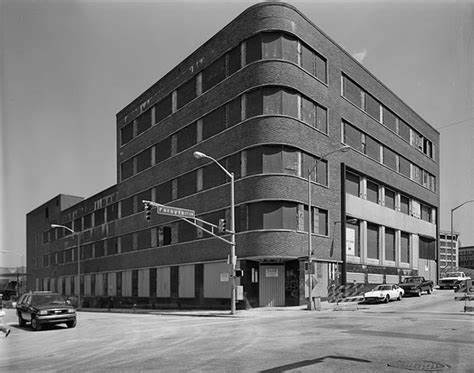 Both the Constitution and Journal fudged the details of the crime, stating only that Artie had been shot multiple times by an unknown assailant, most likely a robbery gone wrong. Lenny had seen him, though, sprawled on the ground, his head resting against the base of a gum ball machine. Lenny knew the real story — five shots, one in each shoulder, one in each knee, then the final one between the eyes, with a single, unspent cartridge beside his head. Everybody on the streets knew whose signature that was, even the cops. Nobody could prove it, though, and that was the show stopper.
 The kicker was, whoever did the deed used Artie’s own gun, the .38 snub nosed revolver he kept in his coat pocket, which was found, empty, a few feet from the body. Lenny imagined Artie going for it but being a couple of seconds too late. The type of men he was facing needed to be surprised to get the drop on them. It takes a special kind of man to look someone in the eye then shoot him multiple times and Artie just wasn’t the type. The guy who killed Artie probably went home, had a nice dinner with the wife and kids, and never gave it a second thought.
Lenny was halfway down the block, just a few yards away from the entrance to the arcade when it all went down. He’d seen Artie nervously head inside, after ignoring Lenny’s usual greeting, “Hi ya, Artie,” as he passed. Lenny had also seen the man in the black suit and the grey fedora pass by with two other fellows dressed less formally, who entered the arcade behind Artie. He’d seen the flow of teenagers leaving quickly and that’s when he knew it was time to turn away, to focus on something else for a few minutes, until he knew all was clear.
It took maybe five minutes, but then the shots came and the three men who’d followed Artie exited, not in any hurry, and passed Lenny as they headed to the end of the street. One of them even stopped to buy Lenny’s last paper, and waved off the change Lenny offered him, with a cool, “Keep it, kid,” before they disappeared around a corner.
Then the buzzards descended, Wally from the shoe shine stand, Hazel from the coffee shop next door, Frankie from the clothing store across the street. They grabbed what they could easily remove from the body and beat it quickly. By the time Lenny got there the corpse had been picked clean, no watch, no wallet, no cufflinks or ring. But there was one thing left, and, for Lenny it was the prize. Lying just to the right of the body, away from the quickly spreading pool of blood was the hat, where it must have fallen when Artie reacted to the first shots, or maybe while the men were “talking” with Artie beforehand. Lenny stepped over and picked it up, examined it to be sure there was no trace of blood, then walked to the mirror and tried it on. He’d need to grow into it, but he had to admit, it looked pretty good on him.
Lenny straightened his jacket and walked out of the arcade wearing the hat. He breathed in the early evening air, then turned right and headed south, just as the first of the police cruisers rounded the corner with sirens blaring and lights flashing. Lenny didn’t stop. Nobody had seen him going in or coming out. Nobody ever saw anything.
He had no idea how the situation would eventually be resolved, but he knew he was going to write about it. In two years, after all the commotion had died down, he’d turn it into a human-interest piece about life and death in the city, which would become the first byline in the Journal for Leonard Stringer. As he strolled away from the scene, words began to form in his head.

“Small Change — rained upon with his own .38,” he thought and nodded with satisfaction. He shoved his hands into the pockets of his jacket and headed off to the Journal to collect his day’s pay, with a slight bounce in his step.
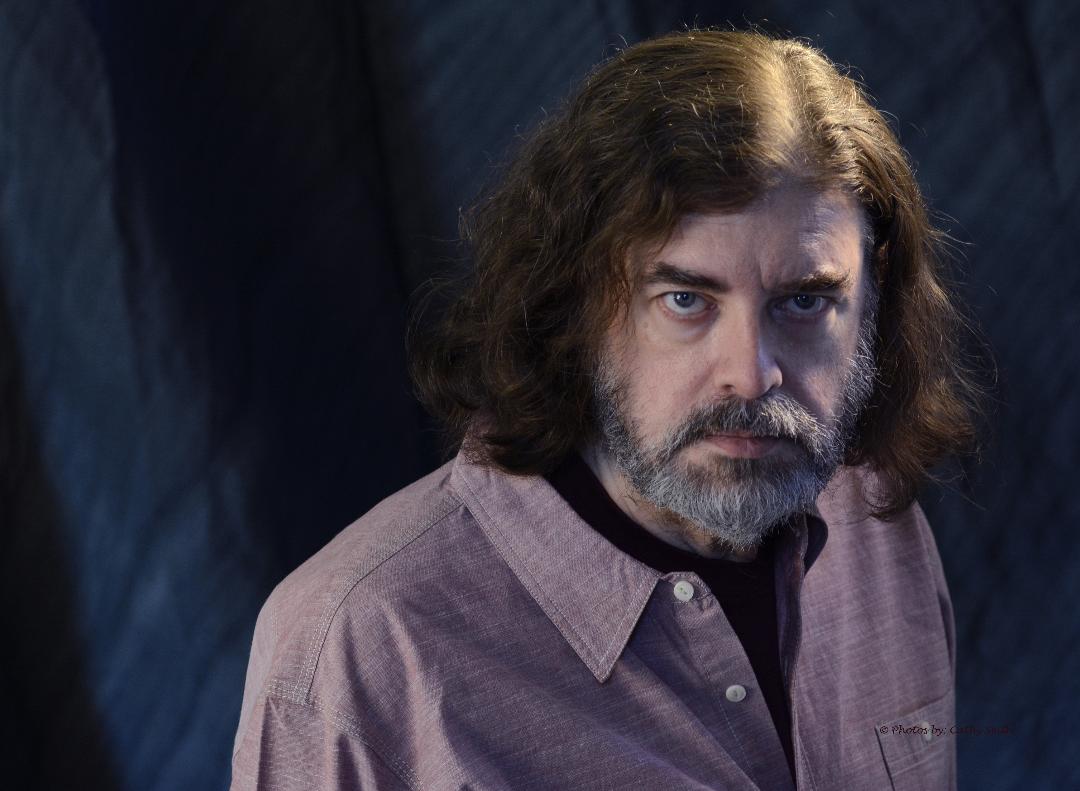
Thank you, GM, for being our guest. All the best in your future writing.
For all you readers wishing to discover more about GM Lupo and his stories, please follow these links.
Blog: http://gmlupo.com
Author page at Amazon: http://amazon.com/author/gmlupo
Rebecca, Too at Draft2Digital: http://books2read.com/RebeccaToo
Review of Fables of the New South: http://bookreviewdirectory.com/2018/04/11/editorial-review-atlanta-stories-fables-of-the-new-south/
Interview with VoyageATL: http://voyageatl.com/interview/meet-g-m-lupo-lupo-digital-services-doraville/


November 23, 2019
Guest Author Carol J. Marshall of Georgia, USA.
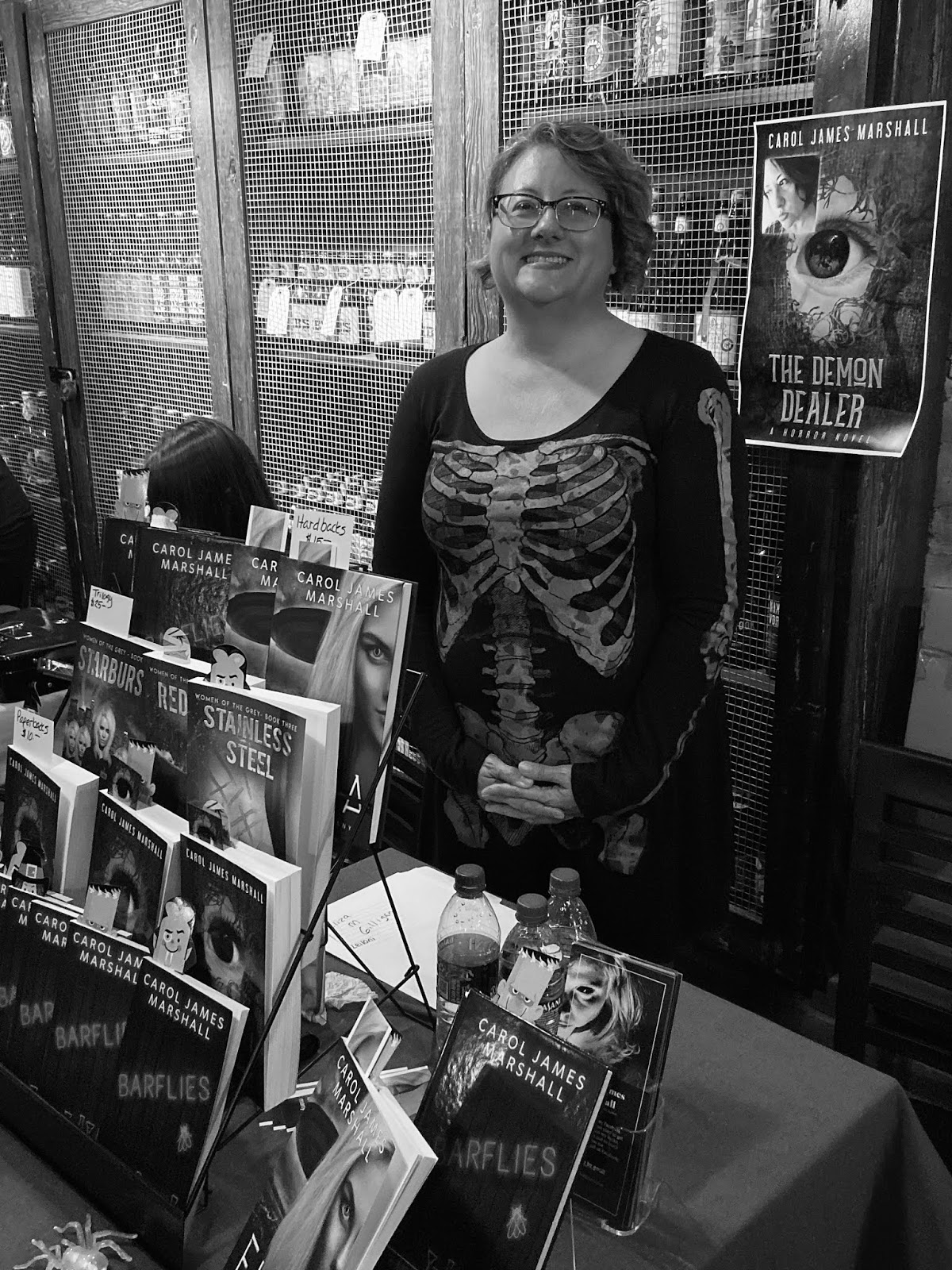 Sci-fi, Horror, Dystopia and Dark Humor. All the subjects Carol reads… and writes about. Thanks to fellow author Bobby Nash for bringing Carol to our attention. She has a large body of work with four and five star reviews that her readers rave about. She has agreed to a 4Q Interview and is sharing an excerpt from Ella is One of Many, a science fiction thriller with a strong horror vibe.
Carol James Marshall is a horror and memoir author living in Warner Robins, GA. A California native Marshall moved to Georgia three years ago with her husband and two boys. During the day Marshall works as a Spanish translator and spends her free time reading, listening to, or writing books.
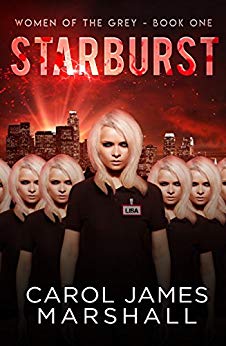
4Q: It’s a real treat having you as a guest this week Carol. We’re particularly interested in your Woman of the Grey series. Starburst – Book 1 and Red Drug– Book 2, Stainless Steel - Book 3, the complete trilogy. Please tell us about them.
CM: What I am about to say sounds made up. As if a lightbulb moment story that I have fabricated. I promise you I did not.
 I had been thinking of the concept of an alien race of women for two years. I was having a hard time pinpointing the lead character and where I wanted to go with it.
 Then one day I watched the Miss Nothing music video by The Pretty Reckless. The way the singer strutted, the lyrics, the everything of Miss Nothing sparked the trilogy. I sat down and started Starburst that night. Taylor Momsen is my muse for Lisa the protagonist in the trilogy.
That is often the case with me. Many of my characters are inspired by songs and music videos. When I need to get the “vibe” of a character I’m writing I listen to their song and 99% of the time inspiration hits.
The Women of the Grey trilogy is mix of science fiction and horror. One reader called it “An original dark disturbing blend of horror and sci-fi.” I love not giving away too much. I want the reader to wonder what comes next. My goal as an author is to never be predictable.
The Women of the Grey trilogy is great for readers who love to be creeped out by aliens while also exploring the characters emotions.

4Q: Please tell us what it is about the dark side of things that inspire you to write.
CM: It is often said that writers, write what they love to read. I love creepy. I love scary. I triple love things that come down from outer space to earth with bad intentions. I also love female characters that are complex and kick ass.
That said, the answer is simple. I write what interests me. I couldn’t write a romance or a sweet mystery if my life depended on it because those stories don’t hold my attention.
I write about the dark side of things because that is where you’d find me.

4Q: Please share a childhood memory or anecdote.
CM: I was raised very Catholic. In my home The Exorcist was a documentary, not a movie. When a large earthquake hit California (I don’t remember the year) I was sleeping in my bed. The shaking startled me awake by my bed bouncing. I let out a hair curling scream. I truly believed that the Devil was in my bedroom that night. Now I laugh at the little girl me thinking I had really done it this time I was clearly possessed my bed was bouncing off the ground.
4Q: Where is that favorite spot we might find Carol Marshall, the author, when she is writing. What writing habits make her productive?
 CM: I have a very busy lifestyle. I work full time as a translator plus I own my translation business add family, sleep, and the occasional shower well it leaves little time for breathing let alone writing. Therefor I write in small spurts almost daily.
 I have written all my books in 20 to 45-minute intervals. I write when I catch a bit of time to myself. You’d be amazed what you can accomplish in 20 to 45 minutes a day. That’s 6 books for me so far.
Usually I publish two books a year writing in spurts. I never force myself to write. When the feeling comes, it comes. Productivity comes easily to me in writing because I know I have a short-allotted time to create so I best make the most of it.
I also never plot my books. When I start a new book or series, I know the concept of the story and how it ends. Usually, I know what the last line or paragraph will be. I work towards that ending, following my own yellow brick road of ideas.
My favorite spot to write is my writing room. When my husband and I bought our current home, he got a music room, and I declared the dining room my writing room. It’s becoming my spot. That’s where my family knows to find me a trillion percent of the time.
4Q: What do you do when you’re not writing?
CM: If I’m not writing a book, I’m listening to one or reading one. I live a very bookish life. I also love vintage horror films and documentaries.
4Q: Anything else you’d like to add?
CM: Please take the time to review a book if you enjoyed it. Small indie authors like myself thrive off of reviews. A good review for one of my books can literally make me walk on clouds for days.

An Excerpt from Ella is One of Many, from the chapter Cry Later.
(Copyright is held by the author. Used with permission)

Three figures stepped out of the open doorway of a ship that had landed almost within reach of Dave. If Dave had the ability to move, he might have reached out his hand and touched the luminous steel.
The figures walked as if they had purchased that block and intended to evict every person on it. They wore clownishly large, bright red overalls that had no insignia or name printed on them in any language. There was nothing to indicate where they were from nor to tell if these figures were female or male. All wore buzz-cut hairdos. Some held guns in their hands; others merely lay their hands on the guns in their holsters. The guns looked as if they were purchased in bulk at a Dollar General.
If Dave could have looked directly into their faces he would have thought they looked surprisingly human with short white hair that had a tint of green to it, brown eyes that looked human except for the bright ring of yellow around the iris. At best the figures looked as if they were in a cult, one that wore toy guns. The whole thing appeared to be a massive and well-done cosplay.
Except that all humans within a designated radius were frozen in place. These humans were unable to run for their lives or defend themselves in any matter. If a fly had landed on Dave’s nose at that moment there was no way for him to shoo it away.
If the humans were capable of asking, they’d probably ask why they had to be immobilized like this, and the simple answer would be, “This was done so the Varanu could go grocery shopping. You see, Earth is our favorite place to pick up some goodies for the dinner table, and human beings are what we consider Kobe Beef.”
The humans taken would be examined and either harvested or not. After completing the harvest, a simple psionic wave would unlock everyone left behind, and they would forget everything that had happened. They would go about their lives as if the harvest hadn’t happened. The survivors of the harvest were left with a haunting doubt in their minds, that feeling of having forgotten something important but never being able to remember it. Those taken by the Varanu were never looked for because no one would remember them.
Those outside the radius could not see the ship, or the many dressed in red collecting humans. Their mother ship dominated the sky above, cloaked and shielded so that those that attempted to pass through would decide for no reason not to.
While Dave lay like a forgotten shoe in the street, the three figures surveying the wreckage of human bodies frozen in place fell to all fours. The humanness of the Varanu faded. Their heads tilted up only slightly, enough for them to see; their arms were bent, hands flat on the ground, but their knees didn’t touch the ground, only the tips of their feet. In this way, the Varanu moved forward, gathering in lines and rows as if marching to war. Their backs remained stubbornly ridged while on all fours, as if an inner compass pointed the way.
Scuttling down the street, one by one each Varanu broke off and headed towards a human, the desire to feed on such a delicacy racing in their thoughts. Trails of milky saliva shamelessly hung from their lips as each headed to a human and smelled them. If the human were chosen, the Varanu shoved their saliva-coated tongues deeply into the human’s mouths.
Unable to move, the humans watched and felt what was being done to them. Their screams of terror locked up in their throats, the humans would mercifully fall into a heavy sleep the second a Varanu tongue slid past their teeth. Those not chosen watched, the terror of their ordeal silenced by their inability to move.
This was the Varanu harvest.
The harvest was more than a holiday to the Varanu. It was a time to feast.
Thank you, Carol, for being our special guest. All the best in your future writing.

For all you readers wishing to discover more about Carol and her stories, please follow these links.
How to find Carol James Marshall https://linktr.ee/science_fiction_horror_author_
Interested in reading Ella is One of Many? Use this link https://books2read.com/Ellaisoneofmany ebooks, paperbacks, and hardbacks available.
November 16, 2019
The Honey Trap. A Short story by allan hudson
Honey Trap - a stratagem in which irresistible bait is used to lure a victim.

This short story was originally written as a basis for a novel with a heroine that has only one arm. An undercover agent for CSIS, Canada's spy agency.
Former decorated soldier.
Not only trained to kill, she is multi-lingual, a vixen, a genius and committed to revenge for the lose of her right arm.
This story was originally published on the Scribbler and is now part of my Short Story collection - A Box of Memories.

The Honey Trap
Bella Maggs weighed forty pounds when she was four years old. Her mother passed away from cervical cancer when Bella was eight and as big as a teenager. By the time she was twelve, she would be mistaken for an adult. Four days and two and a half hours after she received her high school diploma, her father was killed in a car accident. She was one day away from her eighteenth birthday. To suggest her childhood had not been propitious is akin to suggesting the Marianas Trench is under a lot of water.
The family doctor had diagnosed her immense girth as an eating disorder, prescribed exercise and a healthier diet. Her single-parent father spoiled her and couldn’t say no. Schoolkids bullied her in elementary school, but that stopped by the time she reached junior high. By then she’d stopped feeling sorry for herself and toughened up. Bella Maggs was not stupid. In fact, her Intelligence Quotient at 161 is considered exceptionally gifted; in everyday talk, she is a genius.
In high school she was not without a few close friends, all smaller than her. Possessing a round pretty face of the fairest skin, ruddy checks, and a pleasing smile, she tried hard to be liked but people still teased her. Standing at five foot ten, she weighed two hundred and twenty-five pounds when she entered Grade 10. Boys were scared of her, and she was rarely asked out. The only boy who wanted to take her to the prom was Kelvin Van Grut, the only other genius in her school. At six four and a hundred and nineteen pounds, loose limbed and bony jointed, he reminded people of a marionette. Everybody called him Pinocchio.
June 25, 1991, Bella and Kelvin arrived at the prom twenty minutes late at 7:20 p.m. The heckling began at 7:21. The snickers and whispers at the odd pair were not disguised. Mean-spirited teenagers openly taunted them. At 7:42 pm, Bella Maggs ran tearfully from the gymnasium. No one who knew her then ever saw her again. Her father’s funeral was handled by his only sibling, a younger sister. Bella managed the disposition of all her father’s assets from an undisclosed location. What couldn’t be sold was given to his sister to dispose of. Bella refused to surface.
***
In 2010, Rosa Vartanian moved to Treasure Island near the picturesque seaside community of Cocagne. She bought a rundown cottage on the perimeter of the island, facing east. During the first twelve months of occupancy, she convinced her four closest neighbors to sell her their properties. Everybody had their price.
 Rosa now owns one quarter of the football-field-sized landmass. All the buildings have been given away or razed, the properties graded, large majestic pines groomed, scrap trees cut down and others replanted. A modest storey-and-a-half home occupies the center of her property. A separate three-car garage holds her vehicles, with the upstairs housing her training rooms. Picket fences and clever shrubs ensure her privacy without seeming snobbish. Multi-hued sunrises shimmer across the bay.
 Vartanian can speak more than a dozen languages. She has been warmly welcomed by the curious Acadian population of the hamlet. When it is discovered she can speak French, she is invited into their homes. The fact that she only has one arm doesn’t faze them a bit. The rumors of her wealth seem unreal given her humbleness. When they politely inquire where she is from or ask any questions about her background, she cleverly changes the subject. Or they get the only-child-parents-deceased line. As far as the missing arm, she tells them it’s the result of a car accident.
No one needs to know that she lost it in the state of Lower Saxony in Germany.
Thirty months ago, she’d been tracking down a group of neo-fascists who fantasized of a renewed state, demanding a separate slice of Northern Germany. From university groups chanting left wing slogans against immigrants, they grew to autonomous groups fashioned after Islamic jihadism with no one commander, no head to sever. The racists caused havoc and death mainly among black communities, Muslim neighborhoods and gay habitats. In their attempt to garner worldwide attention, they kidnapped the son of Canada’s Prime Minister, who was attending the University of Cologne, demanding an exorbitant amount of money for his release. Underneath all the law enforcement activity of both countries, the Canadian Security Intelligence Service (CSIS) had agents in action throughout Europe. None of them were more covert and better connected than Rosa Vartanian.
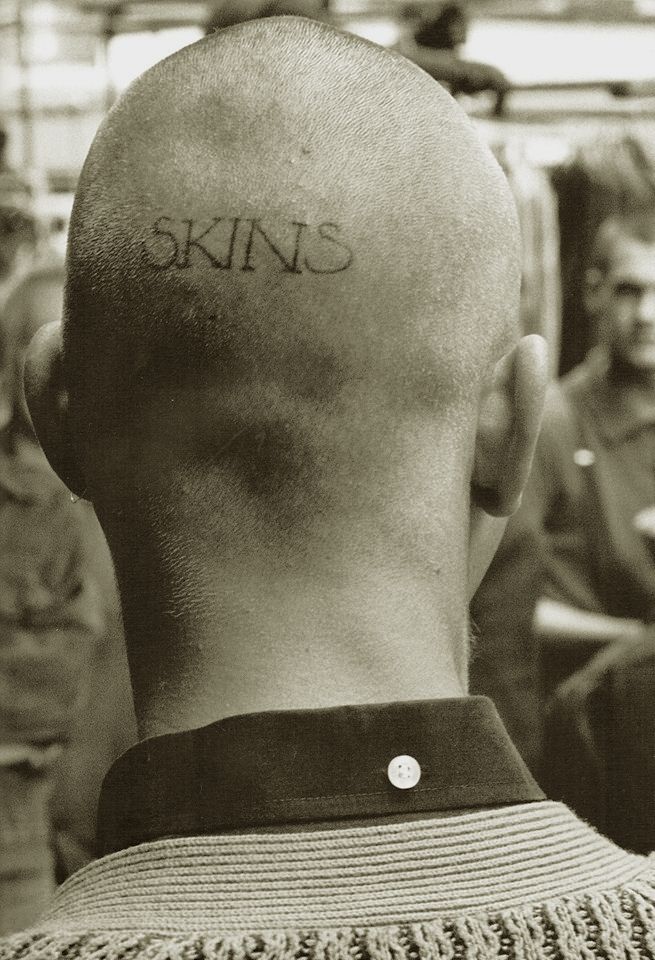 Within twenty-four hours, Vartanian uncovered a connection between the men in the security videos from the university that the Saxony State Police shared with Canada’s RCMP, and Rudolf Hoch, the slime she’d been sent there to shadow a month ago. Hoch was a skin head, a rich skin-head. He had been charged with the murder of his parents, owners of Hoch Shipping. Nine months later, Rudolph walked out of the courtroom a free man. The prosecution had been unable to prove his guilt. His mother was Canadian, well connected to the business elite and present political hierarchy. It had been suggested to CSIS that Rudolph Hoch bore watching. They sent Rosa Vartanian.
Her inquiries led her into a pit of serpents. She had been captured by the same ruthless gang. Probing for information she did not have, it was Hoch himself who removed three of her fingers with a rusty knife making the young man watch, terrorizing his very soul. Before the fourth finger went missing, she and the son were rescued by Drake Alexander and his unruly cohorts. He had been her sergeant when she was part of the Special Ops during her time with the Canadian Armed Forces as a member of their elite Task Force 2 Commandos. Now Alexander hunts criminals. Her career with CSIS was put on hold during her rehabilitation when she lost her arm to infection and eventual gangrene. Some consolation was that Alexander and his band of vigilantes killed or captured the entire terrorist cabal. Hoch, however, was not among them.
Now she’s a one-armed gardener, sun worshipper and a thirty-seven-year-old retiree always looking over her shoulder. She is consulted occasionally by CSIS but only as an advisor. She misses the espionage, the rush only danger can bestow. More desperately than that, she wants the man who took her fingers, her arm. She knows from her sources, usually reliable, that Hoch was seen in Istanbul less than ten days ago. CSIS has agents searching for him.
In her training room over the garage, she studies her unclothed body in the mirrors on the gable end that has no windows. One of the dormer windows to her left admits the first stream of early morning light to paint her upper body the color of butter. The window is open and summer scents of pine sap and saltwater drift in. Bright blue workout pants, a white spandex top and red cotton panties are scattered around her feet like lost thoughts. After an intense workout, every square inch of the smooth skin that covers her big boned frame is taut, and beaded with perspiration. Her limbs are rippled with girlish muscle, flexible as a whip. All seventy inches of her physique is sensuously proportioned.
The only blemish is the missing arm. Turning to her right side, the faint scars around the flap of skin used to cover the amputation site causes her to yearn for her other hand. Not wanting to think of the ordeal that brought her here, she shakes her head, staring defiantly into her image’s bold eyes. The blue is the color of cold morning seas. Short curls, brown and loose, collapse on her wide forehead. Her square face is Slavic, making her an ideal agent for most of Europe. Again her thoughts turn to her former trade, the lure of intrigue.
Rosa kicks the panties away with her foot and strides toward the bathroom at the other end of the exercise room, bypassing the weight machine, the treadmill, a stair climber that is on the rim of “worn out.” An antique teacher’s desk sits against the guard rail for the stairway that separates the large room. Bella’s laptop is in the center, open and always powered up. On the edge is one of her throwing knifes. A nine-inch, double-edged sticker made of 440 Stainless Steel. Bella likes it because it’s easier to sharpen than the high carbon steel and it doesn’t rust.
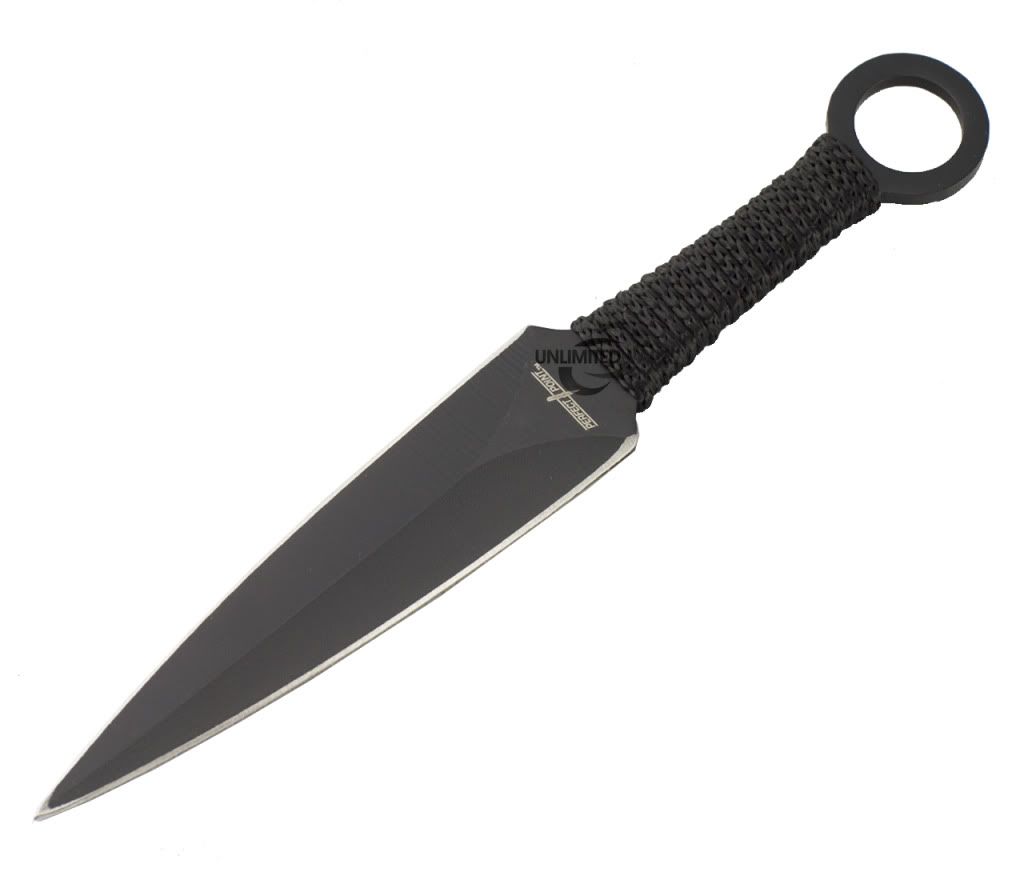 She picks it up, caressing the sleek handle. Her index, middle and ring fingers grip the handle opposite the thumb. Arching her arm, she stares at the outline of a used dartboard on the far wall twenty feet away and throws. The knife spins perfectly vertical, striking the pockmarked board an eyelash away from the center dot. She doesn’t check where it struck, its close enough. She’s thrown the knife a thousand times since she lost her other arm. She was right-handed. Turns out she’s even better with her left.
 The shower is hot, steam filling the small bathroom. The shower stall is brightly tiled in whites and blues, the glass door runs with beads of soap when she rinses the shampoo from her short hair. She lets her mind go blank while the water cascades over her. Her arm outstretched, hand against the tile, head directly under the stream. She’s feeling sorry for herself. She’s tried to make a life here, she wants for nothing financially. Her neighbors are kind and honest. She rarely locks her door. The waters where she lives are much like her temperament, at times calm and lazy as if on canvas and other times reckless and driven with passion. The owner of the gas bar in the village center has expressed an interest. She likes his smile and silly jokes. Raising her face to the streaming water she can’t understand why she isn’t happy here.
She reaches down to close the taps. The shower head sputters and drips. Shaking her curls, she grabs a thick black and white striped towel from the bar and begins drying herself off. While frisking her hair with the towel she vows not to give up. Not to give in to the sense of being unfit. She’ll prove to her superiors that she deserves to work again. Later that morning, after she plants the root cuttings she has been cultivating, she will practice with her gun again.
Slipping into a short purple robe decorated with silver dragons, she hastens downstairs to the mud room connecting the house and the garage. The walls are mostly glass and the warm sun glows, turning the water to the north a shimmering orange. Pausing only for a moment to admire her property, she thinks how peaceful it is, how unlike her spirit. She trots off to get dressed before breakfast, thinking about the adjustment needed on the front sights on her Beretta Tomcat.
***
Nelson Cartwright’s stance is severe like a steel beam, rigid and unbent even though he is seventy-four. His six-foot frame is clad in cargo pants tucked into paratrooper boots. A crisp white T-shirt is covered by a dark gray fleece. His narrow waist and barrel chest are echoes of his military past. He is the Defense Minister of Canada. The whole of the Canadian Armed Forces is at his command, including CSIS and all its assets. Activating one of their deepest agents is the reason he is meeting his boss outside the office, very late at night. Off hours, one might say.
Chief Warrant Officer T. Beers Jr. owns the house he waits in, on the outskirts of Ottawa. The man is Cartwright’s nephew. The couple and their two children went for dinner and a movie, a night at the Sheraton on Parliament’s expense account. They left four hours ago, running late for a 6:30 dinner reservation. The politician stands to the side of the picture window, shaded by the long drapes. The roadway is slick from a brief spring rain. The sodium glow of the streetlights makes it shine like a skin. Cartwright’s bald head gleams in the low light as if just polished. Deep set eyes are impossible to read. A jutted chin proclaims pride of an untainted past. The man he works for demanded an emergency rendezvous at a secure location where there is no possible chance of anyone eavesdropping on them. The Prime Minister of Canada said he would meet him at 10:45.

The person stands erect and slips off the hood. Robert Mahovlich is a good head taller than Cartwright, slighter. His normally slicked down hair is disheveled from the head covering, the eyes are red veined, the skin frightfully pale. Cartwright takes the PM by the forearm, moving him inside to shut the door. The Prime Minister says, “The doctors committed my son today, Nelson. They took my boy away.”
“I’m sorry, Bob. Really, I am. I know how much you love him. You’ve done all you can.”
Mahovlich appears utterly defeated, chin sagging, lips slack. There is no gleam in his eyes, only sorrow. A spark ignites within his deepest psyche, instilling him with a need for completion. He raises a fist to his advisor, grits his teeth before he says, “I haven’t done everything. We can destroy the man responsible for this.”
“Follow me. We can talk safely here.”
 Straightening his shoulders, the PM follows Cartwright into what looks like an open rec room. Toys, a large TV, pool table, stuffed couches, and brightly colored bean bags fill the room. The wall on the right has a simple bar area. Pointing to one of the chrome barstools for Mahovlich, Cartwright walks behind the pine counter to where a bottle of Glenfiddich sixteen-year-old scotch rests beside two glasses. He pours a measure for each of them.
 “How did you get here?”
“Hunter is driving.”
The hand that Carter is not pouring golden booze with is raised.
“I don’t want to know anymore. Not when it comes to Hunter.”
He slides the thick-bottomed glass holding two inches of perfection toward the PM.
“I think I know why we’re here, Bob, but let’s cut to the chase. What’s going on?”
Mahovlich maintains a bit more grit in his demeanor. The politician is replaced by a father, a parent with a vast array of assets at his disposal. Swishing the liquid, he gulps down a good swallow. The bite makes him draw in his breath.
“Hoooo!”
Looking directly at Cartwright, obvious distaste in his voice.
“What’s the latest on Hoch?”
“We knew where he was up until last Saturday, three days ago. We had our sights on him when he returned from Turkey but lost him…”
The men argue, scheme and banter for over an hour, until the bottle is half gone. With a thump of his fist on the bar, the PM says with finality, “I want that bastard behind bars or…or…”
Cartwright knows when to back down. He nods at the PM.
“I understand.”
Mahovlich reaches for his hood, satisfied that more aggressive action against Hoch will begin. He eyes the Defense Minister.
“You have absolute authority to do as you see fit to make this happen.”
Cartwright frowns.
“And the responsibility if this goes sour.”
The silence is answer enough. Cartwright watches the man make to leave. The van waiting outside. Only one last thing to authorize.
“You want Hunter on this?”
“No. Vartanian.
“Vartanian? One-armed Vartanian?”
The Prime Minister meets Cartwrights questioning look with a stern nod.
“Definitely. Do you know where she is and what name she’s going by now?”
“Uh-huh. She bought a place in New Brunswick and she goes by Bella Maggs. Why her?’
The PM pulls up his hood and stares Cartwright in the eyes.
“She wants the bastard as badly as I do.”
Thanks for visiting the Scribbler today. I hope you enjoyed the short story. I'd like to know you're thoughts about turning this into a novel.
November 9, 2019
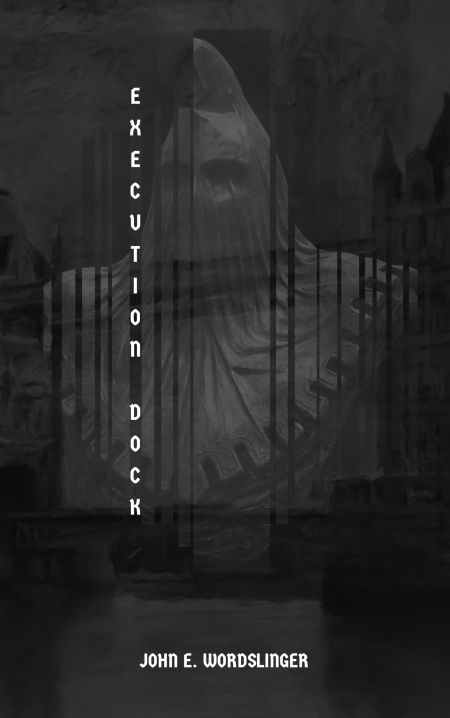
Author & Poet John E. O'Hara aka John E. WordSlinger of Chicago, Illinois U.S.A.
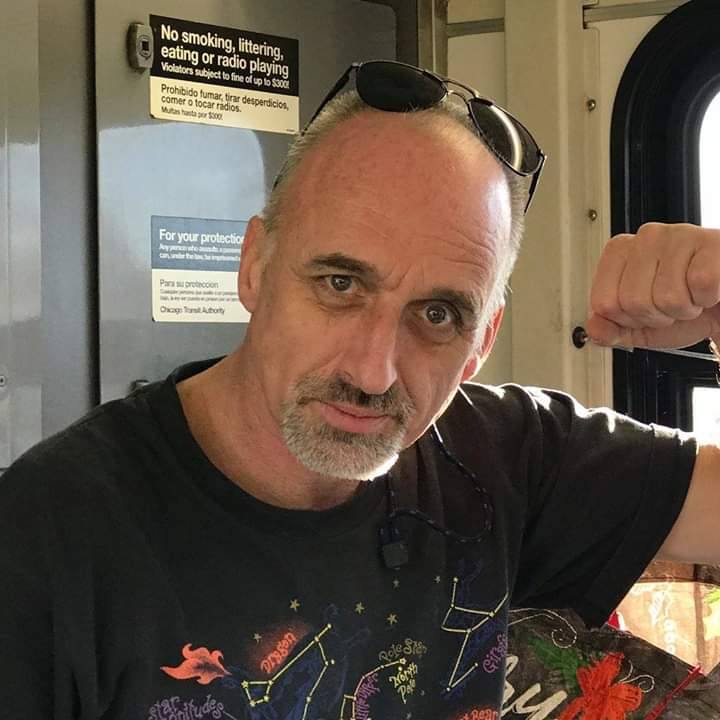
The Scribbler is most fortunate to have John as our guest this week. A multi-talented writer, artist and musician. He has agreed to a 4Q Interview and is sharing some of his work.
My internet writing life motto be
Keep it poetry and poetry shall keep you.
Short Bio Hazard:
I have to take the road that Bruce Lee
took towards the Martial Arts, as an
analog “Like water”.
I take the Literature Arts of Poetry.
In the beginning I used free verse,
swift rhyming, lyrical, metal-rap-groove verse
with definition and aggression.
Now, I try different systems,
in all genres, as always,
and put them to my personal use.
Furthermore, put to use what is useful
when needed, and reject what I don’t need
at the time for a specific write.
Using no specific way, is the way,
I am the way I write, but keeping in mind,
the tools at hand. No limitations as the limitation.
With all poetry styles ( trapping, and grabbing)-
(mind locks-heart locks-spiritual locks-)
Honestly expressing oneself is difficult to do:
The poet, the creating individual is always
more important than any style or system.
Absorb what is useful, discard what is useless,
and add to what is your own.
I write my own interpretation of poetry.
Concepts behind concepts.
Dedicating to creating
creative new-original thoughts, and poetry.
I write with one hand,
but if I could write with the other,
at the same time, a different poem,
that would be to break boundaries.
As asking multi-tasking: Poetry styles separate poets.
Style is a continuous growth.
Poetry skills/tools are weapons and you have
to use all of them, to incorporate all styles.
(Move all parts of your poetry)
Put everything into it, all energy.
Rest then progress.
A true poet is constantly growing,
and when he or she are bound by a set of styles,
or a way of doing things, that’s when he,
or she stops growing.
To reach a reader you have to move
to them, advance, and retreat- advance retreat,
furthermore slide and step back, push,
and push back, circle them
( put the reader on defense),
and close them in, and hit them
with the best closure.
Poetry is like water, flexible, it has to go somewhere...
4Q: First, tell us about John E. Wordslinger.
JO: I have always wanted a writers last name, because there is a writer that be well known, named John O'Hara, and my creative identity be songwriter with Begets of Autumn, a musical performance group. We have written 400 songs together since, 1987.
 I moved to Seattle from Nashville in 2008, for many reasons, but main one be, since 1981, I have been a Seattle Seahawks fan, because I was in Michael Reese Hospital for a year, and I always loved football, the Bears, and Walter Payton, but the Seahawks touched me, the team did, and well the helmet, the Seahawk, so I became a 12th man. I was there because I was ran over by an 18 wheeler, and lived through numerous surgeries and such.
In Seattle, many people liked my poetry. The Pastors where I went to church, and helpers there. One day going home from work in the downtown, a street musician from the shelter was playing music, and I listened and waited until he was done, and asked him if he’d like to go to get something to eat for lunch. He accepted. I had my poetry, and he read it there. He read all of them, the faith based poetry. He looked at me and said you man are the ultimate WordSlinger, that meant so much to me. I was looking for a last name to use for writing, and he named me that. I have used that ever since.
4Q: You have a large body of work. Where does your inspiration come from?
JO: Nice question... that be like letting the animals out of the zoo, and creating their own circus, lol... wow, many things.
To start music, music and great lyrics aka poetry, and life, all life... Experiences. Events. Feelings. All emotions, love, anger, fear, and for sure Wisdom. The Alphabet and Words have their own unique soul mayhaps-perhaps. Have to add memory and memories too, they are rivers of life, lakes too. For many years I learned other musicians to become a great one, and vice the versa the literary arts, now it be the opposite. 17 in fact from 1987 to 2004... I try to block out modern music, and music I used to love, so I can say have a free colorless/toneless palette same with writing, now I read many writers, since 2010 All of Americas Poets and Railroad history since 1776, to currents, and same for Canada and now Africa. It's not to hard to decipher if there be bleeding together in my writing, because since I created the stories of Poetry Train America, I have learned a lot... I see through time, and find the gaps... Learned this from Roofing all my life, and street football when I was younger. I am fascinated by time travel, and the souls that carved their marks in time, as in all arts, photography, and film, but the Poet be the real human camera. I could have many more inspirations in my life if it was not so chaotic but chaos too, has made me who I am, one organized mental octopus... Although I have lost many ideas from not noting, because somethings regardless of ones memory wipes out the spark and fires. Trauma does that too, but they say it's all there, as in a writer should use CSI tactics also with self and their creations. To be inspired I believe also one has to have a beautiful soul.
4Q: Please share a childhood memory or anecdote.
JO: lol you all will love this, 1975 and 1977.I was fishing with my Grandfather Max a Million Huffman, in Indiana USA. this be an excerpt from Speak of the Poet and the Poem.
 The bird that twacked in the cat tails, really caught my attention. Distinct forever in my manhood mind now, oh but then in my youth is when I truly first felt sadness. The fish in the pond, was the object of the day. I learned to bait a hook, and cast. My mothers dad, Grandpa, with his big blue eyes, and smile, he’d chuckle as he explained it all. The sun was bright, and right in front of me as my first attempt to cast out my fishing line. I wanted to go all the way across the big pond, near the back bank. I let it loose, and I couldn’t see it. I did cast into the sun. Then a big black bird suddenly as it seemed fell out of the sun, and into the water, and splashed. My Grandpa had his hands in the tackle box, and that splash caught his attention, and asked me what it was. I said, 'A big black bird fell into the water.” “A raven? he asked. I said, “I guess so,” then bamm, I got a fish, pulling my pole. He said you got a big one, reel him in. So I did, and it was hard. My wrists hurt, and my hand kept falling off the finger wrest crank thingy. My Grandpa raised up, and walked very close to the water. He looked at me and said, '”You caught the raven.” I said, 'The blackbird,” and there it was, flapping in the water. My grandfather, was laughing as he picked it up. He said, “You hooked him behind his wing.” He was huge. The raven was screaming and carrying on. Grandpa, took the hook off of the birds wing, and with two hands lifted him back into the air, and the raven flew away. Gramps, looked at me, and smiled, and said 'Never forget this because that will never happen again.” For a seven year old that was fun. I went fishing with him at a later time, and we seen a pre-historic bird flying over the river where we fished at, and he said,‘Remember this, because no one is going to believe you.' (That was in Indiana, and I seen on the history channel Monster quest, in 2010 that there has been reports of giant birds in that area in the 1970's) I seen it first but Grandpa and I seen a pterodactyl WordSlingers' Believe it or Not. It was the color of dark purple-brown and smooth skinned. Youtube now has or did have info on this too, people post and erase, and they people online with big erasers come too, if you make big enough waves.
4Q: Tell us about the Poetry E Train.
 JO: That be a long long story, the Poetry Train its self. The story begins in the first book and beginning of the chapters, so one would have to read the book to answer that. To much to carry here. I can say this. I am glad it fell upon my lap. I never dreamed of writing a novel like this. Historical fiction blended with non-fiction, and written documentation. Poetry History, Railroad history, and Publishing History, Writing and Copyright history, all braided, and I love that term braided, braiding all that and time. I am happy it came upon me, because it gives me more purpose in life. Important purpose. I believe in God and God answered my prayers, so I can say that for sure. What I love about most be, the each and every Poet and Persons soul and wisdom that gave and give to this world. The rising chapters creates a realm I call it, a world many Poets know that should be, not the world as we know it. Each Poet and Person bring life to it and much more... Many Poets understand the Poetry Train, and they know we are on a literary rescue mission of sorts. The books are at the Library of Congress, and all data is on the net. This way future generations get to ride the Poetry Train. My goal is to keep it rolling, currently in E- Africa, and also Poetry Train movies, film, series etc &c. Because the world needs it, seriously needs it... One day it shall come to be too.
4Q: Most creative folks have that favorite writing spot or habits. What’s yours like?
JO: Love this question because I read about others and theirs. Me I write 24/7, and in my sleep. The Muse I call Scratch be on me all the time... I love it too. We feed each other you can say...
 Thank you Author Allan Hudson and the South Branch Scribbler. Love what you do for Writers. Also Poetry Train Canada be to me one of the best things I have written and done. All of writers are beautiful, and so are your lands. May peace, love and light remain there...
 Appreciated & Charm'd John E. O'Hara aka John E. WordSlinger...

Thank you, John, for being our guest this week on the Scribbler. For you readers wanting to discover more from the Wordslinger, please follow these links:
https://johnewordslinger.wordpress.com/?fbclid=IwAR3D7URU3ugFHZP3OuXqfC5qvBkcjyn4twIyIP1jbPotIhi5IaNjSsRunR8
https://www.goodreads.com/author/show/4642186.John_E_Wordslinger
https://www.facebook.com/John-E-WordSlinger-875794729144160/
November 2, 2019
Guest Author Kathleen Cranidge of Western Canada
 I met Kathleen through a mutual author friend and was offered the opportunity to read and review her cozy mystery. I did and I liked it very much. She has accepted an invitation to be this week's guest and share her bio and an excerpt from her delightful story.
Kathleen enjoyed a varied work history, including gymnastics coach, server at an all-night bagel shop, park supervisor, telephone operator, manager with Canada Revenue Agency, and a correctional officer at a maximum-security prison.
The youngest of four, she lived most of her life in Ottawa, two years in Saudi Arabia, and a tent in Baja for a month for the love of yoga and the ocean. She and her husband spend most of their time near the Rocky Mountains with their fish BOO II (named after the character in her favorite book).
 Kathleen loves Anne of Green Gables, trekking through new fallen snow, making snow angels—everything snowy and Christmassy—hot chocolate, holiday music, watching old-time classics.
Christmas on Union Street is the first in the Union Street Mystery series. Book two is on its way, and Kathleen’s novel Claire’s Cell, a fiction prison story, inspired by her time working inside the notorious Prison for Women in Kingston, is in its final edits.
Follow her on twitter at: @CranidgeK or connect with her via her website: kathleencranidge.com
Excerpt: Christmas on Union Street

“Will you be here for Christmas, Ali?”
Here? I watched her move to the sink. She didn’t look like she was into Christmas. Maybe she was being polite. I wanted to tell her I wasn’t into Christmas, either. Not this year, anyway. Water surged out from the high faucet. She looked over her shoulder at me, waiting for my response as she rinsed our bowls.
“I hadn’t really thought of it.” It was a week away. I had thought of avoiding it, if I were to be honest. No one wants to hear that, though—not a week before Christmas. I was sure she would have been an ally.
“You’re welcome here, of course.” She turned off the tap and wiped her hands down the front of her dress, her smock? Is that what you called a muumuu?
I wanted to ask her what Christmas meant to someone whose first question had been, “What’s your sign?” A Christmas Boho. Ho, ho.
“I’ll show you the rest of the place,” she said, saving me from answering. She led the way out of the kitchen.
I chewed on the question as I followed. Where would I be for Christmas this year? I didn’t want to think about it.
We moved into the adjoining dining room. It dwarfed the kitchen with its long, mahogany table…buffet, sideboard, and hutch. Was she someone who couldn’t let go of things, or did she just like to be surrounded by things? Lots of things. I quickly counted the place settings, each with a vintage looking silver plate with scrolled trim. Twelve. How many people lived here? It was an outstanding table. I kept wanting to peek at Gina. This table seemed too formal for her. I imagined the English royal family might have something just like it at a cottage—they would probably call a summer house. On top of the buffet was a blanket of cotton snow grounding a magnificent Christmas village. Warm lights glowed from the windows of the houses and shops. I stole a glance sideways at Gina, intrigued by this woman who seemed so opposite of Christmas. If I took the room, Christmas would be surround-sound.
Behind her, I glimpsed the living room. She motioned an arm in that direction, and we moved in. I could feel her studying me. A Douglas fir towered in the corner, encroaching on a bulky burgundy wingback chair with the beautiful complement of an ottoman in rich shades of gold and deep maroon paisley woven into the fabric. On the opposite wall, a huge brick fireplace extended to the ceiling. Large logs were neatly set in the hearth, which measured at least three feet by three feet. There were ample places to sit for a cozy dozen in that room, including a well-cushioned sofa in front of the window. Although it was the middle of the day, the December light coming in was minimal, but the lamps gave the room a warm glow.
We walked across the front hallway into the den. Books and books on thick wood cases ran from floor to ceiling on two of the walls. Next to a pecan-colored leather armchair, I noticed a tall side table with a pipe in a brass ashtray. Again, I wondered, who lived here? She caught me looking at the pipe.
 “It was my dad’s,” she said. “After he died, I missed the smell of it. I started to light some of his tobacco and burn it, inhaling the sweet familiar aroma.” She shook her head and paused. “After a few weeks, this little ritual satisfied me less and less.” She gave me a funny look, as though she was sizing me up for the first time. “Then I savored some on my tongue for a few days. But I felt I was bordering on chewing the tobacco and I didn’t think Dad would like that.” She laughed. “One night, I filled the damn thing and took a few puffs.” She shook her head then picked up the carved wood and inhaled deeply. “I know. It’s the craziest thing. It’s now a wretched habit.” She said wretched, like my favorite great uncle used to say. Almost like it was something good. “Every evening, after the dishes are done, I come in here and have a little puff-puff.” She laughed and brought it to her nose again then returned it to the ashtray and shrugged at me. She looked like she wanted more than a sniff. What a character. Everything about her was unique, easy-going…and intriguing. I knew then I would take the room.
Gina led the way up the stairs. Rich red runners softened our steps, but the wood beneath still creaked and groaned. “Don’t mind the noise. This house likes to talk.” She smiled. “Your room is at the top. If you decide to take it.” She paused on the large landing and pointed to two bedrooms on either side of the washroom at the head of the stairs.
“My room.” One thumb jutted to the left. “And Harry’s room.” Her other thumb to the right. “Harry works a lot. Sometimes I think I could get away with having two tenants in there.” She laughed. “It could be days before you meet. I know he’ll be here Christmas Eve.”
We continued up another flight of stairs. The next story held the same floor plan. She splayed her crooked thumbs to both sides again. “The door on the left is Nathalie’s. Kiki’s here on the right. You will hear her before you see her. A ball of energy, that one. She’s visiting from South Korea to learn English. She’s been here five months. She’s determined to make every second count. Not even the cold Vermont weather can stop that one.” She smiled at me. “I like to knit her things.” She turned that smile to me. “Which reminds me. I love that sweater you have on. Such a lovely pink. Is it cashmere?”
I touched my neckline. “It is. My dad gave it to me last year for… Christmas.” This time last year. I needed to get out of this subject. “How about Nathalie. Will I meet her soon?”
“Nathalie?” Gina looked surprised. Then the outer corners of her eyes turned down. “Oh, dear. Sorry.” She raised an arm weakly toward the room that she said was Nathalie’s.
 “Nathalie died. Around this time last year.” She leaned her hand on the doorframe and looked into the room. I wanted to inch closer to give form to the mass of shadows. I caught a sliver of a white duvet on a brass bed, a stack of suitcases facing the door, with a floppy hat on one and a stuffed lamb on top of another. “I haven’t had the heart to clear it out. I guess I should. Well...” She sighed and touched my arm.
We continued up. I turned and stretched my gaze back to Nathalie’s room. I pictured my mom’s narrowed look she’d give me when we were invited to one of our new neighbor’s house. I sometimes wandered off into the rooms and then asked too many questions. I liked empty rooms—I always made up a mystery. Maybe I wouldn’t have to make one up here. Gina’s breath filled the hallway, labored from the two flights of stairs. I thought back to the pipe in the brass ashtray. She held the banister and pointed upstairs. “That brings us to your room.”
The runner on the oak stairs was almost plush, its deep reds more vibrant as we moved up, obviously less traffic to the fourth floor. She caught her breath and paused near the top. “Haven’t had anyone up here in years.”
I looked beyond Gina at the rich oak door. The final level, the attic, offered no landing. I pulled my sweater tighter. It was chillier up here. I hadn’t signed a lease. As much as I already liked Gina, I wouldn’t freeze for anyone or anything. And why hadn’t there been anyone up here? I looked down the staircase—the rest of the house seemed to fall away…
“I put the heat on this morning,” Gina said as if reading my mind. “I promise you one thing, I don’t scrimp on heat.”
I didn’t doubt her. It was hard to forget the warmth the rest of the house held.
“Now.” Gina hesitated. “As you can see, there is no bathroom on this level.” She looked at me, apparently waiting for a protest. “You’ll have to share the one below.”
“Of course.” An ensuite wasn’t expected. I did want to see my potential room, though.
“And remember, there’s no landing. So, if you do get up in the middle of the night, the stairs are right outside your door.” Her hand held the doorknob, but she continued to pause. “It is an attic, but it’s a pretty good size.”
I smiled and nodded to encourage, my eyes on her crooked knuckles wrapped around the doorknob. Finally, she resumed the twist of the brass. She seemed to enjoy building suspense. She was good at it. It would be interesting for sure to hang out with her and that pipe. I imagined being curled up in the den some evenings after dinner. I’d even let her read my palm for fun. I felt that little giggle, wiggle in my chest.
“Oh.” Gina slightly moved back.
I clung to the banister, leaning into her, my breath caught and held in my chest, giggle de-wiggled.
“Sorry, Ali.”
I tried to see over her. But was she ever tall. I was pressed up against her, blocking the momentum of her reaction, but couldn’t get my eyes around her. What was in there for God’s sake?
“Huh,” she said with subdued surprise, but she didn’t move.
She was good. “What is it?” I asked, my voice a hoarse whisper.
“The tree.” She finally fully opened the door and moved in.
Now I could get my eyes on the room. There was a tree, about four feet tall, in one corner, aglow with colored lights. Straight ahead in line with the door was a window with heavy brocade panels gathered to each side, creating a bulky frame. Through those drapes, the sky was white, thick with snow. A king-sized bed with a substantial duvet and large pillows took position on an angle looking out at the room. I imagined my feet sinking into the luxurious shag rug beside the bed. The coolness from the stairway fell away. There was instant warmth from every slope and corner that lured me, starting right from its root of wide planked golden pine. As I took in the room, Gina continued to stare at the tree.
“Is there something wrong?” I asked. I had almost forgotten her lead up to this as I collided with magic. The beauty gripped me. The perfection of the room expanded my senses. I let go of my tour of the space and focused on the tree that had stopped her in her tracks. It didn’t look like there was a bird or a mouse in the tree—I hadn’t seen any of the branches move. I hoped there weren’t any mice up here…I scanned the pine floors.
“No, no, it’s just…the tree…um…” She looked over at me. Then she shook her head. “Oh, it’s nothing. Sometimes I can be a bit forgetful.” She shook her head again, but I saw her look at the tree and scan the room as if searching for something.
More intrigued than scared, I signed on.

kathleencranidge.com
Thank you Kathleen, for being our guest this week.

And thank you dear reader for visiting the Scribbler. Don't be shy. Leave a comment below.
October 27, 2019
Book recommendations. Six Great Stories - Six Fine Authors
I love books! Do you?
I have the pleasure of meeting many fine authors on the Scribbler and reading their stories. I get tremendous enjoyment from sharing them with you.
This week, I want to tell you about six more that should be on any readers list. I'm hoping to make this a regular feature on the Scribbler every couple of months.
The first six were featured here - September, 2018
The next six were highlighted here - June, 2019
Check them out.
#1 - The Afrikaner by Arianna Dagnino.

I discovered this book online and was captivated by the excellent cover. I was not disappointed by this story. An excellent debut fiction novel by Dagnino. This is one I'll read many times.
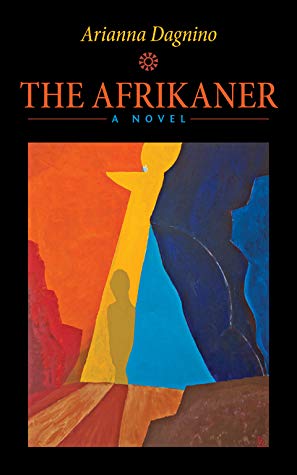 When a car-jacking in Johannesburg leads to the death of her colleague and lover, Zoe du Plessis, a palaeontologist of Afrikaner origin, is suddenly confronted with her family’s secret, wrapped in an old Xhosa’s curse. As she heads for the Kalahari Desert in search of early human fossils, Zoe embarks on an inner journey into the sense of guilt haunting her people. Meaningful encounters with an aged Bushman, a legendary but troubled writer author and her ancestors’ diaries will reshape her sense of identity. (Source: Goodreads)
Arianna was a guest on the Scribbler with a 4Q Interview and an excerpt from her novel. Go HERE
#2 True Identity by Gisele Bourgeois.

I found out about this novel online as well and knew it was a story I wanted to read. This is a book you can't put down. Intelligent, well written and a joy to read.
Adrienne Blanchard can't believe what she is seeing through a café window in Amsterdam. It's Michel, a boy from home who disappeared twenty years ago. She knows the story of why he left without a trace and now she must bring him home. Compassionate, confident, and bold, she will finish what her father started, regardless of the consequences.
Michel Bourgeois is a dreamer and a loner who has never had much of a chance in life. But when the time comes to make a decision, he is not passive. He runs desperately for his freedom.
Xavier Aramburu is a brilliant and devastatingly handsome Basque millionaire. All is privilege. Everything is easy. However, his name and history are not acceptable to some and he is an outcast in his own country. Despite his success and wealth, his life is disconnected and lonely.
Set in the 1980s in such diametrically opposed places as New Brunswick, Canada, and Bilbao, Spain, True Identity is an intense love story within a tale of exile and return. Rich in cultural and historical anecdote, this entertaining novel offers a glimpse of lives defined by the languages and landscapes of childhood.Adrienne Blanchard can't believe what she is seeing through a café window in Amsterdam. It's Michel, a boy from home who disappeared twenty years ago. She knows the story of why he left without a trace and now she must bring him home. Compassionate, confident, and bold, she will finish what her father started, regardless of the consequences.
Michel Bourgeois is a dreamer and a loner who has never had much of a chance in life. But when the time comes to make a decision, he is not passive. He runs desperately for his freedom.
Xavier Aramburu is a brilliant and devastatingly handsome Basque millionaire. All is privilege. Everything is easy. However, his name and history are not acceptable to some and he is an outcast in his own country. Despite his success and wealth, his life is disconnected and lonely.
Set in the 1980s in such diametrically opposed places as New Brunswick, Canada, and Bilbao, Spain, True Identity is an intense love story within a tale of exile and return. Rich in cultural and historical anecdote, this entertaining novel offers a glimpse of lives defined by the languages and landscapes of childhood.Adrienne Blanchard can't believe what she is seeing through a café window in Amsterdam. It's Michel, a boy from home who disappeared twenty years ago. She knows the story of why he left without a trace and now she must bring him home. Compassionate, confident, and bold, she will finish what her father started, regardless of the consequences.
Michel Bourgeois is a dreamer and a loner who has never had much of a chance in life. But when the time comes to make a decision, he is not passive. He runs desperately for his freedom.
Xavier Aramburu is a brilliant and devastatingly handsome Basque millionaire. All is privilege. Everything is easy. However, his name and history are not acceptable to some and he is an outcast in his own country. Despite his success and wealth, his life is disconnected and lonely.
Set in the 1980s in such diametrically opposed places as New Brunswick, Canada, and Bilbao, Spain, True Identity is an intense love story within a tale of exile and return. Rich in cultural and historical anecdote, this entertaining novel offers a glimpse of lives defined by the languages and landscapes of childhood.Adrienne Blanchard can't believe what she is seeing through a café window in Amsterdam. It's Michel, a boy from home who disappeared twenty years ago. She knows the story of why he left without a trace and now she must bring him home. Compassionate, confident, and bold, she will finish what her father started, regardless of the consequences.
Michel Bourgeois is a dreamer and a loner who has never had much of a chance in life. But when the time comes to make a decision, he is not passive. He runs desperately for his freedom.
Xavier Aramburu is a brilliant and devastatingly handsome Basque millionaire. All is privilege. Everything is easy. However, his name and history are not acceptable to some and he is an outcast in his own country. Despite his success and wealth, his life is disconnected and lonely.
Set in the 1980s in such diametrically opposed places as New Brunswick, Canada, and Bilbao, Spain, True Identity is an intense love story within a tale of exile and return. Rich in cultural and historical anecdote, this entertaining novel offers a glimpse of lives defined by the languages and landscapes of childhood.
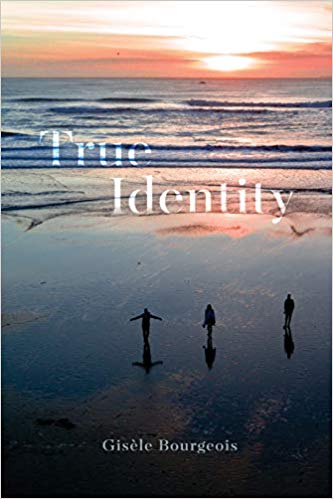 Adrienne Blanchard can’t believe what she is seeing through a café window in Amsterdam. It’s Michel, a boy from home who disappeared twenty years ago. She knows the story of why he left without a trace and now she must bring him home. Compassionate, confident, and bold, she will finish what her father started, regardless of the consequences.Michel Bourgeois is a dreamer and a loner who has never had much of a chance in life. But when the time comes to make a decision, he is not passive. He runs desperately for his freedom.Xavier Aramburu is a brilliant and devastatingly handsome Basque millionaire. All is privilege. Everything is easy. However, his name and history are not acceptable to some and he is an outcast in his own country. Despite his success and wealth, his life is disconnected and lonely.
Set in the 1980’s in such diametrically opposed places as New Brunswick, Canada, and Bilbao, Spain, True Identity is an intense love story within a tale of exile and return. Rich in cultural and historical anecdote, this entertaining novel offers a glimpse of lives defined by the languages and landscapes of childhood. (Source: www.giselebourgeois.com )
Read Gisele's 4Q Interview and an excerpt from her novel when she was a guest on the Scribbler. GO HERE
#3 Sunflowers Under Fire by Diana Stevan

Another great novel from this talented author. Based on stories from her ancestors, Stevan brings the pain and sorrow and endurance of the First World War through the eyes of her maternal grandmother. An exceptional story.
n this family saga, love and loss are bound together by a country always at war.
In 1915, Lukia Mazurets, a Ukrainian farmwife, delivers her eighth child while her husband is serving in the Tsar’s army. Soon after, she and her children are forced to flee the invading Germans. Over the next fourteen years, Lukia must rely on her wits and faith to survive life in a refugee camp, the ravages of a typhus epidemic, the Bolshevik revolution, unimaginable losses, and one daughter’s forbidden love.
Sunflowers Under Fire is a heartbreakingly intimate novel that illuminates the strength of the human spirit. Based on the true stories of her grandmother’s ordeals, author Diana Stevan captures the voices of those who had little say in a country that is still being fought over.
Sunflowers Under Fire has been shortlisted for a 2019 Whistler Independent Book Award in the fiction category.
 In 1915, Lukia Mazurets, a Ukrainian farmwife, delivers her eighth child while her husband’s in the Tsar’s army. Soon after, she and her children are forced to flee the invading Germans. Over the next fourteen years, Lukia uses her wits and faith to survive life in a refugee camp, a typhus epidemic, the Bolshevik revolution and one daughter’s forbidden love. In this family saga, love and loss are bound together by a country always at war. Based on her grandmother’s life, Diana Stevan captures the voices of those who had little say in a country that is still being fought over. (Source: www.dianastevan.com )
Diana has been a guest twice on the Scribbler. A charming and interesting lady. Read a 4Q Interview and an excerpt from Sunflowers Under Fire GO HEREHer first visit GO HERE
#4. Last Summer's Evil by MJ LaBeff

I met MJ online through a mutual author friend. A friendly and amusing author, she writes captivating thrillers and this one will keep you up turning the pages. She is a tremendous support for other authors.
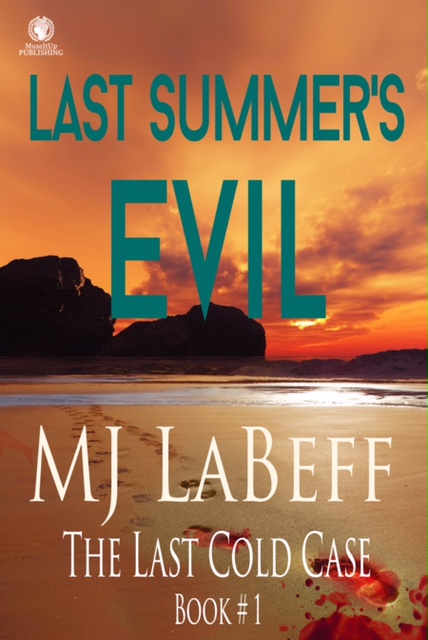 A fearful city lies in wait. Summer is here. The solstice is near. Each time the serial killer strikes there are two more victims. One woman has already disappeared. It’s only a matter of time before another woman is murdered.Homicide Detective Rachel Hood, a psychic empath, feels every ounce of a victim’s pain but is powerless to save her.Psychic FBI Agent Nick Draven is a skilled profiler, specializing in occult crimes. Together, they must race against the clock to capture the psychopath terrorizing Snug Harbor, Ohio. Only one victim has escaped, but she can’t ID her attacker. What they do know is the sick signature the killer leaves behind. A handmade ragdoll crafted out of the previous victim’s clothes is found in the clutches of the deceased women.Rachel’s obsession with the case deepens, and she devises a rogue plan to outsmart the killer. The risky plot puts her life in jeopardy. The serial killer has had years to master the crime. Nick only has hours to track down the killer and rescue Rachel before she dies in a ritualistic sacrifice at the hand of a knife wielding, blood thirsty murderer. (Source: www.mjlabeff.com )
MJ has been a guest on the Scribbler as well. Read her 4Q Interview and read an excerpt. GO HERE
#5. The Tattooist of Auschwitz by Heather Morris
 Photo Credit : Author's website.
I discovered this book on Goodreads and knew instantly it was a story I wanted to read. I purchased it online and it's brilliant. I' recently purchased her newest novel - Cilka's Journey - and can't wait to read it.
 In April 1942, Lale Sokolov, a Slovakian Jew, is forcibly transported to the concentration camps at Auschwitz-Birkenau. When his captors discover that he speaks several languages, he is put to work as a Tätowierer (the German word for tattooist), tasked with permanently marking his fellow prisoners.Imprisoned for over two and a half years, Lale witnesses horrific atrocities and barbarism—but also incredible acts of bravery and compassion. Risking his own life, he uses his privileged position to exchange jewels and money from murdered Jews for food to keep his fellow prisoners alive.One day in July 1942, Lale, prisoner 32407, comforts a trembling young woman waiting in line to have the number 34902 tattooed onto her arm. Her name is Gita, and in that first encounter, Lale vows to somehow survive the camp and marry her.A vivid, harrowing, and ultimately hopeful re-creation of Lale Sokolov's experiences as the man who tattooed the arms of thousands of prisoners with what would become one of the most potent symbols of the Holocaust, The Tattooist of Auschwitz is also a testament to the endurance of love and humanity under the darkest possible conditions. (Source: Amazon.com )
#6 Rise by Cara Brookins.

I picked up one of Cara Brookin's novels several years ago and enjoyed her storytelling. Since then I've read other novels by her and was anxiously awaiting this memoir she was working on. A brave lady tells the tale of escaping an abusive relationship and rebuilding a family - by building their own house. I highly recommend this novel. Word has it that it will soon be a major motion picture. Congratulations Cara.
After escaping an abusive marriage, Cara Brookins had four children to provide for and no one to turn to but herself. In desperate need of a home but without the means to buy one, she did something incredible.
 Equipped only with YouTube instructional videos, a small bank loan and a mile-wide stubborn streak, Cara built her own house from the foundation up with a work crew made up of her four children.It would be the hardest thing she had ever done. With no experience nailing together anything bigger than a bookshelf, she and her kids poured concrete, framed the walls and laid bricks for their two story, five bedroom house. She had convinced herself that if they could build a house, they could rebuild their broken family.This must-read memoir traces one family’s rise from battered victims to stronger, better versions of themselves, all through one extraordinary do-it-yourself project.
Cara has been one of the Scribbler's most popular guests. A 4Q Interview. GO HERE
I hope that you'll check out these great authors. I trust you will enjoy their stories.
Thanks for visiting and don't forget to leave a comment.

By the way, Check this story out too!
Shattered Figurine by Allan Hudson.
Check it out HERE
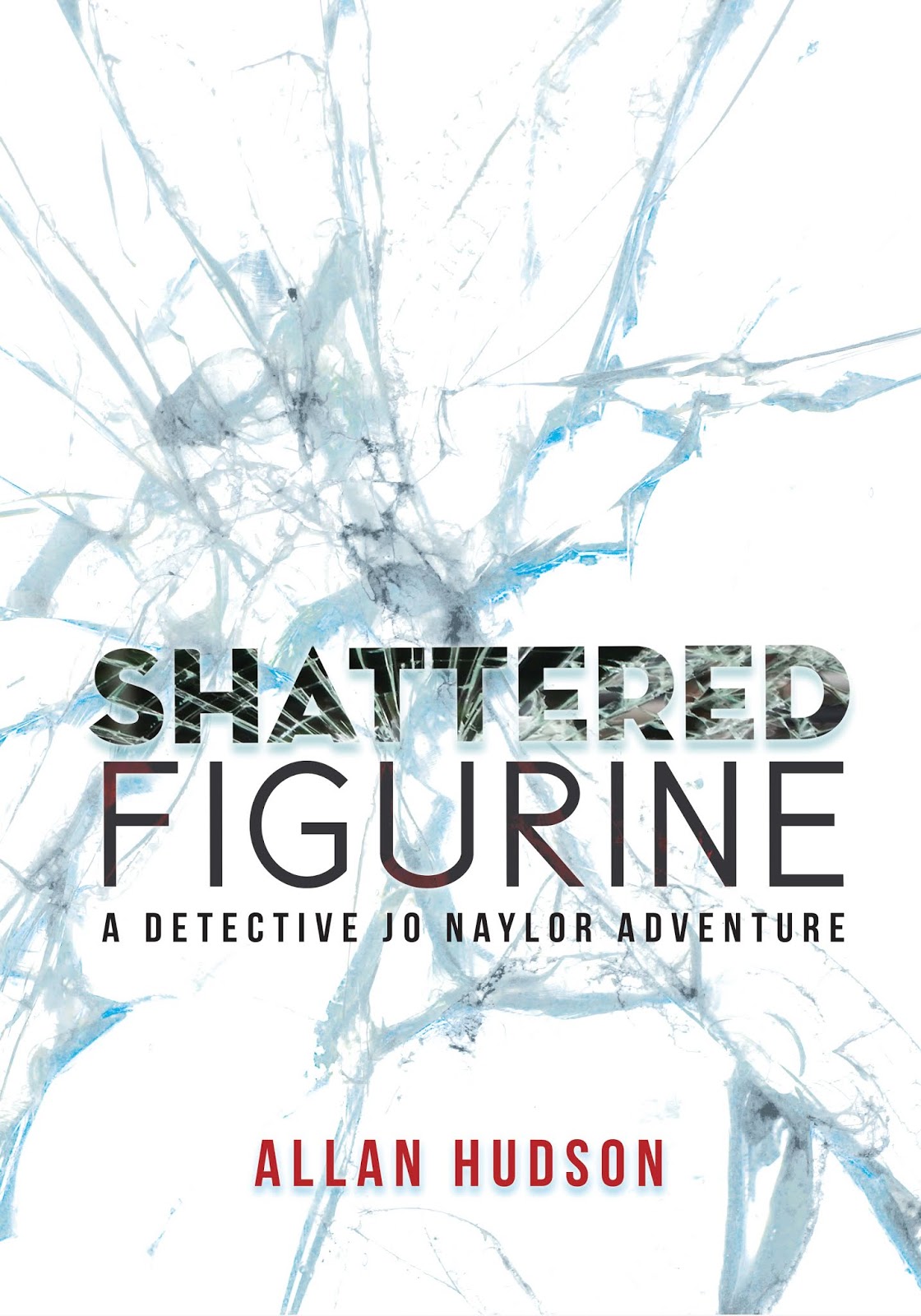
October 19, 2019
Seumas Gallacher of Bahrain.
Strangely I’m Still Here.
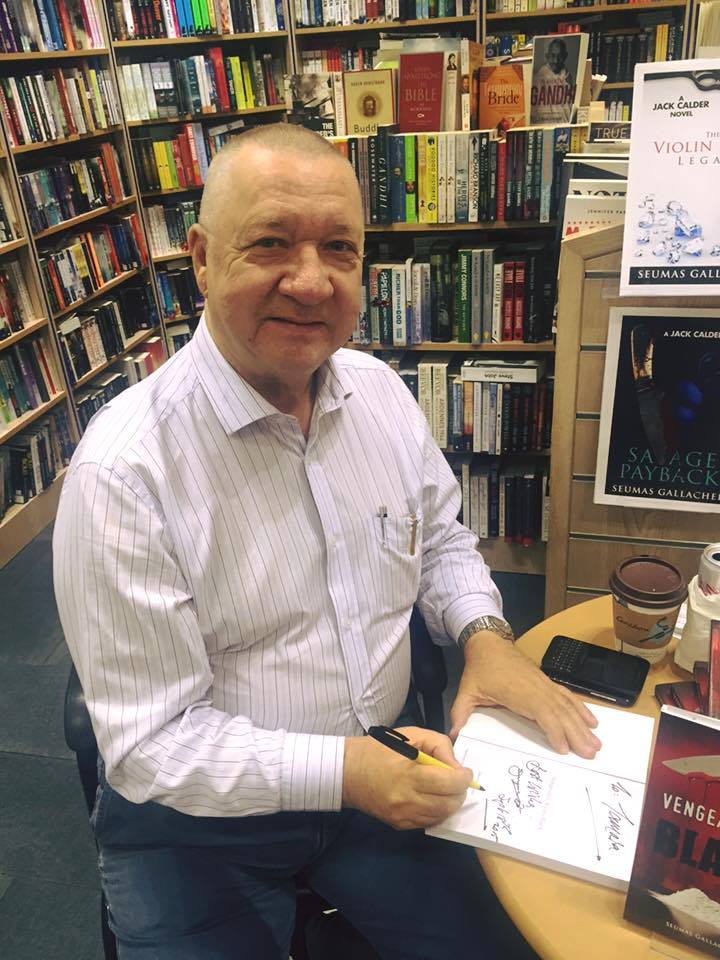
Seumas Gallacher – a gentlemanly acquaintance, originally from Scotland, living in Bahrain, a master story teller – has written an autobiography.
Because we all like him so much, we all want to share the news. This is Mr Gallacher’s second visit to the Scribbler. If you missed the first one, please go HERE, otherwise read on as he tells about it.
A Journey to myself – writing my autobiography

For authors, the old maxim is often quoted, ‘Write about what you know.’
I’ve been at this writing game properly for over a decade now, with a back list of five crime thrillers, a book of my poetry, a self-help marketing and promotional guide for authors, and almost 2,000 blog posts. Add to that a catalogue of half-a-dozen ghostwriting assignments for other people’s ‘autobiographies’, and it’s of little wonder that the thought occurred to put my own life story and experiences to print. ‘Write about what you know.’
What happened next was a sometime bewildering, sometime painful, sometime joyful, but always exhilarating, writing trip of discovery. I now understand more clearly than ever before just how much I am truly an amalgam of everything, everybody and everywhere with which and with whom I have ever been associated.
Were there regrets? Of course. Probably far too many to register. I doubt if more than a handful of people on this planet have led a flawless, blameless existence. But I do know that every single incident and experience, good, bad and indifferent, was necessary to bring me to this moment in my life. And I would not seek to change one second of it.
It is amazing how memories bring back not only the plain telling of the story, but for me, it also recalled the feelings and emotions that I had in most of them. I felt them again, and again, and again, some with laughter, but also many of them attended with a quiet tear.
I believe, at this age, finally, I am aware of who and what I am as a person. I like the man I see in the mirror each morning, although it was not always thus. I have acquired a tolerance of myself and my own shortcomings, but more importantly, I have learned to ‘live and let live’ in relation to others whom I meet day to day.
What surprises me, is that having published the book just a few weeks ago, I find that I am remembering many other things which could have been included in the memoir. I will resist the temptation to edit online the Amazon Kindle version, which is easy to do, on the same premise that once I finish writing my novels, I leave them finished.
To all my author friends and even those who have not yet caught the writing addiction, you may want to consider a similar project. It is a wondrous journey to yourself.
Here’s the book blurb:
Fact is often more incredible than fiction.
Seumas Gallacher has survived long enough to savour places, characters and events for more than forty years in the Far East and the Arabian Gulf.
He started life in Scotland, travelled far and wide as a wannabe Trainee Master of the Universe, but the Universe had other plans for him.
From a career in banking, he escaped to become a corporate trouble-shooter.
He discovered the joy and torture of becoming a wordsmith, writing five best-selling crime novels, a book of poetry, and being hyper-active on social media.
‘Strangely, I’m Still Here’ is his story.
Amazon Kindle universal link:
mybook.to/StrangelyImStillHere
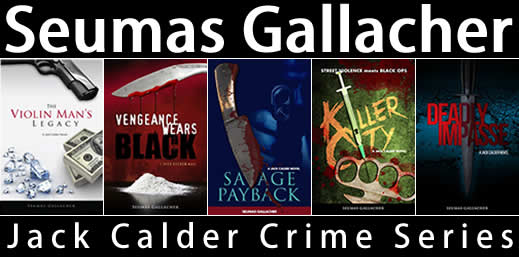


Best of luck Seumas.
October 13, 2019
Guest Author Monique Marie Thebeau of Riverview, NB
 Monique has recently published her debut novel – In the Dark of Winter – a thriller I’m looking forward to reading. I met her through a mutual friend that is also an author. She has graciously agreed to be our guest this week and participate in a 4Q Interview, as well as sharing an excerpt from her exciting novel.
I was born and raised in Saint-Louis-de-Kent, New Brunswick, in the 1950s, the youngest of nine children.
After graduating High School, I earned a two-year “medical stenographer” diploma and worked as a secretary for several years. But being someone who thrives on challenges with an unquenchable thirst for knowledge, I quit my job, enrolled at the Université de Moncton and came out four years later with a Translation degree. Although having written thousands of pages as a Translator over the years, I always craved the imaginative part of writing and find it both pleasurable and therapeutic.
When I look back at my journals, I find poems, an autobiography and short stories, in either English or French, written long-hand and never published. This book, however, was different. I wanted to get it out to market and check it off my bucket list. As it turns out, In the Dark of Winter was the biggest challenge of my life and, while taking a life of its own at 63,000 words, has had the uncanny power to teach me about character development, settings, criminology, police investigations, the justice system and my understanding of the English language.
4Q: It’s a wonderful feeling to finally have a completed novel after all the hard work involved in getting it to the public. Tell us about In the Dark of Winter.
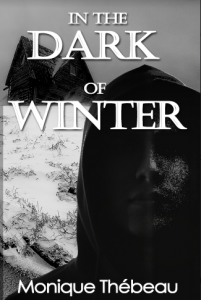 MT:
In the Dark of Winter
is a mystery/thriller that opens at a pig roast bash in the back countryside of Albert County. There, we find Ben Walsh, our protagonist, who falls prey to a local gang after witnessing a rape at the party. Ben is given two choices: be framed for murder, or work for the thugs responsible.
MT:
In the Dark of Winter
is a mystery/thriller that opens at a pig roast bash in the back countryside of Albert County. There, we find Ben Walsh, our protagonist, who falls prey to a local gang after witnessing a rape at the party. Ben is given two choices: be framed for murder, or work for the thugs responsible.A year later, Ben is still at the gang’s mercy and, during a major snowstorm, lineman Jack Thibodeau stumbles upon Ben’s property and is taken hostage. After his release, a distraught Jack hires private investigator Chuck Hanley to find the culprit.
Hanley, a retired cop, has it made. Spousal spying, insurance fraud. But as Hanley begins to make a connection between Ben and Jack, more sinister characters emerge and soon the talk of the town goes from a record snowfall to a record body-count. A manhunt ensues, one that rattles the sleepy villages of Albert County for weeks.
4Q: What inspired this story Monique? What made you want to write a thriller?
 Photo Credit: Shweta Briijpuria - author
MT: My love for the genre, of course, and the fact that I have lived, like many of us, through countless winter storms and the reign of terror of Allan Legere. It seemed only natural to re-imagine those in a mystery setting with plenty of left turns, unforgettable characters and an ongoing cat and mouse chase between the law and the outlaws.
Writing a thriller was a no-brainer since I have always loved to curl up to a good mystery or psychological thriller.
4Q: Please share a childhood memory or anecdote.
 MT: I remember a time when I was about eight or nine years old, sneaking up on my father’s lap in his Lazy-Boy chair, staring at the horrific pictures of corpses depicted on the pages of the Allo Police* that he was holding in his hands. On more than one occasion, I recall my mother scolding my Dad for letting me close to those forbidden pages and reading such trash in the first place. Seeing blood never startled me. In fact, those early memories have fueled my passion for a good mystery. My detective ears perk up when I hear the words “blood splatter” and my heart beats faster upon reading of a bloody footprint.
* A weekly tabloid known as Quebec’s unofficial gazette of the criminal world.
4Q: You belong to a writer’s group. Please tell us about that and the benefits you are enjoying.
MT: I am a proud member of the YWCA’s Moncton Women’s Writing Group. I joined the group in 2017 as an aspiring author looking for a place to share my writings. Over time, the Y Writes has evolved from simply being a non-judgmental place for members to share their creative stories to becoming an amazing network of support and resources in the field of writing. For me, it’s been a central information point on varied writing subjects from upcoming writings awards to local writing events.
4Q: Where is your favorite spot to write? Where do you feel most creative?
 MT: I definitely love to write on my laptop in my office. But when I’m out, I will write anywhere. On the shore, in the park, on the deck, and in my car, either stuck in traffic or in a parking lot. I keep a notebook and pen on me at all times. A smell, a touch or a memory is sometimes all that it takes for me to stop on the side of the road to jot it down and come back to it later.
4Q: Anything else you’d like to add?
MT: I want to thank you for giving me the opportunity to be interviewed. And, I’d love to leave you with this quote by Octavia E. Butler “You don’t start out writing good stuff. You start out writing crap and thinking it’s good stuff, and then gradually you get better at it. That’s why I say one of the most valuable traits is persistence.”
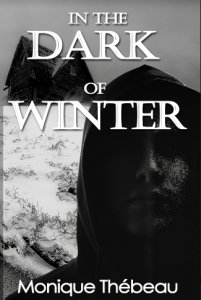
An Excerpt from In the Dark of Winter.
In a field next to an abandoned farmhouse, a salt-and-beer-seasoned ninety-pound hog, its flesh spitting and crackling, rotated over an open fire. Word of mouth had brought this crowd together, a no-frill yearly event in the foothills of Blossom Mountain, twenty kilometres south of Moncton. No signage existed and, year after year, the site was only found by come-by-chance, or through the grapevine. This year was no different. The crowd, eager to sink their teeth into the juicy, roast pig, huddled around the farmhouse, whose sagging roof begged for a new spine.
Early in the evening, Ben Walsh and his wife Maryel drove straight to the party by way of four-wheeler, using backroads and trails. They parked the ATV on Salem Road, behind a thick line of white pines across from the farm. Ben unlatched the tent and sleeping bags from the back of the quad and pitched the tent up, throwing the sleeping bags in it. Then, weighed down by lawn chairs and cooler, they crossed the road and reached the back of the farmhouse.
 Ben paused for a moment and stood tall, gazing out at the crowd. The field teemed with hundreds of partiers, their tents, coolers and boom boxes. A roar of laughter and music echoed back as a large wave of new arrivals flooded the pasture. Farther down the field, speakers, resting on mini stages in the sprawling farmland, blared “Magic Bus” by The Who. The drums’ rhythm reverberated through his body, pulling him in. He grabbed Maryel’s hand and they moved downhill, where the music thumped harder.
For the next hour they moved through the crowd, connecting with old friends, making new ones. And although Maryel’s brother, Mike, had insisted on them going to the party, they saw no sign of him.
As the sun set, Ben and Maryel followed a flock of people through a narrow path, crisscrossed with tree roots, that opened up to a gravel pit in the back of the property, closer to a bonfire whose blaze raged against the night. Dozens of people, eyes glowing, sat around the fire, captivated by the flames and its flurry of sparks. The grass was littered with plastic cups and paper plates. In the distance, they heard the beat of ZZ Top’s “Sharp Dressed Man.”
 Ben took Maryel’s shoulder and pointed. There was Mike, the only one standing, intoxicated and struggling to keep his balance. The crowd cheered him on as he jumped near the blaze, one minute throwing handfuls of flame-colorant packets, and the next, armloads of deadwood. Mike waved his hands in the air to the beat of “Here for the Party” as if a maestro conducting a Mozart sonata. Girls joined him on the pretend rock stage as the fire strengthened, coughed out flames of blues, green, and hot pink. The inferno intensified, the dancers backed off and the circle of chairs widened.
Ben, nodding to the music, picked a beer can from the cooler. He cracked it open and pushed it down into the mesh cup-holder in Maryel’s chair. He fixed himself a Rum and Coke and watched as Mike, normally shy, continued to dance. Ben wished he had a camcorder to embarrass him later.
With the revelers burning through their booze and drugs, straggling and stumbling near the fire, Ben was happy they’d pitched their tent away from the redneck ball. He was cautious. It was their anniversary, after all. Ten years. Ten challenging years parenting Alec, a problem child, but they had stuck together through it all. This party was just what he and Maryel needed to mark the milestone and unwind. Ben winked at Maryel. Her lips quirked at the corners and she shook her head, eyes scanning his chest. She always got a kick out of the T-shirts he wore. Tonight, the white letters “If found…Please return to the pub” popped against the black fabric. His long, jet-black hair, tied at the nape of his neck, showed his strong jaw.
Party abandoned and holding hands, they walked past the farmhouse and across Salem Road, retiring to the tent. They undressed quickly and he climbed on top, jostling a bit until he was inside her. She gripped him harder, bracing for climax. He felt her nails on the top of his back go deep; Maryel moaned, shuddered.

Thank you for sharing your thoughts with us Monique. Wishing you all the best in your writing journey.

For all you wonderful readers wanting more information on Monique and her novel, please follow these links:
Website: moniquethebeau.com
Email: moniquethebeau@gmail.com
Amazon: In the Dark of Winter, available in paperback or Kindle.
By all means, feel free to leave a comment.
October 6, 2019
Returning Author John Nicholl of Great Britain.
It's a real pleasure to have John back on the Scribbler. On his first visit, he participated in a 4Q Interview. If you missed it, please go HERE.
This week he talks about his latest thriller

I’m delighted to be back in The Scribbler three years after my first appearance.

The Girl In White , my eighth darkly psychological thriller, was published by leading independent publisher of crime and thriller fiction, Bloodhound Books on the 4 September. Like all my books it draws heavily on my work as a police officer and child protection social worker.
Introducing DI Laura Kesey...
Harry Gilmore has no idea of the terrible danger he faces when he meets a beautiful girl in a local student bar. Drugged and abducted, Harry wakes up in a secure wooden compound deep in the Welsh countryside, where he is groomed by the leaders of a manipulative cult, run by the self-proclaimed new messiah, known as The Master.When the true nature of the cult becomes apparent, Harry looks for any opportunity to escape. But as time passes he questions if the master’s extreme behaviour and teachings are the one true religion.
With Harry’s life hanging by a thread, a team of officers, led by Detective Inspector Laura Kesey, investigate his disappearance. But will they find him before it’s too late?
An Extract:
 The two young women and their older male companion sat in an old, rust-pocked Transit van dressed entirely in white, scanning the street with keen eyes, as they had for almost two hours.
Achara, a dark-haired, strikingly attractive young woman, peered to her right. ‘What about him?’
The big man swivelled in the driver’s seat, tugging at an unkempt brown beard tinged with grey as he pressed his face against the glass.
‘Which one?’
Achara pointed with a purple-painted fingernail that perfectlycomplimented her slender hand. ‘Him, him, the guy in the fadedjeans and black top. He’s been crying. Look at the state of his eyes.That’s got to be a good sign, easy-peasy. He’s young, he looks reasonably fit. He’d make an ideal manual worker. We couldn’t find a better target.’
The big man lifted his military binoculars to his eyes and focussedon Harry’s face. ‘It could be hay fever. It’s the time of year for it.You’re making assumptions based on dubious evidence. Maybe hehasn’t been crying at all.’
Achara made a face, frustrated by the big man’s lack of trust inher ability. ‘Look at his hunched shoulders, the morose expression on his face. He’s perfect, absolutely perfect. Just give me a chance. That’s all I’m asking. Let me prove myself. Surely I’ve earned that much after all this time.’
The man lowered the binoculars, sighing as he rested them on hislap. ‘I don’t know. I’m not so sure.’
Achara kept her eyes on Harry as she responded, her initial frustration fast becoming agitation that threatened to boil to the surface.
‘I’m here to serve the master, but how can I do that if you never give me the chance to prove myself worthy. It’s been months since I completed the training. I’m ready and waiting. If not now, when?’The big man took a deep intake of breath and exhaled slowly,weighing up his options as the second young woman spoke for thefirst time in over an hour. ‘Oh, come on, Baptist, Achara knows what she’s doing. She’s completed the course. She passed with flying colours, a natural. One of the best we’ve ever had. You said that yourself. Achara’s got it spot on. You’ve got to learn to trust her. The boy will be gone if we don’t get a move on. It’s time to let her fly.’
Baptist lifted the binoculars to his eyes for a second time,focussing on Harry, confirming his downbeat persona and noddingreticently. ‘Okay, go on, out you go. He’s approaching the top of the hill. Near the charity shop on the left. You’ll catch up with him easily enough if you hurry. I’ll be back here and waiting at 2.30pm sharp. Do not be late. There’s no room for errors. This is far too important for that.’
Achara broke into a smile that lit up her face as she pushed thepassenger side door open and stepped out into the sunshine, asexcited as a child on a birthday morning. ‘Thank you, thank you sovery much. I won’t let you down.’
‘Have you got the drug?’
She glanced back at him, patting a trouser pocket and grimacing,disappointed that he felt the need to ask. ‘Of course. It’s here safeand sound.’
‘You’re certain?’
Her frustration was betrayed by her tone. ‘Yes, a thousand times,yes.’
‘Pass this one final test, and you can move up a level in thecommunity. It doesn’t get any better than that. Make the most of theopportunity. The master doesn’t tolerate failure. Remember that;carve it in tablets of stone. Screw this up, and it won’t go well foreither of us.’
Contact:
I’m always happy to hear from readers and will always respond. I can be contacted by email at johnnichollauthor@gmail.com
Links:
Amazon
Amazon
September 28, 2019
Guest Author Gisele Bourgeois of Madrid, Spain.
True Identity
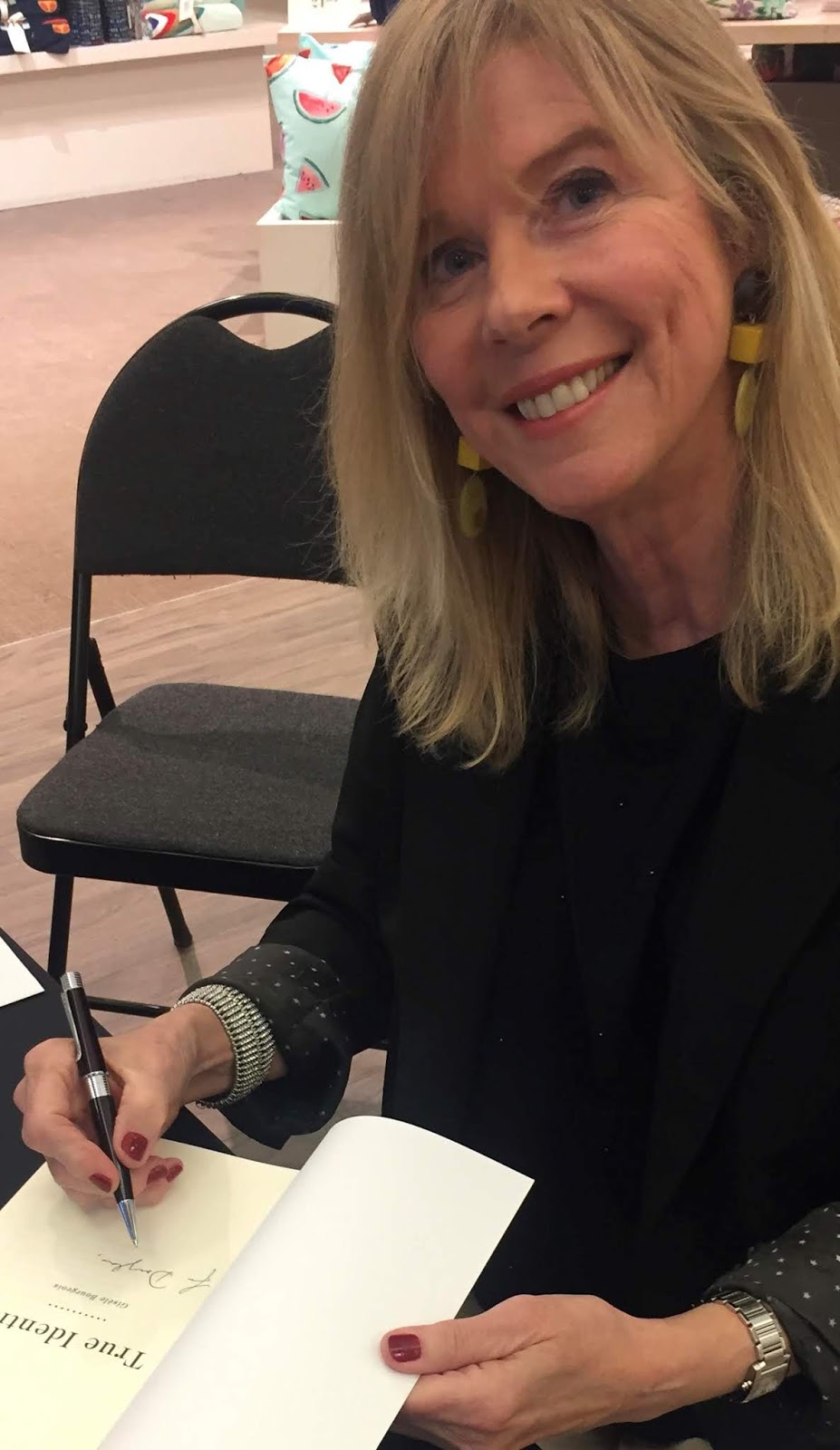 I met Gisele online as a result of our shared love for writing and reading. I was immediately captivated by her debut novel – True Identity – and wanted to add it to my list. I’m now well into her terrific story and captivated. She has graciously agreed to a 4Q Interview and sharing an excerpt from her novel.
Gisèle Bourgeois was born in 1952 in Moncton, New Brunswick where she lived until she was seventeen years of age. She studied languages and social sciences at the University of New Brunswick in Fredericton and went on to achieve a Master's Degree in Spanish Literature from New York University. She has lived in Montreal, New York and London but has spent most of her adult life in Madrid Spain where she married and had a daughter. She has worked mostly as a teacher and a translator. Although she loves Spain, her adopted country, she still feels very attached to Canada and has recently built a small house in Shediac Bridge New Brunswick where she spent all the summers of her childhood.
4Q: As I mentioned above, I’m enjoying your story Gisele. Tell our readers a bit about the book and how it came about.
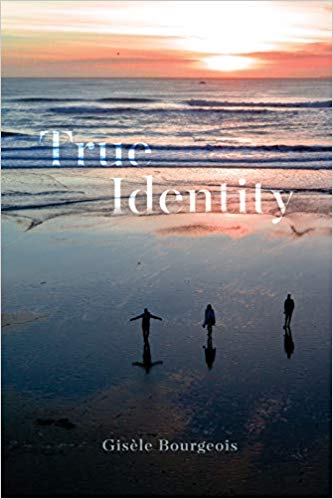 GB: It took a long time for True Identity to become a reality. I always told myself I would write a book someday. Friends encouraged me, always complimenting my story telling. The day came, (I recall it was a significant birthday), when I thought I ought to get started.... And if I was going to write only one book in my lifetime, I wanted to write about things I care about. Partly to share them with others and partly to make them clear to myself. I love my family, my language, the place I grew up, my history in fact. I am probably intense about these things because I have lived far away from them most of my life. I will admit too, that being an avid reader, and a literature major, I felt like writing an entertaining novel; something interesting, fun to read and not boring! So, I invented what I hope is an attractive, curious and moving story to illustrate the power of these things; the power of a childhood song, the power of the sound of a language, the power of our cultural identity through three brave and interesting young people whose lives take them far away from their homes and their families. I hope my readers will feel the sand between their toes on a beach on the rugged New Brunswick coast as well as the exuberance of a festive family meal in Northern Spain. From different backgrounds and circumstances, Adrienne, Michel and Xavier's lives will intertwine around a mysterious and unfortunate death.
 4Q: Your website tells us about your extensive travelling and working experience which cleverly shows up in your writing. How did a young Acadian lady end up in Spain?
 GB: It's simple really. At 19, unsure of what I really wanted to do but hoping and planning for something "international", I studied languages and social sciences at UNB. I signed up for the Junior Year Abroad program and studied for two semesters at the University of Madrid. That was the start of my love affair with Spain. I eventually met my future husband who had an international career in banking which took us to New York, London, Madrid, and many places in Latin America. I am friendly, adaptable, curious, and love big cities so I was fine and happy. An important part of True Identity takes place in Amsterdam as well where my daughter studied for a year. I visited her often at about the time I was "baking" True Identity and my story emerged as I wandered around that great city. I must add that we lived in New York City from 1984 to 1989 where I witnessed the electricity and excitement of Eighties Wall Street so probably that is why you can tell I am familiar with the lifestyles and attitudes of that society in those days. This was also the height of the AIDS epidemic, and alongside the spiral of wealth and growth, the utter despair of its gay citizens. My sweet character Ander is caught up in that nightmare. I will never forget that shadow over the city.
 4Q: Please share a childhood memory or anecdote.
 GB: This is a true story that might have triggered True Identity when I was only six or seven years old. My father was a doctor in Moncton and had a contract at the penitentiary in Dorchester. I recall him going there about once a week. He liked it. He was a nice man; fully bilingual, gregarious, told good jokes and got along well with the inmates. Every once in a while, the doorbell would ring: an ex-convict hoping to see my father for a medical problem or just asking for a couple of dollars. It was quite rare really. However, at one point, one of these men came several days in a row. He came through the back yard and knocked at the kitchen door. He smelled of alcohol and poor hygiene. My frightened mother would make him a sandwich and shoo my little brother and me out of the kitchen. She asked my father to do something about it. He came home early the following day, made the sandwich himself and talked with the guy for a while on the back porch, then put his hat on and left with him in the car. He was gone for three or four hours. My mother was very nervous. We finally heard the rumble of the car in the driveway and the door slamming. We rushed to the door to greet him and my father explained. "He won't be back. All he ever wanted in his life was to live in the United States. So, we picked up his stuff at the boarding house, got him a haircut, I bought him a bus ticket for Boston and gave him fifty bucks. " ........ And so, in True Identity, my Michel (with a doctor's help) boards a bus to Boston deep in the night.
 4Q: Where’s your favorite spot to write? What are your writing habits, Gisele?
 GB: I'm afraid I don't give my writing the space it deserves. I wrote True Identity at night, when the day was over, at my desk in the spare bedroom of my apartment. Then early in the morning, before getting on my way, I would reread and correct. I like to read what I have written out loud. I am also very critical with myself and rewrite and edit A LOT. I became quite ruthless with my novel, and actually threw out my first draft after one year and started again. I am planning a second novel right now. I am researching and attempting to be more organized but to no avail. Maybe that is just my way. I admire those people who take their writing as a job. Most, if not all good writers, encourage a good writing discipline.
4Q: You mentioned on your website that you wish you had started writing sooner (We’re glad you started when you did). What advice do you offer someone wishing to write their first story?
 GB: Just do it. I am so happy that I did. I persevered. It took me almost 5 years from the day I sat at my computer and started to write to the day I considered it finished which was the day I held the published book in my hands. That feeling was so great. It's such a personal achievement. Concrete advice: I wasn't too keen on doing a creative writing course because of the time it took but if you don't have a literary background it's a very good idea. I miss not having a more technical background. I did roam around Google, looking for advice from famous authors and I found Kurt Vonnegut's tips for writers, helpful, concrete, useful and wise. I printed them up and pinned them on my wall where I could see them. But in the end, you sit at your computer, open Word, click on New File and write in "MY BOOK". See what happens.
4Q: What’s next for Gisele Bourgeois, the author?
GB: True Identity is coming out in Spanish this fall and I will be launching it here in Madrid hopefully in November or December. Through Amazon etc. it will be available in Spain and all over Latin America which is very exciting. I'll continue to market True Identity for a while because I feel it still has a way to go. Technology and social media can be challenging when you haven't grown up with them and being self-published only you are responsible for all the marketing and distribution. You have no presence in bookselling venues (Thank you Chapter's Moncton for keeping me on consignment). It's very difficult to get visibility.
So, thanks Allan and the South Branch Scribbler for giving me the opportunity to put my book out there. Your support of local authors is commendable and greatly appreciated.
***You're very welcome Gisele. It's wonderful and interesting guests like yourself, that makes all this so much Fun.
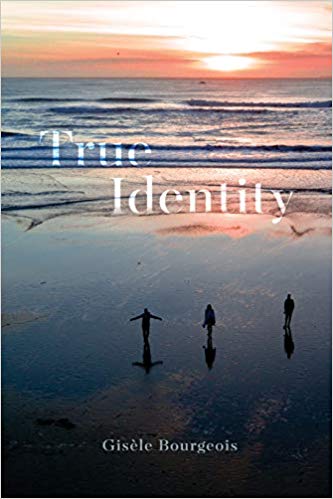
An Excerpt from True Identity.
(Copyright is held by the author. Used with permission)
The Boston police had no photograph of the suspect wanted for questioning in a small-town murder case up in Canada. Male, eighteen years of age, five feet eight inches tall, light brown hair and eyes. Who were they kidding? There were twenty thousand of them in town for the concert and every drug dealer in the northeastern United States as well. They had no time for this. No one was assigned the case.
Michel found his way to the concert at Fenway Park. Stoned, in the darkness, the music reverberating in his chest, he was okay.
Somehow he made his way back to the boarding house and fell asleep for eighteen hours. He woke suddenly with a pounding heart and drenched in perspiration. He didn't remember who, what or where he was. He was drowning in an undertow grasping for clues to his existence. He struggled to come to the surface and finally his name emerged from the fog.
Michel. Michel Bourgeois. The bus. Boston. Yvette.
When he came to himself, he was on his hands and knees on the bed. Stark naked. The facts of his life crept back. He put his hand on his heart and laid back on the small, narrow bed. The exhaustion and stress had come to a head. He calmed down slowly and remembered that he had a choice. He could end this now, take the bus home, and surrender to the police.
"You can come back at any time. Remember that." Those were the Doctor's last words to him.
Philippe Blanchard had told him that no matter what, he always had a choice. It was small consolation but at least it was a measure of freedom. He still had his return ticket. This was day five since he had gone to hide in the Blanchards' garage.
He looked around. It was a small ugly room but the soft afternoon light came through the window and made it bright. He heard the comforting noise of city traffic in the distance. His things were in order just as he had left them. He was surviving. Strangely enough, the terrible nightmare had cleared his mind.
He took a moment to take inventory of what René had stuffed into the bag. No underwear or socks. He made sure his money and papers were safe and opened the door of his room to get a better look at the house. Brian was coming to life.
He checked out the communal bathroom and showers and realized he would have to buy a towel and some toilet paper. He put his head under the tap in the sink, and with a sliver of soap someone had left there, washed his hair and rubbed it dry on the dingy towel roll. The cold water on his head felt good. His new life would start by acquiring articles of basic hygiene. This gave him an objective. He was going forward.
***Afternote: I’ve finished reading Gisele’s novel. Magnificent! 5 Stars
Thanks so much for being our guest this week Gisele. Thank you for your story. All the best in your writing journey.

For you dear readers wanting to discover more about Gisele and her work, please follow these links;
email: gisele.bourgeois@gmail.com
facebook: Gisele Bourgeois/True Identity
website: www.giselebourgeois.com