Allan Hudson's Blog, page 61
September 12, 2014
Guest Author Connie Cook - Fish Girl
 This is Connie Cook's third visit to the South Branch Scribbler . Her delightful short stories have been published by commuterlit.com and Pacific Magazine of Australia. She lives in Port Credit Ontario with her two black cats. I am anxiously awaiting to read her novel, The King of Swords.
FISH GIRL
Darcy gritted her teeth, sharpened her knife and prepared to slice through flesh. It wouldn’t be the first time she’d done it, nor would it be the last. In fact, she was a pro when it came to gutting and filleting, the fastest with a blade in her family. As she poised the point along the belly, her father’s voice interrupted.
“Darcy girl, you’ve a real gift with the knife. I’ve seen men in the business for years, and they aren’t near as talented as you.”
She felt and heard his voice, brimming with pride as he patted her on the shoulder.” Not only that, it was a good charter today. The customers were happy with the catch, got some great pictures and left a sizeable tip, enough to take you, your mom and me out for dinner. Fancy a nice meal out?” he asked.
“Thanks dad, but I have some studies to catch up on, perhaps another time. Take Mom out, she deserves it, and it’s been a while since you’ve both had a night on the town. ”
 She glanced up and caught the concerned look on his sea weathered face, wrinkled at an early age from too many years in the sun and salt air, recognized the worry in his clear blue eyes. She knew part of it had to do with the increase in charter fishing competition, lower catches, keeping to quotas outlined by the ministry of fish and game. But she also knew he felt guilty at keeping his only daughter tied to working on his boat. After all, she was the cheapest labor he could find, and it was the only way to keep his business afloat.
 “Dad, you go, I’ll finish up here. No worries.”
“I’ll pay you back one day, you know that.” His voice was husky. “Besides, you’ll never know what you might find in that salmon’s belly, finders keepers.”
Darcy giggled, “Ya right Dad. Yesterday I found a cigarette butt and a white plastic tip from one of those small cigars. It gave me a whole new perspective on smoked salmon.” She was relieved when he laughed. It had been a long time since she’d heard that sound from him. “So get going and let me get on with my work.”
The sound of the door closing was a blessed thing. She didn’t want him to see her like this. Tears rimmed her eyes, threatening to spill. At twenty years old, she wanted to be long gone from the rugged, uncertainty of fishing charters. She wanted a life, any life that didn’t reek of FISH. Her friends from high school called her fishgirl in fun. Whenever she went out socially, she doused herself with eau de cologne, but the nickname still stuck. Her only reprieve was online university courses and looking at a life outside, somewhere in the distant future.
 She looked at the forty pound salmon on the table, eyes glazed in death, scales shimmering under the fluorescent lighting as it lay on the stainless steel table in the prep room. “You’re caught, just like me,” she murmured. “The only difference is the metal hook that reeled you in as you fought for freedom. Hell I don’t even fight. I just do as I’m told, to keep peace in the family and try to respect my father.”
 Darcy hesitated before slicing the belly of the fish open. She’d done it hundreds, thousands of times before, but this time it felt different. With surgical precision, she made the cut and sliced from stem to stern. There’s no spurting blood when you cut into a dead fish. The entrails spilled open and as she scooped them out small yellow sticky eggs still teeming with life filled her hands. She dropped her knife. Damn this fish had been pregnant. But salmon go upstream to spawn. What the hell was she doing down here? Perhaps she was lost, just like her. The earlier tears now spilled freely down her cheeks.
“Get a grip,” she admonished herself. “There’s no time for mourning over a dead fish.” Still she held the eggs in her hands, clutched them and watched the life in them wane. It was too late for them. Maybe it wasn’t too late for her.
She found a notepad and a pen, scrawled a message and signed her name. She took the filleting knife and stabbed it through the note, pinning it to the salmon. Her Dad would find it in the morning.
Darcy went home and packed her suitcase.
The message simply read “the one that got away.”
Thanks Connie for sharing your short story. Connie can be found on Facebook as Connie Lynn. Her short stories can be viewed at www.commuterlit.com
Please join me next week when I pay tribute to my all time favorite musician, JJ Cale. Covered by many famous artists, JJ still remains unknown to the general populace. Unfortunately, Mr. Cale passed away last year in July, but his music will live forever.
 On September 7th, my novel Dark Side of a Promise was successfully launched in Moncton, New Brunswick. It was a fantastic evening, many friends and family, a few strangers and so many best wishes.
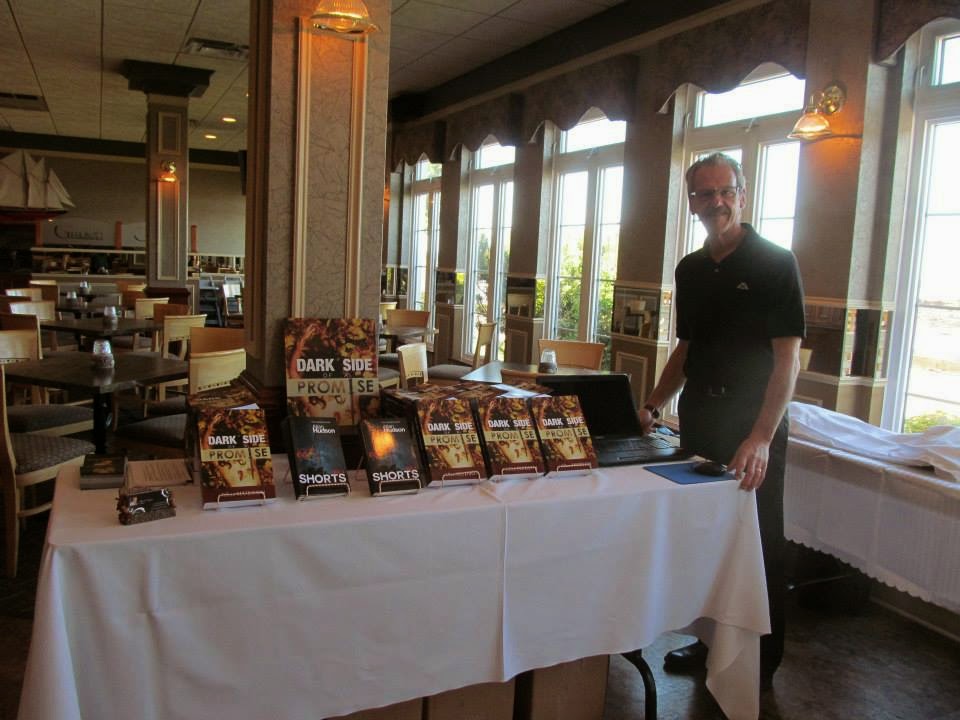 An article in today's Moncton Times and Transcript.


September 5, 2014
4Q Interview with award winning author Susan Toy
 Susan Toy is a published author who splits her time between Canada and the Caribbean. Her novel, Island in the Clouds, and her short story works has garnered exceptional reviews. A tremendous supporter of her fellow authors, she works unselfishly to make sure others are noticed. She was a guest author here at the Scribbler in May with her amusing story, Fifty Ways to Lose Your Liver. She has agreed to answer questions today on the 4Q. Her web site is listed below.
4Q:How did a Canadian gal end up on the tiny island of Bequia?
ST: We were living in the Canadian west when we decided it was time to begin taking tropical holidays. Like everyone else west of Winnipeg, we first travelled to Hawaii. It was okay, but the next time we tried Martinique in the Caribbean. Better than Hawaii, but still too touristy. I was working in a bookstore at the time and asked a customer who I knew had travelled extensively in the Caribbean what her favourite island was.
“Bequia!” she said. “I was only there for three days but I loved it.” Since I was in a bookstore, I began looking through travel guides and couldn’t find much information at all about the place. So, we thought … Perfect! That was exactly the kind of destination where we wanted to spend time. We booked three weeks, arriving on Old Year’s Night (Dec. 31) 1988, and we loved it! People we met kept telling us the number of times they had visited (many, many repeat visitors to this island) as though it were some kind of a badge of honour. The day we returned to Calgary we were faxing back to Bequia to book a hotel room for the following Christmas.
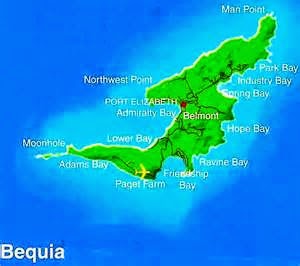 We vacationed on Bequia every year, making friends with other repeat visitors (and a number still remain friends) until one time when our taxi driver stopped his truck, got out, and pointed up the hill to some land he said was for sale. We hadn’t said a word to anyone, but somehow our very astute driver knew we were ready to take the plunge. We met with the man who was selling the land, made a few frantic calls back to our bank in Calgary, and had begun the process of purchasing a half-acre property before we left the island. Once we returned to Calgary we put together an exit strategy.
 In 1996, with the shell of our new house built to lock-up stage, we quit our jobs, took early retirement, and moved lock, stock and barrel – including one cat – to begin living on Bequia fulltime.
It’s been an adventure!
4Q:You have been a huge supporter of your fellow writers dedicating a blog – Reading Recommendations www.readingrecommendations.wordpress.com– solely to what they are working on and how to find them. You have been kind enough to include me as well and I thank you for that. How and why did this wonderful site come about?

ST: I have always promoted authors and their books throughout my career – as a bookseller, a publishers’ sales rep, and a self-styled author impresario when I ran a business called Alberta Books Canada. Once I self-published my own novel, I knew the best way to promote it was to continue working with and helping other authors. If we all work together to promote each other it’s better for the entire writing and publishing communities.
I had been hosted on a friend’s blog site and thought that I’d like to set up something similar. I still know many authors from my days in Alberta, and some of those old friends have already been featured or will be in the near future. As well, authors who had been promoted have recommended their friends to me, and still more authors have approached me directly. I’m so pleased to have discovered some very fine writing by international authors who are publishing in just about every genre, fiction and non-fiction, for adults and children, and all formats (print, eBooks, audio) imaginable, and be able to share them with the blog’s readers.
And one of the ways my blog differs from other author promotion sites is that I ask each author to also recommend a book or author who they’re currently reading. So readers receive at least two possibilities for further reading.
I’m also planning to set up a page on the blog that lists Indie Bookstores, worldwide, that stock and sell books by authors who have been featured on Reading Recommendations.
This is my way of giving back to the worldwide writing community while receiving some extra promotion for myself and my own publications.
4Q:Please share a childhood memory or anecdote with us.
 ST:The year I was born, my parents bought a cottage north of Toronto near the town of Minden where we spent every summer until I was old enough to get a job and remain in the big city. The summers melded together into the best memories any child could ask for. When I was four, Dad bought a movie camera (Regular 8) and projector and literally documented everything that happened – family picnics, bonfire nights, learning to swim and water ski, barbecues, parties, killer games of Rummoli, Poker, or Monopoly with big bowls of popcorn, fishing – whatever we did, we have a record of it, and all the people we shared that time with. I realize now, looking back 60 years later, what a gift that was! I managed to transfer some of the films over to CD, but have trouble watching without crying. So, so many good memories!
 But I’ve tried to make the most of those memories by writing a novella set at a cottage during the summer. While That Last Summer is not autobiographical, there are many aspects, and even a few characters, that are drawn from all those summers spent at the lake.
4Q:Please tell us what you are working on at the present and what can your readers expect from you in the near future?
 ST: Currently, I’m trying to rewrite the second novel in my Bequia Perspectives Series. (Yes, Tim and Rachel … Must. Get. To. Work!!) One Woman’s Island is told from the perspective of a Canadian woman making an extended visit to Bequia in order to distance herself from a recent tragedy. She decides to “live with the locals” but therein lies her problem, because it’s not that easy to integrate successfully on this island. I hopeto have this finished and ready to ePublish in time for the beginning of Bequia’s tourist season, Dec. 16. Print will come at a later date, when I feel I have enough of a market for copies.
 I have two more finished novellas I would like to prepare to publish under my IslandShortsimprint, and there are a number of short stories I plan to collect together. As well, novels 3 and 4 in the Bequia Perspectives Series are already written but require extensive editing and rewriting.
And I’m working with a few other authors to publish their eBooks under both the IslandCatEditionsand IslandShorts imprints.
Thank you Susan for sharing your thoughts on the 4Q. Best wishes for all your future endeavors. Find out more about Susan at www.susantoy.com. Next week I am happy to welcome back one of my regular contributors, Connie Cook. She will be sharing her short story Fish Girl. You won't want to miss it.
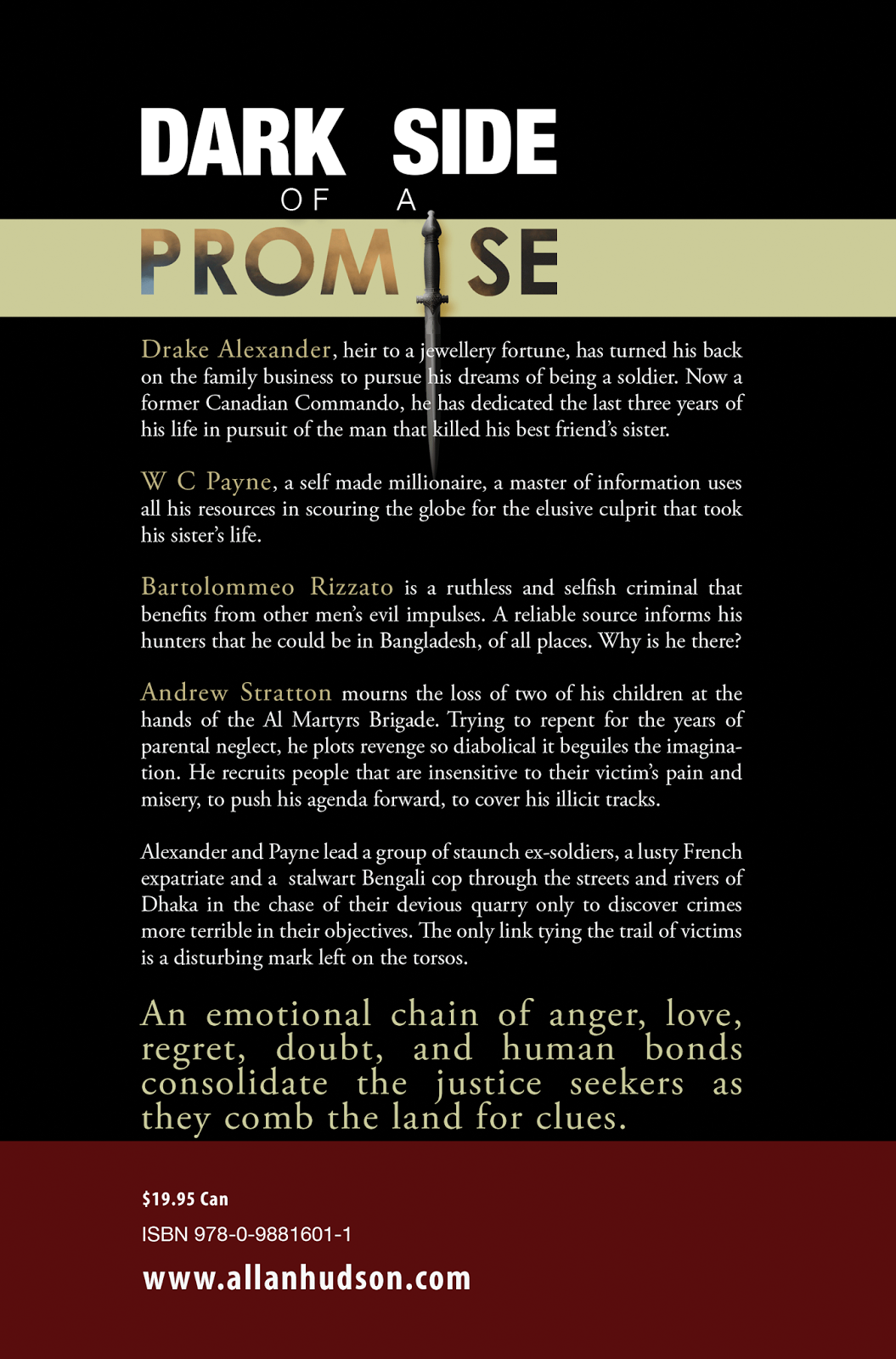
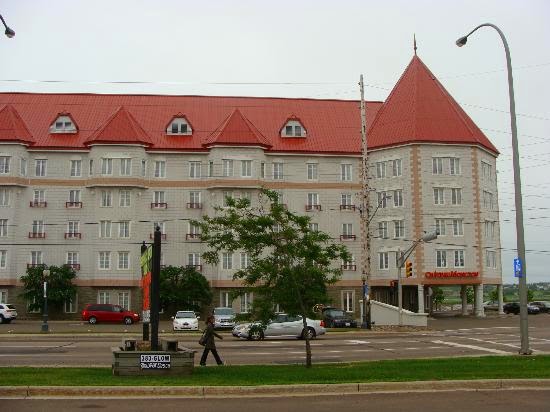
Thank you so much for visiting the South Branch Scribbler. I am pleased to tell you that the Book Launch of my debut novel - Dark Side of a Promise - will take place at the Chateau Moncton on September 7th at 6:30pm. All are invited.

August 29, 2014
PART 2 of "Six Jutlands and a Conestoga."
Thank you for visiting the Scribbler.
Last week the Verhoeven family reached their final destination, uncertain of what tomorrow will bring. "Six Jutlands and a Conestoga" continues.... Starting at the rear, he undoes the six-horse hitch. While he removes the paraphernalia, he talks lovingly to each horse. The first horses unburdened are the wheelers, the biggest horses, nearest the driver. Willie and Anton are each a couple of hundred pounds heavier than the leaders. When Bram takes off the traces, the breast collar and the driving halter of each horse, they are free to move on their own. He pats each on their heavy cheek before resting his head against their wide necks for just a moment to offer a special note for each animal.“Thank you, Willie, for getting us outta that bog today. You’re a hardy and proud beast.”“Where would we be without you, Anton? You never give up, do ya boy? This’ll be your last haul, old fella. You deserve to rest.”
He soon has the swings – the center pair – unfastened from their leather straps. The horse on the “off” side, or the right, is Molly, the only bay-colored Jutland. The one on the “near” side is Gustav, named after Bram’s father.“You’re as beautiful as ever, Molly. I haven’t told you this before, but you’re my favorite.” Bram chuckles at the old adage he uses all the time, and in response, Molly prances slightly, delighted by her owner’s caresses.
“Hah, Gustave, you are as stubborn as my father. You always want to go in your own direction. Ah well, you’re still young and frisky.”
 After their reins have been released from Bram’s grip, each horse goes to the river to drink. Later they will amble aimlessly nearby, nibbling at the young shoots among the grass. Bram finishes with the leaders, Hercules and Ellen, after which they join the other horses. As he carefully lays out the lines beside the wooden tongues that separate the pairs and gathers the leathers, he is watched by loving eyes.
 Lena stands at the back of the wagon, where Aron has lowered the tailgate as an informal table. Veronica is straightening a gaily colored tablecloth to hide the rough wood before setting the tin plates out. Lena’s narrow face is livened by a bright smile as she thinks how she loves Bram for the way he hugs each animal, knowing he is smothering them with flattery. He treats them as well as his family, she knows. She has an amusing stab of jealousy as there has been little opportunity or time for more than a quick hug at night from her husband. She trusts him completely but is troubled by the news they received earlier today at the fort. She will make a point of talking to him after the children are asleep. Rubbing her hands together, she thinks how she might reward him for getting them here safely.
 The bend in the river where they are encamped, and the back of the wagon, face west. The sun hangs just below the trees that cover the shallow rise beyond the junction of the rivers. Night is not far off. The family has finished their meal of pheasant, captured by Bram earlier and prepared on the spit by Lena with lentils. The dishes are washed and put away, the makeshift beds for the girls are ready and the boys have spread their rolls out in the soft grass under the wagon. Lena is refolding the tablecloth, clucking over the stains she vows she will wash tomorrow. Bram sits on a keg of axle grease in front of the fire, poking at it with a dead branch.
 The wood snaps as it burns, the river provides a regular symphony as it flows over dead trees that have fallen into the waters, gurgling on its way by. The children are laughing, being kids after their responsibilities. Veronica has a way with her oldest brother, Jonas, who can’t say no to her and the four children are off to the edge of the trees to play hide and seek. Lena approaches her husband from behind to place a hand on his shoulder. Her voice is low, shaded by a tinge of worry.“What will we do this winter, Bram, if the contract for the army’s horses is only up for renewal next spring?”
 Bram doesn’t answer right away. He has had the same thought since they left the fort yesterday. When he had met Colonel Denison in St. Louis, Missouri, last year, the commanding officer of the new fort had assured him that if he made it here by this spring, he would have plenty of work shoeing horses and forging hinges and other metal objects the Army needed. Upon reaching the fort in mid-May, Bram discovered an older man, a crude farrier, had already set up shop.
 Reaching to hold the hand on his shoulder, he looks back at his wife and says, “Someone beat us to it, Lena, but Colonel Denison is not happy with the man’s work. The Army is bound to him by virtue of a relative of his in Washington, so until next year there is not much we can do about it. We can talk more later after the children are abed. Okay, honey?”Lena gives his arm a squeeze.“Well, that can be anytime now. It’s getting on late. In fact, I should get them ready.”
She leaves her husband while he stares at the dying fire. The darkness rims the hilltops, turning the fields a light gray, the setting sun casting a pale orange along the horizon, a promise for tomorrow. She rounds up the children, instructing them to get ready for bed against their protestations. She reminds them that tomorrow morning after breakfast and an hour of schooling, it’s a bath for everyone, and the girls will do the laundry as the men prepare a temporary shelter until their house is built. All talk turns to speculation as the children prepare themselves: How soon can they have their own bedrooms? When can they go fishing? Are there any neighbors? Are there bears in the woods? On and on they ramble until each child is tucked in, prayers said, hugs and kisses accompanying them to bed. Within twenty minutes, they are all asleep.
 The moon is gibbous and almost full, casting a bluish light on the empty fields. Stars appear in the eastern sky by the hundreds as night begins to cover the frontier. Bram is about to stamp out the last of the embers with dirt when Lena comes from the wagon carrying the cotton shift she uses for sleeping and one of their quilts folded across her arm. She has a small floral bag that is drawn closed by a silk cord that swings from her hand. Bram knows it is the sweet-smelling lady things she cherishes and cannot hide his glee at what she is up to. Tossing him a bar of rough soap and a fresh, well-worn towel, she says, “Get cleaned up, Bram, and meet me by the river just past that large maple where the kids were playing.”
 While bathing in the cold waters, Bram is concerned with what he will do this winter. The beaver trade is dying; the old man who works the forge at the fort is an annoying complication. He guesses they have enough money to build a house and put a garden in. Meat will have to be dried for the winter. But after that, he’s not sure. He doesn’t like to take these concerns to his wife as she is a natural worrier, but he decides he can’t hide the facts.
After drying off, he carries his folded clothes and boots to where Lena said to meet her. When he approaches the large bole of the hardwood tree, he can see the blanket spread out in the grass. The moonlight is such that he can see the outline of his wife’s shape as he approaches her. Stopping at the foot of the quilt, he expresses what he is thinking.“I don’t know Lena, I…”“Never mind all that for a moment, Bram. Come hold me.”
Placing his clothing on the ground, he kneels before her. All thoughts of the future disappear like smoke in the sky. He gazes down at the alluring shape of his wife. A soft blue light covers her and highlights the gentle curves of her soft skin. Soon they are overcome with an urgency that demolishes any thoughts other than how much they love each other. Bram’s big hands are gentle as he touches his wife in the way he knows she desires. Her hands caress the hardness of his body.
 Their lips roam freely about each other’s faces and upper bodies. Delicious torment consumes them until Lena’s soft moans cut the silence of the evening, followed closely by the harsh breathing and heavy panting of a man in the throes of release. They collapse in each other’s arms, and for many moments there is only the rushing of the waters, the clicking of crickets to disturb their soft breathing.
 Lena is about to speak when Bram places a finger to her lips to quiet her questions. He knows what she is about to ask.“I love you, Lena. I love the children. I love the way you take care of our family. We are never hungry; the kids are never without clean clothes. You teach them their numbers and letters. You show them the way of the Lord. And you put up with my many moods.”He unfolds himself from her arms and rises slightly so that she can see his face in the soft light.“I will never let you down, Lena. I will never let my children suffer. I’m not sure what the next sunrise will bring, but I guarantee you that we will survive. With every muscle in my body, I will provide.”
Lena doesn’t have any words. She is full of tender love for her husband. She pulls him toward her, holding him so close that she can feel the beating of his heart. She pulls the loose end of the quilt over them, and with only the stars as witness, they lie like that until they doze off.

Please join me next week when the 4Q Interview hosts award winning author Susan Toy, from the Caribbean island of Bequia. She is every author's friend and a terrific teller of tales.

Don't forget to mark September 7th on your calendars. 6:30 - 8:30 pm at The Chateau Moncton for the Book Launch of my debut novel, Dark Side of a Promise.
August 21, 2014
" Six Jutlands and a Conestoga" One of my short stories.
 June 03, 1833
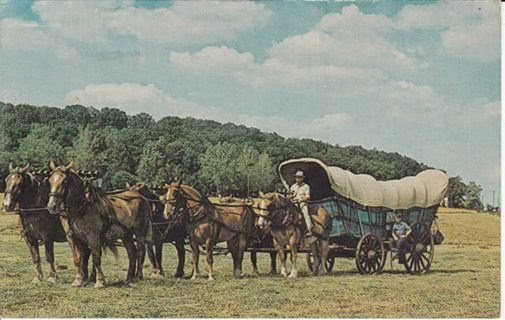
 The six Jutland draft horses strain as they pull the Verhoeven family over the last rise of their 1,200 mile journey. Bram Verhoeven walks beside the team, just ahead of the heavy wagon, using the long leather reins to guide the lead horse, front left. The tireless leader, Hercules, with his mate on the right, the grand dame, Ellen – named after President Arthur’s wife – guides the team of sturdy horses. Both are fifteen hands high, large quartered, relentless workers. The hill they are climbing has long grass swaying in the wind that urges them on. The lowering sun is partially hidden behind the crest, casting bright rays.The groomed heads of first Ellen then Hercules break out of the long shadows into the golden waves of the western sun. Small sharp ears, thick beige manes with loose strands turning bright yellow. Their chestnut fur turns redder still as the animals walk into the sunlight, exposing the short neck, the muscled shoulders, the wide withers and the strong back of these willing animals. Bram watches the horses as they rise, pair by pair, into the brilliance. His dusty face splits with a smile of pure joy. Time almost slows down in his anticipation of the view his family is about to encounter. He’s seen it before. He owns it now. Wiping the sweat from his brow with his right forearm, he looks back at his wife, Lena, who is standing up inside the front of the Conestoga, awaiting the horizon he has talked about for the last two years. Her right hand is raised above her head as she grasps the outer rib that holds the coarse hand-woven fabric of the wagon’s bonnet. Veronica, the youngest, is beside her, wrapped in Lena’s left arm. Her head, which rests upon her mother’s stomach, is covered with the same dark red curls; her face, with the same orange-ish freckles and the same mischievous eyes he has. Sheila, the oldest girl, leans on the front board, a smaller version of Bram’s wife, with a thin pretty face, straight brown hair tied up in a bun, eyes that study everything and a smile that artists search for. They all catch his movement and wave at him.
His oldest, Jonas, rides their quarter horse, Fancy, bringing up the rear, towing their Jersey, Cinderella.
Aron, who is ten years old today, is a year younger then Sheila, two years younger than his brother and two years older than Veronica. He is perched on the lazy board on the left side of the wagon. He braces himself by hanging on to the ropes that hold the water barrel. His father had promised him they would make it by his birthday. Looking at his Pap, he waves a free hand when he sees him looking back.
“Happy birthday, Aron.”Concentrating on the team, Bram yells out just before he walks over the crest, “Gee, Hercules. Gee now.”The powerful animals follow Hercules’ lead and pull to the left as the wagon navigates the top of the rise. When all wheels are on level ground, Bram pulls back on the strong leather.“Whoa, Hercules. Whoa, team.”The horses, snorting and breathing heavily, gladly come to a complete stop. The clatter of the chains and leathers relaxing is almost a sigh. The horses shift in the harnesses while shod hooves paw at the ground as they back into the single trees to take the strain off their bodies. Aron jumps up on the plank he was sitting on to pull back the heavy iron brake lever, locking the wheels in place. Bram drops the heavy leathers to the ground. Fancy trots up beside the wagon and Jonas jumps off to stand a short way behind his father. The whole family is bathed in sunlight. No one speaks.
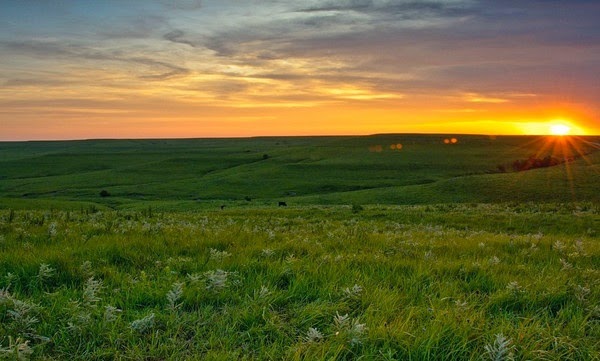
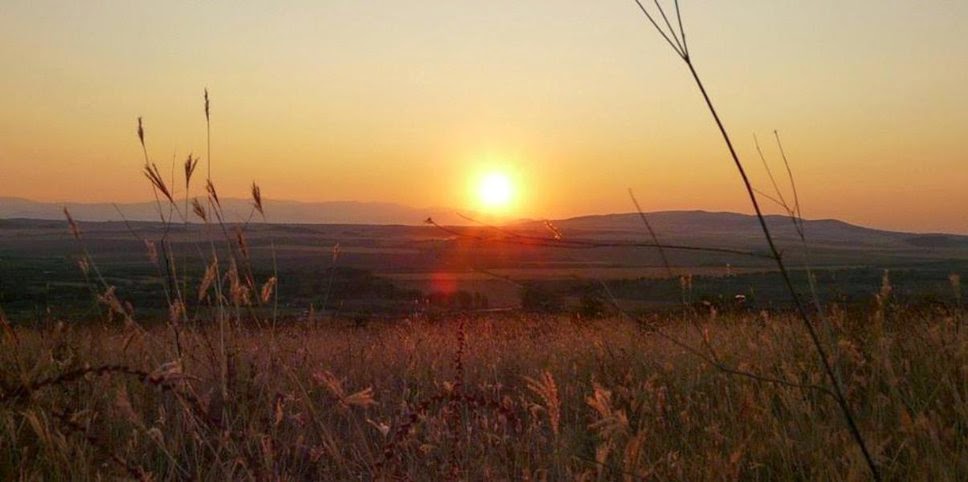
 The sward is a carpet of tall, untamed grasses, colored with the yellows, whites and purples of wild flowers undulating in the breeze, making a soft swishing sound. The aromas of the coarse earth, of the raw vegetation, fill their noses when they breathe deeply. The field sweeps to the left and right, south and north, for 1,500 feet to meet a wide glimmering river that looks alive. Shimmering rays of the setting sun scatter across its surface. It bends back and forth several times before disappearing around a neighboring hill that is covered with forest. The bluffs they are on curves north like a bowl for half a mile, where it has been gouged by another river that is narrower and in more of a hurry. The waters meet to form a deep swirling pool before the flow continues south, eventually spilling into the Mississippi. To their left, the rise tapers to the tree-lined river for almost the same distance.
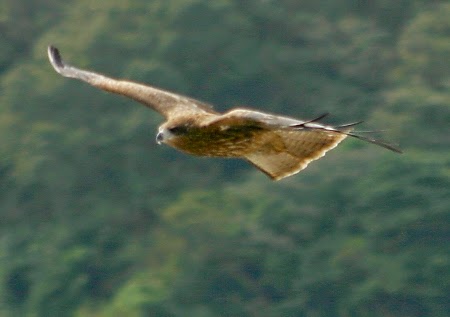
 The hills around them are varied in both height and covering. Many of the southern ones are barren of growth, composed of brown and reddish dirt exposed on cliffs that the water has created by its passage. Jagged mountain peaks are visible a hundred miles in the distance. The northern portion is mostly knolls capped with coniferous trees. The deep green of the forest facing them is as dark as their elongated shadows. Save for the sun, the sky is empty. The blue is rich as a new ribbon, just turning pink on the horizon. Small birds weave among the grasses looking for insects or seeds, calling or complaining. Two deer stand at the junction of the rivers; they were drinking but now stare at the family, bewildered by the odd interruption, not knowing they will need to fear the strange animals they see. A large bird circles above the tree line on open wings, looking for prey.
For ten minutes the family remains mute, surveying their surroundings, the place where they are going to live. Lena breaks the silence with a sigh of delight.“Oh, Bram, it’s as beautiful as you said. It’s breathtaking.”Aron can’t stay still much longer and jumps down to run up beside his father. Placing a hand upon his father’s brawny arm, he pushes his floppy hat back as he looks up and says, “Where we gonna build our house, Pap?”
Bram hesitates. He is too full of emotion to speak, so full of pride in being able to purchase his own land. When he and his partner, Jean-Pierre Poirier, a French Canadian from the east coast of Canada, had trapped animals and traded furs each winter, he had discovered this glen. That was over two years ago. The demand for fur was great due to men’s fondness for hats made from the beaver’s sleek pelt, and they had made a small fortune. More than enough to outfit himself with the wagon and horses to move his family west. A blacksmith by trade, Bram hopes to establish his own foundry here in the small valley, two miles from where the government is building a new fort, which will also be a trading post. Looking back at his wife and the girls, all visibly pleased, then over to his other sons and then down to Aron, he turns and points toward the joining of the waters.“Right on top of the rise where the rivers meet. It’s good and flat on top, lots of trees close by, lots of good fields around it.” He reaches to embrace his son and adds, “A good place to work and lots of room to play. It won’t be all work, only in the beginning.”Bram feels a burst of pure pleasure and can’t help but laugh. Aron can’t help but join in. Veronica loves to laugh at everything and bursts into girlish giggles. Jonas and Sheila soon add their glee. Lena has a quiet, elegant way of laughing that only makes her prettier. The merriment lasts but a moment and is followed by a flurry of questions.“Are there fish in the river?”“Can we pick some of the flowers?”“Is there anybody living close to us?”“Is there cedar in those woods?”“What about Injuns?”The last question, spoken by Aron, brings silence. The Lakota are generally not pleased with the intrusion of white settlers upon what had been their land for centuries. Bram’s encounters, except for one, were all friendly. Jean-Pierre could speak their tongue and the men traded for many furs with them. Bram Verhoeven felt he had nothing to fear if he treated people properly. He will learn to be as leery as the deer.“We will put our trust in the Lord, Aron, and be fair to people. We won’t pre-judge them. There’s plenty that are friendly. No more questions now. Tomorrow there will be time as we make our plans.”He claps his big hands. Pointing at a copse of trees beside the river to their left, he announces with a soft smile,
 “The sun’s gonna set in two hours, and we must eat. We will camp beside the river tonight by those trees. When we get there, Veronica, you can help your mother with the meal. Sheila, you peg Cinderella, give her a bit of feed and milk her. Aron, you get the saddle off Fancy and give Mam a hand with the table. Jonas you get the fire going. I expect there’s nuff dried bush inside that dense wood yonder. I’ll tend to the horses.”By now, the family is familiar with the usual chores associated with the end of their day. They never question Bram’s commands. Their survival depends on his decisions. Once Bram brings the team to a halt under the protection of several old evergreens, he drops the reins once again. He turns to proudly watch his family for a brief moment. Jonas runs toward the of trees behind him, the top of his dusty boots exposed by too-short pants. He is growing too fast. The ladies are in plain grey cotton dresses, the girls with a ribbon around the collar – Veronica’s a soft blue and Sheila’s a bright yellow. Lena dons a red apron and commands the two youngest. Pleased with what he sees, Bram tends to the horses. The six Jutlands have long manes and are feathered about their lower legs. Anxious to be free of the leather and chains, they greet their master with aplomb, lifting and lowering their heads as if in agreement with what he is about to do. After he removes the pins from the single trees that attach the horses to the double tree on the wagon, he reaches down for the reins.“Get ahead there, Hercules. That’s enough now, boy. Whoa!”Starting at the rear, he undoes the six-horse hitch. While he removes the paraphernalia, he talks lovingly to each horse. The first horses unburdened are the wheelers, the biggest horses, nearest the driver. Willie and Anton are each a couple of hundred pounds heavier than the leaders. When Bram takes off the traces, the breast collar and the driving halter of each horse, they are free to move on their own. He pats each on their heavy cheek before resting his head against their wide necks for just a moment to offer a special note for each animal....To be continued.
I hope you enjoyed meeting the Verhoeven family. Please drop by for Part 2 next Friday.
Thank you so much for visiting the Scribbler.

August 15, 2014
Guest Author - Brian Brennan - an excerpt from "Brief Encounters"
 Brian is an award-winning and best-selling author of seven critically acclaimed narrative non-fiction books about the colourful personalities of Western Canada’s past. A former staff writer with the Calgary Herald, Brian has written freelance articles and columns for magazines and newspapers across the United States and Canada, including the New York Times, Globe and Mail and Toronto Star.
 Born and educated in Dublin, Ireland, Brian immigrated to Canada in 1966 and settled in Calgary in 1974. Over the course of his varied career he has worked as a golf caddy, lounge waiter, customs officer, nightclub pianist, church organist, radio news announcer, and a featured storyteller on CBC Radio’s Daybreak Alberta – a popular program heard across the province. His website is listed below.
Following is an excerpt from his book-in-progress, working title: "Brief Encounters: Conversations with Celebrities, 1974-88." It's based on interviews he did when he was an entertainment writer for the Calgary Herald during the '70s and '80s.
Victor Borge
November 1975
 Victor Borge had been a child prodigy on his way to becoming a concert pianist when he discovered a flair for comedy that sent him in another direction and brought him international fame. When he arrived in Calgary to play the 2,700-seat Jubilee Auditorium in 1975, the Danish-born virtuoso was 66 and still performing 150 shows a year despite having been forced to stop playing temporarily due to paralysis in his left arm.
 I asked him if he was thinking of retiring. “Retiring from what?” he replied. “Retiring from life? Performing is my life. A lot of people retire because they’re forced to, and then keep regretting it for the rest of their lives.”
The problem with his left arm had been a shocker, Borge said, because for three weeks in the hospital he wasn’t able to move it. “It scared the hell out of me. I had to cancel a concert for the first time in my life. The newspaper in Wichita didn’t like it, but what did they expect?”
The doctors determined that the paralysis was caused by a pinched nerve in his neck. After they repaired the damage, Borge lost some strength in his arm but that, fortunately, didn’t affect his playing. “That’s the one aspect of my performance that has to be right.” Even though he filled his performance with musical jokes, such as his interpolation of “Happy Birthday” or “Hush-a-Bye Baby” into the music of Chopin, Mozart and Debussy, he wanted the piano playing to be technically proficient. “Each performance is a challenge for that reason.”
He had given up doing conventional concerts in his 20s because he came to believe he didn’t have any real control over what his fingers did when he sat down to play. Blessed, or perhaps plagued with something he called “finger memory,” Borge could start playing any piece he had learned from the standard repertoire and almost immediately his fingers would find the right notes. “It was just a psychological thing,” he said. “I would look down at my fingers while I was playing and be in awe of them. That’s why I had to stop concertizing. I was afraid I might foul up sometime.”
But he had no regrets about abandoning a career as a serious musician in favour of becoming a comic entertainer. “I’m not a frustrated concert musician or a frustrated anything. You can’t be frustrated if you’re doing something that you want to do. If I had stayed straight, I know I could have done well. But I wanted to do this. It’s my chemistry.”
He couldn’t explain the success of his comedy. “I was never particularly interested in analyzing it.” But much of it had to do with his spontaneous reaction to little things that occurred during a concert, plus his ongoing fascination with the idiosyncrasies of the English language. One of his popular routines involved “inflated language,” in which “wonderful” became “twoderful” and “create” became “crenine.” Another routine, that he called “phonetic punctuation,” involved reciting a story complete with trick vocal sounds for commas, periods and exclamation marks.
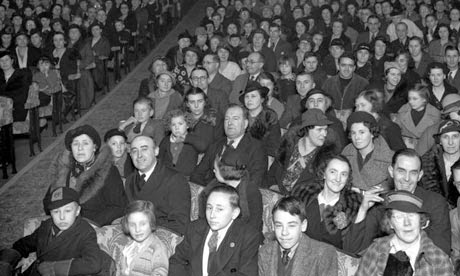 The man in the front row who sneezed or the woman who coughed too loud were natural targets for his ad libs, but Borge insisted that none of his jokes were planned. “Sometimes it almost seems as if all 3,000 people in the audience have been planted.” His method was to work mainly impromptu “and say things to suit the particular mood of the show.”
 I asked him about reviews. Borge said he had received the occasional negative one. But he took some consolation from knowing that “bigger geniuses than I have suffered from this problem.” He recalled a letter that the composer Brahms was said to have sent to a critic who panned one of his concert performances: “Dear Mr. Critic. I have your review of my concert in front of me as I write. Where I’m seated, I’ll soon have it behind me. Yours truly, Johannes Brahms.”
True to his word, Borge never retired from performing. At age 90, he was still playing about 60 shows a year. His doctors suggested he eliminate a pratfall where he pretended to accidentally fall off the piano bench. But, of course, Borge had no intention of doing this. It had been part of his act for so long that audiences expected it.
A New York Times reporter asked Borge why he continued to maintain a heavy touring schedule. He gave much the same answer as the one he had given to me 20 years earlier. “Why not?” he said. “If it was a strain, I wouldn't do it. But I can do it. I haven't faltered yet. I know life. I have had a full measure of experience. Shouldn't I take advantage of it? These days my acts are the essence of what I have accomplished. The fruit is on the tree. Should I let it rot?”
 Or as he had said to me, “It all has to do with the spirit. What I’m doing is at my natural speed. I travel because people don’t come to me.”
 He died in 2000 at age 91 at his home in Greenwich, Connecticut. Thank you Brian for sharing your work with us. You can find out more about Brian by visiting his website, www.brianbrennan.ca
Next week you can read one of my short stories. "Six Jutlands and a Conestoga". Moving your family into the western frontier can be a daunting task. Nothing but open wilderness and a plan!
On September 7th at 6:30 pm, you are invited to join me at the Chateau Moncton for the launch of my debut novel Dark Side of a Promise . I hope you can make it!
August 8, 2014
Guest author - Donna Glee Williams. An excerpt from The Braided path
 Donna Glee Williams is a writer, seminar leader, and creative coach. A sort of Swiss Army knife of the page, Donna Glee has seen her work published in anthologies, newsstand glossies, literary magazines, academic journals, reference books, big-city dailies, online venues, and spoken-word podcasts, as well as on stage and CD recordings. These days, her focus is on speculative fiction, aka fantasy and science fiction. Links to her web site and stories can be found below.
The Braided Path—EDGE Science Fiction and Fantasy Publishing, 2014—is a fantasy novel without sorcerers, vampires, dragons, witches, zombies or magic of any sort, except for the alchemy of love. On the slopes of a vertical land where people’s lives are bounded by how high and low they are able walk on the single path that connects their world, the young widow Len Rope-Maker watches as years go by and her son Cam never finds his limits. Long past the time when other youths in Home Village have found their boundaries, Cam keeps climbing higher and lower, pushing on with his sweetheart Fox who also shows signs of being a Far-Walker. But Cam’s drive to venture far nudges him towards the top of the world, while Fox’s sends her downward, toward the mythical sea at the bottom of all things. Both are true to their own heart’s calling.
An excerpt from The Braided Path
Always in front of you and always behind, sometimes trailing over the rich, giving soil of the village shelves, but mostly over stone. Some of the stone is the color of those roses that can’t decide between red and yellow. Some is motley gray. Some is black, with bits of crystal that twinkle like something in a clear night’s sky. Some is almost the color of cream. Some of it breaks into chips so sharp they can cut flesh. Some grinds underfoot into a powdery sand that can slide beneath your boot. Sometimes the path travels not over solid rock, but over an accretion of bits that have rolled downworld from somewhere high above. Sometimes it is so broad, this path, that two can walk side by side, shielded from the great fall by a hedge of wind-wizened trees. Sometimes it is narrow steps, chipped out of the living stone. Sometimes it is just a rope, dangling across a wide rock face, where walking becomes a matter of trust: In the rope, in your grip, and in your boot-soles as your own weight presses you to the wall of the world. And there are some places where it can be nearly flat, startlingly so, making for easy walking for a time. Always changing but always itself, the path wanders across the rippling curtain of the world, stitching the whole together. The villages are there, along the path. In the villages, walkers can find their rest at the end of a long day’s travel. They can throw down their packs, take food and drink, tell their stories, then sleep and dream. When did Len first see how far the path would take them on the great wall of the world? With all the switchbacks on the path, who can see ahead? No Far-Walker had been born under the apple trees of Home Village for many years. But everyone knew Shreve Far-Walker, from Third Village Down, who often passed through as she carried loads between High and Low. When nightfall caught her near Len’s Home Village, she would stay over, taking dinner and giving back news. She wasn’t by nature a talkative person, but she understood the duties of a guest. Len would crowd in with the others to hear Shreve’s account of the Far Villages and the strange stories they told there. So Len had some notion of the life of a Far-Walker, though her own range was a modest seven villages. (Climbing up beyond her limits made her pant for breath like an old woman; going down past them left her sweaty and sticky.) When Cam began to show unusual aptitude for climbing high and descending very low along the path, she wondered. Like all parents, Len had observed Cam closely from his earliest tottering steps as he followed her to First Village Up. She had shared discreet smiles with the other parents as their young ones tried on the new costume of adulthood to see how it would fit them, daring each other to range ever farther from Home Village on spurious errands There would be a jaunt proposed, a clamor of assent, and a rush like a group of startled goats when Cam and his friends hurried off. No packing or planning was needed as they carried no real loads and it was understood that they would stay in whichever village they were closest to when night fell. Families who housed a youth from another village tonight knew that their own children would find food and a pallet where they needed it tomorrow, and the balance would be kept. Len was a maker of rope and twine. She prospered on the fiber of a certain nettle that grew all along the path near Home Village, thinning out above Second Village Up and abruptly disappearing in the shade of the trees around First Village Down. Her house was full of this little plant: baskets of stems, waiting to be broken; fringes of washed fiber draped everywhere, waiting to be plied; and coils of finished cords and ropes of all sizes, waiting to be carried up or down the trail for trade. Len was a fine crafter, with powerful, knowing hands that meted out the strength of the fiber smoothly and evenly. She did a good business from First Village Down to Fifth Village Up, selling her rope and cordage and the intricate knots she created as ornaments and symbols. Len knew her ropes were much valued in the lower villages because they resisted rot so well, but she did not care to take them there herself; she knew her limits. She would have been glad to find her son’s range ran a little lower than her own. But it would be selfish for a mother to push or wish a thing on a child for her own convenience. So Len Rope-Maker held her heart open, and waited to see what would emerge from the clouds. When little Cam let go of her hand and ran off to explore the world without her, she watched after him and waited. (It was a safe place, a place where a knee-high stone rim had been built between the path and the long fall.) And Cam ran back to her with sparkling eyes, crying out, “As far as the big rock! I went that far, Len!” And she set aside the long, blond fibers she was plaiting and swept him up and made much of him (“As far as the rock!”) and solemnly asked him for news. It was bittersweet for Len when Cam and his friends got older and began to be away more. Len’s little house was too silent at night without his breathing, so she got herself a cat. She named it Goose because she enjoyed standing at her door at dinner-time and “Goose! Goose! Oh, Goose!” and having the little gray cat run home to her. Like other parents—maybe more than other parents—Len worried, as the jaunts got longer and Cam was away for days at a time. Days and nights with no word, only her trust in him to rely on. Sometimes there were dreams of a foot slipping on rolling gravel, and then a wailing fall. The world was steep and it happened sometimes. But there was no need for her to say, “Be careful.” Every child had been a part of the sad gift-giving when some son or daughter of Home Village did not return. Many youngsters wore shirts or coats or hats they had received on these occasions. Some had already shared the work of building the cairns that marked where someone had fallen off the path, of piling up the stones: the black stones, the orange, the chalk-white, the gray. Around Len’s Home Village, the stones were gray. Granite gray. The shoulders of the world were steep and a fall was almost always equal to a disappearance. The cairns were raised in memory and warning. The young people of the villages planted their feet carefully and took the dangers of the world in stride. Thank you Donna for sharing your story. You can follow the rest here - http://www.strangehorizons.com/2007/20070723/limits-f.shtml Her web site is www.donnagleewilliams.com
Next week you will meet another guest author, Brian Brennan of Alberta with a sample of his fine writing.
On September 7th at 6:30pm, please join me at The Chateau Moncton for the launch of my debut novel, Dark Side of a Promise. Refreshments, munchies, prizes and a lot of fun.
August 1, 2014
Teasers from 4 short stories.
 You sit down on your favorite chair. The computer screen is blank. A story idea takes shape in your mind. You stare at the blinking cursor, wondering how to start. From somewhere deep in your psyche, the words begin to form. A few hours pass, maybe a few days, maybe several months, possibly a couple of years but you stumble along, make some corrections and eventually you reach the end. What a feeling when you tap the final letter, followed by the final period and the story is finished. You have created something. Polish it up with the help of knowledgeable people then give it to your readers in one form or another. Some will like it, others won’t, many will never read it and that’s okay. This is the wonder of writing.
  I wanted to create a gift for my grandchildren, something that would be a part of me, something they could keep for a lifetime if they chose to. I decided on a series of short stories aptly entitled SHORTS. Volume 1 is for my oldest grandson, Matthieu. Following is a small taste of each story selected for my gift to him.
 SHORTS Vol.1
 *The first story,
The Ship Breakers
, was conceived while I was researching information on the ship breaking yards of Bangladesh for my novel Dark Side of a Promise. What I discovered was at times unbelievable, heart breaking. The hardest and most unsafe work I could possibly imagine is accomplished for very low wages and yet, there is always people needing the work.
*The first story,
The Ship Breakers
, was conceived while I was researching information on the ship breaking yards of Bangladesh for my novel Dark Side of a Promise. What I discovered was at times unbelievable, heart breaking. The hardest and most unsafe work I could possibly imagine is accomplished for very low wages and yet, there is always people needing the work. The story is about a fictitious tanker taking its final voyage and an imaginary family that might need the job of taking it apart.
The Neptune Giant is a VLCC, a very large crude carrier. When it was completed in 1979, it ranked among the largest oil tankers in the world. From bow to stern, 75 Cadillacs could park bumper to bumper. The crews used bicycles to travel the elongated deck. With a beam of nearly two hundred feet, five bungalows could be placed lengthwise side by side across the deck; her keel is six stories underwater. The raw steel is covered with over fifteen hundred gallons of paint. She’d been given a lifespan of thirty years; instead, she had sailed every ocean of the world, berthed at every continent, rode many storm’s fierce waves and trolled the endless seas for thirty-five years. Today is her final voyage.
Her last port of call, two weeks ago, was Saint John, New Brunswick, with two million barrels of Venezuelan crude. Now, the tanker cruises the Bay of Bengal at fourteen knots. At that speed she requires five miles to come to a dead stop. The ship breaking yards of Chittagong, Bangladesh, are only four miles away. The captain brings the ship to starboard, aiming the aging tanker directly at the muddy beach. The tide is high, which is necessary to allow the gargantuan machine to ground itself like an aged sea lion, as near to the shore as possible, where it will die.
The engine that powers the ship is eighty-nine feet long and forty-four feet wide with twelve massive cylinders – one of the largest engines in the world. It weighs two thousand metric tons costing more than the rest of the transport. Its thirst for fuel demands over fifteen hundred gallons of crude every hour. Its last chore will be to power the vessel onto the tidal mud banks, where humans who are dwarfed by its immensity will eventually take it apart, by hand, piece by piece. The work is extremely dangerous, with an exceptionally high mortality rate, and yet there is no shortage of men.
 *The second story,
Lloyd and the Baby
, is about a man into his senior years finding an abandoned baby. One of my first short stories is called The Four Boxes of Memories and is about a man entering a nursing home and having to discard many of his belongings. He had acquired four boxes of mementoes or memories of his life. From that story I wanted to highlight one of the most important memories of his life and how it all began.
*The second story,
Lloyd and the Baby
, is about a man into his senior years finding an abandoned baby. One of my first short stories is called The Four Boxes of Memories and is about a man entering a nursing home and having to discard many of his belongings. He had acquired four boxes of mementoes or memories of his life. From that story I wanted to highlight one of the most important memories of his life and how it all began. Lloyd Minister was fifty-five years old when he found a baby. For a man that had never been married, had never fathered a child, it was a traumatic event to say the least. Loneliness and confusion manifested by tiny wails and sobs, reverberated through the rooms where he discovered the abandoned child. When he entered the house, the whimpers he heard at first, feeble and uncertain, suggested that someone had left a pet behind. He had sworn out loud at their unkindness, scaring the tiny stranger above. It was then that he realized there was an infant upstairs.
There had been only a tincture of moonlight that night. Diffuse clouds bustled in the sky, dimming out the stars. Unable to sleep, Lloyd went to his back deck for fresh air. A slight breeze had carried the aroma of fields freshly mown, spiced with the dampness of the morn. It all seemed so familiar. His respite was disturbed by the moving shadow of a darkened truck pulling out of the driveway of his parents’ old farmhouse. The teenaged couple that were renting it were leaving in the night, stealing four months’ rent as well as some of Lloyd’s furniture. He guessed what was going on. He was crestfallen that the young people were abusing his trust. It hurt even more when a quarter mile down the road the vehicle’s taillights suddenly appeared.
He was chastising himself for being so naive when an eerie panic seized him; goose bumps prickled his tightened skin. He was immediately concerned that something was wrong at the house. He hurried back inside, grabbed his flashlight, and rushed across the field to find out what was wrong. All he wore on his feet were old thick wool socks he used for slippers. The sharp edges that carpeted the field once the hay had been cut jabbed at his feet and broke the callused skin in spots. He never slowed from the pain. His objective then was urgency.
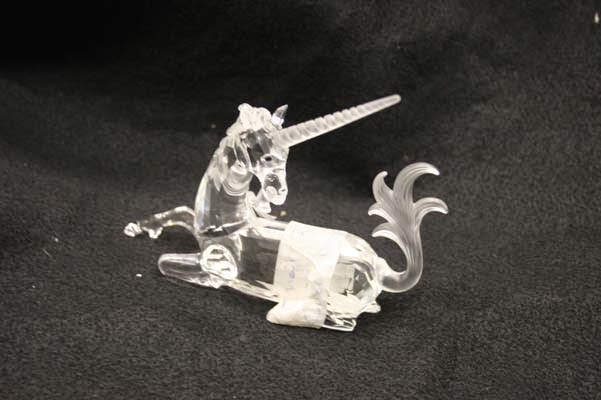 *The third story,
The Shattered Figurine
, was conceived when I was thinking of what would a detective do if they discovered that the perpetrator of a heinous crime was someone they knew, someone they knew intimately.
*The third story,
The Shattered Figurine
, was conceived when I was thinking of what would a detective do if they discovered that the perpetrator of a heinous crime was someone they knew, someone they knew intimately. Josephine Naylor, shoulders sagged, stares down at the frozen corpse. Even though rime disguises the otherwise naked body, the Detective knows it is the missing teenager. The remains are female, about five feet, maybe a hundred pounds without the frost. And the body had been left in the same position as the other victims, all three, face up, ankles and hands neatly tucked together bound with duct tape. The same parts are missing.
This regrettable murder left no doubt that the killer was the same person, based on the method of execution; forensics had confirmed that with the second body. A third cadaver had brought forth the criminal psychologists to graph out a profile that would tell what “type” of individual might commit such a crime. The scene before her is, therefore, extremely important, so she stands well enough away. She is still able to discern an unusual shape upon the victim’s forehead, which, once uncovered from its icy envelope, will likely prove to be a piece of broken crystal similar to those found on the pale dead skin of the other three bodies, in the same position.
Jo is standing at the edge of a wide field shadowed by alders and tall spruces that front the extended forest behind her. The rising sun is just cresting the pointed tops. The body is lying parallel to the tree line at the rim of the pasture. It’s early December. The night fog turned solid as the temperature dropped below freezing, cloaking everything in stark white. Jo is startled from her contemplation by the sensation that someone is watching her. She turns toward the open field, scanning the perimeter of the woods. Nothing moves; not even a breeze disturbs the black-and-white scene. A rise in the field blocks her view to the road and her car, but she would have heard a vehicle approach. The silence is intense, nature seeming to mourn the young girl’s death. Jo would definitely hear the crunching of the frost under someone’s boot.
 *The fourth and final story,
Two Grumpy Old Men Café
, was a result of jokes made amongst friends that we should retire to somewhere warm and have a breakfast nook where we could hang out with our cronies, keep ourselves busy and out of trouble perhaps. Maybe do something worthwhile with the profits. The idea of a couple of retirees doing just that stayed with me until I decided that it would make an interesting story.
*The fourth and final story,
Two Grumpy Old Men Café
, was a result of jokes made amongst friends that we should retire to somewhere warm and have a breakfast nook where we could hang out with our cronies, keep ourselves busy and out of trouble perhaps. Maybe do something worthwhile with the profits. The idea of a couple of retirees doing just that stayed with me until I decided that it would make an interesting story. The TGOM café is open from 6 a.m. to 11 a.m. Monday to Friday for breakfast only. If the two Canadians that owned the place had to stay open any longer they wouldn’t be just grumpy, they’d be downright inhospitable. At 77 years of age, Wilmot Parker III is an avid golfer, not a very good one mind you; in fact his fellow hackers call him Trap. There is always enough sand in the cuffs of his golfing pants at the end of a game that management accuses him of trying to steal it. If he ever played eighteen holes under ninety, it was likely his turn to keep score that day. Nonetheless, he loves the sport and has to be at the clubhouse by 1 p.m. every day except Sunday, which is church day. He’d been a financial advisor most of his working life, a golfer for about nine years, a widower for twelve, restaurateur for three.
Clarence Jerome Parker (no relation), known as CJ, is 75 and has never been married. When questioned about his bachelorhood, his defensive phrase is “there are too many lovely ladies, and I only have one lifetime. It would be unfair to womankind for me to impose myself upon one partner for the rest of my life.” His afternoons are spent in front of his computer writing what he calls “smut novels” under the alias of John T. Boner. The series is a moderate internet hit, available exclusively on his web page. Other people manage the site now, but every day except Monday (restaurant accounting day) and Friday (happy hour day), he writes from 1 to 5 p.m. He’d been a building contractor for thirty-five years, a hobby writer most of his life, a restaurateur for three. He cooks the biscuits in the mornings.
Estero Boulevard in Fort Myers Beach is mostly deserted at 5 a.m. The café sits down a side street off the main road, third business from the corner. It’s tucked neatly between a family-owned hardware store appropriately named Family’s Hardware and a used book store called The Author’s Index, run by a retired couple from Burlington, Vermont. All the buildings are constructed of rust-colored bricks and flat roofs. The café is the brightest on the street. The brick is whitewashed under large tinted glass windows that are shadowed by a four-foot awning of wide black-and-white strips. The dark green letters TGOM dominate the center of the twenty-six foot canvas held taut by black wrought iron stays that had been installed by the former occupant, Mel’s Big and Tall, a haberdashery that suggested they “have you covered up to size 6X.” The inside had been gutted to expose the overhead metal joists and the raw brick walls when CJ and Wilmot bought the building four years ago.
SHORTS Vol. 1 is available at amazon.ca as an eBook for $0.99. It is also available from me in hard copy or directly from creatspace.com. Vol. 2 will be available in September and will be dedicated to my granddaughter, Natasha. Vol. 3 will be available in November and dedicated to my youngest grandchild, Damien. I hope you enjoy them.
 Next week, please join me here at the Scribbler to read an excerpt from my guest author, Donna Glee Williams of North Carolina.
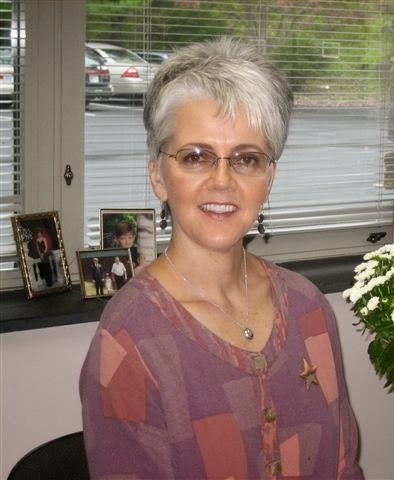
July 25, 2014
4Q Interview with author Lockie Young
 We are fortunate to have Lockie (Lockard) Young on 4Q this Friday. Lockie has written a YA novel, Ryan’s Legend, published by Morning Rain Publishers of Ontario and is happily working on the sequel. He is a familiar guest on the South Branch Scribbler with several of his entertaining short stories being featured. Lockie has been showcased on many blogs, recommended reading sites and most recently in the Times Transcript, Moncton’s major daily. You can find out more about Lockie, more of his poems and witty ramblings, by clicking his link below.
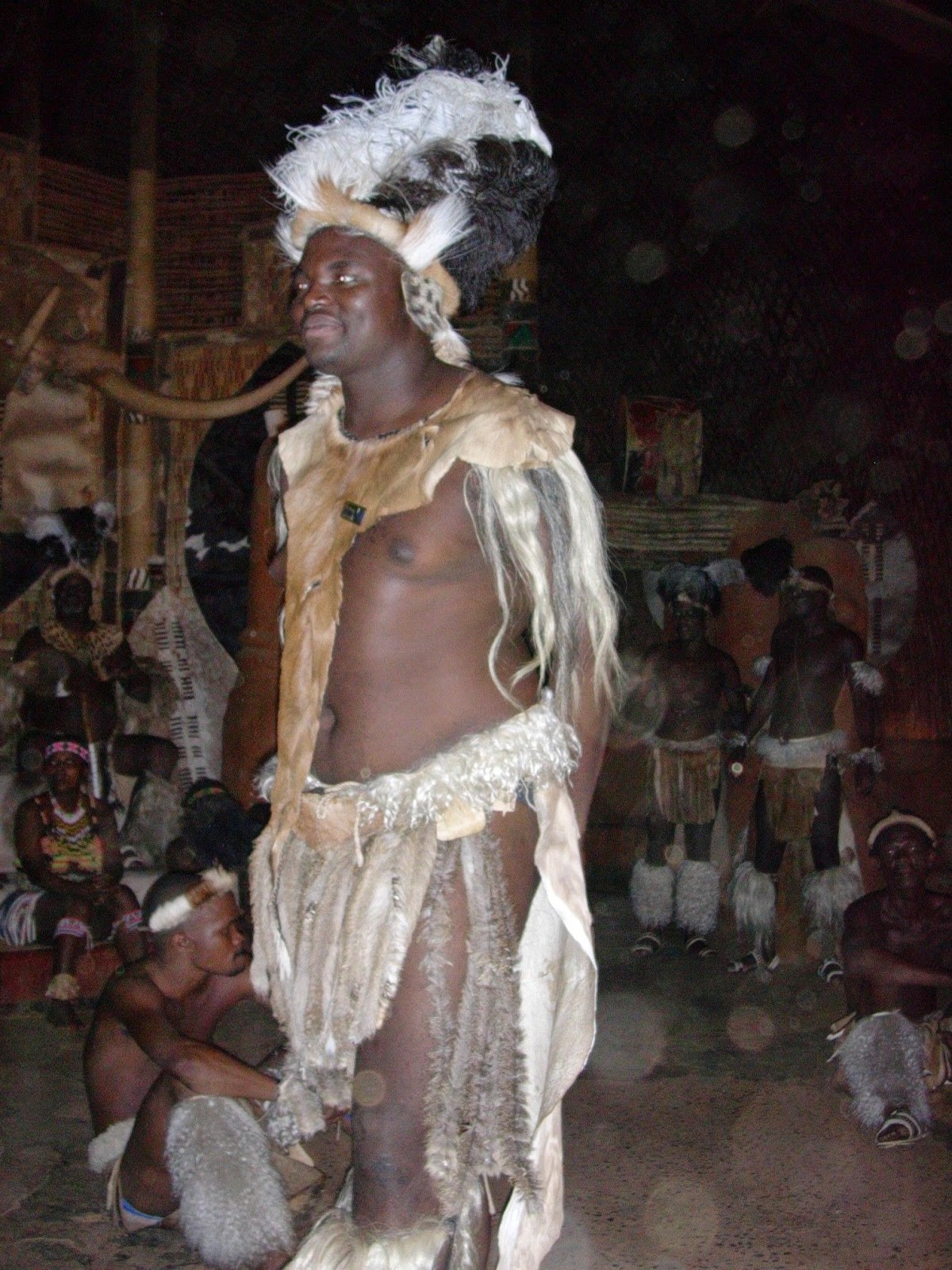
 4Q: Thanks for being a part of the Scribbler, Lockie. Sometime ago you and your wife, Trish, visited South Africa. You brought back many great photos and as many memories I expect. Did this visit to a foreign country so far away, or the people, have any influence on your writing or inspirations?
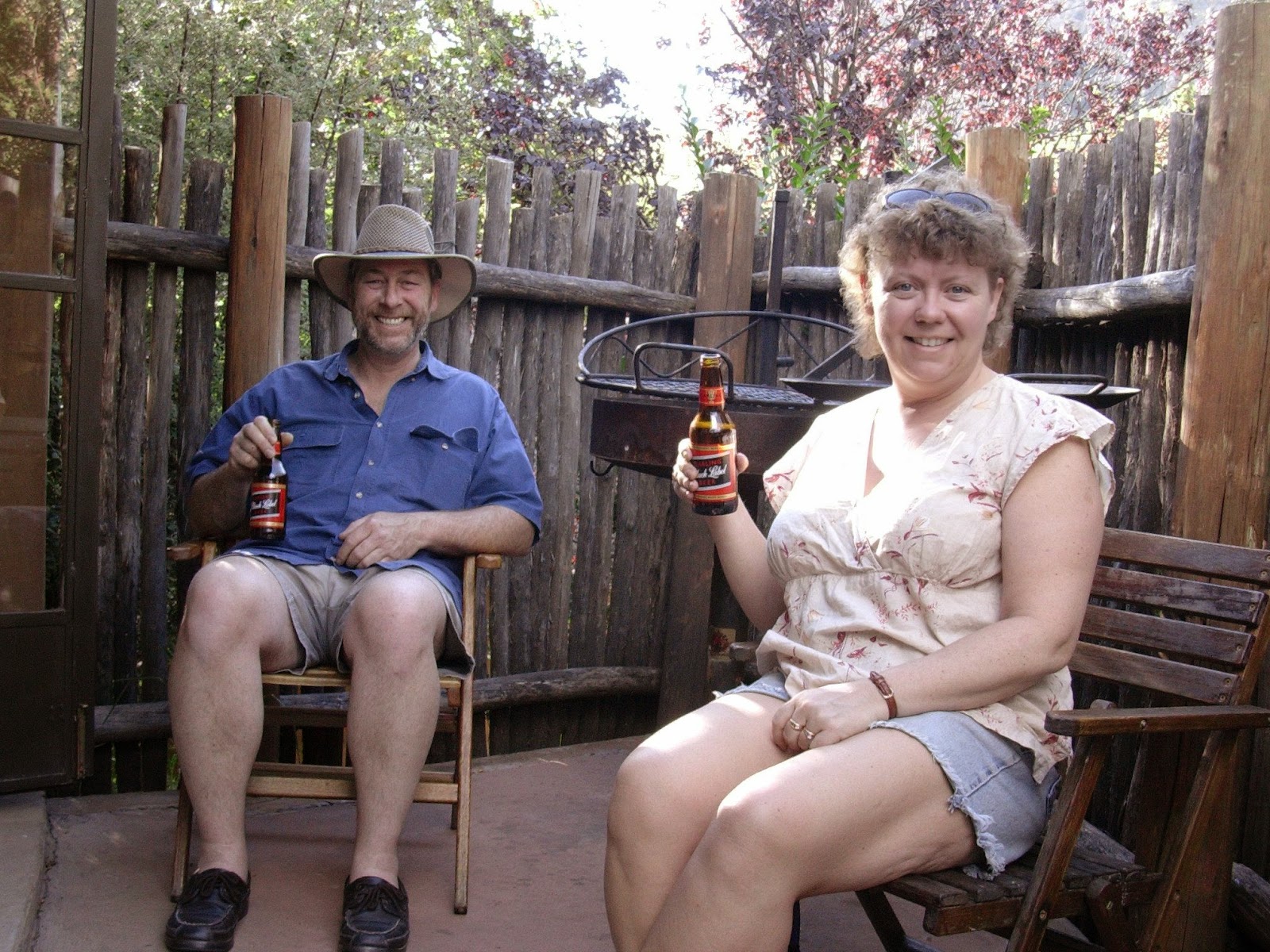
LY: Africa was amazing. I can’t put my finger on it, and not to sound corny, but Africa had a profound effect on me, almost like a religious experience. When I stepped off the plane, it was like coming home, and I am not a person who likes the heat, so this was confusing for me. The people we met were so friendly, and it really felt like family when these strangers welcomed us into their homes and their lives. When I got back to Canada, and things settled down and my wife and I got back to work and a normal life again, I found I couldn’t stop writing about my other home, Africa. I have several poems inspired by the amazing animals we saw there. The traditional animals like Giraffe and Zebra, which to me were only pictures in National Geographic magazine before, had been right there, outside our car window. My wife and I toured South Africa and Swaziland with my father in law and mother in law. My short story and poem titled Diary of an Orphan was inspired by a visit to an orphanage in Swaziland.

.jpg) 4Q: What can you tell us about the sequel to Ryan’s Legend?
4Q: What can you tell us about the sequel to Ryan’s Legend? LY: The working title is Ryan’s Legend Returns, and picks up where the first story leaves off. It’s summer break, and the main character, Ryan, has a few adventures with his best friend Cory. Ryan teaches Cory, a city boy, about life along the sea shore, all the while anxiously awaiting the return of his other ‘Legendary’ friend Willie. Parts of the sequel were written at the same time as Ryan’s Legend, back in 1995, and were in fact all one book back then. On the advice of a self published Author and Publisher at the time, I split the original manuscript into two parts, as it was thought to be too long for a middle grade reader.
 After my first book, was picked up by Morning Rain Publishing I worked on finishing and adding to the second half, which is more than twice as long as Ryan’s Legend. It is currently being considered, and I am waiting on word if Morning Rain wants to publish it. I hope it will get picked up, and maybe be published later this year.
 4Q: Please share a childhood anecdote or memory.
LY: Some of my readers and fans may know that I am a Plumber by trade, but long before I became a Plumber, when I was just a boy of maybe seven or eight years of age, I went with my Mom and Dad to visit relatives in a small community not too far from Moncton, called Harcourt. While there I asked if I could go to the bathroom, and I was directed to a small out building in back of the house. I could tell as soon as I opened the door that I was in the right place. When I returned to where the adults had gathered in the parlor, I was asked what had taken me so long. And I answered that I was very sorry, but I had searched that darn building all over and I just couldn’t find the flush handle for the toilet.
4Q: Please tell us what’s in store for us in the future; what else you’re working on?
LY: As you know, Allan, I lost my right leg last year to arterial disease caused by smoking a pack a day for 30 some years, and during my recovery, and adjustment to a drastic lifestyle change, I’ve been writing as part of the healing process. I’ve written several short stories and a couple of, what I’ve discovered are called ‘personal essays’ and I am also working on a memoir of my personal journey on this new road as an amputee. The memoir is a step outside of the box for me as I’ve never written a nonfiction work, and I find it both challenging and therapeutic as I revisit the past 2 years of my life.
 So, when I get stuck with what to write in the next novel in the ‘Legend’ series, and I need a change of pace or scenery, I pick up where I left off in my memoir, or I change genres and try my hand at another short story. I may see if my publisher is interested in a compilation of my short stories. I haven’t written any poetry lately, but I have to be inspired for that too. The other day, when I was stuck on ‘The Legend Never Dies’ (working Title) I opened up a new word doc and I just wrote and wrote all day, missing lunch and almost missing supper, until I wrote The End at last. The word count on Paradise White is 8000 words, and I hope to whittle that short story down in edits. So that is how I roll. I took an early retirement because of my new physical limitations, and now I am fortunate that I can write whenever I want and I am enjoying the freedom to do what I really truly love to do.
 You have been a tremendous supporter of your fellow authors, sharing, giving us a pat on the back, being a nice guy so thanks Lockie on behalf of us all. Keep those stories coming.
Please visit Lockie’s Lectern at www.lockardyoung.worpress.comRyan's Legend:http://morningrainpublishing.com/project/ryans-legend/
Website:http://poems-and-other-ramblings.webnode.com/ Next week I will offer 4 teasers of my short story compilation SHORTS Vol.1. As well as what inspired these stories. The SHORT series is dedicated to my grandchildren with Vol. 1 for my oldest grandson, Matthieu. Vol. 2 will be published in September, with Vol. 3 to follow in November.

July 18, 2014
Guest Author Bobby Nash. A excerpt from: ALEXANDRA HOLZER’S GHOST GAL: THE WILD HUNT
 Bobby Nash is an award winning author that hails from Bethlehem, Georgia. An exceptionally creative individual that writes novels, comics, graphic novels, short prose, media tie-ins, screenplays and more. When not busy writing, he is an actor that appears in movies and television. His web site is below.
ALEXANDRA HOLZER’S GHOST GAL: THE WILD HUNT
EXCERPT WRITTEN BY BOBBY NASH
Energy crackled through the halls of the old castle like a thing alive.
With each whip-snap discharge, loud, thunderous booms echoed off the thick stone that made up the walls of the castle keep. Those stones, which had been so meticulously removed from their original home and shipped over to the New World piece by piece from an Irish castle the wealthy new owner had recently purchased, were unlike any other. It had taken months for shipping magnate Conrad Bartlett to disassemble the castle, catalog, number, and crate each piece, ship it across the Atlantic, and reassemble it on his families land in Portsmouth, New Hampshire.
Under normal circumstances, such an undertaking would have been a costly endeavor, but tensions in the Atlantic were high as both Nazi and Allied forces ran their military campaigns in the region almost non-stop. Soon, the entire planet would be gripped by the hells of war. If not for Bartlett’s military contract allowing him to cross the ocean at regular intervals, the yearlong reconstruction of the castle in the United States might never have been completed.
In hindsight, Conrad Bartlett might have wished that to be the case.
In addition to the physical attributes of the castle keep, he also brought with it the castle’s dark secret, a long and bloody history dating back to the earliest days of Ireland itself, perhaps even before that, a secret that had been locked away for centuries, hidden from prying eyes.
And now that secret had been loosed on an unsuspecting world.
Unless the specialist he called in could put a stop to it.
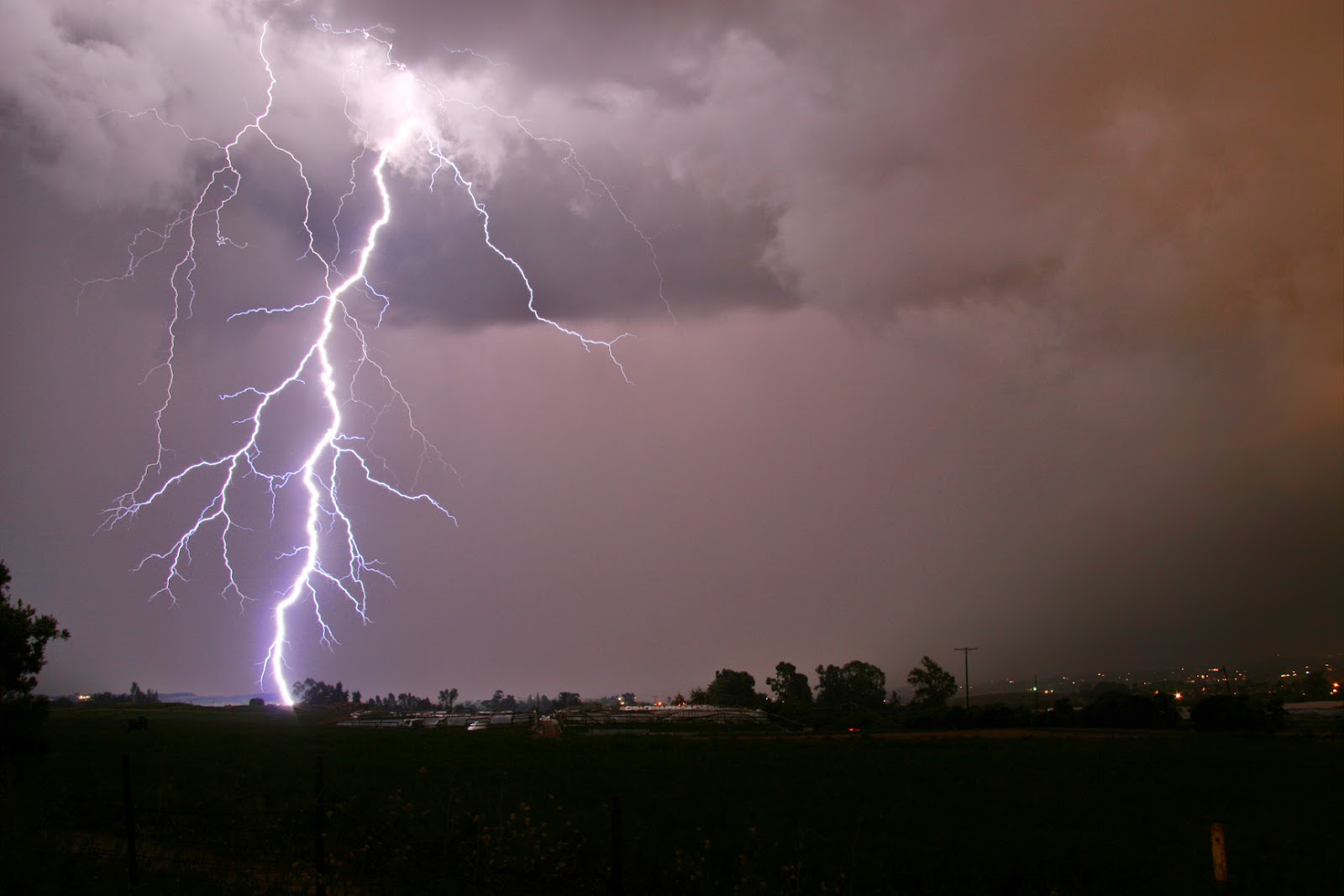 Outside, lightning sparked while thunder roared as the storm grew more and more fierce. Gale force rain pelted everything in its path with big wet droplets mixed with hail and flying debris tossed about by violent winds. The turbulent weather outside was like a mirror to the chaos brewing inside the recently rebuilt castle.
 Hans Holzer let out a breath. He had only been on the scene an hour before things took a turn to the strange. Conrad Barnett’s telegram about his unique problem had piqued his curiosity, but he hadn’t expected to find anything more than a minor disturbance. He hadn’t expected to find much, most likely a displaced spirit long dormant that had been disturbed when its home had been disassembled and reassembled halfway around the world. It was enough to throw off anyone’s equilibrium, even if they had been dead for decades or longer, but as threats go, it was probably minor.
He was wrong.
Once the storm began to strengthen in intensity, he realized that things were worse than he had first believed.
 Hans Holzer held a torch in front of him as he moved through the darkness. Flames from the torch cast the only light since the generator succumbed to a lightning strike just a few moments earlier. The torch had once been the leg of an antique chair, or at least an expensive recreation of one. A cloth curtain pulled from one of the windows then doused with lighter fluid and ignited completed the makeshift lantern. It was a quick solution to a minor problem.
 It was the problem that lay ahead that concerned him.
“These walls are not pure stone,” he said aloud, running a callused hand across the uneven stone. “Whatever that metal component we discovered turns out to be, it is highly conductive. The lightning striking the weather vanes on the roof is not simply redirecting the electricity of the strikes. The energy is being absorbed through the walls.” He leaned in close enough to smell the earthy musk of the hand-carved stone. “Incredible. It’s almost as if the entire castle is alive. I’ve never seen--”
“Professor?”
Holzer sighed loudly at the interruption. It was not the first one of the evening. “Yes. What is it, Jamie?”
“I need a moment, sir,” Jamie McClenndon said from somewhere in the dark behind him.
Jamie was the latest in a long line of assistants who came to him because they wanted to learn the “real truth” of the world. Most were college students, like Jamie. They rarely lasted long in the position and Holzer suspected that Jamie would be no different than those who came before. Like the others before him, his desire to experience a supernatural moment came from seeing motion pictures featuring scary monsters. He wanted to see a ghost, to prove that they were real, and that he would be brave enough to interact with it. The reality of the moment was never what any of them expected and was rarely like what they saw in the movies. Ghost hunting, for lack of a better term, was not easy and the professor had little time or patience for handholding. If Jamie wanted to be coddled in the face of the unknown then he had come to the wrong place.
As his family was of Irish descent, Holzer had hoped Jamie would come in handy on this excursion, but sadly his knowledge of the homeland of his ancestors was severely lacking. He blamed modern education for the boy’s lack of knowledge.
“Make it quick,” Holzer said, not bothering to hide his annoyance as he checked his pocket watch. “Our quarry is here. I can feel it.”
“Yes, Professor. I know,” Jamie said softly. There was an unusual quiver to his voice.
“We must find him before…”
The crash of his equipment hitting the hard stone floor behind him interrupted his train of thought and Hans Holzer spun around to face his assistant, ready to give him an earful about responsibility and taking care of the sensitive equipment left in his care. The equipment he had been tasked with carrying was not only delicate, it was also very expensive.
“I’ve told you repeatedly to be careful… with… that…” his voice trailed off when he saw why Jamie had discarded the equipment in so loud a fashion.
“I–– I think I’ve already found him,” Jamie said softly, careful not to move lest the sharp blade at his throat draw blood.
“Easy now, Jamie,” Holzer said, taking a tentative step forward, keeping the torch an arm’s length ahead of him and casting an orange glow on the intruder who held his young assistant hostage. “Don’t move.”
“Don’t worry.”
“Who are you?” Holzer asked the man holding the knife.
“You know my name, laddie,” the intruder said. He was tall, towering a couple of inches above Jamie’s six foot-two lanky frame. His arms were thick, muscled, and looked as though they could snap his assistant like a twig. His face was obscured by the light, his skin dark, but made darker by the soot and ash that clung to his body, giving him a mottled gray pallor. Long black hair hung behind him, matching the color of the thick matted beard he wore.
“I know the man whose body you wear,” Holzer said. “His name is Duncan. He works for Mr. Bartlett.”
“Very clever, you are,” the entity that had taken control of Duncan McGrath’s body said. “I see that you are familiar with my kind. So much the better. Oh, and his name was Duncan. He has no use for a name any longer.”
“Do not hurt that boy.”
“You’re not in any position to be giving orders, Hans Holzer.”
“You know my name?”
“Oh, yes,” the man said. “I know everything my host knew. Young Duncan knew who you were. He seemed to think you might save him somehow, although I think his faith might be a wee bit misplaced myself. You’ve given me a good laugh watching as you run about the castle with your little toys and gadgets. You amuse me, Professor.”
“What do you want?”
“Such a leading question.” Duncan smiled. “What do you think I want?”
“Freedom.”
“I already have freedom, sir. I am free to roam this castle at my whim. Look around you, do you see any chains to hold me hither?”
The professor smiled. “Actually, I do.”
“Oh?”
“It’s so obvious. Curse me for a fool; I should have noticed it sooner. This place…” he motioned toward the castle around them. He rapped a knuckle against the stone wall. “This place is your prison. The lightning, the stone, the mystery metal, those things aren’t meant to empower you, are they? This castle is your prison.”
“Nonsense!”
“Oh, sure, this far removed from your ancestral home, the power that keeps you trapped here has lessened, but not enough for you to escape. Not completely. You can move about within these walls, but you can never venture beyond them. You’re trapped here like an animal in a cage.”
“We’ll see about that, laddie,” Duncan said, his smile widening. “This animal still has teeth.”
“Don’t,” Holzer warned, but it was too late.
With a powerful shove, Duncan threw Jamie McClenndon at the ghost hunter. The student crashed into his teacher and they fell to the floor in a tangle of arms and legs, the torch falling from Holzer’s hand and rolling away.
There was just enough light to see Duncan run past them down the hallway.

About GHOST GAL: THE WILD HUNT--
Alexandra Holzer is just your average young paranormal investigator out to show an early 1960s New York City she knows a thing or two about ghosts. Join Alex's alter ego, GHOST GAL, and her fiancé, Joshua Demerest as they do battle with a very ancient ghost and his pals who have a score to settle with her famed father, ghost hunter, Hans Holzer.
Alexandra Holzer's Ghost Gal: The Wild Hunt by Bobby Nash is the first book in a series of new horror/adventures novels from Raven's Head Press.Links:http://www.ravensheadpress.comhttp://www.alexandraholzer.comhttp://www.bobbynash.com
Thank you Bobby for sharing your work here at the South Branch Scribbler.
Next week 4Q will be interviewing Lockie Young, an author living in Albert County, New Brunswick. Lockie has been a guest author several times and we look forward to reading his answers at 4Q

July 11, 2014
Guest author Mitzi Szereto. An excerpt from Normal for Norfolk
 Mitzi Szereto lives in the United Kingdom. She is an author, blogger, Mitzi TV creator/presenter, literary mischief-maker and mother to Teddy Tedaloo, celebrity bear. . She also has a number of books and short fiction available for Kindle, Nook, Kobo and iTunes. She has pioneered erotic writing workshops in the UK and mainland Europe, teaching them from the Cheltenham Festival of Literature to the Greek islands. She’s also lectured in creative writing at several British universities. Her website is listed below.
Normal for Norfolk (The Thelonious T. Bear Chronicles) by Mitzi Szereto and Teddy Tedaloo
 Thelonious T. Bear, ursine photojournalist, leaves behind the big city life of London to take an assignment in the Norfolk countryside, where he hopes to find the
real
England. Instead he stumbles upon gastro-pubs, crazed Audi drivers and murder. As the hapless Thelonious keeps ending up in the wrong place at the wrong time, he attracts the attention of Detective Chief Inspector Horatio Sidebottom of Norfolk Constabulary CID, who’s determined to tie Thelonious to the crimes. Add in a pair of hoods from London’s East End, celebrity TV chef Paolo Louis Black, and plenty of oddball local characters and it all adds up to a madcap journey through England’s most quirky county, where
everything
is normal for Norfolk!
Thelonious T. Bear, ursine photojournalist, leaves behind the big city life of London to take an assignment in the Norfolk countryside, where he hopes to find the
real
England. Instead he stumbles upon gastro-pubs, crazed Audi drivers and murder. As the hapless Thelonious keeps ending up in the wrong place at the wrong time, he attracts the attention of Detective Chief Inspector Horatio Sidebottom of Norfolk Constabulary CID, who’s determined to tie Thelonious to the crimes. Add in a pair of hoods from London’s East End, celebrity TV chef Paolo Louis Black, and plenty of oddball local characters and it all adds up to a madcap journey through England’s most quirky county, where
everything
is normal for Norfolk! (Excerpt):
Little Acre was all abuzz with news about the murder of one of their native sons. Derrick Pickles, long-time proprietor of The Black Stag public house in the adjacent village of Kelton Market, had been found bludgeoned to death. Pickles had lived in the village since the day he was born, the pub having been in his family for generations. He’d taken it over from his father, who’d taken it over from his father, and so on and so on. The Pickles were a Norfolk institution, and Derrick was well-liked and respected in the community. Not even the taint of his only son going off to work in The City rather than positioning himself to one day take over the reins of the family business could dampen the locals’ affection for the family, though forgiveness wasn’t always as easy to come by. Feelings and memories ran deep in this part of the world, despite young Pickles defection to London taking place nearly two decades before, which, at least to the locals, might as well have been yesterday. Not even the death of his mother many years later could bring young Pickles back in line. But old Derrick stubbornly clung on, running the pub long after most publicans would have sold up and retired to Spain or Portugal—especially a widower with no one to stay behind for.
 Being the only pub in the village, The Black Stag was a magnet for the locals, not to mention tourists in search of some local colour. Kelton Market was conveniently situated in the county, what with the ruins of an old castle located just outside the village and a bustling crafts and antiques market taking place on weekends, so it was a rare day, indeed, when the pub wasn’t busy. The fact that a murder had been committed was not something the residents of this part of Norfolk were accustomed to. The most crime they ever got was of the sort involving the theft of a cockerel from a farm or some youths out joyriding on a tractor. But murder? No. Murders happened in London and Birmingham and Glasgow. They did not happen in Kelton Market.
 Therefore when Thelonious heaved open the heavy glass door of Little Acre’s one and only newsagents in his quest to buy a copy of the local newspaper (or as local as he could get), he discovered quite a crowd gathered inside the cramped little shop. A trio of men representing three generations and an elderly woman who had to have been pushing the century mark were gathered in front of the till, talking animatedly and all at the same time, the garrulous din being added to by a frumpy sixty-something woman behind the counter. She appeared to be refereeing the conversation, her heavy arms flapping and waving about as if she were attempting to direct a newly landed plane to an airport gate.
 The youngest of the men was dressed in a white beekeeper’s suit, the hood of which had been pushed back behind his head. Hair the shade and texture of the round bales of hay Thelonious had seen in the fields of the surrounding landscape kept falling down over his eyes, causing him to reach up to swipe it away, whereupon the same thing happened all over again. He had the open and guileless mien of someone who’d grown up in the country and had little to no experience with big city life. The oldest of the trio had a pickled and world-weary look about him that could only have been achieved from a lifetime of heavy drinking. His deeply creased face was the colour of cured tobacco leaves, his overall appearance untidy and unwashed. He clutched an unlighted cigarette between the fingers of his right hand, the skin and nails stained a sickly yellow-orange from nicotine. Had it not been for his expensive-looking leather jacket, Thelonious might have mistaken him for a homeless man. The third fellow was aged somewhere between the two and, judging by his collar, appeared to be a vicar. He kept trying to get the group to quiet down, his pale palms making circles in the air as if he were washing invisible windows. Instead of having the desired effect, the group became even more animated, as if seeking to exorcise the vicar’s fruitless attempts at calm.
 The elderly woman to whom no one paid any mind bashed the rubber-tipped feet of her Zimmer frame against the worn linoleum floor until she was in danger of toppling over. Nevertheless, the accompanying staccato of protestations coming from her shrivelled maw continued to fall on deaf ears. Her hunched form looked as if it might crumple into a heap of ancient bones as she slammed the rattling frame of steel to the lino again and again, her grey head bobbing up and down on her withered neck like a nodding dashboard dog. But no matter how much she crashed and banged and spluttered, she could not be heard above her village compatriots, who were determined to get their points across despite the fact no one was listening to anyone.
 It didn’t take long for Thelonious to determine that something was definitely up—and the headline shouting at him from the front page of the Walsham Courier pretty much confirmed it. He pulled a copy out from the news rack and waddled over to the side of the counter, stretching upward on his short legs to hold out some coins to the sour-faced shopkeeper, who abruptly ceased her refereeing to gawp at him. Not that this was unusual—Thelonious got gawped at a lot, especially by people who’d never encountered his sort before. You would think she’d be a bit more discreet when it came to paying customers, he grumbled inwardly, biting back the urge to tell her to get a new front door fitted. The one she had weighed as much as a London bus. His right shoulder was beginning to ache something awful from the impact of it against the glass when he’d pushed it open. He hoped the B&B his publisher’s UK office had booked him into had a bathtub and decent hot water system so he could have a long soak later, because he didn’t fancy looking elsewhere for accommodation, especially at the beginning of the summer tourist season. For him to be able to work, he needed a home base, a sense of order. Chaos was not Thelonious’ style.
 With newspaper in hand, he made his way out of the newsagent’s, only to pause outside to examine the cards and notices that had been placed in the shop window (which apparently cost each poster the princely sum of five pounds a week to display). He was curious as to what kinds of items and services people put on offer in these Norfolk villages and expected to see advertisements of either an agrarian nature or for church jumble sales. Not surprisingly, they were positioned too high up for him to read properly, but he did manage to make out a card for an electrician slash handyman as well as a flyer for a beekeeping school before his neck threatened to join his shoulder in protest.
Thelonious trundled back to where he’d left the Mini, climbed up onto the driver’s seat with the usual fanfare and aggro, then set off down the little high street with its requisite tea shop/café, gift shop, post office (closed due to government cutbacks), and pub, which went by the rather portentous name The Drowned Duck. Within moments he’d reached the Norman church that marked the end of the village high street. It was also the turnoff for Baxter House Bed and Breakfast. Home at last!
Thank you Mitzi for sharing an excerpt of Normal for Norfolk. A story I am looking forward to reading. Discover more about Mitzi at www.mitziszereto.com - you'll like what you discover.
Next week The South Branch Scribbler will feature guest author Bobby Nash of Georgia USA