Allan Hudson's Blog, page 54
December 4, 2015
Guest Author Susan Toy of Bequia.
 Thanks for dropping by the Scribbler, faithful readers. There is cause for celebration this week as the page views will top 50,0000. Thank you.
 This week, I'm happy to have Susan Toy return with another of her entertaining short stories. Susan has been featured on the 4Q Interview (see here) as well as a previous guest author (see here). Drop by one of the previous pages to discover more about Susan and her artful writing. So many of her fellow authors are indebted to her kindness of sharing our work on her reading recommendations web site link
Here's another one for you to enjoy.

Family Jewels
By Susan M. Toy
Tracy lay on the hotel bed, fully clothed. With the window shut and thick curtains pulled tight, she was completely in the dark. But she wasn’t asleep, just thinking, fast thoughts racing through her head, so jumbled, that she couldn’t sort out what to do next. Unconsciously, she had been studying a crack in the wall, one that began in the upper left-hand corner of the room, meandering its way down, almost meeting the window’s edge. There was a tentative rap at the door. Tracyclosed her eyes then covered them with the back of one hand. She remained silent. “Tracy?” Doug’s voice tested the waters. “Trace, honey. I know you’re in there. Please open the door.” A moment passed before he tried the handle. It turned, the door pushed open, and he entered the room. “Why didn’t you lock the door? Anyone could have walked in.” He sounded more annoyed than concerned about her. Then softening his voice, he said, “And what are you doing in the dark? Aren’t you feeling well? I knew it. Why didn’t you say so at the restaurant?” Tracy waited a long moment then said in a whisper, “I’m fine.” She removed her hand, but kept her eyes shut.
 “Maybe you just need something to eat. Would you like me to order room service?” Doug hesitated. “Or maybe you’d like to go downstairs. You could get the same food, but it would cost a lot less in the café. Walking around might do you some good, too. Better than lying here on the bed, in the dark.” He walked over to the window and grabbed a curtain.
“Please keep that closed,” Tracysaid, opening her eyes to glare at her husband, who was dwarfed by the high-ceilinged room of that once-elegant hotel. Doug turned when she spoke, dropping the brocade. “What’s wrong with you, Tracy?” His face twisted with anger, any tender concern vanishing. “And what’s this about leaving? You amaze me! You don’t really want to leave. Where did you get this idea? You suddenly want to give up thirty years? And after all I’ve done for you, provided you with? And right now, too, especially when I’ve finally retired, you want to leave me? I thought we were going to spend our golden years together.” He waved an arm, ordering her to stand. “Now stop this foolishness, Tracy. Get up and we’ll go out so you can eat.” Doug shrugged then shook his head as though in disbelief. He moved to the foot of the bed, and his voice softened again. “I already ate, after you left the restaurant; we can skip the gallery this afternoon, if you want. Maybe do something you’d like to do. Shop? I don’t mind. Really. But let’s forget we even had that conversation, and just go back to the way things were. Okay?” ***
Shut up! Just shut up!
Earlier, Tracy had propped one elbow on the café railing and, cupping her chin in the hand’s palm, gazed down the street at nothing in particular, silently willing her husband to stop pontificating. Bad enough she’d had to traipse around after him all morning in the museum. Now he was hell-bent on lecturing her about what they’d seen. The Parisian back street was moderately busy that sun-drenched day. The restaurant patio, a block from their hotel, offered welcome cooling shade, and a place for Tracy to relax her aching legs. Doug had plans to hit another art gallery shortly after lunch, so she would have little time to rest. Not conferring with Tracy first, he automatically ordered café au lait, “Deux, s’il vous plait,” holding up two fingers in a V at the passing garçon. Tracy didn’t bother to remind him that the French count numbers beginning with their thumb. Her lips set in a tight, silent line, she also didn’t mention she would rather have had something cold to drink, maybe a beer for a change. What was the point?Doug launched back into his monologue, not showing any sign of letting up, so she continued staring down the street, nodding towards her husband every so often to give the impression she was paying attention. After thirty years of practice she had this routine down pat. ***
Tracy sat up on the bed and turned around, placing her feet firmly on the carpeted floor. She looked directly at Doug and, emphasizing each word, said, “What you’ve done for me?” She gulped. “What you’ve given me?” Now that she had suddenly found her voice, though, there was no stopping, and she leaped right down his throat. “I’ve had thirty years of boredom, of doing only what you wanted to do because I thought that was the way a happy marriage worked, what society wanted of me, and I was afraid to do anything different. Now a naked man has shown me there’s something more to life that I’ve been missing all along. I know it’s okay to do what pleases me–if I want to. It’s not just the gallery this afternoon, Doug.” Her volume had risen to the point where it bordered on a scream.
 “If I get dragged into one more museum, or have to do anything else because youwant to do it, I might just possibly die. Walking around the streets naked would be preferable to this unrelenting boredom our life has become. At least I’d feel free, like I was doing something I chose to do.” “Shhh. Keep your voice down.” Doug held out his hands, patting down the air. “There might be someone in the next room.” “They wouldn’t care about what we’re saying in English.” But Tracy lowered her voice out of habitual deference.Doug paused and, nodding slowly, said, “It’s the money you want, isn’t it? If you think I’m going to let you go without a fight, allowing you to get away with this … or, wait a minute … is there someone else? You’ve planned this with someone, haven’t you?” “You just don’t get it–and there’s the problem. I don’t want your money, or at least no more than I’m entitled to. And there’s no one else. I just want to be allowed to find out who I really am. I can’t do that as long as you’re constantly calling the shots.” “I know what it is—you’re menopausal. You’re not thinking clearly, Tracy.” Doug looked concerned again and, leaning over, reached a hand out to touch her shoulder. She stood up from the bed, shrugging him off in one motion. Doug continued, “Can’t we wait until we’re back in Calgary to talk about this? You could see a doctor there, or maybe talk with a therapist. Then we’ll both decide what to do.” Through clenched teeth, Tracysaid, “I’ve never thought more clearly in all my life.” And if I don’t follow through now, I’ll never get away from this man. “I’m not sick. I just need some space.” “So what do you plan to do?” He became very business-like. “I might remind you that there are responsibilities you can’t just walk away from. We have tickets and bookings already paid for. You should at least stay and finish this trip.”For the first time in her life, the novelty of not-knowing, not having a plan as to what was about to happen, was decidedly exciting, yet, at the same time, frightening. “I think I’d like to go home.” She said, looking away from him.“Okay, if that’s what you want.” Doug shook his head. “I don’t know why we can’t just go back to the way things were this morning. We were having such a good time.”No, you were having a good time. I was tagging along, like I’ve always done.Tracy glanced at Doug’s angry face before he turned away to walk into the bathroom. When he came back out she was still standing in the same position as though chained to the spot. “I’d better start seeing about changing our flight,” he said. “This isn’t going to be easy, you know. It’s probably going to cost a lot, too.” He pointed around the room. “You pack up our things. I’ll call from the lobby and let you know when I get through with it all. And, Tracy … ” He reached an arm towards her, attempting to drape it around her shoulders, but she slouched out of the way so the arm hit empty space before dropping by his side again. “Buck up, Sweetie. We’ll figure a way out of this.” He let himself out of the room.
 ***
Finally, some activity broke through Doug’s lecturing drone, catching her attention. Startled into close observation, she blinked hard, twice, not believing her eyes. Pedestrians were stepping aside, giving wide berth, pointing, and stifling laughter behind hands. An elderly man, squat, pleasantly plump, and totally naked, save for sandals and white socks, strolled out from the parting crowd along the sidewalk’s centre towards Tracy. With a full head of wavey-grey hair framing a Cheshire Cat-face, he resembled an odd mix of aged-cherub and manically grinning gargoyle, just like those carvings they’d seen in Notre Dame. Tracy stared intently, then giggled, imagining a friend’s oh-so-British voice declaring, “His dingly-danglies are showing!” When the man came alongside Tracy, he turned his head and they made eye contact. He flashed her a big, self-satisfied smile, threw a quick wave, and continued walking. Tracy returned the infectious smile. “What the … ” Doug said, his consideration of the
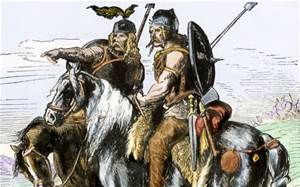 Gauls and Visigoths ending abruptly.
 Tracy turned back to look at her husband, a smile on her lips. “You didn’t see his gem-encrusted penis ring. Gave new meaning to the term Family Jewels.”Doug huffed, “Where are the police?” Craning his neck, he watched the man’s backside, adding, “Surely, even in France, one can’t walk around naked.” Tracy looked at Doug, her brow now furrowed. “Why not? He seemed perfectly happy to me.” She turned around for another glimpse, but the nudist had already disappeared into a crowd. “And harmless,” she said, more to herself, continuing to look down the street. A moment later there was a scuffle when two police approached. They grabbed the naked man’s arms, plucking him from passers-by, and dragged him out of Tracy’s sight. “Good!” Doug said, settling back into his seat, pulling straight his jacket lapels. “That’s taken care of.” The waiter appeared and disinterestedly placed two cups on their table, leaving immediately. “Merci,” Tracy said to the retreating white-shirted back. She reached for a paper napkin and, while sopping up spilled coffee from the saucer, she studied her husband’s face. “Why good? Why can’t we do what makes us happy, whenever the moment grabs us?” “What a question! Everything would become chaotic without rules. You know that. You’ve helped me raise three children.” “Helped?” Tracy said, catching her breath, her head shaking in anger. More like, we’ve always done as you’ve said, but she didn’t dare speak those words out loud. “People can’t do whatever they want, you know, not if it upsets everyone.” Doug settled back into his seat, looking satisfied he had made his point and their discussion was over. Looking around, Tracyobserved that life in the café had resumed as though nothing had happened. Or, what was more likely the case–a naked man walking down a Paris street was so common an occurrence that few had paid any attention at all. She waved an arm at other diners seated on the patio. “You’re the only one who’s upset.” Laughing, she added, “Besides, if the man has an expensive penis ring, why can’t he flaunt it?” No longer in the shade, she cupped a hand over her eyes. Doug’s face, even still protected by the overhead awning, was turning a brilliant crimson; sweat beaded his brow. “Tracy, this isn’t funny. He’s crazy. How long will it be before he hurts someone, or himself? Better if he’s locked up.” Like me? Tracypursed her lips, but remained silent. After a few moments, gathering courage, she looked Doug straight in the eye, and said, “I’m leaving.” “You want to go back to the hotel? But we just got our coffee. I thought we were going to eat lunch.” He searched around for their waiter.
 “No, Doug. I’m leaving you.” Tracyreached to the ground, fingering her purse’s handles.
Doug turned back to her with a deer-in-the-headlights look. She’d managed to silence him more effectively than if she’d reached across and slapped his face. Composing himself, he harrumphed and, reaching for the sugar, fumbled with the coffee spoon, buying time to avoid the direction Tracy was heading. Finally finding his voice, Doug said with a hiss, “What will the kids think? What about the rest of the family, our friends, our neighbours? How do you expect me to explain this to everyone? Have you considered anything at all? You’re going to make me look like a fool!” The balding spot where his hairline was receding had been sunburned an angry red; the skin would soon peel. A tear glistened in the corner of one eye. Quickly removing his glasses, he swiped the moisture away, not allowing it an opportunity to course down his cheek.Tracy sighed and shook her head as if to stop any guilt from settling on her shoulders yet one more time. She grabbed the handles of her bag, lifting it from the ground and, pushing herself up from the chair, reached over and placed one palm on her husband’s cheek. She whispered, “Goodbye, Doug.” Then turning, she straightened her back and walked steadily through the café entrance, out onto the sidewalk, heading towards their hotel. If Doug had called out, trying to stop her, she didn’t hear. The sun shining full on her face caused her to squint. Or was that the beginning of a smile? Tracyopened her bag and pulled out a pair of sunglasses, fitting them on. Then flicking the blouse button high on her neck, she impulsively unfastened it, as well as the next, allowing a slight breeze to deliciously trickle down into her cleavage.
***
Tracy sighed deeply. Where had her happiness gone, what she’d felt earlier when leaving the restaurant? She walked over to the window and drew back the curtains. The much cheaper room-without-a-view Doug had insisted on booking looked out on the blank wall of a next-door building. The large pane of glass still allowed in some light, although not that famous Paris light known to artists, and Tracystood in the middle of its sunny warmth, trying to clear her mind of all thought. It hurt to think, but if she could just figure out which direction was best, now that she’d suddenly set things in motion. All she knew was that there was no going back to what they’d had, what they had been.Reaching behind her head, Tracyexpertly pinned up some escaped strands of hair into the usual tightly wound bun. Sighing once more, she walked over to the wardrobe, opened the door and, reaching in, pulled out her own suitcase. She hesitated briefly, just for a moment, before also grabbing Doug’s.
Thank you Susan for sharing your stories. Dear readers, if you get a chance, pick up one of Susan's novels. You won't be disappointed.

Watch here next week when Rob Rayner of New Brunswick is featured as our guest author.



November 29, 2015
4Q Interview with Author Chuck Bowie plus an excerpt from AMACAT
 4Q Interview is pleased to have Chuck Bowie of Fredericton, NB as our featured artist this week. This is Chuck’s second visit to the Scribbler. If you missed the first, one click on this link to read more of his bio or you can check out his web site which is listed below.
 The Scribbler is taking a different approach to the 4Q today and adding an excerpt from Chuck’s latest release—AMACAT—following the interview.
4Q: I have had the pleasure of meeting Sean Donovan, your ‘thief for hire”, in your first novel – Three Wrongs, a highly enjoyable tale. I’m looking forward to reading your newest work. Tell us about AMACAT.
 CB: AMACAT is an acronym for the three crimes that are committed in this second novel in the series. It stands for A Mask, A Cask and A Task. There are actually four crimes including two ‘tasks’. One happens just before the novel begins, so I’m cheating (but in a good way, I hope!)My man Donovan is a thief for hire. He’ll go anywhere in the world to steal things for people, and he’s paid very well to break the law. In AMACAT, however, he’s using his skills to get his friends and a sister out of trouble. Somehow, he still finds a way to make money, though, because his conscience is a complicated mechanism.I like applying multiple storyline arcs, or narrative arcs to tell mini stories that weave in and out of each other. For instance, in AMACAT, an acquaintance Donovan meets in Book 1 is being framed for a crime in her workplace: The Canadian Embassy in London. While they are ‘on the lam’, Donovan and his new friend, Beth, try to return a stolen mask in France, as well as searching for a missing barrel of wine, the titular ‘Cask’.In Book 1: Three Wrongs, I’ve written a classic thriller. AMACAT, while adhering to the concept and format of a thriller, has moments within it that are a bit lighter in tone. For instance, there is a chase scene, but it’s on a cruise ship. And the chase takes two days on the boat! I had a lot of fun sewing the very tense scenes in among the occasional lighter scenes. And, as with Three Wrongs, I still make mention of food, wine, music and of course, travel.
 4Q: The premise of a “thief for hire” is intriguing. What inspired this character?CB: In my previous career as a consultant for the Feds, I accepted a one-month assignment to work in Romania. I woke up one morning in a gorgeous four-star hotel—the second best one in the country—and the sun was shining, the weather was perfect, and the dogs and orphans were playing in the street under my window.I thought to myself: what if someone was alone in a strange country where nobody knew him, and he had no conscience and a desire to make money by any means necessary? What circumstances might place him in that situation, and what skills would he have, if he wanted to take advantage of his circumstances? I began writing Three Wrongs that evening.One thing I take pride in, is I make every effort to write what I know. In other words, I give myself permission to write about Bucharest (or London, Paris, or New Orleans) because I’ve been there. I know what it looks like, its peculiarities and eccentricities, so I feel like I can capture the personality of a place. Because I’ve seen it with my own eyes.I wasn’t trying to write thrillers before this series, but Donovan came along and insisted that I write him. So I did. He’s become a ‘friend’ of mine now. Ha!
4Q: Please share a childhood anecdote or memory with our readers.
CB: When I was growing up, in a military household and later in a
 rural home, no matter where we lived, there were always weapons around. I am the middle child of a large family, but we were all taught the consequences of mis-handling weapons and dangerous items. Some of the things I had access to at twelve-years-old included a bow and (hunting, or tipped) arrows, numerous hunting rifles—some vintage, some modern, pellet pistols, bb-guns, all manner of hunting and throwing knives, etc, including the famous Bowie Knife. And I owned my own machete!
 However, I was a curious child and also found a WWII bomb in the attic, a heavy jar of mercury, a chemistry set, hatchets and axes; I can’t even remember all the dangerous stuff I had access to. And I had access to hundreds of books at home and thousands of books in nearby libraries. I believe these were part of my formative years, and when writing, I try to be creative in the ways my characters get killed or injured. It’s morbid, but such fun when it remains in the imagination, I think. One reviewer flattered me by worrying how I learned how to kill people so imaginatively. I laughed at that.
4Q: What can your fans look forward for Chuck Bowie? What about Sean Donovan?
 CB: I began by trying to write a single novel: Three Wrongs. Encouraged by my agent and publisher, I began the sequel: AMACAT. It was such fun to discover a brief encounter with a character in the first book became a major character in Book 2. Book 3: Steal It All drops as an eBook sometime around Christmas and I’m halfway through Book 4, tentatively entitled The Body On The Underwater Road, which is set in Niagara On The Lake and St. Andrews By The Sea.Book 2 has a major narrative arc set in Prince Edward Island, which was fun for me, since I write international thrillers. But many of my readers are American and enjoy reading about Canada, because it’s international to them. Book 3 returns to England, with a visit to Romania, so that’s great fun for me. My publisher is encouraging me to write more novels in this series, and since for me ideas are easy to come by, I expect I will. My thief Donovan is seeking redemption from the business of theft for hire, but redemption appears to be taking its good old time for him!
 I’m already thinking about Book 5, so, we’ll see.
Chuck Bowie is currently writing the fourth novel in the Donovan: Thief For Hireseries. You can read bits and bobs from him via social media:Website: http:chuckbowie.caTwitter: @BowieChuckOr you can find him on FaceBook as well.
His novels can be found at Westminster Books in Fredericton, Tidewater Books in Sackville, Chapters or Amazon, or from his publisher: MuseItUp Publications.
Here is an excerpt from the second novel in the series: AMACAT. In this scene, Beth and Donovan are hiding out in a hotel.
CHAPTER TWENTY
Covent Garden, London
 Beth woke first, skipping the semi-conscious state and flying immediately to a quickened, fully alert state. She lay on her side, eyes slits, watching this stranger sleep in the bed across from her. She’d spent a few hours in REM sleep, filled with dreams of running through the back alleys of London, men in black trench coats leaping at her from behind garbage cans and down from fire escapes. She couldn’t catch her breath, and at the end of each alley, Donovan would open a door, calling to her. “In here! Quickly,” he’d whisper. But every door kept taking her to a new alley, with more trench coats to chase her. So she awoke, sweaty and exhausted, in that most interesting of paradoxes: a hotel room containing two beds, each housing a stranger.
 But Donovan slept on, a deep, trancelike coma of a sleep, the kind you arrive at, if you’re lucky, after having remained awake for thirty-six hours. She watched him for a while, asking herself how, in this Marianas Trench of misfortune into which she had careened, she could conjure up someone like him. He had known her for all of fifteen minutes, over a year ago. He didn’t really owe her anything of substance; why was he even bothering with her, let alone going on the lam with her? A thought crossed her mind, one that made her catch her breath. Was he involved, somehow? Wasn’t it convenient that he appeared out of nowhere to advocate for her? But then she calmed. She’d called him. She’d chosen to meet at the Fin and Fowl.
Beth glanced over to where his jacket lay, the front jutting at an odd angle. I wonder what’s in his pocket. He’s still asleep; I could just…take a peek. Pretend I’m picking it up…and…take a quick look. She stared at him, stole a glance at the clock, dared to take half a glance at the coat lying on the floor and then forced her slit-eyes back onto her companion, dead to the world and barely a yard away from her nose. Beth slowly drew the covers back and placed one foot on the floor, and then another, not daring to take her eyes from his face. She backed over to the article of clothing, fumbled down to pick it up and acted as if she was going to hang it up. Another glance back to Donovan, who was still out of it. She felt something solid within the cloth of the jacket, and kept on walking to the bathroom.

Once behind the door, she took out an envelope with nothing written on the outside, opened it and looked inside. There was well over an inch of bills: hundred pound notes, serial numbers in no particular order. Folding the flap back exactly the way it had been, she studied the envelope itself. There were no markings on it whatsoever. Beth put it back in the pocket, her mind overflowing with questions. She sat on the cover of the toilet, jacket folded neatly and placed sideways across her lap, smoothing the folds, mind racing. What now? It was then the bathroom door flew open and Donovan, wide awake, peered in.
* * * *
Donovan woke from a dreamless sleep and looked across at an un-made bed. The bathroom door was closed, but there was something missing besides Beth. Shoes, pants, shirt. No jacket. Fully awake, he headed for the bathroom and, without knocking, threw it wide open. Beth stared back, knees touching and toes touching, eyes wide and bare forearms goose bumped. She stared straight ahead, at the front of his shorts, dropping her eyes to his bare feet, and then up to greet his calm gray eyes that crinkled at the edges.
He glanced at his jacket, which was folded sideways across her bare legs.
“Cold?”
“Cold? No, and I don’t have a funny come-back.”
She took the jacket by its collar and held it out for him. “Don’t worry, it’s all there.” She stared somewhere in the vicinity of his bare chest.Donovan walked in and sat down on the edge of the bathtub, his left knee grazing her right knee. He gently retrieved his jacket, placing it sideways across his lap, just as she had it a moment earlier.
“Sweetie, remember me telling you last night that you had to go to a debit machine and take out as much as you could, so our purchasing path couldn’t lead people to us? Well, wouldn’t you think I’d have to do that as well?”
Thank you Chuck for being our guest on the Scribbler this week.
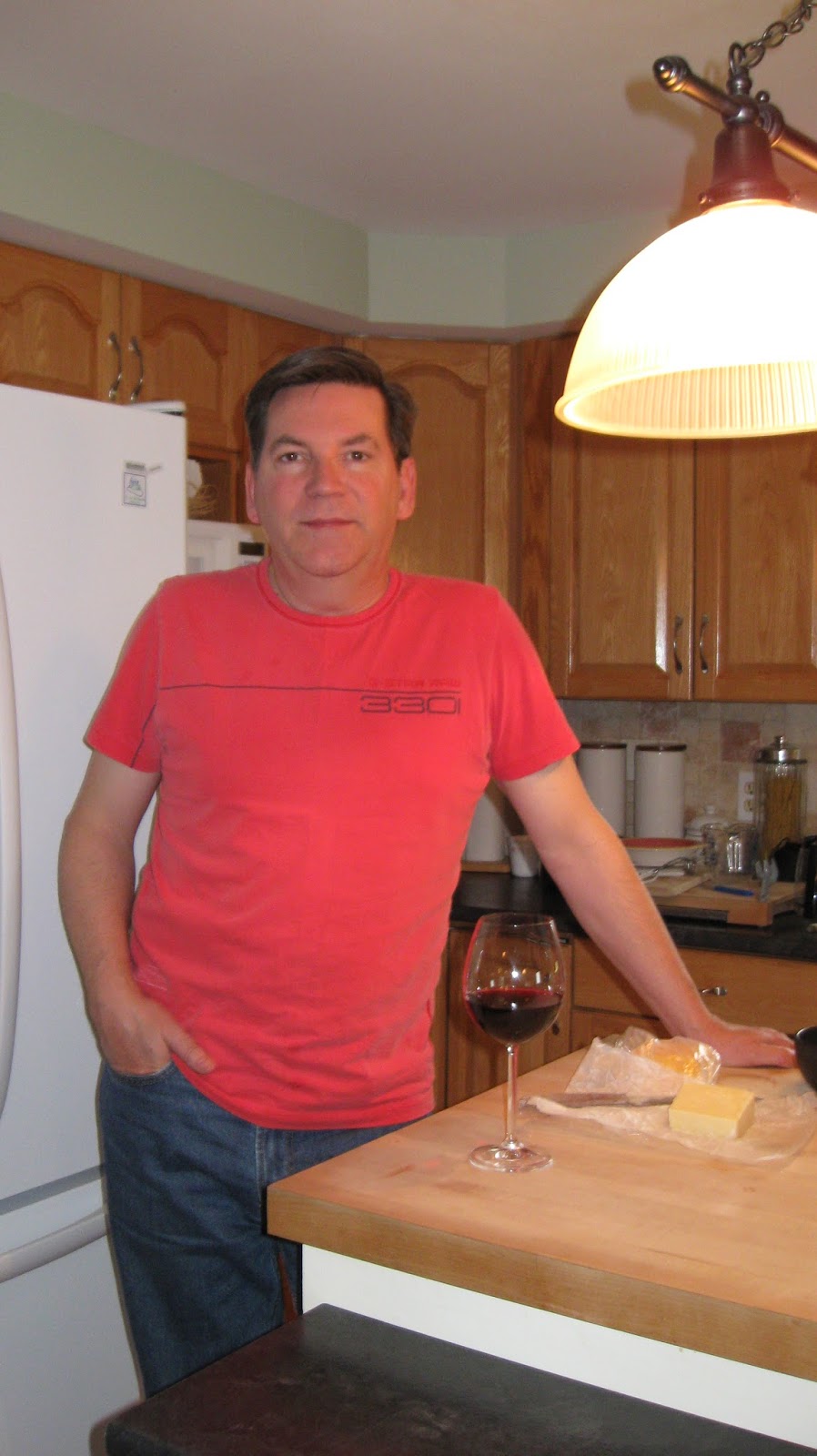
Next week, Susan Toy of Bequia returns with her short story, Family Jewels. Don't miss out on this author's fine storytelling.

Leave a comment if you like. Would love to hear what you think of the Scribbler and our guests. Leave your email address in the comment box for a drawing of a free official Dark Side of a Promise T-Shirt on January 1, 2016
November 22, 2015
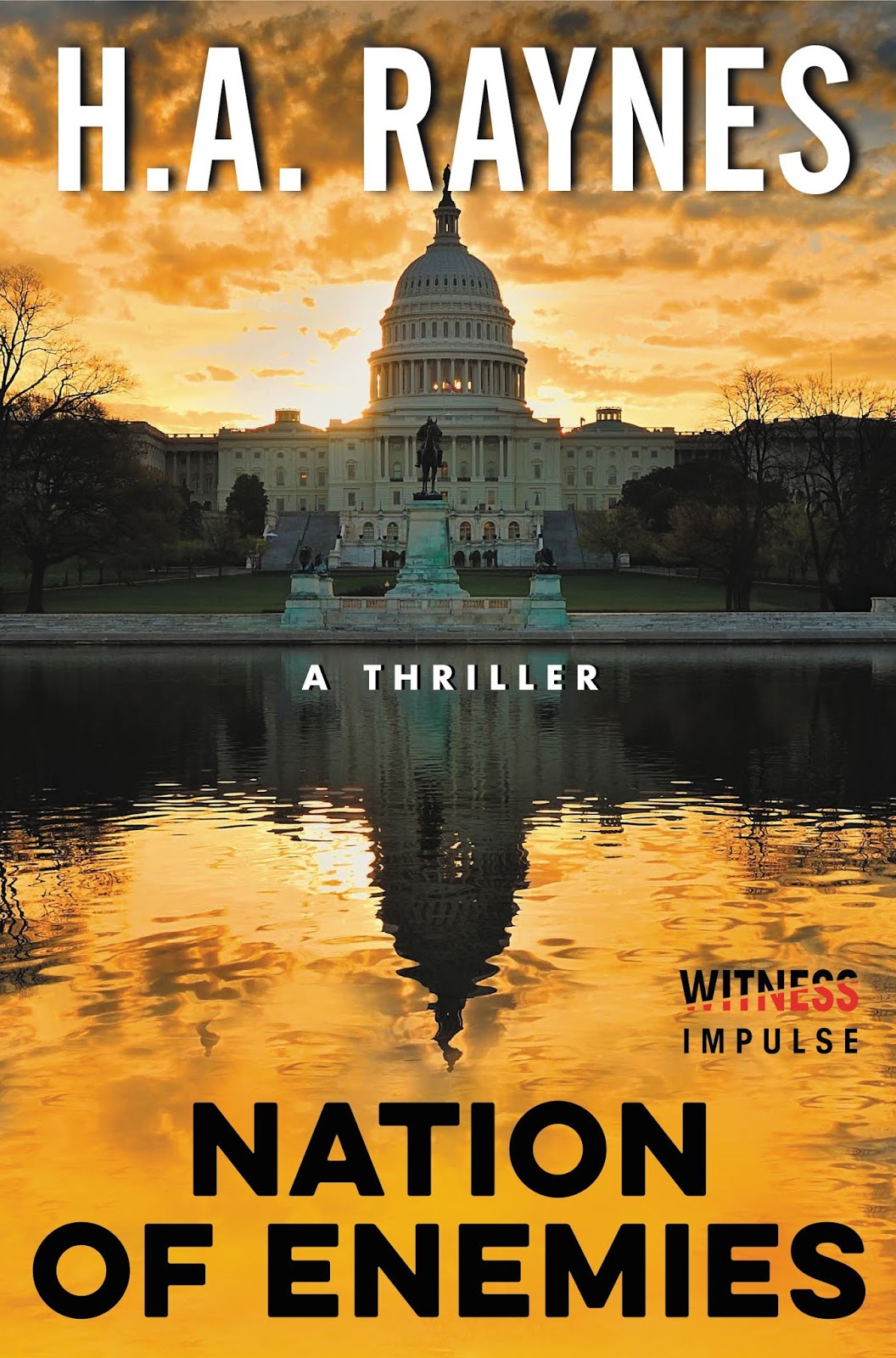
Guest Author Holly Raynes. A Nation of Enemies
 Holly Raynes was inspired to write A Nation of Enemies by a family member who was a Titanic survivor and another who escaped from Poland in World War II. Combining lessons from the past with a healthy fear of the modern landscape, this novel was born. A longtime member of the Boston writing community, she has a history of trying anything once (acting, diving out of a plane, white water rafting, and parenting). Writing and raising children seem to have stuck. The Scribbler is very happy to Holly as the featured guest this week. You don't want to miss out on the thriller - A Nation of Enemies.
 An excerpt;
CHAPTER ONE London, England - 2032 So, this is freedom. No sirens pierce the air. Buildings in the distance are whole. Yet the ground beneath his feet feels no different. Dr. Cole Fitzgerald glances past their docked cruise ship, to the horizon. The sky blends into the ocean, a monochromatic swatch of gray. A chill in the air penetrates him, dampens his coat and makes all the layers underneath heavy. When they left Boston, pink-tinged magnolia petals blanketed the sidewalks, blew across overgrown parks and the burnt remains of brownstones. He’d reached up and touched a blossom, still hanging on a limb. It’s remarkable to see beauty amid war.

The din of discontent is constant. On the vast dock of England’s Southampton Cruise Port, a few thousand passengers stand in line, all on the same quest to flee the United States. He’s heard that three million citizens emigrate annually. But no one documents whether those people are more afraid of the lone wolves and militias, or of their government bent on regaining control. Cole isn’t sure which is worse. But London is a safe place to start again. They have family here, built-in support. No point in dwelling. Beside him, Lily’s usual grace and composure are visibly in decline. He reaches out and gently strokes the nape of his wife’s neck, where pieces of her dark hair have strayed from her ponytail. The coat she wears can’t hide her belly, now twenty-nine weeks swollen with a baby girl. Cole wishes he could offer her a chair. Instead she rests on one of their enormous suitcases. Their son Ian sits cross-legged on the asphalt and reads a paperback. Throughout the journey, he’s gone along with few complaints. Ten years ago he was born the night The Planes Fell, the night that changed everything. Living in a constant state of fear is all he’s ever known. The joy and devastation of that night was so complete. To become parents at the same time terrorists took down fifty passenger planes…there were no words. It was impossible to celebrate while so many were mourning. The mist turns to rain as night comes. Every fifty feet or so, instructions are posted: Prepare left arm for MRS scan; Citizenship Applications must be completed; Use of electronic devices prohibited. Finally they cross the threshold of the Southampton Port Customs and Immigration building. The air is sour with sickness and stress and filth. Dingy subway tiles cover the walls of the enormous hall. Ahead, above dozens of immigration officer booths, a one-way mirror spans the width of the wall. Cameras, security officers, judgment. Cole’s skin prickles. In one of numerous queues, they finally near the end. Lily elbows him and juts her chin toward the front of the line. People are scanned and then directed to one of three signs: “Processing,” “Return to Country of Origin” or “Hearings.”Bile stings Cole’s throat. He calculated the risk of this trip, turned the possible outcomes in his mind endlessly. But thanks to Senator Richard Hensley and the biochip he legislated, it’s all about genetics, DNA. Black and white.
 The immigration officer at desk number 26 does not smile. The man’s shorn, square head sits atop a barely discernible neck. Without glancing up he shouts, “Next.” Cole hands him their citizenship applications. “Prepare for scanning,” the officer says. Wearing latex gloves, he holds the MedID scanner aloft, as Cole lifts his left arm. The officer scans the biochip, barely discernable under the forearm skin. The process repeats with Lily and Ian. “Mrs. Fitzgerald, please come forward again,” the officer orders. She trades concerned looks with Cole. “Yes?” The officer rifles for something under the desktop and his hands return with some kind of an apparatus. “What is that?” Cole asks. “IUMS,” the man says. “In-Utero MedID Scanner. It’s just another version of the MRS.” “What are you going to do with it?” Lily asks. “Ma’am I need you to lean forward.” He gestures with the scanner in his hand. Cole’s mind spins. They opted out of prenatal testing, wanted to enjoy their baby girl before knowing what her genetic future might hold. Despite his research, he’s never read about this technology. “New protocol.” The man smirks. He aims the scanner at Lily’s belly. “You don’t need a MedID? A blood test?” Cole presses. The officer shakes his head. “It’s an estimation but it’s good enough for our purposes.” He swipes the wand across her sweater-covered belly and once again regards the small screen. With wet eyes, Lily wraps the coat tightly around her. Ian leans into them and the three meld in anticipation. They watch as he stamps each application. From this angle, Cole can’t read it, but he knows. Lily’s MedID number of 67 is eight points from the clean benchmark of 75. There’s a thirty-percent chance she’ll develop leukemia. A fifty-percent chance depression will strike. And a ten-percent chance she’ll be diagnosed with early Alzheimer’s. Fortunately, both Cole and Ian are in the clear with MedID scores of 84 and 78 respectively. They have virtually no markers for disease. In the eyes of England’s society, Lily will be a drain on public resources. But what about the baby? Wearing the same bored expression, the officer says, “Cole and Ian Fitzgerald you’ve been approved and may proceed to the Processing line. Lily Fitzgerald, you and your unborn child have been denied and will immediately return to the United States. Do you wish to make a plea?” “We do.” A wave of nausea hits Cole. “What’s the baby’s number?” “The estimate is 74.” The officer taps his device and
 reaches below his desk to retrieve a piece of paper from a printer, the medical summary for their family. He hands the paperwork back to Cole and directs them to the “HEARINGS” line.
 “Seventy-four,” Lily whispers. Her skin is ashen. One number away from being a clean, cherished 75. It might as well be twenty. Denied is denied. Still, they’re prepared to fight. The rumor is that immigration judges rarely turn away individuals with specialized degrees. Down the corridor, they enter another section of Immigration as Cole rehearses his speech silently. They join one of the lines, each ending at a glass-encased booth. A digital monitor hangs atop each one with the name of a judge. “How do you feel?” Lily asks. “Like I’m about to kill someone on the operating table.” Cole reads the name on the booth ahead. “Let’s hope Judge Alistair Cornwall is having a good day.” They will have five minutes to make their plea. Gavel-like sounds punctuate the hearings as the lines move ahead simultaneously. Cole’s heart pounds as he clings to his CV, Harvard and Yale doctoral certificates. Sell, sell, sell. I’m a commodity. My family is worth more than numbers. The gavel sounds. It’s their turn. Cole slides the stack of papers through an opening to Judge Cornwall. Wiry gray eyebrows fan out over the judge’s dark eyes. He glances briefly at Cole, then turns his attention to the documents. “Proceed,” says the judge. “Your honor, I’m Doctor Cole Fitzgerald, Chief of Emergency Medicine at Massachusetts General Hospital in Boston. For the past six years I’ve been on the Bioscience Board there, which has lead the world in testing protein-based drugs targeting cancerous cells.” Cole coughs, glances at Lily. “For five years my wife, Lily, has been on a prophylactic course of medication used to delay or completely stop the onset of Alzheimer’s. Your new scanning system has just informed us that Lily’s carrying a baby girl with an approximate MedID number of 74. But with eleven weeks left in the pregnancy, there are still opportunities to gain that one point needed to give this child a clean number. We’ll make it our priority. I realize the immigration safeguards are in place to insure England’s physical and economic health. And I assure you that the four of us will contribute to the well-being of this country.” The timer sounds. The judge peers over Cole’s shoulder at Lily. “Mrs. Fitzgerald,” Judge Cornwall says. “You’ve brought quite the trifecta with you.” “Excuse me, sir?” Lily slides beside Cole. “Cancer. Alzheimer’s. Depression.” Her mouth opens, closes.
 The judge continues. “Fortunately, cures seem to be on the horizon. But they’re not here yet.” He flips through the paperwork. “After reviewing your case and considering your statement, my decision is to grant you, Dr. Fitzgerald, and your son Ian, temporary visas. However, I am unable to grant both Lily Fitzgerald and the unborn child the same. Mrs. Fitzgerald, your health is cost-prohibitive and as for your fetus, there is already an endless line of children in our medical system.” The timer sounds. Thirty seconds to argue. “Please, sir.” Cole’s chest tightens. “My son needs his mother, and I need my wife. Our new child needs a chance. My services to your healthcare system will be of great benefit and I’ll work tirelessly to make sure your investment in me is a wise one. Ian will thrive in your schools. And we’ll treat our daughter in-utero, as I mentioned. She’ll grow up and contribute to your society. I swear she will. Please.” The final timer goes off. “But you can’t guarantee it, can you?” Judge Cornwall slides the papers back through the slot. “No one can predict the future and many a parent has been disappointed in the outcome of children. One never knows. I regret to tell you that my decisions are final.” The gavel sounds. People behind them in line push past to get in front of the judge. In silence, the Fitzgeralds gather their things and move along the white tile floor, marred by a continuous gray smudge. At the entrance to the two final corridors, Lily moves toward the “Return to Country of Origin” sign. She says, “I want you and Ian to stay.” “No,” Cole says. “We tried. We did our best. It didn’t work.” “It worked for the two of you. You can be safe here.” “It’s not an option, Lily.” “I’ll go back. Have the baby. Maybe Kate or Sebastian can help us get visas.” Cole shakes his head. “You can’t ask an FBI agent to help you do something illegal.” Ian watches them wordlessly. “This isn’t forever.” Lily reaches for his hand and presses it between hers. “What if Ian stayed here with your cousins?” Cole suggests. “He’d be safe while we work things out at home.” “No way,” Ian interjects. “What if you don’t come back?” A river of people flows around them, arms and suitcases jostling them. The faces around them display raw emotion, nothing hidden: joy, angst, fear, relief. A security officer stationed a few feet ahead of them signals people forward with a waving hand. Finally Lily nods. Defeat burns in Cole’s gut. The three of them wrap arms, touch hair, kiss cheeks, and hold on as they savor the one moment they have left in this safe haven. And then it’s time to go. Once again they pick up their belongings and head in the direction they no longer want to go. Back home.
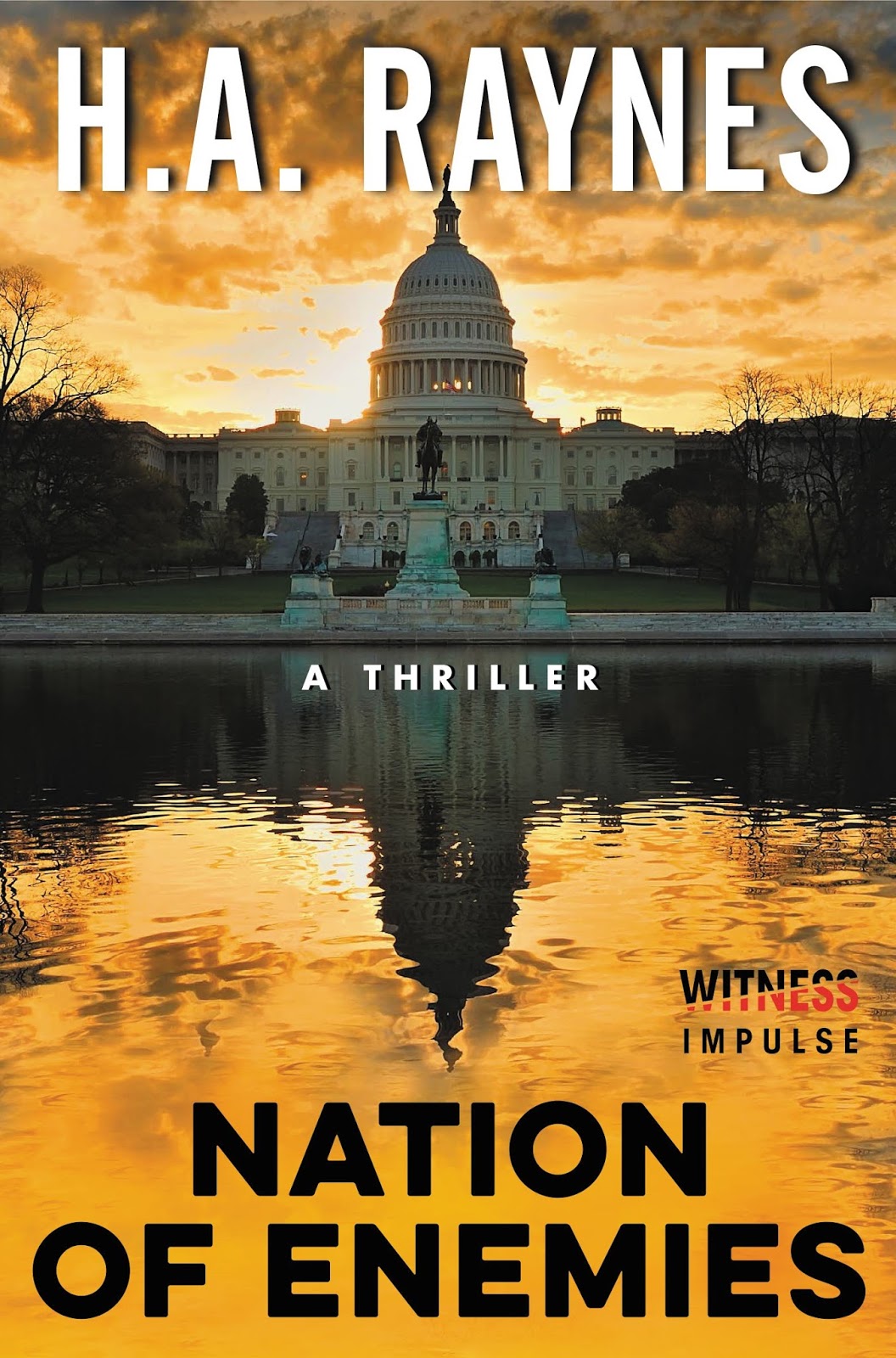 Thank you Holly for sharing your work. For those that are interested you can read more about Holly and where to buy her novel at these links. Website: http://ha-raynes.squarespace.com/home
 Facebook: http://facebook.com/HARaynes Twitter: http://twitter.com/HARaynes Goodreads: https://www.goodreads.com/HARaynes Amazon: http://www.amazon.com/Nation-Enemies-Thriller-H-A-Raynes-ebook/dp/B00T3DR58U Watch here next week when the 4Q Interview features Chuck Bowie of Fredericton, NB and an excerpt from his latest thriller - AMACAT.

November 13, 2015
Allan Hudson's Wall of War continues......Chapter 1
 The Wall of War begins in 1953 with an amateur rock climber making a startling discovery while free climbing in the Peruvian Andes.
 The Scribbler has been host to the first four parts of the opening section. You can link to the three previous installments as follows. Beginning Part 2 Part 3 Part 4
The story continues in 2004 with a cast of daring and brave characters searching for the young priest that discovers the gold dagger and strange papers written in a strange language telling of lost Incan gold....
Drake Alexander will need every resource to outthink Spanish raiders who are bent on stealing Peru's riches once more.
Wall of War - the re-discovery of an ancient artefact - Chapter 1- begins......
 November 5 2004 Ollantaytambo, Peru
 Miguel Pisconte is an affable man. Cherub cheeks and a widening waistline tell of his fondness for good food. His eyes are bright, brown and always serious. His glossy black hair, which is much too long for a priest, hangs down on his forehead. Today his mane is dotted with bits of insulation and plaster dust, his brow is beaded with sweat. Dust particles float in the air like wingless insects, a stale heated aroma of old wood follows them around. He is looking at the ceiling where he has torn down much of the old plaster and laths; he is almost up to the trapdoor which is half way across. He’s glad that he takes after his mother’s family. Even though Jemina Pisconte is a small woman, her brothers are all solidly built men of average height. His carpenter skills, slim as they are, is a trait garnished from his father, Luis. He was never able to master anything mechanical like his Dad or younger brother, Alvaro but he is handy with a hammer and saw.
He studies the water stains on the remaining stretch shaking his head. He has fixed the roof where the water had come in and now he has to repair the damage the extra moisture has made to the ceiling. He realizes how tired he is deciding to rest a bit. He plunks down on the old wooden chair taking off his safety glasses, grabs an open can of Pepsi from the table. He finishes off the cold beverage with one large gulp and closes his eyes for a moment thinking that if he had known beforehand how much work his new parish would demand, he’s not sure if he would’ve accepted the new posting. In reality that isn’t so, he is thrilled to be back in Peru, the land of his birth. His Quechan ancestors have been calling to him for years.
He drops the pry bar he is still holding to the floor amid the broken plaster and wood. Folding his arms, he wiggles down in the chair and relaxes. His thinking drifts like an unmoored boat. He’s been in Ollantaytambo for over a month now. Although he is in charge, a novice priest has been assigned to assist him in tending his flock. Befriending the young man hasn’t been a pleasing experience thus far. When he had met the retiring priest, Father Van Brevoort, a Dutchman, he was amazed at the man’s linguistic skills when he introduced “the new padre” to the small congregation in such precise Spanish.
 A smile worms across Miguel’s face as he remembers the parishioners’ warmth and love towards the elderly priest. He hopes he can win their hearts half as much. He misses the many Mexican friends he had made while in Ciudad Valles, where he had been the novice priest at one time. He misses his family back in Canada; he misses the moody waters of the Atlantic Ocean. He recalls the first sunrise he had witnessed in his new country, his father had woken them all in darkness, his mother, his younger sister Theresa. His brother Alvaro had not been born yet. They had slept in their new home, arriving the night before in the late evening. He remembers the astonishment he felt when Mr. Alexander, his family’s benefactor, led him to his own room, it was unimaginable. He had previously slept with his sister on a worn out cot, in the same room as his parents. It had been the beginning of a truly wonderful new life. He loved the Alexanders.
  He can still picture his father when he brought them outdoors that morning; their house was close to the road with the waters of the Cocagne Bay opposite them. They stood off to the side by the driveway at the front of their home. Luis Pisconte huddled them all close together, his arms around his wife Jemina and me his eldest child. Theresa was yawning and leaning against him. Miguel recalls the ancient Quechan prayers his father had spoken in thanksgiving, finishing his benediction in Spanish praising the Christian God’s goodness for bringing them there. The horizon was soon defined by the faintest of grey light. Slowly the flat line of the earth split into roaring orange and reds above, the water below changed its hue from dark to steel blue before the rising fire glazed it also. Miguel will never forget that moment as the sun crested, the lengthy morning rays painting their bodies and he looked up at his father. Giant tears escaped from his closed lids. He must’ve sensed me watching him because he opened his eyes, looked down at me, squeezed me hard and smiled. He didn’t wipe away the tears; he just continued to study the water. We stayed there embracing, thankful and hoping it to be real.
 Miguel’s reverie is interrupted by the shouting coming from the hallway; he opens his eyes as he sits up straighter. The words are not discernable yet but they are moving in his direction. It soon becomes evident from the shrillness in her voice, Senora Carmona is upset. The apologetic baritone of Father Teodoro Delapaz seems insufficient to calm the tiny woman. He stands wiping more dust from his pants before heading to open the door; they are probably going to his office, he assumes. He kicks an errant strip of broken wood onto the pile of debris as he steps through the clutter. He opens the door just as the pair are outside. His abrupt opening surprises the two causing Teodoro to raise his arms almost in defence, while the Senora clasps both hands to her chest shouting,
Ay! Caramba. Un Fantasma! “
Miguel’s face is white with plaster dust except around the eyes which are dark and imposing where his safety goggles has kept the dirt away.
“It’s no ghost Senora, only me”, says Miguel as he flashes his sociable grin.
“Oh, you startled me, my heart won’t slow down. You should be more diligent Father, scaring an old lady such as myself.”
 She has a small lace handkerchief in her hand waving it to fan her wizened face. Miguel looks into her light blue eyes admiring the seventy year old's vibrant mien. She is still an attractive woman.
 “How can we assist you today Senora Carmona?”
Teodoro interrupts Miguel’s query by stating,
“I was telling the Senora that it would be impossible for one of us to be at her sister’s birthday party tomorrow afternoon with such short notice. We have two weddings tomorrow, as you remember Father Pisconte.”
Miguel responds, directing his words towards the elderly lady,
“How marvellous that Senora Ramirez is celebrating another birthday, how old will she be?”
Senora Carmona changes her scowl to a more pleasant gesture, her eyes twinkling at the thought that the new priest remembers her sister’s name. She turns her back to the younger priest and his unaccommodating manner.
“She will be 80 tomorrow. As you may remember Father Pisconte, she has been widowed for many years and with no children, we are her only family. She is very devout and one of your most faithful attendants. I think it is only appropriate that one of you could offer the blessing for our celebratory meal.”
She folds both hands about her small clutch holding them at her waist. She steps back from the two men as if to say, “Well”?
Miguel touches the Senora lightly on her shoulder, guiding her toward to his office.
“Please come with me Senora and have a seat for one moment while my assistant and I discuss our schedule. At what time would the meal be presented?”
As she is led to the second door on the right in the hallway, she says,
“We intend to sup at 6pm so any time prior to that would be adequate”
Miguel makes sure she is comfortable suggesting he will only be a few moments. He returns to the hallway where he sees Teodoro leaning against the wall with a look of discomfort upon his dark face. He looks up as Miguel approaches him. He is about to say something when Miguel forestalls him by saying,
“Wait Teodoro, don’t say anything just yet. Hear me out. Come; let us step into the sanctuary for just a moment.”
He leads the younger priest through the heavy door separating the offices from the main church. He wonders why the man is so disagreeable and intolerant. When the door shuts behind them Teodoro says,
“Father Pisconte, there will be nothing but old women there; it will be a dull, boring encounter. Can we not find an excuse to put her off? I know it will be me that has to attend, am I correct?”
“Listen Teodoro, the Senora’s husband’s family are our wealthiest benefactors. We don’t have the luxury of offending them. Our congregation is shrinking as it is and it is our job to invigorate this parish and make it grow. Now as boring as this event may be it is without a doubt very important to her. I must remind you that the Carmona’s have the most splendid vineyard of all of Peru. They will be serving some of the finest wines fermented in these valleys. Does that alone not tempt you?”
 Something akin to guilt causes Teodoro’s brow to wrinkle, he is rubbing his hands, avoiding eye contact with his senior as he says,
 “Why do you think the vintage of their wine would be important to me Father?”
“Come on now Teodoro, do you think me so stupid that I wouldn’t notice the missing wine from our own meagre stock. I think you have a fondness for the grape, yes?”
There is no use denying Father Pisconte’s allegation. His blushing cheeks already suggest that he is not innocent. He has been in trouble enough times in his life that he knows it is better to remain quiet.
“So, you do not deny it? Well Teodoro, let me suggest to you that it is not a sin for you, or I for that matter to indulge in the blessings that God has offered us in the way of alcoholic spirits. It is only a sin when it is abused. It is also a sin to steal. I will hear your confession on Sunday but I will offer you your penance now. The weddings will be over by five pm and you will be free to attend the birthday party. So I am asking you, please be kind to the Senora. Now go to the office and make plans with her, then change your clothes and meet me in the dressing room so we can get the ceiling torn down and the debris cleaned up this afternoon. Okay?”
The novice nods in a positive gesture realizing that Father Pisconte is being generous. He also relishes the idea of sampling a vintner’s private collection.
“Yes, Father, I will do as you ask.”
Drop by November 17th to read the rest of Chapter 1.
On Friday, the November 20th post, you will meet Holly Raynes of Boston, Massachusetts. Read an excerpt from her dynamic thriller - A Nation of Enemies.

November 6, 2015
Guest Author Jorja DuPont Oliva
 Jorja DuPont Oliva is the author of the
Chasing Butterflies
series. After chasing her own butterflies, the opportunity to write a book became possible when she discovered Michael Ray King’s “Go write” classes. Novel writing would never have been possible without the motivation and inspiration that the classes gave her. Jorja believes
Chasing Butterflies
represents change and going after your passions. Therefore, that is what she has done.Jorja DuPont Oliva weaves stories of small town outlook with a touch of magical charm. Jorja’s quirky, southern writer’s voice makes her stories relaxing and easy to consume in a day.
Jorja DuPont Oliva is the author of the
Chasing Butterflies
series. After chasing her own butterflies, the opportunity to write a book became possible when she discovered Michael Ray King’s “Go write” classes. Novel writing would never have been possible without the motivation and inspiration that the classes gave her. Jorja believes
Chasing Butterflies
represents change and going after your passions. Therefore, that is what she has done.Jorja DuPont Oliva weaves stories of small town outlook with a touch of magical charm. Jorja’s quirky, southern writer’s voice makes her stories relaxing and easy to consume in a day. Jorja’s debut novel - Chasing Butterflies in the Magical Garden was published 2013. By many readers’ accounts, her stories are colorful, honest and inspirational with a touch of innocence. Jorja’s second book in the series – Chasing Butterflies in the Mystical Forest just released October 2014. We continue on a magical journey but this time in the mystical forest with a more mature, and evolved Dee and Lizzy. Each story Jorja writes has a lesson. Not only has this story shown the growth of her characters but also has affected the growth of her writings.
Jorja has just released the third book in the series – Chasing Butterflies in the Unseen Universe published Oct. 2015.
Jorja’s books contain symbolic meanings of nature’s beautiful works of art. Her unique prologues also contain a view into the eyes of creatures of air and earth as they look at human struggles. The chapters contain quotes from all areas of beliefs from Biblical, spiritual, inspirational and self-help.
An excerpt from Chasing Butterflies in the Mystical Forest.

“No pessimist ever discovered the secret of the stars, or sailed to an uncharted land,
or opened a new doorway for the human spirit.”- Helen Keller
“Rip? Are you all right? Ripley?” A muffled voice asked becoming clearer in the darkness. My old tired eyes slowly opened. “If you can’t beat’em join’em I always say.” Above me stood a foggy version of an older silver headed Dee. As I started to sit up, my sight slowly focused on the person standing in front of me. It was Dee; she was coherent, and talking to me. “I can see you.” I exhaled. “I can see...And you...You are here.”“Are you alright? You took a nasty fall.” Dee asked as she helped me to my feet. Dee brushed at the leaves that were clinging to my pants.“You are really here, and I can see you.” I exhaled the disbelief. I glanced around and noticed we were no longer at the nursing home. We were standing in a strange wooded forest. Are we in the bayou? Where are we? Am I Dreaming?“We aren’t dreaming.” Dee smiled.She hears what I’m thinking?“I do.” Dee grinned. “Can’t keep no secrets from me. At least here you can’t.”“I’m confused.” I pondered what was happening.“Are we gonna have some fun or what? I’ve been cooped up with old people for way too long. By the way, thanks for reading to me every Wednesday. That was the only sanity I could get in that place.” Dee just grinned.“Where are we?” I looked around not recognizing anything.
 “The Mystical Forest, I come here a lot. More so now.” Dee patted me on the back and strolled around a birch tree. “You gave this back to me. When you started reading to me, it helped me remember this place. Cool place, right?” Dee picked at her teeth with a twig she had scooped up from the ground. Dee’s silver hair started to color itself to the most beautiful color of red I had ever seen. The worn tired eyes she carried too began to smooth out. She looked just as she had when we were young women.“You are...Young.” I stumbled over my words. “I can see you and you are young.”
 “We...We my dear, are young.”I looked down at my hands. My hands looked so much as my mother’s looked just a few years before she passed. My age spots lightened, the crises and wrinkles straighten with each blink of my tired eyes. I slowly stood straight and I no longer had a slouching posture. I feel amazing.Every ache, every stiff part of my body was gone. I too am young again.“So you want to live, right?” Dee smiled. “Let’s get the hell on it then.” Dee grabbed me by the hand and pulled me along, towards the most beautiful rainbow that stood at the edge of the forest.“Wait, we need to grab the book.” I glanced back to where the chair sat moments before. The book was no longer there.“We don’t need the book now...” Dee just smiled at me. “We are in it. Come on... let’s get to the Garden...Lizzy should be there. Oh boy do I have a surprise for you...” An excerpt from Chasing Butterflies in the Unseen Universe
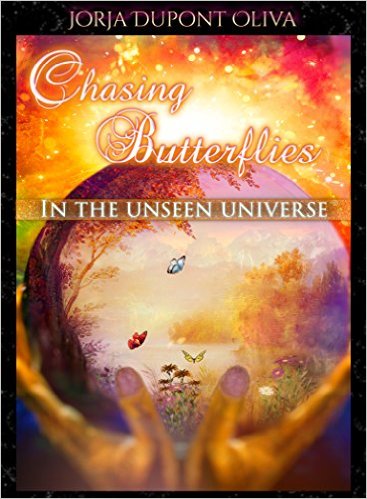 “What is happening here?” I asked as we walk through the rainbow, into a field of sunflowers. Each flower pivoted towards the suns beautiful light. As if time was moving in fast forward yet standing still at the same moment.“We are special Ripley. We were born, as what they call star children. We were placed on earth to change things. To help people. Like earth angels.” Dee glanced at me as she moved the massive sunflowers out of our walking path. “We are good. We help people see things that are unseen. Like wireless internet.” Dee smiled.“I don’t understand.”“Remember when cell phones, wireless technology, and cordless phones came to be? We had to try to explain how it worked to your parents, right? How information was all around us but yet they didn’t see it.” Dee stopped walking for a moment.“I guess. I still don’t understand what that has to do with what is happening with us, here. Now.”“That is exactly what is happening to us. Our brain is made up of energy that I call my soul, you call your conscious, and Lizzy called it her muse. Like cellular energy or wireless internet. Love is that connection, an unconditional connection. Our bodies are only the vessel, like the phone. The phone helps retrieve the signal.”“So, are you saying we aren’t in our vessels right now? We are only energy waves? Connected by unconditional love?”“Exactly! Star children are those that know they are connected through these energy waves. You have heard the saying kindred souls, right? There is no cord holding us together. Only an invisible thread, energy wave of unconditional love.” Dee began to walk again. “We are only a small part of a bigger something. Each of us has our own function. Like this book, we are the characters, each of us different, but connected together we make up the story.” Dee stopped again and tapped her pointer finger to her lip three times. “Kind of like cells in your body. They all work together to help the body function or the vessel per say.”
 “I kind of understand. I guess what I am really wanting to know is... Where is my vessel? Are we dead?’“Ripley, I’m as healthy as a horse, you heard the doctors. It’s going to take more than you having a nasty fall to kill me off.” Dee grinned. “Your vessel is fine, and you aren’t dead. They...I’ll explain more of that to you later. For now, let’s go live. We can even get a chance to visit with Lizzy.”“But...I thought...So Lizzy is...She is here?”“No, not really here. Like I said, we are all a part of a bigger whole. She isn’t here, but we are there. I know I’m probably confusing the hell out of you. We are in the book, remember?”Dee always had a way with words. Although at times they were complicated and eccentric. Her idea's always helped me see things I would have never have noticed, or seen if it wasn’t for Dee. Dee sometimes even help me understand the wrongs of the world and how maybe the wrong’s weren’t so wrong. How everything had a consequence, a reason or a function.“Speaking of Lizzy, remember back before Lizzy moved in with us? How we use to almost-know how each other felt, and would answer each other before the question was asked. We were connected then.” Dee smiled. “Remember in Mrs. Lily’s 1st grade art class, you, me and Lizzy had painted similar garden pictures. Connected!” Dee squealed and then she continued. “We weren’t friends back then but we were all three connected. Almost like we knew we would always meet in the garden.” Dee smiled with a confirming nod. “Oh yeh, and when Lizzy moved back into town? You said yourself you knew she was back before you even called her parents’ home. You said, You felt her presence. Remember?”“I was never good at remembering that kind of stuff. Honestly only recently have I been flooded with all kinds of memories. I
 gave credit to the book.”
 “Oh yes, the book. Kind of funny, you say you want to live, yet every time the book is read you are living. In whoever is reading the book, you are living in their imagination. You will live forever.”“It isn’t the same.”Dee stepped over top of some old railroad tracks the sunflowers had grown to cover up. I followed. “Oh but it is the same. I wanted to stop by here to see how the old house was doing.”Only a short distant away stood the old house Dee was so very fond of. She inherited it after her father died. She always talked about having some connection to it. Even before she learned her family owned it. Maybe she is right about being link through unconditional love.The house stood just as I remembered. I too always loved the old house. As to why, probably the stories that seemed to come from it. Mostly ghost stories. I never believed there were ghost. Dee’s theory of energies somehow made the house and the stories all make some sort of crazy since. A lot like my old sofa and the memories that still sat upon it.“Let’s go check it out. It should only take a minute.” Dee grabbed for my hand. “A minute.” Dee huffed. “I always forget time doesn’t exist here.” She dragged me by the hand towards the old house.

Thank you Jorja for sharing your delightful story on the Scribbler. Please follow this link to find out more about this accomplished author and where you can buy her novels.
The Scribbler had planned on hosting the 4Q Interview with Mathieu D'Astous but due to time restraints, the interview is not ready at present but we are working on it with hopes to post it soon, possibly next week.
October 30, 2015
Guest Author Michael Smart. An excerpt from Davidia's Seed.
 Davidia's Seed is Michael Smart's latest novel published in June, 2015. An engrossing sci-fi adventure.
Content:
Following a calamitous space battle, a small damaged pod drifts amid the debris, a single individual aboard, clinging to the final moments of life. A ship, hidden behind a small orange and red hued moon while the battle raged, approaches the debris field, searching for items to salvage and discovers the pod.
The serendipitous encounter of two strangers in space spawns an extraordinary journey and a shared destiny neither could have imagined, which will decide the fate of two worlds on the brink of war.
A discerning and cautious General, aware of the devastation a war will wrought, seeks to avoid it. A ruling Governor, imprisoned by culture and tradition, is determined to pursue it. And a clandestine operative races against time in search of the key to prevent it.
 Michael has been a guest on the Scribbler previously. I invite you to click on this link M.Smart to read more about this talented author. The link to his website is below.
An excerpt.
The enormous ship shuddered. It rolled onto its side like a charging beast felled by a hunter’s bullet. Ezekiel tumbled weightlessly within the pitch-black compartment. The dim artificial lighting winked out, replaced by bright explosive flashes and flickering firelight. Ezekiel slammed against a bulkhead, arresting his uncontrolled inertia in the confines of the small compartment.
The battle had been lost. Each brief flash of light illuminated the chaos around him. Energy relays and conduits exploded. Fires burned out of control. Beams buckled. The bulkheads and decks they supported crumbled. The acrid odor of burning equipment, machinery, and flesh, reached him through the ventilators.
 And the whiff of toxic fumes. If the poisonous gasses didn’t kill him first, the failing life support system would, merely prolonging the inevitable. Unless the compartment decompressed first. He’d sealed it upon entering, but how much longer before it imploded? The ship doomed, as explosive decompression consumed it section by section. It’d reach him soon.
 The end of life closed in on Ezekiel, clouding his consciousness, clouding his mind as he sought direction, as he waited for instructions directing the actions required of him. Instructions, which never arrived.
Ezekiel pushed himself off the bulkhead, in the direction of the scout pod he’d been servicing. His actions directed by an overriding instinct, focused solely on reaching and entering the pod.
A sudden rush of flying debris drew Ezekiel’s attention as he floated through the scout’s open hatch. The fires in the compartment snuffed out as though smothered by a giant hand. A maw-like opening in the far bulkhead grew wide, exposing the compartment to empty space beyond. Not empty. Through the breach, Ezekiel observed a vast field of fast moving debris, the mangled remnants of a once mighty fleet.
The compartment’s atmosphere vented into space, sucking the air from his lungs. A light-headedness descended upon him. And a lightness in his body, apart from the absence of gravity.
Ezekiel secured the pod’s hatch as the doomed mother ship collapsed around the scout. He activated the scout’s systems, pressurizing the tiny, cramped interior. Life support and flight controls powered on. He’d been trained and conditioned to pilot the pod, scouting beyond the range of the mother ship’s sensors.
Before he’d been able to release the dock clamps, the final explosive demise of the mother ship jettisoned the small single person scout violently into space, one more piece of debris, hurtling amidst the fragments of the mother ship.
Inertia flung Ezekiel out of the pilot seat, pinning him against the ceiling. The sound of metal impacting metal resonated through the cockpit. Alarms flashed their dull illumination on the control panel. Ezekiel’s inner ear perceived a tumbling motion.
 He reached out. Grasped the back of the pilot seat. He maneuvered his weightless body into the seat and secured the restraints around his torso and hips. Disjointed, unfamiliar thoughts rushed through his mind as he donned the control headcap. He activated the scout’s maneuvering jets and stabilized the pod’s tumbling motion. He scanned the panel, and the silent, pulsing, beckoning alarms. Borinian instruments emitted no sounds. And none of their vessels possessed transparent surfaces permitting visual sighting beyond the hull.
 He observed the energy spikes on the instruments, depicting the explosive end of the mother ship. The only sounds in the scout the thud of debris impacting the hull. Ezekiel also observed the flying flotsam displayed on the instruments. The debris spread out in all directions, travelling at speeds to keep them in perpetual motion through space, until halted by some other force.
Another instrument indicated damage to the propulsion system. Only the maneuvering thrusters functioning. Life support also functioning, but the pod was leaking atmosphere, probably punctured by a piece of debris. The pod’s power cells were draining and unable to recharge. Soon there’d be insufficient power to sustain life support, sealing his fate, if the space borne debris didn’t destroy the pod first. His escape in the scout a temporary reprieve.
Such a fate held no meaning for Ezekiel. He’d been bred to serve, and die. His every thought, every action, directed and controlled by omnipresent minds superimposed on his own. His mind linked irrevocably to his masters.
Until now. The sudden silence in his mind overwhelmed him. As frightening as the gagged chunks of metal hurtling around him. And the thoughts rushing through his mind were not of the masters, but more like the visions possessing his mind during sleep. The masters absent. The headcap he wore silent. Now all departed, along with the mother ship.
For the first time in his life, Ezekiel experienced the sensation of being utterly alone. It disoriented and frightened him. Threatened to consume him as he sought to comprehend the strange unfamiliar impulses compelling him to act. Who had directed him into the scout? Provided the instructions to escape the doomed mother ship? What actions was he required to perform next? The headcap remained ominously silent.
Absent instructions, Ezekiel was lost. He waited for death in the silence surrounding him, accompanied by the strange new voice in his mind.

Thank you Michael for sharing your story with us. Please visit Michael's website to find the links where you can purchase his novels.
http://www.michaelwsmartauthor.com Next week brings the 4Q Interview with musician Mathieu D'Astous.

October 23, 2015
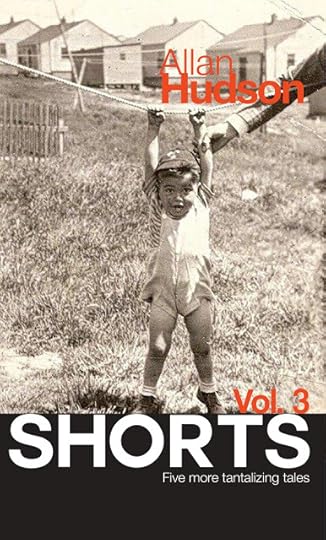
Cover Reveal & Grandchildren. SHORTS Vol.3
 So? What does writing and grandchildren have in common? Nothing, right?
 Normally that would be correct but in my case I decided that I wanted to leave a legacy to my grandkids. Something they could physically hold in their hands and say " My Grampy wrote these stories and dedicated them to me."
Will it mean anything to them sometime in the future? I can't answer that question as my crystal ball is malfunctioning this morning but I can tell you this, it means something to me.
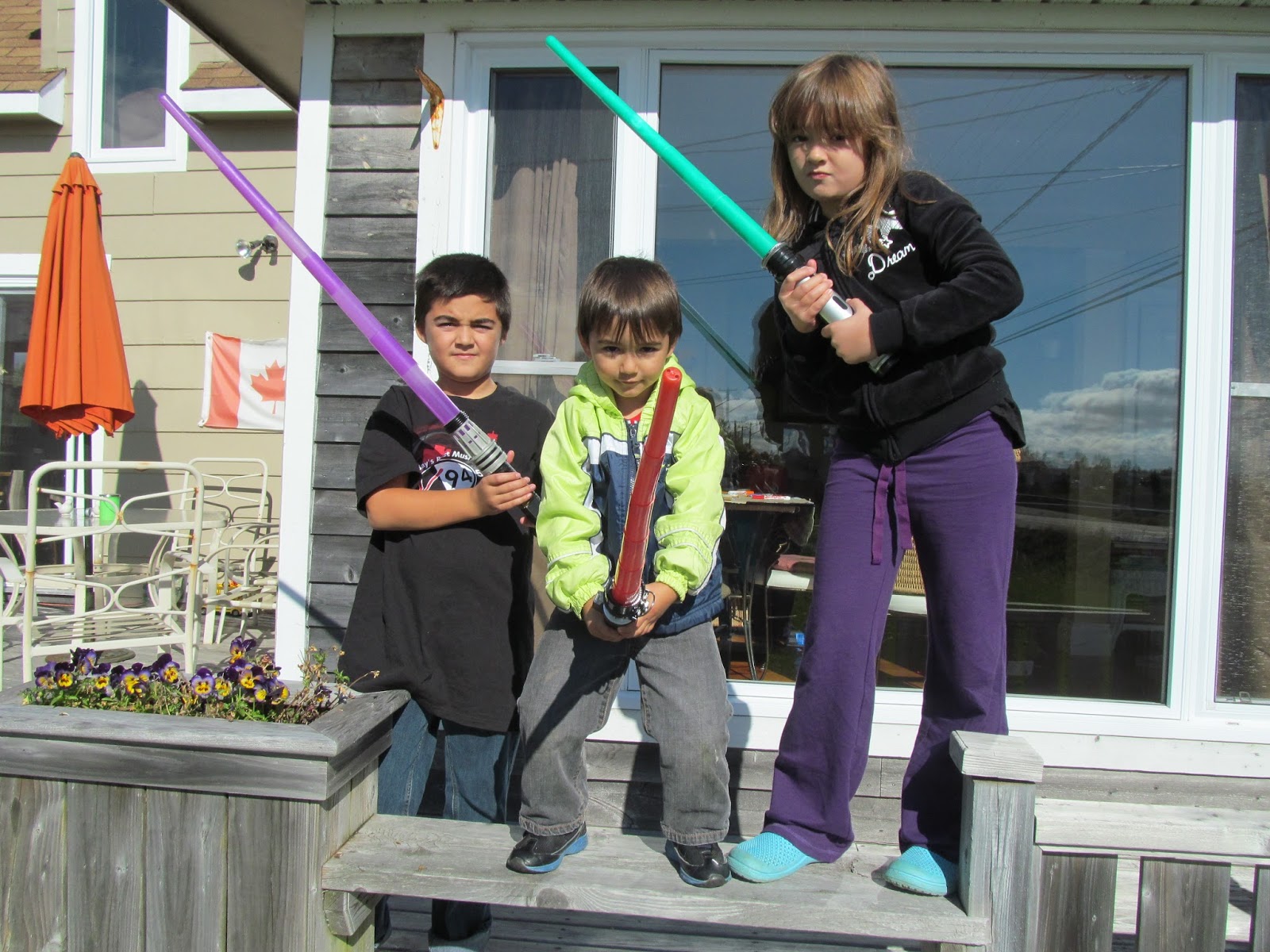 Three grandkids, three collections of short stories. I love these rascals.
You, my wonderful readers, have already been introduced to SHORTS Vol.1 & 2. Today you get a peek at Vol.3
Volume 1 was for Matthieu Isaac Young
Volume 2 was for Natasha Madeline Young
Volume 3 is for the youngest, Damien Ernest Brun Young.

SHORTS Vol.3
Letting Go
Lloyd Minister has passed away. His son Eugene has to sort through the Four Boxes of Memories his father left behind. What stories will they tell?
 It has been six months since his father, Lloyd Minister, passed away. But the last three weeks have been a trial for Eugene. All of Lloyd’s possessions had to be stored when Eugene removed them from his father’s room at the senior’s home where Lloyd had only spent one night. Most items, mainly furnishings, have now been sold, except the antique pieces he and his wife kept. Clothing, bedding and other things nobody wanted were given away. The Salvation Army van had picked them up last week. Eugene himself had carried out the last box, packed with his father’s folded suits, to place it in the van. With head hanging and deep reluctance he had set the carton softly in the vehicle but couldn’t let it go, couldn’t take his hands away from the last remnants of the man’s physical presence. The driver had had to coax him, lead him gently aside.
 One Bedroom Ark
Noah Coyne owns a convenience store. Widowed and alone, he works the long hours to keep himself occupied. Late one night the last customer only wanted to buy a can of soup but doesn’t have enough change. Making the situation sadder is the baby bundled at her shoulder.
 Noah Coyne began to count the cash in his till. The flashing of the crosswalk light on the corner caused him to look up. His reflection in the store’s front window flashed yellow every time it blinked. Outlining his proud chin and the life lines etched across his brow, the amber beam outlines a handsome man of seventy-one. The image reflected in the glass has dark holes for eyes for the faint light cannot capture the vibrancy of the owner’s gaze. Eyes of the darkest blue, like fresh steel, stare out at the empty street in front of his store. The pavement, wet and slick from a drizzling rain, shines yellow and black, yellow and black, until the warning light suddenly stops. He looks up, wondering if the person he can see crossing the street might be coming his way – one more customer before he closes. He checks the watch that covers his hairy wrist and, seeing that it’s 9:30, heads to the entrance to bring in the specials sign he places outside each morning. Two Boys, One Wagon and One Secret.
In the 1950’s nothing touched a young man’s pride like a red wagon. John and Phil (aka Beans and Chops) collect empties on the roadside every Sunday after church. One day they collected something more valuable than a returnable.
 Beans and Chops are both ten years old. Beans, aka John Pascal Williams Jr., looks like a teenager, big for his age. His hair and eyes are both dark. Everybody calls him Beans because when he was seven, every day for a week, he asked his mother if they could have beans for lunch. Someone had told him that beans would give him gas. His father always complained that gas was expensive, and he figured if he could make some gas for his father, then his dad would be happy. He had no idea how he’d get the gas in his dad’s car, but John Jr. loved nothing more than making his father happy.
 His mother figured the boy loved beans, so she fed him beans once a day for a whole week. He was producing gas all right, gas that escaped during class, announcing its freedom in a noisy and putrid fashion. At suppertime the day it happened, he told his family about his awful day. His mother explained why it happened and suggested he shouldn’t eat so many beans. His older brother Dave, upon hearing the story, laughed so hard he fell from his chair. From that day on John Jr. was called Beans.
Chops, named Caudwell Horatio Orville Phileas Sangster, was small for his age, making him look more like an eight-year-old. A cap of reddish curly locks topped his head and freckled cheeks decorated his cherubic face. His parents called him Phil. When he started school, the older kids would tell him to “Phil it up” or ask “Are you full, Phil?” or other comments making fun of his name. They teased him so often that after school he would hide in his room and cry big tearful sobs. The torment lasted until summer break. During the holidays, when he was idle, he would print his full name on blank paper, trying to decide which one he would use when he returned to school in the fall. When he couldn’t decide, he printed out the first letter from each name, forming the word CHOPS. He liked how it sounded, so after that he would only answer to Chops. The most peculiar aspect of the new name was that no one made fun of it, not even the older kids.
No Dying Today.
Detective Josephine (Jo) Naylor almost died last night if not for her partner Adam Thorne. After being ragged out by their supervisor, they set out to find the man that tried to kill her.
 Inspector Murdoch Maloney feels sorry for Jo Naylor. He tries to imagine the fear she must’ve experienced with a garrote tightening around her neck less than eight hours ago. He doesn’t need to see the red mark, which is covered by the black turtleneck she wears under her jacket. He’s faced dangerous people enough times in his life to know how nerve wracking it is to come close to death. He admits to himself that the ordeal with her father last year must have also been overwhelming, but he didn’t get to be Inspector by being a candy ass. He had just finished ragging her and her partner, Adam Thorne, out big time. But mostly Naylor as this was the second time she had ventured into a potentially dangerous situation on her own. She had just come from a checkup at the hospital. After the Inspector finishes chewing them out over how close she had come to dying, the small office is quiet. The computer tower under his desk hums in the silence. Noise from the outer offices – chatter, ringing phones, creaking chairs – is mostly muffled by the closed door behind the two detectives. They sit facing their superior’s desk: Naylor in the chair closer to the exit, to his right. Thorne has his elbows on the armrests of the chair, his fingers steepled. He’s gazing at his knees, unfocused, chewing on his inner lip in concentration. He’s been a constable detective two weeks short of a year. He knows, though, to keep his mouth shut. Maloney chews everybody out, the tough old bastard. The Food Bank
There are many people that have too much food. There are many people that go hungry. Food Banks try to balance the two by depending on donations. If you ever visited one, you might be surprised what goes on there.
 Food is a necessary staple of everyone’s life. Because of that I toss my loose change in an old cookie jar - a Woody Woodpecker sans cover that I bought at a yard sale – daily. Stationed on my night table by the lamp, it faces the closet, the ceramic peeping tom watching me change clothes all the time. At the end of each month, he and I probably save up sixteen to twenty dollars. Whoopee! But today is cause for celebration; I counted this month’s take after breakfast and found a couple of misplaced toonies, for an all-time high of $23.44. I am elated. There will mean eight more Mr. Noodles to dole out.
 Today’s my day off – Wednesday. The end of January is only a day away. My to-do list is lying on the kitchen table, nagging at me, do this, do that. I grab the pencil sitting next to it and tick off number one: “Donation time!!!!” The Maritime Megamart, with over two acres of supreme shopping pleasure, is where I’m headed. It’s not far, so I decide to walk. I retrieve my wool pea jacket from the closet, gloves from the basket on the upper shelf, boots from the rack. Just before I’m ready to leave, I remember the frosty abstract art on my bedroom window. It’s likely colder than it looks, so I decide to add a scarf. A Tip Top Tailors suit hanger holds a bevy of colored wraps snaked around each other; the brightest and flowered ones belong to my wife. I opt for my favorite grey and black checkered scarf, pulling it from the tangled mess. When I do, a beige scarf falls to the floor.
This project has been so much fun. Thank you for stopping by. SHORTS Vol.3 is now available at Amazon.ca for the low price of $1.99. HEREThe paperback will be available in November.
 Don't forget to drop by next week for the 4Q Interview with musician Mathieu D'Astous.
October 16, 2015
Guest Author Gwen Martin of Yoho, NB
 The Scribbler is pleased to have Gwen Martin as guest author this week. It is her second visit to SBS. The first was a 4Q Interview for August, 2015.
Please drop by this link GM to discover more about this talented lady. She has been kind enough to share one of her short stories. I hope you enjoy it as much as I do.
Life as Clothesline I've just come indoors from hanging clothes on the line. It’s the first time this year, as winter winds are too cold for these joint-sore fingers. Facing east, the warmth of the early spring sun on my face, I’m reminded of the simple pleasure of the act. The gentle squeak of the line as I shift it sock by sock, towel by towel, to the left. The satisfaction of arranging laundry by type and colour, a practice I first encountered in a book about Japanese culture and have followed ever since, even while chuckling at myself. The quiet aesthetics of it.A few months ago, it appeared that my terminally ill father might not leave his house again except to head to hospital, or worse. But after a round of chemotherapy and tons of TLC from my mother, he agreed last week to take a short road trip. And so my beloved and I drove him down the Saint John River. We had a glorious Mayday, poking along beside ponds and swales and soggy fields to gaze at ducks and other birds heading northward along their migration routes.
 As we watched a dabbling Wood Duck, Dad repeated what he often said while on birding trips: “The idea, you know, is to look at every bird as though you’re seeing it for the first time.” I smiled at his usual reminder never to take anything for granted. But then he added, almost to himself, “...or for the last time.”Two days after the birding expedition, I ended up in hospital. The tightness in my chest lasted long enough for me to head reluctantly into ER. Nine hours and many tests later, they said it was not a 'cardiac event' but to consult my doctor for further investigation. This I will not do, because I know it is a stress thing, related to poor adaptation. Since last summer I have tried adjusting to restrictions caused by suffering a serious concussion. I cannot walk as far or as vigorously as before, can't smell the spring air or the warming earth or the fox scent or the crocuses or the pine needles. I can’t bend over to garden for more than a few minutes. Or dance without feeling nauseous. Or sing without feeling dizzy.I cannot, in fact, get too thrilled or exuberant about anythingbecause the adrenaline does odd things to my head. I've repeatedly told myself — and truly believe — I am lucky to be alive. I should count my blessings, and I do, daily. But somewhere deep inside, that intellectual sense has not penetrated the heart. There’s still a lot of work to do.
 One of the wonderful things about hanging laundry is how its rhythms encourage contemplation. And so this morning I found myself feeling, not for the first time, that much of the angst we bring upon ourselves is caused by an unwillingness to accept the passage of time. We want things to stay the same. We want family and friends to last forever. We want to continue being strong and healthy. We want our language and culture to remain familiar. We find it difficult to see ourselves as part of the natural world, as part of the usual cabal: life, death, rebirth. But here in the woods, as I hang out the clothes, the hermit thrush is singing clearly, its call one of the most ethereal sounds in the world. The loon yodels faintly from the lake across the road. The crocuses inch open as the sun reaches the gnarled stump where I planted them last fall. A fly whizzes across the stump and dives into a yellow crocus. And I think: it's just a time thing. Expand your sense of time. Things do stay the same but within a far longer frame. We’ll always have the migrations south and north, the cultural comings and goings, the ebb and flow of life in some form or other. Onward it goes, season after season, century after century, eon after eon. The winds out here can blow hard or waft soft. Sometimes the sun warms and other times it slips behind clouds. But one thing seems certain: the clothesline may appear linear but is actually an elongated circle that will shift around and around forever.
 Thank you Gwen for being our guest this week and for your heartwarming story. Drop by the Scribbler next week when I plan on revealing the cover and content of my third collection of short stories. SHORTS Vol.3 As with the first two collections, SHORTS are dedicated to my grandchildren. Vol.3 is for the youngest, Damien.

October 9, 2015
Guest Author Brandon Kidd of Guelph, Ontario
 Brandon Kidd is an author and library worker in Guelph, Ontario. His short fiction is published in a number of periodicals and on two other writing websites: CommuterLit (www.commuterlit.com) and The Quick Brown Fox (http://quick-brown-fox-canada.blogspot.ca). Brandon's first novel, "Randy Talbot's Closet," is being released by Beau To Beau Publishing (www.beautobeau.com) later in 2015. He is an avid reader of Scandinavian crime lit, thoughtful romance novels, sci-fi/fantasy epics, and anything else with a strong narrative and interesting characters. Visit his website at www.cellardoorpress.net.
An excerpt:
“The Misfortune Cookie”
by Brandon Kidd
Kevin Watson sat before the remains of his dim sum developing indigestion. For once, he was grateful he had eaten alone. The faint blue printing on that tiny strip of paper stared back at him brighter than a Las Vegas billboard. He gulped and read them once more: “A new acquaintance will bring you disaster.”
What kind of a fucked up fortune was that!? He expected something banal like, “Your efforts will bring good results” or distinctly Confucian: “Good things come to those who wait.” Not this. Who was this stranger? Where would this fateful meeting take place? What form would this disaster take?
Kevin's palms started to sweat and then he heard the voice of Captain Jean-Luc Picard of the Starship Enterprise… In his head. Having grown up on Star Trek The Next Generation reruns, the voice of Kevin's conscience now sounded remarkably like Patrick Stewart. And why not? Captain Picard rocked! Adventurous, brave, principled, but also diplomatic and philosophical —boldly go where no one has gone before (but never needlessly risk your crew). And what did Captain Picard say to Chief Engineer Watson about this evil fortune cookie?
"Meaningless! A quaint but antiquated tradition designed to occupy superstitious minds. Pay it no further heed, Mister Watson."
Aye-aye, sir. But still, Kevin couldn’t help wondering. Could this new acquaintance be Sophie, his blind date from Saturday? He thought things had gone well. He’d made plans to see her again this Saturday. It had been his first date in over a year and he like her. So far.
“Maybe she’ll turn out to be some crazed psychopath who sends me dead squirrels in the mail. Maybe she had twelve other blind dates that week. Maybe we’ll get married only to have her leave me ten years from now for our nineteen-year-old pool boy.”
Kevin didn’t know. But as he sat there, leaning forward in his chair, loosening his tie with moist hands and staring at a couple half-eaten dumplings, he knew this: that fortune cookie had just cost the waitress her tip.
Kevin was twenty-eight years old. Last year he’d finally landed his first real, permanent full-time job since leaving school.
 He was now a professional computer programmer. He coded software for libraries. He was good at it. He liked it. He felt it was important work. It paid well enough for him to live on his own and grow a condo down-payment fund. Now who was this new acquaintance who was going to come along and screw it all up for him?
He gasped. Maybe it was his new boss, Mike —excuse me— MisterHargrove. Kevin didn’t like Mike Hargrove. He was a year younger than Kevin and about one quarter as intelligent. He was certain Hargrove was one of those guys in university who spent his time rewording Coles Notes and copying snippets of code from the internet to complete his assignments, who crammed for every exam then promptly forgot everything from the course by the next semester, who spent his hours outside class “networking” by joining every team, club, society and association on campus, scanning people at social gatherings for who might be useful at some point in the future, collecting email addresses and business cards like a pig sniffing for truffles. No, Kevin didn’t like Mike Hargrove. And now, thanks to this stupid fortune cookie, he was going to worry about getting stabbed in the back by the guy every day this week.
 Kevin reached for his wallet and left his fortune on the table. It wouldn’t matter if he took that little slip of paper with him or not, after one reading its words were tattooed on his brain. He counted out enough money to cover his bill and though for a moment before leaving a twoonie for the waitress. It wasn’t her fault fate had decided to play chicken with him.
“Have nice day,” she chimed with an elastic smile as Kevin left.
“Fat chance,” he thought.
Kevin was an unimpressive figure by many measures, certainly in comparison to the parade of other businessmen in Hugo Boss suits and Prada shoes zooming around Downtown Toronto in shiny new sports cars. He walked back to his office in an old pair of running shoes, wearing a wardrobe by Mark’s Work Warehouse, carrying a backpack by Mountain Equipment Co-op. He was of less than average height and built like a scarecrow but nevertheless reckoned himself not bad looking. He had short brown hair which he cut and styled himself, a clear complexion (on good days), and a small nose which made him look several years younger.
Walking down University Avenue on this bright, breezy spring day Kevin should have been enjoying himself, breathing in the clean air off Lake Ontario and wondering whether there was still ice on the lake back home in Winnipeg. He had moved to Toronto for university and stayed there afterward, working a long string of nerve-wracking contracts before finally landing a permanent, full-time job. But Kevin hated Toronto. No, to be accurate, he hated Torontonians —of which there were two distinct types in his opinion.
There was the native Torontonian. They were born here and alternated between attitudes of superiority and entitlement. They also spoke twenty percent faster than non-natives. Generally the native Torontonian was only suspicious when speaking to someone of the second type, the new Torontonian.
 The new Torontonian, one who has managed to establish himself in this city despite the myriad obstacles, is assumed by the native to have done so only by screwing over someone else. Native Torontonians believe, if only unconsciously, that honesty is the sacrifice demanded from newcomers by the gods of The Big City. They are, therefore, distrusting of anyone who wasn’t born within the service area of the TTC. This uneasy dynamic existed between Kevin and his boss. Hargrove exemplified the native Torontonian.
Kevin was not jealous of Mike Hargrove. He had no desire to screw him over or possess anything of his —his athletic six-foot-two frame, his extroverted personality, his $40,000 smile or his seemingly endless network of “friends.” What Kevin resented was that Hargrove thought he was jealous of him. Kevin saw this as the absolute pinnacle of arrogance. Hargrove thought so much of himself he automatically assumed that everyone around him wanted exactly what he had. Furthermore he thought so little of everyone else that he assumed they couldn’t possibly be happy and therefore must be deviously plotting to topple him from his castle of self-satisfaction and claim what he had for their own.
As he approached his office, slaloming between sidewalk vendors, Kevin recalled an exchange from earlier in the month. Hargrove had cornered him at the fax machine.
“Hey there, Kev!” he said, landing a slap on Kevin’s back.
“Hi,” Kevin replied with no more cheer than professionalism demanded. After his promotion, Mike Hargrove insisted everyone address him as "Mister Hargrove" in order to engender the necessary “aura of authority” required to successfully manage a team. Although he remained on a first name basis with a select few and still called everyone else by nicknames which ranged from flirty to offensive. "Kev" was among the more tolerable ones, so Kevin accepted it but resented the politics of it all. He skirted the drama by simply not using Hargrove's name at all. The fax machine moved slower than rush-hour traffic down Front Street.
“How’s the new workstation?”
Since his installation as manager, Hargrove had reorganized their office into cubicles of adjoining desks and Kevin, among others, had lost the privacy of an office in order to "facilitate better communication and teamwork." Kevin had already objected to the new arrangement once saying that it affected his concentration. The objection received no response.
Hargrove didn’t want to hear what Kevin really thought, but nor could Kevin bring himself to lie about this situation and say he was happy with it, so...
“Oh, as well as can be expected,” said Kevin.
The fax machine continued to struggle connecting. Goddamned dial-up! Energize, damn you!
“Good! Glad to hear it.”
Hargrove interpreted everything positively. Kevin reckoned that if he’d said, “No one likes the new arrangement, myself included. It’s the absolute worst idea in the history of the universe.” Hargrove would’ve replied with something like, “Wow! What great feedback! Way to come out of your shell and assert yourself, Kev!” He then would’ve strutted over to his office —yes, he still had an office— and shot out an email saying how proud he was of how well everyone had made the adjustment. Sociopath.
 “So, Kev, are you still trying that whole on-line dating thing?”
During the brief time they’d worked on the same team Kevin made the mistake of sharing with Hargrove some details of his personal life; he now paid for that mistake on an almost daily basis. Fortunately, Kevin knew a foolproof method for diverting Hargrove’s attention: give him an opening to brag about his own life.
“Yup. How’re things with you and Cindy?”
“Oh, things couldn’t be better!" Hargrove beamed. "She’s on assignment right now in Milan covering fashion week. But she should be on the runway if you ask me. She's got a figure on her that could rival any of those models. We’ve got plans to go up to the cottage for four days over this weekend. Oh! That reminds me...”
Hargrove leaned in to Kevin and lowered his voice.
“Here it comes,” thought Kevin. “The ask.”
“I told the director at LCS that we’d have the new module ready to show them as soon as I get back. Can you do it?”
The fax machine was finally transmitting.
“My deadline is still a week away.”
“True, but in these tough economic times we should work extra hard to impress our clients. We wouldn’t want to lose any accounts.”
The fax finally finished transmitting that invoice, having stalled just long enough to allow this oh-so-pleasant conversation to take place.
“Uh…” Kevin mentally weighed his work load and, “Well, since you’ve already told them it’ll be ready I guess it’ll have to be.”
Kevin took up his papers, and turned to his boss with a tight smile stretched across his face.
“Alright! You’re a superstar, Kev!”
Hargrove gave him a shot in the arm as he marched off to his office having successfully ensured both his professional reputation and his long weekend plans. At the expense of Kevin's. Jerk. To be continued.........
Thank you Brandon for sharing the beginning of The Misfortune Cookie.
Drop by Brandon's website to find out more about this talented writer. www.cellerdoorpress.net
Next week the Scribbler will be sharing some short works by Gwen Martin of Yoho, New Brunswick. It will be her second visit to the SBS.

October 3, 2015
4Q Interview & An Excerpt with Elizabeth Copeland
 Saving the best for the last of the eight part series of New Brunswick authors, the Scribbler is pleased to have Elizabeth Copeland of Northeastern NB for our 4Q Interview. Elizabeth is an award winning author, theatre artist and the Artistic Director of KPH Theatre Productions. She writes poetry, short stories, novels as well as plays. She offers creative writing workshops through WFNB’s Writers in the Schools Program. Discover more about this talented and busy artist by visiting her website: http://www.kphtheatreproductions.com/...
 An excerpt from her novella Jazz is below.
4Q: In Feb. of 2016, you have been invited to be a faculty member at the San Miguel Writers’ Conference in San Miguel de Allende, Mexico. Please tell us how that experience came about, and what you are planning to teach.
EC: In 2014, I applied for and was given a scholarship to attend the 2015 writers’ conference in San Miguel. Though I was unable to take advantage of the opportunity, it got me hooked on the idea of going to the conference in beautiful San Miguel, and I decided I would go after a faculty position for 2016. Looking at their list of workshops, I saw that each year they offer one workshop that is a bit outside of the box. Since I am an outside the box kind of person, I asked myself, “What could I bring to the table that is unique? What kind of learning experience could I provide that would stimulate a new way in to the experience of writing?” Hmmm…I spent the first twenty years of my career working on the stage. A good actor knows that a great idea alone will not manifest in an outstanding performance. It must be body-centered, grounded in the physical, with a willingness to be – as Rilke said – always a beginner, always in a place of discovery. Wanting to be a better actor, I studied the technique of improv based on the work of the legendary theatre artist, Viola Spolin, and then went on to work with Second City doing improv comedy. In the early stages of my career as a writer, I found that using the techniques of the improvisational actor got me out of my mind and into my senses. When I was writing JAZZ, I spent hours in my studio, improvising the characters on my feet and out loud to fine-tune each character’s voice. By now you might have guessed it. Yes, the workshop for San Miguel is based in improv, and is called ‘How to create characters that jump off the page’
 I am more than excited about my participation in the conference – not only facilitating the workshop, but also having the opportunity to learn from and network with a host of great authors. I’ll be in great company with Canadian novelists, Elizabeth Hay, Mary Novik, Sandra Gulland, and keynote speakers, Joyce Carol Oates and Gail Sheehy. Whoo hoo!
More info on the workshop and the conference here: http://sanmiguelwritersconference.org/2016-conference/2016-faculty/elizabeth-copeland/
4Q: Your novella JAZZ won the 2013 Ken Klonsky Novella prize. Please tell us about this story as well as the excitement of being published by Quattro Books. Where is this book available?EC: About the story: When he is forced to leave his suburban home at age seventeen, Jazz - a transgender F2M - moves into the heart of Toronto's LGBT community in hopes of finding the help he needs to begin his transition. A true hero's journey, this narrative features a cast of colourful characters, including Martine, a dope-smoking drag queen; Kimmie, a hairdresser with a heart of gold; Sister Mary Francis, a sharp-talking ex-nun, and his counselor; Kendall, who must face his own demons in order to support Jazz in his journey. With comedy and pathos, Jazz wrestles with the realities of the courage it takes to be transgendered in today's society. ~I found out about the Ken Klonsky novella contest from Canadian poet, Brandon Pitts, whom I got to know in Toronto after participating at in a reading series he produced at Prana Café. After I moved east, I kept in touch with Brandon, and when I started writing JAZZ,he suggested I apply. Imagine my surprise when months later, I found out that I had won the contest, and that my prize was publication with Quattro Books! The book was launched in 2014, and is available through Amazon or Quattro Books. Here’s the link for Quattro.http://quattrobooks.ca/books/jazz/
JAZZ received a great review this past Feb. through Pacific Tranquility.https://pacifictranquility.wordpress....
4Q: Please share a childhood story or anecdote.
 EC: In Grade 8, I found myself with an amazing teacher. Mr. Cartmail had that rare ability to not only instill in his students zeal for learning, but to win their love and respect as well. In short order, he turned a motely group of adolescents into a lean mean learning machine. And we had fun.After Christmas break, I came back to school to find that Mr. Cartmail had been fired. No one would say why, but by creeping around the halls and listening in at the door to the teachers lounge, I learned the truth. Mr. Cartmail had been fired because he was gay. The teacher who replaced him was a middle aged woman who, through my young eyes, had a physique and IQ of a goat. I was furious that our great teacher had been taken away. That event woke me up to the price we pay, as individuals and as a society, to justify and perpetuate our prejudices. In that year, I went from being the perfectly behaved student to a rabble-rouser. The firebrand in me was born.
4Q: Your bio mentions that you are the Artistic Director for KPH Theatre Productions. Can you elaborate on your connection to the theatre and what you do as writer?
EC: At the heart of all my work as an artist is the desire to use my craft as a way to challenge us all, myself included, to open our minds and hearts to the wonder of this life, to awaken our dormant potential and truly live out loud.
Just think…we live on a planet, which is hurtling around the sun at 66,000 miles per hour! Our galaxy is part of a vast universe of which we know only a smidgen!! Is that not a cause for wonder? If we could fully grok that, would we be so hell bent on consuming, of spoiling God’s creation all to be able to maintain the status quo of consumer culture all to get a deal at Walmart?
 The value of art is that it can open the door of the human soul to this place of wonder, of deep curiosity, of the innovative power of the imagination with which we can undoubtedly find solutions to all of the problems – social, political, environmental, that we currently face. In my work, as a theatre artist and writer, I seek to play my small part in the unfolding of that vision.
I’ll leave you with the words of one of my favourite poets, Emily Bronte.
No coward soul is mine
No trembler in this world’s storm-troubled sphere
I see Heaven’s glories shine
And Faith shines equally, arming me from fear.
 Excerpt from JAZZ – Nature’s Improvisation
Copyright © Quattro Books and Elizabeth Copeland 2014
There is a shadow of a girl floating around me. Gossamer. Guileless. I pretend I do not see her. She embarrasses me. Though I have tried, I cannot unlearn or forget what her life in me has given. And taken. Mostly taken. There is a shadow of a boy walking within me. Ferocious. Fine. Though his heart breaks and mends, and breaks and mends, and breaks again, he will not be shackled. His spirit is lightning fire.At birth, I was labeled a girl. I was named Jaswinder. My chosen name is Jazz. Like the music, I am nature’s improvisation.
I told my mother I was a boy when I was four years old. She was standing at the counter, grinding the spices for the evening meal. Curry. Cumin. Garamasala. She stopped. Sighed. Turned and smiled at me, her mouth tense. “Don’t be foolish, Jaswinder. Now, run along and wash your hands before dinner.” I told her again when I was twelve. We were in her sewing room. Bolts of brilliantly hued fabric were stacked neatly against one wall. Straight pins and needles stood gaily on a green satin pincushion. Thimbles, scissors, pinking sheers. All neatly in their place. A chest full of tiny drawers, each containing threads of different colour, stood beside the picture window that overlooked our backyard. I could see the branches of the willow tree. Waving at me. As they danced in the wind. “Close the door, Jaswinder.” She began slowly. Her voice soft. Choosing her words carefully. Wanting to say just the right thing. To convince me of the sacred wonder of it all. Of womanhood. I didn’t want to interrupt her at first, to take this moment away from her. After all, I was her only daughter. Clearly she had put a lot of effort into this speech, considered deeply how much or how little to tell me about the changes my body was going through. But in the midst of her detailed explanation, I stopped her. “Mother, I would rather die than to grow up to be a woman.” Her back stiffened. “What foolishness is this? As if you have any choice in the matter.” I told her again today. At my seventeenth birthday party. In front of my whole family – the aunties and uncles, the cousins, my friend, Jennie from high school, and my big brother, Sugith. After they brought out the presents and sang Happy Birthday. Just as my mother was about to cut the homemade carrot cake with cream cheese icing. My favourite. The smile falls from her face. She drops the knife on the floor. My brother looks away. Disgusted. “I always knew you were a freak.” “Enough, Sugith.” My father struggles to keep his voice under control. “Jaswinder. Look how you have upset your mother. This is not something we joke about” “It’s not a joke.” Freeze frame. No one knows where to look. At my brother’s twisted face? At my mother, her eyes wide in an attempt to stop the tears that threatened? Or at my father, standing still and hard as granite? On some unspoken cue, my aunties begin to fuss around my mother. A gaggle of hens, scratching and clucking. Picking up the knife from the floor. Cleaning the icing off the carpet. Straightening up the already tidy table. “Come with me.” Auntie Nazneen hisses in my ear. “NOW!” She pulls me from the room. Through the French doors, and onto the deck. “Go to your mother. Apologize at once!” “No.” “What did you say?” “No.” We wait until everyone leaves. Which doesn’t take long. Amazing how fast you can clear a room with a simple announcement.The door is shut and bolted. The window shades drawn. Auntie Nazneen and my mother scuttle from the room. I am left alone with my father. He is standing by the window with his hands clasped behind his back. Looking out. Seeing nothing. A storm is coming. But there is no escaping it. It is time. Deep breath in. Just relax. I can do this.“What is the meaning of this behaviour?” “Father, I...” My mother peeks out from the kitchen. Quietly shakes her head. Mouths the word no. I stop. The air around me crackles. A warning light goes on in my brain. A flashing sign. No more pretending. No more pretending. I swallow hard. Remember the words. Words I have learned from books, from thousands of hours of research on the Internet. Words that have helped me sew myself together. Like Peter Pan and his shadow, except I do not have a Wendy to help me. No going back after this. My hand on the lever, I pause. Check my anger. Remember. A reasonable approach will elicit a reasonable response. I open the gates of the dam to say aloud the words I have been practicing for years. The words flood out. “Father. Mother. Today is a reason to both mourn and celebrate. To mourn the loss of a daughter. And to celebrate that you have another son.” It sounded so good in rehearsal. In my bedroom. In front of the mirror. Now it sounds forced, lame, stupid. The blood drains from my mother’s face. Her jaw hangs open. She looks older by years than she did just an hour ago. My father turns his head. Regards me from the corner of his eye. No longer is there kindness. Infinite patience. The dry humour that could send me into both paroxysms of laughter. “So let me understand this. You are gay. A lesbian.” “No father, I am...” The words. The words. Where are the words? “I am...transgendered. I am a man.” He looks at me. Sees a stranger. Laughs bitterly. “You are no more a man than I am a fish.” A flash of lightening. Of understanding. It’s not working. The ground is shifting under my feet. I repeat the mantra in my head. A reasonable approach will elicit a reasonable response. Then. Riding to the rescue comes take charge, Nazneen. Commanding. Demanding compliance. “Chemim. Amarjit. Jaswinder. Come into the kitchen. We will have tea. We will talk as a family. We will work this out.” My father does not move. “Amarjit, please.” My mother’s voice. Broken. “She is your daughter.” “I no longer have a daughter.” Crash of thunder. “Brother, not so fast.” Said sweetly. Auntie Nazneen. The mediator. Calming the waters. “I agree it is shocking. But it is just a phase that she will grow out of.” Thunder cracks. The lowering sky opens. “Enough, Nazneen!” Silence hangs heavy in the air. Then a sound. Terrifying in its vulnerability. My father is weeping. Synapses firing at lightening speed, I scroll down, scanning in my head through the articles, through the lists of topics, the headings, searching for the answer to the question, What to do if your parents disown you. I walk towards my father. Wanting to offer comfort. My feet are leaden. Dragging an anvil out to sea. “No father. Not lost.” “Not lost,” my mother echoes. He turns on her. “Tell your daughter to end this nonsense, or tell her to leave this house forever!” Winds like a monsoon blow a torrent of rain. I am betrayed! Betrayed by the words that promised my salvation. The room is airless. No one moves from their frozen tableau. Blow winds. Blow. Drop the sails. Turn the bow into the wind, shouting, “This is how I was born. I cannot change that.” “This is NOT how you were born.” My father, in a rare fit of temper picks up an antique vase that has been in the family for hundreds of years. Aims. Hurls it to the floor at my feet where it shatters into tiny pieces. We all wait. For the storm to pass over. For someone to save the ship from dashing on the rocks. My mother makes her move. Chooses her side. “You must go, Jaswinder.”
End of excerpt – JAZZ Thank you Elizabeth for sharing your thoughts on the Scribbler as well as the excerpt. Next week on the Scribbler, we are happy to have Brandon Kidd of Guelph, Ontario as our Guest Author.