Allan Hudson's Blog, page 31
February 9, 2020
Six Great Books - Six Great Authors.
So many books, so little time!
Haven't we all heard that before? Or said it ourselves?
I go to the bookstores and am both overwhelmed and happy that there are so many to chose from. Just give me a couple of lifetimes and maybe... I'll read them all! Not likely.
I'd like to introduce you to a few that impressed me. The Scribbler has done this before - check out the previous Six Great Book posts:
September 23, 2018
June 15, 2019
October 27, 2019
#1 The Allspice Bath - Sonia Saikaley.

I met Sonia when she was a guest on the Scribbler - her interview - and she gifted this novel to me. I'm so pleased that she did. It's a well written story. I can't say enough good things about it. She is an award winning, Canadian author from Ottawa.
From Goodreads:
It is 1970. The evergreens are thick with snow despite it being the month of April. In an Ottawa hospital, another daughter is born to the Azar family. The parents are from Kfarmichki, a village in Lebanon but their daughters were born in Canada. Four daughters, to be precise. No sons. Youssef is the domineering father. Samira is the quiescent mother. Rima, Katrina and Mona are the traditional daughters. Then there is Adele, the newest member. "You should've been born a boy," Samira whispers to Adele shortly after her entrance into the world. As she grows, Adele learns there are certain rules Lebanese girls must follow in order to be good daughters. First off, they must learn to cook, master housework, learn Arabic and follow the traditions of their culture. Above all, they must save themselves for marriage. But Adele dreams of being an artist. When she is accepted to the University of Toronto, this is her chance to have a life outside the confines of her strict upbringing. But can she defy her father? When Youssef surprises her with a family trip to her ancestral home, Adele is excited about the journey. In Lebanon, she meets Elias. He is handsome and intelligent and Adele develops feelings for him until Elias confides to her that her unexpected meeting with him was actually a well-devised plan that is both deceitful and shocking.

Sonia's Website
#2 The Burden of the Protector - S C Eston.
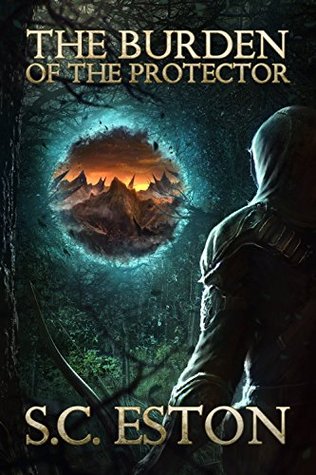
S C Eston - better known as Steve - has been featured previously with another of his fine novels. I like his writing. I enjoyed this story and if you're into Fantasy, you'll like it too. Steve has also been a guest on the Scribbler - his interview - go to the link and you can read an excerpt from this novel. Steve is definitely an author to watch. He lives in Fredericton, New Brunswick.
From Goodreads:
Dàr was born to a long line of loyal protectors. He completed his training at a young age and was posted in the Yurita Highlands, a region known for its rugged terrain and frequent earthquakes. His career was very promising, until he stumbled on a strange object in the center of a meadow.
The moment he saw the object, Dàr knew he should report his discovery to the scholars, so they can investigate, so they can make it disappear. But he did not. His decision changed many lives, including his own.
Years later, as Dàr contemplates the whole of his life, he remembers the strange discovery and the choice he made as a young protector. Long buried memories resurface. Now consumed by regret, Dàr wonders if it is too late to make amends.

His Website
#3 The Nine Lives of Charlotte Taylor - Sally Armstrong
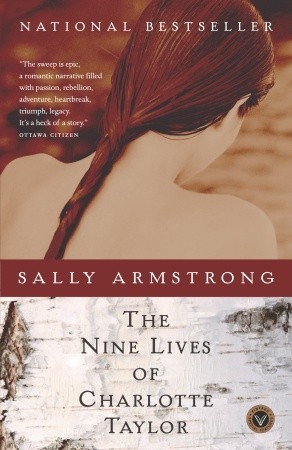 This novel was recommended by a good friend. It's a terrific read. Taking place in New Brunswick, Canada in the late 1700's. While it is mainly fiction, it is based on a real person, a distant relative of Ms. Armstrong, the author. Armstrong captures the difficulties of settling in a new world of Indians, Acadians, the British and Loyalists.
From Goodreads:
Charlotte Taylor lived in the front row of history. In 1775, at the young age of twenty, she fled her English country house and boarded a ship to Jamaica with her lover, the family’s black butler. Soon after reaching shore, Charlotte’s lover died of yellow fever, leaving her alone and pregnant in Jamaica. In the sixty-six years that followed, she would find refuge with the Mi’kmaq of what is present-day New Brunswick, have three husbands, nine more children and a lifelong relationship with an aboriginal man. Using a seamless blend of fact and fiction, Charlotte Taylor's great-great-great-granddaughter, Sally Armstrong, reclaims the life of a dauntless and unusual woman and delivers living history with all the drama and sweep of a novel.

Her Website
#4 Emma's Prayer - R A Giggie
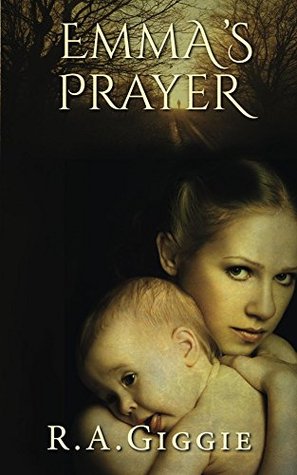
I met Renee Ann at a book fair and was intrigued by the beautiful cover and the story. Being adopted myself, the story line held a unique aspect for me. Renee Ann and I swapped novels and I've recently finished her book. There are surprises I wasn't expecting and it is well crafted. I liked this story very much. Renee Ann lives in Moncton, New Brunswick.
From Goodreads:
A teen pregnancy. A couple desperate for a family. A baby awaiting adoption.
When the opportunity presents itself, will Emma Leigh Roberts take back what’s rightfully hers, or will she come to terms with the consequences of her decision?
When Cynthia Adams, a small town speech therapist, suffers another miscarriage,
she and her husband Logan turn to adoption.
They’re delighted when a baby boy is placed in their home.
Is heartbreak inevitable?

Her FaceBook Page
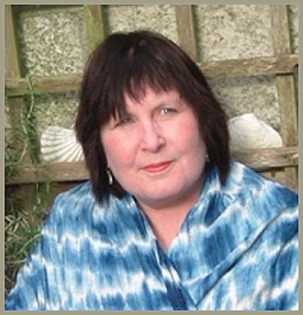
#5 Everything in this House Breaks - Sandra Bunting.
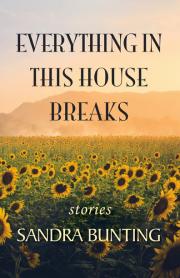
I had the pleasure of hearing Sandra read at an author's event. Since then, I received this book from Sandra. It's a collection of short stories. I've always loved short stories and Sandra does it well. I enjoyed it tremendously and am looking forward to reading more of her stories. Sandra will be a guest on the Scribbler in the near future - watch for it. Sandra lives in Miramichi, New Brunswick.
From Goodreads:
This, the second collection of short stories by poet and short fiction author Sandra Bunting, brings us into a world of untold childhood tales, unexpected life twists and even a thriller or two. The stories take the reader from Ireland to Canada and back, with each location depicted in vivid colour and with a warmth and detail typical of her work.
This second collection follows on The Effect of Frost on Southern Vines, Sandra's debut short fiction collection.
Bunting's fiction work, like her poetry, is broad-reaching and has a strong sense of place. It is resonant with personal struggle, yet evinces an earthy humour throughout. Sandra Bunting is based in New Brunswick, Canada
This, the second collection of short stories by poet and short fiction author Sandra Bunting, brings us into a world of untold childhood tales, unexpected life twists and even a thriller or two. The stories take the reader from Ireland to Canada and back, with each location depicted in vivid colour and with a warmth and detail typical of her work.
This second collection follows on The Effect of Frost on Southern Vines, Sandra's debut short fiction collection.
Bunting's fiction work, like her poetry, is broad-reaching and has a strong sense of place. It is resonant with personal struggle, yet evinces an earthy humour throughout. Sandra Bunting is based in New Brunswick, Canada
This,thesecondcollectionofshortstoriesbypoetandshortfictionauthorSandraBunting,bringsusintoaworldofuntoldchildhoodtales,unexpectedlifetwistsandevenathrillerortwo.ThestoriestakethereaderfromIrelandtoCanadaandback,witheachlocationdepictedinvividcolourandwithawarmthanddetailtypicalofherwork.
ThissecondcollectionfollowsonTheEffectofFrostonSouthernVines,Sandra'sdebutshortfictioncollection.
Bunting'sfictionwork,likeherpoetry,isbroad-reachingandhasastrongsenseofplace.Itisresonantwithpersonalstruggle,yetevincesanearthyhumourthroughout.SandraBuntingisbasedinNewBrunswick,CanadaThis,thesecondcollectionofshortstoriesbypoetandshortfictionauthorSandraBunting,bringsusintoaworldofuntoldchildhoodtales,unexpectedlifetwistsandevenathrillerortwo.ThestoriestakethereaderfromIrelandtoCanadaandback,witheachlocationdepictedinvividcolourandwithawarmthanddetailtypicalofherwork.
ThissecondcollectionfollowsonTheEffectofFrostonSouthernVines,Sandra'sdebutshortfictioncollection.
Bunting'sfictionwork,likeherpoetry,isbroad-reachingandhasastrongsenseofplace.Itisresonantwithpersonalstruggle,yetevincesanearthyhumourthroughout.SandraBuntingisbasedinNewBrunswick,Canada
Her Website
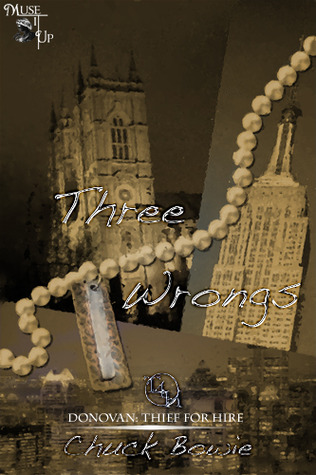
#6 Three Wrongs - Chuck Bowie
This,thesecondcollectionofshortstoriesbypoetandshortfictionauthorSandraBunting,bringsusintoaworldofuntoldchildhoodtales,unexpectedlifetwistsandevenathrillerortwo.ThestoriestakethereaderfromIrelandtoCanadaandback,witheachlocationdepictedinvividcolourandwithawarmthanddetailtypicalofherwork.
ThissecondcollectionfollowsonTheEffectofFrostonSouthernVines,Sandra'sdebutshortfictioncollection.
Bunting'sfictionwork,likeherpoetry,isbroad-reachingandhasastrongsenseofplace.Itisresonantwithpersonalstruggle,yetevincesanearthyhumourthroughout.SandraBuntingisbasedinNewBrunswick,CanadaThis,thesecondcollectionofshortstoriesbypoetandshortfictionauthorSandraBunting,bringsusintoaworldofuntoldchildhoodtales,unexpectedlifetwistsandevenathrillerortwo.ThestoriestakethereaderfromIrelandtoCanadaandback,witheachlocationdepictedinvividcolourandwithawarmthanddetailtypicalofherwork.
ThissecondcollectionfollowsonTheEffectofFrostonSouthernVines,Sandra'sdebutshortfictioncollection.
Bunting'sfictionwork,likeherpoetry,isbroad-reachingandhasastrongsenseofplace.Itisresonantwithpersonalstruggle,yetevincesanearthyhumourthroughout.SandraBuntingisbasedinNewBrunswick,CanadaThis,thesecondcollectionofshortstoriesbypoetandshortfictionauthorSandraBunting,bringsusintoaworldofuntoldchildhoodtales,unexpectedlifetwistsandevenathrillerortwo.ThestoriestakethereaderfromIrelandtoCanadaandback,witheachlocationdepictedinvividcolourandwithawarmthanddetailtypicalofherwork.
ThissecondcollectionfollowsonTheEffectofFrostonSouthernVines,Sandra'sdebutshortfictioncollection.
Bunting'sfictionwork,likeherpoetry,isbroad-reachingandhasastrongsenseofplace.Itisresonantwithpersonalstruggle,yetevincesanearthyhumourthroughout.SandraBuntingisbasedinNewBrunswick,CanadaThis is Book 1 in Bowie's Thief for Hire series. I've read them all and his latest was featured in another Six Great Books post before. Bowie knows how to craft a compelling story. I like his main character, Mr. Donovan. If you like international thrillers and you're looking for high entertainment, you'll like this series. Chuck has been a guest several times on the Scribbler. First Interview
From Goodreads:
Sean Donovan is doing all right; he has two offshore bank accounts and an American one as well and all three are filling up nicely. His network of clients know his business plan: he is willing to acquire whatever rare or inaccessible product is needed, be it the security plans to an art gallery, a rare Etruscan goblet or a recorded conversation from a former American President. And he will steal it and deliver it to them, no questions asked nor answered.
But he is becoming dissatisfied. In addition to the physical wear and tear inflicted on his body by adversaries, he is now becoming weary of the toll his newly-discovered conscience is exacting from these highly illegal exploits. A series of lies to his most recent client has caused him to think about the impact of his deeds and he doesn’t like how it makes him feel. An idea begins to form; what if he was to undo his last three wrongs? And what if he nevertheless wants to benefit from turning over this new leaf?
This story follows Sean Donovan as he travels from Bucharest to London to Montreal and New York. Will he repent his wicked ways? Will he quit the business before those who he has wronged catch up to him? Will he discover that three wrongs don’t make a right?

His Website
I'd like to take a moment to talk about a cool independent bookstore - Cover to Cover in Riverview, New Brunswick.

Owner - Crystal Wolfe - is a great supporter of local authors. It's neat, inviting and a haven for readers and author alike.

Check it out!
Their Website
Thank you dear readers for visiting the Scribbler this week.

We'd like to hear from you. Tell us about your favorite book and/or Author, or your favorite bookstore or about your Aunt Emily. Please leave a comment.


February 1, 2020
Guest Author Joe Powers of Maugerville, New Brunswick.

When you visit Joe’s website, this is the first thing you read and I think it describes his goals as an author quite well.
Joe Powers is a horror writer with a fondness for literary sleight-of-hand. He loves the idea of prompting a strong emotional reaction using no more than words and his slightly off-center imagination, and delights in taking the reader on journeys to previously unexplored regions.
The Scribbler is most fortunate to have Joe as our featured guest this week. He has agreed to a 4Q Interview and is kindly sharing an excerpt.
Joe Powers is a Canadian horror writer and long-time fan of all things scary. From his introduction to the genre on a stormy Saturday night at the age of six - his first viewing of Bride of Frankenstein - he's been hooked. Among his many inspirations he lists Stephen King, Jack Ketchum, Michael Crichton, Rod Serling and Richard Matheson. He enjoys introducing the reader to flawed, believable characters and leading them on dark journeys with an unexpected twist. His work has appeared in various anthologies and collections. His debut novel, Terror in High Water, released in September. In his spare time he's an avid hockey fan and creative writing instructor. He lives near Fredericton with his wife, Sheryl, and an assortment of furry creatures.
4Q: Your website explains your passion for writing in the horror genre. What inspires you to write scary stories?
 JP: I’ve always loved horror, as far back as I can remember. I grew up on stuff like The Twilight Zone and Shock Theater. Books, movies, comics – anything and everything with a scare element, I was in. As a child I read Stephen King’s Night Shift, which taught me two things: short stories are viable publishing options, and there is clearly a market for scary stories. As I’ve discovered, both of these things still ring true today.
I think people like to be scared, in a safe way. Horror has, in some form, been around for as long as we’ve been telling stories. In the middle ages they scared people with dragons. The Grimm brothers told cautionary tales of ogres, trolls and faeries. Nowadays, it’s found footage hauntings and summer camp slashers. Nobody wants to actually put themselves in danger, but at home in a comfy chair with the lights down low and no consequences, most people like a good scare. I’m no different, except I also like to create and provide those scares.
4Q: Tell us about The Christmas Storm, your first publication.
JP: Ha! That one’s very out of character for me. It wasn’t very scary at all, although I’m told it made a lot of people cry. For anyone who’s interested you can read it here. Here’s the story behind that piece.
Back around the end of the last decade I decided it was time to find out if any of the stuff I’d written over the years was publishable. I think that’s a turning point for most writers: we write all this stuff and stash it away, but the decision to put it out there for someone to critique – and possibly reject – is a big step. Anyway, during the course of my search I found an online magazine called Bread n’ Molasses, based out of Miramichi and produced by a lady named Kellie Underhill. BNM had an open call for stories for their Twelve Days of Christmas series. I wanted to participate, but clearly didn’t have anything appropriate for that call. So I sat down and wrote The Christmas Storm, which was about a man who rescues a dog and her puppies in the middle of a blizzard. It’s a nice, heartwarming little story, and when I told Kellie years later she was pleasantly surprised to learn she’d been the one to publish me for the first time.
 That little story did spark a chain reaction of benefits for me though. Kellie and I became friends, and a few years ago years she featured me in an interview on the podcast she launched. Additionally, in that same issue of Bread ‘n Molasses I spotted a tiny ad for a horror writing workshop offered by a local author by the name of Biff Mitchell. I took the workshop, Biff and I hit it off, and we’re good friends to this day. Through Biff I met my friend, editor and mentor J. Richard Jacobs, another great influence with whom I remain close. So even though I had no idea any of this would happen when I wrote it, this story has definitely been a good experience for me.
4Q: Please share a childhood memory or anecdote.
JP: This is a good question that really made me think. Here’s a little story I hadn’t thought about in a really long time, about an event that played a role in prompting me along my path in writing.
One day when I was about nine they had an assembly our school. They herded us all into the gymnasium where we had a guest speaker, a lady named Carole Spray. Carole had written an excellent book called “Will o’ the Wisp: Folk Tales and Legends of New Brunswick” and was going around to some of the schools to talk about it.
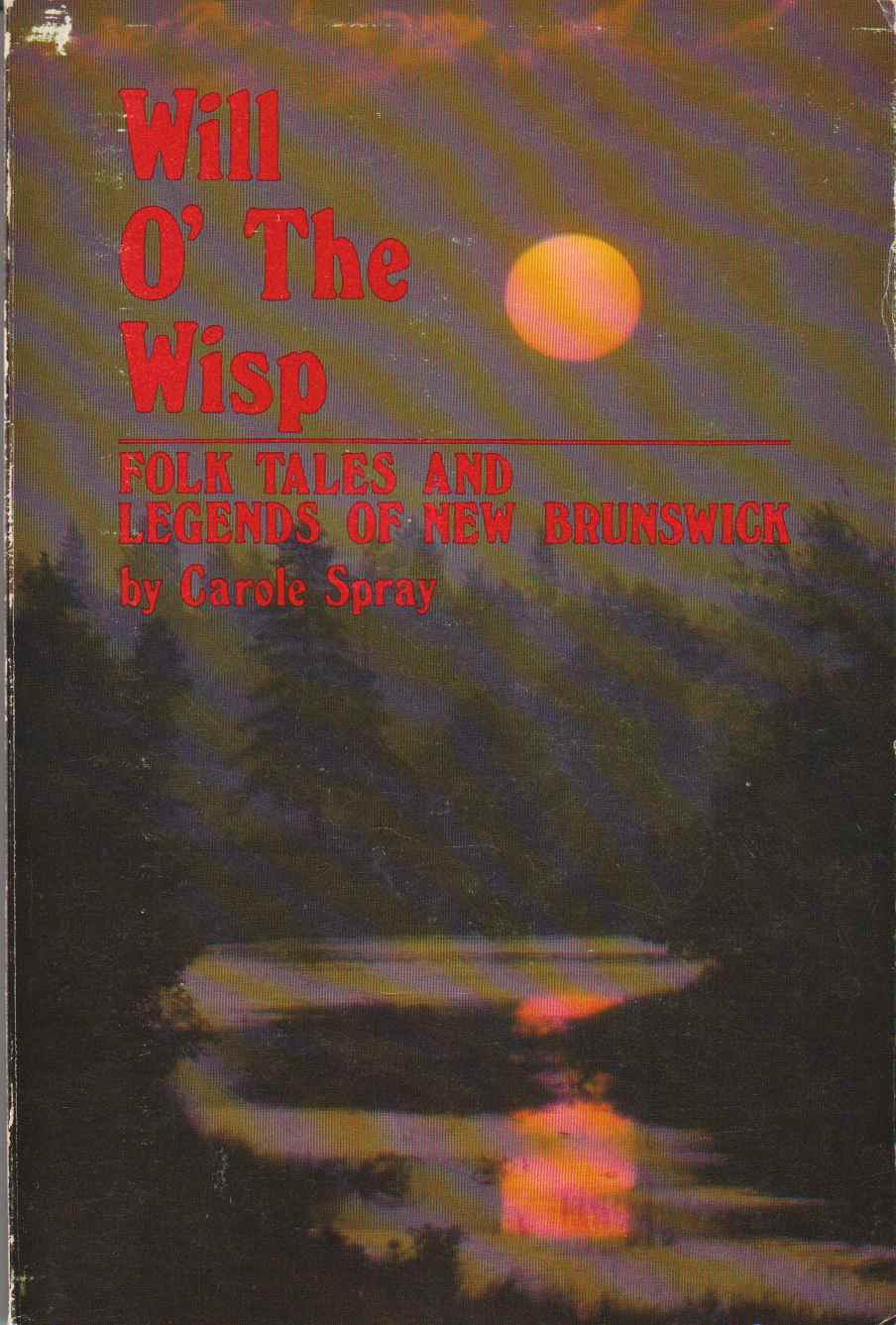
Now, I was familiar with the book already because we had a copy at home and I’d read it numerous times. But here was the author, in the flesh, right in front of me. Until that point writers were, in my young mind, larger-than-life people from distant lands, mythical creatures who regular people never got to see up close. But Carole was from Moncton and lived right here in Fredericton, and there she was in the same room with us, mere feet away. I have no way of knowing what any of the other kids thought about her visit. I can only speak for myself. I sat enthralled the entire time as she spoke about some of the stories, the way she’d gathered them and compiled them into this wonderful book that I still have a copy of in my collection today.
Let me tell you, this was an eye-opening experience for me. On that day I learned that writers are just everyday people, who can and do come from anywhere and everywhere. Anybody with a will and a desire to become an author can do so. If I had to look back and pinpoint one moment where I realized this was something I could do someday, that would be it. Carole passed away a few years ago. I never met or spoke with her again after that day, and I regret not having reached out to thank her, and to let her know the impact she had on my budding young career.
4Q: Tell us about the excerpt below.
 JP: The excerpt I’ve chosen is a scene from my novel, Terror in High Water. A demonic figure known as The Man has swept into the tiny isolated Texas town of High Water along with his monstrous band of goons and taken over. With extortion, threats, and violence they keep the town in a state of constant fear. Out of desperation two of the townspeople attempt a daring escape under cover of darkness to try and go for help. They quickly discover that escape is impossible and the situation in High Water appears completely hopeless.
4Q: When Joe Powers is feeling the most creative and saunters off to write, where might we find him and what habits does his writing take?
JP: I’ve been known to write virtually anywhere. On napkins or notepads, on my phone or my laptop, wherever I happen to be when inspiration hits. That’s because the story ideas come from anywhere and everywhere, at any time, without warning. For me, when I have an idea or something that might be worth looking at, I need to get it down right then. There’s nothing worse than sitting up in bed in the middle of the night with a great idea, then assuming it’s too good to forget and going back to sleep only to lose it by the time you wake up. I’ve lost more great titles than I can recall this way! In the past my prime time was any time after 10 or 11PM and lasted into the wee hours of the night. Years of burning the candle too brightly at both ends wasn’t sustainable, and it eventually caught up with me. These days I do most of my writing in the evening on my couch with my laptop and a pile of scribbled notes next to me.

My process is a little different from most other writers, I think. I’ll take an idea, mentally flesh it out and mull it over, work through the entire thing in my head and look for plot holes. If it seems workable I’ll write out a skeletal outline, try to get a sense of the story. Once I have that I can go back and “put the meat on the bones”, as I call it. Each time I read through I look for places where the story needs a little more fleshing out and add to it as needed. By that point I’ll usually have an idea of whether or not the working title is ideal, or if it needs something else.
4Q: What’s next?
JP: I sent my new novel, Seventeen Skulls, off to my publisher in December. It’s a creepy horror/thriller with supernatural overtones. Hopefully we’ll see that released later this year.
I’ve had a few shorts published recently, but soon we’ll see another one in a whole new direction for me: children’s horror. Mother Ghost’s Grimm Volume 2 is an anthology for kids aged 7-12 which contains a story I wrote called The Little Ones.

It’s based on the defunct Animaland roadside attraction, which I’m sure some of your local readers will remember. That’s scheduled to release early in 2020.
I do take little breaks in between projects, but never idle for long, I’m in the process of fleshing out my third novel. It’s a monster tale set in Canada’s harsh northernmost reaches. It’s in the early stages but I hope to wrap it up this summer.
4Q: Anything you would like to tell us about?
JP: I would be remiss if I didn’t take the opportunity to plug my writing courses. In Crafting the Short Story I teach writing basics, good writing habits, character development and story structure.
An Introduction to Publishing focuses on the basics of traditional publishing. Both are offered through UNB’s College of extended Learning in Fredericton, in my unusual teaching style which has been described as ‘unorthodox but effective’. For me, it’s a way to pass along some of the lessons and experiences I’ve had along the way, and maybe help to inspire others to follow their dream of writing.
On another note, I mentioned earlier how I missed out on meeting one of my earliest inspirations. In the last decade-plus I’ve been lucky enough to have met and made friends with a lot of wonderful people in the industry. Writing has opened these doors and many more to me, and I’m eternally grateful for that.
Lastly, I’d like to thank you for doing this interview with me. It thrills me that there are readers who enjoy the things I write, and are interested in learning more about me. It still catches me off guard a little bit too, but in a good way. So thanks to you, again, for exposing me to a whole new audience.
**It’s my pleasure having you as a guest, Joe. It’s interesting people like yourself that makes the Scribbler so popular.
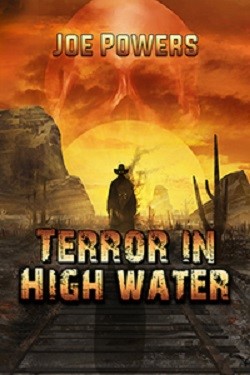
An Excerpt from Terror in High Water:
(Copyright is held by the author. Used with permission.)
* * *
Ken Sharp stood under the eaves of the general store, inconspicuously tucked into the shadows. He stared across the square at the looming facade of the hotel, alert for any sign of the Hell Hounds. He figured the riskiest part of their escape plan would be making it out of the town itself. The Man had eyes everywhere, to the point where even conversations had to be clandestine and brief. The further they got from town and the more distance they put between themselves and the Hounds, the better their chances of escape.
A sound from the alley between the store and the boarding house made him jump. He sucked in his breath, held perfectly still, and peered into the darkness of the alley. A dark figure shuffled around the corner toward him. He tensed, then relaxed when he saw the round face of Lester Hammond staring back at him.
“Jesus, Lester. You scared me half to death,” he hissed.
“I scared you? When you jumped I thought you were coming for me.”
“You’re lucky I didn’t clobber you.” Sharp exhaled. “Well, at least we’re both here. I wasn’t sure if you’d actually show up.”
“Why wouldn’t I show up?” Lester asked, sounding defensive. “I want out of here as bad as you do.”
“All right, never mind. Let’s just get out of here. Did you bring the stuff?”
Lester held up a burlap sack. “Got everything we need, right here.” He’d brought enough supplies for two days, which should be plenty if all went according to plan.
Sharp had spent much of the day scouting and watching the movements of The Man and his underlings. He knew the Hounds watched the town and the movements of the people closely all day, even though there was never more than one in plain sight at a given time. He hoped they holed up somewhere at night, which would allow him and Lester to slip away under cover of darkness.
He’d been heartened by the fact he hadn’t seen any of the Hell Hounds since late in the afternoon, and hoped they’d been sent on some mission elsewhere. Or maybe The Man wasn’t as clever as he seemed, and thought night guards were unnecessary. Whatever the reason behind their absence, he felt they needed to seize upon the opportunity and make their getaway before the Hounds returned from wherever they’d gone. They decided to avoid the trails in and out of town and go cross country to the northeast. Once they got past the flat stretch and reached the hills, they’d have better cover than out on the plains, and it would be a more direct route to the closest town anyway. All they would have to do was put some miles between them and High Water and they’d be in the clear.
They crept along the boardwalk past the boarding house and the main road to the north as they made their way toward the edge of town. They passed a few houses and storage sheds, and departed the square at the northeast corner. Within minutes they had made their way past the final few buildings, and the edge of town was within their sight. They paused to steel their nerves, took a final cautious look over their shoulders to make sure nobody had spotted or followed them and, huddled together in a crouch, scurried away from town at a brisk pace.
Lester did his best to remain discreet, as difficult as that was while out in the open. He felt completely exposed and vulnerable, and knew how easy they would be to spot out on the moonlit plain. At any moment, anyone who happened to look out a window of the hotel or any of the houses that ran along the street behind it would see them as plain as day. He cursed their luck, or lack of foresight, but kept moving.
The first portion of the journey beyond the town limits was the most nerve-wracking. They hurried and took advantage of sporadic clouds which obscured the moon to dash across the open area. Lester managed to keep pace with Sharp even though his heart pounded so loudly he would have sworn it could be heard from a mile away. He felt as if it might burst from his chest at any moment. The wind rustled the low-lying brush, and even the crickets seemed unusually noisy, as if the entire area conspired to give their position away.
Eventually, after what felt like hours, the ground began to flatten and they could see the outline of the rolling foothills in the distance. It seemed much darker this far out of town, as if whatever fleeting light from the moon and stars was stifled by the blanket of fear barely held at bay within its limits. They also knew that any animals or person lurking in the area would most likely be up ahead, among the hills.
They reached the first of the low ridges and stopped to rest next to some large boulders. Lester crouched in the dark recesses while Sharp drifted a bit further ahead to scout the land. He heard the mournful bale of a wolf in the distance, somewhere to their left. He scanned the outcroppings, his eyes peeled for any sign of movement or activity, but saw nothing. The howl was answered a moment later by another, which sounded disturbingly close. Sharp quickly made his way back to where he’d left Lester, and found him standing with his back pressed against the rock and a terrified look on his face.
“What the hell was that?” Lester demanded.
“Wolf, most likely.”
“That weren’t no wolf, Ken. You an’ me both know it. Ain’t hardly no wolves around here these days anyhow.”
“Sure there are, plenty of ‘em.” It hadn’t sounded exactly like a wolf to Sharp either, but he’d hoped it would go unnoticed. “Coyote then, maybe. What else could it be?”
Lester had no answer. He reached into the bag he’d packed and rifled through the contents until he found what he was looking for. He withdrew a small bottle with a cork stopper, and with shaking hands he pulled the cork free and took a long pull from the bottle. He winced and wiped his mouth with the back of his hand and offered the bottle to his partner.
Sharp took a swig, made a face, and coughed. “What’s in this? Lamp oil?”
“Good for what ails ya,” Lester said, and sounded a bit more at ease. The clouds had drifted away from the moon again, bathing the clearing in a soft, pale glow. They would be easier to spot, and at the same time, would be able to see an attacker approach from further away.
“Ain’t no wolves in Texas,” Lester repeated, as if to reassure himself. Both men were well aware this was not exactly true, though they had been seen much less often in recent years. The silence unnerved Lester. He suddenly wished he was back in his little house in High Water, which felt far safer to him than the wide open spaces inhabited by unseen dangers. “How much further is it to Jerome’s place?” he asked. “Maybe we could drop in there, gather our wits before we head out.” Although he had never met Jerome, he knew the Ward ranch lay somewhere to the north of town, even though he’d never been there and had no real concept of where it was situated.
Before Sharp could reply, a large black mass landed heavily on the path before them, as if a chunk of the nearby shadow had broken off and dove into the patch of moonlight. It looked like a dog of some sort, far too large to be a wolf or coyote. It was slung low to the ground and solidly built, with a huge shaggy head and broad shoulders. Its wide, flat head hung low, and it regarded the men with beady red eyes which gleamed in the moonlight. It squared itself to the men and stared up at them with a low, steady growl from deep within its throat.
The startled pair froze in their tracks, scarcely breathing, too frightened to move. The dog snarled and took a lumbering step toward them. Slowly, without taking their eyes from it, they eased around the rock away from the dog, stepping backward deliberately and slowly so as not to provoke an attack. Neither uttered a word nor made any sudden movement. Though the dog continued to stalk them, it kept pace but neither gained nor lost ground. It forced them back around one of the hills then fell back a few paces, which gave the men enough space to get away as long as they kept moving. Finally the dog lay down on the trail and watched them closely as they retreated.
They continued to retrace their steps until they were almost back to town. They could no longer see or hear the dog, but knew it was out there somewhere.
Lester stared into the darkness beyond, as if he hoped to catch a glimpse of their pursuer. “What do we do?” he asked.
“Well, we sure as hell can’t go back out there,” Sharp said.
“You ever see a dog like that ‘un before?”
“No, no dog or any animal that looked anything like it. Damn thing was as big as a bear.”
Lester sighed, exasperated. “Well, what now? Should we try another direction?”
“That thing found us in the dark—it knows our scent now. It’ll be watching for us.” He scratched the back of his neck. “No, I believe I’ll stay home where it’s safer.”
“But The Man, those goons of his—”
“We’ll figure a way around him, one way or another. I’m not any happier about it than you are. As for right now, we’re damned if we do and damned if we don’t. At least if we go back we’ll be a lot more likely to see morning come.”
Lester dreaded the idea of what might be in store for them back home, but seeing no real alternative, he reluctantly agreed. They parted ways and crept back to their homes as stealthily as they could.
* * *
The Man sat at the table in one of the rooms above the bar with his feet up and his hat pulled down low over his eyes. Agamemnon stood across the room from him and stared out the window into the darkness. On the moonlit plain he spotted two figures darting toward town. They moved with exaggerated, almost comical stealth, but his sharp eyes and sensitive ears picked up on them immediately.
“Here they come,” he growled.
The Man peered out from under his hat. “What are they doing?”
“Going out of their way not to be noticed. They look like idiots out there. A blind man could have spotted them by now.”
“You think they’ll try again? Maybe head off in a different direction?”
The large man watched their movements. “I don’t think so. Nah, they just split up. They’re going home, I’d say. Tails between their legs.”
The Man smiled and tugged his hat back down over his eyes. “Well, there’s a story for the locals come tomorrow,” he said. “Not only are we a mean bunch of hombres, we’ve got a badass pack of devil dogs guarding the premises.”
Agamemnon grunted and turned away from the window. “We should do something about them though,” he said. “Better not to let them think they got away with it.”
“Fear, Agamemnon,” he replied. “Fear is our greatest tool. Think about it. We go down there and kill these fools, nobody knows what happened to them. We let them live, think they got away with something, they’ll tell everyone they see. Once word of this gets around, nobody will even want to go outside for a piss after dark.”
Agamemnon nodded once. “Makes sense,” he grunted, and went back to staring out the window.
* * *
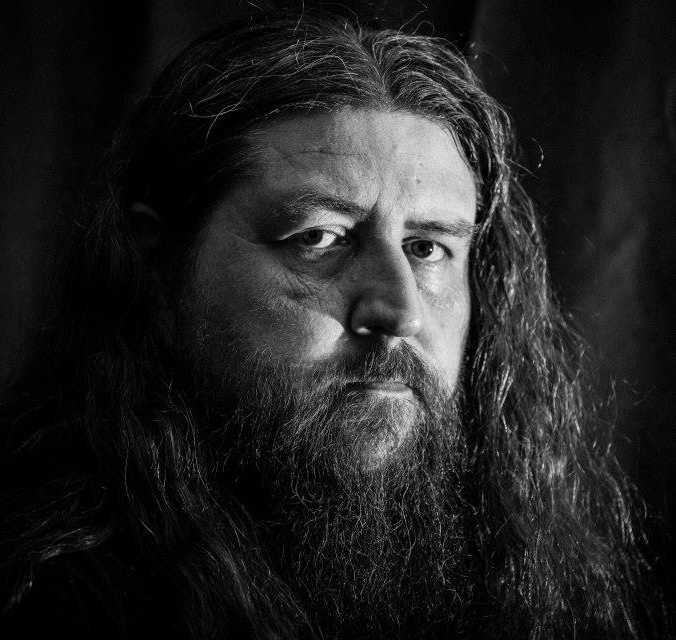
Thank you, Joe, for sharing your thoughts and a sample of your work.

For you readers wanting to discover more about Joe and his writing, please follow these links:
Joe’s website
Terror in High Water
Available Titles
Crafting the Short Story
An Introduction to Publishing
January 25, 2020
Visual Artist Jessie Babin of Moncton, New Brunswick
 An accomplished artist whose work has been recognized by People’s Choice Awards and the Beaverbrook Gala. Her work is part of the University of New Brunswick’s permanent gallery.
I had the pleasure of viewing Jessie’s work on FB when it was shared by a friend and I immediately followed her artist page. Her work is exceptional and I’m proud to say I own one of her prints which I hope grows into a larger collection.
She has graciously agreed to a 4Q Interview and is sharing examples of her spectacular sketches.
Jessie was born 1990 in Dalhousie, New Brunswick. She attended NSCAD University from 2008 to 2012 (BFA Fine Arts). In 2013, she received the People’s Choice Award at the Kingston Prize for her drawing “Valmont”. She also won Honourable Mention at the Beaverbrook Art Gallery gala in 2015. Her drawing “Smelts” is part of UNB’s permanent collection. A selection of her work was featured in the 2017 Spring-Summer issue of Arabella. Jessie is represented by Gallery 78 in Fredericton and a is member of the Portrait Society of Canada.
She lives and works in Moncton N.B.
4Q: Before we discuss anything else, I’m anxious to know how your drawing “Smelts” became part of UNB’s permanent collection.

JB: I was told the director of the UNB Art Centre Marie E. Maltais saw the drawing on Gallery 78’s websites and really liked it. They have a committee that purchases work for their collection mainly from New Brunswick and some from Nova-Scotia. I was very happy when the gallery called to tell me the good news. It’s pretty special to have one of my pieces in their collection.
4Q: I expect you get this question a lot. When did that creative spark ignite your strong desire to draw? Was there a “defining” moment?

JB: I’ve drawn since I was quite young, since the age of three. I would draw cartoons I saw on television and characters from storybooks. I enjoyed drawing a lot so I just kept it up as I grew older. For the most part growing up, I saw myself working in an artistic field. One year I’d want to be a makeup artist, the next I’d want to be a comic book artist or an illustrator. It wasn’t until my second year in University, during a fashion illustration class that I had had that “ah-ha” moment. I knew from then on, I wanted this to be my career.

4Q: When visiting your website and exploring the many drawings you’ve done, it’s very difficult to pick the one I like best because they’re all so well done. Do you have a favorite? And if so, why?
 JB: It’s difficult to pick just one, however there’s three that stand out for me. The first would be “Valmont” a portrait of my grandfather that I made in 2013 and submitted to the Kingston Prize, a national portrait competition. To this day it’s probably one of the most ambitious and technically challenging drawings I’ve done. The second is “The Calling” a coloured pencil drawing done in 2018 that was part of a series of four portraits for a show at Gallery 78 in Fredericton. I felt like I was exploring the concept and story behind the work more in this drawing. I like that’s it’s open to interpretation, I feel like the viewer is getting a glimpse of a larger narrative. And finally, a more recent piece done in 2019 called “Figure 1”. At the time, I felt like doing a few drawings that combined photorealistic elements and more traditional mark making. The result is work that is both technically precise while highlighting the mark, thus reminding the viewer that the work is a drawing.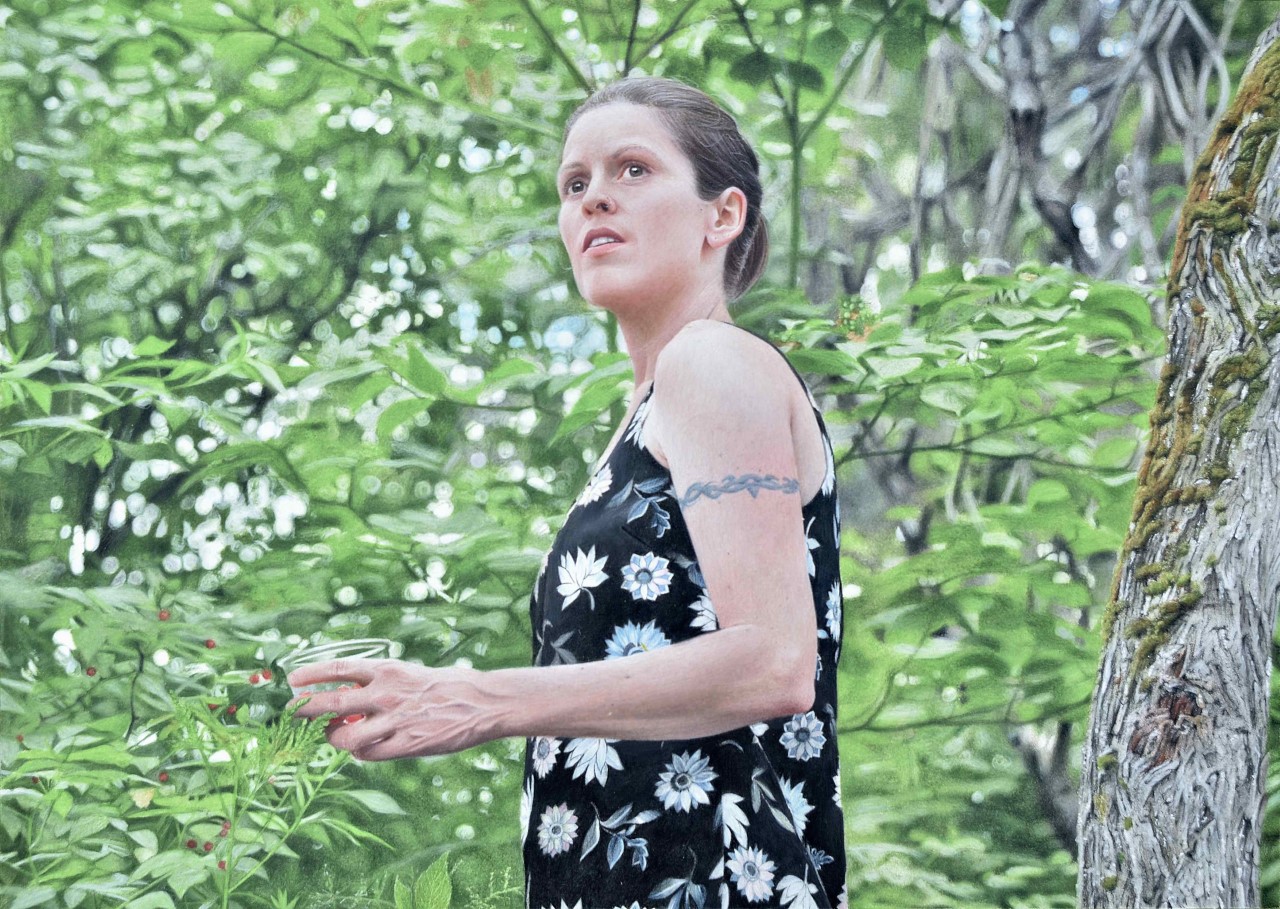
4Q: Please tell us about People’s Choice Award at the Kingston Prize.
JB: I had received the People’s Choice Award during the Kingston Prize exhibit in 2013 for my drawing “Valmont”.
It was at the very beginning of my career, I had found out about the Kingston Prize through Gallery 78. The Kingston Prize is a Canada-wide competition and exhibition tour for Canadian portrait painting and drawing. I’ve always enjoyed portraits as a subject so I thought it would be a great opportunity to challenge myself and do a large drawing since I had never attempted a large-scale portrait before this drawing. It ended up taking over a month to complete. I submitted the piece and was lucky enough to make it selected into the final 30 from hundreds of entries. I was even luckier to get the People’s Choice Award during the exhibit in Gananoque, Ontario.
4Q: And the Honourable Mention at the Beaverbrook Gala.

JB: I decided to enter the next edition of the Kingston Prize in 2015. This time, I took a completely different approach to my entry. I ended up doing a self-portrait that looked like a popup book. The concept of the drawing was my story, hence the book idea. I built a model and used it as a reference for the drawing. I made it into the finalist’s exhibition once again and walked away with the Honourable Mention award which blew me away. I remember being really excited to have my work at the Beaverbrook Art Gallery. I consider it one of my biggest achievements so far.
Thank you, Jessie, for sharing your thoughts and marvelous sketches. All the best in your creative journey.
***Scribbler note: I’m enthralled by the detail and perspective of her art. This is the one I own.
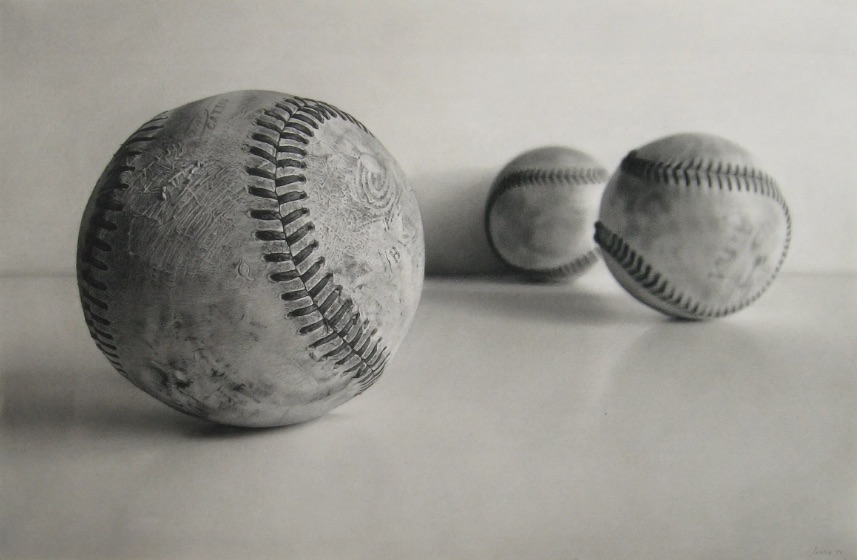
I encourage you to visit Jessies links below and support this talented author.
www.jessiebabin.com
https://www.facebook.com/JessieBabinFineArts
https://www.instagram.com/jessie_babin_fine_arts/
https://twitter.com/JessieBabinArts
January 18, 2020
Writer & Creative Jane Sturgeon of The Wirral, England.

When you visit Jane’s website, you are greeted by an image of a sunrise over the iconic Liverpool skyline and the words: Inspired by life and nature I blog, write non-fiction books available on Amazon and digital artwork posters and greeting cards on Etsy. It is a blessing to live by The Mersey, where it meets the Irish Sea, as this ever-changing landscape is a special place to thrive.
How nice is that? The Scribbler is most pleased to have Jane as our guest this week. She will entertain us with a 4Q interview and an excerpt from her writing.
Hello, Allan The Scribbler, I am delighted to be invited as your guest today. Thank you for your generosity and support.
 Jane Sturgeon has been a systems analyst, trainer, technical author, painter, psychic medium, furniture restorer, de-clutterer, therapist and creative. She has lived in Africa and The States, looked after many farms, loved through two marriages, is Mum to an extraordinary young woman and loves making things. She lives next to the Mersey River where it meets the Irish Sea and shares her life with loved ones and an impressive collection of yarn.
Self-awareness is the first book in her Writing on Water series.
4Q: Let’s talk about your role as a Creative.
JS: I have loved art since I was little and at school, I could always be found in the art room. Mostly when I ought to have been somewhere else, which could explain my poor exam results, apart from art! I grew up surrounded by creativity as Mum knitted and sewed all our clothes and both my Grannies and Great Granny used to visit and sit making things together in our living room. My sister and I learned all the handcrafts from them and our Dad, a precision engineer, can turn his hand to anything. This has led me to try painting, furniture restoration, upholstery, furniture painting and wood carving.
 Photo Credit: Nicolo SartoriMy teenage years were spent in Africa and at eighteen years old my family returned to England. I elected to stay, moved from Rhodesia (now Zimbabwe) to South Africa, and needed to earn a living, so I chose not to go to university and study art.
Creativity has been a thread throughout my life, and I have spent the last ten years working as a therapist and life coach, always encouraging clients to find their own creative outlet. Recently, I listened to the philosophical advice I flow to others and branched out into creating my own art and this time round I learned the graphic design software so I could make it digitally.
4Q: Tell us about your book. Writing on Water – Self Awareness.
 JS: As I worked as a therapist and life coach, I found that almost all issues that clients came forward with were rooted in them not feeling good enough. As we worked together to build their self-love and worth, we found that grace and connection was nurtured for them as they become more self-aware.
 I have always had a dream that I would write one day. I started a blog and then found myself writing sections that were inspired by nature and the discoveries that were created with my clients. A loving friend suggested that I mapped all the sections out on a pinboard and as I did that, it merged into a book. Much editing, technical hair-pulling (where I was rescued by a software savvy buddy) and determination later, I hit the self-publishing trail.
I ‘saw’ a series in my dream, so I called it ‘Writing on Water’ in recognition of The Mersey River and Irish Sea, that inspires and lifts me every day and my first book is ‘Self-awareness’. A collection of personal stories, photographs and observations.
4Q: please share a childhood memory or anecdote.
 JS: In Africa there is no safety net and throughout my teenage years we lived in Rhodesia, which was beset by an ever-sharpening war. We all learned the true value of community and an ability to rise, no matter what the circumstances. In the bush neighbours gathered to build barns, fight bush fires, care for livestock and stand together in times of illness and passings. Food, tools, labour, ideas and care flowed and were lovingly shared.
 4Q: When the mood hits you to write, where is that favorite spot you go to? What habits do you have as a writer?
JS: I have an old school desk on stilts, nestled in the bay of my workshop window. My view is The Mersey River across to Liverpool’s pierhead and skyline.
I have many notepads around me and if anything pops into my head, like something I ‘must’ do, I jot it down so I can carry on writing. It’s fun trying to work out what I meant later!
4Q: Anything else you’d like to share with us?

JS: I am grateful to my fellow writers and indie authors. Their love, support and generosity are a treasured gift and they have brought golden threads into the tapestry of my life.
An Excerpt from Writing on Water.
(Copyright is held by the author. Used with permission.)

I run a blog and it has gifted many loving and kindred spirit connections. One of them shared thoughts and a picture recently of a chicken sitting on a chair in the coffee shop she and her husband visited on their wedding anniversary. I love that image; no explanations, no excuses from the coffee shop owners, just simple acceptance that the chicken needed to be near them.
It made me wonder how many times we have kept ourselves small and unseen from fear of ridicule.
The pattern of staying small is complicated; growing over time and being fed from many sources. Possible conditioning of being seen and not heard when we were little, struggling to find our sweet spot in the world, being misunderstood in school, or in the workplace and relationships, bearing heartbreak, loss and emotional pain. Any of these hurts all build layers of covering around us that form a cage and we get used to the view through the bars. It’s driven by a basic need for protection; saving us from ridicule, or judgment of others, and anything we, or others, perceive as failure.
We stand back; not trying new ideas, not speaking up, not saying ‘No’, being people pleasers, taking self-sacrifice to extreme levels to help others and all manner of limiting choices. We stay small because it feels safe.
The flip side is it also stops us accepting praise, gratitude from others for our good deeds, or stepping into a spotlight of any kind. We work so hard to stay small and unseen, that it is mightily uncomfortable to have a light shone on us in any way.
A recent conversation with a treasured friend highlighted this beautifully. She was expressing how I had helped her, and I cut her off mid-flow and started to talk about her qualities, which she then laughed off. We both caught ourselves and shared laughter on what we were doing.
Staying as we are is comforting, because it feels as if we are accepting on how we are. No-one likes their choices questioned, much less questioning them ourselves.
Staying small can be scary to acknowledge, because we start to see how often it has held us back from flowing with authenticity.
Thank you, Jane for being our guest this week. May your writing journey be fun and fulfilling.

For you wonderful readers wanting more information on Jane and her writing, please follow these links:
Web site: https://www.janesturgeon.com
Blog: https://www.janesturgeon.wordpress.com
Facebook: https://www.facebook.com/janesturgeon.creative/
Instagram: https://www.instagram.com/jane.sturgeon.creative
Twitter: https://www.twitter.com/JaneSturgeon3
Etsy: https://www.etsy.com/uk/shop/JaneSturgeonCreative
Amazon UK: https://www.amazon.co.uk/Writing-Water-Self-awareness-Jane-Sturgeon-ebook/dp/B07X2YG3MM/
Amazon USA: https://www.amazon.com/Writing-Water-Self-awareness-Jane-Sturgeon-ebook/dp/B07X2YG3MM/
January 11, 2020
Guest Kristine Raymond of Kentucky. Author of The Hidden Springs series, The Celebration Series, Tempted, and Finn-agled.
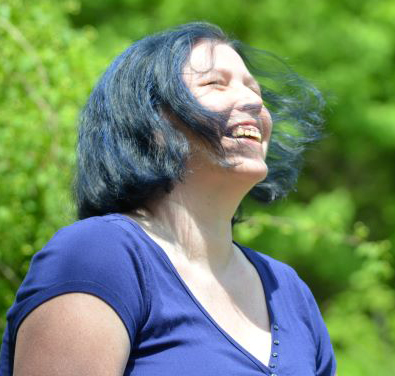 Historical Western & Contemporary Romance. Cozy Mysteries – That’s what Kristine’s delightful website offers the avid reader. There is a great selection of books to choose from. You can also read a sample of her writing in the section titled Side Stories. The Scribbler is most fortunate to have Kristine as a guest this week. She has agreed to a 4Q interview and is sharing an excerpt from Finn-agled.
It wasn’t until later in life that Kristine Raymond figured out what she wanted to be when she grew up, an epiphany that occurred in 2013 when she sat down and began writing her first book. Sixteen books in multiple genres later, she’s added the title of podcasting host to her resume, thus assuring that she will never be idle.
When a spare moment does present itself, she fills it by navigating the publishing and promotional side of the business. When not doing that, she spends time with her husband and furbabies (not necessarily in that order), reads, or binge-watches Netflix.
4Q: Let’s talk about your latest release, a cozy mystery titled Finn-agled. The blurb on your website makes this a very tempting read. Tell us more.
 KR: Finn-agled was such a fun story to write! Set in the fictional seaside town of Port New, not dissimilar from the one in which I grew up, it introduces the character of Finn Bartusiak, a single woman in her early-30s whose life revolves around her aptly named antique store, Finn’s Finds, her sometimes-meddling family and friends, and her follicly-challenged Basset Hound, Garfunkel. Life is running along pretty smoothly for Finn until the appearance – on the same day, no less – of both a coded message hidden inside of a newly acquired antique writing box and the high school crush she hasn’t seen for fifteen years.
To further complicate matters, someone else knows about the code; a man who will stop at nothing, including murder, to get his hands on it.
Finn may (or may not) be loosely based on me. She’s Polish, and I’m half; we both own Basset Hounds that suffer from Color Dilution Alopecia, leaving them bald over most of their bodies; our hair frizzes when the humidity rises; and we both have our share of ‘squirrel’ moments. Oh, and we both love pierogis! But the similarities end there. Or do they??
4Q: You have a series of Historical Western Romance, nine books in all. Please share a bit about the collection. Which one would you advise a new reader to start with?
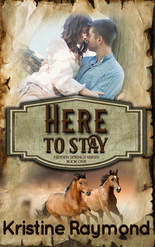 KR: No matter what else I write, the Hidden Springs series will always be special to me.
Here to Stay is my first book baby. Within that single story, I created a town and characters that spanned thirty-three years over nine books and feels like home to me, even though the series is set in the 1880s. I’ve always had a deep love for the Old West; for the wide, open spaces; the grit and determination of the people who chose to live there; even for the lawlessness; and over the course of writing the series, the characters became like family to me.
Each book in the series is about a different member of the town and is a complete story – no cliffhangers. They can be read as standalones, though I recommend starting at the beginning with Here to Stay. That way, you get to follow your favorite characters throughout the series and learn more about their lives, even if they aren’t the main focus of the plot.
The best part? Here to Stay is available as a free download on all major e-book platforms.
4Q: Please share a childhood memory or anecdote.
KR: One of my earliest, and favorite, memories is of sitting on our front porch swing listening while my sister read aloud from the Little House on the Prairie books. To this day, that collection of stories sits on my bookshelf, waiting for me to dust it off and lose myself within its pages - which I do on occasion.

4Q: Do you have a favorite spot where you feel most creative when you write? What are your writing habits?
 KR: The ‘magic’ takes place in my office. While not the most conducive spot for creativity due to the overwhelming amount of books and crafting paraphernalia occupying practically every square foot, it is a pet-free zone, thus enabling me to concentrate on writing without various-sized paws helping me type.
 As far as habits go, I don’t really have any other than I need complete silence when I write. I know a lot of authors listen to playlists, but music distracts me when I’m concentrating. I think it comes from all of those years of not be allowed to listen to my tunes while doing homework…lol.
4Q: Please tell us about your Celebration series.
 KR: The Celebration Series came about due to the kind-hearted, yet insistent, pestering from one of my readers. The first book, By Dawn’s Early Light, was originally published in an anthology set and intended to be a standalone. When the rights reverted back to me, the reader – let’s call her Barbara
January 4, 2020
Award-winning Author Phyllis (P.A.) Duncan of the Shenandoah Valley, Virginia.
 Another bookmark for the Scribbler – our first guest from the beautiful Shenandoah Valley of Virginia, USA. When I visited Phyllis’ website, I liked the intro – Espionage Fiction. Real Spies. Real lives. A hint of romance. Can’t go wrong with that.
Recommended by another fellow author, Phyllis has agreed to a 4Q Interview and is sharing an excerpt.
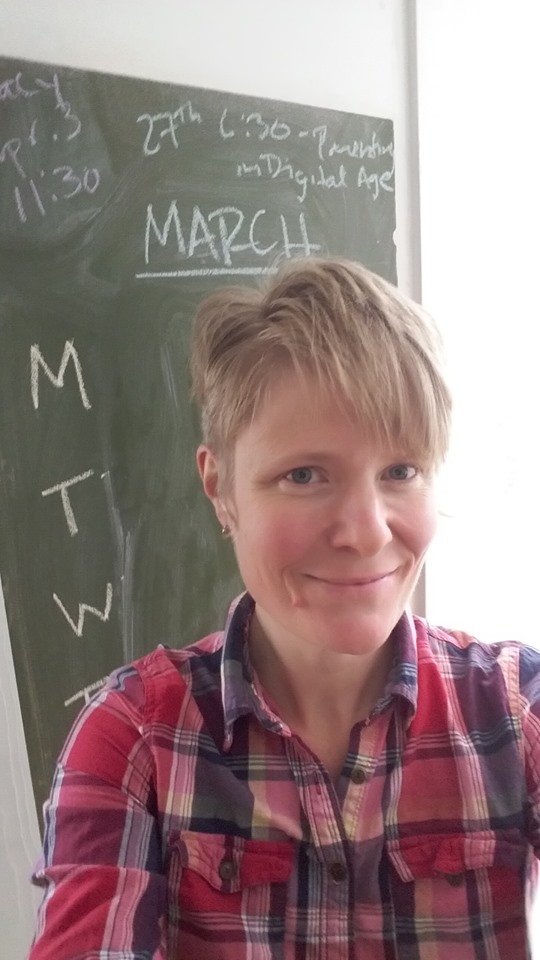
Phyllis A. Duncan is a retired bureaucrat but one with an overactive imagination—or so she’s been told since she started writing stories in 3rd grade with her weekly list of spelling words. A commercial pilot and former flight instructor, she graduated from Madison College (now James Madison University) with degrees in history and political science. History and politics manage to find their way in almost everything she writes.
After a career in aviation safety, she retired a decade ago to write for herself instead of Uncle Sam. In between writing sessions and spoiling her grandchildren, she reads anything she can get her hands on, sings in a UU choir, cheers on the New York Yankees, and watches NASCAR.
4Q: What caught my eye on Amazon is A WAR OF DECEPTION received the New Apple Award for Excellence in Independent Publishing - Best Historical Fiction. Please tell us about this story and the thrill of winning the award.
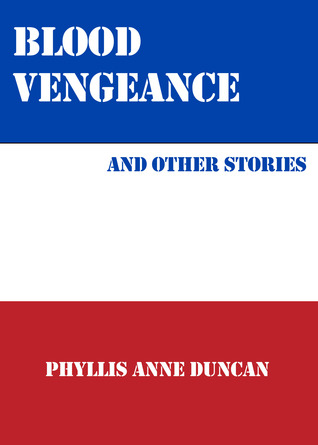
PD: All of my work is based on historical events from the mid-Cold War forward. They say write what you know
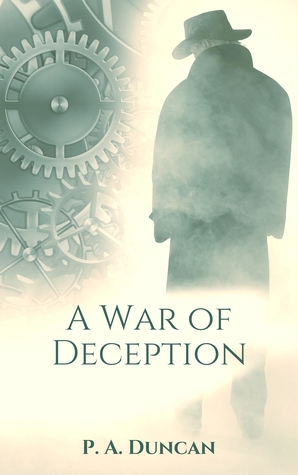 (I flout that all the time.), and I’m a child of the Cold War. However, A WAR OF DECEPTION takes place in early 2001 and involves the unmasking of a Russian mole who was an FBI agent. It’s loosely based on the real Robert Hanssen, who provided secrets to the Soviet then Russian intelligence for almost 30 years before he was caught in February of 2001. The Russians used him to confirm secrets they got from another mole, Aldridge Ames from the CIA. Of course, I threw in some plot twists and a subplot to spice it up a bit. It’s somewhat out of sequence because in it my protagonists are at the end of their careers in espionage when they not only discover this mole but that someone from the old KGB is out for some revenge.
In 2017 when A WAR OF DECEPTION came out, I entered it in a number of professional contests—three or four, I believe—and by early 2018, I’d already accepted I’d not placed in any of them. No matter; it was a good story and had received some good reviews.

Then came the email from New Apple Awards. I was beside myself with joy because I felt that the award was recognition not only for a good story but for my acumen as an historian. I’ve always been frustrated by historical fiction that gets the details wrong, especially now in the age of The Google, and I was determined I’d do my best to assure I got the facts straight. I felt this award was an acknowledgement of that.
4Q: I’m impressed with your large collectionof work. I know this is a difficult question but do you have a favorite? One you enjoyed writing the most?
PD: I’ve been productive since my retirement, which was the point. Several of the works published I started years ago when I worked full-time and could never finish because of my workload. In fact the last 3 to 5 years in my job, I hardly wrote anything of my own—only studies, reports, and white papers for my agency. Sometimes it’s hard for me to believe there are 13 books with my name on them out there in the world, with number 14 coming out in the spring: 4 novels, 2 novellas, 4 short story collections, 3 novelettes.
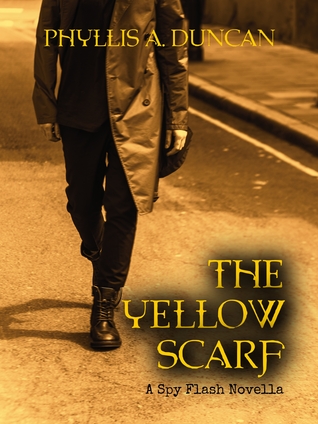
Designating a favorite is hard; I love them all as if they were my babies. But, I’d have to say my favorite is a novella entitled THE YELLOW SCARF, which is about the Balkan civil wars in the early 1990s. I think it’s my favorite because it shows public servants will put the personal aside for the mission, and it also deals with coping with personal loss and the importance of the media when genocide is involved. The backdrop for most of the novella is Sarajevo in then Yugoslavia at the height of the sniper attacks.

However, I’d say the one I enjoyed writing the most was a short story collection, SPY FLASH II, four full-length short stories inspired by headlines in the summer of 2016. Because the stories were contemporary, it was a lot of “fun” to write.
4Q: Please share a childhood anecdote or memory.
PD: Oh dear. It was a difficult childhood, but I’ll go with something from the early years of high school.
I was a huge fan of STAR TREK and
 THE MAN FROM UNCLE. (This show is why I write espionage fiction and have a character who is Russian.) Whenever I got bored in class, I’d bring out my notebook and write stories using characters in those TV series, what we today call fan fiction. That was all fine and good because it looked like I was taking notes, but one day in English class Ms. McInnes caught me and took my notebook.
I thought I’d never see it again, and the next day she asked me to stay after class. Figuring I was in big trouble, I was set to apologize, but she gave me the notebook back. She’d read all the stories inside and had made editorial suggestions. “Don’t stop writing,” she told me. “Just not in my class unless it’s an assignment from me.”
In 2000, I won a small publishing contract and had a collection of mostly literary short stories published, RARELY WELL-BEHAVED (out of print). I dedicated it to her. I truly felt the loss when I heard she’d passed away not long after I graduated from high school. She’s still the reason I continue to write.
4Q: Tell us about your writing habits.
PD:
 I try to write every day, either something new or to edit something I’ve written. I have a blog where I post about writing twice a month (www.unexpectedpaths.com), and a bi-monthly newsletter (Secret Briefings). I also write a lot of bad ad copy for marketing my books. LOL. That’s one form of writing I’m not very good at, but I have a marketing consulting who helps. I still keep a notebook with me and often will write in a coffee shop or restaurant, taking down interesting snippets of conversations I overhear.
Every November I participate in National Novel Writing Month (a 50,000-word rough draft in 30 days). Most of my yet-to-be-published works have come from that exercise. This year was my 12th time.
 Because I write historical fiction, research intersperses with my writing. I’m not a writer who can make a note that says, “Check this fact later.” If I’m not sure about something, say, what kind of cell phone or computer technology was available in 1993, I have to go check it right then. I can’t wait. Sometimes, that slows down the writing.
I usually write/edit/revise/research for a couple of hours in the morning and a couple of hours in the afternoon. I have been known to look at my watch and realize I’ve been at it all day.
4Q: I understand that you are an editor as well as a talented author. Care to tell us more?
PD: I started my writing career as a reporter on a government aviation magazine, and several years later had the opportunity to become the magazine’s editor. I’m a stickler for good grammar, aka a “grammar Nazi,” and for good, solid writing, so it was perfect for me. Yes, that was nonfiction, but I set a standard at the magazine that our articles would not be dry and full of technical jargon. I wanted people reading the magazine to feel as if they were “hangar flying,” i.e., sitting around an aircraft hangar talking flying. In the beginning that took a lot of rewriting.
I also edited a huge technical manual for aviation safety inspectors, getting it into language that fit the gambit of education levels in our workforce. My fiction editing started with my writer’s group where I live and other members asking me to read their stories and make suggestions. Some aspects of fiction and nonfiction editing are the same, though I prefer fiction editing now because of the language flexibility.

I particularly like working with new authors and independent authors. I’m sort of on a one-person campaign to encourage independent authors (self-published) to make sure their work gets professionally edited. Even with more than 30 years editing experience, I have an editor for my books. A fresh set of eyes is important.
I’ll edit almost any genre, though I don’t read much romance or religious fiction and don’t feel qualified to evaluate work in those genres. However, if it’s a good story, if it piques my interest and holds it, I’ll edit it.
4Q: Anything else you’d like to mention?
PD:
 Yes. Learn your craft. Go to workshops and other types of writing instruction. Annually I go to a weeklong workshop at Hollins University in Roanoke, Virginia, Tinker Mountain Writers Workshop. There are often one-day workshops available most anywhere, but if that’s not possible for you, there are plenty of craft books out there: Stephen King’s ON WRITING; Ursula LeGuin’s STEERING THE CRAFT are two of the best. I firmly believe you can’t tell a good story unless you first learn the structure of a story.
Join or form a writing group in your area. It’s important to have a support network of like-minded people to encourage you and/or critique you—especially when the rejections occur. But most of all… Keep writing.
An Excerpt from THE YELLOW SCARF:
(Copyright is held by the author. Used with permission.)
Chapter 13
A Man of Means and Taste
Sarajevo, Yugoslavia
“Though not yet arrived by the calendar but felt in the bones, winter in Sarajevo means its citizens will have to strip the city of its remaining trees for firewood. They will also resort to other sources of fuel: interior doors, furniture, even books and clothing, anything burnable.
“But that hasn’t happened yet. There is still hope things will go back to the way they’d been. Faint hope diplomacy will restore common sense. Fainter hope the U.N. will be effective for once.
“The waning autumn has dyed everything in the city a miserable gray, darkened the pocked buildings, and shrouded the mountain ridges with clouds, hiding the positions of the Serb artillery there. Even the people seem gray, their faces pale from a summer and fall spent inside and venturing out only at night for the false safety that provides. The fog over the city rarely dissolves in the weak sun, and a pall of smoke from thousands of wood stoves feeds the dingy air.”
Zachary Holbrook stopped the playback of what he’d filmed the day before. He knew what would soon happen on the tape, and he wasn’t ready to relive that yet. Also, the feel of the narration wasn’t quite right, even though he’d been editing it most of the night. No, he’d have to go back there with a fresh tape and reshoot some footage to lay the narration over.
He ejected the cassette from the Handycam and pressed a label on it. With a Sharpie, he wrote the date and the words, “Yellow Scarf,” on the label. He put the cassette in the messenger bag where he stored all his tapes, the bag he took with him everywhere.
Zack dressed in his least smelly set of clothes and pulled on his flak jacket. A check of the Handycam showed him it had a full charge, but he put extra battery packs in the pockets, along with plenty of blank cassettes. He took a back stairway to the Sarajevo Holiday Inn’s parking garage to avoid running into his media colleagues at breakfast. Many of them, who had regular jobs with American and European networks, looked down on freelancers, even when they paid to use film he’d shot because he would go to places they wouldn’t. He didn’t want any of them glomming onto him today.
Zack missed the little Fiat he’d had the year before, but this ancient Land Rover served him better. He could off-road out in the countryside. The stories weren’t always in the city. Rumors swirled about an orphanage between Sarajevo and the mountain ridge, caught in the crossfire. That would get good play. Maybe he’d head there later today, but first things first.
He pulled away from the mustard-yellow box of a hotel he couldn’t bring himself to call home and drove back toward Sniper Alley. Last year, someone had spray-painted “Welcome to Hell” on the wall of a bombed-out building near the Holiday Inn; it hadn’t faded.
Every day, for luck, as he passed the graffiti-ed wall, he intoned, “Welcome to Hell,” his mantra. He shoved a cassette of his favorite music, a gift from his lover in Paris, into the tape deck and smiled when Mick Jagger began to sing, “Please allow me to introduce myself. I’m a man of means and taste.”
Thank you, Phyllis for being our guest this week. All the best to you in your future endeavors.

And thank you to my readers. If you want to discover more about Phyllis and her stories, please follow these links:
Amazon Author page: http://bit.ly/PADuncan
Facebook Author page: ww.facebook.com/unspywriter
Instagram: www.instagram.com/paduncan1
Twitter: www.twitter.com/unspywriter
Website/Blog: www.unexpectedpaths.com
Newsletter Sign-up: http://bit.ly/SecretBriefings
December 28, 2019
Guest Author and Editor Elizabeth Peirce of Halifax, Nova Scotia.
 One of my author friends introduced Elizabeth and me, suggesting she would be a terrific guest on the Scribbler. I agree.
 Elizabeth Peirce is an award-winning author, editor and teacher living in Halifax, NS. Her book Grow Organic: A Simple Guide to Nova Scotia Vegetable Gardening (Nimbus Publishing) won the Best Atlantic Published Book award in 2011. She has also written books about canning and preserving (You Can Too!, 2013), Maritime pirates (Saladin, 2006 and The Pirate Rebel, 2007) and a children’s book (The Big Flush, 2017). She is sharing with the Scribbler an excerpt from her latest book, Lost and Found: Recovering Your Spirit After a Concussion—a book she describes as a toolkit of strategies to help concussion survivors access their innate healing potential. Based on her own experience of healing from a concussion in 2013, Lost and Found is available at select Chapters/ Coles/ Indigo bookstores, on amazon.com (in both print and audio formats, for those with auditory processing issues), and via Elizabeth’s author website, elizabethpeirce.ca
She is really happy to be Allan’s guest on the Scribbler!
4Q: Gardening is a delightful hobby where you can see the beautiful results for your efforts. Tell us about your award-winning book – Grow Organic. Can it help me be a better gardener?
 EP: I hope so! That book had its beginnings in 2008 when an editor friend at Nimbus Publishing in Halifax who often called me with her garden questions finally said, “It would be easier if you just wrote me a book!” We both found it frustrating that so many How-To books on gardening seemed to come from sunny places like California, where the climate is pretty much perfect for growing anything. I wanted to write a beginning gardener’s guide for people living in tougher climates—lots of rain, cold spells, weird frost dates… that’s pretty much the Maritimes in a nutshell! Since you live in New Brunswick, I think the same issues apply. The book takes you through the whole process, from building/ buying good soil to choosing local, non-GMO seed, to finding the best location for your garden, and deciding what vegetable varieties are a good fit for our climate.
 4Q: How long have you been writing and why did you decide on gardening and kitchen self-help books you published?
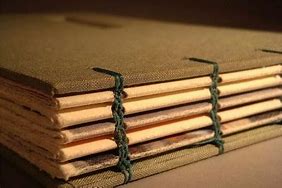 EP: I have been writing since I was seven years old. I was interested in all aspects of making books, from writing and illustration to bookbinding, and would often write and illustrate my own small storybooks. I learned to sew mostly so I could sew my books together! When I got older, I became a freelance editor and was working at a publishing company in Halifax, helping bring books to publication. That company eventually asked me if I wanted to write books for them… and I said yes! I’ve told you the story of how my gardening book came to be. When that book was published in 2010 and sold well, the publisher asked me to write a sequel: basically, what to do with all the vegetables and fruit you just grew! I’ve been a gardener since I was a child, and my grandmother taught me a lot about canning and preserving, so these subjects were ones I was (and am) very passionate about. I believe that growing and preserving our own food is an important survival skill, and one that is sadly lacking in many people’s life experience.
 4Q: Please share a childhood memory or anecdote.
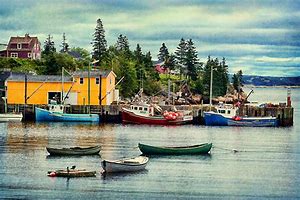 Photo credit: Amanda WhiteEP: I was fortunate enough to spend my childhood summers on the North Shore of Nova Scotia at my family’s cottage, which was really an old sea captain’s house near a tidal creek. The summer I turned 14, I saved up my babysitting money in order to buy a rowboat so I could take excursions on the creek. On my first outing, I took a picnic and rowed to a secluded beach about 30 minutes from the house. It was a beautiful day and I completely lost track of time, basking in the warm sunshine. When I got back in the boat to row home, I discovered to my horror that the tide had gone out, leaving only mudflats where the creek had been just a few hours before! I had to abandon my boat on the beach for the night and walk back home through the brambles and swampy wetlands, getting eaten alive by mosquitoes. Not quite the glorious sea adventure I had anticipated!
4Q: Your website is totally cool. It mentions that you are a speaker. What’s this about?
EP: Well, thank you. After I published Grow Organic, I started getting asked to speak at gardening clubs, schools and community groups—really, anyone with an interest in growing their own food. Since I am a teacher and enjoy public speaking, it was a natural fit for me. For the last couple of years, I’ve also been a member of WITS (Writers in the Schools), a program affiliated with the Writers’ Federation of NS which sends authors to schools around the province so we can share our love of writing with students of all ages. It’s been a great experience for me!
4Q: Please tell us about your other books.
 EP: My first two books with Nimbus Publishing were in the historical fiction genre; there was some interest in local pirate lore—and Nova Scotia has had quite a storied history of pirates visiting our shores. The first of these books was co-authored with William Crooker and was called Saladin: Piracy, Mutiny and Murder on the High Seas. It tells the infamous tale of the British barque Saladin which was stranded at Country Harbour, NS in May of 1844 under suspicious circumstances. The Saladin men were tried for piracy and murdering their captain in one of the last major piracy trials in Canada.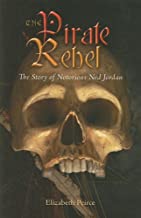
My second book about pirates was called The Pirate Rebel. It tells the story of the Irish pirate Ned Jordan and the incredible story of his attempted murder of a Halifax sea captain by throwing him overboard—the captain survived this ordeal and eventually testified against Jordan in a Halifax courtroom in 1809.
These two books are more than ten years old now—my more recent writing efforts have been a children’s book that was inspired by my then-four-year-old son’s intense dislike of loudly flushing public toilets. It’s called The Big Flush, and it’s the one I take with me on WITS visits to elementary schools when I speak to young writers about telling their own stories.
And then there’s my newest book, Lost and Found: Recovering Your Spirit After a Concussion, which I wrote after experiencing a concussion myself in 2013 and having a really rough time getting better. I vowed if I made it through that experience, I would write a book about what I learned. I had many teachers, inside the health professions and outside, and I met many folks with similar experiences who were facing prolonged recovery times. When I have a problem I need to solve, I sometimes write a book about it!
I’m including an excerpt from this book, as it’s the one I found the most challenging to write, and also the one I’m proudest of. You should know that I received my concussion when I fell headfirst to the floor during a pole fitness class.
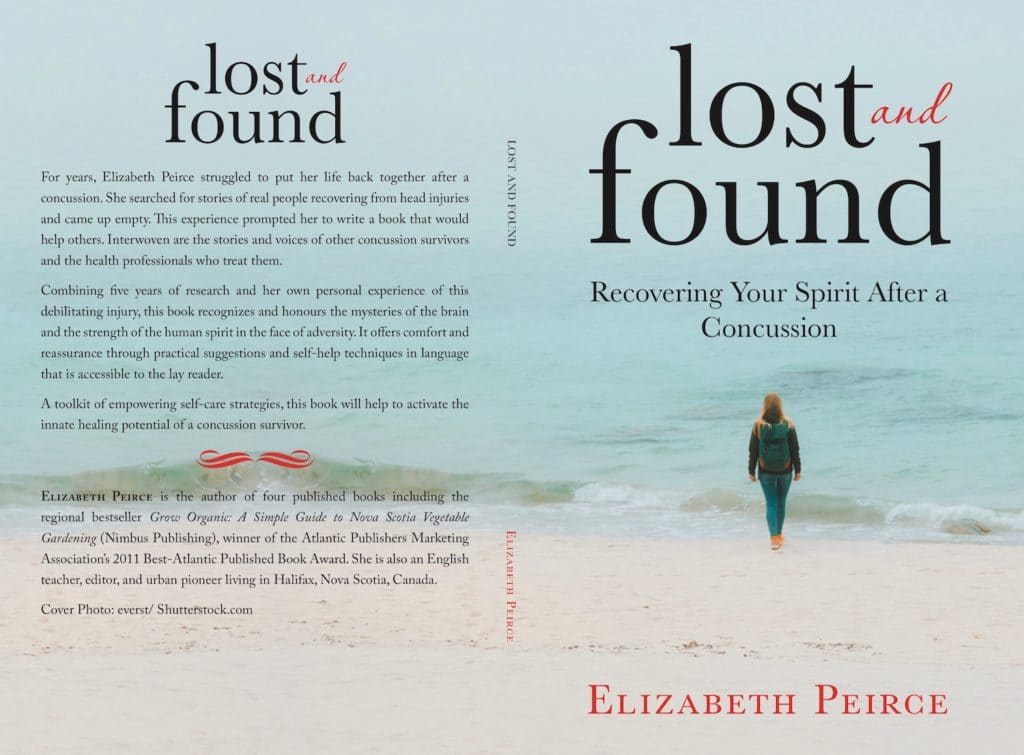
An Excerpt from Lost and Found: Recovering Your Spirit After A Concussion
(Copyright is held by the Author. Used with permission)
Redefining Recovery
Will I ever fully recover? Will my life be this way forever? These were the questions that circled around and around inside my head for months, demanding a response. Unfortunately, I had none.
The term “recovery” is a loaded one for concussion survivors. We count the months since the event with the attentiveness of a prisoner marking time on the walls of their cell; we look to survivors further along their healing paths with anxious, hopeful eyes, pleading with them to tell us they’re fully recovered and what their magic cure was. We live in dread that we will not recover the parts of ourselves that were lost when we were injured. We crave certainty when nothing in life is truly certain.
There will come a day perhaps when we lose count of the months passing, when we stop comparing ourselves to others. Maybe we will begin to feel a subtle shift in our attitude towards our injury that doesn’t focus exclusively on “full recovery” but instead on “healing”. Like life, healing is a journey rather than a destination, a process rather than a result.
Maybe we can slowly begin to back away from that big hole at the centre of our lives, the concussion that has taken so much away from us and has become our chronic preoccupation: resenting it, fearing it, identifying with it. We can allow the good things in our lives to continue to have importance and not get swallowed up by the pain we feel.
Does switching out of “full recovery” thinking mean we are giving up on ever being recovered? No. Accepting that we are on a healing journey with others who can help will remove pressure from the brain, which creates the most favourable conditions for recovery.
What do we do in between appointments with members of our health team, those skilled healers who bring relief for our painful symptoms and reassurance for our troubled minds?
I know I often leaned heavily on them, gobbling up every word and piece of advice, desperate for good news about my condition. I also wanted to experience the same feeling of knowledgeable comfort outside of office visits, when doubts crept in.
 I explored the idea of being my own therapist, of re-imagining the pleasurable or meaningful activities of my daily living as actually therapeutic. An hour in the garden, a walk around the neighbourhood, peeling carrots for supper—I visualized each task as just as important to my healing as ninety minutes with a physiotherapist, doing dizzying balance exercises.
 A learned skill, self-healing is one that can transform our lives, even if we are not injured. It removes the pressure of deadlines and accommodates the slower pace the brain needs to heal. When we are not in a rush, we notice amazing things and make true progress in our learning and healing.
The movement practice of NIA (short for neuro-integrative muscular activity) introduced me to the concept of self-healing through acts of kindness to the self and especially to the body, which may be feeling left out with all the attention typically given to the brain after a concussion. In the NIA philosophy, “Learning to perform acts of self-kindness comes from tracking ‘feel good’ sensations. When you foster self-healing through acts of kindness you naturally become more proactive and in control of outcomes. You replace the attitude of, ‘My shoulder is hurting,’ to one of, ‘I am healing my shoulder.’” (Debbie Rosas, co-founder of NIA)
This shift in how we speak and think about our injury and its effect on our lives does not deny the presence of pain and sadness, but it can help to empower us when we feel powerless. During my healing, I reframed my most persistent complaint from “I’m having a bad day with lots of concussion symptoms” to “This is a good day to focus on self-healing.” I also began to redefine my relationship to fear when I changed “I am feeling anxiety” to “I’m learning to be a calm person.” This language shift helped me see my task as part of a process, one that might take a long time.
Like learning, healing can be a lengthy process, and one whose timeline is not usually knowable. A nurse acquaintance of mine points to the dangers of “prescribed” recovery times for major illness. Telling a patient who’s had major abdominal surgery that they’ll be fine in six weeks, when in many people’s experience, the healing can actually take up to a year, can itself be a major setback when the patient still feels lousy after six months. “There needs to be more truth-telling about recovery times,” says my wise friend.
I felt intense relief when an acquaintance confided in me that it was fully five years before she felt well after her two concussions; it felt like I was finally hearing the truth after months of uncertainty. Giving myself permission to contemplate a longer recovery time relieved the pressure I had been putting on myself to heal quickly. It was a great gift.
The value of a cognitive function test:
If you’re not sure which part(s) of your brain was affected by your injury, it is worth taking a test that measures your cognitive efficiency in several areas—these may include visual, verbal, motor speed, reaction time, and impulse control. Sports medicine doctors are usually well-versed in administering this computerized test which, while it shouldn’t be used as the only source of information about someone’s level of brain function, can certainly help to pinpoint which parts of the brain need help.
 The doctor who gave me this test, one I had never met before, wisely didn’t ask me ahead of time what my profession was; in looking at my results, she noticed a particularly low score in the verbal and visual processing areas (I am a highly visual learner and comfortable in several languages). She then asked me what I did for a living—when I answered “I’m an English professor,” she laughed, and said “Now we know which parts of your brain need work!” This information about the part of my brain that had been affected by concussion was a huge relief and ended months of struggling to understand why I didn’t feel at all like myself.
 What we see when we slow down
Since I was too dizzy to drive or ride my bicycle in the weeks after my concussion, I began walking. Just around my own neighbourhood at first—even small trips to the drugstore or post office seemed like epic outings when my brain was crowded with symptoms.
You see a whole lot more when you’re walking than via any other mode of transportation. It invites you to experience your five senses in ways not usually available in our regular lives.
On my walks, I noticed how the lavender plant in my neighbour’s front garden bloomed beautifully all summer long. With her permission, I would stop and pluck a couple of strands from its large bushy cushion and rub them between my fingers every time I passed by. The scent on my fingers was like medicine for my nerves (I learned later that lavender oil is used as a sleep aid and general calming agent).
Returning from walks, and not wanting to go back inside just yet, I would visit the garden, a sanctuary of calm which provided me with many delightful flavours to collect by hand all summer long, especially berries.

From early July sweet strawberries, to the deeper red, scratchier raspberries that seeded themselves among the currant bushes, to a few highbush blueberries the birds didn’t eat, to the black currants, deepest purple and most adult berry of them all. I spent the most time picking these tiny dark globes from their large, treelike bushes, and turning them into jelly, one of the tart, musky and concentrated delights of midsummer.
The slow, unhurried action of berry picking gave my brain a simple and undemanding task that became a pleasure in its productive repetition: the same hand motion, finger grasping berry, container slowly filling with fruit. Just enough stimulation of the visual centre not to overwhelm, but satisfy.
It was astonishing to me how pleasurable such small manual tasks became in my shrunk-down, post-concussion world.
Being, not doing
One of the changes I noticed in myself after my accident was how intensely I experienced emotions and how exaggerated they often seemed: seeing a bumblebee land on a flower could send me into a state of blissful happiness while hearing a mother speak harshly to her child in the grocery store threw me into tearful despair. My nervous system felt as tightly strung as a violin; one strong pluck would snap the instrument in half. I felt the need to sequester myself from sources of emotional stimulation—no radio or television news, no newspapers, limited interactions with people. It was a pretty monastic existence, and one that felt strangely detached from time, as I had little contact with goings-on in the outside world.
Here’s a hard thing about concussion: when you can’t think, you’re left with only feeling. Raw, unfiltered emotion comes pouring down on you in waves, and you have to learn to roll with those waves or get knocked over with each fresh assault.
Because you don’t get to do much while you’re healing from a concussion, you become by default a master of just being. Abiding, would be a good word. Through this process, many of us learn that full acceptance of the awfulness of our situation, rather than resistance to it, may be the key to recovery.
We learn by repeated experience that our emotions are impermanent, but our spirit is not. I remember standing in my backyard, sick with vertigo, exhausted from lack of sleep, with my feet immersed in the cool water of my two-year-old’s wading pool, unable to move and weighed down with despair.
 Photo Credit: ZsilentyGazing up at the sky as clouds silently passed the sun, the beautiful three-dimensional patterns of light and shadow on their surface suddenly struck me with such force, my self-pity was transformed into amazement; with tears of gratitude, I whispered over and over again to the sky, “Thank you, thank you.” It was like walking out onto a sunny field after being shut in a small, dark room. I held up my palms to the sky to receive the healing light, a practice I continue to this day whenever I need to be reminded of my connection to something greater than my own self. I learned later that the “palms up” position is a gesture of acceptance.
 The Power of Gratitude
How often in my life have I wished that I were a different sort of person, a person who “lives in the moment”, someone not in the habit of overthinking. During my healing, I became that person for a while when I lost my ability to think. In some ways, it was incredibly freeing: life pared down to its essentials. Getting up in the morning, having a shower, and making breakfast without feeling exhausted and overwhelmed, being able to navigate the grocery store with its noise and bright lights and crowded aisles…I counted all these moments as small triumphs when they finally came.
As I was able to let more and more of the world back into my life, I knew my brain was healing. I learned to trust its pace, though of course I wished it might be faster, and imagined all the complicated rewiring it was busily doing to allow me to complete more and more complex tasks. I thanked it for knowing all about synapses and neurons, and for its technical expertise in getting me back online. I couldn’t imagine working on such a complicated computer myself, and yet I was indeed doing so by giving my brain time and space and encouragement to complete the work on my behalf. I learned to stop judging it and began to cherish it as I would a loved one struggling under incredible difficulties.
Treating our wonderful brains with respect, gratitude, even a touch of awe is a healing practice. Though it’s hard to believe when we feel broken, we are always complete, whole, and enough.
 You’ve likely heard it said that it is very hard to feel angry, resentful and bitter when we feel grateful. Focusing on the things that are going right in our lives will train our brains to notice good things even when we feel overwhelmed with negatives. Keep a gratitude journal or find a friend who texts, and send each other your gratitudes each morning for three months. Notice any shifts in your outlook after a few weeks of this practice. Gratitudes can be as simple as “I am grateful for warmer weather,” or “I am grateful for leftovers in the fridge so I don’t have to cook today.”
 When I was healing from my concussion, I also began a daily “What Ifs?” practice: before getting out of bed each morning, I would allow myself to envision three positive scenarios for the day ahead, things like “What if I don’t have as many concussion symptoms today?” “What if I have more energy?” “What if my kid gets out the door to school without a struggle?” This practice allowed my brain to consider the possibility that my life circumstances could in fact change for the better over time, allowing it to relax its habitual negativity bias.
Rediscovering Wonder
Healing from a concussion takes a huge amount of energy; we feel exhausted most of the time, and what little energy we have usually goes to survival-level tasks such as feeding and clothing ourselves and our families, going to work (if we’re back), and basic coping skills. Many of us give up the things we used to do that brought fun and meaning to our lives, that brought us into contact with our higher selves. And yet, it is critically important not to lose sight of the spiritual dimension of our lives while we are healing. The spirit allows us to see the big picture—life is good—in the minutiae of details and scheduling that make up our post-injury lives, all the restrictions and planning that we need to do to get through the day.
 Reading bedtime stories to my little boy, I sometimes noticed “I’m not here” as I felt myself drifting away on the river of self-preoccupation that often comes with health challenges. To change the focus and remain present with him and the activity that we both loved, I began to concentrate on the beautiful illustrations in his books, picking out one whimsical detail on each page, or noticing the colours and textures of the pictures that the artist had carefully created.
 I did the same thing when I was in the garden, and yet not really in the garden. Focusing on minute details: picking a slug off a lettuce leaf, reaching through brambles for that one ravishingly ripe raspberry, helped me focus my mind on small joys and attainable victories.
Rediscovering the wonder in small things was one of the gifts of my healing journey. I invite you to begin noticing your own small wonders, too.
Thank you for being our guest this week, Elizabeth. Best of luck in your writing journey!

For all you readers wanting more info on Elizabeth and her books, please follow these links:
www.elizabethpeirce.ca
Facebook: Elizabeth Peirce Writer
Instagram: @elizpeirce
December 21, 2019
4Q Interview with Santa Claus.
Jolly Old St. Nick

For the third year in a row, Santa Claus is back for another interview on the Scribbler. As usual, due to Santa’s crazy schedule in November and December, the interview took place last fall. According to his publicist, Santa has many requests for interviews and such but he is particularly fond of the Scribbler and he admits it’s one of his favorites. He’s actually looking forward to making this an annual event.
For all you wonderful readers, those interested in the previous interviews with Santa, please follow these links:
2018 2017 2014
4Q: We understand how popular you are Santa during Christmas, the festive celebration of the birth of Christ. Through this series of interviews, we are getting to know you better and discovering the magic of your world. Tell us about Mrs. Claus.
 SC: That’s a fine question. Not many people ask about Mrs. Claus and I feel bad about that. I mean, she is the one that keeps everything running smooth. At one time, she did everything in the background, manage the elves, do the work scheduling, midwife, councilor (not all the elves are cheerful twenty-four hours a day), marketing, cleaning our house, cooking for everyone and so on. Phew, I get tired jut thinking about it. We have more help now that we’re older. We’ve appointed some of the senior elves to more responsible positions so she has more free time these days.
We met in when I was a young man. Not many years after I was selected to be “the” Santa Claus, I was inexperienced and terribly slow, unorganized. Australia is the first country I visit each year and when I stepped off the sled in the 789thhouse I visited, I slipped off the roof and landed on my head, receiving a gash over my left eye. It needed stitches right away and at the hospital I attended, she was working the night shift as a nurse on the east coast. Of course, I needed to be patched up pretty quick and she was the only one who believed I was Santa Claus, the others writing me off as a drunk in a red suit.
And she was so beautiful (still is, by the way). Tall slender girl, reddish short hair, wide smile that beamed, I fell for her right away. Told her I’d be back. She didn’t believe me at the time but when I showed up the first week of January with a dozen roses and asked her out, we clicked right away. She’s been by my side since.

4Q: That’s an interesting story Santa. Tell us about your naughty list.
 SC: I suppose I should. Let’s take you for an example, you’ve been on it a few times Allan. I still can’t get over how mischievous you were as a kid. Always getting into trouble. Goodness knows, you should’ve known better but you were such a curious lad. I mean, most of the time you were a normal kid, not too bad and always on the good list but every once in a while, you did something stupid and the “behavior meter” would bump you off the good list and on to the naughty side. I had to keep a close eye on you for the rest of the year to make sure you warranted gifts or not.
 I remember the time you were playing with Mary, your next door neighbour (sweet young girl). She was serving you tea in her new playset, plastic dishes and cups and saucers and her cousin Betty unexpectedly showed up and you were jealous and being a nuisance. She tried to send you home, didn’t want to play with you anymore. That wasn’t nice, of course, but when they went in for dinner, you stole the plates and saucers and threw them in the garbage. That was a bad thing. You immediately went on the naughty list. The only redeeming factor was when your mother marched you back there and made you dig the dishes out of the garbage bin and apologize, that I manually moved you back to the good list.
Stuff like that gets kids on the list but to be honest, there’s not many names on that list.

4Q: What’s your take on last year’s Kurt Russell movie, The Christmas Chronicles? Did he do an accurate job of portraying you?
 SC: Well yes, he did. I was consulted on that movie by the director, Clay Kaytis. I’m actually that handsome you know. The long hair and beard were my idea. I wasn’t too keen on sharing how I got in and out of the houses but the movie required a bit of realism and I wanted people to know how quickly I can get about. Mr. Russell did a fine job but the highlight was meeting Goldie Hawn on the set and seeing her as Mrs. Claus. She is still a fine-looking lady, almost as pretty as my own Mrs. Claus.
I think they did a fine job.
4Q: We expect there are many good memories for you but is there one visit anywhere on the planet that sticks out most in your memory?

SC: Yes, there are many wonderful moments that highlight each year but there is one particular stop over that remains foremost in my mind. I won’t mention any names of course, but Whoa, what a night. There is one rascal that probably was on the naughty list more than any other, a lad that grew up in Nova Scotia actually. He was basically a good boy but seemed to find way to get himself in hot water.
One time when he was older, he was alone at Christmas time, his wife and children visiting family in Europe. Thinking he was asleep, I was putting gifts under the tree when he tapped me on the shoulder and scared the dickens out of me. Anyway, long story short, he invited me back for breakfast after I did my run and what a blast we had. The first time I ever had rum and cokes for breakfast but the clincher was something he dug out of his stash. He warned me, “only take one of two puffs Santa” but I didn’t heed his warning. I still don’t know what was in it but, Oh Man, was I in a fix, more like a stupor… I don’t think I’ve ever laughed that much before... or since.

I was late getting home from that trip, too drunk really to command the sleigh but the reindeer made it back on their own.
The Missus was not happy.
Worried mostly. I was passed out in the sleigh and she had to put me to bed. Woke up to a tongue lashing. Needless to say, I make sure he’s asleep when I visit his house now.

Thank you, Santa, for sharing your moments with us once more. See you in a few days and next year.

December 14, 2019
Guest Author Alex Hudson of Great Britain
 Alex is has recently published her debut novel. There are not many things more exciting than having a copy of your first book in your hands. A lot of work and determination goes into writing a book. She has agreed to be our guest this week and talk about her story and share an excerpt – Beyond Redemption.
 My name is Alex and I am waiting for my first novel to come out any day soon. **Note - the interview was completed before publication of Alex's novel)
I was born and bought up in London and I first started work at Universal Films / MCA Records in London’s Piccadilly, quite close to the famous Fortnum and Mason department Store. I met many wonderful stars of the present and future during my time there and it was a wonderful experience to work with so many high profile people.
Later I worked for several years in the Oil Industry as a PA to one of the Exploration Managers, this time quite close to Piccadilly Circus’ famous statue of Eros.
Then, when I moved to the West Country, I managed to obtain a job as a guide at the magnificent Longleat House, which inspired my love of history and fuelled my passion for the 18th century.
Now, I live on the South East Coast of England and my life has taken on a more relaxed pace which enabled me to finally complete my first novel, Beyond Redemption. We have many quaint little villages here and I often meet my Production Editor, Diny Van Kleeff, for afternoon tea in a gorgeous little 15thcentury Tea Shop.
4Q: This is an exciting time in every writers' lives, when you are anxiously awaiting the publication of your debut novel. Before we talk about the story, tell us about your publication process as a beginner.
AH: I have learned a lot on my journey and one very important lesson is to have a good editor. Someone you can connect with and who not only understands your story, but also, your writing method and style!
 Also, particularly when writing an historical novel, research is a must. The basic details are not something you can invent. You have to be true to the period. I spent hours tracking down the facts and I even phoned Buckingham Palace, Debrett’s Peerage and The Port of London Authority to make sure I got my historical facts right.
I must say they were all exceedingly helpful.
4Q: Now tell us about Beyond Redemption.
AH: The first book in the series, BEYOND REDEMPTION, is set against the backdrop of Georgian England with its trials and tribulations of the people of that time. It is a tale of seduction, rejection and tragic circumstances.
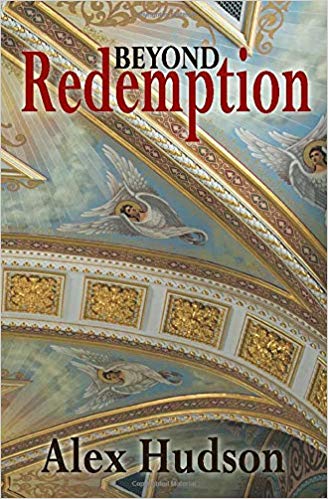 Isabella’s birth effects everyone who lives on the grand estate at Brayfield House, where her governess mother is employed, but when Isabella is traded to pay off her father’s gambling debt, there must be consequences and she has to discover if her father is truly beyond redemption. But still, all is not what it seems as she fights trickery and cunning along the way. In the wake of something dreadful her strength of character helps her through some of the darkest times of her life.Beyond Redemption is an in depth story about adept characters which will make you cry and make you laugh, but it is a dark blend of lawyers, gambling, love, revenge and betrayal set alongside the importing and exporting of unusual cargos.What if your tomorrow turns out not as you have expected. Could you turn your life around? Will justice and the law win through……?
4Q: Pleased share a childhood memory or anecdote.
AH: I can’t think of an interested childhood anecdote but I can tell you about an interesting incident that happened to me when I was working as a tour guide at Longleat.
I was sitting in what is known as the Bath Bedroom, waiting for the next guide to arrive, when I felt someone put their arm around me. Thinking it was the guide who had come to take over my shift, I turned to them but there was no one there. A little surprised, I waited for the next guide to come and told her about my strange experience. She laughed and told me that what I had felt, was the ghost of a sweet little girl named Alice who had made her presence known to a number of the staff over the years.

Truth or fiction - who knows? But I’ve used the name Alice for one of the characters in my novel.
4Q: When did you start writing and what inspired you?
AH: I began writing a few years ago, after my several years of working at Longleat House in Wiltshire (also known as Wessex).
The house was amazing and I felt that whenever I entered it, it would envelop me. This inspired me to visit other stately homes and I found that to tread where others had tread so many hundreds of years ago to be a most exciting and thrilling experience!
4Q: Tell us about your favorite authors.
 AH: I love Jane Austin, but I guess my favorite book is “Forever Amber” by Kathleen Winsor. I also enjoy John Grisham, Sidney Sheldon and the matriarch of all “who done its” Agatha Christie.
4Q: Anything else you’d Like to add?
AH: I love writing! I am pulled along with the story and I often haven’t a clue where I’m going to end up. I often say, at the risk of sounding a little crazy, that I don’t write the story, it writes me!
Something well worth remembering: “You learn more by listening than you do by talking!”
An Excerpt from Beyond Redemption.
(Copyright is held by the author. Used with permission)
CHAPTER 1
Georgian England, 1787
Isabella was on her way home when a young jewellery thief, being chased by the watchmen, collided into her. In their haste to catch the boy, the three men roughly pushed Isabella out of the way. She felt their full force as they shoved her body hard against the wall. She fell to her knees in pain and feared for the unborn child growing inside her.
Oxfordshire, 1769
The night was darker than usual for the moon had been obscured by the clouds. Martha made her way home, having said her final ‘goodbyes’ before leaving for Wessex the very next day. With the darkness, came a quiet eeriness, but then the wind caught in the trees and she could hear the rustling of the leaves and the creaking of the boughs as it whistled and howled through their branches.
She had been detained and was much later than she had expected; she shouldn’t have been out so late this night. Feeling the cold she pulled her cloak tighter around her.
He appeared, suddenly, out of the darkness and tried to engage her into conversation but she turned away from his advances.
‘Please leave me alone. I have told you before that I am leaving Oxfordshire tomorrow. There is no room for you in my life.’
On hearing this he grabbed her by the arm and in his temper and frustration knocked her violently to the ground.
Three weeks prior…
Martha had to make an effort to keep up with her father, the Reverend Blake, as he walked briskly to the church where he was to give his Sunday morning sermon.
‘Have you made answer to Lord and Lady Beaumont’s wonderful offer of governess at Brayfield House?’ he asked.

‘I will be writing to them today, thanking them and confirming I will be with them soon but it is such a long way to Wessex. I will miss you, Father.’
‘I will miss you too my dear, but I’ll be making my tri-monthly visits to the Beaumont’s and I will see you then,’ he comforted.
As they continued up the path and entered the church by the west door, she contemplated how much her life was going to change. Martha had been brought up in the lovely old parsonage and had so many happy memories of her life there with her mother who had passed away some years previously.
After the service, back at the rectory when the last of the lunch guests, who had accompanied them from church, had departed, Martha set about writing to the Beaumont’s. She knew that although they required her quite soon there was still time enough to ready herself for the move and to say her ‘Farewells’.
‘That young man is here again my dear,’ her father called up the stairs. She rushed to the window and there he was as usual, leaning against the wall and staring at the house.
Martha had been introduced to him at a gathering some days earlier and he hadn’t stop pestering her since.
He was visiting from London to negotiate with the Witney Mills, a business deal to take their blankets to London. He was a merchant and had taken over the family business when his father died.
Martha rather liked the young man at first but he pursued her so intensely that he was becoming a nuisance. As a clergyman’s daughter she would make visits around the village, calling on the parishioners, but it seemed that everywhere she went he was there, declaring his intentions to marry her.
‘Marry you, Sir. You hardly know me and more importantly I do not know you, Sir,’ Martha would answer in exasperation at his impudence.
She had this conversation with him time and time again and had told him that she was not interested in him.
***
 Once the letter was written, folded and sealed, she looked out of the window again and to her relief the young man had gone. Quickly, she put on her cloak, grabbed her bonnet and set out for the local coaching inn to post it and was shocked when he appeared again as if from nowhere.
‘Good afternoon, Miss Blake. Pray, may I accompany you on your stroll?’
‘Good afternoon, Sir,’ she said stiffly, as there was no way to avoid him. ‘I am taking this letter to the post. In a short time I am to travel to Wessex to take up a governess post. It is a profession that I have dedicated my life to doing and there is no room for anything or anyone else. I am sorry to be so harsh in this matter but you seem to have trouble understanding that I have no romantic inclinations toward you. Please leave me alone.’
But he had no regard for her plea and for the days that followed he did nothing but try to persuade her otherwise.
* * *
On The Morning of her departure the Reverend Blake waved his daughter goodbye and the coach set off rattling along the cobbles to Wessex. Inside, Martha was relieved that she had not distressed her father by telling him of her ordeal of the previous night. She had survived the wicked man’s fists and his outburst of frustration. She had lain there in the dark and had thanked God when she heard his footsteps walk away.
That dreadful man will not get the better of me. I am going to start a new life and fortunately I will not be seeing him ever again. She consoled herself as she nursed her bruises in silence.
Brayfield House
After what seemed a never-ending journey the coach finally arrived at the inn close to her destination. As she alighted she saw a tall young man waiting with a carriage to take her to her final destination. He walked towards her and introduced himself.
‘Good afternoon. I’m Thomas Walker the Estate Manager at Brayfield House,’ he said ‘Do I have the pleasure of addressing Miss Blake, the new governess?’
‘Good afternoon, Mr Walker, Yes, I am Miss Blake.’
‘Well in that case, welcome Miss Blake,’ he smiled and proffered his hand. As they exchanged greetings she was glad this kind looking man was here to take her to the house, and she didn’t feel quite so alone. Thomas directed Martha to the waiting carriage and after they had seated themselves they started the drive to the house.
The journey allowed Thomas time to point out th
 e farms and woodlands in the distance belonging to the estate before arriving at the great ornate gates and then down the long drive, passing the stables and the ice house.
 As the Beaumont’s imposing residence came into view Martha was taken aback by its grandeur. She wasn’t expecting anything quite like this to be her home for the foreseeable future.
‘What a magnificent house,’ she said not being able to hold back her excitement.
‘It is that, Miss Blake. I’ve been fortunate enough to live here all my life. The Beaumont’s are good and fair masters. Anyone is lucky to be in their employ,’ he said with pride.
The carriage pulled up at the side entrance and Thomas helped Martha down before taking her through the corridors to the main hall. She found it to be breathtakingly opulent with its marble floor, pillars and gilt-edged, plastered high ceiling. Paintings hung on the pale turquoise walls and beautifully embroidered, heavy drapes decorated the windows. She marvelled at it all.
‘If you would like to follow James,’ Thomas gestured towards the footman. ‘He will show you to your room and I will have your belonging brought to you. Her ladyship suggests that you rest after your long journey and she will meet with you tomorrow morning. Before which, you will be introduced to the main members of the household staff who can be of assistance to you.’ He paused then continued, ‘I understand that your father, The Reverend Blake, comes here quite often.’
‘Yes, that is correct. I am hoping to see him during his visits,’ she replied.

‘Very well then. I will see you at eight of the clock tomorrow morning, James will show you where to come.’
‘Thank you,’ Martha said with a small curtsy and Thomas gave a short bow from the waist.
Next morning at eight o’clock sharp, Martha descended the stairs to the kitchen and saw a line of people waiting to greet her. Thomas stepped forward,
‘Good morning, Miss Blake, let me introduce you to the staff. We are a friendly lot here and we help each other whenever necessary, we find it works better that way,’ Thomas then began the introductions.
‘This is John Price, the butler, he is senior here on the domestic side of things,’ Thomas indicated to John who gave a nod of his head and Mr Price took over the introductions of the next members of staff.
‘Mrs Clara Grey the cook. Mrs Grey has been with us for several years now and keeps us all well fed. Is that not right Clara?’ Mr Price said jovially.
‘It is Mr Price. People can’t work on empty bellies now can they?’ Clara Grey said as she smiled at Martha and gave a quick nod of her head in acknowledgement.
‘And this is my wife, Alice Price, we have been married for a good few months now. Alice is working as assistant to Mrs Grey.’
‘Good morning, Miss Blake,’ she said nervously with a curtsy. Mr Price now moved swiftly down the line of the remaining household members.
‘Well, that’s it really. The rest of the servants you will get to know over time. Now if you are ready, I will take you to see her Ladyship.’ Thomas said. Martha knew a governess’ position gave her a high standing in the household.
* * *
Thank you for being our guest Alex. Best of luck with the new novel.

For you readers wanting to discover more about Alex-Yas, please visit theses links:
https://www.facebook.com/yas.hudson
https://www.amazon.co.uk/dp/1713296594/ref=cm_sw_r_cp_api_i_RcG5DbDGJ816E
December 7, 2019
Guest Author Susan Bernhardt of Wisconsin, US
 One of my regular guests suggested that Susan Bernhardt - author of The Ginseng Conspiracy - would be an ideal candidate for a guest on the Scribbler. After perusing her website and Goodreads page, I couldn’t agree more. An accomplished author of cozy mysteries, she has published six novels to date and working diligently on the next one. She has kindly agreed to a 4Q Interview and is willing to share an excerpt from one of her novels.
Thank you, Allan, for having me here today. I appreciate being on the Scribbler.
I was born in Wisconsin and received a BS in Nursing from UWM. We moved to numerous cities in the western U.S. with my husband's job eventually moving back to Wisconsin.
I started writing ten years ago as a challenge for myself. It was never a dream of mine to become an author. I was into reading cozy mysteries at the time and had a favorite author, M.C. Beaton. After reading her first cozy a few times, I decided that I could write a cozy as well as she did and set that as my challenge. Throughout my life, I have challenged myself. Perhaps my biggest challenge was receiving a Programming Degree with High Honors, where on the first day of class, I didn't know how to turn a computer on. After getting that degree, I went back into nursing. I held my nursing license for 40 years, giving it up last year.
My goals as a writer were to become a traditionally published author, to have my book on Amazon, and to sell fifty copies. I took numerous writing classes and began writing The Ginseng Conspiracy. The book was picked up by a Canadian publisher. And now my mysteries are in libraries.
Since the publication of The Ginseng Conspiracy in January of 2014, there are four additional Kay Driscoll mysteries and an Irina Curtius mystery. I average writing one book a year.
4Q: First off, tell us about Kay Driscoll, who is she and what inspired her and the stories
 SB: Kay Driscoll is a retired public health nurse who worked on occasion with the police in Boulder, Colorado. She moves with her husband to the small town of Sudbury Falls in northern Wisconsin. She's a vibrant, dynamic sixty year old who volunteers at the local free clinic. Her husband, eats, breathes, and lives jazz. She has two best friends, the free-spirited herbalist Deirdre and the untamed, modern woman Elizabeth. Together the three women are a force to be reckoned with.
 Kay has a strong sense of justice. What's right is right and wrong is wrong. No matter what, no matter who. Justice must win out in the end, regardless if the victim is the most obnoxious, repulsive person. Justice always needs to be served.
Kay doesn't have a lot of respect for the Chief of Police in her new town. She finds him inadequate, clueless, and at times crooked. In the end, Kay and her friends solve the crime(s) and the Chief of Police takes the credit.
All of my books and characters, even the plots are inspired by real life. Kay and her family are based on me and my family. We have had several Christmas parties in our home over the years. One year fourteen of my invited guests were the inspiration for characters in my Kay Driscoll series. I had great fun at the party that year, just thinking about that.
4Q: Kay appears in five novels and now there is a new kid on your block, Irina Curtius. Tell us a bit about her and is this a series that will take her to further adventures?
 SB: Irina Curtius is a retired ballet dancer who lives on the Upper West Side in Manhattan and runs a ballet studio for young children. She also volunteers helping women and children in a crisis at a homeless shelter. She has carried a secret much of her adult life since she danced in Lithuania with her ballet company during the Cold War. In the book, A Manhattan Murder Mystery, Irina's life turns upside down by the surprising return of an old love, a suspicious death of a friend, and a stranger who seems to be everywhere she is.
 Irina takes the reader into the world of art, ballet, and music.
The story will continue with Manhattan 2.
4Q: Please share a childhood memory or anecdote.
SB: My childhood is filled with memories. I come from a large family. I grew up in a city on Lake Michigan. My childhood in the summers was spent between playing on the beach and swimming in the lake and at my neighborhood Park and Rec summer program. At the program I spent the days playing games, making crafts, participating in sports, taking baton lessons, participating in contests, etc. I was in the Fourth of July parades on my bike and marched in the Lantern Parades with beautiful lighted floats and carrying our handmade crepe paper and cardboard lanterns.
 There was also a beauty contest, all in great fun, for our playground to elect a Little Miss Franklin. I won the year I was five and went on to the city competition with the winners from the other playgrounds. My mother bought me a new swimming suit which was quite a big deal as I had three older sisters (and three older brothers) and was more used to hand-me-downs. Also it was the year that my father had just come out of a being on strike, a strike that lasted six years. It was the longest strike in U.S. labor history.
 I didn't win the city competition. Rumor had it that the father of the girl who won was a big shot in our town :) , but every little girl won some title and mine was for “The Shapeliest Legs”.
4Q: When Susan Bernhardt is feeling the most creative and itching to write, where is her favorite spot? What kind of writing habits does she cherish?
 SB: Lately I've been writing mostly in cars, on planes, even at the beach. We love to travel. My favorite writing spot at home is sitting on the sofa in the living room with my laptop and typing away. I have a wall-sized window where I can look out over our neighborhood or watch the birds build their nests in our yew tree in the spring. I have a little make-shift side table, a Red Wing crock where I keep my teacup filled throughout the day. When I'm not watching my carbs, I often have a scone sitting next to the teacup slathered in lemon curd and clotted cream.
 Before my husband retired, I wrote most days for about 3-4 hours. After his retirement, I went down to two to three days a week.
4Q: What’s next for you Susan?
SB: I hope to go on an exciting trip. :)

Writing-wise, I'm working on the first draft of Manhattan 2. I don't have a title yet or a cover. Beyond that, when the book is hopefully published in 2020, I haven't a clue.
4Q: Anything else you’d like to add?
SB: Since my initial challenge is over, I write now because it's fun. It entertains me. My mysteries have much humor in them, mostly dry and I love that lots of readers get off on my stories. The mysteries are quite thrilling and exciting and have been called meatier cozies. I hope the fun never ends.
. . . . .
“Another holiday, another murder. At least no one got murdered at Thanksgiving dinner! How did I end up, in the season of peace and goodwill toward men, investigating another homicide?”
- Kay Driscoll in Murder Under the Tree (A Kay Driscoll Mystery Book 2) - https://amzn.to/2T9v5C1
An Excerpt from Murder Under the Tree
(Copyright is held by the author. Used with permission)
**Since Christmas will be upon us soon, I thought I would include an excerpt from the second Kay Driscoll mystery, Murder Under the Tree. In this excerpt Kay is impersonating the murder victim's sister to get information from a private detective as to what his findings were regarding the director of a retirement home where the victim worked. The victim had hired the P.I. And was suspicious of wrong doings by the director.
It was an easy part of St. Paul to get to, just off of I-94. I was right in the Midway/Frogtown district at Snelling Avenue and University. The area looked a little rough around the edges, with pawn shops on every block and check cashing places. It was dotted with Asian restaurants. I parked my car around the corner from the agency and made my way to DeMire Investigations, sandwiched between The Golden Chow Mein restaurant and Price Rite Liquors.
The bell at the top of the door tinkled when I entered. A woman in her late thirties, with excessive makeup sat behind the desk. She sported a dodgy, low-cut coral lace top. Her long, bleached hair hung in huge curls. There was nothing about her that didn’t look cheap.
“Can I help you?” she said, looking down at her nails. She then did a second take at my hat.
I had asked Elizabeth if I could borrow her black wide-brimmed hat she had worn on occasion. Fluffy, black, chandelle feathers adorned the crown. It had a bit of a veil that came down in front. I didn’t know if I felt it was a disguise or some sort of protection.
“I’m here to see John DeMire,” I said in my slight accent. “My name is Melissa Hollingsworth.”
Raising her head, she looked strangely at me, glanced at the inside door, then ran her long purple fingernails, with starbursts painted on them, over the appointment book.
“I don’t have an appointment,” I started. “I thought I could...” Before completing my sentence the inner door opened. A man with his sleeves rolled up, sporting a five o’clock shadow, came out chatting with a familiar looking woman in a smart tailored suit. Where had I seen her before? The man had a tattoo of a mermaid with a snake coiled around her waist on his right forearm, and on his left, a Medusa head. He must of had a thing for snakes. They both fell silent and looked at me standing there.
“Mr. DeMire,” the receptionist said, nodding towards me with a smirk, “this is Melissa Hollingsworth.”
He looked over at me with a shocked expression which quickly fell back off his face. Must be surprised to have two clients in one day; the place looked tired. Or it could be the hat. The woman’s mouth opened and shut a couple of times, but she remained silent. It must be the hat. I went over to him, extended my hand, and looked closer at his forearm.
“Mr. DeMire, I’m Melissa Hollingsworth,” I said with my accent. “I spoke with you on the phone yesterday. I’m Les Hollingsworth’s sister. You asked me to come in.”
“What?” The woman exclaimed standing by his side. She looked particularly displeased by this announcement.
I looked over at the woman and frowned; what was up with her, and then looked back to Mr. DeMire. He hadn’t extended his hand to shake mine. I looked at his yellow fingers and felt relief that I wouldn’t have to touch them. “My dear brother died. I have a note from his executor authorizing the release of information.” I lowered my hand and started to take out the release form I had printed out on the computer from my purse.
Mr. DeMire coughed to interrupt me. I stopped rustling around in my purse and looked up. “May I introduce you to my client’s sister. This,” he put his hand on the woman’s arm. The woman glanced at his hand on her arm in disdain, “is... Melissa Hollingsworth, Les Hollingsworth’s twin.”
Damn! My heart started to pound. No wonder she looked familiar. I could see the resemblance. The same eyes, nose, and mouth.
He sneered at me. “Would you like to explain yourself before I call the police?”
Muscles tensed in my back. My heart started to pound in my ears. A swish swish noise.
Thank you so much for being our guest this week Susan. All the best with your writing endeavors.
Thank you, Allan. It's been a real pleasure.
For you readers wanting to know more about Susan, Kay or Irina and their stories or where you can get your hands on them, please follow these links:
My books, both in eBook and paperback, can be found on Amazon.
The Ginseng Conspiracy (A Kay Driscoll Mystery Book 1) - https://amzn.to/2DglFzk
Murder Under the Tree (A Kay Driscoll Mystery Book 2) - https://amzn.to/2T9v5C1
Murder by Fireworks (A Kay Driscoll Mystery Book 3) - https://amzn.to/2QClpyl
Paradise Can Be Murder (A Kay Driscoll Mystery Book 4) - https://amzn.to/2DBp0do
Murder Misunderstood (A Kay Driscoll Mystery Book 5) - https://amzn.to/2SWzUCy
A Manhattan Murder Mystery (An Irina Curtius Mystery) - http://amzn.to/2cPlxqq
My author FB link is: https://www.facebook.com/TheGinsengConspiracyBySusanKBernhardt/
Twitter: @SusanBernhardt1
Goodreads: https://www.goodreads.com/author/show/7255617.Susan_Bernhardt
Pinterest: https://www.pinterest.com/skbernha/
My website of 12 years is currently down for redesign.