Allan Hudson's Blog, page 30
April 18, 2020
Author & Editor Diny van Kleeff of Eastbourne, England.

I’ve met Diny through a mutual author friend and have invited her to be my guest this week. She has kindly agreed to a 4Q interview and is sharing an excerpt from Crime and Cremation.
She is an author, a poet, a writer of stuff, an editor and offers a variety of author services. Her website tells us about her role as an author. She also publishes a blog that is full of valuable information for writers and people wanting to write. Altogether, a busy and motivating lady.
Diny was born in Switzerland, but returned to England before she was a year old. As a child, her father frequently brought home new and interesting (and often quite unusual) books for her, which instilled an absolute fascination and love of books. She was too distracted to be much good at school, but remembered her English teacher once telling her, “Don’t ever let anyone tell you, you can’t write,” which is something that has stayed with her, although she only started to take her writing seriously about six years ago and didn’t even tell her friends that she wrote poetry (despite writing poems on commission for people from all over the world!).
Diny stopped work as an IT trainer to move to the coast and have her three daughters. She was a home-educating mum to all three children, but now has only one still home-educating, which has finally given her a little bit of time to concentrate on being a Teen/YA author, creative writing teacher and spooky story-teller.
She also suffers (like Lady Gaga – but that, alas is where the similarity ends) from Fibromyalgia (having been diagnosed over twenty years ago), which means that pain is a constant partner in all that she does, but she feels that is part of her motivation for keeping going and not letting the pain stop her.
4Q: Let’s start off with your latest project. You’ve completed Book 1 & 2 of A Creative Writing Course. Please tell us what this is about and how it came to be.
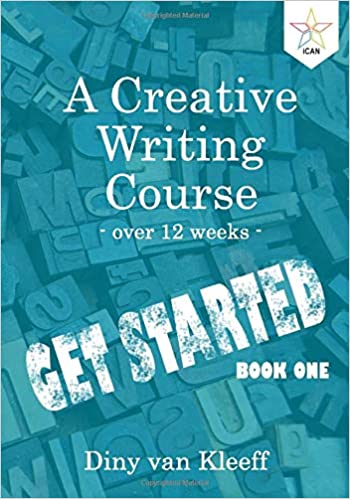 DVK: In my previous role as an IT trainer, I wrote a lot of courses and course material, so when I started to teach Creative Writing at a local community hub, I naturally wrote a lot of material, which I realised would make a great book. I decided each book should be in the form of a 12-week course because that seem like a doable challenge for anyone who really wants to get into writing. Book 3 will be out soon, as soon as I have collated the rest of my course notes together.
4Q: Your website and blog tell us this: At night, she puts on her stealth gear and moonlights as a paranormal investigator (which is a challenge because she is scared of the dark) and official ‘weird magnet’. Care to expound on this statement.
DVK: I have always been fascinated by the paranormal, having had several
 Photo credit: Everything Ghosts.co.ukspooky experiences in the past and when I had the chance, I went on a ghost hunt at the very famously haunted Michelham Priory, where I had some seriously weird experiences and ended up joined the company who ran it. I know run up to 12 ghost hunts a year at haunted venues around Sussex as well as performing in theatrical ghost story events; one of which I wrote entirely in rhyming couplets and is performed by several professional actors (and me) in our local theatre.
Despite spending a lot of time alone in very dark and possibly haunted theatres, Napoleonic forts and ancient houses, I am still terrified of the dark, so I always carry at least 4 torches at any one time, just in case the batteries go in one of them.
4Q: Please share a childhood memory or anecdote.
DVK: Sadly, I just lost my father to cancer at Christmas and one memory that keeps coming back to me is of accompanying him to London to visit design exhibitions as quite a young child. My dad was a silversmith and taught furniture design, and I seem to recall that I was often the only child at these events, but I don’t think that ever bothered me.
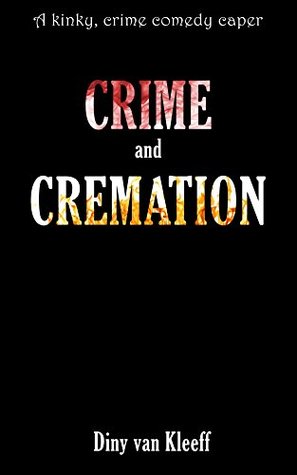
4Q: You have two novels published at present. The first, – Freen: The First Truth and the second – Crime and Cremation. The first written for teens, the second for older teens and adults. Can you give us a brief synopsis of each?
DVK:
Crime and Cremation
 It is the summer holidays and Louella and Emily have finished school, are bored and broke. Nineteen-year-old Emily’s parents have gone away on vacation leaving her and Louella at home. Worried that someone is creeping into their house at night, they bring best-friend Harry over to stay too and hatch a cunning plan to catch whoever is breaking in. However, the plan backfires and they end up accidentally killing the pervert, who they discover is about to collect a large bag of cash. Faced with the stark choice of a prison sentence for manslaughter, or covering up the crime by burning the body in Harry’s uncle’s crematorium and collecting the perverts stash – they opt for the latter, which leads to them believing they can rid the world of more criminals and make money in doing so. Unfortunately, this leads to them becoming involved with a criminal gang, Satanists, fraudsters and a very dodgy policeman. Can they get away with both the cash and their lives, and can Louella make any money blogging about their exploits?
FREEN: the First Truth
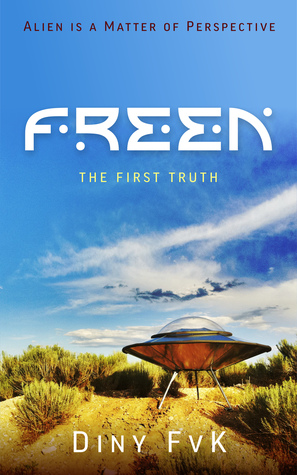 Gem is sent to an expensive boarding school where she quickly makes friends with Lana and Nooshi. All is going well, but then she loses her precious heirloom necklace in the school grounds. When she and her friends creep out in the middle of the night to look for her necklace, they are drawn into the woods by a mysterious light and discover a tiny door, high in the trees with a strange message. Then the girls discover another girl, Ember has an identical necklace to Gem – and so has archaeologist Cessi, who is doing a dig on the school grounds.
 Cessi already knows that the necklaces mean something, and she enlists the girls’ help to discover more about the necklaces and a strange connection to famous novelist Sir Arthur Conan Doyle.
The more the girls investigate the necklaces, the more strange things seem to happen at the school. More strange lights beckon the girls into the woods, and they are drugged and taken to an underground world and the truth about the necklaces is revealed.
The problem is, the truth is about who they are. The girls believe that the truth must be told to everyone, but the problem is that there are a lot of people who don’t want the world to know.
As things escalate, Ember is kidnapped and taken to Austria and the girls, together with Cessi and her friends Jack and Mac must rescue her, before heading to Michigan in the USA where a conference of high-powered celebrities is going to be revealing the truth.
The question is, should they stop it, as requested by the Earth-Freen Alliance or let the truth be told?
4Q: If you were to write a biography of anyone you choose, who would it be and why?
DVK: I would write a biography of Sir Arthur Conan Doyle – without a doubt (although I certainly wouldn’t be the first). I have a picture of him and Harry Houdini on my desk and I am utterly fascinated by him, for his writing, his spiritualism and his intelligence and sporting prowess – he really was a man of so many talents and if he was still alive, I would be following his every move on social media.

My favourite poem – although really it isn’t a great poem, is ‘A Parable’ by Sir Arthur Conan Doyle. It is a poem about cheese-mites of all things, but it shows that the man had great wit and deep thought.
4Q: Tell us about your “author services”.
DVK: Well, I didn’t exactly intend to be offering ‘author services’, but as an ex-IT consultant, I found it quite easy to self-published my own books and then ended up helping lots of the members of my writing group to publish theirs too. Word got out and I have ended up being employed by lots of other local authors to self-publishing their books too, which led me to also offering editing services, which I particularly love doing. However, it stops me from writing my own books (but it does help to pay the bills).
4Q: What’s next for Diny, the author & poet?
DVK: I have just released some early literacy activity books called ‘Letter Detectives’ and am in the middle of writing a follow-up to FREEN, called BA. I have the third Creative Writing book to finish, an illustrated poem that I commissioned seven paintings for to produce and I am about to start producing some writing and education related podcasts with my husband. That is between educating my daughter and editing and publishing other people’s books.
It is a good job that I don’t sleep much!
4Q: Anything else you’d like to share with us?

DVK: I would like to say to anyone who wants to be a writer, but doesn’t believe they are good enough – none of us are to begin with, but that is the beauty of writing, it is a craft that can be learned and everyone improves with practice, so keep writing.
An Excerpt from Novella: Crime and Cremation
Chapter: Death by Bed
(Copyright is held by the author. Used with permission)
I am still ridiculously nervous about the whole thing but, never-the-less, agree that it is our duty to stop this pervert and potentially save future victims from terrible fates.
For the next few days, nothing happens, no intrusions, nothing but, on Wednesday, I have the funniest feeling that this will be the night, so I tell the others, which makes Louella incredibly anxious all day. It turns out that my intuition is spot on!
We wait until really late to go to bed, to reduce the chances of falling asleep on the job. Louella promises not to pick up her book, in case she gets lost in another fantasy and Harry has brought a gun from home. I freak out, but he explains that it’s a replica and only shoots pellets. Louella says she thinks he looks hot with a gun - I’ve never seen Harry look so pleased.
At eleven fifty-seven we are in our places, wide-awake and ready.
At one-twenty I drop off to sleep, aided by the large glass of whiskey I self-administered before bed.
At two-thirty-six I wake with a jolt as my bed collapses. I assume it must be an accident, but then a torch-light blinds me and Harry pulls me off the bed. He points the torch downward and I follow its beam then scream at the sight of the flabby, pale, limp arm poking out from under my broken bed. It isn’t moving.
“Oh my god, oh my god,” I grab onto Harry, who looks as bloodless as a cast member of ‘Twilight’. Louella is stood in the doorway, doing a great impression of a goldfish.
“Has anyone called the police,” I shakily enquire.
Evidently neither Louella nor Harry can speak as they both mutely shake their heads.
I gather my tattered nerves together and tentatively poke the arm with Harry’s torch. Nothing. I push it and prod it, again, nothing. Then I whack it really, really hard with the torch but it doesn’t even flinch.
“I think he must have passed out.”
More mute nodding.
“Here, Harry, give me the ropes.”
Harry looks at me, realising what is on my mind and starts to balk at the idea but, I grab the ropes from him and proceed to tie one end around the perv’s wrist.
“Harry, Louella, you need to lift the bed, I’ll truss him up while you hold the bed up then we can drag him out and call the police.”
Louella remains in the doorway, not moving.
“Quickly, before he wakes up and gets himself out,” I shriek.
That pushes her into action. I get ready with the ropes and also grab the baseball bat I keep next to the bed, in-case he starts to stir. The bed rises slowly to reveal an unattractive man none of us recognise. He is solid, about fifty and wearing the kind of grubby tracksuit bottoms that only the most unfit men wear. His sneakers are in good condition but splattered with white paint and his t-shirt is probably from a supermarket. All-told not a fine specimen of a man.
I squeeze under the bed and tie his limp and surprisingly heavy arms together. Harry passes me the second rope and I wrap it round his legs all the way up to his thighs, threading the end of it through his arms and securing it with four knots. I step back to admire my handy-work, then take the end of the bed from Harry who, after a lot of over-exaggerated huffing and puffing, pulls the trussed-up body out from under it, where we can now survey him on my fluffy, pink rug.
“He looks like a pervert,” observes Harry.
“Why can’t they ever be cute?” I moan.
“And have good hygiene,” adds Louella, wafting her hand around her head.
“I’ll call the police,” says Harry.
“Wait just a minute,” I say, noticing a bump in his trousers. I kneel down to investigate and pull a thickly stuffed, cheap plastic wallet from his pocket. “Oh my god, there must be five hundred pounds in here!”
Harry grabs the wallet from me and pulls out a driving licence. Apparently our man is called Harvey J Goodlington and he lives just a couple of streets away. There are a couple of credit cards in the same name and two in the name of Asnat Fosnittar. Harry tips the rest of the wallet out onto the bed and another driving licence falls onto my covers in the name of Hans Gubner; it would appear that our perv’ had more than one identity.
“I bet he’s already wanted by the police,” says Louella.
“Do you think we should keep the money, as a fee for catching him?” I suggest.
“Put twenty back, they’ll be suspicious if there’s nothing in it,” says Harry.
“Oh, I had no idea you had such a criminal mind,” gushes Louella.
I guess it’s true that crime turns people on. A phone vibrates, making us a jump out of our skin.
“It’s coming from underneath him, from his back pocket,” Harry rolls him over to retrieve it.
“Answer it!”
Harry tries to pass the phone to me, “Don’t be an idiot, I’m hardly going to sound like some fat bloke - you answer it.”
Harry puts the phone to his ear and presses the button. He grunts a deep sounding ‘Yeah’ into the mouthpiece, which seems an adequate response to the person on the other end. Cleverly, Harry switches the speaker on and we all hear the gruff voice on the other end.
“Bud, you are in deep shit, Franko and Lena are blaming you for getting that bastard cop onto us, she reckons you got drunk and spilled too much info - reckon you aughta just get out of town. The boss wants your head – Hans, you hearing me?”
Harry grunts another deep affirmative.
“Okay buddy, I got a plan – gunna do you the biggest favour you ever been done in your sorry life, only ‘cos I owe you – I’m gunna put my arse on the line and retrieve some of the cash so you can make a new start, Franko doesn’t know there’s cash in the haul, so I can swipe fifteen, he won’t miss it. I’ll leave it at Jackson’s, under the booth at the end, pick it up when you get your coffee at half-ten – don’t be late or some other lucky bastard will find it – you got that?” Harry grunted again, “and don’t be early either, I can’t afford to be seen with you,” and the phone went dead.
“Wow Harry, class acting skills there,” I compliment.
“Fifteen-thousand pounds,” muses Louella.
The cogs in my brain start to whirr, “Fifteen-thousand pounds is a lot of money,” I look at Louella and Harry.
“No way, don’t even think about it,” Harry looks horrified.
“We could do it, we just caught a real, live, potential killer – hell, we could be like a teen-crime fighting unit – Jessica Fletcher and the Scoobies.”
“Which Scoobies? The ones from ‘Scooby-doo’ or the ‘Buffy the Vampire Slayer’ Scoobies?” asks Louella, “cos if there’s a choice between Buffy and Daphne, I’d rather be Buffy.”
“I think I’d rather be Shaggy than Xander, although I’m not sure there’s much difference, other than the dog,” adds Harry.
“I’m serious.”
“Oh my god,” groans Louella, staring down at our flabby perv’, “I think he’s stopped breathing.”
Harry and I kneel down and try to see if his chest is moving, then Harry grabs the guy’s wrist and feels for a pulse, he shakes his head, “He’s a gonner.”
We all sit back for a moment, not sure what to do.
“Tea,” I suggest. My mother always says important decisions should be made over a pot of tea, so we head down to the kitchen and make a one.
Louella is shaking and Harry is looking perplexed. I’m actually feeling rather hyped – after all, we just took down a dangerous criminal and now we are going to cash in on the mother-lode.
“Shouldn’t we phone the police?” asks Louella.
“I guess so,” agrees Harry.
My mind is whirring with ideas and a niggling worry that we may actually get in trouble for killing the bloke, even though it wasn’t our intention. I have an idea, “Do you think they’ll accuse us of murdering him?” I tentatively suggest.
Louella’s face drains of all blood and her mouth does the goldfish thing again. Harry takes advantage of her vulnerability and slings his arm around her shoulders, “It was an accident - we only meant to capture him.”
“So man-slaughter then?”
“Shit no, Em,” descries Harry.
“It’s possible,” I counter, “after all; we did set a trap that we should have known had the potential to cause serious injury or death.”
“But they couldn’t blame us, could they?” Louella whispers.
“I think they could, don’t you Harry?”
He shrugs nonchalantly but his downcast eyes answer ‘yes’.
“Oh Em! What do we do?” cries Louella.
“Harry can get rid of a body – can’t you?” I stare pointedly at the poor lad.
It takes him a moment to catch on, “No way… my uncle would never allow it.”
“But you know how to work a cremator?”
He nods.
“And you could borrow one of the vans?”
He nods again.
“Tonight.”
“Now?”
“Yes,” I fold my arms and try to look like I mean business, “you can sneak one of your uncle’s vans, collect the body, take it to the crematorium and toast it before anyone realises he’s missing, then tomorrow, we go to the café and collect the cash. It’s a perfect plan.”
Harry looks at Louella and I can actually see the cogs in their brains trying to assimilate my words.
“Fifteen grand is a lot of money and we would be doing the world a favour by getting rid of this scumbag,” says Harry.
“Do you really think we could get away with it,” asks Louella, her eyes wide and Bambi-ish.
I nod confidently.
Harry nods back. Thirty minutes later he arrives at the house with one of his uncle’s vans and just before dawn cranks up the daylight, we heave the body into it. Two hours later, the evidence is a pile of ash and we are back in my living room. Harry has to be back at the crematorium in two hours and the money needs to be collected in four, so we simply sit and stare glaze-eyed at the news channel until one-by-one, we doze off.
Harry wakes with a start as his phone rings in his pocket, “Shit! It’s my uncle.”
He answers the phone and gets it in the neck for being late.
“Did he notice anything suspicious?” I ask.
“He didn’t say anything, he’s just pissed because we’ve got four cremations to do today and he needs me there ASAP,” says Harry.
“Well we’d better work out where Jacksons is,” says Louella, looking relieved.
t is held by the author. Used with permission)
Thank you, Diny, for being my guest this week and your thought-provoking answers. Wishing you much success in your writing journey.

For you wonderful readers and visitors wanting to discover more about Diny, her writing, author services and where to buy her books, please follow these links:
Author website: https://www.dinyfvk.co.uk/
Blog: https://blog.dinyfvk.com/
Facebook page: https://www.facebook.com/DinyvK/
Before you leave, why don't you post a comment. Would love to hear from you!


April 11, 2020
Returning Author Valerie Sherrard of Miramichi, NB.

Valerie is here this week to tell us about a new character - Cooper Clark - a new book she's excited about - Cooper Clark and the Dragon Lady. Hopefully a new series will follow.
Valerie's work has been recognized on national and international levels and has been translated into several languages. As well, she has won or been shortlisted for numerous awards, including the Governor General, the TD Children’s Literature, the Geoffrey Bilson, the Ann Connor Brimer, and many others. To date, 25 of her books have been published.
This is Valerie's second visit to the Scribbler. If you missed the first one, please go HERE. She share a bit about herself and an Excerpt from Rain Shadow.
Her bibliography and link are listed below.
A Character Called Cooper Clark
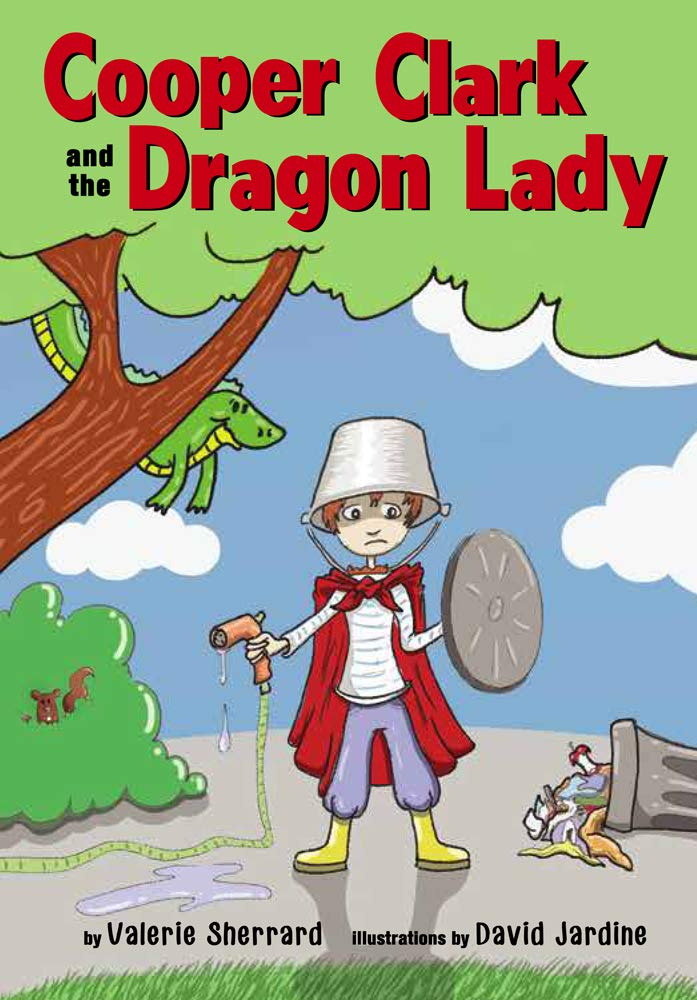
The majority of my stories, from picture books up to full length novels, are character driven. And that is true, even with this chapter book. In Cooper Clark and the Dragon Lady the story moves quickly, with plenty happening, but it is Cooper who carries the events, not the other way around.
For me, a character needs to be fully developed before anything else. Some writers work with an outline, and know what’s going to happen from start to finish before they begin writing. That would not work with my process. Without a strong and nuanced understanding of the character, in this case, Cooper Clark, I have no foundation on which to build.
Well, let me tell you, I quite fell in love with Cooper as his personality emerged. This imaginative little guy has spunk and ingenuity. He’s not a child to run to an adult to solve a problem. No sir, Cooper likes to come up with his own solutions, and that, of course, is where the fun begins.
In this story (the first of what I hope will become a Cooper Clark series) Cooper is forced to face his fear of dragons. His regular babysitter has ‘quit him’ and the replacement, Mrs. Mulligan, is an older lady who is widely rumoured to be housing a dragon in her basement. Cooper is secretly afraid of dragons and while he tries to find ways of avoiding Mrs. Mulligan and her dragon, he tells no one about his fears
 Photo Credit: Krystal Walker - Pinterest.
.
Cooper thinks perhaps he can trick his parents...
I had to talk Mom out of sending me to Mrs. Mulligan’s house! Only, I knew if I told her it was because a dragon lived there she would think I was telling tall tales. So I started thinking. I thought and thought until I had an idea. It was a GREAT idea!“I don’t think I can go to Mrs. Mulligan’s place after school,” I said. “Why not, Cooper?” Mom asked.“Because—” I paused. I took a deep breath and made myself look very serious. “Sometimes children go there and they are NEVER SEEN AGAIN!” I said. My mom and dad like me a lot. They would never take that kind of a chance.“Is that so?” Mom said. She looked at Dad and they made strange faces at each other.“Hokey doodle,” Dad said. “That sounds serious.”“Maybe I should call some of these children’s parents to find out what happened,” Mom said. “That’s a great idea,” Dad agreed. “I don’t think any of them have phones,” I said. “Talk about bad luck,” said Dad.I peeked over at Mom. Her eyebrows were up way higher than they normally are. That meant she was suspicious I was telling her a tall tale even though I had not said anything about the dragon. My mom is the suspicious type.
After his early efforts fail, Cooper finds himself feeling “unwell” and ends up collapsed on the hallway floor.
Finally I heard Mom coming down the hall. I knew it was Mom because of the way her shoes clickety-clicked on the floor. When she got to me she stopped.“Oh for goodness’ sakes,” she said. Then she called for my dad.“What is it?” he asked.“Cooper has left a pile of clothes on the floor.” She stepped over me. “Do you think I should pick these clothes up?” Dad asked.“No, just leave them where they are,” Mom said. “He has to learn to clean up after himself.”Then they both started to walk away.I sat up.“Hey!” I said. “It’s me! “Cooper!” said Mom.“Well would you look at that!” said Dad. “What are you doing on the floor?“I’m having a fainting spell,” I said. “I think I got it from your great-aunt Jasmina.”Mom and Dad looked at each other. “I see,” said Dad. “Dear me,” said Mom. “I don’t think I can go to school,” I said. “Not until I get over this fainting business.”“You’d better lie down,” Dad said. “Do you think you can walk or should I carry you to bed?”“You’d better carry me,” I said. “I probably need to be fanned too. Like your great-aunt Jasmina.”Dad scooped me up and carried me to my room.Mom stuck her head around the corner into my room.“I’ll just have to call Mrs. Mulligan to see if she can watch you for the whole day.”“No!” I yelled.“Well, you can’t go to school and be fainting all over the place,” Mom said. I jumped up. “I think I’m starting to feel better!” Mom shook her head. “I don’t know,” she said.“Really – I’m okay now! I raced out my bedroom door and all the way down the hall. Then I ran back to my room, in and around the bed and back down the hall to the bathroom door.“I’m going to brush my teeth now!” I yelled. I closed the door, only not all the way. I left it open a little bit so I could hear what they were going to say.“Looks like that’s settled then,” Dad said.“Yep,” said Mom. Whew! I might still be going to the dragon lady’s house but at least I wouldn’t be there all day long. Having to hide from a dragon for a whole day was the scariest thing I could imagine.
I have to say that, in addition to loving Cooper, I also adore his mom and dad. They find clever and conflict-free ways to manoeuvre Cooper out of his attempts to manipulate them. And they work as a team. I can hardly wait to see what challenges he’ll bring to them in future stories.
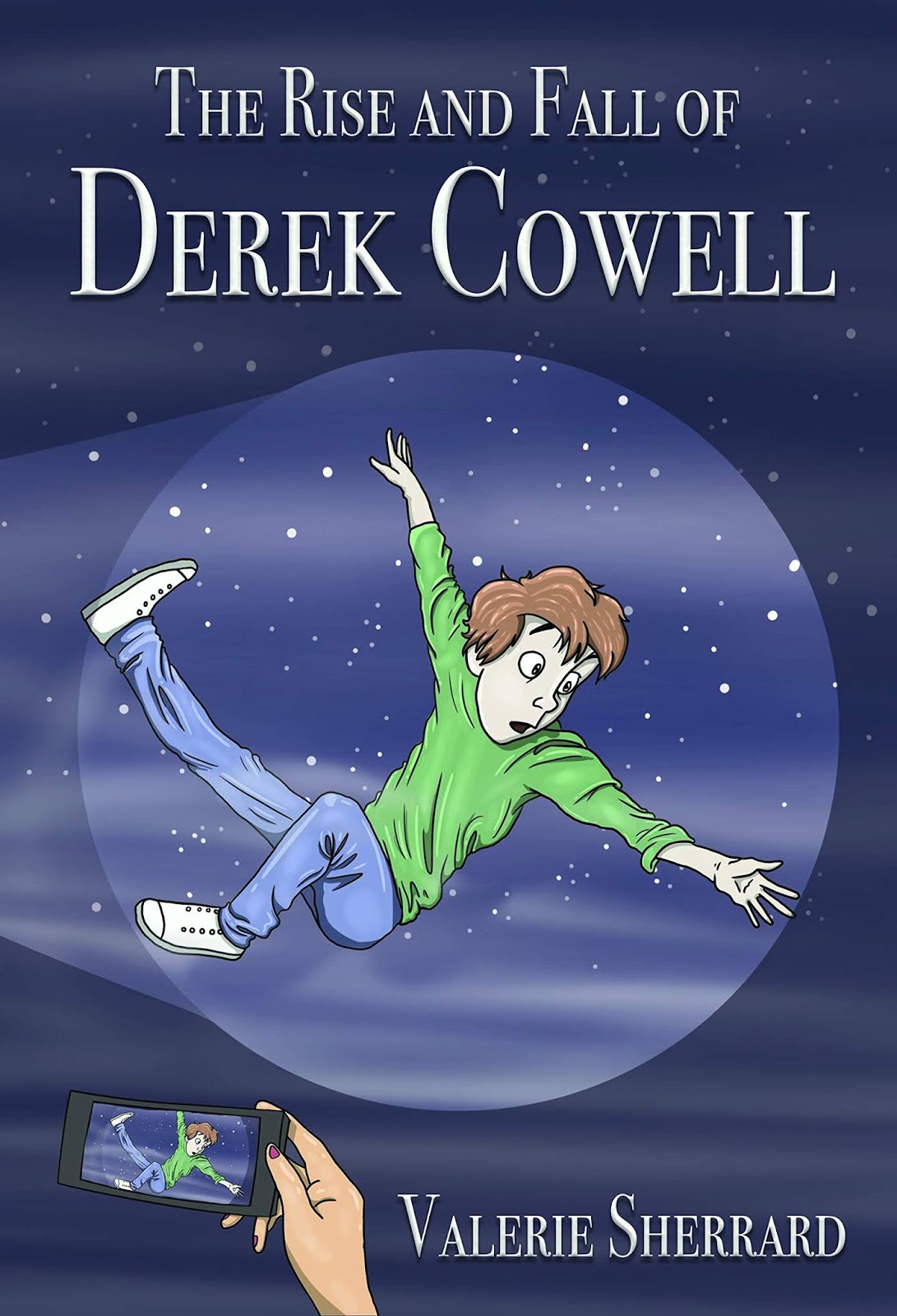
Another character I’ve enjoyed writing recently is Derek Cowell. My middle grade novel, (just out) titled The Rise and Fall of Derek Cowellfeatures a very ordinary 13-year-old who unexpectedly finds himself in the limelight, with hilarious results. The story begins with Derek talking about life with three sisters. When he gets to the third one, he remarks:
Anna is the youngest, at nine. She’s also the family extortionist. And let me just say, if you’ve never been blackmailed, chances are pretty good you’re an only child.
I hope, if you get a chance to read either of these stories, you’ll like Cooper and Derek just as much as I do.
Thank you for being our guest this week Valerie. It's always a pleasure to have you share your work with us. Wishing you much success with the Cooper Clark.

Please visit Valerie's website to discover more about her work.
www.valeriesherrard.blogspot.com


Valerie's Bibliography:Down Here: 2015 (Fitzhenry & Whiteside)Random Acts: 2015 (PenguinRandomHouse Canada)Rain Shadow: 2014 (Fitzhenry & Whiteside)Driftwood: 2013 (Fitzhenry & Whiteside)Counting Back from Nine: 2012 (Fitzhenry & Whiteside)Miss Wondergem’s Dreadfully Dreadful Pie: 2011 (Tuckamore/Creative)Testify: 2011 (Dundurn)Accomplice: 2011 (Dundurn)The Glory Wind 2010 (Fitzhenry & Whiteside)There’s A GOLDFISH In My Shoe 2009 (Tuckamore/Creative)Tumbleweed Skies 2009 (Fitzhenry & Whiteside)Superstars: Vanessa Hudgens (biography) 2009 (Crabtree)Watcher 2009 (Dundurn)There’s A COW Under My Bed 2008 (Tuckamore/Creative)Searching for Yesterday, A Shelby Belgarden Mystery 2008 (Dundurn)Three Million Acres of Flame 2007 (Dundurn) Speechless 2007 (Dundurn)
Eyes of a Stalker, A Shelby Belgarden Mystery 2006 (Dundurn)
Sarah’s Legacy 2006 (Dundurn)
Hiding in Plain Sight, A Shelby Belgarden Mystery 2005 (Dundurn)
Sam’s Light. 2004 (Dundurn)
Chasing Shadows, A Shelby Belgarden Mystery 2004 (Dundurn)
KATE, 2003 (Dundurn)
In Too Deep, A Shelby Belgarden Mystery 2003 (Dundurn)
Out of the Ashes, A Shelby Belgarden Mystery 2002 (Dundurn)
April 4, 2020
A Touch of Scotland. Author Alex Breck of the Scottish Highlands.
Alex is the author of the popular Ridge Walker Series which at present has three novels in the series and he is diligently working on Book #4. He has also penned a stand-alone thriller titled The Devil You Know.
When you visit his website, the latest blog will treat you with a small sample of his writing magic. The Gingerbread House.
“The wizened old woman stretched out a bony arm and switched off the radio with a relieved sigh, stretching her tired back for a moment before turning her attention back to her hot stove.”
You’ll have to stop by to read the rest. I promise, you’ll like it. alexbreckbooks.com
Alex has generously agreed to a 4Q Interview and is sharing an excerpt of his work.
Alex Breck was born in Scotland in 1962. He studied at Aberdeen University. The many paths he has trodden since then include driving an ice-cream truck in Kansas, banking in San Francisco and teaching English (badly) in Madrid. He has been a director of both a health club and a meat factory but would stress there was no obvious connection between the two. He lives quietly on the beautiful West Coast of Scotland where he likes to ride his bike up hills and down hills much to the consternation of his family. The name Alex Breck is a pen name using an old family name and that of a historical ruffian who might be found in the fine novel Kidnapped.
4Q: Let’s talk about the Ridge Walker Series.
AB: Ridge Walker isn’t your run of the mill hero. But as is often the case in real life, it’s when we have particular circumstances thrust upon us, that we discover who we really are and what we are capable of.
 Each of the books has a large amount of the action taking part in a particular overseas location; Central America for ‘He Who Pays The Piper,’ Pakistan in ‘The Piper’s Lament’ and Tokyo for the third adventure, ‘The Piper’s Promise.’ The fourth book sets out to trump them all and you’ll just have to wait a few months to find out why.
What ALL the books have in common is a firm connection to the protagonists Scottish and Irish roots. Despite everything that Ridge has to overcome, his deep love for the Scottish Highlands shines through the darkness.
These adventure thrillers aren’t for the faint-hearted, yet they are full of that quirky gallows humor and carefree optimism famous in the Scots’ character.
4Q: I understand you are working on Book #4 in the series. Care to tell us what we can expect.
 AB: This book sets out to end, once and for all, the cat and mouse game between the Piper and his numerous adversaries from around the globe. There’s no pension plan for those caught up in his deadly profession and it soon becomes clear that in order to save the people he loves, the Piper will have to make the ultimate sacrifice. Is this finally the end of the line for the Piper…? Bang up to date with topical plot threads including the rise of rightwing populism in Europe and further afield in this, the 75th anniversary year of the end of WWII, the reader will be catapulted across the globe in an explosive maelstrom of mad-cap adventures.
4Q: Please share a childhood memory or anecdote.
AB: I have always loved reading and as a young boy I was one of those kids who’d read under the blankets with a torch
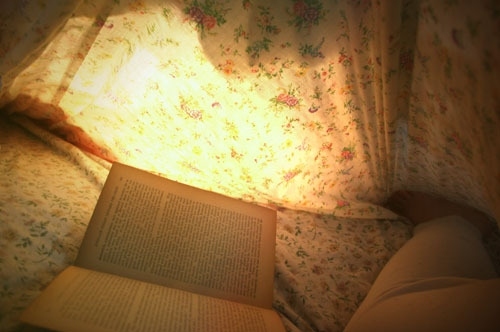 Photo credit: Kaiserr. Favim.comlong after my folks had bid me goodnight. We moved a lot within Scotland when I was younger, due to my father’s occupation and so it was difficult to sustain deep friendships. I remember we were in the beautiful old university town of St Andrews for two years, where I probably spent the entire time in the old library, devouring every book I could get my hands on.
 I think it was around then that I first decided that I wanted to be a writer and also to see as much of the world as I could. Both of these endeavors are still a work-in-progress…
4Q: When was that defining moment when you knew you were going to write stories, when being an author was of paramount importance in your life?
AB: I have felt the urge to write since I was a child really, but the imperative to get a practical education and follow a conventional line of employment was drilled into me by my strongly Presbyterian family background. It took me several years of unfilled job-hopping before I was eventually able to loosen the harness sufficiently to start writing in earnest.
4Q: Is there a favourite spot to write or habits that you enjoy when you are feeling the most creative?
 AB: I am lucky to live on a beautiful island on the West Coast of Scotland and so I guess I am already in the kind of place many of you would enjoy coming to on a writer’s retreat. I get a lot of inspiration when out in nature, walking or more probably cycling, then it’s the usual predicament of being able to either jot down or remember the gist of the idea.
 As far as the actual writing goes, I am not too precious about where I am at the time, as the instant I begin, I am transported to whatever place I am writing about and I generally lose all sense of time and space.
4Q: Tell us about The Devil You Know.
AB: This is an altogether darker look at the themes of
 redemption and alienation set wholly in Scotland and Glasgow in particular. I wanted to blur the lines between good and bad and in ‘The Devil You Know’ there are good people who do bad and bad people who do good. One of the great things about being a writer is having the opportunity to take a pop at authority or some of the craziness in society and so I let rip here, more than in my adventure thrillers.
The protagonist, Lachie Maclean, has to be, on first meeting, one of the least likeable heroes you’ll come upon and again I thought that a one-off thriller would be the perfect vehicle to explore his character to the full. But funnily enough, I’ve had so many people ask me for a second helping of this unusual dish, that I am now well on the way to completing the plotting for a sequel to be published later in 2020.
4Q: What are you working on now?
AB: At the moment I am in the last stages of putting the finishing touches to the 4th Ridge Walker novel, plotting the sequel to ‘The Devil You Know,’ helping a local group of writers to publish an anthology of short stories and working on my first non-fiction book about Blockchain technology.
4Q: Anything else you’d like to share with us?
AB: Wish me luck in a month’s time as I embark on a one-thousand-mile bike adventure from the southernmost tip of
 England to the northernmost point of Scotland, Land’s End to John O’Groats. I am cycling 100 miles a day for 10 days to raise funds for the devastated wildlife of Western Australia following the terrible bush fires earlier this year. You can sponsor me up until June 30th here - https://www.justgiving.com/crowdfundi...
An Excerpt from Book 3 in the Ridge Walker Series - The Piper’s Promise(Copyright is held by the Author. Used with permission.)

Ridge rubbed his eyes and checked his watch. Still dark outside but there seemed little point in trying to get back to sleep. The pair of them had been up half of the night with Alex, and Orla must have taken him down to the warmth of the kitchen. He decided to go make them both a mug of tea and then see about sorting out some small trees for the new ornamental defence he’d planned for the more exposed left-hand side of the garden. Beech had been his preferred option as it would grow reasonably fast and even although it was a deciduous plant he knew from his research elsewhere that a strong beech hedge would retain its leaves throughout the winter having become a dry rustling gold colour by then. All the better for disguising the barbed-wire fence he’d be growing the hedge through.
‘Mornin’ love’ he muttered as he stumbled into the kitchen and slammed the kettle under the cold tap. Orla rocked manically on her favourite chair, the little boy wrapped up in a blanket in her lap.
‘Don’t you be “morning” me, ye eedjit.
Left that phone on again last night, so you did. I’d just got him down and then it goes off, jumping about on the dresser there like some demented sex toy!’
‘Sorry angel! I keep forgetting to put the bloody thing off.’
Ridge could see his wife laughing despite herself. She’d obviously been savouring that comment for hours and he placed his hands lightly on her shoulders and rubbed his face in her thick red hair. Then he put two mugs of tea onto the heavy wooden table and went to pick up his mobile. He’d upgraded it a few weeks ago although he didn’t see the point as he hardly used the thing. So now he was habitually pressing the wrong buttons at night and often it stayed on when he’d thought he’d powered it down. The upshot was on the odd occasion when he’d wanted to use it, the battery would be as spent as the teenage winner of a weekend wanking competition.
He stared at it now. Still defiantly holding a charge. And ten messages from Thaddeus. Plus one phone message. Interesting.
‘It’s been Thad.
You’d think with all the globe-trotting he does he’d realise the time difference! He’s probably just gloating that he’s found another rare Japanese Bowie LP.’
Orla growled like a sleepy mountain lion. ‘Well seeing as he’s bleedin’ well called you so many times d’ye not think you could at least call him back?’ But Ridge already had the mobile up to his good ear and he waited for the voicemail to come through. Orla watched him with only a half interest until she saw his eyes go wide and his mouth gape open in a credible impersonation of a whale at dinner.
Thank you, Alex, for being our featured guest this week and for sharing your thoughts.

For all you readers wanting to discover more about Alex and his novels, please follow these links:
Amazon Author Page: https://www.amazon.com/Alex-Breck/e/B008ACZ7YE
Blog: http://www.alexbreckbooks.com
Facebook: https://www.facebook.com/alexbreckbooks/
Twitter: https://twitter.com/alex_breck
Podcast: https://itunes.apple.com/gb/podcast/alex-brecks-banter/id1170138975
March 28, 2020
Horror at its Best - Author MJ Preston of Northern Alberta.

The Scribbler is pleased to do a series of guest appearances in conjunction with Creative Edge Publicity of Saskatchewan, Canada. (See below for more of Creative Edge)
This month’s guest is MJ Preston. -- Grady Harp of the SAN FRANCISCO REVIEW OF BOOKS has this to say about him:
“Canadian author M.J. Preston is rapidly becoming recognized as one the more impressive writers of horror fiction… “
MR. Preston has agreed to a 4Q Interview and is sharing an excerpt from his work.
 M.J. Preston’s debut novel: THE EQUINOX, published in 2012, was a quarterfinalist in the Amazon Breakthrough Awards and rated a solid straight horror novel by a reviewer at Publisher’s Weekly. His second novel: ACADIA EVENT, published in 2015, was inspired by his time running the world's longest ice road, as an ice road trucker, in Canada’s Northwest Territories. It was recently re-released with his publisher, WildBlue Press. His third novel, and new series: HIGHWAYMAN, a thriller, was published July 02, 2019, with WildBlue Press. He has also published scores of short stories in anthologies around the world. In addition to writing, MJ is an artist and an amateur photographer. The sequel to Highwayman, titled: FOUR, is now available for purchase and is getting great reviews. He resides in Alberta, Canada, with his wife, Stormy, and beagles, Jake and Milo.
 4Q: As stated on your website, you’ve “always had an interest in true-crime and the enigma of serial murder.” How has this become the basis for your novels?
MJP: Well, my first novel, The Equinox,
 had a serial killer in it, although that part of the story was tied to supernatural events. I’ve always had this fascination with monsters. That’s why my first two novels were about monsters. But beyond the mythos, there are real monsters out there who walk among us. Predators who hunt and kill other people, and who are often not seen as a threat. They come from all walks, drifters, truckers, law students, and even cops. I find these monsters more terrifying than any other because you don’t see them coming. They move among the masses, unseen, unknown, and, if encountered, lethal. I think it was inevitable that I would find myself writing about this subject, it fascinated me for as long as I can remember. But it isn’t just killers, but the FBI agents, state cops, and local law enforcement leave me equally intrigued. Hunting a serial killer takes patience, dogged detective work, and having the longevity to persevere. I have so much respect for law enforcement who are dedicated to the hunting and apprehension of these killers.
 4Q: Please tell us about the Highwayman Series.
MJP: The series opens with a story that spans the companion books,
 Highwayman and Four. It is about the rise of a serial killer named Lance Belanger, from his early beginnings to his obsession to be the most prolific and notorious serial killer of all time. They call the killer “Highwayman” because the bodies keep popping up in different states, along or near major interstates and U.S. routes. All are incapacitated by a puncture wound to the spine, all dismembered in the same fashion, cut up into five pieces, and staged like a starfish. Parallel to this, the story follows the roles of two FBI investigators, special agents Lewis Ash and Dave Maxwell, in their eight-year pursuit of the elusive killer.
Future books in the series will tell different stories, but drawing from the original cast of characters and adding new ones as well. I’ve got three more Highwayman books floating in the grey matter, waiting for me to let them out.
4Q: In your opinion, what makes a story great?
MJP: Characters, plot, the ability of a writer to make you laugh, weep, angry, or
 even repulse. I believe a story should affect you in some way. When I think back to some of the books I’ve read over the years and key things still ring inside my head from time to time. As an example, the novel, Bad Blood by John Sandford has a scene in it where four Minnesota state investigators are driving to raid a farm of armed polygamists. Sharing the same bag of Cheez Doodles, they are debating who of the four has had the weirdest case. One of them remarks that Virgil Flowers has, by far, had the weirdest case on the weird-o-meter. What was the case? I guess you’ll have to read the book, but I tell you this. It was a great scene, building to inevitable conflict, injecting black humor, and ignoring that there might be danger ahead. It was so well written that I felt like I was in the car with them. I could see the dashboard lights shining blue-white on their faces. I could hear the crunch of the cheezies. If you can do that for a reader, you’re doing it the right way.
4Q: As well as the Highwayman series mentioned above, you’ve penned two stand-alone novels, The Equinox and The Acadia Event. Can you give our reader a brief synopsis of each?
 MJP:
The Equinox
is a story of revenge and redemption. After Chocktee half-breed, Daniel Blackbird inadvertently frees a Skinwalker from a ritual circle, it kills his grandfather and sets out into the modern world to hunt and feed. The Skinwalker can take any animal or human form, but it is a grotesque beast that must dine on the organs of its victims. After hunting it for over a decade, Blackbird tracks it to a small prairie town in Manitoba where on the eve of the Fall Equinox worlds and cultures collide as the streets run red with blood.
MJP:
The Equinox
is a story of revenge and redemption. After Chocktee half-breed, Daniel Blackbird inadvertently frees a Skinwalker from a ritual circle, it kills his grandfather and sets out into the modern world to hunt and feed. The Skinwalker can take any animal or human form, but it is a grotesque beast that must dine on the organs of its victims. After hunting it for over a decade, Blackbird tracks it to a small prairie town in Manitoba where on the eve of the Fall Equinox worlds and cultures collide as the streets run red with blood. Acadia Event
is a science fiction/horror inspired by my time as an ice road trucker. It follows Marty Croft, a man forced to retrieve stolen diamonds from a mine. Along the way, he gets detoured, along with a bunch of truckers, when an alien force launches an invasion. Sounds crazy, I know, but it’s a fun novel that could probably only be adapted to the screen by someone like James Cameron. It’s an action-packed, scary, gory, sometimes funny, sexy, story, told on the world’s longest ice road. To date, it’s my longest novel, over 600 pages, but it reads like 300.
Acadia Event
is a science fiction/horror inspired by my time as an ice road trucker. It follows Marty Croft, a man forced to retrieve stolen diamonds from a mine. Along the way, he gets detoured, along with a bunch of truckers, when an alien force launches an invasion. Sounds crazy, I know, but it’s a fun novel that could probably only be adapted to the screen by someone like James Cameron. It’s an action-packed, scary, gory, sometimes funny, sexy, story, told on the world’s longest ice road. To date, it’s my longest novel, over 600 pages, but it reads like 300.4Q: Can you tell us your favorite authors?
MJP: John Sandford, James Lee Burke, and Michael Connelly are in the top three. They all write mystery and police procedural in a recurring series. I think Sandford and Connelly are responsible for me penning the Highwayman series. As for Burke, he is a literary icon. Burke’s words are poetry. I also dig, Robert R. McCammon, Stephen King, the late great Tom Clancy. And I really love the indies like Gene O’Neill, B.E. Scully, Gregory L. Norris, and Kyle Rader. I have so many authors I love, but there is only so much room, so I’ll leave it there.
4Q: What’s next for MJ Preston, the author?
MJP: Well, the Highwayman series isn’t finished yet. This story has concluded, but there are other characters and new criminals to consider. I’ve started another Highwayman book, and we’ll see where that leads us.
4Q: Anything else you’d like to share with us?
 MJP: I guess I would like to finish by saying that this thing I do is a shared endeavor. I write for pleasure, but I also write with the reader in mind. When you write something with recurring characters, it’s a different world. I think a lot about readers, not in the sense of vanity, but when I’m getting ready to tell a new story. You want readers to like the tale you weave, you hope that through your words and upon the pages which they are printed, you make a connection.
 It’s what every writer strives for. What I will continue to do as long a life affords and the readership is there. Thanks to them.
Thank you for having me.
**It’s a real treat having you as a guest MJ.
An Excerpt from FOUR: Book Two in the Highwayman Series
(Copyright is held by the author. Used with permission)

Chapter 1 – Datcu Effect
4
2 November 2008
Bucharest, Romania
Andrei Gusa was in a holding cell usually reserved for state witnesses who needed protection from the Romanian mafia. In Gusa’s case, it was the Vladimirsku family or, for short, the “Vlad family.”
The Vlads had ties with criminal elements all over the world and were the most feared family in the country, invested in every facet of illegal activity: drugs, extortion, prostitution, pornography, human trafficking, and murder. The Vlads rubbed shoulders with the worst of the worst.
When Gusa was arrested, they, the Vlads, immediately dispatched one of their lawyers to meet with him. Gusa said nothing to authorities. Doing so was suicide. As far as incrimination went, he considered his options. The mainframe had imploded, so they had nothing there, and his backups were stored in a safe place known only to him. There was no evidence linking him to the “Vlad family,” but that didn’t mean he was safe. He was anything but safe.
Andrei Gusa had become a liability.
His cell opened mid-morning, and a tall, gaunt-looking guard said in Romanian, “Prisoner, stand up.”
Gusa stood.
“Turn around, face the wall, hands behind your back.”
Gusa turned around. The guard stepped in behind him, stinking of cheap aftershave, and slid a chain through the loops of his prison coveralls. There was a click. Then a voice from behind the cheap smelling guard snapped. “Ține-ți ochii la prizonier!” which meant, “Keep your eyes to the wall, prisoner.” “Almost done,” the first guard said.“Where are you taking me?” Gusa asked.“To meet your lawyer.” The guard hooked cuffs around his wrists and they clicked. “Prisoner, turn around.”He was led down a dimly lit corridor to an interview room. Gusa knew his jailers were as corrupt as the men they incarcerated. At any moment, he expected to be pushed into a room and feel the cold steel of a gun barrel behind his ear.
Every step―every breath, every thudding beat of his heart-felt like his last. They marched him bent over at the waist, yanking his cuffed hands upward, putting stress on his shoulder blades. He saw only floor, and knew if he turned his eyes left or right, they would hit him with a baton.
“Prisoner, stop!”
He stopped.
Keys jangled, then they were inserted, and there was a mechanical click to his rear right. The door creaked on its hinges and he was told, “Prisoner back up and turn right.”
He did, finding himself standing in the doorway, seeing only more scarred concrete which led into a room. The pressure on his arms loosened, the stress on his shoulder blades relaxing. “Prisoner, stand straight up!”
He did. Sitting at a table was the man who had arrested him, Inspector Datcu. Gusa was marched to the table and seated.
“Good morning, Andrei Gusa.” Inspector Datcu wore the same charcoal suit as the day he had arrested Gusa, but the matching hat was on the table.
Gusa asked, “Why am I here? Where is my lawyer?”
Inspector Datcu grinned. “The Vladimirskus’ lawyer is waiting to see you. I thought we might have a little chat first.”
Gusa grunted, “Fuck yourself. I want my lawyer.”
The inspector frowned. “Okay, but first…” He reached into a briefcase and produced a photo. “Take a look at this.” He slid it across the table and spun it around.
Andrei looked down.
The photo was color, the subject quite clear. It was a man, naked from the waist down. He had been knelt, bent over a radiator, and tied. His black and white striped jumpsuit had been cut away from the waist down. His feet had been cut off and lay on their sides. But that was not the worst. His legs were soaked in blood. Not from the amputation, but from the sodomy performed by repeated thrusts of a prison blade taped to a broomstick. Gusa knew this because the assaulting weapon still protruded from the man’s buttocks. Gusa closed his eyes, not wanting to look.
“I believe you know Mikolai Annikov?”
Gusa turned away but said nothing.
“This happened about three hours after he met with his lawyer. The same lawyer who is sitting in the waiting area downstairs.” Inspector Datcu removed a second photo from his briefcase and slid it across the table. “I believe you know Teodora Berić.”
Gusa looked at the photo and recoiled.
Teodora Berić had suffered a similar fate.
“The Croatian Policija recovered her body in a warehouse outside Dubrovnik, Croatia.” Datcu sighed. “They probably would not have found her so quickly if they had not been tipped off.” Datcu looked directly into Gusa’s eyes. “I believe the tip came directly from the people who did this. What do you think?”
Gusa shook his head.
“You know what else I think?” Datcu said. “I think that if you do not cooperate, we will not be able to protect you.”
Gusa brought his eyes up to meet Datcu. “You think you can protect me?”
“No, probably not. And why would I want to? You exploit children for money.” Datcu stood up, producing another piece of paper from his pocket. He said, “After you meet with your lawyer, you are being transferred to the Penitenciarul in Giurgiu.” Datcu gathered up the photos and the transfer, placing them into his briefcase. He turned and walked to the doorway.
“Wait,” Gusa said. “I have information, but I want assurances.”
Datcu turned around. “Okay, you talk and perhaps…”
“No, I have information. I also have evidence, but I will not simply turn it over.” Gusa did not trust Datcu or any of the Romanian police. If he provided them with information, they would throw him to the wolves.
“So, you don’t want to see the lawyer?”
“I want to be moved to a safe location.”
“That is a lot to ask for nothing, Andrei Gusa.”
“Okay, I will give you a name as a show of good faith.”
“I’m listening.”
“Belanger.”
Datcu pulled out a notepad, thumbed through it. “I do not know this name. Is he French?”
“Contact the FBI. Tell them you have information on the Highwayman case. Tell them I know who he is.”
“Okay.”
“Once you have done this, I want a government lawyer here to draft a contract of protection and immunity,” Gusa said.
Datcu looked at the two guards and waved them out into the hall. “Take him back to his cell. He is not to be mixed with the other prisoners. I will hold both of you responsible if anything happens to this man. Do you understand?”
“Yes, Inspector,” said the gaunt-looking guard.
The other nodded. “Yes.”
“Keep him safe.”
[End Excerpt]
Thank you, MJ, for being our featured guest this week. It’s been a pleasure getting to know you a bit better.

For you readers interested in discovering more about MJ Preston and his novels, please follow these links:
MJ Preston’s web site https://mjpreston.net/
Amazon Page: https://www.amazon.com/-/e/B005JTQMZY
WildBlue Press: https://wildbluepress.com/highwayman-book-1-mj-preston-horror/
Creative Edge is a dynamic Publicity Company based in Saskatchewan. Founder and co-Owner Mickey Mikkelson made this statement:

Creative Edgespecializes in elevating the public profile of authors and artists through such means as (but not limited to) book signings, presentations (libraries, schools, conferences, businesses, etc.), involvement in applicable events, media interviews (including podcasts and print media), and soliciting of reviews from influential reviewers and bloggers.

March 21, 2020
Guest Author Anita Kushwaha of Ottawa, ON.

One of my previous guests, Sonia Saikaley, shared Anita’s latest novel – Secret Lives of Mothers & Daughters - on her Facebook pages, with high praise. I was impressed with both the great cover and the story. I am awaiting my copy of her novel.
Her novel - Side by Side - has received the silver medal from The Independent Publisher Book Awards in 2019
Sonia kindly introduced us and Anita has graciously agreed to a 4Q Interview and is sharing an Excerpt from her novel.
Anita Kushwahagrew up in Aylmer, Quebec. Her road to publication included a fulfilling career in academia, where she studied human geography at Carleton University and earned an M.A. and a Ph.D. A graduate of the Humber School for Writers creative writing program, her work has appeared in The Globe and Mail, Quill and Quire, The 49th Shelf, Open Book, Word on the Street, and Canadian Livingamong others. Her first novel, Side by Side, won an Independent Publisher Book Awards' Silver Medal for Multicultural Fiction in 2019. She is also the author of a novella, The Escape Artist. Her latest novel, Secret Lives of Mothers & Daughters, released in January 2020 by HarperCollins Canada, was named a “Books With Buzz” by Canadian Living, chosen as Word on the Street’s March Book of the Month, and a Most-Anticipated Spring Fiction selection by The 49th Shelf and Savvymomdotca. She lives in Ottawa.
4Q: Please tell us about Secret Lives of Mothers & Daughters. It looks like a must-read.
AK: I appreciate that, thank you, Allan! And thank you for hosting me on your blog, I’m honoured!
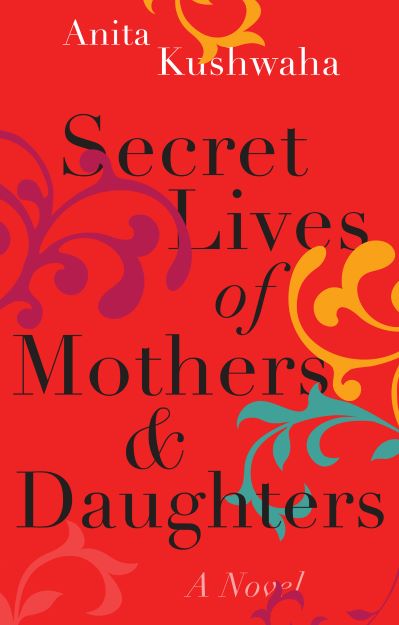 Secret Lives of Mothers & Daughters is a mother-daughter story told in alternating timelines, that of Asha and Mala. The story begins with the revelation that Asha’s parents have kept the truth about her adoption a secret for her entire life. But why? As Asha is thrust on a journey of self-discovery, the reader is introduced to Mala, and the choices and secrets that end up shaping both their lives. More broadly, the book is about the ties that bind mothers and daughters together, and the secrets that tear them apart, and the particular social and cultural pressures faced by the South Asian characters in the novel.
 4Q: This is your second novel. I detect from the descriptions of the books that a common thread is family. Is this so? Is family important to you?
 AK: Family is definitely important to me. It’s where I’ve learned the most about life and people. But it’s also complicated. I think especially when you come from a broken home, family can be a source of pain as much or even more so than it is a source of joy, which is unfortunate but happens to so many of us, and can have far-reaching impacts in our lives. I write about the things I’m still desperately trying to understand. For me, it starts with family. Why we treat each other the way we do, what gets in the way of people being good to each other, the impacts of expectation and silence – these are some of the topics I keep wondering about and exploring in my writing, among others such as immigrant experiences, the lives of South Asian women, and mental health.
4Q: Please share a childhood memory or anecdote.
AK: I did this below, keep reading!
4Q: If you were to write a biography of anyone, living or deceased, who would it be and why?
AK: Definitely my grandparents. I never got to meet them.
4Q: What are you writing habits and where is the special place where the words flow most freely?
 AK: I’m the type of person who likes to feel productive every day and who also loves structure. I suppose my approach to the day is my habit. A typical writing day starts early with a cup of tea. I try my best to stay away from social media until I’ve gotten a couple of solid hours done. Then I usually like to go for a run or a walk. After lunch, I’ll either write for a couple more hours or review what I wrote earlier in the day. Not glamorous, but it gets things done. In terms of where I write, I like to give myself the ability to wander, but having said that, I do most of my writing at our beautiful handmade dinning room table, mostly likely in the company of our cat, Noodles.
4Q; When did you experience that defining moment when you knew you wanted to… needed to… write.
 AK: I think for me it was always more organic. I was playing make-believe and telling stories long before I could read or write, and often got into trouble for it, which is something I have in common with my protagonist in The Escape Artist. Next came a fascination with constructing my own books and journals out of old cereal boxes and envelopes. I always loved the feel of books, and still feel delighted when I pick up a new book or journal, anticipating what I’ll discover inside, and what it will reveal about myself. Having said that, a defining moment for me goes back to when I was nine years old, the day that I took one of the poems I had been working on from my journal and writing it on the back of my bedroom door with a Sharpie (I didn’t know what indelible meant at the time, ha), underneath a poster of a band that shall not be named.
March 14, 2020
Guest Lorraine Devon Wilke of Los Angeles, CA, US.
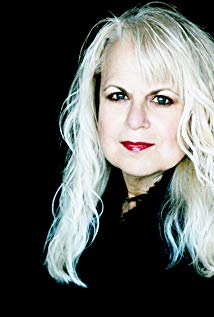
When you visit Lorraine’s photography page on her website, it opens with this thought:
I am a storyteller, inspired to find the narrative in everything around me, whether words, music, or the amazing sights we see.
A multi-talented lady, Lorraine is an author, actor, photographer, singer and songwriter. The Scribbler is most fortunate to have her as our guest this week. She shares her thoughts in a 4Q Interview.
Lorraine Devon Wilke’s writing resume includes years of screenwriting and songwriting, and over a decade as a political/cultural contributor to HuffPostand other media/news sites. Her work has been globally disseminated, reprinted in books, articles, and academic tomes, and she continues to write essays and commentary at her blog, www.rockpapermusic.comand select media sites. Her two previous novels, After the Sucker Punch and Hysterical Love, are available at Amazon, Barnes & Noble, and select bookstores; her highly anticipated third novel, The Alchemy of Noise, was published April, 2019 by She Writes Press.
In addition to her writing, Lorraine works frequently as a singer/songwriter and actress, while her "semi-professional" hobby of photography has seen her work exhibited on many a gallery wall. Links to all her work, writing awards, and other details of her creative background can be found at www.lorrainedevonwilke.com.

4Q: From browsing through your website, you have many interests. How does writing fit into your busy lifestyle? How important is it?
LDW: Actually, writing has been the throughline that’s connected all my various creative paths. Though I started as a singer/actress in my teens, I edited and wrote for the high school literary magazine, then my college years as a theater major led to collaboration on various stage writing projects. Working theatrically ultimately inspired the development of my screenwriting skills, which hold me in good stead today!
By the time I got to Los Angeles (from Illinois) in my early twenties, keeping my hand in the various mediums I loved—acting, writing, singing—I added songwriting to the mix. This played a major role throughout the 80s, the decade in which, with my original band, DEVON, I was immersed in the iconic LA rock scene at the dawn of MTV—big hair, belts and earrings, new wave music, and amazing fun. A particularly heady time, I wrote and recorded countless songs in collaboration with some of the best musicians and songwriters in the world, many of which appeared on TV and movie soundtracks, international albums, and certainly advanced my own career. I still write songs today, whenever I get together with musicians I love (though never with the frequency I’d prefer!).
 Then, a few years into the 2000s, after involvement with indie films, a few musicals, and more bands, but with my music career slowing down as I got older and the business changed, I toyed with the idea of writing a novel, something I’d always wanted to do. By 2010, I’d begun my first,
After The Sucker Punch
, which was self-published in 2014, with
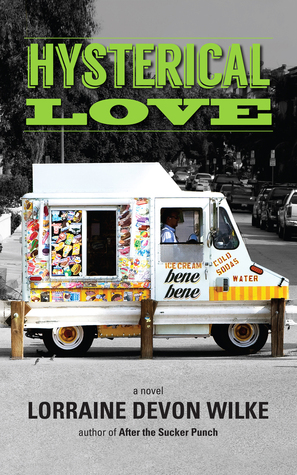
Hysterical Love
to follow in 2015. My most recent,
The Alchemy of Noise
, came out last year, April, 2019, via She Writes Press. Throughout it all, I continued writing essays and opinion pieces, a screenplay, A Minor Rebellion, which won several awards and which I’m now adapting into novel form, and even a short story, “Penelope For His Thoughts,” which was recently awarded by Tulip Publishing for their annual anthology,
Stories That Need To Be Told
.
Then, a few years into the 2000s, after involvement with indie films, a few musicals, and more bands, but with my music career slowing down as I got older and the business changed, I toyed with the idea of writing a novel, something I’d always wanted to do. By 2010, I’d begun my first,
After The Sucker Punch
, which was self-published in 2014, with
Hysterical Love
to follow in 2015. My most recent,
The Alchemy of Noise
, came out last year, April, 2019, via She Writes Press. Throughout it all, I continued writing essays and opinion pieces, a screenplay, A Minor Rebellion, which won several awards and which I’m now adapting into novel form, and even a short story, “Penelope For His Thoughts,” which was recently awarded by Tulip Publishing for their annual anthology,
Stories That Need To Be Told
.  For me, writing is and will always be my most basic, fundamental form of communication, the way in which I express my thoughts, transmit my opinions, tell my stories, make people laugh or cry, and certainly inform the people in my life what they mean to me… what could be more important than that?
 4Q: Let’s talk about your latest novel, The Alchemy of Noise.
LDW: I’ve always been a writer who wanted my words to matter, in whichever medium I was working. I wanted my songs, articles, books, even my photography, to illuminate life around me—feelings and emotions; essential themes, the “humanness” we share, what reflects reality, hard truths, humor, honest love and compassion back to the people who’d be reading.

With The Alchemy of Noise, I decided to take on a story that reached beyond the more basic human relations covered in my first two books to focus, instead, on the egregious and ongoing social injustice of racial discrimination. I’d written many op-ed pieces for HuffPost and others on the topic, and by 2016 felt ready to put some of what I’d learned through research, interviews, interactions, and observations into a fully-realized novel, one that tackled the subject through the context of a love story.
Given the subject matter of the book, as well as current concerns about cultural appropriation (i.e. the American Dirtcontroversy), I always feel it necessary, as a white writer telling a story that involves strong portrayals of black characters, to share a little background as to why I felt this specific story was mine to tell:
Earlier in my life I spent six years in an interracial relationship, and as educated as I thought I was on the topic of race and bias, as open-minded and racially progressive as my upbringing had been, it turns out I had only a glimpse of the bigger picture and so very much to learn. Witnessing, tangentially experiencing, and reacting to the “micro-aggressions,” recurring police harassment, and flat-out bigotry my partner dealt with on a day-to-day basis forever changed my worldview on the reality of race, white privilege, and systemic injustice.

As I was pondering the subject of my next book in 2016, it struck me that this experience offered not only the seeds of a topical and dramatic story, but brought into the conversation the specific, shared, but disparate perspectives of a mixed-race couple. That seemed a unique and useful point-of-view to explore, particularly since lack of experiential empathy too often leaves participants in discussions of race struggling for true understanding.
Even with the sensitivities surrounding issues of “whose voice gets to tell stories of race,” my gut told me I had a worthy story to tell. Because of those sensitivities, I was determined to accomplish the goal as authentically as I could, allowing the unvarnished, sometimes painful, frequently illuminating viewpoints of each character to be honestly expressed throughout.
From there I created a fictional set of characters, put them in contemporary Chicago (the city of my birth), plotted out their story arc, and gave them many of the challenges and obstacles I’d witnessed and experienced in my long-ago relationship… ones that, sadly, still resonate in current times. Adding perspective gleaned from the prodigious research and interviews mentioned above, The Alchemy of Noise came to life with as much humanity, truth, and credibility as I could capture. At its heart it’s a love story, if one framed by the provocation of race dynamics in our modern times. I hope your readers find it both genuine and moving.
As for a short synopsis:
In a moving and sociopolitical love story set in contemporary Chicago, it’s serendipitous that Chris Hawkins, a black sound engineer from Chicago’s south side, and Sidonie Frame, white, suburban-raised, the head manager of one of the city’s buzziest venues, meet by work-related happenstance and fall quickly in love. The couple is convinced happiness is theirs for the taking, but life, it seems, has other plans. While they’re able to transcend unavoidable culture clashes, recurring police disruptions, and the resistance of select family and friends, a violent arrest ultimately turns their world upside down, leaving them to question everything—including each other. The Alchemy of Noise is a provocative drama that asks if love can bridge the distance between two Americas.
NOTE: The Alchemy of Noise is currently running a sales promotion—from March 12-March 23, 2020—when the eBook will be available for $0.99. Be sure to grab a copy at this one-time-only low price!
4Q: Please share a childhood memory or anecdote.
LDW: I’m one of eleven children. Yeah, I know… crazy. I’m the third oldest; the third daughter, one of six girls with five brothers. When you grow up in a big family, particularly one with limited resources, as was true of us, you learn to appreciate certain things you might not have otherwise. For example:

When I was very young, the family TV blew a tube, and, likely because we couldn’t afford a new one, my father announced it would not be replaced (cue sobs and moans). Instead, he continued, he would regularly bring boxes of books home from the Chicago library, books we could keep, cull through, and read for up to three months at a time, after which they’d be replaced by new boxes. While we initially complained, convinced missing Saturday morning cartoons would have staggering impact on our development, the decision ended up being one of the most anticipated, appreciated, and meaningful things he ever did.
I so viscerally remember the palpable excitement when he’d pull into the drive after a visit to the library. We’d hover around him as he brought the boxes in, eager to go through each one, pulling out books we were most interested in, sometimes arguing about who got which book first, but ultimately settling down, each with our tidy collections. It felt like treasure to me. It was one of the most enriching experiences a child could have and I have no doubt this decision of my father’s had everything to do with my sustaining love of words and storytelling.
He did, ultimately, replace the TV when I was in my teens, but I never lost my now well-established love of reading.
4Q: If you were going to write a biography of someone either deceased or alive, who would it be and why?
 LDW: My paternal grandmother, Deborah Derebey Amandes, while in her teens, got herself to a dock in war-torn Turkey, where her family had been exiled from Greece years earlier, gained passage on an ocean steamer headed to America, and, with her half-sister, Epiphania, came to the United States in 1920. From Ellis Island, they made their way to Chicago, where, ultimately, they both married, raised families, and lived out their good lives, my grandmother’s a long, robust one spent traveling back to Greece and Turkey often to maintain deep relationships with the places of her childhood.
She was a fiercely independent woman at a time when patriarchy in the Greek community (and elsewhere) was the norm. My grandfather, who’d come to America via the same route years before her, died when I was a small child, and, as a widow, my grandmother carried on as if life was hers for the taking. I loved, admired, and was fascinated by her. She was my champion throughout my life, as she was for many of my siblings, and my time spent at her charming, eclectic home in the city (which was my first home, as well) was always exciting and memorable, filled with urban adventures, exotic foods and language, and visits to people who brought her world from back home into my own.
 Even towards the end of her life, she continued traveling by herself across the sea, fearless, intrepid, ready to eat the world. She died Christmas morning, 1979, just as she was taking a sheet of Greek cookies (Koulourakias) out of the oven, made to be brought to my family’s house for the holiday. I still have one of those cookies.
 Her story is brave and colorful, filled with rich detail and resonating commentary about immigration and war, and I will someday write it.
4Q: What’s next for Lorraine, the Author?
LDW: Always a good question, one I ask myself every morning! J
 I spent most of last year touring and promoting The Alchemy of Noise, though I did take time off toward the end of 2019 to do some world traveling. With no new book to promote this year, I’m taking a bit of a breather to decide next moves. In the meantime, I am continuing to work on my fourth novel, an adaptation of a favorite screenplay of mine,
A Minor Rebellion
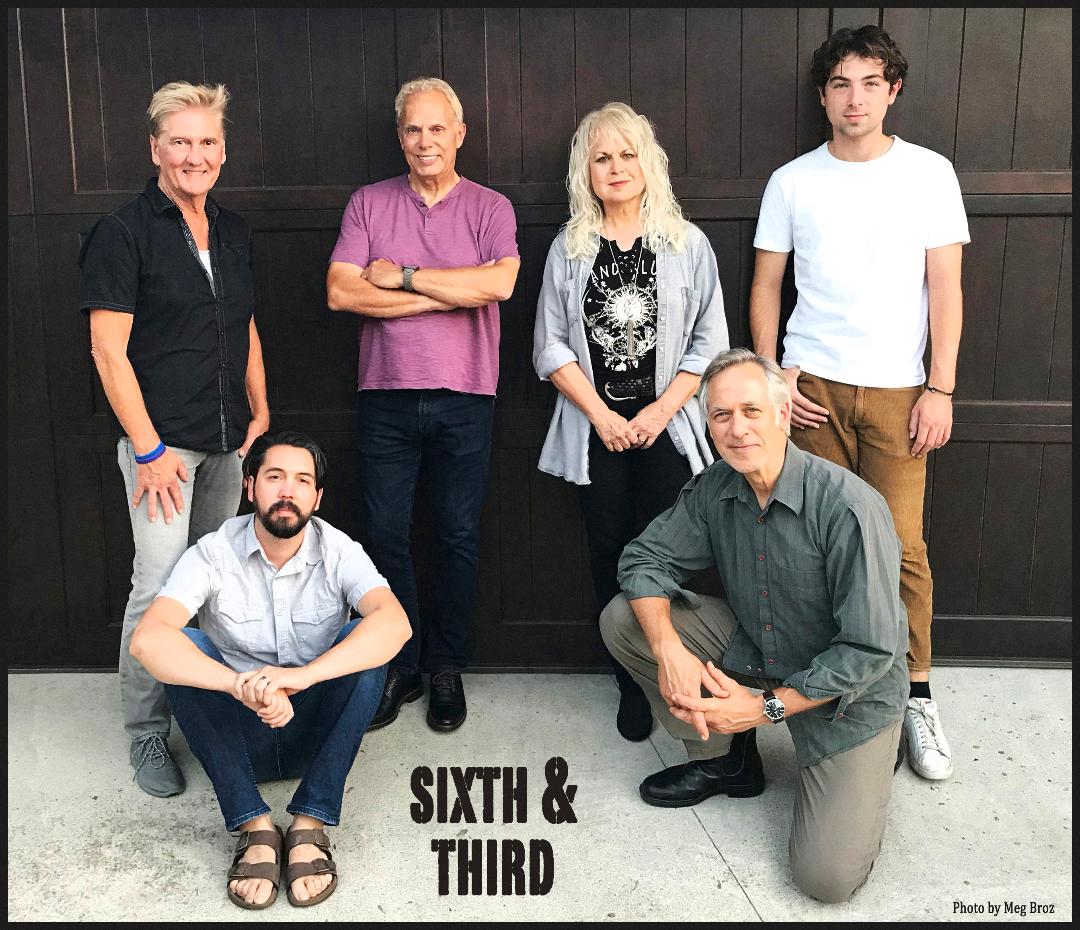
: [A former 80s rock singer is thrown back to her mysterious past when her boomeranging adult daughter secretly, and successfully, posts her old music on the Internet—yep, a story for which I have some bona fides…though it isfiction!]. Beyond that, I’ll be doing some gigs with my band, Sixth & Third, this summer, and fitting a little road-tripping in as well, spending time with family and friends.
I spent most of last year touring and promoting The Alchemy of Noise, though I did take time off toward the end of 2019 to do some world traveling. With no new book to promote this year, I’m taking a bit of a breather to decide next moves. In the meantime, I am continuing to work on my fourth novel, an adaptation of a favorite screenplay of mine,
A Minor Rebellion
: [A former 80s rock singer is thrown back to her mysterious past when her boomeranging adult daughter secretly, and successfully, posts her old music on the Internet—yep, a story for which I have some bona fides…though it isfiction!]. Beyond that, I’ll be doing some gigs with my band, Sixth & Third, this summer, and fitting a little road-tripping in as well, spending time with family and friends.Of course, this particular year I am fiercely dedicated to campaigning for Democratic candidates in our upcoming elections here in the States. I’m very actively pushing to change the toxic political landscape of these past few years, including fundraising events with my band. Given the stakes, it all feels pretty urgent to me.
4Q: Anything else you’d like to share with us?
 LDW: Yes, one last thought: As writers, we tend to be bombarded with boatloads of advice, rules, expectations, etc., that demand we conduct ourselves a certain way, create workflow a certain way; produce a certain number of books, apply a certain set of procedures, join a certain number of groups, and proceed with a certain amount of post-publication activity. I know writers who enthusiastically embrace it all, others who find the tasks overwhelming, and still some who ultimately throw in the towel because the burden of not only producing exemplary writing, but carrying the marketing and promotional assignments, becomes too arduous.
Which I understand completely.
But what I want to say to that is this: There ARE no rules. Despite the fact that far too many insist on and assert theirs, I believe rules are like religion: personal, non-transferrable, occasionally oppressive, and too often antithetical to forward motion and the joy of doing.
There is no set number of books you should write in a year, no specific way or number of words you should accomplish in a day. You are not obligated to follow anyone else’s protocol; yes, you can call yourself a “writer” even if you haven’t published anything yet (as long as you actually write), and certainly you can watch TV no matter what Stephen King says (in fact, I’ve gleaned serious inspiration from certain TV shows!). Bottom line: this is your journey. Do it your way. However you see fit. Be honest and professional about it, keep your standards high and your expectations realistic, and, most importantly, enjoy the ride. It’s all we have: what we create. The rest is a crapshoot. So be sure to really enjoy how and what you create.
There. That’s it.
Thank you, Lorraine for being our guest this week. Best of luck in all your future endeavors.
*Thank you, Allan! And the same back to you.
For you Readers wanting to discover more about our special guest, please follow these links:
To purchase The Alchemy of Noise on Amazon:
https://www.amazon.com/Alchemy-Noise-Lorraine-Devon-Wilke/dp/163152559X
Website: www.lorrainedevonwilke.com
Facebook: www.facebook.com/lorrainedevonwilke
Facebook Writer's page: www.facebook.com/lorrainedevonwilke.fans/
Twitter: twitter.com/LorraineDWilke
Instagram: www.instagram.com/lorrainedevonwilke/
Goodreads: https://www.goodreads.com/author/show/8185626.Lorraine_Devon_Wilke
BookBub: https://www.bookbub.com/authors/lorraine-devon-wilke
Amazon author page: www.amazon.com/-/e/B00K2ZOLSA
Barnes & Noble author page: www.barnesandnoble.com/s/lorraine-devon-...
Rock+Paper+Music blog: www.rockpapermusic.com
March 7, 2020
Guest Suzanne Bourgeois-Casey of Moncton, NB.
 I have known Suzanne for many years and she has been a wonderful supporter of my writing. She has recently published her debut novel and I’m very excited to have her as a guest this week. Her novel is at the top of my to-be-read list and I’m anxious to read her story. She has agreed to a 4Q Interview and is sharing and excerpt from her novel – Danny and MJ.
I grew up on the shores of Grande-Digue, New Brunswick. I was the middle child of five my parents had. My Grade 4 teacher encouraged me to write, lighting a passion that has followed me since. Through my junior high school years, I'd write small stories and distribute copies to all my friends, using my father's office supplies. He never complained.
My formal education ended abruptly when I discovered I was pregnant in my senior year in high school. My husband and I have raised two successful young women with families of their own.
But I never stopped writing. Deep down, I wanted to be published.
My parents took ill shortly after our nest emptied. I volunteered to drive them to appointments and errands in between my work hours. It was a stressful chapter in my life, and I became an insomniac as a result. I'd wake up during the night with these two characters telling me about themselves, asking me to share their love story. A word. A sentence. A scene. Sometimes an entire chapter. This continued until six months after my parents eventually passed. Only then did I sit down and actually write the story. Ten weeks later, the first draft of Danny and MJ was complete.
Having my publisher call me in December 2019 to say that I was now a published author has been one of the most significant moments of my life. At over 75,000 words, my debut novel is sitting on bookstore shelves. And I'm in awe.
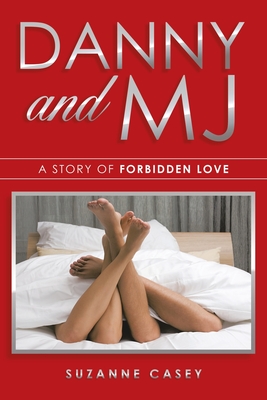
4Q: First off, tell our readers about your novel.
SBC: Danny and MJ meet at a work conference, feeling an instant connection. She fights the attraction, while he decides to pursue, for the fun of it. After many attempts, Danny breaks down MJ's reserve, and they end up in a hotel room.
A passionate tryst ignites between MJ, a married mother of two, and Danny, a committed man with two stepchildren of his own. Unable to stay away from each other, they begin a torrid affair. In the process, MJ discovers sex can be mind-blowing while Danny learns to trust her. Enough to unburden his hurts.
A death will change the course of MJ's life, making her want more. And an accident will make them both question their future.
4Q: What inspired you to write this story?
SBC: My friend's married sister was involved with another man, himself married, for 20 years before he broke it off. She was devastated. Until I heard of their situation, I always took an affair as a physical moment, not the emotional growth it can create.
Although their relationship didn't end favorably for her, it still intrigued me. They loved. They grew. They had a deep connection. It was worth a story.
4Q: Pleased share a childhood memory or anecdote.
 SBC: My father was an avid gardener. If he wasn't at work, chances are you'd find him in his vegetable garden. One summer, work got too busy. So, he asked my sister and I to plant it for him. It was our first time sowing, so we weren't aware of the spacing between the seeds. Lo and behold, the cucumbers took over the entire garden, killing the rest of the seedlings. Nothing grew but cucumbers. My sister and I were now responsible to sell them all, in return my mother would be able to buy different produce with the money we made. We would go door to door, day after day, 10c a cucumber, 25 for 3. Eventually, my mother made a deal with the local grocer that she would supply him all his cucumbers in return for items.
Our father always sowed his garden himself after that.
4Q: If you were to write a biography of someone, living or deceased, who would it be and why?
SBC: It would have to be my paternal grandmother. I've gotten to know so much more about her SINCE her death. While living, she wasn't approachable. Unless you were blond blue-eyed, which I'm not, she chose not to like you. As a child, I feared her. As an adult, I avoided her. Mainly, I wanted to protect my own children. But now, I'd love to know why she was that way. What made her so vulnerable? How did she and my grandfather meet? What was her childhood like? And why did she only wear heels, even as a farmer?

4Q: What can we expect next from Suzanne, the author?
SBC: I've been accumulating scenes, paragraphs, etc., doing research on my next story, tentatively called Quilting Bee. I started this process in January 2019, but put everything aside in July when then the final steps of editing to publishing rolled through. Now I'm back fully into piecing scenes together, hopefully my first draft will be done in late spring.

4Q: Anything else you’d like to tell us about?
SBC: As a brand new author, it's been an interesting journey of learning the world of publishing. Each step forward has awakened me that much more. The more I do, the more I want it. The more I love it. Writing is the easy part, as any author knows. The work begins with editing and ends with marketing yourself. If you believe in yourself and believe in the story you've written, go chase your dreams. It's never too late.
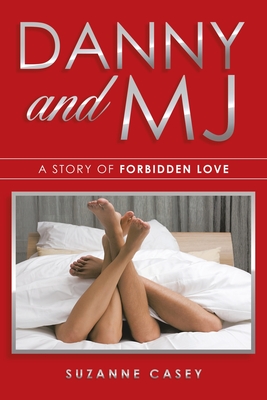
An Excerpt from Danny and MJ.
(Copyright is held by the author. Used with permission.)
When responding, I wanted to have the perfect vocabulary in place to end this charade he and I were playing. But I chose to ignore answering his email, continuing on with my other work. Reports had to be written. Decisions had to be made. Budgets had to be balanced.
Enveloped in my work, my lunch hour came and went. Annie knocked at my door at 1:45, startling me. She pointed at her trendy watch, indicating I was overdue to stop and take a break.
I cracked a big smile while pushing my chair away from my glass and chrome desk, grabbing my office keys. I locked up, thanked her with a kiss on the top of her blonde head, and walked up to the staff lunch room down the hall. I didn't always bring my lunch, often having a working lunch down Main Street with whoever might need my attention. Mondays though were always hectic. Between meetings, catching up on weekend communications and monthly budget presentations at our televised council meetings, a bagged lunch was safest.
I settled down with my egg salad sandwich and cherry tomatoes, plugging in the kettle to make myself a cup of peppermint tea. I was two hours away from clocking out, so I didn't see the need to fuel up on coffee that late in the afternoon. However, I did treat myself to a handful of chocolate-covered almonds purchased from a dispenser in the lunch room.
I picked up after myself, joyfully tossed an almond up in the air to catch it with my mouth. And succeeded. Rick had taught me that while in college. As I reached my office, I flung another one up, and caught it again. I've still got it, I chuckled to myself.
I checked with Annie if there were any messages. There were none. I sat in my chair with a few almonds left in my hand. They were starting to warm up, slowly melting, so I laid them next to my keyboard. I swished my mouse to reignite my screen, and three emails had since come in. Thank goodness I loved my job. It was one of those positions that was never, ever done. I played the game of tossing another chocolate-covered almond into the air every time I answered one of those emails. On the third one, as the almond briefly floated in the air, there was a knock at my door. It took my focus away for a millisecond. I felt it land on my chest, but did not hear it fall to the ground. Not wanting to keep the Deputy Mayor waiting, I resolved to look later. He noticed what I'd been doing and smirked.
“MJ, sorry to bother you this late, but I'm gonna need an updated written report on the renovations at the zoo hospital, ASAP. The Premier is dropping in tomorrow, and I'd like to be well informed.”
“Absolutely, George,” I answered. Dread came over me. My four o'clock departure had just gotten delayed by half an hour. “Do you want it emailed? Or would you prefer I text it to you? This way, you could read up on it this evening, versus in the morning.”
“A text would be fantastic,” George smiled. “MJ, you're a peach!”
And with that, he turned around and left my office. I immediately sent a text to all three members of my family, saying I would be late coming home. I noticed a slight commotion behind George, quickly realizing it was Danny coming off the elevator. They shook hands as Danny introduced himself.
“What can we help you with, Mr Russell?” I asked curtly, cutting short any more small talk. The workday was coming to an end for the entire building, except security and eventually cleaning crews. I wanted to go home.
“I simply wanted to touch base with you, Mrs. Taylor,” he answered, croaking the word Mrs. slowly. “I wasn't sure if you'd had the chance to read my reply to the email you'd sent earlier today. And since I was in the neighbourhood, I thought I'd drop in. Killing two birds with one stone,” Danny concluded, his delicious eyes keeping a steady hold on mine.
“Again, I appreciate your persistence, Mr Russell. But as my communication with you this morning indicated, I will be appointing a member from the Purchasing Department to negotiate a contract with Juno Electronics, as you can appreciate how full my calendar must be.”
“I understand, Mrs. Taylor,” Danny smiled. “But as I indicated to you in my previous email, I deal directly with the higher ups only. Once we're in, then my subordinates can communicate with yours. All I ask is a moment of your time.”
“Mr Russell, I'm a very busy woman. It's the end of the day, and I have a report to prepare and send to our Deputy Mayor before I can leave the office. I don't have time to entertain you right now.”
“I can wait,” Danny persisted.
“What report, MJ?” Annie cut in.
“George wants me to have an updated report on the zoo hospital renovations texted to him as soon as possible,” I sighed.
“I received one today!” Annie smiled, pulling it out of a folder yet to be filed on her desk. “I'll email it to him.”
“No,” I breathed out. “He insisted I text it to him so he can review it this evening.” I was starting to feel defeated by not getting rid of Danny. He was making me jittery. But I also felt relief that Annie was, once again, there to save the day for me.
“I'll have that done in a jiffy!” she cheerfully exclaimed. “It's three minutes to 4. It'll be in George's phone before he reaches his car in the parking lot. I guess MJ has time to see you now, Mr Russell” Annie said, smiling as she ushered Danny and myself into my office.
We walked silently to the majestic window, featuring a spectacular view of the Sevy River two blocks away. The mayor's office had the same scenery, but one storey above. I was edgy. I nervously made small talk with Danny, pointing at several buildings surrounding City Hall, giving the history of them all. Not once during my rambling did Danny take his eyes off of me.
The lights dimmed behind us, indicating Annie had completed her task and was now stepping into the elevator. It was ten minutes after four, and my entire floor of colleagues had gone for the day, leaving me alone with Danny. A smirk remained on his face from what I could see from my peripheral vision. He made me nervous. I didn't dare look him straight in the eye. My voice trailed off, no longer able to fake small talk. We weren't touching or I definitely would've crumbled to the floor, had that happened. But Danny was standing so close to me my hair fluttered whenever he exhaled, a trail of goosebumps following behind.
And then it happened. Our bodies touched in the most unusual way. Danny startled me so, I gasped. His stubby fingers plunged in between my awakened breasts, plucked out the semi-melted chocolate-covered almond that was resting in my cleavage. He examined it from side to side with a queer sense of amusement, then plopped it into his mouth.
“Very sweet,” he proclaimed as he licked his fingers clean. From there, Danny let himself out of my office, leaving me stunned and motionless.
I was mortified. I was shocked. I was angry. I was turned on. I was moist. I was so ashamed of my behaviour, I couldn't look at him. Any other person touching me like that, I would've slapped their face, charged them with sexual misconduct, called security. But this man, this piece of flesh, he's done nothing but torment my soul since the day he walked into my life. He's turned me into mush at the sound of his voice, sight of his face, touch of his skin. I somehow welcomed his inappropriate gesture. And this time, my knees stood straight.

Thank you, Suzanne for being our featured guest this week. All the best with your future writing endeavors.

For you Readers wanting to discover more about Suzanne and her book, please follow these links:
Facebook Author Page.
https://www.facebook.com/Suzanne-Case...
Chapters/Indigo/Kobo
Amazon/Kindle
Cover to Cover book store, Riverview, New Brunswick
Guardian Pharmacy, Dieppe, New Brunswick
more to come...
February 29, 2020
Guest Author Dr. Lewena Bayer of Civility Experts Inc.
The Scribbler is pleased to do a series of guest appearances in conjunction with Creative Edge Publicity of Saskatchewan, Canada. (See below for more of Creative Edge)

The first guest in our monthly lineup is Dr. Lew Bayer of Winnipeg, Manitoba. She is a 16-time published author, professional trainer and an award winning internationally acclaimed civility expert. Her remarkable CV contains many impressive titles; CEO, President, Executive Director, Co-chair, Presenter, Personal Coach, etc.
Dr. Lew Bayer believes,
“Civility is its own reward”
She suggests,
“In choosing civility, people find their best self, and in doing so, they experience the grace, courage, generosity, humanity, and humility that civility engenders.”
The Scribbler is honoured to have her participate in a 4Q Interview.
For more than 20 years Lewena Bayer has been internationally recognized as the leading expert on civility at work. With a focus on social intelligence and culturally-competent communication, the team at Civility Experts – which includes 501 affiliates in 48 countries has supported 100’s of organizations in building better workplaces. In addition to her role as CEO of international civility training group Civility Experts Inc. www.CivilityExperts.com which includes The Civility Speakers Bureau and Propriety Publishing. Lew is Chair of the International Civility Trainers’ Consortium, President of The Center for Organizational Cultural Competence www.culturalcompetence.ca, and Founder of the In Good Company Etiquette Academy Franchise Group www.ingoodcompanyetiquette.com. Most recently, Lew was selected as an International Advocate for Aegis Trust, a UK based organization focused on peace education and the prevention of genocide. She is also an Education Chair for www.globalgoodwillambassadors.org/. Recently, Dr. Bayer has been assigned the privilege of being named Ambassador of Global Knowledge Exchange http://www.gkefoundation.org/bios-chang.htm and a Master Educator in Global Teachers Academy.

Including 2-time, international bestseller, The 30% Solution, and the pending December release of Golden Rule Peace and Civility Lew is a 17-time published author. Lew donates her time as Director of the National Civility Center, www.civilitycenter.org and co-founder of the Golden Rule Civility Global Initiative, she is also a proud mentor for The Etiquette House, a member of the Advisory Board for A Civil Tongue, was a national magazine columnist for 10 years, and has contributed expert commentary to many online, print, and television publications. Lew is one of only 14 Master Civility Trainers in the world, a distance faculty member at Georgetown University Center for Cultural Competence, a long-term facilitator at the Canadian Management Center in Toronto Canada, Instructor – Social Justice at MITT, a Master trainer for the Canadian School of Service, a certified High Style Impression Management Professional and a Certified Culture Coach® who also holds credentials in Intercultural Communications, Essential Skills, and Occupational Language Assessment. Most recently Lew has completed the Champions of Humanity Master Peace Educator Certificate Program at the Kigali Peace School in Rwanda.
Lew has been recognized at World Civility Day three consecutive years for her contributions in the field of civility with a Community Civility Counts Award, and she was recently nominated for Women of Distinction, Woman of Influence, and the Canadian Woman Entrepreneur of the year. She was previously awarded Manitoba Woman Entrepreneur in International Business and she was the first Canadian to receive the prestigious AICI International Civility Star Award. In 2018 Lew was acknowledged for her work as co-founder of Golden Rule Civility Global Initiative www.goldenrulecivility.com and presented with the International Person of the Year Award by iChange Nations. In May 2018 she was presented with a US Congressional Educator Award. She has been recommended for a position in the Canadian Senate and also under consideration as Ambassador to Trinidad and Tobago. In April 2019, the Global Peace Federation awarded Lew the International Peace Ambassador Award. In June 30, 2019, Dr. Bayer was nominated for a 36th Annual Manitoba Business Awards in the Outstanding Large Business Award category.
In addition to regularly consulting on corporate civility, social impact and impression management, building relationships with media and creating civil communication, Lew was a national columnist for over 10 years, and is Lew is a sought-after expert who frequently writes, interviews and speaks with media all around the world.

Civility Experts Inc. manages The Civility Speakers Bureau www.civilityspeakers.com offers online certification, www.civilityexpertsonline.com and offers a large array of civility training tools and materials via www.civilitystore.com. It is a combination of the collective experience of the world-wide affiliate team, the leading-edge training solutions and the team's ability to customize to their client's need that leads to the sometimes immeasurable benefits that choosing civility brings. These outputs include increased social capital, trust, social intelligence and culturally competent communication - and together these impacts result in efficiency, competency, retention and bottom line results.
4Q: Before we talk about your book(s), please tell us your definition of civility and why it is important in today’s world.
LB: Many people think that civility is just manners or about being nice. It is soooo much more than that. At Civility Experts we have worked with our 500+ affiliates in 48 countries to define civility in a way that captures how significant and impactful it is, and also to show how civility is a measurable competency.

CIVILITY IS:
*A conscious awareness of the impact of one’s thoughts, actions, words and intentions on others; combined with,
*A continuous acknowledgement of one’s responsibility to ease the experience of others (e.g., through restraint, kindness, non-judgment, respect, and courtesy); and,*A consistent effort to adopt and exhibit civil behaviour as a non-negotiable point of one’s character.
4Q: Your latest publication is titled Power of One - How Choosing Civility Can Change Your Life. Please tell us about the book and its contents.

LB: The book is about choosing civility and what that looks like in practice, we each have opportunity. We have a voice, we have the power to choose – our words, our thoughts, our actions. We each have the power to influence others and we each have the power of our gifts and talents. We need only acknowledge and use our power.
In this book, the goal was to gather together aspects of civility which I understand to be powerful in the choosing of them.
If you define civility as we do at Civility Experts Inc., you will understand how each of the nine aspects below are necessarily become part of who you are and how you live and interact with others.
One Underpinning Value - When we choose civility as a core personal value, and when we define it in a way that is measurable, we necessarily incorporate several other related values. Civility serves as a foundational value that directs our attitude, decision-making and behaviour such that describing and delineating many other values is not necessary.
One Story - The sharing of and listening to our stories is “social communion™”. By engaging in this act of fellowship, we come to understand how at an energetic and spiritual level we’re all connected.
One Decision - Every decision we make impacts someone or something in some way. We each have the power, every day, to be a positive or a negative influence on the world around us.
One Mission - There is power in having a clear purpose, an undertaking, something you am aiming for, and committed to achieving.
One Gift - Every life is valuable and created with a specific purpose and gift. Each of us has the power to be a positive contributor to the world through our own gifts, and each of us has an obligation to support others in the development of their gifts.
One Moment of Courage - Choosing civility requires courage. We each have the power to draw on our inner strength and exhibit courage e.g., making hard choices, standing up for what is right- just because it is right, and doing whatever we can to ease the experience of others.
One Small Kindness - One word, one minute of attention, one act of generosity, one second chance…the opportunities for kindness are endless and even the smallest kindness has the power to change the course of another person’s day, and even his/her life.
4Q: Previous to the book mentioned above, you’ve also published The 30% Solution. That sounds intriguing. Care to tell us about it as well?
LB: The 30% Solution is based on research showing that companies that embed civility into their policies and practices experience measurable (average 30%) increases in retention, engagement, and profitability. The book is a toolkit for organizations that want to take on a civility initiative and change their workplace culture.
4Q: Please tell us about your role as CEO of the multinational civility training group Civility Experts Group.
LB: As CEO I have the privilege of both learning from and mentoring/sharing civility best practices with our affiliates and clients around the world. I travel and teach about 250 days a year and I can tell you – there is a need for this work, and we are making a difference.
4Q: How do your novels fit into your role as a civility expert? How do you benefit personally from the exercise of writing?
LB: To be a change-maker you have to be a continuous learning. You have to be open to new ideas, to learning, growing, sharing, collaborating- I think part of being civil is acknowledging that you are human and can never know everything you need to learn- we are all just doing the best we can to be good people and live a good life. Writing gives me an opportunity to reflect on what I’ve read and learned and to present it in a way that might be meaningful to others.
4Q: What is next for Dr. Lew Bayer, the author?

LB: Well- more writing I hope. But the big project right now is called World Citizen- a global civility training initiative with my Taiwan affiliate and partners in China and around the world. As well, I hope to be an ongoing support to my team and clients.
4Q Anything else you’d like to share with us?
LB: Just that I do truly believe that civility is its own reward- I encourage every one to bring his/her best self to every opportunity, every conversation, every interaction and learn as I have that the gift is in the giving.
Thank you

Thank you, Dr. Bayor for being our guest and your insightful interview.
For you readers wanting to discover more about Dr. Bayor’s writing and company, please follow these links.
Amazon.com
Civilityexperts.com
Creative Edge is a dynamic Publicity Company based in Saskatchewan. Founder and co-Owner Mickey Mikkelson made this statement:
Creative Edgespecializes in elevating the public profile of authors and artists through such means as (but not limited to) book signings, presentations (libraries, schools, conferences, businesses, etc.), involvement in applicable events, media interviews (including podcasts and print media), and soliciting of reviews from influential reviewers and bloggers.
February 22, 2020
Guest Kathy Shuker of Devon, UK.
 Kathy is a British author with four published novels. When you visit her website, she says this about her stories:
“And, though they (her novels) have a strong plot line, it is the characters, their relationships and their passions which drive the stories forward.”
I like that. Her novels have striking covers and intriguing titles that are certain to make you want to have a look. There’s no doubt in my mind that these are exceptional stories.
Kathy had graciously agreed to a 4Q Interview and is sharing an excerpt of her writing.
Kathy was born and raised in the north west of England and trained as a physiotherapist but had to give the work up early due to a back injury. She studied design and took up a career as a freelance artist, painting in watercolours and oils, exhibiting, supplying galleries and teaching, but started writing several years ago and quickly became hooked. She now writes full-time.
As well as an ongoing interest in art, Kathy is a keen amateur singer and musician, playing piano and acoustic guitar. She also loves learning foreign languages and reads widely. Kathy lives with her husband near the sea in Devon in the southwest of England.
4Q: Four published novels, all with great reviews. Which of them was the most difficult to write, the one you worked hardest at?
This is an interesting question. With every book I write I complain that I’m wrestling with it, that it’s not working out and I’m not sure I can pull it off. My husband always laughs and says, long-sufferingly, we’ve been here before – every time! I have to concede that he may be right.
I’m not a great one for planning the details of a novel before I start. I have a broad outline, the main characters and the thrust of the plot in my mind and roughly how it will end, but not how I will get there. I think some of my best ideas arise from just writing it, especially when I start to understand my characters and how the plot and sub plots should weave together. It means that a first draft is often a slow, painful process but that seems to be the only way I can work. So every book is a challenge.
 Having said that, I think my third novel required the greatest amount of research because the story revolves around a family who run a vineyard in Cornwall, UK. I had to learn a lot about vines and wine-making in order to make it authentic. Not that doing wine tours including wine-tastings around all the local vineyards was too onerous! As far as the story was concerned, that book also was more emotional to write because it involves the disappearance of a young girl which made it harrowing at times. It also meant that I felt I had to get it pitch perfect.
4Q: You took up painting before deciding to steer your creative pursuits toward writing. Is there any correlation between the art of painting and the art of writing? Looking at a blank canvas or a blank page.
Fortunately, I don’t have an issue with blank pages or canvases! Just before I start, I’m still in the optimistic ‘I know what I want to do with this’ phase. I’m excited. Of course, it’s usually short-lived. But there are definitely correlations between the two arts. When you start a painting or a story, the image you have in your mind – odd details but more an impression, the tone of it – is wonderful. It is always going to be the best thing you have produced. Inevitably, it always falls short; it’s never quite as perfect as the creation you had envisaged. You may be pleased with it but there’s a feeling that you could have made it even better.
 Which brings me to another: if you stay too long at a painting, you can lose the original concept and it ends up looking overworked and muddy. The same applies to writing. I’m a perfectionist and tend to keep picking at a manuscript but at some point, you have to walk away and accept it for what it is, keeping, hopefully, the original creative sparkle.
And there is the need to give your work space. When you think you have finished a painting, you need to step away from it, maybe put it out of sight for a while so that, when you see it again, your perceptions will be fresher and you’ll notice anything that might need doing. With a novel, it’s the same. Finish a draft then set it aside for at least a few days if not weeks, then read it again. It is amazing what clarity that can bring and you will see errors and inconsistencies that you had missed before. You also have a better overview of the whole work and how well the story runs, especially the pacing, rather than getting caught up in small details.
4Q: Please share a childhood memory or anecdote.
 I grew up in a house full of books. My late father was an academic, a theologian with an amazingly hearty laugh and a broad and eclectic taste in music and books. There were books on the major world religions, some illustrated with wonderful paintings, and books on art – from the Renaissance to the Post-Impressionists. The shelves were groaning with fiction too from cheap thrillers to poetry and the complete works of Shakespeare and Oscar Wilde. He was interested in language and had a surprising collection of foreign language dictionaries (some for languages he had never learnt) plus the inevitable thesaurus to help him do crosswords. For me it was like living in a treasure trove. I loved all those books and regularly took them down and picked over them, sometimes with dad at my shoulder, explaining things to me.
 And then there was the piano which he taught me to play, and the vinyl records, as they were then, which we would all listen to – jazz and blues, gospel and country, classical and pop. I accepted it all as normal since it was all I knew, but I can see now how lucky I was to be exposed to such a broad range of creative work growing up. As a young child, my father told me stories at bedtime, tales he made up as he went along, and I thought they were magical. I couldn’t do that but I can, with time and work, draft a story and I think that’s thanks to my dad along with so many other things. He taught me, by example, to wonder at the world. I hope it’s something I never lose and maybe that I can pass on.
4Q: On the home page of your website, you tell the readers art, music and wildlife show up in your stories. Of particular note, your novel - Silent Faces, Painted Ghosts - (love the title) there is an image of an easel and frames. I’m not sure if it was intended but it’s a great teaser. How do these figure in the story?
Yes, it was intended. I love those empty picture frames. I’ll explain their significance.
 This novel is set in Provence at the large hillside home of Peter Stedding, a celebrated but reclusive portrait painter. For his forthcoming retrospective exhibition at a Nice gallery, unwilling to trust the gallery staff, he employs his own curator, Terri, to organise his work. Keen to escape a controlling romantic relationship, Terri has jumped at the job despite Peter’s reputation for being a volatile, difficult person.
But Terri arrives to an atmosphere. There’s Peter’s second – and much younger – wife and his eccentric sister Celia, with undercurrents running between them. And Sami, the gardener cum handyman who watches everything. And there’s a mesmerizing portrait on the wall of Peter’s first wife which no-one mentions. There are secrets in that house.
When Terri starts to explore Peter’s paintings for work to exhibit, she finds tantalising suggestions that there have been other portraits, personal ones, now destroyed. Whose were they and why have they gone?
4Q: Music and Wildlife are particular interests to you. How do you intertwine your passions as part of the story? Which of your novels would be an example?
My first published novel, Deep Water, Thin Ice is the best example of the intertwining of these two interests. The main story revolves around Alex, whose husband, Simon Brook, a well-known and flamboyant conductor has recently killed himself. Alex, a classical soprano with a successful career but now guilt-ridden and grieving, escapes to Hillen Hall, an old house by the sea, trying to come to terms with her loss.
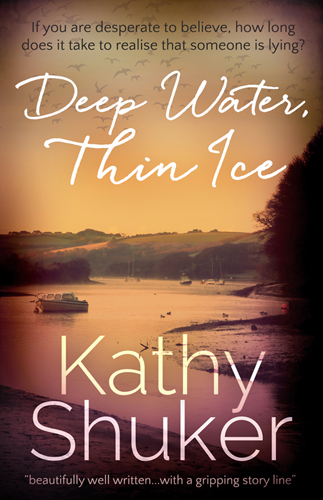 Hillen Hall is an old Brook family home, once a fine manor house but now creaking and unloved. Keen to do something, she sets about renovating it and is puzzled when Theo Hellyon, Simon's cousin, turns up and offers to help because she didn’t know Simon had a cousin. Theo is charming though, too charming, and he reminds her of Simon and there’s history she doesn’t know about. Theo is not what he seems and we watch with baited breath, waiting and hoping Alex realises too.
Alongside this edgy and intriguing thread is Alex’s secretive friendship with Mick, the solitary and touchy man who runs the wildlife sanctuary down on a tidal inlet by the sea. He lives in a converted railway carriage on the site and keeps himself – and his secrets – to himself. Alex finds the sanctuary therapeutic. Sitting in the hide that Mick has built, watching the birds and other wildlife pass before her, she starts to find some peace again. It’s an antidote to everything else that is going on in her life. These two threads and the two relationships weave in and out of the story, counterbalancing each other until…well, you’d have to read the book!
It was a pleasure to write about someone creating a wildlife reserve, particularly managing and extending areas of reedbed so that bitterns would nest there again. I was able to indulge my interest in birds and it gave me an excuse to visit more reserves myself and learn more. The bittern – a highly reclusive type of heron – had badly diminished in numbers in the UK due to loss of its habitat through drainage in order to reclaim land. But there has been a reversal in recent years with a number of new reedbed reserves created and the shy and elusive bittern is slowly returning. I have been thrilled to see one a couple of times myself and I judge it a worthy minor character for my book!
4Q: What’s next for Kathy Shuker, the author?
 I am currently working on another novel which is set back in France, up in the hills of Provence. It’s an area I love for the light and the landscape, the Mediterranean climate and culture, and the heady scents of lavender and herbs. I also think that more remote settings enhance the intimacy and ‘pressure cooker’ feel of a story. And art figures heavily in this story too but I’m still exploring it and dare say no more at this point for fear of jinxing it; there’s a long way to go yet.
4Q: Anything else you’d like to share with us?
My novels provide interesting topics for book clubs to discuss and, on my website, each one has downloadable questions, should your book club wish to choose one to read. (Please be aware that book club questions may contain spoilers.)

I love to chat with readers on my Facebook page. If anyone would like to keep in touch or find out about special offers, events or new publications, please like the page.
My books are available across multiple e platforms and in paperback. The links at the end will take you to your preferred vendor.
And I’d like to thank you, Allan, for the generous invitation to chat on your blog. It’s been a pleasure to answer such insightful questions.
**It's my pleasure to have you with us this week Kathy.
An Excerpt from Silent faces, Painted Ghosts
(Copyright is held by the author. Used with permission)

Le Chant du Mistral, Provence
Angela Stedding watched her husband struggle to cut the piece of beef with his fork but said nothing. If she offered to help, he’d tell her she was fussing. If she’d made a meal which he would have found easier to manage, he’d ask why she was giving him baby food. It was lunchtime on the first Saturday in April. Corinne, the bonne, cooked Peter’s lunches in the week; Angela usually did it at weekends. It had seemed like a romantic thing to do when she had first started the routine all those years ago but now it was a tedious chore, a habit which seemed to bring neither of them any real pleasure. Would Peter care if she stopped doing it? She doubted it. He appeared to like Corinne for some reason – or at least he tolerated her - and the French woman would surely agree to take on the task; she regularly worked extra hours to earn a little more money.
Angela continued to eat her salad, ignoring her husband’s grunts of exertion. He’d get frustrated eventually no doubt and lose his temper. For a little over four weeks now he’d had his left arm in plaster from his elbow to his knuckles, the result of a fall. Though the fingers and thumb were free, he was unable to use the hand in any practical way and was obliged to eat all his meals with either a fork or a spoon. Given his advancing years, there was something faintly admirable about his fierce independence, his determination not to let the accident slow him up, and he had complained little about the pain he must have felt, just the inconvenience. But it certainly hadn’t improved his temper. Fortunately he generally reserved the worst of it for the studio.
‘Oh, for God’s sake. Damn and blast this bloody hand.’ His patience finally snapping, Peter dropped the fork with a clatter onto the plate and swore again, more colourfully this time. ‘I’ll starve if I have to go on like this.’
‘Peter, please.’
‘What? Oh, mm. Sorry.’ Tight-lipped, glaring at the plaster on his wrist, he appeared not remotely repentant.
‘About this girl you’ve invited to stay with us.’
‘Who? Oh her. What about her?’ He picked up the salt cellar, sprinkled more salt over the remaining potatoes on his plate, grabbed the fork again and returned to fumbling about with his food.
‘You didn’t give me much warning,’ she complained.
‘Only just decided really. I nearly called it off. Then I thought I might as well take a look at her, see if she might be of any use.’
Angela ate another mouthful of food then laid her knife and fork down on the plate, pushing it away. She dabbed the corners of her mouth on her napkin, folded it and put it on the table. There was the distant ringing of the house phone. She wondered where she’d left it, thought of getting up to go and look but then the ringing stopped and she assumed her daughter had answered it.
‘So who is she exactly?’ she pressed.
‘The curator? I’ve told you already: Terri Challoner. Odd name. Short for Theresa I suppose.’
Angela tutted impatiently. ‘I know her name, Peter, but…’ She shrugged. ‘…I don’t know…how old is she?’
‘Mid-thirties.’ He forked the last piece of meat into his mouth, chewed and swallowed.
‘And…?’
He puffed out his lips in that offhand French way she so disliked. ‘She’s got a good CV. Involved in some decent exhibitions. Specialises in portraiture mainly but she’s done other work too, I believe, ranging…’
‘Peter, please don’t tell me her résumé. You know it means nothing to me. Is she English? Or perhaps American?’ Angela had a soft spot for people from the States. If the girl was American it might make her more appealing.
‘English I think.’ He finished eating, put the fork down and pushed the plate away. ‘Yes, English.’
‘Do you want dessert? Tea then? No?’ She sighed. Even after all this time, she couldn’t get used to him drinking water with his meals. Another of his French habits. ‘We’re going to have this woman in the house for six months; I’d like to know something about her. You’re usually so protective of your privacy, I’m surprised you’ve done this.’
He frowned at her as if that issue had not previously crossed his mind. She wondered if he was going senile; his sister certainly was and she was six years younger.
‘She’s here to do a job, Angela,’ he said. ‘That’s all. Don’t make a fuss about her. Anyway, you’re putting her in the annexe aren’t you?’
‘Yes, but it’s very small and it’s still attached to the house. We can’t expect her to stay in her room for six months like a monk or something.’
‘A nun more like.’ Peter unexpectedly grinned which suddenly made him look much younger. It occurred to her that he was still remarkably handsome in a craggy sort of way, a thought which obscurely made her more irritated.
‘Well she can’t do all her cooking with a microwave. I’m going to have to let her use the kitchen sometimes.’
‘Are you? Well…’ He waved a dismissive right hand. ‘…as you wish, my dear.’
As I wish, thought Angela. Hardly. She toyed with suggesting that Terri could eat with him each lunch-time but knew that would go down badly. In any case it seemed rather strange to have a member of staff regularly installed at the family table. She fixed him with a wary gaze.
‘I’m still not sure it was wise to offer her accommodation.’
He hesitated, frowning, and began to look rattled as if the full implication of his decision had only just sunk in. ‘I did think it through, Angela,’ he said, irascibly. ‘She’d be more likely to talk if she stayed in the village and you know I won’t have that. It’ll be easier to keep an eye on her here, you know, control her. Anyway, as I said: she’s come to do a job. End of story.’ He stabbed at the table with an emphatic index finger. ‘Just make it clear to her where she can go and where she can’t. I’ll leave that to you.’ His tone softened; he almost smiled. ‘The house is your domain after all, dear: your rules.’
That’s only partly true, thought Angela, though she suspected that in the unfathomable workings of Peter’s mind he might genuinely believe it. But Peter had his own rules, rules which were never even voiced, they just existed, as if they were part of the very fabric of the house and the air which they breathed.
‘She’s going to be late,’ said a husky voice behind her.
Angela turned quickly in her chair. A white-haired woman wearing blue dungarees had appeared silently at the kitchen door. She was standing flicking an artist’s brush back and forth across the gnarled index finger of her left hand. Her frizzy hair fell to shoulder length and a splodge of red paint was smeared across her left cheek.
‘What are you talking about, Celia?’ Angela demanded.
‘Terri is going to be late. There’s some problem with her flight.’
‘How do you know?’
Celia wandered across to the island separating the long pine table from the kitchen proper and took an apple from the bowl of fruit. She bore a striking resemblance to her brother: tall and rangy with the same icy, pale blue-grey eyes. She could also be similarly evasive and irritating. Now she was polishing the apple on her less than clean dungarees. Angela’s lip curled in disgust.
‘She’s just rung from Gatwick,’ Celia replied, after closely examining the apple. ‘She’s not sure what time she’ll arrive. Sometime this evening probably.’
‘You answered the phone?’
‘Someone had to.’
‘I thought Lindsey had.’
‘She’s just left for work.’
‘Oh? She didn’t come to say goodbye.’
‘Well she’s a big girl now,’ said Celia, and bit into the apple.
Angela’s eyes narrowed and she glanced towards Peter who was staring out of the window as if the conversation were not taking place. ‘I’ve asked you before not to answer the phone in the house,’ she snapped at Celia. ‘What did you say to her?’
Peter glanced shiftily between the two women, pushed his chair back and eased himself to his feet. ‘I’m just going to rest for a few minutes,’ he said, heading past Celia towards the door and pausing briefly as if he’d just remembered something. ‘I’ve got something particular I need to finish Angela. I’ll be working late tonight.’
Celia watched her brother out of the room and turned back towards Angela who was now on her feet, facing her. ‘I wished her bon voyage, of course,’ said Celia. She smiled blandly, took another bite of the apple and strolled out of the room.
Angela sighed, looked heavenwards and cleared the table. She had made plans for the evening and now she would have to shelve them to sort out this Challoner woman. So Peter would be working late. That was no surprise; he always was. No doubt he was now upstairs, stretched out on the bed for his routine siesta.
She loaded the dishes into the dishwasher, straightened up and leaned against the kitchen unit, her thoughts returning to Terri Challoner. Exactly what position was the woman going to have in their household for the next six months? Angela felt a growing unease. It wasn’t that it was unusual for Peter not to tell her things, far from it – he was a secretive man - but still there was something odd about this whole situation.
Out of the window to the front she saw Celia pushing that ridiculous pram across the terrace, the apple now apparently finished. She’d probably thrown the core into one of the huge flower pots and Sammy would complain.

Thank you so much for being our featured guest this week Kathy. It’s been a pleasure getting to know you and your writing better.

For you wonderful readers that are interested in discovering more about this talented lady, please follow these links:
www.kathyshuker.co.uk
https://www.facebook.com/Kathy-Shuker-
https://www.goodreads.com/author/show/8104971.Kathy_Shuker
https://www.pinterest.co.uk/kathyshuker/
Deep Water, Thin Ice: https://books2read.com/u/mqOnvb
Silent Faces, Painted Ghosts: https://books2read.com/u/38L7w3
That Still and Whispering Place: https://books2read.com/u/mlKaLA
The Silence Before Thunder: https://books2read.com/u/3Jy0PJ
February 15, 2020
Guest Author & Poet Sandra Bunting of Miramichi, New Brunswick.
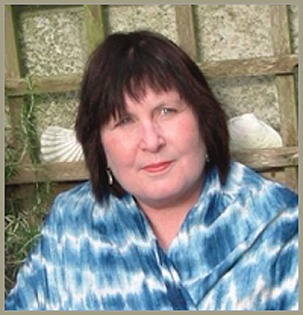 I had the pleasure of reading Sandra’s collection of short stories – Everything in This House Breaks – and I enjoyed it tremendously. The stories are well crafted, easy reading. There are tender moments, eye opening endings and warm feelings. I look forward to reading more of her tales.
Besides her writing skills, Sandra is also a mentor, an editor, teaches English as a second language, owns a publishing company, is a writing coach and provides workshops.
She has kindly agreed to a 4Q Interview and is sharing some of her writing.
Sandra Bunting grew up mainly in Miramichi, New Brunswick. She graduated from Ryerson, Toronto with a BA in Radio and Television Arts. After working for Broadcast News (CP) and CBC News, she moved to Europe and lived in France, Spain, and Ireland. She received a Masters in Writing from National University of Ireland and went on to give poetry seminars there, set up and manage the Academic Writing Centre, teach English as a Second Language and train teachers to teach EFL.
 Sandra’s first poetry collection, Identified in Trees, was published in 2006 by Marram Press in Galway, followed by two short story collections, The Effect of Frost on Southern Vines and Everything in this House Breaks, this time with her her own imprint Gaelóg Press. An earlier non-fiction collaboration The Claddagh: Stories from the Water's Edge was published by History Press, Dublin. She returned to Canada in 2011 and established herself in Montreal and later Miramichi, where she took up the position of executive director of the multicultural association for a few years.
Sandra is currently on the editorial board of the Galway based literary magazine, Crannóg. In 2012 she was awarded a Glenna Luschei award for poetry through the Prairie Schooner University of Nebraska. She was runner-up for the 2006 Welsh Cinnamon Press First Novel Competition and was a finalist at the 2009 Irish Digital Media Awards for her Blog: Writing a Novel Online. She has had items published in Ireland, England, Canada, Argentina, and the US. Sandra is a member of Miramichi Words on Water, Women who Write (Grand Barachois), The New Brunswick Writers’ Federation, the New Brunswick Independent Authors Association and Galway Writers Workshop.
For more see: www.sandbunting.com
4Q: Having just read your short story collection I mentioned above, what appeals to you about short stories and how did this collection come into being?
 SB: Short stories are gratifying but not necessarily easy to write. They have to be a complete entity, tied up and packaged within a few short pages. It can take as many twists and turns as a novel but with more economy of words. As a writer, I found this form allowed me to experiment with different themes and styles and then send them out to literary magazines to be published. Most of the selections in this collection, and in the previous one, appeared in small publications on either side of the Atlantic over a ten year period. It is an eclectic mix – inspired by a past memory, observations or current incidences. Lately, the environment seems to be a common choice of subject of mine. My favourite short story writers are Ellen Gilchrist, Joyce Carol Oates and Mavis Gallant. Someone recently mentioned that he thought the short story was a form particularily suited to women both as a reader and a writer. Not so. Look at the touching tales of Cape Breton’s Alistair McLeod and the powerful story The Dead, among others, by James Joyce. These are narratives compelling to all.
4Q: Tell us about Gaelóg Press and Writing Services. Also, about the unique name, Gaelóg.
SB: Gaelóg Press was formed to publish and promote some of the projects I was working on. I had already a bit of experience in publishing through the literary magazine Crannóg, and it was something I had been considering for awhile. So far I have published my two collections of my short stories and a reprint of a Eoghan Garvey’s poetry collection, Entropy. Forthcoming are several children’s books, a poetry collection by a local Syrian refugee and a project under Miramichi Words on Water, Life a Gift Passed On.
 I have great respect for the big publishers, and their struggles in this digital climate, however, I believe there is a place for small imprints, making work otherwise overlooked more accessible. Margaret Atwood once said that her first self- published poems would be worth a fortune today. It’s not about money; it’s about getting quality work out there in a clear and attractive way. Of course the main problem of this way of publishing is marketing and distribution, something difficult to overcome with such a small operation.
Gaelóg Press also offers writing, editing and coaching services to writers and small businesses besides facilitating workshops in creative writing.
Gaelóg is indeed a strange name. Having lived in Ireland for much of my adult life, I was exposed to and fell in love with the Irish (or Gaelic) language. Gaelóg means Bunting, a fat little bird and my family name.
4Q: Please share a childhood memory or anecdote.
SB: I was an only child but not lonely. I used to invent stories and act them out. There was a favourite piece called Dinner at Sato’s that I enacted over and over again. My mother had had a trip to New York and brought back an account of her experience at a Japanese restaurant. I created an elaborate ceremony of placing myself and a large cluster of stuffed animals on pillows on the floor around the coffee table. There would be much bowing, trying out chopsticks and eating and drinking out of small bowls.
One of my favourite stuffed animals was a rabbit. However, there was fierce competition for its affection from my dog, a Bedlington Terrier called Cookie, who looked like a little sheep. The dog would run and grab the toy, bring it in the middle of the living room and start performing on it to the horror of any visitor, especially an elderly priest. The dog, though beautiful, continued to exhibit bad behaviour. It totally destroyed my mother’s new feather hat, bought for Easter and yet unworn. The dog was actually banished from the town in the end for chasing and nipping the legs of cyclists as they passed our house.
 I loved to root through drawers and closets. Another of my recurring play scenes was pirates. I did not know about Grace O’Malley (Grainne Mhaile) the pirate queen of Connemara then, but as female I was still definitely head of my group of cutthroats. And what is a pirate without treasure? After snooping in my mother’s jewellery box, I selected a few items to be used as buried treasure. I went to the little wood in the back of our house with my shovel and buried a few sparkly rings. Unfortunately, one of them, a sapphire, was am inheritance and worth a lot of money. Of course, I hadn’t got around to drawing a map to mark the spot. My mother never ever knew what happened to that ring. Perhaps if you go behind the old house in that little mayflowered wood you could start digging and find the treasure. ARRR!
4Q: Please tell us about the writing group, Words on Water.
 SB:Now spearheaded by Judy Bowman and Sandra Bunting, Words on Water Miramichi is a group of writers, actors, songwriters, spoken word performers who are active in sharing their own work through readings, book launches and other events. They encourage emerging writers by holding writing workshops, open mics and get-togethers. They are committed to promoting the work of Miramichi’s more established writers, and to exposing the local population and visitors to the stories they have to tell through poems, stories or songs.
WOW launched Tom Creaghan’s book, Miramichiers in the Gilded Age on the deck of the Max Aitken as it travelled from Newcastle to Chatham wharf. It hosted Bloomsday (James Joyce) Readings and a very special St. Patrick’s Day reading at Seasons View. It has done readings for Remembrance Day and has midsummer events in Burnt Church for the past five years.
WOW began in 2005 when Michelle Cadogan had a vision of an arts community in Miramichi and recruited Judy Bowman, columnist, and former president of Writers’ Federation of New Brunswick to assist in promoting writing and spoken word in the area. Edgewater Gallery, one of many venues, hosted many events for local writers and for the WFNB. Reading and singing of original work was held while surrounded by art of local and Maritime artists.
Guest readers travelled to Miramichi to read. These include: Lynn Davis, Governor General Award Nominee for poetry; Michelle Butler-Hallet, fiction writer St. John Nfld., Ross Leckie, Poet and Professor of English UNB; Musician Terry Whalen after his ECMA, Paula Foley, Terry Gadsden and Paul McGraw. On a Maritime Tour, the Good Brothers dropped in for a visit to Saltwater Sounds, one of the host venues for WOW. Publishers continue to take great interest in this event to feature their writers.
 In partnership with the WFNB, thirty writers were welcomed to French Fort Cove by Natoaganeg Elder Joseph Leonard Ward, after which they followed the fiddle music of a young Mr. Murphy. Poetry was shared at various places. In attendance Lisa Moore, three time nominee for Giller Prize, 2013 winner of Commonwealth Prize; Roger Moore, Poet; Marilyn Lerch, now Poet Laureate of Sackville; and many guests from across Canada.
 WOW also introduced the art of storytelling by Natoageneg Elder Joseph Leonard Ward at Saltwater Sounds.
4Q: There is an interesting article on your web site (sandbunting.com) about the Miramichi’s Literary Trail, an idea you brought from Galway, Ireland. Can you elaborate.
 SB: The love of words permeates the Irish air itself. Galway, where I lived for 25 years, is a young city about the size of Fredericton with three postsecondary education facilities and a large focus on arts and culture. The city is 2020 Culture capital of Europe at present. It hosts a literary festival called Cuirt every year. (Cuirt is the Irish word for Court – and is also from a piece by Brian Merriman called the Midnight Court in which women take men to task.) Each year the festival adds another plaque of phrases by writers from Galway, writing about Galway or having a close relationship with the city.
As I became more involved with writers in Miramichi, I felt that there should be more recognition for the city’s well-known authors. The idea for a trail similar to that in Galway was forming.

Under the banner of Words on Water Miramichi, with funding from the city of Miramichi and the NB Department of Tourism, Heritage and Culture, six large artworks were designed in wood by Gloria Savoie in response to quotes by local writers. These are on permanent exhibit at the Newcastle Public Library. The second stage was to etch the writers quotes in sandstone tablets and place them outside around Miramichi. Plaques recognizing the works of Davids Adams Richards is at Ritchie Wharf, Wayne Curtis is at French Fort Cove, Ray Fraser is at the Chatham Public Library and Doug Underhill stands outside the Newcastle Public Library.
miramichiliterarytrail.com
4Q: What’s next for Sandra Bunting, the author?
SB: I have a collection of poetry in search of a publisher. I am building up stories some into a third collection, but what I want really do now is finish a novel. One of my main flaw as a writer is that I have trouble finishing things. I get to a certain point and then it takes enormous amounts of energy to complete it. This is the same for poems, short stories and longer pieces. Therefore, I have a drawerful of incomplete projects. As it stated in my biography, I was highly commended for an excerpt of a novel. That was a long time ago and it is still unfinished. I would like to do this now. Stating that here may give me the impetus I need to do it.
4Q: Anything else you’d like to share with us?
 SB: I would only like to add that I feel so fortunate to have been surrounded by a writing community in Canada and in Ireland that is constructive, generous and encouraging. It is wonderful to have a group of like minds who share interests and creativity. I have thankfully been exposed only very briefly to writing groups where participants tear apart not only the writing but the person as well. I feel blessed to be in contact with so many talented writers who are a joy to have met, and, through them, to be introduced to such varied work and ideas. It is an added pleasure to have returned to the Maritimes to find such a thriving literary scene here. Long may it continue.
An Excerpt from the title story of the same name from the short story collection Everything in this House Breaks
(Copyright is held by the Author. Used with permission.)
It was a bad winter. There was hardly a dry day. Wind struggled violently with the windows, puddles grew larger and darkness seemed to be eternal. Spring was not much better but daylight was struggling for the upper hand. It was time again for the survey. I had to interview the same people I had before and note any changes: the addition or demise of pets, changes in the type of heating system, a second car or television. I went to Joe McEnree’s house first. He answered the door immediately. I found him looking older and slightly more stooped.
He asked me in and, on passing the sun porch on the way to the kitchen, I remarked how magnificent the cacti were. They seemed to be taking over the room. “I’ve never really taken to them,” he said. “It was my wife that liked them. Now that she’s gone, I keep them because she liked them.”
“I’m so sorry about your wife,” I said. “I didn’t know.”
“It’s for the best. She was in pain. But I’m fierce lonely without her. Ah well. We have to go on.”
We went through the questions on the survey and duly noted the changes. One occupant, not two at number 10. He told me other changes to the area and then he perked up.
“We have entered the improved neighbourhood competition,” he said. “You must look at the new garden I planted at the side.”
I recognized the lilies, hydrangeas and poppies, but there were many others I didn’t know. I could imagine the mix of colours when all the plants were blooming. I would certainly give him the prize for this garden. If everyone in the neighbourhood did something similar, it would be spectacular.
“Number nineteen is starting an old-fashioned herb garden surrounded by lavender bushes. Another house is specializing in roses.” He was beaming.
I had to go back briefly in summer to clarify one of the questions. The little estate looked beautiful. The scent of lavender mixed with rose, lily and lilac wafted around the corner before the full colours of the blossoms hit.
“We won,” Mr. McEnree said.
He saw the blank expression on my face and impatiently reminded me.
“The Improved Neighbourhood Competition. We won. I have a thousand euro cheque.” He couldn’t contain his smile.
“I’m going to spend it on a little bench and maybe a border around the green.”
It was September again before I got back to the area. There was a new survey. I was surprised to find that no cars were allowed in.
“What’s going on?” I asked.
“They’re going to pave the roads here tomorrow. That’s why no cars are let in. It’s about time. The potholes.”
He was distracted while he was talking to me. I interviewed him quickly and was on my way. He stopped me at the front steps and said, “Just a minute.”
He took a small cactus from off the ledge of the window.
“There were babies,” he said. “I’d like you to have this. I know you like them.”
He walked out with me as I thanked him. He showed me the side garden again.
“I’m just going to cut it back so it will grow thicker next year,” he said.
When I got home I realized I had forgotten to ask him one important question. I was busy the next day so I went back on the weekend.
I was shocked at what I saw. Pebbles were scattered on the road covered by a watery black liquid. The road hadn’t been graded and, it either sloped at the sides or was all wobbly. I rang the bell at number ten. There was no answer. As I was certain he was there, I rang again. While waiting for him to answer, I looked at the side garden expecting to see the usual delight. Instead, blobs of uneven tarmac covered everything.
I rang again and he slowly opened the door. He shuffled through the sun porch and looked at me with a deep sadness. I didn’t know what to say. I followed him inside to the kitchen.
“You’ll help me,” he said. “I can’t do it myself.”
“Of course.” I said. But I didn’t know what he meant.
He took a geranium off the kitchen windowsill.
He seemed unsteady as we walked out into the garden. His arm shook as he placed the little pot on top of the tarmac.
“I’ll start again. I’m well used to that now. I will start again.”
The little pink geranium looked small against the scarred black ground - a timid blush of hope under the hot sun.
Thank you, Sandra, for being our guest this week and for your wonderful stories.

For you readers wanting to discover more about our talented guest, please follow these links:
sandbunting.com
https://www.facebook.com/sandbunting/
miramichiliterarytrail.com
https://www.facebook.com/wordsonwatermiramichi/