Allan Hudson's Blog, page 28
September 12, 2020
Six Great Stories. Six Great Authors. Reading suggestions.

Who doesn't love a great story?
It's that time again when the Scribbler makes a few suggestions for your reading pleasure.
Many of these fine novels come to my via The Miramichi Reader , which is an excellent site for reviews and reading recommendations. Some of the following authors have been guests here on the Scribbler and you can click back to their interviews.
“Once you have read a book you care about, some part of it is always with you.” – Louis L’Amour
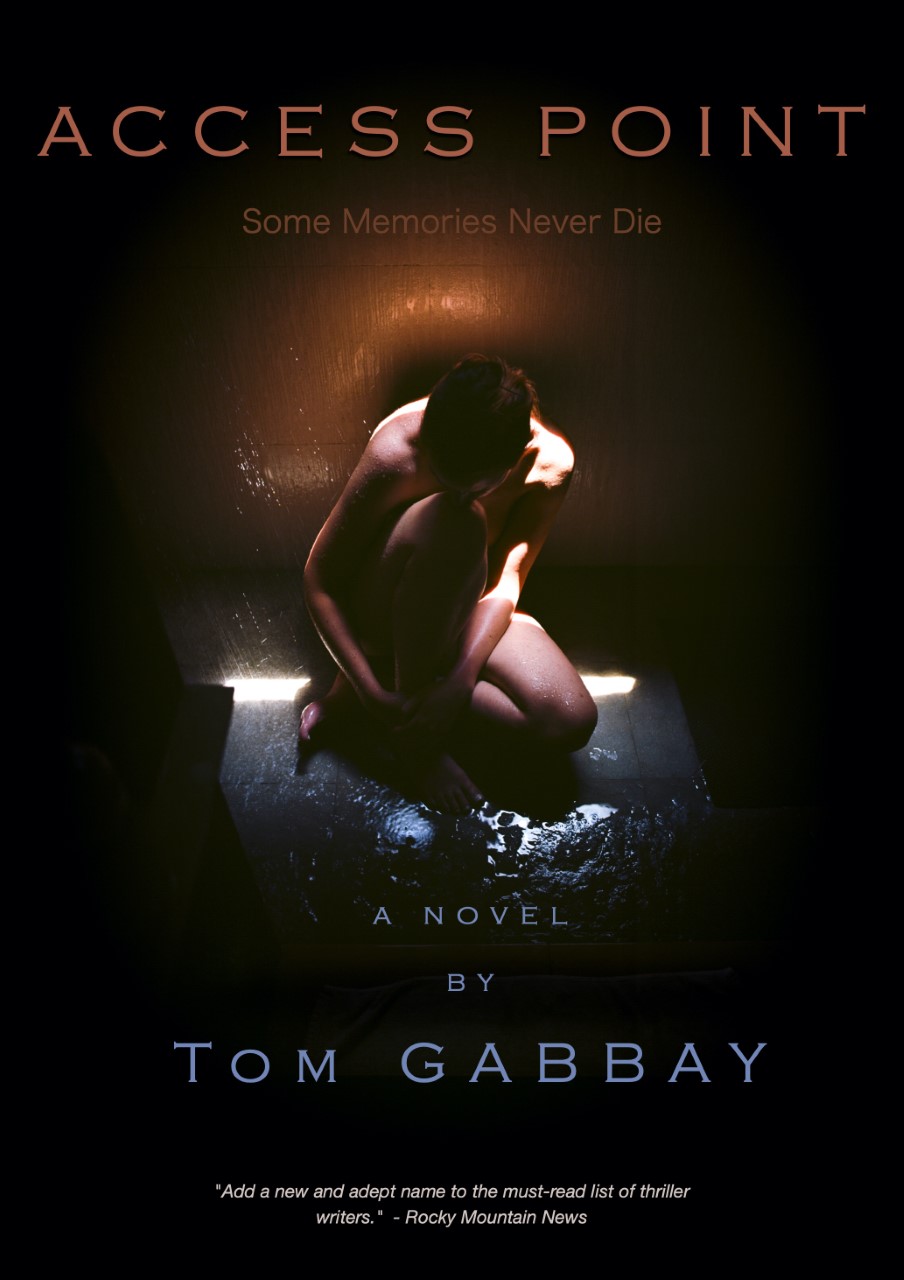
#1 Access Point by Tom Gabbay.
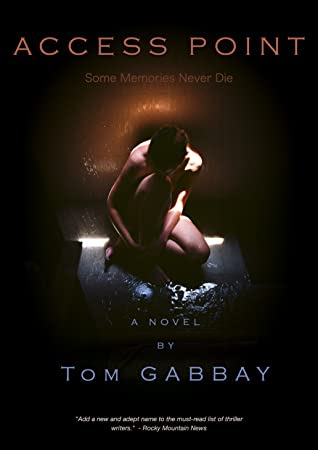
Goodreads.
"A psychological thriller with compelling explorations of memory, obsession, and identity. Readers will find it an intriguing and entertaining read." - BlueInk ReviewWhen American art student Mia Fraser is brutally murdered steps away from her London house she shares with computer genius Ula Mishkin, it leaves the socially inept scientist heartbroken. When it becomes clear that Detective Sarah Boyd is making no progress in solving the crime using traditional methods, Ula creates a software program that allows her to reach into her dead housemates memory in order to reveal the identity of the killer. Entering the dead girls life through the echo of her memory, Ula learns that sometimes the past is best left undisturbed.
Tom Gabby was a guest on the Scribbler. Read his interview HERE.
Review on The Miramichi Reader HERE.
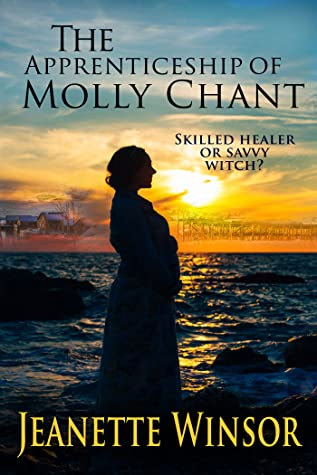
#2 The Apprenticeship of Molly Chant by Jeanette Winsor.
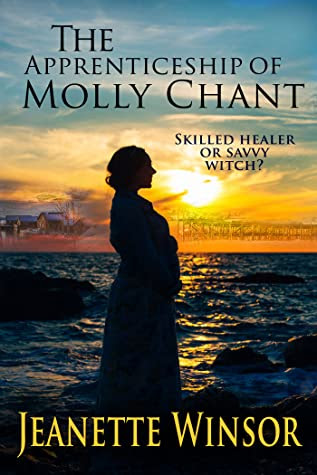
Goodreads.
Hanging for witchcraft has been outlawed in Ireland for centuries…Sixteen-year-old Molly Chant faces the noose, a punishment unheard of in 1869. Her one chance for escape is to follow her friend, Mick, to a ship ready to sail to the desolate island of Newfoundland. But, crossing the vast, angry ocean to the colonies could be a new kind of death sentence.
Her only hope for redemption is in the tiny outport of Silver Cape Cove, where she struggles for a balance between her healing powers and the superstitious ignorance she encounters there. Will she find a new family and acceptance or become the pariah everyone believes her to be?
Jeanette Winsor has been a guest on the Scribbler. Read her interview HERE.
Read the review from The Miramichi Reader HERE.
#3 Death between the Walls by Alexa Bowie.
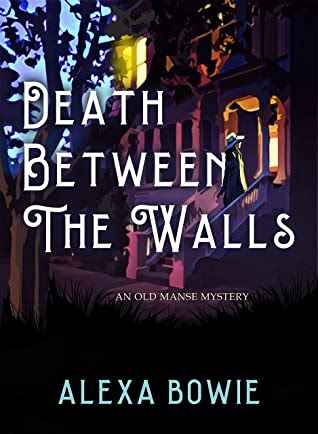
Amazon.
Not much happens in the tiny town of Newcastle. At least, not until Emma returns from Toronto to claim her inheritance: a stately arts and cultural center. Since taking up residence in the center, Emma Andrews has gotten used to finding things just a little off-kilter. Her tenants, for example, are convinced she may have killed the town manager (but they still love her). The new town manager is determined to have her evicted (but he would still love to date her). And there’s the little matter of a coyote – or is it a wolf? – that shows up at the most interesting of times. Trouble in the form of a dark secret gathers momentum, swirling around her like Dorothy’s tornado, and threatens to carry her away. The arts and culture center holds a link to the past, together with a crime that just won’t remain hidden. Helping Emma avoid disaster are a couple of handsome police officers, a new-old best friend, her feisty namesake aunt, and a Manse filled with eccentric, talented artists. Emma has to get to the bottom of this. Will her new friends be enough to keep her safe? Or will Emma’s Manse become her final resting place?Watch the Scribbler for more about Alexa and the stories - October 17, 2020.
Amazon review HERE.
The Miramichi Reader review HERE.
#4 Montbel by Angela Wren.
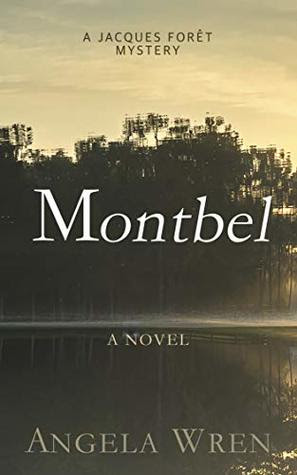
Goodreads.
A re-examination of a closed police case brings investigator, Jacques Forêt, up against an old adversary. After the murder of a key witness, Jacques finds himself, and his team, being pursued.When a vital piece of evidence throws a completely different light on Jacques' case, his adversary becomes more aggressive, and Investigating Magistrate Pelletier threatens to sequester all of Jacques papers and shut down the case.
Can Jacques find all the answers before Pelletier steps in?
I'm a big fan of Wren's cozy mysteries. This is the third in a series. Her protagonist is Jacques LaForet and he's a very cool character.
My review HERE.
Review by Vanessa Couchman HERE.
Angela has been a guest on the Scribbler. Read her interview HERE.
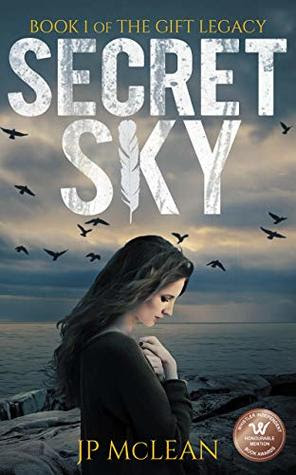
#5 Secret Sky by JP McLean.
Goodreads.
An intrepid young woman. An incredible gift. A terrible price to pay.Emelynn Taylor's gift didn't come wrapped in pretty paper and tied with a bow, nor can it ever be returned. Now, it’s taken over her life. It strikes without warning, strips her of gravity and sends her airborne, unchecked.
Haunted by terrifying flights she can’t control, Emelynn vows to take command of her dangerous gift. She returns to the seaside cottage where it all began. Here, she discovers an underground society whose members share her hidden ability, and a man who sends her heart soaring.
But the deeper Emelynn gets pulled into this secret society, the more she questions their motives. Are they using the gift for good or for evil? Unravelling the truth will plunge Emelynn into a fight for her freedom—and her life.
The first book in The Gift Legacy series, Secret Sky is a thriller that skirts the edges of reality in a world within our own. Buckle up and escape the ordinary: take flight with Emelynn Taylor.
My review HERE.
Review by Author Diana Stevan HERE.
Jo-Anne has been a guest on the Scribbler. Read her interview HERE.
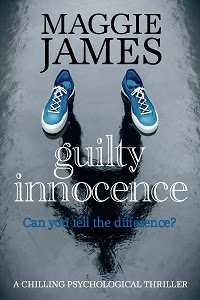
#6 Guilty Innocence by Maggie James.
Goodreads.
When Natalie snoops through her boyfriend Mark’s possessions she finds more than she bargained for. Mark was once convicted of a brutal killing. Heartbroken by what she has discovered, Natalie’s dreams of a future with him collapse.However, Mark was not the only person sentenced for the murder of two-year-old Abby Morgan. His former friend, the violent and twisted Adam Campbell, was also convicted and Adam knows more about the murder than he will admit.
When circumstances thrust Mark back in contact with Adam, the past comes back to haunt him. Can Mark ever break free from Adam? Will the truth ever come out?
Review by Booklover Catlady HERE.
Review by Kath Middleton HERE.
Maggie has been a guest on the Scribbler. Read her interview HERE.
Here's one you might want to check out.
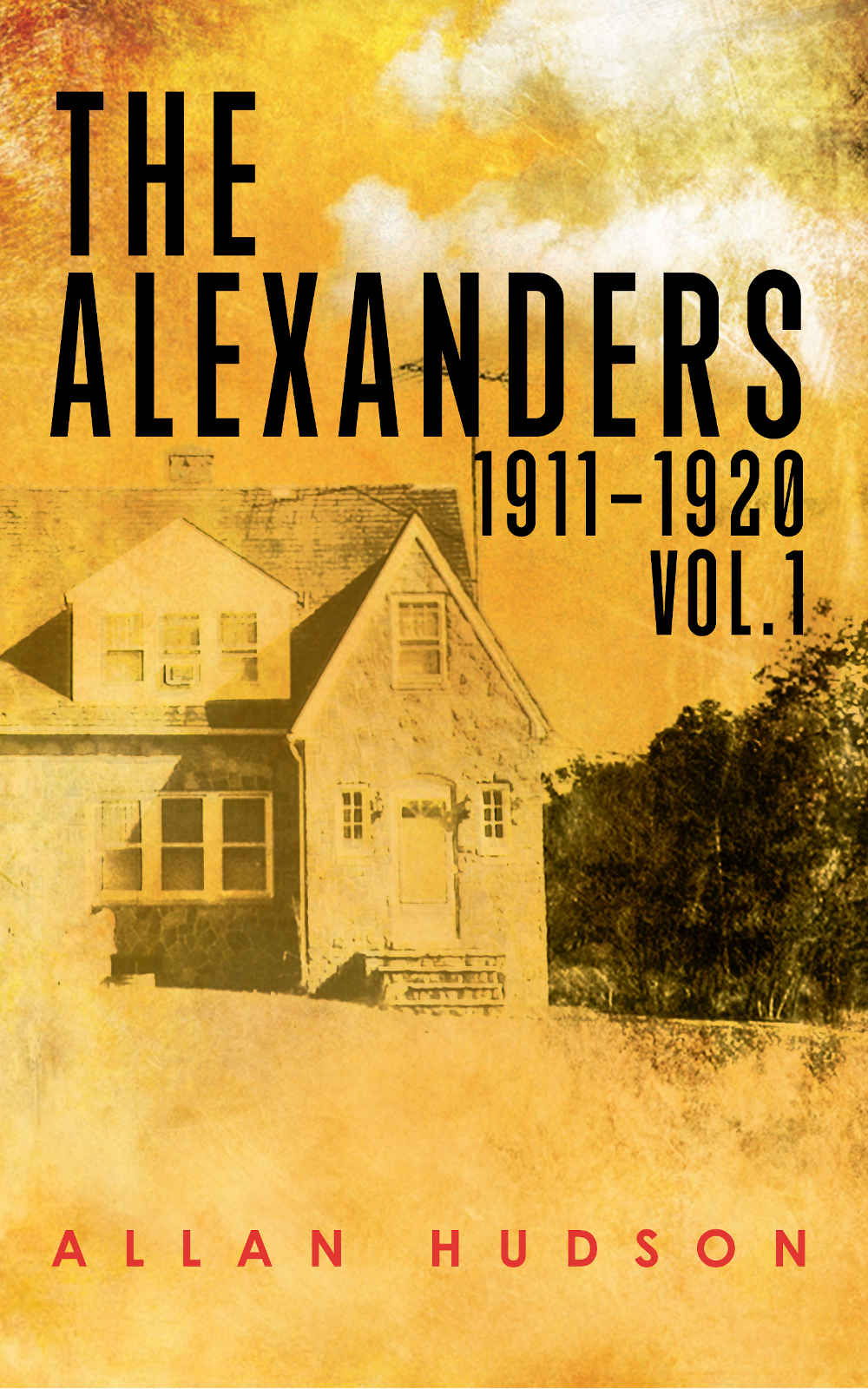
The Alexanders Vol. 1 1911 -1920
Historical fiction by Allan Hudson.
Goodreads.
In the turbulent waters off Saltcoats, Scotland, Danny Alexander dies in a boating accident. He leaves behind a wife, seven children and no hope. Dominic is the middle child. With a broken heart, his mother is forced to leave him with his bachelor uncle, Duff. None of them are happy with the decision.
Eleven-year-old Dominic Alexander must earn his keep. There are no free rides. Yet despite the difficulties, he finds his place in the structured world of his uncle and overcomes his loneliness.
Fortune and misfortune follow the young man until adversity forces him to make a decision that will affect the rest of his life. Is emigrating to Canada the answer?
More info HERE.
Get your copy HERE.
Thank you to all you wonderful readers for visiting today. I hope you will give some of these fine stories a chance.

Please tell us your favorite recommendations.



September 5, 2020
Author Jeanette Winsor of Belize City, Belize.

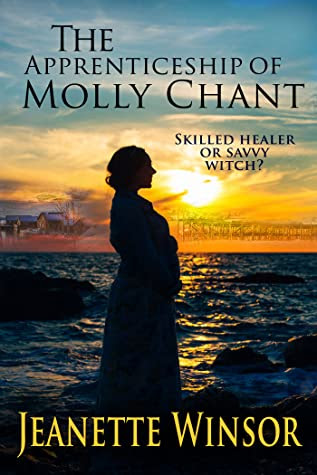
I was introduced to Jeanette’s delightful novel - The Apprenticeship of Molly Chant – when asked if I would be interested in reading and reviewing her novel by James Fisher of The Maritime Reader. After reading the following, I knew this was a story I wanted to read.
“Sixteen-year-old Molly Chant faces the noose, a punishment unheard of in 1869. Her one chance for escape is to follow her friend, Mick, to a ship ready to sail to the desolate island of Newfoundland. But, crossing the vast, angry ocean to the colonies could be a new kind of death sentence.”
I was enthralled. Read the review HERE.
Jeanette is formerly of Bonavista, Newfoundland. She has graciously accepted our invitation to be our guest this week to participate in a 4Q Interview and is sharing an Excerpt from her novel.
Jeanette Winsor is a graduate of The Humber School for Writers, Toronto, and has been writing both novels and short stories for the past twenty years. Many of her works are set in Newfoundland out ports as she tries to capture a culture quickly giving way to the modern world. Her nonfiction pieces have been published in journals and magazines both nationally and internationally. Her short stories have appeared in Unleashed Ink, Frustrated Writers, CanWrite Anthology and most recently, The Antigonish Review. She is a member of the Writers’ Community of York Region, The Toronto Romance Writers, and The Barrie Writers’ Club.
Having completed a Bachelors degree at the University of Waterloo in Ontario and a Masters degree in Adult Education from St Francis Xavier University in Nova Scotia, her career as a lecturer/instructor wended its way from St John’s, NL to Belize City, Belize, on to Edmonton, AB and then, Barrie, ON.
She now lives in Belize City and, like just about every other Newfoundlander, often yearns for the comfort and traditions of the wonderful place called The Rock.
4Q: Please tell our readers what to expect when they pick up there copy of The Apprenticeship of Molly Chant.
JW: Molly Chant’s apprenticeship as a midwife starts in Ireland (in the mid 1800’s) but quickly transfers to the desolate island of Newfoundland. She strives in a community—filled with superstition and old wives’ tales—to survive and to become a respected member. Learning quickly that her medicines and practices are frowned on here, she lives each day being both the pariah and the woman everyone comes to (secretly) for help during times of sickness. It’s a long hard road to acceptance but Molly continues, until a tragic event brings her life full circle.
Drawing on the history and stories of the small village of Spillar’s Cove, near Bonavista where my family originated, I have created the fictional community of Silver Cape Cove. While the characters who live in the story are totally fictional, I have tried to draw on the characteristics and personalities that are prominent in the Newfoundland culture. As far as possible, any references to history, geography, and cultural practices have been researched and are true to the times and places. For example, I am often asked why I called the ship that brings Ignatius and Molly into Silver Cape Cove the Ariel. I had checked the website http://www.virtualmuseum.ca/ and found that in 1863 the SS Arielwas the coastal steamer that ran from St John’s north to Twillingate. While ‘Ariel’ is currently the name of a Disney character, it in no way influenced my naming that ship.
4Q: What inspired this story?
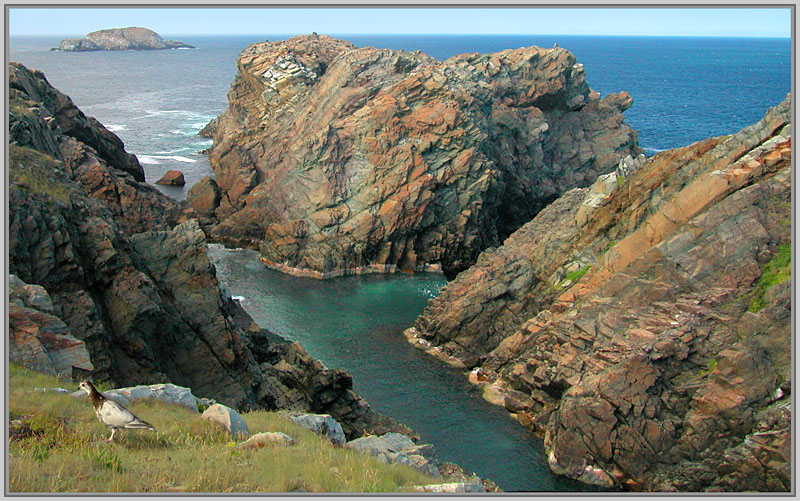
JW: Two things inspired this story. First, I was born and raised in Bonavista, NL in the 60’s. Our community had ‘witches’. No, they weren’t the broomstick riding, cauldron stirring women of folklore, but they had a certain power. They carried a stigma that gave them this power and people went out of their way to be ‘nice’ out of fear these women would put a ‘wish’ or a spell on them. These spells would cause a loss of some kind, or pain and suffering and getting rid of them took time and energy.
The second thing that inspired me was a book based on the research of Dr. Barbara Reiti of Memorial University of Newfoundland called Making Witches: Newfoundland Traditions of Spells and Counterspells. In her book, Reiti explores the significance of the fact that certain communities had ‘witches’ in Newfoundland because of a combination of social interdependence and female coping strategies in an unstable economy. The book fascinated me and although Reiti never actually spells out which community she is discussing, it is clear to anyone who has lived there that she is referring to Bonavista and the surrounding coves.
The story is told from Molly’s perspective and so we are able to understand some of the ‘unusual’ things she does. She is not the fearsome hag that some would assume her to be, but a woman trying to survive in a world where women had little power. Just as, I believe, the women of Bonavista were using their ‘power’ as a survival tactic.
4Q: Please share a childhood memory and/or anecdote.
JW: One memory that comes to mind is of stealing a cat when I was about eight years old. The cat, a big orange tom, came out to greet me every day on my way to and from school. One day he came close enough for me to grab him and sneak him into my bookbag. I brought him home and hid him in the wood shed, feeding him part of my supper. He stayed there all night and when I got home from school the next day, his owner sat in the kitchen, drinking tea with my father.
Dad folded his hands together on the table and quietly said, “Mr. Hunt is looking for his cat. The orange one. Didn’t see it around, did you?”
I picked up my wet mittens and pinned them to the clothesline over the stove where wet mittens and socks belonged. “I never seen any cat.”
My father was no fool. “No? Well, whoever got your cat, Mr. Hunt, is the worse kind of thief. Don’t you keep that cat in the barn to chase away the rats?”
“I do. And you know, the hardest part is, that’s the best cat I ever had. Why, every night, he has a lunch with me and the missus before we goes to bed. He loves jam jams.”
I giggled and glanced toward the man. But he wasn’t smiling. His face, drawn down, eyebrows knitted together, made him look scary.
My smile dropped and the air around me grew harder to breathe.
Dad gave me a look like he did when I kick the seat during mass or interrupted when people were talking.
The two men chatted on, drinking their tea, and talking about storms on the Grand Banks.

The sun fell lower in the sky and Mr. Hunt stood, rubbed his hand across the top of my head. “Well, seems like ‘tis bad news I’ll have to carry home to the missus.” He put on his cap, stared at Dad. “A wonderful cat. Like a child to us, he is.”
His words pierced my heart. I broke down and went to the woodshed. Despite the sadness and tears, I figured ‘twas best to give the cat back. I learned several lessons that day—the most important I think, a lesson in empathy.
4Q: The Apprenticeship of Molly Chant is the first novel in the Silver Cape Cove series. Can you tell us about the next book(s) in the series and what we can look forward to?
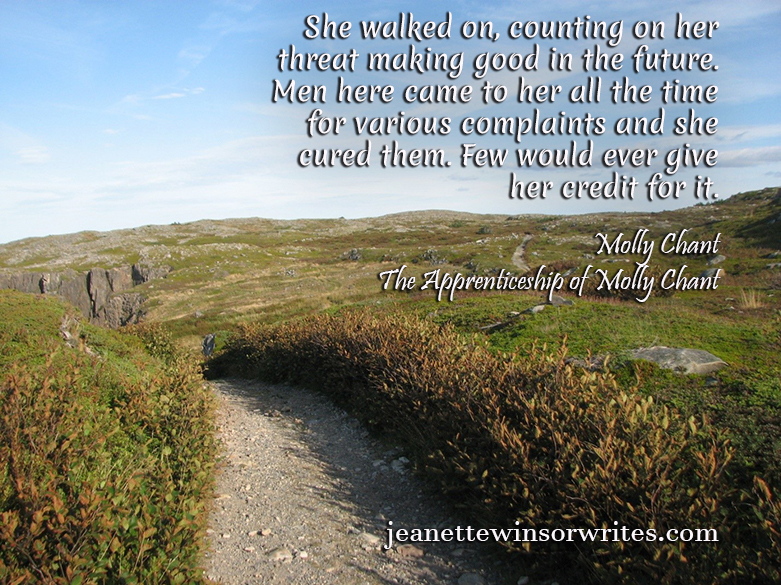
JW: The next book in this series The Healer’s Journey is about a young man, Thomas, who feels he has been ‘witched’ by Molly Chant and as a result, he, too, becomes a pariah in the cove. He tries to make sense of it, but when his family has a bad fishing season, they call him a jinker and send him away from the one thing he loves most of all—the ocean. On his return to the cove several years later, he learns a secret that brings his life to a different place.
The third book in the series, According to Daniel, continues Molly Chant’s legacy and looks at some of the history of mental illness in Newfoundland back in the 1930’s through the eyes of a teenage boy who has witnessed a most incredible tragedy.
4Q: On a more personal note (if we’re not being too nosey), how did a young author from Newfoundland end up in Belize?
JW: This ‘older’ woman came to Belize with her husband back in 2000. He worked with the utility company here and I taught at St John’s College. We were here for 6 years, then went back to Canada. Last fall my husband was called back and I was delighted to return with him. I am writing full time and enjoying the beautiful country—when we are not on Covid lockdown. I miss being able to go back to Canada to visit my grandchildren, but as soon as travel bans are lifted and borders are open, we will be back to visit family and enjoy the people, customs, and fine salt air of The Rock.

4Q: Favorite author? Novels?
JW: Ohhh, I could talk all day about authors and novels I love. I would say that the authors who influenced me most include: Donna Morrissey, Kit’s Law, Downhill Chance, Sylvannus Now. Norah Donoghue, Room, Slammerkin, The Wonder, and The Pull of The Stars. Zora Neal Hurston, Their Eyes Were Watching God. Michael Winter Into the Blizzard. Michael Crummey, Sweetland.
4Q: When Jeanette Winsor is feeling most creative, where will we find you writing? Your writing habits?

JW: It’s six o’clock in the morning and the sun has just breached the horizon on the Caribbean. I am sitting in my little corner in the living room (a place I call ‘my office’) tapping away on my computer. I am debating if I should go for a walk or a jog while the temperature is still only 25 degrees Celsius or get down all the ideas that have been percolating during the night. My creative brain always wins, so there is no going out, just a continuation of tapping keys. By noon, I’m starting to fizzle out. I have lunch and settle down to the pleasure of reading. By 4:00, the sun is not as hot and the sea breeze has picked up so I walk for about an hour. By five, I’m back to the kitchen preparing supper. If the mood is right, I may tap out a few words tonight or do a little research.
4Q: Anything else you’d like to tell us about?
JW: To all those who want to write, please do it. I pushed back the urge for so many years telling myself that I couldn’t, or I’d not be very good or, …and the list goes on. Once I started writing, I couldn’t stop and it went forward. I constantly sent out pieces of my work to contests and magazines, and from there I found my work did have validity. I attended workshops and conferences and met so many people who willingly guided me along the way. The world of writing is a lonely world, but once you establish friendships there you find that so many writers are willing to help you and eventually, you will want to help others succeed. Study your craft diligently and write every day.
An Excerpt from The Apprenticeship of Molly Chant.
(Copyright is held by the author. Used with permission)
PART ONE
County Cork, Ireland
April 1869
Molly Chant stood on the docks of Cork in a blood-soaked frock, her hands burning, and her life not worth a tinker’s cuss. Witchcraft, they said in the courtroom, and no one in Ireland accused of it for over a hundred years. Her only friend in the world, Mick, waited for her on the deck of The Myrtle, a ship bound for the desolate island of Newfoundland.
He readjusted the small pack he carried over his shoulder and reached toward her. “Come on, then. Give me yer hand.”
Her mouth dried, her throat ached. She had to get away from here. From the danger of being caught. She knew nothing of the place he planned to take her to, except it was a colony across the ocean, and going to the colonies was never a good thing. Stories abounded of starvation, murder, and other—more shameful—deeds.
“Molly. We have to hurry.”
She shook her head, the ends of her long black hair stiff with blood. The stink of piss and filth coming off her body, stark reminders of the horrors of prison over the last few days. But how could she go and leave them? They were her family. “Mick. What about Bridget? She’ll need—.”
“Molly, please. Bridget is gone and ’tis hanged you’ll be if you stay.”
“Hanged for what? We did nothing wrong.”
“The law doesn’t see it that way. You’ll be safe on the ship. But Alfie and Mariah, they’ll be run off the land, left to starve if you go back.”
“Can we ever return, Mick? How many years will I wait?”
His voice dropped and he pulled his brows together. “When Ireland’s free of the English. Next year, two years at most. I promise ye, Molly.”
His hand, pale against the dark hull of the ship, lay face up, beckoning her. Bridget’s voice sounded in her head ‘Molly, girl. Be careful with Mick. He’s trouble. Not to be trusted.’
“But ‘twas lies, all lies. I tried to tell them. Bridget and I are not witches. We didn’t hurt anyone.”
“I know that. But it’s more than that we’re running from now, isn’t it?” His voice, although hushed in the shadows, came clear to her.
“I did it to save you. I had no other choice.”
“So you’ll tell that to the court and expect they’ll believe you?”
“I can’t leave Bridget.”
“Fuck sakes, Molly. Just give me yer hand.”
Her life was here, her family, her work, and…the threat of hanging for murder. But once she stepped foot on that ship, she’d never see Ireland—never see her family—again.
As much as it cut into her heart, there was no other choice.
She held on to his hand until she found her footing on the deck. ‘Twas as if she had stepped up to the gallows, waited for the hangman to put the sack over her face.
“Stay here ’til I find out who’s on watch.” Mick walked away.
She swayed with the ship, wrapped her arms around herself to keep warm against the breeze cooled by the dark night, dampened by the river. The journey to the courtroom and through the prison had been hard, but not nearly as hard as fighting off Paddy and breaking out, away from the cold and the filth and the blood. Her legs and feet ached from skulking around, one corner to the next, to avoid thieves, drunks, and the police. Running, that’s what she was doing and not taking a single moment to think. Was this the right place to go? Mick said it was, said he’d care for her, in fact he’d promised. But Bridget said…. She balled her hands into fists. Seems like she couldn’t even trust herself these days.
They had gone to trial, she and Bridget, accused of witchcraft, of spoiling crops, causing death. She told the truth when she said they gave medicines and prayed over the sick and dying. The Justice of the Peace twisted her words, calling their medicines ‘potions’ and their prayers to the Mother, ‘spells and incantations, the very work of witches and devils’.
Leaning on the rail now, Molly stared into the murky Lee River below. Bridget. Dear sweet Bridget. Her heart ached.
“I’d not be thinkin’ of jumping in there, lass.” A tall man, his smile comforting and his voice gentle, leaned against the wheelhouse, strong arms crossed in front of him.
“I’ve no intention, sir.”
“Then why so sad?”
“Tis more than I can speak of.”
“Aye.’ He sighed. “A lost lover, then?”
“No. I been told lovers can be found anywhere, anytime. I lost a true friend.”
Mick came around the side and stopped. “There you be Ignatius. Are ye on watch?”
“I am. Your Uncle Seamus and Mr. O’Rourke was late gettin’ back from the pub.” He straightened.
“Is Uncle still sleeping?”
“He is, and ye best not wake him.” Ignatius pushed away from the wall and walked toward her, his dark eyes never leaving her face. “And who’s the fine colleen here?”
“Molly. She’s sailing with us to Newfoundland.”
“Part of the cargo?”
“No.”
“What, then? Seamus don’t abide the sale of Irish folk into service in the colonies.”
Mick moved closer. “She’s a guest on this ship. That’s all you need to know.”
Ignatius smiled and tipped an invisible hat. “Welcome aboard.” He walked away, sauntered downstairs to the deck below, dark curls pulled back and tied with a leather thong bouncing against his back.
Uneasiness flared up. She moved closer to Mick. “What was that all about?”
“Nothing. Keep yerself out of sight as much as possible until we’re out of port. Uncle Seamus’ll be up soon.” Mick ambled toward the stairway.
She followed. “Who was that man?”
He stopped, turned. “Ignatius? Just a lad out of Waterford. Been sailing with Uncle for five or six years now. Why?”
“No reason.”
He pulled down his brow. A scowl shadowed his face. “You best stay away from Ignatius Flynn. Not right in the head, if you know what I mean.” He took her hand, led her along. “Now wait here.”
She sat next to the wheelhouse, sheltered on the port side away from the quay where morning trade was starting up. Men and boys shouting, sails flapping against masts, the scrooping of the tie ropes rubbing along wood. The sun peeked through a thin line between the horizon and the clouds, lighting the sky in a vibrant pink. The Lee flowed along, thriving in the early dawn. She yearned for her tiny stone with the Ogham symbol of the birch tree scratched on it—the symbol of protection—but they’d snatched it from her when she was thrown in prison. Images of home taunted her. Alfie with the hearth burning now, heating the tiny kitchen. Mariah ladling out oats for breakfast, her bread already set to rise. Home.
An escaped tear dropped to her hand. How could you yearn for someone so much? She closed her eyes. You have a strength and a power few other people possess, Molly Chant. Bridget’s voice echoed inside her head. Take your strength and use it to fill your life. But how did you fill your life when the most important people were missing?
A shadow fell across Molly and her eyes flashed open. “Uncle Seamus wants to meet you. Come on. He’s a busy man, so be nice.”
She pulled herself up, her hair all down around her face, and her dress...
“I need to wash up, get out of this—”
“No. We’ve no time.”
Mick’s eyes scanned her, head to toe, his lip curled and he stepped back. Molly pulled her shoulders together and stared down as the sun shone upon the filth she longed to shed.
“This way.”
She followed him, the sounds of the early morning so unlike what she heard at home. Two sailors looked up from their work, stared at her with prying eyes. Could they see what she’d done? No matter. They should mind their own business, had probably done far worse things in their time. But what was worse than—? She glanced away.
Mick stopped and knocked on a door.
“Come in.”
He opened it and stood aside. With a touch to the small of her back, he urged her into the room.

Thank you, Jeanette, for being our featured guest this week. We look forward top reading more about Molly and wish you continued success with your writing.

For all you devoted visitors wanting to know more about Jeanette and her work, please follow these links:
Website: http://jeanettewinsorwriter.com
Twitter: Twitter.com/jwinsor13
Email: jpwinsorauthor@gmail.co

August 29, 2020
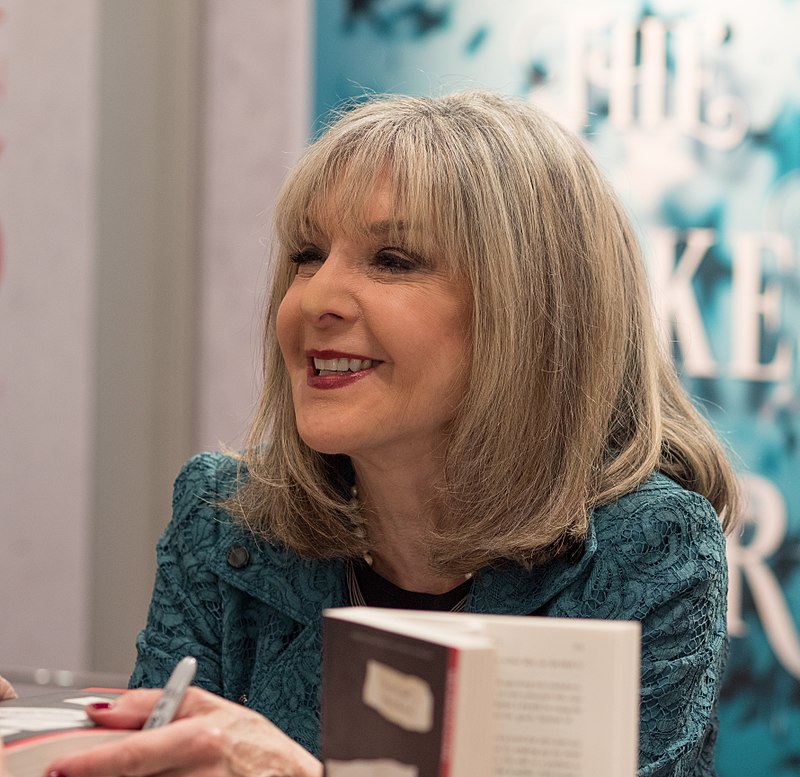
USA Today Best-Selling Author Hank Phillippi Ryan.
The Scribbler is pleased to do a series of guest appearances in conjunction with Creative Edge Publicity of Saskatchewan, Canada. (See below for more of Creative Edge)
Hank Phillip Ryan has been hailed by book critics as “master of suspense”, “a superb and gifted storyteller.”
She is an American Investigative Reporter for Channel 7 news on WHDH-TV in Boston, Mass.
An acclaimed author of Twelve thrillers. the recipient of numerous and impressive awards, Hank is kind enough to be our special guest this week. The Scribbler is beyond happy to present a 4Q interview.
H ANK PHILLIPPI RYAN is a USA Today bestselling author of 12 thrillers, winning the most prestigious awards in the genre: five Agathas, three Anthonys, the Daphne, and for THE OTHER WOMAN, the coveted Mary Higgins Clark Award. She is also on-air investigative reporter for Boston's WHDH-TV, with 37 EMMYs and dozens more journalism honors. Book critics call her "a master of suspense," "a superb and gifted storyteller," and she’s the only author to have won the Agatha in four different categories: Best First, Best Novel, Best Short Story and Best Non-Fiction. Her previous novel, THE MURDER LIST, is an Agatha, Anthony, Macavity and Mary Higgins Clark Award nominee. NYT bestsellers A.J. Finn says, “exciting, explosive, relentless,” and B.A. Paris says it’s “her best yet.” Hank’s newest novel: the chilling psychological standalone THE FIRST TO LIE. The Publishers Weekly starred review says "Stellar… Hank Phillippi Ryan could win a sixth Agatha with this one.”
4Q: Let’s talk about your latest work, The First to Lie, to be published in August, 2020. Author Sarah Pekkanen states: “A taut, propulsive plot with twists that will take your breath away.”
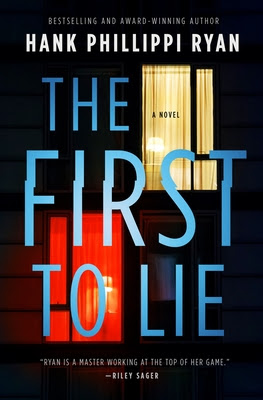
HPR: Thank you! I am so thrilled with it. The starred review from Publishers Weekly calls it “stellar,” so as you know, that is as good as it gets. It’s a psychological standalone, and briefly: It is two smart women, facing off in a high stakes psychological cat and mouse game to seek revenge for a terrible childhood betrayal. But which woman is the cat and which woman is the mouse?
I love to explore the themes of betrayal, motherhood, obsession, and revenge--all set in the world of the big money high risk pharmaceutical industry. What is the moral, ethical, and financial calculus for a product that helps many people -- but harms others?
It stars a young woman who faced a devastating childhood betrayal, an undercover reporter who’s in too deep, a beautiful sailboat on the Chesapeake Bay, a rich and powerful family, and an ice pick that is not used for ice.
And it asks the question: what if being someone else could get you what you want?
4Q: When visiting your website, we discover the prestigious awards bestowed upon you and your novels, a long and tremendous list to be proud of. Perhaps the most remarkable is your five Agatha Awards. Which of these has been closest to your heart and why?
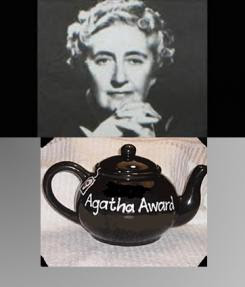
HPR: Each of those gorgeous and coveted teapots, (which is what an Agatha award is, in honor of the oh-so-British Agatha Christie) is a joy and a treasure. The first one, of course, for best first novel for PRIME TIME, still brings tears to my eyes to think about. My very first short story “On the House” won in a different year for best short story, a reassuring proof that maybe I could also work in that length. Then my collection of essays from Sisters in Crime members about the writer’s journey won for best non-fiction. How fabulous to have it be a collaboration! And then, in two different years, both THE WRONG GIRL and TRUTH BE TOLD won for Best Novel. So--my favorite? Impossible, since they all signify different and equally wonderful things--most importantly, the approval of readers.
4Q: Pleased share a childhood memory and/or anecdote.

HPR: Oh my goodness, I grew up in really rural Indiana, so rural that you couldn’t see another house from my house. My sister and I used to ride our ponies to the library to get books, and we read up in the hayloft of the barn behind our house. That’s where I fell in love with Nancy Drew, and Sherlock Holmes, and Agatha Christie. So funny that later in life I won an award named after the fabulous Agatha!
4Q: I would assume that your career as an investigative reporter drew you to writing mystery thrillers. Am I correct?

HPR: Well, I’m not sure. I think my career as an investigative reporter is a result of my curiosity, and my love of storytelling, and my--if I can say so--desire to stand up for the little guy and change the world. So, I was a reporter for more than thirty years before I started writing fiction.
Still, though I always thought about being a writer, even as a little girl, I decided, back then, it might be more fun to be Sherlock Holmes than to write about Sherlock. So being an investigative reporter and a crime fiction author--I got a little of each.But both those careers are about storytelling, right? And suspense, and secrets. And I do think being a reporter taught me even more about storytelling--so it all works.
4Q: You are the recipient of many Emmy awards. This is a huge accomplishment. What can you share with us about this achievement?
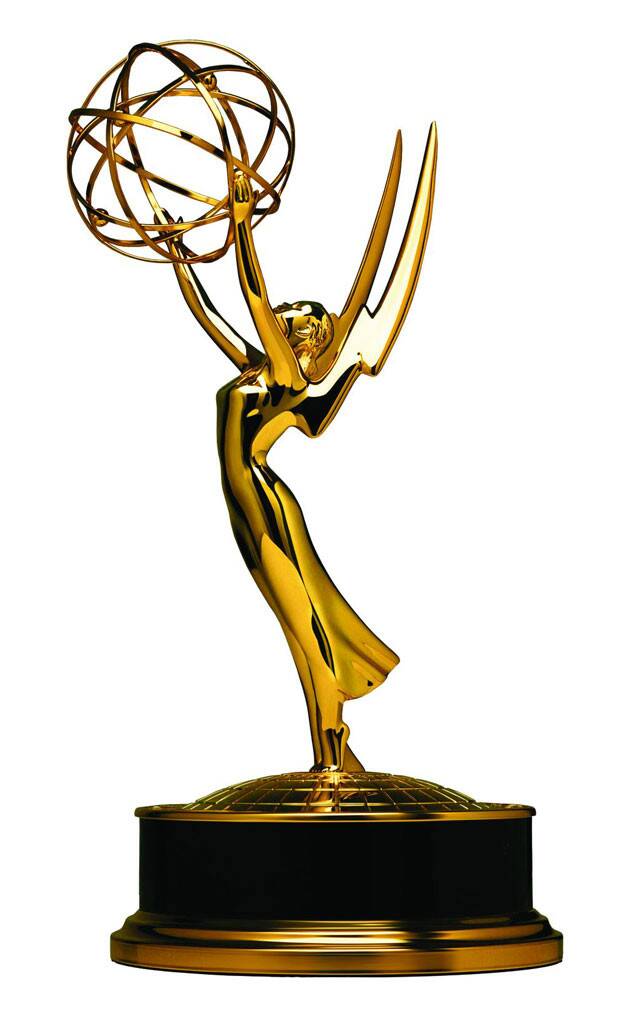
HPR: It’s fascinating to look at my Emmys--each one of which I am so proud of. And interesting that each Emmy represents a secret that someone didn’t want you to know-- a story my producer and I researched and discovered and made public. Interesting, too, that it’s so parallel to crime fiction. My books, too, are all about secrets--who has a secret, and what will happen when it is told. Again, another example of my parallel writing life!
4Q: Favorite authors/novels?
HPR: Oh my goodness, how much time do you have? Edith Wharton, Tom Wolfe, Stephen King. All fabulous storytellers. Perfect books? The Charm School by Nelson DeMille, and Day of the Jackal by Frederick Forsyth. Silence of the Lambs by Thomas Harris. They are crime fiction classics--and prove that good writing and good storytelling is timeless.
4Q: The Memories section of your website has you shoulder to shoulder with many celebrated authors of which I admire. Perhaps the one I am most envious of is of you and Harlan Coben, one of my favorites. Can you tell us about this experience and how it came to be?
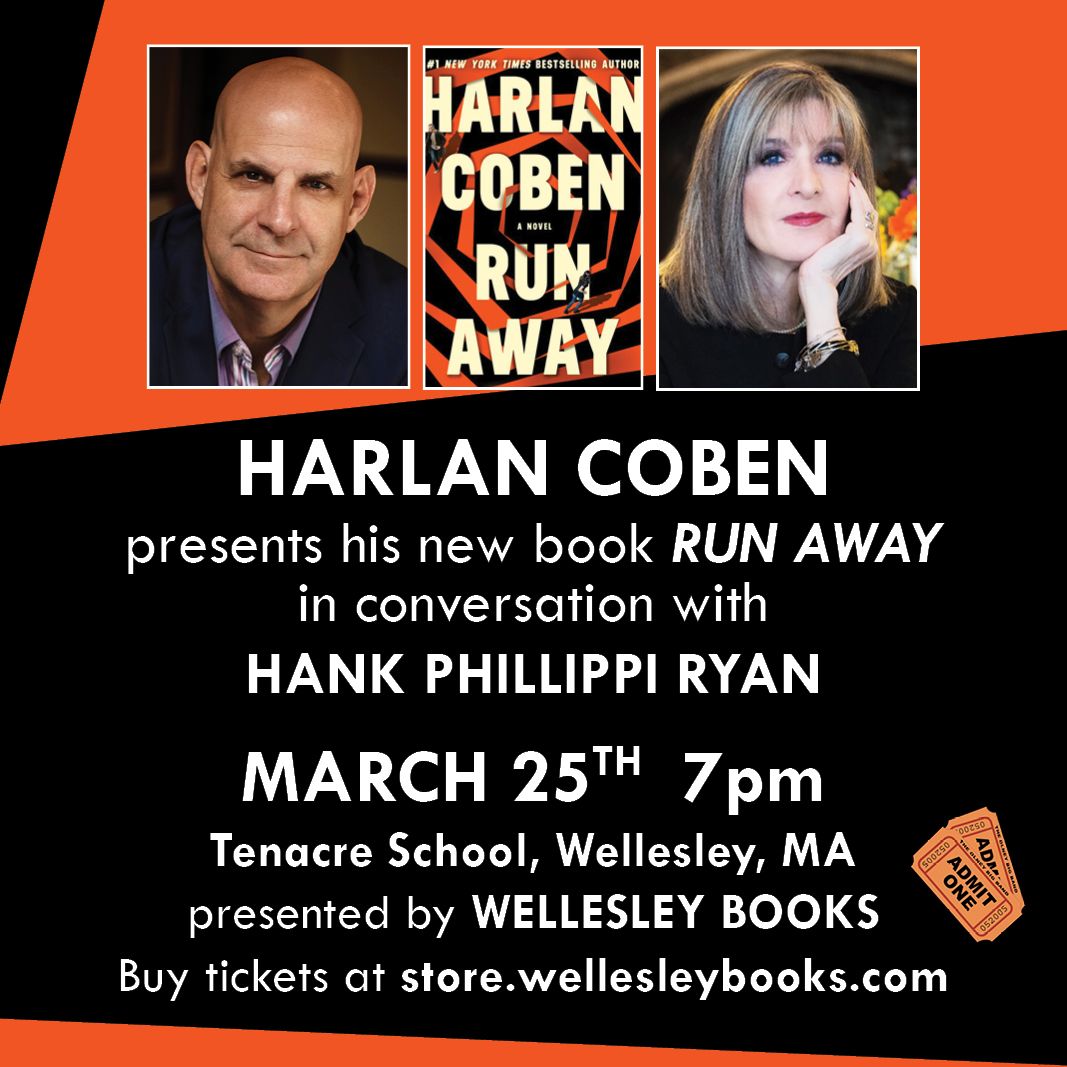
HPR: Such fun to look at all those photos—I adore looking at that gallery on my website. So many great memories.
As for Harlan-- Isn’t he hilarious? He is the one who told me to write the kind of books you love to read, because if you’re writing something you’re enjoying and are passionate about, then the readers will feel the same way.
I think Harlan and I met, golly, ten years ago? He is quite hilarious, and completely engaging, and loves being Harlan Coben. I have interviewed him several times, and he is always a joy – – he’s truly the genuine article, An incredibly hard worker, and the best of fun, and I applaud his every success.
4Q: Anything else you’d like to share with us?
HPR: I didn’t start writing until I was 55, 15 years ago. And I think that makes me the poster child for following your dreams at midlife. When I wrote my first novel, I called my husband into the room and said: “Sweetheart watch this.” And then I typed the end. And then I burst into tears. Of course, I should not have cried, because that wasn’t the end of anything at all, it was the beginning of this wonderful second half of my life and career.
It is amazing to think that I’m here talking about my twelfth novel, THE FIRST TO LIE, and I’m working on my thirteenth. Even with the world as insane and terrifying as it is now, it is always safe inside a book.
Thank you, Hank Phillippi Ryan, for being our Guest this week. Wishing you all the success you deserve.
For you wonderful readers wishing to discover more about this talented author and her novels, please visit this link:
http://www.hankphillippiryan.com/
Creative Edge is a dynamic Publicity Company based in Saskatchewan. Founder and co-Owner Mickey Mikkelson made this statement:

Creative Edge specializes in elevating the public profile of authors and artists through such means as (but not limited to) book signings, presentations (libraries, schools, conferences, businesses, etc.), involvement in applicable events, media interviews (including podcasts and print media), and soliciting of reviews from influential reviewers and bloggers.

Don't forget to leave a comment or ask a question before you go!

August 22, 2020
Screenwriter and Novelist Tom Gabbay.
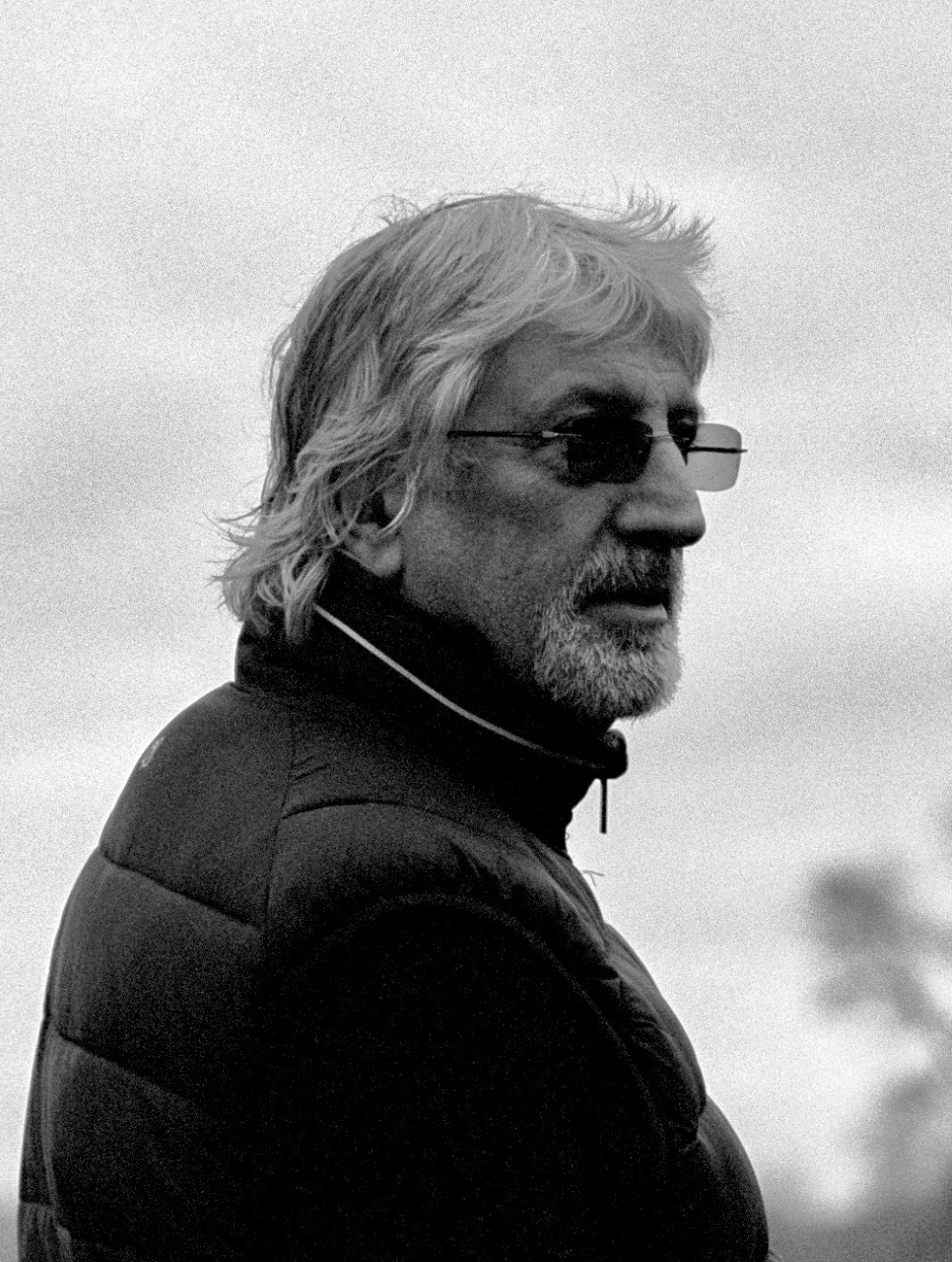
I was asked by The Miramichi Reader if I would do a review of a novel by American author, Tom Gabbay. I did so gladly, as the novel – Access Point – was one that intrigued me and I looked forward to reading. (See the review here - TMR)
As I mentioned in the review, this novel captured me and I read it in one sitting. Terrific suspense, interesting story line and captivating characters. It had everything you need for a good story.
Since then, I’ve had the pleasure to meet Mr. Gabbay online and he has graciously agreed to a 4Q Interview and is sharing an excerpt from Access Point.
Born in Bloomington, Indiana on April Fools Day of 1953, Tom Gabbay has had an eclectic career. Traveling through Europe in 1973, he took a summer painting course in Avignon, France, then enrolled in the Heatherly School of Art in London . Returning home the following year to attend the Pennsylvania Academy of Fine Art in Philadelphia, Tom began contributing political cartoons to the Philadelphia Daily News. Upon graduation, Tom moved to New York City where he spend several years producing award-winning short films for the children's program Sesame Street. In 1985 Tom joined NBC Entertainment, serving as Director of Children's Programs, Director of Comedy Programs, and Creative Director for NBC Europe in London. In addition to his novels, Tom has written several screenplays.
4Q: Before we discuss your writing, I read online that you originally dedicated your career to filmmaking and screenwriting. Very much involved in TV. Please tell us about this experience.
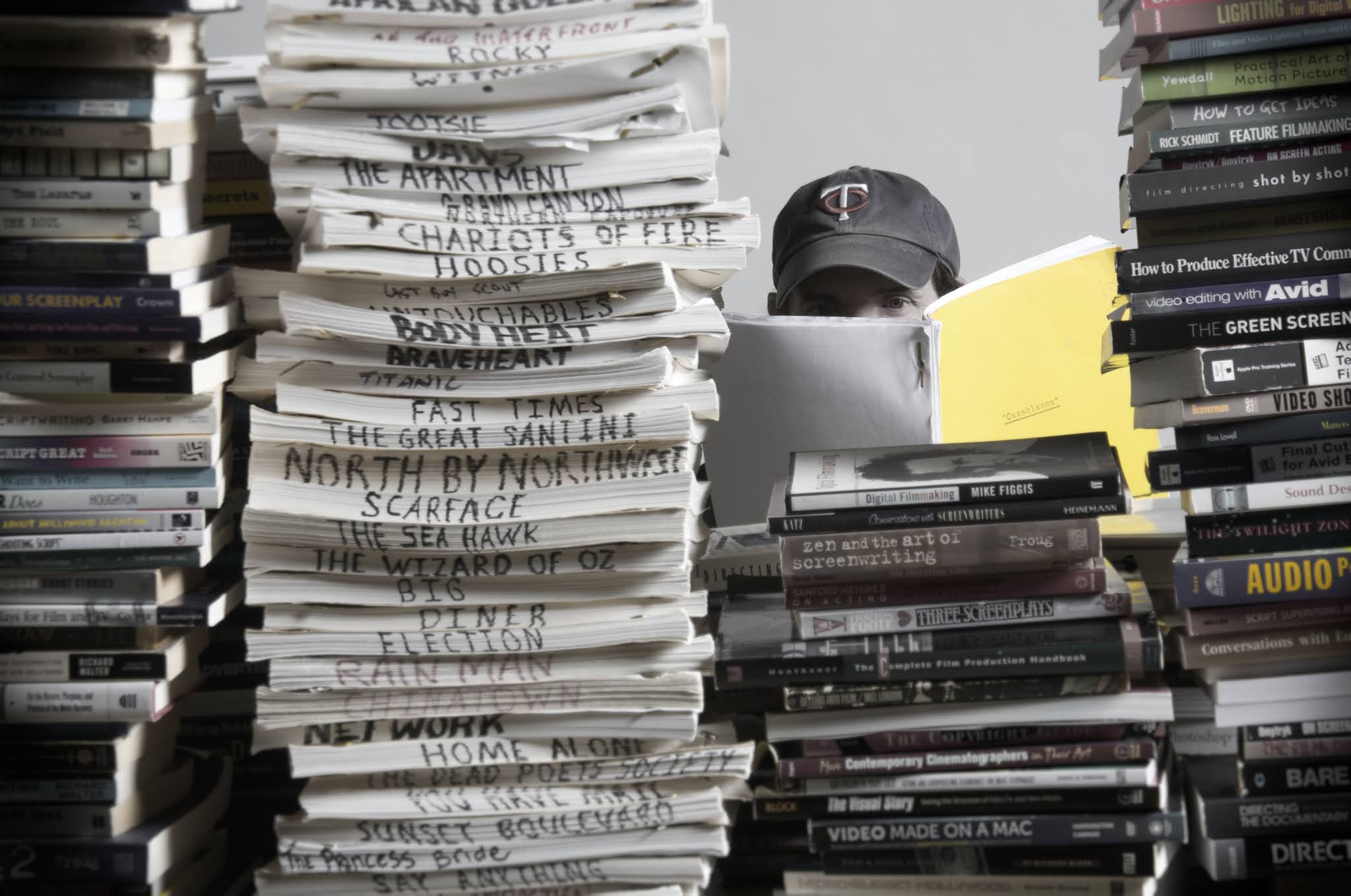
TG: While attending art school in Philadelphia I'd been contributing political cartoons to the Philadelphia Daily News, which in turn led me to an interest in animation. I started making short films and when I moved to New York I heard that the children's program Sesame Street would commission independent producers if they liked their ideas. As I recall, I went into their office with a portfolio full of storyboards ideas and was thrilled when they accepted three. I learned the process of filmmaking the hard way -- frame by frame. After several more commissions, I wanted to stretch my creativity a bit, and avoid getting sucked into the New York Mad Men advertising game, so I went west, to Los Angeles. After a couple of months of searching I was offered the job of Director of Children's Programs at NBC, which meant overseeing Saturday Morning animated programs. I learned about script writing by reading stacks of Smurfs, Alvin and the Chipmunks, Spiderman and all sorts of other cartoon scripts. My move to Comedy Programs allowed me to learn from great shows like Cheers, Family Ties, and Golden Girls. When I moved back to London to take on the job of NBC's European Creative Director, I was able to get involved with drama scripts from great producers like David Puttnam. It wasn't until I left NBC to produce the drama series, "The Wanderer," that I started writing myself.
4Q: What turned you to writing novels?
TG: Frustration is the easy answer. Screenwriting is a collaborative craft, which can be a great experience -- or not. I had some very good experiences, and some pretty horrendous one. In the end, there was a particular director -- who'll remain nameless -- who drove me off the cliff. At that point, my wife and I bought a secluded farm house at the far western edge of Ireland and I tried my hand at a novel. It was hard work -- much more difficult for me than writing a script -- but I got enough satisfaction from the process to repeat it several times since.
4Q: Please share a childhood memory and/or anecdote.
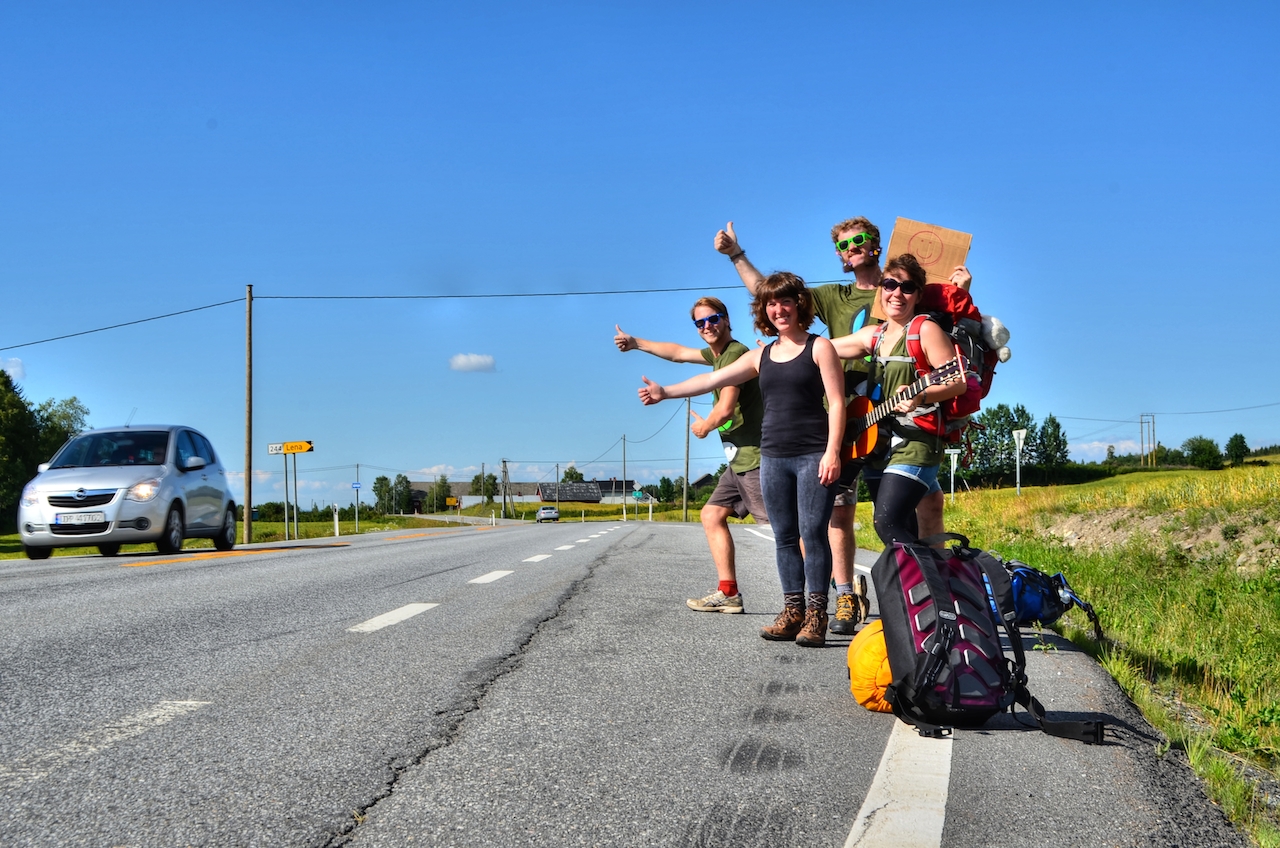
TG: Well, that could be a long one. I have a true story about a crazy hitchhiking trip from New York to Florida that my family has been (strongly) suggesting that I write as a screenplay or a novel. I won't spill it all here, but I can say that it involves one 16-year old boy (not me), heartsick over his 15 year-old girlfriend's move to Florida, three loyal friends (one of which is me), and their determination to make it to Daytona Beach in order to reunite the lovesick couple. Along their zig-zag hitchhiking route through the south in 1969 they encounter a chatty bible salesman in the back of a pickup truck, a huge alligator looking for breakfast (not a good idea to sleep in the swamp), several massive rainstorms, a lost wallet, sunburn, a rented Chrysler stuck on the beach, and a South Carolina jail cell. The final hurdle was figuring out how to provide the local Sheriff/Judge with the hundred dollar bribe he demanded when all we had between us was a dollar and thirty-two cents.
4Q: Access Pointis a terrific novel. Please tell our readers what to expect when they pick up a copy.
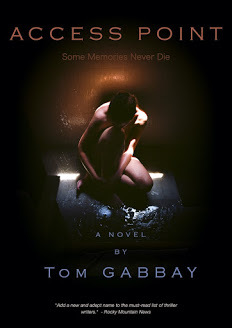
TG: : I got the idea for the novel while re-reading Carl Sagan's book, Broca's Brain. In the opening chapter he describes being taken into the basement of the Museum of Science in Paris to see the preserved brain of famous scientist Pierre Broca. Sagan speculates that since a person’s thoughts are no more than a series of electrical impulses, it may be possible, one day, to capture the impulses of a person long dead and "read" them, in the same way that we can see the light from a star that has died millions of years ago. That sparked the idea for Access Point. What if the memories of someone who has been murdered could be captured and translated? Might it be possible to play them back in order to reveal the identity of the murderer?
Beyond that I would refer the reader to your review, Allan. I can't do better than that!
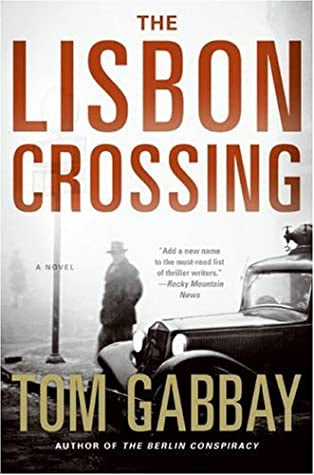
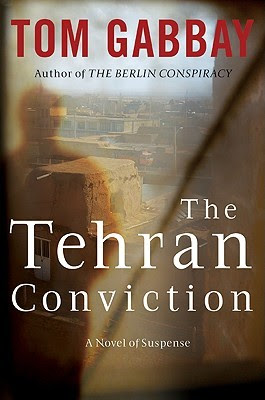
4Q: I saw on your website – www.tomgabbay.com – your three previous novels, The Berlin Conspiracy, The Lisbon Crossing and The Tehran Conviction. Each one looks like a must read. Can you share a bit about these works?
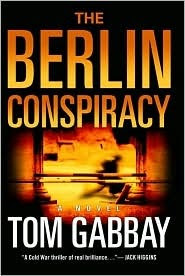
TG: The series revolves around various important events that took place in the second half of the twentieth. Told through the eyes of disillusioned spy Jack Teller, each book takes an important turning point in history and explores the part of the story that never made it to the history books. I wanted to focus on the three "isms" that defined those years -- Nazism, Communism, and Islamic Fundamentalism. "The Berlin Conspiracy," set in June, 1963, when Kennedy made his historic visit, looks at the Cold War in the context of an attempt to assassinate the president while in Berlin; "The Lisbon Crossing" is set in 1941 in the days after the fall of France, at the time that the neutral city was a haven for refugees from all over Europe -- including the Duke and Duchess of Windsor; "The Tehran Conviction" moves back and forth between 1953, when the CIA overthrew the democratic government, and 1979 during the hostage crisis. I don't try to present a factual account of these events, but a plausible history that allows Jack Teller to give his irreverent view on events.
4Q: Favorite authors/novels?
TG: I read more non-fiction than fiction these days, but some of my all-time favourite novels include those by Graham Greene, Somerset Maugham, and John LeCarré. I'm a fan of Elmore Leonard, who had the best advice for writer: "Leave out the parts that readers skip." In my serious youth I went through Dostoevsky, Cervantes, Tolstoy, Dickens, DH Lawrence, Thomas Pynchon, and so on. I had a period of Kurt Vonnegut and I have fond (distant) memories of Mark Twain.
4Q: Do you have a favorite spot to write? Your writing habits?

TG: I always write on my laptop, usually in my office, but anywhere will do as long as I can shut myself off from distractions. When I'm fully involved with a project, I tend to write in two shifts -- morning and afternoon. Starting is always the hard part so I tend to read through and edit my previous day's work in order to build up to those blank pages. Sometimes, at the end of the day, I'll start a sentence but leave it incomplete as an easy way to pick up the narrative.
4Q: Anything else you’d like to share with us? What’s next?
TG: I've been working with a production company to take "The Berlin Conspiracy" to television. Writing the adaptation has been a rewarding process. Now we do the really hard work -- finding a good home for it. Stay tuned!
Excerpt from "Access Point" by Tom Gabbay (Chapter 10)
(Copyright is held by the author. Used with permission)
"Aside from Erik and me, you’ll be the first person to see it." Ula led Mia up the attic stairway. "I'm actually quite excited to show you."
"I'm really curious," Mia said, her voice betraying the nervous apprehension she felt.
Ula flicked the light switch at the top of the steps, revealing the makeshift laboratory where she'd spent pretty much every waking hour since coming out of the coma, ten months earlier. Something that looked like a dentist's chair had been set up in the centre of the space, with a computer station behind it. A cable connected the mainframe to a strange looking headpiece that looked like it was made out of a bicycle helmet. Mia stopped a few feet short of the configuration.
"What is it?" she asked.
Ula pointed to the chair. "Sit there and I'll show you."
Mia looked skeptical. "What does it do?"
"If you get in, I'll show you." Ula entered a series of passwords into the keyboard and the mainframe came to life. Mia took a step toward the subject chair but hesitated.
"It's not dangerous," Ula reassured her.
Mia nodded and reluctantly lifted herself into the seat. Ula did something at the control panel and the chair shifted smoothly into the reclining position.
"Just lie back and relax," Ula said, removing a silver clip from Mia's hair before placing the E.I.R. onto her head.
"What's that?" Mia asked, feeling increasingly anxious.
"It's called an Electronic Impulse Receiver," Ula explained. "It picks up electronic signals from your brain and sends them to the computer."
"Oh, wow... Really?"
"It's perfectly safe," Ula assured her as she made some adjustment to the headpiece. "You'll need to close your eyes."
"What's going to happen?"
"You'll see. Close your eyes."
Mia wondered what she'd got herself into. If this was a movie, she was playing the part of the dumb student who was about to be tortured and turned into some kind of zombie by the mad scientist.
"Are your eyes closed?" Ula asked from her seat at the computer station.
"Yes," Mia said as she closed them. "They're closed."
"Good." Ula executed a few quick key strokes on the keyboard.
"Are you relaxed?"
"Not really."
"Nothing bad is going to happen," Ula promised. "But it will work better if you're relaxed."
"I'll try," Mia said, attempting a deep breath but coming up short.
Ula launched the programme software, causing the screen to fill with an erratic pattern of random static noise, similar to an old analogue television when there's no signal. "Now I want you to empty your mind of all thoughts," she said.
"I’m not sure I can do that," Mia responded.
"It's not as hard as it sounds." Ula lowered the room lights from her control panel. "Imagine that you’re staring into space. All you can see is a deep, dark, empty void that goes on and on, into infinity. Now allow the emptiness to envelop you... Yes, good."
The electronic noise on the screen slowly diminished, until a calm, almost uniform pattern of black emerged. Ula made a few small changes to the polarity before continuing her instructions in a hushed, flat tone.
"Now I want you to think of a number. Any number between one and ninety-nine. But don’t force it. Allow it to come to you. Imagine the number sitting out there in the darkness, a bright white light seared into the empty space. That’s it... Now concentrate on it."
As she spoke, something started to form on the screen. Lacking definition at first, it slowly came into focus to reveal the numbers "3" and "7."
"Thirty-seven," Ula said. "You're thinking of number thirty-seven."
"Oh my god!" Mia sat up sharply and twisted around to face Ula, almost pulling the E.I.R. off her head. "How...? How did you...? Did you just read my mind?!"
"I read an image that was in your mind."
"Yes, but... Oh my god, Ula! How?"
"By processing the signal."
"What signal?"
"The electronic signal that your brain transmits."
Mia removed the E.I.R. and looked it over. "This thing can do that?"
"It just picks up the signal." Ula limped over to take custody of the headpiece. "The computer then has to process it. Or more accurately, the software does."
"Amazing!" Mia pulled herself out of the chair. As incredible as the demonstration had been, she wasn't keen on repeating it. Maybe it was some kind of mind trick, she thought. She'd seen that sort of thing on the internet.
"You're a good subject," Ula said as she returned the E.I.R. to its proper place. "You emit a very strong signal."
"Okay, well... I guess that's good. At least I'm unique."
"We each have our own electronic footprint, but you'd be surprised by how similar we all are. As with our DNA, human thoughts are ninety-nine point five percent identical to each other."
Mia shook her head. "I guess all this stuff is beyond me."
"Don't feel bad. It's beyond most people." Ula returned to the control panel to shut the programme down. "Think of the brain as an organic hard drive. It stores electronic impulses and, when called upon, sends them to another part of the brain for processing. Once the signal is intercepted, it's just a matter of teaching the computer how to read it. That's the challenging part."
"So how did you do it?"
"It's like learning a new language. A few years of trial and error, and then all of a sudden, it all makes sense. Once I learned how to send an image to the brain, it wasn't all that complicated to reverse the process. Same language, but instead of talking, I was listening. Downloading, instead of uploading."
"Well, however you do it, it’s amazing. But I have to say, it's kind of creepy!"
Ula gave her a look. "Creepy in what way?"
"Sorry..." Mia realised her mistake immediately. She and the wine had managed to lower Ula's guard and now it had suddenly shot up again. "I didn’t mean it like that. It’s just -- "
"Just what?"
"I guess I don't know why you'd want to read people’s minds."
"I don’t," Ula said, not bothering to mask her annoyance. "Most of them wouldn’t be worth the effort."
"So what is the point?"
"The point is to read my own mind."
"Your own mind? Why would you want to do that?"
Ula gave Mia a long, impatient look. "Because..." she said, drawing it out. "If I can capture my old memories and download them onto the computer's hard drive, I can then reload them into a part of my brain that hasn’t been damaged. Isn't it obvious?"
Mia ignored the derisive tone. She was starting to think that rather than some mad evil scientist Ula might be an honest to goodness genius. "Can you really do that?" she asked. "Reload your memories into another part of your brain?"
"There's no reason why not," Ula replied, her irritation dissipating with the question. "I just have to find an access point."
"Access point?"
"A door into my mind. If I can do that -- "
Ula noticed that a strange, distracted expression had come over Mia. She was looking around the attic, as if searching for something in the air.
"Mia...?"
"Yes?"
"What are you doing?"
"Don't you hear it?"
"Hear what?"
"The voice..."
"You hear a voice?"
"Yes. Can't you?"
"No." Ula paused to listen, but there was only silence.
"It's very faint," Mia said. "It's a man's voice, calling out... You really don't hear it?"
"No."
"He's calling out," she whispered. "Calling for you. Saying your name... It's... It's coming from up there..."
She looked up and was met with a sudden blinding flash. Expanding out from its source, the attic was flooded with a light so intensely brilliant that it seemed to burn through everything it touched. Lines blurred and shapes melted into the background, until it finally became impossible to see anything but the white-hot glow of the incandescent haze.
Thank you so much Tom, for being our special guest this week. I’m looking forward to your stories. All the best in your writing journey.

For you wonderful readers that are looking to discover more about this talented author and his books, please follow these links:
https://www.facebook.com/trgabbay
Would love to hear from you..........

August 16, 2020
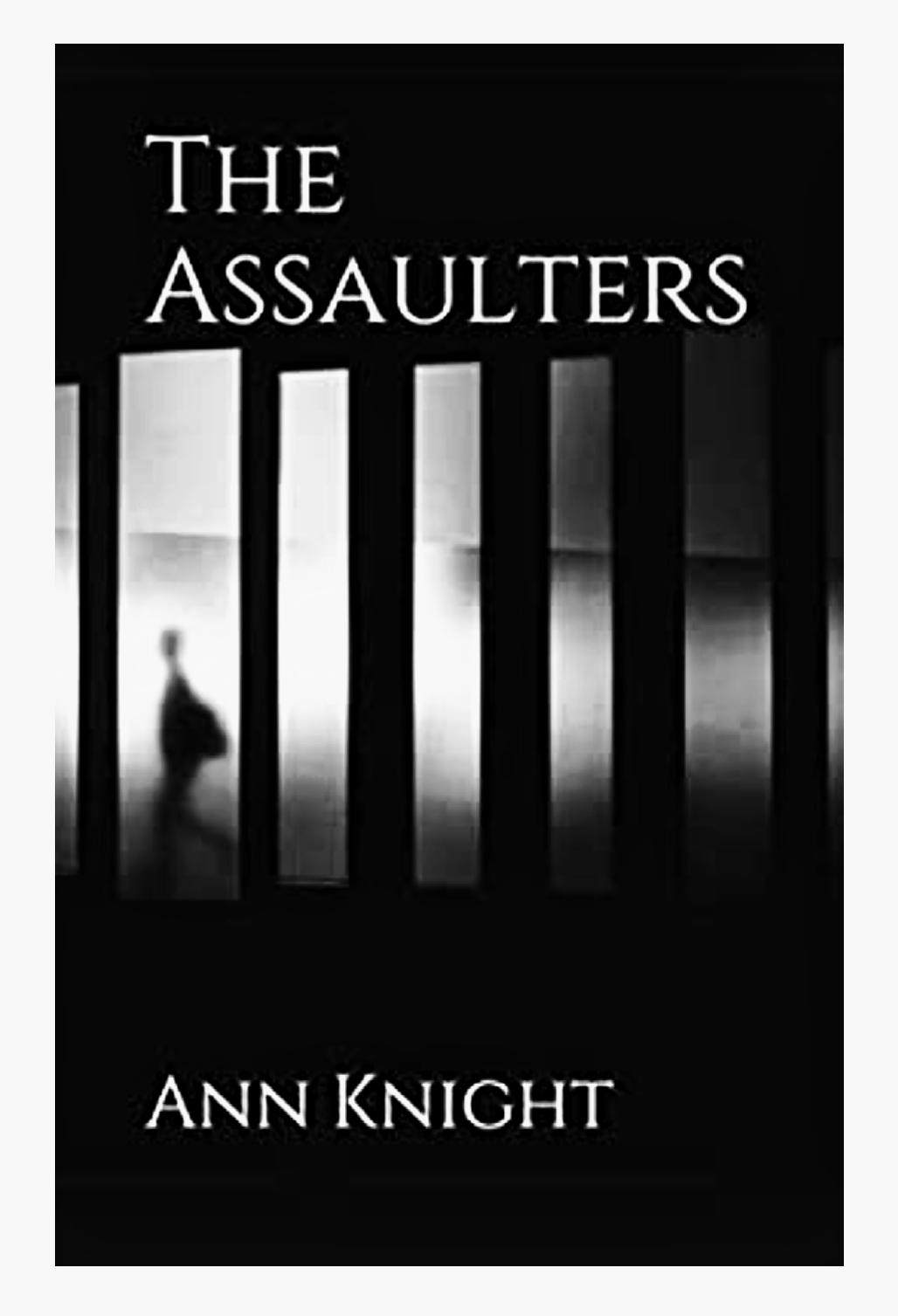
The Assaulters! Returning Author Ann Knight of Ottawa, ON.

We are most fortunate to have Ann back again.
This is Ann’s third visit to the Scribbler. Her first visit in 2016, she shared her creative story – The Raft. GO HERE Her second visit in 2018, Ann chatted with us about writing and shared an excerpt from her novel – Nightshade. GO HERE.
This week, she has kindly agreed to a 4Q Interview and is sharing an excerpt from her latest work – The Assaulters.
Author of six books: Battlefield, The Rising, Midnight Peak, The Rubix, Nightshade, and The Assaulters; three screenplays: The Gold Dust Circle, The Assaulters, and Holiday Spice; and one short story The Raft. Early start in choreography and stage production.
4Q: Welcome back Ann. Lots of incredible things happening with your writing. Let’s dive right in and talk about The Assaulters. What can you tell us about it?
AK: Thank you for having me back on the Scribbler.

The Assaulters is a psychological drama about a social experiment that goes wrong after a member of an underground group defects—and focuses his need for violent revenge on the remaining members—taking ‘assault’ to a whole new level.
By day, psychologist Sam Blake helps assess and treat mental, emotional, and behavioral disorders; but by night, he sends his followers out on the streets to carry out specific acts of violence. Tired of waiting for ‘ideal’ patients to walk through his door, he takes it upon himself to encourage setups that will ultimately lead to more opportunities—chance occasions that will allow him to delve into the mind post-trauma. Dr. Blake wants to get inside their heads and discover just how resilient their minds are. His goal is simple: shock the victim and study the pliability of human character after suffering has taken place. His underground club becomes an outlet for men filled with angst and overrun with testosterone—easy pawns to manipulate.
Meanwhile, Sam’s personal life is not without problems. His wife’s repeated miscarriages are cause for concern, and her obsession to have a child add insult to injury. The cracks in their seemingly ‘perfect’ marriage begin to deepen. Ed is Sam’s closest friend, and an anchor through it all—a wise advisor and loyal accomplice. He tags along as the journey takes them deep into the nature of relationships, trauma, and loss.
When Sam rejects an unstable young man from the club for taking an act of violence too far; he inadvertently becomes the object of a twisted game of revenge. A victim of the group’s attacks ends up in Sam’s office giving him the break he has been waiting for. But everyone who gets close to Sam becomes a target; his wife, his best friend, his club members, and his new client… No one is safe from the malicious criminal who has made it his mission to hurt that which has hurt him.
4Q: What inspired this story?
AK: The story evolved from the idea that sometimes human beings experience tremendous pain and suffering and still find a way to move forward and reinvent themselves against all odds. Post-traumatic growth versus post-traumatic stress. In the same way, some minds don’t bounce back after trauma and the antagonist helps bring that to light. The Assaulters was originally a screenplay. I decided to write the book a year later. The story explores many themes such as love, loyalty, friendship, betrayal, and revenge.

4Q: Please share a childhood memory and/or anecdote.
AK: I remember the moment I caught the writing bug; I was fifteen years old—and in my high school graduating year. I was the youngest admitted to the screenwriting program the next year, and I had worked hard to sharpen my skills as a scriptwriter… and then tragedy struck—and 39 scripts were gone in the blink of an eye. From that day forward, I believed that my writing career was over. Eight years passed before I considered returning to the craft. I had a recurring dream—it would not go away until I wrote it down. In doing that, I gave the story a voice. Battlefield (my first book) was the result of that dream. I am reminded of the quote by Nicole Reed, ‘Sometimes the bad things that happen in our lives put us directly on the path to the best things that will ever happen to us’.

4Q: On your previous visit, we enjoyed an Excerpt from Nightshade. One of the three books in The Rising Series. Can you tell us about the series?
AK: Imagine living in a world free of disease, obesity, poverty, and murder—a perfectly crafted world order led by one family. The cost—freedom of choice. Genetics decide your diet, career path, and compatible partner. Rebel alliances are formed, but those who oppose the new system of control are forced into hiding. Children begin their training at a young age—future soldiers to serve the new world leaders. If the rebels hope to overthrow the family in power and restore their rights, the youth are their only hope.
And the story begins with The Rising:
Being at a medium-security training center high up in the mountains means that there is a slight margin for things like… sneaking out of dorm rooms after lights out. That’s what Rachel does to go meet Leo, her annoying, yet devilishly handsome pain-in-the-rear friend. He makes her life difficult and enjoys every minute of it. Leo always manages to get under her skin, but it doesn’t matter because they are drawn to each other like a moth to a flame, and they love to push each other’s limits.
She has everyone fooled. It was the only way to get ‘inside’ and become part of the elite. She is the daughter of the resistance—their greatest threat. They raised her, trained her, and made her the best.Rachel knows that if her secret identity gets out it will endanger the lives of the people she cares about. This game of deceit takes its toll, but she has no choice other than to slam shut her emotional window and avoid attachments at all costs.
The rebels have people on the inside watching over Rachel. Getting through the finals, she spends a weekend with her supposed father—the Chief. During the visit, she meets Matt, a detective who captures not only her interest, but also her heart. Is a rebel supposed to fall in love? What will this mean to her mission? The internal conflict rages as she continues to deceive her peers.
To make matters far worse, Rachel attracts the interest of the youngest Rothwell heir; son of the world leader. Johnny is strong, powerful, and he represents an opportunity—an irresistible chance to sway the scales and help her family out of hiding. They made her smart, strong, and resilient. All she has to do is play a part, and she's already done that for most of her life. But little does Rachel realize that she is entering a web so thick and impenetrable; she may not be able to find her way out of it. Being on the arm of a Rothwell will come at a price—one that she is not entirely ready for...
The adventure continues with Midnight Peak:
On assignment under the watchful eye of her acting father, the Chief of law enforcement, Rachel continues to gather precious Intel for her family in hiding. When Johnny returns, so does the responsibility of playing an affectionate lover. Being with Johnny means she can’t be with Matt—the only man who has truly won her heart. Remaining focused on her mission proves impossible when a favor from the past suddenly comes back to hurt her. A rebel trades a secret for the release of his pregnant wife, endangering Rachel’s life, and complicating an already difficult situation.
With his father’s health deteriorating, Johnny is destined to become the new world leader. The young heir has a lust for power unlike any Rachel has ever encountered, and he’ll need to secure a wife if he hopes to rob his older brother of his birthright. A union with Johnny means that Rachel will never be free.
Rachel has to face all of her fears; she has to dig deep down and find the strength to persevere or they will crush her. Struggling to overcome everyone else’s expectations of her—what they want for her life—who they want her to be—the truth finally sinks in. She’s not just a rebel’s daughter. She’s not Johnny’s puppet. She’s a soldier. They can beat her to her knees, but she won’t stay there. She’s going to unravel the secrets and dismantle this system of control or die trying.
Nightshade is the third book in this series, and previously featured on the Scribbler.
4Q: Favorite authors? Novels?
AK: Tough question! I enjoy the way authors lure me into their worlds, and I fall for certain ‘baiting’ and techniques but… it is too difficult to choose one that I prefer over the rest.
My favorite books include: Love Anthony, by Lisa Genova; Charlie St. Cloud, by Ben Sherwood, and The Cuckoo’s Calling, by J.K. Rowling.
4Q: What’s next for Ann Knight, the author?
AK: I am entering uncharted territory with my newest project; a ghost story with an uncommon twist. An upcoming fourth installment to The Rising series is pending. A sequel for my first book, Battlefield, is in the initial stages of the writing process, and a prequel for The Rubix is also in consideration.
4Q: Anything else you’d like to share with us?
AK: In addition to writing, I have been coaching first time authors since 2019 (writers can contact by email: annknightfiction@gmail.com). Writers have great ideas but at times struggle with tone, flow, and other challenges. It is difficult to unearth answers when we dig alone. Sharing our answers can help others find theirs.
An Excerpt from The Assaulters.
(Copyright is held by the author. Used with permission)
The dreaded morning commute wasn’t something most people enjoyed. The city bus was crowded, as usual. A man folded the newspaper he was reading and placed it on the empty seat next to him. The headline was bold and in all caps: ASSAULTERS ATTACK AGAIN, 2 MORE VICTIMS.
The man scratched at his shaggy beard, his bloodshot eyes warily taking in the other passengers. His pudgy cheeks were riddled with broken capillaries. His construction boots were unlaced, his pants worn at the knees, and the bottom hem of his plaid shirt was torn in a few places. He carried the burden of life on his shoulders. The bus stopped and the man followed the line of other exiting passengers to the door. Outside, he squinted against the bright light that affronted his vision. Busy bodies all went their separate ways. The stocky man stopped by the bus shelter and lit a smoke. He pulled out his cell phone and dialed a number.
“Hey it’s Troy,” he said after Rory picked up. “I’m here.” He looked across the street at the Asian Appetite. “Alright I’ll meet you there.” He ended the call and took another long drag. Rubbing out the fairly new cigarette on the aluminum shelter framing, he placed it back in his pocket and walked towards the restaurant with an air of distrust in his expression.
Troy waited for twenty minutes for Rory to show. Sitting at the small round table, he fiddled with the chopsticks until his wife’s younger cousin joined him.
“You look like crap,” Troy started, “like usual.”
“Buy me lunch man, I’m hungry.” Rory sat back in the chair, his dark eyes somehow becoming magnets of empathy.
“Sure,” Troy told him. They ordered and then skipped the small talk.
“So why did you get mixed up in all this?” Rory asked him.
“What do you mean?” Troy frowned.
“I mean, does my cousin know that you’ve enrolled in the criminal fists unit that has fun after dark?”
Troy picked out the sarcasm in Rory’s tone, but it still irritated him. “No—hey Rory I have four mouths to feed and another on the way. I don’t need you coming here and hassling me—”
“Whoa,” Rory stopped him, “hold on. Just you hold on a minute cousin. No one forced you to join the night crawlers.”
Troy exhaled. “What do you want?”
“Matt Mulligan,” Rory said. “Do you think that’s his real name?”
“I don’t know,” Troy answered. “All I know is I want out now.”
Rory leaned forward. “Not yet you don’t. I need you in there. I’m gonna take him down. I want him to lose everything he has—starting with his messed-up underground group.”
Troy slid his elbows across the small table, bridging the gap between them. He kept his voice hushed. “No. Just leave it alone. There’s too many of them Rory. It’s crazy. Let it go.”
“Let it go?” Rory’s face reddened. “Would you let it go? They kicked the crap out of me and dumped me in the middle of the highway.”
Troy’s palms came up. “Walk away from it. It’s easy.”
Rory’s fist came down on the table. “You’re not listening to me.”
They straightened in their seats as the server placed their orders on the table and left. Rory wasted no time digging in. He hadn’t eaten all day. He was between jobs and between places to crash.
“Where are you living these days?” Troy asked.
Rory didn’t look up from his food. “Nowhere.”
“Nowhere?” Troy’s brows scrunched together. “Are you homeless?”
“I’m not one of your kids. Mind your damn business,” Rory grated.
Troy looked down at the plate in front of him. Thai was his favorite, but he didn’t like to eat at restaurants. Today he was paying for two meals and his wife would wonder who he was meeting for lunch. She counted every dollar he made. Frowning, he took the fork and dug in without another word.
“Thanks for lunch.” Rory covered his mouth and stifled a belch.
Troy finished his last bite and looked around. Most of the tables were taken now. “I have to get back.”
“My car,” Rory said, his eyes darkening. “That’s where I’m living.” He stood and balanced his fist on the edge of the table. “I need you to give me the inside scoop on the meetings—on Matt.”
“You know I can’t,” Troy started.
“You should think it over, you know, for your kids. For my cousin. You don’t want them involved in this.”
Troy’s chest tightened at the words. He didn’t know how far Rory was willing to take this, but he could judge that it was pretty far. “Alright.”
Rory turned to leave. Troy picked up on the fact that Rory walked with a bit of a limp. He wondered what Matt’s group had done to the poor kid. He knew Mick and Andrei, the two men who acted as the club’s bouncers. They would have let Rory have it—they would have beaten him without mercy. Though his wife’s cousin deserved a good pounding, no one deserved to be outnumbered by two big fighters and then dumped on a highway like roadkill. Troy hung his head. What the hell had he done? He had four little kids and a good woman to go home to. Somewhere along the way it hadn’t been enough. Life lacked adventure, adrenaline rushes, and midnight escapes. The enticement of the secret group had been too good to pass up, and now he was in too deep to turn back.
Amanda folded her hands in her lap. She waited for Sam to review his notes from their last sessions. The leather chaise seemed less giving today and she felt stiff, uncomfortable.
“How are you feeling?” Sam asked.
“Umm,” Amanda inhaled. “Good, I guess.”
Sam looked up from his notes and read her body language. She wasn’t as relaxed as the last time. He wondered if it was due to the fact that they were meeting after hours, after everyone else in the building had gone home. Her shoulders were tight and a bit forward. She averted his gaze, and her hair was down, hiding most of her face.
“How many times did your mind replay the attack today?” he asked.
She swallowed and turned her hands over in her lap nervously. “Like a dozen times,” her voice was a barely louder than a whisper.
Sam nodded. “Is that pretty regular?”
Her eyes watered. He took that as a yes. “The reason I’m offering these late sessions, Amanda, is because I think that you are making great progress and I would hate for that to change.”
Her shoulders eased back into their natural place. It dawned on him then that she was suggestable. He knew how to manipulate a mind like that—to open it, shape it, sculpt it like clay and make it strong again.
“We’re going to find the key to your healing,” he said, “and you will use it to unlock your future.”
Her lips twitched; she almost smiled. The words healing and future in the same sentence were homey, reassuring. She was really starting to like this man in front of her. It was his approach. He didn’t talk at her like the other therapists had done. He talked with her. She felt like she still had one hand on the wheel when she was here. He stood and walked around the desk, telling her something, but she only heard a muffled sound. Her attention was on his features. Amanda couldn’t help but study him as though he were the subject, and she the researcher. His hair was dark blond with a tinge of red, and was getting a bit long on top. It naturally curled which would seem like nothing short of an annoyance for a man, but it did him well. Blue eyes were perfectly set beneath thick eyebrows and a straight nose. His skin looked like it tanned easily; there was a sun-kissed shade to it even now, this late into fall. She tilted her head, following the contour of his chin.
His throat cleared. “Amanda?”
She snapped back to reality, realizing to her embarrassment that her jaw had dropped open. “I didn’t hear the question,” she mumbled, regaining her composure. Her cheeks felt hot.
He smiled. “I didn’t ask a question.” He wondered what she had been thinking moments ago. “I want you to notice what it feels like in your body when the trauma emotions rise up. I don’t want you to suppress anything that wants to be felt.”
“But,” Amanda looked down at her hands. “Isn’t the whole point of this to make sure I don’t relive what happened?”
“The only way past trauma is to go through it not over it. Ignoring what took place won’t bring you out of it. It won’t empower you in any way to play victim.” In response to the desolate look on her face, he added, “I know you were a victim and I am not taking that away from you. I am only suggesting that you don’t have to be a victim for the rest of your life.”
She took a deep breath and sunk back into the cushions. She felt like making herself more comfortable. Sam watched the change in her demeanor, in her posture. The subtleties pleased him to no end. The way the mind triggered the body and vice versa. Amanda turned and placed her feet up on the chaise, leaning back into the headrest. “I hate what happened. I hate what they did to me. I don’t want to forget it happened. It makes me so angry inside that I couldn’t fight back.”
Sam listened. She was so different. “Trauma is complex. It rewires the brain. The good news is that we can change the wiring as many times as we want. It just takes work.”
Amanda pondered that. Her idea of life had certainly changed after the attack. The world had become so bleak, so negative. She needed a new outlook, a new way of thinking.
“If you can trust me,” Sam’s voice was level, as was his gaze. “We can do this work together. You won’t be doing this alone, I’m here to support you every step of the way. But you need to trust me.”
No other professional had spoken to her of trust. Not one. They expected her to be responsive, to be a robot, in a sense. They didn’t want to understand her or take the time needed to rebuild her. She glanced over at the notepad on the desk. Sam hadn’t taken any notes during their session. He had been more interested in her, and somehow this left an impression. The sessions with Dr. Blake started just a few weeks ago, and they were already making a world of difference. It was stupid to think that someone who was banking on her presence every week actually cared about her, but she could tell he did.

Thank you, Ann, for being our special guest this week. Wishing you continued success with your writing.
Much appreciated, and always a pleasure!
For all you awesome visitors wanting to discover more about Ann and her books, please follow these links:
https://www.annknightfiction.com/
August 8, 2020
In the Abyss. An award wining short story by Allan Hudson

In the Spring of 2020, my short story - In the Abyss - received Honourable Mention in the Writers Federation of NB's short story competition.
I'm grateful for the award and want to share the story with you this week.
Honourable Mention : an award or special praise given to someone who has done something extremely well but who has not won any of the official prizes
For the longest time, the idea for this story, floated around in my head with no place to land until I was invited to participate in a writer's workshop one fine day in Shediac. I was invited by Zev Bagel, one of NB's creative chaps and fine storyteller. Surrounded by other creative minds and wonderful support, the words flowed... and this is the result.
Into the Abyss
What is there left to be discovered? In our moments of curiosity, perhaps there are a few stones that should be left unturned.
Julius Castor – Jules to most – is at the local library. He’s adjusting his black-framed bifocals as he scans the titles of the travel books, a row of confusion, looking for Hiking Trails of New Brunswick. A co-worker had mentioned it after she heard about his plans to take a long weekend. He had decided to dig out his backpack and camping gear and spend three days off in the wilderness by himself. He’d been looking forward to this for the last two weeks. He needs the time away. But the joy over his upcoming excursion is balanced by his frustration at being unable to decide where to go.

His girlfriend has broken up with him a month ago. It had been totally unexpected. They’d been dating since they graduated high school together, six years ago. Out of the blue, she told him she was moving to India to head up the new call center their company was opening. He was offered an opportunity to go too, but India held as much appeal to him as having his toenails removed with a pair of pliers. So he had lost his job as well as his girl. On top of that, his faithful companion, Charlie the cat, passed away, and now, a month later, the once-lanky Jules is fifteen pounds heavier from stuffing his mouth with chocolate due to bouts of depression. A weekend of solitude is what he needs. Just him and the birds, and the trees and whatever else he finds. What he really wants is to drop this dead funk that is pestering him.
As he browses the shelves, he takes a deep breath. He loves the smell of books: the aging paper, the bold odor of ink. It’s why he had studied literature in college. Which is why he works at a call centre. At one time he had hoped to teach English but after being a supply teacher for a short time, the unruliness of the seventh graders made him change his mind. He’s too sensitive to be bossy and dish out punishment.
Some books have shiny spines; others are dull and unreadable. Some have bold letters that yell out their title; others have print so small they might as well be in another language. Jules scratches his head, mussing up his wavy hair. He’s been back and forth several times over this aisle where the librarian had told him he would find what he’s searching for. And he can’t find it. Seeing her at the end of the aisle, he calls out to her in a too-loud voice and she interrupts his query with a finger to her lips and the compulsory, Shhhh! Then she walks down the aisle and stops several feet away. Her eyeglasses hang on a silver chain around her neck and she replaces them on her wizened face, she reminds him of his grandmother. Moving a couple of books around, she finds the title he’s looking for. He’s impressed with her memory. Both for the title he had given her earlier and for the book’s location. It’s not exactly the latest best-seller. A bit shorter than him, she has to look up at him when she passes it to him and whispers,
“There you are, young man. Going on a hike, are you?”
Jules only nods and his round cheeks redden a bit. He’d passed that spot at least three times and never noticed the book. She leaves with a small wave and a half smile.
“Don’t get lost.”
Heading to a nearby table, he scans the pages, flipping them like a fan. In doing so, a paper falls to the floor. He kneels to pick it up. It’s folded in quarters, and when he opens it, a corner crumbles and pieces fall to the floor like confetti. Realizing it’s very old, he handles it gently. Sitting at a plain wooden table – the kind that are popular at church halls and cafeterias and, obviously, libraries – he unfolds the paper as delicately as possible. The overall color is sepia, with edges frayed or broken. The creases where it’s been folded are worn, proclaiming the many times it’s been opened and closed. The lower left corner states that it was once the property of the Albert County Coal Mining Company.
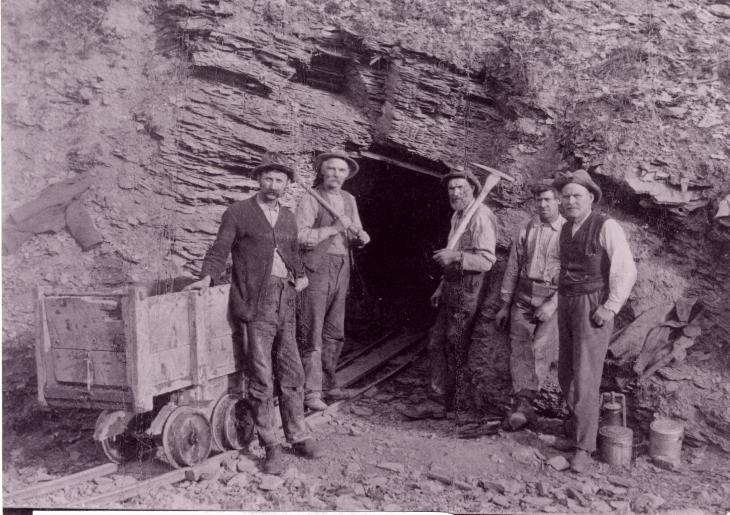
It’s a topographical map, with dark brown highlights and lines twisting and turning ophidian-like. Glancing at the legend at the bottom, Jules sees that the scale is one inch to one thousand feet. The thickest line ends near a mountaintop and has a star at the terminus. A small lake is depicted nearby. It looks familiar, but he thinks that’s unlikely.
The weirdest part is the picture of a woman in an oval frame in the bottom right corner. It looks like it’s not meant to be there – as if it was added later on. Only the head and shoulders are visible. She is staring at something to the right of the photographer. The eyes are dominant, wide and shaded by fear. The non-smiling mouth makes him think of the Mona Lisa. From the hairstyle, headband and clothing, Jules thinks the picture might be from the 1970s because it reminds him of photos he’s seen of his mother when she was younger. But checking the legend, he notices the date: July 26, 1902. The hairs stand up on the back of his neck. Today is July 26, 2002. A hundred years to the day.
The coincidence of the dates is not lost on him. He senses the map is telling him where he should go. Bending to study the details more closely, he sees why it looks familiar – he recognizes the jagged coastline he’s followed so many times. It’s the Bay of Fundy, and this is the old mining trail now situated in Fundy National Park. The lake stumps him, though. To confirm his suspicion, he opens the hiking book to the proper section and traces the trail to find that he is correct. He can see how the roads line up with the topography of the terrain. They have to be the same. Only, in the book, the lake is not there. That settles it. He’s going to go find the lake on the map.
Looking around casually, he sees no one is watching him. He carefully refolds the map, places it between the pages of his own notebook, and returns the book to the shelves. He’s not a thief, but he feels compelled to take it with him. A pang of guilt makes him feel like a bandit though. So, he stops at Don’s Printing Service to have a copy made of the map and then he returns it. He stops at the grocery store for some nuts and berries, oatmeal and raisins. Back home, he makes his own gorp. Once that was done, he packs and is ready to leave first thing in the morning.
Next day by noon, Jules is sweating profusely in the midday heat. A red polka-dotted handkerchief is tied around his head. Clad in new hiking boots, which he curses because they’ve made a blister on the back of his heel, rugged walking shorts and a black T-shirt, damp with his perspiration, that says Kindness is Contagious in white letters, he’s leaning back on a gnarled and knotty birch tree, trying to catch his breath. Normally he’d be stopping more often, but an inner urge propels him to find this lake. Breathing deeply through his nose, he smiles at the aroma the forest offers: the decaying leaves, the scent of pine sap, the pleasant rot of dead wood. Checking his watch, he estimates another hour before he’s there. Taking the bag of trail mix from his pack, he gnaws on the contents to satisfy his hunger pangs and carries on. Birds cavort overhead, trilling their love songs or warnings into the emptiness. Crows caw at his intrusion. Small animals enter the path and are startled by the presence of a strange biped. All of it has a calming effect on him, but some of his troubles still nag at him like the blister on his heel.

The last section of the trail is like a tunnel. Fingers of maple, poplar and oak stretch overhead from both sides, toying with each other to create a living canopy. The path is dappled from the slivers of the sun that penetrate the thick foliage. As Jules crests the last rise, the tunnel opens to a clearing overgrown with long grasses and young shoots. Jules escapes the shadows and their cool caress and walks into the sunlight, relishing the warmth. But there’s no lake. He checks the map, certain he’ll see a sign that says, “You are here.” Disappointment causes him to frown. Tired now, he decides to rest for a bit and make a more substantial lunch later. Dropping his backpack, he leans it against a fallen tree covered with moss and forest debris. Sitting on the ground beside it, he leans his head back and closes his eyes, meaning to momentarily bask in the sun’s golden glow before eating. Fatigue is greater than hunger and he falls asleep.
Waking to the sound a coyote howling in the distance, he squints at the sun, which seems to be in the same spot in the clear sky as when he fell asleep. Rubbing his eyes, he tries to focus, but all he sees are sepia tones. The tree he was leaning on is gone. He’s lying on the grass and his backpack has fallen over. The clearing is much larger; the trees nearest him, much younger. He sits up and shakes his head, thinking he’s still asleep and dreaming, but nothing changes. Wiping the sleep from the corner of his eyes, the reality of the setting unsettles him. Goosebumps pepper his flesh; his heart pounds in his chest. This is not where he fell asleep. Nothing is the same. Even the tunnel he had emerged from earlier is not yet formed; the limbs have not reached each other. He thinks out loud:
“This is strange. I have to be dreaming.”
Pinching his leg, he feels the pain; he must be awake. A need to urinate gets him moving. While relieving himself, he keeps looking over his shoulder, eyes darting at any suspected or imagined movement. Things are the same, but not the same. Why can’t he see other colors? It’s like looking at the map. He spies another path, partially hidden by the branches of a young sycamore tree. He stares, trying to recall if it was there before but can’t remember. Wandering over to the trail, he’s surprised to see it is well worn. Checking that his pack is still where he left it, he hesitates. Something nags at him to stay put. An eerie feeling comes over him as if he won’t like what he finds. Yet the urge to see where it leads is compelling. Something beckons. Against his better judgement, he pushes the young tree aside and cautiously enters the track.

The path is mostly downhill, the walking easy. He keeps rubbing his eyes, hoping to clear the sepia tones. After a few minutes, he follows a bend and a lake is soon visible. He thinks it’s the one in the old map. At first all he sees is the blinding sparkle of the sun glistening off the dimpled surface. Approaching the end of the trail, to his surprise, colors slowly return to the surroundings. The fear he initially felt dissipates, and the jitters leave his body. The white and brown boles of the large trees are the only break from the verdant splendor of leaves and grass. The lake is as blue as the cloudless sky. With the heat pressing down on him, a body of water has never been so inviting. It calls to him, a voice in his head, soft and mellow, urging him in.
The sun grows hotter, his clothes cling to him. He looks around and feels foolish for doing so. He doubts there is anyone about. Removing all his clothes, even his underwear, he wades into the cool, refreshing water. The bottom is silty, and soft mud squishes between his toes. He craves to go deeper but is nervous of swimming alone. Almost up to his neck in the water, a peace comes over him that is unexplainable, an intense sensation, like an orgasm or that first hit of marijuana, the consciousness of mouthwatering chocolate. He forgets everything that has been troubling him and a singsong voice startles him.
“Come in. Come deeper. Let me hold you.”
The tone is mother-like, melodious and tender. He looks around – three hundred and sixty degrees – but sees no one. Pushing himself off the bottom, he dives in and goes deep, maybe ten to fifteen feet down. Looking up, he sees rays slice the surface and marvels at the sunlight refracting in the water, like a curtain slowly opening. He needs to breathe, but before he propels himself upward, he glances to the depths and sees what looks like a porcelain arm waving to him. Thinking it some kind of fish he resurfaces and notices that the sun has settled in the west, as if several hours have passed since he dove in. But that’s not possible. Is it?

Looking east, he sees dark billowing clouds roar through the sky like steam engines. An overwhelming urgency compels him to set his tent up before dark, gather some wood for a fire. He paddles toward shore, but it doesn’t come closer. He’s pushing with his arms and kicking, but he’s not going anywhere. Turning on his back to rest, he feels something grasp his leg, like a hand, and a penetrating fear engulfs him. Just before it pulls him under, he gulps in a large breath. Down he goes. He’s fighting the downward pull until the voice comes back, soothing, beckoning.
“Relax. Give in to the depths.”
Mesmerized, he gives up his struggle. Mere seconds later, he’s staring at a porcelain statue covered with algae. He realizes it is the body of a woman. His struggle has disturbed the sediment in the water and visibility is poor. His lungs burn; he needs to breathe. As he stares at the figure, the face becomes clear. He screams silently into the water. It’s the woman in the picture on the map.
July 26, 2027
Debbie Foster is at the local library. She and two friends are visiting from Ontario and want to go hiking while they’re vacationing in New Brunswick. The librarian leads her to the travel section and digs out a copy of Hiking Trails in New Brunswick. Debbie thanks her, and waits until the lady returns to her desk to flip through the pages. Halfway through, a map falls out on the floor. The first thing Debbie notices when she opens it is the odd sepia color. On the bottom, looking out of place, is a photo of a young man with round cheeks, wavy hair and black glasses.
Thank you for visiting today. I hope you enjoyed the story. Would love to hear your comments.

August 1, 2020
New Brunswick Author, James A Shaw.
Jim Shaw is the author of The Secrets of the Damned series and has a new book in the works of a different series. We met through JJ Carrier’s FB page – New Brunswick Independent Author’s Association. Jim is an active member of the group and we are fortunate to have him as our guest this week.
He has agreed to a 4Q Interview and is sharing as Excerpt from A Father’s Legacy.
I have been penning my lies for over thirty years now. I live in Woodstock, New Brunswick, which is in Atlantic Canada. My first series is Secrets of the Damned, and it is based exclusively in small town New Brunswick. My second series, The Legends of the Seventh One, is set somewhere else, in a galaxy torn by war. I have a passion of the written word that I inherited from my Mother, combined with the keen imagination I inherited from my Dad. My books have been sold as far away as Europe and even in Iraq.
4Q: Lets talk about The Secrets of the Damned. Vampires and other scary things. Tell us briefly about the series.
JS: Secrets of the Damned is very near and dear to my heart. It is my first series that will eventually consist of three novels and one spin off. Here is a fun little jimfact, SOTD started out as a creative writing project. While attending NBCC Woodstock in 1987, in English class, we were asked to write a story, any story we wanted, so long as it met all the stipulations in the guidelines. So, we got the assignment on a Friday, and I went home and wrote it over the weekend. The actual story I wrote was the intro to the second Secrets of the Damned novel, Forbidden Dreams.
It was about a couple boys out late at night investigating a notorious haunted house. In this ‘story’ the mansion was as much a character as the two boys creeping around in the shadows as they explore the old house. It was about twenty pages and I thought that was the end of it. So, on the following Friday, we all were instructed to pass our stories around for everyone else in class to read. We were all to write our thoughts and comments on the bottom of the stories. The most consistent comments I was getting was in the form of questions asking me where the rest of the story was. I thought that was odd because I really thought what I had written was complete. But I obliged my classmates and started writing a chapter a week. Of course, the story has changed and mutated several times from those early drafts, to the finished story that you can get today either on Kindle, Audible, or hardcopy on Amazon. The stories I had envisioned were three in number, each about a vampire, the damned, each having a secret they protected at all cost. Around that kernel I wrapped the human stories. They are very much stories written inside larger stories, kind of like a smile hidden inside a frown. Eclipse fans beware my vampires do not sparkle, and they do not fall in love with their food. If you do buy them, you are in for a fun roller coaster of a ride, and you never quite know what will happen next. Promise.
4Q: What draws you to this genre of writing and reading?
JS: Who doesn’t like a good scare every now and again? I sure do, yet there is one thing common to all the genres I write in, which is freedom. The over the top genres, like Thrillers, Sci-Fi and Fantasy offer the writer a wide latitude to explore the big questions we as humans often must face over the course of our lifetimes. Now, do not misunderstand me, I am not trying to sound smug. I am not offering the readers of my books any profound knowledge that will lead you to nirvana. Nothing that grand, the ‘big’ questions I explore are questions I sometimes have wrestled with or more to the point questions my characters are struggling with and need my help to explore them more fully and completely. For example, in, A Father’s Legacy, first book in the new series, one of the main characters Marcus, struggles with who he feels he is and who everyone expects him to be. All his life he has been told of the great deeds he will accomplish, and ultimately how he alone will save the galaxy. Yet in his heart of hearts he does not feel worthy or capable of any of it. We the readers get to follow along as he navigates his world in search of who he really is.
4Q: Every new guest on the Scribbler gets asked this question. Please share a childhood memory and/or anecdote.
JS: Well the first thing that comes to mind, is kind of a circle. When Star Wars, Empire and Jedi first came to the big screen, my sister took me to all of them. Then when Mr. Lucas brought those movies back to the big screen as ‘special editions’ I took her children to them. It is kind of the Sci-Fi circle of life so to speak.

4Q: Your first book in your new Legends of the Seven Sons series is on the shelves now. Titled A Father’s Legacy. What can we expect when we pick up a copy?
JS: Well this new series is a departure from the Secrets of the Damned, and I have pivoted from writing Thrillers to Sci-Fi. They both still have a healthy does of Fantasy mixed into them, guess it would not be me if they did not. It is defiantly a series, and by that, I mean it has always been one huge expansive story meant to be told over the span of several novels. It really is just too big to be told any other way. In this series I wrestled with some big themes, like the Manifestations of prophecy, and belief, both in ourselves and in others. What exactly fuels that belief? Proof for most of us is subjective at best, don’t you think? All this is set against a galaxy shattered by a decade’s long war and the politics that drives the beast of human conflict. What if you had been told all the days of your life that you were destined to be the savior of the galaxy and the older you got the more you doubted everyone around you. You doubt yourself even. Marcus, the main character is struggling with this very thing. His story alone could not be contained in three hundred pages, not even four hundred I suspect. But rest assured over the course of the series we do eventually get to the bottom of it. We also get to the bottom of Haughn and Princess Aurora’s love story. We also see how Dane Torrek puts his own plans in motion.
This first novel is exactly as it says, ‘an introduction’, a rock thrown into a pond. The story rides on the ripples. I intended it to be your introduction to this galaxy, present to you the background of the story, and introduce you to some of the main characters complete with what drives them to do the things they do. Money, love, power, revenge, not everyone wants to be a hero, or do the right thing even. By the time you reach the end of ‘A Father’s Legacy’, you should have a fairly good idea what makes them tick as people trying to move and exist in their worlds. Each one of them rides the ripples in a different way, each hoping for different results. The cliff hanger ending was entirely done on purpose, as was front loading the novel.
In the second novel, ‘The Stone Empress’, our characters, by now your friends, will be questing for the secrets they found under the statue of Bichon DaVue. The war will intensify, and the young Emperor will assume his thrown and begin his own quest to find and kill the man he believes killed his father. Marcus will continue to struggle with his identity and reluctantly agrees to take his sister Princess Aurora under his wing, and the marriage is put off by circumstances out of Haughn’s control.
4Q: We see that, like many other authors, you are offering A Father’s Legacy, as an audiobook as well. Tell us about this experience.

JS: All my work has been turned into audible books. I can think of no other way that I would want my work showcased. I have a profound and deep love for the written word spoken aloud. This I think goes back to my grade nine English teacher, Mrs. Thomas. She would read to us, the whole class, for hours. I loved every minute of it! So, all you guys and dolls who love my audio books, you can blame her,
July 26, 2020
Award winning Author Tosca Lee of Lincoln, Nebraska.

The Scribbler is pleased to do a series of guest appearances in conjunction with Creative Edge Publicity of Saskatchewan, Canada. (See below for more of Creative Edge)
This month our featured guest is Tosca Lee. When you visit her website, you are greeted by the following:
“ABSOLUTELY RIVETING! TOSCA LEE IS A BORN STORYTELLER.” – J.D. Barker, internationally bestselling author of The Fourth Monkey.
Author of eleven bestselling novels, Tosca Lee has garnered an amazing number of awards and accolades for her writing. Her first novels solidified her reputation for thorough research and biblical interpretation. Moving on to adult thrillers, her supernatural suspense novels again received many starred reviews and high acclaim.

“Reviewers praise her lyrical prose, emotive settings and historical detail. Her thrillers, which feature female leads, are consistently praised for their strong heroines and breakneck pacing.” – from Wikipedia.
The Scribbler is privileged to have Tosca as our guest. She has graciously agreed to a 4Q Interview and is sharing an excerpt from The Line Between.
Tosca Lee is the award-winning, New York Times bestselling author of eleven novels including A SINGLE LIGHT, THE LINE BETWEEN, THE PROGENY, THE LEGEND OF SHEBA, ISCARIOT, and the Books of Mortals series with New York Times bestseller Ted Dekker. Her work has been translated into seventeen languages and been optioned for TV and film. A notorious night-owl, she loves movies, playing football with her kids, and sending cheesy texts to her husband.
You can find Tosca on social media or hanging around the snack table. To learn more, please visit toscalee.com.


** Tosca has recently received news that The Line Between and A Single Light had both won International Book Awards—The Line Between in mystery/suspense and A Single Light in Science Fiction. The two books are also up (against one another!) for the Killer Nashville Silver Falchion award in Science Fiction.
Congratulations Tosca!
4Q: Let’s dive right into your latest work, Tosca. I’m referring to A Single Light, which is a follow up to your bestselling novel, The Line Between. The novels consider your heroine’s survival in a post apocalyptical world after a worldwide pandemic. An interesting premise, considering the trying times we are experiencing now. Tell us about the story.
TL: It’s definitely been a little surreal living through a pandemic this year after writing these two books, for sure!
In The Line Between an extinct disease has reemerged from the melting Alaskan permafrost to cause madness in its victims. There is no cure, it is always fatal, and now it’s spreading. For 22 year-old cult escapee Wynter Roth, it’s a terrible time to start over.As Wynter struggles in a world she’s been taught to regard as evil, she finds herself face-to-face with the apocalypse she’s feared all her life—until the night her sister shows up at her doorstep with a set of medical samples. That night, Wynter learns there’s something far more sinister at play and that these samples are key to understanding the disease.
As the power grid fails and the nation descends into chaos, Wynter must find a way to get the samples to a lab in Colorado. Uncertain who to trust, she takes up with former military man Chase Miller, who has his own reasons for wanting to get close to the samples in her possession, and to Wynter herself.
A Single Light starts up right where The Line Between ends. Wynter and Chase have taken refuge in an underground silo with 60 others to whether the pandemic and wait for the vaccine Wynter had a hand in creating. But when they reemerge into the world, nothing is as they expected.
4Q: I’m interested in your first novels, Demon and Havah, both offering accounts of human creation and the beginning of mankind as seen through the eyes of Lucian – the fallen angel in Demon and Eve - the first woman, from Havah. Where did the inspiration for these stories come from?
TL: Demonwas a story I wasn’t really expecting—it just sort of came along one day while I was driving. I was part of an online gaming community and was trying to come up with a fun new character. I considered writing an angel, but then thought that was kind of boring. Then I found myself wondering what it would be like to be angelic and fallen. Would I go around trying to tempt people to do bad things? And why—just for kicks? That seemed too shallow for a truly complex, spiritual creature. There had to be more to it. Suddenly, I didn’t want to create a fallen angel role-playing character… I wanted to write the story of such a being.
I wrote that story very swiftly, over the course of about six weeks. But it took me many years to sell, even with the help of an agent. In between, I found myself wanting to take a stab at biblical fiction. I was very inspired by one of my favorite books, The Red Tent. I hadn’t ever seen a book written from Eve’s point of view and thought that she has been vilified for so long, it’d be really interesting to see what her life and motives might have been like. That’s how I approach any maligned character—thinking that there’s more to the story.
4Q: Please share a childhood memory and/or anecdote.
TL: I was always making things up as a kid, telling stories, entertaining my little sister, mostly. One time, I convinced her that her Raggedy Ann doll was possessed by Satan. When she wasn’t looking, I got my dad’s dental floss and rigged it up in the crook of her door so that when she closed it and was alone and I pulled on the strings, it moved. This blood-curdling scream came from her room and I remember thinking that was the greatest gag ever. Except that I haven’t seen able to look at Raggedy Ann the same since.

A few years ago, when I was visiting her in Boston, where she’s a physician and med school professor, I went down to the guest room to go to bed. As I pulled back the covers, there was a Raggedy Ann doll tucked beneath the coverlet. I practically heard the Psycho sound track in my head at the sight of that ropey red hair. :D
4Q: The three novels in the Book of Mortals series was co—written with another bestselling author – Ted Dekker. When you write with another author, is there a fear of losing your own voice? Please tell us about this experience.
TL: That’s a really interesting question. And for me the answer is that it was never about retaining or losing my voice, but finding a way to blend it with another author to create a new one. Before our collaboration, I had just come off of writing Havah, which has a very lyrical and literary sense to it. Ted was writing serial killer thrillers. So we were really on opposite ends of the spectrum, voice-wise. We worked very hard and went over our prose again and again to really get a good blend until the voice was natural, appropriate to the genre, and hopefully transparent enough to the reader that they could focus not so much on the language but the story itself.
4Q: Favorite authors? Novels?
TL: One of my all-time favorites is The Mists of Avalon by Marion Zimmer Bradley. It’s the novel that made me want to try my hand at writing; it gave me so much enjoyment and wonder every time I read it, I wondered if I could do the same for someone else.
These days I’m blessed to count so many gifted authors as friends, so it’s really hard to answer this question. But I can tell you what I’m reading and loving at the moment, and that is Opium and Absinthe by the brilliant Lydia Kang and A Good Family by amazing debut author A.H. Kim. I highly recommend them both.
4Q: Several of your novels are in development for TV and film. This must be exciting! What can you tell us about them?
TL: Unfortunately, this pandemic has kind of slowed everything in Hollywood down, so we’re a bit in stasis for the moment. We do have a new production partner for The Progeny series and we have an incredible showrunner for The Line Between that I’m really excited about. Hopefully we’ll have more news to share soon.
4Q: What’s next for Tosca Lee, the author?
TL: I’m between contracts at the moment, but wrapping up a quick rewrite on a co-authored WWII novel that we hope to find a home for soon. And I’m thinking of finally getting the writing book I’ve had on the back burner done, hopefully this year.

4Q: Anything else you’d like to tell us about?
TL: Some fun items: A Single Light releases in paperback August 18. But right now through the end of the month it’s actually on sale in eBook for $1.99. So is The Progeny. Also, The Legend of Sheba, my novel about the Queen of Sheba, is up for grabs right now in a Goodreads giveaway here until August 11: https://www.goodreads.com/giveaway/enter_choose_address/309709-the-legend-of-sheba-rise-of-a-queen.
An Excerpt from The Line Between.
(Copyright is held by the author. Used with permission)
ALASKAN INTERIOR, JUNE
The farmer moved into the woods looking for his pigs.
“Jilly! Jilly!” he called. He’d named the sow after his first wife, who’d grown about as fat as the woolly Hungarian blonde, if not quite as hairy. But unlike his ex-wife, Jilly usually came when called, which meant it must be time. The sow was expecting her third litter, and for some reason beyond his understanding, every pig in the sounder had to traipse off into the forest with her to make the farrowing a community event.
He stepped over fallen tree trunks and bent to duck several others. There wasn’t a single tree in this patch that was plumb. “Drunken forest,” the climate change people called it—a more subtle sign of melting permafrost than the sinkholes in town. Aside from the new buckles in his road, he didn’t mind much; warm weather meant more growing days for his new garden. Soon as the pigs got done rooting up this patch, he planned to clear the fallen trees and plant some vegetables. Just enough to beat back the high cost of fresh produce a little, maybe even sell some at the Tanana Valley farmers’ market. Who knew—maybe in a year or two he’d look into growing some midnight sun cannabis.
“Jilly girl!” he called, nearly tripping over what he thought was a root until he recognized it for what it was: a bone. He squatted down, tugged, and came away with half a shoulder blade. Caribou, by the size of it. Thing still had gristle on it, leathery and black except where a hunk had been freshly torn away. God only knew how long that thing had been buried in the mud.
He stood up and kicked around, unearthing what was left of the carcass, which wasn’t much. One thing he’d learned, the Mafia legend held true: a dead body wouldn’t stand a chance against pigs. Nor did living chickens that wandered too close to the pen. He’d learned that the hard way.
He wandered deeper, hacking at the fallen trees with the shoulder blade until he finally found Jilly—and Romeo and Petunia and Walter—nestled in the pine needles with a fresh litter of blond-haired piglets. Ten in all. Well above the European average and two more than her last litter.
He patted Walter when he pushed his snout into the farmer’s hand and let him have the shoulder blade, already doing the math in his head.
It was going to be a good year.
TWO DAYS LATER, the farmer found Petunia milling around the yard with a bloody stump for a tail. She ran when he tried to inspect the wound, and only Romeo came when called. The farmer’s first thought was that someone—or something—had terrorized the animals. A wolf, maybe, or even a bear.
After retrieving his shotgun from inside the house, he struck out for the wood.
He found Walter sprawled near the base of a leaning tree, snout bloody, corpse bloated. Just beyond him lay his prized sow Jilly, belly torn open, her piglets savaged around her.
CHAPTER ONE
IOWA, SEPTEMBER
Conventional wisdom dictates that there’s an insurmountable divide—an entire dimension of eternity and space—between Heaven and Hell. Lucifer managed to make the trip in nine days, at least according to Paradise Lost. That equates to a distance of about 25,920 miles, assuming standard rules of velocity.
But I can tell you it’s closer to a foot and a half. The distance of a step.
Give or take an inch.
Magnus stands near the gatehouse, shirtsleeves rolled up, collar unbuttoned beneath his brown vest. He nods to the Guardian in the booth and the industrial gate begins its mechanical slide. There’s a small door to the side of it just large enough to admit a single person, but I won’t be leaving by the Narrow Gate. My departure must be a spectacle, a warning to those assembled behind me.
I can feel their eyes against my back like hot iron. The glares mottled by anger and fear. Sadness, maybe, but above all gratitude that they are not me.
Two Guardians stand at my sides ready to forcibly walk me out in case I balk or my twenty-two-year-old legs give out beneath me. I glance at the one to my right and swear he looks impatient. Hungry, maybe; it’s just before lunchtime. I’m crossing into eternal damnation, and all he’s thinking about is an egg salad sandwich—and not even a good one. It’s Wednesday, Sabbath by the solar calendar. Rosella is managing the kitchen, and that pious sandwich is full of chickpeas without a single real egg in it.
The gate comes to a stop with an ominous clang. The road beyond is paved with gravel, a gray part in a sea of native grass strewn with gold and purple flowers in stark contrast to the carefully and beautifully manicured grounds behind me. A meadowlark sings somewhere nearby as a combine rumbles in the distance.
I grip the plastic bag of my sparse belongings: a change of underwear, my baby book stripped of its photos, a stone the color of sea glass. Sweat drips down the inside of my blouse as I stare out at that feral scape. At that barren drive through untouched prairie that leads to the road half a mile away.
A car idles at the corner, waiting for me.
Don’t look. Don’t glance back. That’s Pride talking, a voice so faint this last decade I wasn’t aware it was still in there. Still, I turn. Not because I need a parting glance at the compound I called home for the last fifteen years or even Jaclyn, my sister. But because I need to see her.
My niece, Truly.
I scan the nearly five hundred Select assembled across the broad drive until I find her small form near the front, her hand in Jaclyn’s, curls wafting around her head in the breeze.
I’d planned to mouth the words I love you. To tug my right earlobe in our secret sign so she’ll remember me long after she’s told she can never speak my name again. To fight back tears at the sight of hers, to combat her confusion with love.
Instead, my heart stops.
She’s glaring at me, her face pink, growing redder by the instant. I open my mouth—to say what, I don’t know—but before I can, she tears her hand from my sister’s and runs away, disappearing into the assembly.
“Truly!” I gasp, and stagger a step after her. The Guardians grab my arms.
“No. Wait—Truly!” I twist against them, plastic bag swinging against my thigh. I can’t leave her like this. Not like this. It wasn’t supposed to happen this way.
None of it was.
I shift my gaze to my sister, where she stands beside the six Elders. Her cheeks are hollow, features chiseled far beyond her twenty-seven years.
“What did you say to her?” I shout as I’m jerked back around and hauled toward Magnus, who stands before the open gate, this side of that invisible line.
“Wynter Roth,” Magnus says, loudly enough for those behind us to hear. Which means he’s basically shouting right at me. Gone, the brown-and-gray scruff that was on his chin yesterday. I can smell his aftershave from here.
“Please,” I whisper in the space between us, trying to snag his gaze. But he stares past me as though I were a stranger.
“Because of your deliberate, prolonged disobedience . . .” His words carry to those behind me even as the breeze whisks mine away.
“Just let me say good-bye!”
“. . . including the sins of idolatry, thievery, and the willful desire to harm the eternal future of those most vulnerable among us . . . because you will not hear the pleas of the brethren and refuse repentance, you are hereby delivered to Satan for the destruction of your flesh.”
I hear the words as though from a distance. I’ve seen and heard them spoken before—I just never thought they’d be aimed at me. So this is it. There will be no good-byes. And I realize I hate him.
Magnus lifts up his hands. “And so we renounce your fellowship and cast you out of our holy number even as we pray for the restoration of your salvation, which you forfeit this day. Now, as it is bound on Earth, so let it be bound in Heaven.” He lowers his arms as the assembly echoes his words and says, more quietly as he meets my eyes at last, “You have broken our hearts, Wynter.”
He moves away before I can respond and the Guardians walk me to the line as I glance back one last time.
But Truly is gone.
I face the gravel drive before me.
One step. That’s all it takes to span the distance of eternity. Welcome to Hell.

Thank you, Tosca, for being our special guest this week. Wishing you continued success with your writing.
Thank you!!
For all you wonderful readers that want to discover more about this talented author and her writing, please follow these links:
www.facebook.com/AuthorToscaLee
https://www.bookbub.com/authors/tosca-lee
https://www.amazon.com/Tosca-Lee/e/B001JPCC42%3Fref=dbs_a_mng_rwt_scns_share
Creative Edge is a dynamic Publicity Company based in Saskatchewan. Founder and co-Owner Mickey Mikkelson made this statement:
Creative Edge specializes in elevating the public profile of authors and artists through such means as (but not limited to) book signings, presentations (libraries, schools, conferences, businesses, etc.), involvement in applicable events, media interviews (including podcasts and print media), and soliciting of reviews from influential reviewers and bloggers.

July 11, 2020
Editor and Songwriter Karin Nicely of Florida, US.

Something unique for the Scribbler!
We are most fortunate to have Karin, a full-time editor, as our featured guest this week. Karin has worked as an editor for some of my author friends, who have been guests on the Scribbler, and we met through them.
One of the difficult decisions when an author is finished with his/her manuscript is, who will the editor be? Who can I work with, and trust, to polish up my story? With so many editing styles and choices, it’s a challenging decision.
Karin has kindly agreed to a 4Q interview and is sharing lyrics she wrote for two songs she recorded and performed with the gothic/progressive-rock band Persephone’s Dream.
Karin Nicely is an Ocala-based editor, writing coach, promotional writer, and independent publisher with more than twenty-five years’ experience in her field. Originally from Pennsylvania, she earned her Bachelor of Arts with Honors in Professional Writing and has worked with international publishing houses such as Prentice Hall and Wiley. Ms. Nicely has also been a marketing consultant for SAE International (the Society of Automotive and Aerospace Engineers) and has written for the APEX-award-winning business-to-business publication Spotlight on Safety.
Now specializing in developmental and line editing for independent authors throughout the United States, Ms. Nicely, owner of Seren Publishing Co., Inc., is also the editor of quarterly magazines, presents customized workshops for writers, and writes advertising and public relations copy for corporate clients.
Ms. Nicely’s other interests include music, horses, dance, swimming, paddleboarding, history, and creative writing.
4Q: What inspired you to work as an editor?
KN: First and foremost, I have always loved literature. I began reading at a very early age and enjoyed books about many different subjects—everything from fairy tales to archaeology to biology. I was that nerdy kid who wished I could spend every recess in the school library. As I got older, I not only read for knowledge, but also loved the sound of certain words and phrases and what images they could create. I decided to major in English Writing in college, and when I transferred to a different school, its version of that degree was called Professional Writing, with combined training in practical, marketable writing skills with courses in business and graphic design.
For years, I did (and still do) promotional writing for corporations and nonprofit organizations. And much of that work involved extensive revision of previous materials. So in essence, I had been editing all along and knew that I truly enjoyed the process. Soon, I began editing and proofreading for a Chicago-based publishing company that handled outsourced projects from Prentice Hall, Wiley, and other large publishing houses. The projects I worked on were all nonfiction at the time—business law textbooks, CPA exam books, programming language resources, etc. Much of it was quite dry, but it taught me how to go meticulously through text, looking for minute mistakes and inconsistencies.
When I moved to Florida several years ago, Becky (Pourchot) Magnolia’s Open Souls was my first foray into editing novels, and I absolutely loved it. Since then, I’ve had the opportunity to edit everything from paranormal romance to action/adventure to science fiction. I also continue to edit all types of nonfiction as well
4Q: There are many types of edits. Can you please, briefly, explain the important issues an author faces when trying to decide which route to go?
KN: It is important for an author to first think about their goals and expectations for their written work. Will it be a memoir to only be shared with family and friends? Is it a short story to be submitted to magazines or contests? Will the book be used as support material for training or lectures? Or is it a novel that will be marketed and distributed across the globe?

In other words, how important is it that the end result is as professionally prepared as possible? If the book/story/article is to be promoted at all, chances are it will need more than just a light copyedit.
Another consideration is whether the writer is just starting out or is a seasoned author. With some clients, I act as a writing coach, consultant, and developmental editor, working with them right from the beginning stages of their project to help them develop characters, outline plots, and keep on track. With other clients, I need only see the manuscript after they have completed it and it is ready for line editing.
But whatever level of editing is needed, I feel it is crucial to not change the author’s own style and voice. One of the best compliments I consistently receive is when my clients say, “It still sounds like me!”
4Q: Every new guest to the Scribbler gets this question. Please share a childhood memory or anecdote.
KN: When people learn that I grew up on a Quarter Horse and beef cattle farm, they automatically think I’m a country-music girl all the way. But I will tell you one of the earliest experiences of my young life that probably made me want to belt out rock songs, instead.
When I was about four years old, my mother’s two younger brothers had a rock band called the Wannamaker’s Two-Story Garage, and we were going to see them play. I remember filing into a dark church basement and finding room to sit on the cold, crowded floor. The music filled my ears, and I looked at the stage in awe. There were my two long-haired, bearded uncles amid the smoky, pink and blue and purple light. One played guitar, and the other sang and growled into the mic.

Even then, I loved to dance, and I couldn’t help but move to the beat of the loud drums and pounding bass. But I remained sitting, moving my hands, tapping my foot, nodding my head. I was so shy I was afraid to stand up and dance in front of all those people around us. But I wanted to so badly.
My mother, also a musician and composer, turned around at that point and said, “Go ahead! You can get up and dance if you want. It’s okay.”
And so I did.
Years later, as I often gripped the mic on a smoky stage full of multicolored light, I would look into the audience and think of that night I danced to the raucous, rebellious, melodious sounds.
4Q: As an editor, one would assume you are also a reader. Favorite authors and/or novels?
KN: Flannery O’Connor. I am drawn to her use of realism and her insight into human nature. In fact, my honors thesis in college was entitled “Kierkegaardian Existentialism in Flannery O’Connor’s Short Fiction.”
Marion Zimmer Bradley is another author whose works I never tire of. From her Darkover series to the Avalon series, I think I’ve probably read them all.
J.K. Rowling. When my young cousin first became a Harry Potter fan, I thought it was just some run-of-the-mill kids’ book. But when I began reading Rowling’s novel to my younger daughter, I soon realized that this was not just a simplistic children’s story. Rowling’s incorporation of themes and vocabulary from Greek and Roman mythology along with historical references and mature social commentary fascinated me. The Harry Potter novels were also wonderful tools I used to help increase my daughter’s vocabulary.
As for poets, I would have to say Sylvia Plath, Emily Dickinson and Maya Angelou.
4Q: Please tell us about your songwriting and performing your own music.
KN: I would say I wrote my first actual song when I was about fourteen, and I’ve sung with bands since I was fifteen, but I didn’t begin collaborating with other musicians to write, perform, and record songs until I was in my twenties. I’ve studied voice and performed classical music, blues, musical theater, country, rock, and sacred music, but most of my writing has been in the alternative/gothic/progressive realm.
I can get truly obsessive when writing or recording songs. Often, people will ask me about the songwriting process, and in my experience, it has really never followed a specific formula. Sometimes, I or another band member would write lyrics first; other times, the music would come first. Once, the guys were just messing around with a catchy riff, and on the spot, I wrote the entire lyrics to “Far Side of Eden” (see below) in about fifteen minutess.
I loved performing in all those different places (from Boston to Atlanta) and truly miss doing it on a regular basis. It was always interesting to talk with audience members after a show and find out which songs they especially liked or which lyrics resonated with them. I do still sing with a few local groups (country and sacred music) once in a while and have been working with a local songwriter, as well.
4Q: Is there a general rule of thumb that a new author can use when trying to form a budget for editing. An average cost? Or does it differ from each manuscript?
KN: It does differ somewhat for each manuscript, but calculating 3.5 to 4 cents per word would be a good figure to go by. I generally like to do a sample edit on at least ten pages to get a feel for the author’s style, writing mechanics, etc. However, it is difficult to predict things such as inconsistencies and organizational problems from just an excerpt.
4Q: What advice would you give to a new author when he/she is looking for an editor?

KN: Questions to ask:
• How long has the editor been doing this type of work professionally?
• Is the editor familiar with—and do they enjoy working with—your genre?
• If your work contains profanity, explicit sexual situations or violence, or other subject matter that may be offensive, is the editor comfortable with that?
• Will the editor be available to go over changes, suggestions, and queries with you by phone or video conference (or in person, if local) rather than by email only?
• How many editing passes will be included for the price? (For example, I customarily do two editing passes, with time in between for author review/revision, and a final proofreading before publication.)
• Will the editor be careful to not alter your unique voice/style?
• Is the editor familiar with editing for your book’s intended audience? (This is especially important if the work is for children or a particular technical or professional audience.)

4Q: Anything else you’d like to add?
KN: Because I work primarily with independent authors, I found there was a need for project management along with the editing services. As I also have experience in the design, printing, and marketing fields, it was a logical next step for me to begin helping authors self-publish their works. And recently, I began my own publishing company (Seren Publishing Co., Inc.) so authors would have the option to publish under my imprint.

Song Lyrics by Karin Nicely:
(Copyright is held by the author. Used with Permission)
“Far Side of Eden”
(From the Persephone’s Dream album Opposition)
Crying and crying
Pain out of bounds
Everyone’s talking
But there is no sound
Gaia’s own heartache
As the smoke swirls around
Black rain falling—falling down, down, down
We are living on the far side of Eden
Sickening tempests
From the factories rise
Choking our ambition and
Blinding my eyes
Naked trees dying
By the cruel roadside
Soon our children will have
Nowhere to hide
We are living on the far side of Eden
Wisdom of the ages
Lost in the dust
Of technology’s eruption
As it’s gaining our trust
Bitter winds blowing in
Terrifying gusts
Fed by our growing
Material lust
Pacification
Greets the disgust
As the tide of complacency
Keeps eroding what it must
“Alien Embassy”
(with Persephone’s Dream)
Lyrics inspired by Ian Watson’ novel, Alien Embassy
Wound up tight in protean flight
Sweet Apollo in an emerald bright
Yellow hues in the desert sand
Meet mountain green in Hestia’s hand
Soft illusion, smooth terrain
Pulsar rhythm in an alien brain
Illusion’s prism bends the light
Open a door but close it tight
Hidden agenda in the master plan
Evolution’s always in demand, always
Fear is bound in procreation
Lost to chemical elimination
Consciousness
Sweet caress
Alien addiction to loneliness
Covert flight in Apollo’s night
Dark eludes the lovers’ sight
Knowledge leads to silent pain
Keep on searching till they go insane
Transformation in the fire
Each level only takes them higher
Morning mandala
Lingua franca
Ignore the populist propaganda
Electric arms invade the space
Bend to conform to an alien race
Bend the knee and bind the brain
Bleed till they don’t feel the chains
A leap ahead of ev’ry step they take
Beat them down until they break
Bend the knee and bind the brain
Bleed till they don’t feel the chains
Till they don’t feel…
Technological prison deep
Communication
Wireless sleep
Leave behind the comfort zone
Normative dogma overthrown
Consciousness
Sweet caress
Union is the wilderness
Consciousness
Sweet caress
Addiction to loneliness
Thank you, Karin, for being our special guest this week.

For you readers and fellow authors looking for a contact for Karin, please follow these links:

July 5, 2020
Dear American Brother Author Joe Elder of Calgary, AB.

Mr. Elder is a fan of the Scribbler and after reading a post featuring an Australian author – Lana Kortchik – he reached out to me regarding his debut novel – Dear American Brother. I’m glad he did.
His novel has garnered great reviews and testimonials. I received a copy and it’s a compelling story, well researched, well written.
He has graciously agreed to a 4Q Interview and is sharing an excerpt from his novel.
Joe J. Elder spent his formative years in a German Russian community in Saskatchewan. His penchant for history took him to Germany several times to record the experiences of the relatives who survived the Stalin Era. A tour by train from St. Petersburg to Gulag Camp Perm 36 in the Urals, and 1989/2006 visits to the ancestral villages near the Black Sea in Ukraine were highlights in his quest for first-hand information for DEAR AMERICAN BROTHER. Joe also co-produced and wrote the narration for the acclaimed documentary, Germans from Russia on the Canadian Prairies. Several of his articles have appeared in magazines highlighting Germans from Russia, one winning a prestigious Story of the Year award. He enjoys an active, full life in Calgary, Alberta. His passions are writing, playing sports of all kinds, adventure travel with his wife and, most of all, spending time with his family.
4Q: Let’s talk about your novel. Give us a brief outline of what to expect and what inspired the story.
JE: My maternal grandmother departed Russia in 1908 as a sixteen-year-old, travelling with an older sister who had recently married into a family on the verge of immigrating to Saskatchewan. The next year two other sisters were sent to North Dakota, sponsored by an uncle already living in Harvey. The Russian government was determined to stem the tidal wave of emigration from Russia at that time; the two sisters escaped, on foot, across the Romanian border under the cover of darkness, as they had been denied exit visas. The intensions were to eventually send all members of the family to America, but the father died suddenly the next year, grounding the remaining family.
All this happened long before I was born, but only in my later years, as with many people, I developed a keen interest in my family history, and the difficulties associated with leaving one’s homeland and settling the bare prairies. My grandmother was no longer alive, but during a four-month tour of Europe in 1989, my wife and I managed to arrange a train trip from Vienna Austria to Odessa Ukraine, only 50 KM from my grandmother’s birth place. I obtained permission, partly by downright lying about my destination, to rent a car and drive to the village. The Intourist agent was strict with her directives and several times that day I envisioned spending time in a Soviet jail. Never-the-less, I retuned unscathed to Western Europe, but my desire to tell this story had taken hold of my soul and wouldn’t let go. I felt compelled to seek out the fate of the German-Russian people who were trapped in the Soviet Union and suffered the insanities of the Communist Revolution and later, Josef Stalin.
DEAR AMERICAN BROTHER delves into the tragedy and sorrow of the Soviet citizenry and the welcomed arrival of Hitler’s invading forces, woven into a story of two brothers separated as children, and their desperate struggle to be reunited.
4Q: Your website tells us about your extensive research for the background of the story. A train trip from St. Petersburg, Russia to Gulag Perm 36 in the Ural Mountains. Tell us about that experience.
JE: The story rattled around in my head for years before I began writing in 2002, but I eventually determined that in order to adequately depict Siberia and the wicked Gulag system, I should have first-hand information. By this time I had contact with several of my mother’s cousins who had been deported to Siberia following WWII, but since Glasnost and Perestroika became household words, were now living in Germany. My wife and I visited them in Ludwigshafen for several days and noted their personal experiences. From there, we flew to St. Petersburg and boarded a regular freight and passenger train bound for Ekaterinburg in Western Siberia. After five days, near the former closed city of Perm, we disembarked. With the help of a hotel clerk who understood a smattering of English, we arranged for a taxi and were driven 40 KM to the last operating Gulag political prison in the USSR, now converted to a museum. No one spoke English, however, the grimness of the institution needed no interpretation.
4Q: Please share a childhood memory or anecdote.
I was likely twelve when, after asking a casual question of my mother, I learned that my grandmother had been born near Odessa, in Ukraine. “I thought we were German,” I responded with a bit of disbelief in my voice.
“It’s a long story,” Mother replied. “We’re Germans from Russia. At the time Gramma lived there most of Ukraine was called South Russia, and Catherine the Great had brought in German farmers. Just like when Canada brought in settlers to …” I could sense a history lesson coming and made some excuse about needing the bathroom. I regret that I didn’t stay that day and hear her out. Sixty years later, I still regret it.

4Q: In your opinion, what makes a great story?
JE: A great story needs a solid plot, engaging dialogue, and a protagonist that can walk off the page and join you in your living room.
4Q: What’s next for Joe Elder, the author?
JE: I am working on a sequel, mostly set in Siberia, as my story is not completely dealt with in the first book.
4Q: When you’re feeling most creative, where might we find you when you are writing, your writing habits?
JE: I have my office in a secluded corner of the basement, away from outside distractions, that is, until my wife deems an event to be of significant proportions.
4Q: Anything else you’d like to share with us?
JE: Lord, I already might have said too much.
An Excerpt from Dear American Brother.
(Copyright is held by the author. Used with permission.)
Mama and Loni had already gone to bed when Uncle Heinz arrived home after checking on Aunt Monica’s family in Mannheim. “They’re not happy about the communists’ ruling, either, but everybody’s all right,” he reported.
Grandpa anxiously related to him the solution proposed by the Chornov Civic Council. “Those Bolsheviks don’t know the strength of our Kutschurgan colony,” he said, puffing furiously on his pipe. “We Germans in this area always stick together to the end. Four of us landowners and Philip Klatt are going to Odessa on Monday along with representatives from the other six villages to protest this new land policy. What do you—”
Suddenly, the door porch rattled and Gus Vetter poked his head inside. “Quick, guys. Come see this.”
We dashed down our flagstone path to the gate. A long line of men, rifle barrels glinting in the moonlight, reined their steeds onto Middle Avenue and cantered into the night along Pototski Road. “I bet that arrogant ArshlochKronchin is going out to knock Bauman down a peg,” Gus stated.
Grandpa shook his head. “Benedict’s already got most of Chornov’s men as guards, and a lot of our guns, too, so there’s no way we’d be much help to him.”
Nevertheless, Uncle Heinz and Gus rode to Pototski Estate while Grandpa stayed behind, pacing the floor. He neglected to send me to bed and I certainly wasn’t going to leave the room voluntarily. Peering out the window reminded me of the time Uncle Pius asked our parents if Kurt could go with them to America. I realized that my thoughts over the last few days hadn’t included my brother. Did Kurt still think about us—about me—every day?
Uncle Heinz finally stumbled into the kitchen in the middle of the night. He dragged himself to a chair, his forehead beaded with perspiration. “We didn’t go too close because of the shooting. Then we saw the workers’ quarters go up in flames and …” He put his hands over his face and fell silent.
I hoped that my friend Hubert Bauman was safe.
Grandpa patted my uncle’s shoulder. “Thank goodness Lizbet went back to Elsass after our friend Dieter was called to the army. God help me, who would have thought it’d get this violent? And Heinz, were any of the village men that Bauman hired hurt?”
“Apparently, they grabbed their guns and abandoned their posts when Kronchin’s men rode up and started shooting.”
“Ya, the problem is there’s no other road out of Pototski, except through Chornov. I think we should warn everybody, just in case Kronchin and his bunch want to push their weight around here.” Grandpa turned to me. “Hans, run to as many houses as you can. Start with the Freys and go all the way up our street, then back down Church Street. Heinz, you go the other way. I’ll take the east end.”
Uncle Heinz pulled me to his side. In his eyes, I saw panic barely restrained. “And tell them to hide the women and girls.”
Mist from the pond drifted across the street in eerie black shapes as dawn crept over the horizon. Near the far end of my assigned route Herr Bauman’s carriage, trailed by a dozen armed men, appeared on Pototski Road. Something inside me screamed, ‘Run for home!’ but there wasn’t time. I quickly climbed a linden tree and disappeared among the autumn foliage.
The closed carriage made a wide turn in front of the church and came to a halt below me. I slowly, quietly, climbed higher, my fingers fumbling for grip. The door burst open and two burly men wrestled Herr Bauman from the carriage. His hands were bound behind his back, a torn sleeve of his stained rumpled shirt flapped at his side, his left ear hung loose. Dark red seeped from an open wound on the top of his bald head. He blinked coagulated blood and morning sunshine from his swollen eyes as one of the men forced him up the steps to the elevated luggage platform at the rear of the carriage. Igor Kronchin climbed onto the platform and stood beside the captive. “Kuzma, go ring the church bell,” he ordered one of his men. “And Attila, do you still have that rope in your saddlebag?”
My heart pounded as the one called Attila climbed onto the carriage roof. He knotted the thick rope to a sturdy branch above Herr Bauman’s head and dropped the other end to the platform. When the administrator slipped a crude noose around his prisoner’s neck, my right hand involuntarily clutched my throat.
The ringing church bell attracted the bleary-eyed village men. They jostled with the guards and shouted for the release of Bauman, who appeared confused and steadfastly gazed at the white cross on Saint Gustav’s steeple. Yuri, Oleg, and the other Russian harvest workers banished by Bauman gathered near the carriage, but my friend Ivan stood leaning against a tree at the fringe of the crowd. I saw Grandpa and Uncle Heinz, their heads turning in every direction, but I couldn’t risk calling out to them.
Father Heisser hurried from the rectory as quickly as his arthritic hips would allow, shouting as he approached the carriage. “Keep your men out of my church! And release this man! He is a child of God.”
Kronchin glared down from his position beside Herr Bauman. “There’s no place for your God in the Soviet state, just as there is no longer any place for this ruthless capitalist.”
The mounted men formed a circle around the carriage, forcing back both the villagers and the agitated priest. Herr Bauman teetered on his feet as the nervous team caused the carriage to sway. He tried to grasp the edge of the roof behind him, barely able to stay upright. I prayed someone would undo the noose.
The administrator seized the opportunity to condemn Herr Bauman and all estate owners. “These rich men, these kulaks, are nothing but parasites and must be removed from Soviet society,” he said. He spat on Showman’s dusty boots. “This … this despicable person’s land and all his possessions are now the property of the People. And his family has been disinherited by the government. Anyone who aids them will be judged guilty of this man’s crimes and sentenced to a similar fate—banishment to hard labor in the Arctic.” After a pause, Kronchin’s face opened in a grin. “To save me the bother of taking him to Odessa, who wants to lay the whip to this fine pair of horses? Come on, surely this man has enemies.”
“Ihave reason to do it,” Katya Kurganov screamed. “My Boris was so proud to be your horseman and you wouldn’t pay a measly bribe to keep him out of the army. He died there and you owe him … and you owe his boy Ivan!”
Herr Bauman worked his lips as if to answer her. At the same moment, I heard a distinctive whir and saw a small stone ricochet off the rump of one of the horses in the team. As the frightened animal plunged forward, Kronchin and Herr Bauman lost their balance and tumbled from the platform. The rope around Herr Bauman’s neck emitted an angry hum and snapped taut. The thick tree branch bent under his weight until his feet almost touched the ground, and then it re-bounded, flipping Herr Bauman into the air. A shower of yellow leaves fluttered around his twitching body as he bounced at the end of the rope like a rag doll.
Thank you for being our guest this week Joe. All the best in your future writing.
For you readers wanting to know more about Joe Elder and his novel, please follow these links:
https://www.amazon.com/DEAR-AMERICAN-BROTHER-Joe-Elder/dp/0993993613
https://www.dearamericanbrother.com