Allan Hudson's Blog, page 25
April 10, 2021
Branching Out with Author Susan Bernhardt.

Welcome to the new interview look at the Scribbler. The title – Branching Out – was selected by popular vote from our fans. Hats off to JJ Carrier for suggesting the name.
Our first guest under the new banner is cozy mystery writer, Susan Bernhardt of Wisconsin.
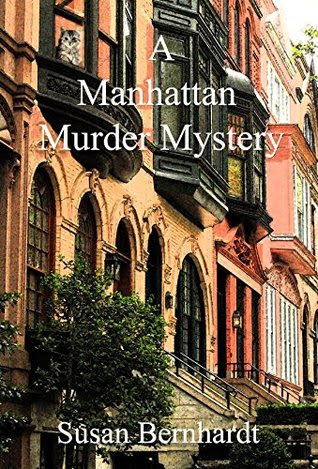
I’m a fan of her writing and recently finished reading A Manhattan Murder Mystery. It’s an intriguing story filled with cool characters and an interesting premise. Read the reviews HERE.
Thank you, Susan, for being our guest this week.
Let’s chat!
Thank you, Allan. I'm excited to be the first guest on your blog's new format. How cool is that!
Allan: Before we discuss your cozy novels, can you tell us how you’ve braved the pandemic we are experiencing? Has it affected your writing?
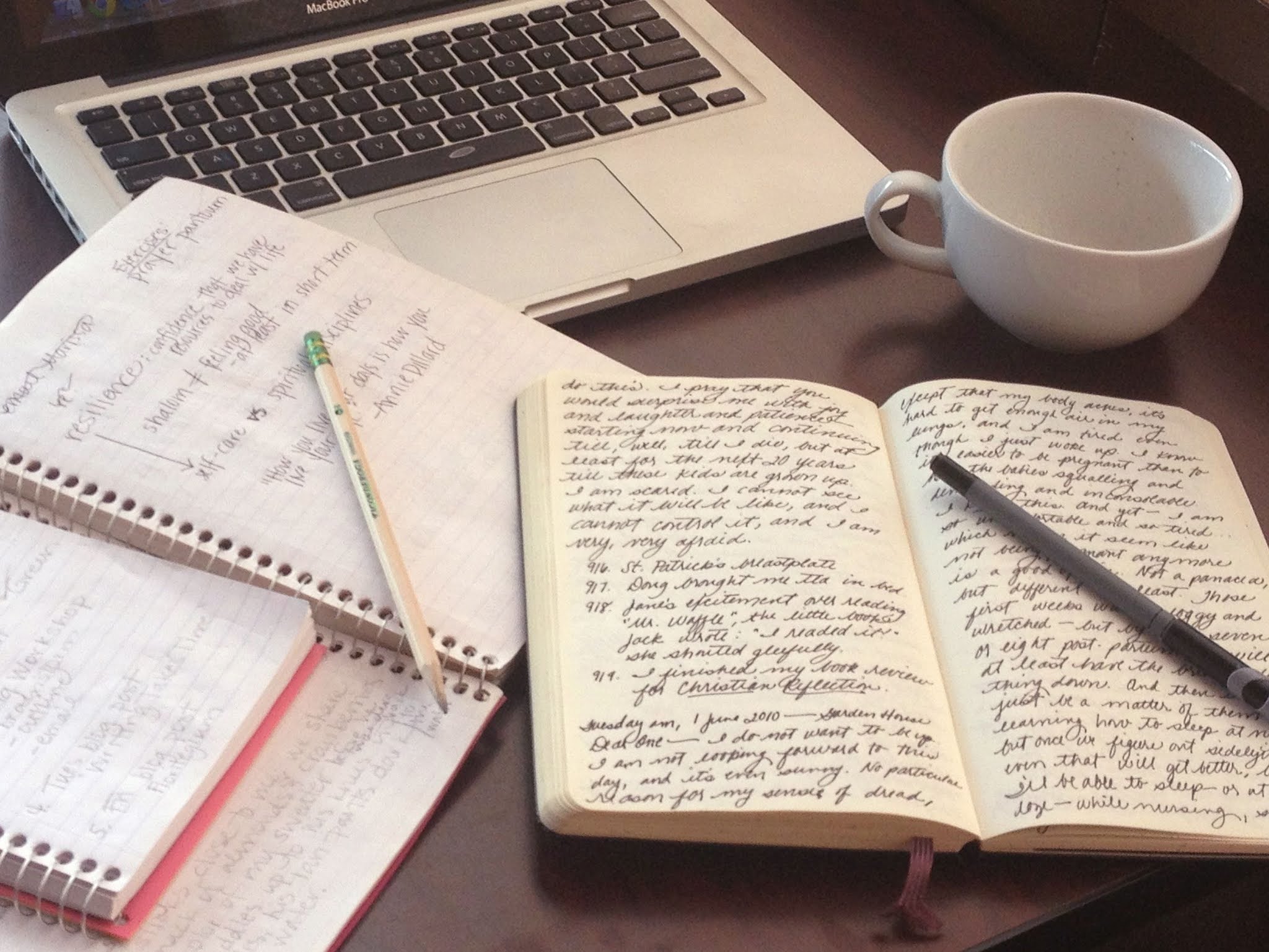
Susan: A year ago when we learned about the Covid-19 pandemic and it was projected that there would be 200,000 deaths in the United States, I was scared. My first thought was of my family. What were the chances at least one of us wouldn't be affected? My husband and I just about went into lockdown. We stopped seeing our loved ones, our friends. Other than for walks where we avoided everyone, we decided to only leave the house every three weeks to get food from the grocery store. I made a daily activity sheet and put it on the refrigerator so we would have some fun things planned throughout the week. A year later with over 500,000 people dead in the U.S., we received our second Covid vaccine last week. With each shot, we've had an immense feeling of relief. In April we plan to visit both of our sons and their families. We have also made plans for getaways to various cities.
Covid hit me hard. I've kept track every day on a calendar since March of 2020 of the cases of Covid in my state and in the two counties where my city is located. I wrote each week day for about four hours from March to October to stay sane. My second Manhattan mystery,Dress to Kill, came out mid-October.
After the holidays, which of course were spent in isolation, I didn't feel much like writing. I did begin the sixth Kay Driscoll mystery, but no longer wrote on a regular basis. Since getting our second Covid vaccine, I am once again back to writing and the world seems brighter. We isolated for over a year and now with getting the vaccines, we are going back to “normal” living once again.
Allan: The last time you visited you mentioned your career in nursing. One of your main characters – Kay Driscoll - is a retired public health nurse, like yourself. We are often told as writers to write about what we know. This seems to be a typical example. What are your feelings on that?

Susan: Kay Driscoll, a retired nurse, volunteers at her local Free Clinic. The series is not medical related at all, other than Kay picking up important clues when she works at said clinic. I also worked/volunteered at our local Free Clinic for several years until my retirement.
I do write what I know and often write from life experiences, but I also write what I learn and what I want to know. I do a lot of research when writing, which is enjoyable. In the Kay Driscoll series, I based many characters on people I knew, some intimately, and know how they think and feel. The setting for my Kay Driscoll mysteries is based on where I live. When writing the Irina Curtius mysteries which are set in Manhattan, I did a lot of research and also spent time there. From a number of reviews by New Yorkers, I'm happy to say that it sounds like I got the feel/the vibe for the City.
Allan: On your last interview, you mentioned you were working on Manhattan 2. How is that developing?
Susan: Dress to Kill is the second Manhattan murder mystery. I started the book in November of 2019 and finished it in October 2020. A fun aspect about this book is that Kay Driscoll, the protagonist of my first series and her husband come to Manhattan to visit Kay's cousin, Irina Curtius the protagonist of the Manhattan series and together they work on solving a murder. In Dress to Kill a friend of Irina's is murdered at the theater after an opening night performance with the New York City Ballet. The police see it as a unfortunate, horrific accident. Irina with the help of Kay sets out to prove that her friend was murdered in cold blood.
*It's an ingenious idea having your two MCs meet up and I hope to do the same in a future story with Drake & Jo.
Allan: Your bio tells our readers that when you started writing, you hoped to become a traditionally published author, which you succeeded at. Why was this important to you? As opposed to self-publishing.
Susan: I started writing as a challenge to myself. I've often challenged myself. One example is, in my mid-30s I went to school and obtained a computer programming degree not knowing at the beginning, how to even turn a computer on. (In those days, there wasn't just a button that you pushed.) I graduated with High Honors (then went back into nursing).
With my new challenge of writing a novel, I took a number of writing courses. After I finished The Ginseng Conspiracy, I never even gave self-publishing a second thought. It was always my goal to find a publishing house for the simple reason, I just wanted to see if I could do it. I had no other motivation.
I spent months writing out query letters and finally found a publisher who took me on. Four years later, I asked for the rights back to my books and then self-published them.
Allan: When you decide to write your next novel, how do you proceed? Do you outline and research first or are you a pantser?

Susan: When I write a book, I never know what's going to happen until I have it down on paper and then that could change at any time. I don't outline or follow a format. I do research prior to writing and along the way. It makes writing for me more fun and interesting to find out where the story is going to lead me.
 Photo by Susan.
Allan: You are a stained-glass artist and a musician Please share something about your activities outside writing.
Susan: Besides being invested in my family...
When Covid began one of the scheduled weekly activities was playing music with my husband. Because of Covid he no longer was able to play with his band. To be nice...lol, once a week we jammed together, playing guitar and singing classic rock songs from the 60s and 70s. I took guitar in college and hadn't played in decades. I lost a lot of my skills, one being, decent fingerpicking, but the ability to play came back, no matter how badly.
Like Allan, I work in stained-glass. I have designed and made many stained-glass lamps, vases, window hangings. I did the kitchen cabinets in one of our homes. Designing each project is my favorite part.
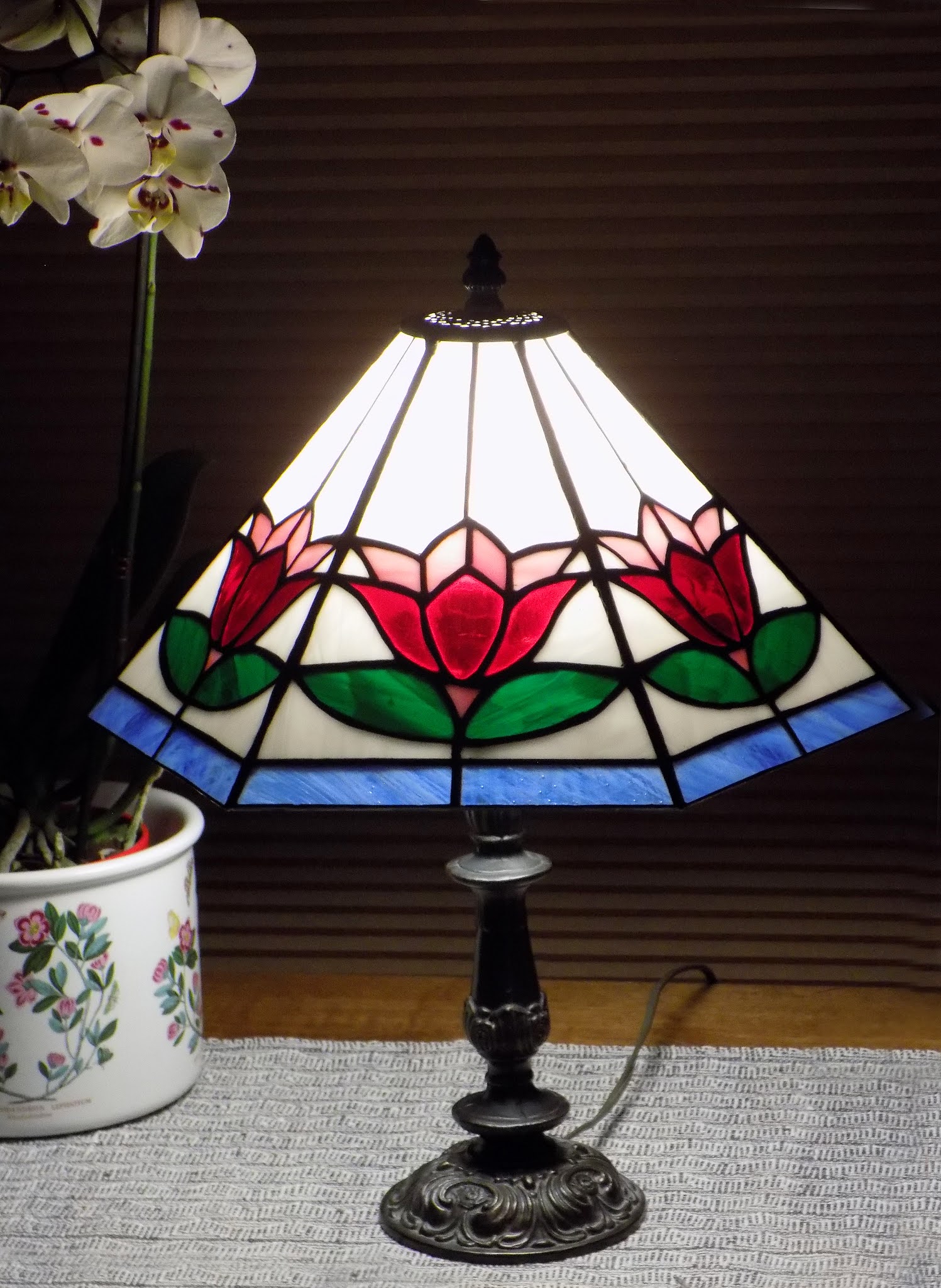
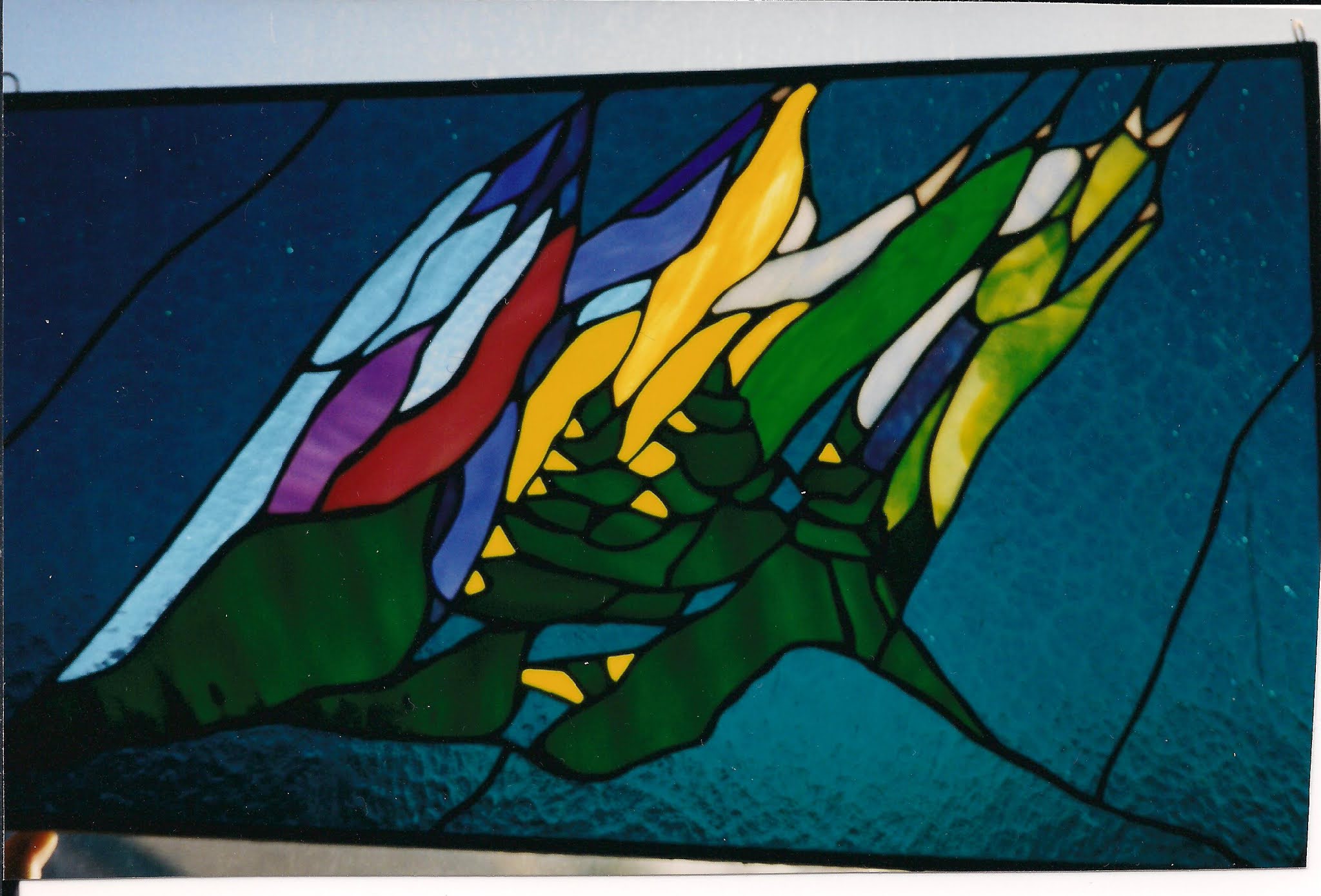
I consider myself to be an amateur photographer. I enjoy taking photos of everything from closeups of the flowers and insects in my garden to churches in Palermo, Sicily.
 Photo by Susan.
 Photo by Susan.
Prior to Covid we frequented art museums, the theatre, and various music venues. I also enjoy cooking with my husband.
Allan: Share something which your readers might not know about you, either personally or as a writer.
Susan: My husband and I love to travel. Not travelling was a difficult part of Covid for us. We cancelled booked trips in 2020. We have travelled extensively in North America and in Europe. We love exploring new places and experiencing different cultures. A quote I agree with by Mark Twain is, “Travel is fatal to prejudice, bigotry, and narrow-mindedness, and many of our people need it sorely on these accounts. Broad, wholesome, charitable views of men and things cannot be acquired by vegetating in one little corner of the earth all one's lifetime.”
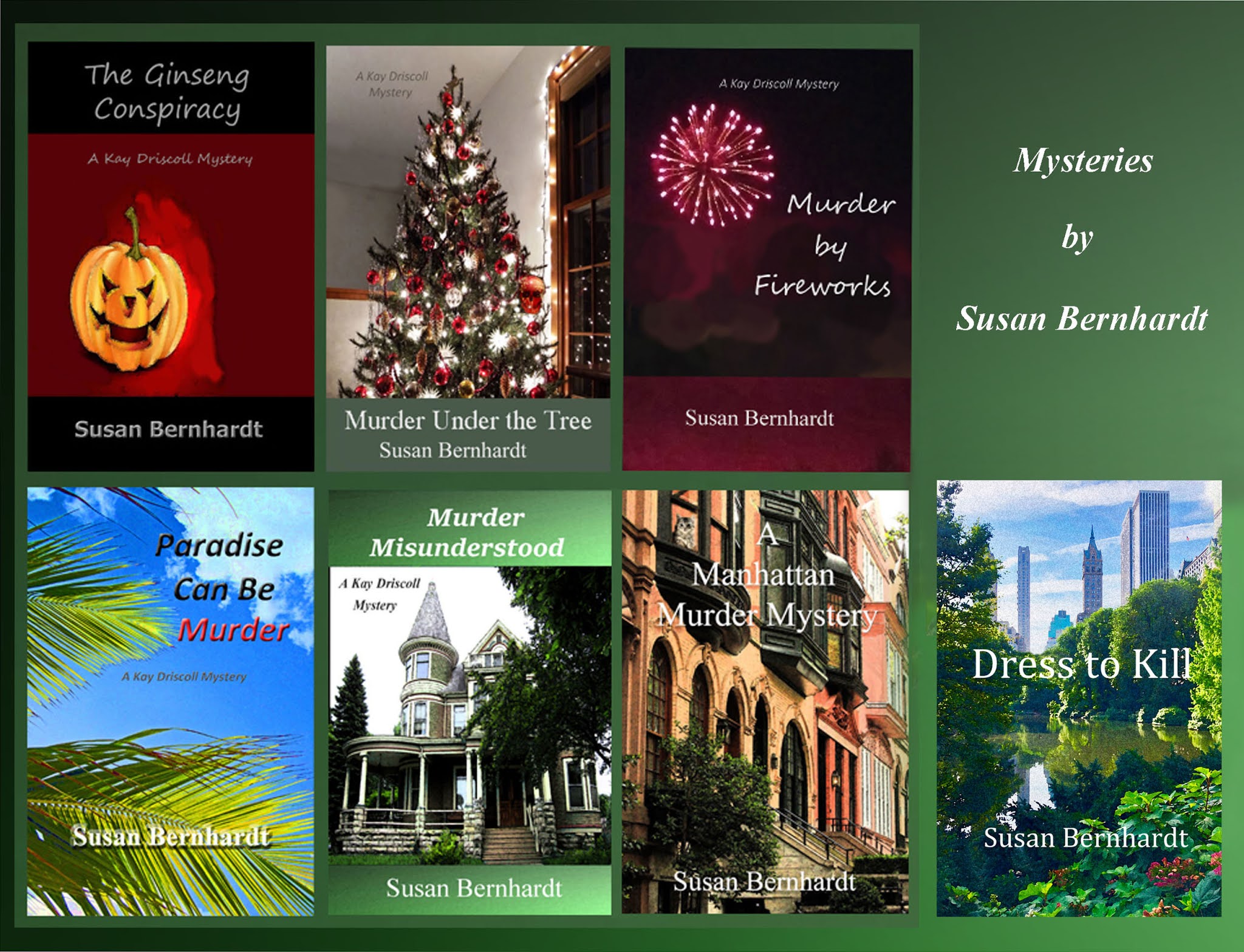
Susan's mysteries:
The Ginseng Conspiracy (A Kay Driscoll Mystery Book 1)
Murder comes to town and so does Kay Driscoll, whose tenacious nature tells her city officials are attempting a cover-up and she must expose the truth.
Murder Under the Tree (A Kay Driscoll Mystery Book 2)
During the season of peace on earth, good will to men, Kay uncovers sinister plots of corruption at a retirement home, while investigating the suspicious death of a beloved caretaker.
Murder By Fireworks (A Kay Driscoll Mystery Book 3)
An obnoxious member of Kay's book club is found dead on the beach. When Kay investigates, she discovers that the death, covered-up to look like suicide, was in fact murder.
Paradise Can Be Murder (A Kay Driscoll Mystery Book 4)
When Kay, Phil, and friends take their first vacation together, they find themselves involved in a murder investigation. Will Kay and company be able to solve the crime before the cruise in paradise ends?
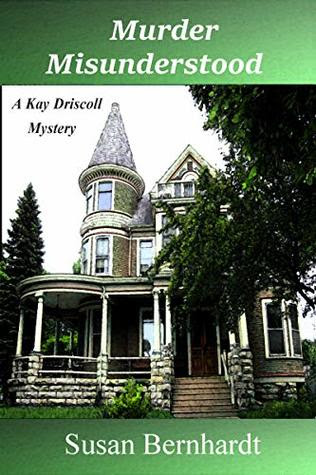
Murder Misunderstood (A Kay Driscoll Mystery Book 5)
A month after an unlikeable newcomer arrives in Sudbury Falls with her unsettling hobby of cultivating a poisonous garden, she is murdered. Will Kay be able to prove the accused innocent and find the real culprit(s)?
A Manhattan Murder Mystery (An Irina Curtius Mystery Book 1)
When a neighbor's failing health is suspicious and he dies, a vivacious, retired ballet dancer investigates so that justice prevails.
Dress to Kill (An Irina Curtius Mystery Book 2)
When a friend of Irina's is found dead after an opening night performance at a ballet, and her death is seen as an accident, she decides to investigate with the help of her cousin Kay Driscoll to solve the mystery and expose the truth.

Thank you, Susan for being our special guest this week. It’s a pleasure having you to chat with and thanks for your stories.
The pleasure is all mine.

Please follow Susan’s links to discover more about our talented guest.
Twitter: @SusanBernhardt1
Goodreads: https://www.goodreads.com/author/show/7255617.Susan_Bernhardt
Pinterest: https://www.pinterest.com/skbernha/
Linkedin: https://www.linkedin.com/in/susan-ber...



April 3, 2021
Happy Anniversary to the South Branch Scribbler.
 Photo by Gaelle Marcel.
The Scribbler is eight years old.
 Photo by Adi Goldstein.
606984 Page Views to date. Wow!
354 posts. Mainly visiting authors but there’s been some artists, photographer’s and musicians. I’ve shared short stories, recommended some books I liked – it’s been a challenge at times but it’s always been fun. And still ad free.
When I started writing stories, someone mentioned I needed a blog so I could tell the world about them. So, the Scribbler was born. Nobody beat a path to my door for the first year or so but word got around, more and more people stop by.
A few of the original blog posts are gone now, errors I made and a glitch on Blogger which couldn’t be corrected properly so they had to be deleted.
These are the first ones – maybe you’d like to take a look – August 2013 – one of my earliest guests – Mark Young, visual Artist – see it HERE.
September 2013 – Visit Beautiful Bangladesh with me… - see it HERE.

And this one was fun - Adam Hudson on Love of Gaming. Go HERE.
Changes!
It’s changed a lot over the years. Got better, I hope. Different themes and colors.
When I started doing interviews, I called it the 4Q Interview, had a neat logo made. I thought four questions would be sufficient but soon realized that four questions would not be enough to get to know a guest and talk about their creations, so the questions increased but the name – 4Q – stuck.

Well, as of today, that is changing as well. The new interview portion will henceforth be referred to as Branching Out…
Thanks to my many readers for suggesting different names for the new interview format. We picked the top six suggestions and then our readers voted on the one they liked best – Branching Out.
The suggestion was made by JJ Carrier of Belledune, NB. Thank you, JJ. JJ is a very cool gentleman that is great at sharing the good news of New Brunswick creatives. Check out his Facebook page – New Brunswick Independent Authors Association – Go HERE.
Next week we will be rolling out the new interview format – no startling changes but a more personal and open dialogue. Kind of like sitting around a fireplace chatting.
Our first guest with the new changes will be cozy mystery writer, Susan Bernhardt. Susan has been a guest before and I love her stories. If you missed her first visit, you can have a look HERE.

Highlights of the past eight years.
Since January 1 of this year, we’ve added a special column titled the Editor’s Edge by Karin Nicely, a professional editor from Florida. She adds a different flavor to the blog and contributes insightful posts for authors and writers. Go HERE.

One of our most popular guests – Chuck Bowie of Fredericton, NB – has been a guest eight times. Here’s a couple to have a look at. Go HERE and HERE.
The guest with the most views has been none other than one of the most generous and supportive authors I’ve met. Thriller writer MJ LaBeff. See her most recent visit HERE.

Author Susan Toy of the Caribbean Island of Bequia, has been a guest five times. Check out a couple HERE and HERE.

Last year the Scribbler worked in conjunction with Mickey Mickelson of Creative Edge by hosting a different authors from across North America. It was successful enough for all involved that we decided to carry it over for this year too and V S Holmes, a fantasy and Science Fiction author will be featured April 24th.
What’s coming?
 Photo by Charles Etoroma
The Scribbler already has a fantastic line up for the next few months with Branching Out Interviews, some excerpts and a ton of fun. Watch for these talented authors:
April 10th– Susan Bernhardt of Wisconsin, US.
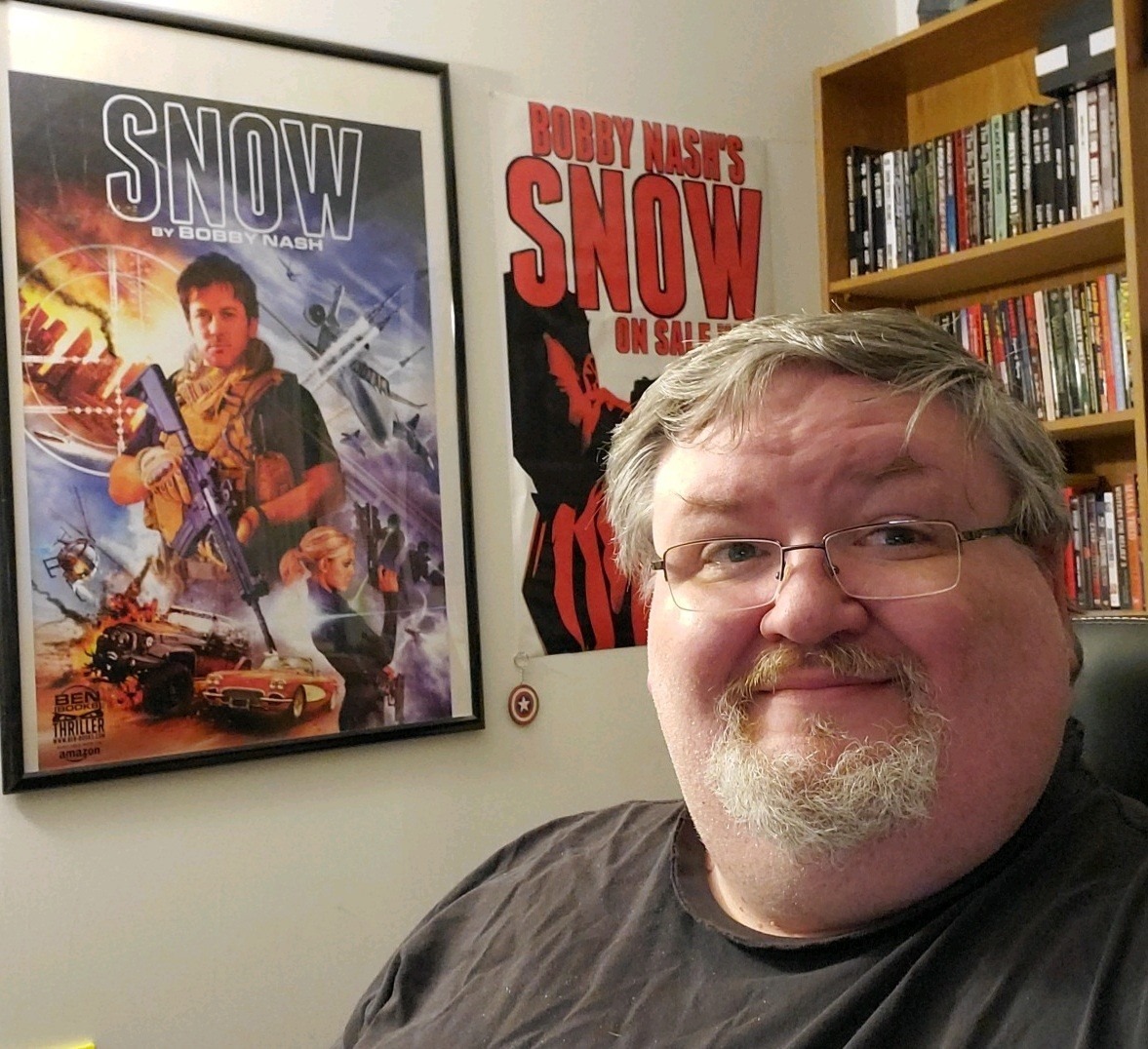
April 17th– Bobby Nash of Bethlehem, Ga.
April 24th– VS Holmes. (Creative Edge)
May 1 – Ann Shortell of Vancouver.

May 8th– James Palmer of Atlanta, Ga.

May 15th– Roger Moore & Jane Tims of New Brunswick

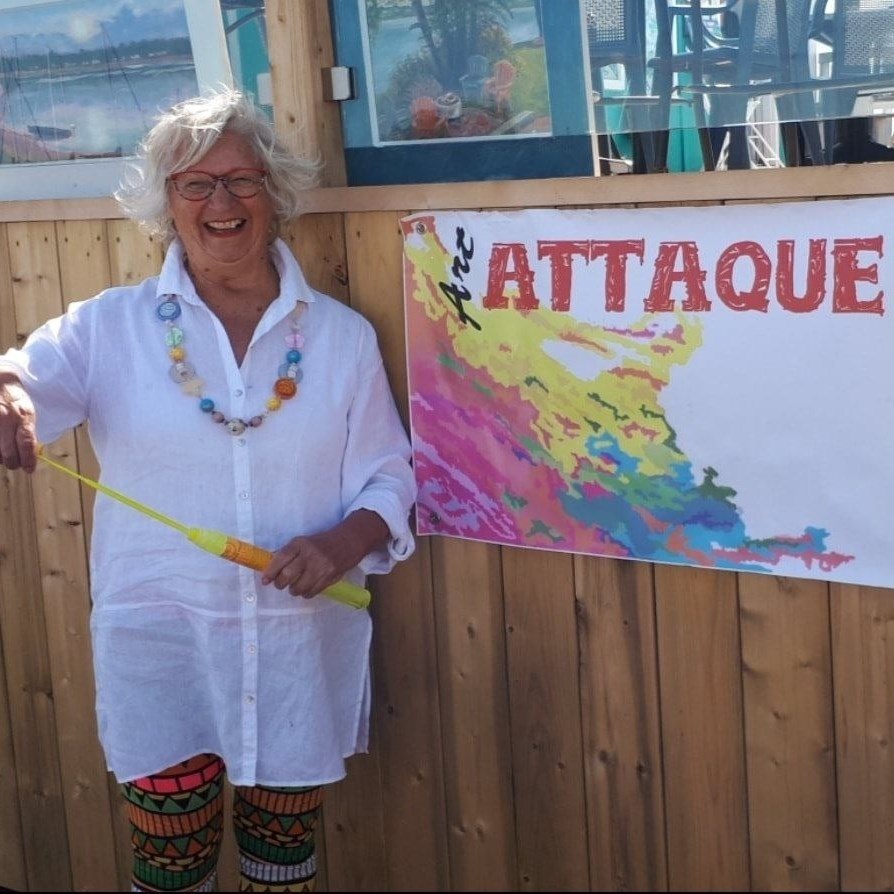
May 22 – ArtShediac with Colleen Shannon & Susan Jardine.

May 29th– Author C P Hoff. (Creative Edge)

What have I been up to beside blogging?
I finished the first draft of the third installment of the Jo Naylor series. Tentativley titled Shattered Dreams. The success of the first two – Shattered Figurine & Shattered Lives - has been overwhelming and I am deeply grateful to all my readers. Watch for it in Jan/Feb 2022.
An Excerpt from Shattered Dreams:
She had loved her job. Until they had to arrest her father, the prime suspect in a killing spree that she and Thorne had been investigating. The horror of what she discovered still clutches her heart and makes her angry. Questioning her own response to his madness, she sometimes regrets what she did before she fled the country. Giving it all up.
She can’t go back. At least, not yet. Not until she can live with the past. It’s inconvenient to travel under a false name and yet she loves the drama, like the spy novels she’s read, the secret only she and a fast-talking crook who provided the forged documents, who also happens to be a genius. For the right money, you get a new life. In the real world and the web world, at least in all the right places nosy people might look. The slime charged her double because he knew she was a cop.
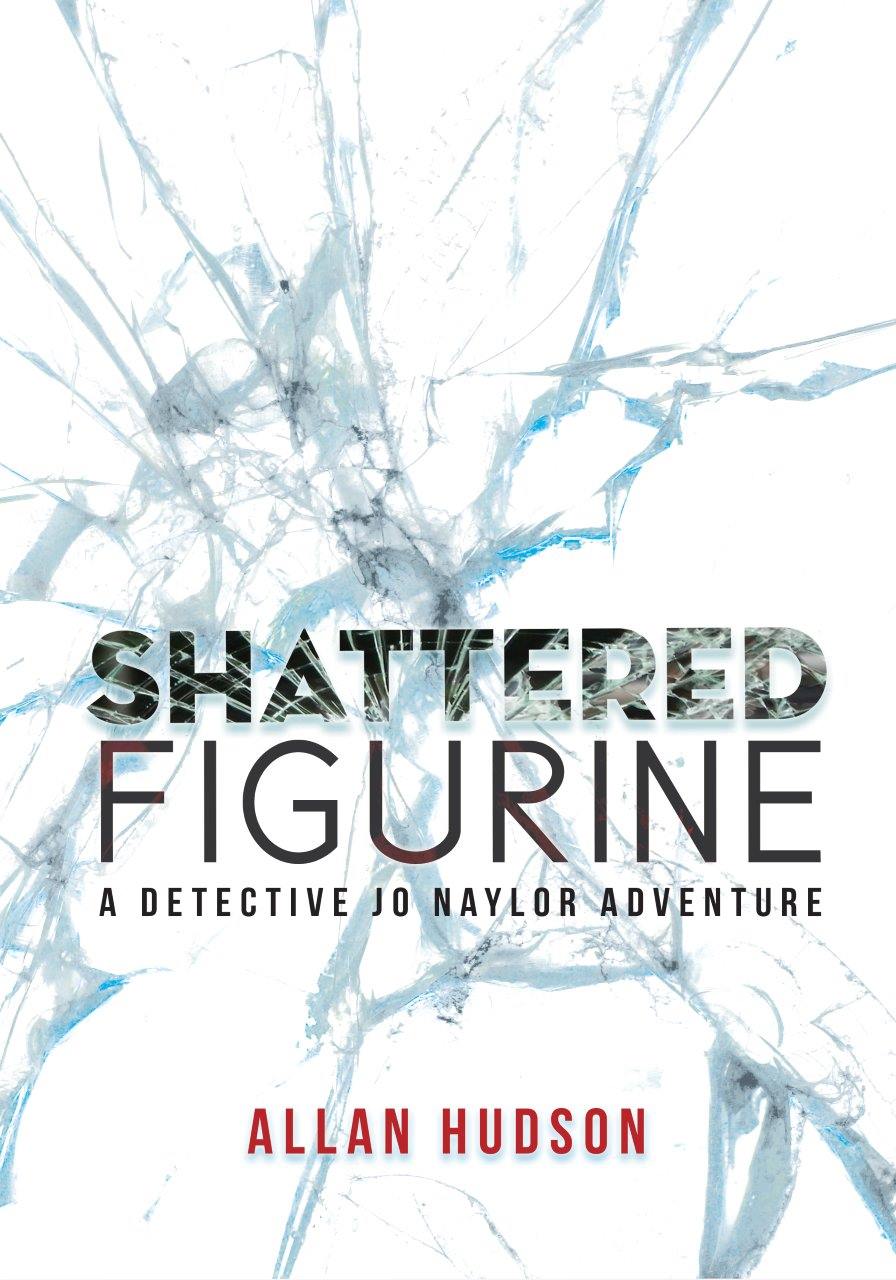
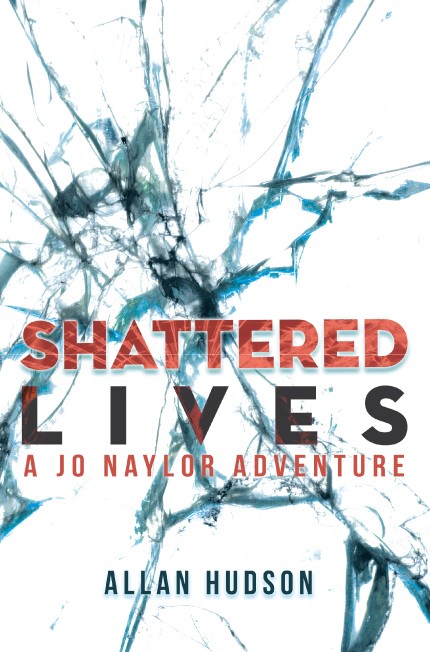
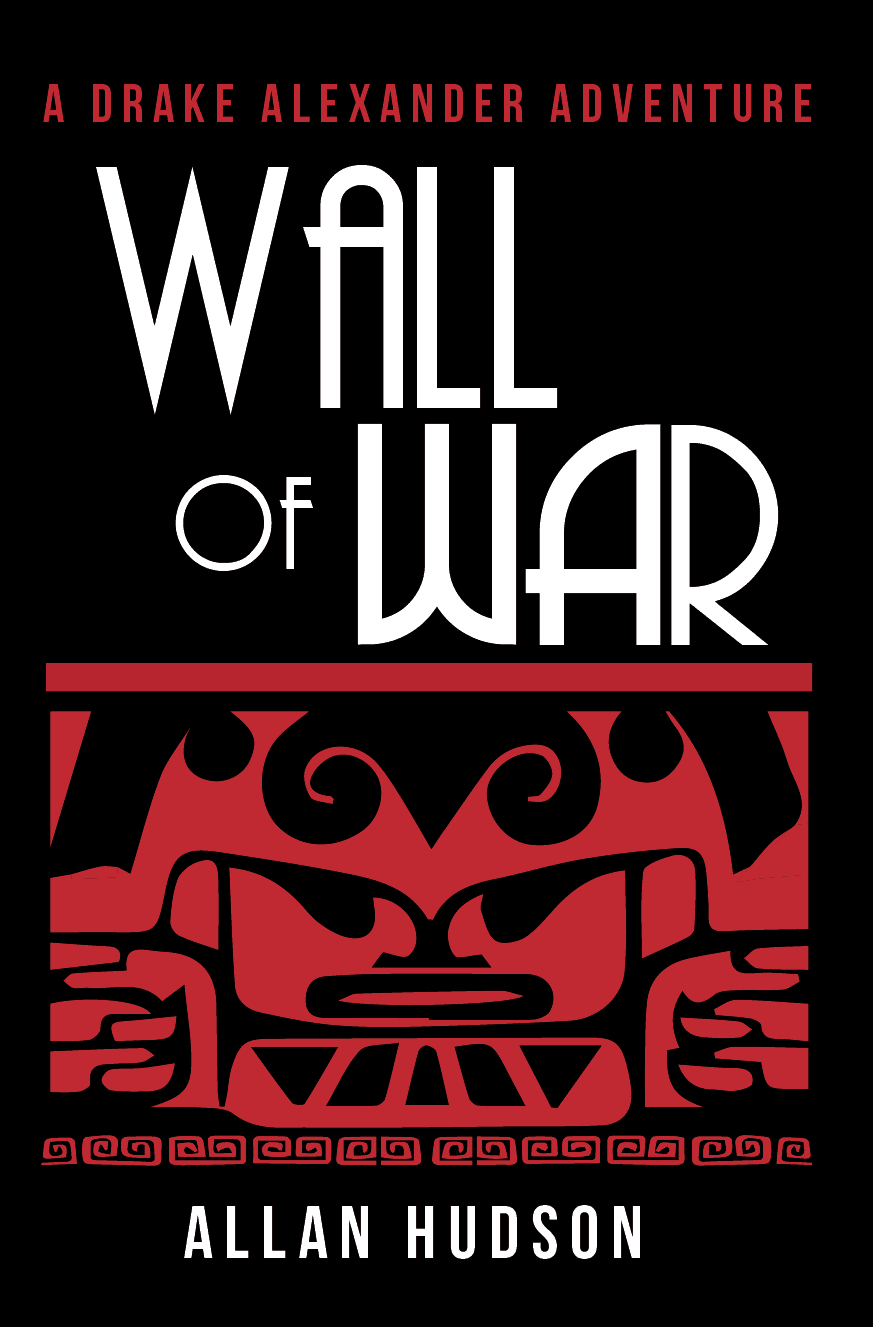
I am presently editing and writing the third draft of book three in the ongoing Drake Alexander adventures – The Vigilantes. Dark Side of a Promise – book one – and Wall of War – book two have taken the reader all over the world in the chase for justice, from Bangladesh to Panama, and Peru. Alexander is searching twenty-year-old clues for two murderous brothers that have escaped the law and are in hiding. Can he and his people track them down? The Vigilantes will be ready for publication in the fall of 2021.
An Excerpt.
Anne Chouinard was laid to rest on November 5th, 1984. Her closest friend, Mireille Lambert, was interred this morning. The ancestral cemetery is on the highest rise of the estate, overlooking lazy rolling hills, by empty grapevines lined in precision, their weary stems hang in mourning. To the left, the family chateau, a stately two-story edifice, is a five minute walk along the rows. People attending the reception are visible in the wide windows of the downstairs rooms that face the Garonne River. Close by is a low roofed structure with walls of the same brownish stone as the main building.
Windowless with only a wide door on one end, it squats among the fields of naked vines. Jean-Phillipe Chouinard is a master vintner and has been for the last thirty years at the Lambert Estates, the family vineyard. He is one of three key holders to the storeroom. From the reserves, he carries ten bottles of 1993 Chateau Lambert Bordeaux. Before going into the house from a side entrance, he pauses to look back at the small group gathered around Mireille’s grave.
When he heard their conversation about hunting criminals, he couldn’t help but tell them about his daughter and what happened to her all those years ago. The tall man he talked to, Drake Alexander, he knows him to be from Canada, a former soldier in the Canadian Armed Forces, assured him they would find the men that murdered his precious Anne, even with a trail twenty years old. It’s what he and his team do. Chouinard doesn't hold any hope, it’s been so long. The brothers could already be dead.
Following the success of The Alexanders, 1911 – 1920, volume two of The Alexanders – 1921 – 1930 – is halfway complete and targeted for publication in the summer of 2022.

An Excerpt from 1921.
Maria is ahead of them and has the safe open. The bottom section has three wheeled carts with slots for the jewellery pads. They are arranging the displays when Nick comes in. Stiff legged and two canes, discomfort shading his brow, he catches one heel on the threshold. It throws him off balance. He tries to catch himself by reaching out to the counter on the right but is not close enough and tumbles to the floor. Canes fly across the floor. He comes to rest on his side, his back to the other three. He’s not moving.
The women clutch their mouths and their gasps echo in the ceiling. Dominic rushes to his friend’s aid. Kneeling at his back, Dominic gently touches Nick’s shoulder. About to ask him if he’s okay, he feels shudders under his hand. The stifled sobs tear at his very being. He looks back over his shoulder and nods to Maria. Both ladies stand behind him with stunned looks. A small gesture tells them to carry on. He gives his friend’s shoulder a squeeze.
“C’mon mate, mon ami, let’s get you off those legs before you kill yourself.”
“I’d… I’d be lying if I didn’t think of it sometimes. It’s hard Dominic. They always hurt.”
Dominic abruptly turns Nick to face him. A glare freezes Nick from saying anything further. The voice is trying to be harsh, but out of the ladies hearing.
“Don’t you ever repeat that. Throw that thought away as far as you can. You have too many goods things going. It’ll get better Nick, it always does. Now c’mon, get in the chair. I’d offer to help you but you’re too damn stubborn. At least I’ll pick up your canes, can’t have them littering the store.”
Hats off to all you wonderful, fantastic, agreeable, incredible, phantasmagorical, astonishing, adorable, brilliant, cool and pleasant readers, visitors and guests. You make it all worthwhile.
Thank you.
 Photo by Daniel Andrade
A call out to other authors, musicians, artists, photographers and other creatives. Looking for a new audience? Send me a message and you could be part of the Scribbler's success.
Leave a comment, please. Do you enjoy the Scribbler? Any ideas for another guest columnist? Any authors or creatives you’d like to see featured?
If you do leave a comment, you might be eligible for a surprise to be announced next week. We are giving something away, anywhere in the world. Leave a comment and contact info.

March 27, 2021
Author Allan Lewis of South Wales, UK.

Like many of my author friends, Allan and I ran into each other on different social media and followed each other with an interest of what we are writing about and our novels.
I decided to follow Allan because we not only share the same given name but his books are enticing and I’m anxious to add them to my TBR list.
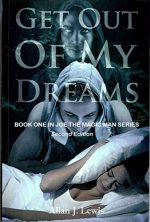
He has graciously accepted my invitation to be a guest this week for a 4Q interview and rather than share an excerpt, he would like to give them a free copy of “Get Out Of My Dream” if they subscribe to my newsletter?
FREE Copy of ‘Get Out Of My Dreams’ – Allan J Lewis
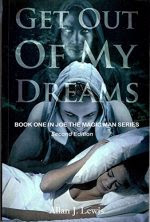
Allan J Lewis was born in South Wales UK, a son of a coal miner, in August 1939, just before the outbreak of World War 2.
He started work underground for the National Coal Board on his fifteenth birthday. He married in March 1961 and has two children, a daughter and a son, and two grandchildren.
Deep down he always wanted to be a writer but he felt thwarted by his lack of education. He would write a few pages and give up, frustrated by spelling and grammar. (This was before the days of personal computers.) As a young man, he didn’t have much time to read or write. He was working two shifts on the coalface, and when his daughter came along he got himself another job as a part-time fireman.
By the time he was in his late forties and his two children had married, he found time to start reading again. He enjoyed the adventure novels of Wilbur Smith and the works of James Patterson and Lee Child. He loves a good crime thriller.
The pleasure he found in reading rekindled his desire to write.
He would create stories in his head but did not put pen to paper in earnest until he retired. Allan has written five books a Mystery/Thriller and five Erotic Adventures.
Get out of My Dreams is Allan’s first Psychological Thriller novel and the first in the series of Joe the Magic Man. Where the two main characters are, Joe, who the FBI believes to be a rogue hypnotist, and Joe’s friend Alice Timberlake a freelance journalist, and the two of them with Joe’s gift of getting into your mind, ends up helping the FBI solve difficult crimes.
Allan’s Erotic novels are a spin-off from ‘Get Out Of My Dreams” where Joe’s addiction to getting into someone’s dreams leads him to find his dream lover Jean Thornton, who looks forward to Joe’s visits as he takes her on sexual adventures in her dreams, where she could end up as a barmaid back in France in the time of the Three Musketeers, or back in King Henry VIII time and have two young soldiers wanting to marry her. And a few present day time dreams, but whatever dream Joe visited, Jean knew it would be an erotic adventure that she would love.
4Q: First off, Allan, thanks for being our guest this week. Please tell our readers about Joe the Magic Man.

AL: I love the “Alex Cross” series by James Patterson and thought I would love to have a series with a character that could help police solve crimes, something like the Castle series someone who is not a cop but helps police. So I came up with the idea of having someone that could read minds, the more I thought about it the more excited I became with all the possibilities a person like that would have, and when I came up with the name of “Joe the Magic Man” the plot thickened and the more Joe used his gift. I realized if someone had those powers the USA Government would see him as a threat to National Security and would want him eliminated, so I have got Joe trying to keep his identity a secret. But there are those in the FBI that see Joe’s gift of reading minds as a weapon to fight crime, and Joe works with the FBI to find out information for them by reading criminal's minds. I came up with the title of Joe because he also has an addiction of getting into young women’s dreams.
4Q: You have an intriguing selection of thriller novels. Please tell us about your newest work and what readers can expect when they pick up a copy.

AL: It is a political thriller titled “Code Red The President Will Die” it’s about the people of Syria and their fight against their government and ISIS, and how one man went to extreme measures to get America’s help to give them the power back to the people of Syria. When that extremist starts poisoning American politicians, the FBI asks Joe to find out who he is and track him down. The story has many twists and turns with an unexpected ending.
4Q: Can you share a childhood memory and/or anecdote?

AL: There are so many, one of my proudest memories was when I was fourteen and I was made school captain of the athletic team, I was a sprinter, hurdler, and high Jumper, and that year I won the Rhondda Valley Championship. I broke the record in the hurdles and the high jump and I was the lead man in the 4x100 meters relay that won the school the Valley Championship, and to called out in front of the school assembly to show the two cups I had won, was one of my fond memories.
4Q: You are also a noted author of erotica. What draws you to this genre?
AL: Although my first book “Get out of My Dreams” is a crime thriller, there are a few chapters in it where Joe gets into Alice Timberlake’s dream and takes her on an erotic adventure. That was before he put his gift into good use, by helping the FBI to fight crime; Joe could get into a criminal’s dream and find out if he killed Jane Doe, where he hides the body, and get into a terrorist dream to see where they plan to attack next.
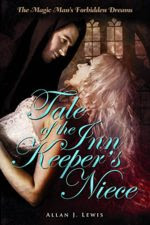
I had a few reviewers that said there was no need for the sex scenes, and there were others that said they enjoyed Joe’s and Alice’s erotic adventure, and that I should write more about Joe’s erotic dreams. So, I thought why not and I wrote my first erotic novel “Tale of the Inn Keeper’s Niece” The first six reviews I had were all five stars, which encouraged me no end, and now I have four more out in the series of Joe’s Forbidden Dreams.
4Q: Can you tell us a bit about your writing habits? Your favorite spot to write? Has anything changed due to the pandemic?
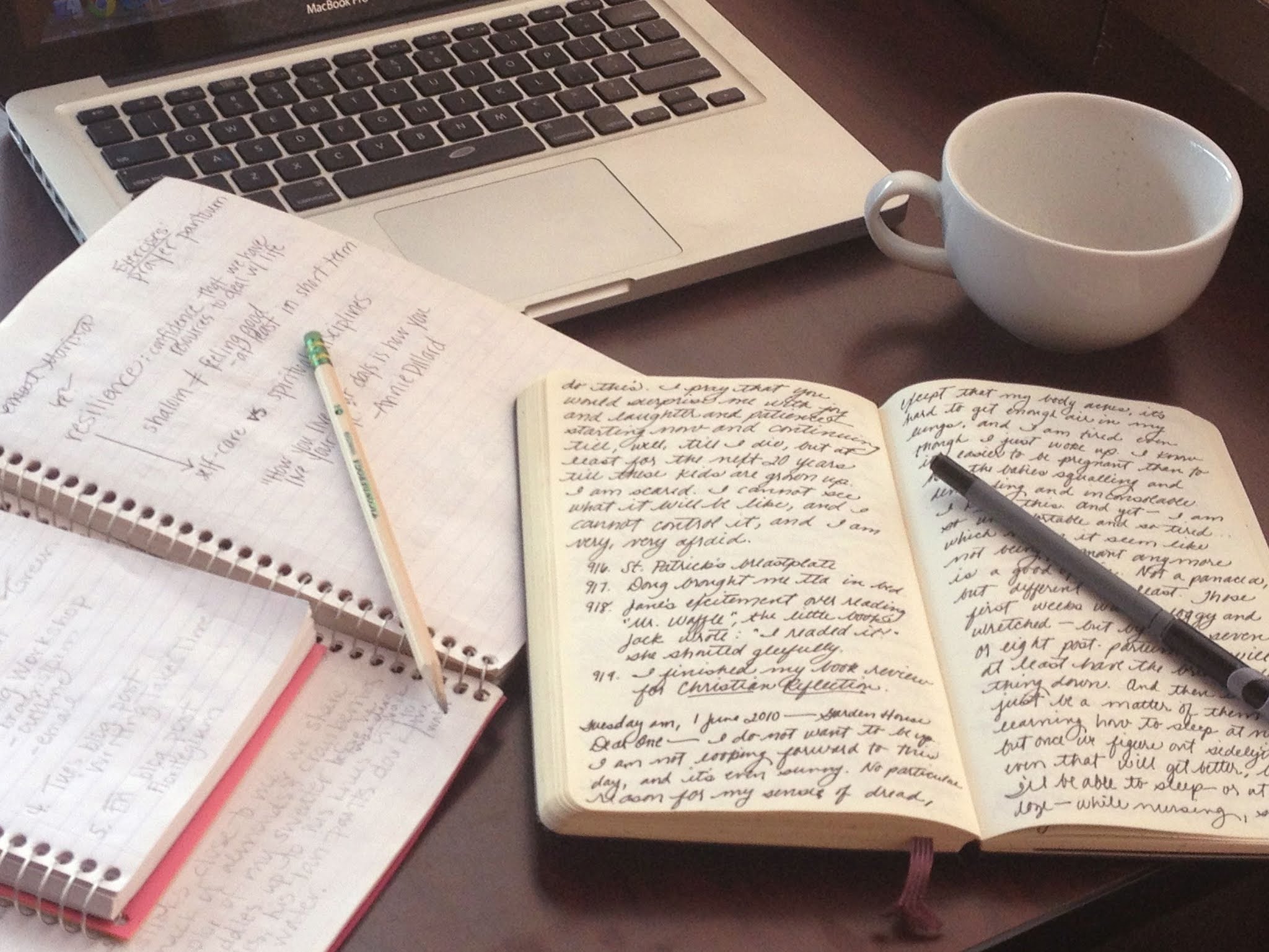
AL: We have a spare bedroom that I use as my writers' den and the wife brings me a mug of tea every hour to keep my old grey-cells happy. I can’t wait for this pandemic to be over and for everything to get back to normal.
4Q: Favorite author? Novels?
AL: I loved the way Wilbur Smith wrote his adventure books, and the many books of James Paterson, and more recently Lee Childs. (Don’t tell anyone, but I pick up most of their books from car boot sales, I can’t pass without having a look to see what’s on offer.) I have no favorite, there are so many.
**I’m a big Wilbur Smith fan as well. A clever storyteller.
4Q: If you were chosen to write a memoir of anyone living or dead, who would it be?
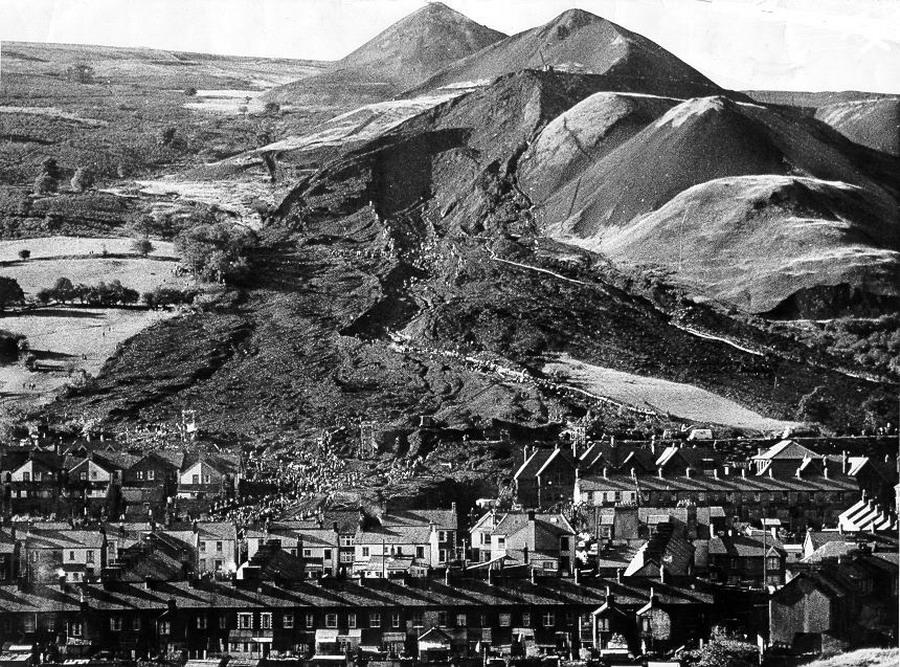
AL: I am a late starter and I find I am getting more passionate as the years go by and with every book I write. I have written my biography and I keep adding to it as time goes by, it is mainly about my mining experience and the nine years I worked as a part-time fire-fighter, where I saw some horrific accidents. The one that will always be with me was the Aberfan disaster of 1966 where a coal tip slid down the mountain and buried a school killing 116 children. I helped to dig out the bodies of four little girls and their teacher; writing about that brought it all back and I was very emotional more than passionate when I wrote about that day.
4Q: If you are not writing, what other interests do you have?
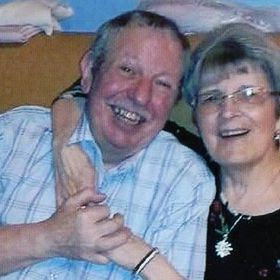
AL: I have played darts since I was eighteen, and still play in the Sunday and Friday night darts league. I am not as good as I used to be and only play if they are short, but I don’t miss a game. Saturday Night is dance night, the wife and I love our dance and a game of bingo. I met the wife at a dance some sixty-two years ago, she was the prettiest girl on the floor and she still is, and we can’t wait to get back out dancing with all our friends.
FREE Copy of ‘Get Out Of My Dreams’ – Allan J Lewis
For all you fantastic visitors wanting to discover more about Allan and his writing, Please follow this link:
Allan J Lewis – Allan J Lewis: Author
Thanks again, Allan for taking the time to share your thoughts. Wishing you all the success you deserve with your future writing.



March 20, 2021
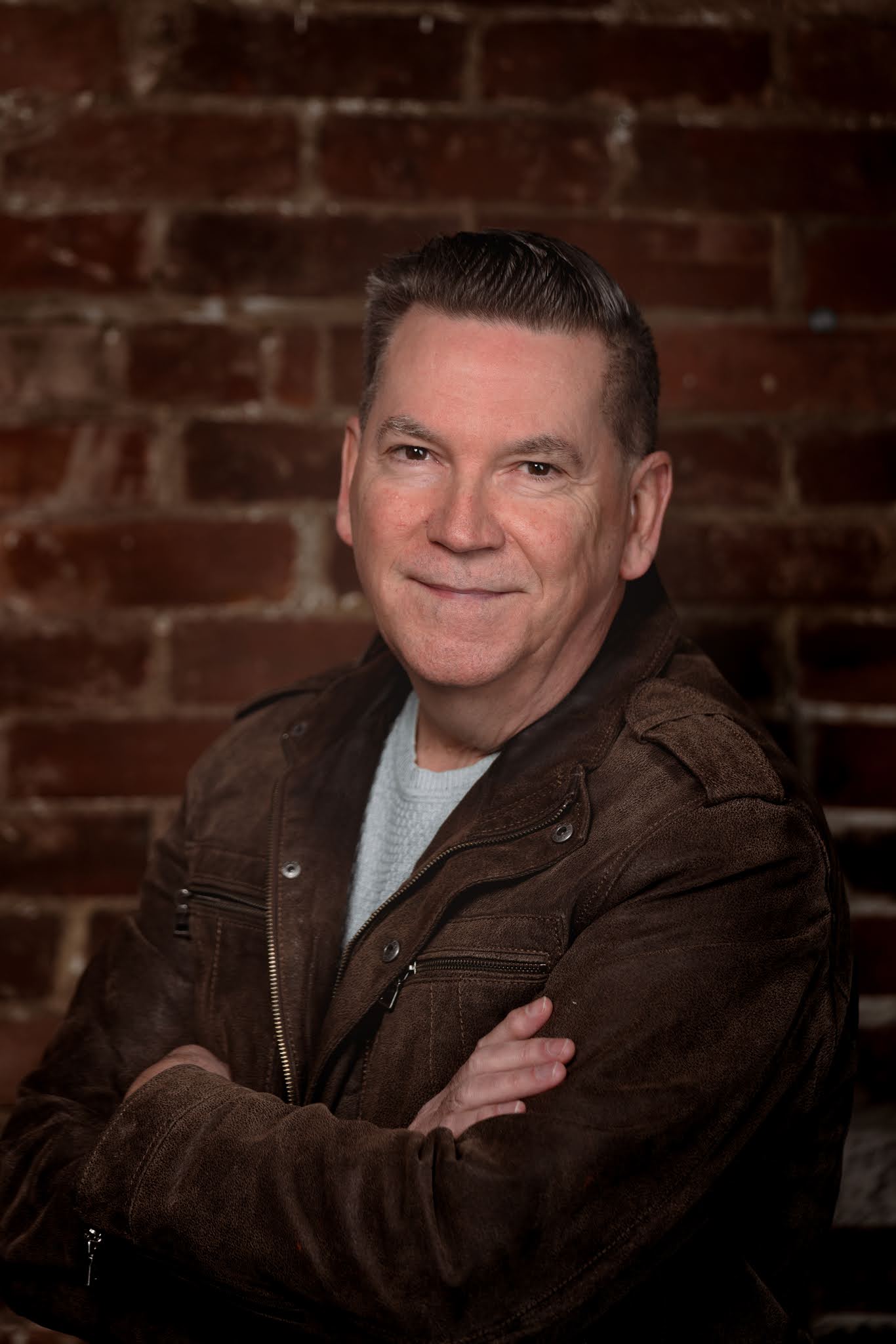
Award winning Author Guglielmo D’Izzia of Toronto, ON.
I’ve had the pleasure of meeting Guglielmo as a result of reading his interview on The Miramichi reader (See link below).
His debut novel – The Transaction - has garnered several awards and great reviews. It’s on my TBR list.
He has graciously accepted our invitation to participate in a 4Q Interview and is sharing an excerpt from his novel.
Guglielmo D’Izzia is an actor and writer who hails from Sicily. His artistic pursuits have led him to some of the greatest cities in the world: Rome, New York City, and eventually Toronto, where he now resides. He’s a proud graduate of the creative writing program at the University of Toronto School of Continuing Studies. The Transaction, his debut novel, won the 2016 Marina Nemat Award (unpublished manuscript), was an award-winning finalist of 2020 International Book Awards (Literary Fiction category), was an official selection for the 2020 Cannes Film Festival | Shoot the Book! Program, and was nominated “Most Promising Author” 2020by The Miramichi Reader’s “The Very Best!” Book Awards. The Transaction is also currently a 2020 Foreword INDIES Book of the Year Awards Finalist (Mystery Category).

4Q: Congratulations on the success of your novel. Please tell our readers what to expect when they pick up their copy of The Transaction.
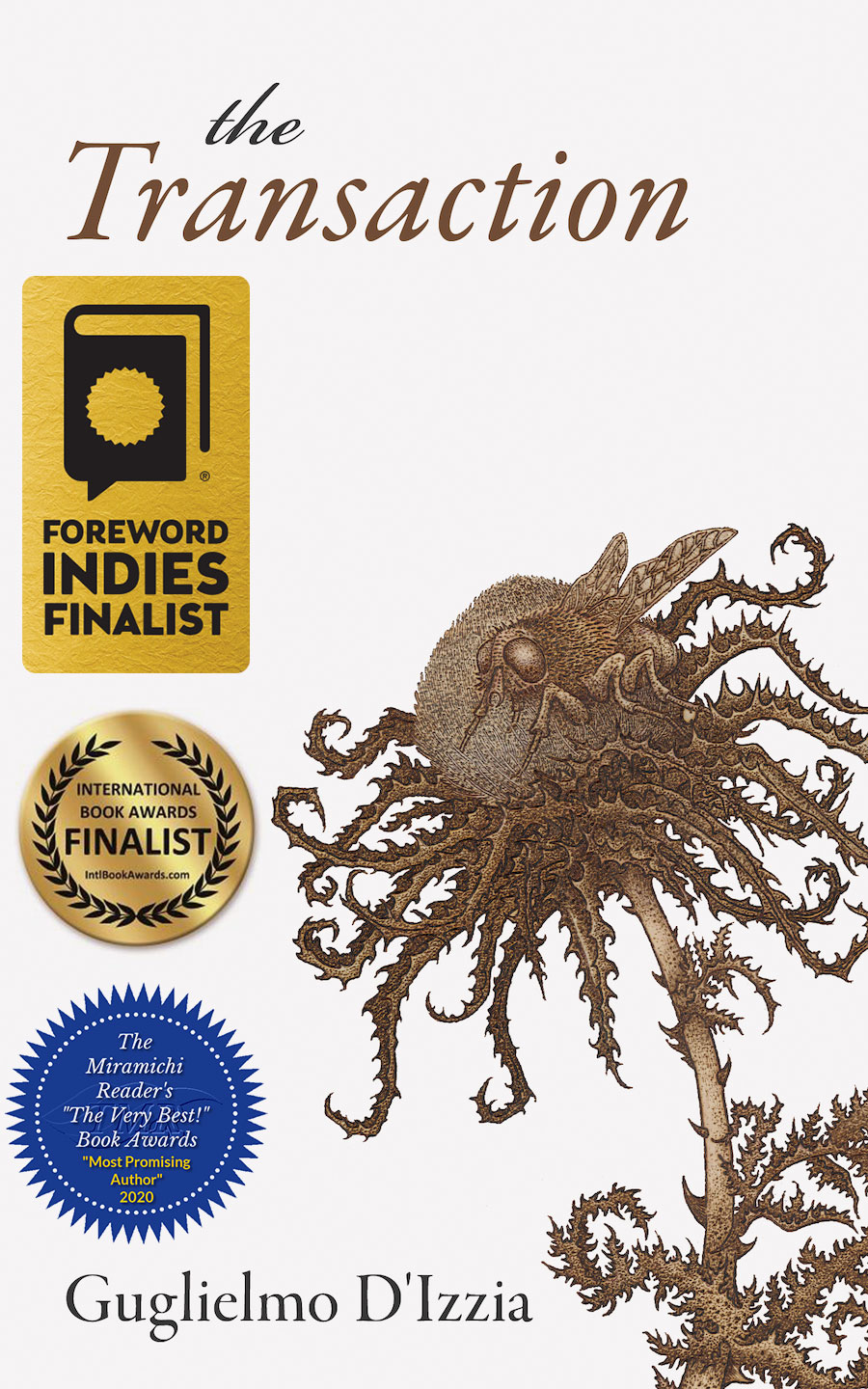
GD: The Transaction tells the story of De Angelis, an inscrutable northerner, who comes to a small town perched in Sicily's hinterland to negotiate a real estate transaction, only to find himself embroiled in a criminal conspiracy. What follows is a web of unsettling events, involving child prostitution and brazen killings. And at the heart of it: an alluring blue-eyed girl, Marinella. The chance encounter with the eleven-year-old traps him in a psychological and moral cul-de-sac.
In essence, The Transaction is a darkly humorous literary mystery, defiant of rigid genre constructs, prevalent aesthetics, and comfortable thematic boundaries. Its sensorial narrative style, devoid of abstractions, aims to engage the reader’s entire sensory stimuli, in particular to evoke physical reactions.
Though structurally linear, The Transaction employs a dual storyline (one unspoken) designed to elude clarity of meaning and motivation; thus, compelling the reader into an active role. The elliptical thread explores the recondite crevices of our psyche where our most illicit urges reside. And just like the hapless protagonist of The Transaction, the readers are forced to confront the most unsettling and grotesque taboos, but, more importantly, to question their complicity in perpetuating them.
The novel has often been described as nightmarish, haunting, disturbing—and it is. This is perhaps, in my view, one of the book’s greatest achievements, for there isn’t a single moment of graphic violence within its slim pages. The narrative relies solely on the power of suggestion.
4Q: It is a tremendous feeling when recognized for the quality of your writing. Please tell us about your feelings towards the Marina Nemat Award, the International Book Awards, the recognition from The Miramichi Reader, and the Foreword INDIES Book of the Year Awards.

GD: Well, I’m not going to lie. It’s always a great feeling when your writing receives any kind of recognition.
Frankly, I wasn’t expecting much when I started writing The Transaction, for I wrote it first and foremost for myself. Primarily I set out to write the book I would want to read. And for that reason, I didn’t really think I was going to be able to get it published, let alone to receive multiple recognitions for it.
To an extent—although this should never be the goal—being acknowledged makes your efforts seem worthwhile. Surely, one might argue that being awarded for your first book can add further pressure to the often-dreaded sophomore novel. But it can also have the opposite result. In fact, it has given me a much-needed boost and has made me a more confident writer.
4Q: Please share a childhood memory and/or anecdote.
GD: This story is probably going to make me look like a ghoul, but, what the hell, I’ll tell it anyway.
When I was eleven or twelve years old, a friend of mine and I decided to go on a quest for the lost fortress of Odogrillo, which was completely obliterated (at least that’s what we thought at the time) by the devastating earthquake of 1693 in southeastern Sicily. But the expedition yielded different, and surely unforeseen results.
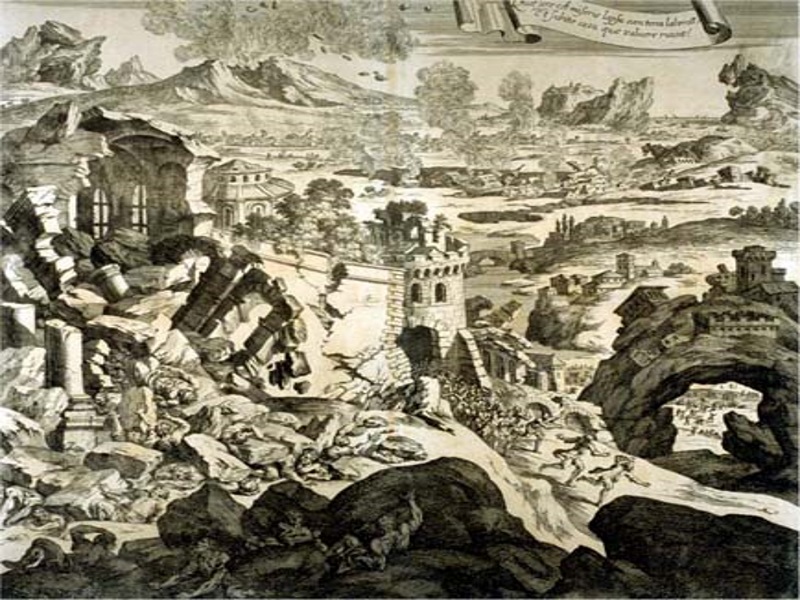
We had a fairly good idea on where to start the search, for there already were some scanty ruins connected to the feudal city, which was part of the fortress. For hours, we scoured a large area skirting the river bed, but to no avail. Eventually, we stumbled upon a ransacked archeological site, clearly unmapped, comprised of a very small cluster of ancient Greek tombs. So, we decided to explore the site a little further to see if there were any other burials or artifacts that were missed. However, to our greatest surprise, we discovered an unrelated mass grave.
I remember getting back home that evening soiled from head to toe, my mom shaking her head and saying: “What did you dig up this time!?” The next thing I remember is my mother—still shaking her head—next to a large pot of boiling water, dunking in the human skull I had just brought home.
4Q: Before donning your writing hat, you were involved in theatre and acting. Can you share some thoughts about that and do you still participate in these activities?
GD: Theatre is without a doubt my first love. As much as I adore cinema, it doesn’t even come close to the experience of live theatre. Acting was pretty much all I did for the first part of my life; with a fair amount of success, I might add. When I was living in Rome, I was an up-and-coming voice-over artist, and I was doing quite a bit of theatre. I was particularly proud of being cast in a sumptuous theatrical production of Amadeus by Peter Shaffer, starring one of Italy’s premiere personalities and designed by four-time Oscar winner Milena Canonero.

Since moving to North America, my acting career has for the most part fizzled. Sadly, these days I don’t get to do much acting, which feels quite strange. However, I’m still open to opportunities, and that’s why I haven’t taken myself completely out of the game just yet.
In any case, all those years of acting and script analysis have taught me many a valuable lesson—in particular, and perhaps the most important one, the art of dramatic writing.
4Q: What’s next for Guglielmo D’Izzia, the author?
GD: I must confess that for the past year or so it has been difficult being creative. I really had to push myself to do any writing at all. That said, at the moment, I’m working on several projects in different stages of development: two novels, a screenplay, a TV pilot, and a translation.
4Q: When you’re feeling the most creative, where will we find you writing? Your writing habits? Your special place?
GD: I usually do the bulk of my writing at home. I have a corner dedicated to it. It’s nothing fancy, but comfortable enough. Unfortunately, I have difficulties writing in public spaces (not that that’s even an option at the moment). I simply cannot concentrate with too many distractions around me, but mostly because I have to constantly read whatever I’m writing out loud, especially if it has dialogue in it (a habit I developed as an actor). Rhythm and flow are essential to my writing process, and that’s why I do it.
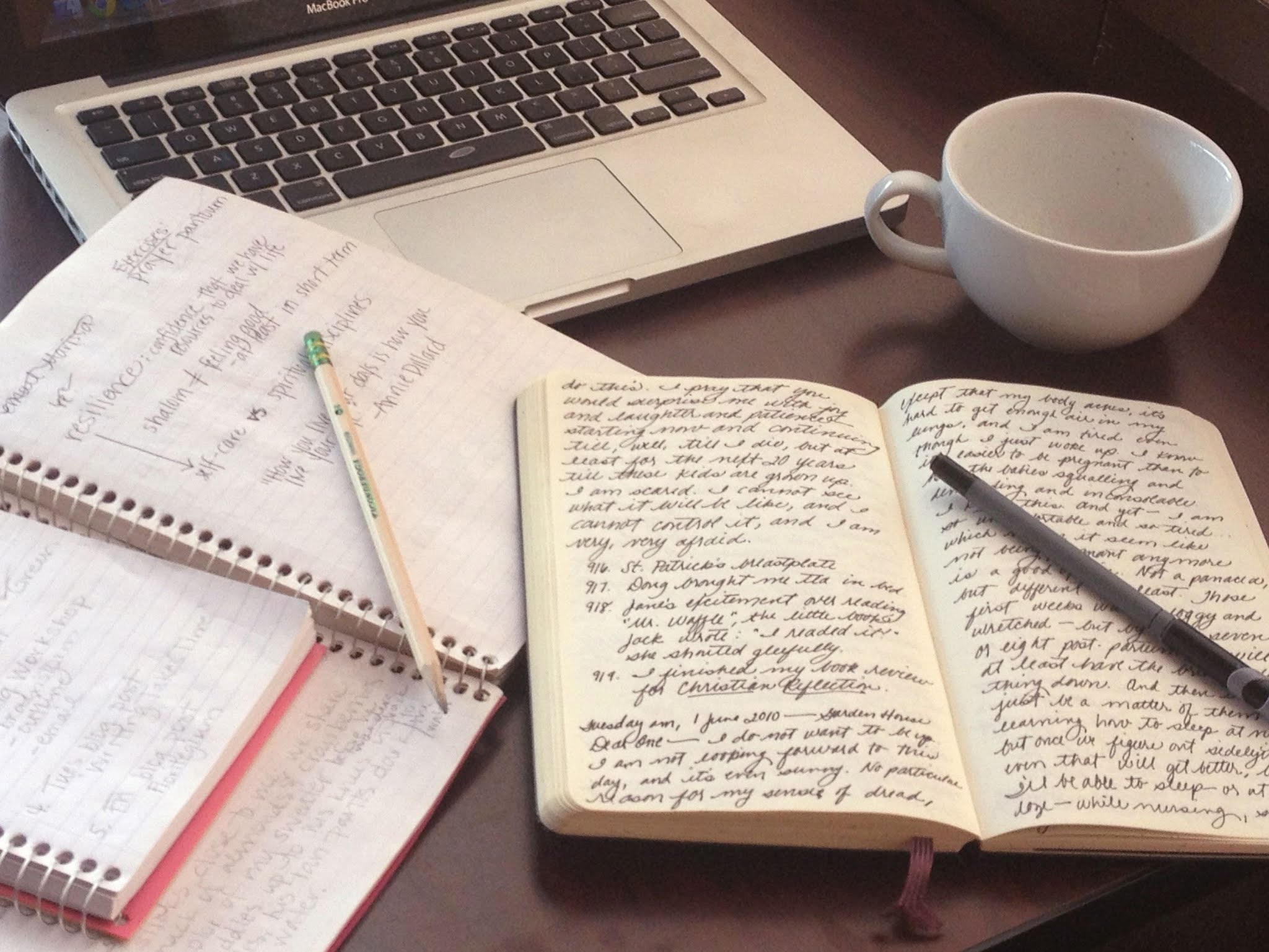
Morning is when I feel most creative and productive. I’m not particularly disciplined, but I do have a routine of sorts: I put on some background music (mostly Jazz and Classical), brew a really strong cup of French-press coffee, and dive right in. Whenever possible, I try to finish my writing session at an exciting moment or in the middle of a chapter. This makes it a lot easier, or at least faster, for me to get back to it the following day and pick up where I left off.
The days I’m really stuck, I take long walks and/or re-read my go-to authors for inspiration.
4Q: Anything else you’d like to tell us about?
GD: I’m pleased to announce that an audiobook of The Transaction is in the final stages of production.
I also would like to thank Allan for giving me this opportunity to discuss my book and my writing process with the South Branch Scribbler.
***It’s a real treat having you as a guest this week, Guglielmo.
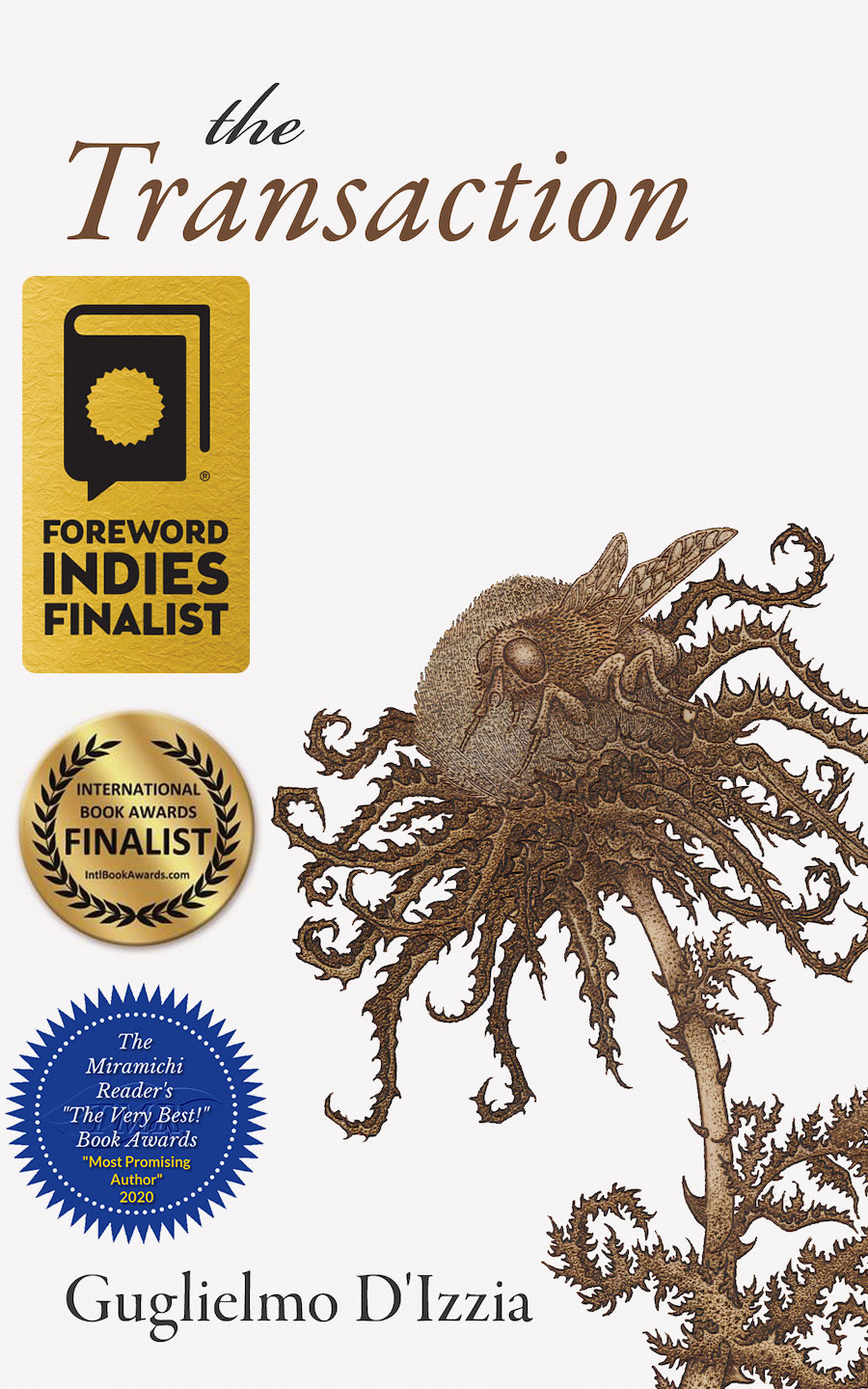
An Excerpt from The Transaction.
(Copyright is held by the author. Used with permission)
“Where?”
“There. See the sign above that door?”
“Yes, and?”
“Well, that’s it.”
What he referred to as a sign is merely a dark brown wooden plank with something daubed on it, which I’m able to decipher solely once we get closer. It reads: Trattoria.
A living room turned into a restaurant. That’s what it looks like. There are five tables in total—three on the left side of the entrance, and two on the right side—with pink tablecloths and modest cruets of olive oil and vinegar as centrepieces. On the right side of the wall facing the entrance, there’s a rudimentary bar; and next to it, on the left, a door frame with a beaded curtain, which I assume leads to the kitchen and toilet. Except for a couple of football banners and a tiny crucifix, the whitewashed walls are barren. As we’re standing by the door, an obese lady with abnormally varicose ankles approaches us.
“Evening,” she says.
I manage for a moment to lift my eyes from her ankles, only to notice that her bosom is hanging so low it touches her navel.
“Evening,” we reply in unison.
“Would you like to sit down?” Her small hooded eyes seek the conductor’s.
“Yes, please,” he says.
“Follow me.”
She rotates her large frame almost in place and slowly shuffles to a table. After gesturing for us to take a seat, she disappears behind the beaded curtain and reappears a few moments later with bread sticks, bread, and butter. “I’ll be right back,” she says and vanishes again.
I’m surprised to see we aren’t alone in the restaurant. Two men, each hunched over a glass of red wine, sit diagonally across from us, whispering to each other; and another man stands at the bar, sipping a digestive liqueur, his curious stare betrayed by the bar mirror.
“She forgot to give us menus,” I say.
“They don’t have menus here. Only dishes of the day.” And flashing a stupid grin, he adds: “Trust me, it’s good.”
I had already sensed he lied to me, but that confirms it. For someone who claimed to had just learned about this place, he seemed a little too comfortable finding it, not to mention strangely too familiar with its peculiarities. I don’t know why he felt compelled to conjure up such a silly lie. What do I care if he’s been here before? I really don’t see the point in all that, considering we hardly know each other. Anyway, I decide not to mention it lest I spoil dinner.
“We have a very nice stew tonight,” the obese lady says, having somehow sneaked up on us.
“Stew? It’s at least forty degrees in here. Don’t you have anything lighter than that?”
Her face contracts like a veal cutlet thrown on a hot grill.
She looks to the conductor. “What’s his problem?” she squeezes through her teeth.
“We’ll have the stew and some red wine. Thank you,” the conductor says in the smoothest way possible. She looks asquint at me and walks away without a word.
***
“
“Business.”
“Business? What kind of business if you don’t mind my asking?” He shoves a spoonful of stew in his mouth.
I don’t want to talk about my work, so I hesitate answering him.
“Maybe I’m being too nosy. You don’t have to tell me if you don’t want to. We can talk about something else, all right?”
“No, no, that’s all right,” I say to avoid making a big deal out of it. “The company I work for specializes in fertilizers. We deal quite a lot with the island, actually. I’d say that most of our best customers are from Sicily. Anyway, because of the volume of shipments to the island and the obvious costs, the company is considering opening a branch down here.”
“And you’re supposed to make this happen?”
“Right.”
“You’re a big shot!”
“Not really.”
Glancing over to the bar, I notice a slightly dishevelled man I hadn’t seen enter standing there, checking himself out in the bar mirror. He isn’t the one who was there earlier. He’s definitely taller; also, he has on a different suit.
“Excuse me,” the conductor says, getting up.
I nod and watch him being swallowed by the beaded curtain. As I stoop over my glass of wine, which is making me drowsy, I hear the tinkling noise of the beads. It’s the lady coming my way. She asks if I want a cup of coffee or a digestif. I decline both and tell her I want to wait for the conductor.
“You sure?” She takes the empty plates off the table.
“Yes, I’m sure.”
“All right, suit yourself. He’ll be a while though.”
“What do you mean?”
She ignores my question and walks back to the kitchen.
***
The wait is killing me. It’s been over half an hour, and still no sign of him. One of the two men still sitting at the table diagonally across from me gets up and makes towards the beaded curtain. Past it, he goes straight to the toilet, for I hear him opening the door, which produces a distinct squeak. That’s it. I can’t take it any longer. I stand up and go to see what’s going on. I knock. A voice that is not the conductor’s answers.
“Sorry,” I say.
I look about for other exits. Aside from the one through the beaded curtain leading to the dining area and the one right before it accessing the kitchen, there aren’t any others. With no further option, or at least no better one that I can come up with at the moment, I stride back to the kitchen and barge in. The obese lady is standing by the sink, trying to unclog it with a gigantic plunger. As I move a little closer, I spot from the corner of my eye a wizened little man holding a magazine—her husband I assume—sitting on a stool by a set of stairs, leading to the upper floors.
“Where is he?” I blurt out.
She brandishes the dripping plunger at me. “What’re you doing back here?”
“Where is he?”
“What’s he talking about?” the little man asks, standing up.
“The man I was having dinner with, where is he?” I reiterate, enunciating every word.
“It’s none of your business,” she says. “Go back inside.”
I’m about to fire back at her when I hear heavy steps coming down the stairs. It’s him.
“What’s going on?” he asks, tucking his shirt into his pants.
“Out of here. Both of you,” she bellows. In that very instant, I hear the creak of a door coming from upstairs. I glance up. A girl who cannot be more than twelve hides behind the rail, half naked, looking down at us.
***
Despite the dense silence, occasionally disrupted by the solitary hooting call of an owl, and the sinister atmosphere, it’s a lot easier to walk through the olive grove this time. The vapours rising from the soil, now damp and warm, combined with the complicity of the fat moon’s rays shining through the tangle of branches have formed a low uncanny-looking mist.
Back at the waiting room, I think it best to go to sleep immediately. Most of the passengers are out for the night already, except the two soldiers who are playing cards with great animosity by the teller’s window, away from the benches. As I lower myself on the bench, I notice the old lady’s absence, as well as that of her luggage and the little dog. Someone must’ve come to pick them up while the conductor and I were away. I glance over to him. He’s lying on the floor as far from me as possible within the confines of the waiting room, his broad back to me.
Falling asleep turns out to be impossible. The uncomfortable benches, the unpleasant chartreuse light coming from the fluorescent fixtures above, the heat, and the countless mosquito bites don’t help.
No matter how hard I try, I can’t stop thinking about that child. The whole scene keeps replaying in my head as if in a ceaseless loop, but each time it starts over a detail is lost, another one is gained or merged. During the wee hours of the night the recollection becomes so slippery and amorphous the sole thing remaining strikingly vivid is the child’s stare. It’s only by early morning that, physically and mentally exhausted, I’m able to fall asleep.
Thank you, Guglielmo, for being our special guest this week. Wishing you continued success with your writing.

For all you devoted readers that wish to discover more about Guglielmo and his writing, please follow these links.
The Miramichi Reader Interview. Read it HERE.
The Miramichi Reader review by James Fisher. Read it HERE.
Author’s website: https://www.guglielmodizzia.com/
Publisher’s website: https://www.guernicaeditions.com/title/9781771834544
Amazon: amazon.ca
Indigo: chapters.indigo.ca
Barnes & Noble: barnesandnoble.com
Facebook: https://www.facebook.com/guglielmo.dizzia
Twitter: https://twitter.com/odogrillo
Instagram: https://www.instagram.com/guglielmo_dizzia/March 13, 2021
Chuck Bowie of Fredericton, NB. A Talented Author of Thrillers & Cozys.
Let’s welcome back Chuck Bowie. One of the Scribbler’s most popular guests.
He is a New Brunswick author of five thrillers and two cozy mysteries. He writes out of Fredericton, NB, Canada.
His most recent visit can be seen HERE.
Chuck introduced me to cozy mysteries and he’s into a great series of his own.
So, let’s talk about cozys.
A Cozy is Warmer
By Chuck Bowie
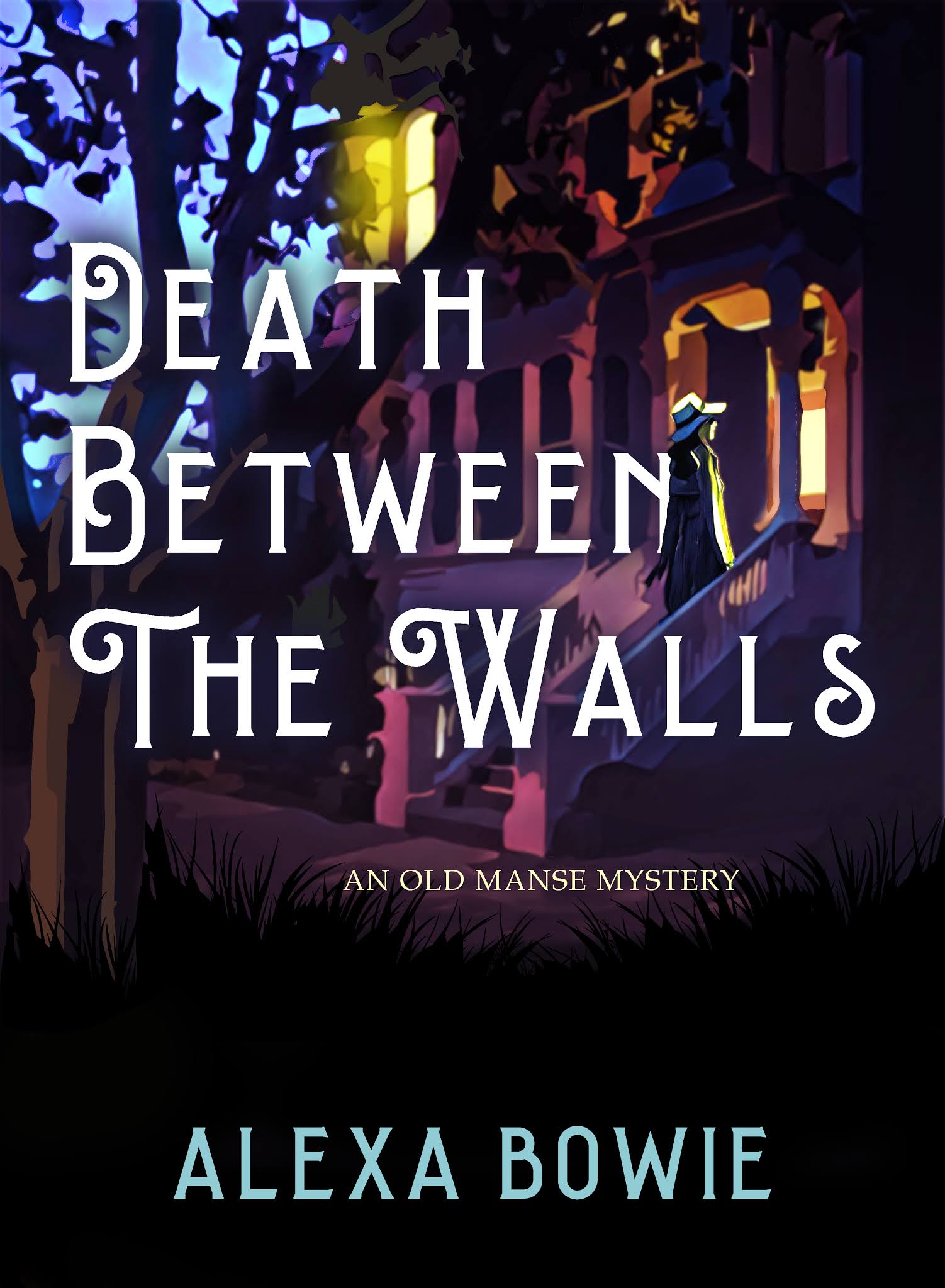
I’ve just written Book 2 in my Old Manse Mysteries cozy mystery series. I hadn’t finished the edits before being asked, as with Book 1: Death Between the Walls, what is a cozy? (I write thrillers, and the ancillary question is often ‘They’re both mysteries; but How is a Thriller different from a Cozy?’
Hmm.
I’ll begin and end with the same, terse, response: A cozy is warmer. For example, in Book 3 of my Donovan: Thief 4 Hire series, my protagonist says something like “Well, I could kill you now, or you could read about your failures in tomorrow’s paper. Either way, you’ll make headlines.” This is a tough guy, and all this after having shot the bad guy two or three times. So…Donovan will not appear in a cozy mystery, I assure you.
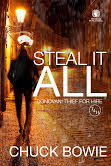
In Book 1 of my Old Manse Mysteriesseries, Emma, a thirty-four year old career woman, is convening a meeting of her tenants. She wants to apprise them of their lease arrangements, etc. But things go off track:
(Emma): “Okay, now, the reason for this meeting is—yes?”
Marjorie wiggled a single index finger at Emma. “Dear, we were wondering when you’ll be arrested for murdering poor Mr. Jones. Because if you have to go to jail, I’d be happy to make you soup on Wednesdays. Everyone says I make splendid soup.” Marjorie sat back, evidently pleased with her contribution.
The reader can see that the tone is decidedly different from one sub-genre to the other. Although these are not hard and fast rules, a Cozy Mystery tones down the sex, the violence, and the language. Concurrently, a cozy will amp up the romance, the humour, and the warmth. If there is a murderer (or even the perpetration of a crime), the guilty individual must be seen or discussed early on in the book. That said, the narrative arc is much the same for thrillers and cozys, which is true for all Western Hemisphere mysteries. The narrative arc of Intro-Challenge-Quest-Complications-Crisis-Ending holds true for most western fiction.
Agatha Christie wrote a few cozys (Murder, She Wrote, Hercule Poirot), well, dozens. Joanna Fluke, a modern prolific cozy author, writes a wonderful series about a baker. In both cases, the running gag is the population of the small town (setting) will soon run out of citizens, such is the death toll of two to three per novel. The heroine isn’t afraid to offer up cheerful one-liners in the face of death, and children, pets and beloved relatives and friends need not fear for their lives as the main character plays detective to solve the crimes.
But there is another element to the Cozy Mystery. How is evil addressed, and why is this an issue? In other mysteries, evil is present, and palpable. It can even set the tone. With a cozy, the warmth subsumes the evil, and the reader can relax, knowing everything is going to be alright. Cozy readers often choose this sub-genre in order to suspend-disbelief, go along for the ride, and not have to worry that something truly awful will (or could) befall these characters the reader has fallen in love with. Nevertheless, they still want the writing to be very good.
Author of Thrillers to Author of Cozys
Until recently, I was happily motoring along, writing a thriller every year or two, and even had an idea roughed out for a new thriller (which turned out to be Her Irish Boyfriend). But a concept arrived into the back of my head, unannounced and uninvited. How about a novel that is a bit of a love letter to my home town? I love writing mysteries, but I want to write a series about a town that might even be considered to be a character in its own right.

A suspense-thriller wouldn’t do as it just wasn’t the appropriate vehicle to deliver this message. Might there be another kind of mystery out there that could fit a more romantic, funnier, and warmer storyline? It turns out, there is. So I tried a cozy mystery about a fish-out-of-water woman just returned home from Toronto after a considerable absence: half of her young life. I surround her with eccentric, charming creatives who embrace her as one of their own (she’s a lifestyles/wine writer).
While it seems she has little in common with the townspeople, she interacts with many citizens in her quest to find the murderer, and she gradually finds her place in the heart of the community. Book 1 ends with Emma trying to decide whether she should return to Toronto, as her fortunes seem to have turned around, but the little New Brunswick town appears to have found its way into her heart. So, the story isn’t over just because the crime is solved.
Book 2: Death Between the Tables
Death Between the Tables opens with a house warming of sorts. Emma throws a fete to celebrate the new-and-improved Arts and Culture centre, resulting in—Oh, no!—another unfortunate situation. Again, eyebrows are raised at the thought of this newcomer, Emma, sitting squarely in the middle of yet another calamity. One of her tenants is the prime suspect, and, for Emma, this will not do. So off she goes in her tiny blue pickup truck, investigating a mystery yet again.
I am having such fun with this series. I’m doing my best to present the absolute warmest aspects of the Miramichi community, and I’m anxious to have guests (Gentle Readers) come to love the fictional town of Newcastle-Chatham as much as I do! But beware, residents of the community. The characters are fictional, the businesses are fictional, and while many of the roads are real(ish), to follow them in the order I present them could get you lost forever.
I’ve decided to write a third Old Manse Mystery. The discerning reader will understand that this statement is in effect a ‘Spoiler Alert’, in the sense that if I go past Book 2, the chances are that Emma might not move back to Toronto. Are you okay with that?

Chuck Bowie is a New Brunswick author of five thrillers and two cozy mysteries. He writes out of Fredericton, NB, Canada. Death Between the Walls drops in April, 2021.
Writing as Alexa Bowie
Writing as Chuck Bowie
https://www.amazon.ca/s?k=chuck+bowie&i=stripbooks&ref=nb_sb_noss_1
March 6, 2021
Returning Author Lana Newton (Kortchik) of Australia.

It’s been much too long since Lana last visited the Scribbler. Since her previous posting in 2016, a lot of exciting moments have taken place. She’s writing terrific stories, to much acclaim. Positive reviews keep piling up.
If you want to take a peek at her last visit, please go HERE and read an Excerpt from an earlier work – Savaged Lands.
I recently finished her earlier novel – Sisters of War and it was a fantastic read. Find out more about it HERE.
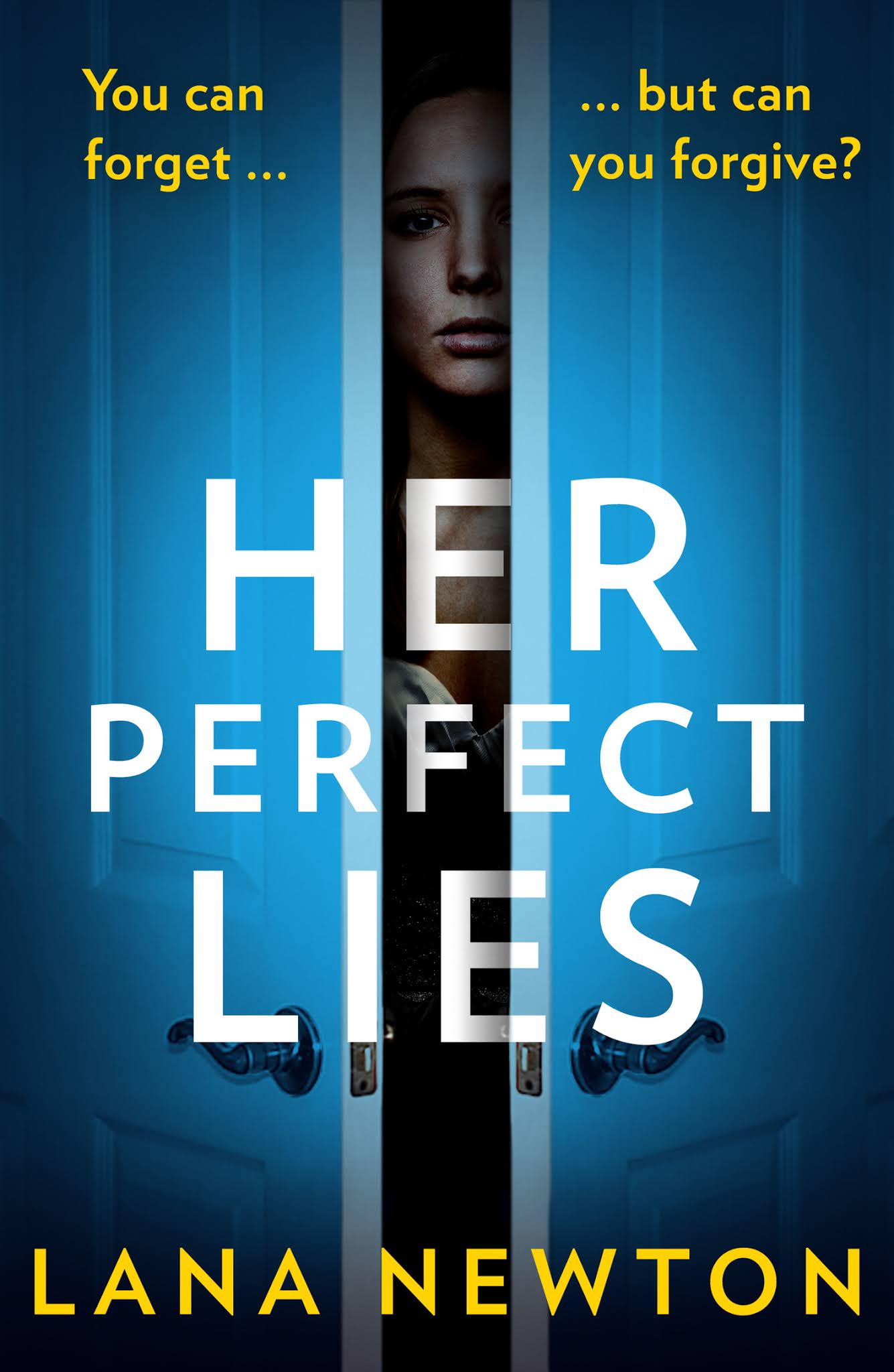
This week she is sharing an Excerpt from her newest novel – Her Perfect Lies. Make sure you pick up a copy. I know I am.
Lana Newton grew up in two opposite corners of the Soviet Union – the snow-white Siberian town of Tomsk and the golden-domed Ukrainian capital, Kyiv. At the age of sixteen, she moved to Australia with her mother. Lana and her family live on the Central Coast of NSW, where it never snows and is always summer-warm.
Lana studied IT at university and, as a student, wrote poetry in Russian that she hid from everyone. For over a decade after graduating, she worked as a computer programmer. When she returned to university to complete her history degree, her favourite lecturer encouraged her to write fiction. She hasn’t looked back, and never goes anywhere without her favourite pen because you never know when the inspiration might strike.
Lana’s short stories appeared in many magazines and anthologies, and she was the winner of the Historical Novel Society Autumn 2012 Short Fiction competition. Her novels are published by HQ Digital, an imprint of Harper Collins UK.
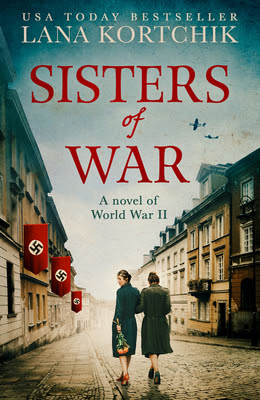
Lana also writes historical fiction under the pen name of Lana Kortchik. Her first novel, Sisters of War, is the USA Today bestseller published by Harper Collins.
To find out more, please visit http://www.lanakortchik.com.
Facebook: https://www.facebook.com/lanakortchik
Twitter: https://www.twitter.com/lanak
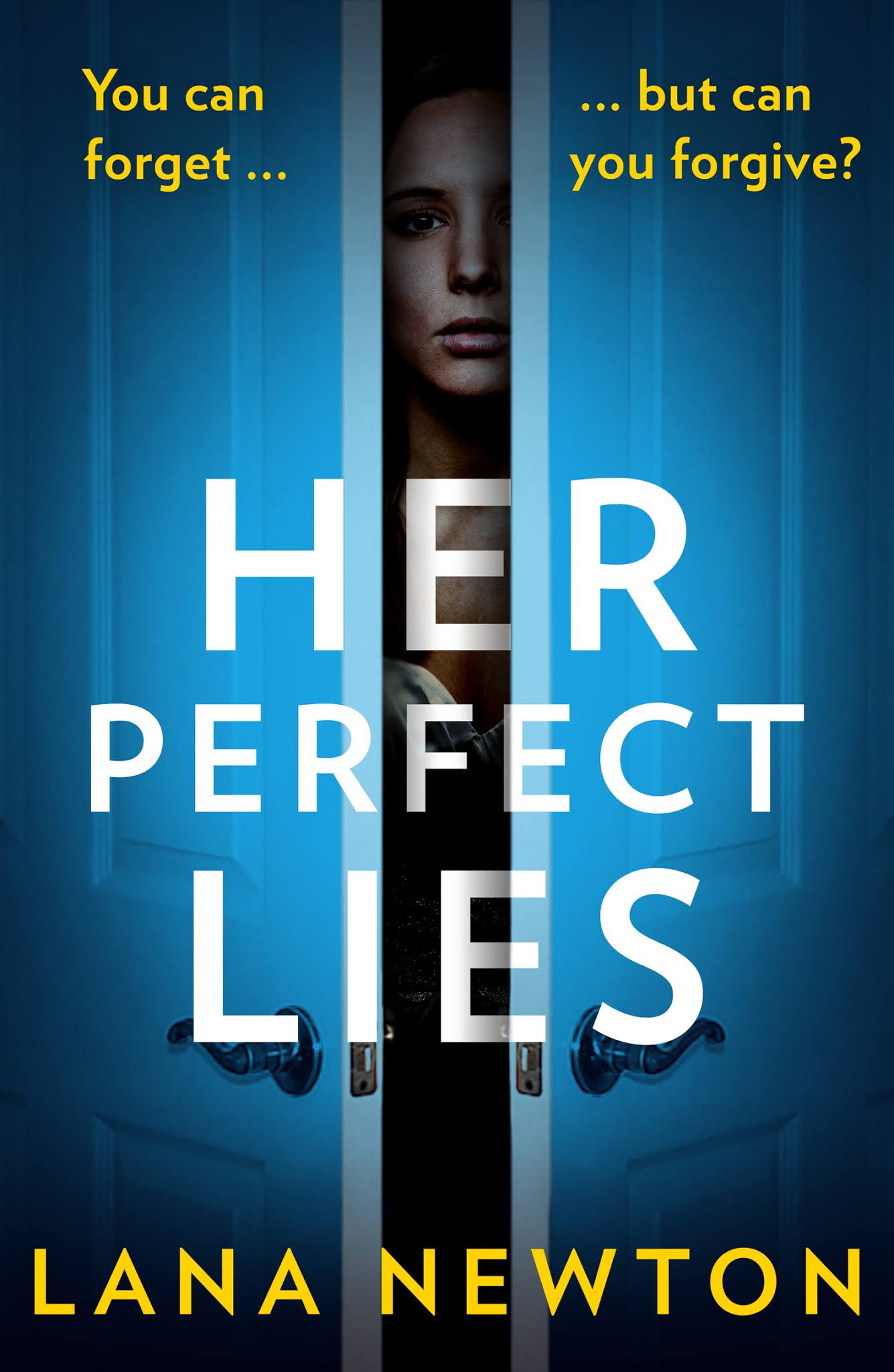
Excerpt
Her Perfect Lies
Lana Newton
A stranger watched her from the mirror. Grey eyes, pale lips, blonde – almost white – hair, as if bleached by the sun, a face she felt she had never seen before. The only thing she knew about this stranger was her name.
Claire. They said her name was Claire.
They told her other things, of course – things she found hard to believe. She was famous, touring around the world with the largest ballet company in the country. The nurses talked about her as if they knew her. One had even seen her perform, in faraway Australia of all places.
Through mindless hours in her hospital bed, she imagined herself on stage in front of thousands. Impossible, she would whisper, the stranger in the mirror nodding in agreement. Yet, there were pictures and videos to prove it. She peered at herself in the photographs, as Odette, Sugar Plum Fairy, Cinderella. Dazzling costumes, elegant posture, long limbs. Was it really her? She looked at the twirling doll on the screen of her phone until her eyes hurt. Impossible, impossible, impossible.
Tchaikovsky’s Swan Lake, like a clap of thunder, filled the room. Unfamiliar, and yet, she felt she ought to know it, as if she had heard it a thousand times before. Every time she willed her body to move, her feet would slide into a ballet position like it was the most natural thing in the world. What her mind had forgotten, her body remembered. Pirouettes, jetés, and pliés came to her in time to Tchaikovsky’s eternal creation, each as perfect as a summer rain.

Today was a special day. The nurses seemed excited for her. She felt she should be excited, too. Staring in the mirror, right into the stranger’s eyes, she forced her face into a smile and widened her eyes, but instead of happy she looked scared. She was exhausted, as if she had lived a thousand lifetimes, none of which she could remember. Splashing her face with cold water, she brushed her hair and tied it in a high ponytail. Reaching for her bag, she applied some makeup. Black for her eyelashes, pink for her cheeks, red for her lips. The last thing she wanted was to look like she was part of this grey hospital room.
The London sky outside wasn’t grey but a vivid purple. She watched the last traces of sunlight disappear, and then, out of nowhere, the rain came. It battered the lone oak tree outside, and the leaves thrashed in the wind. Over the music she could hear their rustle. This sky, this oak tree, the room she was in, the cafeteria down the hall – these were the boundaries of her world. Beyond them, she knew nothing.
The music stopped and she turned sharply away from the window. She could sense his gaze. The man standing in the doorway was tall, and she felt dwarfed by him. They stared at each other in silence for a few seconds too long – Claire, her cheeks flush with rouge, eyes filled with fear, and her husband, impeccably dressed, unsmiling, unfamiliar.
‘Hi, Claire.’ The man took a few steps in her direction.
‘Hi, Paul.’ In two weeks she had seen him twice. Now he had finally come to take her home.
‘Feeling better today?’
She didn’t know how to answer his question. Better than two weeks ago? Yes. But better in general? She couldn’t remember what that felt like. ‘I still get headaches. But my back is almost healed.’ She peered into his face. There were wrinkles around his eyes and dark stubble on his chin. She didn’t have it in her heart to tell him he was a stranger to her. But he was looking at her as if she was a stranger, too. His eyes remained cold.
‘Do you have everything?’ he asked.
‘I just need to say goodbye. Wait here for me? I won’t be long.’
She made her way down a busy corridor, navigating gurneys, trolleys and people. She had made this trip many times before, could probably do it with her eyes closed – a left turn, twenty uncertain paces, another left, down two flights of stairs and a right. The door she wanted was hidden behind a pillar, tucked away from prying eyes. You could easily walk past and not even know it was there. Today it was wide open, as if inviting her in.
It was quiet in the room, no music playing, no television murmuring in the background, no eager visitors with their chatter and flowers. Only the heartbeat of the machines, like clocks counting down the seconds, and the ventilator puffing, struggling, breathing in and out. If nurses or doctors spoke in here, they did so in hushed voices, as if they were afraid of disturbing the man on the bed. Which was ironic because all they wanted was for him to wake up.
Outside the window was the hospital car park, a noisy anthill of activity, with ambulances screeching and cars vying for spaces. The rumble of engines was a muffled soundtrack to the man’s artificial existence. She felt grateful for the oak tree outside her room, for the peace and quiet. She would have hated having nothing but cars to look at. But the man didn’t care. He was asleep.
Sitting on the edge of the bed, Claire took his hand. After two weeks, this gesture had become a habit. Day after miserable day she would do it on autopilot, looking into the man’s face, studying his lifeless features. Today she could swear his eyelids were moving. She wanted to ask the doctor if it meant anything. Fluttering eyelids – was it a sign? Was he about to wake up? Or was it her imagination showing her what she wanted to see?
‘Your father, is it?’ A nurse crept up behind her silently, like a cat. She looked a little like a cat too, scruffy and ginger, her eyes cagey. She paused next to the man’s bed, removed the chart from its folder and checked the monitors. ‘You look just like him.’
The man’s skin was grey today, more so than usual. His face was gaunt, his body a skeleton on the white sheet.
‘Yes,’ said Claire. ‘I’m waiting for him to wake up, so he can tell me about my life.’
If the nurse was surprised, she didn’t show it. ‘Are you a patient here?’
Claire didn’t answer but turned away from the nurse and towards her father. The woman’s mouth opened as if to repeat her question, but at the last moment she seemed to change her mind. Her eyes darted over Claire’s face as she made a few notes on the chart and placed it back. ‘I hope he pulls through,’ she said finally. ‘I’ll pray for him. And for you.’

She was already out the door when Claire called out, ‘Can he hear me? If I talk to him, can he hear?’
The ginger head reappeared in the doorway. ‘They do believe so. I mean, after all the research they’ve done. Speak to him, tell him you love him. It will help.’ The nurse nodded as she spoke, as if for emphasis. Her eyes filled with compassion.
Claire squeezed the man’s fingers. Ever so slightly she shook him, pushed his shoulder with her tiny fist, willing him to open his eyes. His hand felt cold in hers, a dead weight pulling down. She brought it to her face and saw her tears fall on the calluses of his palm. These hands held me when I was a child, she thought. These lips, now motionless, read bedtime stories and kissed me goodnight. How could she have forgotten all that? It didn’t seem possible. Memories like that were part of one’s DNA, only gone when life itself was gone. She leant over, pressing her lips to his forehead. ‘Wake up, Dad,’ she whispered. ‘I need you.’
She had spent the last two weeks feeling guilty. Guilty that she was awake, while her dad was unconscious. That she could walk, look out the window, enjoy the pale sunlight and the meagre hospital food. And now she felt guilty she was leaving this place, returning to what once had been her normal existence, while he was stuck in this bed, not yet dead, but not quite alive either.
On the way back she walked slowly, delaying the inevitable, not ready to leave the familiar for the unknown.
Paul was waiting in her room. ‘Time to go,’ he said and his lips stretched into a smile. Even to her confused, drug-addled mind, it looked forced. Glancing away, she nodded quickly and reached for her bag. Her whole life, all two weeks of it, packed into a small travel case. Paul walked out without touching her. As she waited for him to talk to the doctors and sign the paperwork, she felt sweat drops on her forehead. Her throat was dry.
Thank you for being our guest this week, Lana. Thank you for your stories. Wishing you continued success with your writing.
 To see what else Lana has been up to, please visit her Goodreads Author's Page by going HERE.


Don't be shy, leave us a comment.
February 27, 2021
Award Winning Sci-Fi/Fantasy Author Hannah State of Fredericton, NB.

I discovered Hannah’s YA novel – Journey to the Hopewell Star - when I read the review on The Miramichi Reader, see it HERE. The review was followed up by an interview two months later and you can read that HERE.
I was impressed by what I read and since then I follow Hannah on FB. I believe this is an author to watch for. Her novel has garnered many 4 and 5 stars reviews and the buzz is, it’s quite good.
We are more than pleased she has agreed to an interview here on the Scribbler and is sharing an excerpt from her novel.
Hannah D. State is an award-winning Canadian author and science fiction/fantasy writer. She resides in Fredericton, New Brunswick, and loves the friendly community, quietude, and beautiful nature of Atlantic Canada. She graduated from McGill University with a BA and earned her MPL from Queen’s University. Hannah is bothered by inequality, violence, greed, complacency, snakes, entering a dark room, and not getting enough sleep. She enjoys writing about strong-willed characters who don’t fit the norm and who overcome great obstacles with perseverance, self-discovery, and help from others. Sometimes Hannah can’t keep up with her characters’ ideas and plans, so she takes breaks, drinks coffee, does sudoku and other puzzles, practices yoga, and takes nature walks to calm her mind and really listen. Journey to the Hopewell Star is her first novel.
4Q: Your intro on your Facebook labels your writing as Science Fiction/ Fantasy. What draws you to this genre?

HS: What I love about the science fiction/fantasy genre is that it allows you to explore creative, imaginative worlds full of diversity and possibilities, which really gives you a lot of freedom to navigate the unknown and to question things. I tend to have an overactive imagination, extending situations into a realm of possibility, and then I try to think of solutions to make things better. Even though I’m writing fiction, I find that many current issues can impact us in different ways. When I’m bothered by something, it sticks with me. I try to consider the ways it may affect society in the future and how it might affect characters if they were thrust into a similar situation. Reading about world issues drives me to further consider alternatives, and I’m also a bit of an idealist, so science fiction/fantasy is the perfect realm and creative outlet for me.
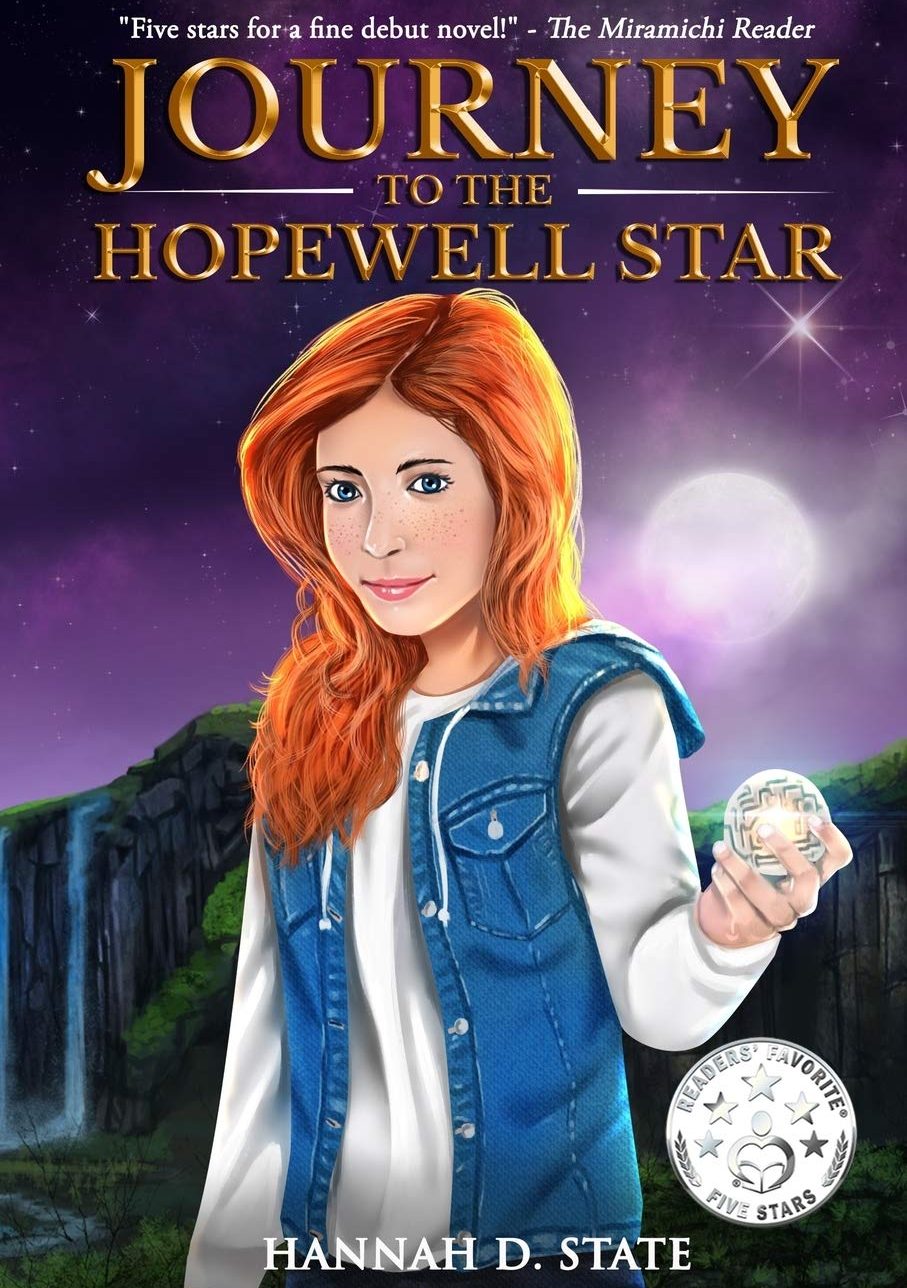
4Q: When our readers pick up a copy of Journey to the Hopewell Star, what can they expect? And how did you come about naming the star, Hopewell?

HS: The story is about twelve-year-old Sam Sanderson, who lives a peaceful, quiet life on her grandfather’s farm while her parents are on a secret otherworldly mission. One night, Sam meets a mysterious visitor from another world who is the catalyst that thrusts her on a perilous journey. Her mission is to find the elusive Hopewell Star to save a dying planet. It’s a multifaceted tale and explores some complex scientific and technological concepts but breaks them down in a way that’s easy to understand. But it’s not just about the scientific aspects—I wanted to create a story that would consider other important themes, such as interdependency with our environment, our interconnectedness with others, overcoming obstacles, and believing in yourself.

When my husband and I first moved to the East Coast, we visited the Hopewell Rocks in the Bay of Fundy, and I was inspired by the beauty of the landscape. Without giving too much away, the name stuck with me, and I was curious about building a mythology or legend around the name Hopewell, the merging of “hope” and “well”, and what it would entail on a larger, universal scale. I started asking myself questions, such as, what if another, more advanced civilization had been monitoring Earth, and they were dismayed with how we’d treated our planet and each other, and had decided to create a special star that had the ability to shine in such a way so as to reduce the hatred and suffering that humans had created and experienced? What if it represented a pact between those two worlds to do better? What if the star were fuelled by the good deeds, hope, and well-being that humans inspired in others? Then I asked the question, what if someone or a group of people wanted to harness that power for something more sinister in nature so that the source of that star’s power was threatened? What would that look like? And that’s how the story developed.
4Q: Please share a childhood memory and/or anecdote.
HS: Some of my favourite childhood memories are of acting and performing in some plays on stage and in the small space of our living room for family and friends. I attended Lester B. Pearson School for the Arts in London, Ontario, and was in the Grand Theatre’s production of A Christmas Carol. But one of my earlier memories was of performing in a play that my mother, Barbara Novak, had written while I attended Ryerson Public School.
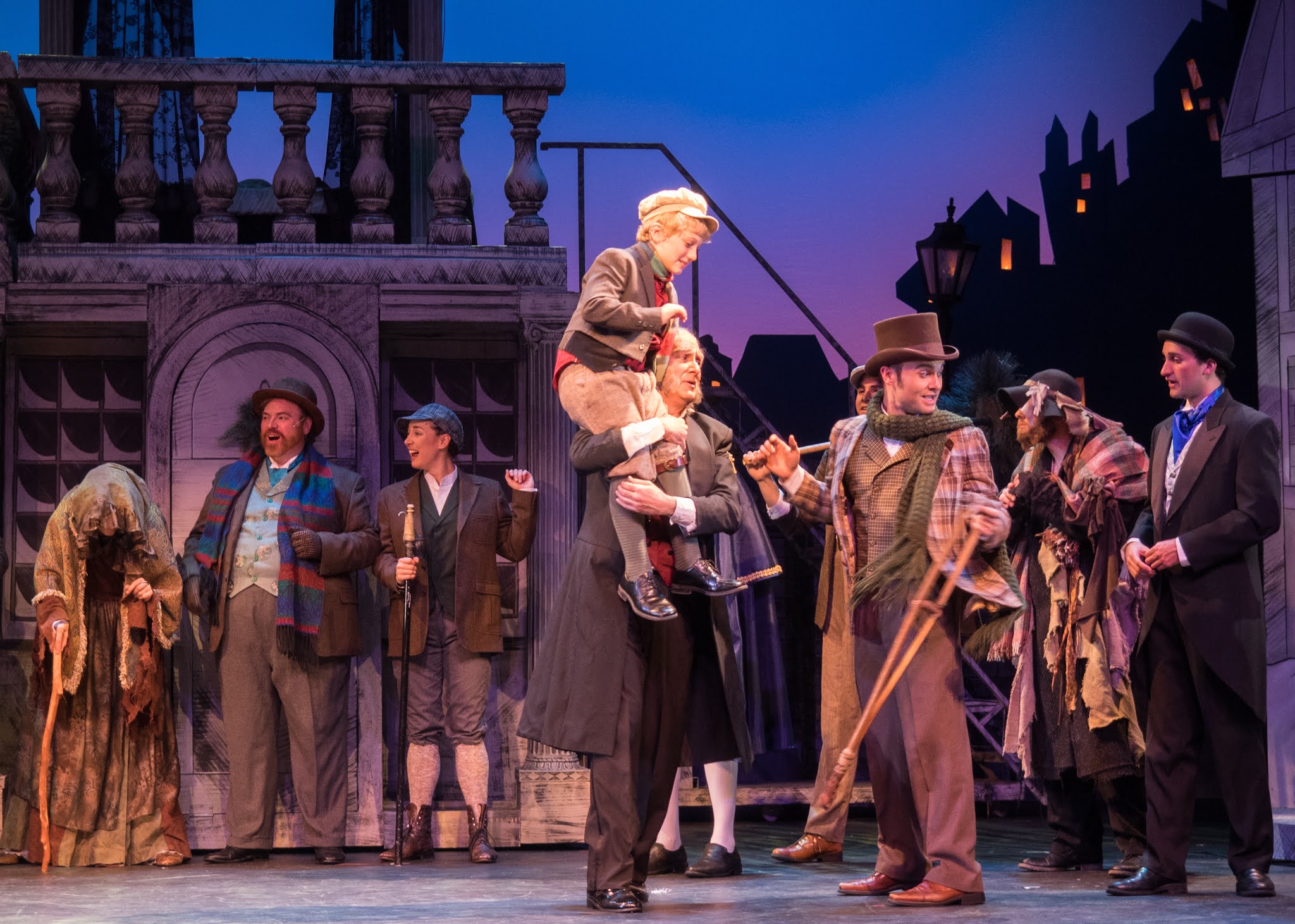
Her play, entitled Sybil in the Middle, was a comedy about a middle child who felt that her parents didn’t understand her. A genie grants her a wish, but it backfires, and she ends up growing a pig’s nose. I played the role of the younger child, and I remember how proud I was of my mom. She had written this play that had the power to excite, endear, and uplift the audience of children and their parents. I still remember the laughter that filled that auditorium. It was a magical moment, and my mother was a huge inspiration for my love of the arts and writing.
4Q: The illustration on the cover of Journey to the Hopewell Star is quite attractive. Who designed it and what was your input?
HS: Thank you. Irfan Budi is an exceptionally talented illustrator from Indonesia. We worked together entirely online. I provided him with a concept, a description of the main character, and some colour elements. He first prepared a rough sketch, and then I provided my suggestions, and he worked with my idea and delivered a truly amazing result.

4Q: Which part of the novel was the most difficult to write?
HS: Some of the scenes with the main antagonist, Titus, were difficult to write. He’s a tyrannical business mogul; arrogant, manipulative, greedy, and dangerous. Getting into his mind caused my heart to race and my blood to boil sometimes. But at the same time, some of his scenes were particularly fun to write, especially the scene where he gets into a heated argument with his replicated robotic wife that he had created.
4Q: Plotter or pantser?
HS: That’s a great question! I’m somewhat of a plotter as I tend to first plan and map out the story in my mind in terms of the scenes and elements I want to include and where I want the story to go. However, I leave the structure somewhat fluid and open when writing, in case I want to take it in a different direction, and so I’m a bit of a pantser in that sense. If I plot too much in terms of outlining each chapter and creating a rigid structure, then it becomes difficult to change later on. Perhaps I’m a hybrid—a “plantser”.
4Q: What’s next for Hannah State, the author?
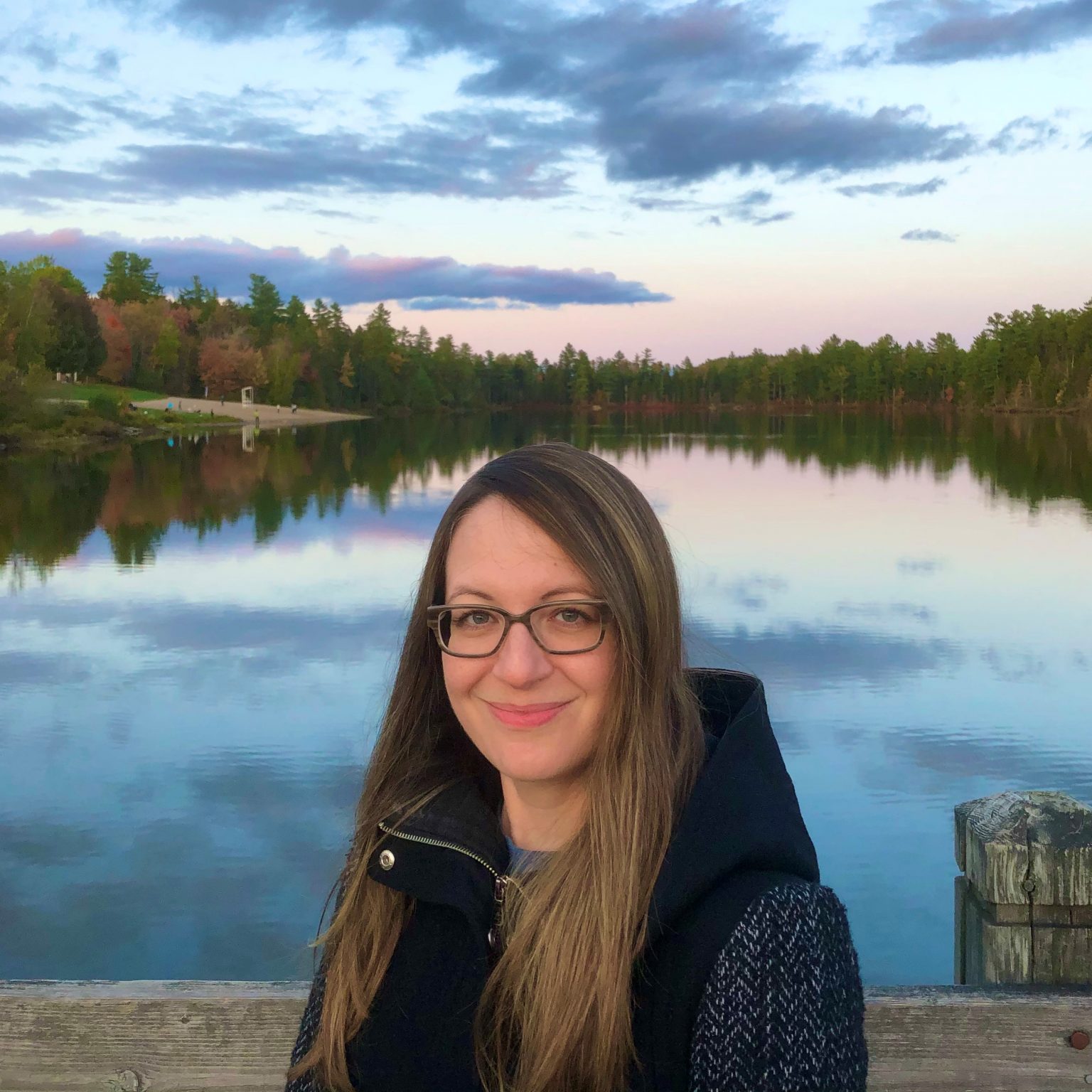
HS: I’m working on a sequel to Journey to the Hopewell Starand also hoping to launch my website in 2021. This will be a year of continued learning opportunities and exploring new adventures!
4Q: Anything else you’d like to share with us?
HS: I’m excited to share the recent release of the official book trailer. Towers Filmworks did an excellent job in putting it together. You can find it here: https://www.youtube.com/watch?v=JAeDYzp2ENM
Also, I just wanted to say many thanks, Allan, for this opportunity to discuss my book and writing process with the South Branch Scribbler.
***You are more than welcome, Hannah. Pleasure having you here.
An Excerpt from Journey to the Hopewell Star.
(Copyright is held by the author. Used with permission.)
Soon they arrived at the mouth of one of the caves. Boj stopped, staring up at the gaping entrance. Sam focused her gaze upon a series of markings; strange symbols like hieroglyphics were engraved into the rock along the edge of the cave opening. She peered inside, the darkness foreboding. How would she navigate this?
“Remember what I told you,” Boj said.
“You mean—you’re not coming with me?”
“I can’t. I’m sorry. Once you leave the cave, I’ll meet with him separately. Now, remember what I said about addressing him. Once you are inside, listen to his voice and he will guide you through the cave. Do not worry, Sam. I’ll be waiting here for you. Now, go. There is no time to waste.”
Sam took a step inside, unnerved and a bit shaky. Nevertheless, she had come this far. What were a few more steps to go?
Inside, darkness enveloped her. All she heard was her loud breathing, her footsteps echoing on the stone floor.
Thank you, Hannah, for being our guest this week. Wishing you continued success with your writing.
Thank you, Allan. Wishing all the best to you, too!

For all you awesome visitors wishing to discover more about Hannah and her writing, please follow these links:
Author Facebook Page: https://www.facebook.com/hannahdstate/
Author Goodreads Page: https://www.goodreads.com/author/show/20560327.Hannah_D_State
Official Book Trailer: https://www.youtube.com/watch?v=JAeDYzp2ENM
Chapters: https://www.chapters.indigo.ca/en-ca/books/journey-to-the-hopewell-star/9781777254209-item.html
Barnes & Noble: https://www.barnesandnoble.com/w/journey-to-the-hopewell-star-hannah-d-state/1137893313?ean=9781777254209

February 20, 2021
Award Winning Author Mark Scott Piper of Santa Rosa, CA.
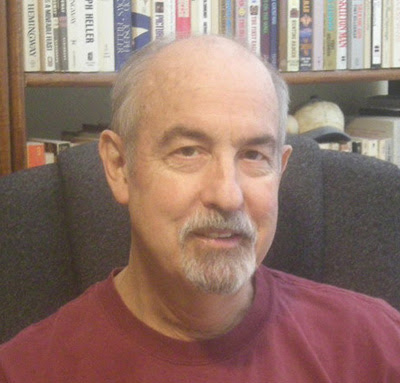
When you are writing a story or a novel, the writing is the easy part. Getting it out to as many readers as possible is the difficult part. Now this is where Mark comes in. A generous supporter of his fellow authors, I had the good fortune of meeting Mark online. We both follow authors we enjoy and root for.
Two novels under his belt, his latest story is garnishing many positive reviews and generating a lot of excitement.
It’s a pleasure to have Mark join us this week for a 4Q Interview and is sharing an excerpt from his newest novel – The Old Block.
Mark Scott Piper has been writing professionally his entire adult life. He is a longtime freelance writer and video director/producer. Mark holds an M.A. and a Ph.D. in English from the University of Oregon, and he has taught literature and writing at the college level for several years. His debut novel, You Wish, was the 2019 American Eagle Book Awards first-place gold winner. His second novel, The Old Block, has just been released.
Mark's bookshelves are overflowing. Among his favorites are Christopher Moore, John Irving, Barbara Kingsolver, Stephen Crane, William Faulkner, Tony Hillerman, Fyodor Dostoevsky, and Anne Lamott--all of whom successfully conspire to keep him humble.
His stories have appeared in Short Story America, The California Writers Club Literary Review, and several online literary magazines, including, Scrutiny, Writing Raw, Fabula Argentea, Animal, Slurve, and others. In addition, two of his short stories have been Honorable Mention selections in Short Story America Prize for Short Fiction contests.
4Q: Thanks for being our guest this week, Mark. Before we chat about your latest work, please tell us about winning gold in the American Eagle Book Awards for You Wish. This must’ve been exciting. And can you give us a brief synopsis?

MP: Yes, winning the top prize in the 2019 American Eagle Book Awards was a complete surprise, especially given the circumstances. We were forced to evacuate our home because the raging wild fires in Northern California were getting dangerously close. That meant I didn’t have access to my computer for a while. Thankfully, we didn’t suffer any fire damage. Once the air became breathable again and we were settled back home, I checked my email. That’s when I found out I’d won. At first I thought it was another scam. Turned out it wasn’t.
Since You Wish was my debut, I had no idea how people will respond. So I’d already steeled myself for possible rejection. But the reaction to my novel was the opposite.
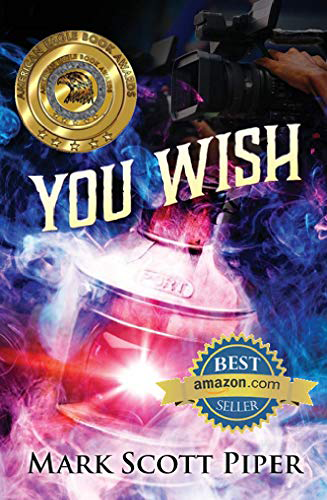
Here’s the elevator pitch for You Wish.
Imagine you are granted three-wishes—and your second wish is captured by a television news crew and broadcast across the globe. That means the whole world knows you can wish for absolutely anything, and it will come true. And they’re all watching. Now imagine you’re only fourteen years old.
4Q: Please tell our readers what to expect when they pick up a copy of The Old Block.
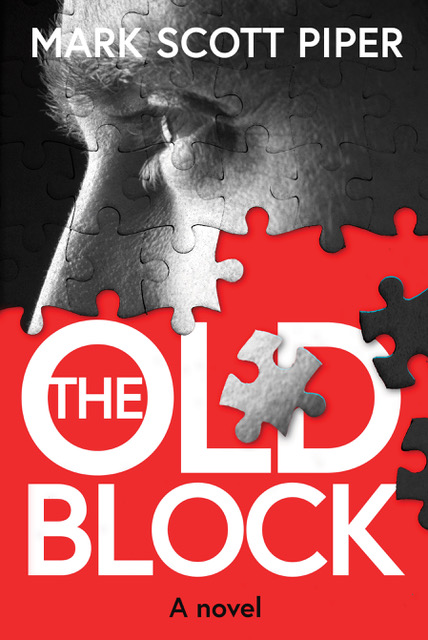
MP: You Wish was a YA crossover novel, featuring magical realism with a large dose of social satire. The Old Block, on the other hand, is a literary novel that touches a lot of subgenres—father-son relationship, mystery, adventure, humor, even romance. I’ve always had trouble staying strictly within a single genre,
Here’s a quick synopsis:
What would youdo if you discovered that your father might not be the person you always thought he was?
Shortly after his father dies, twenty-four-year-old Nick Castle discovers what seems to be a draft of the novel his dad had always hoped to write. But a clue at the end causes Nick to fear that this story of a serious federal crime and escape from the U.S. may not be fiction at all. When Nick sets out to find out the truth about his father’s past, he learns more than he ever expected—about his father and about himself.
The Old Block is essentially two parallel stories. The manuscript Nick discovers is the tale of a federal crime committed during the student anti-war demonstrations in 1970, the subsequent escape from the U.S., and fifteen years in exile in Central America. The overall narrative of the novel, which takes place in 2012, is Nick’s reluctant quest to find out if his father’s tale is fiction or autobiography.
Here’s an interesting side note. I found a cover artist for The Old Blockonline. Designers were listed by first name and final initial. The one who’s work impressed me the most was “Nick C.” He was in London, and when we exchanged messages, I discovered his full name was Nick Castle—the name I’d already chosen for my protagonist. Didn’t see that coming.
4Q: Share a childhood memory and/or anecdote with us, Mark.
MP: One that’s stuck with me took place just before Christmas when I was eight. Everyone was asleep but me, and like kids everywhere, I wanted to know what I was getting for Christmas. Our tiny duplex didn’t allow much room to hide things. But we did have a storage space (not a full-on attic) above the ceiling in the bedroom I shared with my younger brother and sister. The only thing between me and my goal was a thin slab of plywood covering the hole in the ceiling from the inside.
I climbed atop the dresser and carefully pushed the plywood up out of the way. I leaned it back against one side of the framed opening. As I eased myself up into the crawl space, I accidently bumped the plywood lid with my knee and it dropped back into place with a thud. I was suddenly swallowed up in pitch black.
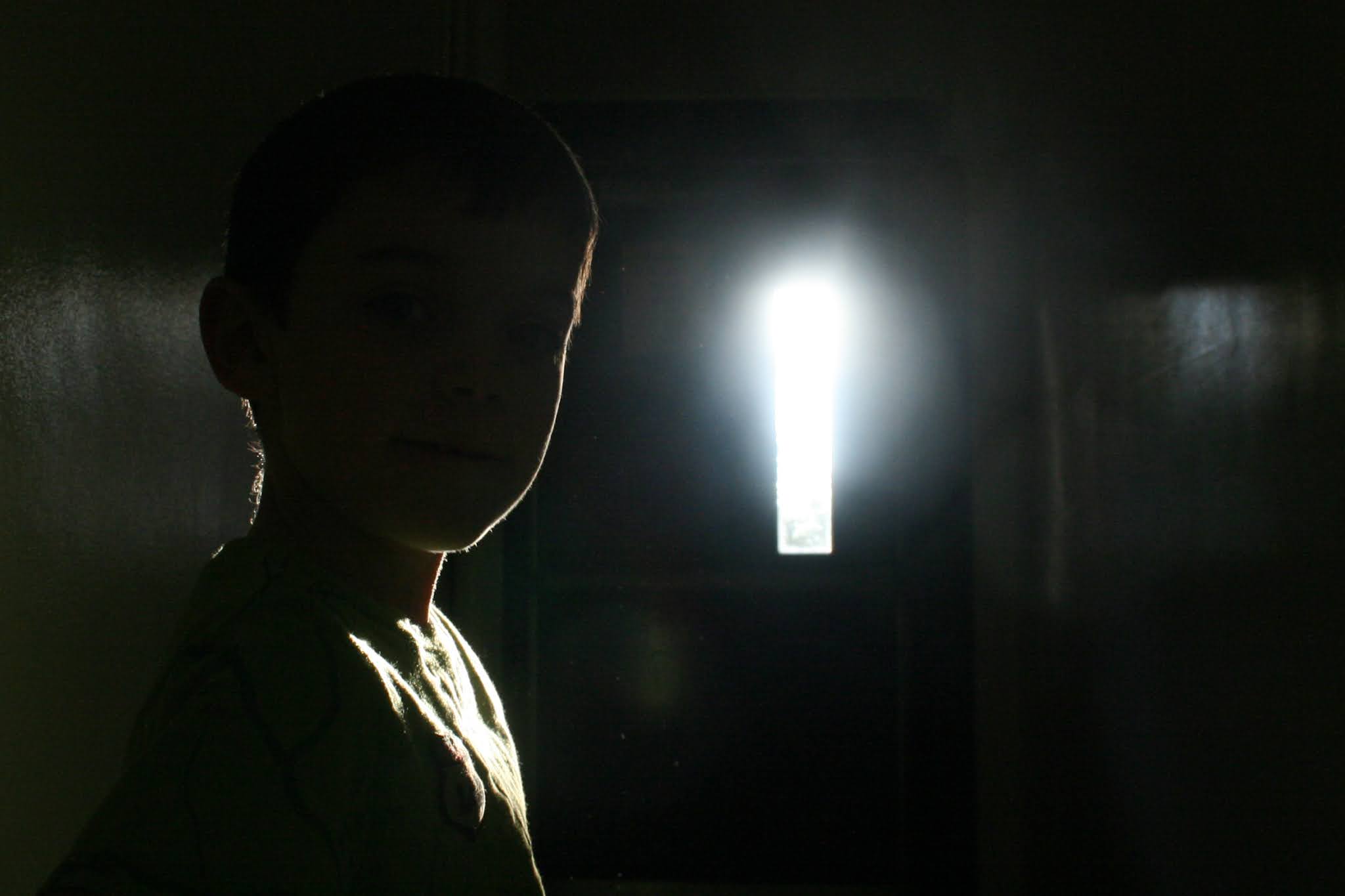 Photo by woodleywonderworks.
I tried to get a hold on the edge of the plywood, but I couldn’t. I didn’t know what to do, but I did know I had to escape back to the safety of the bedroom before I found out exactly what other living things might be in the dark watching me. I did the only thing I could think of. I stomped on the slab with both feet, hoping to knock it loose. The board cracked just enough to allow me to get a grip on the edge and pull it back up. Back on the dresser, I put the injured board back in place, hopped down and dove back under the covers.
My parents didn’t seem to notice the minor structural damage, and they never said anything about it. I was tremendously relieved, sure that I’d gotten away with it. That confidence didn’t wane until may years later when I had children of my own. That’s when I discovered that parents know so much more about what their children are up to than they let on. Mine knew I’d learned my lesson without their having to teach it to me. Maybe there’s a short story in there somewhere.
4Q: You are also the recipient of two Honorable Mentions for your short stories, which have appeared in many publications. What appeals to you about short stories?

MP: Like many of us, I started with short stories. In some aspects short stories are more difficult to writer than novels, often you’re working with a tighter narrative than with a longer work. I like the way a short story can be open ended, leaving the reader to fill in the blanks.
For me, short stories are snatches of life. Snatches that have meaning in the moment and may even have long-term consequences, but the focus is on the moment, on the particular event. Then again, a short story can do whatever the author wants it to. That’s freedom, but that’s also a challenge.
4Q: What can you tell us about your writing habits? Do you have a favored spot to write? Has anything changed because of the pandemic?

MP: My alarm goes off at 5:00 every morning, and that means I have a quiet work environment every day for four hours or so, until the rest of the house is awake. I have an office where I do my writing. It’s my creative sanctuary. Afternoons can be full of errands and family, but the mornings are mine. If I’m really on a roll with something new or editing a manuscript, I sometimes go at it again in the evenings. You have to strike when the iron is hot, or some other appropriate cliché.
I’m retired—as much as any active author can be. My partner is retired and she’s also disabled. So, we didn’t go out much before the pandemic struck. Our daily routine hasn’t been affected as much by the restrictions—I still spend most of my time writing, re-writing, and editing. Although I try to keep my trips to the market to once a week, and we buy a lot more things online than we used to. As it is for most people these days, being cut off from family has been difficult.
4Q: Favorite authors? Novel?
MP: Disclaimer: I have advanced degrees are in English, and I spent the bulk of my academic career studying and teaching literary works. So, it’s not surprising that most of my favorite authors generally fall into that category. I have many favorite authors, and it’s tough to pick a single novel from my favorites. Christopher Moore’s Lamb is the novel I’ve most recommended and given as a gift. Here are some of my favorites who came up when I tossed a few darts at my bookshelves.
John Irving
Barbara Kingsolver
Christopher Moore
Anne Lamott
Stephen Crane
William Faulkner
Fyodor Dostoevsky
4Q: What are some of your interests outside of writing?
MP: I have four grown children, all of whom live near me. Of course, we’re all stuck inside at the moment, but we try to keep in touch through texts and emails. But I have one-year-old grandson, which makes staying away that much more difficult.
I’ve been a big baseball fan since I was a kid, and I still follow it, though not as closely, these days. While in graduate school in Eugene, Oregon I played softball in local leagues and in state-wide tournaments on weekends. When I moved to California, I continued playing as long as my creaky joints allowed, and until I’d reached the age where playing in an “Over-50” league became too much a misnomer.
When I’m not working on my own writing, I read and review the fiction of others as much as I’m able. I like to focus primarily on independent writers. Indies like us especially need reviews to help promote their work.
4Q: What is the most surprising thing you’ve discovered as a writer?
MP: I’ve discovered several things by trial and error along the way. For instance, in a very real way publishing a book is just the beginning. You think the job is done when you see your first novel in print, but it’s only the beginning. If you hope to sell you have to market constantly and well. I’m getting better at it, but posting on social media and begging others for reviews can be draining.

But the most surprising thing I’ve discovered is how much I enjoy editing. I’ve heard that it’s like chewing gum twice, something dreaded. Yes, it’s a constant chore that’s never completely finished, but every time I edit a section I can see how much I’ve improved it beyond catching typos or grammar slip ups. It may be that I’m simply coming to the manuscript with new, rested eyes by the time I sit down to do a comprehensive edit, but it’s a wonderful experience. And I get to repeat it with each book or story I write.
Something you’ll appreciate, Allan. When I posted the excerpt from the first chapter of The Old Block below, I had to constantly stop myself from making edits—and it’s already published.
*********We all know that feeling Mark.
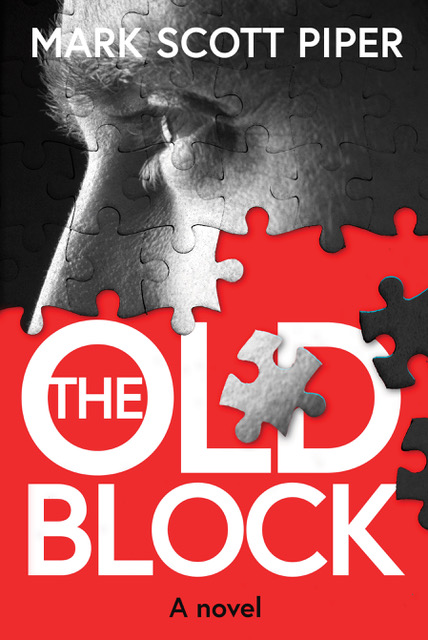
An Excerpt from The Old Block.
(Copyright is held by the author. Used with permission)
Chapter 1
May 2012
I splashed cold water on my face to shock some life into it. I should be doing better than this. Over a month since the funeral, and I still wasn’t getting much sleep. I glanced at my reflection, eased out a sigh. Every time I looked in a mirror I saw Dad looking back at me. Easy enough to see why: same dark eyes, same jawline, same smile. A smile that didn’t come easily for me these days. At least I didn’t break into tears this time.
I ran a palm over my cheek. I’d either have to shave or commit to growing a beard. I flicked on the Norelco and started in on my six-day-old stubble. The buzz of the razor wasn’t loud enough to block out the voices that still wouldn’t leave me alone.
t t t
The clamor of a hundred simultaneous conversations overwhelms me at the post-funeral gathering in the Shoat Valley Presbyterian Church. The whole town has turned out.
The barrage never lets up. Everyone feels compelled to corner me, pay their respects, share their fond memories of Jim Castle—his kindness, his gentle way with people, his humility, his willingness to step in and help. As if I somehow didn’t already know what he was like.
Mary Ellen Camp, our mayor, pumps my hand with her two-handed candidate’s grip. “Nick, your dad’s smile always lit up the room. He will be missed.”
Charley Hanson, the town pharmacist and Dad’s frequent golf partner, leans in close to remind me: “Jim Castle was truly an honest man. Might be the only guy I know who never once cheated at golf.” I reward his hearty guffaw with a forced smile.
Mom’s sister, Eloise, sincere as always, drunk as always, covers me with sloppy kisses and tells me, “Your dad was one of a kind. He could make anyone feel special … even those of us who weren’t. I’ll never forget the time I’d had too much to drink, and I started to sound off about how life wasn’t fair and …”
I tune her out. I’ve heard that story so often, it’s embedded in my brain.
t t t
Okay, they were going to miss him. I got that. But now that gathering and those songs of praise were long gone. Those well-wishers had moved on as if nothing had happened. Their day-to-day activities shifted back to normal. Mine wouldn’t. My mentor, my role model, my best friend … my dad was dead. And now, my life had a cavernous void in the middle of it that would never be filled.
Dad and I did everything together. I was his shadow. For my whole life, the adults in Shoat Valley have referred to me as “Little Jim,” “a chip off the old block,” “the apple of his dad’s eye,” or “a spittin’ image of the old man.” Some still applied, but tired clichés couldn’t begin to describe our relationship.
As a young child, I was a fixture at Dad’s side at our family bookstore, Book Castle, and I tagged along while he ran errands. Even when I was only three or four, Dad would let me “help” by carrying packages back to the car, including some that were probably too big or awkward to trust me with. A proud moment. When I was older, I realized he most likely secretly spotted me the whole way, but he never let me know that.
I still remember, early on—I must have been five or six—my first Little League game. I’d failed miserably that day. I missed a couple of grounders, made a bad throw, and my performance at the plate should have earned me the nickname “Whiff.” On the way home in the car, I stared straight ahead trying to hold back tears.
Dad pulled over to the side of the road and stopped the car. After a moment, he laid his hand on my shoulder. “Don’t be so hard on yourself, Nick. It takes time to master this game.”
I looked over at him, my lower lip quivering my response.
He pulled me into a hug. “You’ve got to remember, Kiddo, baseball is a game of failure.” He ruffled my hair. “The best hitters in the big leagues average only three hits for every ten at-bats.”
“Wait. So, they fail seven out of ten times? Really?”
“Yep. But don’t worry, you’ve got the skills. You just need some help developing them.”
“What does that mean?” I wiped away the remnants of tears with my sleeve.
“Means you need some personal instruction.” He chuckled. “And you’re in luck. I know just the guy who can do it.” He threw his hands out to the side, grinned.
We both knew who he was referring to.
When we got home, he took me out to the backyard and showed me the basics of playing the game. We laughed, kidded around, had a lot of fun. No pressure, no disappointment. It was just the two of us. And we were out there nearly every day for weeks.
He taught me plenty of skills—how to place my feet in the batter’s box, how to generate power when I swung, all that stuff. But most of all he taught me how to have fun playing the game. It was a lesson in baseball and in life that I’ve tried to hang on to ever since.
I’ve never been as close to anyone in my life. Guess that’s why it’s been so hard for me to let go. Even at Sonoma State, I regularly Skyped with my parents, most often Dad on Book Castle’s computer. And when I returned to Shoat Valley with a degree, we picked up right where we left off. My degree was in English, which, if nothing else, made me a good candidate to run a bookstore someday. But Dad made sure I thought my career options through. Even an English major has some choices. I’m sure he knew all I really wanted to do was follow in his footsteps. Same as I always had.
But now, his footsteps were gone forever, and I wasn’t sure what that meant for me. Everything I did, everything I believed in, everything I hoped to become was a reflection of Dad. Being Jim Castle’s son definedme—like being Batman’s sidekick defined Robin. And now? Well, now it didn’t. Robin without Batman was just some weirdo in tights waiting for instructions.
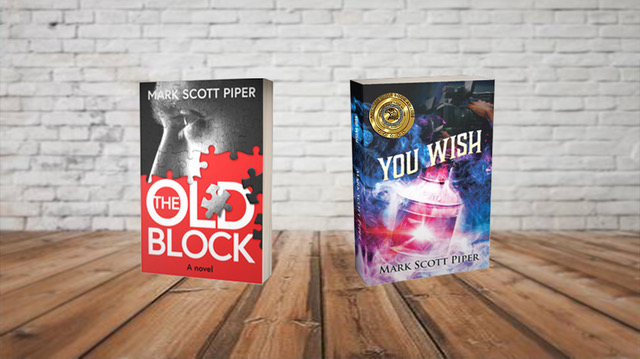
Thanks again for taking the time to share your thoughts. Wishing you much success with your future writing endeavors.

Thank you for asking me. This was fun.
For all you wonderful visitors wanting to discover more about Mark and his writing, please follow these links:
Website
www.markpiper.net
You Wish
https://www.amazon.com/You-Wish-Mark-Scott-Piper-ebook/dp/B07QPW5S2Z
The Old Block
https://www.amazon.com/Old-Block-Mark.../dp/B08J89TKYR
Amazon Author Page
https://www.amazon.com/Mark-Scott-Piper/e/B07QKCX82F
Goodreads
https://www.goodreads.com/author/show/19021722.Mark_Scott_Piper
BookBub
https://partners.bookbub.com/authors/5763068/edit
Twitter
@mpiper_writer
Facebook Author Page
https://www.facebook.com/markscottpiper
February 13, 2021
Award Winning Author Jennifer McGrath of Moncton, NB.
The Scribbler is most fortunate to have Jennifer as our guest this week. She is an accomplished author of children’s stories. Her books have garnered numerous, excellent reviews and high praise.
Her stories have been making a splash with children and teachers alike.
She has graciously agreed to a 4Q Interview and is sharing an excerpt from Chocolate River Rescue (Nimbus Publishing).
An award-winning children’s author from Moncton, New Brunswick, Jennifer has published two middle grade adventure novels, and two picture books. Her book, The Snow Knows, (Nimbus Publishing) was the 2017 recipient of the prestigious Marilyn Baillie Picture Book Award, presented to the year’s best Canadian picture book for children. It also won the inaugural Alice Kitts Memorial Award for Excellence in Children’s Literature. Her books are a favourite with educators, librarians and young readers alike, and have been included in a number of reading programs, literacy initiatives, and book clubs across the country.
Jennifer received her B.A. in English from St. Francis Xavier University in Antigonish, Nova Scotia and holds an M.A. in English Literature with a Directed Study in Children’s Literature from the University of Victoria.
Her next book, Pugs Cause Traffic Jams (Kids Can Press) is scheduled for release in 2022, with Kathryn Durst illustrating. (Hey, Grandude, by Sir Paul McCartney).
4Q: As a writer myself, I admire authors of children’s books such as the beautiful collection you’ve penned. What draws you to this genre?
JM: Wow, that’s a surprisingly tricky question to answer. The short version is that’s just what comes out when I put pen to paper (or fingers to keyboard). I write about things that make me happy. They are, in no particular order: things that I find beautiful; things that I find funny; things that delight me; and things I think might possibly delight others. By happy accident, much of what I write seems to delight younger readers. And that delights me, too. And when I’m delighted, I write. So it’s really a vicious circle of delight. (Except when it’s a vicious circle of angst and self-doubt, but that’s a blog for another day.)
Without disappearing into the rabbit hole of ‘What is children’s literature?’ and what makes a particular piece of writing for children, I will say that there is a sort of authenticity that’s embedded in the best children’s books – an emotionally honest and undistilled way of perceiving the world, and reflecting it back in words and art. Fantasy writer, Lloyd Alexander suggested that children’s books offer “a means of dealing with things which cannot be dealt with quite as well in any other way” and I think there is truth in that as well.
4Q: The first book of yours that came to my attention is The Snow Knows. I understand you and your Illustrator, Josee Bisaillon, are both award winning artists. Tell us about the Marilyn Baillie Picture Book Award. How exciting it must be.
JM: So, it’s kind of a funny story. I didn’t actually knowabout the Marilyn Baillie Picture Book Prize prior to that year. It just wasn’t on my radar at all. In fact, I didn’t even know The Snow Knows had been submitted for consideration, much less nominated and short-listed until I got a Facebook message from a writer friend of mine, saying ‘OMG, CONGRATULATIONS!!!” And I replied: ‘THANK YOU!! WHAT FOR???” And she told me that The Snow Knowswas on the short list for the Marilyn Baillie Prize. That was the first I knew of it.
The Marilyn Baillie Picture Book Prize is presented annually as part of the TD Canadian Children’s Literature Awards, sponsored by TD Bank and the Canadian Children’s Book Centre. It recognizes the year’s best illustrated picture book. To say I was gobsmacked would be an understatement. That year, The Snow Knows was nominated alongside Col. Chris Hadfield’s book The Darkest Dark(illustrated by the brilliant Fan Brothers), as well as New York Times bestselling author-illustrator Jon Klassen’s book We Found a Hat. It was a completely surreal experience.
And then, when I arrived for the awards ceremony in Toronto, I found out the event was being emcee’d by CBC Radio’s Shelagh Rogers. I may or may not have had a complete book-nerd/fan-girl meltdown at that point. Plus the room was FULL of children’s authors and illustrators I had idolized forever. It was definitely a what-am-I-even-doing-here moment.Really, I could not have been more dazed and amazed if you had tapped a pumpkin and turned it into a coach-and-four. It was also the first time I got to meet my illustrator, Josée Bisaillon, in person. Which was, of course, utterly delightful.
4Q: Please share a childhood memory or anecdote.
JM: Well. Let’s see. There are so many to choose from. There was that time my parents and some friends decided it would be a good idea to build a homemade boat and sail it to the Caribbean. Did they have any boatbuilding experience? Nope. Sailing experience? Mmm, not so much. At seven years old, I was the oldest of half a dozen kids bundled aboard that boat. We set sail from the Bay of Fundy on a freezing, wind-swept day in November, loaded to the gunwales with gear, winter clothes, rations, charts (no GPS in those days), baby diapers, books, Gravol, and barf buckets.

It was the Boat’s maiden voyage as construction had taken a longer than anticipated (I am told the sails were still being sewn the night before our departure) and the window to get out of the Bay before winter weather made it impassable was rapidly closing. There were storms, waves, whales, a brief mutiny and, oh yeah – we ran aground on Plymouth Rock. Yup. That Plymouth Rock. It was underwhelming. There weren’t even any pilgrims.
Huh.
I should probably write a story about that someday.
***I agree, Jennifer, it would be an amusing story.
4Q: Tell us about The Chocolate River Rescue. What was the most difficult part to write?

JM: CRR was first book I’d written so I really had no idea what I was doing. Because the idea for the story stemmed from real-life events, I struggled initially with how much to ‘stick to the facts.’ I didn’t know when, where or if I should take creative license. The first draft followed the real-life incident as it was told to me very, very closely. There were three boys adrift on an ice floe who were eventually rescued by firefighters and a SAR helicopter. It read a little bit like those Reader’s Digest drama-in-real-lifestories…but, you know, not as good. It felt stilted, two-dimensional. When I submitted my manuscript to my editor, she read it and very gently pointed out that there weren’t any girls or women in the story. Would I perhaps consider adding another character or two? And that’s when the lightbulb went off in my head.
I could do that? Really? You mean, I was allowed to, you know, just…make stuff up??
That’s when it hit me what being a fiction writer actually meant.
I could write Anything. I. Wanted.
It was a dizzying realization. I felt like I had been driving with the emergency brake on, but now it had been released, and I was free to hit the gas.
The character of Petra pretty much leaped onto the page fully formed and she completely changed the course of the book. I re-wrote the entire thing from the beginning, in less than three months.
4Q: Favorite authors? Novels?
JM: You KNOW that this question melts the brains of the book obsessed, right? My favourite author this week? This month? Of all time?? Favourite Canadian author? Children’s author? Picture book or YA? Modern or Classic? Fantasy? Sci-fi? Short Story?
Okay, I’m spiraling.
I will be forever and infinitely grateful to my parents for reading to me for as far back as I can remember. Treasure Island, Robin Hood, The Lord of the Rings, Watership Down, Pippi Longstocking, Charlie and the Chocolate Factory, Jacob Two-Two and the Hooded Fang, Alice in Wonderland, Jake and the Kid, Anne of Green Gables and countless others were read aloud to me before I’d even lost my baby teeth.

Others I discovered later on my own – Narnia, A Wrinkle in Time, Northanger Abbey, The Hitchhiker’s Guide to the Galaxy. My grandfather gave me books like White Fang, The Grapes of Wrath, Sherlock Holmes and A Tree Grows in Brooklyn. Today I am delighted by storytelling wizards like Neil Gaiman, Cherie Dimaline, Ami McKay, Thomas King, Holly Black, Theodora Goss, Eden Robinson, Michael Chabon, Maggie Steifvater, Daniel O’Malley, Erin Morgenstern, N.K. Jemisin, Katherine Arden, and so, so, somany others. A galaxy of authors. A wonder of worlds.
4Q: How much and what kind of research do you have to do for your books?

JM: I am an obsessive researcher. Compulsively curious. The hard part is making myself stop researching long enough to begin writing. I take what I call the ‘White Rabbit’ approach to research (alternately referred to as, ‘Squirrel!’). I love it when I go to look up something and stumble upon something else entirely by accident - something that takes me on an entirely new and unexpected path but that also, simultaneously, feels absolutely RIGHT. I think most, if not all stories are born out of serendipity.
4Q: Anything else you’d like to share with us?
JM: I’m pretty sure I’ve overshared as it is. I like dogs. And ponies. And also goats.
An Excerpt from Chocolate River Rescue (Nimbus, 2007)
“We’re losing ice!” said Craig.
It was true. Almost every wave that rippled over the floe carried away another piece of the crumbling ice. Tony half-turned his body to look toward the shore. The ice floe tilted dangerously. A large wave sloshed onto the ice, soaking the boys up to their ankles.
“Whoa!” yelled all three boys. Slowly, slowly, the ice floe righted itself again.
“Do not move!” ordered Shawn.
“Move?” croaked Tony. “Man, I’m barely breathing!”
Another wave washed the ice floe. A piece of ice crumbled away.
“It’s breaking apart, Shawn,” whispered Craig. His blue eyes were very wide.
“Don’t move,” repeated Shawn.
“We’re out of time,” Tony said softly. “This is it.”
(Copyright is held by the author. Used with permission)
Thank you, Jennifer for being our featured guest this week. Wishing you continued success with your stories.

More from Jennifer.
February 6, 2021
Returning Author Rhonda Herrington Bulmer – President of WFNB.

I had the pleasure of meeting Rhonda at a function of the Writer’s Federation of New Brunswick, quite a few years ago. Things have changed since. Rhonda is still writing but now she serves as President of the Federation and steering her fellow authors forward.
An author of two children’s books and a YA novel, she is working on a family-secrets-in-a-haunted-inn type novel, which is set on the Bay Fundy, and is sharing an excerpt with us.
Rhonda has been a guest previously on the Scribbler. She shared an entertaining short story you'll be sure to enjoy and if you missed it, please go HERE.
As well as sharing an excerpt, she has kindly agreed to a 4Q Interview.
I grew up on the Miramichi, and at age 14 I banged out my first novel on the electric typewriter my parents gave me for Christmas. I was shattered when McLelland and Stewart rejected it with a very nice letter (they published Margaret Atwood, after all, and I had just finished reading her first book, The Edible Woman—why not shoot for the moon?).
Having decided that such a rejection was a sign I had no talent, I gave up creative writing and studied public relations instead. My early career revolved around this type of work. In my mid-thirties, while raising three children, I thought about fiction again. I took correspondence courses and explored how I might write on a freelance basis. A couple of paid writing credits allowed me to join the Moncton chapter of the Professional Writers Association of Canada, whose members happened to also be members of the Writers’ Federation of New Brunswick.
The rest is history. The kids have (mostly) flown, but I’m still scribbling in Moncton. And still hanging out with writers, hoping some of their talent will rub off.
4Q: Before we chat about your role as President of the Writer’s Federation, please tell our readers a bit about the Federation.

RHB: Since 1985, WFNB has supported New Brunswick writers and storytellers at all stages of development and in all genres with workshops, writing competitions, networking events, and award recognition. We’re a province-wide organization with just under 200 members living in every corner of New Brunswick, and ex-pats living elsewhere in Canada. Our mission has always been to create community through words. The Fed has played a large role in my own development, and I continue to appreciate all the talented people who have befriended and mentored me over the years.
4Q: You’ve been the President since May, 2020. Please tell us about your position and responsibilities.

RHB: I have served for five years on the WFNB board. This is my first of a two-year term as president. The president provides leadership to the board and ensures that the board functions according to its policies. The president chairs meetings, helps set direction and goals for the organization, works in partnership with the executive director and various committees, encourages other board members to take leadership roles, and is the official spokesperson for the board.
4Q: Please share a childhood memory and/or anecdote.
RHB: When I was a kid, I developed a vampire phobia. (There’s so many of them in the Miramichi.)
I grew up in an old, unrenovated house, and my board-and-batten bedroom door didn’t close properly. My room was at the top of the stairs, so I couldn’t shut out the sound from the television, and one night my mother was watching a Dracula movie. I covered my head with my pillow to shut out the sound of him attacking his poor, helpless victims. I only dared lift my pillow off to breathe during the Pizza Delight commercials.

Later, in high school, I loved to read, including slightly spooky books. But I didn’t enjoy gory or that which was overly violent. And of course—no vampires.
Therefore, I avoided the aisle in the school library that held Stephen King’s paperback edition of his book, Salem’s Lot. The front cover was shiny black, an embossed face—except for one red drop of blood poised on her bottom lip.
Blech. Terrifying. In the ensuing years, no Twilight for me either, thanks. Nuttin’ romantic about a vampire. I’m not too crazy about werewolves or zombies, either.
4Q: You are fortunate to have an in-house illustrator for your books. Can you tell us a bit about your teamwork?
RHB: If only we didn’t need money and silly day jobs. Between my husband and I, there are no shortage of ideas to keep us busy until we’re crusty. We first established Codepoet Media as a place to develop our own creative content, for our own enjoyment. In the past, I’ve used it for my corporate writing work, but we really just wanted to make books and digital cartoons and other fun stuff.
Our two picture storybooks are not really aimed at children. We made them for ourselves, and for other adults who like to philosophize about life. Please Let Me In is my personal favourite. But every time we complete a project, we learn more about the process, and get better at it. Kent drew the second book, Brussels Sprouts for Breakfast, in a style reminiscent of the old Rocky and Bullwinkle cartoon series. We both enjoyed it so much growing up, particularly their Fractured Fairy Tales, so Brussels Sprouts is kind of an homage to them. These days, in his spare time, Kent is working on his digital cartoon series, The Coffee Café, which is his from start to finish. But I’m sure we will complete more projects together in the future.
4Q: Favorite authors? Books?
RHB:
G. K. Chesterton, his religious and political commentary, like Orthodoxy, Eugenics and other Evils.
C.S. Lewis—although I only came to him as an adult. I read his Narnia series with my kids, but I also really loved his essays and other books, like the Abolition of Man, The Four Loves, the Screwtape Letters, and Mere Christianity.
Ray Bradbury—Fahrenheit 451, and his short story, The Whole Town’s Sleeping, had a chilling effect on me in grade school.
John Steinbeck—The Red Pony, and Of Mice and Men, were required reading in school. But I kept reading him. East of Eden, written in 1951, is still probably one of my favourite books. I read it for the fourth time just recently, and it still holds up. What gorgeous sentences.
Shirley Jackson—The Lottery, which I first read in grade four. This chilling story made me want to be a writer.
I think Neil Gaiman is a genius. For my recent birthday, my kids bought me a subscription to the online teaching website Masterclass, and his workshop was amazing. Just finished my first Alice Munroe collection, The Progress of Love. How she makes the mundane interesting is quite a mystery.
I’m reading more Atlantic authors. I just finished Gerard Collins’ most recent book, The Hush Sisters, which is tragic and disturbing and hopeful at the same time.I’m reading Alan Hudson’s The Alexanders…a great Scottish-Canadian story, and I’m looking forward to Beth Powning’s new release, coming soon. Carol Bruneau and Wayne Curtis are on my bedside table, too. There’s a special flavour to Maritime writing. It recalls our unique history but is modern, too.
**Thanks for the mention, Rhonda.
4Q: What is Rhonda, the author, working on now?
RHB: I’m currently working with an editor on the second draft of a novel set on the Bay of Fundy. There’s a Victorian inn and a female lead and a love triangle and a secretive will and unpleasant family members and a grief-stricken ghost.
And a golden retriever.
(I haven’t decided what to do with it after the edit is done.)

4Q: Anything else you would like to tell us about?
RHB: If you are a New Brunswick writer and you are not currently a member of the Writers’ Federation of New Brunswick, please join! We represent all levels of development from beginner to professional, and we want you as part of the community. Students and younger folk are particularly welcome. Please check us out at wfnb.ca.
An Excerpt from The Chickadee Inn.
(Copyright is held by the author. Used with permission.)
Chapter One
A steady, gray drizzle chilled the back of my neck at this morning’s graveside ceremony. Must have been the drips from the semi-circle of black umbrellas gathered behind me, sheltering Runa Hall’s casket like an arbor. Cold fingers of rain reached under my collar and slid down my back. I shivered as her body was lowered into the ground.
Community leaders held those umbrellas with somber respect. Even the deputy mayor came to shake my hand. Runa had been a tireless champion of community causes for decades.
But I was the only one crying for my grandmother.
On either side of me stood my best friend Taylor Forini, and my boyfriend George Kosta. Their quiet strength kept me upright every time I remembered that I was now alone in the world.
The rain lifted abruptly when we climbed back in our cars. If she had organized her own funeral, Gram could not have orchestrated more poetic weather.
Through the windshield, George and I were struck with the sight of a single God-ray of sunshine. How appropriate. It broke through the clouds on our way to the reception. I thought about the guests who would marvel about the beautiful shaft of light. They would munch on cold cuts and egg sandwiches while they philosophized about the afterlife. “It’s Runa,” they’ll say, “watching the proceedings from above.”
“Melinda, tragedy creates us, but we shouldn’t let it define us.”
One of her many pithy observations. I chuckle-sobbed at the memory just as we were about to pass Gram’s street. On impulse, I asked George to stop.
George lifted one hand off the steering wheel to squeeze my shoulder. “Why torture yourself, Lin?”
He doesn’t like dwelling on the past, no matter how recent.
I covered his hand with one of my own and stroked it back and forth with my thumb. “Please? Just one last look. Now that I’m a homeless orphan.”
My grandparents raised me in the little yellow-brick bungalow on Welland Avenue after my mother died when I was two. I had put it up for sale last month to pay off Gram’s long-term care debt. Thanks to the surging real estate market in our Mississauga suburb, my inheritance lay in the leftover profit.
George pulled back his hand with a sigh and used it to turn right on the quiet side street. “You’re not a homeless orphan. You have friends, a great career ahead of you—and you have me.”
He had insisted on driving me in his Audi, which he had carefully cleaned for this occasion. It had been a graduation gift from his parents, and he was proud of it. He looked self-assured and capable in his reserved, charcoal grey suit. George is wonderful in a crisis, which makes him a great doctor. I depended on that trait today. But on normal days, his constant management gets a bit much.
After five blocks, we reached the familiar corner lot, but there was a landscaping truck in our usual parking spot.
Oh, God. What were they doing to the tulip tree?
“No—They can’t!”
George slowed down, but before the wheels had stopped turning, I flew out of the door, not bothering to slam it shut.
“Lin. Melinda.Come back!”
I ignored his cries, focusing instead on what was in front of me: Grandpa Galen’s miraculous tulip tree—or rather a muscular, tattooed guy hacking away at it with a chainsaw, while another idiot with a beer belly loaded the broken pieces into a mulcher.
Forgetting my patent leather pumps, I traversed the sidewalk and the low retaining wall in a couple of leaps and stumbled a bit at the top. “Stop! What in the hell are you doing?”
With a ‘safety-first’ demeanour, he turned the chainsaw off and pulled his safety goggles down. They left a red outline around his eyes and nose.
“Ma’am?”
I knew I looked crazy, but I didn’t care. The dual spectres of grief and anger rose from my inner being and I steeled myself to keep control. “You can’t cut that tree down.”
He scratched at his scalp while he glanced from the mutilated tree and back to me. It was too late. The job was all but complete. “The owners want to plant something new. Who are you?”
“It’s mine. I’m the owner!” My heart galloped in my throat, and I couldn’t get enough air. I gathered up branches as fast as I could, as though they were pieces which would eventually heal if I could find a way to stitch them all back together. I kicked at the sawdust under my feet. “Look at the mess you’re making.”
The landscaper looked confused and a little tense. The one handling the mulcher adjusted his helmet and put an impatient hand on his hip. In my peripheral vision I saw George, who had parked and rushed to my side within a few seconds.
Chainsaw guy gestured at George for confirmation. “Is she the owner? I thought the place just sold?”
“She used to be,” George said, his voice smooth and gentle while he came behind me and steadied my upper arms with his hands. “She grew up here.”
The guy’s lips parted slightly, and he lifted his chin. His gaze glided over our outfits: my black dress and pumps and George’s somber suit. “Oh. Oh, I see. I know it’s sad to lose such a rare specimen, but—”
I was annoyed at the two of them for patronizing me, but the tree was more important. “It was budding, though, can’t you see? How could you just—” A sob caught in my throat as I pointed to the blossoms on the one remaining branch of Grandpa Galen’s miraculous tree. It wasn’t supposed to survive, but it did.
Gramps planted it as a gift to Gram on the day they moved in, fifty years ago. The nursery said it probably wouldn’t make it, since it needed the perfect soil conditions and gentle weather. But Gramps said, ‘It’ll grow straight and tall, despite the odds.’ And he was right.
I jerked myself out of George’s grip and hissed at him. “I know you’re just trying to help, but will you please let go of me?” George released his hands and backed away.
The landscaper shook his head and looked at me with professional sympathy. “It wouldn’t have survived, anyway—it’s a delicate breed to begin with and the storm killed at least fifty percent of it.
“But don’t worry. We’ll let the trunk sit fallow for a year, and then we’ll break the roots up next spring and seed over it. By next summer, it’ll be like it was never here.”
Like it was never…!
I had controlled myself well at the funeral, but I couldn’t hold back the torrent of loud sobs any longer.
This is how the testament to their lives comes to an unceremonious end? The tree, which had beaten the odds for fifty years is gone and, just like that, it’ll be like it was never here?
My whole body shook. I dropped the mess of branches even as I inhaled the wood particles that still floated in the air. I sank into the sawdust, and ugly-cried.
I felt George stroke my back a couple of times and I barely registered his pleas to leave in my ear. After a few minutes, he lifted me by the underarms and coaxed me to my feet. I didn’t want to leave, but I didn’t have the strength to stay, either. I let him guide me to the car, leaving two bewildered landscapers in our wake.
“He was only trying to comfort you—” George said later, after he put me in the passenger seat and drove away. “In his own ignorant way, of course.”
“I know.” I didn’t mean to snap, but I couldn’t be polite and control my grief at the same time.
The scads of cars parked near the house where the reception was being held made me groan, because though I had managed to calm down on the short trip from Welland Avenue, I was in no shape to represent the Hall family—or rather, the memory of it.
“Stiff upper lip, Melinda.”
It was Gram’s voice in my head. “This is your job for the afternoon. You’re allowed one public meltdown per day, that’s all. You’ve already had it.”
We opened the front door, and I determined to concentrate on the murmurs of a few dozen visitors, the clink of glasses, and the smell of excellent hors d’oeuvres.
George pontificated as he hung up my coat. “People grieve in all kinds of different ways. He figured if the tree wasn’t there, it would be an out-of-sight-out-of-mind thing for you.”
“Can we not talk about it anymore? Let’s just—”
“I just don’t want you to think badly of him. Not everyone is sentimental like you, Lin,” he whispered in my ear. “At least not about trees.”
“I know it, George! Stop managing me. I’m not one of your patients.”
All talk and movement in the living room ceased, including the clink of dishes in the kitchen. Everyone’s eyes were on us, their expressions filled first with surprise, then with sympathy.
So much for a stiff upper lip.
Who am I kidding? Gram was always perfectly controlled. I could never do that. I developed just enough to be embarrassed in its absence.
“Sorry…” I flicked a glance of apology at George. I whispered it again to the crowd and put a hand to my mouth. The contents of my stomach were rising. “I’m sorry...I have to—I feel kind of—”
And then I flew to the powder room, before I really exploded.
Thank you, Rhonda, for being our guest this week. Thank you for your guidance and the work you do with the Federation. Wishing you much success with your writing.

For all you fantastic visitors that wish to discover more about Rhonda, her writing and WFNB, please follow these links: