Allan Hudson's Blog, page 24
June 19, 2021
Branching Out with Returning Author Marjorie Mallon of Great Britain.
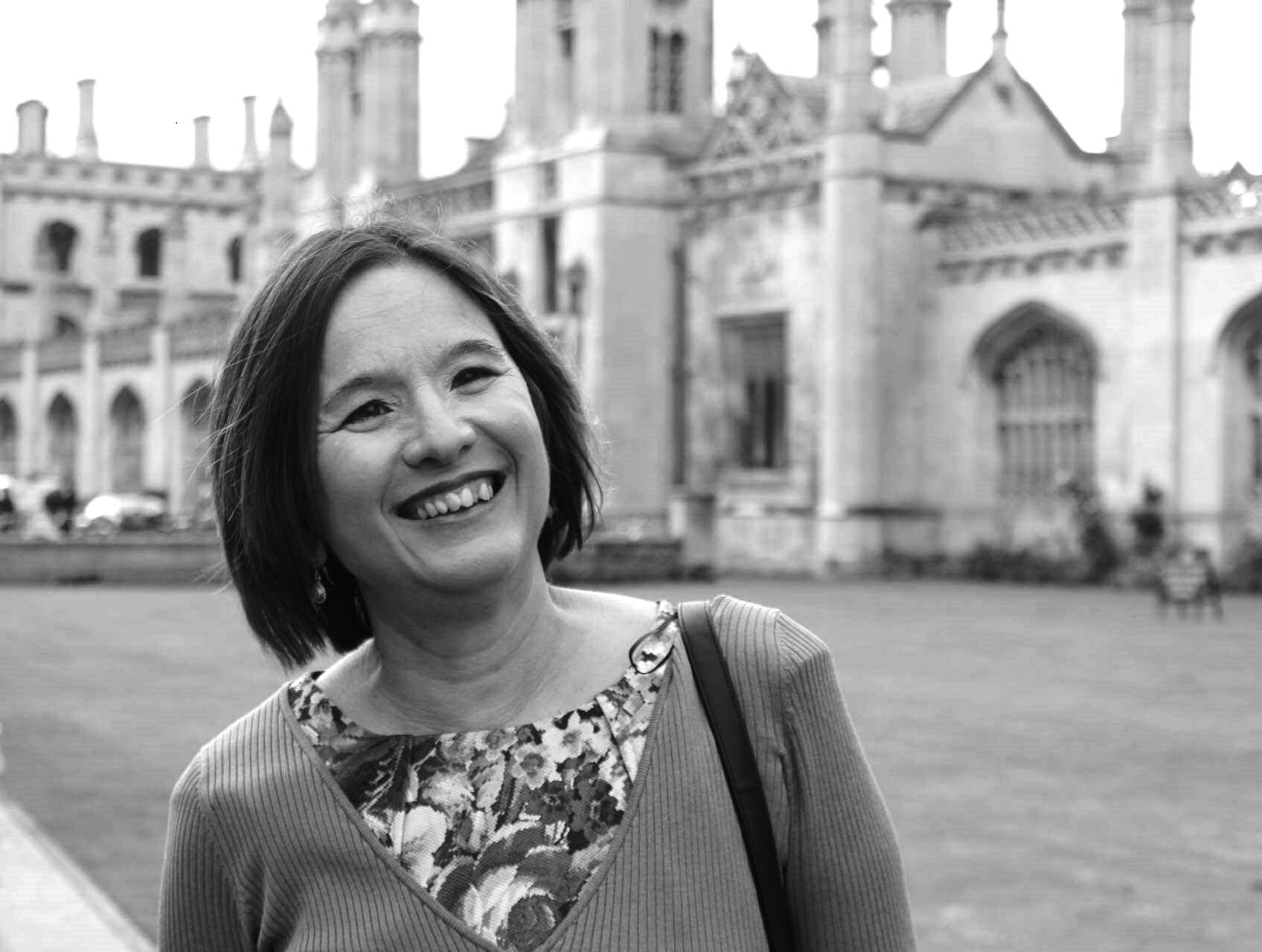
It’s been much too long since Marjorie’s last visit and we are extremely pleased to have her back. On her previous visit, Marjorie talked to us about her novel Curse of Time. If you missed it, please go HERE.
A considerable amount of time has passed and Marjorie is announcing a new deal for the Curse of Time novels 1 & 2. An exciting time for an author and we are happy to share the news with our readers.
Marjorie has kindly accepted our invitation to participate in a Branching Out interview and is sharing an excerpt of The Old Man of Snow and The Snow Snake from Mr. Sagittarius Poetry and Prose.
Let’s chat with Marjorie.
Allan: It’s a pleasure to have you back, Marjorie. Before we talk about the new novels, please tell our readers about yourself, where you live and your family.

Marjorie: Hi Allan, it’s so lovely to be back chatting with you. I live with my husband David in Cambridge, UK, a city I love so much. Though, my heart also belongs in Edinburgh, Scotland where I grew up and often return to. Further afield, it is my hope one day to live in Portugal but with the pandemic…. etc, etc, we shall see. Hubby and I are now empty nesters, our two lovely daughters have both flown away, our youngest Georgina to Manchester. She has just finished her Fashion/Business degree and has just started a new job. Our eldest Natasha is pursuing a career in teaching secondary English in Scotland. During the day, I work in an international sixth form in Cambridge as a Receptionist/Administrator where I meet and greet many people and see the progress, trials and tribulations of our lovely students.
Allan: An all-new publishing contract for the Curse of Time novels. How exciting! Please tell us more.
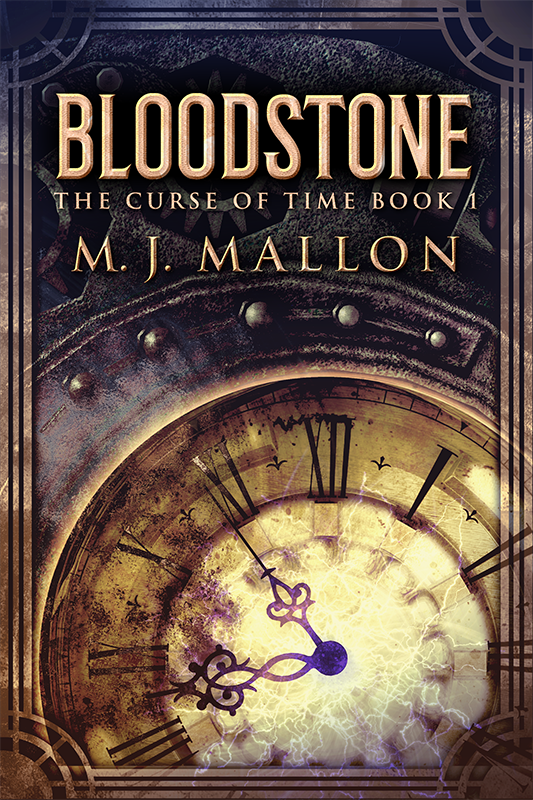
Marjorie: Yes, it’s been amazing! I sent off my manuscript to Next Chapter Publishing and low and behold they replied back with we’d like to publish Book 1 and Book 2 of the series - Curse of Time! So, to say I’m excited is an understatement. Next Chapter Publishing is a small independent publishing house who publishes in all the usual formats: kindle, print, hardback and audiobook. I believe they also have links to companies who translate manuscripts too.
They are currently editing the interior manuscript for Book One which will be republished. More news about that soon…
Cover reveal !
Allan: Please share a childhood memory or anecdote.
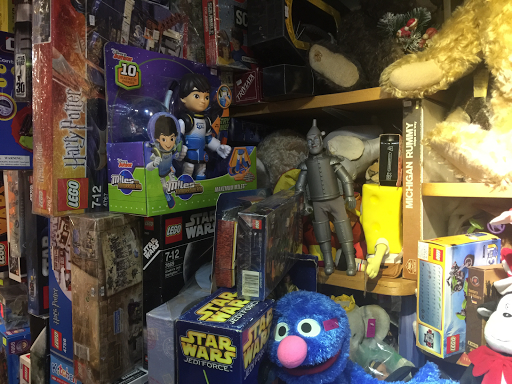
Marjorie: I lived in Hong Kong as a child and I remember going out on a trip with my dad. I squeezed his hand and gave him the biggest smile as we passed by a toy shop! Of course, his heart melted and he couldn’t say no. We have always had a close bond and I suppose being the only daughter meant I was good at getting my way! Family is so important to me. My mum and dad have always supported and believed in me. Now that I am older and wiser, the anecdote about going shopping makes me smile! My parents are so proud of my writing and ecstatic about my latest news!
Allan: A lot has happened since your last visit and today. Besides the Curse of Time news, what else have you accomplished since your last visit?
Marjorie: I’ve worked extremely hard, especially over the lockdown periods in the UK. I was furloughed for a long time, which allowed me the time to collate my first anthology. This Is Lockdown which is a collection of my diaries, (in the kindle version,) flash fiction, poetry and contributions from international authors, poets and creatives. Compiling my first anthology was a wonderful way to stay busy and productive during this scary and worrying time. It was fantastic to engage with old friends who contributed to this project and to discover new writing friends too.
Thereafter, I wrote Lockdown Innit poems About Absurdity, a short collection of poems about the absurdity, frustration and surreal quirkiness of this strange time. I hope this little book captures that strangeness well.

Prior to that, I released Mr. Sagittarius Poetry and Prose which is a collection of poetry, short stories and photography inspired by nature, the seasons, and the circle of life. Two fascinating gents became the inspirational characters in this framed story. I saw them one morning in a coffee shop in Cambridge. Unwittingly, they became siblings William and Harold and I added their sister Annette. I’m thrilled how this little book came about and I love how it also showcases my love of photography.
Also, during this time I became a regular contributor to Dan Alatorre’s horror anthologies. These taught me a considerable amount about short story writing. I’d recommend joining in anthologies as they are a great way to make connections and to develop your writing craft.

Allan: You are well known amongst our writing friends as a person that shares and cares. We all need a lift and you do it so well. Tell us about your blog and blogging experience.
Marjorie: Ah, that is so kind of you Allan. I blog at https://mjmallon.com. My blog’s name is Kyrosmagica which means crystal magic. I share fellow authors’ reviews, blog tours, and news of my books and new releases. I try to be inspiring and magical!
I truly believe we achieve more and are rewarded if we help others. I’ve received so much help from the blogging community, it is only right that I give back what I can. So, with this in mind, I write reviews and share new releases and the like. I’ve met many wonderful bloggers in person at the previous bloggers bash events in London: Ritu Bhathal, Willow Willers, Mary Smith, the late Sue Vincent, Sherri Matthews, Graeme Cumming, Sacha Black, Esther Clinton, Hugh Roberts, and many more! Plus, many online friends who have been unbelievably kind and supportive: Colleen Chesebro, D G Kaye, Sally Cronin, Adele Marie Park, Robbie Cheadle, Didi Oviatt, James Cudney, Richard Dee, Heena Rathore P, Darlene Foster, D L Finn, Lizzie Chantree, Charli Mills, Sarah Northwood, Helen Pryke Domi, my reviewers, beta readers, your good self… The list just goes on and on. Blogging enriches your life in ways you can only imagine. It’s changed me so much; I have become much more adventurous! I recently participated in my first FaceBook Live hosted by Helen Pryke Domi in her wonderful group Meet The Authors. Prior to this, I had the opportunity to read my work via Charlie Mills 5 at the Mic. Now, I feel more confident to do more!
Allan: Favorite books? Favorite authors?
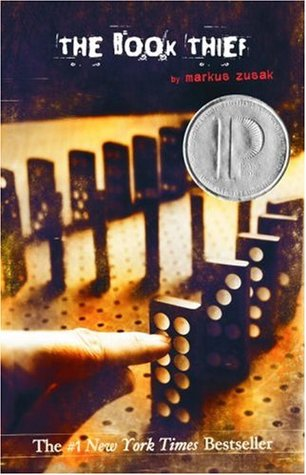
Marjorie: Oh, for YA fantasy Jay Kristoff - Nevernight Chronicles, and Philip Pullman’s His Dark Materials. Historical Fiction - The Book Thief by Markus Zuzak. And where would I be without magic? The Night Circus by Erin Morgenstern.
Allan: Is there are any Marjorie Mallon characteristics in any of your characters? Where does the inspiration for character development come from, for you?
Marjorie: No, I don’t think my personal characteristics play a big part. For me, character inspiration comes from observing and sometimes listening (eavesdropping!) I tend to modify aspects of character of those I’ve met or seen. For instance, I created a character from this curious person I kept seeing in a shopping centre. He was standing in a tiny space right by the shopping centre entrance, as if he was hiding. Then I saw him sitting upstairs adopting a strange pose. He became the inspiration for a horror character in my short story Scrabble Boy in Nightmareland. The poor guy had no idea! That is the power of writing - it allows you to get up to all sorts of mischief!
Allan: Tell us something we don’t know about you, either personally or as an author.
Marjorie: I hate cleaning! Any chance I get, I will try to avoid it. I detest the mundane; I like to live as if every day is a day for fun. So, chores tend to go to the bottom of my to do pile. I’m always amazed by people who love to clean, iron, dust and the like. I’m like, What?

Allan: Anything else you’d like to share with us?
Marjorie: I’m working on an exciting idea for a New Adult supernatural short story. I’ve written around 6,000 words. So, it’s quite a long short story. It’s different. There are vampires, demons, otherworldly creatures. At a later stage, I hope to develop it further. I’m thinking perhaps a crime aspect too. I’m excited about writing in two new genres and curious to see where it may lead me.
Also, later in the year I hope to publish my next poetry collection Do What You Love - Fragility of Your Flame - an inspirational collection of my poetry and photography under my self-published imprint Kyrosmagica Publishing.

An Excerpt from Mr. Sagittarius Poetry and Prose - a short story excerpt - The Old Man of Snow and The Snow Snake and the Poem: My Heart is A Cave.
(Copyright is held by the author. Used with permission)
Quote from a 5 star Goodreads review by Balroop Singh: ‘The Old Man of Snow and the Snow Snake’ may appear to be a fabulous fantasy but is a magnificent comment on the avarice of man, eager to plunder nature.
The Old Man of Snow and The Snow Snake
Today, the moon is full and high in the sky and a group of nineteen men travel with brave hearts to the mouth of the Snow Snake Cave.
The wind is biting cold. Each man carries a pack of provisions on his back and thoughts of his loved ones in his heart. They know that this journey might be one to their deaths and yet they trudge on.
At last after many exhausted steps they arrive at the forbidding entrance of the cave. It is no ordinary grotto. For centuries men have fashioned the cave out of layer upon layer of snow. The mouth of which is an ice sculpture of a snake’s jaw gaping, its eyes furious and wide. The old man above is exquisite, his hair and snow beard fall in intricate icicles. He is leaning to one side, his hand of snow pushing down on the snake as if to coax it to move.
The Old Man of Snow startles the men, he stirs, his snow encrusted eyes open wide as he bellows,
‘Dare you approach us? I think not little men. I will crush you like ants and feed you to my friend the Snow Snake.’
The men stop so suddenly that they almost fall over with exhaustion. Several of them stagger backwards frightened by the sheer size and forbidding nature of the Old Man of Snow. But, one amongst them stays still, resolute and strong.
He squares his shoulders, takes a deep breath and replies. ’I wish to meet with the Old Man of Snow and the legendary Snow Snake to discuss what you’ve done with the countless others who have ventured here. That is all that I and this brave group of men want–our old friends back. We are not greedy men. We don’t desire wealth, or gold, we only want happiness.’
‘Happiness?’ the Old Man lifts his hand and pulls at his beard. The Snow Snake winds his tail back and forth causing a volley of tiny snowballs to fall.
‘They are lying Old Man,’ said the Snow Snake, hissing. ‘They mean to trick us. Don’t allow them passage. If you do, I will swish my furious tail even more and it will crush them under an avalanche of snow.’
‘Silence, Snow Snake! I am sick of your reptilian attitude. Let them speak. I have never heard a human ask for so little before and I am curious if they speak the truth.’
The humble man bowed before the Old Man of Snow and then kneeled on the cold earth. ‘I swear by the almighty that I tell the truth. I, and my men are simple farmers, we tend the earth, eat our crops, and milk our herd. We don’t need riches and fame.’
‘You are a wise man. Unfortunately, your friends who came before you were foolish and greedy. They tried to steal from the Snow Snake, and that made us very angry.’
‘They were wrong to do so and I apologise on their behalf. Please forgive me for asking but what happened to their foolish souls?’
‘Within the cave there are a multitude of tiny snow snakes who wriggle free when they smell greed. These tiny snakes are lethal, one bite of their venom stilled these greedy men’s hearts and froze them for all eternity. Here, come. I grant you entry to see the power we possess so you will not dare to steal from us. The ice sculptures of your friends are exquisite.’
The men muttered. Some made as if to turn back but the leader spoke again.
‘Men come with me, we must pay our respects to our old friends.’
One replied, ‘Are you mad? They may do the same to us. How can you trust the Old Man of Snow, the Snow Snake and his allies the tiny venomous snakes?’
‘I only know what is right and good,’ replied the humble man.
‘So, will it be,’ said several of his followers, but many turned away, retracing their steps back from where they had come.
They granted the few that remained a passage into the mouth of the Snow Snake’s cave. But the snake hissed and rattled his snow tail in a show of extreme displeasure.
The Old Man of snow stamped his snowy boots, and the snake stopped.
Once inside the cave, the humble man and his band of followers saw nothing but ice and snow. They heard no sign of life, no trickle of water, but still they walked on.
As they turned a corner, the cave widened, and they entered a room which was ablaze with a colourful array of magical stones. For a moment it tempted even the humble man to pop one of these magnificent stones in his pocket but then he remembered the Old Man’s warning.
Quote from a 5 star Review from Balroop Singh: ‘My Heart is a Cave’ is beautiful and poignant; as it brings out the loneliness of a sibling who is yearning to be reunited with her loved ones.
My heart is a cave.
Hidden dark and mysterious,
Stalactites and icy caverns,
Rock pools and hiding places.
***
No one visits anymore. I’m alone.
The ice is melting, and the stars seem so far away.
I long for light, life and laughter to discover me again.
I wait.
***
While I wait ice drips in darling drops,
Drip, dripping.
The moon is high,
An orb of brilliant light, it grins at me.
***
I remember my past, days ago,
Children, a husband, lovers - even.
So, I wait for someone to come,
For a torch to shine.
***
It comforts me that the moon is full.
Abundant.
Soon I will be reunited with you.
I imagine you smiling down on the cave.
Thank you, Marjorie, for being our guest this week. Wishing you continued success with your stories.

Thank you Allan, I appreciate your kindness so much and I’m delighted to be a guest on your blog again.
For all you dear visitors wanting to discover more about Marjorie and her writing, please follow these links:
Amazon Buying Links:
Mr. Sagittarius: http://mybook.to/MrSagittarius
Lockdown Innit: http: mybook.to/Lockdowninnit
This Is Lockdown: http://mybook.to/Thisislockdown
Authors Website: https://mjmallon.com
Authors Amazon Page: https://www.amazon.co.uk/M-J-Mallon/e/B074CGNK4L
Authors/bloggers Rainbow Support Club #ABRSC: https://www.facebook.com/groups/1829166787333493/
Twitter: @Marjorie_Mallon
Instagram: https://www.instagram.com/mjmallonauthor/
Goodreads: https://www.goodreads.com/author/show/17064826.M_J_Mallon
BookBub: https://www.bookbub.com/profile/m-j-mallon



June 12, 2021
Branching Out with Award Winning author Ken Baird of Florida.
I was recently introduced to Ken by another Scribbler guest, Heather McBriarty, author of Somewhere in Flanders: Letters from the Front, who suggested Ken would be a good fit for our author interviews. I’m glad she did. You can read her interview HERE.
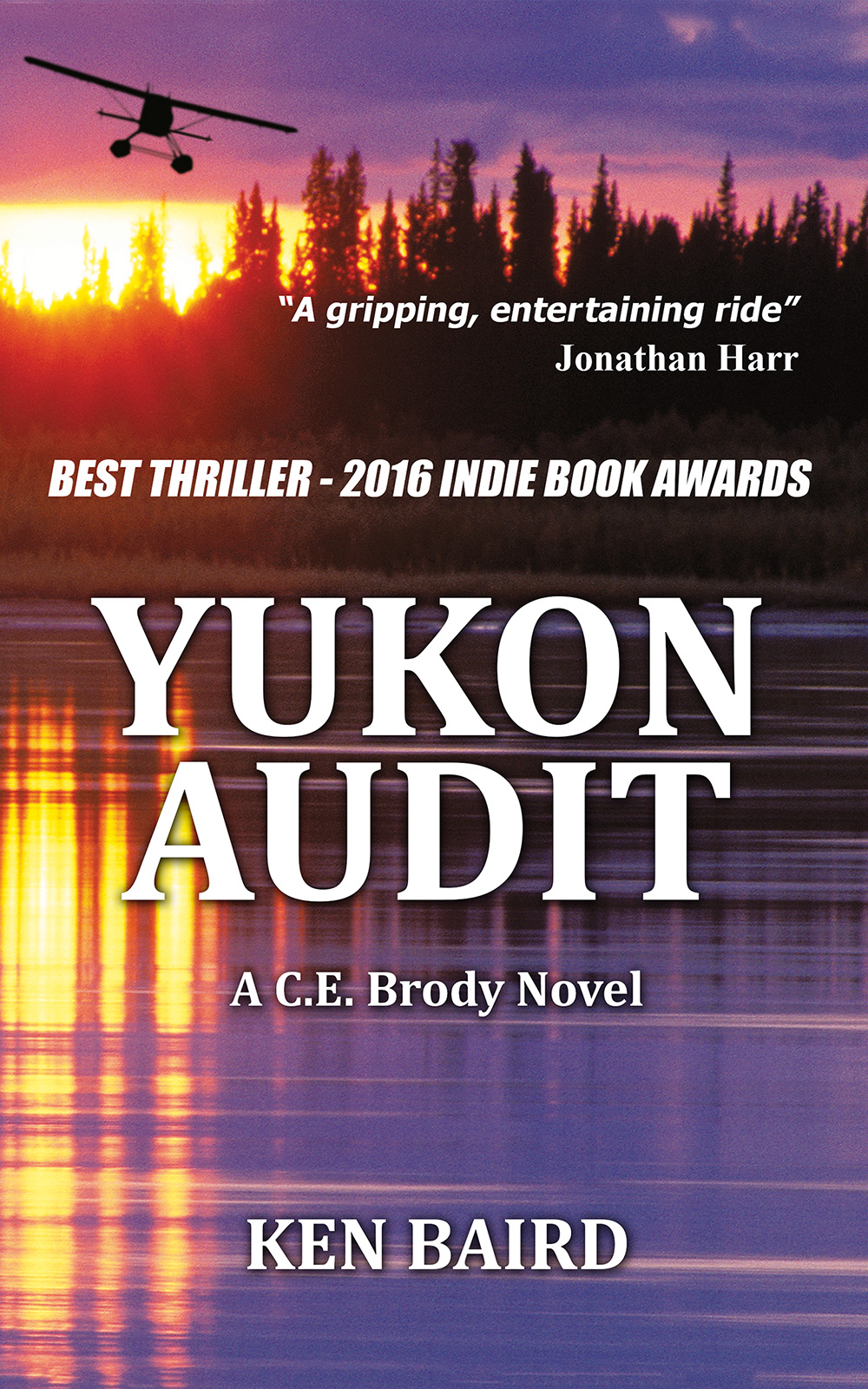
I have been gifted Ken's debut novel - Yukon Audit – and I have read this terrific story. I’m eagerly anticipating reading book 2 in the series – Yukon Revenge.
The detail is remarkable in the story. Baird is a pilot and when he takes you flying, you can feel it. A fine storyteller.
The novel has garnered a ton of 4 & 5 star reviews on Goodreads. See them HERE.
Let’s have a chat with Ken.
Allan: I have trouble finding a bio on you. Is that intentional?
Ken: Before I answer that, let me first say thanks for the opportunity to talk to the Scribbler clan. I love talking books with people who love books.
*** You are most welcome, Ken. It’s a pleasure having you as a guest.
Now to your question. At the end of each of my novels is a brief two-line bio which is also included in the bar code meta data for each print version. So that two-liner should be accessible somewhere on the net. But I’ll save everyone the trouble and recite it to you now. It succinctly states:
“Ken Baird operated a Yukon gold mine for ten years. A former receiver-manager and private pilot, he now lives in Florida.”
And that’s the extent of my online persona. I’ve never been a fan of social media, and in particular of those scoundrels running Facebook, and have never used the internet for any kind of promotion. I have no website, no Facebook page, no Twitter account, no Amazon Author page, in fact don’t even own a smart phone. My writing is my product, not me, and I’ve always let the merits of my books stand on their own. Thankfully they’ve been well received by readers who continue to post plenty of positive reviews, and nothing sells books like positive reviews. The word-of-mouth strategy has worked well for me.

So, with regrets for your time spent looking, you were not going to find a more comprehensive bio of me posted anywhere online. Is that intentional? Probably.
Allan: Before we get into writing and such, please tell our readers a bit about yourself.
Ken: Well, I’m a Canadian and damn proud of it. Still listen to CBC radio in the car. Been all over Canada and around the world. Had a lot of adventures and did some dangerous things. Hated every minute of every day I ever spent in school. And I wish we were nicer to the animals. And I really, really wish we would start to get serious about managing the planet better, which among other things will mean smaller houses, smaller families, and smaller people.
Allan: From reading an intro in Goodreads, I discovered you spent many years in the Yukon and the vivid descriptions in your novel can only come from someone who’s been there. Can you share a little about this experience and how it affected your writing?
Ken: Ah, the Yukon. Well, as the saying goes, home is where the heart is, and for me that will always be the Yukon. I went up there for the first time in 1979 for an office job, left a year later for a so-called promotion in the city, and not long after took a big demotion to return just as fast as I could. Next thing you know, I’m a gold miner.

Regarding the Yukon’s influence on my writing, it’s the mystique of the place that inspires me. There’s no such thing as a frontier left anywhere in the world, satellites have put paid to that concept, but at least the Yukon still looks and feels like one (especially when you’re lost in an airplane). Can never hope to explain this adequately, but there were times when it was just me and the land and the wilderness, and I’d often be overwhelmed by this eerie spiritual reverie. I can’t count the number of episodes I had like that over my twenty years up there, many of which to this day remain vivid and palpable. If life is about weaving memories, then I had my fair share in the Yukon, whether digging for gold in the middle of nowhere, or flying in an empty sky, or crossing a big mean lake in a boat too small, or simply gazing at a mountain in the middle of the night, glowing like bronze in the midnight sun. And oh, I also had a couple of hundred adventures and a bunch of close calls too, but those are for another day.
So armed with that nostalgia, when I sat down to write my first novel, guess the setting for the first chapter.
Allan: Please tell our readers what to expect when they pick up their copies of the Yukon novels.
Ken: Well, both Yukon Audit and Yukon Revenge are definitely thrillers, but thrillers with a difference, because the hero has to share the limelight with the Yukon.
The protagonist is a guy by the name of C.E. Brody, a reclusive bush pilot and handyman who lives on the Yukon River with two poorly behaved dogs. Brody likes to mind his own business and just wants to be left alone, which means he’ll do anything and everything to avoid any form of authority and the various trappings of a modern world. But trouble finds him anyway when a beautiful woman, and some very evil bad guys, walk into his life and turn it upside down.

I think the ways in which Brody confronts the threats and challenges he must overcome are what make these thrillers unique, because it’s the Yukon itself that ultimately provides him with the means to survive. Then there’s the cast of supporting characters, composites of the eccentric people I knew up there (aka the colorful five percent), and readers should enjoy their off-the-wall attitudes and perspectives on life. I also do my best to paint a picture of the land and delve into its gold rush history, its geology, geography and wildlife, as well as providing some exciting scenes with Brody at the controls of his beloved old plane. So there you have it, a pair of thrillers with a different kind of hero, some very evil bad guys, plenty of action and suspense, a sizzling romance, and an incredible setting. Something for everyone.
Allan: Please share a childhood memory or anecdote.
Ken: My whole childhood was an anecdote so here’s a shorter one from later in life.
I remember walking past a bookstore when I was in my thirties, looking cynically at the people inside, and asking myself, “Why would anyone buy a book?” Years later I sat down and wrote one. Guess you’ve got to try everything at least once, because life’s no fun if you don’t.
Allan: Yukon Audit is an award-winning novel. Best Thriller – Indie Book Awards. This is a great accomplishment. How does it feel to be recognized like this?
Ken: Yeah, who’d ‘a thunk? My first novel. Best Thriller. And it wasn’t just any book contest. The Next Generation Book Awards is the “world’s largest not-for-profit contest for independent publishers and self-published authors”, and “the Sundance of the book publishing world” claim the people who run it, the Independent Book Publishing Professionals Group. So talk about a longshot. Anyway, it truly was an honor to win, a huge surprise of course, one of the most rewarding moments in my budding career as an author, and an accomplishment that gets better and better every year. That said, I can also tell you it’s the only book contest I won, and I entered quite a few, so feel very fortunate for the recognition.
Allan: Please tell us about your writing habits and/or favorite spot to write.
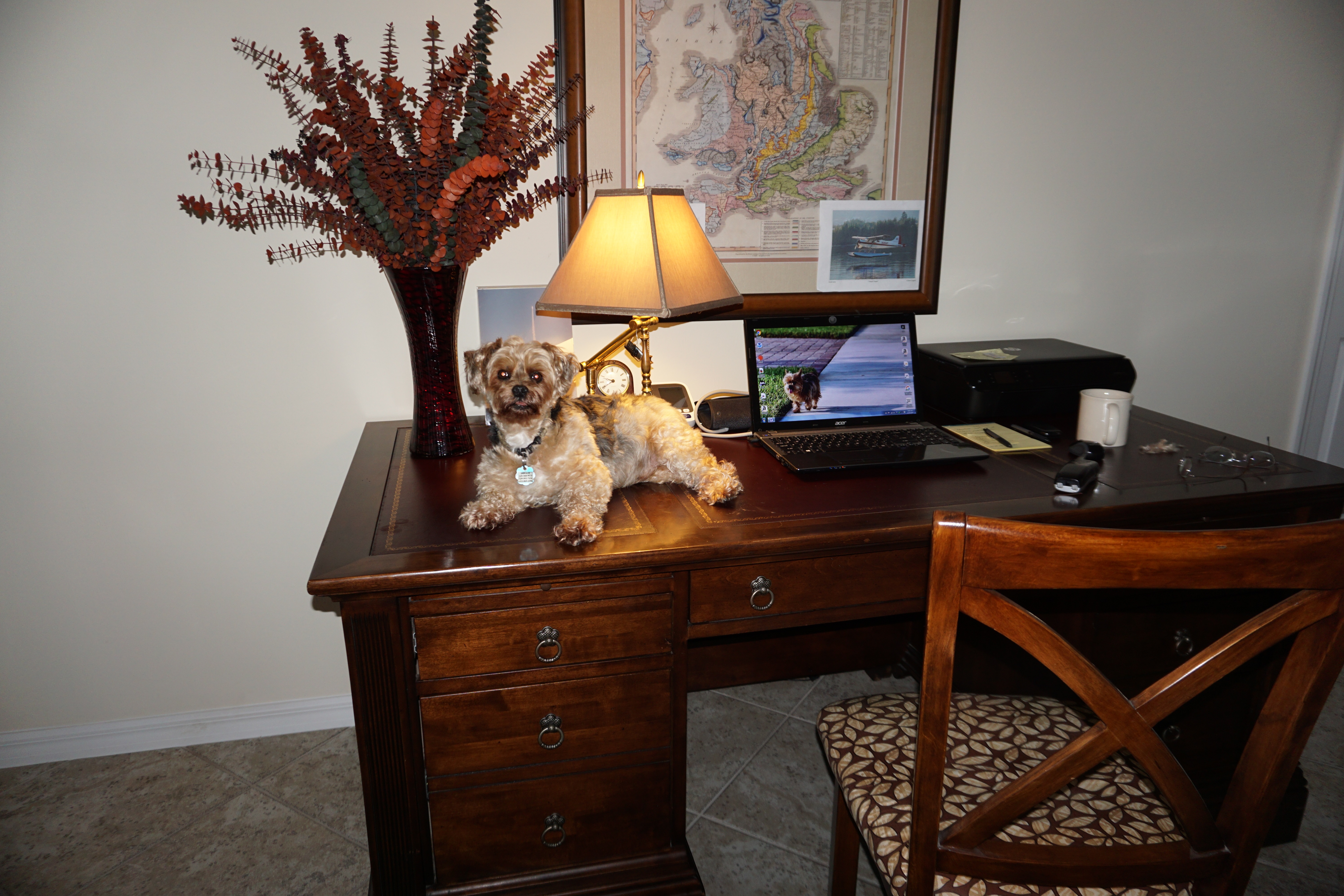
Ken: Years ago, I bought this big old colonial desk, solid wood, weighs a ton, and little did I know at the time it would become the centerpiece of what I now use to produce my work. As to writing habits, I have none, preferring to work in fits and starts and whenever the moment grabs me. On that note, I keep my computer on 24/7 and so on a whim can sit down at my desk any time, jiggle the mouse, and up comes my manuscript. This has proven to be very convenient, especially when I have an epiphany in the middle of the night and feel compelled to get up and write.
Allan: What’s next for Ken Baird, the author?
Ken: Right now I’m writing the third C.E. Brody novel, Yukon Justice, and it might well be the last of what would then be the C.E. Brody trilogy. Not sure what’s next after that, but perhaps something different. I had a job in a big city once and was appalled at the disparity in fortunes between the people like me working in the glass towers, and the hapless homeless souls living on the sidewalks below. Sometimes we literally had to step over them on our way home after work. That disparity in fortunes still bothers me to this day, and I have some ideas for a story to bring it to light.
Allan: There is a cliché amongst authors – Write about what you know. What are your feelings on this statement?
Ken: I’m not sure, I suppose it depends on what you’re writing about. But one thing is certain, the instant a reader senses you don’t know what you’re talking about, then your whole story loses credibility, and so do you. A few years ago I picked up a popular new novel by a New York author about the Klondike Gold Rush. Only a few pages in he began describing the methods of mining gold in the Yukon at the time, and how the gold could be easily recovered from the creek gravel because the gold was so much lighter than the gravel. I was flabbergasted at what I’d just read. I mean come on, who doesn’t know that gold is heavier than just about everything else? I thought, “It’s the other way around, you idiot!” I almost called the cops on the guy. Needless to say, I tossed his book.

Which raises the importance of research. If you’re going to describe anything at all, then do your research and do it thoroughly. Get the facts and get them right. Diligent research is a big part of the writing process, and a crucial responsibility to your audience.
Allan: Anything else you’d like to tell us about?
Ken: Only to say thanks again for this, that I’m still having fun with my new gig as an author, and to look for the third C.E. Brody novel in late 2022.
An Excerpt from: YUKON JUSTICE (scheduled for release in late 2022).
(Copyright is held by the author. Used with permission.)
Excerpt From Yukon Justice © 2021 by Ken Baird
ONE
The man in the back of my plane was in a body bag.
At least I assumed he was a man, judging by the length of the lump inside.
I’d just taken off from Franklin Lake, which is a hundred miles north of where I live, a dot on the map called Minto, on the Klondike Highway, in the Yukon.
Two cops had loaded the bag into the cargo bay and told me to fly it to Whitehorse. They said some other cops would be waiting there to unload it. Of course they wouldn’t tell me who was in the bag, but seeing as how yesterday I’d flown a Yukon conservation officer into the very same Franklin Lake, and seeing as how the only other access into the lake was a trail still waist deep in snow, well I had a pretty good idea of who it was.
Which was damn depressing.
Because he was a nice guy.
And just a kid.
Which had me wondering what might have happened to him.
I took off and climbed to three thousand feet, leveled off, eased back the throttle, and with a heavy heart pointed my old plane south.
Naturally the cops weren’t going to trust a bush pilot like me with a dead guy in a body bag, and so I was accompanied on the flight by a Constable E. Saunders of the Royal Canadian Mounted Police. Saunders was a fierce looking woman with a crew cut, the personality of a fence post, and a body made out of concrete blocks. I’d met her last summer in Whitehorse where she’d given me a two hundred and fifty dollar ticket for using my cell phone while driving my truck.
We didn’t exchange Christmas cards.
She was sitting beside me in the only other seat in my plane, frozen like stone, hands clenched between her knees, face white as a sheet. She was fixated on the console, breathing in short gasps, except whenever we hit a bump and she’d stop breathing altogether.
Guess she didn’t like flying.
An hour later with Whitehorse on the horizon, I got up my nerve and decided to pop the question. With the press of a button on the wheel, I jutted my thumb over my shoulder and asked, “So who’s in the bag?”
Constable Saunders didn’t respond though I knew she could hear me through the big green headphones on her head, same as the ones I was wearing. You’ve got to wear ear protection in my plane, the big radial engine is loud, and like it or not she’d had to remove her Mountie hat to put them on.
“Is his name Blake? I flew a guy named Blake into Franklin Lake yesterday, but hey, I guess you knew that already. Right?”
She said nothing, didn’t move, and remained transfixed on the console.
“So what happened?” I said.
Still the silent treatment. I gave her a good long look and could see she was in a personal battle to keep her lunch down. I know the signs all too well when a passenger is about to lose that fight. First they start burping, little ones at first, then the burps get bigger and more frequent and their cheeks will inflate with each one. It’s only a matter of time after that.
I kept an eye on her, waiting and watching. The next time she burped her cheeks puffed up like tennis balls. “Hey,” I said, “if you’re going to be sick use that bag in the pocket beside you, or that fancy hat of yours for all I care. But don’t upchuck on the floor or I’ll have to add a cleanup fee to your bill.”
When she turned and glared at me, I glared back and said, “It’s two hundred and fifty dollars.”
* * *

Thank you for taking the time to share your thoughts, Ken. Wishing you all the success you deserve.

For all you exceptional readers wanting to discover more about Ken and his stories, please follow these links:
https://eyesandearsbooks.wordpress.co...
https://www.publishersweekly.com/978-...
https://www.amazon.ca/Yukon-Audit-C-B...
https://www.amazon.ca/YUKON-REVENGE-C...
Next week, June 19th, Author Marjorie Mallon will be back.


June 5, 2021
Branching out with Returning British Author Angela Wren.
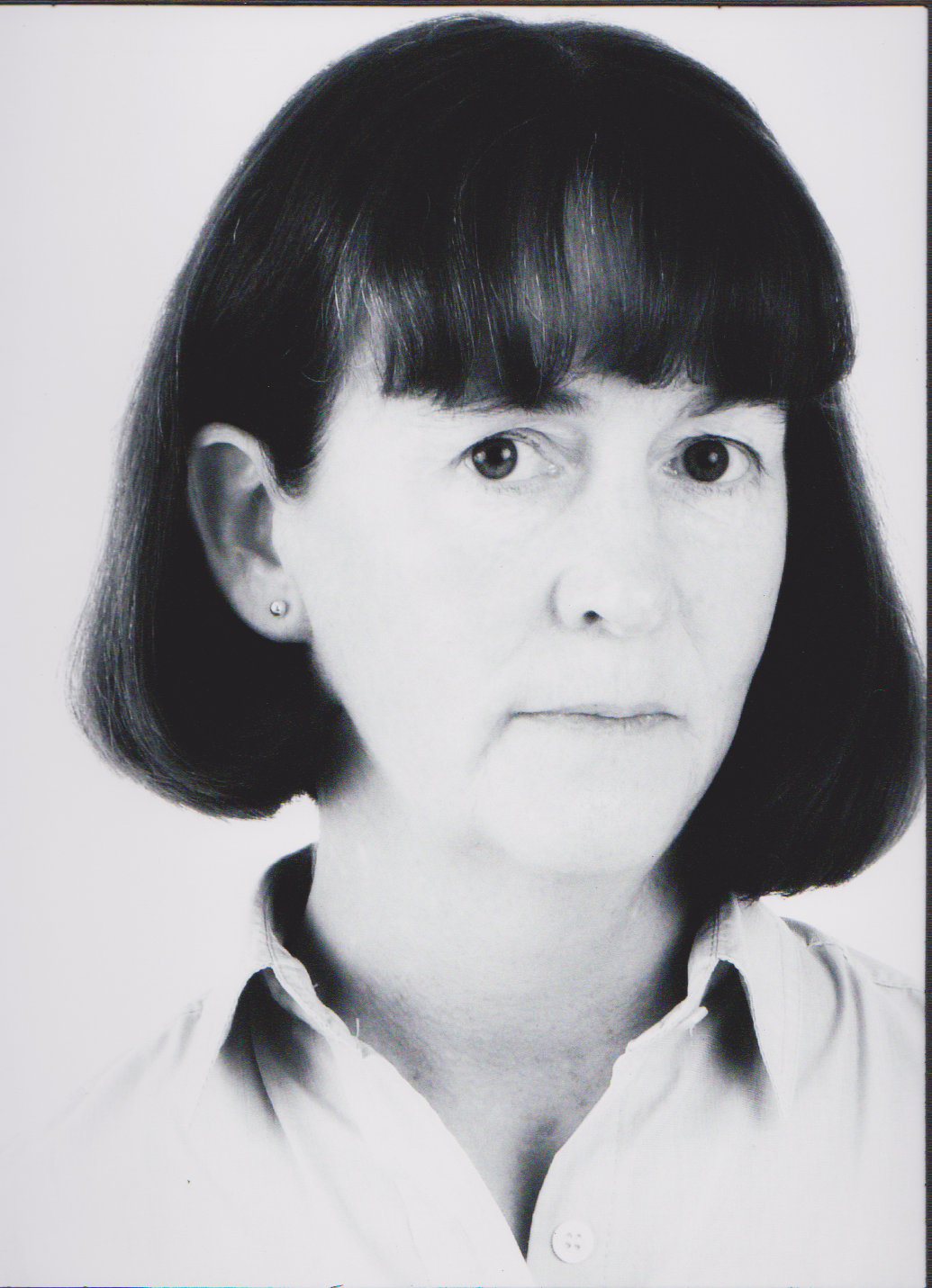
A mutual friend of Angela and I has a reading recommendation page on FB and that’s how we met. I was intrigued by her Jacques Foret character and her cozy mysteries. I’ve since read all five of the novels and have never been disappointed.
Angela has been a guest previously on the Scribbler and you can check it out HERE.
Exciting news! Both Angela and I, along with six other noted authors, are involved in an anthology tentativley titled Autumn Paths, due to be released in September 2021. Watch us on our FB pages and websites for more info to come.
Let’s chat with Angela.
Allan: Welcome back Angela. I know you are a busy lady so we appreciate you taking the time to be with us today. Before we get into your writing, please tell our readers a bit about yourself and your hometown. Did you always live in Yorkshire?
Angela: Hi Allan and thanks very much for inviting me back to your blog today.
I love history, I’m an avid reader and I like to travel. I spend as much time as I can in France each year and I can’t wait to get back there once the restrictions are finally lifted.

As for Yorkshire, yes, I've pretty much spent all my life here. I’ve had spells of living in London for a short while because that was where the work was. I also spent two years living in Whitley Bay because my job moved to Newcastle-on-Tyne. But once I found my present house, which is in a tiny village in North Yorkshire, I decided that I would always travel to work. As I result, I’ve worked all over the mainland of Great Britain but it was always good to come home to my little space at the end of the day, week or month.
Pontefract, a very old market town is my nearest place to shop etc. It might only be small but it has a fascinating history. Captured by William the Conqueror and gifted to one of his men, it became a place of strategic importance. A castle was built around 1070 but only the ruins remain today. The castle and the town – then called Pomfret – are mentioned in two of Shakespeare’s plays and it is thought Richard II was murdered here. During the English Civil War, Pontefract and its castle became a Royalist stronghold until it was besieged by the Parliamentarians (Oliver Cromwell and his Roundheads) in 1644-45. There are centuries of history here and I really like that.
Allan: You have a keen sense of plot with your stories. Each novel can stand on its own but contributes to the series. Please tell our readers what to expect when they pick up there copy of your newest mystery – Mercoeur.
Angela: Thanks Allan. As a writer, I’m very much a plotter. But that’s what twenty years of work in project management will do to you! However, I don’t plot every last detail. When I sit down to write I inhabit my characters and sometimes they surprise me.
For Mercœur, readers will find that nothing is quite what it seems at the outset. Here's the blurb…
On a quiet forest walk, Investigator Jacques Forêt encounters a sinister scene. Convinced there is evidence of malicious intent, he treats his discovery as a crime scene.
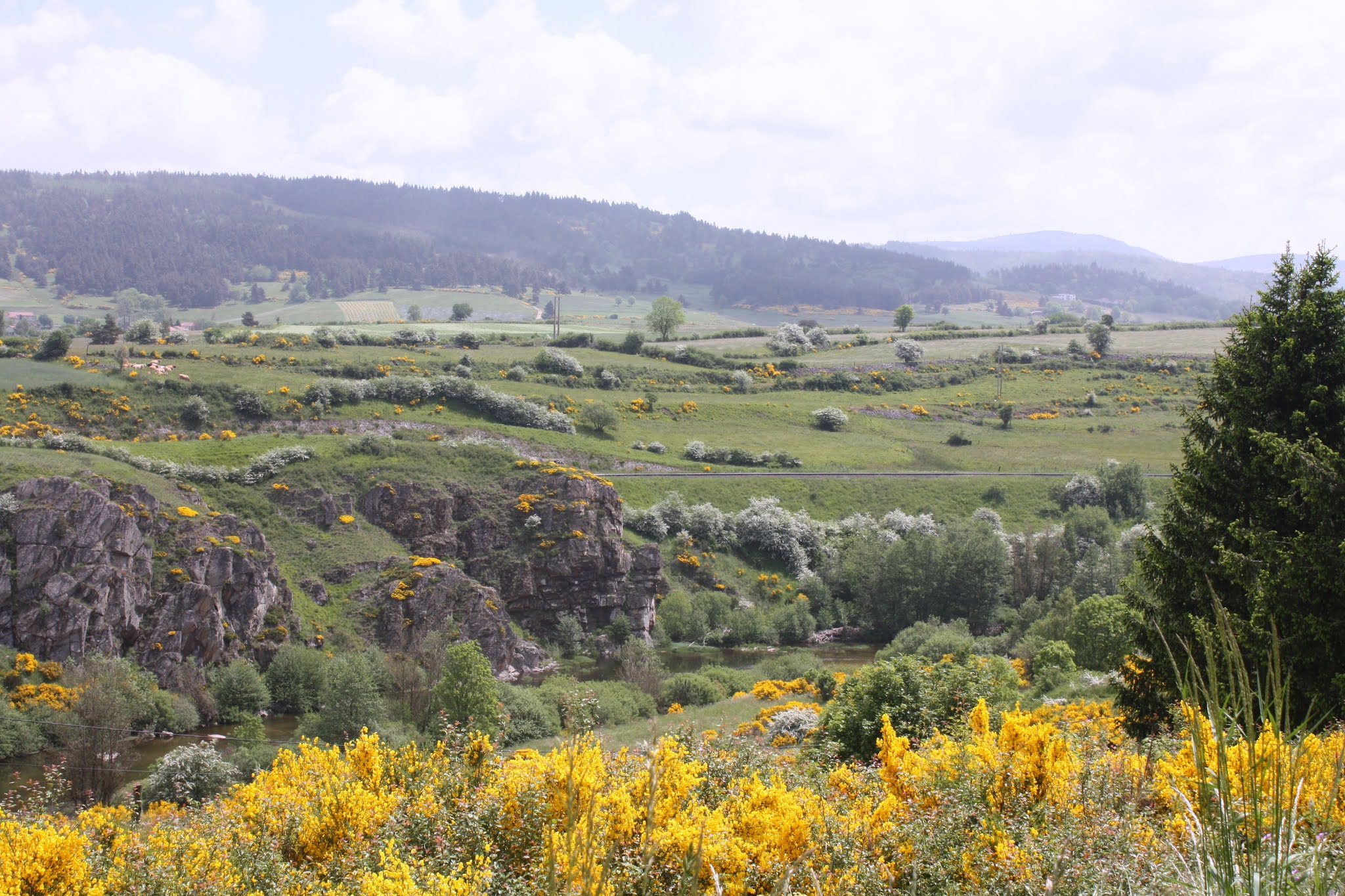
But intent for what? Without a body, how can he be sure that a crime has been - or is about to be - committed? Without a body, how can Jacques be sure that it’s murder, and not suicide? Without a body, how can the perpetrator be found?
A baffling case that tests Jacques to his limits.
Allan: In Mercoeur- we discover more personal things about Mr. Foret as well as a sad moment in his life. Was this difficult to write about?
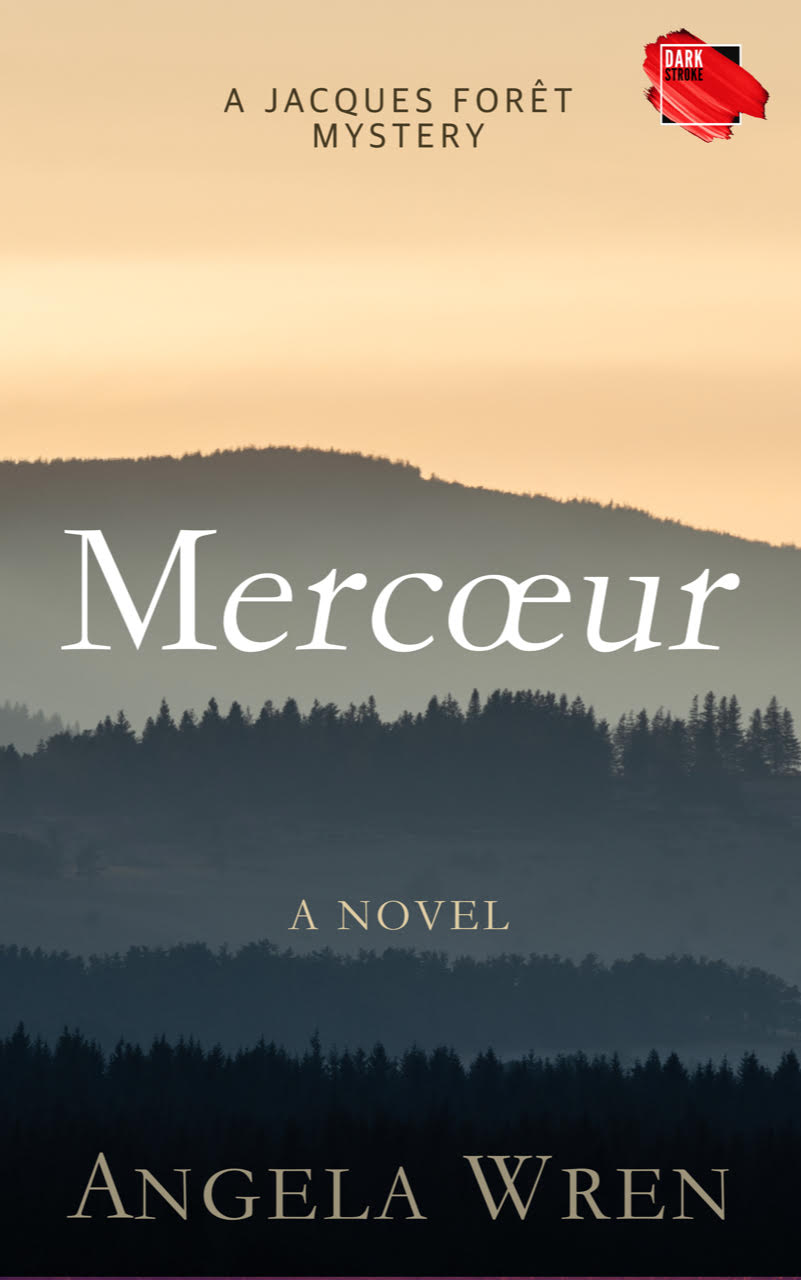
Angela: Very much so. Some of those scenes were very distressing and I found I had to walk away from the desk and give myself a break. Writing is very much about reviewing and revising, too – so editing those scenes was equally as upsetting. Because of the nature of the sadness that Jacques experiences in this story, it took me quite a while to get to the final versions. It also took a great deal of mental and emotional energy to create the scenes. I inhabit my characters as I write and that means that I sometimes have to draw on my emotional reserves. As an actor, I am used to doing that, but it still takes a lot of thinking to get the right words in the right order to convey how Jacques was feeling in those scenes.
Allan: Your bio on your website - HOME (angelawren.co.uk) – tells us about you are involved in theatre, both as a director and an actress. Tell us more.
Angela: I got into drama and acting when I was 6 years old. I had a speech defect that needed correcting. So, after school every Tuesday I went to my Speech and Drama class. That’s where I was first introduced to Shakespeare, too.
At 7 I was moved to a new school and my drama teacher also taught there. Suddenly, I had three days each week where I could pretend to be somebody else! It was great. My new school was girls only. For end of year shows that meant somebody had to play the boy's roles and that always seemed to be me. I began that part of my stage career as Hiawatha and moved through various male characters from fairy stories and children's plays.

As an adult my work in theatre provided a very necessary release from the stresses and strains of my job. It’s really quite therapeutic pretending to be someone else for a couple of hours after a tough day at work. I’ve played all sorts of roles from a blind girl in an adaptation of Murder in the Cathedral, through to characters in Shakespeare, the wicked witch in pantomime and Mr Twit – the gender bending didn’t stop just because I’d left school. I've played comedy, drama, historical (I've always loved being able to wear gorgeous costumes), and I've done revue, choral speaking, verse speaking and mime.
I'm essentially a character actor and I've always liked to be challenged. That's probably why, when I look back on all the roles I've played I can honestly say that I've never been type cast. Nor would I ever want to be. It's much more fun playing an 82 year old at half that age or a 15 year old at the age of 29.
I didn’t get into directing until I finally ditched the day job. I love the creative bit that’s needed when putting a show together – thinking about the set, the costumes, the whole look and feel of the production. That all goes on before we even start rehearsal. The actual rehearsals are really all about managing the people and encouraging a performance out of the actors. Rehearsals are great fun but they are hard work too. At the point where the show goes onto stage, the production is handed over to the Stage Manager and the director basically becomes redundant. On every production I’ve undertaken as a director I’ve always felt bereft at that handover point.
Allan; I’m happy and excited to be involved in an anthology with you, Angela. While this is new to me, you’ve been involved in several anthologies before. Can you share this with our readers?
Angela: I’ve contributed several stories to various anthologies. I write romantic stories for the Miss Moonshine anthologies and we’re about to publish the third book. We’re a group of nine authors and we all live within reasonable travelling distance of the fabulous Yorkshire town of Hebden Bridge. The town was also the inspiration for our fictitious town of Haven Bridge where Miss Moonshine has her wonderful Emporium.

As authors we meet up in Hebden Bridge to chat about writing and our current projects and it was at one of those meetings that the idea for an anthology with a single linking character - Miss Moonshine - first emerged. We saw the creation of the first anthology as an opportunity to introduce our work to new readers. What we hadn’t envisaged back then was that Miss M and the stories would kind of take on a life of their own and become a series.
We work collaboratively to get each book out. Having agreed to a broad production timeline, we then work independently to create our stories. If we need to check in with each other we just email and agree whatever is needed. I find it very encouraging to be working with such great authors and having to stretch myself to write in a different genre is challenging but refreshing. Writing romance is quite different from crime!
Allan: Any teasers about Book #6 that you are outlining at present, or is it too early to tell us what to expect?
Angela: Hmm, what can I say? It still doesn’t have title yet but, there is an art gallery involved and a particular painting. Jacques also has to help out an old business partner. Didier Duclos and Thibault Clergue will be working with Jacques on various aspects of the investigation. There will be appearances from some of the villagers in Messandrierre, too.
Allan: Looking back at when you wrote your first novel, has your path as an author been what you expected? High points? Low points?
Angela: Not really, no. I made the fundamental mistake of thinking that once the first book was published, that was the end of the journey. Of course, it wasn’t and I quickly adjusted my thinking. The book being published is actually the beginning of another, very different, journey. Once Messandrierre was out, I then had a steep learning curve as I threaded my way through promotion, marketing, and finding an audience for the story at the same time as writing the next one in the series.
 Angela's workspace.
Luckily, I had the support of my publisher – Crooked Cat/Darkstroke - and all the other authors on their books to help me out and answer questions. I can’t pretend that was easy because it wasn’t. Having that support network there was essential. I doubt I would have been able to say, as I can today, that I’m working on book 6 in my current series and that I’m developing characters and brief storylines for a new series had CrookedCat/Darkstroke not been there.
Allan: Anything else you’d like to tell us about?
Angela: Don’t think so. Just that I’m really looking forward to completing the ‘Autumn Paths’ anthology. There will be info on my blog, #JamesetMoi, about that along with information about the next Jacques Forêt book and the third Miss Moonshine anthology over the coming weeks and months.
And finally, thanks for hosting me Allan.
 Book one of the Jcaques Foret series.
It’s always a pleasure having you as a guest Angela. Thanks for taking the time to share your thoughts. All the best to you and wishing you continued success with your writing.

For you devoted fans wanting to discover more about Angela and her novels, please follow these links:
Amazon : AngelaWren
Website : www.angelawren.co.uk
Blog : www.jamesetmoi.blogspot.com
Facebook : FacebookAngela Wren
Twitter : TwitterAngelaWren
Instagram : InstaAngelaWren
MeWe : MeWeAngelaWren
Bookbub : BookBubAngelaWren
Goodreads : GoodreadsAngela Wren
Contact an author : Angela Wren

May 29, 2021
Branching out with Author C P Hoff of Alberta.

Due to a successful partnership with Creative Edge of Saskatchewan in 2020, the Scribbler played host to accomplished authors selected by CE. It was so much fun for all involved, we are doing it again in 2021. Watch the last Saturday of each coming month for authors under the CE banner.
This month, you will meet Canadian author C P Hoff.
While researching Ms. Hoff’s body of work, I was excited to discover her novel – West of Ireland – which I ordered recently and am looking forward to reading as soon as I can.
She has graciously agreed to a Branching Out Interview and is offering us an Excerpt from West of Ireland.
C.P. Hoff lives in southern Alberta with her husband, and children. She has written for the local paper, which might be impressive if she lived in New York, and if anyone read the local paper. Hoff is a founding member of WordBridge – Lethbridge Writers’ Conference.
Her first novel, A Town Called Forget, was longlisted for the Stephen Leacock Medal For humour. Her second novel, West of Ireland, received a Kirkus star and was featured in Kirkus Best Indie Fiction & Literature 2020. Her third book, Canterberry Tales, also received a Kirkus star.
So, let’s have chat with Ms. Hoff.
Allan: I’ve read that you grew up as a gypsy, but you’re not a real gypsy. Care to explain?
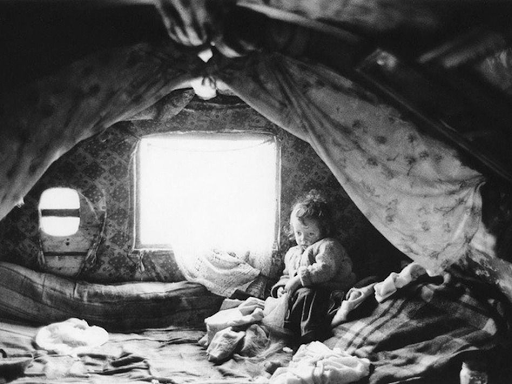
Connie: Yes. We moved a lot, which made it hard to make friends. I’ve lived in all three prairie provinces, in the far north, and close to the 49th parallel—from hills and trees to the badlands. I lived in thirteen different houses before I was eighteen. On the one hand it was impossible to lay down roots, but on the other, it makes it easy to pin down the date of a memory. I just have to envision the house I lived in at the time.
Allan: Before we chat about writing, can you tell us about your family and Mrs. Beasley and her dubious reputation.
Connie: My family is huddled down, quietly waiting out Covid. It is a different time and takes some getting used to. We are all healthy and content, which is all I can ask for. As for Mrs. Beasley, I’m sad to say she is no longer with us. She developed Cushing’s and subsequently died of cancer.
Allan: You write under a pseudonym. Is there a story behind this?
Connie: There is not much of a story there. Hoff is my maiden name.
Allan: I’m looking forward to reading your novel – West of Ireland. What can I expect when I get my copy?
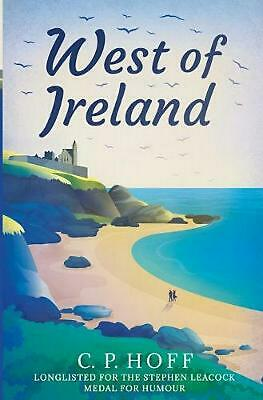
Connie: Oh! You get to meet the O’Briens. They are glorious in their dysfunction. Like many families, they poke and prod each other at the most inopportune times. Unfortunately for the O’Briens though, their foibles come to life on the page. They can’t be hidden and hushed away. And you, as a reader, will get to chuckle at their absurdities and scowl at their vices—which is not always appreciated by the characters. As Mr. O’Brien quips on the back cover of the book, “A piece of literary fiction my arse!” West of Ireland was one of Kirkus Review’ Best Books Of 2020.
Allan: What can you tell our readers about your Picaresque Chronicles?
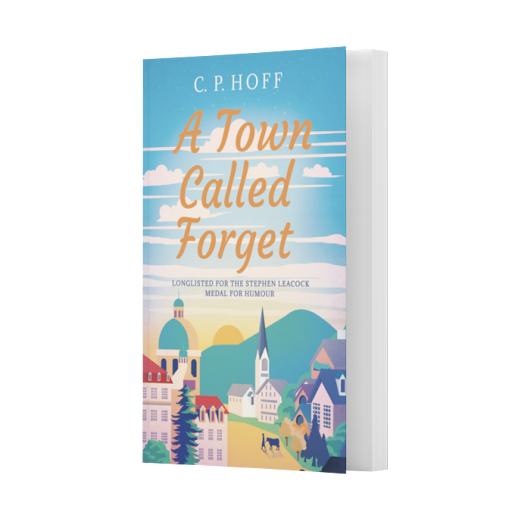
Connie: The Picaresque Chronicles are full of offbeat characters who share the same longings and desires that make us all human. Examining their quirky lives allows me to step back and chuckle at my own peculiarities, ones I tend not to give voice to. I hope in meeting this motley crew, readers will find the same enjoyment, and that this strange bunch will give them a laugh when it is most needed.
Allan: Please share a childhood memory and/or anecdote.

Connie: I was a reluctant reader. The summer I was supposed to head into the sixth grade, I was told if I didn’t read twenty books I’d be held back. To encourage me, my mother read me the first half of each book, thinking that if I was well into the story my curiosity would drive me forward. That was not the case. I spent the summer making up a myriad of endings. And as a bonus, I didn’t fail, and was well on my way to becoming a storyteller.
Allan: Do you have a process you follow from idea to finished novel? Panster or Plotter?
Connie: I’m on the fence on that one. Sometimes I’m a pantster through and through, and other times a slip of a plot guides my way. It really depends on how well the story is flowing, and whether or not I’m lost in the weeds. When lost, I turn to plotting. When it feels like I’m skipping through the tale on a sunny afternoon, being a pantster is the way to go.
Allan: Do you have a mentor or has anyone influenced your work?
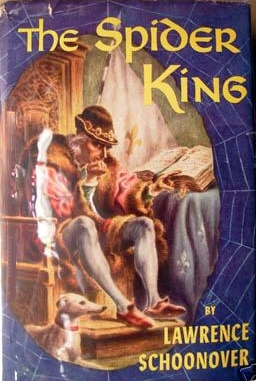
Connie: As a child I was bombarded by stories. My mother read to me, and my uncle made up heroic tales in which he always saved the day. I was encouraged to revel in my imagination, and that has an impact on a child. This was coupled with the books that were lying around the house—The Spider King, The Captain from Castile, Our John Willie; and the ones I chose as an adult—Anam Cara, The Amulet of Samerkand, Furiously Happy, and the Chief Inspector Gamache books, to name a few. I can’t pin down any one influence. There has been a lifetime of amazing storytellers who have informed me. Naming just one would be a disservice to the rest.
Allan: Anything else you’d like to tell us about?
Connie: I have another book coming out this May, Canterberry Tales.

The blurb reads, “Pull up your knee socks and buckle your pinchy shoes, your childhood is calling. Celia Canterberry, a precocious seven-year-old, hell bent on saving earthworms, is about to drag you down memory lane and remind you what it was like to look at a careworn world with wide-eyed bemusement. Now take a deep breath. Smell that? Nostalgia.
Celia flits through the streets of Happy Valley to her Nan’s chagrin, causing havoc wherever she goes. She’s so infamous, she’s got her own comic strip in the local paper, and Old Lady Griggs, her babysitter, is only too happy to read it with her. But what Celia secretly wants to know is where she came from. You see, Celia was abandoned at the hospital by her should-have-been parents, and her Nan won’t explain how or why…”
Kirkus reviews writes, Hoff is always ready with well-executed humor: “[Nan] never wears her teeth when she’s gardening,” Celia tells Old Lady Griggs at one point. “She thinks it’s best not to let the plants know her true intentions.” The combination of warm nostalgia and a sharp, modern sensibility is perfectly managed, and the promise of future volumes will please readers who want to spend more time in Happy Valley.
A well-crafted tale of a precocious child. ——Kirkus Reviews (starred review)

An Excerpt from West of Ireland.
(Copyright is held by the author. Used with permission.)
Mr. O’Brien banged his walking stick against the side of the banister and called up the stairs, “Don’t be troubling yourself, Mary-Kate O’Brien. It’s not like I don’t have all day.”
There was no response from the upstairs bedroom, and Mr. O’Brien could feel his temper rise. “Can’t a man see his own daughter’s shining face in the morning? Is that too much to ask? I feed you, I clothe you for nigh on twenty years, and my pocketbook has grown rather light because of it. To relieve me suffering, I’ve asked around and there is not a soul in the world willing to take you off me hands. Yet you don’t hear me complaining, do you?”
The sound of his daughter opening and closing her dresser drawers drifted down to him. It was as if he spoke to the wind. All Mr. O’Brien wanted was for Mary-Kate to hurry her pace, skip down the stairs and merrily link her arm in his. However, Mary-Kate never skipped, and arm-linking was something she seemed to have an aversion to. The last time he insisted she take his arm, Mary-Kate went limp at the knees, and he ended up dragging her down the street. The great oaf and his rag doll.
He closed his eyes and leaned against the banister. She was up to something; he was convinced of it. The thought of not knowing what mischief she was entertaining irritated him like nothing else. If there was mischief to be had, it should be had together. It had been that way since she was a babe, and he saw no sense in changing their ways now. It was what steadied their rudder, kept them from going adrift when storms threatened. Pulled him back when he forgot his place and lost sight of the one he chose to be tethered to.
“Are you well?”
Mr. O’Brien opened his eyes. His wife stood in front of him with a cup and saucer in hand. As fetching a woman as he could have hoped for, she even rivalled some that plied their trade on the street. Though he’d never found an opportune time for telling her so. His Mary-Kate had inherited her mother’s mass of red hair and, sadly, much of her attitude. “Why would you ask me such a thing?” he frowned, puffing out his chest. “Am I not as robust this morning as I was last evening?”
“Keep your voice down,” Mrs. O’Brien snapped, roses blooming on her cheeks. “Or you’ll not see the inside of me bedroom for a month.”
“Oh, I don’t have to see the inside of yours, you could cross the hall to mine.” Mr. O’Brien stepped into his wife. He looked down at her and waited for her to lean her ample waist against him. Her breathing changed, but Mr. O’Brien wasn’t sure if she were inclined or annoyed. He gave her a seductive wink, or it would have been, had an eyelash not worked itself free and blurred his vision.
A look of disgust crossed his wife’s face. “You’re making a nuisance of yourself, Mr. O’Brien,” she said thumping him in the chest with her free hand.
Ah, now he knew. She was annoyed. The thump was too hard; there might even be a bruise. The morning was not going as he hoped. There was no tenderness in it, no cooperation. “What’d you do that for?”
Mrs. O’Brien turned her face away. But before she did, he caught a flicker of something unfamiliar in her visage, in the corner of her eye, the shape of her mouth. He wasn’t sure what it was, but there was a darkness to it. “In all our years together, you’ve not done such a thing to me,” he said rubbing his chest. “What’s got into you?”
Instead of answering his question, Mrs. O’Brien handed Mr. O’Brien her empty cup and saucer before heading up the stairs.
“What’ll I be needing these for?” he asked looking down at the cup and saucer.
“For a happy marriage.”
“A happy marriage? Never heard of such a thing.”
“I heard that Mr. O’Brien,” she said without turning around. “Don’t be acting like I’ve given you a snake. Just take them to the kitchen.”
“Don’t be acting like I’ve given you a snake,” Mr. O’Brien mimicked softly. He pulled back the leaves of a nearby fern and carefully set the dishes on top of those his wife had given him the day before. Forgetting his daughter, he picked up his bowler and stepped out the front door into the chilly April air.
Thank you, Connie, for being our featured gust this week. Wishing you continued success with your stories.
For all you fantastic visitors wishing to discover more about C P Hoff and her writing, please follow these links:
Amazon.com: C.P Hoff: Books, Biography, Blog, Audiobooks, Kindle
"cp hoff" | eBook and audiobook search results | Rakuten Kobo
May 22, 2021
Branching Out with ArtShediac.
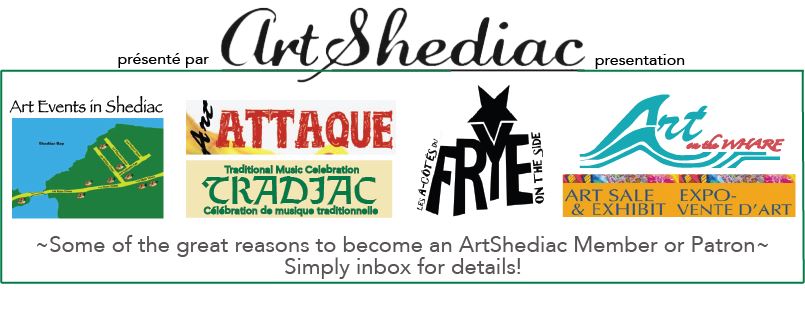
There is an active artist’s scene in the seaside community. Bringing as much as possible under the same banner is ArtShediac. A not-for-profit organization dedicated to the art and artists of Shediac. At present there are two busy individuals that manage the day-to-day operations of the group, Colleen Shannon and Susan Jardine. Both are artists and go-getters.
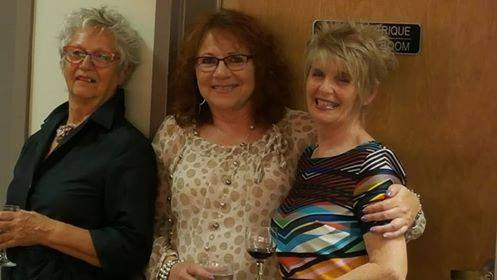 Susan, a friend and Colleen.
The Scribbler is beyond happy to have them visit with us today to tell us more of this vibrant and thriving community. Susan has been a guest before and you can read her interview HERE.
Thank you, ladies, for joining us this week. Let’s chat!
Allan: Before we get into the nitty-gritty of what ArtShediac is all about, please tell us a bit about yourselves.
Colleen: Thinking back to when I was very young, I was the child that did not do the same play things as other children my age. I spent a lot of time alone and preferred to read, draw sew and enjoy nature. I loved the woods, fields of flowers, bubbling brooks and spending time with my grandmother who had a very strong influence in my life. As a high school student, I was an average kid who excelled in art class and in the sewing room. My first full-time job was with a daily paper as a commercial artist in the advertising department. Then of course like so many artists; future jobs, marriage and raising a family took me on other paths. In 2013 after my youngest child left for university, I took a graphic design program which has been the catalyst for my remerging artistic endeavours.
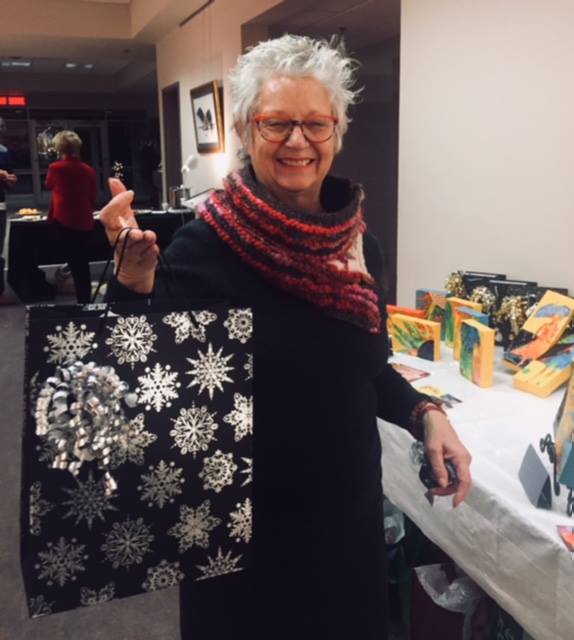
 Colleen & Helen.
Susan:A longtime friend of mine said to me at one time that I talked about art a great deal during our 40 plus years of friendship. I suppose that was true, however, as I look back it wasn’t really until 2001 when I took a watercolour painting class in Charlottetown while on a job I had there for about a year that I began to explore making art. I did nothing further with it until 2006 after having walked the Camino Santiago in 2005. At that time, I branched out into acrylics and took several workshops in Vancouver and Victoria. In 2010 I was involved with a painting group in the small town I lived in in France. It was not until I arrived in Shediac in 2010 that I decided to actively produce and sell my art.
Allan: Please tell us about ArtShediac. How did it come into being and how old is the organization?
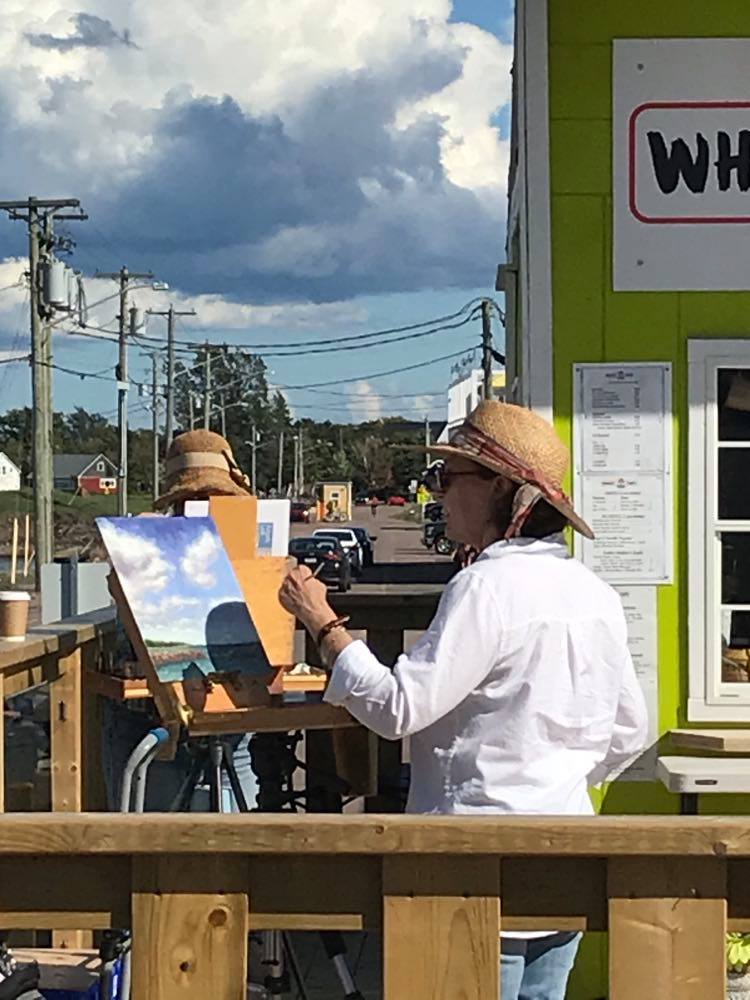
Susan: A group of us interested in community development decided to hold what we called “Conversations” where we brought people together to discuss ideas and how we could make our experience living in Shediac even better. Out of that came several projects including Cine Shediac and ArtShediac and CAPS another arts group that gets together to paint was revived.

Colleen:As Susan has just explained, I also attended the Conversations meetings that explored ideas to create activities to benefit our town of Shediac. When we broke down into smaller groups to brainstorm the possibilities per topic, I joined the group exploring what an art group in Shediac would look like. Three of us formed an art group which eventually brought us to where we are today seven years later.

Allan: Last summer, ArtShediac was at the Pointe-du-Chene wharf which has become a social gathering spot. Art on the Wharf was a great idea. How did it come about and what was your role in it?

Colleen: Actually, Susan was approached by a Wharf committee member, who also happens to be an ArtShediac member. He told her there was a vacant building for use on the newly renovated deck at the Wharf. Susan brought that information to the ArtShediac committee who quickly made arrangements to rent the vacant building as a gallery and make the gallery available for ArtShediac members to display their works for sale; creating a new source of income for them during the pandemic. The ArtShediac committee soon came up with the name ‘Art on the Wharf’ which encapsulates the type of business and its location. ArtShediac proudly boasts $4300 in sales our first year in business during a global pandemic!
Susan: I remember driving home from that initial meeting being so excited about the prospect of an art gallery on the wharf that if ArtShediac decided not to seize the opportunity, I would. Didn’t know how I would do it but I was determined. As it happened others agreed with me and out of that came Art on the Wharf.

Allan: How has the pandemic affected you each personally and how did it affect plans for ArtShediac?
Susan: I have been very busy with Probus Club of Shediac Shores as Program Chair finding guest speakers to present at our monthly meetings via Zoom. I presented a 5-session cooking class called “Simply Fabulous Food” via Zoom for Tantramar Seniors College. I am participating in a weekly current events class from TSC via Zoom. I hold biweekly art workshops for OpVets here in Shediac (the only OpVets from across Canada that has a visual arts component). I have been working on achieving a daily walking steps count of 10,000. And I am producing some art. I did quite well in December 2020 selling my art (small pieces) on Facebook. I have been working on motivating myself to produce a painting a day for posting on FB. That seems to have eluded me so far in 2021 although as I said I managed it quite well in Nov Dec of 2020. I had been showing my art at a newly opened gallery in Moncton called The Acorn Studio for the past year, however, the owner is closing and switching to a digital gallery. I much prefer the eyes and hands on gallery experience for my appreciators. Seeing art and examining the pieces in person seems to me to be a much more whole-body experience than merely viewing a photograph. The nuances of texture, colour, materials, that one can see in person is the experience I want for the appreciators of my art.

Colleen:As devastating as a global pandemic is for many, many reasons; for me on a personal level I explored new ways to achieve what I would normally be doing within my artistic life. A large part of this exploration required learning to give my classes online and to continue to connect with participants in the most personal method possible. Not being hands-on created the need for me to use more descriptive language, instruction and enhanced listening skills. I also developed a heightened awareness of the need to recognize the visual clues of struggle by an individual and how to meet their needs.

Allan: What is the criteria for being a member of ArtShediac and what is involved?
Colleen: Simply file out a membership form which requires a $20 annual fee. And I would like to emphasize you do not have to be an artist to join us. Anyone who appreciates art in all of its forms and would like to receive notifications of upcoming events can become a member. Patronship and donations are always appreciated.

Allan: What can we expect from ArtShediac in the near and distant future?
Susan:ArtShediac will soon send a callout for participants to display visual art and literature at the ‘Art on the Wharf’ gallery in Pointe-du-Chêne. We plan to host a variety of events on the newly expanded deck and are looking for poets, musicians, dancers and theatre performers who would like to participate. The gallery will kick off the July1st opening with a members and friends party!
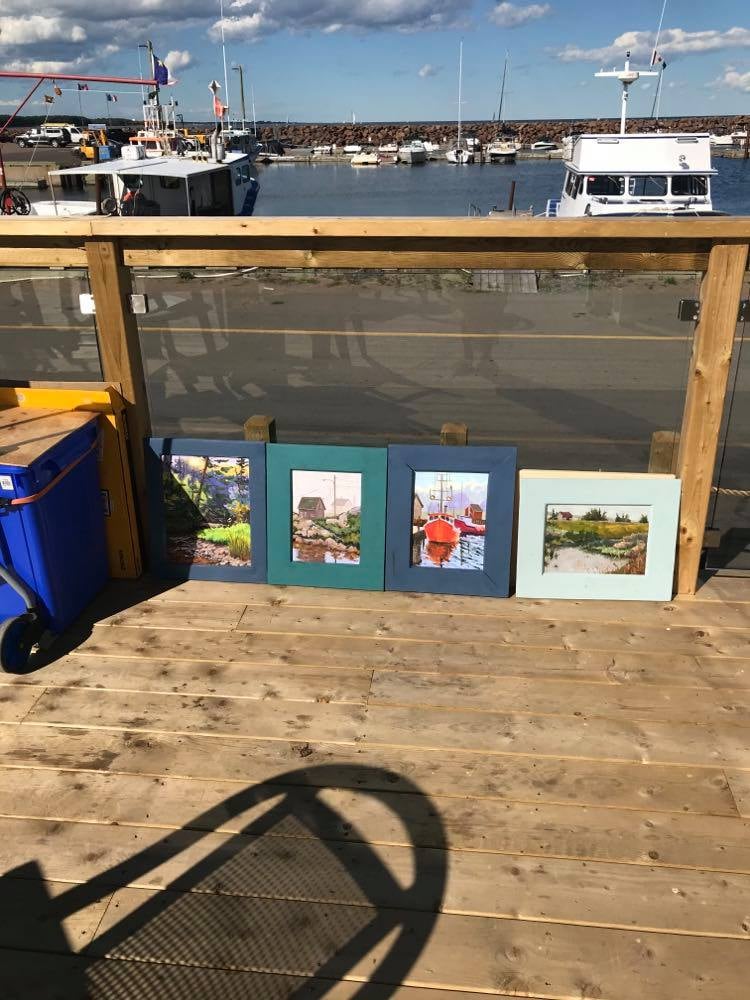
Colleen:ArtShediac will also present the annual events recently announced on our Facebook page! Allan ‘Art on the Wharf’ hopes to open before or around July 1st. We are soon to send a callout for participants and will be better informed to suggest who to interview after contracts are signed, etc. It has been a very slow process to finalize with the Wharf Authority. They took a long, long time to get back to us and now have told us they are planning renovations to the building therefor, nothing is solid at this time.

Thank you, Susan and Colleen, for sharing news about ArtShediac.

****It was great fun and exposure for my novels last year and I for one, appreciate your efforts. It’s a wonderful venue.
Website for ArtShediac is coming soon with links to the Facebook page and Instagram.

May 15, 2021
Branching out with New Brunswick Authors Jane Tims and Roger Moore.
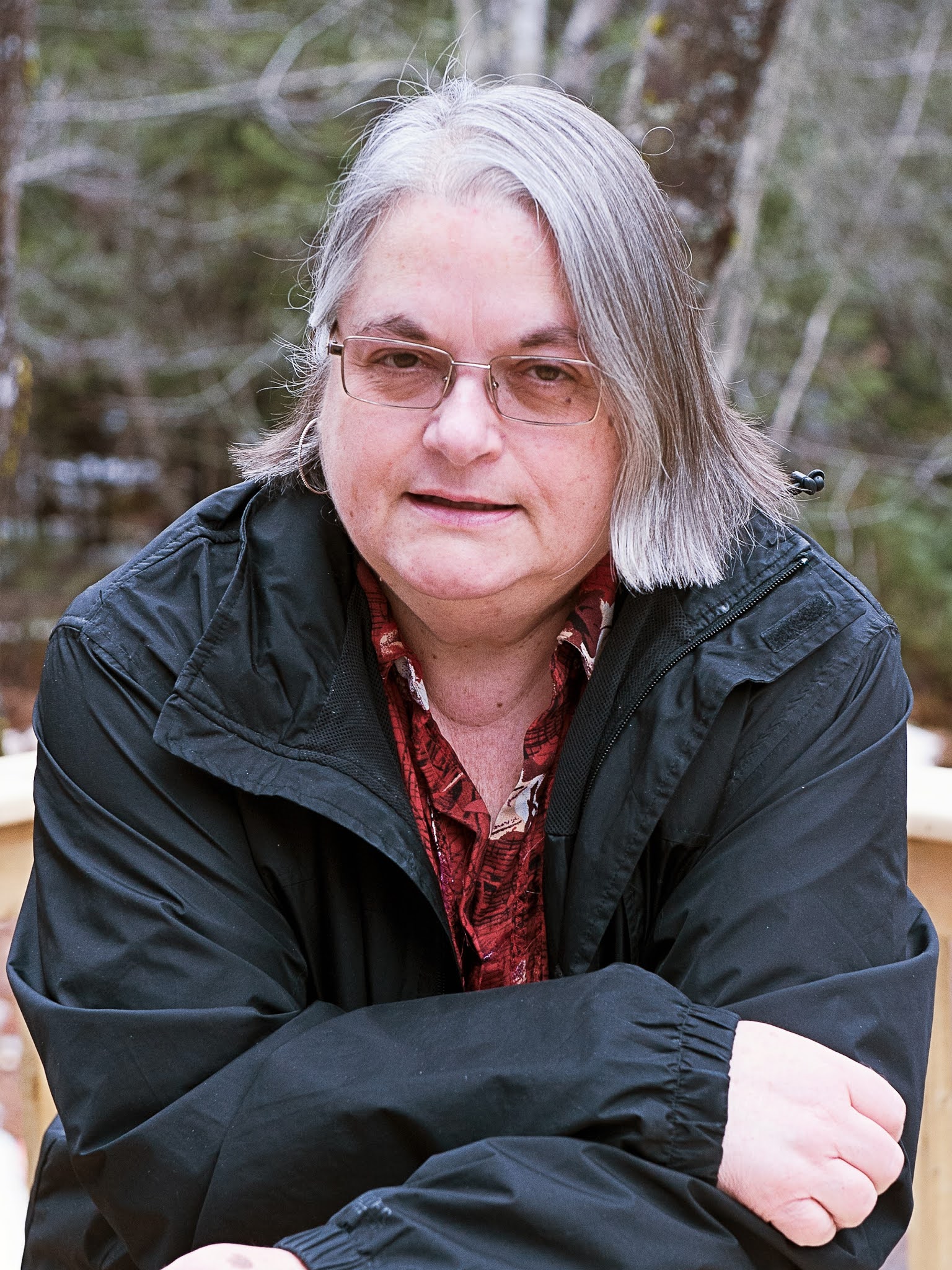

It’s an exciting time for the Scribbler. Not having just one, but two accomplished authors as our guests this week. Both authors have been featured previously on the Scribbler.
If you missed the earlier interviews and bios, where Jane talks about the diversity of Writing and the diversity of Publishing Business and the diversity of Themes, please go HERE.
For Roger, please go HERE for a previous interview and HERE where he discusses his month-long residency at KIRA.
What sparked this week’s post was a note from Roger regarding a review he did on Jane’s novel – Niche. Poetry & Drawings. After a friendly discussion, I hoped for a joint interview and both are kind enough to agree.
***Special Note: Today, at Westminster Books in Fredericton, Jane is launching her latest Kay Eliot Mystery - Land Between the Furrows. 2-5 PM. (See Below)
Let’s chat with Roger and Jane.
Allan: The first question is for you, Roger. Tell us about your review of Jane’s book. Visitors can read the review HERE.

Roger: Jane and I have worked closely together for some time now ad we enjoy sharing our writing. Jane asked me if I would be willing to read her book, Niche, and to write an introduction to it. I did so, most willingly. When the book was published, Jane brought me a copy and I was honored to find my name on the front cover. I was very happy to review it, but, in all honesty, it was an easy task, because I merely copied the Introduction and used it for my review. I believe such duplicated work is what my grandfather, a hard-working man from the old school, called ‘a lazy man’s load’.
Allan: I’ve had the pleasure of reading your poetry, Jane. What was the inspiration for Niche? And please tell us about the drawings.
Jane: The idea of ‘niche’ came from many places. First, I am a biologist and a botanist, so many of my poems over the years have been about plants and animals and their homes. Second, in 2011, when I was searching for a theme to describe my blog (www.nichepoetryandprose.comnow www.janetims.com ), I thought the idea of ‘place’ would resonate with many readers. Third, ‘place’ is a favorite concept in my writing. It is impossible to write about plants and animals without mentioning their habitats, the ‘niche’ where they fit and thrive. And I think a measure of human happiness has to do with how comfortable people feel in the ‘place’ or ‘niche’ where they live.
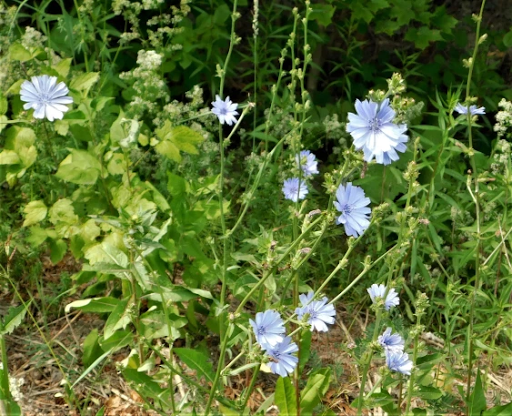 Photo by Jane Tims.
The drawings are an extension of my feelings about plants and animals. I love to draw, and most often it is my hand that does the drawings. I just watch. I have no real training and the eraser and Q-tip are as important to the execution of my drawings as the pencil! I once had a well-known artist say that my drawings and my poems left her with very similar feelings. I want the drawings to resonate with the poetry.
 Drawing by Jane Tims. Copyrighted.
Allan: Jane, can you share a little about where you live, your family and being a botanist.
Jane: I am lucky to live in a rural environment with woodland all around. This week I have wakened to the song of the winter wren (I call him the ‘scribble bird’ because of his impossible-to-follow song), the eastern phoebe and the nuthatch. Our property has lots of diversity: a cedar swale, old-field, a gully, spruce forest and mixed wood where we built our house. My husband shares my love of the woods and I raised my son to appreciate nature in all its variety. I think it is interesting that if you look at a satellite photo of our neighbourhood, we do not show up at all; other properties have a house, lawn and a few trees. If you look very closely at the heavily wooded spot where we live, you can just glimpse the roof of the house. This place, where we have lived for 41 years, is a perfect space for a botanist to live.

Allan: What’s in the future for Jane Tims, the author? The artist? The botanist?
Jane: I am retired now from my work as an environmental planner. In 2012, I started writing, words that had rattled around in my head for years. Since 2012 I have published five poetry books, including two with Chapel Street Editions in Woodstock, three volumes in the Kaye Eliot Mystery Series and nine books in my science fiction series Meniscus. From now on, I will write and draw until I can’t. I am happiest when I am doing that first draft. But I also like the social life of the writer and I belong to two active writing groups (Wolf Tree Writers and Fictional Friends). My writing gives me a chance to express myself as an artist since I illustrate all my books and create the art for the covers. Being a botanist has always suggested themes for my writing and it will continue to do this; last year, with the support of artsnb, I explored abandoned communities in New Brunswick to see what happens to the gardens that are left behind and wrote a new manuscript of poetry called ‘escapes.’

Before we carry on the interview, can you please share an excerpt, Jane?

An Excerpt from Niche.
(Copyright held by the author. Used with permission)
I need to see more of these woods
more than the trail winding between the trees
I must narrow my perspective
slow my walk
search for texture
in the trampling of the mosses
and the duff thrown by pounding feet
find philosophy in sunshine filters
slantwise between the trees
the halo of pollen and dust
in the spotlight, forgiveness
in the rain, gathers a full hour
in the high branches
before it weeps
find hope in the stolid
bracket fungi climbing the trees
life in oak galls
and witch’s brooms
lichens hanging overhead
chandeliers to light the trail
winding between the trees
Allan: Roger. On Being Welsh – an award-winning novel I have had the pleasure to read and review for The Miramichi Reader. You continue to pile up the awards and inspire us. How does the well-deserved recognition feel? I expect it is something an author never grows tired off.

Roger: Now there are several loaded questions concealed in that paragraph, Allan. First, the awards: I am a dedicated writer and I try always to support the WFNB by entering their writing competitions regularly. I remain true to the words of one of my favorite authors, ‘paper your walls with rejection slips,’ and I have indeed been rejected on many, many occasions. I have also been lucky, extremely lucky, with the awards. Thank you for mentioning them. As for the recognition, more than anything else, it is a confirmation that my writing is on the right track and is improving. It is also an encouragement to keep writing and to keep submitting. As the old saying goes ‘if you want to go from Halifax to Vancouver by bus, stay on the bus. You’ll never get to Vancouver if you get off the bus in Montreal or Toronto and don’t get back on. So: stay on the bus.’
*****Yesterday, we received news that Roger’s writing has yet received another award in the 2021 Writers Federation Writing Competition. First Place for Narrative Non-Fiction with Two Dead Poets. Congratulations, Roger.
Allan: If it is not too personal, Roger, has being a cancer survivor changed your writing in anyway?

Roger: To suffer from cancer is a life-changing experience. In my case, the cancer was caught early and was cleared up. I was treated in Moncton, where I stayed for eight weeks in the summer of 2015. In Moncton, I decided to renew my contact with the French language and I spoke mainly in French throughout the stay and the treatment. To mingle with fellow sufferers, mostly Acadians, many in a worse condition than me, was a humbling experience. To share their lives, their stories, and their language was a revelation. So many doors opened before me. Each day, when I emerged from ‘the throat of the radiation machine’, I saw a renewed beauty in the world around me. It was then that my writing became a dialog with my time and my place (Bakhtin). When I left the Auberge in Moncton, I started to revise and polish my older works and to publish them on Create Space (now Kindle / KDP). Post-cancer, I realized just how precious life is and equally just how important it is to preserve our daily dialog with it. As I said on the back cover of A Cancer Chronicle: “if I can reach out to touch and comfort just one cancer sufferer, this book will not have been written in vain.” Now, I want to reach out and touch the hearts and minds of any and all who read my books.

Allan: Roger. Can you share a few details about your family and where you live?
Roger: I came to Canada 55 years ago this September. Clare followed me four months later, in December. We got married six days after her arrival and will celebrate our 55th wedding anniversary this December. I came to New Brunswick (UNB) 50 years ago this July. Clare followed me in August, so for both of us this year marks our fiftieth year in this province. We have lived in Island View, just 100 meters outside Fredericton city limits, for the last 32 years. We are surrounded by trees and receive regular visits from the local wildlife, including deer, raccoons, squirrels, chipmunks, a fox, a snowshoe hare, and an occasional bear. The garden is graced, all year round, by a multitude of birds. In summer we have hollyhocks and bees’ balm both of which are a delightful landing ground for bees and butterflies. Alas, we live on the other side of the hill from the river, and as I always say, there is not an island in view from our home in Island View.

Allan: Roger. You have a large body of work and I know this question to be difficult, but I’m interested in which is your favorite? Which was the most difficult to write?
Roger: Given that all my writing is my dialog with my time and my place, I am very happy with all my books as each one marks a stage in my development as a writer and a person. That said, I think that the Oaxaca sequence was a breakthrough as I came face to face, in Oaxaca, with some very different ways of seeing our world. Mexico, and especially pre-Columbian Mexico, was a revelation to me and changed me and my writing considerably. Post-Oaxaca, I was able to write with far greater freedom about a world I now contemplated with a different vision. That new vision also appears in Though Lovers Be Lost, which remains one of my favorite pieces of writing with its memories of Canada and Wales.


Monkey Temple stands out too because it shows a different world view that combines humor with the satirical spirit of George Orwell’s Animal Farm. I am so happy to have written something that runs parallel to all those little animals and Monkey Temple is the closest I can get. My Moncton experience, 2015, opened up visions of the inner lives of myself and others and, post-Moncton, I was indeed able to come face to face with the darker side of life, to confront it, and overcome it. My latest book, On Being Welsh, is representative of that stage in my development. Then, of course, a pantheistic strain runs through my writing and presents the natural world through the eyes of the Spanish mystics and their deep love of nature. Triage and All About Angels fit in here, as does The Empress of Ireland. However, the most important work in this category is One Small Corner, a book of poems embracing the seashore and the natural world of St. Andrews, written during my residency at KIRA in June 2017. I should mention too the experimental work, completed with the help of Geoff Slater, in which word and image mirror each other, his drawings and my words. Scarecrow and Twelve Days of Cat fit this category. As for ‘difficult to write’, the earlier books were the most difficult as I was struggling with the eternal questions, who am I and why am I writing? When I found the answer to those questions, writing became much easier.
Allan. Is there anything else you’d like to share with us?
Roger: First and foremost, the pleasure and pride I take in being a writer and of sharing in a series of writing communities here in New Brunswick, Canada. Second, the deep friendship and sense of community I share with many friends, too many to mention, but you, Allan, and Jane, are foremost among them. Finally, I would like to congratulate you on the work you do for writing in general and us local writers in particular. Thank you for being here for us and allowing us to share your platform.
***Thank you for the kind words, Roger. I’m honoured to have you and Jane as my guests.

An Excerpt from On Being Welsh.
(Copyright is held by the author. Used with permission)
When am I
? I am now, here in your hands, or there before your eyes. Each letter I sketch with my heart blood as it drips off the pen nib or flows through my fingertips and into the keys is a link forged through time and space and makes our meeting like this contemporaneous. I may have been dead for a hundred years when you read these words, yet here we are talking through your eyes as if I were present and in the room with you. When am I? I am now, I am here, and my when is your now, and each word you read is the now of my reaching out to you and entering your presence. And yes, this when of which I write now shines in your mind, a beacon to guide you and a light to bring you your own joy.
For my when is a sunbeam radiating through a raindrop to arc rainbows in your mind. It is a thin coating of January ice on a berry-laden tree with sunbeams flowing through it. It is a brief breeze tinkling ice-coated branches. It the Big Ben chime of our grandfather clock, more than two hundred years old, a clock that stands in the hall, and speaks to me in the same voice that my father and grandfather heard.
Listen: all through this hour, it chimes, be by my side, / and with thy power, / my footsteps guide. And this is my when, all my when’s, every single one of them. Omnia vulnerant, ultima necat / all hours wound, the last one kills. Every tick of the tick-tock clock, every quarter chime, each hour striking ... these are the milestones of our lives. When am I? I am now (tick) and now (tock) and you will never again hear those Big Ben chimes without thinking that this is the now and the when in which we meet across time and space and join together in a perpetual union of minds across a time and space whose distances do not matter.

Thank you, Jane and Roger, for taking the time to be our featured guests this week. Wishing you both tremendous and continuous success with your writing.

For all you clever visitors wanting more info on Jane and Roger, please follow these links:
Jane.
Roger.


May 8, 2021
Branching Out with Award Winning Author Ann Shortell of Toronto, ON.

The first time I heard of Ann Shortell was when The Miramichi Reader (TMR) reviewed her dynamic novel, Celtic Knot. Read it HERE.
I knew then I wanted to read the compelling historical fiction of Clara Swift.
The tag line – It all starts with a shot in the dark. That did it for me.
I’ve read Ann’s story, and enjoyed it tremendously. If you love historical history with a mystery, it doesn’t get much better than Celtic Knot. Read about it HERE.
Ann has graciously agreed to chat with us today on Branching Out, answer a few questions and is sharing an excerpt from her novel.
Ann Shortell published Celtic Knot in 2018. Before that, she wrote two other novels. One is a mystery set in Florida, the other is historical fiction set in the U.K. and France. She keeps those manuscripts in separate drawers, but she hasn’t yet tossed them—which proves she is an optimist. In another century, Ann was a journalist. She spent her salad days in Kingston, Ont. and in Ottawa. She and her husband are now locked down in central Toronto, so she is treasuring her journeys to fictional landscapes.
So, Dear reader, pull up a chair and let’s chat with Ann.

Allan: Hello Ann. I’m pleased to have you here this week. Before we talk about writing stuff, tell us about your family, childhood years, and early influences. Also, in our earlier messages, you mentioned the importance of libraries for authors. Would you care to expound on that comment?
Ann: Allan, recently The Indie Author Project competition posted quite a bit about my childhood in Kingston Ontario, my early literary influences, and my lifelong love affair with libraries. I hope it’s OK to provide a link here.
https://indieauthorproject.com/get-to-know-the-2020-iap-contest-winners/#av-tab-section-1-12-link
There are two great strands of story that weave together to form the fabric of our country, the aboriginal story and the immigrant saga. I’m the daughter of an immigrant, which by some definitions makes me a first-generation Canadian. I’m also a descendant of settlers who began arriving on this land in the 1790s, and might, like so many recent immigrants, be described as political, economic and religious refugees. I draw on all these ancestors when writing.
Most particularly, I carry with me the lessons in communal memory instilled by my parents. My mother was the family storyteller, but my father also taught me that our present is wrapped around our past.
In 1986, I travelled with him to Kilkenny, Ireland. On arrival, he casually commented that we’d be going to “our castle”, a place he’d never before mentioned. “The other Shortell castles were grander,” he said, “but ours is still standing.”
When we arrived at Castle Clara, he knocked on the door of the farmhouse next to the five-story keep, explained we were Shortells, and asked for the key.
The farmer’s wife said, “how long have you been away?
My father replied, “I’ve been away 150 years.” He smiled, as if he were having us on. But we knew he meant it.
My series protagonist, Clara Swift, is named after that 16th-century tower house.

Allan: When I read of you winning the fiction category at the Whistler Independent Book Awards, there is a photo of you with fellow authors, Diana Stevan and Bill Arnott, and others. As you may know, both Diana and Bill have been guests on the Scribbler. All terrific storytellers. The awards for your writing keep piling up (Congratulations!) and it speaks loudly of your writing. Which of the awards has been most meaningful and why?

Ann: The 2020 Ontario Indie Author Project Award, referred to above, is cosponsored by Library Journal and the library ebook platform Biblioboard. As you mentioned, I also had the privilege to win the 2019 Whistler or WIBA award, which is judged by members of the Canadian Authors Association and co-sponsored by the Writers Union of Canada. Before that, I placed as a finalist in both TMR’s “The Very Best!” Book Awards, and in Crime Writers of Canada’s Unpublished Manuscript contest. As a Canadian writer, these honours are particularly meaningful. As Dorothy Gale said, there’s no place like home.
Celtic Knot is such a Canadian book, I’ve been surprised and of course delighted to also be honoured by American contests. I’ve often thumbed through Writer’s Digest, looking for the magic formula to great fiction. So, winning an Honourable Mention in their self-published ebook competition has a special resonance. Another highlight was a finalist placement in The Sarton Award for Women’s Historical Fiction. The Sartons have been called an indie version of the U.K.’s Women’s Prize for Fiction, and my competition included traditionally-published books by U.S. publishers such as Grove Atlantic, so I felt like I’d jumped the high bar.
Allan: Please share a childhood memory or anecdote.
Ann: When I was nine years old, I dropped a library book in the bathtub. Of course, I had to pay for the book, and that took a while to accomplish. What has stayed with me, though, is the look on my father’s face. He was too stunned to be angry. He had never conceived that anyone could have the time, let alone the audacity, to read a book in the tub. (With seven people sharing the bathroom, I’ll admit it took some ingenuity.)

As for early influences? As a teen, I began rooting around in used bookstores for early-edition L.M. Montgomery books. One Kingston Ont. bookseller, Stephen Heinemann, made a point of setting aside books for me, even keeping an eye out for them at sales. My Montgomery collection is largely due to him. Years later, I found out that Stephen is from a storied family of booksellers, who fled Nazi Germany and then Shanghai. He is now finding books for people in St. Catharines, Ontario. Thank you Stephen!
Allan: You co-authored several non-fiction books with Patricia Best, most notably A Matter of Trust & The Brass Ring. What can you tell us about this partnership? What changed your direction from non-fiction to Celtic Knot?

Ann: I am now where I wanted to be as a young writer. Journalism was a key step on my road here.
At age 22, I arrived in Toronto and became a financial journalist for a sound economic reason: I needed a job. Without any background in economics, I received an amazing on-the-job education. My business-book coauthor Patricia, a talented writer, was a colleague at three publications. Our coverage of corporate Canada during those years led to those co-authorships, as well as to Money Has No Country, my solo book on Canadian business reacting to globalization.
At the WIBA Awards, I told the awards audience that when I was a young woman, I wrote about men with money and power, and how they reacted in times of great change. And that now, as an older woman, I am telling tales about a young women, who writes about men with power, and how they act during times of great crisis. I thought afterward that I should have added this lyric, from Come A Long Way, by Québécoise songwriters Kate and Anna McGarrigle: “The earth really ends where you started to roam/ And you and I know what a circle is worth.”
Allan: Thinking of the following comment you made when we discussed your visit to the Scribbler. Please share your thoughts on this:
In his review for TMR, James said I depicted John A. Macdonald in “a kinder, gentler light”. Macdonald is also a character in my sequel WIP, which is partly set in Manitoba during the Red River Resistance. As is Louis Riel.
Neither are central characters, but both are important minor characters. And both are complex people.
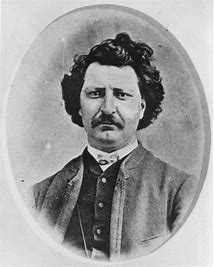 Louis Riel
Ann: My sequel-in-progress, An Irish Goodbye, is an immigrant’s tale, featuring series protagonist Clara Swift and Fenian rebel William O’Donoghue. It is set in the new Canadian province of Manitoba, Washington D. C., and the Dakota Territories, between spring 1869 and autumn 1871.
O’Donoghue, (who referred to Louis Riel by the nickname “Irish”, after one of Riel’s ancestors,) was an Irish-American who became treasurer of the Riel’s provisional government. O’Donoghue is said to be the reason their flag bore a shamrock as well as a fleur de lis. O’Donoghue returns to America, and Clara and my story follow him there. For now, I’ll leave his history at that.
The Red River Resistance portion of the story is viewed through Clara’s young, female, immigrant lens. Clara’s story is also told from a Roman Catholic viewpoint, and Sister Sara Riel, a Grey Nun, is a character. Clara enters Louis’ story through the eyes of this loving younger sister—who holds her own strong views on the Resistance.
The Riel family’s Québécoise grandmother, Marie-Anne Gaboury Lagimodière, is also a minor character. Her late husband, Jean-Baptiste Lagimodière, and his late first wife, Little Weasel, are present through flashbacks, and one of their grandchildren is a character—the fellow began as a minor character but he’s pushing his way into the heart of my story.
Clara’s Anglo-Irish Protestant Ascendency family’s immigrant experience is a link to the viewpoint of those opposing the Resistance.
The long conflict between Riel and John A. Macdonald is born from the events of the Resistance. Of course, the root causes run deep, and the historical outcomes stretch well beyond the timeline and the reach of my novel.
So many Canadians meld the events of 1870 and 1885 into one narrative arc. In writing this story, I must keep in mind than an accounting of their interactions in 1870-1871 cannot be framed by the horrific events that have yet to unfold.
As for James’s description of a “kinder, gentler” Macdonald, I understand why James characterized my portrayal of the Prime Minister in Celtic Knot that way. I would say rather that in Celtic Knot I attempted to show Macdonald as a wily politician, a man who connived to have his own way, who could be harsh, and could play fast and loose with the truth—and as a loving father and husband, a loyal friend, and a man who, like his own father before him, treated his demons by drowning them in alcohol.
 Sir John A MacDonald
Macdonald the man and his contribution to Canada are being re-examined, and there is need for that re-examination. The man played a key political role in this land, before and after Confederation, for half a century. No one can write 19th-century Canadian fiction without taking Macdonald’s role—or roles—into account.
As a writer thinking of a character’s motivations, I start with what that man may have learned from history. Macdonald’s Scottish ancestors had been driven from their land by the British, the Anglo-HIbernian upper-class, and the forces of economic change.
He was an immigrant, in good part because of his own family’s failure to recover from that invasion and seismic change. His father, in particular, suffered from the same alcoholism that would haunt and at times overwhelm Macdonald himself.
My heroine, Clara Swift, opens Celtic Knot by grappling with the conflict that she knows the truth behind T. D’Arcy McGee’s assassination, but cannot share it.
“John A. Macdonald is our Prime Minister and so boss of us all, as well as me in particular. He was Mr. McGee’s close friend. I must believe he knows best . . . I suspect Mr. Macdonald may tuck away this testament, leaving for posterity’s judgement the strict moral of the choices made . . . Mr. Macdonald isn’t a dreamer like Mr. McGee. His tools are people; he knows how they can best be set to use.”
She ends it (spoiler alert) torn by Macdonald manipulating her to leave Ottawa—and to be silent about the identity of McGee’s assassin.
An Irish Goodbye picks up the Clara-Macdonald story from just after that point in 1969.
The sequel includes scenes with Macdonald’s son Hugh, a soldier who arrives in Manitoba with strong anti-Métis sentiment; of Macdonald’s life-threatening illness, which coincides with the Resistance; and of the Macdonald family’s personal and political crises in 1871 Washington.
Through Clara’s view of nation-builders such as John A. Macdonald and Louis Riel, I aspire to look at our history the way a novelist such as Hilary Mantel looks at major characters in British history. None of us can erase our history, nor rewrite it. Exploring it through fiction is a way to gain some understanding and to learn from it.
An Irish Goodbye, at this point in the drafting, includes a flashback to Macdonald’s youth. He told biographer Joseph Pope, “I never had a childhood.” Thinking of his history, a month or so ago, I did a short free write showing Macdonald at age seven. This may not end up in the book, but it gives a window into his complicated life. For me, scenes often begin with dialogue, and I then have to build the physicality of the characters’ world. This nub may yet be shape into a piece of my story.
J immy and I were under a table, twirling empty bottles as if they were giant glass spinning tops. Leaning against kitty-corner table legs, with our legs spread wide, we could contain our bit of fun beneath the table, so no-one would be the wiser.
By no-one, I meant Kennedy.
The old Irish bugger had no love for my brother and me. He’d been forced by our Ma to keep an eye out for us while she and Da went to the bank about keeping the store.
She’d meant him to watch us in the back yard, while tending shop.
It was the middle of the afternoon, a Wednesday. Yet as soon as Ma and Da set out, with their Sunday shine on, old Kennedy reached for his blackthorn cane, hid the cash drawer under the loose floorboard, and swept us along with him to the pub next door.
I’d whispered to Jimmy to hang back, at the pub entrance. Hoping Kennedy wouldn’t miss us, and we could scoot back home.
To do so we would need to go down the alley, climb atop the neighbour’s privy, and drop down from a six-foot height to land in our own back yard. Well, I’d have to boost up wee Jimmy, first, then catch him as he fell. I figured I could handle it, being seven.
Then Kennedy called out, “you two Macdonalds—don’t give me that look, Johnny—get yourself and your brother in here before I give you both a licking. And tell your Da on his return that you deserve a second lashing.”
So in we went, and here we were, going at it with the old bottles and staying out of Kennedy’s sight.
Jimmy couldn’t twirl so well, of course, he being only four, and I took joy in my longer arms, fatter fingers, and the arm strength to send a bottle careering. I moved into a crouch, to give the dancing bottles more room to move. ‘Course, that meant one of the danged things rolled right out from under the table, spinning like mad on the open floor, then hitting one of the legs on the next table.
It nigh unto exploded, I swear.
Shards of glass flew up down and sideways. Worst of all, right into the path of the barmaid who was refreshing Kennedy’s gin.
“Out from there,” Kennedy shouted.
Jimmy began to blubber, and rolled up into a ball, like that would save him. I nudged him to follow me, saying lickety-split, we could scoot out on the nether side and be out the door before Kennedy caught us. Jimmy wouldn’t budge.
And then Kennedy scraped his chair over, and bent to see to us.
“I’ll gie ye a skelpit lug, alright.” He said.
And sure enough, he grabbed us each by an ear, with a snatch of our curls for good measure, and hauled us right on out, me wailing as high as Jimmy did.
“Look at me,” he said.
When he held our gaze, he said it again. Louder, to make us smaller. “Look at me. A man can’t have a tot for his tea without you lot falling into some shite. Johnny, go grab the Mistress’s broomstick and clean up the mess you made.”
At that, he at least let go of me.
He pulled Jimmy, still by the ear, to his own table. “Sit,” he told Jimmy “Don’t step on the glass, you wee pisspot, do I have to drag you onto that chair?”
When Jimmy managed to climb the chair legs, and began to raise himself by his hands and knees to the seat, old Kennedy leaned over, all casual-like, and swatted Jimmy’s bottom, so that he lost his balance and both he and the chair tumbled down.
I had managed to sweep the glass into a pile, which I pushed under our table, hurrying to help Jimmy remount the chair.
“Johnny, you sit too,” Kennedy said.
“But the glass—”
“Will be there when I’m done with you two. I won’t have you disturbing me again, see? Here,” he said, pouring two drams of gin from his bottle into glasses already dirtied by the pub’s clientele and still set on the table. “You two drink this down, it’ll set you to a sleep as sweet as mother’s milk.”
Jimmy raised the liquor to his lips, and stuck his tongue inside. “Burns,” he said.
I laid my hand over the top of Jimmy’s glass. “James Macdonald,” I said.
That’s how Ma always says our names when she wants our full attention—'James Macdonald, John Alexander Macdonald’.
“James Macdonald,” I repeated. “You’re too young for this drink.”
“And you aren’t, John A.?” Kennedy asked, as if forgetting he’d been feeding us the gin.
“I’m old enough to know what I don't like, Kenne—Sir,” I said.
“If you don’t like gin, you’re sure not your father’s son,” he said. “With the way your Ma spoils you both, perhaps you’re holding out for brandy?”
At that moment, the barmaid approached, yet another gin jug in hand, and a message from the barkeep—no more, until Kennedy paid up.
Kennedy dug into his pockets.
I grabbed Jimmy’s hand. “Now,” I said to him, “follow me—Scoot.”
We made it out the door of the pub, down the street, back up the alley, atop the privy. As I eased myself down into the yard, Kennedy came out of our own back door.
“You wee buggers, you think I couldn’t come next door in the time it took you to stagger two city blocks?” he said.
He walked over to the privy. Grabbed me, turned me over one knee and swung at my bottom with the blackthorn cane. Once, trice, thrice.
“Johnny, I can’t—” Jimmy cried out.
Kennedy pushed me to the ground. From that vantage, I could see Jimmy, still seated atop the privy, tears rolling down his face like he were the one whose backside was smarting from the lashing.
“There’s more of that coming, Johnny,” Kennedy said. “First, fetch me your brother.”
At that moment, lying in the backyard, a mad, drunken Irishman in front of me, ready to strike out again, I thought better of bringing my brother home safe.
“Stay up there, Jimmy,” I called. “Ma will be home soon now, and then we’ll see who catches trouble.”
“Johnny,” my brother wailed. “I’m scairt up here, Johnny, I can’t hold on.”
The stench of fresh urine was rising from Jimmy, overwhelming the stench of the privy. “Hey, pants on fire,” Kennedy said, “don’t make me come up there after you.”
Turning, he held the cane up in an arc above my head. “And you, don’t encourage the boy,” he called to me. “Get him down here, now, if you know what’s in your own best interest, Johnny Macdonald.”
“I’ve turned my ankle, sir,” I lied.
“Stand up.”
I faked a rise, then tumbled. “I can’t.”
Kennedy pulled out a rag and wiped the sweat that had been dribbling into his eyes. “Damnedable sun,” he said. “Why can’t it rain to break the heat, like ’twould at home?” He moved toward the privy once more.
I crab-walked, backwards toward the store.
“Jimmy, grab my hand, here—and there’ll be no licking,”Kennedy said.
“Cross your heart,” I yelled at Kennedy, knowing that was somehow sacred to Catholics.
“Jimmy, you’ve my word,” he said. “No licking.”
Jimmy looked ready to faint, from the sun and the heat and the burn of tar paper on his hands and legs, let alone his own stench.
He pushed himself, the slightest bit, and began to slide toward Kennedy.
The moment Kennedy could, he grabbed Jimmy, by one arm, and pulled him down the tar-paper privy roof in such a way as would leave a chafing burn.
When Jimmy reached the edge, Kennedy didn’t catch him under both arms, or grab him by the belly. He let a screaming, stinking Jimmy fall six feet with only one arm dangling from Kennedy’s stiff hand.
And as Jimmy landed, Kennedy swung his cane, whoosh, with his other arm.
By the cane’s arc, he may have meant to strike Jimmy’s bottom.
If so, he missed.
The cane landed, whack, against Jimmy’s temple.
Kennedy dropped Jimmy to the ground.
An hour later, my parents heard my story, and they heard Kennedy’s.
They believed me.
But speaking of it would only make matters worse, they said. There was no money for the law. No money even for a coffin. Our sister May sewed Jimmy tight in his shroud, with his favorite carved wooden soldier for comfort. Our cousins dug the grave, and we didn’t invite any neighbours, only family, to the service.
Then we went home. Da didn’t even have the pleasure of firing Old Kennedy. The bank had foreclosed on us all.
Allan: Anything else you’d like to tell us about?
Ann: You mentioned Bill and Diana earlier, Allan. I must say that the single best thing about being an indie author is that, as with Bill and Diana and the other WIBA finalists, we indies see ourselves as colleagues, not competitors, and cheer for each other on social media. I could mention so many others: Ottawa author and reviewer Jim Napier; Canadian-American writer and brander extraordinaire Karen A. Chase; Michelle Cox, a star at hybrid publisher SheWrites; Jane Austen variation writer and tweet-booster Kelly Miller; Janet Kellough, of Picton, Ont.’s Women Killing It festival; fellow Crime Writers manuscript finalist Charlotte Morganti, and CWC’s Kathy Prairie, a finalist for Britain’s Rubery Award; Canada Writes FB member Terry Fairhurst Leinemann; Words With Writers podcast’s Chris Gorman; and so many I have met through writers’ associations and across the social media spectrum, in the three years since Celtic Knot saw the light of day.
Thank you, Allan, for this opportunity to give some shout-outs, and of course to think back on my journey to fiction, and of the one upon which I have embarked in writing An Irish Goodbye.
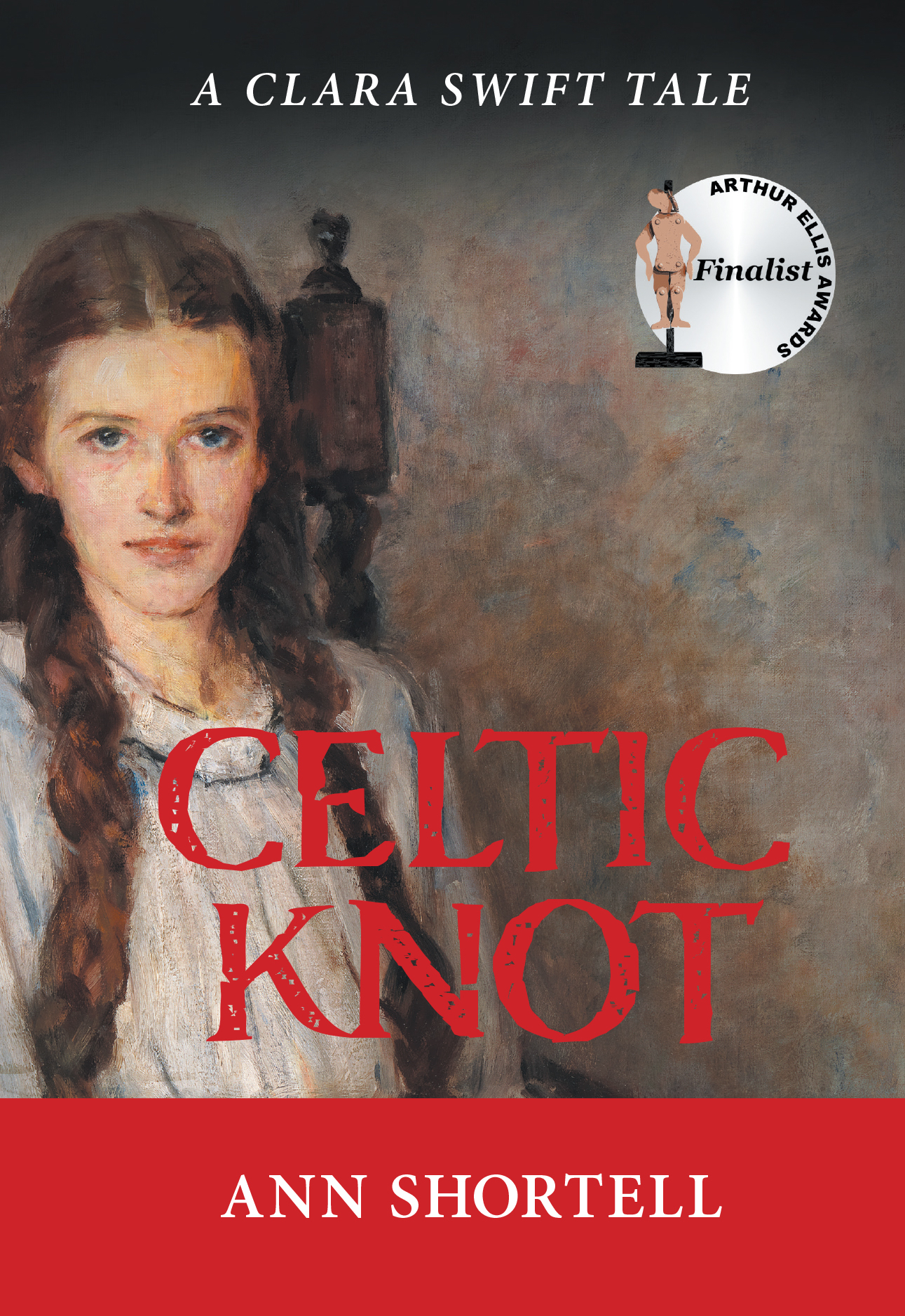
An Excerpt from Celtic Knot.
(Copyright is held by the author. Used with permission)
From Chapter 2: Clara is watching from McGee’s window in Trotter’s boarding house as McGee lies dead at the entryway below:
. . .
Another carriage hightailed it up the street, this one a four-in-hand Clarence.
The driver jumped down. He wore a banged-up cowboy hat, and he never wore a red coat, but I knew from Mr. McGee that Pierce Doyle held the rank of Major. First in the British Regulars, now as one of the first officers in the Canadian government’s new Dominion Constabulary, which was about to be tasked with protecting Parliament.
So when Major Doyle opened the carriage door, I wasn’t surprised to see Prime Minister Macdonald step down.
“Clara?” Mrs. Trotter rapped on the door. She’d checked my room first thing, no doubt. “Are you in there?”
She pushed the door open but hung back, like she didn’t want to be too close to Mr. McGee’s belongings.
I motioned her over. “The Prime Minister’s down below.”
Mr. Macdonald passed by the sergeant’s outstretched hand. He knelt by Mr. McGee.
“D’Arcy,” he said, touching Mr. McGee’s near arm. “The Goddamned evil buggers.” He looked up at his man Doyle, then at the sergeant. “I want them all rooted out,” he said. “D’you hear me? These Goddamned rebels must all
be caught.”
Mrs. Trotter stepped across the room, her meaty fingers snatching at me. “Out of here, Clara. Lest Tommy O’Neill catches you mucking about with Mr. McGee’s papers.”
“Look, Willy’s snuck back out,” I told Mrs. Trotter. “He’s watching from the alley.”
Mr. Macdonald stared up at the moon a moment, then all around the lot.
“Robitaille,” Mr. Macdonald said. “We need to carry D’Arcy inside. Pierce—”
Mr. Macdonald’s aide came up to his side.
“I’ll deal with the skull,” said Dr. Gillivray.
“No,” Mr. Macdonald said. “I’ll hold D’Arcy where he’s bleeding.”
Mr. Macdonald pushed himself up on one foot, pulled his scarf from his neck and draped it over his gloves. Then he placed Mr. McGee’s head ever so gently on his cradled hands.
Monsieur Robitaille, Dr. Gillivray, Mrs. Trotter’s friend and Ottawa Police Sergeant O’Neill, and Major Doyle, all squatted in position on either side of Mr. McGee.
“Rise,” the Prime Minister called out.
Slowly, steadily, the five men lifted Mr. McGee up, and carried him out of my sight.
At the last, Willy crept out of the alley. He picked up Mr. McGee’s white hat and walking stick, and followed the parade of living and dead.
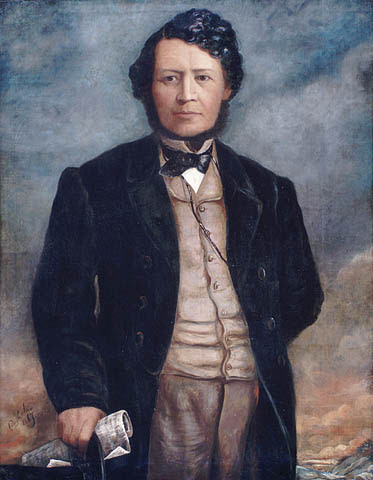
From Chapter 3:
. . .
The parlour, I found, was quiet enough.
Willy had placed Mr. McGee’s top hat and stick atop the new speech. Mr. McGee’s body had been laid out on the bar.
If his shade were still hovering, it didn’t shine through him. It was as if he’d shrunk away from us, in the time he lay on the doorstep.
Not that he was ever a big man; he just seemed a giant when he spoke. Mr. McGee was always a soulful man; his ideas had been the biggest part of him.
He was always talking, singing, speechifying, or dreaming up ways to better all our lives.
Whereas his bone and muscles only filled a boy’s pants. Even I could almost look him in the eye. Those as didn’t like him called him ‘all hat and swagger.’ He laughed and made a joke of it on them, wearing the beaver or the white hat as if to say ‘what of it?’ to all naysayers.
Until someone’s bullet knocked it off his head.
I’d seen the dead before, of course. Back home in Carlingford, there was always a funeral, a wedding, or a baptism in the offing. There was a comfort in the pattern—the church ceremony, the house visit. I’d sat with the departed alongside
Gram, too, when the family needed to catch some rest. We all did such for one another. It was as the Lord wanted, that a man be with his own kind until he was laid in his grave.
I’d even seen my own Gram’s shade, as sometimes happens right on a loved one’s passing. She’d been stretched out, silent, on her deathbed, and rising above it, too. As if to comfort me, though she’d rarely done so in life.
“You were there?” The voice was quick and sure.
Major Doyle was standing where Mr. McGee’s boots hit the lace antimacassar.
His glanced fell on the archway. “You were there—when D’Arcy was shot?”
For all the times Mr. Macdonald had sent Major Doyle with messages for Mr. McGee, this was the most I’d ever heard come out of him.
“I live in, here,” I said.
“Clara Swift, I know you’ve been working for McGee. Didn’t I see you at his own house in Montreal?” he said. “And now you’re here at his boarding house in Ottawa. Some folks may be wondering at that.”
Major Doyle liked to let on he was one of the lads, in a boiled-wool shirt and ill-fitting trousers. A glorified errand boy. I knew better.
“Driver, indeed,” Mr. McGee had said, when this man had accompanied Mr. Macdonald ‘round town. “Doyle’s to be a big part of Macdonald’s new special federal police, Clara. The man’s driving John A.’s private forces faster than he is the Prime Minister’s horses. Watch out, there’s a coming lad.”
*** *** ***
Thank you, Ann, for being our special guest this week. Wishing you continued success with your writing.

For all you fantastic visitors wishing to discover more about Ann and her writing, please follow these links:
https://library.biblioboard.com/content/249d4174-5cc3-4612-83f3-24489b61b5ea
https://www.twitter.com/CelticKnotMcGee
https://m.facebook.com/CelticKnotAClaraSwiftTale/
https://www.linkedin.com/in/ann-s-a8154265/
https://indieauthorproject.com/get-to-know-the-2020-iap-contest-winners/#av-tab-section-1-12-link
https://booklife.com/project/celtic-knot-a-clara-swift-tale-33365
https://www.facebook.com/watch/?v=973152843048256
https://www.rogerstv.com/media?lid=237&rid=4&gid=293904
Purchase links:
https://www.amazon.ca/Celtic-Knot-Clara-Swift-Tale/dp/1525520903
https://books.friesenpress.com/store/title/119734000054555161/Ann-Shortell-Celtic-Knot
https://www.chapters.indigo.ca/en-ca/books/celtic-knot-a-clara-swift/9781525520914-item.htmlPerfect Books, Ottawa
https://bookmanager.com/1188534/?qs=celtic+knot&q=h.tviewer&using_sb=status&qsb=keyword&searchtype=keyword
Books On Beechwood, Ottawa
https://store.booksonbeechwood.ca/?searchtype=keyword&qs=celtic+knot&q=h.tviewer&using_sb=status&qsb=keyword
Ben McNally Books, Toronto https://benmcnallybooks.com/order-books/

May 1, 2021
Branching out with Author James Palmer of Northeast Georgia, US.
The Scribbler recently did a call-out for authors looking for a new audience and to share their thoughts with our readers.
James is mutual friends with a previous guest – Bobby Nash of Atlanta – who was a guest last month. We met through Bobby and James was eager to be a guest on the Scribbler and we are happy to have him here this week.
An author of Science Fiction and Pulp Adventure, James has agreed to a Branching Out Interview and is sharing an Excerpt from The Depths of Time.
James Palmer is an award nominated writer of science fiction and pulp adventure. His nonfiction has appeared in various publications including Retrofied, The Internet Review of Science Fiction, Strange Horizons and the book The Joy of Joe: Memories of America’s Moveable Fighting Man from Today’s Grown-Up Kids. His short fiction has appeared in The Expanding Universe volume 5, The Black Bat Returns, Blackthorn: Thunder on Mars, Mars McCoy, Space Ranger Volume 2, and many other anthologies. James is also the author of four books in the Shadow Council Archives universe for Falstaff Books: The Depths of Time, Shadows Over London, The Dream Key and The Map of Time. He also wrote the space opera novels Star Swarm and Ix Incursion. He is the co-creator of the kaiju anthologies Monster Earth, Betrayal on Monster Earth and War for Monster Earth. James wrote an audio adaptation of the late Jerry Pournelle’s classic novel Exiles to Glory for the Atlanta Radio Theater Company, and a comic script for Lucky Comics. A recovering comic book addict, James lives in Northeast Georgia with his wife and daughter, two dogs, and a crap-ton of books, where he doesn’t play nearly enough D&D. For more info on his writing, and to get a free ebook, visit www.jamespalmerbooks.net.
Allan: Thanks for taking the time to answer a few questions, James. Before we talk about books or writing, tell us about yourself, where you live, where you grew up, your family, your two dogs.

James: I grew up in a little unincorporated hole in the wall place called Murrayville, Georgia, between Gainesville and Dahlonega, which was the home of the first U.S. gold rush. I grew up in the 1980s, the last great decade for Saturday morning cartoons, among other things, and I still wax nostalgic about the television, comics, books, and films from that era. My younger brother and I had your typical blue-collar upbringing. Our parents both worked for the Gainesville City Water Department. We played outside until dark, fashioning sticks into swords, laser guns, spaceships, whatever was needed to live our adventures. I now live in Gainesville, which has the dubious honor of being the poultry capital of the world. I tell people it's a drinking town with a chicken problem, but in reality, it has a lot of charm, and has grown a lot since I was a kid. I live with my wife and daughter, who I call Space Princess. She wants to be a cosplayer, and loves Harry Potter and anime. We have a hundred-pound labradoodle named Rocky and a feisty yorkie named Milo who thinks he's a hundred pounds.
Allan: When I visited your website, and as I mentioned in the intro above, you write Pulp Adventure. What can you tell us about this genre? Give us an example of one of your books that fits this category.
James: Pulp, and its modern equivalent New Pulp, come from the magazines of the 30s through the early 50s, so named because they were printed on cheap yellow wood pulp paper. You could get a splinter from reading them if you weren't careful. It's a category that involves a lot of action, explosions, evil masterminds and damsels in distress. There was no deep introspection or character work to be had from most of it, and the only point to any particular story was that it entertained. As another writer friend of myself and Bobby, Barry Reese, likes to say, the point of a Doc Savage story is that if you build a crazy weather-control machine and try to take over the world Doc Savage is going to come and kick your ass.
I cut my writerly teeth on this kind of stuff, writing for publishers like Airship 27 and Pro Se Press, who bring out new pulp the old way. I don't write in that particular style anymore necessarily, but the way pulp was produced still informs the way I write. I write novellas (up to 20 or 30 thousand words) with fast-paced plots and lots of action.

I collected my stories from this time into a volume called Into the Weird https://www.amazon.com/Into-Weird-Col.... It is the best example of the pulp style that I have ever produced, and my final artistic statement on this genre that has taught me--and continues to teach me--so much.
Allan: Please share a childhood memory or anecdote.
James: I don't know exactly what you're going for here. I think my childhood was pretty boring. But I always wanted to create something, starting with films. I wanted to be the next Stephen Spielberg. I never did make any movies, but I eventually found writing as the perfect place for me and my weird creativity. I was the weird kid who still liked cartoons in high school and college, when everyone else had discovered sports or girls. I remember watching the original Twilight Zone, as well as the 1985 reboot (I have that one on DVD. It's astounding), and loving the strange, tragic twists at the end. I wanted to figure out how the hell they did that so that I could do it too. I've been trying ever since.

Allan: You have a large catalogue of work. Congratulations. If you had to, could you pick out a favorite? Or which one was the hardest to write?
James: I think my favorite still has to be The Depths of Time, which I wrote for Falstaff Books. It's the first of a series of four novellas. In the first one, the Victorian explorer Captain Sir Richard Francis Burton goes back in time aboard the Nautilus with Captain Nemo to fight Cthulhu. I'm still very proud of that whole series and how they came out. The second book, Shadows Over London, was included in the Science Fiction and Fantasy Writers of America (SFWA) recommended reading list for the Nebulas, and one of them was nominated for a Pulp Factory Award. They combine H.P. Lovecraft's mythos, real historical figures and famous literary characters in a weird science fantasy steampunk malange. You've got shoggoths, Morlocks, time travel, Professor Moriarty, and even Aleister Crowley and Ian Fleming make an appearance before I'm done. I had a blast writing them, and readers really like them.
Allan: What is James Palmer best known for outside of his writing life?
James: I'm pretty boring. Just ask my wife! I’m a geek dad who loves 80s pop culture and playing D&D with friends. I'm always reading or exploring some new idea. I collect the works of Harlan Ellison, Ray Bradbury, and Robert E. Howard (creator of Conan). I read comics. I watch movies and TV (currently the whole family is big fans of The Rookie and Resident Alien). I'm a trekkie and huge sci-fi nerd from way back.

Allan: Your Goodreads page shows many anthologies you’ve participated in. How did this come about?
James: It seemed like a good idea at the time. Seriously, though, some of them were anthologies that Airship 27 was doing and I wanted to get published. Those are the homes of my first published fiction. Monster Earth, Betrayal on Monster Earth, and the forthcoming War for Monster Earth were anthologies I edited and published under my imprint Mechanoid Press. They were a fun exercise, a way to take an idea that was way too big for one book, and see what a handful of talented, capable writers could do with it. I think they turned out pretty well.
Allan: Anything else you’d like to tell us about?
James: As I said earlier, I have a new anthology coming out soon called War for Monster Earth. It is the third and final volume in this shared world, alternate history kaiju trilogy about a world where the Cold War was fought, not with the threat of nuclear weapons, but giant monsters.
****Watch the trailer for cover reveal HERE.
If anyone would like to learn more about my work, they can join my readers group at www.jamespalmerbooks.net. They'll get a free ebook containing two short stories (one military science fiction, one space opera) just for signing up.
I also have a Patreon (www.patreon.com/jamespalmer) where I share upcoming news, excerpts and full stories and novellas before anyone else gets to see them.

An Excerpt from The Depths of Time.
(Copyright is held by the Author. Used with Permission.)
From Chapter Nine: Hunted
Nemo marched up a corridor and down a familiar set of stairs to the rear of the vessel, where a formidable-looking hatch stood, surrounded by a row of lockers fronted by a long wooden bench bolted to the floor. Four large brass helmets sat on the bench, brightly gleaming in the electric light shining from above.
“This entire region is rich in flounder, halibut, grouper, anchovies and cod,” said Nemo. “We come here often.”
“Are you saying we are going to walk around outside the Nautilus?” said Herbert.
“Precisely,” said Nemo. “My crew will help outfit you.”
As if on command, three blue-garbed men entered the area and opened the lockers, pulling out heavy canvas and oilskin suits and large, heavy-looking boots. Burton hefted one of them and discovered the soles were filled with lead. “To keep from floating away.”
“Yes, Captain Burton,” said Nemo, as he pulled on his own diving suit with practiced ease.
Removing his jacket, Burton allowed Nemo’s men to assist him in shrugging on the thick, heavy suit and watched them as they tightened the complex series of buckles and straps around the arms, ankles, and chest of the rig. Without removing his boots, they helped him push his feet down into the heavy boots, adjusting and tightening more seals.
Burton hoped the ocean water would act to keep him cool, as the suit’s heavy material was stifling hot. He looked around at Challenger and Herbert, who were being similarly outfitted. “Where is Miss Marsh?”
“She might join us later.” Nemo now stood before them fully dressed save for his helmet. He brandished a lethal-looking harpoon gun in his thick-gloved hands. “Now, I have a few more instructions. Please listen carefully. We will not be able to communicate with one another outside through our helmets. The Nautilus will provide exterior lighting for our activities, but it will still be very dark. We will be attached to the Nautilus by air hoses, but please, stay close together.”
Burton, now gloved, was handed a harpoon gun. He stared at it, trying to become familiar with its workings. Though quite proficient in most classes of weaponry, he had never used such a device. It appeared straightforward enough, but he worried about the water being too murky to hit anything with any real accuracy.
Burton watched as Captain Nemo put on his helmet, his attendants lowering it slowly and over his head and twisting it clockwise until it clicked. A helmet went over Burton’s head and was snapped into place. “Remember to breathe normally,” said his attendant.
Nemo looked out at them all through a thick circle of glass. He turned heavily in his boots as one of the attendants opened a sealed hatchway, allowing the captain inside.
“Follow the Captain, please,” the attendant said, his voice muffled by the thick brass of the helmet.
Burton lurched forward, moving slowly in the heavy boots. Normal breathing was difficult, the suit and helmet hot, confining. He tried a Sufi meditation technique, which seemed to help calm his nerves somewhat, at least for the time being.
“What now?” Burton said.
“Air lock,” came Herbert’s muffled reply. “We’re going into a sealed room. Water will be pumped in. When the pressure equals that of the ocean at this depth, an outer door will open, and we will walk where only Captain Nemo has walked before.”
Burton stepped into the small room, and two of Nemo’s crew began fiddling with his helmet. Glancing at Challenger’s suited form through the thick porthole in his helmet, Burton realized they were being fitting with air hoses. Cool, fresh air flowed into Burton’s helmet, relieving some of his claustrophobia.
Once everyone’s air hoses were in place, the attendants scrambled from the room and sealed the hatch behind them. Almost immediately, it began filling with cold ocean water. Burton could feel it move over his boots to the legs of the suit. The sensation was strange, like taking a bath with one’s clothes on and remaining dry, but not unpleasant. It rose over their heads in seconds.
Burton watched Nemo with great attention. The other man’s gaze was fixed on some gauge set into the wall. When the room reached the requisite ocean pressure, Nemo twisted open the outer hatch and opened the door. The pressure was perfectly balanced, keeping them all from being sucked out into the muck surrounding the Nautilus, which had set down on the seabed.
Captain Nemo raised his left arm, motioning them forward, and stepped out, followed by Challenger, then Burton and Herbert. Burton’s lead-booted feet sank heavily into the mire, but he found he was able to move a bit more easily underwater.
The lights of the Nautilus stabbed through the gloom, illuminating a vast kelp forest in the distance. Long vines of the stuff rose up toward the ocean’s surface in neat green rows. Wan shafts of sunlight shown down from high above, revealing the occasional shrimp and several specimens of some strange, feathered starfish undulating through the gloom. Captain Nemo held his harpoon gun in a ready position, and Burton aped his movements, keeping a wary eye out for any fish that might be hiding in the thick cluster of vegetation.
They moved slowly toward the forest, their boots churning up the muck. Burton felt something move frantically beneath his right foot and bent downward just in time to see some sort of ray flapping its wing-like fins in its hurry to get away.
The area teemed with life. Tiny crabs moved sidewise through the depths, and stranger creatures swam through the water. A thing that looked like palm fronds writhed in a shaft of light above him, moving toward some distant bundle of kelp, and Burton was struck by how much animals resembled plants and plants resembled animals down here.
Captain Nemo suddenly changed direction. Instead of going straight into the kelp forest, he veered to the right of its boundary, hoisting his harpoon gun to his shoulder as if taking aim to fire. Burton looked, but could see nothing ahead of Nemo but mud-churned darkness. A hand wrapped itself around Burton’s helmet and pulled him in close. It banged against someone else’s, and he heard a muffled voice say, “Can you hear me?”
“Y-yes,” said Burton. “Challenger? But how?”
“The vibration of our voices is conducted through the contact between our helmets. Do you see where Nemo is headed?”
“No.”
“You don’t see them?”
“No!” said Burton again, annoyed. “See what?”
“The ruins.”
Twisting out of Challenger’s grasp, Burton peered into the gloom. As his eyes adjusted to the waning light, short columns of square black stones stood along the bottom, jutting from the muck like rotting teeth. Nemo appeared to be inspecting these, though he kept up his guard.
Challenger’s helmet barked against Burton’s once more.
“I don’t think we’re on a fishing expedition.”
“Nor do I,” Burton agreed. “Someone should tell Herbert.”
“I will,” said Challenger. Burton looked out after Captain Nemo. A second later, Challenger’s helmet struck his once more.
“Herbert’s gone.”
“Where the devil is he?” said Burton. “He couldn’t have gotten far.”
“Let’s follow his air hose.” Challenger pushed away from Burton and moved past the explorer in the direction Nemo had gone. He found Herbert’s air hose and began following it, bobbing up and down as he moved through the thick muck covering the ocean bottom. Burton trailed him, using his free hand to clear the water before him of debris. A tiny seahorse danced in front of him, oblivious to his presence. The explorer gently swatted the tiny creature away and continued.
Burton’s feet, already unsure in the uneven sand, went out from under him, and he scrambled to find his footing again. He missed the gentle slope, clumsy in the heavy boots. Burton wrenched his left knee as he went down hard, face first, into the dank muck.
“Bismillah!” he swore, his voice echoing inside the helmet. With considerable effort, he brought himself to his knees and looked around. He could see Captain Nemo ahead inspecting the strange ruins, but saw no sign of Challenger or Herbert, only the black lengths of their air hoses snaking into the gloom to Burton’s right.
Burton attempted to use the harpoon gun as a kind of crutch to help push himself to his feet once more, but it went off in his hand with a muffled hiss, sending the harpoon into the kelp forest. Propping his weight against the weapon, Burton was, at last, able to right himself, and looked around to get his bearings. He had indeed fallen down a slight precipice that Challenger had seen and navigated without calamity. “So kind of him to warn me,” Burton thought, as he moved in the general direction the zoologist had gone in search of their companion.
He found Herbert near a strangely glowing obelisk that rose more than ten feet out of the ocean floor. It was encrusted with some phosphorescent sea life. But that isn’t what so entranced the young inventor. Dancing there before him, undulating slowly in the water, floated some bizarre apparition. The blue glow coming off the obelisk gave it a ghostly appearance. Blue-green hair stood out from its head. Its white, diaphanous garments writhed in the water, hinting at a nakedness underneath. It’s face ensorcelled Burton. The apparition bore Isabel’s likeness!
“Isabel,” Burton murmured, lifting a heavy boot to take his first lumbering step closer. A powerful arm shot out of the dark, slapping into his chest. Burton’s helmet clanked with another impact.
“No,” said Challenger. “She is not what she appears.”
Burton twisted his torso to his right. Beside him, Challenger was already taking aim at the wraith with his harpoon gun.
“No!” Burton screamed. “Isabel.” Then his rational mind took hold. It couldn’t be Isabel. It was impossible for anyone to be down here without the survival gear they wore, let alone his beloved Isabel.
Herbert was reaching for her now, getting closer. She placed her long-fingered hands around his helmet, grasping it tightly. Burton and Challenger watched as she twisted it counterclockwise to loosen it.
“Herbert!” Burton cried, feeling useless.
Challenger’s harpoon hissed, the missile surging through the water toward the underwater apparition. It hit close to the wraith’s right shoulder, shredding her sparse garments before vanishing into the distance. She glanced in their direction, anger marring her otherwise perfect face—Isabel’s face.
Then it changed. What had once been a beautiful woman became hideous and fish-like. Its hands stretched into webbed talons, the flowing garments transmogrified into dark green scales. Only its hair remained, sea-green and writhing around its head like a halo of snakes.
It lunged at poor Herbert now, gripping his shoulders and shaking him as the poor fellow reached for his harpoon gun, which had fallen to the sea floor. Challenger bounded toward them, his long strides not getting him far due to his lead-filled boots. Burton took off after him, waving his arms in an attempt to get Nemo’s attention.
Challenger had taken his harpoon gun’s barrel in his hands to use it like a cudgel against the thing that tore at Herbert’s suit, rending the thick fabric and allowing water to get in. It was obvious to Burton that neither he nor Challenger could reach him in time.
Something flashed past Burton from the rear, almost knocking him down. The way it propelled itself through the water reminded him of a fish or dolphin, but its proportions were definitely those of a human. It collided with the vengeful wraith, knocking her off Herbert just as Challenger reached him. The big scientist hauled Herbert off the sea floor almost without effort and touched their helmets together as they watched the strange melee unfold.
The fish-things grappled with each other, spun around, before Herbert’s rescuer kicked the apparition in the chest, sending it sprawling away into the gloom. It did not return.
The other being turned and looked at Herbert and Challenger as Burton arrived next to them, panting and sweating inside his diving helmet. Nemo waited standing just off to Burton’s left, harpoon gun held down at his side.
The creature looked at each of them in turn, her big-lipped mouth opening and closing, expelling bubbles as she did so. Her scaly, pale green skin was unclothed. Her naked breasts bobbed like pale globes in the water. Burton recognized something strangely familiar about her.
“Miss Marsh?” he muttered.
She kicked hard, rising up and over them, swimming with great speed back toward the Nautilus.
Thank you, James, for being our featured guest this week. Wishing you continued success with your writing.

For you devoted readers wishing to discover more about James and his stories, please follow these links:
(www.jamespalmerbooks.net
www.facebook.com/jamespalmerwriter
www.twitter.com/palmerwriter
www.patreon.com/jamespalmer
Amazon Author Page: www.amazon.com/James-Palmer/e/B004QVU...)

April 24, 2021
Branching out with V S Holmes, an International Bestselling Author from Ohio.

Due to a successful partnership with Creative Edge of Saskatchewan in 2020, the Scribbler played host to accomplished authors selected by CE. It was so much fun for all involved, we are doing it again in 2021. Watch the last Saturday of each coming month for authors under the CE banner.
This month we are extremely pleased to have V.S. Holmes as our guest. Better known as V, they have graciously agreed to a Branching Out interview and are sharing an Excerpt from Heretics.
V. S. Holmes is an international bestselling author. They created the BLOOD OF TITANS series and the NEL BENTLY BOOKS. Smoke and Rain, the first book in their fantasy quartet, won New Apple Literary's Excellence in Independent Publishing Award in 2015 and a Literary Titan Gold in 2020. Travelers is also included in the Peregrine Moon Lander mission as part of the Writers on the Moon Time Capsule. In addition, they have published short fiction in several anthologies.
As a disabled and non-binary human, they work as an advocate and educator for representation in SFF worlds. When not writing, they work as a contract archaeologist throughout the northeastern U.S. They live in a Tiny House with their spouse, a fellow archaeologist, their not-so-tiny dog, and own too many books for such a small abode.
Allan: Thanks for being our guest this week, V. Before we chat about your novels and writing, you mentioned in our correspondence that you once lived in New Brunswick. Care to tell us about your time here in Atlantic Canada?
V: Thanks for having me! I lived in Fredericton, New Brunswick for a year during undergrad. I was attending Renaissance College at UNB at the time. While I opted for a more hands-on approach to learning and ultimately transferred back home, I loved the natural beauty of the Maritimes, particularly when visiting the Bay of Fundy.
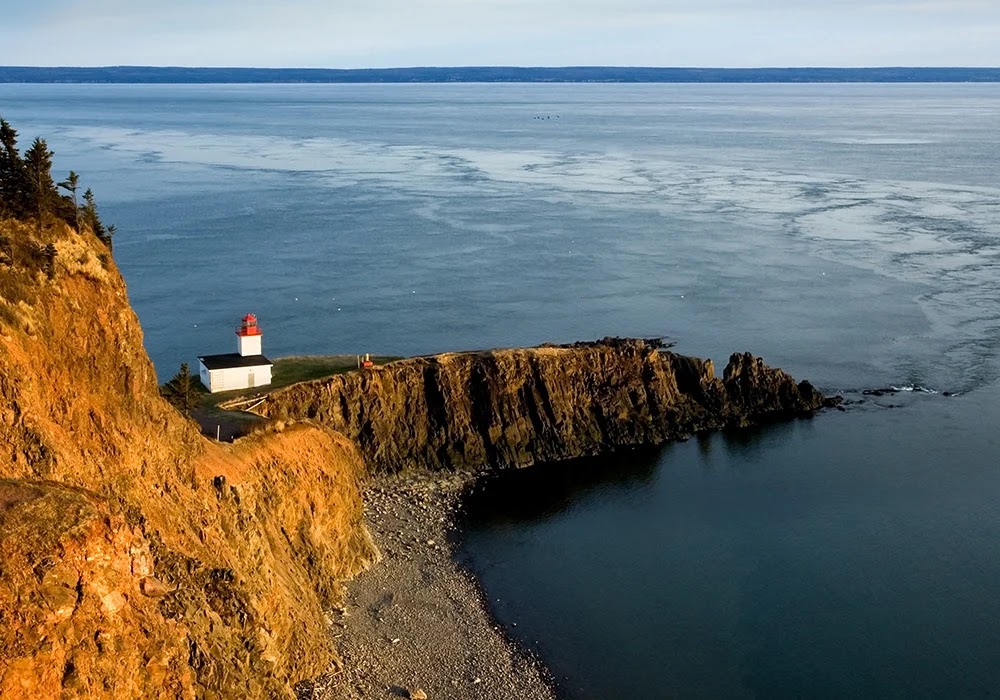 Photo by Bay Ferries Ltd.
Allan: When I visit your website, I’m particularly intrigued by your novel – Blood of Titans – and the wonderful review that headlines the page. “The atmosphere surrounding this epic tale is intoxicatingly real… Holmes weaves a tapestry of the forthcoming events with the skill of a thaumaturge.” The San Francisco Review of Books. Wow! Can you tell us a bit about the novel but before you do, maybe you would like to clarify the word “thaumaturge?”
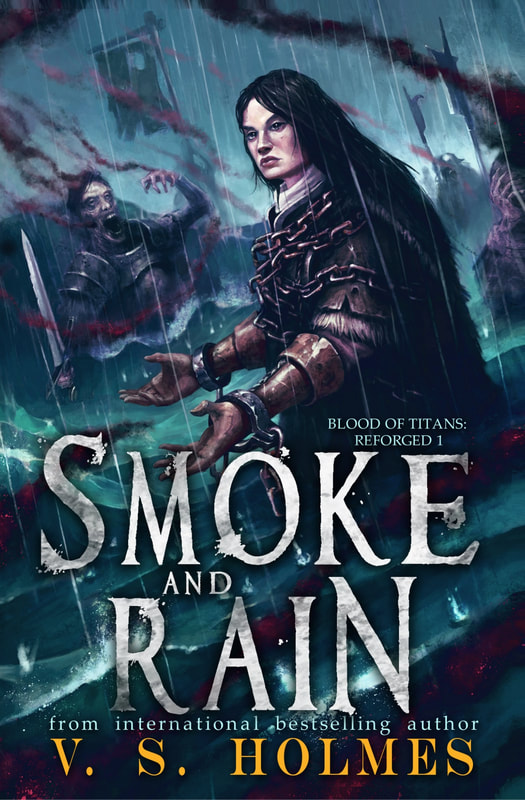 Book one of the series.
V: Blood of Titans is my dark, epic fantasy series. The first book is Smoke and Rain, which became an internationally bestselling fantasy in 2018. As for “thaumaturge,” it means magician! The series follows the--mostly--human characters who are caught in the crossfire of a war between the gods and the titanic creatures that created them. I delve into the psychological effects of war, loss, and sense of self through characters who experience dissociation, isolation, and other symptoms of PTSD within a fantasy setting.
Allan: What’s the one main thing about your writing or your novels you’d like to tell our readers about today?” Something new? Something amazing?
V: While my fan will already know this, new readers can expect imperfect heroes, and complex villains. I strive to craft worlds where marginalized characters--specifically queer and disabled ones--not only exist, but thrive. Something exciting that happened recently is an excerpt of Travelers, the first of my Stars Edge: Nel Bently Books, will be headed to the Moon! I was lucky enough to join the Writers on the Moon project, and both the excerpt and a poem I wrote will be included in the literary time capsule aboard the Peregrine Moon Lander Mission headed for Lacus Mortis on our Moon.
Allan: Please share a childhood memory or anecdote with us.
V: This is one of my favorite memories. Until I was about 10, we lived way out in the woods. There was very little light and so at night, my dad would set up his telescope on the balcony. We spent hours looking at all the craters on the Moon, pointing out the Pleiades and Canis and the Horsehead Nebula. Once, on a very cold winter night, my dad woke me up to glimpse a ribbon of the Aurora. He adored science and space so it was incredibly moving for me to be able to also include a memorial of him on the Peregrine mission.
 The Horsehead Nebula.
Allan: Once more, referring to your website, you tell your readers and followers – “As a disabled and non-binary human, they work as an advocate and educator for representation in SFF worlds.” Would you like to expound on that statement?
V: Using my passion for world building and creativity to help advocate for people like myself was a natural progression for me. Like my bio states, I’m a trans non-binary person and I have a chronic degenertive disease and PTSD. The way our world currently views those things has affected how I navigate my life and it was a long time before I actually saw a person like me in fiction. Honestly, it was also through fiction where I finally started to find words for what I had always known about my gender. A lot of the portrayals of marginalized demographics in fiction are stereotypes and pretty harmful--it does a number on you when the only people you see represented are villains or the butt of the joke.
Since I am an author, I wanted to pay it forward and write about trans and disabled characters in a way that turned a lot of the bigoted tropes on their head. I also like to focus on stories where the characters are “casually” queer or disabled, but it’s not a main feature of the plot, since all of us, while trans, or gay, or disabled, or neurodivergent, have so many other interesting facets to our lives and personalities.
Allan: Tell us about your main character – Nel Bentley and her series. As an archeologist yourself, is there a bit of V.S. Holmes in this character?
 Book One in the Series.
V: There’s a bit of me in all my work and characters, of course, but Nel is certainly the most similar on a superficial level, as we share a field of study and she’s queer. However, she’s a woman and lesbian and works in academic archaeology (I work in the contract sector). When her pristine dig site ends up at the center of an intergalactic feud, sceptic Nel is thrown into a world of high-tech and higher stakes. She’s a lot of fun to write! In this newest book, she returns to Earth to track down the victims of a deadly radio transmission while navigating her anger and frustration at an unjust world, and her complicated relationship with her mercurial--and alien--girlfriend, Lin.
Allan: Your stories have won awards, received tremendous reviews, etc. What has been your proudest moment being an author?
V: It’s been an incredible journey, and I’m so honored and humbled with each of these achievements, but I think the most powerful moments for me are when readers reach out to say that they saw themselves in my pages. Knowing I’ve helped them, that I showed that they weren’t alone, and that characters like us can fight the baddies and save the world without being the “perfect queer” or able-bodied is the best feeling. I remember the first time I saw a character that looked like me and I’m thrilled to pay that forward.
Allan; Anything else you’d like to share with us?
V: If folks would like to dive into the Blood of Titans or Stars Edge worlds, they can try two free short stories that are available on my website. The first is The Tempest, an epic fantasy survival story following Nubon, who’s tossed out to sea for a trial-by-leviathan to win her kingdom’s crown. The second is a prequel to Travelers, and follows the events leading up to the first book, but through Lin’s eyes as she struggles with her brother’s orders not to get involved with the archaeological site they’re monitoring on Earth.
**** To find this great offer from V - go HERE.
And, of course, if you’re into snarky queer sci-fi that leans toward space horror, Heretics, Nel’s fourth adventure hits stores on May 8th!

An Excerpt from Heretics.
(Copyright is held by the Author. Used with permission)
Stiffness woke Nel. She rolled her neck with a groan. “I don’t think I have the body for camping anymore,” she muttered, peering against the sunlight bathing her face. Somewhere above, a hideously cheerful bird chirped, and she fumbled for her sleeping bag zipper.
There was no sleeping bag. Or tent. Sunlight was beaming from mirrors and lamps just overhead. The chirping continued and she glared at the holographic message displayed over her wrist.
REMINDER: Shuttle Departure for Le Fe De Amorin T-105 minutes
She peered at the glowing red letters for a moment before parsing that if she didn’t hurry, she might miss saying goodbye.
“Fuck fuck fuck!” She scrambled to her feet and bolted to the nearest elevator shaft. Shoving through the doors, she jabbed at her communicator. No messages from Lin or Zach, or frankly anyone. Only one unread thread blinked in her inbox, and it was the four system reminders that she had apparently slept through. She swiped it clear and bounced on the balls of her feet, trying to blink exhaustion from her bleary eyes.
“C’mon,” she muttered to the elevator as the floors rolled past. Weight draped over her as the capsule hurtled outward. Another two seconds and it hummed to a halt at the residential level. She broke into a jog. Whatever she and Lin had was complicated, made even more so by the layers of their increasingly complex world and Nel’s own mercurial temper. But I’ll still miss her. More than she’d like to admit.
Tense voices slowed Nel’s steps as she rounded the last bend to Lin’s room. Shrinking back against the wall, she peered around the corner. Dar lounged beside Lin’s open door, feet crossed at the ankle. Despite the relaxed stance, a dark glare knotted his features. Lin blocked her doorway, arms crossed.
“I don’t really care what you think,” Lin snapped. “And I don’t want to get into this at all, let alone here and now. Just because you’ve suddenly grown some emotions doesn’t mean I have to put them above my own. You had your chance to see things my way years ago. You had another chance back on CE7.”
“I’m not suddenly interested in ‘seeing things your way,’” he spat, “I’m interested in my baby sister’s safety! I’m concerned this rabbit hole, this obsession whatever it is, will get you killed. You were on track for a promotion—”
“You demoted me! I could have been Ndebele’s intern—”
“I had my reasons. What kind of person follows someone across fucking space—” he hissed.
“Dar, language.”
She never corrects my cussing. So why was she bothering with her brother’s? Lin’s voice was tired but tense with something else. Fear? Nel fought back the urge to rush from behind the corner and wedge herself between them. Except Dar didn’t look like he was going to hurt her.
“Lin, please just think about it. Ayah and Ibu are worried too, you know.”
Lin’s hand slammed into the wall with a sickening thud. Tendons bunched in her throat, but Nel couldn’t say if it was pain or fury. “Is that why I haven’t heard from them in months? You’re holding them over my head until I sharpen up and fly straight?”
Dar looked away and his gaze halted on Nel, tucked by the door. She opened her mouth to apologize, but his head shook almost imperceptibly.
“You know I haven’t heard from them either. But they mentioned it before. And again, when Nel’s transfer docs came over their screens this morning. Associating with her is going to get you killed.” He shoved off the wall and made to reach for her shoulder but stopped a few inches shy. “Please, just consider it.”
Nel jerked out of sight again. A second later he almost collided with her as he strode around the bend. His gaze pinned her, but he said nothing, boots stomping long after he disappeared up the hall.
She peeked at Lin’s door again. It was shut, the corridor deserted. Dar clearly felt she threatened Lin somehow. Why do I feel like he just entrusted a huge secret with me? Drawing a deep breath, she stepped up to Lin’s door, heart hammering. She pressed her brow to the door, palm spreading across the gleaming metal. None of them want me here—fuck, I don’t even want to be here.
And every nasty comment her exes’ bigoted parents spat at her now drifted in the space stations recycled air lightyears from home. Intellectually she knew it wasn’t anything to do with sexuality—not if she was to believe Paul’s anecdote about his relationship with IDH’s hotshot Komodor Muda Udara Dar Nalawangsa.
She pressed the private intercom. “Lin?”
Silence.
“Sorry I’m late. Can I see you before you go?” Still nothing. “I saw Dar in the hall, looked kinda pissed. Do you—”
“Nel?”
She whirled to see Lin striding down the hall. Her gleaming electrosuit was perfectly fastened, long hair braided and tucked carefully away in preparation for the helmet of her space suit. The shadows under her warm eyes rocketed Dar’s words to the forefront of Nel’s thoughts. “What kind of person follows someone across fucking space?” She pulled a smile she didn’t feel onto her face. “Hey, babe. Just looking for you.”
“Me too.”
Nel stared after her for a moment. They hadn’t kissed since the gala. “Sentimental” was the last word Nel would use to describe herself, but the undercurrent of exclusion gave her new sympathy for all the exes she ghosted over the years. “You sleep okay?”
“Not really. Been up since 0500.” Lin frowned at Nel’s half-done suit. “You packed?”
“What?”
“Is your comm on? Did you get the messages?”
Nel glanced at her wrist. “Just a bunch of updates about your mission—”
“Our mission,” Lin interrupted. Her expression might have been a smile, were it not for the hardness in her eyes. “As of 0200 today you’ve been transferred to the Field task force.”
Excitement blasted through every one of Nel’s more complicated emotions. “What? Thank you!” She wrapped Lin in a tight hug. When it was only reluctantly returned, however, she stepped back. “You pulled strings?”
“Not me. Harris, I guess. Said he wanted someone like you on his team.”
Confusion dampened Nel’s thrill. She barely knew the man. What about the woman who almost single-handedly destroyed their second home appealed to him? Cut the shit, Bently, and be grateful. “Any idea what I’ll be doing?”
“I’m not sure. Maybe research? They’ll need data on CE7, Los Cerros—”
“Yeah, I know the abbreviation.” At Lin’s closed expression Nel forced tenderness into her voice. “Sorry, just got a bit of mental whiplash. I’m happy to help any way I can.” Tagging along behind a stranger was better than nothing, but it was far from ideal. But I could try to find Mom. And Tabby. And Annie. And everyone else who went dark. It could be just the radio silence, but the shadow behind Emilio’s eyes at the gala and Lin’s extra avoidance frayed Nel’s tenuous trust.
Both their wrists flashed. “You better get ready,” Lin suggested. At long last, something close to amusement graced her regal features.
Nel backed toward her own room down the hall. “Don’t let them leave without me, okay?”
Read the rest of Heretics at books2read.com/hereticsnel
Thank you for being our guest this week, V. It’s been a pleasure having you here. All the best with your future stories.

For all you fantastic visitors wanting to discover more about V and their writing, please follow these links:
Site: www.vsholmes.com
Amazon: https://www.amazon.com/V-S-Holmes/e/B...
Twitter: https://twitter.com/VS_Holmes
Facebook: https://www.facebook.com/authorvsholmes/
Instagram: https://www.instagram.com/vs_holmes/
Goodreads: https://www.goodreads.com/vs-holmes
Bookbub: https://www.bookbub.com/profile/v-s-holmes
Podcast: https://podcast.amphibianpress.online
April 17, 2021
Branching out with Award Winning Author, Bobby Nash of Bethlehem, GA.

Bobby’s back! Second guest in the new Branching Out Interviews on the Scribbler.
It’s been a long time since Bobby’s first visit to the Scribbler. Way back in 2014 when the Scribbler was starting to gain traction, Bobby was a terrific guest then, sharing an Excerpt from Alexander Holzer’s Ghost Gal: The Wild Hunt. See it HERE.
Moving on to 2019, he visited us again and we got to know a bit more about Bobby’s novels and a childhood memory, his involvement with Patreon and other good stuff. If you missed it, go HERE.
If you want to read a bio on Bobby, check the last Scribbler visit of have a look at his website – www.bobbynash.com.
So, Dear Reader, pull up a chair and let’s chat with Bobby.
Allan: Hello Bobby. Glad to have you back again. Before we get into writing topics, tell us about yourself, not an author’s bio, but how did you end up in Bethlehem? Did you grow up there? If not, where did you spend your childhood?

Bobby: How I got to Bethlehem isn’t overly interesting, I’m afraid. I was born in Atlanta, Georgia and we lived in Doraville. When I was twelve, we moved to Winder, way out in the middle of nowhere back then, not so much now. Bethlehem sits next to Winder and when I moved out on my own, that’s where I ended up. See, not very exciting. Our middle of nowhere area has boomed in the past couple decades though. We are no longer as middle of nowhere as we once were.
I will add that I do like it here. It’s far enough outside of Atlanta to be the country, but it’s close enough to be in downtown Atlanta in less than an hour, traffic notwithstanding.
Allan: I've had the pleasure of reading Snow Falls, Book 0ne in the Abraham Snow series. You can read my and other reviews HERE. Tell us, Bobby, where did Abraham Snow come from? Is there part of Bobby Nash in this hero?

Bobby: The idea for Snow started as a film idea, actually. I wanted to do a series of minisodes (as they were called at the time), maybe 10-15 minutes each that, when watched together made a movie. The opening idea for the movie became chapter one of Snow Falls when it became a novella.
The reason the Snow books are novella length is that I was contacted by a new publisher about doing eBook novellas. They were looking for pitches and I had this movie idea laying around so I pitched that and they liked it. I wrote Snow Falls and it was published. I wrote Snow Storm and sadly nothing happened. The publisher eventually went the way of the dodo and I was able to retrieve my rights. I tried shopping it around, but at that time, no publisher I talked to was interested in doing novellas so I was left with two options. One, I could do a rewrite and make it a novel, which I didn’t want to do as I had come to like the format for this series. That left me with option two. I published it through my indie press, BEN Books and haven’t looked back. I’m currently working on book six as well as the Snow Shorts line of $.99 eBooks.
Snow is basically my love letter to the p.i. and cop shows and books I grew up with in the 70’s and 80’s. You’ll see a lot of The Rockford Files and Magnum p.i. in these tales. They are big fun, heavy on action and character. Character is very important to me. Character always comes first. Thankfully, the audience has liked these characters because I fell in love with them too. I hope to be writing Snow adventures for a long time to come.
Shameless self-plug: You can learn more about the Snow series at www.abrahamsnow.com

Allan: You are often out on day trips with your father. Being the good son. Care to share any incidents on these trips with our readers?
Bobby: Sadly, these stories aren’t what I would call super-exciting either. My dad is not a big talker so mostly, our trips involve long periods of silence as we travel down the highways and back roads seeing where the road will take us. We do talk, but there are long periods of silence. I sometimes nap since he drives. The past few years have been tough on our family. In a very short span, we lost my mother and brother, plus my dad and I both had some health scares. Oh, yeah, then there is that whole pesky pandemic thing on top of everything else added an extra layer or two of stress to our lives.

It’s basically just the two of us now and to avoid going stir crazy at home, we go for rides. No destinations, most of the time. We just go and ride. It gets us out of the house, gets us some sun, and is relaxing. We have fun. Because of the pandemic, these are day trips so we’re back home in our own beds at night. That means we stay in a fairly small-ish area, although we can visit up to four states in close proximity. When things get back to normal, I hope to push for a longer trip that gets me to a beach. It has been far too long since I stood on a beach and listened to the crashing waves hit sand.
I also take photos on our trips, which I’ve used in stories. In the Snow book I’m currently writing, I’m using a real location with a waterfall that I discovered on one of our excursions. That’s been a nice bonus.
Another surprising bonus has been the reaction to my posts about our road trips on social media. I’ve started taking photos to add to the posts by request. My dad doesn’t do social media and he thinks it’s hilarious that people follow our excursions.
Allan: You’re a big comic book fan. You even write comic books. When did your fascination with comics start and how has it developed over the years?
Bobby: Comic Books were my first love. I remember the very first comics I ever owned. I still have them. The store had these three packs and two of the books were Spider-Man comics. I knew Spidey from reruns of the various cartoons. He was my favorite hero. I begged my mom to get them for me and she relented. It turned out to be Amazing Spider-Man issues 192, 193, and 194. I was hooked, much to my parent’s chagrin. They were not really a fan of my being into comics and tried, unsuccessfully, to dissuade me from reading them.

Like most, I started writing and drawing my own comics on typing paper (some of you may have to Google that). I had big dreams of being a comic book artist, but alas, my art is not quite at professional comic book standards. Thanks to some tough love advice from a friend, I focused on writing and within a couple of years, I had my first professional comic writing gig.
Sadly, I don’t get to do comics as often as I would like. I don’t have the money to hire artists and I’m not really knowledgeable enough about Kickstarter to try and make it a go. I take my comic writing work where I can get it. I have a Domino Lady comic trade coming out this April that I’m really proud of and am happy to see released. It’s been in limbo a while.
There’s a small part of me that still dreams of writing The Fantastic Four one day. I would also love to write Thor or Captain America at least once. It’ll probably never happen, but there’s always that small sliver of hope.
***We all need dreams and goals. Good luck, Bobby.
Allan: You have a great collection of books and stories. You’ve won awards. Which of your works has been the most popular with readers?
Bobby: Oh, that’s a tough one. Over the years, I think I’ve gotten the most comments about my work on Domino Lady and Evil Ways, which was my first novel. I have been referred to as “the Domino Lady guy” and “the Evil Ways guy” before so I guess there’s something there. These days, Snow gets a lot of attention, which makes me happy. I’ve actually received letters telling me that nothing bad ever happen to Archer Snow or they’ll revolt. I love that the character has connected with them so well. Now, I put him in jeopardy all the time. I’m so mean. Ha! The awards are just icing on the cake. It’s a great feeling to know that these characters and stories are connecting with readers.
Allan: Which book was the most fun to write? Which one was the most difficult?
Bobby: I have a lot of fun with my characters. Snow and his pals are a hoot to write. The same is true with Sheriff Myers and his deputies. I feel as if I know these characters and I have fun hanging out with them. I’ve also had a couple of special projects like writing AC Comics’ Nightveil. I fell in love with that character when I was in high school. I remember telling a friend back then that I would write her one day. It took thirty years, but holding a copy of Nightveil: Crisis at the Crossroads of Infinity in my hand was a huge thrill and a big feeling of accomplishment.

They’re all difficult in some way or another. Sometimes I get started at full steam and I fizzle out and lose my way. Other times, the characters stop talking to me and I flounder. Other days, I’m lazy and don’t feel like writing. Recently, this happened on the third book in a series. Somewhere along the way, the story went off course and I couldn’t course correct. It took time, but eventually, the characters showed me what I needed to do and I was able to get the story back on track. It meant losing a lot of words and starting over, but in the end, the story is better for it.
Allan: What’s new? What’s next?

Bobby: In 2021, part of my focus is on BEN Books, my indie press. There’s focus on Snow and Sheriff Myers as well as finally getting Evil Intent completed and in the hands of readers. Snow Shorts launched in January. I’ve invited a handful of other writers in to write stories with Snow and/or his supporting cast. That’s been a fun, and somewhat terrifying project. It’s hard to release control of your babies, you know. I’ve been very pleased with the results though. I mentioned the upcoming Domino Lady Threesome comic trade coming out at the end of April and there are at least three more Domino Lady stories coming throughout the year. The publisher has commissioned three. I’ve already completed two of them. I’m also doing a The Lone Ranger short story for an anthology, which is a fun character to write. The Horror Houston: Horror Hunter series will debut soon. It’s a four-book series and three are written. There will be a novel follow up to my horror/western story in The Devil’s Due Anthology that will be fun. I’m also planning more Lance Star: Sky Ranger too. Oh, and a couple other novels and novellas in production that haven’t been officially announced yet. Whew. Somewhere in there, I may take a nap.
***It’s been a great interview, Bobby. Seems like you have lots to look forward to.
An Excerpt from In The Wind – A Tom Myers Mystery
(Copyright is held by the author. Used with permission)

The character of Tom Myers, and other characters in the story, first appeared as secondary characters in my novel, EVIL WAYS. They also made an appearance in DEADLY GAMES!, again in a secondary capacity. They will also make a small appearance in the upcoming EVIL INTENT. IN THE WIND is the first book in a series where Tom Myers is the main character.
This is the opening chapter to IN THE WIND – A Tom Myers Mystery. Oddly enough, Tom Myers does not appear in this chapter, but it sets up the tone and style of the book. I hope you enjoy it.
Pete Messer hated his current assignment.
It wasn’t a tough gig, but what it also wasn’t was very exciting. He had been tasked, along with two other U.S. Marshals like himself and an FBI Agent to baby sit a witness at a safe house out in the middle of nowhere.
On paper, it sounded like a plum assignment.
In reality, he was bored to death.
Their witness was a mid-level scumbag who kept book for the Manelli crime family named Bates Hewell. Although the Manelli’s had been keeping a low profile in recent years, save for a slight altercation a year earlier that ended in a shootout. Instead, they had focused the investigation on their legitimate enterprises as opposed to their less than legal means of income, they hadn’t abandoned their criminal ways. They just learned how to keep those endeavors out of the limelight.
What their witness knew would mean mass arrests and convictions. Once the word got out that Hewell had turned State’s evidence, if it hadn’t already, all hell was going to break loose. This guy’s life wouldn’t be worth a plugged nickel if the Manelli’s got a hold of him. For the past two months, Agent Messer and a revolving team of agents had been babysitting the witness, moving every few days to a new secure location in an effort to keep anyone looking for Hewell off balance. They had to keep him safe until his deposition later in the week. After that, they would repeat the process until the trial, which could take anywhere up to a year or more to begin. Longer no doubt, once Manelli’s high priced attorneys got in on the act.
Messer hoped there was a plan to rotate him out of babysitting detail soon. He needed a break, not just from the monotony of the assignment, but from the annoying protectee in his charge. So far, he was the only Marshal on the detail to not be swapped out and he was starting to wonder if he was on someone’s shit list back home or if they had simply forgotten about him.
“Ours is not to question why…” he muttered and dropped the cigarette on the driveway before grinding it out with his shoe. He had given up the cancer sticks once upon a time, but when on these seemingly never-ending protection details, he craved a smoke if for no other reason than to have something to do. Out of respect for his coworkers, he always took it outside when time to light up. Slipping on a sweater jacket and hoodie over his button up shirt and tie to keep up the illusion that it was a nice, normal family renting out the old Patterson place off Old Country Road 3 near the intersection of Highway 81.
To his co-workers, he was walking the perimeter while grabbing a smoke.
The safe house sat on a fairly secluded piece of land in a quiet northeast Georgia area just a few miles north of the middle of nowhere, a perfect place to hide out. The house they had rented under false, government created identities, was a ranch built in the 1980’s when the house had once been a farm house. There were several acres of fairly flat, overgrown with grass, terrain surrounding them, which meant they would see anyone coming their way long before they reached the house.
From the outside, there was nothing extraordinary about the old Patterson place.
The inside wasn’t much different, which made it the perfect safe house to keep their witness on ice until time for him to stand before the grand jury and spill his guts.
The safe house was your typical ranch style house that was built in the 1980’s all over the southeastern United States. Three bedrooms, two of them tiny, two bathrooms, kitchen, den, living room, dining room, small fireplace, and two car garage that only fit two cars if you didn’t have to open the doors on either of them. The house sat on fourteen acres of flat farm land, which allowed them to keep an eye on all directions. It was a foreclosure that had been purchased under a dummy corporation’s name to keep it secure. On paper, it was a rental property.
Only a handful of people knew its real purpose.
Deputy U.S. Marshal Messer walked into the living room and yawned. The sun had set less than an hour earlier and since he had been on duty since midnight, he was ready to crash.
“I’m beat,” he told the Parker and Cutler, who were playing what was probably their hundredth game of poker. One of them had brought cards and chips. Messer wasn’t sure if they were actually playing for real money or not.
Messer, along with Deputy U.S. Marshal Simon Parker, Deputy U.S. Marshal Amy Street, FBI Agent Mike Cutler had spent the past week rotating shifts around their witness, an annoying man who rarely slept and watched a lot of TV when he wasn’t pacing nervously. He was an anxiety attack just waiting to happen.
“Yeah, sack out, man,” Parker said as he folded and tossed his cards atop the pile of chips he had just forfeited. “You look tired.”
“You’re a peach, Parker,” Messer said.
“Knock first. Street’s in there.”
Thanks. He knocked and there was no answer so he assumed she was asleep. Messer HHHH gave his colleagues a half-hearted salute before heading into the master bedroom and quietly closing the door behind him. In the dark, he couldn’t see Amy Street in either of the two beds that sat against opposite walls of the master bedroom, but he entered the room quietly anyway.
Both beds were empty. Once the door was closed, he heard the shower running in the bathroom and saw light from beneath the door. It didn’t take a twelve-year law enforcement veteran to put two and two together.
Messer kicked off his shoes and climbed into the bed farthest from the bathroom without bothering to change clothes, although he did loosen and pull off his tie and unbutton his shirt. He hung his shoulder holster on the bed post along with the tie then laid on his back and stared at the ceiling. He was tired, but sleep constantly eluded him, especially on the job. It was not a new problem. He couldn’t shut off his brain long enough to doze off. There were too many variables running through his head, schedules, check ins, perimeter searches, things like that. His mind was on the job twenty-four/seven. While that made him good at his job, it had killed more than a few relationships. Occupational hazard.
Messer could still hear the TV from the living room through the door, but it was a muffled roar. Their witness was obsessed with old TV shows. Thanks to the abundance of cable channels showing classic TV lineups these days and the witnesses inability to sleep for more than two or three hours at a time, each night he was able to watch one episode each of each Star Trek series, the A-Team, Quantum Leap, Magnum p.i., Nash Bridges, Night Court, Cheers, and Simon & Simon before passing out for a few hours when the house fell into blessed silence.
The deputy marshal did not see the appeal, personally. He had seen many of those shows as a kid, but after seeing an episode once, he never felt the need to watch it again. He couldn’t understand people like his brother who collected box sets of old shows and watched them over and over again. It seemed weird.
Messer had just started to doze off when the bathroom door opened and Street came into the room. In the short time he had known her, he came to realize that she never walked through a door so much as she burst through them.
“Sorry,” Street said softly as soon as she realized she wasn’t alone. She flipped off the bathroom light and plunged the room into darkness. The only light came in under the door from the living room, the red numbers on the clock, and from around the edges of the closed blinds on the window.
“Did I wake you?” Street asked as she tiptoed across the room on bare feet.
“Nah. I just got in,” Messer mumbled. “You turning in or heading back to the final frontier out there?”
“Nap time,” Street said. After securing her weapon in the nightstand, she climbed into the other bed. She was dressed more comfortably than he was, in sweats and a baggy T-shirt, her long, dark hair pulled up into a ponytail.
He and Street got along pretty well, probably because he was the only man in the house that hadn’t tried to hit on her yet. He found her attractive, but she wasn’t really his type. He hadn’t been able to say the word gay out loud yet, despite John pressuring him to at least tell his parents about them moving in together. They both agreed that keeping it out of the workplace was probably smart, especially on these long babysitting gigs. Based on the way some of the guys acted around Street, he could only imagine the kind of bullshit he would have to put up with if they knew. He hated having to hide who he was, but there were some fights he found were easier to avoid than have. This was one of them.
Messer said good night, then rolled over to face the wall, and eventually drifted off.
He woke to an out of place sound.
Marshal Messer’s eyes snapped open at the sound. Without sitting up, he glanced around the room. The clock showed that it was twenty minutes to four in the morning. He could still hear the TV playing in the other room, but the sound that woke him had not come from there.
He sat up on the edge of the bed softly, quietly. He focused, carefully listening for another clue that he hadn’t dreamt the sound that woke him. He slipped his feet into his shoes, then stood and pulled the service weapon from his shoulder holster still dangling from the bed post.
“Time to get up?” Street asked sleepily from her bunk.
“Shhh…” he said. “I thought I heard…”
That’s when the shooting started.
Messer eased open the door for a look. The living room was empty so he opened the door all the way and stepped out.
Amy Street was two steps behind him, gun also in hand. She was still barefoot, which seemed like a bad idea, but he wasn’t about to admonish her in the middle of a shootout. She moved toward the fireplace that jutted out from the wall off the master bedroom to divide the living room from the dining room. It provided good cover.
Messer went wide, heading to the far wall so he could back her up.
Street pointed two fingers at her eyes then pointed in the direction of the dining room and the kitchen beyond.
He shook his head. He didn’t see anyone.
He pointed toward the open door leading to the other bedrooms, bathroom, and stairwell to the attic that was on his side of the room.
She shook her head. It was clear.
Messer inched forward, ready to head toward the kitchen when he heard glass break.
He turned into the hallway, gun leading the way. The bathroom was ahead. It was clear. So was the back bedroom.
Where the hell is everybody?
He heard glass shatter again and bolted for the front bedroom. He entered just in time to see their protected witness leap out of the broken window into the bushes below.
He’s escaping! Where’s his detail?
Hewell shouted as the prickly bushes bit into his flesh, cutting and scratching him as he freed himself from their grasp. Once free, Hewell ran for the field ahead, hoping to lose himself in the tall grass.
“Stop!” Messer commanded.
Hewell looked back, but kept running.
For a second, the marshal considered shooting him, but couldn’t risk it. Hewell was a scumbag and a crook, but he was also under the protection of the U.S. Marshal’s Service. Shooting him would not be looked on favorably.
He heard the sound of footsteps come up behind him. They were heavy. Boots. Not Street. She was barefoot, he recalled.
He turned just in time to see a stranger enter the room.
The man was armed and seemed just as surprised to see someone there as Messer was to see him.
The man raised his gun.
Messer pulled the trigger first, two slugs to the heart, dropping the man where he stood.
He ran back into the living room.
“Street! We’ve got a runner and shooters! Watch your…”
That’s when he saw her.
Street was leaning against the fireplace, a pool of blood beneath her. She had been shot, belly wound.
“I got… got him,” she said through the pain.
There was no time to question her. He had to get them both to safety and call in medics for Street. He decided he would catch up with Hewell after he was sure she was okay.
“We got to get out of here,” he whispered into her ear as she helped her back to her feet. With one hand, she put pressure on the wound. She still held her gun in the other. They reached the front door without incident.
Messer opened the door and stepped out onto the small concrete porch. It was barely large enough to hold a chair. There was one step between the ground and the porch. He took one step forward.
He didn’t feel the blast until they were airborne.
The house exploded in a giant blazing ball of fire and smoke. Walls were reduced to shrapnel that hammered Messer and Street like tiny missiles as they were propelled across the front lawn.
They hit the ground hard as wood and plaster rained down all around them like a fiery thunderstorm. The grass ignited and spread quickly to the nearest tree.
Street was lying face down in the grass.
She wasn’t moving.
Messer tried to get to her, but he couldn’t move either. He tried again and felt something tear in his side. It was the most unimaginable pain he had ever felt in his life.
Before he passed out, Pete Messer caught a glimpse of Bates Hewell before he disappeared into the tall grass.
Their star witness was in the wind.
And that’s the end of the opening chapter (I always start my BEN Books releases this way. Consider it Chapter 0).
You can learn more about In The Wind at www.ben-books.com. It is available in paperback, ebook, and audio. You can read it for FREE with a Kindle Unlimited subscription. You can find it here: https://www.amazon.com/Wind-Tom-Myers...
Thanks again Bobby, for being our guest this week. Wishing you all the success you deserve.
Bobby: Thanks for having me back, Allan. It’s always great fun to chat with you.
For more information on Bobby Nash please visit him on-line at
www.ben-books.com
https://www.patreon.com/BobbyNash
www.facebook.com/AuthorBobbyNash
www.twitter.com/bobbynash
www.instagram.com/bobbynashwrites
www.pinterest.com/bobbynash
http://amazon.com/author/bobbynash
https://www.zazzle.com/bobbynash
https://www.goodreads.com/author/show/211548.Bobby_Nash
https://www.abrahamsnow.com
https://www.linkedin.com/in/bobbynash
https://www.youtube.com/channel/UCrf2hFXHxYac6y9KRT2nfFw
among other places across the web.