Allan Hudson's Blog, page 26
January 30, 2021
Returning Author Aurora Jean Alexander of Southern California.

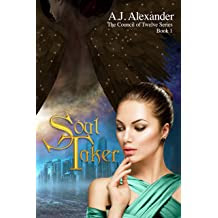
Aurora visited us last in December of 2018 when she published the first book in The Council of Twelve series – Soul Taker. We chatted about the book, the series, childhood memory, and her exceptional website/blog – The Writer's Treasure Chest, and she shared an excerpt from Soul Taker. If you missed it, please go HERE.
A lot has happened since then, and we are beyond happy to have Aurora back. She is kind enough to answer a few more questions and share an excerpt from Bounty Hunter.
Aurora Jean Alexander grew up in a family involved in politics and was blessed with an excellent education in several countries. She holds a Bachelor's Degree in BA. Currently, she lives in Southern California, all by herself, with three cats. A. J. Alexander is the author of 'The Council of Twelve' series, with three published books. The fourth book will be published soon.
4Q: Let's start off with your newest book, Aurora. Demon Tracker has a fantastic cover. It's generating a lot of excitement. What can a reader expect when they pick up your novel?
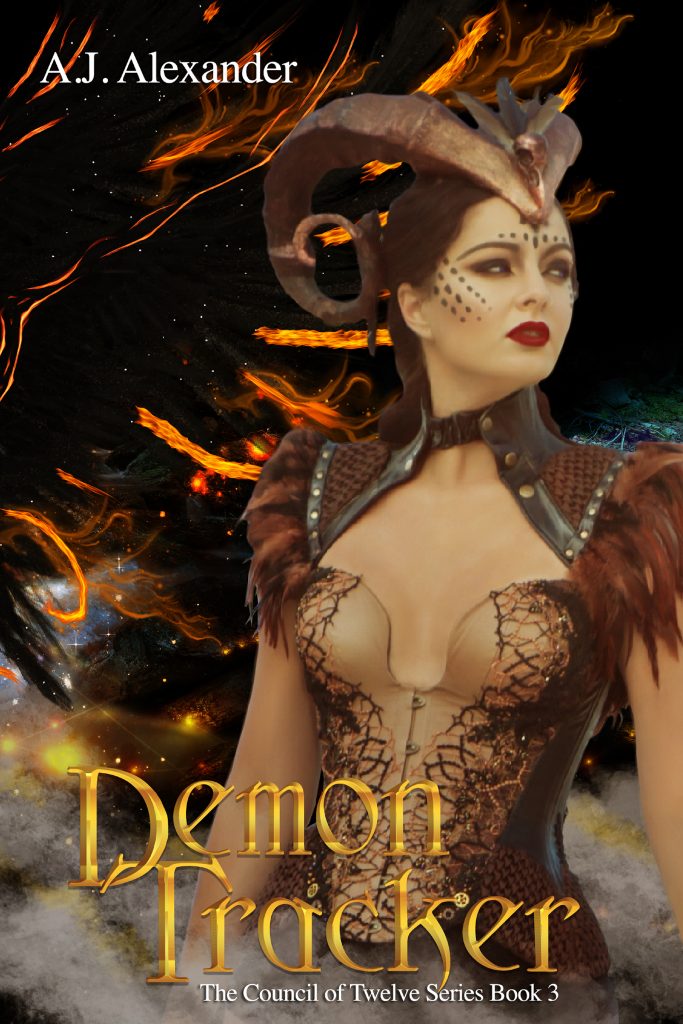
AJ: Demon Tracker is the third book in 'The Council of Twelve' series and introduces Zepheira to the reader. Zepheira is the best Demon Tracker working for the good side. She is hired by 'The Big 7' to find a lost demon and angel and find them quickly before the angel will be lost forever. During her assignment, she meets Archangel Uriel, the 'Fire-Angel,' and gets involved in the eternal fight Good versus Evil.
4Q: Can you share a bit about Book # 2 – Sundance.
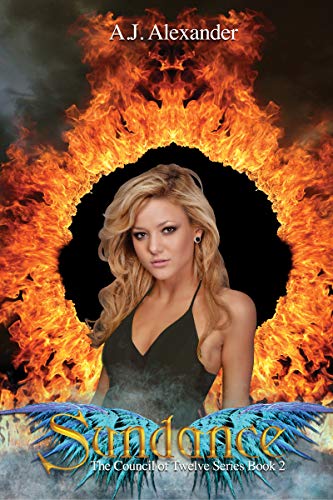
AJ: The book starts with 'little Cara,' a human child given to her parents with the 'warning' they will lose her when she turns seven years old. After Cara left this Earth, she joins the 'School of Divine-Army,' where she is educated until she turns into an angel, the first warrior angel in over 300 years. With her change, she earns her name, 'Sundance,' and becomes a very gifted warrior and a protégé of the 'Council of Twelve.' Sundance is extraordinary as a warrior and a person highly interesting to the bad side. The book ends with a thrilling cliffhanger.
4Q: Tell us about the "Big 7".
AJ: The 'Big 7' are seven warrior angels who form the personal guard and assistance to Archangel Uriel. Each of the Archangel has a personal guard of either five or seven angels, except for Michael. He has the resources of eleven Archangels, if necessary. Zepheira was hired by 'The Big 7' and consequently met Uriel.
4Q: When I read the descriptions of your novels, angels figure prominently in the stories. Do you believe in angels? Is this part of the inspiration for your stories?

AJ: The inspiration for my stories does not mainly base on my beliefs in the existence of angels but were more built as an act of 'silent rebellion.' I grew up catholic and, to this day, the 'ground staff' within the catholic church are men. The preference of the male species within the Bible attracted my attention already when I was a child and introduced to religion. In all stories, legends, tales, and narratives, men were the main protagonists. Even the commonly known Archangels are all male: Michael, Raphael, Uriel, Gabriel, and Lucifer. I figured the strict 'gentlemen’s club’ could do with a little female support. And with a smile on my lips, I decided to make sure my favorite Archangels would switch their angel robes with some jeans and t-shirts. I turned them a bit more modern and made them meet a few fascinating women, not to be seen as a competition, but as a female supplement to their enormous power. And, I added a few more Archangels – just for fun. There’s not too much tradition left within these books. But one thing stayed unaffected in this book series: the highest of all, the Creator of Heaven and Earth.
4Q: What is the most difficult part of your writing process?
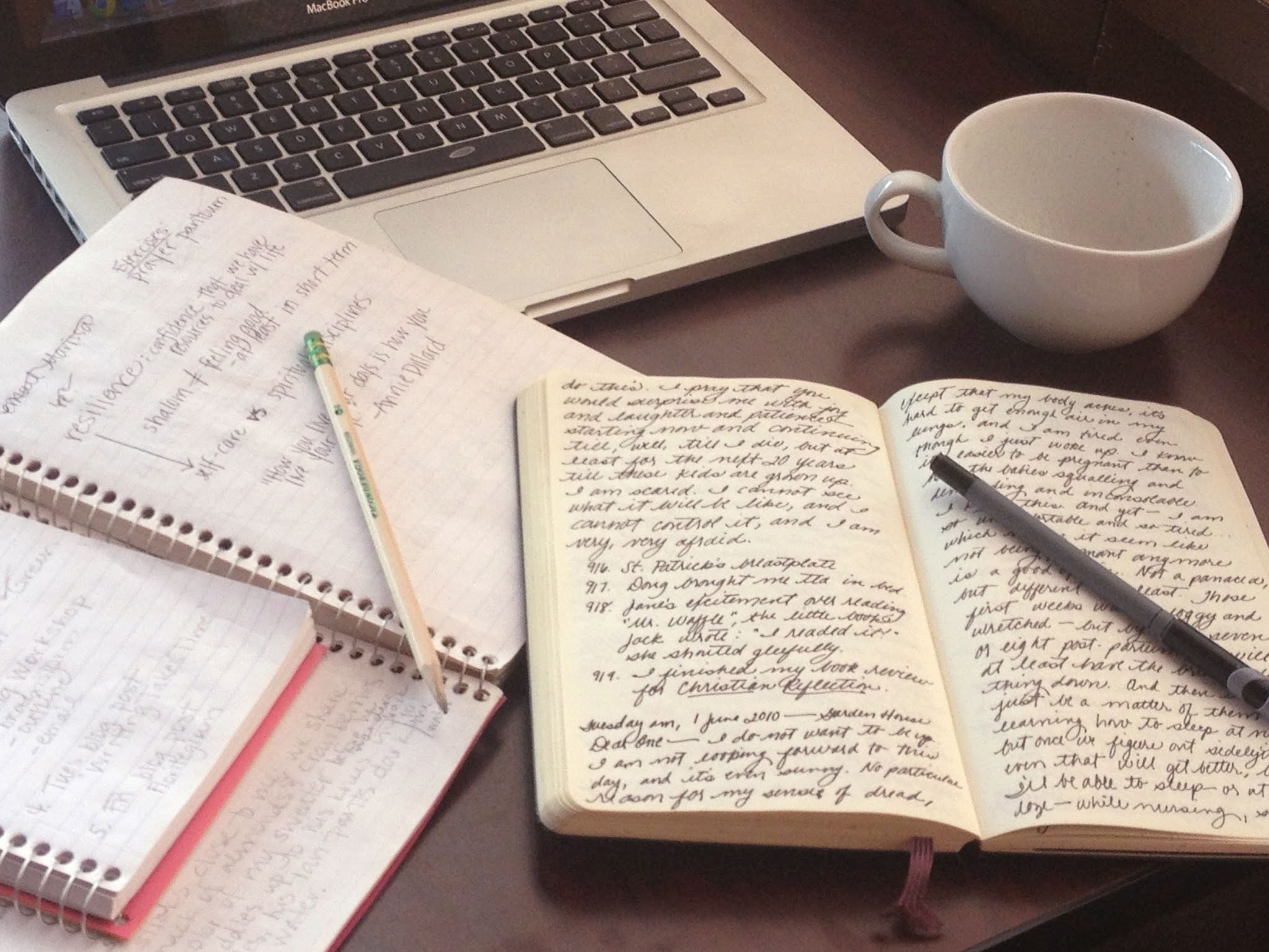
AJ: In many ways, writing comes easy to me. Writing a series with planned thirteen books is entirely different. When I write one story, I have to be aware that in an earlier book, a particular ‘event’ had taken place differently, an agreement or disagreement was already set, or a person had a different eye color. With every book written, I have to concentrate more on not clashing with happenings and events in earlier books. One of the things that helps me very much and seems to be a blessing is the drafting by hand. When I type my stories into the computer afterward, I can catch plot twists or gaps easier.
4Q: Anything else you’d like to tell us about?
AJ: I am working very hard on publishing the fourth book in the series, End of this month or early February. Bounty Hunter is another book that adds to the slowly growing ‘Council of Twelve’-family, and another story I’m quite proud of. Even if someone does not know the first three books, Bounty Hunter would still be a pleasure to read.
The book blurb says:
When Centriel roams the Earth in a dark mood and atypical despair, in a mountain clearing, far from humankind, he unexpectedly discovers a runner, followed by a petite hunter. The way the woman treats the giant fugitive amuses the Archangel, but he quickly learns that neither of them are what they seem to be.
Simin Arnatt is an extraordinary woman. Her occupation as a Bounty Hunter takes her all over the world, as she follows her prey to the most unusual places. She would have never expected to meet the famous Centriel while on a hunt. When he offers to help her, she feels the enormous attraction, but she knows, with the secret she holds, she could never dare to hope for love.
Neither of them could guess that with her next assignment, Hell is breaking loose…

An Excerpt from Bounty Hunter.
(Copyright is held by the Author. Used with Permission)
He didn’t think it was necessary to hide in the rough mountain terrain as no human being could see him anyway.
He was sitting, watching some birds playing when a man unexpectedly broke through some bushes near the forest. He was breathing heavily. The man was tall and muscular like a male model. His clothes were torn and dirty. His elegant shoes were in shreds and his feet were bleeding.
Centriel looked up and watched curiously how the man turned halfway around to search the trees behind him. Hiseyes were wide and sparkling with fear.
Centriel wondered if the man was trying to escape some wild animal. If that was the case, the man needed help and of course Centriel would be there to support him. That was an angel’s duty.
But what happened then was not what he expected.
An amazingly beautiful woman stormed out of the forest. She wore a black leather outfit, had hair of silvery white and chocolate brown skin. She wore sunglasses and a tiny backpack.
In her hand, she held a crossbow which she pointed at the man.
Centriel watched the man fall tohis knees, fold his hands behind his neck and sob like a little boy. “I won’t move a finger,” he cried. “Please, don’t kill me. I promise I won’t do anything.” He stood back up, stumbling.
The woman stared at him with pure contempt on her face. Without a word, she grabbed a pair of handcuffs from her belt and threw them to the man. Still crying, he picked them up and clicked them on his wrists.
The woman carefully watched him with her crossbow still in position.
The man secured the handcuffs slowly, almost too slowly. It seemed he still hoped for a chance to escape. The woman stood like a statue with no sign of impatience. Centriel found this remarkable.
When he sent out his senses, he realized, with some surprise, that the man was not human.
He also sensed something unusual about the woman but couldn’t put his finger on what it was.
When the handcuffs finally clicked around the man’s wrists, Centriel found out that they must have been magically strengthened. The man fell back to his knees, tears splashing down his face; a face that suddenly seemed to melt away. His entire form grew in length and width. His shoulders widened, his legs became more muscular, as did his abdomen.His biceps and triceps bulged, and his head widened. His face formed a kind of snout and wiry brown fur grew all over his head which sprouted enormous horns on the side and became a bull’s head.
“Holy smoke,” Centriel thought, “a minotaur.” No wonder the woman kept her distance. Human form or not, this hybrid kept his strength. If he had reached her, he could have broken her apart like a twig.
For some reason, this worried and annoyed Centriel at the same time. He looked at the slim features of the woman in question and frowned.
She looked fragile and still, she had recently hunted down a minotaur.
If Centriel hadn’t seen it with his own eyes, he hadn’t believed it.
He wondered if he helped her if it would turn out to be a fight. “Probably yes,” he finally decided.
“Well, I figure in that case I should thank you.”, the woman said dryly, frowning directly at him.
Centriel froze in shock. “You can see me?”
She snorted. “You’re hard not to see,” she replied sarcastically.
Centriel grinned. “I guess I was right. You are not human.”
She didn’t reply. She held her crossbow in her small but strong hand, concentrated on the minotaur and made no sign of lowering her weapon.
Centriel got up and stepped a little closer. He needed to protect the girl. But what worried him was the disparity of the two opponents.
Also, he was curious. “How come you followed him? I thought minotaurs normally live quite discretely and stay among their kind, trying to keep out of trouble and the public eye.
The woman sighed silently. “You’re right. Normally they do. But this one isn’t as decent as the others. For some reason,which I’m still trying to understand, he started to kill unpredictably.”
“What?”
She nodded. “I got the order from hisfather to hunt him. His dad is the eldest of the tribe. I’m afraid he’ll be paying for his crimes most unpleasantly. But he won’t be my problem anymore.”
Centriel’s curiosity grew. “You’re always this cold and without the slightest compassion, aren’t you?”
The woman nodded. “Yes, I have to be.”
Centriel was about to ask another question when the minotaur in front of them groaned. “It is tons of fun to listen to you guy’s flirting, but could you please postpone your courtship dance until later? These handcuffs hurt.”
Centriel hid a grin while the young lady unmercifully replied, “You will have to suffer a bit more. We’re going to travel back to your place the traditional way.”
“What does that mean?” the minotaur asked between gritted teeth.
“I’ll wrap you up like a burrito, throw you onto my donkey wagon and walk,” she replied, with a serious face.
Centriel almost laughed but held it in, when the minotaur screamed, “You can’t be serious!”
Centriel looked at the woman and politely offered his support. She began to think and finally asked insecurely, “Would you do this for me?”
The Archangel smiled. “Why not?” he responded and added, “Of course there is a condition linked to my help.”
“Of course,” she replied knowlingly, rolling her eyes. “What do you want?”
Centriel smiled. “Your name.”
She hesitated for a second, almost frozen, before snorting a little and shaking her head. “Sure. Please forgive me for not introducing myself properly. That was very rude. I’m Simin Arnatt, bounty hunter.”
Centriel studied her unusual yellow eyes for a moment and nodded politely.
“It’s nice to meet you, Simin Arnatt. My name is Centriel.”
Thank you, Aurora, for being our guest once more. Wishing you continued success with your stories.

Thank you so much for having me once more, Allan! I really appreciate the opportunity and your ongoing support.
For all you wonderful readers and visitors wanting to discover more about AJ and her stories, please follow these links:
https://m.facebook.com/AuthorAJAlexander/
http://www.aurorajeanalexander.com/
https://www.instagram.com/aurorajeanalexander/
https://www.linkedin.com/in/aurorajeanalexander/
https://mobile.twitter.com/AuroraJean_A
https://www.pinterest.com/authorauroraj/
https://www.tumblr.com/blog/authorajalexander
A.J. Alexander Books - BookBub
https://www.amazon.com/A.-J.-Alexander/e/B07KVQCHVZ
Smashwords – About A. J. Alexander, author of 'Demon Tracker', 'Sundance' and 'Soul Taker'
https://aurorajalexander.wordpress.com



January 23, 2021
Returning Author Ian H. McKinley of Gatineau, QC.
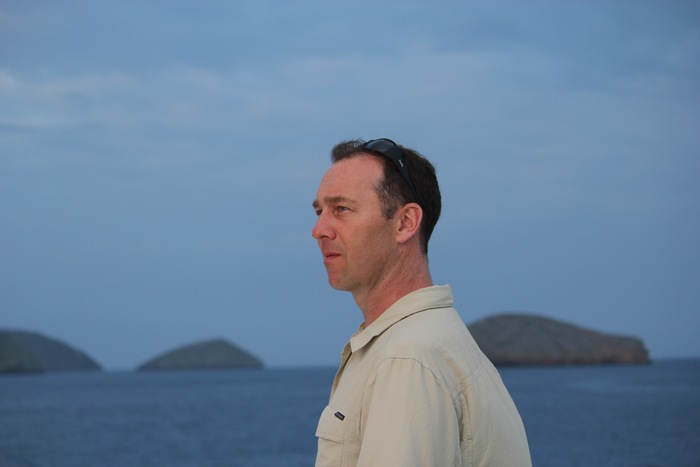 2016 Frye Festival Author.
 It’s been much too long since Ian has been a guest on the Scribbler. The good news is that he’s back with lots of exciting news about his novels.
He has been featured previously and you can read an excerpt from his first novel in the Northern Fire series.– Harbinger. Go HERE.
A special note was made of Harbinger on another post of Six Great Books. Go HERE.
**Dear reader - please note that the posts aforementioned were issued before Harbinger was divided into two novels.
Following the decision by Lugar Comun Editorial to pick up the Northern Fire series, they have decided to split the book in two. Book 1 – Harbinger. Book 2 – The Broken Dream.
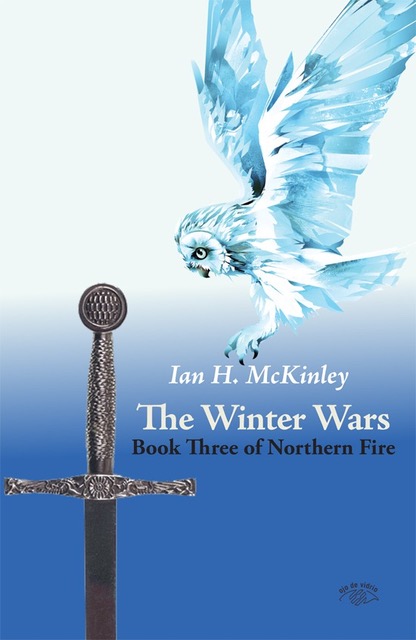
The launch of the third novel in the series, The Winter Wars, was delayed by the pandemic we are experiencing. For those of us anxious to read the next instalment, it was disappointing news, to say the least. However, things are progressing and it will soon be available.
**Exciting news – the publishers have agreed to share the new cover today for Book 3 – The Winter Wars. (Please see below)
We are fortunate that Ian is taking the time to answer a few questions about this work.
Ian H. McKinley
Biography
Ian H. McKinley is a former Canadian diplomat . He write s “fantastic realism,” fantasy that escapes the traditional tropes of pure good versus ultimate evil. Rather, Ian’s narratives are driven by alignments and/or collisions of human interests and values. His first novel, The Gallows Gem of Prallyn explores an explosive mixture of zealotry, class oppression, and nationalism, the results of which take the reader on a gripping adventure.
Ian
unveil
ed
his second novel, H
arbinger, Book
One of Northern Fire, at
the 2016 Frye Festival, in which he participated as a “
Prélude
Emerging Writer.” Harbinger examines the role of violence in society and between different peoples, as well as the role of culture in perpetuating concepts of social order.
In 2019,
Ojo de Vidrio, a speculative fiction imprint of Lugar Común Editorial
,
secured the publishing rights to the Northern Fire series. In 2020, Ojo de Vidrio released a second edition of Harbinger as well as book two in the series, The Broken Dream, a collaboration that brought improvements to the books and that deepened the Northern Fire narrative.
Ian took advantage of the first COVID lockdown to write Up and Under, a novel-length illustrated tale of the travails of a fledgeling sports team in a fantasy world. More light-hearted than his previous work, Up and Under nevertheless delves into topics such as women’s empowerment, the rich potential for inter-racial cooperation, and the burden of celebrity. Human interests and values again predominate, albeit with a sports environment. But mostly it’s just a blast! Up and Under is being released in episodes and can be found at www.upandundertale.com
Ian is doing a last re-write of Tears of the Ghosts, Book Five of Northern Fire, the conclusion of the series. In the meantime, his publisher, is putting the final design touches on The Winter Wars, Book Three of Northern Fire, which is due for release in May, 2021. Book four, The Rune Slate is in the final stages of editing and, COVID permitting, will be launched in October at The Conference on Canadian Content in Speculative Arts and Literature.
Ian has been married to his wife, Josée, for nearly twenty-seven years. Josée is Ian ’s first source of editorial advice and assists the translation of Up and Under into French (Frappe Pr écise , in case you were wondering. ) Together they try to help each other understand their strange dog, Sanja, an eleven year-old German Shepherdy thing.
Ian was born in Calgary, Alberta, and grew up in Northern Ireland and on the Canadian prairies. He has served Canada abroad in Colombia, Kenya, Zimbabwe, and at the Permanent Mission of Canada to the United Nations in New York.
4Q: Regardless of the delay in your launch, Ian, it must be an exciting time for you. I understand that the first novel is being reissued in two books with new covers. Are there any other changes we should be aware of? What can you tell us about this?
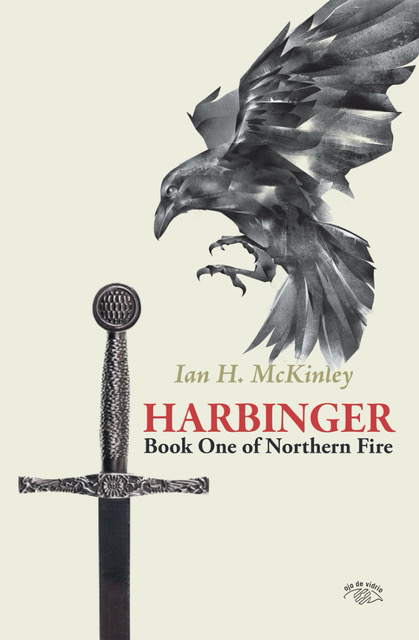
IM: Yes, it’s a very exciting time for me. COVID threw the release dates for the Northern Fire series out the window, but the publisher has decided to go forward now. As much as I enjoyed the freedom of being an indie writer, having the external validation of a publisher is important. So seeing the new versions of Harbinger in print as two books was moving; like a milestone that I’m passing in my journey as a writer.
The publisher got a hold of the first edition of Harbinger and liked it so much they secured the rights to the entire Northern Fire series. Given their enthusiasm for the original material, they didn’t seek many changes to the text. They did help me add to the material, giving the characters greater depth, their motivations greater clarity, and their evolutions more profound.
The one big change the publishers brought to the second editions relates to the pacing of the series, as you note. They examined the remaining material and saw the potential for five books of roughly equal length. So, rather than move forward with two books, one really long, and the second really, really long, they decided to break the material into five volumes of a more usual length. Hence, the first edition of Harbingertransforms into Harbinger and The Broken Dream.
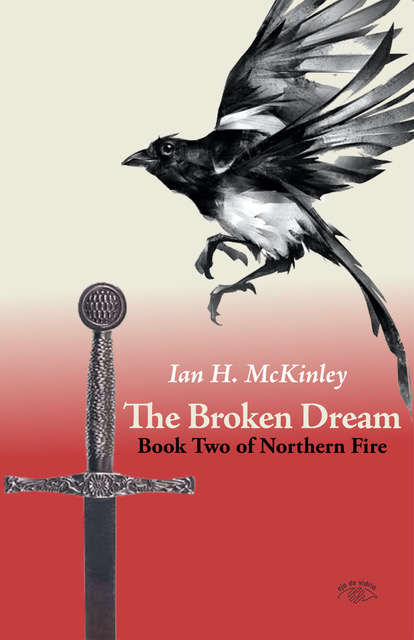
This decision to break up the first edition in two brought about a substantive change that adds further depth and understanding to the series’ characters. So as to provide consistency across the five books in the series, Ojo de Vidrio wanted that I add an epilogue to this second edition of Harbinger and a prologue to The Broken Dream.
***For readers who might have enjoyed the first editions, the publisher has kindly allowed me to release the missing material to subscribers to my newsletter, so if the Scribbler’s followers want to get it, just go to www.ianmckinley.com and click to subscribe to the newsletter.
4Q: I am fortunate to be reading an Advanced copy of The Winter Wars and it's a wonderful tale.. When our readers pick up their copy, please tell them what they can expect?
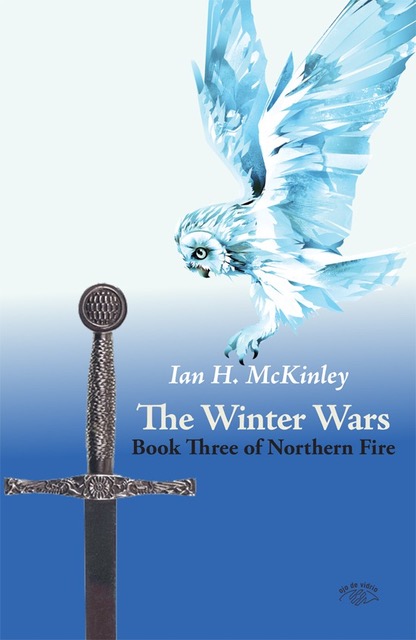
IM: As you know, I have no pretensions of writing earth-shattering literature; I’m just out to spin a good yarn. Fantasy as a genre doesn’t interest everyone and I don’t blame readers from casting a wary eye on it. But for those who enjoy speculative fiction, they’ll see that I continue to focus on character-driven narratives that escape the good versus evil trope. In my novels, characters are motivated by the same passions and values that have motivated people forever: love, greed, ambition, a sense of honour, fear, sorrow, etc.
Beyond setting aside the good versus evil trope, readers will see I continue to re-examine other tropes in The Winter Wars that are common to fantasy. In The Broken Dream, the main characters of the series realize they aren’t the protagonists of the saga in which they find themselves, but rather the antagonists. I build on that in book three. So, for example, as the title of the book suggests, there’s armed conflict that springs up. I have found that many fantasy writers pay no attention to humanity’s attempts to impose international humanitarian law on their combattants. In The Winter Wars, readers will see the main characters forbidding the summary execution of prisoners or the use of child soldiers. Also core to Northern Fire is the doubt I plant in the reader’s mind regarding prophesy. Why is it that prophesy somehow always comes true in fantasy stories? So, I play with that trope as well.
In terms of my main characters, it’s in this middle instalment of the series that the they take the steps necessary to set aside their past as bringers of death and become better people. The challenge for them, however, is that they have a hard time overcoming the justifiable prejudice of those around them. Also, their old enemy who pursued them through book two has risen in power and now threatens them again. So, in spite of their determination to escape their past, they have to rely on it to survive.
I have experimented with my story-telling style. The whole first part of the book takes us deeply into the viewpoint of new characters that we meet, with each one of these characters focussed on one of our main characters. So we get to see the characters through the eyes of patrons, enemies, besotted fools, and sceptics. This has a secondary impact of deepening the world-building that is always necessary in speculative fiction. We get to know new cultures, the sophisticated, trading Polgati, and the adventurous, nomadic Drovers.
4Q: We noticed these new books are being released under the name Ian H. McKinley, not just Ian McKinley, as before.

IM: My journey as a writer got tripped up just as I was set to participate in the 2016 Frye Festival as an Emerging Writer with the release of my second book, the original version of Harbinger. As I was up in Fredericton doing a book-signing event at the great Westminster Books, a provincial colleague of my wife approached her to say he’d really enjoyed my first two books, including Harbinger, so he picked up my third book. He commented to Josée that he’d been surprised to see I also wrote … that stuff … as well as fantasy.
This took my wife aback because I didn’t have a third book out at the time. She enquired about what he meant by “that stuff”. That’s when we learned that another Ian McKinley had popped up on Amazon selling ebooks of science fiction porn! That’s when we realized I had a problem.
We considered developing a nom de plume and brainstormed possibilities. Taking the advice of that successful Fredericton writer, Cary Caffrey, to heart, we duly tried to think of ear-catching, unique monikers that would propel me to instant stardom. We came up with “Boom Antler” … complete with hip-hop hand gestures that would underline the coolness of my writing, and of having antlers.
Then we did a google search and found that the name was already taken! OK, so the guy used the more-sophisticated Boum Antler, but still …
In the end, my publisher convinced me to use my actual name but include my middle initial. So now I’m Ian H. McKinley.
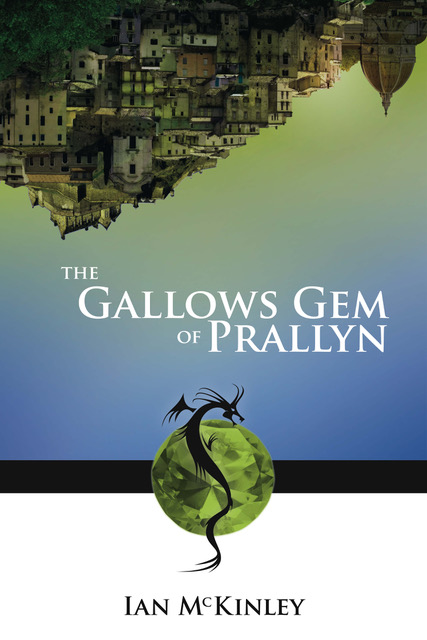 Ian's First Novel.
4Q: A quote from James Fisher of The Miramichi Reader - “Mr. McKinley's writing style is solid and detailed, yet pleasurable to read. He has concocted a mythopoeic story of the first rank and one that will have you highly anticipating..., The Winter Wars.” This is a wonderful compliment. How did you develop your voice, your writing style?

IM: It took practice. My time as a diplomat helped my writing immensely. When I was a young Second Secretary writing reports about what was going on in the civil war in Angola, or even later when I was a Counsellor relating what was happening during the post-elections crisis in Kenya, Ottawa had to understand clearly what I was saying. If I was making policy proposals from afar, my counsel had to be comprehensible and appropriately nuanced. A lot of work went into making my writing solid.
When I turned my writing to fiction, I build on that foundation by working with editors, participating in writers’ groups with colleagues, and attending workshops. One of the high points in my time in New Brunswick was integration into the provincial Writers Federation. Part of their core programming is biannual meetings during which there are always great workshops and one-on-one sessions to help writers raise the standard of their writing. These always provided me with exposure to constructive criticism from people who understood how necessary it is for writers to hear about their tics, bad habits, and errors of style or the use of English.

More recently, the lockdown also helped by letting me focus on a project where I had to use a different writing style and develop a different voice. In the space of four months, I wrote a new novel with a more direct style with less elaboration of character motivations and narrative arcs. It was good to see that it has clicked with my target audience, which gives me more confidence about my skill and versatility.
That said, there’s always room for improvement and that’s where I should keep my focus.
4Q: Your novel has maps and a list of characters which I find enormously helpful in keeping track of them and who they are. Was this your idea and where do you get the cool names?
IM: Yes, that was my idea, though it’s hardly a revolutionary one. Maps are common in speculative fiction because the novels are usually set in whole new worlds that are not yet familiar to any given reader. Maps are a key ingredient to world-building, which a writer has to do in fantasy. Also, listings of characters are also often necessary because names are strange and my stories tend to be so wide in scope that there are many characters who have an impact on what goes on.
In terms of populating my maps with cool names, I try to mine human history and actual cultural geography. In the upcoming book three of the Northern Fire series, I studied maps of central Europe to give me ideas for names. If I liked the heart of a name, I would usually switch in a couple of letters to give it a unique feel. Also, I tried to incorporate variations of historic cultural practices to give specific flavours to different peoples. For example, my principal characters have no family names, these are subsumed in variants of their fathers’ names using prefixes, a bit like Lief Erikson meant that Lief was the son of Erik. Hence, in Northern Fire, the principal female character is called Lora Dauilig, meaning Lora daughter of Uilig, or one of the principal male characters is called Cairn Soleigh, meaning Cairn son of Leigh. It gives a bit of insight into their land and culture, as well as the overly patriarchal nature of their clan structure.
I do something similar for character names. Yes, some names we could see in this world, like that of one of the principal characters, Lora. But others are adaptations of existing names, such as most of the names of the Drovers, the nomadic people we encounter. Many of those names are modifications of Roma (gypsy) names. Three Drovers become entangled romantically with our principal characters, of which two have names that are such adaptations: Nehemiah, and Esmyralda. And yet, the most important of the love interests who appears in the novel has a name I invented completely: Siançiorny. I have no idea how I came up with that one!
4Q: What attracts you to write in this genre?
 Image credit: Pixelstock.net.
IM: I’ve always liked it. My storytelling leans towards more of a historical fiction rather than swords and sorcery type of story. However, were I to set my stories in the real past, then I’d be under the crushing burden of being historically accurate. Look no further than the writer behind the new hit TV show, Bridgerton, who came in for criticism for the lack of historical veracity in her work, albeit her response was to note that it was a tale of pure fantasy that happened to be set in 19th century Britain. So, by placing my tales in a fantastic world, I can escape those shackles. And yes, I know writers like Bernard Cornwell set their books in Anglo-Saxon England or Roman-British Britain, and they even insert magic, but writing in my own world creates a tabla rasa wherein I can create a different status of women characters, or for LGBTQ relations, or space for fantastic events that occur.
Also, I can add dragons! (To be clear in managing expectations, there are no dragons that appear in my work except as constructs of the imagination of some of the characters). I’m holding the dragons in reserve!
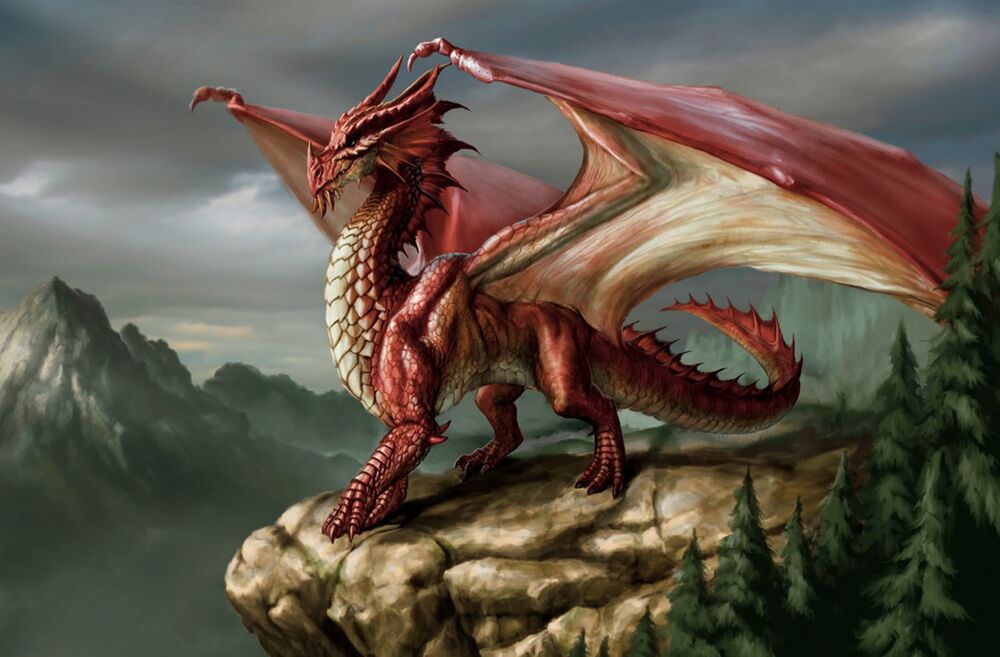 Image credit - Morpheus Wikia.
4Q: Favorite authors and/or novels?
IM: I’ll always pick up the latest work by Guy Gavriel Kay from the moment it becomes available. My all-time favourite novel is his The Lions of Al-Rassan. Like many other readers who like fantasy, I’m impatiently waiting for George R.R. Martin’s next instalment in his series that began with Game of Thrones, which the television show popularized. I recently re-read Good Omens by Neil Gaiman and Terry Pratchett, and surprised myself by how much more I liked it than back in 1996. I went through a phase trying to expose myself to more Can Lit, especially that written by women, and I’ve come to enjoy Jane Urquhart, Elizabeth Hay, Miriam Toews, and Carol Shields. When I was in Colombia, I enjoyed reading Gabriel García Márquez and Juan Gabriel Vásquez. It really depends what I feel like reading … if I’m interested in face-paced crime thriller, I’ll pick up a book by Fredericton’s Chuck Bowie.

4Q: Anything else you’d like to tell us about?
IM: I’d like to thank you for having me back on the Scribbler. The support you give to writers who are working hard to bring their works to a wider audience is oh so valuable. I’m proud to have a blurb from the Scribbler on the back covers of both Harbinger and The Broken Dream.
***SBS: I'm flattered and appreciative of the gesture, Ian. Thrilled to be part of your new venture.
If anyone is intrigued by my having noted I wrote a novel during lockdown, and if they like light-hearted, fast-paced speculative fiction, the novel’s called Up and Under. It’s loosely based on a real-world game wherein players coach teams consisting of fantasy races (elves, orcs, dwarves, etc.) trying to score touchdowns against opponents. It’s a lot of fun and it’s good. It’s being published in weekly episodes on the site of a blogger who publishes a lot of articles about how to play the game. You can find it here: www.upandundertale.com , or in French here: https://bloodbowlstrategies.com/fr/frappe-precise/
Finally, I hope everyone will keep their eyes peeled towards the beginning of May for the official release of The Winter Wars, Book Three of Northern Fire.
An Excerpt from Winter Wars.
(Copyright is held by the author. Used with permission.)
“The necromancer!” Thay yelled. “Demons!” Others had taken up the warning, relaying it back and forth along the line. Even the savage warriors of Markyal’s werothweren’t immune and some few cowered behind what cover they could find, echoing Thay’s alarm. Some others and many churls fled back down the slope away from their great and terrible enemy. Freddi, showing as much courage as his master in the face of the much feared and hated necromancer, crawled forward to the shrieking herg and beat at the flames burning on Markyal’s clothing.
All of a sudden, the young hergling, Franz dropped beside Thay, eyes scanning the ridgeline. Despite his evident fear, Franz whipped out a dagger and sawed at Thay’s bonds.
“I had an odd dream last night,” Young Franz said matter-of-factly as though his father wasn’t on fire just a dozen paces away. “A great worm summoned me into a giant hall of many pillars. Her eyes were great, hypnotic harvest moons, all orange and menacing.”
“Her?” Thay asked, his heart skipping a beat and his stomach lurching.
“Ya, it was a she. She spoke to me without speaking. Nothing coherent. Nothing I could remember when I woke up. I saw things: you and Korgash duelling under a stormy sky, ravens all around you; you and I sitting in the room of some castle or other. Our fates, yours and mine, are entwined somehow.” The rope gave a jerk and the bonds fell away. “Can you make the necromancer go away and the killing stop?” he asked.
Thay nodded. “I can. But tell me more about the worm.”
The hergling ignored him. Instead, he said, “You were to lead us in an arc so we could flank your Soresayers, not just march us right up the main trail.”
“I don’t know these woods well. I was going to take your father on an aimless tramp along the first decent trail I found leading off this one.”
“He’d have gutted you.”
“It would have saved my people.”
Young Franz peered into Thay’s eyes. “That’s how you think?” He shook his head. “When my father counted his dead back at your camp, he didn’t even bother adding in the men-at-arms who lost their lives.”
“When your time comes, Franz, I’m sure you will.”
“It doesn’t look like my father’s badly hurt. We’ll be coming up the trail shortly. Can you make sure your people aren’t on it? That way we can keep chasing you without actually killing you or getting killed.”
“I will.”
“Your people captured my friend Hansi, the son of Herg Fuchs. Send him back along with four other North Straels. To Sar Lovrov. Make sure they know you and I brokered another prisoner exchange.”
Thay nodded. “I will do that too.”
“Go, then.”
Thay rose to a crouch, scanning a possible way into the brush. “Oh!” Franz held up Tear Tongue so Thay could see it, then he tucked the Fjordlander weapon in his belt.
“You’re going to keep my axe?”
Franz nodded and said, “A souvenir of a real leader. Come to Smyrton some day to retrieve it. After my father’s gone. I’ll tell you more about the worm then. In the meantime, you can have this.” He tossed Thay a spear.
Thay snatched up the weapon. “Oh, and take these,” Franz added, tossing over the lengths of cut rope. “I can’t have my father finding them. I’m in trouble enough already after our first prisoner exchange. Make sure the second one leads to less of a beating by sending me back Hansi and four others.”
Thay nodded and patted Franz upon the knee. “When the day comes, I’ll want to know about the worm.” Then he took the bits of rope and fled, scurrying away through the underbrush, heading for where the flames still lapped the air, hoping the terror of the necromancer and the work of his fire demons had cleared the way.
 For all you faithful readers and visitors wanting to discover more about Ian and his novels, please follow these links:
My author website: www.ianmckinley.com
My books:
Harbinger: https://www.amazon.ca/Harbinger-Book-One-Northern-Fire/dp/1987819470/ref=sr_1_1?dchild=1&keywords=Ian+H.+McKinley&qid=1611083921&sr=8-1
The Broken Dream: to follow shortly.
The Gallows Gem of Prallyn: https://www.amazon.ca/Gallows-Gem-Prallyn-Ian-McKinley-ebook/dp/B00PNZAEUS/ref=sr_1_2?dchild=1&keywords=Ian+H.+McKinley&qid=1611083921&sr=8-2
Ian and I would love to hear your comments or any questions you may have.

January 16, 2021
Award Winning Author Catherine Meyrick of Melbourne, Australia.
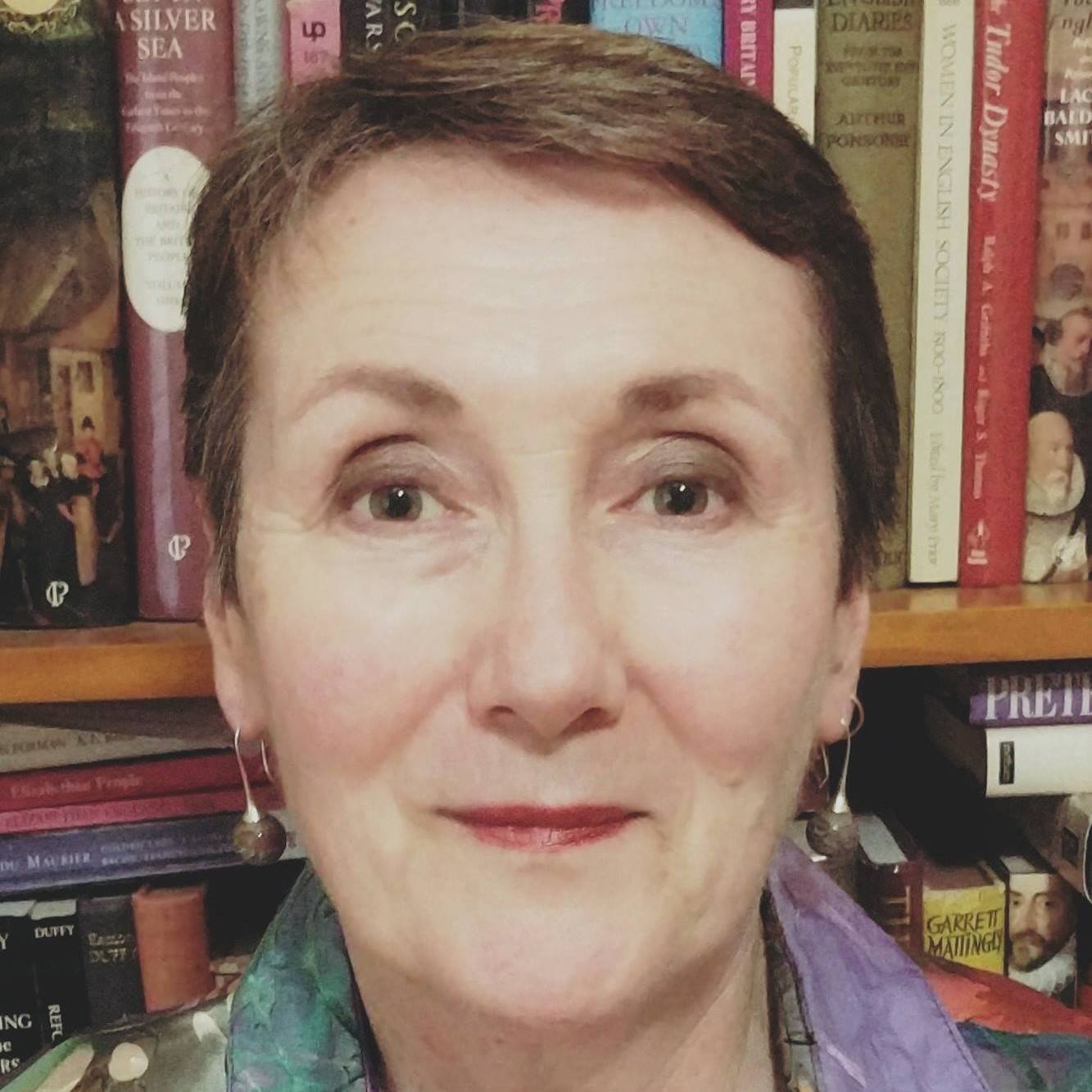
One day on Twitter, I discovered some very striking book covers and after a bit of exploring, I found out they were written by an author in Australia – Catherine Meyrick. I decided to follow Catherine and find out more about her writing. I’ve since ordered one of her novels and invited her to be a guest on The Scribbler. She has been gracious in sharing my posts as well as those of other authors.
She is joining us this week with a 4Q Interview and sharing an excerpt from her newest novel – The Bridled Tongue, which has received many great reviews.
When you visit Catherine’s website (links below) you are greeted by the following words:
Historical Fiction with a touch of Romance.
I am an Australian writer. I grew up in Ballarat, a large regional city in Victoria, but moved to Melbourne when I was seventeen to study nursing and have lived here ever since. I quickly realized that nursing wasn’t my calling so I dropped out and went to university where I took a double major in History. I joined the Public Service and worked for a number of years as a tax assessor. Somehow, while working full time, I managed to complete a Master of Arts in History and later Librarianship qualifications and then worked as a departmental librarian. I took about ten years out of the paid workforce when my children were young and then worked as a primary school librarian and later at my local public library. I started writing in earnest when my children were little and once they were at secondary school undertook a number of writing courses. I managed to get an agent at one stage but that didn’t work out so I decided to publish myself and have never regretted that decision for a moment.

Apart from spending time reading and writing, I am an obsessive genealogist and have managed to identify previously unknown family members and clear up mysteries using both traditional document-based methods and DNA. And, in the time left over, I enjoy gardening, the cinema, and music of all sorts from early music and classical to folk and country and western – listening not playing. I did take piano lessons as an adult but gave up when my children were young and they were already embarrassingly better than I was.
4Q: I’ve always been a big fan of Historical Fiction. What inspires you to write in the genre?
CM:While the short stories I wrote when I first started out were contemporary, I never considered writing novels set in the present. The bulk of my reading is historical fiction or non-fiction and I come from a family that has always been fascinated by history. My father read a lot of historical fiction and for my thirteenth birthday he gave me The Flight of the Heron by DK Broster, a story set in Scotland at the time of the 1745 Jacobite rebellion. This was the first work of historical fiction I clearly remember reading. My mother read biographies of historical figures and would read aloud to us interesting snippets she came across. She also was a meticulous family researcher and her stories about her forbears made these long dead people real, not just names attached to dates. My maternal grandfather, especially, was a storyteller. We visited my grandparents most years during the summer holidays and, as there was no television, evenings were spent with the adults talking and telling stories. Most of my grandfather’s tales were about his childhood (he was born in 1887), his travels as a stockman and as a fencer in the early decades of the 20thcentury, and his family so the past was very alive to me.
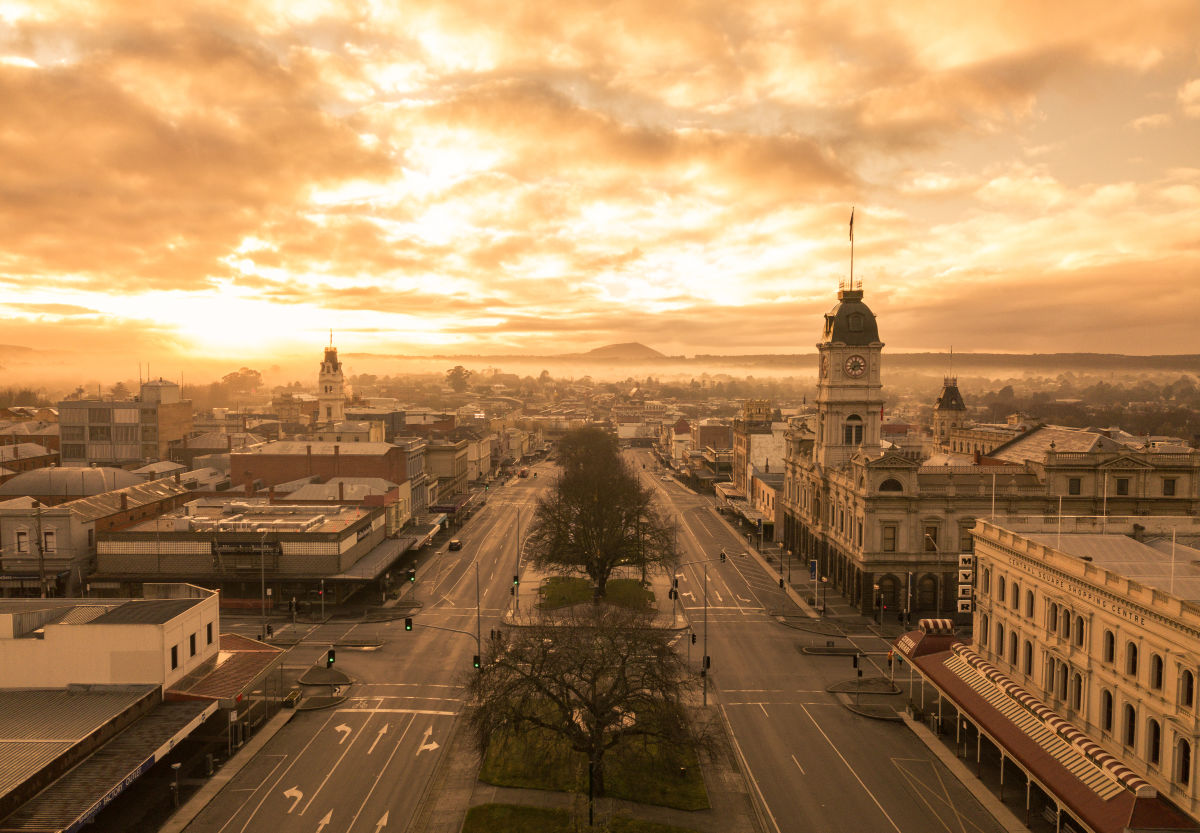
Growing up in Ballarat also helped to develop an awareness of the past. Ballarat, about 70 miles from Melbourne, was one of the first places where gold was discovered in the early 1850s. History is a constant presence there – from the fine 19th century buildings, the statues of long dead notables, and the wide streets (the main street was wide enough to turn a bullock team) to the Eureka Stockade. This was an armed rebellion by gold miners objecting to the cost of a miner’s licence, seen basically as taxation without representation. It ultimately resulted in the Victorian Electoral Act 1856 which mandated suffrage for adult male colonists. You can’t escape history if you live in Ballarat.
4Q: I’ve read the synopsis of The Bridled Tongue but perhaps, you could tell our readers what to expect when they pick up their own copy.
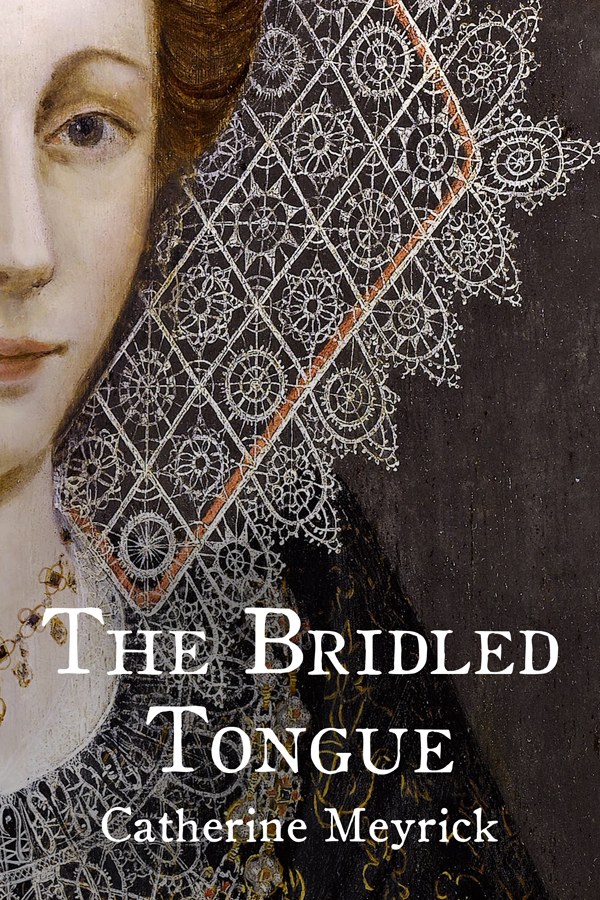
CM:The Bridled Tongue begins in 1586 and follows the life of Alyce Bradley, the daughter of a wealthy Norwich mercer, as she adjusts to an arranged marriage, not one she particularly wishes for but has entered because she has no other options. It shows the way she grows into her role of manor wife and faces dangers not only from her husband’s enemies but her own past when jealousies stir up old slanders concerning her relationship with her grandmother, thought by some to be a witch. The novel is set at a time when these sorts of slanders, combined with the contemporary beliefs, could result in a formal accusation of witchcraft. In a witchcraft case normal evidential rules were set aside and the most dubious hearsay accepted which could be enough to bring a person to the gallows. It also touches on other issues such as sibling rivalry and jealousy, and the way the past can reach out and affect the present. The backdrop is the threat of immanent invasion by the Spanish in 1588 – the Spanish Armada.
I have always been more interested in the lives of ordinary people than the big names of the past so the major characters in my novel are fictional although they do rub shoulders with some historical personages but the timeline and background are as accurate as I could make them. Alyce is a reasonably conventional young woman of the middling sort and while she questions why life cannot offer her more opportunities and why the same standards are not expected of men as of women, she ultimately accepts her society’s rules and expectations. By making my characters conventional, I hoped to show something of the reality of lives in the past, the lack of freedom that women, and men as well, had in determining their own lives and even their choice of spouse, and the difficulties that a could arise when they tried to step outside the boundaries of a far more rigidly structured society than our own.
The novel is a third person narrative told from four points of view: Alyce, her husband Thomas Granville, her sister Isabel and a spurned suitor, Robin Chapman. The language is reasonably formal and while I have attempted to avoid the use of thoroughly modern terms, I have included some terms common in the sixteenth century, rarely used now, to give a uniquely Elizabethan flavour.
I would describe it as historical fiction with romantic elements. The relationship between Alyce and Thomas is an important element of the novel. In the past, for most ordinary women relationships were important, few occupations were open to them with marriage and household management the usual life path. The choice of a spouse, a matter over which most did not have a complete say, was of critical importance. It could mean the difference between a contented life or one of misery and discord. For this reason, the path to and through marriage plays an important role in my novels.
4Q: Please share a childhood memory or anecdote.
CM: A vivid memory of my childhood, perhaps because it was repeated so often, is of holidays spent at my grandparents. They lived in Maffra, a town of several thousand people about 200 miles away, on the other side of the state.

Those holidays seemed to be a time of perpetual sunshine, the way memories of childhood can be, every day the same and carefree. I and my younger sister would wake up early and go out the back where our grandfather would be feeding the kookaburras lined up along the fence. We’d then go inside and he’d fry sausages for breakfast. While we were having ours, he would take our grandmother breakfast in bed, tea and toast cooked in front of the open firebox of the stove. We’d spend the morning up at an aunt’s house, our grandfather’s sister who had no children of her own. She had a basket of broken ornaments and we were given these to play with out on the back verandah. We’d make little villages out there and invent stories about the bits and pieces we played with. She’d take us to the font gate just before midday and let us go as the milk factory’s siren went. We would run down the hill and across the road before the cars from the factory came round the corner, men driving home to have their lunch. When we ran along the side of the house Nanna’s clock would still be striking twelve. We would have been between five and ten years old and had far more freedom to roam that we ever did at home. The evenings were times when the adults talked and we listened in and heard good stories and learnt a lot more than we would have if we had been noisier.
It was a far slower pace than the life we lived back in Ballarat. My grandparent’s house was modest with a massive back yard where there were fruit trees and my grandfather grew all the vegetables they ate and a chook yard. The house, like so many built in the early 1900s, had cold running water, if you wanted hot water it had to be heated. There was a big back cast iron water urn that sat permanently on the stove and a copper in the washhouse where clothes were boiled and water had to be carried by bucket to fill the bath which was also in the washhouse. In many ways it was a step back into an earlier time and, as children, we loved it.
4Q: Can you give us a brief outline of Forsaking all Other.
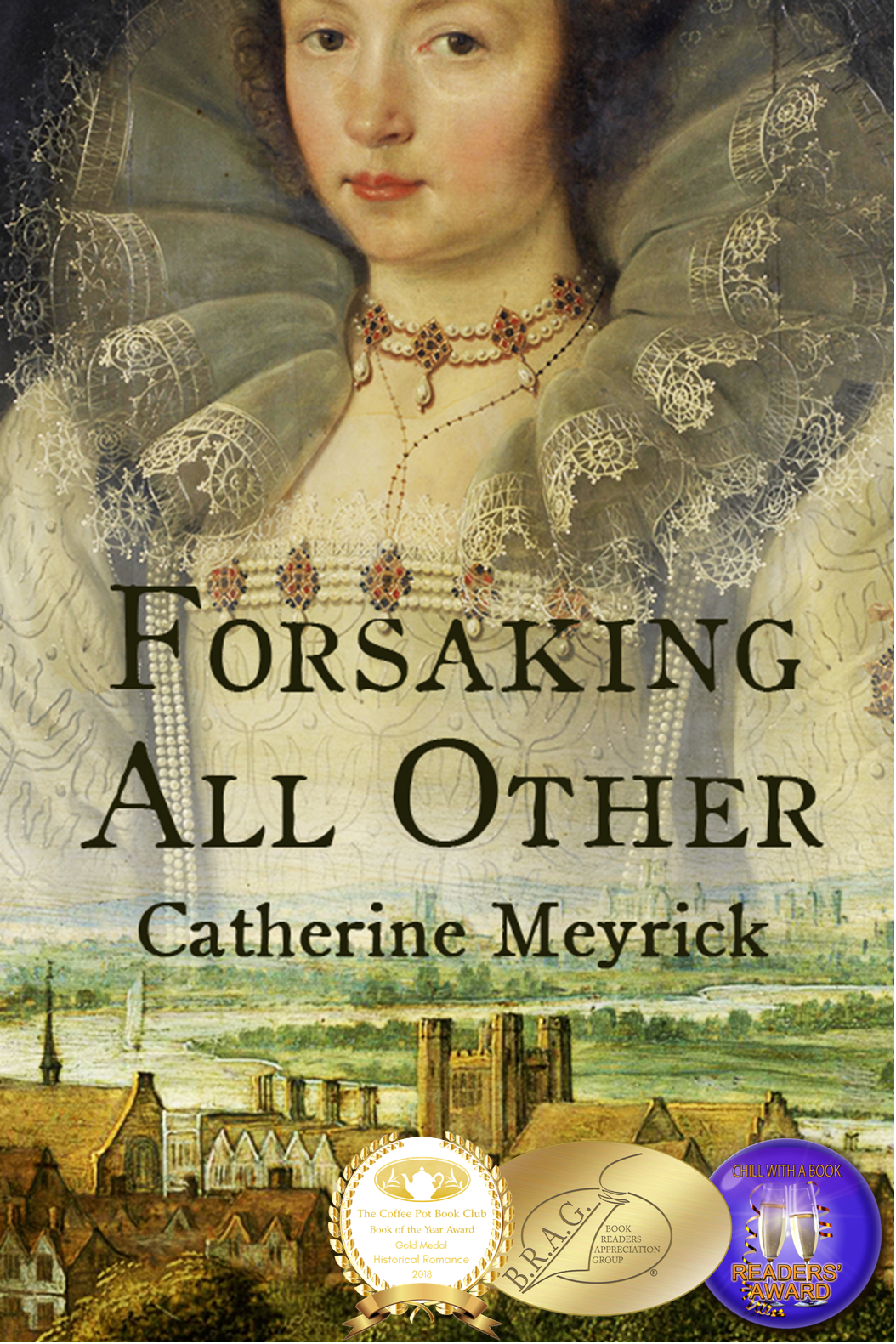
CM: Forsaking All Other begins in 1585 and follows the struggles of a young widow and waiting woman, Bess Stoughton, who discovers that her father is arranging for her to marry an elderly neighbour. Normally obedient Bess rebels and manages to convince her father to allow her a year to find a husband with whom she has some hope of happiness. Bess’s domestic concerns are set against the background of simmering Catholic plots to unseat Queen Elizabeth, and the involvement of English forces under the Earl of Leicester in the Netherlands in support of Dutch resistance to Spanish rule.
Like The Bridled Tongue, the major characters are fictional but the timeline and background as accurate as I could make them.

4Q: You have expressed an interest in gardening. Do any ideas for writing come from your working in your garden?
CM: I like looking at the garden and seeing things grow and bloom but sometimes I get so caught up in other things that my garden survives under a regime of benign neglect. I put things in the ground and leave them to look after themselves, other than watering and occasionally weeding. When I need to prune, unfortunately, I often channel my mother who could turn a standard bush into a single stick. But my plants are hardy and they survive. I am particularly fond of fuchsias and hellebores.

So far, Alyce has been the only character with an interest in gardening. She has the time, the skills and the patience that I would love to have and, not forgetting, the assistance of servants for the more routine and backbreaking work.
I do find, though, that when I am on my knees weeding, the sunshine on my back, I can fall into almost a reverie. (Often accompanied by a male blackbird busy working about two feet from me, scratching in the dirt I have turned over.) It is at times like these that plot and character problems can resolve themselves or I have other bright ideas to enhance a scene.
4Q: I’m always interested in what other authors are reading. Your favorites?
CM: At present I am finishing the brilliant biography Thomas Cromwell: A Life by Diarmaid MacCulloch. I am also reading the 2020 the Booker Prize winner, Shuggie Bain by Douglas Stuart. It is an intense and grim novel set in Glasgow in the 1980s so when I need a break from it, I have been reading Taking the Waters by Lesley Sainty, the story of a sheltered but intelligent woman’s entry into fashionable society in Cheltenham in 1827.
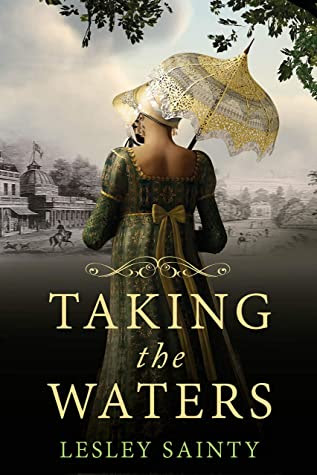
There are so many novels I love. Two of my favourite reads of 2020 were A Murder By Any Name by Suzanne M Wolfe, an Elizabethan murder mystery that was suspenseful, humourous and compassionate, and This Is Happiness by Neill Williams which was set around the arrival of electricity in rural village in Ireland. This is something of a coming-of-age novel and a nostalgic look back to a way of life that was passing. The greatest joy in reading this novel was its gentle humour and the pleasure of being enraptured by the storyteller’s voice.
The book that altered the way I viewed fiction was The Wide Sargasso Sea by Jean Rhys, a novel taking inspiration from Charlotte Bronte’s Jane Eyre but giving a voice to Rochester’s ‘mad’ wife. I read it twice in two days.
My favourite books include Gone with the Wind by Margaret Mitchell; Here Be Dragons by Sharon Kay Penman – the story of Joanna, illegitimate daughter of King John, who married Llewelyn, Prince of Gwenydd (north Wales) in 1205; and the much-loved Australian classic Harp in the South and its sequel Poor Man’s Orange by Ruth Park. These two novels follow the fortunes of the Darcys, a struggling working-class family in Sydney just after World War 2. There are a number of other writers whose new books I will automatically read. These include C J Sansom, Donal Ryan, Laura Purcell, Rebecca Mascull, Barbara Erskine, Tracy Chevalier and Cryssa Bazos.
4Q: When you are feeling most creative, where will we find you writing and what habits can you share with us.
CM: These days I have a desk in the living room at the back of the house. It’s beneath a window so I can stare out at the back garden when I need to think. I used to have a room of my own at the front of the house but about five years ago my husband started working from home and he needed that space. It works pretty well because we are home alone on weekdays, the house is quiet and we are working at different ends of the house. I am good at ignoring distracting noises anyway.

I used to try to start the day with a walk or a swim at the local pool but Covid put an end to that and although restrictions have now eased here, I haven’t gone back to it as my current routine is working well. These days I try to get up earlier than the rest of the household and get straight into the more creative writing before I am distracted by anything else. I aim to do at least three to four hours most days. I have my most productive days when I do this. When I have finished, I have a ride on an exercise bike and I find that I often mull over what I have been writing while riding. The benefit of a stationary bike is that you don’t have to worry about other traffic. I leave research, the writing of blog posts and social media until the late morning or the afternoon. Then there are days when I am completely inspired and do nothing but write all day barely stopping for meals. It is on these sorts of days that, occasionally, a new character I hadn’t planned on arrives and makes him or herself critical to the story. It doesn’t happen often but when it does, it is absolutely brilliant.
4Q: What’s next for Catherine Meyrick, the author?
CM: I am revising my next novel, currently called ‘Unspoken Promises’ which is based on a period in the lives of one set of great-great grandparents on my father’s side. It is set in the years around 1880 in Hobart, Tasmania. Both were the children of convicts – Harry Woods had been born in Fremantle in 1834, four years after first settlement of the Swan River colony and Ellen Thompson in 1858 in Hobart. Their story emerged as the result of my own genealogical research and was basically unknown until I uncovered it through my family history digging about ten years ago. It is a story of very unVictorian Victorians who belonged to the lower end of the social scale where life was a struggle and middle-class virtues not much regarded.
The story touches on such issues as secrets, family ties, poverty and the struggles of unmarried mothers. I am hoping to show just how hard life was for these people, women in particular. While I would describe it as a love story, encompassing not only romantic love but a mother’s love for her children, this time it certainly doesn’t fall into the standard definition of a romance.

I am also doing some reading for the novel after that which, once again, will be set in the late Elizabethan period and look at the lives of recusant women. My ideas are very preliminary at this stage but I would like to show something of their steadfastness in their faith and the way Catholic families coped in this dangerous period.
4Q: Anything else you’d like to share with us?
CM: Thank you, Allan, but your questions have been comprehensive and interesting. Thank you for inviting me onto your blog.
**My pleasure, Catherine. You’ve been a most gracious guest and I hope this won’t be your last visit.
Excerpt from The Bridled Tongue.
(Copyright is held by the author. Used with permission)
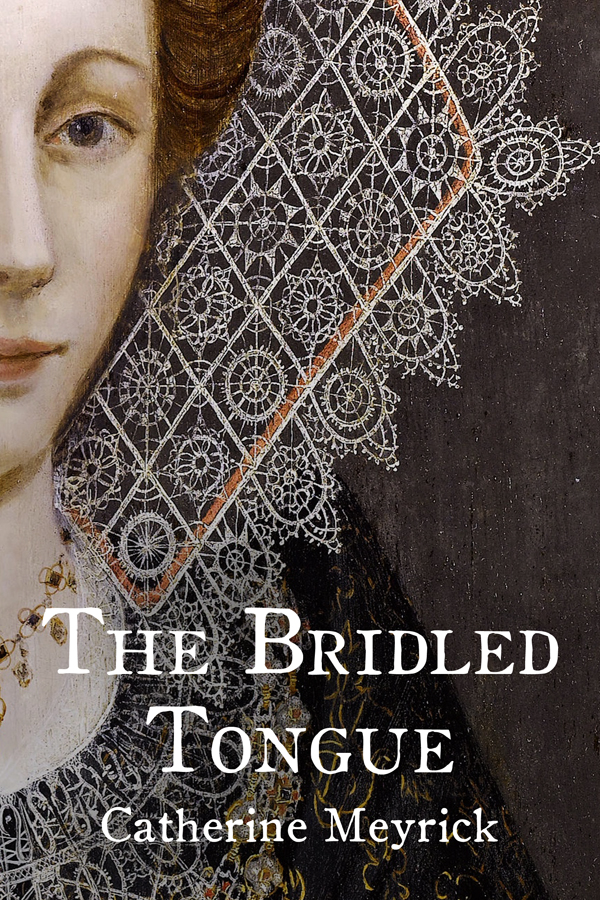
Alyce paused at the head of the stairs and tugged at her new square-necked doublet. She brushed her hands across her partlet, borrowed from Isabel and of delicate embroidered lawn. Squaring her shoulders, she followed her mother down to the hall.
She was aware of Granville’s scrutiny as soon as she entered the room. He watched her walk towards him. She could read nothing in his face and hoped her own face was as guarded.
He bowed courteously. ‘Mistress Bradley, Alyce.’
Both women curtsied.
Her father stood beside Granville, looking exceedingly pleased with himself. ‘Alyce, Master Granville wishes to speak with you.’
As her parents moved to the other end of the hall, Alyce said, ‘Master Granville, please sit.’ She indicated the settle beneath the window overlooking the street. She sat, ensuring a distance between them, and tried to ignore her parents pretending an intense conversation at the other end of the room.
‘Alyce.’ He paused.
For a ridiculous moment, Alyce thought that he was as uneasy as she was.
‘As you are aware, your father has suggested that you would make a suitable wife. I am—’
Alyce’s eyebrows shot up. ‘My father suggested it?’
‘Perhaps not so directly. He made me aware that he was seeking a husband for you. And I know that it is beyond time that I married. It seems to me, from our recent acquaintance, that we might make a reasonable match.’
It was not the most elegant, nor courtly, of proposals but Alyce knew that she would have despised him if he had claimed he was suddenly smitten with her.
As she sat in silence, Granville continued on, describing his manor and the household there.
Alyce lowered her eyes to her hands in her lap. So close, she found herself acutely aware of him as a man. Beneath the brocade doublet, pinked to show the bright silk lining, she could sense the strength of his broad shoulders, his muscular arms. Her downward gaze took in his strong hands crossed with scars, his broad wrists. She forced herself to look towards his face. He looked to be around forty. His eyes were grey, deep creases at the corners. Ruddy, weathered skin, dark close-cropped hair. His lips were firm, not fleshy, above his neatly trimmed beard. His nose was crooked; broken how many times? The flaws in his once-handsome face somehow made him more appealing.
Silence stretched out between them.
Granville was staring at her, an eyebrow raised. ‘Do you consider your skills are sufficient to the task?’ He spoke with the patience of someone repeating an obvious question, which no doubt he was.
‘Skills?’ Better to have him think she had misunderstood than that she had not been listening to him.
‘The skills you learnt from the late Lady Faulconer in the management of a large manor.’
‘I have never managed a manor.’
‘But you learnt the necessary skills when you were with her.’
Alyce paused, blinking quickly. She supposed she had. ‘Ay, though Lady Faulconer was always at my shoulder. Hers was an elderly household. When servants died, she had no wish to employ and train younger people to her ways, so over time many tasks fell to me.’
‘You can cast accounts?’
‘I can. My ledgers always balanced.’
‘Ledgers can be made to balance even by those with poor arithmetic. Say you were to add one hundred and ninety-three to two hundred and fifteen?’
‘The answer would be four hundred and eight.’
‘And divide it by three.’
Alyce paused. ‘One hundred and thirty-six.’
‘Double it.’
‘Two hundred and seventy-two.’
‘Subtract ninety-seven.’
Alyce frowned with concentration. ‘One hundred and seventy-five. Is that correct?’
‘I have no idea,’ Granville laughed, ‘I gave up at the addition.’
Alyce grinned. In that moment the thought of a life spent in this man’s company seemed a not unpleasant prospect.
‘Were you involved with any aspects of the management of Lady Faulconer’s wider manor lands?’
‘Not to any great degree. My skills are in household management including ensuring meat was cured or salted for the winter, stores got in. I oversaw the dairy and cheesemaking. I can card and spin wool as well.’
‘And you have your skills in physic. You would understand the workings of the body and the balancing of the humours.’
Alyce shook her head. ‘My lady would not permit me to read any of her texts concerning that, nor would she explain it to me. She said it would be beyond my understanding. I use those remedies I know will work.’
‘I will not stand in your way of reading whatever you wish, short of seditious tracts.’
‘I would not know where to find such things.’
‘It is safest not to know,’ he said. ‘Up until now, my manor and household have been managed by my sister, Cecily, but she is ailing and in need of care herself. My sister is very dear to me, and I would expect my wife to treat her as a sister.’
Alyce nodded, wondering what this sister was like, what she would be taking on beyond a husband she barely knew.
‘We are agreed.’
Alyce said nothing in reply—he was not asking, merely stating an accepted fact.
Granville frowned. ‘The proposition displeases you?’
‘Nay, but marriage is a serious step. I have been given less than a day in which to make up my mind. I know nothing of you.’
‘You are right. We both know each other only by repute. Would you like longer to consider the matter?’
It was not Granville’s fault she was being hurried into marriage by her father. ‘Nay, I believe even if we waited half a year, my decision would be the same.’
He stood. ‘Your father and I will now beat out the details of the dowry and jointure. Once the documents are ready for signing, we can plight our troth.’
As Granville walked across the room towards her parents, Alyce thought they might as well have been discussing the sale of livestock. It would not have surprised her had he asked to examine her teeth and run his hands down her legs.
Thank you, Catherine, for being our guest this week. Wishing you continued success with your stories.

For all you fantastic visitors that wish to discover more about Catherine and her writing, please follow these links:
Book link
Social media
Website Twitter Facebook Instagram Pinterest
or
Website: catherinemeyrick.com
Twitter: @cameyrick1
Facebook: CatherineMeyrickAuthor
Instagram: catherinemeyrickhistorical
Pinterest: catherinemeyrick15

January 9, 2021
Author Diane McGyver of Nova Scotia, Canada.
I was recently invited by The Miramichi Reader to review Diane’s latest novel – Northern Survival. It was a compelling story and I enjoyed it tremendously. You can read the review HERE.
When you visit Diane’s website, you’ll find this:
“Writing feeds my soul, fills my heart, keeps me wild and gives me freedom few other occupations can give. Why would I do anything else?”
Diane has graciously accepted my invitation to be our featured guest this week. A 4Q Interview.
Biography
Diane McGyver write stories; sometimes they’re short; sometimes they’re long, very long, 160,000 words long. She lives in Nova Scotia on the East Coast of Canada. Her people have always told stories, so it’s no surprise she carries on this tradition, sharing their stories and telling her own. Some of her best memories are sitting around a campfire or on the tailgate of a truck and shooting the breeze, listening to stories of family and friends. They’ve not only inspired her written stories, but some of the characters in their stories have made it into hers.
4Q: When we visit your website, we find a wonderful collection of fantasy novels. What inspired Northern Survival and the other romance titles?
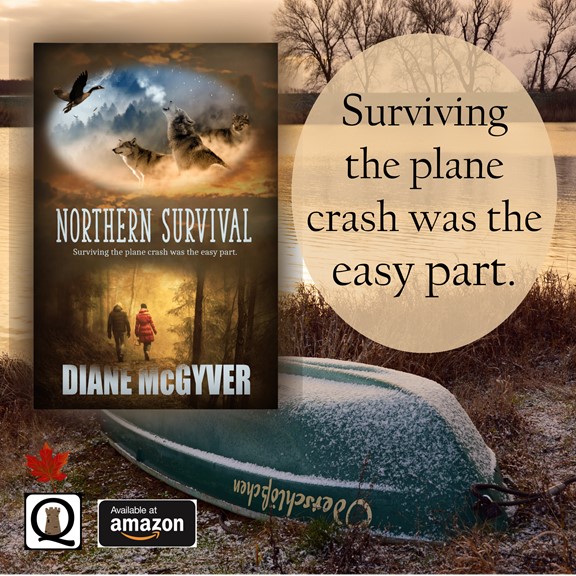
DM: While I’m a fantasy-writer at heart, there were several stories begging to be told that didn’t fit that genre. Some stories nagged at me for years before I wrote them down. Others, such as “Northern Survival”, came to me in mere seconds, and the need to record them was stronger than writing my fantasy series.
I also believe stories that include romance as an added feature appeal to me greatly. I enjoy seeing the interaction between would-be couples and their struggles to become one. While my fantasy novels are all about forces trying to conquer one another, mystical creatures, magic and adventure, there’s a lot of romance going on. The attraction (or lack of) between characters often drives them to do things they wouldn’t otherwise.
This romance weaving through stories is what I loved most about “Star Wars” and the “Indiana Jones” movies. It kept me turning the pages of “The Wizard’s Ward” by Deborah Hale and “Under the Same Sky” by Genevieve Graham.
4Q: Please tell our readers what to expect when they pick up their copy of Northern Survival.
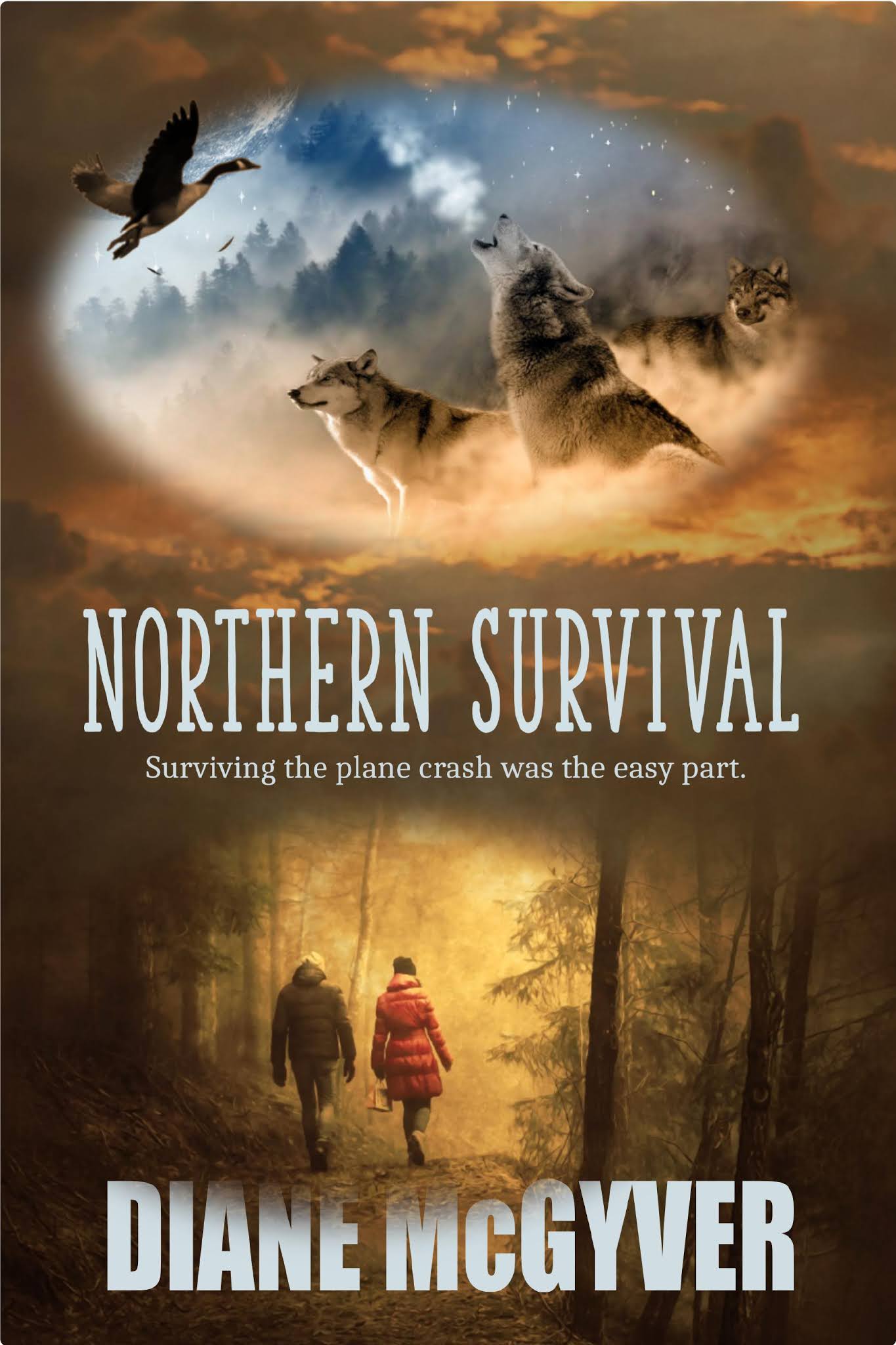
DM: From my personal knowledge of the book and from what others have shared after reading it, readers will expect a fast-paced story they could easily read on a rainy weekend. It’s a story about survival and while I didn’t intentionally provide tips on how to survive in the woods, readers have said they had learned a few basic things. I guess because I grew up surrounded by woods, these things are second nature to me.
Readers will find two characters, Olive and John, who challenge each other at every turn until they find common ground, put aside their differences and work together. I worked hard to provide snappy, realistic dialogue between the characters, one that not only slowly revealed their hurts and wants, but their sarcastic sides. I’m naturally a sarcastic person, always looking for that one line to bring a smile to someone even when the situation is serious.
Here’s what one Amazon reviewer wrote: “Thoroughly enjoyed this book……. kept me on the edge the whole way. What a great story showing the strength you can exhibit when necessary. Loved the progression of the feelings of the characters. Shed a few tears near the end……. will remember forever.” ~ Judy Greene
Another reviewer wrote this: “It is not all hardship as moments of humour and a thawing of hostilities bring out the best in both Olive and John.” ~ Sally Cronin
4Q: Please share a childhood memory and/or anecdote.
DM: Unlike many I’ve talked to, including my many siblings, I remember a lot from childhood. I was an adventurous soul, always running away from the housework my mother had planned for me and to my brothers and male friends, who hiked into the woods to fish, build forts and hunt. I was into everything, curious to see what the experience would feel like. Living in a small neighbourhood surrounded by woods and making frequent trips to our camp in the community in which my father was born and raised that took me deeper into the words and onto the Atlantic Ocean, provided many opportunities for adventure.
I recall one summer while staying at my father’s ‘hometown’, we hadn’t yet had our own place to stay. This was in the mid-70s. My uncle offered up his place, which was a long building divided into two halves. One part was a tool shed that may have once housed a horse, and the other side was one large room crammed with all sorts of stuff he had gathered over the decades. Paths were left open to walk around the room, and amongst this stuff were a few make-shift places to sleep. I think only one was a real bed, a double bed. My parents slept in that. I slept on a flat surface, as did two of my brothers, who made the journey with us.
My uncle didn’t live in this space. He had a camper, what people today would call a tiny home. It was a wooden structure on wheels, no more than 8 feet wide and 16 feet long. Inside was a small wood stove for heat and everything he needed to be comfortable. Given his age (he was born in 1911) and mine (born 1967), if he lived anywhere else besides his parents’ home (which was across the dirt road), I never knew it.

The memories of staying in my uncle’s large building of sundry items are scattered, but some parts are remembered with a smile. The smells inside were unique. It wasn’t bad, just unique. A small counter surface provided space for preparing meals and my parents made a make-shift table to eat at.
What I recall most was waking up. While I slept in a room at home with three other siblings, it was still a room. Waking up at ‘the camp’ meant sitting up and stretching my neck over my uncle’s collection of stuff to see if anyone else was awake so we could get to fishing or boating. For a kid, knowing my family was just a neck stretch away was neat. I’ll never forget the feeling. It helped that along the front of the building, which faced east, was a long string of windows, and the sun shined in early in the morning to light-up the place.
To me, it was magical. I imagine others would think it horrible, but, oh, the wonderful times we had there because we had a place to stay that kept us warm and dry.
4Q: The latest release is a new novel from the Romance collection – the Salvation of Mary Lola Barnes. Can you give us a brief outline and what inspired this story?

DM: This might sound crazy. Many things inspire me to write a story. Sometimes it’s an idea, something unique I’d never heard of before or an image. This time, I was inspired to write a story because of one word: salvation. That’s right. I wanted to write a story with that word in the title. I had thought, “Who needed salvation today?”
Not grappling over the answer for too long, I used the first scenario that popped into my head. Being a woman nearing 50, I thought I’d give a try at writing a story with a main character that age. I needed a story to write for NaNoWriMo 2015, so without hesitation, I jumped in and “the Salvation of Mary Lola Barnes” was recorded.
I wanted a ‘plain jane’ name as the first name, and something adventurous for the middle name. It represents who Mary is: she seems plain on the surface, but under all that properness is a woman who loves adventure.
The story opens with Mary lamenting over the last piece of her 50th-birthday cake. Personally, I don’t consider my age and I often forget it. However, I’ve known some women who have a hard time getting over milestones such as 50. I’ve seen some almost lose their minds turning 30. I don’t understand because in my mind, age is nothing more than the number of trips made around the sun.
Mary falls between the two extremes. While she doesn’t want to be 20 again, she doesn’t want to believe the best years are behind her. After living more than two decades in a routine of raising kids and keeping house, she’s looking forward to enjoying her new-found freedom of an empty nest. This sets off little changes that eventually turn into big ones. These changes expose the flaws in her life. While she’s thirsty for change, her husband is not. He’s happy with his routine. Their ideas clash and create problems for Mary, who wants her husband to be a willing participant in their marriage.
4Q: Can you tell us about your Castle Keeper series.
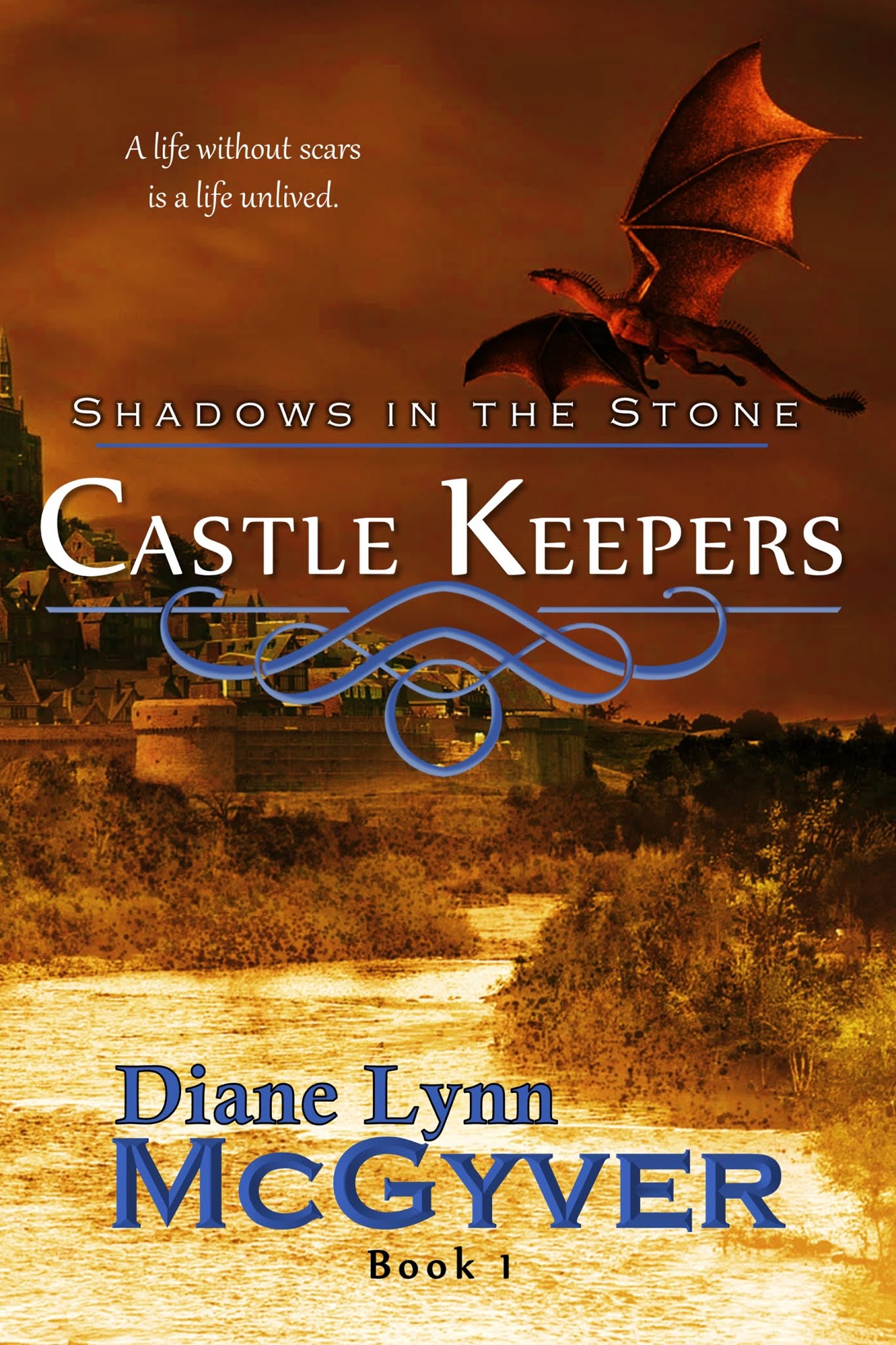
DM: The Castle Keepers started in the early 1980s when I was still in high school. It wasn’t called that back then, but the book I wrote at that time turned out to be the first book in the series, “Shadows in the Stone”.
The series follows a few main characters (Bronwyn, Alaura, Isla and Liam), several supporting characters (Tam, Rhiannon, Kellyn, Farlan, Lindrum, Euan) and a cast of other characters. They each have their own problems and as the series progresses, most of these problems will be solved.
Tying all these characters together is the town of Maskil on the Shulie River. Decades beforehand, a disgruntled wizard tried to overthrow the ruling lords (which are appointed, not assumed by blood). While he failed, he escaped and has been working ever since to gain a foothold in the town, disrupting society and pitting one race against the other to cause chaos. He believes in the philosophy of divide and conquer.
While this story takes place in a fantastical realm called the Land of Ath-o’Lea, readers from the Maritimes may recognise a few place names. I love repurposing things in real life and in fiction. That means places in the story like Shulie, Wyvern, Titterton, Quoddy and Glen Tosh exist in Nova Scotia. I stumbled upon Moonsface while doing genealogy research in Newfoundland. The place no longer exists, but it did in 1825. Now it exists in my books.
I grew up on Atholea Drive, Cole Harbour, NS, and to pay tribute to that wonderful place tucked into the woods, my fantasy world became the Land of Ath-o’Lea.
4Q: And your Mystical series?

DM: In 2018, our writers’ group presented members with a challenge: write a novel during our meeting season (from September to June). We were going through the three acts of storytelling and each month, we were to bring a sample of the next chapter or next act. I was already writing a novel (Revelations Stones, book 3 in the Castle Keepers series) that needed to be finished by the end of the year, but decided to commit a half hour each day to this new book.
Brainstorming for something to write about, I thought about doing a novella about a character in the Castle Keepers series. This would provide interesting backstory material and allow me to get to know the character better.
I chose Willow. This woman was a stranger to me, and she had forced her way into the Castle Keepers series, appearing in a very short scene. She left a great impression, and she rattled around in my brain for about two years, whispering secrets in my ear.
Once I chose to write about her, the land she lived in was revealed: Knavesmire. This mythical place existed beyond the myst. When I created the map for Castle Keepers many years ago, I had unknowingly created a river near that area called Blue Myst River. That’s how stories fall into place for me. I often don’t plan it; it just appears.
A nagging feeling told me Willow was not human. But she wasn’t dwarf either. I kept digging into my memory and after a few pages of writing, I discovered her race. She was newlin. It turns out, this is a cross between a dwarf and hauflin, one that was created naturally after many generations of interbreeding.
I learned quickly that this was not going to be a novella as planned. It was going to be a 100,000-word novel and the first of four books. The Mystical series became a series within a series. If readers don’t read it, they will still fully enjoy the Castle Keepers series. But if they do read it, they’ll have insight into some of the history and events not covered in the main series.
Cothromach, the ruling city in Knavesmire, is modelled in the style of the lost city of Atlantis. There’s a centre mound where the most important people in society live. It is surrounded by water, connected by bridges to a band of land. Another ring of water is followed by a second band of land, then another water barrier. Crossing this water course leads into the Outlies.
A dangerous myst that few survive separates Knavesmire and the Land of Ath-o’Lea.
4Q: Favorite authors or novels?
DM: One of my favourite books that I haven’t read since I was a child is “M for Mischief” by Richard Parker. The mixture of kids discovering magic in an old oven and baking resurfaces in my thoughts often. I’d love to write a story that kids decades later remember fondly.
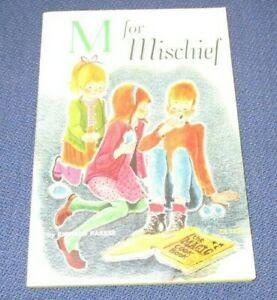
As an adult, one of my favourite books is “Call of the Wild” by Jack London. Others that rate high are “The Da Vinci Code” by Dan Brown, “Wizard’s Ward” by Deborah Hale, “The Winds of Change” series by Mercedes Lackey, “One” by Richard Bach and “Impact to Contact – the Shag Harbour Incident” by Chris Styles & Graham Simms (not a novel, but a fascinating read).
4Q: Tell us about your writing room and habits.
DM: While I wish my writing room was a secluded location, tucked into a place where I could gaze out the window onto the shoreline of the ocean, it’s not. I do all my creating in a small space in the corner of the kitchen where interruptions happen a lot. However, I am close to the teapot. One day in the not-too-distant future, I will have that window overlooking the ocean.

My favourite time for writing is the morning, just after I rise and my thoughts of my novel are still fresh in my mind. When I am in the zone of writing a story, the last thing I think about when I fall asleep is the story. Scenes, characters and dialogue playout in my mind and solve problems that I may be stuck on. The first thing I think of when I wake is my story and what I want to write that day. I write for an hour in the morning to capture this energy.
I commit to writing at least 500 words a day to a new novel or short story. Once winter sets in, I’m a 2,000 to 5,000 words a day writer. While I’m writing one novel, I’m usually editing another, one I wrote months or years before. I do what I call Leap Frogging: write A, write B, edit A, write C, edit B, write D, and so on. This way, I’m always producing something new, and I’m always reviewing something that has been written at least four months earlier, giving time for that story to ripen before I take a second look at it.
4Q: Anything else you’d like to share with us?
DM: My hobbies are many, and they often inspire scenes in my stories. I write about these hobbies and share information about my books on my blog (https://dianelynnmcgyver.com). A few of the topics I write about include hiking, boating, camping, gardening, growing food, herb preservation, history, genealogy and baking (with recipes).
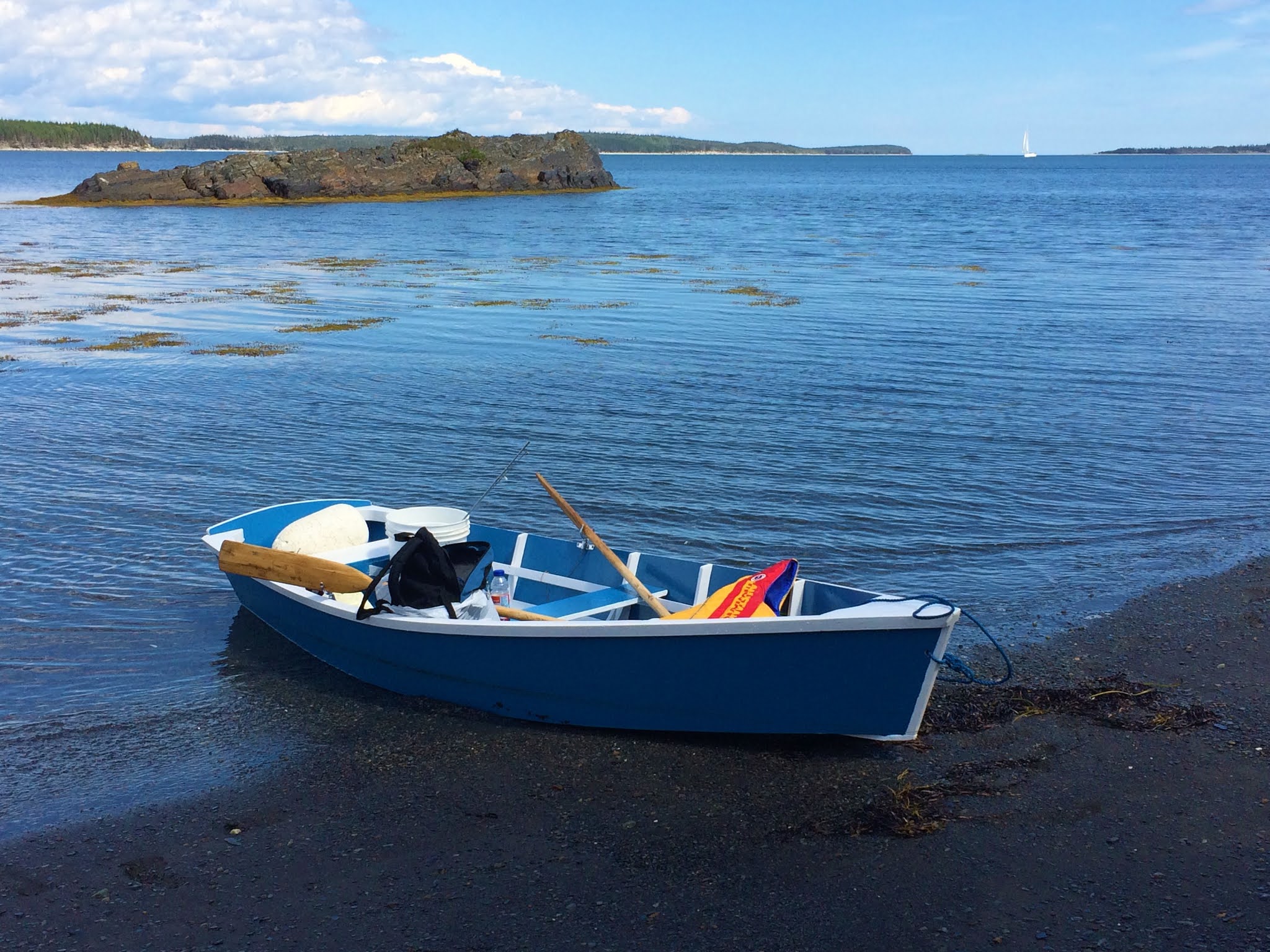
When I want to get away from it all, I launch my boat and paddle around Liscomb Harbour for the day where I meet interesting people, find lost buoys, gather shells and stones, strengthen my self-reliance and collect my thoughts.
A sincere thank you to Allan for inviting me onto South Branch Scribbler.
You’re most welcome, Diane, and thanks for being our guest. Wishing you continued success in your writing journey and finding the window to your ocean.

For anyone wanting to discover more about Diane and her novels, please follow these links:
The best links to connect with me and my books are:
Diane McGyver author page (https://dianelynnmcgyver.com)
Amazon Author page (https://www.amazon.com/-/e/B0083WOOHW)
Author Instagram page (https://www.instagram.com/dianemcgyver)
Author Facebook page (https://www.facebook.com/profile.php?...)
While you're here, why don't you take a peek at our new contributor's page - The Editor's Edge with Karin Nicely. Questions and answers about editing. Go here.
January 2, 2021
Six Great Books – Six Great Authors.

Good bye 2020.
We won’t shed too many tears watching 2020 fade into our past. As dismal as some days have been, there are always great stories to get us through the tedium of isolation.
6GB-6GA is back. The Scribbler intends to offer our readers some recommendations twice a year.
If you are looking for new authors or their latest work, check out these lists from previous posts.
#1 – Access Point by Thomas Gabbay.

Let’s start with a story that really grabbed me from page 1. I read this novel in one sitting. It’s addictive. Terrific story from an accomplished author.
The following is from Goodreads:
"A psychological thriller with compelling explorations of memory, obsession, and identity. Readers will find it an intriguing and entertaining read." - BlueInk Review
When American art student Mia Fraser is brutally murdered steps away from her London house, she shares with computer genius Ula Mishkin, it leaves the socially inept scientist heartbroken. When it becomes clear that Detective Sarah Boyd is making no progress in solving the crime using traditional methods, Ula creates a software program that allows her to reach into her dead housemate’s memory in order to reveal the identity of the killer. Entering the dead girl’s life through the echo of her memory, Ula learns that sometimes the past is best left undisturbed.
Read my review of Access Point on The Miramichi Reader HERE.
Read Tom’s 4Q Interview on the Scribbler HERE.
#2. Montbelby Angela Wren.
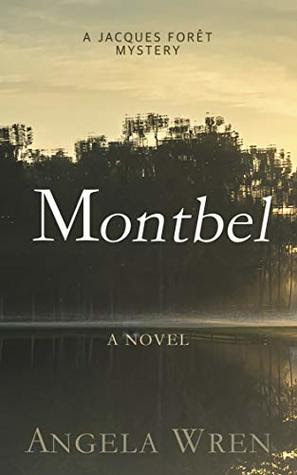
This is Angela’s third instalment in her captivating Jacques Foret series and my third recommendation on the 6GB posts. I love this series. If you want to dig into a cozy mystery, this is a good one to follow.
From Goodreads:
A clear-cut case?
A re-examination of a closed police case brings investigator, Jacques Forêt, up against an old adversary. After the murder of a key witness, Jacques finds himself, and his team, being pursued.
When a vital piece of evidence throws a completely different light on Jacques' case, his adversary becomes more aggressive, and Investigating Magistrate Pelletier threatens to sequester all of Jacques papers and shut down the case.
Can Jacques find all the answers before Pelletier steps in?
Read the complete Jaques Forêt Mystery series:
Messandrierre (#1)
Merle (#2)
Montbel (#3)
Angela's first two novels in this series has been featured in two previous 6GB-6GA and has also been featured on the Scribbler with a 4Q Interview. Please go HERE.
#3. Death Between the Walls by Alexa Bowie.
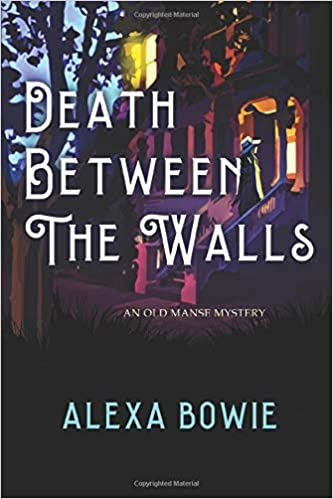
Another cozy mystery from an established New Brunswick author writing under a pseudonym. Delightful beginning to what we believe will be a popular series. I enjoyed this novel.
From Amazon.ca:
Not much happens in the tiny town of Newcastle. At least, not until Emma returns from Toronto to claim her inheritance: a stately arts and cultural center. Since taking up residence in the center, Emma Andrews has gotten used to finding things just a little off-kilter. Her tenants, for example, are convinced she may have killed the town manager (but they still love her). The new town manager is determined to have her evicted (but he would still love to date her). And there’s the little matter of a coyote – or is it a wolf? – that shows up at the most interesting of times. Trouble in the form of a dark secret gathers momentum, swirling around her like Dorothy’s tornado, and threatens to carry her away. The arts and culture center holds a link to the past, together with a crime that just won’t remain hidden. Helping Emma avoid disaster are a couple of handsome police officers, a new-old best friend, her feisty namesake aunt, and a Manse filled with eccentric, talented artists. Emma has to get to the bottom of this. Will her new friends be enough to keep her safe? Or will Emma’s Manse become her final resting place?
Read the review from The Miramichi Reader HERE.
#4 Deficiency by SC Eston.
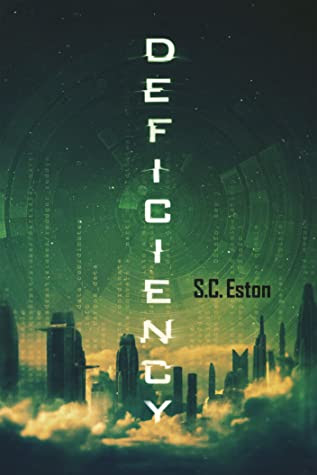
I’m a huge fan of Eston’s writing. He weaves terrific fantasy tales and Deficiency is his debut venture into science-fiction (sci-fi) It did not let me down. I can’t recommend it highly enough.
From Goodreads:
How far would you go to keep your dreams alive?
On the arid planet of Garadia floats Prominence City, an oasis of abundance and technological marvels. For Keidi and Artenz, life is good. Each day, they work hard to fulfill their role in sustaining Prominence. In return, they share an existence without worry or want, their every need attended to by the ruling corporations, their lives enhanced by a virtual reality accessible with a simple thought.
But when a dear friend of Keidi suddenly goes missing, their idyllic existence begins to crumble. And when they start asking questions—the wrong questions, questions that reveal cracks in Prominence’s perfect image—the powerful corporations of Prominence take notice.
Now, Keidi and Artenz must choose: do they stay in Prominence and risk the wrath of the corporations, or do they take their chances and run for the Lowlands, a bleak and mysterious place hidden beneath Prominence—if it even exists at all.
Steve has recently been a guest on the Scribbler previously, as well as being featured on 6GB twice with his first two novels. His latest visit has him chatting about Deficiency and how he came to write the novel. Go HERE.
#5. Last Fall’s Hunted by MJ LaBeff. (Book #2 in the Last Cold Case series)
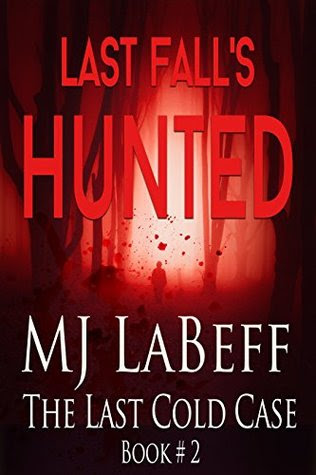
MJ has been a popular guest on the Scribbler and her thriller stories have unique and captivating detectives, as well as intriguing story lines. Another successful series by an accomplished author. Book #1 in the series was recommended in a previous 6GB-6GA.
From Goodreads:
Homicide Detective Rachel Hood and FBI Agent Nick Draven hunt for a serial killer harvesting kidney from his victims’ corpses during the fall equinox.
A dismembered body is found in Kill Buck Wildlife area in Snug Harbor, Ohio, and the discovery of two more victims within a twelve-mile radius suggests a sadistic killer's return. Homicide Detective Rachel Hood, a psychic empath, joins forces with psychic FBI Agent Nick Draven to hunt for a killer who harvests kidneys from his victims' corpses. But, why strike twenty years later? They draw a parallel between his first crime and the recent murders. His first victim was murdered in 1991 during the rare occurrence of the super harvest moon, an event that will happen this year and fuel his blood lust to kill again.
Time is not on their side. Hood and Draven have five days to find the killer before the next full moon rises and another teenage girl is found murdered and missing her kidneys.
Drawn into a hunt for a serial killer, more deranged and dangerous than any other she’s tracked and captured before, Hood finds herself unable to control her psychic empathy, and Draven must work fast to help her catch this human hunter before she becomes his next casualty.

MJ was recently a returning guest on The Scribbler and she chats about her writing. If you missed it, please go HERE.
#6. Blindshot by Denis Coupal.
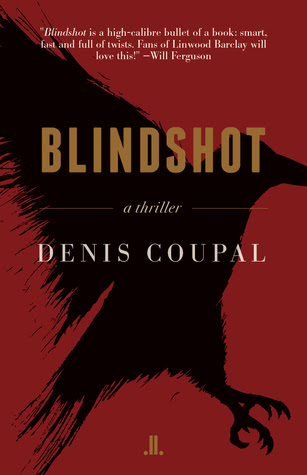 This novel has garnered many great reviews and after reading it, it is clear why. A marvellous debut novel from an author to watch for.
 From Goodreads:
When financier Paul Carignan is hit by a stray bullet and killed in Beaufort, Quebec, the town leaders seem reluctant to investigate. Running out of patience, his teenage sons, Jack and Noah, take justice into their own hands -- and kidnap the locals they suspect are responsible. Things soon erupt and the boys find themselves besieged in their house with their captives. In the middle is their mother, Catherine, not sure which side to take. For Tom 'Brooder' Doran, Beaufort's Deputy Chief of Police, the investigation has just gotten very complicated. One thing's for sure, this sleepy town is in for a fiery shakeup.

Denis has also been a guest on the Scribbler and he chats about his novel. If you missed it, please go HERE..
The splendid review from The Miramichi Reader is HERE.
By only having six books featured, it leaves quite a few novels that I haven’t mentioned that deserve recognition. Treat these as Honourable Mentions:
The Ginseng Conspiracy by Susan Bernhardt. Goodreads. SBS visit.
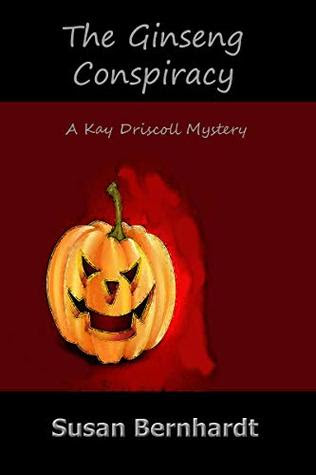
Sisters of War by Lana Kortchik. Goodreads. SBS visit.
Northern Survival by Diane McGyver. Goodreads 4Q coming January 16th.
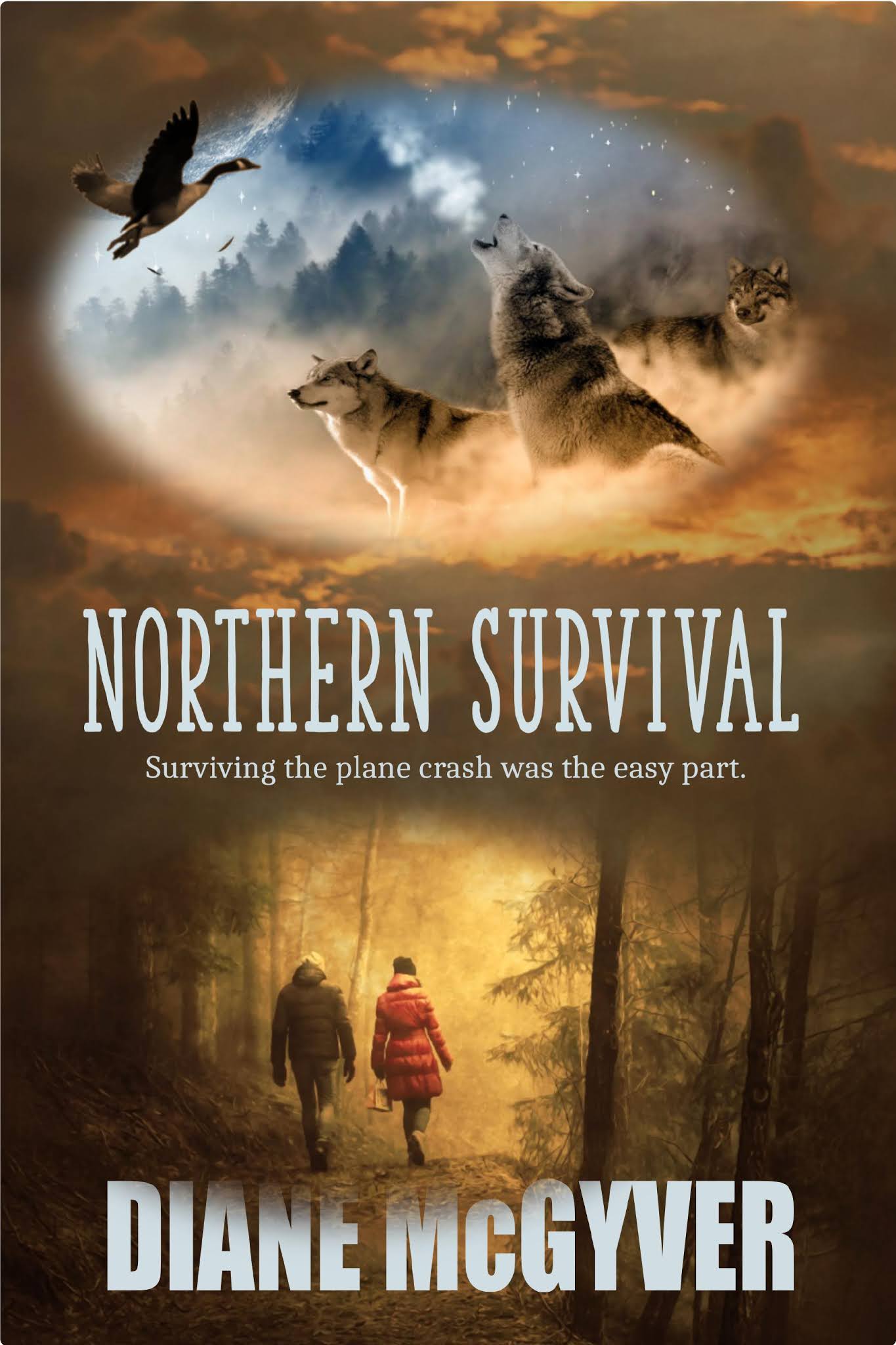
Danny and MJ by Suzanne Bourgeois Casey. Goodreads. SBS visit.

Thank you for visiting. I‘d like to hear your book recommendations. Please Tell Us About Your Favorite In The Comment Box Below.
December 26, 2020
Poet, Artist and Photographer Dave Skyrie of Grand Barachois, NB.

I had the pleasure of meeting Dave at a Frye Festival event held in Shediac, where he and many other authors and poets were invited to read their works. An affable man, he was easy to talk to. I’ve since followed him on Facebook and admire his many photos and works of art.
He has kindly agreed to a 4Q Interview and is sharing several of his photos and works of poetry.
Dave has a degree in Arts from Concordia University in Montreal. Dave started writing in the late sixties and has published in a variety of Canadian literary journals. Dave is a member of The Breach House Gang, a writers’ group in South East New Brunswick. Dave started painting in 2000, after a one year stay in Brazil and works in a variety of media. Dave has participated in over 50 solo and group exhibitions. Dave's current work is an exploration of abstract forms and textures on larger canvas. A past member of Galerie 12 in Moncton, the AAAPNB (Assoc. of Acadian Artists of N.B.) and the Writers Federation of New Brunswick, Dave has also published 2 books of poetry. Dave's work appears presently in both private and public collections in Canada, US and Europe. He resides in Grand Barachois, N.B.
4Q: Before we discuss other creative endeavors, please tell us about your poetry, your inspirations.
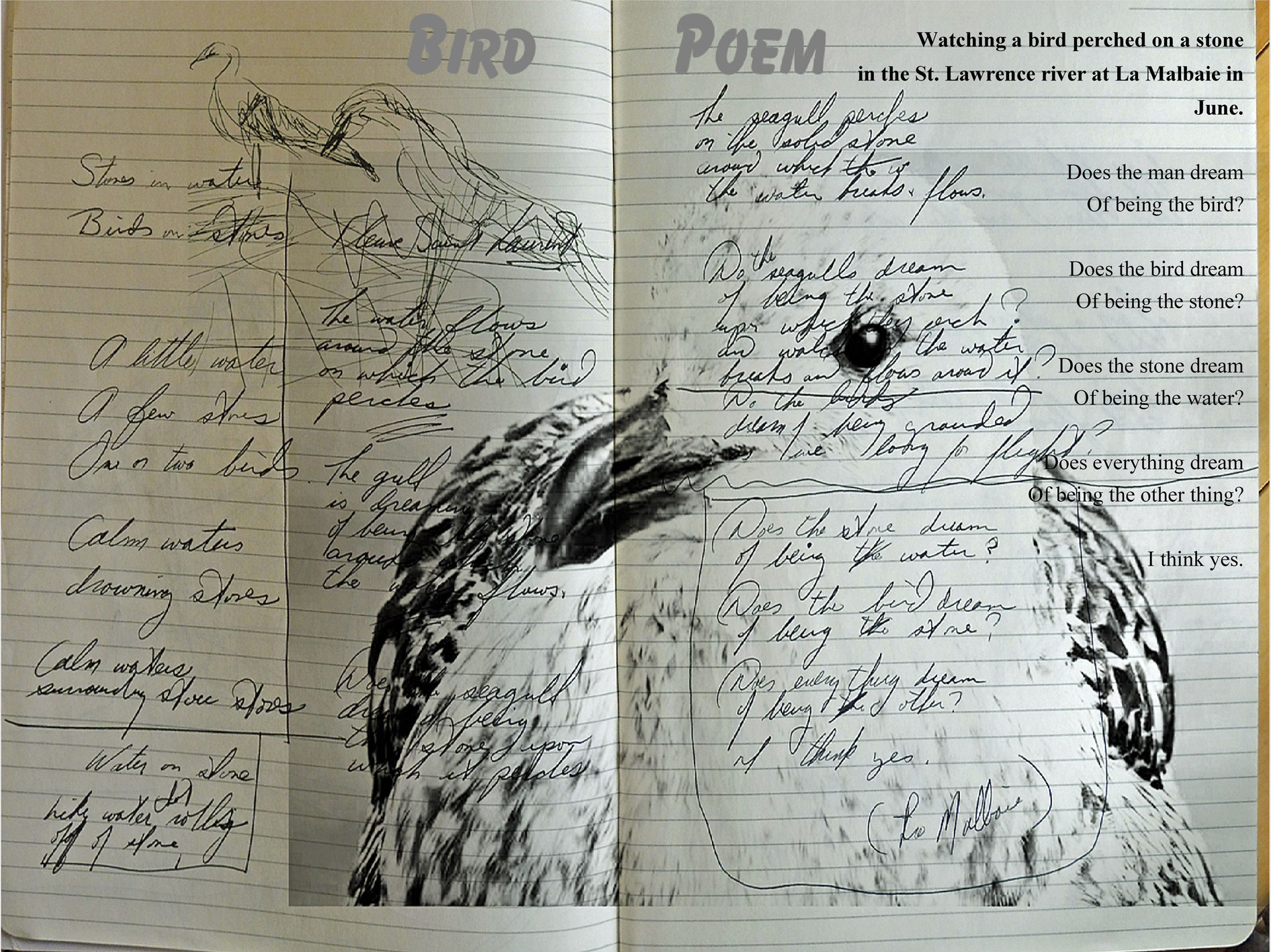
DS: Writing poetry, for me, began in the late sixties when I attended CEGEP in Montreal. It was all due to the encouragement of one of my teachers, Sister Simpson. I was excited about songs being written during this period by people like Leonard Cohen, Eric Anderson and Bob Dylan. They were writing lyrics that really resounded in me and I tried to write this kind of stuff as well. Sister Simpson encouraged me to continue. Then the following year at Concordia University I encountered Al Purdy and the poetry bomb really went off. He taught me to find my own voice. We corresponded for quite a long time and I believe he has been the largest influence in my writing.
4Q: You have a unique style in your photos of nature and our natural surroundings. My understanding is that you trained as a photographer in Moncton. Under whose direction and what is the key element you look to capture?
 All photo copyrights owned by Dave Skyrie.
DS: I studied photography for one semester at the New Brunswick Community College in Moncton under Tom Barnes. I have been learning it on my own ever since then. I think that in my photography one of the key elements I strive to capture is the sense of the passage of time. The unique moments that will not come again. The person in an out of the ordinary pose, the bird between the perch and flight…difficult to explain really. Haven’t got it yet.

4Q: As with all new guests, please share a childhood memory and/or anecdote.
DS: May I offer this poem about memories as an early teen in Montreal instead?
(Copyright belongs to the author. Used with permission)
Not yet paved
There used to be kneeling
there used to be harsh
and difficult words
in Latin and High Masses
with songs and sermons
so long and boring that
they would drive boys
into Sunday morning pool halls
where church money was spent
on 2-for-a-nickel cigarettes
and pinball.
Now the kneeling benches
have been taken out
to accommodate
the Bingo games.
There used to be a giant tree
on Cobourg Street in Montreal
which marked the end
of the English neighborhood
and the start of the French
and the dark woods behind
where we name-called and battled
not really knowing or caring why
only that this was what was done
by English and French kids
on a Saturday night
in Montreal after a Leafs-Habs game
no matter who won.
There used to be girls.
A lot of girls. Girls
at soda fountains, girls
on the streets and in pool halls, girls
in packs at parks checking out
the boys playing ball, girls
in school looking cool
girls at dances on Saturday nights
all lined up on one side of the hall
daring the boys to ask them to dance
the boys nervous and unaware
that the girls almost never
ever said no.
There used to be friends,
Marty, Rheal and Robert
porch sitting on summer evenings
drinking cold Cokes in green glass bottles
the green glass bottles we believed
to be the mark of the better Cokes,
the American Cokes, and in those days
everything seemed better from the States
especially the music that drifted in
and out of the static late at night
between the hysterics of the DJ's
and the Wolfman howling
into the Montreal air
on battery-hungry transistor radios
a kind of avant-garde scratchy rock-n-roll
that was never heard on any of our own stations
But most of all there used to be
time, time on my side almost unlimited
time, piles and piles of it enough
time it seemed for a lifetime, for bicycling
or running or simply slowly walking down
all those roads, those dark roads
that were not yet paved.
4Q: Lets discuss your paintings. You started painting twenty years ago after a visit to Brazil. How did that influence you? What mediums do you favor?
 Copyrights owned by Dave Skyrie.
DS: A bit more than a visit, I spent about a year and a half in Brazil at the age of fifty. It opened my eyes to a different culture, an abundance of color and the need to see and create new things. I think this is when my artistic vision kind of changed from photography (being happy with a copy of something) to abstract painting or actually feeling the need to create something that has not existed before. An exciting revelation for me.
I believe that art is an argument that the artist is constantly having with himself and that art is found in the process of creation and not in the end result or product. The surface of the painting needs to reflect this argument, this tension that exists between artist and canvas. This is why the surface of a painting, the texture and form, the strokes and scratches are more important to me than the finished painting itself. The give and take of the paint, the layering on and the scratching off of paint, this is where the art is to be found.
I rarely begin a painting knowing the direction it will take. Creativity comes best to me when the mind is empty. With no reference save for a preferred palette of colors and a huge amount of trust in instinct, the painting begins with a single stroke or splash of color. There are no rules, there can be no formula.
4Q: Of all your creative endeavors, is there one that gives you the most pleasure? And why?
 All photo copyrights owned by Dave Skyrie.
DS: I think equal pleasure is derived from all of them, painting, writing, photography. They are all solitary endeavors. Writing requires the least equipment and takes up much less actual space than the other two. The poems are usually started and “first-drafted” in my head and so do not even require pencil or paper. Same with painting. Nature often presents me with patterns that I can begin to work out as paintings in my mind. I think this is why poets and painters often have that far away look in their eyes. Sleeping? No. Working things out.
4Q: Are your paintings and/or photos, books of poetry on display and available for purchase?
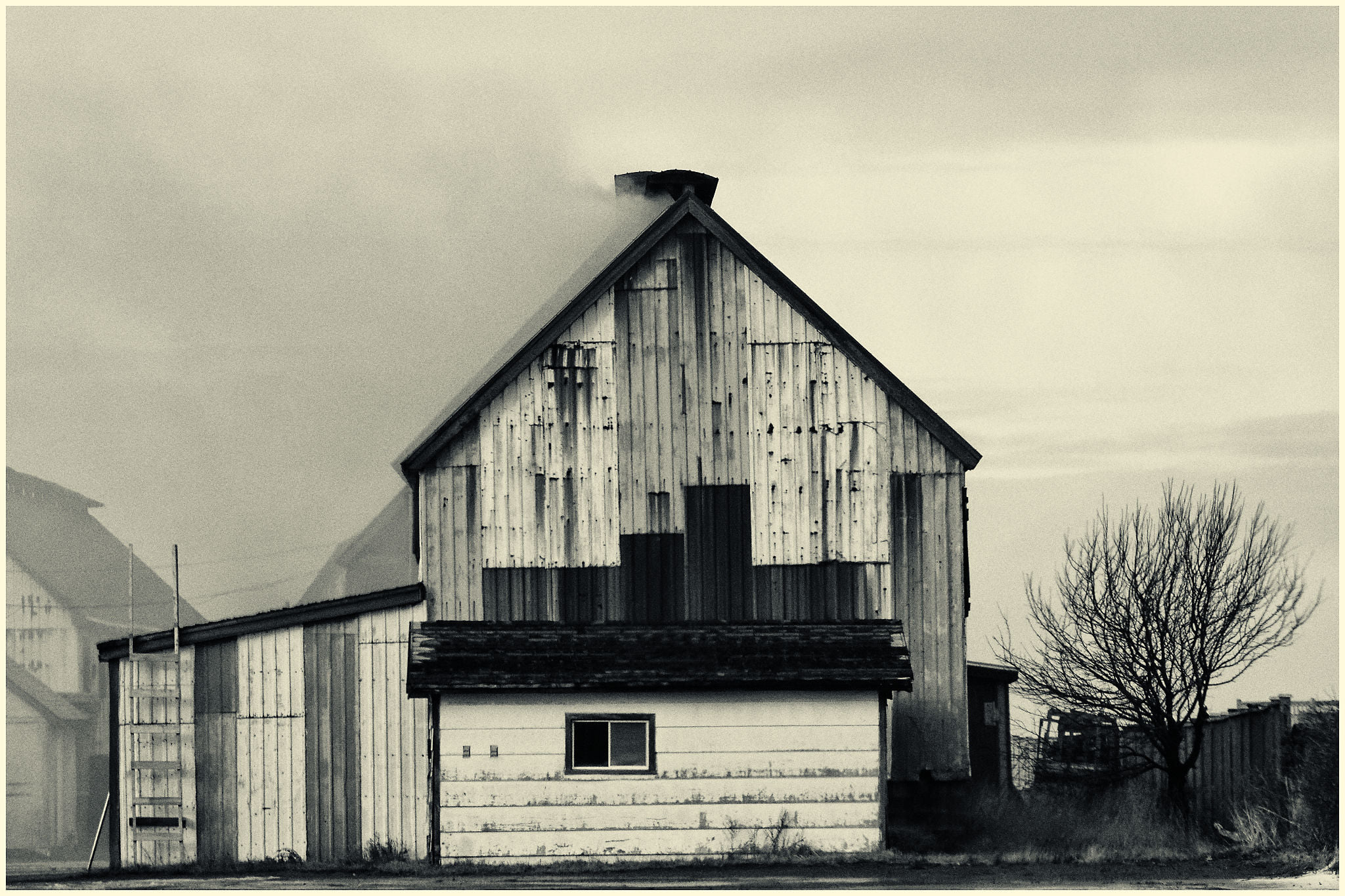 All photo copyrights owned by Dave Skyrie.
DS: My artwork can be seen at Galerie du tchai, in Richibucto, at the gallery at Société Culturelle Kent-Sud (SCKS) in Bouctouche, at The Oak Haus on Botsford St in Moncton, and in my studio which is open to the public in Grand Barachois, NB. Poetry is available via my web site and on-line via Lulu.com.
4Q: Anything else you’d like to share with us?
DS: Thoughts of the day in no particular order.......04-01-17
(Copyright belongs to the author. Used with permission)
1.
Is it just me
Or are there
Far too many
Actors named
Ryan these days?
Very confusing.
2.
That Trivago guy
Has no rhythm.
3.
Why is Tony Clifton
Such a forgettable name?
4.
This painting is way too much
Like Romeo's piece ... but I like it.
Do I keep it......paint over it?
5.
Is this what Leonard meant
When he wrote,
"Love me because nothing happens."?
6.
I haven't had
a decent thought in days.
Thank you, Dave, for being our special guest this week. Wishing you continued success and fulfillment with your pastimes.

For you wonderful readers wanting to know more about Dave and his work, please follow this link.
On the web at www.skyrie.ca

December 19, 2020
Santa Clause Interviews. From the North Pole.
Good news: Hey, it's almost Christmas again.

Bad news: Due to the pandemic and the craziness of 2020, there will be no new interview with Mr. Clause this year.
Santa's world at the "Pole" has been turned upside down and the preparations for distributing gifts must follow strict guidelines for visiting people's homes has kept him the Mrs. and all the elves exceptionally busy.
But don't worry fans of Mr. Clause and SBS. We are digging the past interviews from our archives and we present those to you this week for your enjoyment.
The original Interview from December 2014 - read it HERE.

The second interview from December 2017 - read it HERE.

The third interview from December, 2018 - read it HERE

And last year's interview - December 2019 - read it HERE.

It's been an awesome year for the Scribbler. So many great guests. So many wonderful authors, artists, photographers and musicians. My heartfelt thank you for being our guest, for making the Scribbler and interesting spot to visit.
Anyone wanting to take a peek at the five most popular guest visits in 2020, please follow these links:
#1 - Thriller Author MJ LaBeff of Arizona - 1910 page views to date - Wow! Read her interview HERE.
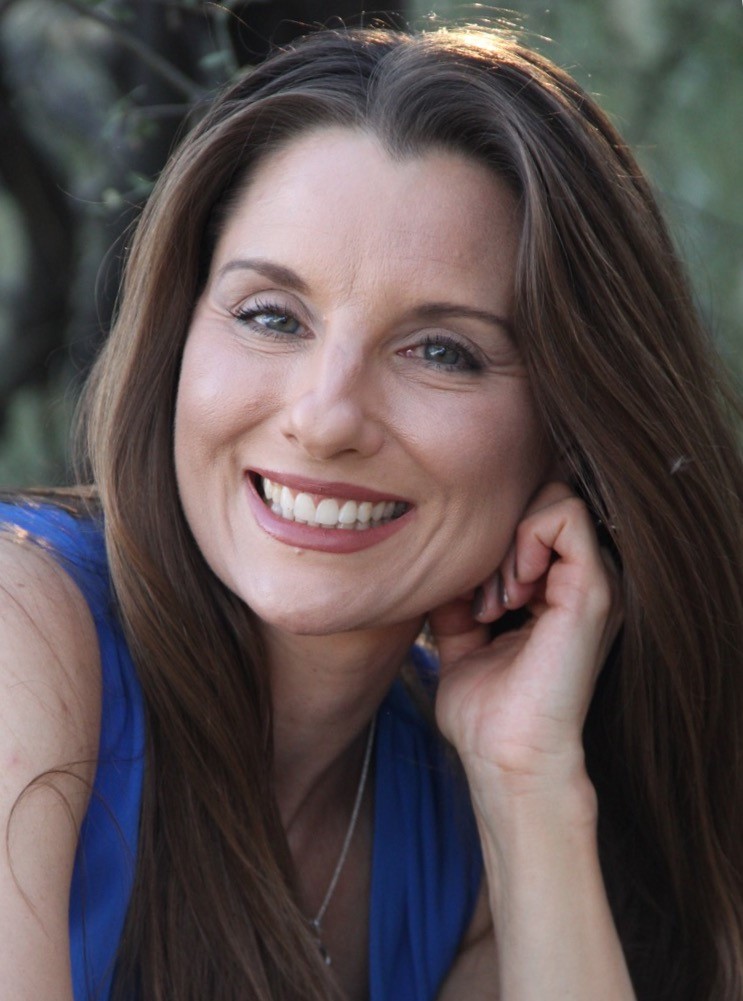
#2 - Author Jeanette Winsor of Belize City, Belize - 639 page views to date. Read her interview HERE.

#3 - Author Jennifer Irwin of Los Angeles - 566 page views to date. Read her interview HERE
#4 - Author Heather McBriarty of Saint John, NB - 503 page view to date. Read her interview HERE.

#5 - Editor & Song Writer Karin Nicely of Florida - 499 page views. Read her interview HERE.
Thank you guest authors and artists. Thank you to all my visitors.
Watch for these terrific guests coming in the New Year:
Author, poet & visual artist David Skyrie of Shediac, NB

Author Guglielmo D'Izzia of Italy.
Author Diane McGyver of Nova Scotia.
Author Ian McKinley of New Brunswick.
Author A J Alexander.

Merry Christmas to you all. Happy Holidays. Happy New Year.

Please be kind. Be safe.

And, last but not least - the real Mrs. Clause!
December 12, 2020
Mi’kmaq Artist Tara Francis of Elsipogtog & Fredericton, NB
When you visit Tara’s Facebook page, you will read this:
“Sharing the sacred light of my teachings through my creations, in Love and Gratitude.”
On the Galerie Sans Nom website, Tara’s introduction is as follows:
Tara Francis is a visual artist of Mi’kmaq and Irish descent from Elsipogtog First Nation. In her work, she is reimagining traditional Mi’kmaq teachings with a contemporary sensibility. Tara’s practice includes silk painting, acrylic, and porcupine quillwork. She facilitates workshops, participates in artist residences, and continues to exhibit her work locally and internationally.
It's a pleasure to have Tara as our special guest this week. One thing Tara and I have in common, is our roots in South Branch, therefore making her visit to the South Branch Scribbler even more unique. She has kindly agreed to a 4Q Interview and is sharing photos of her unique and colorful art.
Tara is a Mi'kmaq artist from Elsipogtog First Nation, she considers herself a contemporary artist, influenced by traditional techniques and teachings, bringing them forward in new forms and forums addressing the Indigenous voice in a modern world. She considers her work part of her own personal spiritual journey, a blessing to the Wabanaki people, honouring the symbols and traditions of her ancestors.
In 1999 she began attending the New Brunswick College of Craft and Design, where she received her Certificate of Native Art Study and Fine Craft Diploma in Surface Design, going on to obtain an Aboriginal Creation grant from Artsnb in 2003 to build a body of work inspired by the Mi'k maq Petroglyphs of Kejimakoojik NS. Her work has been featured on APTN's Wabaanakik documentary series, as well as various arts columns and magazines. Her pieces are scattered from Hawaii to Africa, Germany to the Middle East. She has been in countless exhibits including one at Harbourfront Centre in downtown
Toronto and the 4 Winds one Breath Gallery in Rhode Island. More recently featured in the Keepers of the Light Indigenous Arts Exhibit in St. John's,Newfoundland, as well as being one of 3 participants in Artslink's 2019 Cross Cultural Residency, who’s work is traveled to various venues across the province. one artist in the contemporary exhibit of New Brunswick artists, Circadian curated by Amy Ash. Over Covid Tara has managed to continue her work, through online gallery opportunities and a very recent Opening at the Gallery on Queen. She is proud to have been a successful applicant of the
CollectonArtsNB acquisition program, and two of her pieces have become a part of New Brunswick’s permanent art collection. Tara has shared the tradition of Porcupine Quill art, through workshops and demonstrations throughout Atlantic Canada and Maine. As well as instructed at NBCCD.
4Q: Before we talk about your art, Tara. Please expound on the following quote of yours from the created here website. “I am very aware that as aboriginal artists we have a responsibility to pass on our traditions and keep expressing them in a new way. We are not a dead people who exist behind glass in a museum.”
TF: Hi Allan, thank-you for having me as your guest on the Scribbler.
As I mentioned in the statement above, the responsibility to preserve and pass on tradition to the generations to come, lies within each knowledge keeper amongst us. The past is an important part of who we are as Indigenous artists. However to study the crafts and images left by our ancestors is only a part of the bigger picture, there must be a deeper understanding of the strife and hardship experienced by our people at the hands of a colonial agenda, and how attempted cultural genocide and continued systematic racism, has carved a deep dark hole in the timeline of our evolution. As Indigenous artists, we have been given a platform to react and express these atrocities, while at the same time, rummaging through what is left of our rich culture, to identify truth of who we once were as a strong proud race, and bring that into the light so we can stand proud once again. Transforming the traditions of the past into the voice of the future. We now live amongst many cultures, here in the 21st century with access to all the knowledge and skills the world has to offer, as artists we can expose ourselves to different mediums and methods of creating and expressing ourselves, in doing so, reaching a global audience and educating them with, our own voices, as to who we are and where we stand in a modern world, holding in our hearts our inherit truths.
4Q: Your art is not only special in its conception, Tara, but even more exceptional in the materials you use. Quoted as an ancient art, quillwork is not something new. Please tell us about this process and what inspired you to use this original and natural medium.
TF: The Mi’kmaq people were coined by early explorers as the Porcupine People and included detailed descriptions of the craft in the earliest of journals. Quillwork along with Wampum, eventually began to be replaced with the more readily available glass beads acquired from the French through trade for beaver pelts and other trade goods. I was first exposed to quillwork, through my aunt, who made beautiful finely worked quillwork boxes and panels, then I learned the birch bark insertion method while a student at the New Brunswick College of Craft and Design, enrolled in the, then called Native Art Study program, which has now evolved into Indigenous Visual Arts. Although I familiarized myself with the technique at that time, it would still take me a few years to truly embrace the craft. After trying my hand at beadwork and other crafts, I was still seeking something deeper and truer to our ancestors. In the summer of 2004 is when I took on the endeavour of attempting my first Quillwork basket, having plucked my first porcupine, provided by the unfortunate end that porcupines tend to meet on New Brunswick highways. I acquired birchbark that had once been gathered by my then late grandfather, Anthony Francis. This artform made sense to me, as a visual artist, with my strongest medium having been painting, in the past, I wanted to express myself in a similar way through quills, and I began to explore the craft further and see where I could take it. I started creating butterflies and then eventually took it another step into sculptural 3D form, when I made my first Turtle. Quillwork is not only something created with your hands, it is a spiritual act, in itself, once comfortable with the technique one can find themselves in a meditative type state, as the hours go by. This is evident in the many workshops I have taught, creating a safe circle for people to learn and relax, after a while it flows into an open forum where the participants feel open to express feelings and share stories, they may otherwise not feel comfortable expressing.
It also reinforces a inherit connection to the land, the act of gathering the birch bark, quills and sweet grass, offering tobacco as symbol of gratitude, this is all part of what goes into the piece you create. I border every piece I make, with a line of Sweet Grass as a blessing to the image I have created, making it a sacred statement to who I am as an Indigenous person.
4Q: You recently completed a major project, an art piece that took over 400 hours to complete. The turtle. Tell us about this amazing creation.
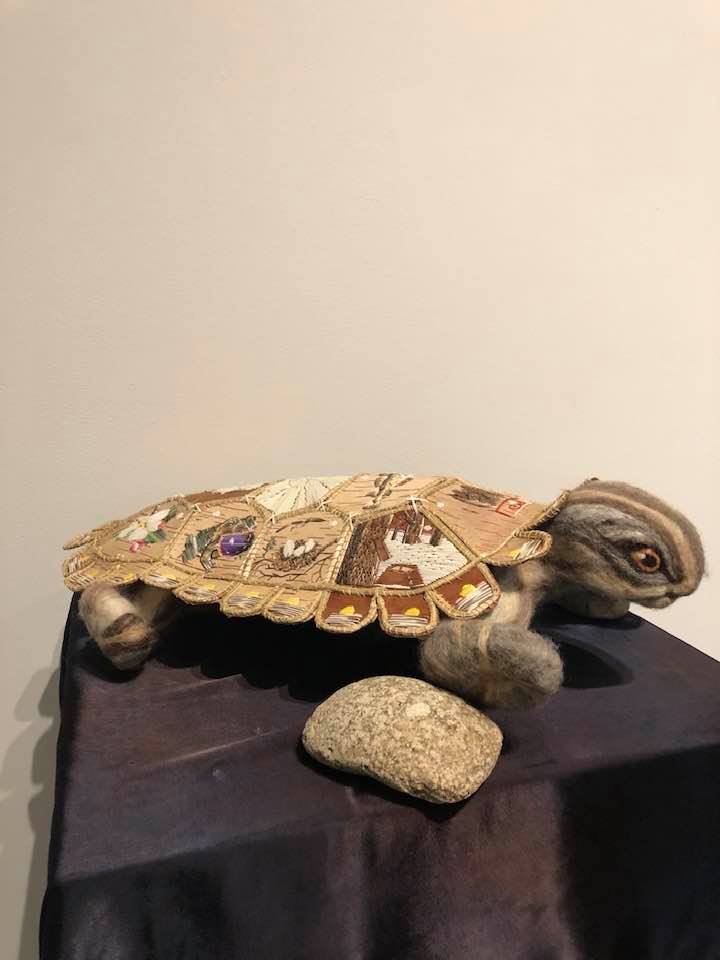
TF: It was at a Youth and Elder gathering in Alma, NB in 2011 while in a talk being presented by Water Protector/ Elder Doreen Bernard that I learned of the Seven Sacred Animal Teachings, a Pan Indigenous teaching, using the attributes of selected animals to teach of how to conduct one’s self in the world. They are as follows. Eagle – Love, Beaver – Wisdom, Bear – Courage, Kluscap (giant or hero)- Honesty, Wolf – Humility, Buffalo/Moose – Respect and Turtle – Truth. The truth Turtle holds is that of the Lunar Calendar, and how we would mark the changing of the seasons and natural cycles of the year. A Turtle’s shell, is divided into 13 sections, each one representing a particular moon cycle, the outer rim of the shell is divided into 28 smaller sections, the amount of days from one moon cycle to another, also a woman’s natural menstruation cycle, culturally referred to as her “Moon time”. I have always had a strong connection with Turtles and in learning this teaching was inspired to put aside all other projects, and work primarily on creating a porcupine quill turtle. This turtle was small and took me roughly 100 hours to create, it was featured in several exhibits and was my signature piece for several years. I always knew I wanted to take the teaching further and go deeper into the explanation, I even created a template I presented as part of a demonstration of quillwork, as part of the Beaverbrook Art Galleries opening of their new wing. I started the piece but was not satisfied with the size and it went unfinished.
In February of 2019 I was asked to submit an application to a new Cross Cultural Residency endeavour, created by Artslink NB, AAAPNB, and Mawi’arts, to bring together 3 artists, one representing the Indigenous community, one the Anglophone and one the Francaphone, we would work together in 3 communities to create our own pieces over a 3 week period. It was then that I decided to revisit my idea, proposing that I create the Turtle on a much larger scale. There was much research involved in discovering the Mi’kmaq’s own teachings of the 13 Moons, and learning the names of each moon, as to accurately represent each one as an image in each of the sections of the Turtle’s shell. I created a template and began with the Maple Sugar moon fittingly being the moon representing March, and I finished that section under the light of that very full moon. Over the 3 weeks of residency, I would build the foundation of the shell and complete eight of the 13 quilled sections of the Turtles back.

It would take me until August 2019 to complete the piece in its entirety along with thirteen name plates depicting the same images as on the shell along with the Mi’kmaq word for each, burned into birch bark. In total the piece took me roughly 500 hours to complete. It then went on to travel to several galleries throughout the province, with the other two artist’s pieces from the residency, ending its journey at the in Caraquet, in March 2020 where it remained for several months. The opening having been scheduled for the day everything was shut down due to the Covid pandemic. As things began to open it, the gallery opened its doors for limited times for the public to see the work, and a virtual tour was also available. Grandmother Moon Turtle as it came to be named, and another piece entitled Monarch, were both submitted to CollectionArtNB as part of their biannual acquisition program. In early July I received news that both my pieces were chosen to be a part of the province’s permanent collection, it is an honour and privilege to join these ranks, along with some of the top artists of New Brunswick. My Turtle will now have the opportunity to travel the provinces and First Nations’ schools and act as the teaching tool she was intended to be.
4Q: Please share a childhood memory and/or anecdote.
TF: In keeping with the theme of the day, I am inspired to relay an encounter I had when I was about 6 or 7 years old, whilst playing on a swing in the little woods of my Grandparent’s farm in South Branch (something yourself would be very familiar with Allan) On this particular day I was swinging by myself as my Grampy worked in the garden just on the other side of the trees, when a creature appeared out of the long grass behind me and started approaching me. I had never seen anything like it and I screamed, my Grampy came running with the garden hoe and I ran for the house, I later learned that it was a porcupine I had encountered that day. And in reflection many years later, after learning of what is known as “Spirit Guides” or “Familiars” I wonder if that little guy was a hint as to what would come, or were both of us unaware of the significance this little rodent would have in defining who I would become. It was also at my Grandparent’s farm as a little girl, that I discover my fondness for Birch bark, Granny would give me little scraps of it from the wood pile, I loved the tactile nature of it, the way it felt as I peeled the pieces apart, and the feeling of writing on it with pen, not yet knowing of its significance to my Mi’kmaq heritage or to my future endeavours.
** I remember your grandfather’s farm quite well.
4Q: Please tell us about your workshops.
TF: I have been sharing the traditional technique of porcupine quill work for many years, teaching in various settings. I have worked with Healing our Nations, at various Youth and Elder Gatherings in New Brunswick and Nova Scotia, I have traveled to Newfoundland on two occasions to share the craft. I held monthly workshops at the Fredericton Native Friendship Centre, I have taught youth in Elsipogtog, I held workshops out of my art studio in downtown Fredericton as well as been the Traditional Media Instructor for the Indigenous Visual Arts Program and the New Brunswick Collage of Craft and Design. I have traveled to various First Nations in NB to teach 3 week long courses in Quillwork as well as beading and wampum through an initiative organized by Mawi’art Wabaanaki Artist Collective, and traveled to the Arostook Band of Mi’kmaq in Maine, to share my knowledge as well, I know there are other that I can’t think of at the moment. As mentioned earlier, these workshops offer more than just the learning of the craft, but brings together a group, in a circle of spirit, safety and creation.
4Q: As well as quill art, you also are involved in silk dying, paint and do sculptural work. Which is your favorite and why?

TF: It would be impossible for me to pick a favourite, each medium feeds my spirit in different ways; Quillwork is my connection to my people and the land, the process has many steps, the work is very intricate, focused and meditative, involving several hours sitting in one spot. Silk painting also has a variety of steps in the process, from prepping the fabric to preparing the dyes, transferring the image, stretching the fabric, applying the resist, dying the fabric, rinsing and setting and Ironing. It is a very physical act, and immediate and permanent. I choose to work with silk for two reasons, one is it’s spiritual context, silk comes from the silkworm and is the substance used to make its cocoon therefore, in a spiritual sense it represents protection, protecting our spirits while we transform into our highest selves on our journey of life. Secondly, I use silk to express colour, each colour resonates a vibration, aligning to our chakra centers, triggering moods and healing emotions, not unlike the feeling one gets when seeing a rainbow. Silk is a vessel for achieving the richest and truest of colours that I wish to convey. My sculptural work is usually a combination of these other mediums, my way of pushing the bar and expanding an idea, taking it into a three-dimensional form. Painting and drawing are the foundations of everything else I do it is where I started my artistic journey. After a long break from making art, or a busy stent of silk or quillwork, I find all I want to do for a while is paint. It offers a nice break from the intricacy and many steps involved in my other processes and gets me back into the flow after taking a long break. My paintings are usually landscapes, and all my work is inspired by nature, and spirit. A little blurb on my business card sums it all up; Silk – to offer protection throughout transformation, Colour - to raise your vibration, Quills – to honour the ancestors Paintings – to reach for new horizons.
4Q: Anything else you’d like to share with us Tara?
TF: I have mentioned a few times, throughout the interview, the topic of spirit and connection to nature. Spirituality is at the very core of everything I create, not only as an inspiration, but in the act of doing as well. Creating art is a ceremony to me, the work I create is sacred, and I must be aware of the energy that I am putting into the piece. I must be grounded and let creation work through me, keeping a positive mind and calm and peaceful heart. An example of this is my silk scarves, of which I have made hundreds over the years. It is the stories that have come back to me from the owners, that have really touched my heart, they are not just kept as fashionable adornments but held sacred and have been used to give them strength and healing. Each piece of quillwork I create is bordered with Sweetgrass, one of the sacred medicines of my people, it welcomes in positive energy. Some of the pieces I have created address painful topics, and wrapping these images with sweet grass offers a prayer of healing. My first lesson, in college, about Indigenous art, was that art was not separate from life, but a part of it, a visual communication with spirit, expressing our hopes and dreams. It is my spiritual practices, as I work for balance in the physical, emotional, spiritual and mental aspects of my life’s journey.
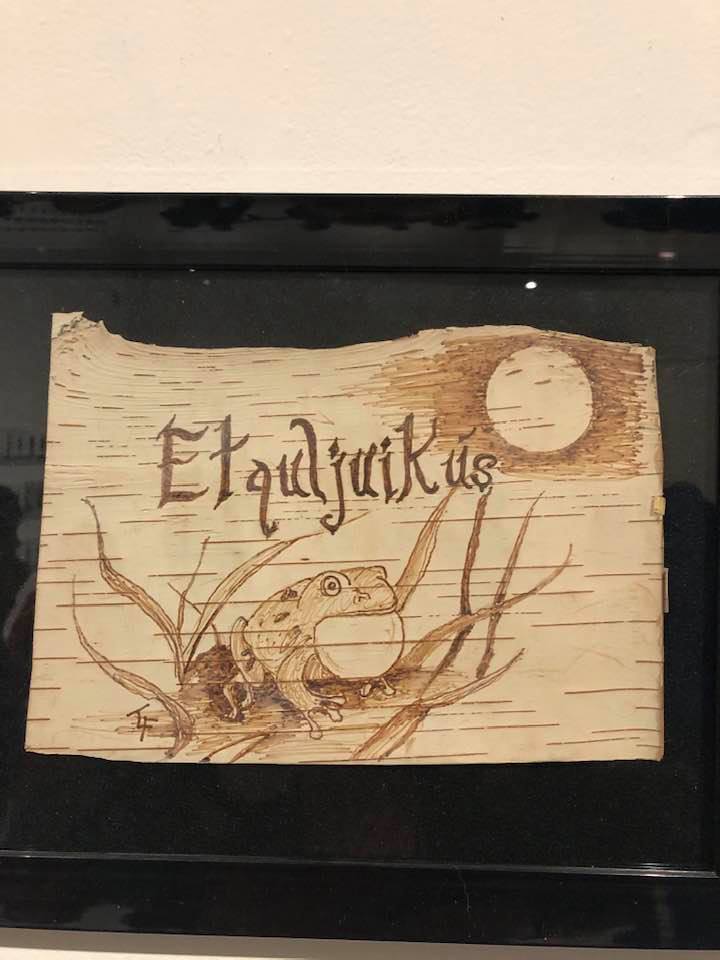
In closing I feel it is important to acknowledge the many teachers, mentors, guides and inspirations that have played a role on my journey, too numerous to name them all, but one very important one was the Late Elder Gwen Bear, my Native Arts instructor at NBCCD, her teachings from the Medicine Wheel and Spirituality are with me in every aspect of what I do, and I am so truly grateful and honoured for having known her. Other instructors such as Harriot Taylor, Sue Juda and the Late Rick Burns, played strong rolls in honing my skills as an artist, with adept attention to detail and mastery of colour, concept and quality. Sue Jenkins, my high school Art teacher, with her relaxed, laid back approach to teaching, making the world of art that much more approachable. Carola Knockwood who without her instruction on quillwork, I would not be where I am today. Last but not least I must mention the influence of my family members, most importantly, my dear, precious Granny, the late, Lucretia McLaughlin, her encouragement from when I was very young played a major role in who I would become, teaching me knitting and sewing, and even ordering the Mail-in art test seen on T.V. on more than one occasion, proudly hanging my little drawings up on the wall, with such pride. My Dad Stan Francis, who’s little caricatures drawn on napkins I would mimic in my own drawings, taught me more than he could know. My Metata, Mi’kmaq Grandfather, the late Elder, Anthony Francis, and his wood carvings of birds, and my Aunt Connie Nevin and her meticulous quillwork. And finally, my dear friend, the late Christine Cooper, who will never know how deeply she touched the heart of a little girl from South Branch when she moved there when I was six years old. Having worked with the New York Opera and the Muppets, namely as Miss Piggy’s hair stylist, with her larger than life personality, and kind heart, she opened my eyes to the bigger world, and helped a little girl from South Branch realize that she could touch the stars.
Thank you, Tara, for being our special guest this week. Wishing you continued success with your art.
Thanks again for having Allan, it was my pleasure.
For you readers interested in knowing more about Tara and her art, please follow these links:
https://www.facebook.com/tara.frncs https://www.mawiart.org/online - gallery https://www.facebook.com/galleryonqueen

December 5, 2020
Author, poet, songwriter Bill Arnott of Vancouver, BC.
I had the good fortune of meeting Bill as a member of The Miramichi Reader, an excellent review site owned by a previous guest, James Fisher (See James’ visit here.) Bill is a regular guest on TMR as a reviewer and a guest blogger.
Bill has been a Finalist at the ABF International Books Awards and Canada's WIBA Book Awards. His work is published worldwide. This is a quote from one of his 5-star reviews on Goodreads:
“You'll find yourself travelling through a range of emotions as one minute you're marvelling at the beauty of his writing, the poetic images, and the next you find yourself chortling at some funny, nay often wicked, observation of some character he has come across in his roving.”
The Scribbler is most fortunate to have Bill as a guest this week with a 4Q Interview and is sharing an excerpt from Gone Viking: A Travel Saga.
BA: Hi Allan, thanks so much for inviting me! I admire what you do at the Scribbler. And okay, let’s talk about Gone Viking: A Travel Saga. It’s travel lit—nonfiction—a memoir of my eight year trek around the northern hemisphere, following the routes of Scandinavian explorers. It’s proper armchair travel with personal adventures, a bit of history, and a lot of humour.
***Thank you for the kind words, Bill. Its great guests like yourself that makes the Scribbler so much fun.
4Q: As I mentioned in the intro, you’ve been a finalist in two book award competitions. Please tell us about this.
BA: Thanks, I’m enormously proud of Gone Viking receiving these awards: firstly, as Finalist at the Whistler Independent Book Awards and also as Finalist at the American Book Fest’s International Book Awards. These competitions recognize excellence in writing, content and aesthetics—in other words, well written, enjoyable books. There’s a quote stating that I write “with a journalist’s eye, a poet’s perspective, a songwriter’s prose, and a comedian’s take on everything else,” which I love and feel encapsulates my style rather well.
4Q: Please share a childhood memory and/or anecdote.
BA: At the risk of being indulgent, I’ll share a passage from Gone Viking in which I recollect a suitable childhood experience:
I was little. Maybe six. And I was a Viking. My tunic was a gunny sack, something you’d use for a picnic race but turned around like a garbage bag poncho, head- and arm-holes cut in the sackcloth. The waist was belted with a length of cord. I had a papier-mâché helmet with horns, a round shield and short sword—light wood wrapped in tinfoil. The overall look was pretty good as I recall.
We were arag-tag army, about fifteen people similarly attired, marching down Main Street as part of Vernon B.C.’s Winter Carnival—next to Quebec City, Canada’s largest. The parade route was a good long march given the length of my legs at the time, a mile or so through the centre of town. We shook our swords and howled at spectators, threatening pillage, none of which I understood, but found the loosely organized chaos great fun, particularly yelling at strangers, a thoroughly enjoyable activity I plan to reprise in old age.
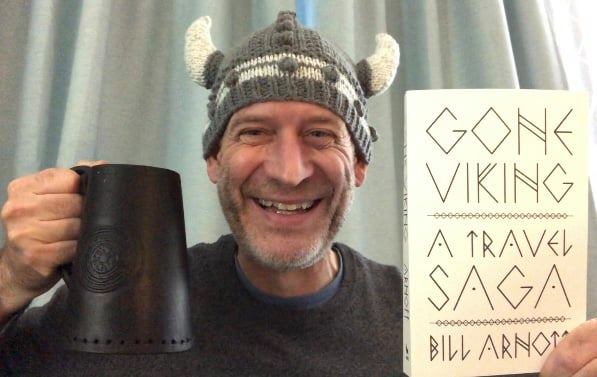
4Q: You are a regular contributor and reviewer on The Miramichi Reader. Please tell us how you met James and became part of TMR and tell us about Bill Arnott’s Beat.

BA: Like a lot of great connections, we met through a common acquaintance. Author Karen Schauber (The Group of Seven Reimagined) introduced me to TMR’s James Fisher, who was looking for a west coast editor to review poetry, fiction and nonfiction titles. I’d been doing reviews for the League of Canadian Poets and liked the idea of deepening this type of engagement. The column-series Bill Arnott’s Beat was running in a few magazines and blogs and became a tidy fit as an additional TMR feature. My Beat stories started as a window onto Canada’s West Coast lit scene. Since then it’s become a broader ranging series, including writers’ tips, analysis, and straight-up storytelling. It’s been a pleasure to share and I’ve been delighted by the connections and readership.
4Q: Favorite poets, authors, novels or works?
BA: I love a lot of classic poetry—Wordsworth, Shelley, Coleridge—while my favourite contemporary poets are Mary Oliver, Simon Armitage, and my writing partner Mala Rai, a talented, newer poet who already has great publications and accolades. For prose I’m a huge fan of travel lit. My favs would be Tim Winton, Anna Badkhen, Michael Palin and Robert Macfarlane. Mind you, these authors write in a manner I find poetic. I read Tim Winton’s Land’s Edgeannually—a gorgeous nonfiction collection of his personal Australian beach experiences. I found the book in an indie bookstore in Sydney. And when I eventually had a visit with Tim at a Writer’s Festival (and got him to sign the book) I was able to say thanks. Firstly for inspiring me to write—which is what that book did, and also for the fact the first book I wrote, Wonderful Magical Words, raised a nice amount of money for Make-A-Wish Foundation (granting wishes to children with life threatening illness)—all of this the result of his influence as a writer. Being able to not only thank him but let him know how many lives he affected in profoundly positive ways made for a pretty special moment.
4Q: Tell us about your songwriting and are you a performer, as well?
BA: Yes, I’ve written songs most of my life. (Only in the past few years, mind you, have any of them been any good!) I forced myself out of my comfort zone more recently and began performing professionally. Indie Folk is my genre and like a lot of musicians I play a few instruments, but acoustic guitar is my go-to these days.
4Q: What’s next for Bill Arnott, the author, the poet?
BA: As a travelogue writer, COVID certainly affected planning as it has for all of us. I had a years’ worth of performances and travel scheduled that were obviously postponed. One I was particularly excited about was a collaborative excursion in which I’d visit eighteen specific pubs around the southwest of England, each of which is featured in a colouring book created by Pete Giles and Zoe Eaton who run Barnoon Workshop, a studio and art school in St Ives, Cornwall. I also connected with author Pete Brown, the UK’s beer guru, and we planned on sharing a pint or two as part of the adventure. I hope to pick this up again in the future.
Something I love about wearing a few hats—author, poet, songwriter—is the opportunities provided to meet, hang out and perform with a great array of diversely talented individuals, not to mention being able to collaborate, pursue mixed-media projects, and make friends, people I continue to learn from while growing artistically. It’s a privilege I treasure.
4Q: Anything else you’d like to tell us about?
BA: I’ve had folks ask about Gone Viking book signings, what with physical distancing, so I share personalized notes or emails with individuals who’d like that for their copies of the book, particularly when it’s a gift for someone. As a result, I’ve been privileged to create fun connections with people around the globe, and I’ll always offer this to readers.
Thanks again Allan, for this opportunity. I’ve really enjoyed it!
An Excerpt from Gone Viking: A Travel Saga.
(Copyright is held by the author. Used with permission)
PROLOGUE
Sculls slice the bay, the softest splash in morning calm. Each stroke of oar swirls water into quotes, grasping at a poem, the reach and pull a heartbeat.
“They do that on the Rideau,” someone says.
A coxswain barks instructions. The boats move on, silent, save for an oarlock creak and gentle ripple of wake. Through this a bald eagle flies close enough to hear feathers moving air while at a sculpture park it states, “When you see an eagle, you know this is a special place.”
Last time I was this taken by the view it was nighttime. Winter Olympics were here. And we met new friends at the rowing club pub, facing this stretch of water that resembles a thumb on the mitt of the inlet. Large windows and a patio look onto Vancouver’s Coal Harbour, cruise ship terminal and the industrial port’s towering cranes. An Olympic cauldron anchored the scene, a pyramid of metallic beams crisscrossed into outsize kindling – a signal beacon, burning proud. The fiery glow dampened city lights, leaving only flame visible dancing on dark water, the look of a Viking funeral.
INTRODUCTION
My journey begins with a pint. Another pub on a pier, this time seated on a timber dock. Sun’s glazing the water, surrounding me in radiance like I’m seated in a forge. Inspiring setting, beautiful day. And I’m formulating a travel plan, a trail north, east and west, envisioning waves and ice and mountains. The scene blurs at the edge like cloud – a winding path, romantically ambiguous. I think of the Far North and shiver. Why leave this idyllic spot to trek some of the world’s most inhospitable places? I ask myself this more than once, the one-word answer invariably the same … viking.
Through translation and time the word’s come to label a people, a capitalized noun outside Scandinavia. But the word was first used by those people, describing the pursuit of wealth or land – legacy-building quests, known as going a-viking, or simply to go viking. It was a Grand Tour before rail or the Renaissance, an overseas experience without synthetic packs or Swiss Army knives. Just wool and fur, wood and iron, axes as tools and weapons along with the power of sail, oar and effort. Instead of photos or journals, mementoes were gold and silver, ivory, amber, and slaves – by trade or simply taken. At times, plunder, ransom, and butchered bodies. Going viking was a rite of passage, a drive as strong as a nomad’s pull to migrate. Riches from abroad meant power, and the ability to write one’s saga – tales of conquest and bravery – the result, immortality.
Another pint and my plan takes shape – a trailhead at least, pointing me on my way. The journey, after all, being about departure as much as anything. A sense of discovery. Saxons called it wanderjahre, the equivalent of a student’s gap year – travel prior to settling down – education on the road in lieu of a structured workplace. This excursion, evolving as I go, will be my wanderjahre. Multiple trips over several years in fact, but a wander all the same – viking in its truest sense, my trail a personal saga.
***
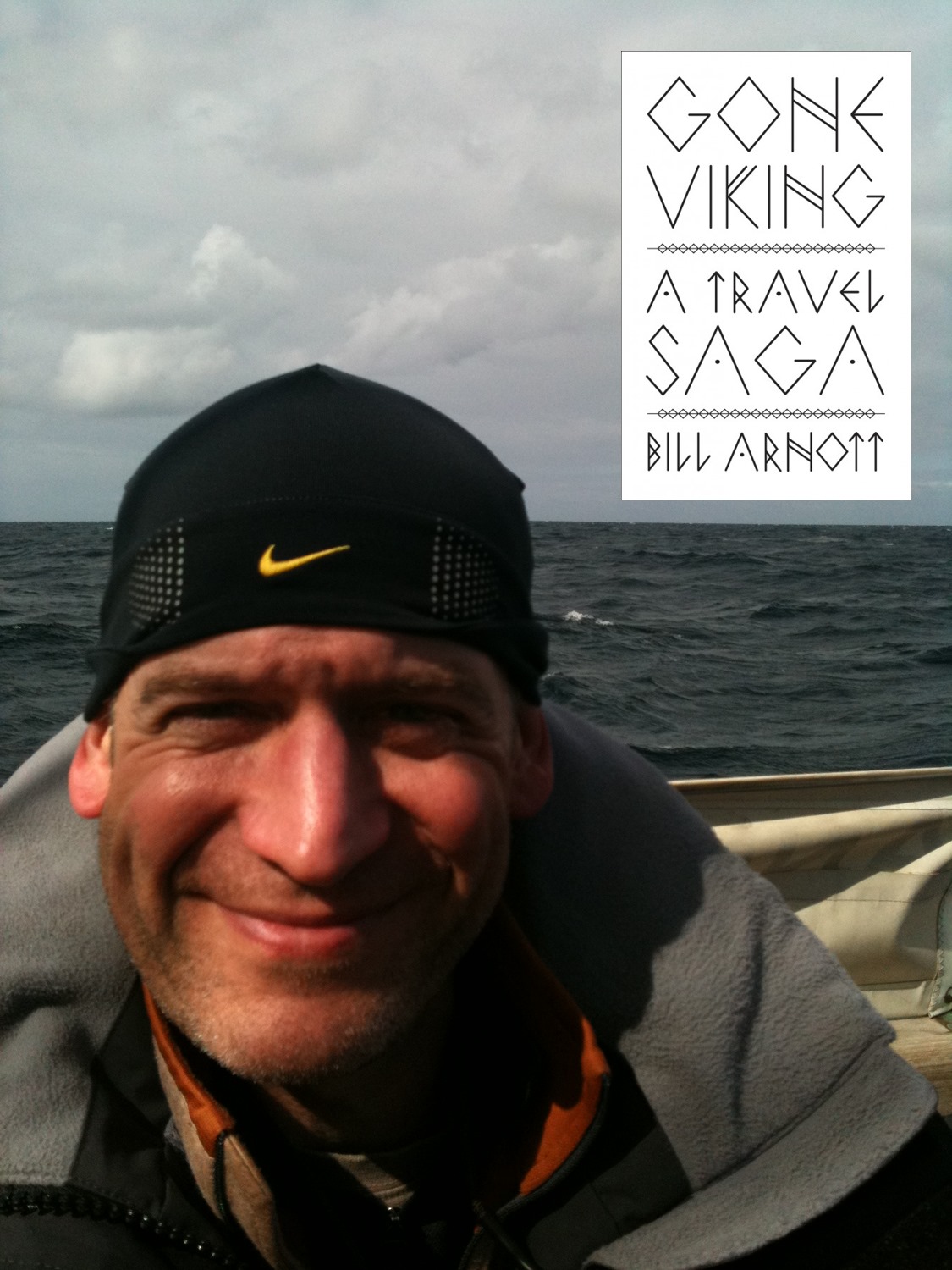
Thank you, Bill for being our guest this week. Wishing you continued success.

For all you wonderful readers wanting to discover more about Bill and his writing, please follow these links:
Gone Viking: A Travel Saga: https://rmbooks.com/book/gone-viking/
Bill’s Website: https://billarnottaps.wordpress.com/
Bill’s Amazon page: https://www.amazon.com/-/e/B07TLD7K4M
Bill’s YouTube channel: https://www.youtube.com/channel/UCmd9xUk3VPWjyHMM3SIOR9g
Twitter and Instagram: @billarnott_aps

November 28, 2020
Fantasy and Sci-fi Author SC Eston is back!
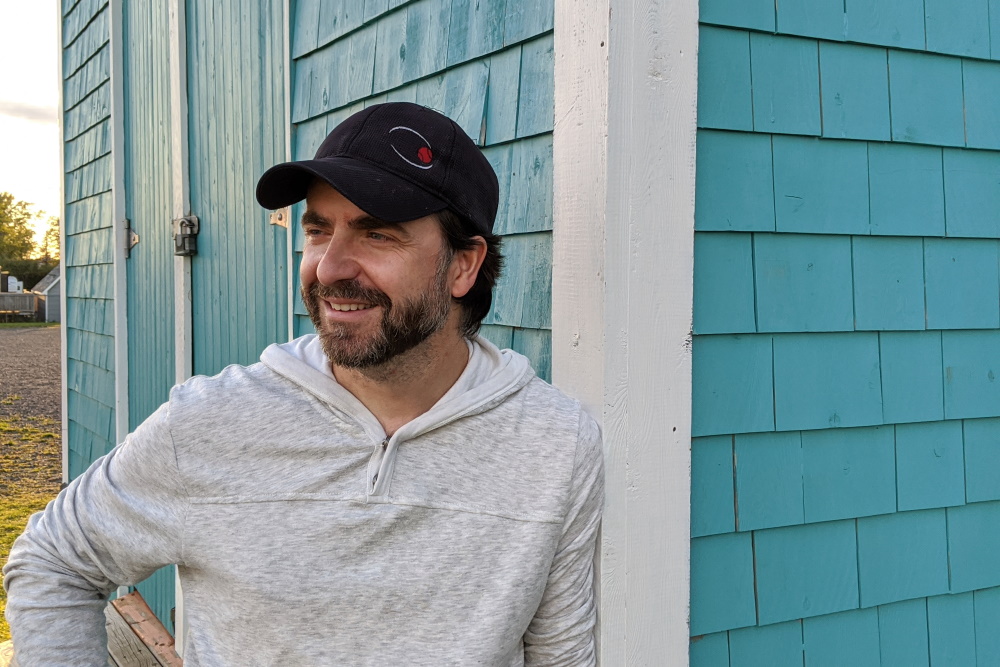
We are all anxiously waiting for Steve's novel - Deficiency - to hit the bookshelves. It's happening soon.

Steve is with us this week to tell us about his story and how it came into being.
He has been featured on the Scribbler before and you can see his previous posts by following these links.
Take it away, Steve -
On December 2nd, my third book, “Deficiency”, is coming out. Wait a minute, did I say third? That’s hard to believe. If someone had told me 10 years ago that I would have three books published by now, I wouldn’t have believed them. In some ways, a part of me still doesn’t believe that those books are out, available to the world, and more importantly, a creation of mine.
People often ask me how I find the time to write. My answer is that it’s not necessarily about finding the time (although that helps), but about focusing on small steps, completing them and repeating them until you reach the end. In writing, you start with one word and then add a few more. Soon, you’ll have a sentence, and later a paragraph. Then, you’ll find yourself with a chapter, and eventually (many days or months or even years later) you’ll wake up with a book on your hands. And if you don’t stop even then, you could end up with three.
From “Deficiency”:
Glass buildings from Quadrant X sped by outside the window, some as tall as 200 levels. Most days, the sight was impressive. This morning, though, Artenz was not able to enjoy the view.
I started writing “Deficiency” six years ago. My initial goal was to write a short story and one month later, the first draft was done. The only problem was that it didn’t work. It’s never easy to admit when a piece of writing doesn’t work, but it’s even harder to make it work when it can’t. In this case, I had a longer story to tell and the short form would simply not do.
Also, some authors can write a good piece on their first try. Let’s be honest: I’m not one of them. Over the next few years, I went through fifteen revisions, many of which were incomplete. On those occasions, I would start to revise but not make it to the end (because I lost focus or because I changed a detail that required me to start over). But through all this, I always felt I had something good, a story worth writing. So, I kept at it.
Finally, two years ago, I had a solid version and decided to send it to a few readers. The feedback I received was extremely helpful. More importantly, it was encouraging.

From “Deficiency”:
He cannot remember much from that previous life. He cannot remember what led him to become a cyborg, not exactly. He knows he killed, once, as an enforcer.
The main idea for “Deficiency” came from another story I was writing, titled “Debris” (still in development). I had hit a wall, and the story was not going anywhere. Or, it was going, but nowhere promising (stories tend to always be going somewhere). So, I decided to put “Debris” aside and use one of the original ideas behind it to write a different story.
The general premise behind this idea was that you wake up one morning and realize that someone close to you have disappeared, completely, including all the records of her existence. It’s as if that person never existed.
This was the idea that started “Deficiency”.

From “Deficiency”:
“There’s her laboratory,” said Zofia.
The door opened. Keidi took a step and looked inside. The sight weakened her knees.
Although some stories can be challenging to write, “Deficiency” was surprisingly easy. Even with all its complexity, its tight and detailed timeline (which is several pages long), its many characters and even more numerous technologies, all set in an imaginary and futuristic city, “Deficiency” remained easy to write.
I’m aware how unlikely this is and grateful for it. And if I forget how lucky I was at the time, the story I’m now working on is quick to remind me (it’s given me headaches for over two years now!).
Don’t get me wrong, “Deficiency” was a lot of work. But every time I sat down to write or revise, I only had to put on my headset to be instantly transported into the storyline. I was always looking forward to writing and the world became alive in a way that I hadn’t experienced before. My hope is that readers will be able to experience a bit of the same.

From “Deficiency”:
She hated the idea of her baby growing in an egg-cell in a laboratory somewhere in Prominence City, where she would not have access to it.In every story, I try to touch on a few subjects that are important to me. In “Deficiency”, many of those subjects took on a more personal turn, as they are closely tied to my own experiences. Among others, I explored the nature of relationships, more specifically the bond between partners and how challenging it can be to build a life together when both persons have vastly different backgrounds and perspectives. I also looked at technologies and the idea that we are often too eager to jump into the next best thing, without properly understanding the long-term ramifications. And finally, the story paints a bleak picture of what could happen if greedy corporations are left unchallenged when their priorities do not align with the well-being of society.

From “Deficiency”:
A scream almost made him stop.
It sounded unnatural, too loud to be one of the enforcers. It was followed by something else. A long and high-pitched mechanical roar.
“Deficiency” is a science-fiction novel. It’s also a thriller and suspense story, with elements of cyberpunk and dystopia. It’s set on a distant planet, in a fictional future that mirror our own. More importantly, it’s a story about two people whose dreams are shattered and who find themselves on the run, with nowhere to hide and nowhere to go.
It was a great project to work on and I can only hope that readers will have as much fun reading it as I had writing it.
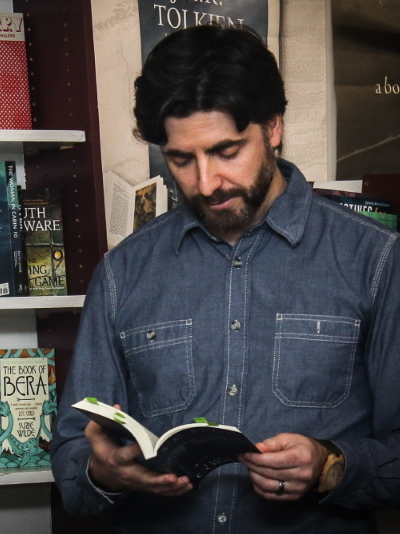
Thank you, Steve, for sharing your thoughts and how Deficiency came about. Wishing you tremendous success with your novel and writing journey.
For all you keen visitors wanting to discover more about Steve and his great stories, please follow these links:
https://sceston.ca
https://sceston.ca/Stories?id=9.