Allan Hudson's Blog, page 29
June 27, 2020
Award winning Author Robert J. Sawyer of Mississauga, ON.

The Scribbler is pleased to do a series of guest appearances in conjunction with Creative Edge Publicity of Saskatchewan, Canada. (See below for more of Creative Edge)
Robert J. Sawyer has an impressive list of awards recognizing the excellence in his writing, both for novels and short stories. Of note is his winning of the world’s most prestigious prizes for science fiction, the Hugo, the Nebula and the John W. Campbell award. The Canadian Science Fiction & Fantasy Association has honored him with thirteen Auroras and a Lifetime Achievement award. And the list goes on.
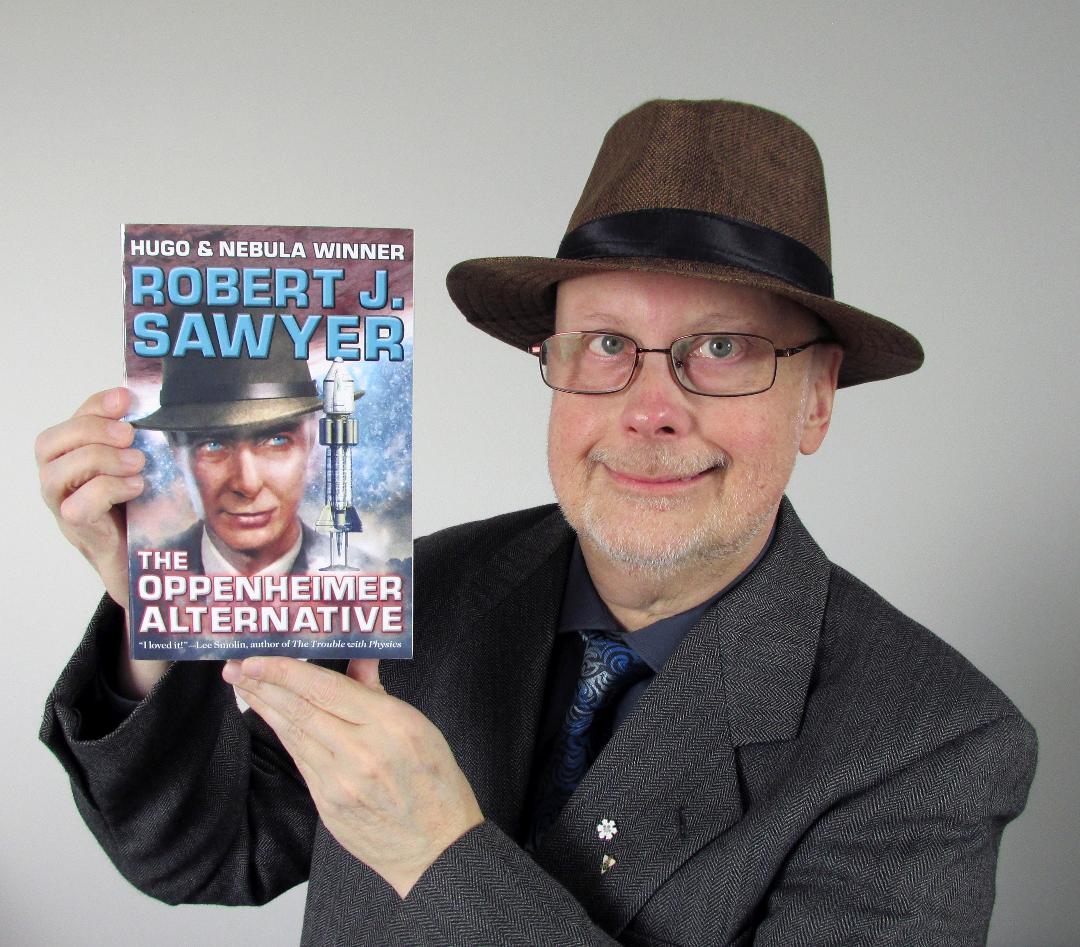
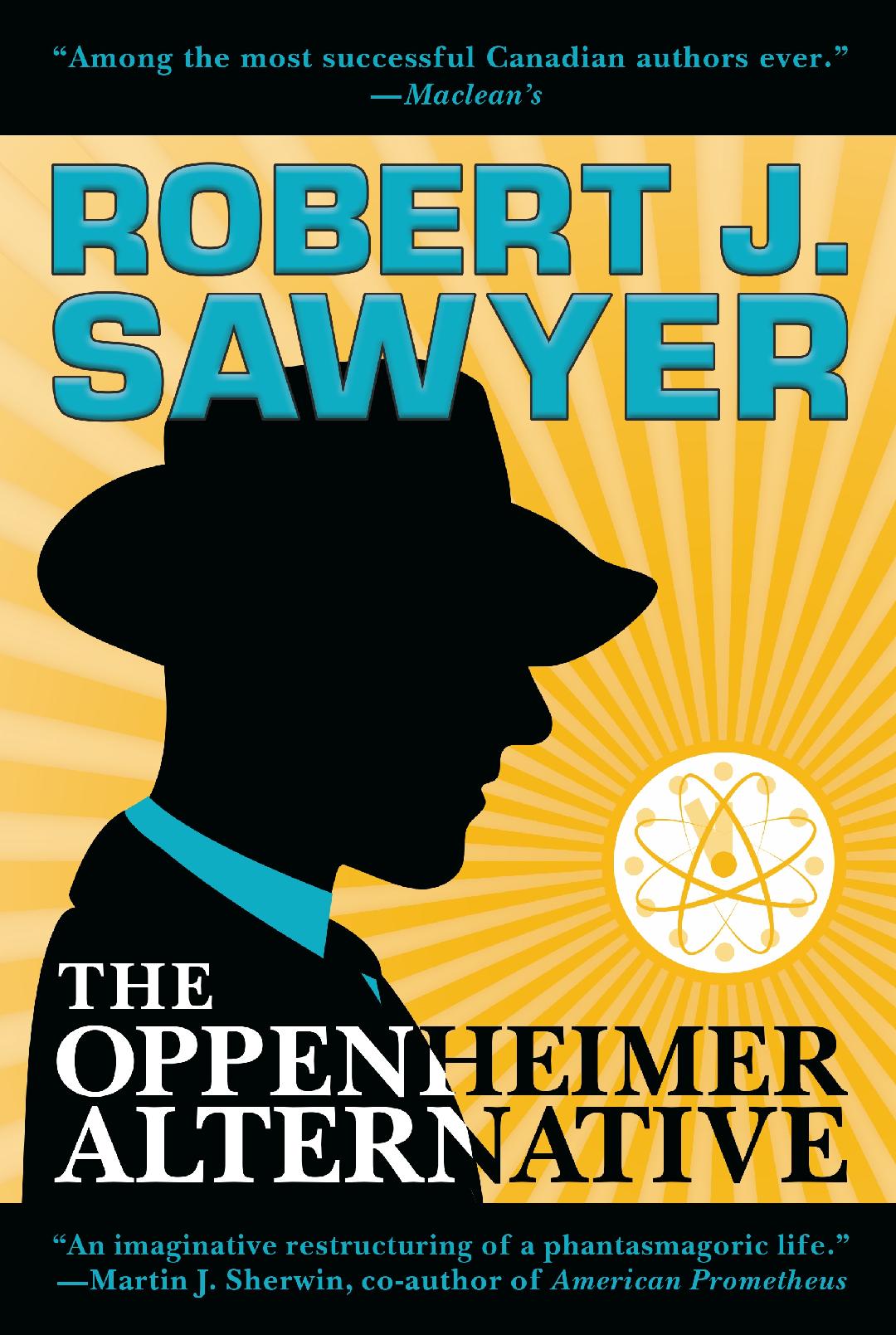
The Scribbler is most fortunate to have Robert as our guest this week. He has kindly agreed to a 4Q Interview and is offering an excerpt from The Oppenheimer Alternative.
Robert J. Sawyer has won the best-novel Hugo Award (for Hominids), the best-novel Nebula Award (for The Terminal Experiment), and the John W. Campbell Memorial Award (for Mindscan), plus over 50 other writing awards. The ABC TV series FlashForward was based on his novel of the same name, and his 24th novel, The Oppenheimer Alternative, came out on June 2, 2020. Rob holds honorary doctorates from the University of Winnipeg and Laurentian University, was one of the initial inductees into the Canadian Science Fiction and Fantasy Hall of Fame, and is a Member of the Order of Canada, his country's highest honor.

4Q: You have a remarkable bibliography of compelling stories. Before we discuss your newest novel, imagine I’m a new reader to your work. Where would I start? Which of your stories would you recommend I begin with? And why?

RJS: I’d say my novel Quantum Night: it was my twenty-third novel, and came out in 2016. At the time I wrote it, I thought it would be the last novel I ever wrote, and so it was supposed to sum up everything I’d been trying to say for my career. It’s set in the present day, and deals with an experimental psychologist coming to grips with his own dark past. The premise is bleak, but, like all my work, it’s ultimately an uplifting book; I’m an optimist at heart. And it’s incredibly timely, I have to say. Let’s just say it predicted not only the Trump presidency but also the reasons for it and the current rioting.
4Q: According to my sources, your newest novel is The Oppenheimer Alternative. Please tell us about this.
RJS: The scientists from the Manhattan Project stay together after World War II to try to save the world. How’s that for an elevator pitch? Every character in the novel is a real and famous historical figure: J. Robert Oppenheimer, Albert Einstein, Richard Feynman, Edward Teller, Leo Szilard, Enrico Fermi, Hans Bethe, and Wernher von Braun, and people are telling me that this, my 24th book, is the best thing I’ve ever written, and assessment I tend to agre e with.
4Q: Please share a childhood memory and/or anecdote.
RJS: When I was young, the Royal Ontario Museum had a contest for children interested in dinosaurs. The winner would get all sorts of paleontology-related prizes. If it had been a dinosaur trivia contest or if it had required kids to identify fossils, I would have won, I'm sure. But it wasn’t. It was a contest to make the best dinosaur marionette! I knew which dinosaur it had to be: Parasaurolophus, the ROM’s signature mount. I tried building one out of Plasticine and Styrofoam and wooden dowels. It was a disaster. I did learn one valuable lesson, though: I learned that you can't choose the ways in which you'll be tested.

4Q: As mentioned in the introduction above, you are the recipient of many awards for your writing. Which do you cherish the most?
RJS: The World Science Fiction Society’s Hugo Award for Best Novel of the Year. It was presented to me by George R.R. Martin at the World Science Fiction Convention and as George himself said, it’s “the big one.” The Hugos are the most significant awards in the SF world and the Best Novel award is the most significant of the Hugos. Plus the trophy is gorgeous, and, since mine was given in the 50th year of the Hugos, mine is plated with real gold!
4Q: I am most intrigued by your short story – Just Like Old Times – which not only won the Prix Aurora but won Canada’s top mystery/fiction Arthur Ellis Award. Certainly, a highlight in your career. Please tell us about the story.
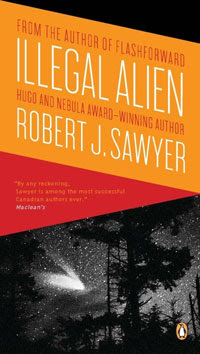
RJS: Thank you! It’s about a serial killer who can’t be executed under Canadian law, but can opt for something called “chronotransference,” where his consciousness will be displaced through time. He’s sent back to the age of dinosaurs where there aren’t any humans yet for him to kill, but he turns out to find the nature-red-in-tooth-and-claw world of that time very appealing to him. It was an early story for me — it came out over a quarter of a century ago — but many of my other works are also mystery/science-fiction crossovers, most notably my novels Illegal Alien, which is a courtroom drama with an extraterrestrial defendant, and Red Planet Blues, which is a hardboiled detective novel set on Mars.
4Q: You are a Member of the Order of Canada, as well as a Member of the Order of Ontario. Both respected accomplishments. How thrilling this must be. Can you share your thought on this?
RJS: Thank you! The Order of Canada is the highest honour given by the Canadian government — the closest thing Canada has to a knighthood and the counterpart of the US Presidential Medal of Freedom — and I was the first person ever to get it for work in the science-fiction field. And the Order of Ontario is the highest honour given by my home province. I was blown away to get them. Of course, I’m proud personally but I honestly also think my being inducted into those two Orders did something significant for the respectability of science fiction in Canada, and I’m delighted about that.

4Q: Besides your writing skills, you are involved in television and film, editing and scholarly work, teaching (University of Toronto, Ryerson, Humber College and the Banff Centre) and public speaking. How do you fit this all in with your writing? Can you share a bit about these activities?
RJS: Both my parents were educators — they taught economics and statistics at the University of Toronto — so teaching is in my genes. I find so much writing teaching is really teaching how to teach writing, if you can parse that sentence! That is, it’s people with MFA degrees who are marginally published or not published at all teaching other people who are trying to get MFA degrees. There was a need for working writers who actually were widely published to share how one really goes about creating publishable prose, not what some academic is guesses is required to do that.
As for the film and TV stuff, my bachelor’s degree is in Radio and Television Arts from Ryerson. It was my first love, and it’s still something I enjoy doing. And, of course, it’s lucrative: a great pay rate for a story to a major US science-fiction magazine is six cents a word; union minimum for a script sale in the US works out to about six dollars a word.
I’ve enjoyed editing books and anthologies, but I don’t do either anymore. There are just so many hours in a day!
4Q: What are you working on now?
RJS: Research! And I’m not sure where it will lead me — but that’s the kind of writer I am. I dig into topics until I’m expert in them, and only then decide what I want to say about those topics. Frankly, it’s a good strategy for life, too: look into something before you spout off about it!
4Q: Anything else you’d like to tell us about?
RJS: I’d like to tell you I’m a gourmet cook, can run a four-minute mile, and am a great singer — but I can’t, because none of those things are true. Although we’ve touched on a lot of different aspects of my career, to become a really good writer is the same as becoming a really good athlete or musician: it’s all-consuming. It’s what I do — and it’s who I am.
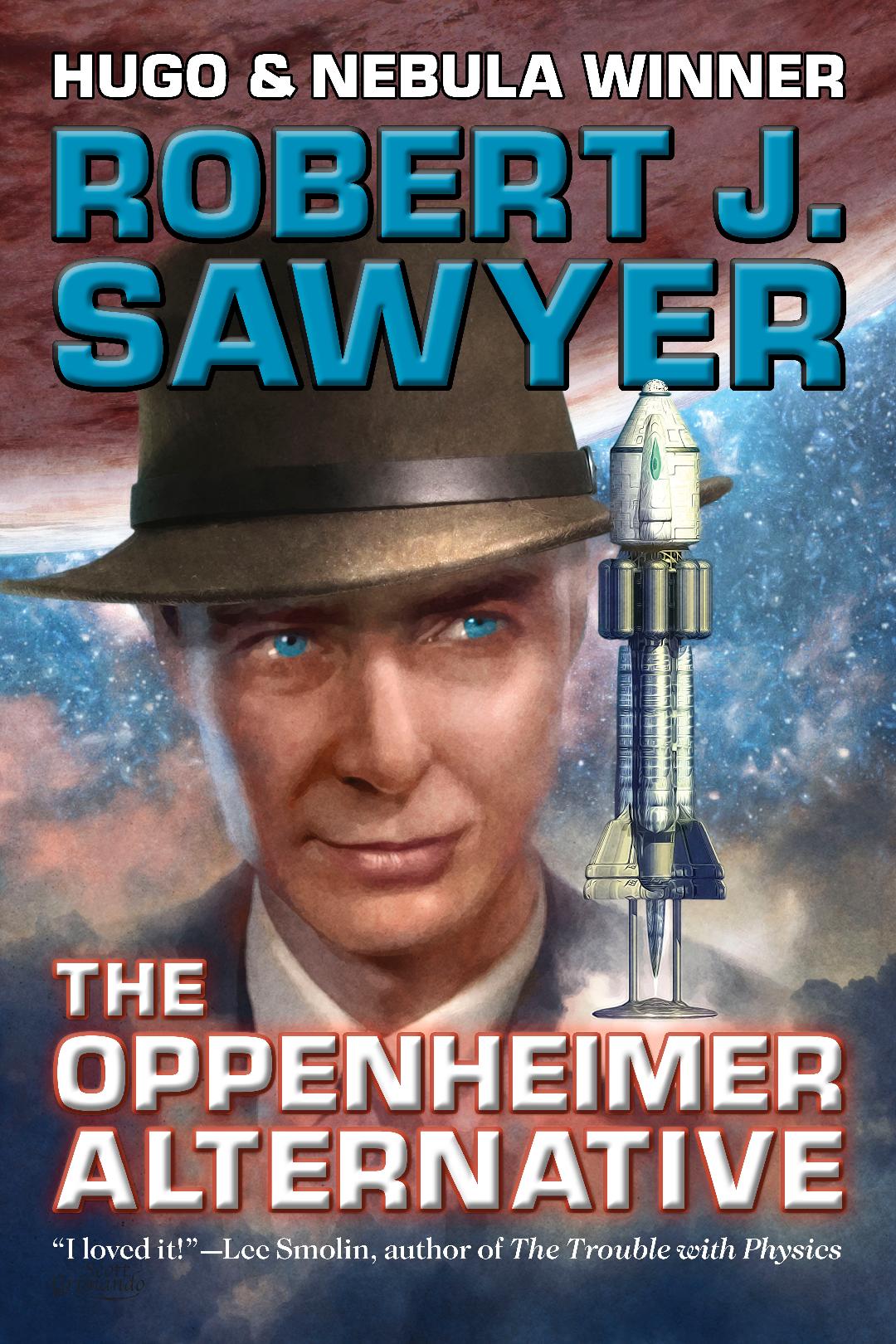
An Excerpt from The Oppenheimer Alternative
(Copyright is held by the author. Used with permission)
Chapter 8
1944
I wanted to live and to give and I got paralyzed somehow. I think I would have been a liability all my life—at least I could take away the burden of a paralyzed soul from a fighting world.
—Jean Tatlock
“Can I have a moment, Doctor?”
Oppie prided himself on being able to recognize anyone he knew by their voice, and the one belonging to this speaker, deep, a tad oleaginous, made his stomach tighten. He swiveled his desk chair around. “Certainly, Captain de Silva.”
Peer de Silva had the distinction of being the only West Point graduate stationed at Los Alamos; he’d earned the enmity of the scientists not just by censoring their mail but by confiscating their personal cameras, too. In his mid-twenties but with the brittle demeanor of a cynic a half-century older, de Silva was one of those prickly souls who took offense at everything. He’d once burst into a group-leaders’ meeting to complain that a young engineer had had the effrontery to perch on the edge of his desk. Oppie probably shouldn’t have used the tone he had—the one he normally saved for the thickest of undergraduates, the benighted fools who proved there were indeed such things as stupid questions—when he’d snapped back, “In this lab, anybody may sit on anyone’s desk—yours, mine, anyone’s.”
As he beheld de Silva now, Oppie noted something odd in the man’s bearing. His face—handsome enough but always lifeless, like a Roman statue—was cocked at a strange angle, and his hands were apparently clasped behind his back as if he were willing himself to appear at ease. “I have ... news,” he said, and Oppie noted the small gap where an adjective—good, bad?—had disappeared under a mental stroke of the captain’s thick black marker.
“And if you share it,” Oppenheimer offered, trying for lightness, “then we’ll both have news.”
“It’s about your—” The younger man aborted that run and started again. “It concerns Miss Tatlock.”
Oppie felt his heart begin to race. He knew that the security people were aware of his relationship with Jean; knew that they knew she was, or had been, a member of the Communist Party; and—yes—knew that seven months ago, when he’d taken that unauthorized trip to San Francisco, he’d spent the night with her. A lot of poker was played here on the mesa, but Robert rarely joined in; still, he was conscious that he was being scrutinized for tells. “Yes?” he said as nonchalantly as he could.
“I figured you’d want to know,” de Silva said. “I’m sorry, sir, but she’s dead.”
Oppie’s first thought was that this was some ruse, a test, to see if ... if what? He would flout security again? Surely Jean couldn’t be gone. He’d have expected to hear through mutual friends—the Serbers, perhaps—or directly from her father John, now an emeritus professor.
“Word just came in,” de Silva said as if he’d read the suspicion in Robert’s eyes. “Honestly, sir, it’s true.”
That it was de Silva breaking the news meant it was the fruit of surveillance. Had her phone been bugged? And, if so, had that jackass Pash ordered it because of Robert’s last visit—his last visit ever, he realized now—to her back in June? Oppie sagged in his chair. Jean was just twenty-nine and had been in good physical health. That meant something like an automobile collision or—
Good physical health ...
“Did she k—was it an accident?”
“I’m sorry, sir, but she took her own life.”
Both legs and arms went numb, and the world blurred in front of him. “Tell me ... tell me the details,” Oppie said, fishing a Chesterfield from a crushed pack and lighting it.
“Apparently, she’d agreed to phone her father last night but failed to do so. He went by this morning to check on her and had to break in through a window. He found her body in the bathtub.”
Robert exhaled smoke and watched it rise toward the ceiling. Thoughts—some inchoate, some in words—percolated through his mind. Last year, he had paid his fifteen cents to see a recent flick called Casablanca in the base theater; he knew full well that the problems of two little people didn’t amount to a hill of beans in this crazy world. But, still, he’d all but abandoned her, except for that one furtive night, since his move to Los Alamos. Had his desertion—his dereliction of duty—led to that complicated, conflicted woman, the only woman he had ever truly loved, taking her life?
His heart felt like a crumpled-up kraft-paper bag, each expansion of it scratching his innards. He couldn’t talk to Kitty about this, but he had to talk to someone. “Are you as good at keeping secrets as you are at discovering them, Captain?” De Silva opened his mouth to reply, but Oppie raised the hand holding his cigarette. “No, I don’t expect you to answer that. But let me tell you, Miss Tatlock—Jean—is a remarkable girl. In years gone by, we were close to marriage two times, but ...” Oppie trailed off, surprised by the way his throat caught—more than his usual smoker’s cough; a constriction as if his very core were loath to let out the words. “But both times she ... she took a step back.”
That much he’d say, but no more—not about her ... or about him. She’d retreat each time she realized she was also attracted to women. And yet they shared so much: tastes, interests. And he could hardly fault someone else for being indeterminate, for being uncertain, for being both simultaneously this and that.
“I’m sorry,” de Silva said, and Oppie chose to accept the words as sincere.
“She’d wanted to see me before I came here,” Oppie continued, “but I couldn’t, not then. It was three months before I ...”
“Yes,” said de Silva softly. “I know.”
“Of course you do.” Oppie nodded curtly. “I am deeply devoted to her. And, yes, as you also surely know, even after my marriage to Kitty, she and I have maintained ...” He stopped, drew a breath. “... did maintain an ... intimate association.”
Such measured words, Oppie thought. Why couldn’t he just say it, loudly and clearly? He loved Jean, loved her supple mind, loved her passionate convictions, loved her gentle, artistic spirit, loved—
The wetness on his cheek surprised him, and Oppie lifted his empty hand to wipe the tear away. But another replaced it, joined soon by many more. “Forgive me.”
De Silva’s voice was gentle. “There’s nothing to forgive.”
But there was. He had failed her. He’d known all about her bouts of depression. They had discussed them often, and he had talked her back from the brink more than once, even at last sharing the one time he’d contemplated taking his own life, in the summer of 1926, whisked to Brittany by his parents after what had seemed to his twenty-two-year-old self a disastrous year socially and scientifically at Cambridge’s Cavendish Laboratory. And still, despite his candor, despite his support, despite his love, Jean was gone.
She had introduced him to the poetry of John Donne, reciting it often from memory. Batter my heart, three-person’d God, she’d say, and now he knew what that truly meant, the trinity he didn’t believe in inflicting a sorrow he was sure would never pass.
“Well,” said de Silva—a man’s man, a soldier unused to emotional displays—“I should leave you to your work. Again, doctor, my condolences.”
“Thank you,” Oppie said. De Silva left, gently closing the naked wooden door behind him.
The tears were coming freely now. He rarely paid much heed to his chronic cough, but the combination of sniffling and hacking was ghastly, and his hand wasn’t steady enough to operate his silver lighter; it kept spitting flame near but not near enough to the tip of his next cigarette. He swiveled his chair to look out the window, but the view of the mesa was as blurry as it was during a thunderstorm, even though it was a cloudless day.
There was a rap on his inner office door. He didn’t want to see anyone and so he remained quiet. But the door swung open anyway, revealing Bob Serber. “Have you heard ...?” Serber trailed off as Robert swung around and he took in his face, doubtless red and puffy. Bob was silent for a moment, swimming in Oppie’s vision, then: “Can I get you anything? A drink, maybe?”
Robert snorted, pulling mucous back up his nose. He shook his head. “It’s just awful, isn’t it?” Serber said. “She was so ...” But no single word could encapsulate Jean, and he settled on “sweet,” Oppie’s own favorite description for an irresistible problem in science. Robert nodded, and, after a moment more and with a wan smile, Serber withdrew.
Oppie sat for a while—it felt like an hour, although his wall clock said it was only fifteen minutes—then got up. His secretary Vera had returned from wherever she’d been when de Silva and Serber had visited, and she, too, could see that he was distraught, but when she asked what was wrong, he simply said he was going for a walk.
He headed outside and immediately ran into William “Deak” Parsons, the forty-two-year-old head of the ordnance division and second in command here at Los Alamos. “Hey, Oppie,” Deak began, but he, too, clearly saw the pain on Robert’s face. A good Navy man, conservative and tradition-bound, Parsons was often at loggerheads with the freewheeling civilian George Kistiakowsky, who was spearheading a revolutionary implosion-bomb approach. Oppie, hardly in the mood to hear another plea for arbitration, held up a hand before Deak could speak further. “If it’s about explosive lenses, Kisty wins; if it’s anything else, you win.”
He continued walking and, even with his splayed-foot gate, he felt unsteady on his feet. There was a crème brûlée crust of snow over the frozen mud, and now that he’d finally managed to light up again, the clouds emerging from his mouth were equal parts smoke and condensation. Ashley Pond was frozen, a giant cataract-covered eye staring heavenward.
He made his way toward the stables, left over from the Los Alamos Ranch School. There were horses for rent here, but Oppie and Kitty, both accomplished riders, each owned their own. He saddled up Chico, his sleek fourteen-year-old chestnut. On a Sunday, when he had hours to kill, Oppie would take the gelding from the east end of Santa Fe west toward the mountain trails. But he didn’t want to bother with off-site security today. Instead, he rode Chico around the perimeter of the mesa, just inside the barbed-wire fence. Getting out to the edge took care, but Oppie was deft, playing Chico like a musical instrument, bringing each hoof down individually in the perfect sequence to negotiate even the roughest terrain.
They trotted at first as the horse warmed up, then cantered, then, at last, galloped, faster and faster, and faster still, circumnavigating the facility, an electron in an outermost orbit—no, no, a proton hurtling in a cyclotron: building up speed with each lap, wind whipping Chico’s mane, slapping Oppie’s cheeks, flinging tears from his face and wails from his lungs. He urged his mount to even greater velocities, the horse responding with grim conviction, skeletal poplars racing by them as if one could outrun pain, outrun guilt, outrun love.
Thank you, Robert, for being our featured guest this week. Wishing you continued success in your writing journey.

For you readers wanting to discover more about this talented author and his stories, please follow these links:
* Website: https://sfwriter.com
* Patreon: https://www.patreon.com/robertjsawyer
* Facebook: https://facebook.com/robertjsawyer
* Twitter: https://twitter.com/robertjsawyer (@RobertJSawyer)Creative Edge is a dynamic Publicity Company based in Saskatchewan. Founder and co-Owner Mickey Mikkelson made this statement:

Creative Edge specializes in elevating the public profile of authors and artists through such means as (but not limited to) book signings, presentations (libraries, schools, conferences, businesses, etc.), involvement in applicable events, media interviews (including podcasts and print media), and soliciting of reviews from influential reviewers and bloggers.




June 20, 2020
Erotica Author Judy Kemp of London, England

Another first for the Scribbler.
This week you have a chance to meet the first author of Erotica to be featured on the Scribbler. Judy Kemp is active on Twitter and Facebook. She is an avid re-tweeter and her sharing is much appreciated. Her work has garnered many rave reviews.
When you visit her FB page, she comments:
“I’m an erotica writer. I felt I just had to do it. I’ve been thinking about it for years.”
She has kindly agreed to a 4Q Interview and is sharing an excerpt from her novel – Scent of Violets.
(**Please note that the interview and excerpt contains sexually explicit material)
“I’ve been reading erotica since my early teens when I had to shoplift it from local bookstores as they wouldn’t sell it to me, and even if they did I’d have been too embarrassed to buy it. It was a lose-lose situation. Erotica has opened so many doors for me as a woman. It inspired me to experience and savour many different sexual scenarios and those, in turn, helped me to discover many previously hidden facets of my true sexual nature.
There came a point where I just had to get one of the major sexual experiences of my life down on paper, and the result was A Bouquet of Gardenias, my only novel to date. Being based on true events it was sometimes difficult to write, but I felt a tremendous amount of relief and satisfaction when it was finished. Even more satisfying has been the fabulous critical acclaim it has received. It excites me that my writing can excite other people.
When I read erotica, I like the sex to be frequent, kinky and rough. And that’s the way I like to write it. I want my readers to feel what the characters, especially the women, feel in my stories. I want to express their lust, their forbidden desires, their depraved appetites and their enthusiastic enjoyment of all types of sexuality. I live in London and love the shops. I’m married.
“I hate men who are afraid of women’s strength.” – Anaïs Nin.”
4Q: Of all the stories available to us as author and readers, please tell us about your choice of Erotica.
JK: I’ve always read erotica. Since I was in school, really. The more I read, the more I realised that it was a genre where, especially with the rise of self-publishing, you could get away with any sort of quality and it would sell. All you needed was a sexy cover. Everyone thinks they can do it. Silly, really; it’s as if everyone thought they could write historically accurate medieval thrillers. I began to look at some of the newer erotica on Amazon and was amazed to find that many were charging full novel price for books that were twenty-two pages long, or some other insanely short length like that. Many were very poorly written, didn’t look like they’d been proof-read and were about as sexy as a bag of chips. It annoyed me, as this was a genre that included great writers like Anaïs Nin and Pauline Réage, and it was as if they were being let down. I wanted to try and redress the balance by producing something that was well-written, good value for money and took readers to places where they’d never been before. I wanted to include the romanticism of Nin and the extreme sexuality of Réage. I wanted whatever I wrote to be explicit, taboo and crude in parts, because that’s the sort of erotica that I like to read. I felt that I’d had enough experience of interestingly unusual sexuality in my own life (I’ve been actively bisexual since my late teens and have been involved in BDSM scenes for almost as long) to be able to write with authority about matters that some readers might not have encountered before. I wanted to produce something new and different.
4Q: Your first novel is titled A Bouquet of Gardenias. It’s described as “a breathtakingly intense erotic novel”, with many five-star reviews. Tell us about it.
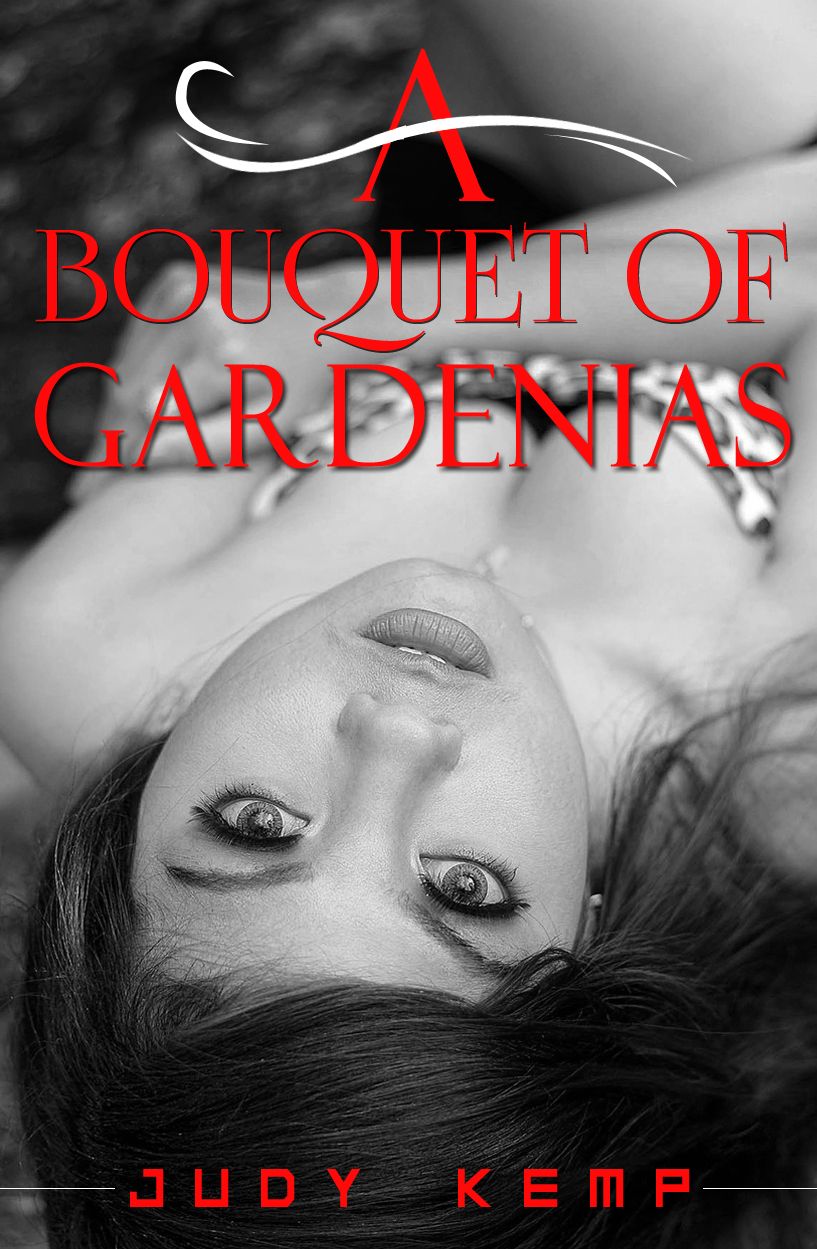
JK: When I decided I was going to write an erotic novel, I had no idea what it could be about. Some erotica I’d read seemed to be using clichéd situations like women who worked for some powerful man who slept with them, or some billionaire nonsense. I wanted to make what I wrote relatable and believable, so I drew on my own experience and mixed it in with my own fantasies. My husband and I had had a long-term ménage relationship with a woman who we’d both known for some time. She’d had a rather sheltered sexual existence despite being married and although she wanted children badly, it seemed that she was unable to conceive. Thinking and writing about this now, it seems almost unbelievable that it really happened, but after a lot of thought, my husband and I suggested to her that he get her pregnant. We talked about it for months before doing anything about it; almost a year, in fact. As time went by, the idea became more and more sexually exciting for my husband, myself and the woman, so we decided to do it, with her full cooperation. For some reason, we both thought impregnating this woman would be a one-off event, but, as detailed in the book, it very quickly became a long-term sexual affair, which greatly expanded her sexual horizons and ours. She was an eager and willing pupil, and we soon realised that we’d unleashed Pandora’s Box as she found herself sexually and her taste for extreme sex started to grow.
4Q: Please share a childhood memory or anecdote.

JK: When I was fourteen, I’d been bullied by this boy who was a couple of years above me in school. I don’t know why he was doing it, but it was starting to get me down. It was just verbal bullying; nasty comments, that sort of thing. But it seemed as if it would never stop. One day, I decided that if he did it one more time, I’d do something to stop it. It was the summer, and there was a lot of sports equipment around on the school field. He came up to me, made some snarky, unpleasant comment and walked off. I picked up a cricket bat and hit him across the back with it as hard as I could. He dropped to his knees and then fell flat on his face. At first, I thought I’d killed him, then maybe had broken his back. After about five minutes, he got up and walked away. Some of my friends clapped. I don’t think he’d left the school, but I never really saw him again after that. I think he may have been avoiding me! I loathe bullies and bullying. People who act like that have no idea what else is going on in your life; what they’re adding to. If I could go back in time, I’d have no hesitation in doing that again. Only harder.
4Q: The titles to your novels refer to flowers. Can you tell us how this came about?

JK: It wasn’t an intentional thing. Gardenias made a brief appearance at the end of the first book, and I was looking for a title that was a little unusual and different from other erotic novels, to make it stand out. I also liked the idea of a title that gave no clue to what you were about to read, so that when you realised what the book was like, there was a kind of ‘Wow!’ factor involved. Using flowers again for The Scent of Violets was intentional; I thought it would be nice to have some consistency.
4Q: Do you have a favorite author(s)?
JK: I’ve never had favourites where I devour everything they’ve read. I read more non-fiction that fiction, I think. The last fiction I read was The Lost Estate by Henri Alain-Fournier and before that Agent Running in the Field by John le Carré. At the moment, I’m reading a biography of Cézanne by Alex Danchev.
4Q: When you are feeling most creative, is there a favorite spot where you like to write? Your writing habits?
JK: I find it hard work to write, particularly as I use my own experience so much. Both of my books have left me exhausted. I used to write late at night, but now it’s the morning. I usually just sit at my desk as that’s where my computer is. I don’t take note of word counts or anything like that. I just keep going for about two to three hours and I can usually tell when I’m starting to dry up, and that’s when I stop. I have no idea how other authors work, as I don’t know any to ask.

4Q: What’s next for Judy Kemp, the author?
JK: When I wrote A Bouquet of Gardenias, I thought that would be it. I had no intention of writing another novel. But gradually, ideas started popping into my head. I started remembering a former lover of mine, a beautiful woman who looked like a plus-size model, as they’re now called. She told me that she’d hired escorts, both male and female, and I found the idea very exciting. When she talked about it, I used to imagine it was me doing it instead of her. I think part of it was that she didn’t seem like the sort of woman who’d have to hire sexual partners, so I found it very thrilling, as it told you a lot about her sexual appetite. She’d started off by hiring a single male escort, then it developed so that eventually she would have sessions with one male and two females, and every other sort of combination you could imagine. It goes without saying that she had a very well-paid job, as the sort of escorts she hired would not have been cheap. I found it very arousing to talk about this to my husband and he was excited by the idea of hiring an escort to make love to me while he watched, or maybe even joined in. It was something we’d talked about for years, though we’d never imagined we’d really do it. When we did, I can only say that I wish we’d done it years ago. It completely blew my mind and did things for our sex life that I couldn’t have imagined. I fully understand that it may not be for everybody, and you have to be aware of the emotional risks involved. So, yes; I need something to spur me on. I don’t want to force things, so I’ll just wait until inspiration strikes!
4Q: Anything else you’d like to share with us?
JK: On a political note, why are the leaders of both the UK and the US such dicks?
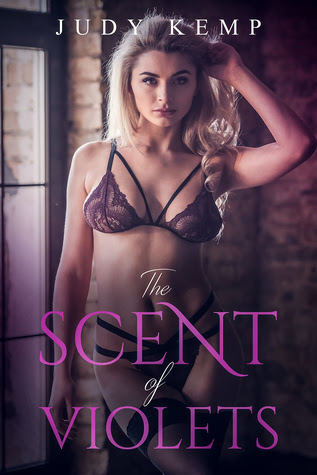
An Excerpt from The Scent of Violets.
“a passionate and sensual erotic journey”
(Copyright is held by the author. Used with permission)
**Note: Contains explicit details and language.
The escort site allows you to make appointments with two of the guys, if you wish. Now that’s something to think about, as would be two guys and a girl, or two guys and two girls. It would be expensive, but not impossibly expensive. I don’t point this feature out to Graham as we sit at the computer and scroll and click from one area to the next, but I’m sure he’s seen it and made a mental note of it. I wonder if he’d like to see two guys having me at the same time? I think I know the answer to that one, but we don’t want to run before we can walk. I get a little surge of adrenaline from time to time as I remember what we’re doing this for.
It’s weird, but I keep forgetting that this will be for real. I’m so used to looking at smutty/sexy stuff on the computer that my brain is trying to tell me that it’s business as usual. I’ve been looking at sexy photographs and porn on the internet for so long now that I can’t remember a time when I didn’t do it. Chat rooms, too. I have another identity I use when talking dirty to guys (and girls). My name is Suzie Clarkson, I’m bisexual and I’m a secretary for an airline. I thought that sounded interesting and semi-plausible. I used to keep it a secret from Graham when we were first married, but when I finally confessed, it made him excited. In fact, one of the first side effects of my confession was that he asked to watch while I perused porn sites and chat rooms. I’d masturbated in front of him, obviously, but never when surfing the net. He loved it when I masturbated having cybersex with someone.
I can remember that day as if it was yesterday. He told me to do whatever it was that I usually did. It didn’t matter whether it was porn sites or chat rooms. I sat at the computer with a towel underneath me so my juice didn’t damage the leather seat. I usually did this so there were no giveaway stains or smells after I’d finished. I didn’t wear knickers; no point. I wore a pretty black Monsoon dress with lovely red, blue and pink flower patterns that stopped maybe eight inches above my knees when I sat down. Underneath that, a black underwired plunge bra from Agent Provocateur that made my boobs look big and sexy. I knew that Graham would appreciate knowing that I was wearing that bra under such a girly dress. I didn’t bother with suspenders – I knew I’d be grinding myself into the seat and didn’t want to get too uncomfortable – so I just wore a pair of black holdups and, of course, my Karen Millen stilettos. I know it sounds crazy, dressing up to look on the computer, but I still like doing it. It makes me feel sexy. If I look at something that gets me turned on, I like the feeling of my breasts swelling and my bra feeling like it’s too small for me. It’s not pain, more like discomfort, but it feels good.
I started looking at a site I’d found which had lots of gifs of people fucking: FF, FM, FFM, FFF – everything was on there. Some people don’t find gifs like that very erotic, but I do and I always have. It’s like a single erotic moment frozen in time, repeating over and over and over again and great for masturbation – you don’t have to rewind all the time. I clicked on a gif of two very busty girls who seemed to be covered in massage oil. Both shaved. Both very beautiful. One was lying on her back while the other one gave her a firm clitoral massage with one hand and a rapid two-finger screwing with the other. She looked like she was soaking. She bit her lower lip. Her eyes were closed and her expression was pained. Her body undulated with the pleasure of it all and you could see her stomach muscles rippling. I imagined that it was me that was giving her the massage. The idea was very exciting.
I clicked on more images. Graham noticed that most of what I looked at was with women together and wondered why. It was hard to explain. I’ve slept with other women and fancy lots of women, but I didn’t think it was to do with that. I just found the males in these gifs a bit unappetising. Just not ‘my type’, whatever that is. Whatever my type is, it generally isn’t the sort of guys that you usually see in porn. I’m sure other women feel like this, though I haven’t asked any. That’s not to say that I don’t like seeing a woman being fucked by a guy in porn, though. I do. I suppose I think that women are more aesthetically pleasing to look at from a sexual point of view, particularly when they’re making love. Just a theory.
Then I started talking to a woman I’d been in contact with many times before in a bisexual chat room. Her name was Laura. She saw through my secretary for an airline story just as quickly as I saw through her happily married housewife description. I was doing this partly for Graham’s benefit, but also because I liked talking to her and could talk about anything sexual. I’m honest about everything except for my real identity and she seems to be the same. We’ve masturbated together a few times and it was really exciting. She asked me what I was doing and I told her about the gifs that I was looking at. She asked for details of the site so we could both look at the same things.
Things heated up as they usually did. We started talking about what we would both do if we were in the same room as some of the women in the gifs. After a while, I pulled my dress up so that I could give myself a rub. Laura said that she was doing the same. She knew I wasn’t a lesbian like her, but the fact that I had men as well excited her. She said that she’d like to see me with a man and I said I’d like her to. I told her I’d like her to kiss me on the mouth while a man had me. It would be exciting. I started to squeeze one of my boobs through my dress as I rubbed. Graham said that the exciting thing about it was that I was so engrossed that it was as if he wasn’t there. It was very erotic for him. It was as if he was intruding on something he shouldn’t see.
I barely noticed when he started unbuttoning the back of my dress. It was only when I had to help him with the clasp that I came ‘back in the room’, so to speak. As he pulled the top of my dress down, I told Laura what was happening. It was funny; she actually said ‘Hi!’ to Graham and he made me type that he was pleased to meet her. I told her that I was still rubbing myself and that Graham had undone the clasp of my bra. I told her that he was kissing my neck and that he’d pulled the bra straps down over my shoulders. She knew that I was voluptuous and she knew that I was petite and blonde.
She had described herself as being average everything. Average boob size, average bottom and averagely long black hair. I wanted to arouse her even more, and when I told her that Graham had grabbed the front of my bra and roughly pulled it off my body, she got very excited. I described how Graham was now squeezing both my boobs from behind and how I was still playing with myself. I asked her if she’d like Graham to screw me while we were talking online. She said yes. She said that her whole body was shivering from this session and that she was manipulating both of her breasts and then giving herself short masturbation sessions. Graham told me to tell her that despite her sexual orientation, he’d love to help her. This made her laugh.
I told her that I was standing up and that when I wasn’t typing, I was leaning over the desk, pressing the balls of my hands against the edge to support myself and poking my bottom out. She knew exactly what I was wearing and that my dress was hanging around my waist. I told her that Graham was really working on my breasts and that I could feel his erection against my bottom. This teasing went on for a few moments, and then she asked me if I could let Graham fuck me from behind. I asked her if she was ordering me and she said yes. I told her that he was opening me up with his fingers and that I was soaking. I told her that he’d just penetrated me and was now fucking me. I told her that he was really big. I told her he was fucking me hard and that I imagined she was with us, watching. She came a few minutes later and so did I. Graham pulled out at the last moment and shot his cum over my ass. I told her about that, as well, and she liked it. She wished she could see it.
Thank you, Judy, for being our featured guest this week. All the best in your future writing.

For those interested in discovering more about Judy and her stories, please follow these links:
Twitter: https://twitter.com/JudyKemp69
Amazon: https://www.amazon.com/gp/product/B01A1AW6NC/ref=dbs_a_def_rwt_hsch_vapi_tkin_p1_i0
Facebook: https://www.facebook.com/profile.php?id=100009158638640
Goodreads: https://www.goodreads.com/author/show/14751956.Judy_Kemp
June 13, 2020
Returning Author Ivan Holiday Arsenault of Florida, US.
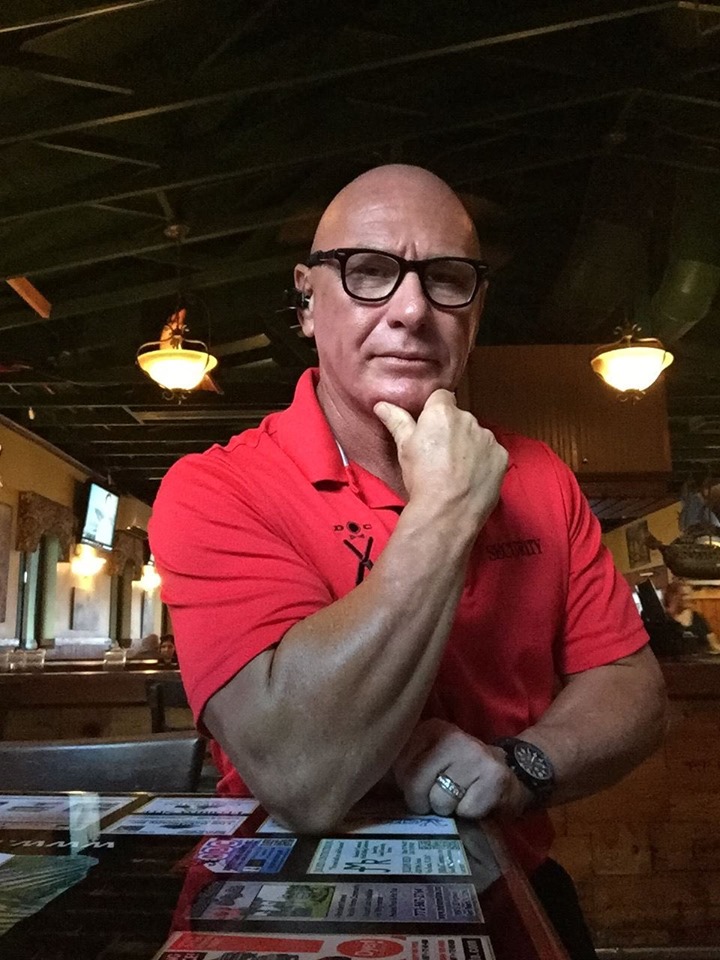
The Scribbler is pleased to have Ivan back to talk about his newest novel – Merlin Ragnarr & The Book of Lies. Lots of excitement generated with this story. It’s a bit different from Arsenault’s early work, which you can read about by following this link to his earlier visit – HERE.
Word is that if you’re a Harry Potter fan, love the Game of Thrones series and interested in Norse mythology…you’ll love this book.
Ivan has agreed to a 4Q interview and is sharing an Excerpt from his novel.
Ivan Holiday Arsenault was born in New Brunswick, Canada.
At 61 years old, he has been an avid Dungeon & Dragon's player for 50 years.
He loves Fantasy, Cosplay & has been a Harry Potter fan for 20 years.
Ivan is a Security Consultant. He has worked in the Nightclub & Bar Security industry for 38 years and is a DI licensed Florida State Security Instructor.
Ivan is the author of 5 books -
"The Bouncer's Bible - The Art and Science of working the door",
"The Cooler's Grimoire -The Comprehensive Instructional Guide to Nightclub & Bar Security",
"Sun Tzu & The Art of Bouncing", "The Bouncer's Bible 2nd Edition" and 'Roadhouse Legacy'.
In 1986 he invented The 'CRV Child Riding Belt' & was nominated for an Honorary Ph.D. from the University of Alberta Canada, in recognition of his creation of the CRV Riding Belt and its contribution toward the rehabilitation of paraplegic children.
In 2008 Ivan deployed to IRAQ as a Honeywell Defense Contractor to train US Army soldiers in a new Stryker Recovery System.
Ivan is an America Mensa member with a WAIS-III IQ of 144.
4Q: Congratulations of your novel Ivan. Please give us a brief intro of what we can expect when we pick up The Book of Lies.
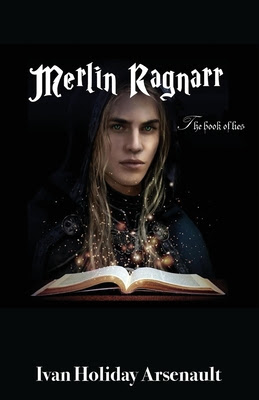
IHA: Basically, it is about a high school/junior college for Viking teenagers born with Şeiðr (Magick) Blood. On their 16th birthday, their Magick blood starts to make strange things happen. It is at this time that they are contacted by an emissary from the Şeiðrune School of Viking Sorcery and invited to attend. The hero of the series Merlin Ragnarr is a Canadian born lad with Viking blood. No big deal except - His REAL mother is the Valkyrie Þrúðr, who just happens to be the only Daughter of Thor, The God of Thunder. Our Merlin is ½ God – ½ human. who has to hide who and what he is from his fellow students, while staying out of the clutches of an Evil Viking sorcerer working for the Goddess HELA. (Loki’s daughter). He’s got the school thug Vladimir Toth who hates him, the thug’s sister Valeria Toth who has a secret crush on him. The beautiful Albino Lady Frost Blackwell who is in love with him, her Non-Albino identical twin Raven Blackwell who tolerates him. And you thought high school was tough!
4Q: I understand that you are a huge Potter fan. Is this where the inspiration came from for Merlin Ragnarr’s story?
IHA: I love JK Rowlings and her Harry Potter series. She was a true inspiration, BUT my Love of Norse Mythology, Cosplay and Dungeons & Dragons over the past 50 years is what really pushed me in the direction I’m taking now. The Last thing I want is my Merlin Ragnarr series being labeled a ‘Harry Potter Wannbe or Clone’.
4Q: What can you tell us about Şeiðrune School of Viking Sorcery?
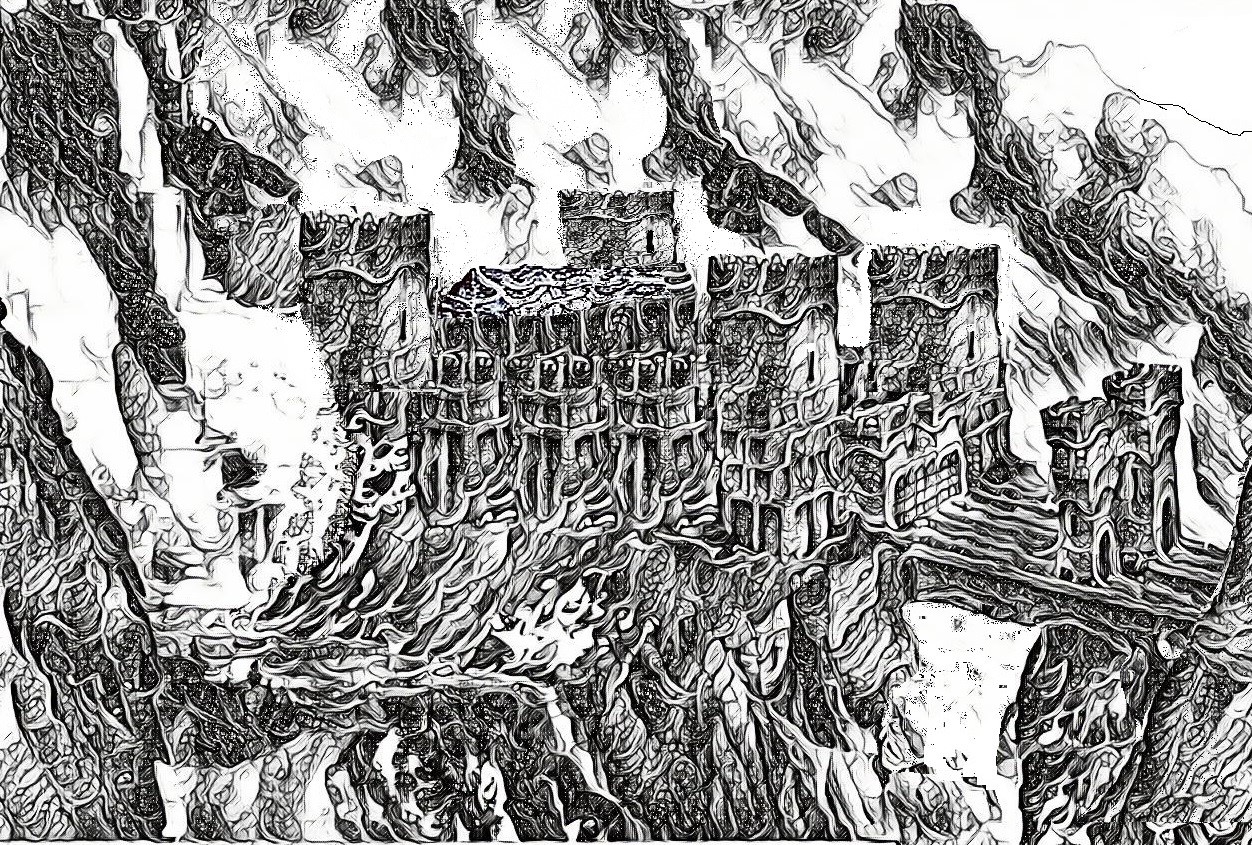
IHA: Şeiðrune School of Viking Sorcery is a large stone Fortress carved into the side of Mount Freyja, in the Asgard Mountain Range located in Antarctica. The students and instructors Şeiðr blood protects them from the extreme cold. As long as their life force (Magick energy) remains charged and strong, the most extreme weather cannot harm them. But, as their life force weakens, they become more vulnerable. The school is open from September to May. The Antarctica summer months and constant daylight. But with the aid of a separate Time Dimension & the Magick of the fortress… The Mountain receives a standard – sunny days & Dark nights which helps regulate the students sleep and rest patterns. The separate time dimension also makes the school and its inhabitants invisible to MUNDANE (Non-Magick folks) travelers and explorers. Only those with Magick abilities can see Şeiðrune Fortress.
4Q: Do you envision a series of novels with Merlin Ragnarr?
IHA: Yes. The series will be 9 books. Nine is the Magick number of the Viking culture.
I am 40 pages into the 2nd book of the series…

4Q: In your opinion, what make a story great?
IHA: I believe a great story has to have a great tale to tell. Within that tale, Characters so charismatic that their constitution controls the reader’s emotions. An ending that leave the reader happy but wanting more.
4Q: What’s next for Ivan Arsenault, the author?
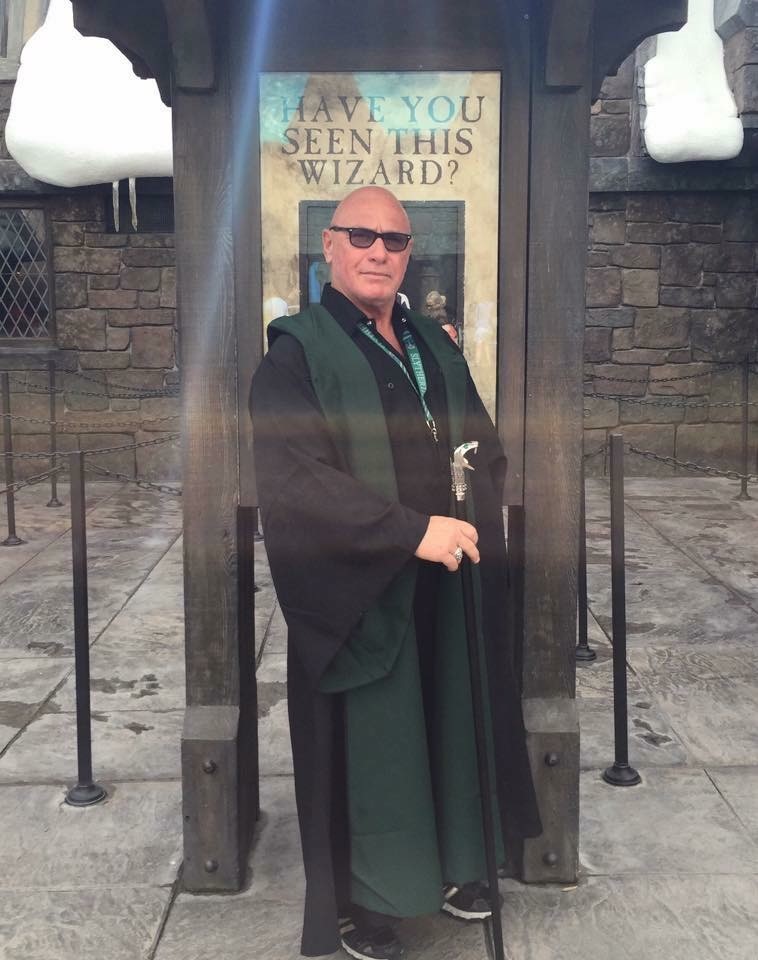
IHA: My Merlin & Şeiðrune School of Viking Sorcery will keep me busy for the next 8 years. You can find me in my Slythern Cloak at Harry Potter World at Universal Studios in Orlando or in my novels at Şeiðrune Fortress in Antarctica.
The only two places I want to be.
4Q: Anything else you’d like to share with us?
IHA: Just want to say Thank you for the opportunity to share.
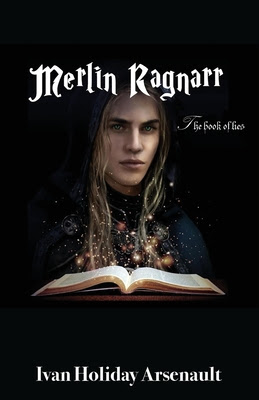
An Excerpt from Merlin Ragnarr: The Book of Lies.
(Copyright is held by the Author. Used with Permission)
After class, Merlin and the Blackwell twins met up with Angus, Mouse and Jenna Bug just outside of the Barnstokkr Lodge.
As they approached the archway, they spotted an athletically built lad sporting dark brown hair and matching eyes. He was talking to Vladimir Toth and his posse. His voice was cool and calm as he addressed the group.
“Why don’t you save this pissing contest for the dueling room?”
One of Vladimir’s friend’s spoke up.
“This has nothing to do with you, Iverson.”
Merlin noticed that Iverson’s Nomad cloak had a crest sewn on the left side, upper chest.
The word “Baldurhús’ with a Viking sword going down through the letter B”.
Mouse tapped Merlin’s arm. “That’s a Baldurhús Dueling Team crest.”
Iverson sized up the Helahús teen.
“I beg to differ, Sven Gaulsson. You and your boyfriends here are obviously looking for a fight.
Since I’m the number one wand duelist in Şeiðrune, I believe I have the right to first challenge.”
Vladimir Toth’s two cronies took a step back as the Baldurhús Captain tapped his index finger on the wand pocketed in his cloak.
“Sven, correct me if I’m wrong, but didn’t I kick your ass last year in this very hall at the Şeiðrune Duels. If my memory serves me right, I believe I zapped you so hard, you soiled yourself.”
Sven’s face turned blister red. “I did not!”
“Why Sven Gaulsson, are you calling me a liar?” Sven realized he’d been baited.
“I don’t want any trouble with you, Jackyl.”
“You’re not as stupid as you look, Sven.”
Jackyl turned his assertive gaze to Vladimir Toth.
“What about you Marilyn Manson? Want a shot at the title?”
“You don’t scare me.”
“I think we have a challenger here, boys and girls.” Two Helahús Nomads grabbed the overzealous Toth saving him from a clear-cut wand whopping.
Jackyl grinned.
“You just got saved from the most embarrassing day of your life.”
Thank you, Ivan for sharing your thoughts and the excerpt. Wishing you continued success on your writing journey.
For you readers wanting to know more about Ivan and his writing, please follow these links:
https://www.amazon.com/Ivan-Holiday-A...
Leave us a comment!

June 6, 2020
Author Fereshteh Molavi of Toronto, ON
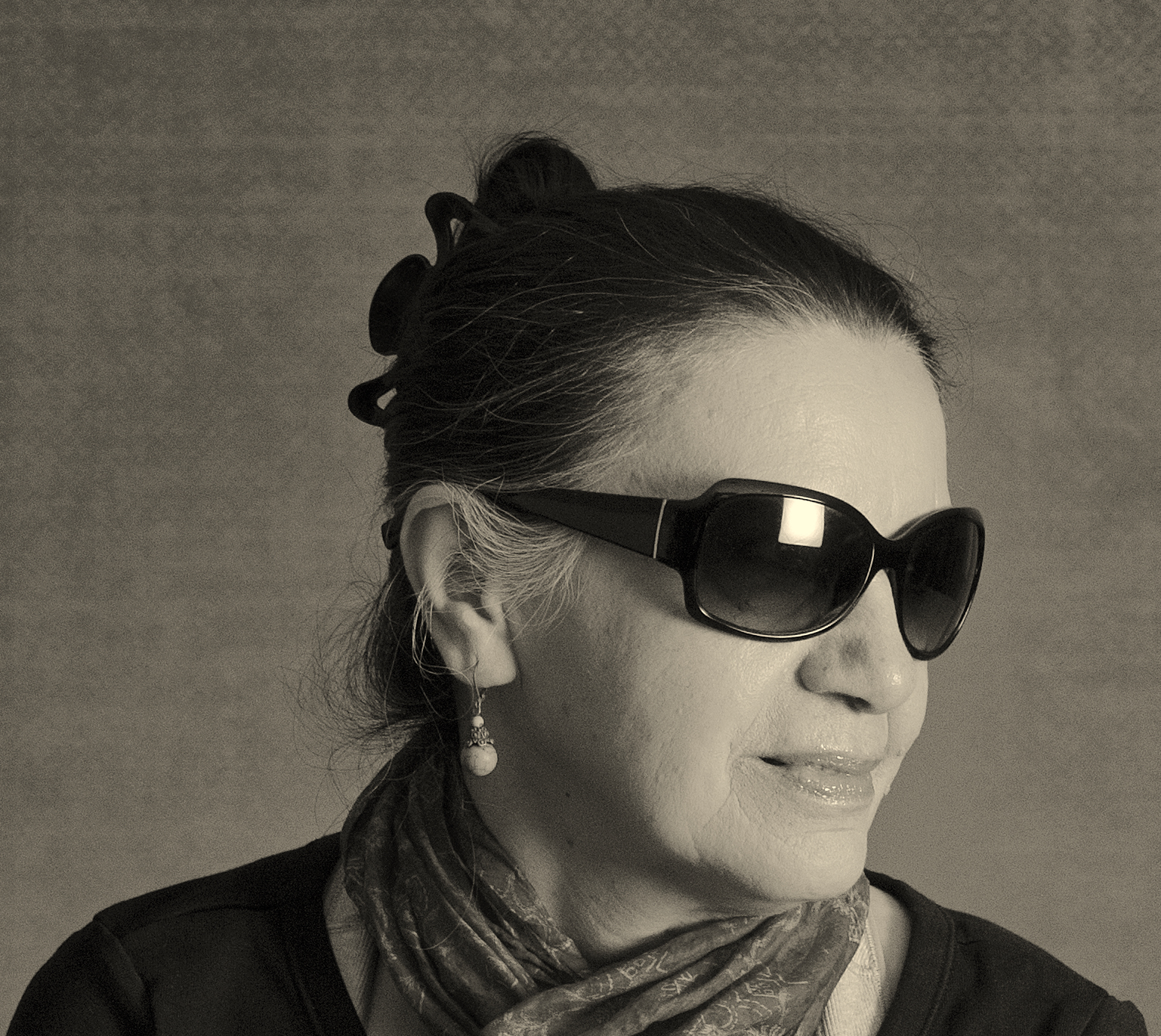 Photo credit: Hoda Ghods
The Scribbler is most privileged to have Fereshteh as out featured guest this week. Upon meeting her online through our mutual love of reading and writing, she informed me that she was a previous participant in the Frye Festival in my hometown of Moncton, NB.
I had the pleasure of visiting her website - https://fereshtehmolavi.com/- and discovering more about her extensive list of publications.
“Born in Tehran in 1953, Fereshteh Molavi lived and worked there until 1998 when she immigrated to Canada.”
She has graciously agreed to a 4Q Interview and is sharing the synopsis of her latest novel – Thirty Shadow Birds.
Born in Tehran in 1953, Fereshteh Molavi lived and worked there until 1998 when she immigrated to Canada. She worked and taught at Yale University, University of Toronto, York University, and Seneca College. A fellow at Massey College and a writer-in-residence at George Brown College, Molavi has published many works of fiction and non-fiction in Persian in Iran and Europe. She has been the recipient of awards for novel and translation. Her first book in English, Stories from Tehran, was released in 2018; and her most recent novel, Thirty Shadow Birds, has been published by Inanna Publications in 2019. She lives in Toronto.
4Q: Please tell us about your newest work – Thirty Shadow Birds – and its compelling title.
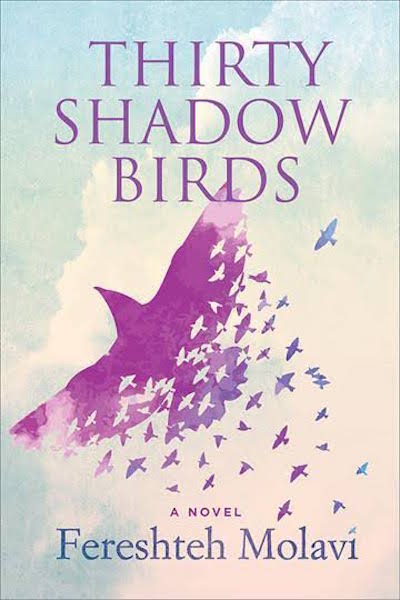
FM: Thank you very much for hosting me on your blog, Allan! First, I’d like to say that it took me about ten years to finish this book and to get it published. Thirty Shadow Birds has a special meaning for me, not only because it’s my first novel in English published by a Canadian publisher, but also because it reveals what life means here and now in such a diverse country like Canada. It is the story of one individual among numerous ordinary people around us who are considered visible but might remain invisible to us for good – the story of a woman who, finding herself tangled up with her troublesome past and challenging present, seeks to first meet, and then to preserve, her soul.
The polysemous title of the book comes up from the roots of the story. While it looks simple and clear, it has a connotation. Those who know something about Sufism and classical Persian poetry, can easily sense the undercurrent. Other readers will gradually get it in the process of reading the novel. The number ‘thirty’ in the title declares the number of birds, however, the Persian equivalent of ‘thirty bird’ implies the literary allegory used in the famous masterpiece of the great Persian poet and sufi, Attar. In his work, The Canticle of Birds, the philosophical concept of ‘unity in diversity’ attends a metaphysical ideal. On the cover of my book, though, the title, first and most, refers the readers to what they may find in the novel.
4Q: You have an impressive list of publications – two novels, a chapbook, short stories, anthologies and journals. One that stood out for me is Dogs and Humans – a short story from a compilation titled - The Shipwrecked: Contemporary Stories by Women from Iran. Can you tell us about it?
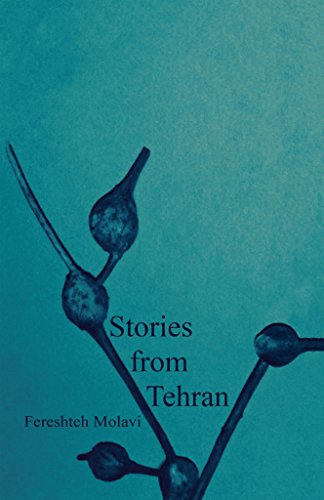
FM: So far I’ve published five novels, four collections of short stories, and many chapbooks – not to mention my essays and my translations. The story included in The Shipwrecked is in fact the cover story of a collection published in Persian both in Iran and North America (the latter is available on Amazon). The English translation of it by myself, with the title Of Mutts & Men, is also included in Stories from Tehran. The story is a narrative of a working mom whose little son is ill during the time of war and municipal campaign to kill stray dogs.
4Q: Care to share a childhood memory or anecdote?
FM: If you don’t mind, I’d rather share an anecdote about censorship in my home country, which I ironically call it “wonderland”:
In my wonderland every book should be reviewed by the book censorship office in order to get permission for publication and distribution. Some years ago, while waiting for permit for one of my novels, my publisher informed me he had failed to get it. I felt devastated because a rejected book meant my baby book was stillborn. Later on I was recommended to try my luck by changing the title of the book so that the censorship officers could not recognize it as an already rejected one. Confronting the harsh reality of book censorship, I eventually changed the title and it worked.
4Q: I’m always intrigued by stories from different cultures and upbringing. Let’s talk about your book – Stories from Tehran.
FM: During my first years of living in Toronto, I realized I had nothing in my hand to prove that I was a “real author” back home. I had to redefine myself for those who didn’t know me. So, I started to gradually translate some of my short stories which eventually appeared in this collection years later.
Regardless what Stories from Tehranmeans to me personally, it includes stories uncovering the voices of Iranian women who resist oppression and marginal identities. The characters find themselves in an in-between zone that shrinks or expands the possibilities of freedom they imagine might be theirs. Nevertheless, they don’t want to leave the impression that their narratives primarily concern their loneliness, suffering, despair, or defeat.
4Q: Please tell us about your participation in the Frye Festival in 2011.
FM: I attended Frye Festival in 2011 with great surprise and pleasure. If I’m not mistaken it was the first year that an immigrant writer was invited to the festival. I was invited because was a member of ‘Writers in Exile’ program of PEN Canada, a fellow of Massy college, and a writer in residence in George Brown College. Participating as a writer in such a great literary festival as well as visiting Moncton for the first time became a remarkable memory for me. The highlight of the memory for me was a panel in which I took part with authors like Jean-Christophe Rufin.
4Q: I’m interested in your writing habits. Where are you most creative?
FM: When it comes to working on a project and writing, I’d like to maintain order and structure. Nonetheless, I’ve lived a life full of commitments and constraints as well as bonds and burdens. In my most productive years of writing, I could hardly develop good habits and get hooked on them. In fact, the biggest challenge was my job obligations or motherly duties prevented me from writing when I felt un urge to write. Having said that, when the need to write insists, nothing matters except finding a way to go into lockdown.
4Q: With your roots in another country, your homeland, has your writing styles or story subjects changed over time with your move to a different country?

FM: Well, I think subjects may change mostly over time rather than place. But moving to North America has brought about a noteworthy change in my writing. Back home, I started with short stories, then I became more inclined towards novels. I discovered the wonders of essay writing, particularly personal essay, in my years of stay in Canada and US. As a matter of fact, living as an immigrant opened up the new realm of possibilities for me, among them, the most amazing one was non-fiction writing. Although I always love crafting stories, I realized that I cannot be a real writer unless I develop and improve my writing skills in all genres.
4Q: What’s next for Fereshteh Molavi, the author?
FM: Right now, I’m working on my sixth novel (The Ambush) I started a couple of years ago – I know I am as slow as a snail in writing. This novel is in Persian and a proof that I have to switch back and forth between two languages.
4Q: Anything else you’d like to share with us?
FM: I’d like to take this opportunity to draw your readers’ attention to the complicated situation in which an immigrant writer writes. The dilemma for her is basically the fact that she should live and move in between two languages, two cultures, two worlds. Some years ago I wrote an essay entitled “A Clumsy Little Story” (https://www.openroadreview.com/2016/05/06/clumsy-little-story-fereshteh-molavi/) to describe the double bind of an immigrant writer. For better or worse, it is what it is. But there is also a problem that might be solved. Clearly, it’s much harder for an immigrant or a member of any minority groups to make connections, build a network, and find either an agent, or a publisher. It took twenty years for me to become a traditionally published author in Canada. But accessibility of my book doesn’t mean visibility. If Canadian literati ignore the works of immigrant writers, these books will fail to not only make a splash but also survive.
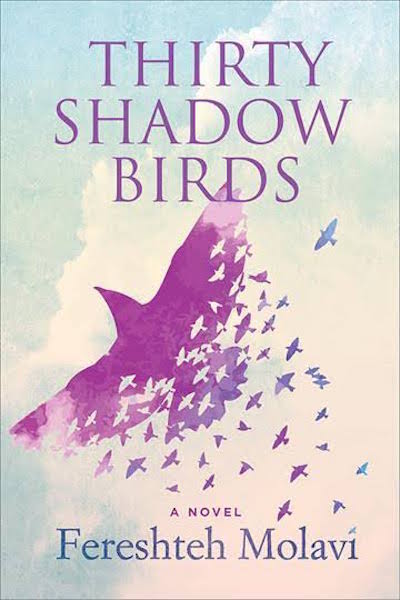
Twenty Shadow Birds.
A synopsis.
To pursue her dream of building a life free from violence for her son and herself, Yalda flees from her nightmarish past as well as her troubled homeland, Iran. But in her new haven, she realizes that nightmares haunt not only her past, but also her present and future. She does what she can to survive, but all her plans dissolve like the shadows and ghosts that follow her. Having fled from an authoritarian regime, and now living in a North America panic-stricken by global terrorism, Yalda is obsessed with all the forms and aspects of violence. She is estranged from her beloved son, Nader, who trains to become an armed security guard, and this means he is wearing a uniform and carrying weapons, prepared to be violent. She cannot forget that her first love was shot and killed by a young prison guard and that her beloved stepbrother also met a violent death. This family history is a wound that makes guns taboo and Yalda yearns to feel safe in a troubled world. The novel is part memory, part dream, and part present, day-to-day struggles for immigrants living in Toronto and Montreal.
Here’s a link to my short reading from the book:
Thank you, Fereshteh, for being our guest this week. Wishing you continued success in your writing journey.

FM: Thank you again for having me, Allan!
For you Dear readers interested in discovering more about Fereshteh and her stories, please follow these links:
Inanna Publications: https://www.inanna.ca/product/thirty-shadow-birds/
Amazon: https://www.amazon.com/Fereshteh-Molavi/e/B01AZJO0EW?ref_=dbs_p_ebk_r00_abau_000000
Amazon Canada: https://www.amazon.ca/s?k=fereshteh+molavi&ref=nb_sb_noss
Indie Bound: https://www.indiebound.org/search/book?keys=thirty+shadow+birds
May 30, 2020
Writer, Ritter, Wrangler JM Landels of Langley, BC
The Scribbler is pleased to do a series of guest appearances in conjunction with Creative Edge Publicity of Saskatchewan, Canada. (See below for more of Creative Edge)
This month, our featured guest is JM Landels.
The title above is taken from her website - http://jmlandels.stiffbunnies.com/ -followed by a unique notice:
“The Wicked Lady Writes Again”
If that’s not enough to make you curious, the beautifully illustrated novels will make you want to delve deeper to discover more about this multi-talented lady.
The Scribbler is most fortunate to have her participate in a 4Q Interview and share an excerpt from Allaigna’s Song: Overture
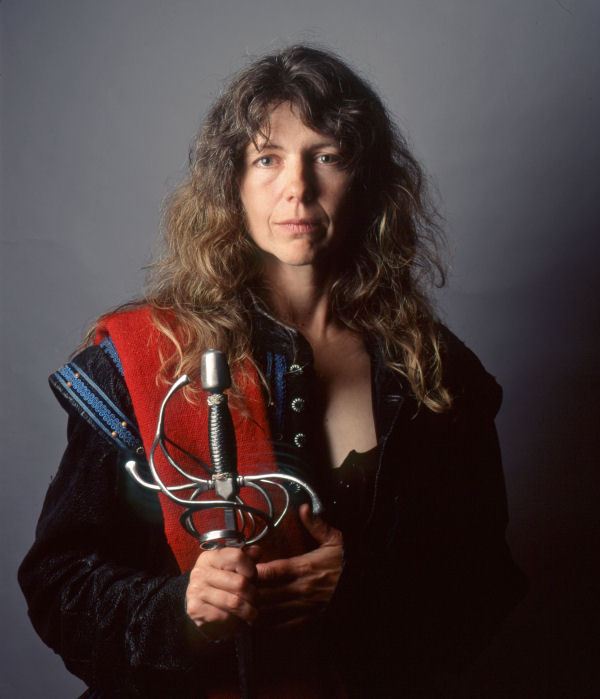
JM Landels, writer and illustrator of the Allaigna's Song trilogy and co-founder of Pulp Literature wears far too many hats. The strange mix of a degree in Mediaeval English Literature, a misspent youth fronting alternative punk bands Mad Seraphim and Stiff Bunnies, and a career as a childbirth educator and doula informs her work. These days, when she isn't writing, editing or drawing, she can be found heading up the Mounted Combat Program for Academie Duello in Vancouver BC where she swings swords and rides horses for fun and profit.

4Q: You’re obviously a busy lady and we appreciate you taking the time-out to talk about your work, writing and hobbies. How do you manage to do all you do?
JML: A combination of stubbornness and the ability to get by on very little sleep. I have a bad habit of turning my hobbies into careers, and thus have far more simultaneous careers than is sensible.
4Q: Tell us about Allaigna’s Song which looks like an interesting and compelling series.
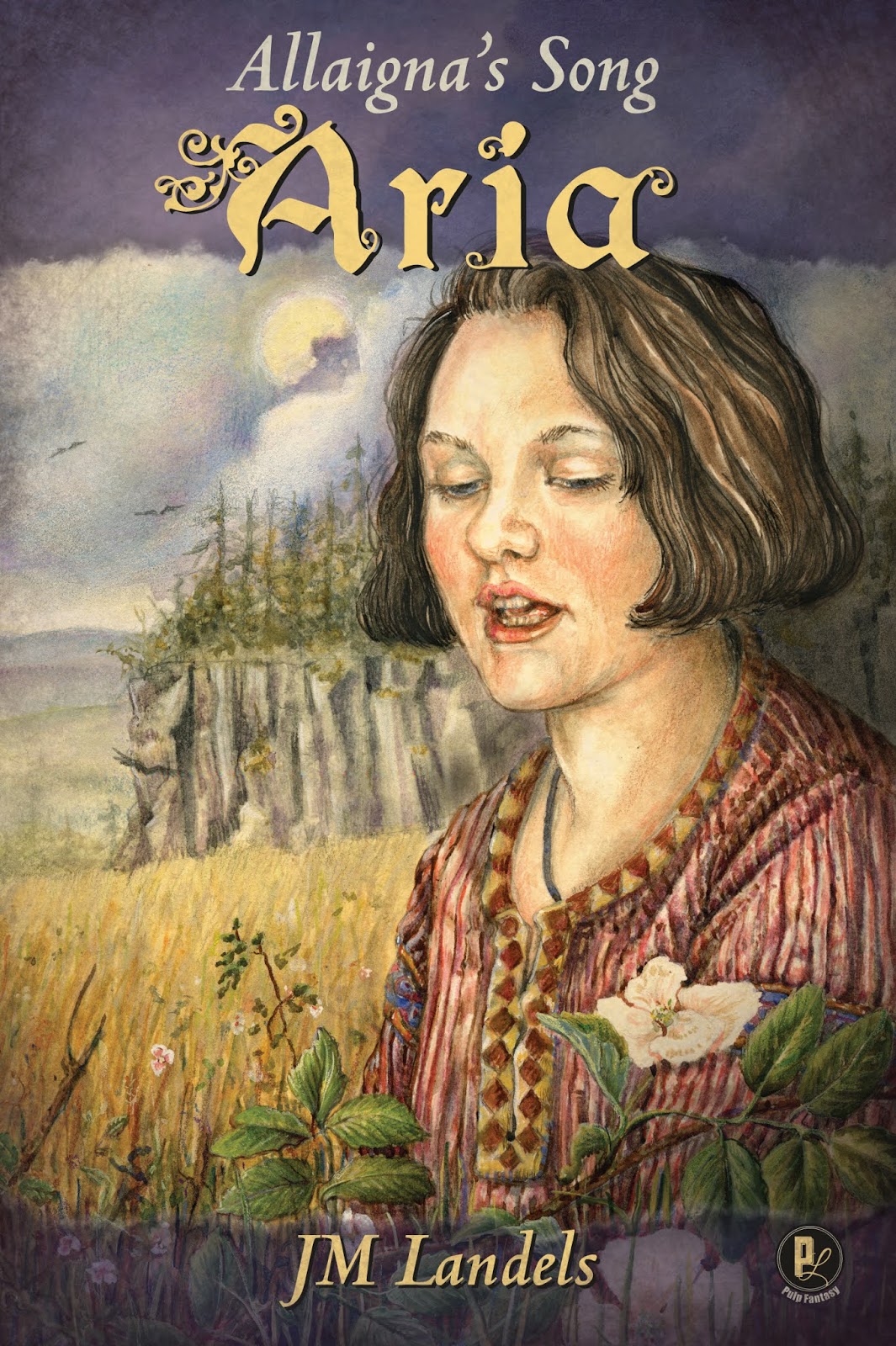 JML: Allaigna’s Song is a series about the making of a hero. As a young girl, Allaigna discovers she has the ability to create magic from music when she accidently sings her baby brother to sleep … and nearly kills him. The three novels follow her journey from child to adult as family secrets, politics, and the hand of fate guided by her precognizant grandmother shape her. The stories of her mother, a princess who mysteriously disappeared en route to her wedding, and her grandmother, a travelling midwife who married a prince, are told in parallel, their stories circling and illuminating Allaigna’s. While the series is very much a high fantasy epic, filled with magic, sword fights, and action, it is, at its heart, a story about mothers and daughters.
4Q: Please share a childhood memory or anecdote.
 JML: I had an incredibly fortunate childhood, though most people wouldn’t consider living with a single parent in a one-room cabin with no electricity or running water lucky. Even though I didn’t have television, or nearby friends to play with after school, I had a pony and freedom. Some of my fondest memories are of slipping a bridle on my pony, hopping on his bare back, and riding for hours up and down the wooded mountainsides and desert hills near Ashcroft BC. It was the sort of freedom few children have these days, and it taught me self-reliance and gave me the gift of being alone with my thoughts to daydream. To this day, the best view in the world for me is seen between the ears of a horse.
4Q: You are the managing director of PULP Literature. What can you tell us about this magazine?
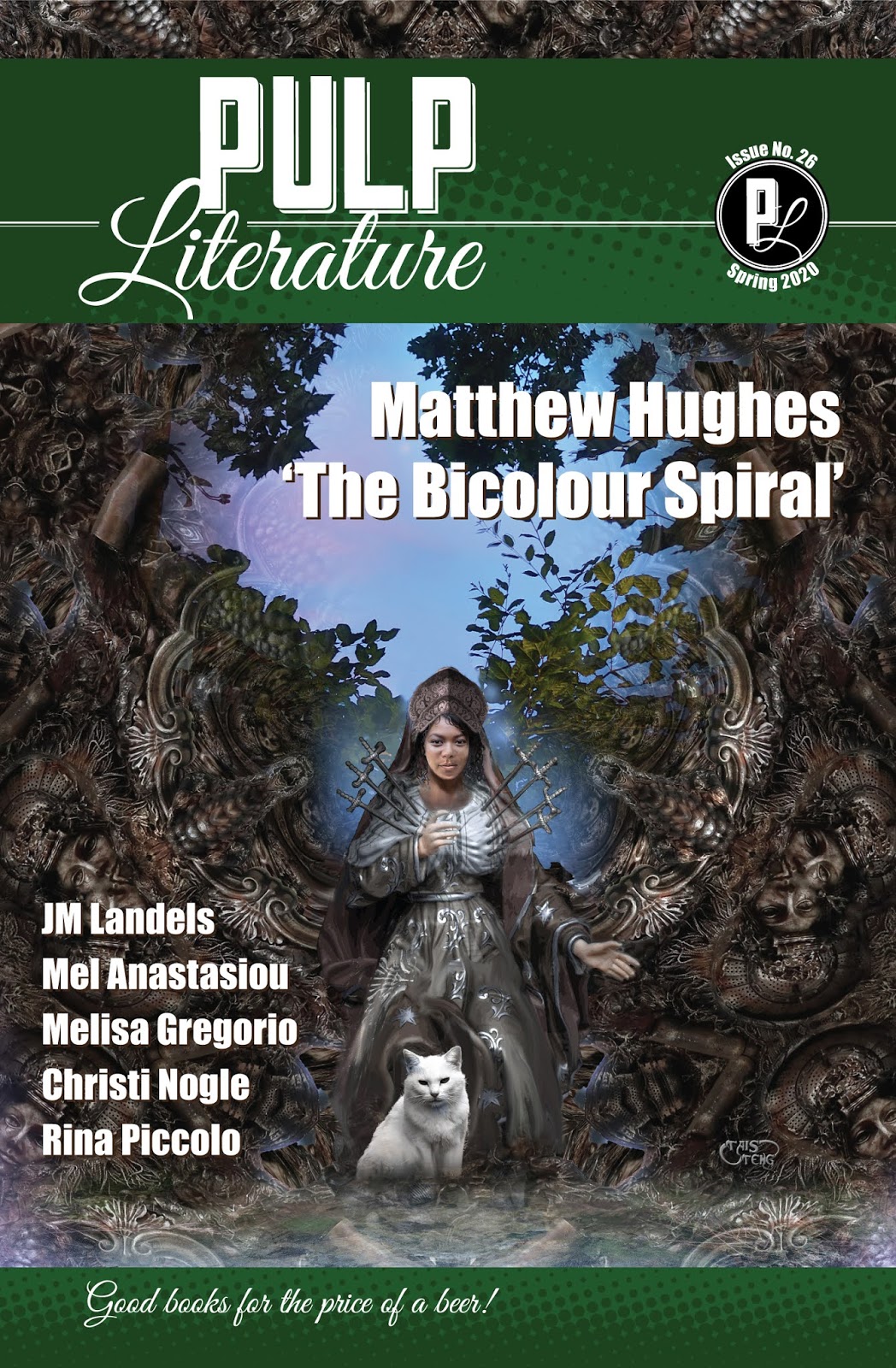 JML: Back in 2013, my writing friends Mel Anastasiou, Susan Pieters, and I were sitting on Mel’s deck drinking beer, lamenting the lack of short fiction venues in the country. Thanks to the beer, we decided to start our own magazine. We ran a Kickstarter to fund the first issue, and when that was successful, we kept going. Our mandate was to anchor each issue with a well-known author writing outside their usual genre, and provide a venue for emerging writers to ride along. Twenty-six quarterly issues later, the magazine is still going strong, and we have expanded into publishing novels and writing guides. This year we’re also launching our writing mentorship program, Quit the Day Job, starting this summer.
4Q: You’re also an equestrian and teach mounted combat. It must be thrilling. Is it dangerous? What draws you to this pastime?
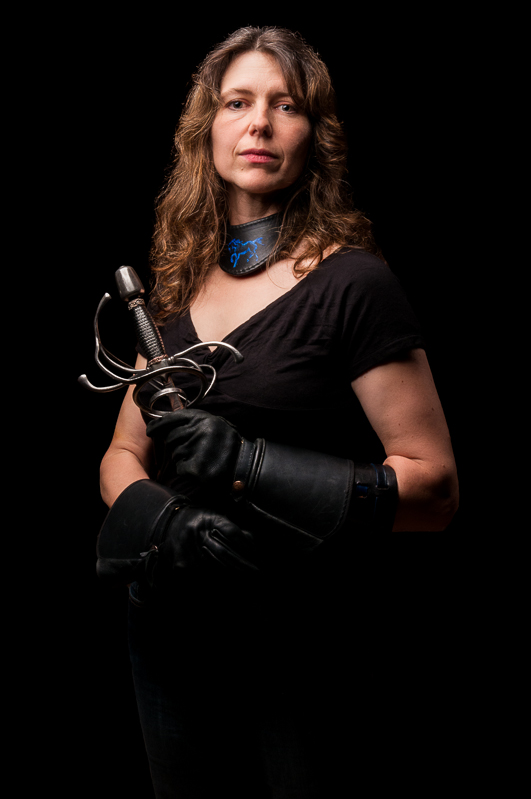 JML: I’ve always loved swordplay, even back to when my best friend and I used to fence each other with riding crops. I did some sport fencing in university, but found foil uninspiring. In 2008 I was researching 17th century rapiers for a novel (which I’ve only started writing recently: The Shepherdess, featuring a shepherdess-turned-spy in 17thcentury France) and came across Academie Duello, a school of swordplay right here in Vancouver. I was intrigued, and then promptly hooked. After being a student of historical swordplay for a couple of years, I decided to combine my two passions of horses and swords, and created the Mounted Combat program.
 It is, in fact, much safer than many equestrian sports such as eventing or showjumping. We use nylon swords for the sake of the horses, and are very careful of each other and our mounts. Of course, a thousand-pound animal that has a mind of its own always adds a bit of unpredictability to a swordfight, but it’s the added challenge of riding while sparring that makes the art interesting.
*** Eventing (also known as three day eventing or horse trials) is an equestrian event where a single horse and rider combine and compete against other competitors across the three disciplines of dressage, cross-country, and show jumping.
4Q: What’s next for JM Landels, the author?
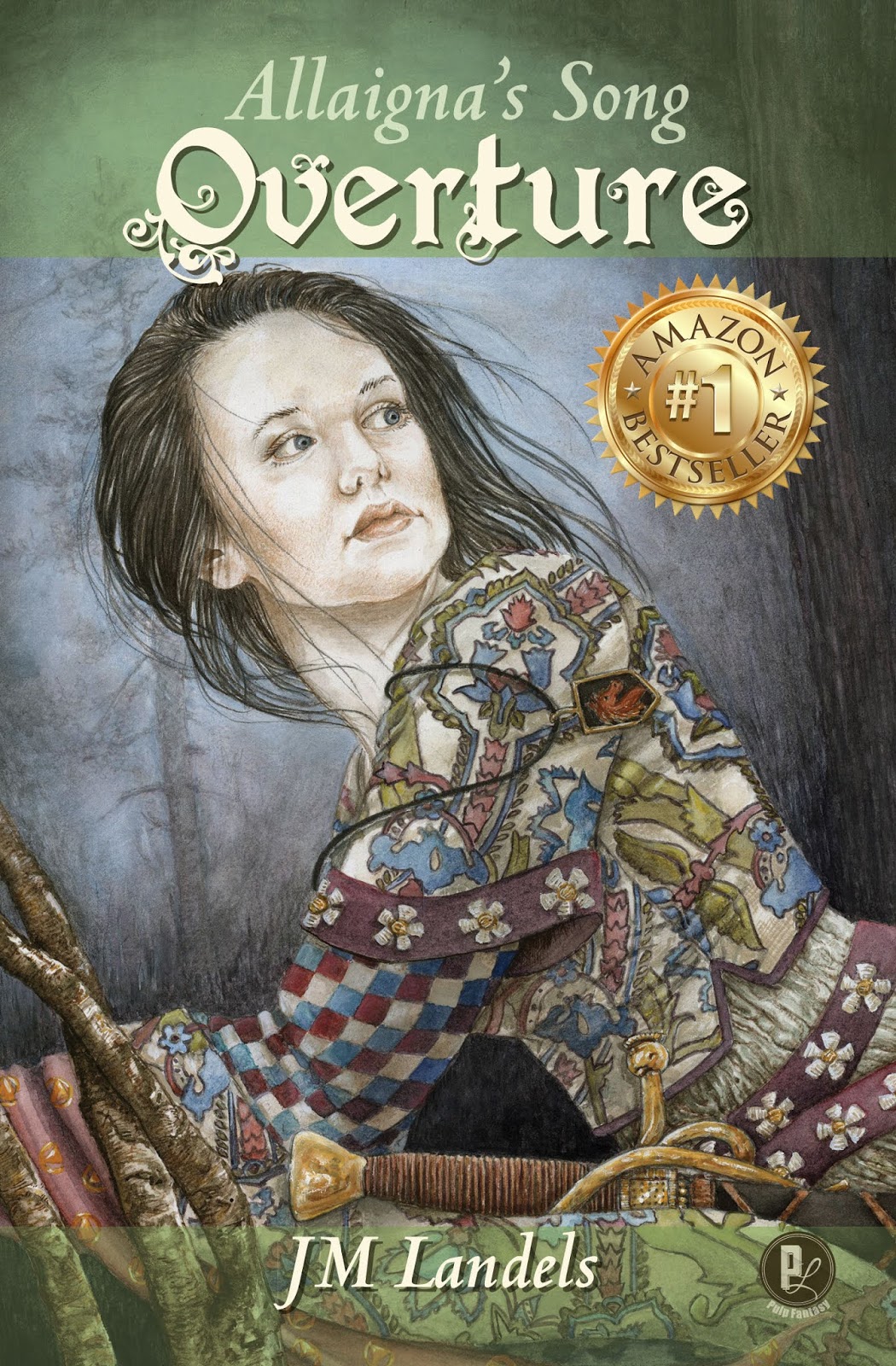 JML: After the release of Allaigna’s Song: Aria this spring, I’m working to get the third book Allaigna’s Song: Overture ready for release in late 2021. I’m also working on the Shepherdess series, which is being serialized in Pulp Literature at the moment. I’ve got loads of places for my little spy to explore, from Versailles to Chantilly, Paris to London, and Carcassonne to St Petersburg, so there are years of writing for me and adventure for her ahead of us.
4Q: When you are feeling the most creative, where would we find you? Your writing habits?
JML: I write most of my first drafts during weekly writing sessions with Mel and Sue, my fellow Pulp Lit founders. Second draft used to happen in the Starbucks near my dance studio, but since the Covid shutdown I’ve lost that venue. I try to squeeze it in here and there in between other work, but I’m getting behind on that front. Third draft and beyond happens in the wee hours between midnight and 3am, the time when the house is quiet and the phone doesn’t ring.
4Q: Favorite authors? Who inspires you the most?
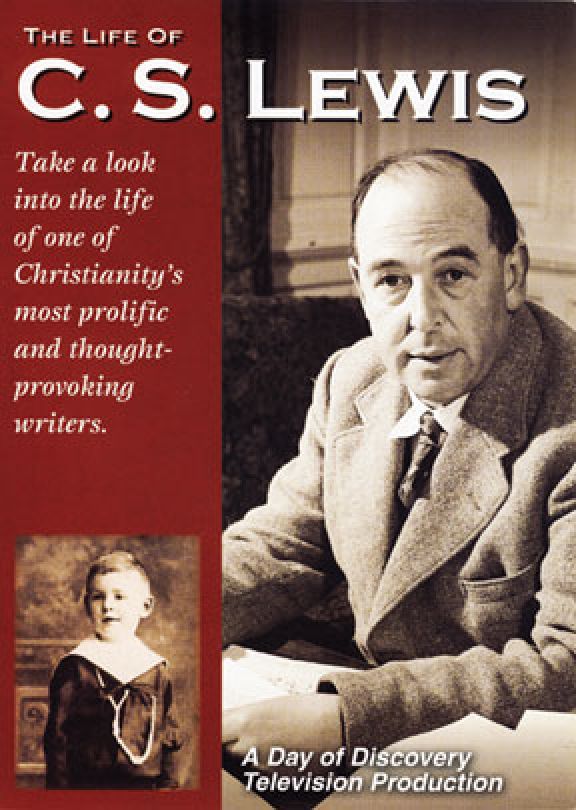
JML: Margaret Atwood, Barbara Kingsolver, Kate Atkinson, and Mary Gentle are all writers whose prose and creative imaginations I admire and aspire to. CS Lewis was probably my earliest inspiration, and I am still deeply fond of CJ Cherryh, Julian May, Ursula LeGuin, and Anne McCaffrey.
4Q: Anything else you’d like to share with us?
JML: I consider myself to be incredibly lucky to be blessed with a supportive spouse that tolerates my writing and career-collecting habit, and is an excellent fencing partner to boot. I couldn’t have achieved half of this whilst raising a family (who seem to have turned out fine) without him.
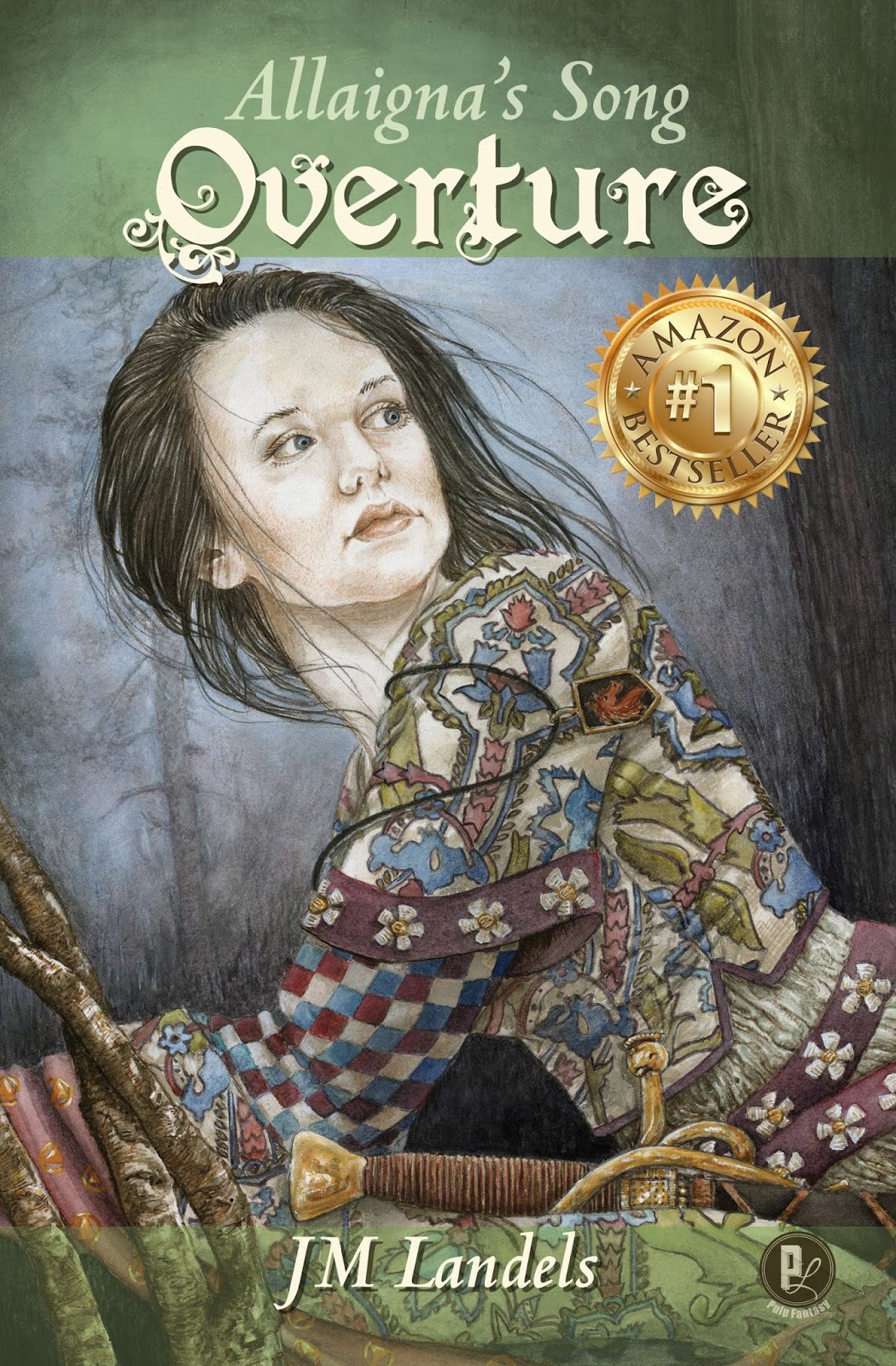
An Excerpt from Allaigna’s Song: Overture
(Copyright is held by the author. Used with permission)
Allaigna’s Song: Overture
Verse 1:
Brothers, Sisters, and Lullabies
If you walk down the grand staircase of Castle Osthegn, you will see a family portrait. It is placed across the landing from the wide steps so that your eye is drawn helplessly into the picture as you descend. Such is the skill of the Leisanmira painter that you are almost convinced the little girl on the right will jump out of the frame and take off pell-mell into the courtyard. And you can tell that is what she wanted to be doing when the image was painted.
The little girl was me.
There are other, more formal, paintings of my family members, individual and grouped, spread throughout the fortress. But the one at the bottom of the stairs is the only one that tells me a story. In this painting I am shown in my favourite red tunic of soft flannel — the one my nurse turned into handkerchiefs when I grew too large for it — and loose-fitting trousers rolled to the calf above grubby bare feet. My mother’s arm is around me, her fingers creasing the cloth beneath my arm. It is a half-hearted grip, as if holding me still takes more effort than she can afford. Her eyes are tired and her skin pale. Wisps of curly blonde hair escape a hastily pinned coif, and the bodice of her dress is askew, barely containing blue-veined and swollen breasts.
The head of the family, Lord Osthegn, Allenis Andreg, Duke of Teillai and Warden of the Clearwater Plains, stands behind and to her right. A possessive arm rests on her shoulders; the other is proudly akimbo. He beams with joy, and this is the only portrait that paints him so. In truth, it is the happiest my three-and-a-half-year-old self ever saw him. The subject of his joy rests in Mother’s right arm, its bawling ruddy face showing a remarkable resemblance to the Duke already. I don’t know why the artist didn’t portray the baby content at the breast or with an idiosyncratic smile as most painters would, but I’m glad he didn’t. This is how I remember my brother Allenry when he arrived to interrupt my life, and I appreciate the painting’s candour.
I recall that day, or one of those days. After sitting for the painter, I ran outside into the bustling lower court, where chickens scratched in the warm sun of late spring, men-at-arms practised sword drills, and my nurse Angeley tended the herb garden. I didn’t want to talk to her right then, so I slipped between the tight-packed limbs of the hedge maze, following my own small, secret trails to the centre. I sat down in the yellowish gravel and buried my feet in sun-warmed chippings. I had a tight, lumpy feeling in my chest and warmth behind my eyes, but I didn’t want to cry. I was not going to cry over him.
There were footsteps on the gravel, trying not to be heard.
“Go away!” I threw a handful of pebbles at the place I knew she’d appear. “Leave me alone!”
My nurse bent down and examined the stones that had tumbled on the mossy verge of the path. She turned her head to look at me, her face crinkling into laugh lines.
“It’s the Huntress, Allaigna.” She held out a sun-browned hand to me. “Come and look.”
Curiosity overcame my resistance, as she knew it would, and I crawled over to see. Her fingers picked out the constellation of stones.
“Here is her head, and shoulder. This grey-blue one is the tip of her sword and here” — she delineated an arc of pebbles — “is her bow.”
With a child’s obstinacy I replied, “She doesn’t have any feet.”
“Too true, Allaigna. Where do you think they are?”
I shrugged. “Over there?” I pointed to where I’d gathered the fistful of rocks.
Angeley nodded, her eyes clouding over as they did when she was deep in thought. I followed her gaze, wondering what she could see past the impenetrable green of the hedge.
“Mmm. I think you’re right, dear. Now tell me: what’s the matter?”
The storm came back over me and I hunched into myself. Angeley waited, her hand resting on my back. Even today, I can sometimes feel that warmth between my shoulder blades when I need resolve.
“I hate him,” I mumbled into my knees.
“Allenry.”
The lumpy feeling returned, and despite my best efforts, my eyes started watering.
“He ruined it!”
The tears began in earnest and Angeley lifted me into her arms, humming softly.
“I know, I know,” she murmured. “He’s taken over your Mama … for the time being. That’s what babies do, you know. Mama and Allenry need each other now. But you have me.”
I wasn’t mollified. “But you’ll be his nurse, too!”
She shook her head. “No, darling. I came to this house to help birth and raise you. Your mama and papa will have to find someone else to help with Allenry and their other children.”
Now I was appalled. “Other children?”
She laughed. “There will be more siblings for you, Allaigna. You may get that little sister after all. You might even grow to like Allenry.”
I frowned, emphatic. “Uh-uh.”
She kissed me on the head, silencing the protest. “Never say never, dear one. Whatever you may think of him, he’s of your blood, and you will need each other one day.”
~
Angeley was right. I did like Allenry on and off, as siblings do, and we even became allies when our sister Lauriana usurped Mama’s body and attention once more. Not to say there wasn’t fierce competition between us. He grew quickly, and it was clear he would have the bull-like physique of our father. By the time I was ten, and he six, he had the height and more than breadth of me, though I outstripped him for a while once more in adolescence. But I am getting ahead of myself.
During Allenry’s infanthood I grew farther away from my mother and closer to my nurse. She was of the Leisanmira race, and she gave me much of her knowledge of plants and animals, healing, and midwifery. But what I loved most was her singing. All my early life I could hear Angeley singing. No matter what she was doing — gardening, sewing, reading — there was a tune percolating from her throat. It was Angeley who sang my siblings and me to bed every night. Her lullabies were devastating in their effect, and it seemed at first I was never able to hear the end of one before my eyes fell shut and locked me in sleep.
Eventually though, whether it was because I was older or simply more stubborn than my brother and sisters, I learned to keep myself awake to the end of the song. This allowed me to leave my bed once the lanterns were extinguished, and perch on the window seat, reading by moonlight. It also let me learn her songs to the end.
On a morning not long after my seventh birthday, I gained my first inkling of what those songs could do. I was in the grange loft, playing with a litter of kittens whose half-wild mother I had wooed for many weeks. I held a black bundle of fur in my arms and hummed a lullaby as it purred and nestled in. From behind me, I heard clumsy fumbling on the loft ladder.
It was Allenry. I could tell by his noisy breath and careless movements. He wasn’t allowed into the hayloft, being too young to climb safely, but that didn’t stop him.
Irritated, I wished him away, and kept my back turned. I did not want him here, interrupting my time with the kitten. With ever-louder huffing and thumping, he pulled his tiny body up through the hole in the loft floor. I sang louder, ignoring him, drowning out his presence. Gradually his stuffy-nosed breathing slowed and deepened. I could hear him yawn. I reached the final chorus of my song and at last turned a glaring eye on him. He stood, eyes closed, stubby toddler body swaying with sleep.
I watched in fascinated horror as he collapsed backward and fell down the trapdoor.
The next few moments were a frantic blur, and I have no idea whether I climbed or jumped down after him. He lay wailing, his face no more than a wrinkled red apple with a giant hole in its middle. I clapped a hand over his mouth, terrified someone would hear, and wrestled with the decisions every child makes at the scene of a sibling accident: whether to stay and console, run for help, or hide and pretend not to have seen what happened.
The decision was made as Allenry’s nurse came running in, our two-year-old sister slung across her hip.
“What have ye done? Wicked girl!” She dumped Lauriana on the barn floor and rushed to Allenry.
Instead of answering, I ran.
Thank you, JM, for being our guest this week. Wishing you continued success with your writing and other endeavors.
For all you wonderful readers wanting to discover more about JM, our talented visitor, please follow these links:
http://jmlandels.stiffbunnies.com/
https://twitter.com/jmlandels
https://www.facebook.com/AllaignaSong/
https://pulpliterature.com
Creative Edge is a dynamic Publicity Company based in Saskatchewan. Founder and co-Owner Mickey Mikkelson made this statement:
Creative Edgespecializes in elevating the public profile of authors and artists through such means as (but not limited to) book signings, presentations (libraries, schools, conferences, businesses, etc.), involvement in applicable events, media interviews (including podcasts and print media), and soliciting of reviews from influential reviewers and bloggers.

May 23, 2020
Award Winning Author Jan Sikes of Texas, USA.
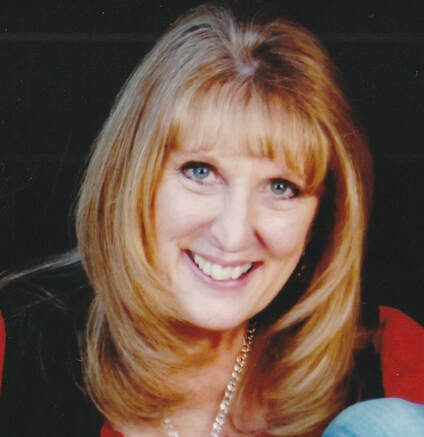
When you visit Jan’s website, you are greeted by the following:
Jan Sikes weaves stories in a creative and entertaining way. “…a magician and wordsmith extraordinaire…”
The author of four biographical fiction books, a book of poetry, she is also a musician and writes songs to accompany her written words, recorded with her husband Rick Sikes.
The Scribbler is most fortunate to have Jan as our featured guest this week.
Jan Sikes openly admits that she never set out in life to be an author. But she had a story to tell. Not just any story, but a true story that rivals any fiction creation. You simply can’t make this stuff up. It all happened. She chose to create fictitious characters to tell the story through, and they bring the intricately woven tale to life in an entertaining way.
She released a series of music CDs to accompany the four biographical fiction books and then published a book of poetry and art to bring the story full circle.
And now that the story is told, this author can’t find a way to put down the pen. She continues to write fiction and has published many short stories with a series of novels waiting in the wings. She is a member of Authors Marketing Guild, The Writer’s League of Texas, the RAVE REVIEWS BOOK CLUB (RRBC), the RAVE WRITER’S INT’L SOCIETY OF AUTHOR (RWISA), sits on the RWISA Executive Council and hosts a monthly RAVE WAVES blog talk radio show, ASPIRE TO INSPIRE.
4Q: Before we discuss your novels, please tell us about your keen idea of composing music to accompany the stories. How original!
JS: My first four books totally evolve and revolve around music. They are true stories told in fiction format. The story is about a Texas musician and the crazy paths his life took. I am a character in the stories (which is the main reason for the fictitious characters I created.)
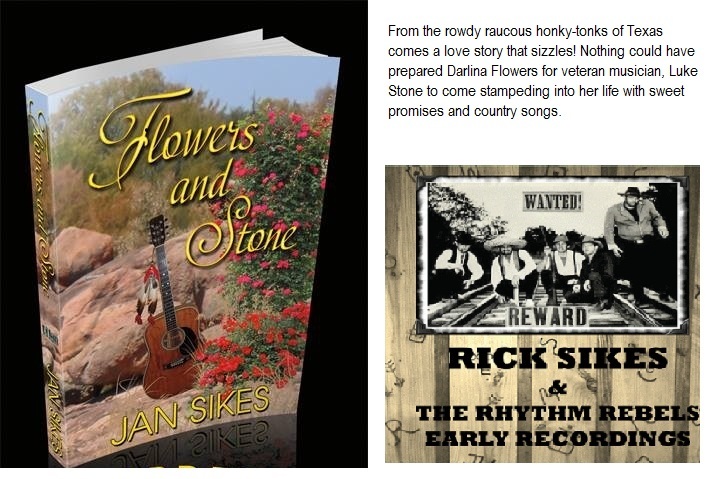 But, because the basis of the entire story is music, I decided to release a music CD with each book that matches the time period of the story. For example, my first book, “Flowers and Stone,” is set in Abilene, Texas in 1970. So, the CD I released with that book is a compilation of original songs taken from 45 rpm records. Anyone remember those?
May 16, 2020
Award Winning New Brunswick Author Susan White.

The Scribbler takes great pleasure in having Susan, a widely recognized author, as our featured guest this week. At the time of writing this interview, the good news is that Susan’s novel – Fear of Drowning – has been shortlisted for the best in Fiction of the New Brunswick Book Awards. Congratulations Susan!
The author of eight novels with another only weeks away, she is an accomplished storyteller. We are more than pleased to have her participate in a 4Q Interview and she is sharing an Excerpt from When the Hill Comes Down
Pg. 24.
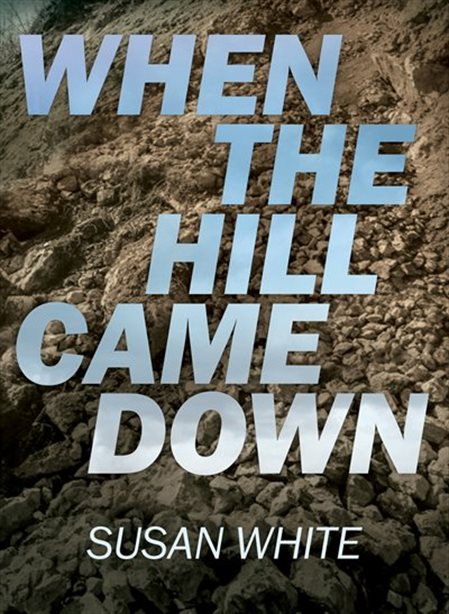 “My parents died when I was three weeks old. I have never even seen a picture of them. The house was destroyed and they were killed. Suffocated, they say, when the house collapsed and the mud came in. It sounds crazy, and I don’t talk about it, but I want you to know what happened. People talk about it as if it was a horror movie. People tell the story like I was an extra or a prop. Just an afterthought in the good story it makes when a whole house fills with the rushing flood of an avalanche of mud, rocks, and debris, knocking out windows and collapsing walls. She threw me out. They don’t know for sure it was her, but I like to think it was. I landed on the roof of the veranda and somehow I was still there when they found it on the ground hours later. ‘Wrapped up in a blanket and not even crying,’ my aunt Helen always said. That’s what they base their theory of me being simple on. A baby wide-eyed and not even crying after dropping two storeys must have some damage to his brain. Plus the fact I didn’t talk until I was four years old.
I wanted to tell you the story myself. The damn story seems to be all anyone cares to know about me. You would think after fifteen years it might fade, but instead it just gets better, more farfetched, and more entertaining, apparently, to everyone but me. I would be happy if I never heard the story again. I thought about not telling you and just enjoying knowing one person who doesn’t know the story. But I figured you probably knew it by now anyway and wouldn’t even show up.”
Susan White was born in Moncton NB, moved to Fredericton at age eight and at the age of twelve moved to the Kingston Peninsula. She earned her BA and B Ed at St. Thomas University fulfilling one of her childhood dreams of becoming a teacher. She and her husband Burton raised four children, ran a small farm and Susan taught elementary school for 29 years. She retired in 2009 to follow another dream which was to be a writer.
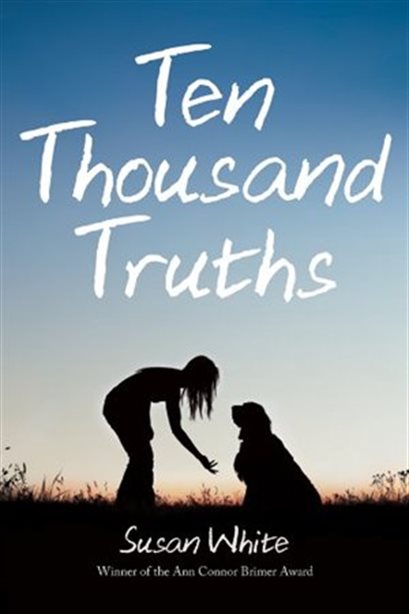 Susan White’s first book The Year Mrs. Montague Cried was published in 2011. It won the Ann Connor Brimer Excellence in Children’s Literature award in 2012. Three more Y/A novels, Ten Thousand Truths, The Sewing Basket and The Memory Chair followed. The Memory Chair was shortlisted for the Ann Connor Brimer in 2018. Her first adult novel Waiting For Still Water was released in June 2016 and her second adult novel Maple Sugar Pie in 2017. Her Y/A novel Headliner was released in 2018 and was shortlisted for the Mrs. Dunster Fiction NB Book award in 2019. Fear of Drowning was released in 2019 and her latest adult novel When the Hill Came Down will be released soon.
4Q: Let’s talk about Fear of Drowning and the excitement of being shortlisted for Mrs. Dunster’s Fiction Award.
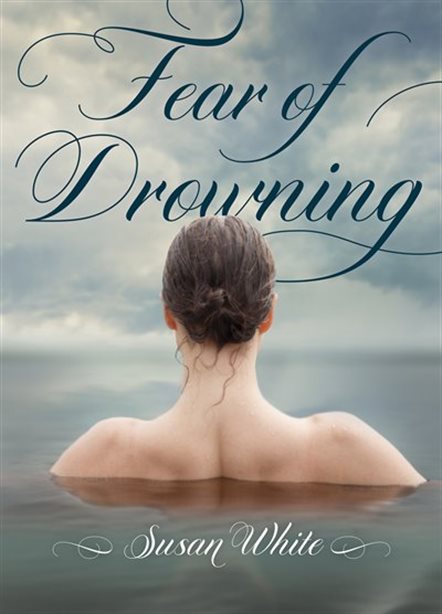 SW: In March I received word that Fear of Drowning was shortlisted for the Mrs. Dunster’s Fiction Award. I was thrilled. I felt the same excitement last year when my book Headliner was shortlisted. The NB Book Awards Gala last year was so much fun. The organizers did a great job with every detail from the amazing cake created by Emma Hyslop and a friend, the interesting questions posed to each shortlisted author, to the great music provided by Good Timing. I was so looking forward to the gala this year but we all know why that has been postponed. I look forward to whenever that night comes. I am very proud to be an New Brunswick author and celebrate all the good work been written in our province.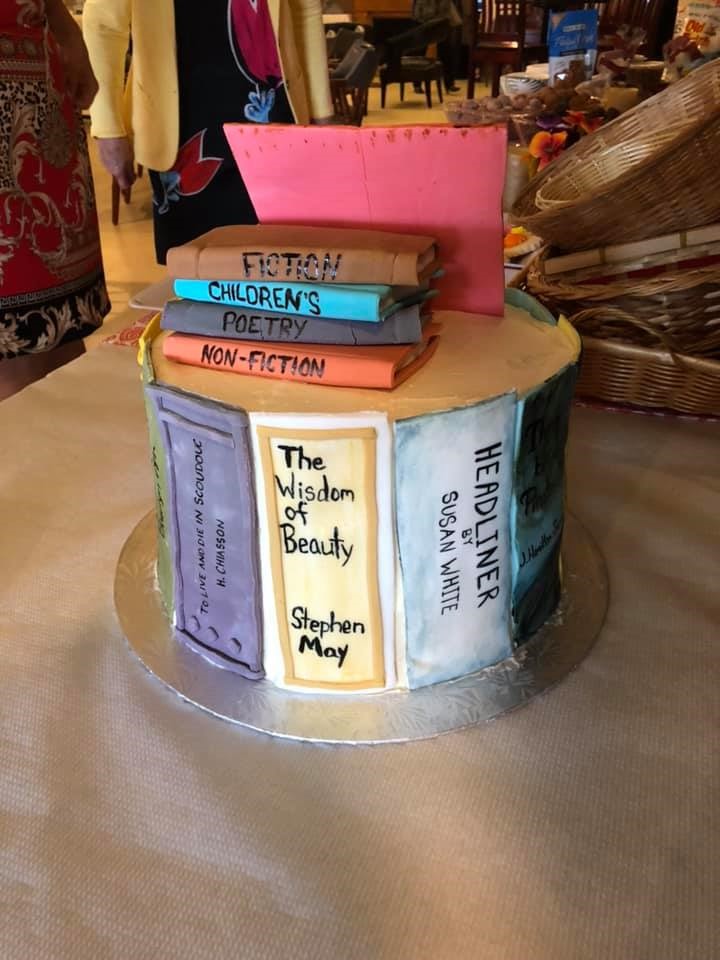
**Scribbler note: Due to the ongoing pandemic, the awards ceremony has been cancelled and as of the time of this interview, the winners have not been announced. A new date is expected to follow soon.
4Q: Your blog - https://author-susan-white.blogspot.com/- tells us that your ninth novel is coming close to reality. Can you tell us about it?
 SW: When the Hill Came Down is a fictional novel with an ecological slant. In fact, the clay and shale surface of a very steep hill that is clear cut in the mid 1950’s experiences catastrophic failure during a torrential rainstorm and destroys a nearby home killing two of its occupants. In a final act of love a mother throws her three-week-old infant from an upstairs window saving his life as the avalanche of mud and debris comes down. Keefe Williams, the child left behind grows up in the shadow of this terrible tragedy. He is taken in by his aunt and uncle; the very uncle whose lumbering practices many people believe caused the hill to come down.
When the Hill Came Down explores greed, jealousy, love, loyalty and the very fabric of a community full of stories whose threads intertwine. The color, texture and the multi facets of any story, in any community bear scrutiny. Nothing is ever exactly the way it seems.
4Q: Your novel “The Year Mrs. Montague Cried" won the 2010 AWC YA/Juvenile Novel Prize and, after publication by Acorn Press, the 2011 Ann Connor Brimer Award for Children's Literature. Tell us a bit about the story and the awards.
SW: In April 1999 we lost our oldest son Zachary in an automobile accident. I went back to my classroom in
 September and experienced many challenges dealing with the day by day of grieving and carrying on. The Year Mrs. Montague Cried is an account of that year weaving my real life experiences with a fictional story of a Taylor Broderson, a nine year old girl in Mrs. Montague’s grade four class who is experiencing challenges in her own family. While watching her teacher grieve Taylor learns much about loss and love preparing her for the difficult days to come.
I took a deferred leave from teaching in 2006-2007 to write this book and submitted it to five publishers receiving five rejections before entering it in the AWC in December 2009. It won first place in August 2010 and the sixth publisher I had submitted to contacted me and two weeks later I signed a contract with Acorn Press. The Year Mrs. Montague Cried was released in 2011 and went on to win the Ann Connor Brimer in 2012.
4Q: I know this might be a tough question but with nine novels published, which one is your favorite? The one you enjoyed writing the most.
SW: I get asked this a lot and always answer that choosing my favorite book is like asking me to choose my favorite child, not an easy or wise task. I love them all. I am probably proudest of The Year Mrs. Montague Cried because of the challenge of writing it, the truth of living it and the reward of seeing it become my first published book. I am also very proud of Fear of Drowning. It went through at least six rewrites and the final draft presented challenges as I attempted to write so many points of view in a back and forth timeline. Having it shortlisted is validating. And I love…
4Q: In your opinion, what makes a great story?
SW: I believe a great story should make you feel a plethora of emotions. I have been accused of making people cry and I take great pride in that. Crying, laughing and feeling a connection to your own experiences and struggle is what a great story should do.
4Q: Your favorite authors or the ones that have influenced you the most?
 SW: It seems cliché but my answer is always Lucy Maud Montgomery. As a child I loved the rural setting which offered Anne a place to truly belong. Reading as many of her books as I could get my hands on I began dreaming of being the three things Anne Shirley grew up to be; a teacher, a mother, and an author. As an adult I admire her determination and dedication to her work.
 An Excerpt from Fear of Drowning Pg. 10.
(Copyright is held by the author. Used with permission)
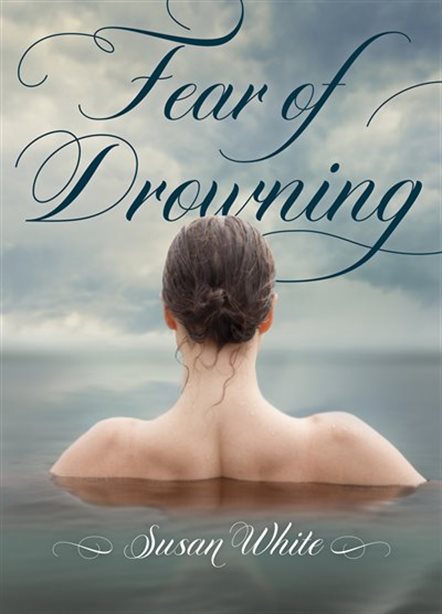
My first thoughts as I woke early, before pulling back the bedclothes and making myself get up, were layered and somewhat convoluted. What if my grandmother had not sent the telegram?
What if she had never tripped on the bottom step and twisted her ankle? What if I had gone with Mother and Father? That was at the core of all my emotional floundering, which seemed not to have lessened even with the passing of almost nine decades.
I still found myself going back to the crucial questions: What
if they had not gone to San Francisco? What if I had gone with them? My life was forever changed because after receiving the telegram from my grandmother, my father booked train passage for my mother and himself and left me behind.
What if the telegraph had never been invented? If my grandmother had mailed a letter instead and the receipt of it was delayed by even one day, my parents would not have been in San Francisco when the earth moved and sections of the city were levelled.
This was to be a long and tiresome day if I continued to mire
myself in a web of useless thoughts. What if the train Mrs. Price and I caught that day had left the tracks? What if she had taken me home with her? What if I’d not taken employment at the Prince George Hotel?
Possibly my reluctance to share my deepest thoughts with
Clara had more to do with my inability to truly see my life.
Had I, like she said, simply used the cloak of my misery to gird myself from any real introspection? Was getting back to being the darling daughter of Frederick and Claire McDonough my motivation for all the choices I made?

Thank you, Susan, for being our guest this week. Wishing you continued success and recognition for your writing.

For those of you wanting to discover more bout Susan and her novels, please follow this link:
author-susan-white.blogspot.ca
May 9, 2020
Digital Addiction. Lock&Stock Posting.
How the problem of digital addiction among youth was an opportunity for a UAE based tech start-up.

Because The Scribbler is so popular, there have been many contacts made to run advertisements or related postings for different companies.
While the SBS does not accept such, the query from Craig Fernandes, Co-owner and Founder of Lock & Stock, was so intriguing that we felt it was a post that deserved to be shared.
"Launched for students in the UAE in 2017, Lock&Stock is a mobile application that incentivizes students to pay attention in class."

How the problem of digital addiction among youth was an opportunity for a UAE based tech start-up.
Regardless of age, gender, ethnicity, career or economic status, you’re probably packing a smartphone right now. We rely on it to do everything from saying “I love you” to breaking up, from checking your to do list for the day to sharing photos. A plethora of tasks could be carried out right from the palm of our hand.
We now live in a world of tweets, DMs and left & right swipes that could be distracting to anybody from any walk of life, be they in the office, in class, or at home with their family. While a smartphone is pretty handy and people use it to perform daily, academic as well as professional activities to access information and knowledge from the web, most students capture lectures and notes on their smartphones or tablets. But what if while taking that picture, or typing those notes, you get a WhatsApp forward on a group, or a like on your Instagram picture? What kind of will power does one need to have to not get distracted by the ‘ting’ sound of an iPhone?
The Pew Research Center conducted a research that says 60% of adolescents between 13 and 17 years acknowledge that excessive screen time is a significant problem. The same 60% also admit that this is an urge that cannot be controlled.
The research further details that, due to the hormonal and neurobiological hormonal changes in their brains, adolescents feel the need to be respected and admired by their peers, mainly through social networks. 44 % of teenagers check their smartphones as soon as they wake up, proving the FOMO (fear of missing out) phenomenon to be real.
These youth were asked to describe the feelings they associated with not having their smartphones, 42% said they felt anxious. This data concerns parents, teachers and educators due to the idea of their teenagers or students developing “nomophobia”, the absurd fear of being without your phone.
You would think that students are the only ones affected by the excessive use of mobile devices. However, this isn’t true. A survey conducted by the International Society of Technology in Education (ISTE), 34% of teachers admitted that they are also distracted by students who use their phones during class.

Another study conducted by Michael Mercier, founder and president of Screen Education, states that the problem lies in the combination of addictive content and unrestricted access. He claims that “app developers have figured out how to trigger our fundamental human drives – the drive to compete, achieve, master new skills, connect socially, escalate in social status, tell stories and engage in narrative – to an online environment that’s gratifying, feels good and is hyper customizable.”
While smartphones can certainly be used for ‘good’ in the classroom, they are more often than not used for ‘evil’. A study published in the Journal of Media Education found that around 97% of university students will use their phones in class sometime during the week, for non-academic purposes. Almost 90% of them said texting was the main offender and distraction in class.
While most schools can ban the use of mobile phones, universities are struggling to combat class time spent on a mobile device for non academic purposes. The use of smartphones in a classroom has a negative impact on the students’ satisfaction with classroom connectedness. A student’s addiction to a smartphone during class prevents firm student-to-student connections and negatively affects the establishment of a cooperative and supportive learning environment.
However, studies have shown that banning the use of cell phones in classrooms may also have a negative impact on ‘nomophobic’ students and could cause high levels of anxiety just by distancing themselves from their phones. Can you believe, it could actually be more counterproductive to take phones away from students than let them continue to be distracted by them for a little while?
Another interesting point to note is that while the use of smartphones is distracting in class, it also has negative impacts on a student’s life off campus. Imagine a time where you are having an actual conversation with the person sitting across from you at the dinner table, or you vacationed at the most beautiful places around the world without letting anybody on your Instagram know. Hard isn’t it?
Teenagers could be doing so much more with their free time like reading, writing, painting, physical activity or simply just be lost in thought without having to look at a screen. Hell, I might have checked my phone at least thrice while writing this article!
While mobile phone manufacturers are now developing innovative features to let a user know their daily, weekly and monthly activity on a smartphone, these are typically laughed off as memes on the internet. Just last night, I shared my Instagram usage for the month with a friend of mine and we ‘lol’ed about it for an added ten minutes on WhatsApp!
It’s about time we all admitted we’re too addicted to our phones. From endless scrolling through Instagram and Twitter to incessant selfie-taking, it’s very easy to fail to put the tech down- especially in situations when we really need to – in our classrooms.
A similar situation was experienced by a student back in early 2017, in an Econ class at the University of Iowa. While in the middle of a rather boring lecture, he picked up his phone to text his father, only to realize that along with him, most of his peers were also using a digital device. This struck a chord and a cause for concern. After days and weeks of brainstorming over how to solve a problem that had dumbfounded parents, teachers and professors around the world, a team of students from the UAE led by Craig Fernandes developed an application called Lock&Stock. With the idea of “Earn While You Learn” and a mission to fight smartphone addiction in classrooms, Lock&Stock was launched for the sole purpose of helping teenagers stay off their phones.
Launched for students in the UAE in 2017, Lock&Stock is a mobile application that incentivizes students to pay attention in class. In exchange for staying offline, students are rewarded with points, and can use these points to redeem offers and discounts at restaurants, fashion outlets and cinemas. They can also use the points to apply for jobs and internships from companies looking to hire young talent, and also gain access to a network of university scholarships from international institutes. All three reward exchange outlets are aimed at solving the three main problems in a student’s life – student allowances, side hustles and university tuition.
From its inception in September 2017, over 43,000 Lock&Stock users have collectively spent 153 combined years offline. This is 153 years given back to teachers, professors and educators, and to the students themselves.
In early 2020, Lock&Stock launched to the students of the world, allowing any student, from any school or university, in any country, to download the app, lock their phone, and earn points for discounts, internships and scholarships. To further gamify the experience, a student and institute leaderboard was introduced letting students compete with one another on the amount of time they spend offline, with prizes being awarded to the students that have the highest minutes clocked in a particular week.
Today, the world has been hit by a pandemic and the safest place you can be right now is your home. Your best friend is your phone, laptop or your TV considering the amount of content that is available to consume on the daily. But what if there was a solution to combat getting distracted by your phone, especially when a lot of students are still trying to settle into the e-learning style of studying? And better yet, what if that solution was right in the palm of your hand – on your smartphone!
https://www.lockandstock.xyz/about-us

May 2, 2020
Featured Author Heather McBriarty of Saint John, NB.
I was introduced to Heather by an author friend and discovered her captivating book – Somewhere in Flanders: Letters from the Front. Published in November, 2019, by Crow Mountain Publishing, it is the story of James W. Johnstone who enlisted in Canada’s Expeditionary Forces in the First World War and contains the love letters he sent home to his sweetheart, Isobel.
She has graciously agreed to a 4Q Interview and is sharing an excerpt from her interesting book.
Well, first, I’m an x-ray technologist masquerading as a writer! It’s interesting how life goals come full circle. I have been passionate about books my whole life, and began writing my own stories at a young age. I could always be found, nose firmly between the pages of one book or another. When I was desperate, I read encyclopedias, sitting in the front hall beside the bookshelf. As the middle-ish child with four much older and two much younger siblings, the world of books gave me the friends and companions I lacked at home, and to some degree, at school (I was terribly shy!). Wherever I was, if I had a book, I had a safe, friendly space. My oldest brother had the knack of finding me the most wonderful books; A Wrinkle in Time and The Phantom Tollbooth were gifts from him.
I was fortunate in high school to have an English teacher who encouraged creative writing and was happy to read everything his students wanted to share, outside of class work. Because of him, I entered a national short story contest, got an honorable mention and a $25 cheque. Big leagues! However, my life turned to the sciences and a career in health care, and while I still never went anywhere without a book in my bag, writing took a backseat to work and the myriad chores of adulthood, marriage and motherhood.
Reading to my three sons was a joy, encouraging their interest in reading a return to the pleasures of my childhood. After many, many years, I found the joy in writing again, in creating, in reproducing for others a world long gone. I have a feeling this is only the beginning. When not reading or writing (or working), I’m playing with my two wee grandsons, filling my nose with the scents of horse and hay at the barn, or plotting offshore adventures with my husband on our sail boat (AKA my summer writing office!).
4Q: Who is James W. Johnstone to you? Why did you decide to tell his story?
 HM: Jim is not a relative, but had he survived the war, he might have been my grandfather. Okay, okay, I know genetics don’t quite work that way, but I’ve adopted him as such. The recipient of Jim’s letters - and his incredibly touching expressions of love - was my grandmother, Isobel McCurdy. They were school chums, although he was a bit older, and the mere fact that she kept his letters all her life speaks volumes about her feelings for him. Through these letters, I feel a connection to her, a woman who died before I was three years old and who I never knew.
 Jim seized me from the moment I read the first letter, pulled at random from the pile of 69. He was this bright spark of determination and duty, cheeky and flirtatious, trying his best to make light of what became a horrific situation for him, as he saw friends die. His love for my grandmother and his deep love for Canada is moving and inspiring. He was so alive, he leapt off the page, and I could not let him sink into obscurity again. I have a lifelong love of Egyptian history. The Egyptians believed that as long as a man’s name and deeds were spoken of and written down, he lived; I wanted to make sure Jim lived again.
4Q: Please tell us what to expect when we pick up our own copy of Somewhere in Flanders.
 HM: Be prepared to make a friend, and lose a friend in Jim. This is what happened to the men in those trenches. They went in with a crew of guys who they worked with side by side, in miserable conditions, becoming brothers, and then suddenly some would be gone, instantly, gruesomely. The longer they were in the war, the fewer and fewer of their original friends survived with them, and the further some withdrew from their comrades. Be prepared to cry a little, but also to laugh, and to be inspired by the dedication of Jim’s generation, who went in and fought a dirty, bloody war to protect the innocent of a country not their own - for which the people of Belgium are still incredibly and touchingly grateful. Be prepared to see this war as not just some ancient, dusty history. It was lived by young men with the same hopes and dreams we have, many who never got to live those dreams. Jim’s words make it as relevant to the reader today, as it was to him.
4Q: Please share a childhood memory or anecdote.
 HM: I don’t remember a time without books. Apparently my mother decided to teach me to read at age 3. I do remember the first time I learned a rather big word. I was six, and had been placed in a very small group of more advanced readers in my class at school. We were allowed to take home real chapter books from a classroom library, not the Dick and Jane readers (dating myself here!) that everyone else used, and I raced through those voraciously. One day, the teacher wrote down a word – “determined” – and I recall sounding it out, finally getting it right and the blaze of accomplishment when I realized I knew what it was. Right then I fell in love with words and reading. It was an empowering moment!
4Q: In your opinion, what makes a great story?
 HM:Characters are the most important part of a good story. They don’t have to be likable or good people (in fact, I prefer a character who is flawed) but they can’t be too good or too bad; that’s a cardboard cutout. They have to move you and be believable, have flaws and redeeming virtues. You have to feel what they are feeling and be transported into their minds and situations. If I hate a main character, I cannot continue reading the book, no matter how interesting the plot may be. Second, a great story needs great language – not big fancy, ten-dollar words but beautifully arranged words. It needs to sing and to elevate the reader. If I lose myself in the beauty of the language, I am transported and transformed by the book. I just finished a book that sums this all up, Tim Leach’s Smile of the Wolf…I devoured it.
4Q: What are you working on now?
 HM: I’ve got a novel on the go, rather than non-fiction, as my next project. I can’t say it’s the first I’ve started, but it is the first I have begun in an organized and deliberate way…which I hope translates into getting more than a few pages done! 11,000 words down; 60-70,000 to go! Having reached the goal line of publishing a completed book, I feel I have more discipline now. Staying true to form, this one is set during the First World War, and involves a young couple from Halifax. What is different is the hero comes back, albeit not the man he was when he left, and the heroine is a medical student who faces the trauma of the Halifax explosion. They are both left splintered, much like the environments they experience. I am stealing heavily from my grandfather’s stories as a med student at Dalhousie in December of 1917!
4Q: If you were to write a biography of anyone you want, who would it be and why?
HM: My grandmother, Isobel McCurdy. I have always known she was an interesting woman, but I only now appreciate just how much she experienced, from the death of her beloved young man, her work during the war years with the Red Cross, to setting off to China in 1921 - pregnant, with one year old baby in tow - with her medical missionary husband. There, they spent six years deep in the interior, in remote outposts, before fleeing the revolutionaries with hardly more than the clothes on their backs. My father (born in China having made the trip there in utero) made a comment once, that his mother often thought they’d never have gotten away but for their – by then – four little brown-eyed, tanned boys, who spoke Mandarin and Cantonese fluently.
4Q: Can you remember that defining moment when you decided to become an author?
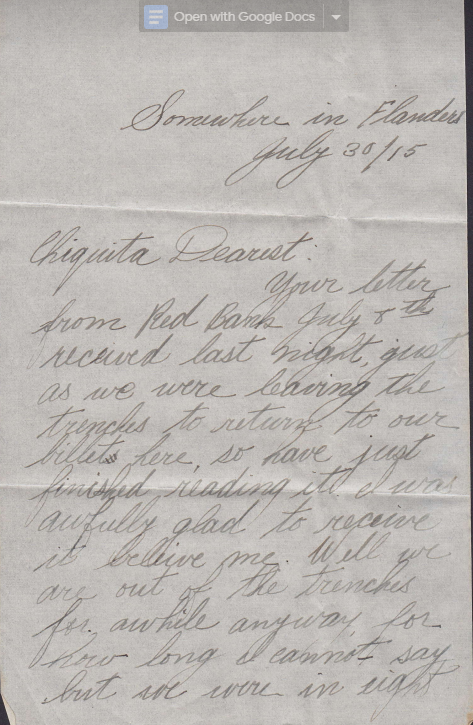 HM: I’ve written short stories all my life. I began and abandoned novels before. It had always been a dream to be a published author, see my name on a cover. It was not until these letters that I knew I had a book. There was never any question I would finish it, almost like Jim was guiding my hand…or perhaps it was my grandmother. Certainly, her picture gazed down at me from the top of my desk through the whole process. I can’t say where the drive came from but it was unstoppable, and was nothing I really decided. Remember that word “determined”? This was determined for me, and I was determined to make it happen!
An Excerpt from Somewhere in Flanders: Letters from the Front.
(Copyright is held by the author. Used with permission)
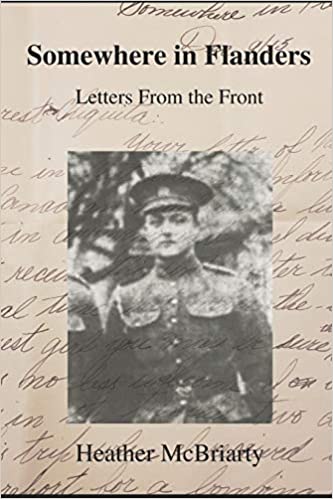
The paper was old and stiff, yellowed from age. The notes, addressed to my grandmother, were small, folded over and over to fit in tiny envelopes, and crackled alarmingly as I unfurled the pages. Faint notes of must, the tang of rusty-coloured ink and old books rose from the paper. The writing was far more elegant than anything I’d been taught, slanted, spiky, the product of years of careful tutoring and hours slaving over lessons. Young men never write like that now. The ink was faded, but the words leaped out at me “My Dearest Chiquita”. Flipping to the end, there was a quick scrawl, “Yours ever, Jim”. My grandfather’s name was Kenneth.
My grandmother, Isobel, died when I was three, so I only knew her from pictures: an older woman, hands folded lady-like in her lap, back straight as if she still wore boned corsets. Her grey hair was neatly braided and coiled around her head in a halo. Her face was always turned ever so slightly away from the camera, eyes always a bit sad. Her lips, never smiling in those photographs, were mine. She was a pianist, a graduate from Dalhousie University in Halifax with a music degree, but rarely played publicly. She was the daughter of the editor of the Halifax Herald, brought up in a well-to-do home. She was a diarist, and I devoured her record of the years she spent as a newlywed and young mother in China in the 1920’s, while my physician grandfather worked as a medical missionary. She was most definitely not a Chiquita! And who was Jim?
The letters had come in a tattered old cardboard box from my cousin in BC, part of a mishmash of things she was cleaning out of her father’s basement. As I read through this treasure trove, I came to know Jim. His letters were filled with misspelled words and insufficient punctuation, but also with quotes from Shakespeare and Omar Khayyam. He had strong opinions on many subjects, and experiences none of us want to repeat. He was bright, and funny, and oh, so young. This book is his story.
From Somewhere in Belgium
April 21/15 [eve of the Second Battle of Ypres]
My Dearest Chiquita:
We have been on the march again and now are within a very short distance of the firing line. A certain town within a mile or so of here has just been under a very severe bombardment by the Germans and it would make anyone heart sick to see the women and children and old men hurrying away from their homes with only what they can carry with them. The road is practically blocked with motor-lorries, transports, ambulances etc carrying the refugees away and those who are not fortunate to get a ride are pulling little carts with their personal necessities in them.
Your birthday was celebrated by a bombardment from both sides all last night and early this morning the enemy sent up a quantity of star shell all last night they must have expected an attack. We have orders to keep in the billets and move out to the trenches in a moment’s notice, so it looks as if there would be something doing in a short time. Just behind us is an observation baloon but the German shells don’t seem to be able to get the range at all as nearly all of their shells go wide. I like Belgium ever so much more than France the people are very much more civil and a whole lot cleaner the whole country seems much more prosperous, you notice the difference the very moment you cross the frontier. We were billeted just outside a very large chateau which was once owned by the Rothschilds so as you can image it is quite a place. The park is simply grand with little grotos here and there, statues and caves etc imitation Moslem temples etc. We were in for a bath in one of the lagoons in the park and although this is April the water was quite warm. Just received your letter written on March 13/15 so you see it must have gone astray for the one you wrote on the 23rd I received a week or so ago. We have to parade in a very few minutes so will have to close. Please excuse pencil and writing. Good bye my dear Chiquita. I trust you have come out successfully in your exams which I know you will so au revoir dear.
Yours Jim
Thank you, Heather, for being our featured guest this week. Wishing you continued success with your writing journey.
For you visitors to the Scribbler wanting to learn more about Heather and her book, please follow these links:
https://www.facebook.com/SomewhereinFlanders/
https://www.amazon.ca/Somewhere-Flanders-Letters-Heather-McBriarty/dp/1999265009
Please leave a comment - don't be shy!
April 25, 2020
Best Selling Author Kathrin Hutson of New England, USA.
The Scribbler is pleased to do a series of guest appearances in conjunction with Creative Edge Publicity of Saskatchewan, Canada. (See below for more of Creative Edge)
This week’s guest is International best-selling author, Kathrin Hutson.
When you visit Kathrin’s website, you are greeted by the words “Exquisite Darkness”. If that isn’t enough to lure you in, there are the gorgeous covers of all seven of her novels.
The Scribbler is most fortunate to have her visit and answer a few questions. On the plus side, she is sharing an excerpt from one of her novels. Read on!
International Bestselling Author Kathrin Hutson has been writing Dark Fantasy, Sci-Fi, and LGBTQ Speculative Fiction since 2000. With her wildly messed-up heroes, excruciating circumstances, impossible decisions, and Happily Never Afters, she’s a firm believer in piling on the intense action, showing a little character skin, and never skimping on violent means to bloody ends.
In addition to writing her own dark and enchanting fiction, Kathrin spends the other half of her time as a fiction ghostwriter of almost every genre, as Fiction Co-Editor for Burlington’s Mud Season Review, and as Director of TopShelf Interviews for TopShelf Magazine. She is a member of both the Science Fiction and Fantasy Writers of America and the Horror Writers Association. Kathrin lives in Vermont with her husband, their young daughter, and their two dogs, Sadie and Brucewillis.
4Q: Your website tells us most of your work is Fantasy (the dark kind) and Sci-Fi. What draws you to these genres?
 KH: I’ve always been a fan of dark fantasy in general. That was the genre I got into reading at an early age (though it’s not dark fantasy per se, I was reading Stephen King’s Itwhen I was ten, if that paints a better picture). Beyond all the fun and imagination-inspiring tropes of magical worlds, grand landscapes, sweeping quests, and the kinds of people, places, and creatures not of our own world, I’m just particularly drawn to the darker side of Fantasy. Dark magic, seedy characters, terrifying consequences, and the struggle characters must endure in order to prevail (or not). It’s the richness of that kind of magical darkness that really gets to me, the “not shying away from” what’s terrifying or heavy or maybe even cringe-worthy on the gruesome side.
As an author, it’s just so much fun to let my imagination run wild with the terrifying possibilities of things going wrong in a magical world. It also helps me let out my “inner darkness” when I write these things. At one point in my own life, things were pretty dark for a while. I struggled in a lot of ways, made a few poor choices, and found myself facing the end once or twice. Now, I am incredibly fortunate to have found my calling with writing fiction and spinning up these other worlds for readers to get lost in and enjoy. I’m married to the coolest guy in the world, and we have a pretty fantastic three-year-old daughter, and life is good for me these days. In a way, I think I’m drawn to writing Dark/Grimdark Fantasy because it lets me inhabit the darker sides of myself without drawing any of it out into the pretty awesome life I managed to put back together after my own struggles.
The same thing is true for the Dystopian Sci-Fi I write. Science Fiction in general (as I perceive it) has a lot more rooted in technology and science, yes, but also serves as a reflection of “what may be possible for us in the real world”. With my own Dystopian Sci-Fi series, Blue Helix, I get to play with real-world topics and issues in a reality close to ours but twisted just enough into the speculative realm to make it more about a good story and poignant characters. Writing that, for me personally, feels more like showing the world what might happen if we don’t pay close enough attention to our own actions and everyday choices (much like what happened to me when I chose not to be aware of the ripple effect of my own choices, once upon a time).
And, of course, speculative fiction in general is just such a fun escape from the real world, which can often seem particularly mundane. Of course, I read and write a little bit of almost everything (Romance as a genre is completely out, though), but my heart will always be with dark speculative fiction.
4Q: I know this is a tough question but one that I find compelling. Which of the novels was your favorite from beginning to published work and why?
 KH: Yes, that’s definitely a tough question! I love all of my novels completely, for very different reasons. But if we’re looking at the entire scope of from beginning to end, first line to publication and beyond, I’d have to say Daughter of the Drackan was my “favorite”. And that word can be interpreted so many ways! And it might be better for me to list why this book takes the “all around favorite” award, so here we go.
 1) This was my first completed novel, which I finished my junior year of high school on December 31st, 2007 at 11:52 p.m. (I declined New Year’s Eve parties with my friends to finish the monster). At the time, it was roughly 210k words, which was eventually split up into the Gyenona’s Children duology.
2) I learned so much about writing strong, independent, fierce, wild female main characters who are not particularly friendly or easily likeable—and how to create their interactions and the world around them to make their prickliness essential (and for which readers end up loving them even more).
3) I learned how cutting 11k words nine years after finishing the first draft only improves the story.
4) I queried the bajeezes out of Daughter of the Drackan, racking up 116 rejection letters from traditional publishing agents. That taught me so much about the traditional publishing query process and having a thick skin.
5) This book started my Indie Author career.
6) I learned that even an epic Grimdark Fantasy book rejected by 116 traditional agents can become an Amazon Bestseller in Dark Fantasy within its first year of publication all on its own.
7) I definitely learned my lesson (three times over) about what not to do with book covers and how important it is to find the right cover designer.
8) I taught myself (using some fantastic references for Indies) how to format ebooks to look exactly how I want by building them at the CSS HTML level. Just for this book first.
9) This book has been a reader favorite and a perfect glimpse into the darkness of my writing for the last four and a half years of my Indie career. Fans still love it, and it was a Quarterfinalist in the 2019 Epic Fantasy Fanatics Readers Choice Awards.
10) This was my first attempt (unknowingly at the time) to include a piece of my own social commentary in an epic work of fantasy. This gave me the confidence to step it up a notch with the Blue Helix series (very different, far less subtle commentary, and for very different reasons).
 Photo credit: fanart.tvTen is a nice round number for this list