Allan Hudson's Blog, page 35
May 18, 2019
Guest Author Mitchell Toews of Manitoba, Canada.
“Writer. I have jumped out of the burning building and I'm tying the bedsheets together as I fall. So far, so good.”
When you visit Mitchell’s Twitter page, that’s his introduction. Can’t go wrong with an author like that.
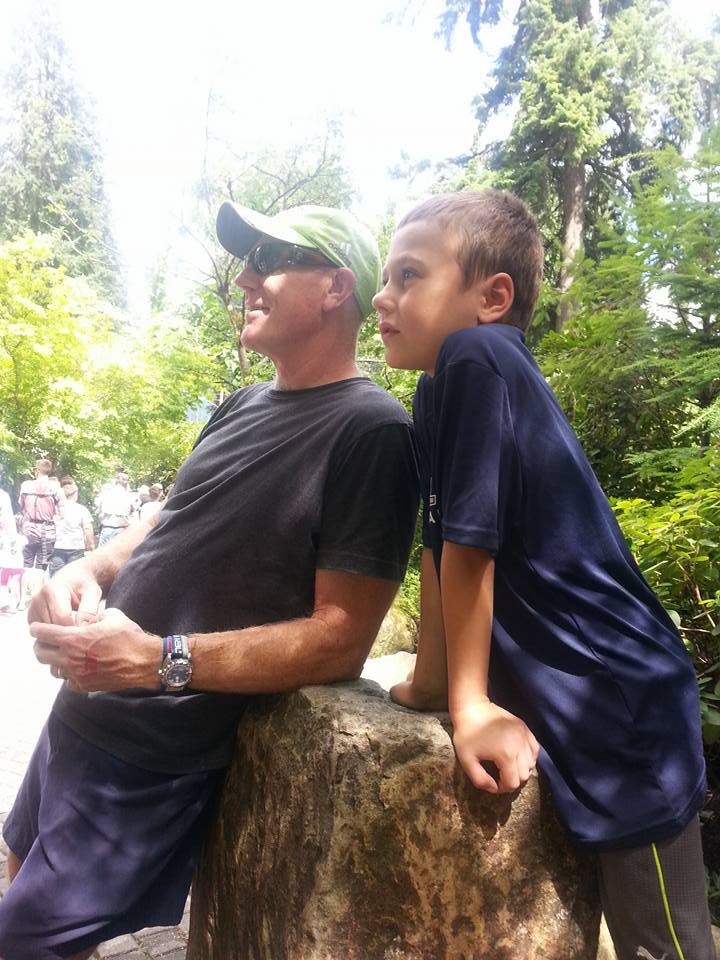 Mitchell and grandson Ty.
The Scribbler is most privileged to have Mitchell as our guest this week. He has agreed to a 4Q Interview and is sharing an excerpt from his debut novel WIP, “Mulholland and Hardbar”.
Mitchell Toews lives and writes lakeside in Manitoba. When not writing or if the sun beckons too persuasively, he finds alternative joy in the windy intermingling between the top of the water and the bottom of the sky or skates on the ice until he can no longer see the cabin.
He has stories in a variety of literary markets in the US, Canada, the UK, and beyond. Details can be found at his website, Mitchellaneous.com
Mitch is currently at work on a noir novel set in the boreal forest, editing anSFF novella, and writing grant applications to keep the proverbial wolves from the door.
4Q: Your short stories appear in several anthologies. Groota Pieter was previously published in The River Poets Journal and has been accepted for publication for a new anthology, We Refugees. Tell us about the story.
 MT: Fiction lets me address subjects that I find difficult to discuss otherwise. In this case, it’s the fact that Mennonites—“my people”—who came to Canada in a semi-forced immigration in 1874 now find themselves among the gatekeepers for today’s refugees. While nineteenth century Mennonites from Southern Russia were welcomed to the brand-new Province of Manitoba, some of their descendants now align themselves with those who are fearful and restrictive when it comes to present day diasporas.
 Midway between these two polarities stands “Groota Pieter”. In the Sixties, our little grade school in Steinbach, Manitoba had its own flood of immigrants—a dozen or so Mexican Mennonite families.
In the story, I use one of the new kids, “Big Peter”, as a symbol for how immigrants are often viewed. It’s inconvenient and confusing to welcome strangers and all their apparent differences in culture, “values”, and habits. Canadian Mennonites today have not forgotten or chosen to denigrate their own families’ past travails but, I suspect, it’s more a matter of not being able to imagine these so-called alien newcomers in Manitoba. What a disappointing twist that settler Mennonites, who suffered as a people dispossessed in Europe only to have their descendants—many now once again members of the landed economic elite, this time in Canada—behave with moral ambiguity, and in some cases, religious intolerance.
Many modern Canadian Mennonites have constructed an insulative moral landscape built upon a maxim, “What would Jesus do?”, together with precepts like hard work, honesty (to the point of believing they invented it) and a daily life of church-family-devotion. This cocoon shelters them from the wayward outside world but may also dissuade critical self-examination.
“Us and them” is a powerful inclination. It opens us up to being overrun by fear and suspicion. Seneca said, “Sometimes even to live is an act of courage,” and we need to see this courage as a relatable virtue in our new neighbours—broaden our empathy and lower our fences.
I’ve tried to use humour, human nature, and the guileless character of children—along with the commonality of a simple game like baseball—to underscore an obvious message. We’re all just people.Obvious but, it seems, hard to live by. I hope this childlike outlook depowers the “us and them”tendency and,in some small way, expands the moral landscape.
4Q: What are you working on now?
MT:Even though I’m not one of those people who thrives on chaos, it kinda looks like I am. I have a lot on the go.Short stories are heart and soul for me, so that keeps on being a part of every day. Writing, editing, submitting and shamelessly promoting. (Allowing for the fact that Mennonites don’t do “shameless”. We always feel guilty about something!)
I completed a debut novel over a year ago and have been editing since then. I am fortunate to have a skilled and engaging editor to work with. (He’s a Londoner and the possessor of a kick-ass literary pedigree.) The novel is moving down the road, only partly on the rumble strip. I hope to be able to query it this year.
Those are the itchiest spots right now, but I also have a short story trilogy that I believe—along with a few supportive others—would make a great adaptation for a screenplay. An SFF novella first draft is also done but lies dormant, needing some tough love before it gets to the finish line.

Those last two darlings get a bit of energy as does preparing grant applications. After all, the pickup needs gas, the fridge needs beer, my editor needs paying, as do airfares if I want to visit the grandkids on the coast.I was recently recognized as a New/Early Career Artist by the Canada Council for the Arts and I hope to get some assistance to cover expenses and help me to build my craft and meet other writerly folk in the wild.
4Q: Please share a childhood memory or anecdote.
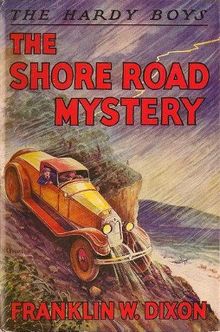 MT: My wife said this was too boring, but I’ll take my usual course and avoid her good advice. As a youngster, having consumed the entire Hardy Boys detective series and all the comics I could buy, I hungered for more. Our school and town libraries had lots of books, but I had chewed through most of the children’s collections and much of it was of a more Christian bent than I was looking for. You know… the wide world beckoning and all.
Anyway, I discovered the University of Manitoba Extension Library. Pre-internet, by a lot. You obtained a copy of their print catalogue and a mailing address. Books were ordered and received by mail.
I remember one day when I was home from school with the mumps and Dad walked in with a brown kraft paper bundle, tied with white cotton string. A cluster of stamps and “Mitchell Toews, Box 220, Steinbach, Manitoba” was written in prim librarian longhand, with the tell-tale swirls and blots of a fountain pen. The parcel was heavy with adventure: Treasure Island, A Rookie at Leaf’s Camp, The Red Schoendienst Story, The Best Thing Since Sliced Bread awaited me within the lignum scented confines. All for free and each month a fresh list of “New Titles — Just Received!”
Not unlike the row of tractors that sat dripping oil on the Case dealer lot, each capable of magical transformation into a P51 Mustang that took me for snarling barrel-rolls high above the prairies, these books gave me the world in a brown paper wrapper and all I had to do was imagine.
4Q: Every author, artist or other creative types have their favorite spot to work from. Tell us about yours and what your writing habits are like.
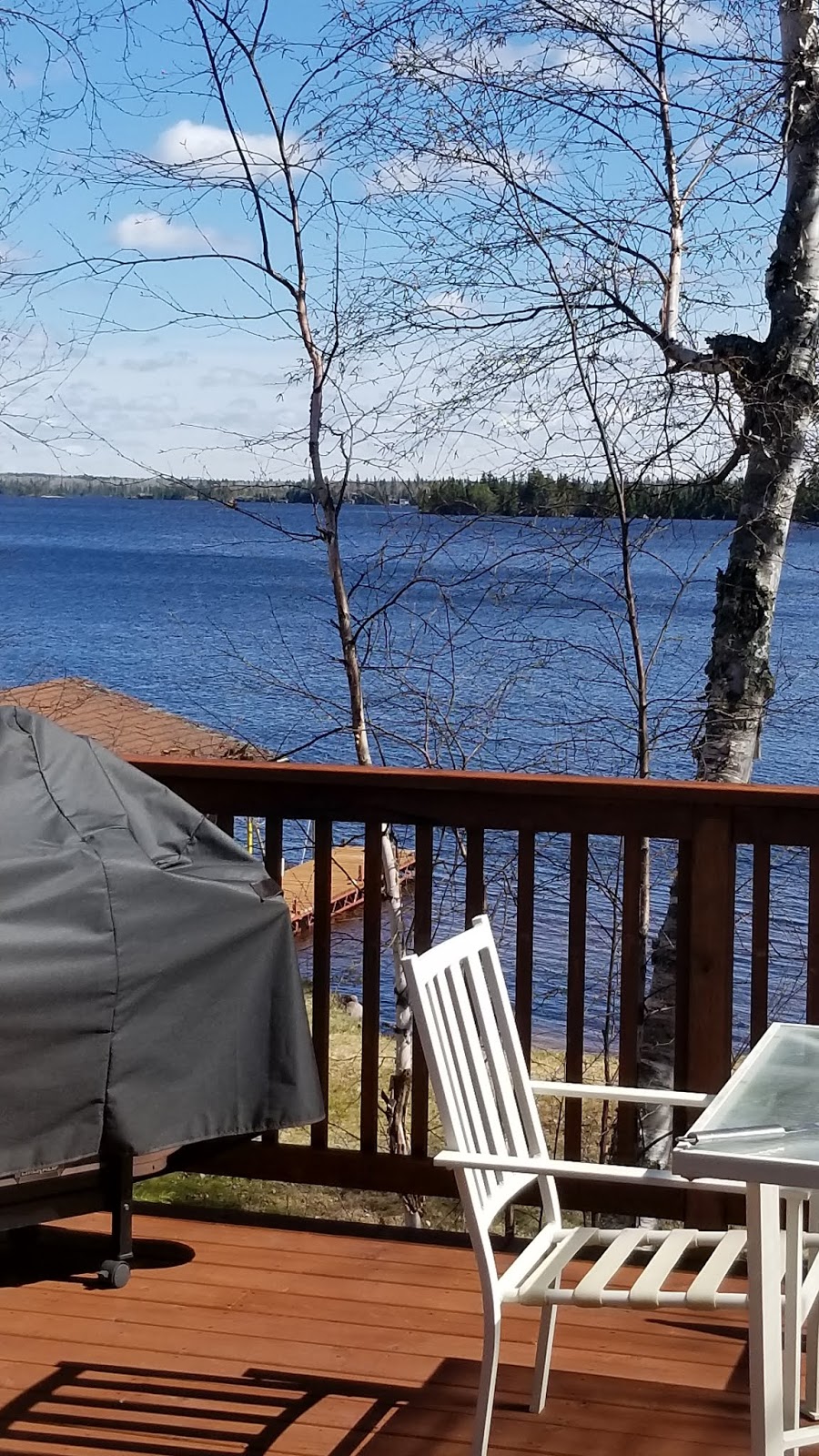
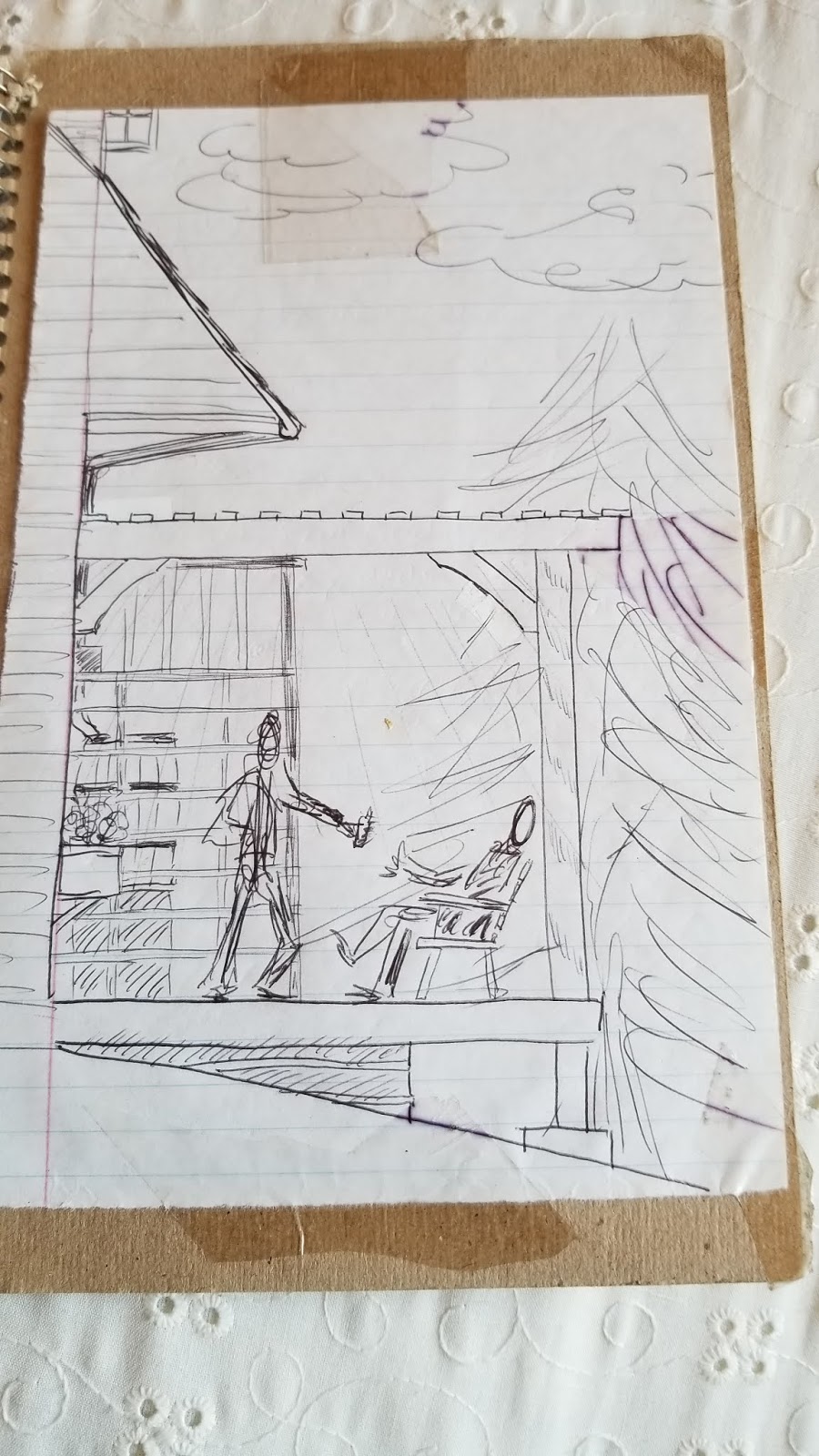 MT: Janice and I live on the shores of a small lake. Any spot with a view—whether in the 1950 cabin, out in the “she shed” (a screen porch down by the water), up in the loft, or the workshop—is where I write. Bug free and above freezing are my only requirements. An oily tractor seat or P51 cockpit is nice, but if not, I stand.
An excerpt from “Mulholland and Hardbar”
(Copyright is held by the author. Used with permission)
The following excerpt features a blustery dispensation given by the story’s antagonist, James Friesen, aka Hardbar. He is that person you’re not certain you want for a friend but know for sure you don’t want as an enemy. He’s a villainous sort, but funny and nobody’s fool and he travels in heavy boots over the shortest distance between right and wrong, always ending on wrong.
[…] Hardbar stared at Mulholland for a second and then yanked on the anchor rope with a start. “Well, tell the truth, I don’t gave a fuck.”
Mulholland stared back and waited for a moment before he replied. He reeled in his fishing line and stowed the rod in the rack. “So, you don’t gave a fuck. Izzat right?”
“That’s right, that’s right.” Hardbar unzippedhis jacket and dugfor cigarettes. Finding some, he gestured at Mulholland with a backhand wave, one fingernail dark purple. “Fier,” he said in Plautdietsch, then leaned forward with a grunt and snatched the lighter from atop the tackle box.
“You mean you don’t give a fuck,” Mulholland said, deadpan.
“Nope. Gave.”
“How…”
“See, I knew when you started talking that when you finished, I would not give a fuck, so I could exactly say, before you finished, that my fuck-giving was in da bag. I knew I was no way gonna give a fuck. It was already the time, before you finished talking when I had already quit fuck-giving.” Hardbar held his hands palms-up, and the new-lit cigarette smoked white in his fingers, dirty with silver minnow scale that made his hands sparkle in the setting sun. “It’s too late to say, ‘I don’t give,’ because I’m already all the way to 'I don't GAVE,’. You understand?”
“Now I don’t gave a fuck,” Mulholland replied, his arm stretched out to retrieve the lighter.
Thank you so much Mitchell for being our guest this week.

For those interested in discovering more about Mitchell and his writing, please follow these links.

https://mitchellaneous.com
https://www.facebook.com/mitch.toews
@mitchell_toews
https://www.goodreads.com/author/show/18450919.Mitchell_Toews
https://www.pw.org/directory/writers/mitchell_toews
You can also read Mitchell's short stories on commuterlit.com

[image error]


May 12, 2019
Returning Author Diana Stevan of British Columbia
The Scribbler has a treat for you this week.
 Very pleased to have Diana back. She was our guest four years ago, almost to the day. In that post, Diana shared an excerpt from her novel A Cry From The Deep and if you missed that, please go HERE. So much has taken place since then and this week, she will share her thoughts in a 4Q Interview and an excerpt from her latest work – Sunflowers Under Fire.
Diana Stevan’s had an eclectic work life. She’s not only worked as a clinical social worker, but also as a teacher, librarian, model, actress and a sports writer-broadcaster for CBC television. With writing her passion, she’s published newspaper articles, poetry, and a short story in Escape, an anthology. She also has a background in screenwriting and was agented for three screenplays.
Sunflowers Under Fire, historical fiction, is her third novel. Her earlier works are: A Cry From The Deep, a romantic mystery/adventure novel; The Blue Nightgown, a coming-of-age story novelette; and The Rubber Fence, women’s fiction novel, inspired by her work on a psychiatric ward. Other interests include: reading, traveling, hiking, cycling, and gardening.
Diana lives with her husband Robert on Vancouver Island and in West Vancouver, British Columbia.
4Q: Since your last visit Diana, you’ve penned two novels and I’d like to talk about them. First tell us about Sunflowers Under Fire.
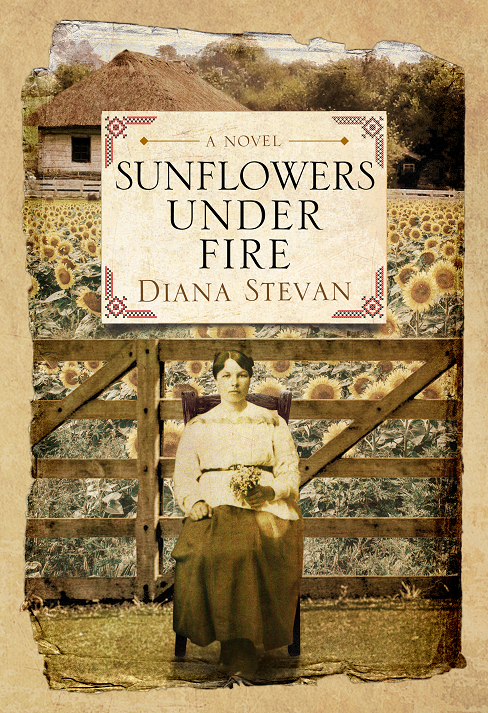 DS: Sunflowers Under Fire is historical fiction, based on my grandmother’s life during one of the most tumultuous periods in Russian history.
It starts in 1915, with the setting of a farm in western Russia (present-day Ukraine). Lukia Mazurets, a Ukrainian farmwife is about to give birth to her eighth child while her husband’s in a nearby city, volunteering to fight for the Tsar. Soon after, she and her children are forced to flee the invading Germans. Over the next fourteen years, Lukia must rely on her wits and faith to survive life in a refugee camp, the ravages of a typhus epidemic, the Bolshevik revolution, unimaginable losses, and one daughter’s forbidden love.
I feel this is a universal story, one that captures the struggle and resilience of many women whose men are away fighting. In a way, it’s a war story about those who are not directly in battle. This family saga also shows why people choose to emigrate. No one leaves their land of birth unless it no longer holds any future for them.
As listed on my book cover, Sunflowers Under Fire is a heartbreakingly intimate novel that illuminates the strength of the human spirit.
4Q: I’ve recently ordered your second novel – The Rubber Fence – and anxiously await its arrival. Tell me what to expect.
DS: Thank you, Allan. That’s good to hear. My second book was inspired by my work on a psychiatric ward in 1972. I was a newly graduated social worker, trained in family therapy ( a relatively new therapy back then) and my first job was on a psychiatric ward, where they were doing shock treatment. I lasted only 9 months and had to leave because I didn’t agree with some of the approaches used to help the mentally ill.
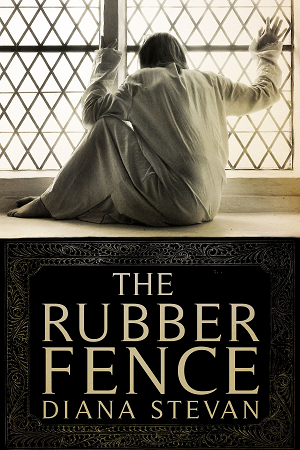 I took those feelings and experiences and created the character, Dr. Joanna Bereza, who becomes obsessed with the treatment of two of her patients: a mute young mother and an old woman who’s been shocked many times. Because Joanna is an intern, she’s supervised by an arrogant psychiatrist, Dr. Myron Eisenstadt, who’s an expert in depression and has his own ideas about the value of ECT, electro-convulsive therapy. Because of her obsession, Joanna is blinded to problems at home with her husband. This leads to further complications involving another intern, who looks more like a rock star than an aspiring shrink.
 The story shows that the people who treat are sometimes as stuck in their relationships as the people who end up in their care. The Rubber Fence also illustrates that when it comes to helping the mentally ill, there is no easy answer.
4Q: Please share a childhood memory or anecdote.
DS: When writing Sunflowers Under Fire, I thought often of my grandmother, who shared a bedroom with me until I was fifteen. She never talked to me about her life in the old country. She was a quiet and loving person, whose history was buried deep. I took the bus with her regularly to church on Sundays, and we’d sit in one of the front pews of the Ukrainian Greek Orthodox church in Winnipeg, and I’d help her up and down from the kneeling bench. I also took her to the doctor’s and would translate for her as she spoke little English. I felt her warm and comforting presence, but I didn’t really know her.

Now that I’ve discovered her journey, I think of her silence about the past as similar to the silence of men and women who’ve gone through war and come home keeping private whatever they saw, heard, and felt. To talk about what had happened would make them relive that which they had buried.
One reader told me that Lukia Mazurets was her new heroine. I wish my baba was still alive so that I could tell her that she is now inspiring others.
4Q: Most authors have a “special place” where they feel most creative. Where’s yours? Tell us about your writing habits.
DS: This is an excellent question. I am lucky I have an office of my own in our home. As for where I feel most creative, I have no “special place”. An idea can hit me at any time anywhere about a story I’m working on or an idea for a new one.
Being retired, I can pretty well write any time of day. I try to write every day, it seems my soul demands it. I like to get to my computer first thing in the morning. My habits though are haphazard, and I can get distracted by the news and social media. It’s an area I’m working on.
4Q: Anything else you would like to add?
DS: I love hearing from readers. This is one of the joys of writing. When I know I’ve touched someone or they tell me they’ve enjoyed my story, I feel so grateful. Writing is a lonely occupation not that I’m ‘lonely’. I love putting words together on a page. But as a writer, I am alone much of the time, so to get any kind of response from readers is always welcomed.
Thank you so much Allan for inviting me to participate once again on your wonderful blog.
It's our pleasure having you as our guest Diana. I enjoyed this excerpt and am looking forward to reading your stories.
An Excerpt from Sunflowers Under Fire.(Copyright is held by the author. Used with permission)
Duty Calls
AUGUST 5, 1915, started out like any other day. The sounds of war echoed in the distance, but on the farmlands surrounding the village of Kivertsi in Volhynia, life went on as usual. That comforted Lukia Mazurets, who asked nothing of life except the means to feed and shelter her growing family. She looked out her farmhouse window at the field of grain swaying in the wind, a scene so gentle it was hard to believe that if the war moved any closer, men’s blood would be spilled on the soil.
She then peered down the dirt road leading to the main artery. No sign of Gregory. She’d hoped her husband would give up his foolishness and return from Lutsk, but the only movement was the dust swirling above the road.
A sharp labour pain forced her to grab hold of the windowsill. She gritted her teeth and breathed deeply until the agony in her lower abdomen had passed. The pains were coming more quickly. Lukia realized she could wait no longer.
She rolled up the sleeves of her housedress and twisted her long hair into a topknot before putting the kettle on the hot cast-iron plate. Then she spread a half dozen burlap bags on the floor of the komorra, where she kept cucumbers, sauerkraut, potatoes, and carrots. The smell of the fermenting cabbage soothed her, but not enough to combat the sharp aches or sq uash her anger.
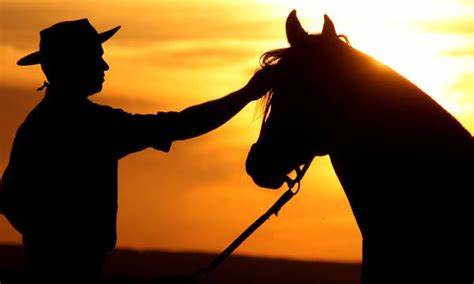 Photo credit - Mais Bah TcheWhy in hell had Gregory chosen this time to go to the city? It was a half hour ride away by horse. He knew she could deliver at any moment. Groaning, she pushed her frustration aside and placed a goose-feather pillow at the head of the burlap row, and beside it, a sterilized knife on a tea towel and an old sheet. Satisfied with her arrangement, she crossed herself three times, each time saying, “In the name of the Father, the Son, and the Holy Ghost.” She clasped her hands. “Please God, make this one strong.” Her first baby had died shortly after childbirth. Her last one had managed to live only six months. The five they had now were strong, but if this one died she would insist on no more pregnancies. Her heart wouldn’t be able to take it. Besides, she was forty, not an age to keep having children. Nor an age to birth them by herself.
Yet here she was alone. Hania, her eldest at thirteen, had gone with her two younger brothers to a nearby farm to sell eggs. The older boys, Egnat and Ivan, were in the fields with neighbours, who’d offered to help cut their barley, wheat, and oats. She couldn’t even call on her mother or her sisters. Her mother lived with Lukia’s brother Pavlo in the Carpathian Mountains and was probably out on the road in that district, curing the sick with her herbs.
Panashka, the one sister that lived close by, had her own troubles with an alcoholic husband who spoke with his fists. Lukia didn’t think he’d be too happy to have his wife leave their home to help her sister. Not if it meant he wouldn’t have supper waiting for him when he came into the house after working all day in the fields. Besides, even if Panashka could help, it would take Egnat too long to deliver a message that his mother was in labour. His aunt lived on a farm near Kovel, about three and a half hours away by horse.
The more Lukia thought about the possible risk to herself and the baby, the more she realized she should’ve asked Hania to stay home, at least until her father got back. But she’d been too upset with Gregory to think straight. Well, there was nothing she could do about it now but pray for the best.
The next pain radiated around to her back, reminding her she’d forgotten one last thing. She went to the kitchen cupboard and got a clean rag and a bottle of horilka. She poured a little of the homebrew into a saucer then soaked one end of the cloth in the alcohol. Clutching the rag, she made her way back to the komorra, lifted up her skirt and lay down on the burlap bags. The sharp taste of the vodka-soaked cloth dulled the pain as she pushed in concert with the baby’s momentum.
She lost track of how long she lay there, hollering with each push, praying the baby would slide out easily. This one was larger than the others, but thankfully her hips had widened through birthing seven. She put her hand between her legs and, after a few more thrusts, felt the moist crown of her infant’s head. “Almost here,” she mumbled.
She braced herself and yelled with one final push. Her baby slid out, slippery and shiny with streaks of blood and white fluid. Lukia looked between her infant’s legs and laughed. “I expected a boy.” Then, holding her daughter with one hand, she used the other to cut the umbilical cord. Shortly after, her baby howled. When her greyish skin turned pink with the first cry, relief surged through Lukia like water rushing through a broken dam.
The horrific labour pains were soon forgotten as she watched her baby suck greedily. Even her anger at her husband seeped away. Shivering, Lukia reached for the sheet to cover herself. She gazed at her daughter’s face and whispered, “Eudokia,” a name she’d always loved.
After a nap with Eudokia, Lukia placed another clean cloth between her legs to stem the bleeding and went to the kitchen to prepare supper. She was stirring cabbage with tomatoes on the stove when she heard the front door creak. She turned to see Gregory standing in the doorway wearing a soldier’s uniform.
Her worst fears had come true.
Lukia choked back tears and showed her back, but not before she saw Gregory’s eyes widen with the discovery that she was no longer with child. Her legs felt rooted in cement while she waited for an apology. None came. He stood for a few minutes, as if he too was waiting for some word, and then went into their bedroom, where Eudokia lay sleeping.
Gnashing her teeth, Lukia stirred the vegetables with force. She tried to calm herself to avoid spilling any precious food. Not long after, Gregory returned to the main room. As if nothing out of the ordinary had happened, he came up behind her and fondled her breasts. She whirled around and pushed him so hard he stumbled on the uneven clay floor.
“What?” he said, grabbing the top of the spindle chair to keep from falling. “You have a beautiful girl and you’re angry?”
“What’s this?” She poked his khaki shirt.
He stretched out his arms and twirled around, showing off his new uniform. “I look handsome, yes?”
For a moment, she admired his fine figure in a tunic, breeches and leather boots, but once she saw the peaked cap in his hand, her fury rose like smoke from a dying fire. The badge on his cap displayed the Romanov colours of black, white, and orange.
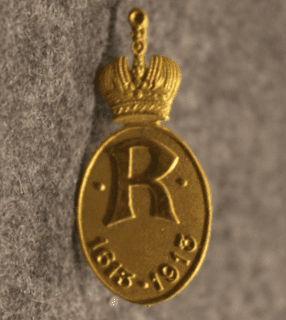
He grinned. “They also gave me a greatcoat, a knapsack, and a rifle.”
“What’s it to me?”
“Don’t say that. The Germans and Austrians are already advancing on Warsaw. Lutsk could be next.”
“That’s what I’m afraid of.”
“Frown all you like, but I promised the Tsar and Tsarina I’d help fight these devils.”
She spat. “The hell with the Tsar and Tsarina! You promised me first.”
“What are you saying?”
When we got married,” she said, arching her eyebrows, “the priest said we were one flesh, and now you want to tear us apart? We may have to leave at any moment. We’ll be forced to run.”
“If we win this battle, you won’t have to leave.”
“How do you know? Our army, biggest in the world they say, has been fighting for a year and where has it got us? Nowhere. From what I’ve heard, you’ll be lucky to be fed.” She shook her head.
He tightened his lips. “Stop shaking your head. You only make matters worse.”
“And what are you going to do, speak Russian?”
“The Tsar isn’t stopping us from speaking Ukrainian anymore.”
“Oh, he’s had a change of heart, has he?” She waved her fork at him. “It’s probably because he needs Ukrainians to do his dirty work. Well, I spit on the Tsar. We’re nothing to him.”
“Lukia—”
“And what if you get killed?” She put her left hand on her chest to ease the pounding.
Gregory’s brow furrowed. “I’ll be safe. You’ll be safe, too. The government is organizing shelter and food for refugees.”
“Ha. As if they could organize anything.” She checked the cabbage, found it tender, and took the pot off the stove.
“Don’t worry. You’ll be sent somewhere with the children.”
“Somewhere,” she said, glaring. “How will you find us?”
“I’ll find you. Don’t worry.”
“Oy, you have an answer for everything. Are you forgetting I just had a baby? You may as well drown me with the family—then you’ll know where to find us.”
“Enough already!” he said, stamping his foot. “I have to pack. They’re sending me to the front.”
“Go then!”
“You want me to leave like that?” His warm brown eyes searched hers, begging her to understand. “I will need your prayers.”
At that, she softened. With a lump in her throat, she said, “I will pray for you and the others.”
“You’re a good woman.”
“If I was so good, you wouldn’t be leaving me.”
“Don’t say.” His eyes glistened with a sadness she hadn’t expected. For a moment, she thought he might change his mind, but then he turned and went into their bedroom to bundle up his things.
She stood in the doorway and watched him pack: tobacco, endpapers, a comb, a mirror, wool socks, and underwear. She wanted to give him reminders of home—of his wife and family—but she had nothing to give. No photos, no keepsakes.
She followed him outside, where he called Egnat and Ivan, who left their implements in the field and came running. When Gregory saw Hania and their two youngest sons coming up the road, returning from selling eggs, he dropped his knapsack on the ground and hugged his children, one by one, telling them to take care of the farm and their mother. Lukia teared up, wondering if this was the last time they’d be together.
While Egnat went to hitch a horse to the wagon, Gregory took Lukia in his arms. She inhaled his sweat and tobacco smell, trying to cement it in her memory so he’d be beside her, no matter what lay ahead.
He stepped back and held her shoulders. “Look at our land. Our rich black earth. This is what we fight for, this is what lasts. We do it for our children and the children that will follow.”
 Unharvested stocks stood tall in their half-shorn golden fields, seemingly defying the nearby war threatening their bounty. A black stork glided over the grain as it headed for the woods beyond. The land was what kept their hopes up day after day. There were many times she had picked up a handful of dirt to smell the rich loam and relish its feel as it slipped through her fingers. Gregory was right. They couldn’t afford to lose it.
As if he could read her mind, he said, “Our German settlers were sent to Siberia. Their property was taken away.”
“Of course,” she said. “They’re now the enemy.”
“The Tsar is promising those lands to veterans when they return home.”
“Oy. You can’t believe what the Tsar says.”
“Listen, I also heard that those who don’t fight for our country could lose their farms. What would we do if that happened?”
“And what would I do if I lost you?”
“I’ll be careful.”
She shook her head. How careful could he be, with Germans dropping bombs from the sky? Where could he run if a grenade was thrown?
Her eyes watered again. “Be safe. Go with God.”
He kissed her deeply, his dark moustache bruising her lips one more time. When he let go, her impulse was to grab his jacket and keep him at home. Instead, she stroked his cheek. His eyes fastened on her briefly as if looking longer might keep him from going. Then he picked up his knapsack, climbed into the wagon beside Egnat, and left for Lutsk.
For those of you wanting more information on Diana and her work, please follow these links.
https://www.dianastevan.com
https://www.facebook.com/dianastevan.author
@DianaStevan https://twitter.com/DianaStevan
Instagram: @diana.stevan
Pinterest: https://www.pinterest.ca/dianastevan

Thank you, Diana, for being our guest once more. Wishing you continued success with your writing. As always, I want to thank you, dear reader, for visiting. Please leave a comment.
May 4, 2019
Misconceptions - A Short Story by Allan Hudson
A new short story by Allan Hudson (Yep, that’s me!)
I’ve been sitting on this short story for a while but I wanted to share it with you this week. I hope you’ll leave a comment below and let me know what you think of it.
Misconceptions (Copyright owned by the Author)
They removed his thumbs the day before his rendezvous with death. His hands are bandaged up to his wrists, cocoons of tight white gauze. Given he could probably defuse the bomb with eight fingers, it doesn't matter. His grandmother helps him strap the explosives to his torso. The dynamite is old; crystals form along the upper ridge. Chances are slim that it could explode prematurely, yet it remains dangerous to work with. Although neither is nervous, they handle it carefully, committed to what must be done. Six tubes, eight inches long, one and a quarter inch in diameter, are ensconced in a light canvas vest, the front of which is being sewn together. It won’t fall off, nor can it be taken off. She pulls the stitches tight. She does it correctly because if not, the dark hooded man watching her will kill them both. She speaks to her grandson. Not with words but with damp trails along her wrinkled cheeks. The glistening of his eyes is the only response.
*
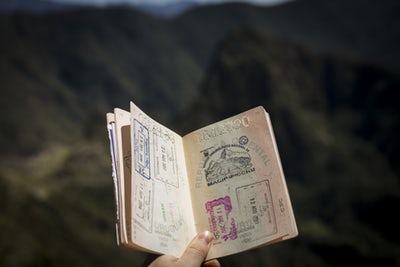 Photo Credit: Agus Dietrich - Unsplash When he arrived in Canada, his passport proclaimed him to be a British subject. It also bragged of extensive travel, with many stamps filling the worn pages. The plane he had arrived on was an Air Canada Boeing 747 from Singapore. He had flown economy. His last days on the planet were not meant to be luxurious. A beaten leather satchel he carried had all the trimmings needed by a freelance journalist, both digital and tech-free. He told the people at customs he was in Vancouver to cover the leaking oil tanker in the Puget Sound, which had run aground three days earlier. The lady inspecting his bag was outraged at the damage the leaking oil would do to the environment, encouraging him to point the finger at the oil company. Everything was in order, all his papers, his credentials, his reservations. Like his passport, the documents he presented were the best forgeries a deep wallet could find. His first name is Joseph. He’d trained for this for four weeks. The events within the target city were explained to him. The grounds where he would be stationed. He’d perfected his English. He’d studied topographical maps of the surrounding terrain, vehicle and pedestrian traffic patterns, charts and diagrams. He’d rehearsed fitting the vest, knew the blast radius and the damage it would inflict. Special attention was paid to the fact that the dynamite they would be using was not fresh. Stolen from an open-pit coal mine that has been closed for over a year, the explosives are at least two years old. The sticks have a weight strength of forty per cent, meaning they are forty parts nitroglycerine and sixty parts dope. Extremely powerful. Precautions must be followed. Most importantly, he had been drilled on the consequences of not doing it properly. An underlying threat.
 Photo Credit : Propagandaguard.com. Many hours of each day were for indoctrination: why he was doing this; who he was doing it for; understanding he was born for this purpose, fortunate to be called forth by a higher power. Overcoming his fears. Promises of eternal happiness. His name will live forever in the history of his people. There was no turning back. The discipline restored many memories of why he was chosen. When his parents died, he was fourteen years old, left to fend for himself. His only living relative, his father’s mother, lived thousands of miles away. No means of support, living day to day, feeding on scraps or what he could find in other people’s waste. Disillusioned, he sought answers from a persuasive man, someone wearing the mantle of a holy person. He believes that what he’s doing is right. His rooms in the city had been booked for two weeks to cover his tracks. Upon arrival, he tore up the forged papers and buried them deep in a dumpster. A locker at the bus station contained a new identity, that of a Canadian citizen – a reporter for a Toronto daily. These documents were equally well crafted. His first name is still Joseph. The next morning he took the bus to the largest city east of Vancouver. An apartment awaited him. There he found food, money, western clothing, maps, and a canvas vest with six empty pockets. His grandmother, his only living relative, would join him two days before he walked to the target. His superiors had arranged for her arrival. If he messed up, she wouldn’t be going back. The armourer would arrive in the morning and place the explosives, then witness the sewing of the vest. When he was satisfied he would arm the explosives. Joseph would have to be at the designated site no later than five o'clock that afternoon. The crowd would be at its peak then.
 Going over the checklist embedded in his memory, he follows his instructions carefully. He eats every meal at a different restaurant or café. According to his trainers, there should be no pattern to his movements. Four times he walked the same route. Remaining discreetly for a few events, he studied the people. The first walk was tentative, having never been in the city before. Each time, he looked for potential barriers or obstructions. At different times of the day he ventured out on his forays. Warned against drawing attention to himself, sometimes he lingered amid the masses. Felt sorry for the children. The timing each day differed by less than ten minutes. Except once. The fourth day he walked an extra forty-five minutes and found a location far superior for his own intentions. Thinking of his principals, he knew this new location would cause more damage. Deciding to give himself an extra hour, he planned to leave the apartment at three-fifteen the day of the attack. He swore to himself to keep this a secret, vowing to not even tell his grandmother. She’d understand. All the fears and moments of uncertainty he’d accumulated prior to the discovery of the different location shrivelled like snowflakes on wet ground. He no longer felt anxiety over his superior’s objectives. He accepted his fate; he would give his life to send a true message to the world. Remembering the discussion on blast damage to the crowd, he knew his body would be obliterated. No one would ever know who he was. The day before his grandmother was to arrive, he left the apartment. He had to be careful because without a doubt he was being watched. In a café, he wrote a letter to the local daily, addressed to the editor. Intentionally leaving his fingerprints on the paper, he mailed it from the shopping center later in the day, forty-eight hours before the event. This was not part of the instructions he had received. He slept. He prayed. He envisioned the aftermath, an imagined glory in his name. He lost his thumbs. He waited.*
 Until today.
Drugs reduce the pain in his hands to only a throbbing reminder.
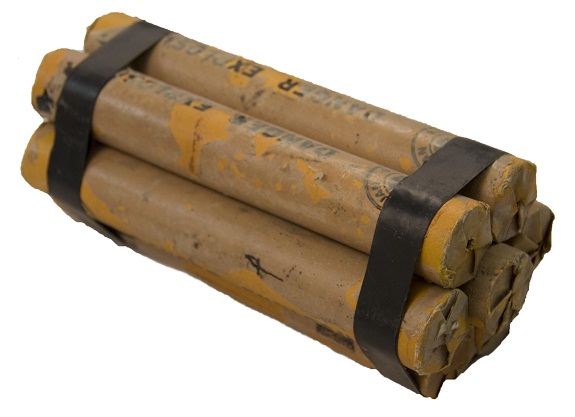
The dynamite presses uncomfortably against his ribs and he grunts when his grandmother tugs at the heavy yarn. When she ties off the last knot, she is roughly pushed aside by the shadow whose deep voice chills both their hearts. Following a close inspection, he gives his approval by securing the detonators and clock and connecting the wires. He never looks them in the eyes. His very presence silences them, humbles them, scares them. They do exactly as they’re told. He locks the mechanism in place. Backing off with folded arms, he points to the oversized coat, the mitts, scarf and hat. The grandmother gently moves the sleeves over the patched up limbs, securing the heavy coat around his shoulders. Although it’s a size too big, it fits tightly in the front when she buttons it over his deadly potbelly. They look each other in the eye as she slides the four-fingered hands into the large mitts. Wrapping the scarf around his neck and placing the hat on his head, she rubs her hand along his cheek to hold his chin in her hand. Gazing at her grandson, she hugs him tightly. She had brought him up; she knows the type of man he’s become. A huge hand interrupts her thoughts, pulling her away. Not so rough this time, he sees the melancholy in her eyes. He opens the door to the safe house, and a whirl of loose snow sweeps through the door. Pointing to the portal, his voice is lighter, proud. “Your destiny awaits.” Joseph walks past the department stores, office buildings, high rises, apartment complexes, the frozen alleyways, smiling at everyone he meets. Avoiding crowded sidewalks, he sometimes has to alter his route slightly, worried he’d be jostled about or accidentally knocked to the ground. He obeys the walk signals. His pace is even and pre-planned. The ceremonies will be half over by the time he arrives; thousands of people will be outdoors. Clear skies guarantee a capacity crowd. The Olympic Games had ended that morning. The closing ceremony is the most attended event, peaking at five o’clock. His planners knew where to place him and how to bypass security. There is nothing to spoil his detour to the new location. There’s a lot of uphill walking to where he’s going. By the time he reaches his target he’s winded and relieved to be seated. No one has paid attention to him. All he has to do is wait. It’s four forty-five.
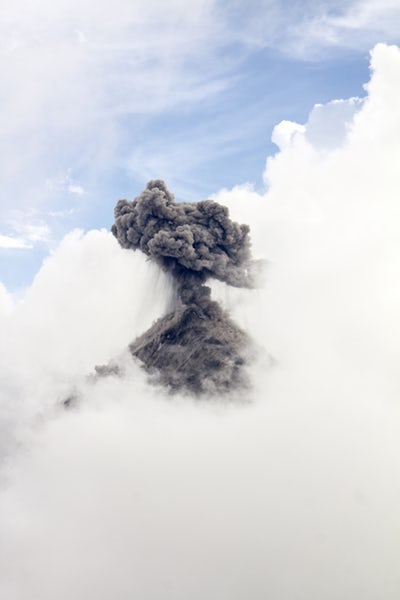 Photo Credit: Caitlin Wynne - Unsplash
*CBC NewsSix O’clock Edition“Reporter Isabelle Crockett is live at Mount Hannah.”Crockett’s voice over describes the blast area, with live video feed from a police helicopter. Bright beams focus on a gash in the earth, treetops burning, smoke and dust swirling in the updraft.“The devastation from an unknown explosion devastated the northern peak of Mount Hannah, shattering huge rocks, uprooting trees, creating an avalanche of shattered stones that cascaded into the forested foothill. Treetops and brush are burning from the intense heat of the eruption. Officials are perplexed as to what may have caused the explosion.”The helicopter sweeps to the south, where crowds have torn down barriers in their rush to safety. The crowd has thinned, with onlookers gathered in knots about the perimeter. The parking lot is filled with fire trucks, police cars, ambulances. Flashing lights add a rainbow to the chaos.“Television footage from the closing ceremonies is being analyzed at this moment. The main consensus is that it was fortunate the blast did not occur on the southern side of the mountain where hundreds of people would have perished. Other than superficial injuries from flying rock fragments, there have been no deaths reported. It’s too early to tell….”* The shrouded man enters the safe house using the only key. He’d been warned of the possibility, and the grandmother must die. Doing old people is a chore he dislikes. He hesitates when he hears a voice from the TV entertaining the empty room, a news channel reporting what people are saying about the bombing. The announcer speaks of terrorism. The only light is a sliver under one of the bedroom doors. When he calls out to the grandmother, she doesn’t answer. Cautious now, he removes a dagger from his belt. Creeping to each door, he scans the inner darkness. Easing the door to the lighted room open, he’s not surprised by what he sees. Curled in a fetal position upon the bed, the old woman has a black and white photo of a child clenched in her puny fist, perhaps it’s her grandson. A long black dress is wrapped tightly about her legs. Eyes closed, her brow is smooth and relaxed. Her skin is pale in the garish overhead light. Most notably, a slight smile is frozen on her withered face. When he reaches over to feel for a pulse, he already knows what he’ll find. Confirming that she’s dead, he’s relieved. The front door remains unlocked when he leaves. Someone will find her. They won’t know who she is. The autopsy will explain how she died, but not why.* Forty-two hours after the explosion, a technician is fingerprinting the editor of the city’s daily. He has just handed the letter to a detective, who holds it with tweezers. He turns it towards the desk lamp. There is no salutation. No date. Only the stamp from the post office on the envelope attests to the time frame in which it had been sent. The printing is imprecise, wobbly like an elderly person, or someone extremely nervous. The wording is simple, punctilious.I died on the top of Mount Hannah.I was not meant to die alone.I am not a murderer.
We are not all alike.We are not all mass killers.
The End.
Thank you for visiting the Scribbler. Don’t forget to leave a comment. Don’t be shy!

April 28, 2019
Guest Author Alison DeLory of Halifax, NS.
Alison is a freelance writer, editor, teacher and author; a very busy lady. The Scribbler is most fortunate to have her as our guest this week. She has kindly agreed to participate in a 4Q Interview.
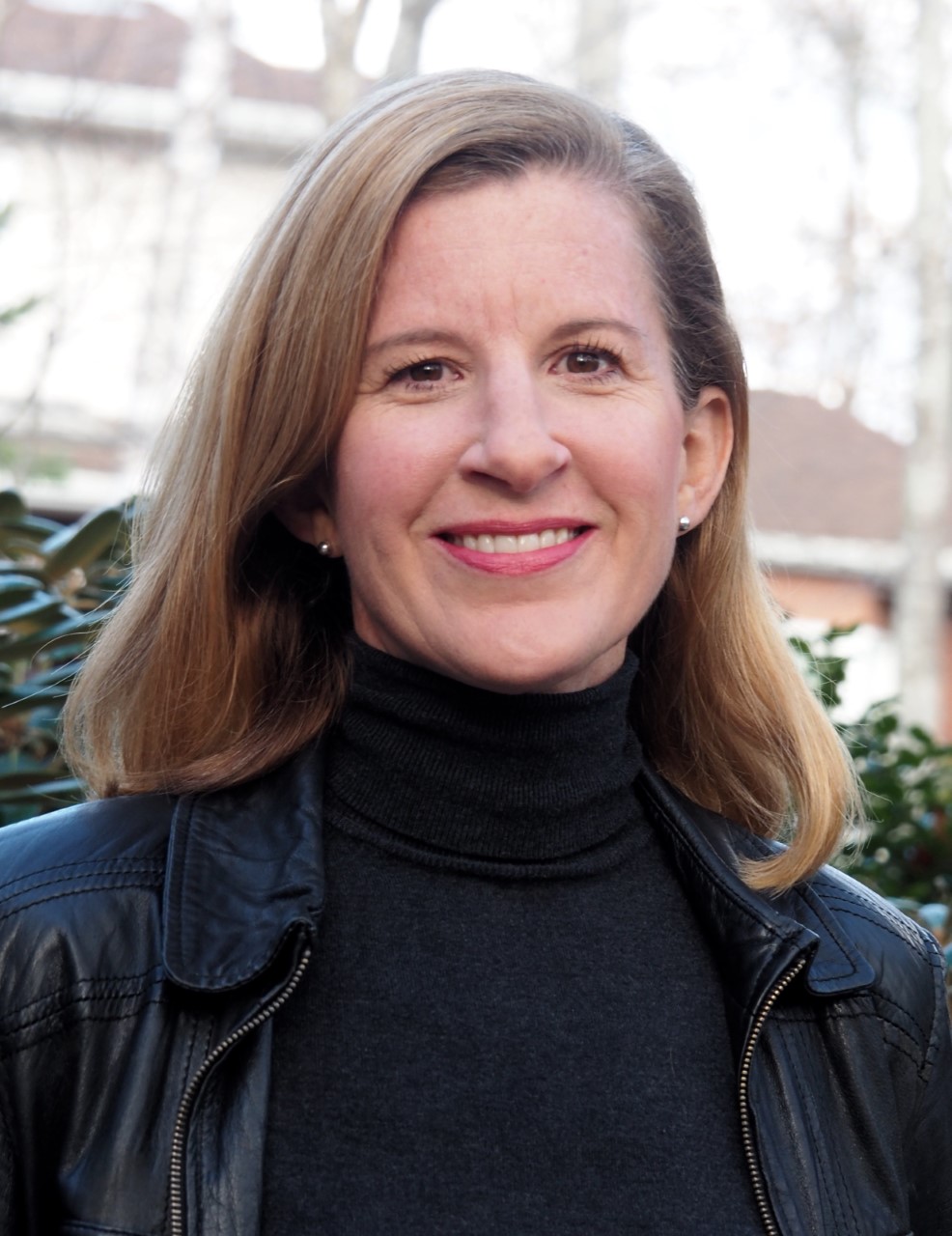
Alison DeLory is a writer, editor, and teacher living in Halifax, currently working at the University of King’s College. She has been writing stories for newspapers, magazines, and digital platforms for 20 years. She’s also written two children’s chapter books and contributed to several anthologies. Making it Home is her first novel.
4Q: When I visited your website – www.alisondelory.com – I was impressed with all your writing accomplishments. Not only with your novels, but the multiple articles you’ve written on a variety of subjects. Tell us about this facet of your writing career first Alison, as a freelance writer.
AD: I enjoy lots of styles of writing, as long as I’m telling stories. I trained as a journalist and cut my teeth at the Medical Post, where I got serious about interviewing and reporting. From there I branched out to lots of magazines and newspapers, including Chatelaine and The Globe and Mail. When digital publishing took off I transitioned to writing for on-line publications and writing website copy, etc. I actually have more writing experience in non-fiction genres, but I enjoy both.
4Q: Now, tell us about your novels.
 AD: I took a creative writing course in 2008 when I first moved back from Toronto to Halifax. A class assignment was to write the opening scene of a children’s book. My own kids were four and seven at the time, so I wrote down a story I’d been telling them at bedtime about two kids who had a giant cardboard box they could transform into various modes of transportation (rocket ship, submarine). It was such fun and so well received it inspired my Lunar Lifter and Scotia Sinker, my first two books.
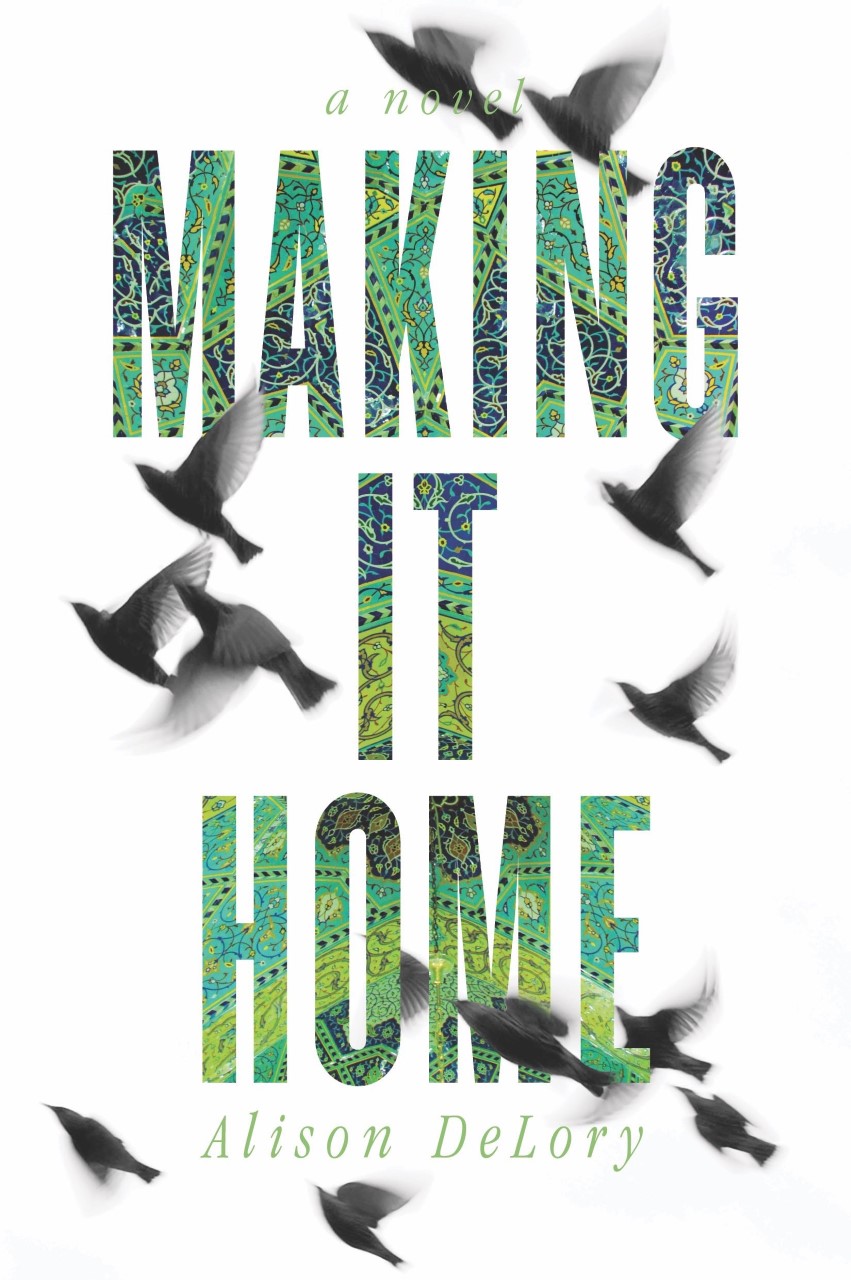
Then I dabbled in other things: poetry, academic writing, blogging, creative non-fiction (essays and memoir) and in 2015 was taking an on-line fiction course through the University of Iowa. For a class assignment I wrote about a mass beaching of whales in Cape Breton, and became interested in the community that flocked to the beach to push them back out into the North Atlantic. This ended up being the opening to my first novel, Making it Home, which comes out in June. The surprising thing is that I ended up weaving a whole second story line into Making it Home about a family fleeing the war in Syria. I did not see that coming! Sometimes stories just find me.
4Q: Please share a childhood memory or anecdote.
 AD: In grade nine on Friday afternoons we were given a prompt and asked to write half-a-page in response. My classmates used to struggle but I loved the exercise and would typically be amongst the first in the class to finish. I see now that I was showing signs of having interest in, and aptitude for, storytelling. I’ve also always loved to read. But no one ever suggested writing as a career to me and that’s puzzling. I had to decide for myself that this was something I wanted to do and would become good at…and then I put in the thousands of hours of practice required. So, if I were giving advice to an aspiring writer, I’d say look within yourself for the motivation.
4Q: Please tell us about your writing habits. Do you have a favorite spot that you feel most creative? With music or total silence?
 AD: I don’t have the luxury of writing only from a favourite spot. I write on my laptop wherever I can. This might be the library or a coffee shop, my home office or my back deck. But it’s also been in a weird assortment of other places: in Access Nova Scotia while my son wrote his beginner’s exam, in the rec centre while my kids took swimming lessons, or on airplanes. I work full-time right now and have several volunteer roles, so my writing is often squeezed into the margins of my life.
4Q: Anything else you’d like to add?
 AD: Only that writing has enriched my life immeasurably. I’ve interviewed such interesting people. I’ve learned about other cultures and my own. I’ve thought deeply about language and word choice. I’ve paid attention to smells and sounds in much more observant and enriching ways. I’ve struggled to try to think from another person’s perspective and that’s made me more empathetic. I’ve taught writing which has deepened my understanding of it as a skill and an art. Writing has been hard work but I wouldn’t trade it for anything.
Thank you, Alison, for being our guest this week.

For those readers that would like to know more about Alison and her writing, please follow these links.
Twitter: @aldelory
Website: www.alisondelory.com
Linkedin: Alison DeLory
Instagram: @aldelory
April 21, 2019
Happy Birthday to the Scribbler!

The
Scribbler
Is
6
Years
Old.
Total page views to date – 211,127
To celebrate, see below for a chance to win a copy of
A Box of Memories
When I started the Scribbler back in 2013, I didn’t have a clue where it was going. Someone told me that if you write stories, you need a blog. I wasn’t sure if anyone would visit. It’s a huge world out there. Ok, it’s a little smaller now with the internet, but, it’s still scary-big. There are thousands of blogs, hundreds of thousands of stories. How do you catch someone’s attention? How can I make this blog effective and entertaining?
Have effective and entertaining guests, that’s how! And I’ve been lucky!

Guests from all over the world – authors, artists, photographers, glass blowers, reviewers and musicians.Scotland – Rio de Janeiro – Great Britain India – Saudi Arabia – Italy – France Canada – United States – Australia Bangladesh – Qatar – Bequia – Mexico South Africa – Spain – Philippines.
Many guests have been most kind and appeared more than once.Chuck Bowie – New Brunswick

Jason Lawson – New Brunswick
Roger Moore – New Brunswick

S.C. Eston – New Brunswick
JP McLean – British Columbia
Susan Toy – Bequia

Sarah Butland – Nova Scotia

Vashti Quiroz-Vega – Florida

Jorja DuPont Olivia - Florida
Bobby Nash – Georgia

Lockard Young – New Brunswick (RIP)
Sylvie Mazerolle – New Brunswick
Jason Hamilton – New Brunswick

Warren Redman (Zev Bagel) & Nicole Tremblay – NB
Diana Stevan – British Columbia
Lisette Lombard – Mexico
Gerard Collins – New Brunswick

Ivan “Doc” Holliday – Florida
Sally Cronin - England
Ann Knight - New Brunswick

Me – shared lots of my stories
And Readers from all over the world – Thank you!
There is also a group of people that I need to acknowledge and those are my faithful readers that share all my blogs across social media and I need to mention them here.Lynn Babin Fontaine
Ramona NoseworthyGail BrownAllen WillistonLinda VautourLinda ChevarieDeborah BeersCarol BeersChristine BeersElizabeth ReddingTheresa HacheySheila ClarkEva CormierJune HebertChuck BowieJames Fisher
Cindy Henry
Cynthia Murray
(I apologize if I've missed someone)

I must admit that it’s been a lot of fun. I’ve got more great guests lined up for the coming months (and years I hope). More authors, an inventor, more musicians and artists. I’ve added more gadgets over the years and one that I have fun with is posting a photo each week of something interesting, usually by one of my readers or visitors. See it on top left. Family and friend photos on right side bar. Blogs I enjoy, lower left side bar.
I’m hoping that you might suggest someone that should be a guest on the scribbler, or it could be you. Please continue to leave comments. Subscribe to the blog. Join me by email. Keep visiting.

A gift for you!
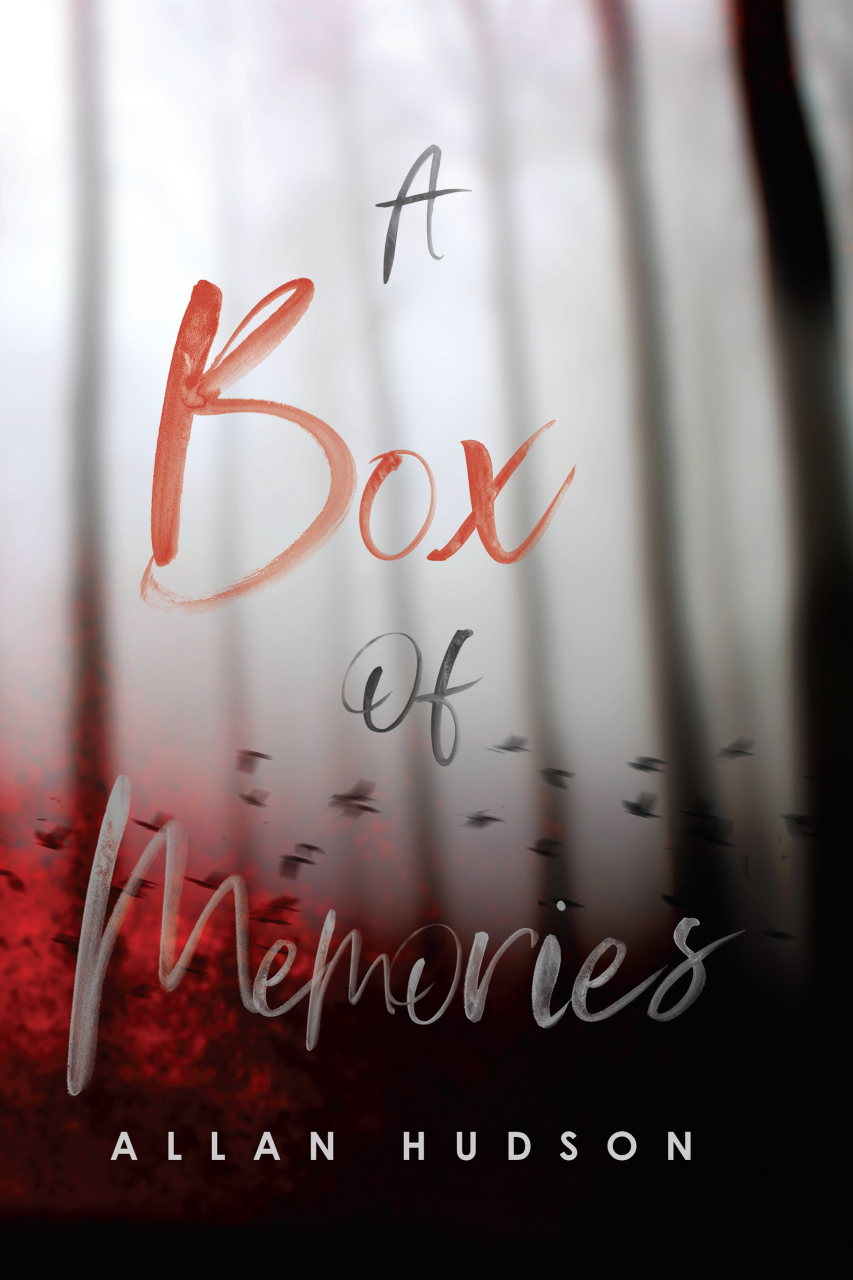
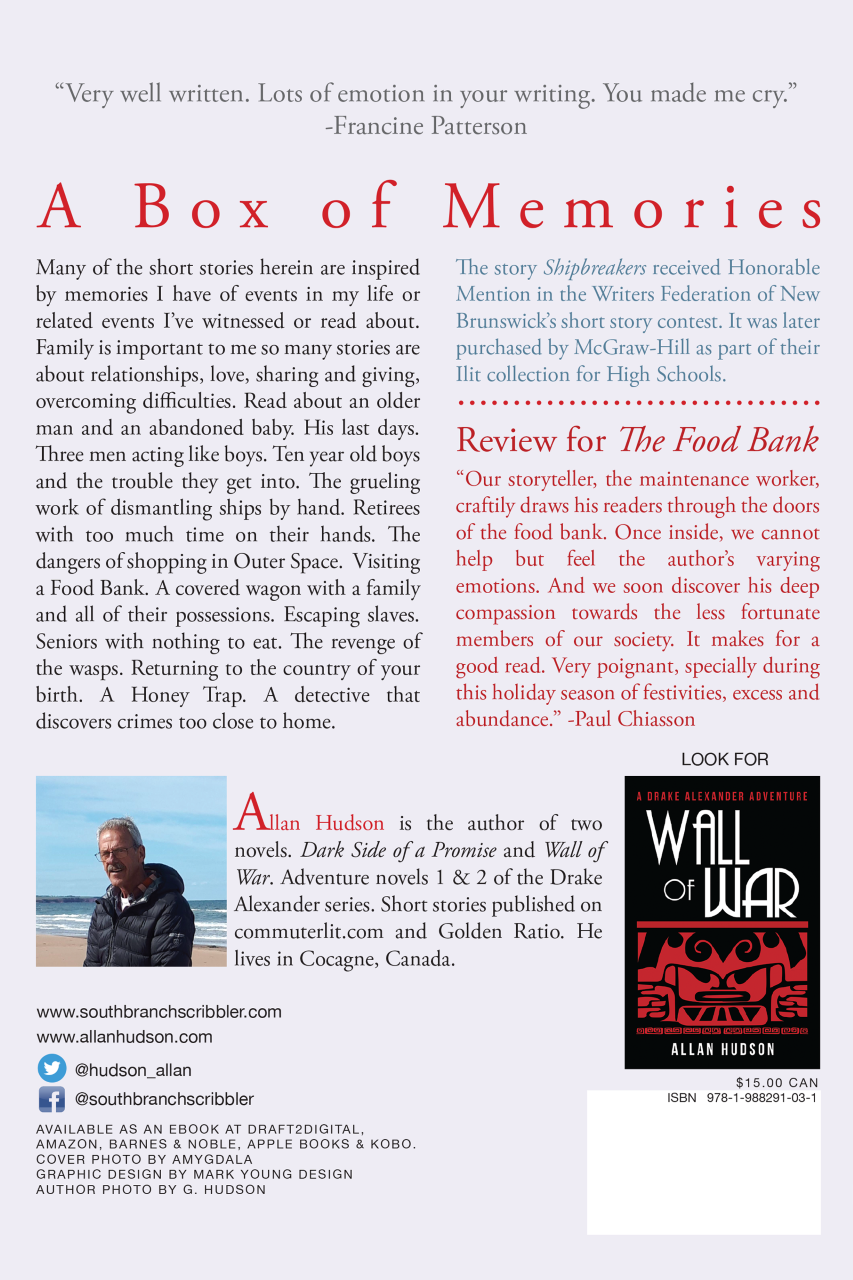
Enter to win a signed copy of A Box of Memories. Send me an email at sbscribbler@yahoo.com and I’ll draw a name at the end of April
April 14, 2019
Guest Author Bernard Jan of Croatia
Another first for the Scribbler, a visiting author from Croatia. Mr Jan shares his bio and an excerpt from his novel.

“There is no greater joy than to share what you love with those who appreciate it.” —Bernard Jan
Bernard Jan is a pen name of an author—a novelist and a poet—from Croatia.
As an indie author, he has published two books in English to this day: A World Without Color, a moving and honest novella about the last three days he spent with his cat, and the gentle story that sheds light on the plight of baby seals in Canada hunted for their fur Look for Me Under the Rainbow.

He has written his first books at the beginning of war in Croatia in 1991, amidst the air alerts and illusory attempts when he wanted to believe and think life is normal, that everything is alright with the world. In Croatian he has published five novels, two novellas, one book of poems and an essay, along with several articles.

His passion for entertainment resulted in his becoming a partner of Tom’s Music Place established in 2009 by his friend Thomas Carley Jr. with the goal to respect the music.
His need to help others came to the fore during his volunteering years: first in advocating for environmental protection, and then his volunteering, activism, work and advocacy for animal rights to the present day. He did some volunteering for the refugees, too, because suffering does not know about the borders and when it comes within your reach, in your yard, you simply have to do something.
As part of his animal advocacy activities, it has been a great honor and pleasure for him to translate Eternal Treblinka: Our Treatment of Animals and the Holocaust by Charles Patterson into Croatian language.
For more information please visit his website www.bernardjan.com or follow him on Twitter, Goodreads LinkedIn.
There is also about me here on my website: https://www.bernardjan.com/about-me
An Excerpt. (Copyright is held by the author. Used with permission)
Look for Me Under the Rainbow by Bernard Jan
https://www.amazon.com/dp/B07C7JGMNG/

The sea was unusuallycalm, even the deep currents seemed to stand still. As if suspended in the hushed stillness of dawn. The blue darkness of the night sky began to recede as the pale daylight washed over the horizon. Helped by the frail rays of the wintry sun shimmering through a cloud of fog. In the cold air, the coat woven out of the drops evaporated from the sea, turned into small crystals of ice.
The fog crept along the surface of the sea, dragging like a tired traveler, and spread in the direction of the land. Thin in places, thick in others, it occasionally revealed a glimpse of the blinding whiteness that covered most of the land.
 If you looked at the right moment, when patches of fog dispersed enough to reveal an endless vista, you could see that it was, in fact, not land. Enveloped by the gradually disappearing fog, huge icebergs loomed, huddled atop the ice crust covering the sea of blue. At first glance, one might easily mistake them for a continent. It did, in fact, exist. The outline of the coast etched against the distant horizon was all part of nature’s optical trick to fool a casual observer. Swathed in a mist of crystals, countless icebergs of various sizes stacked next to each other merged into the image of an ice mountain. The anomaly, carried by deep but weak currents, traveled the ocean almost imperceptibly.
 If not for the sound of the icebergs clashing and breaking piercing the sleepy air, the entire scene would appear lifeless. A white wasteland. Even the scattered groups of seals dozing lazily on white sheets of ice, seemed motionless and almost unreal. Their dark, slick bodies struck a sharp contrast with the surrounding harmony of whiteness. As if they were unwanted intruders. Now and then a seal would move, usually a female. With a sharp sudden spasm, one cried out in pain struggling to bring a new life into this icy world of cruel beauty.
Having left her group, she lay on her side trying to find the most comfortable position to endure the labor pains. Growing stronger and more frequent, they produced searing pain. She felt the restless pup kick and strain to come out into a whole new world. A world of breathtaking beauty, yet fraught with danger. She wanted to help it. She matched the pace of her breathing with his efforts to break the thin membrane that divided him from the outer world. She synchronized her heartbeat with his, but to no avail.
She knew it was going to be a difficult birth. Still not full term, her offspring was in a hurry to leave her body. She nevertheless hoped the two of them would somehow succeed.
When the pup suddenly started to writhe and push inside her, she could not help howling in pain. Her cry resounded over the ice, eclipsing the muted groans of other mothers-to-be who were to begin labor in a few days. They were rested and ready, prepared for the hardship of giving birth, while she had only just arrived and was still exhausted after the long swim from the north. A journey she would again take several months from now with her pup, back home to the winter-bound land of eternal snow and ice. That is, if the birth went well and all ended happily.
 As time went by, her fears seemed well founded. The last obstacle that separated her baby from the outer world was removed. Splashes of red blood stained the ice around her, slowly freezing in the bitter cold. But the pup still did not come. Not moving, exhausted and weary, it braced itself for another attempt.
 She wondered whether it was male or female. If a male, would he look like his father who had just woken and proudly sniffed the air? If a female, would she, like her mother, one day have togo through this pain to bring her baby into the world? After carrying it lovingly inside her womb for months and months, only to. . . .
A new wave of excruciating pain slashed through her body and interrupted her thoughts. The pup pushed its way into the world, this time with more force and determination. The mother again synchronized all her bodily functions with its efforts to break free. Though united in their struggle, she wondered whether they felt the same pain. Or if only she suffered? Though it did not matter. She would gladly endure all the pain it took, if only to let it live.
As cry after piercing cry woke up other seals, they grew agitated, particularly the females about to become mothers in a few days. They timidly lifted their small heads to listen to the cries until they gradually abated. And then, one by one, they softly stretched on the ice that glistened in the sun. Silence fell, and everything was again hushed and motionless.
*
 She could barely hold the overactive pup at her breast. He kept pulling away and refused to eat. His large black eyes squinted at the new surroundings with curiosity, blinking in the dazzling sunlight reflected from the white surfaces. Dark whiskers protruding from his snout combined with big chocolate eyes and two short hairs resembling antennae above each one, were all that disrupted the harmony of whiteness cloaking the pup. His fluffy fur, in its dreamlike softness once the afterbirth had been washed off, seemed to blend into the whiteness of the glacier. This fragile creature looked more like a chunk of white ice than a living being. Protected by nature like a mother shielding her baby from the perils that lurked.
 His mother looked on tenderly as he gave in to her persistence and, something calmer, began to suckle. Content, she nevertheless remained on guard. Although seemingly relaxed, she’d primed her senses to detect the slightest of movements—any sign of danger or concealed threat. Her memories of the past, still too alive, filled her with a sense of foreboding.
The satiated pup stopped nursing and snuggled by his mother. But she could not get rid of the nameless fear. With one eye half-open, she eventually dozed, ready to snap awake at any sound.
*
She left him alone for a brief moment, to satisfy her hunger. When she returned, the cub was nowhere to be found. Nowhere! She scanned the iceberg hoping to spot him, but in vain.
“Danny! Danny, where are you?”
Overcome by fear, she stumbled and slid over the smooth ice, searching for her son. She hoped he’d joined the other seals. When she saw he hadn’t, she completely lost her head. She rushed forward, lurching and tripping, falling and rising again. Feverishly, she searched in each nook and cranny, turning at each shadow. Just when she thought it all over and lost hope of ever seeing him again, she saw something. On another end of the ice floe, a small and fluffy ball shuffled toward the sea.
“Danny!”
No reply. The chilly wind carried her voice away. Catching her breath, she dashed after her son still skidding toward the sea. She scurried over the ice with only enough strength to let out several sharp barks in succession. It seemed to work. The pup stopped for a moment and turned around. Giving his frantic mother time to catch him.
“Look, Mom! The sea!” He looked at her with shiny button eyes.
“Come here, Danny, to Mommy! Let’s go.” Her heart pounding, she pressed him to her side and kissed the moist tip of his little nose.
“But, Mom, this is the sea.” Eyes wide, the pup stared at the blue expanse of water stretching out between the giant icebergs into infinity.
"Yes, Danny, but you’re too small to go in the water.”
“When will I be able to go swimming?” Danny wailed.
“In a little while, after you grow up.”
“When will that be?”
“Soon, my son.” Smiling at his curiosity, she moved toward the center of the ice floe, holding him by the nape of his neck.
***********

Thank you Bernard for being our guest this week and sharing an excerpt from your story.
Thank you dear readers for visiting. Please drop by Mr. Jan's website to learn more about him and his writing. Don't forget to leave a comment.
April 7, 2019
Guest Author Steven A. McKay of Old Kilpatrick, Scotland.
Steven is an accomplished author of The Forest Lord Series as well as the new Warrior Druid of Britain Chronicles and others. We are most fortunate to have Steven take the time to talk about his work and kindly share an excerpt from Book 1 of the Warrior Druid Series.
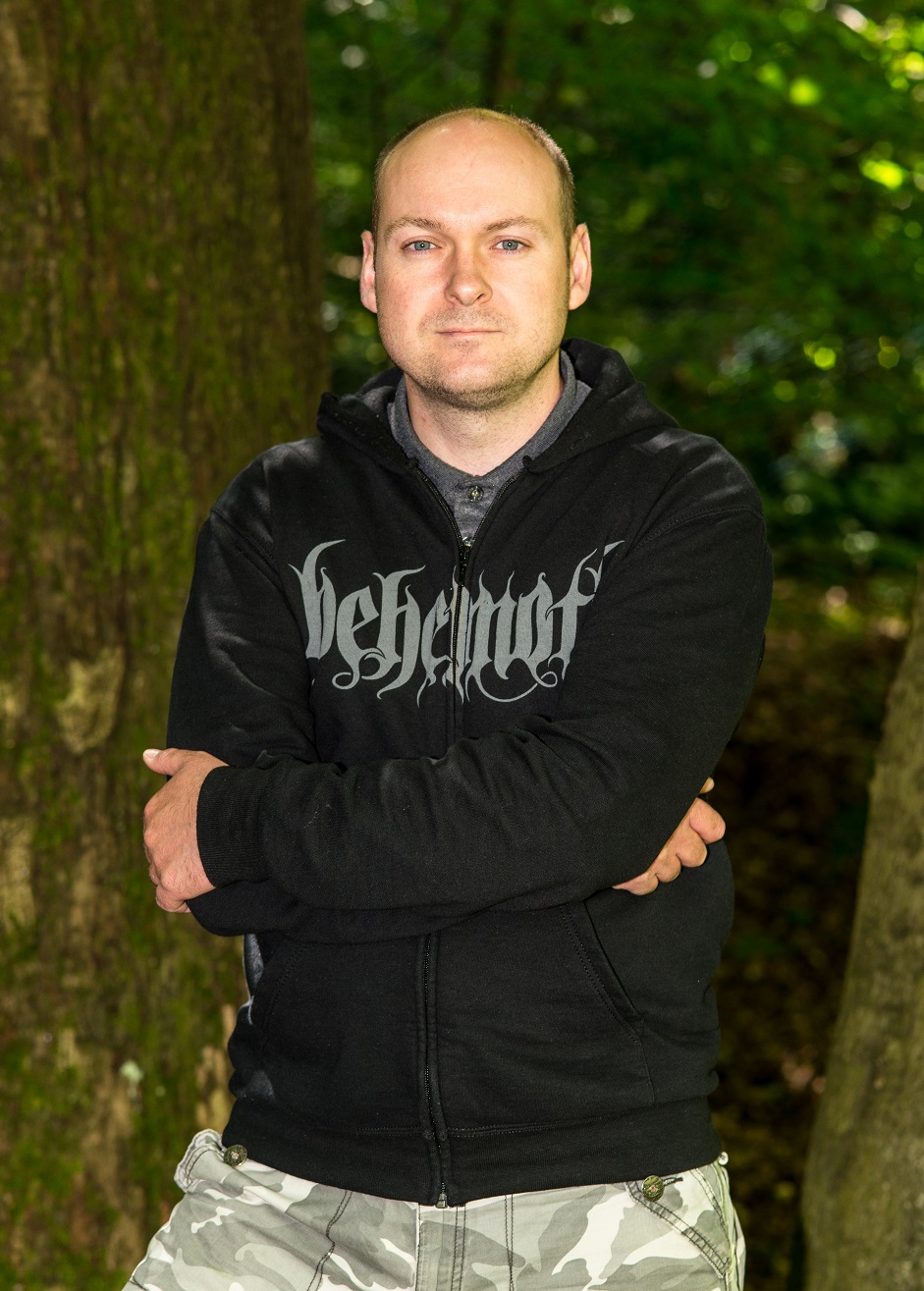
Steven A. McKay was born in Scotland in 1977. His first book, "Wolf's Head", came out in 2013 and was an Amazon UK top 20 bestseller. "The Abbey of Death” is the final book in the Forest Lord series which has over 130,000 sales so far.
Steven's new book, "The Druid" is the first in a series set in post-Roman Britain and was published on November 1st 2018, holding the number 1 spot in the UK "Celtic Myths and Legends" chart for the next three months.
His first novel written exclusively for audio, "Lucia", will be produced by Audible in 2019 and tells the tale of a Roman slave in second-century Britannia.
Steven plays lead guitar and sings in a heavy metal band when they can find the time to meet up.
4Q: When I visited your website – stevenamckay.com – I was pleasantly surprised by the subject matter you’ve chosen to write about. How did this come about?
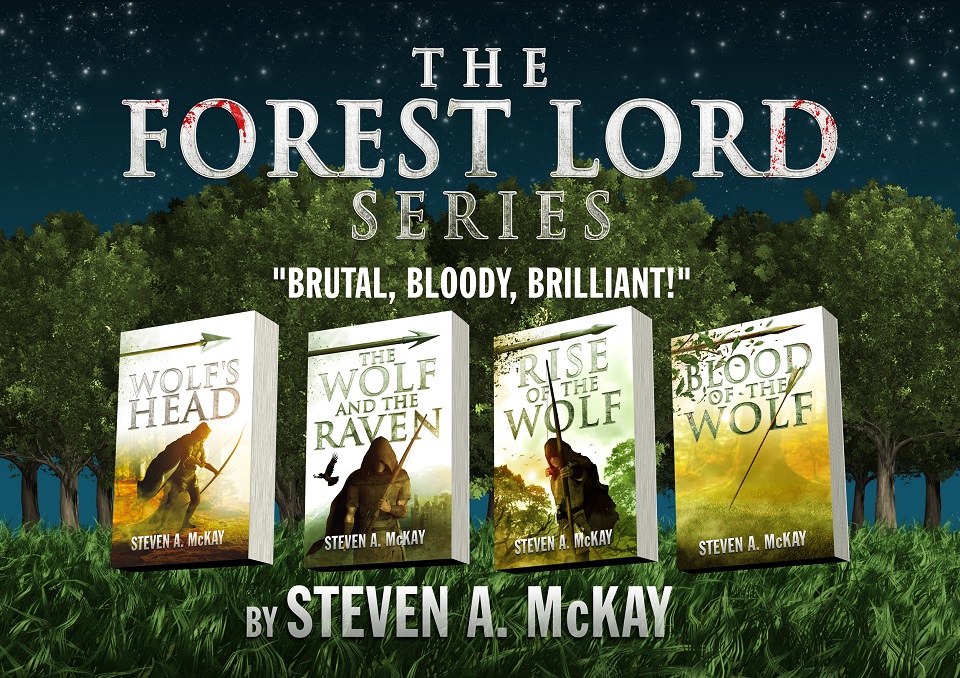 SM: My first books, the ones in the Forest Lord series were inspired by, believe it or not, the name of a house. I was working my day job in a lovely part of Scotland and, on a break, was reading one of Bernard Cornwell’s novels. I decided there and then to try writing my own book, but who should be the hero? I wanted to set my tale in Britain hundreds of years in the past, with the backdrop of the forest and rivers and so on. Anyway, I couldn’t come up with much at that point, and I went back to work. Literally, the next house I drove up to had a name: SHERWOOD, and that was it! The gods had sent me a message, and from then on I started researching Robin Hood, a character I really didn’t know much about.
As for my new Warrior Druid of Britain series, that was inspired by the old 80’s kids TV show we had in the UK – KNIGHTMARE. I was watching a rerun of that and there was an actor playing Merlin. I thought it would be good to write a story about a druid, and my imagination went from there. Not an old, white-bearded man like Gandalf, what about a young, huge guy who was as much a warrior as a druid? Unlike my Robin Hood books this gave me the chance to create a cast of characters all of my own (although Arthur and Merlin do make the odd appearance).
4Q: Tell us about the new series and what readers can expect.
 SM: It’s set in fifth-century Britain, when the Romans haven’t long left the island. The hero is a young druid named Bellicus who is enormous, shaven-headed and fights like a demon. He has two great dogs and they travel around Britain having adventures. The first book, The Druid, sees Bellicus travelling nearly the full-length of the country tracking a Saxon warband who have kidnapped a young girl. That’s been out for a few months now and has lots of great reviews and sold really well. The sequel, Song of the Centurion, is about two-thirds finished and most of that takes place in Northern Britain although hopefully it’s just as action-packed and exciting as the first novel.
4Q: Please share a childhood memory or anecdote.
 SM: I always liked to use my imagination, even as a little boy. I would be out playing amongst the trees pretending to be a fantasy hero, like Caramon from the Dragonlance books, or one of the Ghostbusters (Venkman of course). I used to sneak down into the dark basements beneath the Glasgow tenements, hunting for spooks with my friends. Once, we were convinced we found one and all ran out into the sunshine screaming – I still remember that glowing figure, it really scared me, although now I think it was probably just torchlight burnt onto my retina!
As a child I wasn’t content just to watch TV or read books – I wanted to be part of the stories, to be one of the heroes. Writing my own novels gives me that chance in a way I find really fulfilling.
4Q: Every author or artist has that special “place” where they are most creative. Where would we find you when you are writing? Tell us about your writing habits.
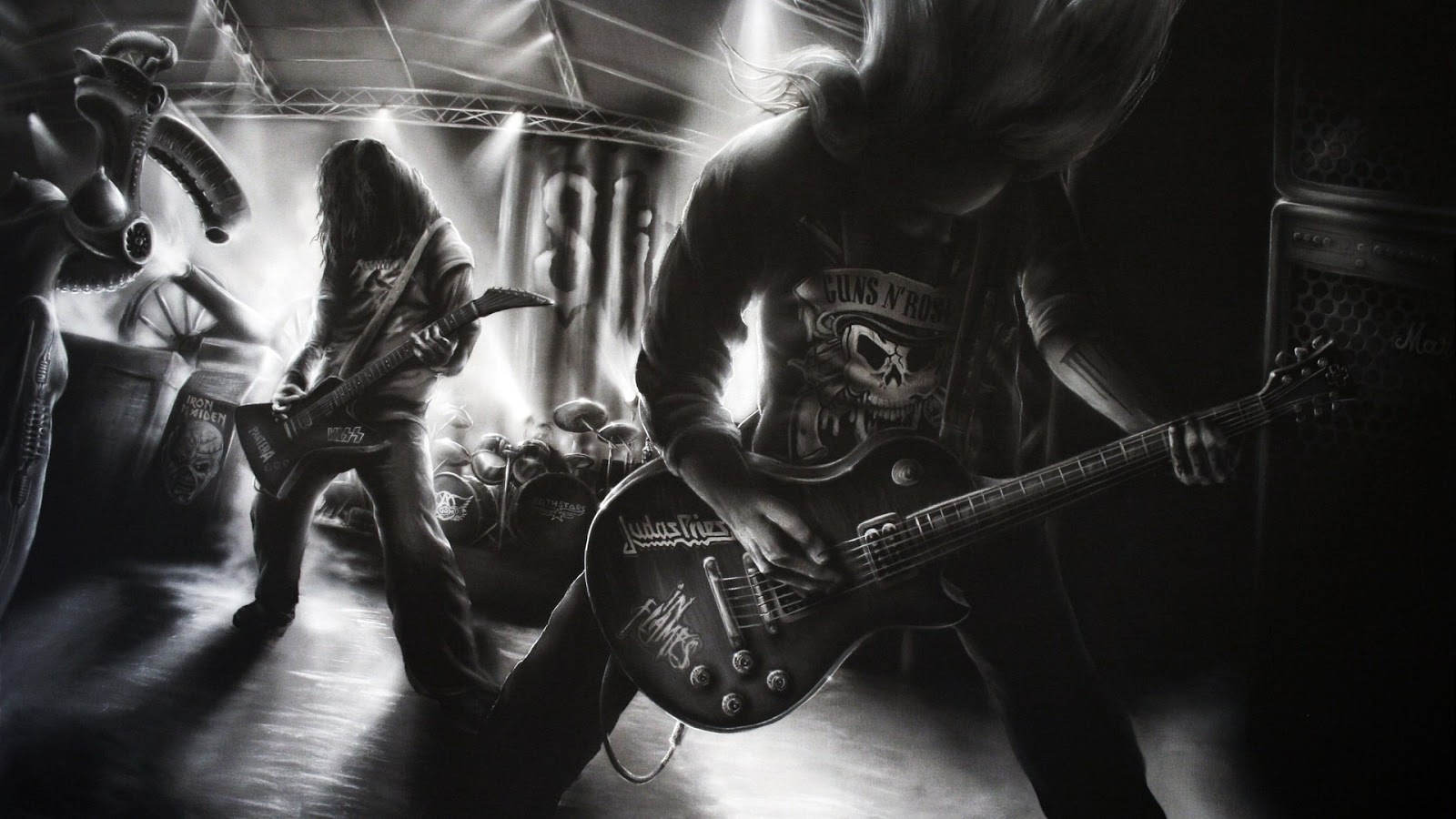 Photo credit: Wallpaper AbyssSM: Most of my ideas come when I’m at work, either walking around or driving. I like to plan scenes in my head the day before I sit down to write them, that way I can make the most of my valuable time, and don’t end up sitting, staring blankly at the screen. I used to write wherever, at the kitchen table or even sitting on the couch, but I have a little study now and that’s where my books are crafted these days. I always listen to some black metal, like Enslaved or Behemoth, as it helps me tune out real life and lose myself in the world I’m creating – that’s probably the most important thing for setting the scene for me. As long as I have my harsh music – almost white-noise in effect – I can write anywhere!
4Q: Anything else you’d like to add?
SM: Thanks for having me Allan, I enjoyed your questions which were a little different from the usual Q&A. My next book will probably be a standalone novel, Lucia, which has been bought by Audible – they are producing it exclusively for audio which is really exciting for me. It’s a bit different to my usual books, as the protagonist is not a great warrior, but a slave-girl, captured by the Romans and brought to spend her life working in a villa in Britain. I am very hopeful it will be great new step for my writing career, so look out for it.
An excerpt from a feast in The Druid, as a local lord has asked our hero to sing for the gathering…
(Copyright is held by the author. Used with permission)

Bellicus considered the request. The Romans had tried to obliterate the druids and their teachings but those in the north, far from Imperial rule, carried on their traditions. Specially chosen young men like Bellicus still learned the lore and skills of ages long past from their elders. So, of course he could carry a tune, but he didn’t particularly welcome the chance to do it this night.
Singing was a talent he’d neglected while practising others— perfecting his unnerving stare for example. He’d spent many hours over the years glaring at his own reflection in a bronze mirror looted from some ruined Roman villa in the southern lands. As a result, he could put the fear of the gods into most men in Alt Clota and beyond with little more than a look. But singing? Bellicus hadn’t sung much recently as Coroticus had other, dedicated musicians, and he racked his brain now, trying to recall the words and melodies to some of his favourite songs.
“Do we have any instruments, or musicians, in the hall?” he demanded, at last, into the expectant silence.
“Aye,” a man nodded, raising a wooden flute while another, beside him, showed a drum, and another a simple horn. Clearly these men had been expecting to provide some entertainment for the evening in return for goods or favour from their lord.
“Do you know ‘Rhydderch The Red’”?
“Aye,” the flautist repeated, while the horn player cried, “Everyone knows that, don’t they?” to shouts of agreement throughout the hall. It was a simple song about rebirth with parts everyone could sing—or shout—along with, and it always went down well at a feast.
“Then we’ll do that,” Bellicus said, coming around to the front of the long table and leaning his backside against it comfortably, facing out towards the crowd, a small smile on lips he licked now to moisten. “If you’d like to start?”
The drummer nodded, glanced at his companions to make sure they were ready, then slowly began to beat out the rhythm.
The people joined in, stamping their feet on the rush-strewn floor, before the horn player came in, adding his hypnotic droning bass sound and then the sweet piping of the flute filled the room with its familiar melody.
Bellicus waited until the flute ended its refrain before he began singing the first verse in a low voice, the people hushing to listen while their feet continued tapping the infectious beat.
“Rhydderch the Red went walking one day,
But ‘ere long the sky turned to grey,
And he met with a man who took him away,
To a place where the sun could nevermore stray.
Come the snow! And the rain!
And the flowers all die and the tracks wash away,
Come the frost! And the hail!
And the light left the sky and the crops they all failed.”
The revellers joined in with the chorus and Bellicus raised his own voice to be heard.
The drummer held the beat and the flute joined in again, a trilling little melody which soared above the other instruments as the horn’s drone became a staccato that matched the drum’s faster rhythm.
Bel grinned, enjoying the music and his own part within it, and his eyes scanned the room as people formed into small, swirling pockets of dancers. Even children were there, and the druid saw the little blonde-headed figure of Princess Catia darting in and out between the adults, a joyous smile on her face.
King Coroticus had wished for a child for a long, long time before, at last, Queen Narina gave birth to Catia eight years ago. The king was naturally disappointed that his wife hadn’t borne him a son and heir but as the babe grew he had found himself softening towards her.
And who wouldn’t? Bellicus wondered as he continued into the second verse, climbing nimbly on top of the lord’s table and leading the singing from that lofty position. Slaves darted to remove the trenchers of food and mugs of ale before they were destroyed by the druid’s stamping feet while his muscular pet dog, Cai, placed its forepaws up on the wood and watched proceedings like a sentry.
Eolas was content to remain lying beneath the table, tail moving gently from side to side.
 Photo Credit: David Gifford www.davidgifford.co.ukThe young princess, Catia, was a ray of sunshine in the dark winter nights with her mischievous smile, endearingly earnest conversations, and uncanny ability to make even the gloomiest of people cheerful. Right now, she was dancing with an older lady, holding the matron’s chubby hands and squealing in delight as she was lifted off her feet in the spinning dance which, somehow, hadn’t yet ended in a drunken mess of sprawling bodies.
“And Rhydderch did cry for the life left behind,
And the woman he’d left, for she’d been so fine.
And so he resolved to leave this strange land,
And he reached out and took up his sword in his hand.
Come the spring! And the sun!
And the lady at home who knew he’d return,
Come the light, in the black!
As the land came to life and the hero went back.”
Bellicus’s voice rose in power now as the musicians went into the final section of the chorus and the druid could see, from the corner of his eye, the queen, disapproving frown on her face, gesturing for her lady-in-waiting to return the princess to her seat. His smile widened as Catia evaded the woman’s grasping hands and skipped off into the crowd nearer the back of the hall.
“Come the spring! And the sun!
As the light-bringer stretched out his unshakeable hand.”
Come the light, in the black!
Spring returned to the land,
Once Rhydderch came back…”
The melody slowed and everyone in the room, even the queen, joined in with the final lines of the song, their voices loud and joyous in the dark, smoky hall and then the place fell into a breathless silence as all eyes turned to Bellicus who seemed huge and magnificent atop the table.
“Another!”
“Aye, sing us another!”
The calls became a chant, so loud that, at first, no one heard the doors being smashed open or the harsh sound of metal meeting metal as the guards stationed there were attacked by half-a-dozen armed men.
Bellicus saw it all unfolding though and knew the best way to capture everyone’s attention in an instant.
“Fire!”
His powerful voice split the audience’s happy chanting, penetrating to the very core of their being like few other words could.
“Fire!” Bellicus roared again, pointing at the fighting men by the doorway. By now the unknown attackers had been joined by reinforcements and it seemed like they’d have an easy task rampaging through the hall, killing anyone that stood before them.
The druid, not surrendering his raised position on top of the table, turned to Coroticus, looking for his lord’s orders.
The king had drawn his sword and pushed the queen behind him but there was uncertainty in the man’s eyes and no wonder. This attack had come from nowhere and the noise and strong drink made everyone’s reflexes sluggish.
Coroticus looked up at Bellicus, then back into the smoky hall, squinting into the confusing mass of people, uncertainty giving way at last to a murderous rage.
“Kill them!” the king screamed, eyes wide and red-rimmed. “Kill the bastards!”
Thank you so much Steven for being our guest this week.

Thank you dear readers for joining us. For those wanting more information about Steven and his stories, please follow these links.
FACEBOOK – https://www.facebook.com/StevenAMcKay/
TWITTER - @SA_McKay
BOOKBUB - https://www.bookbub.com/authors/steve...
**If readers would like to try my writing for free they can sign-up to my newsletter and get a Forest Lord short ebook sent directly to their email.
LINK - https://stevenamckay.com/free-forest-...
March 29, 2019
Guest Author Traci Ison Schafer of Ada, Oklahoma
Who can resist a free story?
I discovered Traci’s kind offer on Twitter and read her short story – To Save a Girl. I’m glad I did. To Save a Girl is well written with great dialogue. A visitor to Earth saves a young lady’s life, against all rules regarding such encounters. A happy ending. (I love happy endings.)
Traci is an award winning author. She has graciously agreed to a 4Q Interview and to share a chapter of her novel – The Anuan Legacy.
Traci Ison Schafer lives in Ada, Oklahoma, and is a Price Analyst for the United States Air Force. She’s a native of Ohio and started her career at the infamous Wright-Patterson Air Force Base, which she used as the backdrop for her first book, the science fiction novel The Anuan Legacy.
Traci is current Past President of the Oklahoma City Writers (OKCW) and is an officer on the Executive Board of the Oklahoma Writers’ Federation (OWFI) were she serves as Second Vice President. She also remains active in the writing community in the Dayton, Ohio, area where she’s a founding member of the critique group The Plot Sisters (est. 2012) and has served as a panelist at the Antioch Writers’ Workshop at the University of Dayton.
Traci has a master’s degree in business, a bachelor’s degree in science education, and has earned teaching certifications in several science fields including physics, astronomy, and earth science. She’s curious about all things beyond this physical world such as aliens, reincarnation, and psychic abilities, making them among her favorite writing topics.

Traci’s writing has earned several awards, including winner of the National Indie Excellence Award in Science Fiction and finalist for the Independent Author Network Science Fiction Book of the Year. When not busy writing, Traci enjoys spending time with her family.
4Q: Your bio tells us of your curiosity with aliens, reincarnation and psychic abilities and how these are your favorite writing subjects. Considering each one of these topics, do you believe in them?
 TIS: Yes, I do! All of them. I think there are so many things beyond what we can see, hear, touch, smell, and taste. People tend to be skeptical of things they can’t verify with these five “hard” senses. The human eye can only detect a small portion of the electromagnetic spectrum (the visible light portion), but that doesn’t mean the rest doesn’t exist. It does. We’ve found other ways, beyond those five senses, to prove that. I think it’s that way with other things as well. A human body, and what scientific means we’ve developed so far, can only verify a small portion of what this universe is all about, but that doesn’t mean there’s not more. We just haven’t figured it all out yet. Aliens, for example. There are trillions and trillions of galaxies, each containing trillions and trillions of stars, many of which support planets. I just can’t believe that our planet is the one and only planet that sustains any kind of intelligent life. Scientist have discovered that other planets outside of our own solar system could sustain life, but I think even they are looking at things too narrowly, because they’re looking for planets that would be similar to our own. What if other life forms exist that don’t breathe the same kind of air we breathe or live within the same temperature ranges that we survive within. We need to open our imaginations to possibilities beyond what we already know. Our science-fiction of today could be the reality of tomorrow.
4Q: Tell us about The Anuan Legacy. What inspired this story.
 TIS: I’ve always loved astronomy and was a big fan of Star Wars growing up, and later, of Star Trek. I also loved watching Carl Sagan’s Cosmos. So, I’ve always had my eyes to the stars. Combine that with my job location and it was a no-brainer. I’m originally from Ohio and started my career at Wright-Patterson Air Force Base. I worked there for many years before relocating to Oklahoma. If you’re not familiar with Wright-Patt, it’s rumored to have received the Aliens from the Roswell, New Mexico, space ship crash back in 1947. So, mix the government, captive aliens, adventures in space, throw in a little romance along the way, and you’ve got The Anuan Legacy.
4Q: Please share a childhood memory or anecdote.
TIS: I’ll share one that’s in-line with the subject matter. I grew up back when it was safer for a child to be out and about without supervision (or at least people thought so). Well, my mom would give me a certain time to be home, but when it would start to get dark, I couldn’t resist stretching out on the top of the neighborhood playground’s monkey bars (that couldn’t have been comfortable, but I never noticed) to watch the stars. I’d tell Mom my watch was slow or had stopped. She must have thought I was terrible at winding my watch. Or maybe she had her eye on me after all, because I don’t recall ever getting in trouble. Maybe I just pushed that part out of my memory. Lol.
4Q: Every author, artist or musician has that special “place” where they feel most creative, be it a room of their own or an office, in complete silence or with music playing, etc. What’s yours like?
 TIS: Pretty much anywhere that I can find a desk or table and relative quiet. It doesn’t have to be dead silence. White noise is okay. But I’m not one who can write on the couch in front of a tv. Probably the most unusual place I’ve ever written was in a closet. When I worked in black world programs, I couldn’t have my laptop with me. I had to store it in a locker outside the classified area. At lunch I’d retrieve my laptop and go to a locked walk-in closet, also outside the classified area, that had a counter where people could leave their phones or personal laptops. I’d punch in the code, push all the electronics aside, and set up on that counter to write. I startled quite a few people who popped in for their phones during lunch and found me sitting there.
 4Q: Anything else you’d like to add?
TIS: Yes. I’d like to thank all my readers for their support. I love hearing from them on social media and meeting them at events. I look forward to meeting more in the future.
Also, for those who’ve asked about another book, I should have The Anuan Legacy, Book 2 , out sometime later this year. If anybody would like updates, they can sign up for that on my website or follow me on social media. I’m most active on twitter and Facebook, but also have an Instagram account.
An Excerpt – The Anuan Legacy.
CHAPTER 1 – GAIGE
 “Gaige, you’ll be entering Earth’s atmosphere in ten seconds,” Nav said over the open mission channel.“Got it, Nav.” I scanned the cockpit readouts to verify that all of the diagnostics still checked out. They did.“Five seconds.”I braced for the change in velocity.“Prepare for entry in three, two, one . . .”Just as I hit the thick atmosphere from the vacuum of space, cockpit warnings blared and diagnostic projections flashed by as the auto-systems tried to pinpoint the problem.“Nav, something’s wrong with the shuttle!” I shouted.“We know. We think an unexpectedly strong solar burst knocked out your Lexon system. We’re working it from here.”The diagnostic projections continued to scroll through the air in front of me, still searching for the problem.“There’s no time,” I said. “I’ll have to land it mentally.” Telekinesis was nothing new to an Anuan, but controlling something that large would be more than a challenge. It would be a miracle.“Our readings show the electromagnetic interference on Earth’s atmosphere caused by the burst won’t settle down for another few Earth minutes. Be careful what you’re opening yourself up to, Gaige.”“I don’t have a choice.” The shuttle was going down one way or another. I could take control or die. “Override!”The warnings fell silent and the cockpit diagnostics faded. The remaining displays dimmed. The shuttle was all mine. I reached forward and touched the control panel. My hands trembled with surging adrenaline until I pressed them so firmly against the panel they couldn’t budge. I wouldn’t be able to land the craft and maintain a cloaking shield at the same time, but I’d have to worry about being detected later.
 The shuttle vibrated under the stress of friction with Earth’s atmosphere. Opening my mind, I directed my mental willpower into the shuttle. Slow to entry speed! Still, the vibrations rocked the shuttle. If I didn’t get the shuttle’s speed down, it would break apart under the continued force of entry. I focused everything I could pull from within myself at the shuttle. It slowed—not quite to a normal entry speed—but close enough to ease some of the stress on the craft.Trying to manage the shuttle was depleting me, not just mentally, but physically, too. The unstable electromagnetic energy in Earth’s atmosphere from the solar burst wasn’t helping. I couldn’t maintain control of the shuttle much longer. Dusk had already started to settle over the area, but the night vision filter of the windshield allowed me to easily see Earth’s barren winter trees—lots of them. My eyes scanned for a clearing among all the trees. In the far distance, toward the northwest, I found one. You can make that.I leaned my body and my mind toward the clearing and willed the shuttle in that direction. The craft glided above the treetops.Slow to hover. The shuttle paused and hung suspended in the air over the open stretch of land.Landing mode and down. Drained, I struggled to keep control. My energy level wavered. The craft shuddered then crashed to the ground with a hard jolt that slammed me forward in my restraint.I laid my head back against the seat, exhausted. Stretching each arm and leg, wiggling fingers and toes, I seemed to be in one piece. But every part of me ached—especially my brain. It felt like an icepick had been driven through my temples.
 Dusk offered some visual cover, but I could have easily been detected on radars since I hadn’t been able to maintain a cloak during the landing. A stream of sweat ran down the side of my face. I didn’t have enough energy to wipe it away, let alone hide a shuttle.“Gaige? Ship to Gaige.”I heard the static-riddled communications coming from my crippled shuttle, barely, but couldn’t gather enough energy to answer.“Ship to Gaige. Respond!”“Yeah.” With some effort, I got the sigh of a word out.“We’re evaluating your medical values now—,” Nav said.“Gaige,” another voice interrupted. “This is Mission Commander. I’m sending Conner down with a rescue team as soon as the burst energy subsides. Shouldn’t be more than another five Earth minutes.”His words sent a small surge of adrenaline through my body, giving me enough energy to protest. “Tas, no! I mean, Commander, permission to—”“You can’t stay down there like that,” Tas said. “I’m sending a team to get you.”“Please, Commander . . .” I couldn’t let my situation affect the mission. I drew in a deep breath, trying to hold on to the quickly fading adrenaline. “I request some time to recover the situation on my own.” I took another breath. “One of us in this area is enough, maybe too much already. Remember, we can’t overwhelm her.”There was silence and then, finally, Tas answered. “Request granted. But I’ll have Conner and the rescue team on standby. If we don’t receive a positive report from you in fifteen Earth minutes, I’m sending them. Understood?”I couldn’t respond. Our short exchange had taken what little energy I’d regained. I knew I had to fix the shuttle, get it cloaked, and move it somewhere away from the current site. But I could barely stay conscious.“Gaige? This is Tas. Are you still with us?”Yeah, I’m with you.“Gaige?”No energy left . . . to stay . . . awake . . .
To discover more about Traci and her stories, please follow these links.
www.traciisonschafer.comwww.twitter.com/authortraciwww.facebook.com/authortraciisonschaferwww.instagram.com/authortraciisonschafer
Thank you Traci for being our special guest this week. Wishing you continued success with your future stories.
Thank you! It’s been my pleasure.

Thank you to all you visitors for stopping by the Scribbler. Please take a moment and leave us a comment.
March 24, 2019
Guest Author Andrea Merchak of Rio de Janeiro, Brazil.
Another first for the Scribbler!
Andrea is our first guest from Brazil. So happy to have her here for a 4Q Interview and she has kindly offered to share an excerpt of her work.
 Andrea Merchak was born and raised in Rio de Janeiro, Brazil, where she still lives. She graduated in journalism and worked as a freelance journalist for a while. Currently, besides writing books, she creates book trailers and book covers for a living.
She’d have never thought of being an author until her sister came up with the idea. But ever since Andrea published her first book, she’s never thought of doing anything else other than writing.
Her debut novel, “Bloody Legends”, was so well-received by readers that it became a series with the release of the exciting prequel “Bloody Origin”. The Bloody Series is about a vicious serial killer who finds himself bored with killing only prostitutes and homeless people, so he creates themes to commit the most heinous crimes and satiate his darkest desires.

Andrea released a short story, “Deadly Senses”, as part of the horror anthology “Death & Pestilence” with other writers. Her latest release, “Crowley’s Cult”, is a blend of horror, supernatural, and erotica. She is currently writing “Bloody Puzzle”, Book 2 of the Bloody Series, and “Fragments of Horror”, a collection of 12 short stories.
Writing is her greatest joy, and Andrea will always find new ways to intrigue and scare the wits out of you.
 4Q: After a visit to your website – https://author-am.wixsite.com/andream... – I discovered your love for writing horror thrillers. Please share with us why you are drawn to this genre.
AM: To tell you the truth, I’m not sure if even I know what drew me to horror. But as far back as I can remember, I was always drawn to horror, since I was a young kid. I’ve always loved that feeling of dread that horror stories provoke. The darker, gorier, and scarier, the better. You can call me crazy, but horror is fascinating. It arouses all our senses. I love the adrenaline running through my veins, my heart beating fast, the suspense. I just love it! Though it’d be perfect if horror only existed in fiction, of course.
4Q: Please tell us about your latest novel and the excerpt you are sharing with us.
AM: “Crowley’s Cult” is a dark horror story with elements of supernatural, erotica, and mystery. Its protagonist, Zane, is a renowned painter who moves with his fiancée to a centennial building famous for its macabre history. Zane’s presence unleashes a dark shadow from the past. Past and present come together in a clash of sinister and bizarre happenings, taking the couple down a path of sex, murder, and violence.
4Q: Please share a childhood memory or anecdote with us.
AM: I have a memory from when I was about 4-5 years old. My sister and I used to wait until our parents went to bed – which by the way was where we supposed to be – to sneak into the living room and turn the TV on to watch old horror movies. But since we were both too young, we ended up screaming to our daddy to come turn on the lights because we were scared to death. Every single time, he used to scold us and try to convince us to go back to bed, but we always begged him to stay with us and watch until the show ended. It always worked. I think we can say this memory is kind of an anecdote, isn’t it?
Another memory just occurred to me. My dad had quite horror a collection of magazines on shelves in his home office. I used to spend a lot of time there when I was a teenager, reading them. I guess my dad would love my stories.
4Q: Every author or artist has that special “place” where we are the most creative, the sounds, the surroundings, etc. What is your work world like?
AM: My creative special place is inside my head. I know it may sound odd, but it’s true. I’m not able to turn my mind off. No matter what I’m doing, I’m always thinking about something. Sometimes I’m watching TV and suddenly an idea comes to mind. It’s usually not related to what I’m watching. I watch people on streets and places, and stories come into my mind. Again, they’re probably not directly related to them. I borrowed this trait for my Zane character. I found it interesting for his inspiration to come the same way as mine. Of course, there are times when I’m reading or watching the news and it inspires me in some way, but that’s not the usual case.
4Q: Anything else you’d like to tell us about?
 AM: I’m currently writing “Bloody Puzzle” (Book 2 of my Bloody Series), and concomitantly short stories for my book “Fragments of Horror”. Visit my website and subscribe to my list to win an exclusive preview of a short story that will be part of this book.
Also, I’d like to thank you for the opportunity to be here and share a little about myself with all these amazing Scribbler’s readers. I hope you all enjoyed being here as much as I did.
An Excerpt from Crowley’s Cult – Part of Chapter 2.
(Copyright is held by the author. Used with permission)
A few days later, Zane’s in his art studio. It’s a large room with glass doors that he leaves open when he’s painting, even in winter. The view from there is spectacular. That part of the garden was designed from his own drawings. It has a stone-rimmed koi pond filled with beautiful carp of various colors.
Despite the incessant text messages and phone calls, he feels compelled to paint. He takes a palette and squeezes paint from a few tubes onto it. As usual, he positions the easel so that he can admire the view outside, though his paintings have absolutely nothing to do with what he sees.
At first, Zane feels strange. The feeling of being watched persists, and it bothers him. He starts painting, using mostly red and purple. The strokes come almost instinctively. As the painting takes shape, he feels a deep ecstasy.
Only a few hours later, the painting is complete. He’s astonished at how he finished painting such a large canvas in such a short time. Furthermore, he’d had no source of inspiration from which to paint. For the first time, Zane hadn’t seen the final image in his mind before starting to paint. He’d just painted what he was feeling without realizing it.
Zane looks more closely at the painting. Although the image can still be easily identified as his creation, the sexual content is so explicit that it frightens him. Suddenly, he senses a presence admiring the painting behind him, so close that he can feel the breath on his neck. Zane turns around so quickly that he almost falls off his seat. But there’s no one there.
He giggles nervously and feels silly for being spooked by his own imagination. But even though he’s alone in the house, he still has the feeling that there’s someone watching him.
As soon as he finishes painting, Zane feels exhausted and decides to take a shower. He enters the master suite’s sizable walk-in closet, a well-organized space. The two side walls are lined with shelves and drawers and, there’s a large island in the middle with compartments for underwear, fashion accessories, and jewelry. Here, the windows have sandblasted glass for privacy.
He’s reminded of the day Olivia moved in. How is it possible you don’t use even half of this space? I’m lucky, I can fill it all up with my clothes and shoes, she’d said. He looks around and smiles, remembering how he’d let her take control of the room.
Zane takes off his shirt and shorts and drops them on the closet floor as usual. In the shower, he decides to surprise Olivia later with a romantic dinner.
He finishes showering and returns to the closet. But while he’s getting clean shorts, he notices that the clothes he’d left on the floor are now atop the island. He’s puzzled, because he knows he has a ‘bad habit’ of leaving his clothes lying on the floor, as Olivia always reminds him.
He looks all around, trying to figure out what’s happening. Then his cell phone rings, startling him. His mysterious caller comes to mind, making him uneasy. He dresses quickly and answers the call. But it’s Wes.
“Hey, I was almost giving up,” says Wes. “Too busy to answer calls from your friends?”
“I was in the shower.”
“Take your cell in there from now on, so you can quickly answer when I call,” Wes says as if he were giving an order. But then he laughs.
Zane’s distracted for a moment, thinking again about the dirty clothes on the island.
“Zane? Still there?”
“Oh, yeah, sorry. I’m dressing while I’m talking,” he says, not sure why he lied.
“Okay. So, I’m calling because the guys are planning to go to a new club…”
Zane interrupts his friend. “I can’t. I already have plans for tonight,” he says bluntly.
“Okay. Next time then.”
They chat a little longer, and when they hang up Zane forgets that the clothes weren’t where he’d left them.
Thank you, Andrea, for being our guest this week and sharing your thoughts and story. For those interested in Andrea and her novels, please follow these links.
Website – https://author-am.wixsite.com/andream...
E-mail – merchak.andrea@gmail.com
Twitter – @AndieMerchak https://twitter.com/andiemerchak
Amazon Author Central – https://www.amazon.com/author/andream...
GoodReads – https://www.goodreads.com/AndreaMerchak
Book Bub – https://www.bookbub.com/profile/andre...
Patreon – https://www.patreon.com/user?u=15997405
Facebook – https://www.facebook.com/AndreaMercha...
Links to the books:
Bloody Legends – https://www.amazon.com/gp/product/B00...
Bloody Origin – https://www.amazon.com/Bloody-Origin-...
Crowley’s Cult – https://www.amazon.com/dp/B07F6C5B55
Death & Pestilence – https://www.amazon.com/Death-Pestilen...

A huge Thank You to all you fabulous readers that make the Scribbler so much fun.
March 21, 2019
Part 3 of Logbox - a story by S.C.Eston
As promised - Part three of Steve's entertaining story
Part one - GO HEREPart two - GO HERE
Mr Eston Is back.
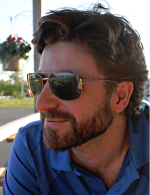
Steve was a guest recently on the Scribbler. If you missed his previous visit and bio, please go here. Since then I’ve been visiting his website - www.sceston.ca - and reading his short stories. I really enjoyed Logbox and he’s kind enough to share it with us this week in three parts.
Part one - Sunday March 17 Part two – Tuesday March 19Part three – Today
(Copyright is held by the author. Used with permission)

Nothing is the same. For the first time in a long while, I think. I have thoughts, and I can’t control any of them. I’m thinking about escape… Of all things: escape! How ludicrous is that? [laughter] I can’t stop the thoughts. I think about Garadia, about the Low Lands. Even the Red Streets. Home. Can I allow myself to think about it as home? It doesn’t end there. I think about what I would do if I could return. I would find the old brick tower. Make a bed there. Something small to start. Just a room or even the corner of a room. Maybe even use the same space that was mine before I left. Then I would repair the place. Repaint. Rebuild. I would need work. Something real. Something true. Something that could bring me stuff, stuff to trade. There would be no cheating this time. I would play by the rules. My brothers. I would search for their story, learn now what I should have known then. More importantly, I would apologize. I would have many apologies to make. It seems right. [silence] [laughter] It is a dream. These hopes are never to happen. Even if I was to return one day, I could not go back to the Red Streets. It is a strange thing that the mind tries so hard to forget the bad, to make it bearable. Even if my head does not remember the reality, my heart knows it hasn’t changed.
Maybe I could look for Anedia’s family? Or some of her friends? I always wanted to go to the Floating City. We all despise it, but we all want to walk its streets. There have to be some people who would remember her, who would have cared for her. Not her father. But her mother, surely. I realize I don’t even know if she had brothers, sisters…I could find them and give them this device. Her voice is on it.

Coda The recording stopped in disintegrating white noise. The man looked down at the device on top of his desk. It was a box, grayish, showing marks of time and use, covered in scratches. It was not impressive, but it had survived where almost nothing else had. “So this is it?” he asked, slowly spinning the drink in his hand. The transparent orange liquid swirled in circles, creating a miniature typhoon. “It is,” said the woman sitting across from him, her legs crossed, her head high. “Not what I had expected.” The woman didn’t say anything. Her black suit was impeccable. Her short hair was moist, making the red streak in it look as if it was ablaze. She had just returned from the latest sweep. “How can you be certain this is the source?” he asked. “It is still transmitting,” answered the woman. “We don’t know how to stop it.” He nodded, impressed. The message had traversed a few billion kilometers to reach them, halfway across the system, loud and clear, on a secret frequency. Not only that, but the box had been constructed from a wide array of disparate materials and pieces. It looked like a logbox, but it was a distress beacon. Their scientists, with all their knowledge and equipment, had not been able to stop the signal. Impressive indeed. He took a sip and felt the satisfying burn as the liquid descended down his throat. “You’ve analyzed the voice, I assume? Of the girl, and found it is the same as the one on the distress call?” “We have, and it is.” “What is her name?” Names didn’t stay easily with him. “Anedia.” “Yes, right. And you didn’t find her body?” “No, we didn’t.” He heard regret there. “Based on the recording, it was to be expected. Her remains would have been dumped into space with other waste.”

“Did you crawl the data-sphere?” “We have, using her voice pattern. We found her. As stated by the recording, she is a Promient of pure blood. She was studying frequency engineering. The daughter of Daram, ex-director of the innovation department of Bio-Ex. Her disappearance was reported by her mother on the first day of the sixth season, cycle 2453. Strangely, the request for help was retracted a few days later, this time by her father. We know she wasn’t found, so the father had other reasons for halting the search. The next season, the mother committed suicide by jumping off a tram on the northern fringes, falling through the clouds. A search party was sent to look for her, but the body was never recovered. The following cycle, 2454, an explosion hit one of Bio-Ex’s labs in the X quadrant. Daram was one of the 121 casualties. He had no surviving kin, and his estate, as well as all his assets and data, passed on to Bio-Ex.” “The nature of the explosion?” “Filed as accidental.” “Staged,” he corrected. He offered the woman a drink. She refused, as she had done a few minutes earlier. As she always did. He took a sip from his glass, savouring it, taking his time. The whole matter was an incredible turn of events. They had been searching for the asteroid mines for years now, without luck. Just a season ago, he had been pressured to cancel the mission. The whole project was in jeopardy. Then the distress call reached them. Out of nowhere. A single feminine voice asking for help, over and over. “You realize,” he said, nodding at the small object on the desk, “that we would never have found this place without help?” “I do,” admitted the woman. “I just wish you would have got here sooner.” “I know,” admitted the man. His armada had answered, although not nearly as swiftly as he would have liked. Certainly not as quickly as the woman has responded. She was a loner. He had superiors to placate, politics to play. They had already discussed the matter, and she knew how grateful he was for her assistance. He wished he could also thank this Anedia personally. “How many were we able to free?” “Five hundred and eleven. Half will recover with minor scars. A quarter are in especially bad shape. Of these, some have been altered or augmented. We suspect bio-experimentation. The other quarter are sick and weak, and some will probably not make it. We estimate the mine had over two thousand captives.” The result was devastating. So many lost, not even counting their own. Yet it provided the proof they needed. The project would continue now. There was no doubt about that. Funding would flow in. More flying crafts would be provided. Resources. Technologies made available. There would be no limit. But the cost had been terribly high. “We should talk again before you leave,” he said. “Get some rest. Deserved rest.”
 The woman stood and stared through the sole window of the office. The man followed her gaze. Far away, in the dark of space, the remains of the asteroids could be seen. The explosion had been powerful and had almost taken down their craft. The repair bots were outside, fixing and patching. The grinding could be heard and felt through the floor. It would be several more days before they would be able to fly again. “This was only one of many,” she said. “It is said there are a thousand camps out there.” “One at a time,” he said. “It is the best we can do.” But he didn’t feel the confidence he was trying to convey. “We’ll talk before I leave,” she said, turning away. As the doors opened to let her out, a thought came to him. “And this man,” he said, “this Nethu, what about him?” The woman stopped and turned his way. For the first time since her return, she gave him a tired but genuine smile. “We found him. The device was hidden under his cot, behind a loose stone. He lives.”
 The End
Thank you Steve for sharing your story.
Thank you readers for following. Please visit Steve's website to learn more about this talented author and his work.
www.sceston.ca
Don't forget to leave a comment!