Allan Hudson's Blog, page 38
November 4, 2018
In Memory of Lockard Young - Author & Friend
 Lockard - Lockie to his friends and family - was a terrific storyteller. He was also a frequent guest on the Scribbler and one of his posts reached an all time high of 1005 visits - he was a popular guest.
Unfortunately, Lockie left us on December 26th, 2016. He's dearly missed, not only be friends and family at home but by the dozens of friends he made online through his writing efforts. He always had a smile and it would be difficult to find anyone friendlier, always eager to help.
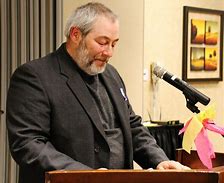
This week I would like to celebrate Lockie and share the previous posts with you.
This is the most visited post from September 11, 2016 and I invite you to take a look HERE!
Lockie wrote many amusing short stories. One of them was plagiarized and reached an audience of over 10,000 shares. A testament to his writing skills but he was never paid for it. An author's nightmare.
Lockie's first visit was a 4Q Interview back in 2014. Check it out by going HERE!

His short story - The Lone Shepard appears HERE!
A sample of his poetry here and stories inspired by his visit to Africa with his wife Trish. HERE!

His short story - Are You Sure? HERE!

I hope this post is a tribute to an author I admired. Lockie is gone but his words live on...as does the memories.

Thank you Lockie. RIP my friend.


October 21, 2018
Visual Artist & Photographer Sylvie Mazerolle
A Dream Come True!
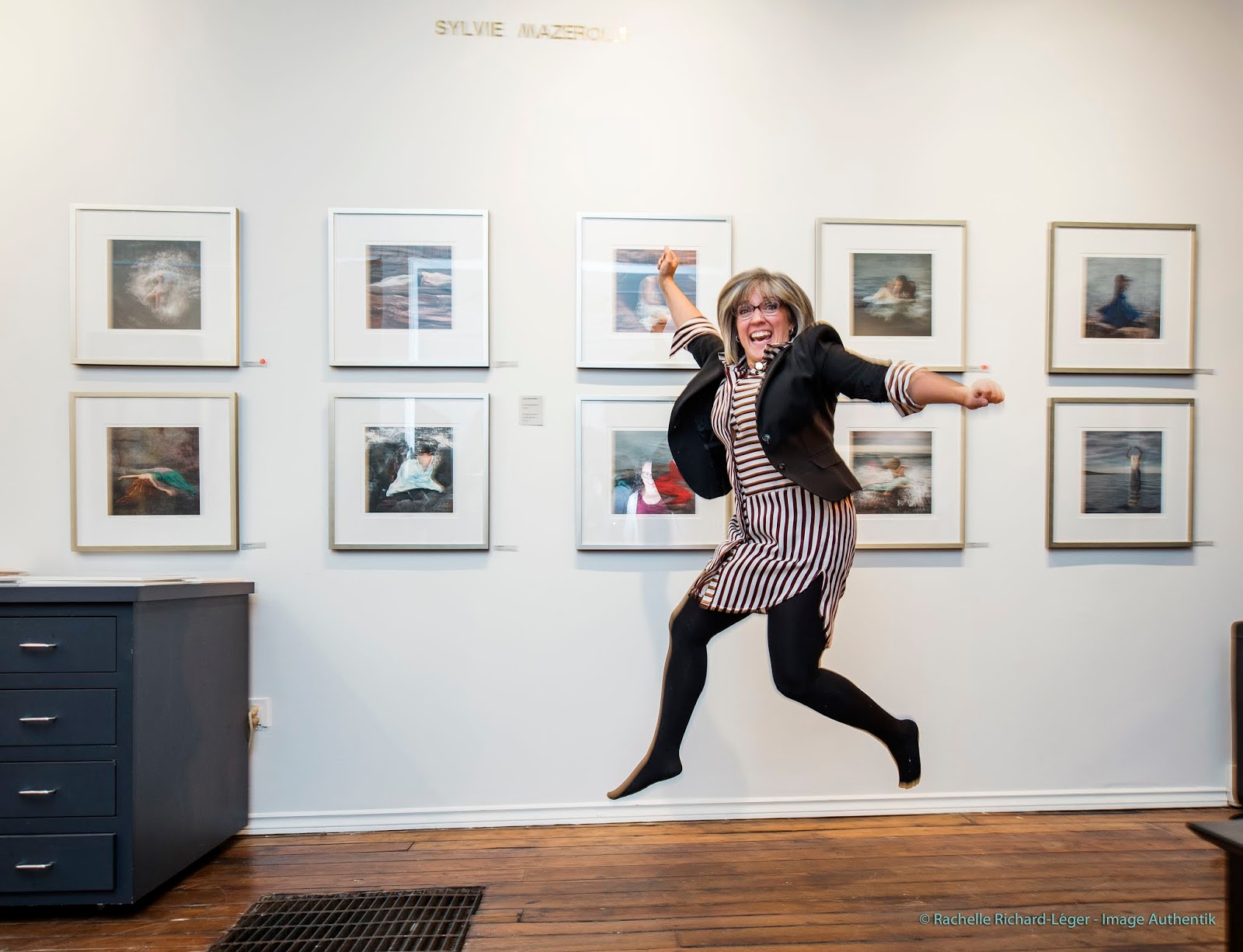
Stunning photos! A happy smile. Sylvie is always a pleasure to have as a guest on the Scribbler. One of Moncton's outstanding photographers, she returns for a 4Q Interview.
Fresh from a successful showing of her newest collection of photos at the Trinity Galleries in Saint John, New Brunswick, she shares the highlights of her exhibition.

This Sylvie's third visit to the Scribbler. In June/2017 she tells us about the beginning of her photo journey. Go here! The second visit was with her partner Jason Hamilton - Author. Go here!
Take a few minutes and sign up for her newsletter by going here.
4Q : You have a new collection that just came out this fall. Tell us more about “Mermaid’s Tears”.
 SM: I was doing research for a project I had in mind about getting older and the aging process. I was researching stuff like the passage of time and things that age well such as fine wine & cheese when I stumbled upon this poem titled: “I Want to Age Like Sea Glass” by Bernadette Noll and instantly every line in the poem inspired an image in my mind’s eye. I knew I had to pursue it. I was on the hunt for locations, model and wardrobe. When I first started I was having a hard time finding models over 40 that were willing to get in front of the lens, but once I had them read the poem and explained that it was meant to empower well cultivated women, the word got out and women were getting in touch with me wanting to be a part of itThe project soon took a life of its own and became much bigger and more important than I could have ever imagined. It took me all summer to produce and I’m very proud of it.
 4Q: Was this your first Gallery exhibit?
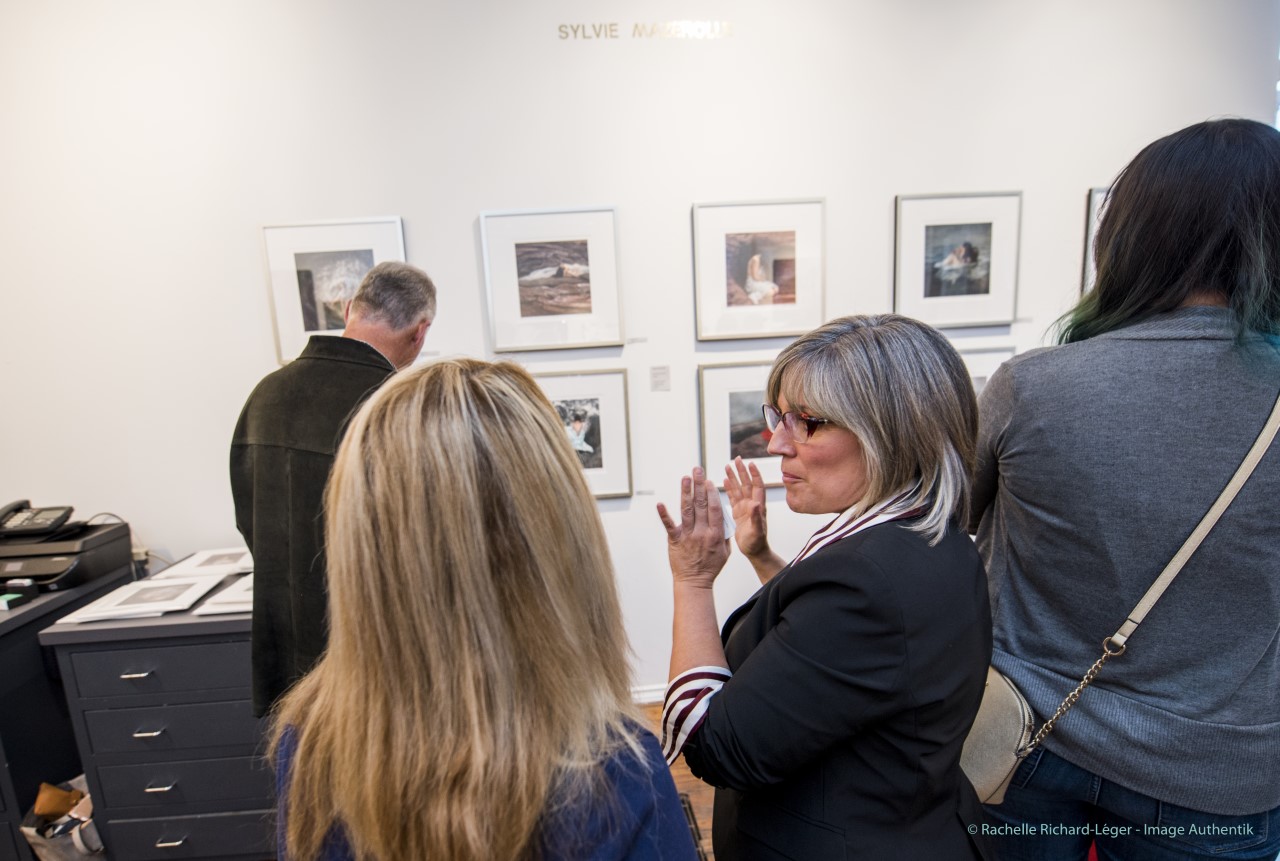 SM: Yes this was my first official gallery exhibit. Beth at Trinity Galleries in Saint John, New Brunswick fell in love with the series the minute she saw it. It’s a very powerful emotional series. We’ve all been tossed around and thrown off kilter by life crashing waves at one point or another. On opening night people would walk up to the exhibit and one would resonate with them in one way or another to the point of tears. It was such a powerful emotional night in the best way possible. I really hoping to bring this exhibit to a bigger audience.
4Q: Where do you get inspiration when you need it most?
SM: A few things helps me find ideas and inspiration. Music has to be my first. Especially when I am in post production. I have a specific play list that helps me get into a creative flow. It’s like meditation for me. I forget about everything else except the image that it right in front of me and the emotions the music bring forth. I can get lost for hours. I also get a lot of idea’s while cleaning my house. Clutter free home is a clutter free mind. But once I start creating, it all falls to the way side. My house can be a disaster once I’m in creative mode. *LOL*

4Q: If anyone is interested in purchasing your art, where can they find it?SM: My current series of “Mermaid’s Tears” can be found at Trinity Galleries in Saint John exclusively at the moment. For any other works you can contact me directly via my web site or Facebook messenger.
https://sylviemazerolle.wixsite.com/myvision-ourworld/left-behind https://www.facebook.com/sylviemazerolleimages/ https://www.trinitygalleries.ca/sylvie-mazerolle.html https://www.huffingtonpost.com/bernadette-noll/i-want-to-age-like-sea-glass_b_5317199.html
Thank you for being our guest this week Sylvie. Wishing you continued success.
Both Sylvie and I would love to hear from you. Please leave a comment below.
October 14, 2018
The Miramichi Reader with James Fisher
Our guest this week is James Fisher of Miramichi, New Brunswick.

Those of us that know James, know how much he loves to read. He also enjoys sharing his thoughts about the books he reads (both fiction and non-fiction)and is the owner of the splendid review website – The Miramichi Reader.
Visit his website here.
He is kind enough to participate in a 4Q Interview.
I was born in Kingston Ontario. After finishing high school there and loafing around at various jobs, I met the woman who is now my wife (of 31 years) who encouraged me to get a career. So I did. I am a Medical Radiation Technologist as well as an MRI Technologist. After living and working in Toronto for about twenty years we chose to move to the east coast to Miramichi where I work at the Miramichi Regional Hospital.
4Q: How did the Miramichi Reader begin James.
 JF: It began at the lunch table at work one day, almost four years ago now. A fellow technologist and one of our radiologists were at the table and since we are all "friends" on Goodreads, it was suggested that I start a book review blog since they enjoyed reading the short reviews I would post at Goodreads. This was all the encouragement I needed since I had recently closed down my Microsoft Windows support blog I ran for many years. Windows had become more and more user-friendly over the years and I had no interest in the ins and outs of an operting system any longer. I always enjoyed reading book reviews and I thought that would be a great job: reading and writing about books! I have tried to focus on Atlantic Canadian authors and publishers, but I have strayed into Quebec (there's some great English-language translations of contemporary Quebec French novels coming out now) and Ontario.
4Q: On your website you’ve created The Very Best Book Awards. How did this come about and tell us briefly about this years winners.
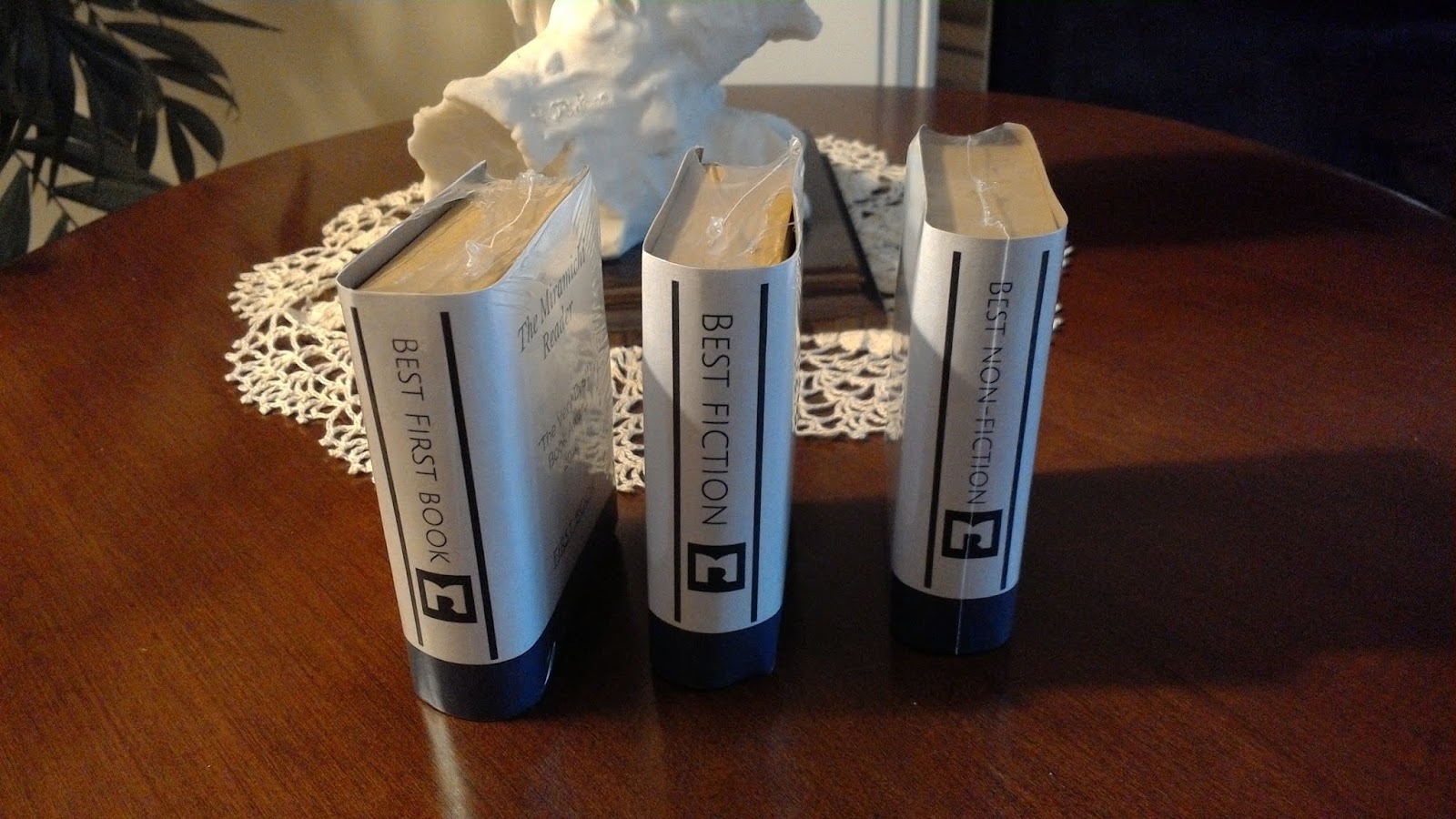 JF: Initially, I created them as a tongue-in-cheek take-off on certain national book awards, which - while important to the industry - rarely, if ever acknowledge books from small press publishers or even self-published authors. There's no big-budget publicity department to get their books out into the wild, so to speak. I felt I could do my part for these authors and publishers by instituting my own little award.This year's winners were fortunate: I actually had a little gift for them! A small Miramichi business that makes soap and candles generously supplied the award in the form of a small book with a bar of "Miramichi Sunrise" inside.As for this year's winners, I had to narrow it down to three categories: Best Fiction, Best Non-Fiction and Best New Book (Fiction or Non-fiction). There were also "Notable Achievement" winners, one in each category.The three main winners were: Catherine Graham for her novel (her first): Quarry, Melanie Grondin for Best First Book for her book on the life of stained glass artist Guido Nincheri, and Lorri Nielsen Glenn for her memoir Following the River (Best Non-Fiction).
4Q: Please share a childhood anecdote or memory.
 JF: I suppose my best book-related memories are of my parents' instilling the love of reading in me. They would always be going to the library to get a book to read, but they only ever read in bed. Dad was for westerns, Mom for mysteries. I've always read, from Kindergarten on. In the public school I attended, they would take us to the library once a month, on a Friday, to hear the librarian read a story. The library, although just a small branch one, was a magical place.
 4Q: How does The Miramichi Reader decide which books to review? Can you be contacted by authors to have their book reviewed?
 JF: Sometimes I pick the books, other times the publishers will send books they want me to review. I have sought out small publishers and contacted them. They are always eager to have their books reviewed, I have found. The same with authors who contact me (via my Contact page). While I may not accept fiction books from time to time (due to a large TBR stack) I do encourage authors to at least contact me, even if I cannot get to their books in a timely manner.
 4Q: Any last thoughts you want to share?
JF: I am so thankful for the all the wonderful authors, publicists and publishers I have met over The Miramichi Reader's brief existence. They have been generous with their books, their time and their social media support. It makes it all worthwhile to hear an author or a small press publisher tell you how much they appreciate my reviews. It has also been encouraging to have some of my reviews quoted in print form, too.
As well as the website URL above, you can find James at these links;
https://www.facebook.com/miramichireader/ https://twitter.com/miramichireader https://www.instagram.com/themiramichireader/ https://www.linkedin.com/in/miramichireader/

Thank you James for being our guest this week.
The Miramichi Reader’s review of Wall of War - michireader.ca/2018/01/wall-of-war-drake-alexander/ http://mira

October 6, 2018
Excerpt from The Alexanders - The First Decade.
As many of you know, my work in progress involves Dominic Alexander and begins in Scotland in 1911. Due to unfortunate circumstances Dominic has had to move in with his Uncle Duff and is a stranger in his new surroundings.
The following excerpt is taken from 1912 and tells how he becomes friends with a poor Russian boy who is also friendless.

Being in the cooler northern region of Great Britain, Scotland is one of the windiest countries in the world with higher than normal amounts of rainfall. Winter usually brings copious amounts of snow in the Highlands with lesser accumulation in the lower regions. The days are much shorter. This twenty-thirdof February, a Thursday and the last day of Dominic’s work week is clear, a cool breeze chills from the southeast as he walks along Langlands Road. Bluish shadows from a gibbous moon accompanies him home. Pulling his parka tighter about his face, he hurries his step knowing Uncle likes to eat at six o’clock and he guesses it must be a half hour later than that. He’s usually home by then now that the days are not as long but he and Tubs had to finish replacing the door in Danny Meek’s bungalow in Ibrox. He’s tired, his shoulders are slouched. One gloved hand carries his still stiff tool belt. A well-used hammer Tubs gave him hangs from one of the side loops and bumps against his leg. The repetitive slap in the only noise except for the distant clanging of the Fairfield Shipyards which go all night. The other holds the front of his coat tight at the neck. A well-used canvas lunch bag is slung over one shoulder. He was up at 6 this morning and helping Duff in his shop. The security men that pick up the repairs come every Thursday at noon delivering the jewellery to be fixed and pick up the completed jobs. Dominic spent the morning polishing chains that Duff had repaired. There was a silver one he really liked and hoped to own one day. While thinking of how much he needs to put aside when he turns onto Drive Road that will take him by Elder Park, he encounters three boys roughly his age.
 Two of them are pushing and shoving a smaller boy that is doing his best to hold his own pushing and shoving when he can. The larger of the aggressors gets in close enough to grab the smaller one by his jacket collar and shove him against the wrought iron fence that surrounds the park. His companion steps closer and hits the smaller boy in the stomach. When the injured youngster falls to the ground Dominic is close enough to hear them. They don’t know he is near. Not liking what he sees, the fallen boy much smaller, he sets his tool belt down gently and creeps closer.“We told you before Pestov, you stay in the Gorbals. You Russian scum need to stay in the tenements where you belong. We don’t want you ‘Pests” around…”Tall boy is interrupted by a blow to his left ear that causes him to stagger and cartwheel his arms before careening into his helper knocking them both down, the bigger one on top. Dominic steps up to them, his gloved fists in the fighter’s pose his father taught him, taught all his boys. His left foot back for balance, both feet on their toes. “Try someone your own size ya bullies.”Dominic is a scary figure, only his silhouette is visible to the downed ruffians, the partial moon shines over his left shoulder exposing his upraised defensive fists. The downed boy is surprised by the aggressive act of the stranger and sits up trying to catch his breath and watch. The two on the roadway are scrambling backwards. The bolder one shouts while rubbing his ear.“What’s it to you…and ya shouldn’t sneak up on people.”They’re standing now and maybe street tough but they’re leery of this stranger who is not an adult. They strike their own poses, the shorter one a step behind and bobbing his head back and forth from Dominic and his companion not sure what to do.“Ya shouldn’t be picking on people smaller than you and you’re obviously not brave enough to do it on your own, takes two of yas.”Dominic starts to bob lightly like a trained boxer.“Step up now you cowards and let’s finish this…or bugger off!”Tall boy and Uncertain give each other a glance before deciding that buggering off is probably the best option, turn and scamper away behind one of the apartment buildings on the other side of the street. Dominic relaxes and turns to face a bedraggled figure sitting with legs flat, holding his stomach and taking short breaths. The head is uncapped and hanging down. Even in the low light, Dominic can see the jacket is light and tattered. Gathering his tool belt he wonders at the boy’s silence.“Ya could at least say thank you.”The voice is deep for someone so young and heavily accented from a foreign language.“I didn’t need any help.”“That’s not what I saw.”No response. He reaches down with his free hand.“C’mon, I’ll give you a hand up.”Hesitant at first, the younger fellow offers an uncovered hand, small and delicate like a girl’s. Dominic is startled by the uncovered limb. Grasping the hand, Dominic helps him to stand.“Don’t you have any mitts?”Tucking his hands in his jacket side pockets belies the next statement.“No, I don’t, but I don’t need any.”Stepping back Dominic tries to see his face but the low light only casts shadows. He can see that it is wide, lots of stray hair. The chin is up. He stands at least five or six inches taller. “So, what was that all about? And do you really live in Gorbals?”“They just think that all Russians are like the Ivanov gang and all we want to do is steal everything. And yes I do live in the Gorbals and I do live in a tenement before you ask.”
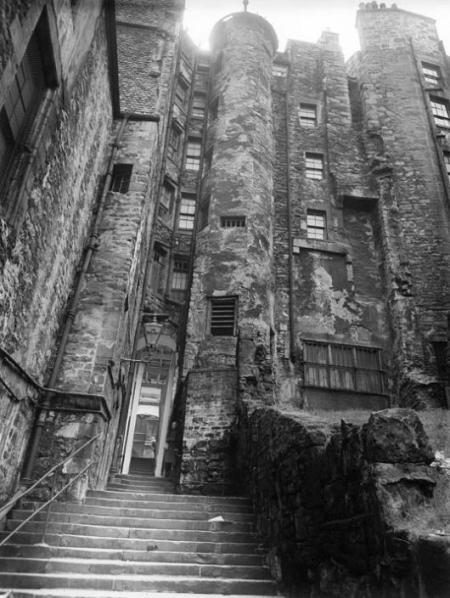 Dominic heard about the squalid buildings that housed immigrants in crowded quarters, often four to five in one or two rooms, lured by work in the yards. Always a shortage of homes drove the rents upward. Sanitation is a problem. Many do not eat properly. He didn’t believe it at first. He knew his family was poor but they always had a roof that didn’t leak, clean beds and food.“What are you doing here? And at night?”“I…I just need to get away from all that noise and dirty smells and…”Dominic senses discouragement in the voice, a lower tone. The pitch changes, bolder.“It’s not your business. I should be going, my brothers will be home later and I need to be there.”Without any further comment, he sets off towards the other side of the park. Dominic can see the figure shaking from the cold and stares at his gloves. He has an older pair at home, not as new but just as warm. Removing his gloves, he chases after the boy. “Here, take these.”Surprised by the command, the boy stops and faces Dominic, seeing the gloves in the outstretched hand. He is affected by the offer.“You’d give me your gloves?”“Well it’s two or three miles to Gorbals and I have another pair.”He can’t say no. He can hardly grasp the gloves properly from chilled fingers. He stares at Dominic while twisting them on. “Why are you doing this? You don’t know me.”“Not so long ago I didn’t always have mitts either and I know what it is like. Now I’m working and can buy my own.”There’s a moment of silence. Dominic puts his own hands in his coat pocket.“What’s your name?”“Ivan.”It comes out in Russian, eeVAHN. Not I-van like Scots call him.“Ivan Pestov and what’s yours?”“Dominic Alexander, but most people call me Dom. You can if you like.”“Why would I like, I’ll probably never see you again. I doubt you hang around the Gorbals and I’m not welcome here.”“Sure ya are, ya can come home and have a bite with me and Uncle if ya like?”Dominic is worried about his spontaneous suggestion not sure how Duff will react to an uninvited guest but he needn’t be. Surprised by the stranger’s generosity, Ivan waves him off and starts towards the Gorbals. “Thanks for the gloves and for getting those jerks off my back.”Watching until the retreating figure is in darkness, Dominic hitches his lunch bag straighter on his shoulder and heads home wondering what the surprise is that Duff said would be there.
Thanks you for visiting today. I'm excited that my novel is nearing completion, I've been working on it since January, 2016 and I expect to be finished by the end of this year. Then comes the revisions, beta reading, editing, cover design and finally - a book. More info to follow as the journey of The Alexanders - The First Decade comes to and end - and a beginning!
Watch the coming weeks for new guests on the Scribbler.
James Fisher - The Miramichi Reader.
Andy Gill - artist.
October 3, 2018
Two Boys and Some Smoke - Part Two.
Hey there!
Welcome back for Part two of my short story.
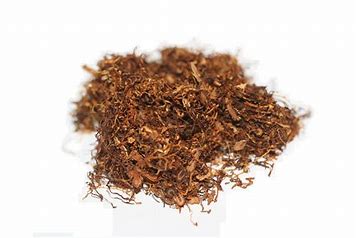
We know the boys are heading to the river with some tobacco. Should be fun to see what happens!
If you missed part one click here.
Two Boys and Some SmokePart Two. Leaving his chum no choice, he scrambles up the side wall and starts towards the forest. Reluctantly Chops stows the wagon behind the dense growth of small trees to follow his friend. The boys enter the woods at a tall and aged spruce that was planted sixty years ago marking the division of property between the Warren brothers. Every fifty feet there is another one the same age for the three hundred feet it takes to get to the river. A narrow path weaves through the giant trees, made by the many feet. Boys, a few girls, sweethearts, men and women that came to fish, they all follow the same route. John Jr is ahead by about four strides in a boyish gait, not yet a full run. Beans’ shorter legs make keeping up a tough job. “Hey hang on, don’t run so fast.” “No you run faster Phil.” “Why do I have to keep telling you, don’t call me Phil” John Jr comes to a boyish halt halfway to the water, sliding his rubbery soles along the dark earth. He faces his friend with arms akimbo. His eyes are even darker in the shade of the woods and Beans can see he’s serious as he catches up. He’s breathing heavy from the exertion and questions his friend’s stony stare. “What?” “Tell me what’s so bad about Phil?” Beans reddens a little from the cruel jibes he remembers his schoolmates making of his name when he started school. He hated his name, not that any of the other three he had were any better. Many times in his young life he was disappointed to have been called him Chadwell Horatio Orville Phileas Sangster. They called him Philly when he was very little. Then Phil; until the meanies at school started using it as a verb. While randomly doodling his initials one evening he noted they spelled CHOPS. He said it out loud a few times, liking the hardness of the P with the complimentary S. That was it; he would only answer to Chops. Everybody thought it was neat. His voice is bashful, quiet, just above a whisper. “Well you remember the jokes!” John Jr makes a dismissive waving motion in the air with one hand while he pushes his dark hair off his forehead with the other. “So what? That was a long time ago. Nobody cares any more. And besides we’re bigger now, we’re tougher, right? And I think Chadwell is a neat-o name, just Chad is even better. Sounds like a movie star’s name.”

Chops eyes widen at ‘movie star’. A huge grin scrunches up his freckles, he’s totally attentive as John Jr continues. “Use that, no more Phil. Problem solved. I mean who wants to be named after a piece of meat all their life. It’s worse than going to the john.” John Jr starts to chuckle at his jibe. Chops becomes serious as he thinks of the pork chops his family ate last night. His oldest sister had cooked them and they were burnt. Even though they were a bit dry they tasted not too bad. The name doesn’t hold the same appeal anymore as he considers this. He stares at John Jr with pursed lips and scrunched brow before finally nodding his head. “Okay, I’ll give it a go if you promise to give anybody a knock if they tease me.” “Even Mary Jane Baker?” Chad is left speechless at the reversal of his joke, not quick enough to think of a good retort. John Jr doesn’t wait for an answer but turns to begin running to the river, his laughter following him there. Chad is about to get mad when a vision of the pretty young girl floats through his pre-teen head. He usually thinks of her laughing when he does but lately he has been focusing on the budding of her slim chest. He blushes again at his own innocence and shakes the idea away. Tearing off at a full trot he forgets Mary Jane as he sees John Jr. zig to the left at the last tree before the river edge.
 The water is high with the winter run off, only a foot below the bank. It’s not wide, maybe fifteen feet. It rushes towards a larger river five miles away. Bubbles froth around debris that lies just below the surface. Dead branches poke their dark fingers through the twirling ribbon of racing water. Chad can hear it over a hundred feet away. The sound reminds him of the wind blowing in the leaves. As he gets closer the symphonic gurgling of the wavelets gets louder. He stops and scouts under the branches of the last old spruce and he can see John Jr seated on a dead log that fronts the water about ten feet away. Scuff marks are at the foot of the log where people have sat and fished for many years. John Jr’s big brother, Dave, always said he wished the gnarly old log could talk. The boy’s never understood what he meant and he never explained his comment but they would catch on soon enough. John Jr is propped on the wooden seat, his feet about six inches off the ground and he’s a tall boy. Chad has to scrabble up the huge bole using the stubs of broken limbs for footholds. His toes dangle another three inches higher. Sitting closely he watches John Jr unfold the hankie. A forbidden fascination pricks his senses and he feels the goose bumps on his neck but he can’t stop smiling. He’s thinking how manly his neighbour Mark looks when he has a smoke. He’s in college and the girls all follow him around. “We’ll be just like grownups.” John Jr is straightening out the four edges upon his lap, the brown shreds flattening out on the surface. He looks at Chad. “Ya think?” “Well, maybe not to grownups, I ain’t going to tell any but maybe to the girls.” John Jr can’t believe what he just heard. He tosses his hair back with an upward nod. ‘So it’s okay now to talk about the girls” “I don’t wanna talk about them just maybe let them know somehow that we’re smokers.” John Jr likes that. “Yeah we’ll tell Ruthie, they’re friends.” Concentrating on the task at hand John Jr pulls out a crinkled collection of small white papers. He tugged several from his brother’s pack and jammed them in his pocket. While he is trying to unfold the tissues and loosen one free Chad says, “You know how to roll a cigarette?” “No.” “No?” “No but I saw Dave do it, it doesn’t look so hard. Watch.” John Jr finally gets one paper free from the group and passes the extras to his pal. He holds the glued edge facing him and sets in on the hankie edge. Pinching the weed between his fingers, he piles it on so that you can only see the white corners under the mound. They both stare at it for a minute, there doesn’t look anything round about it. Chad finally says, “Now what?”
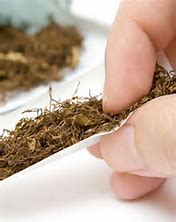 John Jr nudges his friend who is sitting too close to his right arm. “Gimme some room and hang on a sec, I’m trying to remember what comes next, how do you pick this mess up?” Chad shrugs and says nothing. John Jr remembers Dave making a U with the long flat edges. Grasping the edges and bringing them together proves to work quite well. It’s rolling one under the other that requires a little skill. John Jr fumbles with the paper trying to roll it back and forth like he saw his brother do until he eventually tears it and spills all the tobacco on his dungarees. Chad has been quiet watching the procedure. Now young Sangster may be a slow learner with his numbers and the alphabet but he has an acute understanding of what John Jr is trying to do. “Let me try.” On the hankie spread upon his pal’s lap, he flattens out another paper, the strip of yellowish glue on the top. Two generous pinches of curly cut leaf cover the paper once more. Fumbling with the edges, the excess tobacco spilling out, he gets the paper into a respectable U shape and starts to roll it in his stubby fingers. Most of the stringy mass is in the center and when he tucks the edges in, the handmade cigarette is fat in the middle and pointy on the edges. John Jr is all smiles at his friend’s skill. “Wow, that’s pretty good Chops…Chad, I mean. You gotta lick the yellow edge to make it stick together. Unroll it a little bit.” Chad just nods, fully concentrating on the task. Slowly unfurling the wrinkled paper he exposes the glued edge. He frowns before he sticks his tongue out. Saliva moistens the glue. A quick roll back and he proudly passes his buddy the finished product. Pleased with himself, his feet are rocking back and forth like a dog wagging his tail, the heels knocking on the dead log. He beams at John Jr who has the cigarette clamped between his lips as he fumbles in his shirt pocket for a match. The cigarette dangles and bobs up and down as John Jr mumbles. “Do I look more grown up?” “Oh yeah, you look like you should be in Grade 9 or 10.” “Yeah?”
 Chad only nods as he watches John Jr takes a wooden match out of his pocket. The red head is perfectly round and fills with fire as he runs it over the toothed zipper of his dungarees. As the flame flares John Jr sticks the end of the cigarette in while he takes a huge puff. While doing so he remembers the deep breaths that Dave would take when he smoked. Removing the burning torch from his lips he inhales a mouthful of smoke that is half paper and half tobacco. John Jr’s lungs are as virgin as the rushing water before them and they don’t react pleasantly to the harsh and foreign substance. John Jr spews smoke and spit as he begins to deeply cough. The cigarette flies from his hand, the match flips into the air. Both land in dried leaves and twigs that make the finest tinder. John Jr losses his balance and with flailing arms rolls backward from the tree they are on, still coughing. Hanky, tobacco and crinkled papers are flung in the air. Chad is struck by one of the flailing arms and tumbles over the log as well, landing on his side. John Jr is beside him curled in a fetal position hacking and spitting. Chad sits up to help his friend, dried leaves stuck to his shirt and in his hair. Tugging at John Jr, they come to rest with their backs against the log. A few minutes later John Jr finally stops coughing and looks at his friend. Snot runs from his nose, tears have trailed down his cheeks, his eyes look confused, his throat stings and he doesn’t want to cry in front of his friend. Chad doesn’t say anything, instead hands John Jr. the dusty rag from his back pocket. John Jr gratefully takes the cloth and starts to wipe his nose when Chad comments. “I don’t think I want to start smoking, not if I have to do that too.” They can’t help it, they’re boys and start to chuckle and soon they’re rolling on the ground again laughing when suddenly John Jr sits up, the laughter dies. “I smell smoke.”
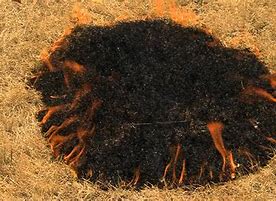 The wooded area they are in is mostly alder bushes along the river edge and some slim open grassy strips like they are on. The grass is long, stringy and dry as birch bark. The match has started a small fire, the cigarette ten feet away is working on another one. The smoke swirls straight up turning grey as it cools, a slight breeze carries it over the fallen log. By the time the boys realize something is burning, the fire is spreading and already three feet long. The boys stand quickly looking towards the water. The smoke shifts shape at eye level and dances in the air. The two are mesmerized by fear as they stare down at the flames. It looks larger than what it is as the flames lick the tall stalks of dead grass. The flame seems to leap off the ends of the burnt threads as they jump from one clump of grass to another. John Jr is the first to react from the realization that they are in a lot of trouble. Scrambling over the log he yells out. “C’mon Chops, we gotta put it out.” Chad is broken from his initial fear to follow his buddy. They hustle over to start stamping their feet on the flames. The grass strip is twenty feet long and two to three feet wide before it tangles into the alders where more fuel lies in the shape of dried yellow and orange leaves. The puffs of sparks and bits of flame disturbed by their sneakers only spreads the fire. The smoke blooms thicker and engulfs the boys. They have to back away, terrified of the burning grasses. The two are coughing when from behind them comes a barreling voice filled with anger. “What are you hooligans up to here?” Old man Hamm was strolling to the river to fish. Although the water is high, he is usually one of the first to cast his worms into the chilly water. He was coming upon the last tall spruce when he smelt the smoke soon to see it as stray wisps floated by the opening in the trees. Leaving his fishing rod on the path he rushed forward to find the two boys near the grass fire coughing. They jumped at his deep voice turning to face him with both relief and guilt etched into their youthful faces. John Jr blurts out an apology. “We didn’t meant to start a fire Mr. Hamm, it’s…it’s my fault. Please help us.” “Get out of the way then boys, let me at it.”
Purvis Hamm has already eyed where the fire is going. The end away from him will stop at the worn path where the trail continues down river. This end could be trouble so he stamps his boots on the grass near them. His Kodiaks are a size twelve and crush the fire beneath their large soles. He soon has the flames under control and watches the other end die out. The river bank for about twelve feet is blackened ash, some of the grass or thicker stems still smouldering. Hamm turns towards the boys standing off behind him, his chunky arms upon his hips. The two that stand before him, one of the Sangsters and the Williams kid are about the saddest sight he’s seen for a while. He’s ready to give them a blast when he stares at them with a scowl and puffed cheeks. But he can see that they’re cowed. Their knees are both shaking. He remembers when he was about their age and started a fire in the school yard one spring. He softens inside but doesn’t let on. “What happened? And no fibbing.” John Jr has spied the hankie on the ground close to where he is standing. He bends to pick it up. Tiny shards of tobacco still cling to the rough fibers. “We were smoking.” This causes Hamm to grin, such pups being so adventurous. “Well, did you like it? Was it worth burning the forest over?” The boys shake their head vigorously with nothing to say, they’re studying the ground at their feet. Both red in the face with shame. Chad thinks of his father’s thin branch in the wood shed and asks in a whispers. “Are you gonna tell our folks?” “I’m not sure yet.” Hamm studies them for a moment, wanting them to know they did wrong. The heads are down. He wants to laugh at what he knows they must be feeling, he was a boy too once. He thinks the fire scared them enough.
 “You boys should wait until you’re older before you start smoking. You could have caused a lot of damage today and I expect you both know that.” He rubs his jowls as the chins of both boys fall deeper on their chests. “I’ll tell you what I’m going to do. The heap of drying wood behind my house needs to be piled by the shed. Make sure it gets done before the end of next month and I’ll keep mum on what you two were up to.” Both young heads pop up in unbelief. They can’t contain their relief. Chad is jumping from one foot to the other and John Jr is shaking his head up and down. They both speak out at once. “Thank you Mr. Hamm.” “Okay get out of here you two and no more fires.” The boys take off running. They run all the way to the gravel pit, Chad not far behind this time. They’re panting and puffing when they reach the wagon. Both realizing how close they came to burning down the forest, they are deep in thought as they head home. Chad pulls the wagon as a matter of habit. The wheels squeak in the silence, the dust balls puff at their feet, the flames grow larger in their thinking of what might have happened if old man Hamm hadn’t of come along. Chad Sangster started smoking when he was eighteen, the day after he joined the army. John Williams Jr never had a cigarette again for the rest of his life. The End.
 Thank you for visiting the Scribbler. I hope you enjoyed this story. It will be published in an upcoming collection of short stories called Boxes of Memories due for publication in late 2018. Watch for it here. Please leave a comment below.
September 30, 2018
Two Boy and Some Smoke
Imagine it's 1960 and you're only eleven years old hanging with your best friend on a Sunday, collecting bottles along side of the road. Probably can't get in trouble. Or could you?

You've met these young boys before in one of my short stories but they're a year older now, a little more experienced. Let's see what happens to them.
Part one today and watch for part two in the middle of the week.
Two Boys and Some Smoke
 The gravel pit is overgrown with alder bushes. Big chunks of sandstone poke out of the earthen walls, others lie in heaps at their base. Some are the size of coffee tables, some no bigger than dinner plates, most are two to three inches thick but they’re all mixed with sand that hasn’t stirred for years. The giant hole is abandoned now, only frequented by lovers and miscreants. Fourteen feet deep, it is wide enough to hide the fifteen to twenty trucks that have carried the gravel away over the years. The entrance is almost a quarter mile from the main road. Beans and Chops are halfway down the dusty lane. Chops, as usual, is pulling the wagon even though it belongs to Beans.It’s the end of April, last Sunday of the month, the sun is just west of its zenith. They left just after dinner. In the country there is still snow in dark forest crevices and deep ditches. The fields are lifeless, the dull brown of dead grass, dry as old paper. Bushes and trees stand naked awaiting their robes of green. Seeds and roots will awaken soon to fill the air with the scent of wildflowers and growth, now the ground smells like the dust the boys’ sneakers kick up. There had been little rain in the last two weeks and the side road is finally dry. The boys decided to begin their weekly bottle run officially today. Their chatter accompanies the creaking of the small wheels, the cawing of the crows, the shrieks and whistles of other birds. Their conversation has gotten serious when they began to discuss their names. The taller of the two is saying,“I don’t think I wanna be called Beans anymore. From now on I’m John Jr.” Chops is about three inches shorter than his best friend. He’s a little pudgier. A serious frown rearranges his freckled cheeks. His reddish mop bobs up and down as he ponders this serious remark. “Well I sure as heck don’t want to be called Chadwell, or Horatio, or Orville or Phil. Phil the least. I’ll stick with Chops. But you’ve been Beans since we were in grade two. Why do you wanna change it now?”John Williams Jr. turned eleven last month. His hormones are changing gears. Chops will be eleven next month, his hormones have had a head start.“My brother was telling his friend Christopher how I got my nickname when we saw him at the movie theatre yesterday afternoon.”Chops is tugging the wooden wagon, the red sideboards and front wheels wobbling from the uneven ground along the gravel road. He has both hands behind his back griping the handle. He hurries to catch up to Beans who is in front of him.“So what? Everybody knows that story.” ““Christopher’s sister Nancy was with him and she started laughing.”Chops has stopped walking to stand straight staring at his friend’s back. Bean’s hears the noise stop and looks back. Chops is on the opposite side of the road with a wide smile on his boyish face. It’s only the downcast look on his buddy’s face that contains his laughter. “Well sure she would. You thought having gas would be good for your Dad’s car and someone told you you could get gas if you ate beans. You ate nothing but beans for three or four days. I still remember you farting in class. It’s your brother Dave’s fault, he’s the one that started calling you that.”Almost ready to let go with the titters, Chops has a revelation.“Oh wait! I get it. You have a crush on Nancy Smith. Ha! And you teased me all winter about Mary Jane.”This is too much for Chops. Beans has always claimed girls were not as smart as boys and hard to understand and he never, never, ever wanted to be kissy kissy with them. Yuk! Chops lets go off the wagon handles to hang on to his belly. He laughs so hard he can hardly breathe. His yuks are high pitched and he dances around as he fills the air with glee. Beans, whose face is a reddish beacon just gapes at the laughing boy. “It’s not that funny”“Yes” More laughter “Yes it…” He’s tittering too hard trying to talk. “Yes it is!”
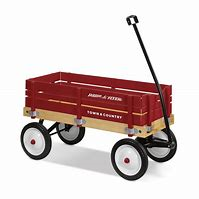 Just then the wagon surrenders to gravity, it begins to roll backward down the shallow incline behind them. The road has a crown in the center, the wagon decides to go right. The wooden handle that fell to the ground is swinging back and forth Iike a wooden windshield wiper, the small wheels can’t decide which way to go. The wagon picks up speed until one of the front wheels hits a small rock. The obstruction causes it to head directly for a three foot deep ditch filled with dead grass and small bushes. Losing its balance when the back wheel goes over the lip the wagon tilts to its side and flips onto its top. The clunking sound it makes doesn’t suggest soft earth. The four wheels they had shined up only a half hour ago are spinning in the air, dirt all over the rubber. They stop rotating in a small cloud of dust.The wagon belongs to John Jr. His parents financed his scheme to use a wagon instead of hauling burlap bags over their shoulders when he and Chops collected empties along the road every Sunday. He had paid them back at the end of autumn last year. The gravel pit had become more popular as a drinking spot or a place to take a girl on a hillbilly date. It proved to be a goldmine for the boys last year. John Jr ran up to the edge of the road.“Look what you did Chops! It landed on some rocks, its gonna be scratched.”“I didn’t do anything.”“Well that’s it isn’t it. You let go of the handle.”Chops is not laughing now. When he stands beside John Jr both looking at the wagon, he thinks right away of how much he loves the wagon even though it is not his. He always asks to pull it. He always works hardest at shining it up. He’s disappointed just as much as John Jr. Looking up at his friend who is frowning at him.“I’m sorry.”John Jr looks directly into the shy green watery eyes and knows that statement comes from the heart. He knows the Sangster’s can’t afford one for Chops who flutters about the wagon with obvious joy.“It’s okay Chops, nothing is broke I don’t think. Help me get it out.”They jump down into the ditch, the road up to their bellies. The edge beside the road is more vertical, the opposite side slopes away towards the field, rising gradually for six or seven feet. One on each end they lift and turn the wagon onto its wheels. The metal part you put your hand through on the end of the handle is bent. John Jr. lifts it up and shakes his head. Chops only studies his friend and remains quiet. “I’ll hold the handle and you lift that end Chops and we’ll get it back onto the road. And don’t let go until I get out.”
“Okay.”The boys lift their ends pushing it onto the road. Chops holds the back end while John Jr, climbs out. Soon they’re on the road facing the pit. Chops pulls a rag from the back pocket of his coveralls to start wiping the side boards. The paint is nicked and scratched on one side and on the end of the uprights in each corner. John Jr tries to pry apart the hand hold with no success. Their knees are dusty, as are their black and white sneakers. The forearms of their plaid shirts are smudged with dirt. Chops shirt is brown and beige and the dust is not as noticeable as on John Jr’s red and black one.“We’ll have to bend that back with pliers when we get home. For now we can wrap our hand around the wood part behind it.”Chops stops wiping to watch, still sad over the incident and casts down his eyes. John Jr, glad that Nancy Smith has been forgotten about waves a hand at his friend.“Forget it Chops. It’s just a few scratches. We can paint it up again. C’mon, let’s go.”
John Jr is still puling the wagon when they start down the incline cut into the ground. The road descends to ten feet and swings to the right where powerful shovels have dug dirt from the foot of a small rise at the end of the field. Fifty feet back, a forest stands at the edge. The wall of dirt on the right is hidden from the road. It is here that the bottles are more plentiful. The sun throws tiny beams from the scattered glass where one has broken, the shards are sharp, to be avoided. More than a dozen bottles are scattered about the gravel. Quart beer bottles, clear and green soda bottles, mickeys, an empty quart of Captain Morgan dark rum; all waiting to be picked up. The boys are soon filing the wagon. Chops is all grins at their find.
“Wow, we can almost fill the wagon with what’s here. We might have to make two trips Beans.” “I said no more Beans okay? Call me John Jr. No... Just John, yeah just John.”“Like going to the john?”John has an armful of bottles and he stops to look at his friend who is tittering by the wagon.“Watch your mouth and whoever decides to crack a joke will get the rough side of my fist in their face.”“Even Nancy Smith?”He has to stop to think about that. His lips are tight shut and they move make and forth as he concentrates. After fifteen seconds he says, “Well okay, John Jr then.”Chops starts to laugh and John Jr can’t help it, he cracks up too. They chuckle for a minute before snatching the last of the bottles. They have fifteen all together. The racks are almost full. They are rubbing their hands on the dusty rag Chops has, trying to get the sticky soda off that spilled from one of the bottles. “Yeah, this is great. We might even make a dollar today, fifty cents each.”In 1960, a dollar is something to be excited about. With four more cents you could buy a gallon of milk or twenty five stamps or five loaves of bread or four gallons of gas. If you had 2600 of them you could buy a car. While the boys are rearranging the bottles to fit better, they talk about what they might do with the money they save up. Chops says, “I’m saving for a wagon, like yours.”“Oh, yeah, now that mine’s all scratched up, you want your own.”“No, no, I was going to do that anyway.”Chops sees that his friend is joking.“What about you?”“I’d like to get my dad a new electric drill for his birthday. He was looking at them pretty close at the Canadian Tire last week when he got the winter tires off. I know he’d like to have one.”“Gee that’s nice.”They kick at the dirt and chuck a few rock as they fantasize about things as if they had a full time job for a few more minutes until Chops tires of it.“Maybe we should head back.”John Jr is looking at his friend seriously for a few seconds before speaking.“I’ve got some tobacco.”“Tobacco? Where did ya get it?”
 John Jr pulls a blue hanky with white polka dots and plain edges from the front pocket of his faded denims. It’s shaped like a ball at one end and the edges are scrunched together with an elastic band. He removes the rubber and opens the bag to reveal enough loose tobacco to roll about three large cigarettes.
“It belongs to Dave. He started smoking but Mum and Dad don’t know.”“What are ya gonna do with it?”John Jr looks at his buddy as if he grew another eye.“I’m gonna make fairy dust out of it and turn you into a frog, dummy. We’re going to smoke it.”Chops holds up his hands and backs towards the end of the wagon. “No way, I’m not smoking it. My mother hates smoking and if I get caught, she’ll have Pa take me the wood shed.”The Sangster’s woodshed is where punishment is doled out in private. Mr. Sangster hates the chore but to keep peace with his Mrs., he doles out the strokes she deems suitable to the crime committed. Thank goodness it wasn’t often, usually the threat of their father’s switch is sufficient to cool tempers. All three of the boys and both girls have felt the sting of the tiny whip even through the cloth of their trousers or skirts.Pointing to a small group of alders near the side wall twenty feet away, John Jr assures him.“They’re not going to find out, I brought gum too. Hide the wagon over behind those bushes and let’s go down to the river.”
To be continued...........
Please drop by on Wednesday to find out how the smoking goes.
September 23, 2018
Six great authors = Six great books
I love reading stories. I've been reading them since my mother brought home Dick & Jane.
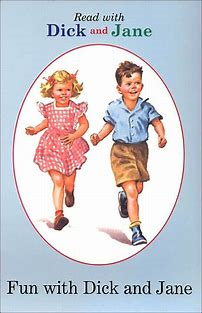
Okay, so many of you are too young to remember D&J, but those school books started me on a journey that will only end when these eyes close for the last time.
So many years later (65 today to be exact ), I'm still collecting books, piling them up on any available space. I can't help it! Many I read over and over.
There are so many great stories, talented authors but these ones stand out for me. This week I want to tell you about some that I really, really like - maybe you will too.
**Please note that the descriptions all come from Goodreads.
1. The Baker's Secret by Stephen Kiernan

This book was recommended to me by my brother-in-law Paul because he knew that I enjoyed stories that took place during WW II. After finishing this delightful tale, I rushed out to buy all Kiernan's books. I have not been disappointed. He's an exceptional author.
From the critically acclaimed author of The Hummingbird and The Curiosity comes a dazzling novel of World War II—a shimmering tale of courage, determination, optimism, and the resilience of the human spirit, set in a small Normandy village on the eve of D-Day
On June 5, 1944, as dawn rises over a small town on the Normandy coast of France, Emmanuelle is making the bread that has sustained her fellow villagers in the dark days since the Germans invaded her country.
Only twenty-two, Emma learned to bake at the side of a master, Ezra Kuchen, the village baker since before she was born. Apprenticed to Ezra at thirteen, Emma watched with shame and anger as her kind mentor was forced to wear the six-pointed yellow star on his clothing. She was likewise powerless to help when they pulled Ezra from his shop at gunpoint, the first of many villagers stolen away and never seen again.
But in the years that her sleepy coastal village has suffered under the enemy, Emma has silently, stealthily fought back. Each day, she receives an extra ration of flour to bake a dozen baguettes for the occupying troops. And each day, she mixes that precious flour with ground straw to create enough dough for two extra loaves—contraband bread she shares with the hungry villagers. Under the cold, watchful eyes of armed soldiers, she builds a clandestine network of barter and trade that she and the villagers use to thwart their occupiers.
But her gift to the village is more than these few crusty loaves. Emma gives the people a taste of hope—the faith that one day the Allies will arrive to save them.
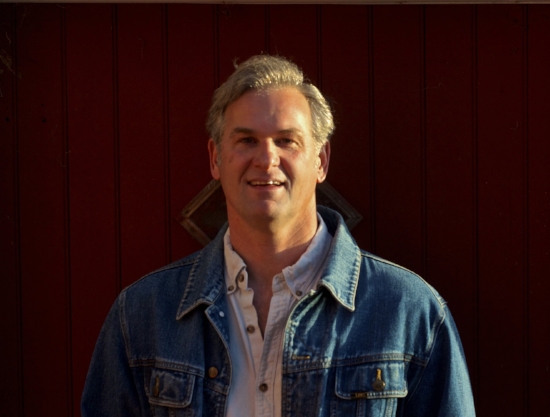
Learn more about Mr. Kiernan here.
2. The Body on the Underwater Road by Chuck Bowie
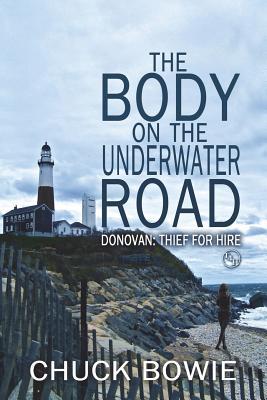
I had the pleasure of meeting Chuck Bowie at a writer's convention hosted by WFNB a few years back and was introduced to his main character - Donovan - a Thief for Hire. I've read all the series and he's a fine storyteller. This is the newest caper for Donovan.
Tricia Parker was a woman with a past; one that led to a marriage break-up and the complete severance of ties to her very wealthy ex-husband and daughter. Fifteen years later, Tricia suddenly appears, wanting to talk to her daughter, and a day later, Tricia's body washes up on an underwater road. The prime suspects are her daughter and ex-husband, who are summering in St. Andrews. Friends who see their predicament contact Donovan and Beth, who are no strangers to murder, and who have certain skills in solving crimes. As Donovan begins piecing together the elements of the case, he happens upon an old acquaintance, a particularly nasty art thief who shouldn't even be in that part of the country. The Body On The Underwater Road is a story set in two countries. It's about estranged families, old money, and secrets. And murder.
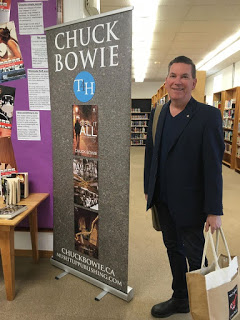
I've been privileged to have Chuck as a guest here on the Scribbler many times and you can read more about this fine novel here or visit his website.
3. A Measure of Light by Beth Powning
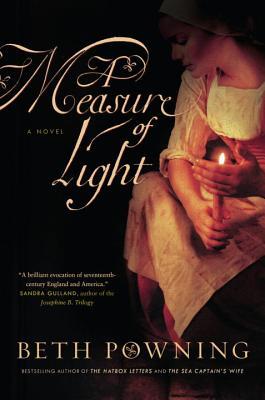
At my first WFNB conference in Sussex, NB, I had the good fortune to meet Beth Powning. A very nice lady. Made me feel very welcome. I've read many of her novels and featured The Sea Captain's Wife (another truly great novel) here before. She's also been a guest on the Scribbler.
In her most dramatic and ambitious novel yet, bestselling author Beth Powning re-imagines the life of Mary Dyer, a Quaker who defied death to champion religious freedom during America's earliest years.
Set in 1600s New England, A Measure of Light tells the story of Mary Dyer, a Puritan who flees persecution in Elizabethan England only to find the Puritan establishment in Massachusetts every bit as vicious as the one she has left behind. One of America's first Quakers, and among the last to face the gallows for her convictions, Mary Dyer receives here in fiction the full-blooded treatment too long denied a figure of her stature: a woman caught between faith, family and the driving sense that she alone will put right a deep and cruel wrong in the world. This is gripping historical fiction about a courageous woman who chafed at the power of theocracies and the boundaries of her era, struggling against a backdrop of imminent apocalypse for women's rights, liberty of conscience, intellectual freedom and justice.
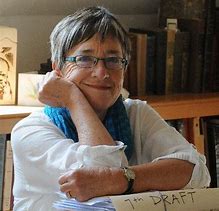
Discover more about Beth by visiting her website or check out her visit to the Scribbler here.
4. Bistro by Roger Moore.
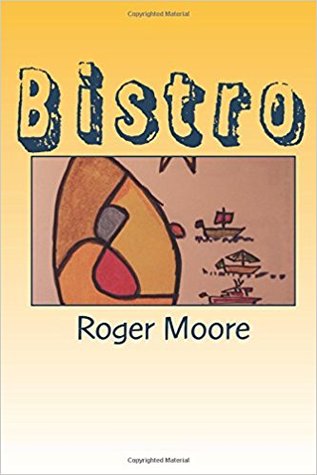
Roger is another author that I met at a WFNB convention and not only is he a terrific author but he's a true gentleman that is generous with his time, his opinions and stories. When you meet him, you can't help but like him. He is the recipient of many awards that recognize his talents.
Are these stories an exercise in creativity or are they a remembrance of things past? How accurate is memory? Do we recall things just as they happened? Or do we weave new fancies? In other words, are my inner photographs real photographs or have they already been tinted and tainted by the heavy hand of creativity and falseness? The truth is that I can no longer tell fact from fiction. Perhaps it was all a dream, a nightmare, rather, something that I just imagined. And perhaps every word of it is true. I no longer know.

Get more news and find out what Roger is up to by going here. You can check out one of his visits to the Scribbler here.
5. What's in a Name by Sally Cronin.
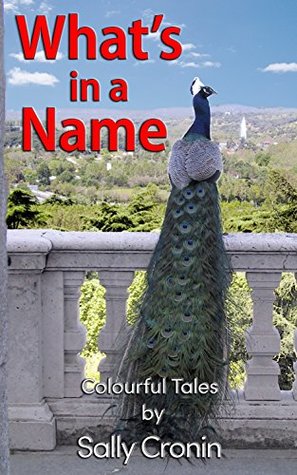
Sally Cronin is an online friend I met through a group of wonderful authors from across the pond. She resides in England and devotes much of her time supporting her fellow writers. A very generous lady whom I've had the good fortune of being featured on her website. She also has been a guest on the Scribbler. This collection of short stories are based on people's names and a delight to read.
There are names that have been passed down through thousands of years which have powerful and deep-rooted meaning to their bearers. Other names have been adopted from other languages, cultures and from the big screen. They all have one thing in common. They are with us from birth until the grave and they are how we are known to everyone that we meet.
There are classical names such as Adam, David and Sarah that will grace millions of babies in the future. There are also names that parents have invented or borrowed from places or events in their lives which may last just one lifetime or may become the classic names of tomorrow.
Whatever the name there is always a story behind it. In What's in a Name? - Volume One, twenty men and women face danger, love, loss, romance, fear, revenge and rebirth as they move through their lives.
Anne changes her name because of associations with her childhood, Brian carries the mark of ancient man, Jane discovers that her life is about to take a very different direction, and what is Isobel's secret?

Drop by Sally's informative website by going here. Check out her visit to the Scribbler by going here.
6. Finton Moon by Gerard Collins.
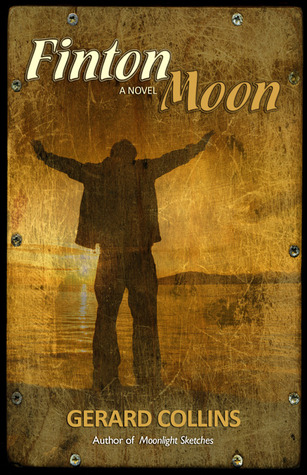
Thank goodness for WFNB conventions. I attended one of Gerard's workshops and what was most evident beyond his skills as a writer, was his deep desire to help others. A gifted storyteller that will always keep you entertained.
Finton Moon is an unusual child who feels like an alien. A gentle soul growing up in the rough town of Darwin, Newfoundland, he lives with his strict Catholic mother and grandmother, lawless father and three older brothers. While his grandmother has him 'right ready for the seminary,' Finton's interest lies in books, nature and solitude. He is secretly in love with the unattainable Mary Connelly, while eschewing the attention of the equally misfit Alicia Dredge, who adores him from afar. In Finton's life, there are monsters everywhere, including Bridie Battenhatch, the crone next door who harbours secrets about the Moon family she will share in exchange for the boy's company, while all his heroes come from books and TV.
But Finton's parents quickly discover that he is extraordinary, for he has been born with the ability to heal with his hands. As he grows older, his miraculous talent becomes more apparent and useful, even as it isolates him further from those around him. While Finton Moon wants nothing more than to belong, he lives in a world that sees him as other, and his greatest fear is that he will be trapped forever with these people who both misunderstand and abuse him.

Discover more about Gerard on his website. Check out one of his visits to the Scribbler here.
The above grouping is by no means definitive of the best novels available but one's that I truly enjoyed. Here's a few more you shouldn't miss.
Jason Lawson - Facebook Page
Susan Toy - Website
Lee Thompson - Website
This novels not too bad either (so I've been told)
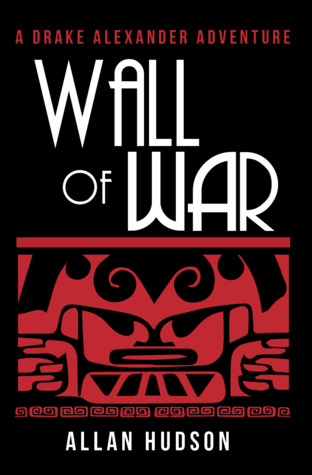
Deep in the wilderness of the Peruvian Andes lies a monument hidden for centuries. Who were the builders? Why was it abandoned? What secrets does it reveal?
In 1953, an amateur rock climber makes a startling discovery. Overwhelmed by the choices he must make, the mountaineer completes his ascent deciding he will document his findings and present them to his superiors as soon as possible. It will take another fifty years before anyone reads what he wrote.
In 2004 news of the strange revelation reaches Drake Alexander. He will become involved whether he likes it or not. People very dear to him are plunged into a nightmare of avarice, impairment and death. Using all his skills as an ex-soldier, with accomplices he can trust, can he save his tormented friends from the raiders that thirst for the secret that lies within the mountains?
https://www.goodreads.com/book/show/3...
What's your favorite novel?
Thank you for visiting. Please feel free to leave a comment.
September 8, 2018
The next Drake Alexander Adventure
 People have asked me, "When is the next Drake Alexander adventure coming? What's after Wall of War?"
I wish I could say next week but the reality is that it takes a lot of time to write a story. Full time authors that we all enjoy have a new novel every year it seems. All they have to do is write. But me, well, I write when I have time, two or three mornings a week. That is going to change soon. This month I turn 65 and retirement is supposed to kick in. Careful planning has me sitting to write at least four mornings a week for several hours, which means that instead of two to three years to write a novel, than maybe only one year.
 At present, I'm almost finished my work-in-progress that takes my readers back to Scotland in 1911to meet Drake's grandfather, Dominic Alexander. I've shared several excerpt from the new story here on the Scribbler. There is lots of interest in this historical fiction and I'm having terrific fun writing it.
 Having said, that, I am also eager to write the next "Drake Alexander Adventure". I have a brief outline that continues from the last chapter of Wall of War. There is no title other that a tentative 'Bordeaux' yet, but I've written the opening chapter and want to share it with you this week.
November 1, 1985Bordeaux, France
No one leaves their home thinking they might die that day. Such a macabre thought is the farthest thing from Anne Chouinard’s mind when she enters Rue Ste. Catherine in the shopping district of her home city of Bordeaux shortly before lunch. It’s a Friday and she has the day off. Dressed in jeans and a white cardigan which is left open so the tattooed face from the Rolling Stones 1981 hit album is clearly visible on her red t-shirt. Stopping in front of the nearest storefront, she checks her image in the mirrored window of Bonvivant Vetement, the men’s wear store next to La Croissant where she's meeting her best friend, Mireille Lambert, for a snack before they go to the bank. She left home a little earlier and had all her long hair chopped off against everyone’s proclamation that her thick brown hair is to be envied and shouldn’t be cut. She’s about to make serious changes in her life and a haircut is a good way to start. She hopes Mireille likes it.Peering closer to the window, she removes a small case from her shoulder bag and touches up the pink lipstick, brushes a stray eyelash from her cheek and enters the café. The popular eatery is ablaze in colors, deep reds adorn the walls that are covered with blow-ups of tantalizing pastries. The air is redolent with the welcoming scent of ground coffee beans and baking pastries. The tables are bright pink and the seats are charcoal colored. Mireille is sitting in a window booth and notices her right away. Pushing aside the morning paper spread out on the table, Mireille waves for Anne to join her and stands to offer her a hug. Anyone regarding the two young ladies would be quick to notice the glee in their eyes upon seeing each other, as well as the contrast in their stature.Mireille is about six inches taller, dark hair, almost black, that is in a perpetual ponytail, more curvaceous and a no-nonsense, tomboyish allure. Anne on the other hand is tiny, just under five feet with more delicate features and smiling eyes. They are the same age, only two days apart and will be twenty at the end of the month. Anne’s father is the master vintner at the Lambert Estates, one of Bordeaux’s oldest vineyards, started by Mireille’s ancestors over three centuries ago, so they’ve known each other since the could walk and talk, like chicks from the same nest. Sitting down across from each other, Anne is anxious to share her news and waves an open page in front of her. Mireille is staring at her friend’s new haircut.“Wow Anne, you look so pretty in that new style, I love it.”“Thank you Mireille I was a little nervous about cutting it but I like it too, but guess what? I received my acceptance letter to the University of Lyon. I can’t wait to start. All I need is an approval for my student loan and I can start in January. I’m so excited.”“That’s wonderful news Anne. Let me see the letter.”
 Anne passes the page to Mireille who reads it carefully. While she is concentrating on the text, Anne orders coffee and cheese croissants and ham for both. Mireille glances at her friend as she reads and can see the change in Anne’s manner, more confidence. She knows how much Anne wants to be a teacher like her older sister. Laying the letter on the table, she starts in on her meal and they chat between bites.
“So you are moving to Lyon then I expect?”“Well of course silly, how else would I be able to go to school there, it’s over 400 kilometers from here.”It was a moot question and they giggle at that.“I know, I just meant that you are going away and I’m staying here. I just can’t decide what I want to do. I promised father I’d help in the vineyard for one more season. I know he’d like me to take over some of the management because neither of my brothers are interested and there is only Gabriella and she’s still too young.”Anne can see the concern in Mireille’s eyes, how it shadows her brows. Growing up, Mireille had always been glued to her uncle, her mother’s brother, when he would visit the family home. Thomas Marchand is an operator in the GIGN, France’s elite law enforcement antiterrorism unit which is part of the French Armed Forces. Mireille was a reporter for the school paper in high school and one winter she interviewed her uncle after he had been personally involved in a hostage takedown in 1981 at the Orly airport. He had even posed for her in full field dress and it was all she talked about for months. She always wanted to be like him. Her parents want her in the business. Anne tries to console her troubled friend.“You have to walk your own path Mireille. If being a police officer is where your heart is then I’m sure your parents will understand. You know you could apply and see what happens and then make your decision.”Anne’s see the mischievous grin that is so like Mireille when she is hatching some wild idea and knows the answer already. “You already did, didn’t you?”Mireille is smiling and nodding.“Yes, I too received word only last week that I was accepted into the academy but I haven’t acknowledged it yet or told my parents. I know my mother will hate it and worry, my father will be disappointed. Oh I don’t know Anne, I hate hurting their feelings but sometimes I feel this is what I should be doing.”“Like I said Mireille, it’s your life.”Mireille only nods at that, heavy in thought as she finishes her croissant. The girls complete their meal and coffee in solitude, both with deep thoughts of their future. Anne changes the subject.
 “Let’s go then Mireille. I need to stop at the bank to fill out the loan application and then we can go see a movie later if you like. Out of Africa is playing and I can watch you drool over Robert Redford.”The quip lightens the mood and the pair head off. Heading west, they have to don sunglasses because the sky is clear. They comment on Mireille’s new denim skirt and how chic it is with the red belt that matches the red stripes on her sweater with the boxy shoulders that are in style these days. The bank is at the very end of Rue Ste. Catherine where the pedestrian street ends and normal traffic prevails. When they are almost to the building on the corner, they can hear a siren in the distance, faintly wailing as it grows steadier, almost as if it’s heading their way. They speculate on what is going on.When they move around a barrier that separates the side walk from a section that is being repaired to the corner, Mireille stumbles on a piece of broken concrete and loses a shoe. One of the construction workers comes to her aid and retrieves the shoe to offer it back to her. Anne doesn’t notice and is turning the corner where the main door to the bank is located. The door has a mirrored finish so that only the people inside can see out. Seconds after she enters the building, a gun blast shatters the air while the bullet shatters the door. The exploding glass showers passersby with sharp splinters and shards cutting exposed skin and tearing at their clothing. Screams and shouts fill the air as people scramble for cover. Mireille and the two construction workers fall to the ground. Mireille lies behind a sawhorse with a yield sign propped against it. A car is speeding towards them. Without thinking she rises and runs to see what is happening with her friend but is knocked aside by four men rushing from the smashed entrance. They are all wearing ski masks and the only feature visible is the eyes. A lone policeman crouches behind a vehicle with pistol drawn, shouting for the assailants to stand down. The first man has Anne in an arm lock pulling her along using her as a shield. He has a gun pointed at her head yelling at her to be quiet. The second man has a large duffle bag and a gun. The last two stop where Mireille has fallen and the shorter one points his gun at her. Trembling with fear, she pleads for her life. The two men stare down at her while the second pair enters the car that has screeched to a stop.The eyes glaring at Mireille from the masks are identical, the same pale blue, the same meanness, the same story. It only lasts for several seconds but the identifying images are seared into Mireille’s mind and she will never forget them. The taller of the two shouts at the other one.
 “Leave her. Enough killing. Get in the car.”
***
The Monteux brother’s will kill more people on their bank robbing spree that fall. One of their compatriots will die from a policeman’s bullet. The second one will be imprisoned when captured in Belgium two years later but the brothers will go free, their whereabouts unknown.
It takes along time to write a story but it doesn't end there, revising, rewriting, the editor, the book cover, etc. Right now I'm having trouble with the title for my work-in-progress. I've been calling it The Alexanders - The First Decade. Not sure if that fits but the novel takes place over a decade in Dominic Alexander's life, the ups and downs of separation from family, loss of loved ones, a new beginning in a new country, finding love and success. My plan is to write the long story in stretches of ten years per novel, thus, the term Decades. It's been called ambitious. But the point is - it's fun. No matter what happens.
Thanks for visiting today. Please leave a comment if you have time.
September 1, 2018
The Food Bank - a short story by allan hudson
Welcome to the "Scribbler
I had an opportunity once to visit a food bank to drop off a donation one time and the experience inspired a story. I posted this previously on the Scribbler in 2014 and I thought it might be time to re-post for your entertainment.
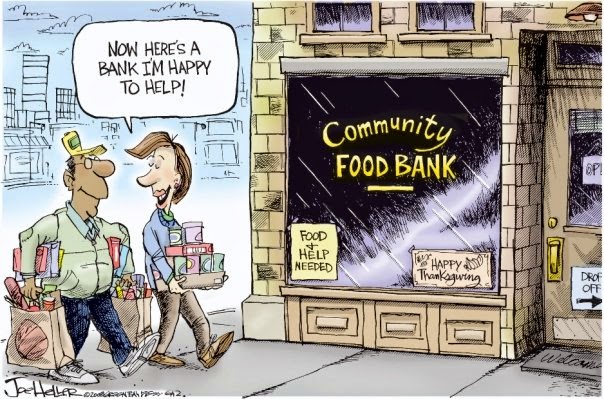
The "Food Bank" was originally published on commuterlit.com, as well as in the limited edition of SHORTS, Vol 3. It will be featured in an upcoming collection of short stories titled "Boxes of Memories", due for publication in the fall of 2018.
This is a comment left by a faithful reader. Our storyteller, the maintenance worker, craftily draws his readers through the doors of the food bank. Once inside, we cannot help but feel the author’s varying emotions. And we soon discover his deep compassion towards the less fortunate members of our society. It makes for a good read. Very poignant, specially during this holiday season of festivities, excess and abundance.(Paul Chiasson)
The Food Bank
Food is a necessary staple of everyone’s life. Because of that I toss my loose change in an old cookie jar daily, a bust of Woody Woodpecker I bought in a yard sale, sans cover. Stationed on my night table by the lamp he faces the closet; the ceramic peeping-tom watches me change my clothes all the time. At the end of each month, he and I probably save up sixteen to twenty dollars. Whoopee! But today is cause for celebration; I counted this month’s take after breakfast and found a couple of misplaced toonies for an all time high of $23.44. I am elated. There will be eight more Mr. Noodles to dole out. Today’s my day off, Wednesday, the end of January only one day away. My to-do list lying on the kitchen table nags at me, do these, do that, do this, do that, but I grab the pencil sitting next to it and tick off number one, “Donation time!!!!” The Maritime Megamart with over two acres of supreme shopping pleasure is where I’m headed. It’s not far so I decide to walk. I retrieve my wool pea jacket from the closet, gloves from the basket on the upper shelf, boots from the rack. Just before I’m ready to leave, I remember the frosty abstract art on my bedroom window. It’s likely colder than it looks I think, deciding to use a scarf. A Tip Top Tailors suit hanger holds a bevy of colored wraps, snaked about each other; the brightest and flowered ones belong to my wife. I opt for my favorite grey and black checkered one pulling it from the tangled mess. When I do so, a beige scarf falls to the floor.I’d almost forgotten about it. It belongs to my son. It’s thick and dotted with flecks of dark brown, if it was stretched open it would read, “Burton” in orange letters. He won a bunch of gear in a snowboarding competition four winters ago. There had been two identical scarves, he gave one to me. I don’t know where mine is now, I gave it away. The memory it evokes is forceful and gives me shivers; the irony of finding it today causes bumps about my flesh. I have to sit down, my mind races with the memory of my first and only visit to the Food Bank. It was the end of January three years ago that this ritual began.
 I work in the maintenance department at the Jollywell Hospital. Every year since I’ve been there, our department puts out bins in the lunchroom at the first of December to be filled with non perishable food items. Not for Christmas as our supervisor explained, every one gives for Christmas, we would give ours in January when it was needed more, made sense to me. Someone taped a loose leaf to the side of one bin. It was a bit crooked with nicely shaped letters from a black marker, “For the Homeless and Hungry.” The bold lines were a revelation for me, I’d never been hungry; as my ample girth would suggest because I’m a bit overweight. I bought more. I even volunteered to deliver the bins. Sometimes I wish I hadn’t.Manoeuvring four overloaded blue receptacles into my Ford wagon early one Saturday morning around eight, I set out with the elation of doing a good deed, of representing my co-workers, of benevolence. It took me some time to find the building, it wasn’t well marked, which seemed odd at first but I realized a fancy sign wasn’t important. The main building ran parallel to the street, curved sheets of corrugated steel formed walls and ceiling, crusted snow lie in some troughs, the virgin white softening the dull galvanized grey. A smudged and dented garage door about twelve feet wide on the left faces the road, the entryway of patched asphalt is neatly shoveled free of snow and ice. A cleared walkway leads to an extension, an add-on with a gable end facing the street, it looks like a store front except it has no window, only a dark green door, a lighted doorbell the shape of an angel, black four-inch high digits that said 41 and a white sign the size of a license plate, which I couldn’t read from the driveway but I knew it said The House of Plenty.I backed my car up to the building, off to one side. There were neither windows nor any sign of entrance around the garage door; the whole building had an air of anonymity. I saw a few cars, older models, parked in front along the street. Two men, separate from each other, were on the other side of the roadway having a smoke. A shopping cart from a local grocer stood alone near the walkway entrance, it was rusted in spots, had a missing front wheel. I could see that it contained mostly returnables, some poor man’s daily wages I thought.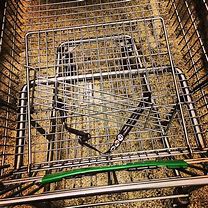
It dimmed my mood just a bit. I lifted the lightest of the bins from the back seat and headed for the entrance of uninviting green.
The door squeaked a little as I opened it, an early warning system maybe. I pushed my way in with my rump, carrying the bin to enter a dimly lit room. Directly in front of me, six feet away, was a wall extending ten feet to the right. The balance of the room stretched out towards the rear for about twenty feet where there were people waiting. The only thing that matched the low wattage of the bare overhead bulbs was the look on the faces I encountered. It was too quiet. My good cheer vanished like the rabbit in the hat. I rudely stared at the small crowd, my curiosity so intense when I realized these people were here for food. I had come in the wrong door.The area made an attempt to be bright; white benches along two walls, dark brown fabric padding the seats, the pale blue walls too institutional for me. The temperature was just below comfortable; no one took off their jackets. A faint scent of Lysol was the only welcoming feature. No one spoke, most were just studying me. I wondered what they must be thinking; am I some kind of saviour, am I just a good guy or maybe they resent that I can give, instead of ask for, I can’t tell. None of the expressions change. The only sound was when some of the standing in the back shuffled and a floorboard squeaked. My eyes focused on a woman at the front of the bench closest to me. She was bundled in a pink ski jacket decorated with long use. Her disappointed face was wrapped with a white scarf in stark contrast to her coat because of its newness. Perched on her lap of tight jeans was a small girl of perhaps four whose hooded coat was neat and pink also. The child’s head rested on her mother’s breast, her little body, only clad in faded jeans and sneakers, shivered slightly in the coolness of the room. I had to look away, it was too sad. I quickly eyeballed the remaining patrons. They‘re about equal of both genders, more middle-aged than young, all of them too thin. I recognized the older man that sits in the back on the floor; I’d seen him many times downtown trying to be polite as he asked strangers for some change. He wraps his many coated arms about his drawn up knees. Four or five plastic bags squat at his feet like trained pets, probably everything he owns. His head and beard are grizzly grey, unkempt and stringy. I have no idea how old he is nor his name. I doubt he’s going to be able to carry away much when I realize he’s here for the warmth, it’s a line up he won’t get thrown out of.The two young men that sit on the bench to my right, I can only think of them as punks, are out of place; like that joke about an NAACP tee shirt at a Klan gathering. Open jackets reveal tattoos on their necks. The flames and trident’s make me suspect they’ve been in jail. They stare at the floor. I try not to judge them but with both wearing new clothes, I want to throw them out.
 Farther along the same bench sits an elderly woman. When I meet her eyes she haughtily turns them away. Her cheeks are too red from an abundance of blush, the rouge unable to brighten the pale, creased skin. A burgundy pillbox hat like the one Jackie Kennedy used to wear, is pinned neatly to her head. A luxurious fur coat bundles her slight torso. She wears black silky gloves with gemstones crested upon the back. Hat and coat are about fifty years old from my best estimate, the gloves, I’m not sure but they’re shabby too. She lifts her chin. I’m struck by the pride I witness in her bearing. I understand what the posture means; the neat, aging costume tells me she wasn’t always poor. I try and focus on my mission; this wavering of feelings is unsettling. Setting the container on the floor I address a man that stands to my left in the corner. He’s chest level with a sliding panel that looks about twenty inches high and three feet wide on the wall in front of me. I try on my best smile.“Where would I take this... this bin?”I feel guilty somehow about saying food or donation.The man was bearded and wore workman’s clothes, clean but worn. His somber face seemed kind as he nodded the peak of his John Deere hat at the buzzer to the left of the sliding door. It was unlit and painted the same blue as the wall, playing find me if you can, I hadn’t noticed it. “Thanks” I said and thumbed the switch. I had to wait a few minutes. I’m usually a talker in a crowd but there didn’t seem anything proper to say; people didn’t come here to meet people. My thinking was disturbed by the cautious opening of the white colored panel. I was confounded by the image it exposed; so much that I didn’t respond to the opener’s presence or request. The portal was like a television set in the wall, the scene so different to the room that I was in. It was brightly lit with shelves of various cans, boxes and bags of food along the walls I could see. People were scurrying about with armfuls of items, others sorting them on tables. They were joking and laughing. I looked quickly around embarrassed at first by the sounds of merriment next door but then I thought, why not? I guessed that these workers are volunteers, people unselfish of their time; they’re not hungry so why shouldn’t they be content. It just seemed so odd, the imbalance of emotions, the uneven see-saw of have and have-nots. My amazement was shorted when a loud voice suggested.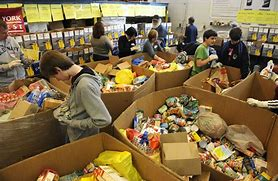
“We’ll only be open at ten.” I was momentarily taken aback thinking he mistook me for a requester. I frowned at the older man; he was bald with white fringes overlapping his small ears. Round silver framed glasses were stuck on the end of his nose. He had a silver bushy moustache. He lifted his matching brows in question. I pointed to the container at my feet.“I have some bins from the Jollymore, where would you like me to take them.”His can’t-you-see-I’m-busy attitude changed with a thankful smile smoothing out the man’s long face.“Go out to the garage door and give it a good thump or two and someone back there will help you.”The cover slid back smartly, I was back in the gloom. As I was bending my knees to pick up the bin, the toes of the little girl’s shaking feet I see in my peripheral vision disturbs my concentration. I look up at the trembling child. The voice is frail but flowery.“Can we go home soon, I’m cold Mommy”The woman opens her jacket and folds the ends about the little girl. She doesn’t speak words of comfort, perhaps there are none? I’m acutely aware of the bundle of wool and polyester around my neck with a flash of the dozens more at home. It suddenly weighs a hundred pounds. My son just gave it to me. I decided he’d understand, knowing him, he’d do the same thing. Unwrapping the scarf from my head I step towards the woman. She watches me as I extend my hand while pointing at the wrap with my other. She reddens as she looks me in the eyes. I only see uncertainty, nothing to do with the scarf. She accepts my gift to hastily twist it about her daughter’s lower body. The other people are watching us and I begin to blush. I want to escape so I don’t wait for acknowledgment. Hurrying to my bin, a stranger conveniently opens the door to enter. I quickly dart around the man as he shuffles in. Before the door clunks shut I hear,“Thank you Mister”The sincerity of her platitude waifs like warm breath in the nippy air, floating, lingering for only a moment. My neck is cold. Her words fill my heart. Pinpricks flourish along my neck and spine as I think of the crew indoors, the hungry, misplaced and the lonely. I vowed then to feed as many people that my skinny budget would allow. I would never volunteer to deliver the bins again.
The End.
I hope you enjoyed this tale. Thanks for visiting the Scribbler. Please leave a comment below, would love to hear your thoughts.

If you have a chance, drop something off at your food bank.
August 18, 2018
Guest Author Peter Gillet of New Brunswick.
 Peter is a multi-talented individual that I met recently at the Author’s Fair in Moncton. I’m looking forward to reading his collection of short stories titled Mind Full of Prose. He has kindly accepted an invitation to be our guest this week and participate in a 4Q Interview with an excerpt of his work.
 Peter Gillet lives by a lake in New Brunswick, Canada, with his wife and their two cats. When not pondering darker worlds, Peter enjoys spending time with friends, and reading the works of many excellent authors. He likes to study history and languages. He published his first collection of short works, 'Mind Full of Prose', in October 2017 and is working to have his first novel published traditionally. Peter also publishes his works through Patreon. Peter sings, plays musical instruments, and makes music videos. Occasionally you can find him dressed as a person from another time and place.
4Q: Please tell us about your book, Mind Full of Prose.
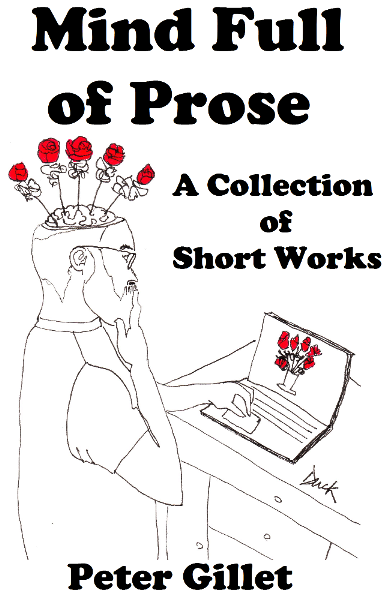 PG: Mind Full of Prose is my first self-published collection of short works. When I would get stuck while working on my first novel, I would switch out and work on something else. These other works included short stories, cartoons, and album reviews. There is also an essay. I had published these originally on Patreon, and in the summer of 2017 I asked if there would be interest in putting them all together into a book. The response was quite positive, so I started gathering and arranging my works into a collection. There is science fiction, fantasy, and horror of a Lovecraftian genre. A series of stories is based in New Brunswick. I call this my ‘Hidden Hill’ collection. The response to the book has been wonderful, with signed copies sent to four continents as part of the fund raising campaign. Since then, copies have also sold in Asia. I’m considering releasing it in e-book format.
 4Q: You have many talents Peter, author, singer, drawer and game designer. Tell us how you divide your time with all these.
 PG: The majority of my creative time is spent writing, especially these days. Besides short stories and flash fiction, I’m working on my second novel and developing a children’s book. I have contracted an illustrator, and she is really bringing the scenes alive with watercolour. I’m hoping to have that ready to submit to local publishers. I sing most often at social gatherings, but also when I attend middle ages events. Sometimes at those events I accompany myself on a 12 string lyre. I have to admit I need a lot more practice with that. The drawing I do is usually to convey a particular message which I think would benefit from the visual element as well as words. Those usually force themselves out of me, rather than peacefully waiting for when I need a break from the novel. For game design, I have two projects which I have worked on recently. The first is a table-top game in which families struggle against one another for status and position in a renaissance kingdom. There is very little direct conflict, and instead families out-do each other in shows of piety, loyalty, and patronage of the arts. Players can also cooperate, especially when one player’s fortunes exceed the others’. The other game I designed is really a campaign setting using d20 open rules in a science fiction environment. The up-front costs for publishing games has kept me from developing these further, but I have used the ideas in some of my writing. This is especially true for my Etherverse story setting.
 4Q: Please share a childhood memory or anecdote.
 PG: One of the memories from my childhood which is most striking is having climbed up on a tombstone, and then it fell over on top of me. I was very young, perhaps not even four yet. I had just assumed that it was one of the tall, thin 18th century ones. Recently, when I asked my father where the cemetery was where that happened, he corrected me. He told me it was a big modern headstone. The cement holding it to its base had weakened, and it took my dad and two other men to lift it off of me. He said the only reason I wasn’t seriously hurt was because that grave was shaded by evergreens and a thick bed of moss had grown over it. The stone pushed me into the moss, like one of those eggs in the mattress tests. I still have the scar under my chin, where the edge of the stone had cut me. I was literally marked by death.
 4Q: What’s in the future for Peter Gillet in all the disciplines you practice?
 PG: I’ve been bitten by the writing bug, so I most definitely will continue as an author. I am going to clean up my first novel and write query letters to have it published traditionally. Hopefully that will continue with the follow-up novels in that series. I will also continue to publish via Patreon, since my patrons have been very dear to me. Besides their financial support, their moral support has been incalculable. I will certainly keep self-publishing collections of short works. The main character in my children’s book has some more adventures to come. Some of my patrons have suggested that I flesh some of the short stories into novellas, and I’m seriously considering that. As for the singing, I think that will remain an amateur endeavour.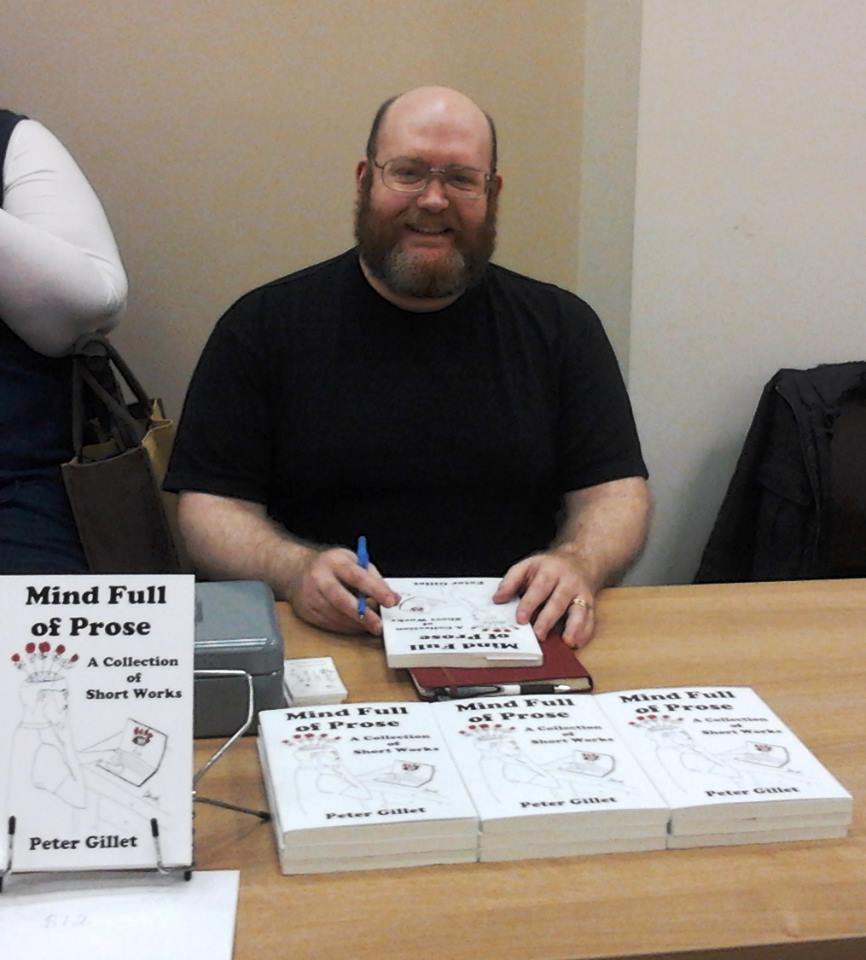
An Excerpt from Beards & Bearability aka The Happy Dwarves (In Mind Full of Prose)
That evening, Gruntel was helping Lofmetz prepare for bed. He opened the hypocaust and fetched an extra blanket from the closet. The dwarf-maid looked down at the interlocking geometric patterns of the floor tiles, and grew very still. Gruntel paused, and asked, “What bothers you, Mistress?”
The dwarf-maid moved her hands in a practiced series of gestures and began to trace the air with glowing golden lines. They faded soon after she had drawn them, but not before she had produced the figure of an eagle. Its golden wings were last to disappear. Gruntel hummed his approval. “Why must I marry?” she asked, finally.
“It is what a dwarf-maid does, Mistress. She brings honour to her father’s clan, and sons to that of her husband,” he replied. “This is the craft no dwarf-lord can master,” he added. She looked up at the old servant. He had always been so kind to her in the past. “It is not fair, Gruntel. I have been given no choice in the matter,” she added.
“Dearest Lofmetz,” he replied, in a softer tone. “Some of us had all choices taken away,” he offered, rubbing his bare chin. “Perhaps your mistake is in thinking choice is a thing held by the hands of another.”
Thank you for being our guest Peter. All the best in your future endeavors. And thank you dear readers for visiting the Scribbler.

For those wishing to know about Peter, please follow these links.
www.patreon.com/PeterGillet
www.facebook.com/ThePeterGillet
Twitter: @peter_gillet
Redbubble Shop
YouTube Channel