Allan Hudson's Blog, page 39
August 11, 2018
An excerpt from The Alexanders - 1916.

The Alexander's - The First Decade, is 85% complete. So far I've spent the last two years writing this story; a morning here, an afternoon there, whenever I can and I love it!
I'm happy to share parts of the story with you as it progresses and look forward to your comments.
 I've shared several sections already and you can find them by doing a search on the left sidebar in Search This Blog. Type in Alexanders and they will all come up.
 Dominic Alexander makes a new life for himself when he immigrates to Canada, to Moncton in New Brunswick . Everything has been going smooth until 1916 when Dominic suffers his first set back.

1916
The fifth day of March is overcast. Sprinkled across the belligerent blue of the skies are clouds stretched thin by shifting winds and they yellow from the promise of sun. Snow clings to the edges of buildings and lies brown and crusty in the ditches knowing it’s no longer wanted. Last year’s stubble of brown grass is visible and people talk of an early spring. The air carries an odd scent, seasoned by the surrounding industry of railways and a busy river and the warming earth. Dominic can smell it when a cool breeze ventures through the open window that brings with it the morning whistle at the repair yards reminding everyone that it’s 8 a.m. This is the only day he sleeps late. He loves his new home and ponders for a moment of how fortunate he is. Stretching and tossing the bed covers aside, he sits at the edge of the bed rubbing the night from his eyes to gaze out his window. He’d hoped it would’ve been nice today but he gathers that the skies look mean and it might rain. That’d be okay too, get rid of the last of the stubborn snow. Either way, he’s off today, Sunday being the only time he gets to himself. He has plenty to do with the business but he keeps this day to himself to do whatever he wants. The only plans he has right now is to fry the rest of the ham that Nick’s mother sent him and fry some eggs with fresh bread from Bailey’s Bakery. While he’s eating, he’s going to paste in the last five entries to his scrapbook he collected since the beginning of the year. When he washes up and shaves, he decides to grow a moustache. He likes the way the stubble looks under his nose while imagining it thicker. Freshly polished, dressed in his every day dungarees and brown flannel shirt, he sits with a plate of steaming vittles at the table where he’s left his open scrap book and loose cut outs. While he chews between bites, he dabs some glue on the newspapers sections and pastes them in on different pages.
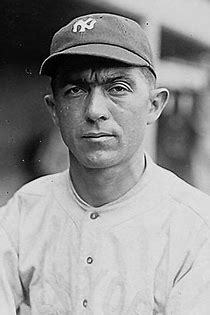
The Yankees buy Frank “Home Run” Baker from the Athletics for $37,500. Canada’s original Parliament Building in Ottawa burns down. The first bombing of Paris by German Zeppelins takes place. Military conscription begins in Britain. Germany begins to attack ships in the Atlantic.
While he dabs the bread crust in the molten yolk on his plate, he considers the last news story. Ships being sunk in the Atlantic. It must be scary to travel cross the waters that are rife with U-boats. He’s glad he has no need to travel although he yearns at times to return to see his family and friends. It’s not as often now but missing everyone remains as intense. Popping the last bite into his mouth, he closes the scrapbook and finishes his tea. He pushes his plate aside and elbows the table while holding his mug in both hands. He stares across at the window in the kitchen to see the barren field next to his house and the Ingersoll’s farm in the distance. There is activity in the yard and he expects the family are getting ready to drive into the city to attend church. Reflecting upon his own spirituality, he feels that he should be attending church too. He knows they go St. Bernard’s Catholic Church on Botsford Street and even though his family are Protestants, he might visit one day, but not today. Thinking of what he might do, he decides to work on his latest sketch of his new home he’s doing to send to Gloria. Now that he thinks of her, he hasn’t had a letter from her for quite a while. He answered her last one in February and she is usually quick to respond. He guesses she is busy at school and helping her parents at home or at the bar. One thing he must do is compose an ad for the Transcript to find someone to help in his shop. Part time for now at least. In fact, he’ll do that first.He cleans up his dishes and the frying pan and puts everything away. Digging a notepad from a drawer in the kitchen and a pencil, he returns to the table to write the ad. While he thinks of the right words, he’s pushing the hair out of his eyes reminding him he needs a haircut soon. Twenty minutes later after a few attempts he comes up with what he feels is the right wording.

Help wanted. Alexander’s Jewellery Repair is looking for a part-time assistant to assist with the public. Must have retail or office experience. Please apply in person before March 15th.
Satisfied, he sets the papers aside. He will take it to the newspaper offices tomorrow during his lunch. He will leave a sign on the door for when he will be back. Donning a light jacket and his boots, he ventures out to the barn where he has set up an area for his sketching. He and Nick have installed a wood stove in the main floor where the hay was kept and he will light a small fire because even though the weather has been milder, it’s early March and the air still holds a chill.Entering through the man door, set in the larger door, he walks into a wide common main level, open to the top lofts and enclosed by wooden walls on each side. Nick and Dave Ingersoll hauled old hay and debris from inside by the wagon full and the place is spotless. The rooms to the left are the old stables and storage, which Dominic has left for the same purposes. The rooms on the right are where the carpenter keeps his things in one and the other two are empty. Five feet from the back wall is a pot-bellied stove, sitting on a metal plate which rests upon a wooden floor comprised of heavy beams on their narrow side, strong as steel. Along the back wall away from the stove is a pile of split wood and sawmill tailings. Using old sections from newspapers, he soon has the dry wood ablaze.

He’s tired when he finishes the sketch. Only stopping for a quick sandwich at noon and a couple of short breaks he’s been at it all afternoon. From the two windows in the back wall, he’s noticed the faint light move shadows across the floor as the day passes and he knows it is close to supper time, his growling stomach is telling him the same thing. Putting away his pencils and things, he stops to admire the drawing. From the perspective of standing at the end of the driveway, the house is finely detailed as in reality, each shingle is meticulously placed, the flowers of summer decorating the base of the porch, the small sign by the door, the sparkle of the bevelled glass on the windows. The barn is half visible behind from this angle but the detail is the same. The edges of the picture fades out to empty fields. He likes it. He straightens out a few thing on the old desk he uses and remembers the stove. Thinking to check on it, he opens the iron door when a gnarled knot in one of the wood pieces boils inside with sap and when it becomes steam it bursts, shooting sparks out upon the metal plate. It startles Dominic who has jumped back from the stove. Seeing the sparks on the floor, he starts stamping them out with the sole of his boot. There’s a half a dozen pieces smouldering and they are soon extinguished by the stomping. Dominic is sweating from the scare. Looking around to see lf he got them all, there is no sign of any more errant embers. He closes the stove door, takes his sketch and leaves.There is one spark he missed. The one that rolled off the edge of the metal plate and lodged in a crack between two beams. It fell on its dark side, it went unseen. The glowing portion, however, is turned downward. As hard as the men worked to clean the floor, there is still remnants of old hay that has been pressed through the cracks over the decades. The hot ember finds some and there’s soon a gathering of flame and dry wood. Dominic’s barn catches fire.

I'm aiming for a 2019 publication of my historical fiction novel. I hope you'll want to read more. Thanks for visiting the Scribbler.
If you haven't read Wall of War yet and met Dominic's grandson in 2014, it's available on Amazon. Hard copies available from me. $25.00 plus shipping.


August 4, 2018
Guest Author Jorja Dupont-oliva of Florida.
Jorja has been a guest before on the Scribbler and she's back to share some wonderful news. Her novel Sisterly received the finalist award at the American Book Fest

If you missed Jorja's previous visit, please go here

Buy Sisterly here
 ABOUT THE AUTHOR
Jorja DuPont Oliva, author of the Chasing Butterflies Series, has created another realm in her writing quest. Sisterly is her first psychological thriller, with twists and turns like nothing you have read before. A unique plot that will have you addictively turning the pages.
BLURB
Two sisters, one love.Confined to one town.One mistake,and one house.
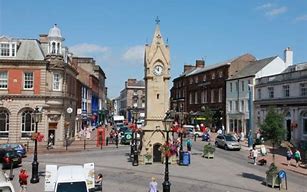 To a perfect town where nothing changes, not-so-perfect Janie returns. Determined to make amends with her sister, Brea, Janie finally reveals the hidden reason she left thirty years ago to her first love, Dillon, who is now married to Brea. To add to the chaos, Janie rents a room from a mysterious old black woman only to find unusual guests and a fenced-in backyard that is strictly off limits—with a supernatural legend attached to it. Struggling to make things right while questioning her own sanity, Janie realizes the unbreakable bond with her sister remains and those on the other side of the fence hold the secrets.
DESCRIPTIONJanie Edwards has a dark calling on the verge of revealing itself. She sets out, returning home after thirty years, to make amends with her sister, Brea, and her first love, Dillon McCrane, before they discover her skeleton in the closet—or it discovers them. But there is a problem standing in Janie’s way: Brea and Dillon are husband and wife.While bracing herself to face Brea, Janie rents a room from Ms. Francis, a mysterious old black woman. Ms. Francis consents to give Janie the room only if Janie helps take care of her guests. Janie agrees—with the assumption these guests are just regular people.
 Many perplexities linger around Ms. Francis’ big yellow house, with its odd guests, Janie, and an ever-reliable train passing in the night. Even Ms. Francis has buried secrets of her own. After Janie returns from an unsuccessful visit with her sister, Ms. Francis reveals the biggest secret of all, the sacred back yard. Guest—or ghost?—Janie struggles to find her own sanity but is desperate to reconcile with her sister before her own secret is exposed.
  She turned to wipe down the dresser where Marva kept all her jewelry. She stopped again to explain, “They weren’t just guests, which took me a while to figure out; they were the people’s lost loved ones.” She grabbed an unruly blanket from the top of a nearby chest of drawers, neatly folded it, and returned it to the chest’s top. “They were burying the remains back there — mostly their ashes, but sometimes it would be something as simple as a lock of hair.” She chuckled. “One woman even buried her husband’s underwear, and sure enough he showed up, too.” She solemnly added, “I’s not sure why or how, but I knows God always has a reason for it…”
Congratulations Jorja. It must be a terrific feeling to have your work recognized. Thanks for telling us about your book and the excerpt.
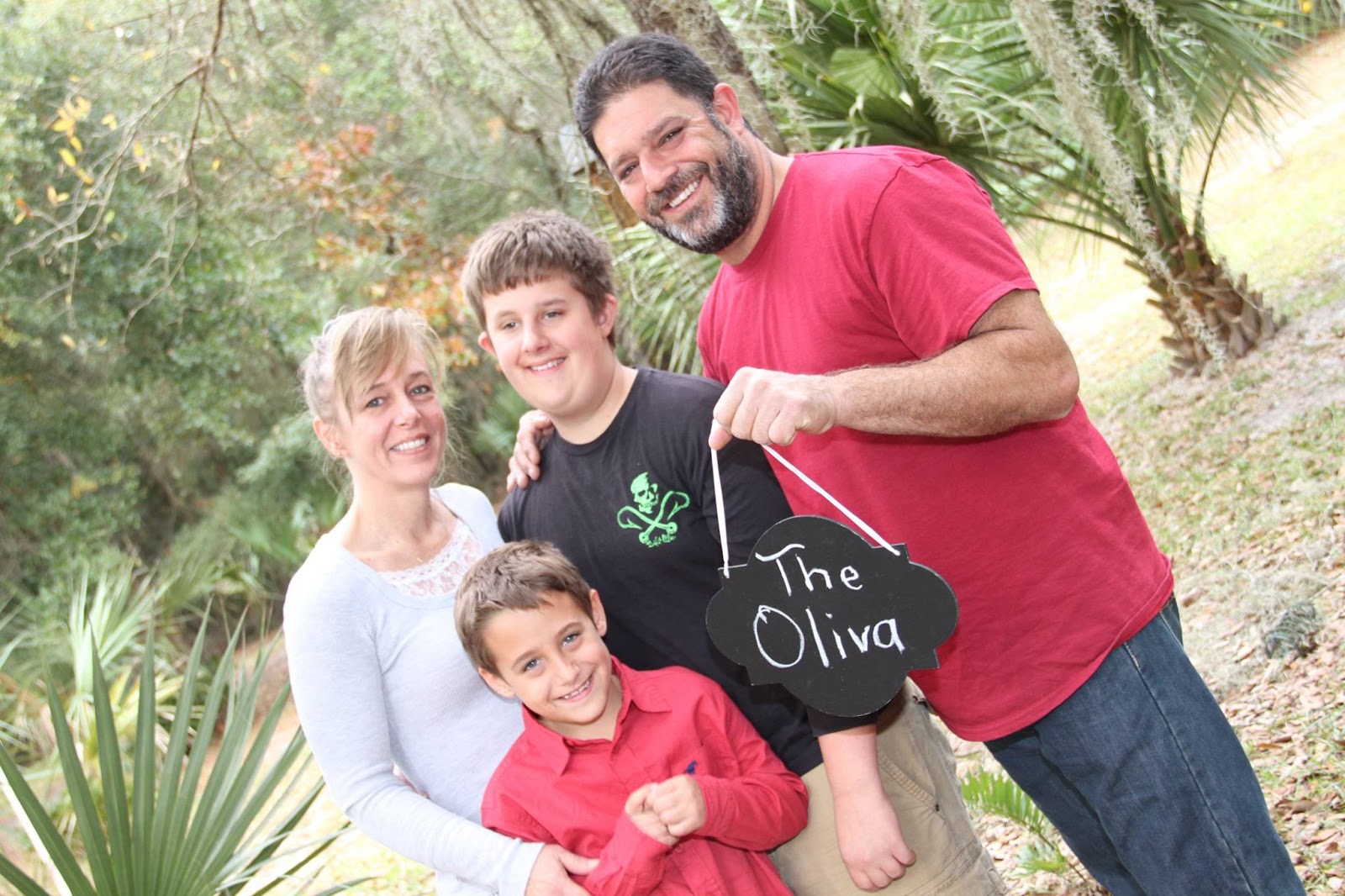
Jorja's website- here
Facebook author page - here
Hey there dear readers, please leave us a comment. Thanks for visiting!
July 29, 2018
The Ship Breakers - a short story by allan hudson
 This story received Honourable Mention in the Writers Federation of New Brunswick's short story competition a few years ago. It has been published in SHORTS Vol.1 (a limited edition printing). on commuterlit.com and will be featured in the upcoming short story collection - Boxes of Memories - to be published in the fall of 2018.
 Ship Breaking has to be one of the most difficult jobs in the world. There are three major ship breaking yards in the world. One of them is in Chittagong, Bangladesh. Injuries and death are always around the corner and yet, there is a line up for the jobs.
I was inspired to write a short story based on my research of the yards for my novel, Dark Side of a Promise.
The Ship Breakers
The Neptune Giant is a VLCC, a very large crude carrier. When it was completed in 1979, it ranked among the largest oil tankers in the world. From bow to stern, 75 Cadillacs could park bumper to bumper. The crews used bicycles to travel the elongated deck. With a beam of nearly two hundred feet, five bungalows could be placed lengthwise side by side across the deck; her keel is six stories underwater. The raw steel is covered with over fifteen hundred gallons of paint. She’d been given a lifespan of thirty years; instead, she had sailed every ocean of the world, berthed at every continent, rode many storm’s fierce waves and trolled the endless seas for thirty-five years. Today is her final voyage.
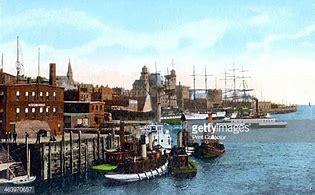 Her last port of call, two weeks ago, was Saint John, New Brunswick, with two million barrels of Venezuelan crude. Now, the tanker cruises the Bay of Bengal at fourteen knots. At that speed she requires five miles to come to a dead stop. The ship breaking yards of Chittagong, Bangladesh, are only four miles away. The captain brings the ship to starboard, aiming the aging tanker directly at the muddy beach. The tide is high, which is necessary to allow the gargantuan machine to ground itself like an aged sea lion, as near to the shore as possible, where it will die.
The engine that powers the ship is eighty-nine feet long and forty-four feet wide with twelve massive cylinders – one of the largest engines in the world. It weighs two thousand metric tons costing more than the rest of the transport. Its thirst for fuel demands over fifteen hundred gallons of crude every hour. Its last chore will be to power the vessel onto the tidal mud banks, where humans who are dwarfed by its immensity will eventually take it apart, by hand, piece by piece. The work is extremely dangerous, with an exceptionally high mortality rate, and yet there is no shortage of men.
Of the approximately 45,000 ocean-going vessels in the world, about seven hundred per year are taken out of service for dismantling. Many go to Alang, India, the world’s largest ship breaking yard, or to Gadani, Pakistan, the third largest after Chittagong. Where the ships go, the jobs go. As difficult as the work may be, ship breaking is part of the momentum powering the economy of a young Bangladesh. The owners of this particular ship-breaking yard paid three million dollars for the Neptune Giant.
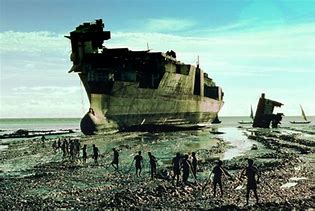 With torches, sledgehammers, steel wedges, brute force and painstaking drudgery, it will take six months to dismantle the ship; one man will die and two men will be injured by a thousand pound slab of steel cut from the behemoth’s hide. It will net the owner millions more than he paid when he sells the scrap metal and he will provide no compensation for men that can’t work. They toil fourteen hours a day, with two half hour breaks and an hour for lunch, six and a half days a week. The men will eat their supper when their work shift ends. At least one quarter of the workers are illiterate; one quarter are children. The average wage is $1.25 per day.
*
Azhar Uddin is gently woken by his father. It’s 4:30 a.m.
“Come, my little man, you must join your brother at the table. You must leave for work soon. Come now.”
Hafiz Uddin turns from his son, supporting himself with his only arm grasped upon a homemade crutch; the other arm is buried beneath the muddy beaches where he once toiled, severed by falling steel at the same crippling yards where he now sends his two sons. He wobbles even with his lopsided support; the left knee and lower leg, the same side as the missing arm, were wrecked in the accident also. Unable to find meaningful work with only a single hand, one strong leg and a defeated spirit, he remains dependent upon his male children: Nur is fourteen; Azhar will be thirteen next week. Because they are exceptional workers, they earn two hundred and sixty takasa day, just over three dollars.
Rising slowly, Azhar sits up on the side of the bed and rubs his shoulder. The dull ache in his muscle reminds him of the steel pipes he helped carry all day. Long straight bangs of the fiercest black hang over his narrow forehead. His brown boyish skin is smooth and untroubled, not yet marked by the lines of struggle. A slight dimple on the end of his nose balances the squareness of his jaw. The man’s work he does has not taken the childish shine from his eyes. Blinking the sleepy fog from his brow, he rises to find his work clothes neatly folded at the foot of his bed. His father washed and hung them to dry before he retired for the night, as he would have done for Azhar’s older brother, Nur, also. There are no women in the house.
 Azhar slips on his red and blue striped shirt, the collar and cuffs worn thin bearing unravelled threads. Wrapping a green and yellow lungiaround his slim hips, he ties a double pretzel knot to keep it secure. He often wishes for trousers to protect his legs, but they would be too hot for work, and he knows there is no money for such luxuries. Every spare takais sent to his mother, Naju, in Dhaka. He ponders a moment, thinking of her and his sisters. Rayhana is eleven and works with his mother; and Tasleema is six. He hasn’t seen them for over four months. It is for Tasleema that they all work and save whatever is possible so that she can go to school. As he thinks of her glowing eyes and tiny face, he remembers her promise.
“When we are together again, Azhar, I will teach you to read.”
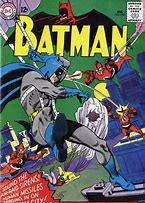 The thought causes him to bend down to retrieve the tattered comic book from under his bed. In the dim light of the bare bulb from the kitchen, he scans the torn cover. The masked man with the flowing cape, he knows, is called Batman.One of his first jobs when he was only ten was to retrieve any usable items from the grounded ships that could be sold to the recyclers: rolls of unused toilet paper, cleaning supplies, pots and pans, furniture, bedding, tools, discarded books, coastal maps, light bulbs, cans of paint, rope, wire. The comic book had been in a waste basket; it was torn and thick with many readings. Azhar had seen other comics before, but he wondered where this one came from and how far it had travelled when he found it. His boss Mojnu told him to keep it, otherwise it was being tossed out. He was always impressed by the colored pages, the photos of cars, tall buildings, fancy clothes, fight scenes, smiles and scowls – and he longed to know what the squiggly words mean. More than anything, he wants to read.
Tossing the book under the bed once more, he tugs the frugal sheets into place neatly, as his father expects, before joining his brother at the table. Their home is corrugated metal divided into two rooms with few possessions, its shape a replica of the many shanties lining the dirt street where he lives. Theirs is different because their father keeps it clean. The walls are painted a bright blue inside and out; their roof doesn’t leak when it rains.
The smell of oatmeal greets him as it drifts from the boiling pot his father is bent over, stirring, on the Bondhu Chula, a cook stove. Oatmeal for breakfast is not common in their home or their neighbors’ for that matter. Most breakfasts are rice, sometimes with red or green chillies. Or paratha, a pan fried unleavened flat bread. Yesterday Old Angus Macdonald, the burly Scotsman who visited them sometimes, had dropped off a bag of rolled oats. They have no idea where he lives or where he comes from. They only know him from the story their father has told them.
The man was almost seventy when he commanded the Atlantic Pride, one of Canada’s largest ferries, to the yards in Chittagong when it was retired four years ago. He stepped onto shore after he grounded the ship and he never left. When the torches cut a section of aged steel from the nose of that very ship, a huge chunk crashed to the ground beside Hafiz, pinning his arm to the sand and breaking his leg. Had the piece fallen several inches to the left, Hafiz would`ve died. Maybe that was why the elderly man stopped by once in a while with a bag of oats or some other staples and a few taka notes. He never stayed long, spoke very little Bengali. Always laughing, always a mystery.
Nur sits in front of a dish of flatbread, resting on a makeshift table, which is a piece of discarded plywood his father has sanded, painted and polished. It’s the same teal that decorates the home, the same teal Hafiz got for free. Nur looks up with his usual wide grin.
“Good morning, little brother. Will you be having paratha or paratha for your meals today?”
Hafiz has his back to his boys, cooking their breakfast. He doesn’t turn around when he scolds his oldest son.
“Be thankful you have food, Nur. There are neighbors who may not have any today, or tomorrow. Don’t make fun. And Azhar, wash up, do your morning duties, and hurry. This is almost done.”
Both boys answer in unison, “Yes, Baba.”
The man that owns the property their home sits on is the same individual who owns the breaking yard the boys work at. Not totally without empathy, he provides running water and outhouses. Perhaps it is benevolence that has him supply these accommodations; it’s also his desire that his employees should be healthy so they don’t miss work. Hence the covered latrines and cold, life-giving Adam’s ale. Azhar goes to the sideboard, where water heated by his father steams from an old porcelain basin that is storied with nicks and scratches. He washes the sleep from his face, tames the cowlicks on his head, before taking the bowl outdoors to discard the soapy residue. Setting it on the doorstep, he rushes to the outhouse to complete his morning ritual. Returning to the kitchen, he finds Nur bent over a smoking bowl of hot porridge with the grandest of smiles.
“Azhar, we have brown sugar this morning. Our Baba is good to us.”
 Hafiz sits at the opposite end of the table, his own porridge barren of anything sweet. There is only enough for the boys, he feels. The used plastic bag that sits on the table holds about three tablespoons of crumbly dark crystals. Azhar sits at his seat, an upended orange crate padded with a cushion his mother made.
“Eat up boys. Divide that between you.”
As Nur digs into the bag, Azhar watches his father stir his breakfast to cool it, knowing such a treat is rare.
“What about you, Baba?”
Nur halts his sprinkling to look at his father.
“No, no, I don’t want any. Take it. And hurry, Ismail will be along soon with the truck to take you to work.”
Suddenly the kettle’s steam whistle erupts. Hafiz sits closest to the cook stove and twists about with his single arm to lift the heated pot to fill the three mugs for tea. When his father turns his back, Azhar hastily reaches into the bag, pulling out almost half of what is left. He stretches to sprinkle the sugar about his father’s bowl. Nur grins and tosses in what is left on his spoon. The boys are giggling as Hafiz turns around with the first of the mugs.
He stops mid-swing when he sees what they have done. He guesses it to be Azhar, so much like his mother. He holds his youngest son’s gaze for a moment before looking at Nur. Mistaking the look on their father’s face, thinking him upset, the boys grow quiet. Hafiz briefly studies his sons, soon off to do men’s work, still childlike in their hearts. He yearns for them to run free, not to need their strong backs to survive. He is overcome with this simple gesture of love; a glistening tear zigzags down his haggard cheek.
“Thank you, my sons. You are fine men.”
With everyone shy, the meal passes in solitude. The boys hastily finish so they can get ready for work.
The End
Thanks for visiting this week and I hope you enjoyed the visit to the yards and family of Bangladesh. Please feel free to leave a comment.
July 21, 2018
4Q Interview with Williston Payne - Lawyer, Defender and Master of Information.
Is Williston Payne a Vigilante?
 Life for Mr. Payne had been quite normal until tragedy struck in 2001. His sister, Amber, and her best friend, while on holidays in Venezuela, died at the hands of one of the world's most evil men. (photo credit - Rene Bohmer. Upsplash.com)
It took three long years to find the man that did it. The law was ineffective in bringing him to justice. Payne turned to his friend, Drake Alexander, a former Canadian Commando, to find Bartolo Rizzato. Together, with the help of several ex-soldiers, a French ex-pat and a Bengali cop, they found him...and they killed him (Dark Side of a Promise)
From that day forward they vowed to scour the Earth for men or women that escape the law, evil people that the world would be better rid of! (Wall of War)
So yes, Payne and his cohorts are vigilantes.
Williston Payne has agreed to an exclusive interview on the Scribbler.
4Q: Are you a vigilante?
 Photo credit: Thomas Tucker. Upsplash.comWP: Do I take the law in my own hands? Yes. I have great respect for the justice system in most countries, I mean I'm a lawyer after all, but there are too many criminals that escape their due punishment. When my sister was murdered, it changed my life. There was too many law enforcement agencies involved because Rizzato was an international troublemaker plus he was very clever at hiding. There came a point when I had to turn to my best friend to help. He's the soldier, I'm an information man but I'm no hero. Drake Alexander is a good man, deadly and afraid of no one.
 I eventually found out through my contacts that Rizzato was in Bangladesh. Drake and his team did the rest until we trapped him in Panama. Unfortunately, we couldn't arrest him. He ended up being lunch for a carnivorous beast and I'm not the least bit sorry.
Once we got a taste for revenge, we were hooked. Now we look for trouble.
4Q: Running a team of ex-soldiers and searching the world for criminals must be expensive. Who foots the bill for all this?
WP: As for myself, I've been fortunate throughout my career as a lawyer. Over the years I built a successful company of law offices in the US, Canada and several countries in Europe dealing with international tax issues. Needless to say, I've become quite wealthy. During the search for Amber's killer, I retired from the business which is now under control of my brother and other trusted managers. We moved our command center to my Yacht. We have our own aircraft and can move anywhere, anytime. I'm an info addict. I love collecting other people's secrets. I have contacts all over the world and if I need to know something, I can usually find it.
 Photo credit: Kony Xyzx. Upsplash.comAs for the rest of out team, Drake in an heir to a jewellery company that his grandfather established in 1915 in New Brunswick and his father managed in his later years. His mother was the only child of another jewellery family and she met Drake's father at a buying show in New York. Together they established a chain of stores in Atlantic Canada and New England. Normally Drake would've taken over the business but he's not interested. All his life he only wanted to be a soldier. But he still owns the majority of the business and money is no problem.
As for the others, there are two more retired soldiers. Dakin Rush, is a co-owner of a security firm and he's free to travel. Isaac Glass and his father own a helicopter company that pretty well runs itself, so he's good to go. His girlfriend, Plum, is an ex-convict and she goes where he goes.
No, money is not an issue.
4Q: What was the latest caper you and the team have been involved with?
 WP: Recently, a man very close to Drake, a priest actually, discovered a strange document and an ancient gold dagger while renovating the church he was in charge of. The information it reveled got into the wrong hands. It wasn't long before Miguel Pisconte was in trouble. He accidently killed a young man and was kidnapped by a Spanish raider. Pisconte was unwilling to talk until his sister was taken prisoner by the same sinister people. We tracked them down to Peru, discovered a strange monument built of solid gold by the Inca hidden in the Andes and set a trap for the bad guys. Drake rescued them and Turi Salcedo is dead.
 4Q: Wow. That's heavy stuff. I'm afraid to ask what's next?
 Photo credit: Annie Spratt. Upsplash.comWP: Interestingly enough, one of our team members, Mireille Lambert, was with the Securite National in France until she met a Bengali Police Officer and fell in love. They married and she moved to Bangladesh with him and together they formed a private investigation company. She led us through the labyrinth of rivers there and the city of Dhaka. She died during the search for Salcedo and his men. When we attended her funeral in France, we met the master vintner of her parent's estate. His daughter was killed by the Monteau brothers on their bank robbing spree in the early 1980's. That's over twenty years ago and they've never been caught. We're going after them. It's been tough so far, it's almost as if they disappeared completely but not to worry, we'll find them.
Thank you Williston for being our guest this week. You certainly lead an interesting life.

And thank you dear readers for joining me this week to meet Mr. Williston Payne.
**Note: Williston Payne if a fictional character. As a tribute to one of my dearest friends whose last name is Williston, I've dedicated this character to him.
Feel free to leave a comment. Would love to hear from you!

July 14, 2018
An excerpt from The Alexanders - The First Decade
The Alexanders - The First Decade. 1911-1920

This is the working title of my work-in-progress (WIP) and I'm having such fun in writing this historical account of Dominic Alexander (Drake Alexander's grandfather) who immigrates to Canada in 1915 and establishes himself in Moncton.
One of my main character's is a young lady that come to work for him and as nature would have it, they fall in love. Her name is Maria Desjardin, from Notre Dame, New Brunswick.
Maria is normally an easy going lady but there's a feisty side to her.
 In 1917, during the First World War, there is a shortage of men for many factories and workplaces. The cotton mill in Moncton hires many women. They don't make the same wages, for the same work, as men do.
 Maria Desjardin doesn't stand for that.
An excerpt from The Alexanders. (Copyright is held by the author)
The tower of the cotton mill looms menacingly, like a fist, above the small crowd gathered in the shadows of the office door. The last Friday of September has not started off peacefully in the east end of Moncton. Odors from the workings of raw cotton float in the light autumn breeze. The sun barely crests the horizon yet a cluster of shouting woman and several men are waving and demanding that the owner, Baylor Crosswaithe, treat his female employs fairly. They make a glut along the driveway so no one can exit or enter without running over them. It came to light that female weavers are making three dollars an hour less than men doing the same work. Young children also labor at the mill for very low wages. The crowd is angry.
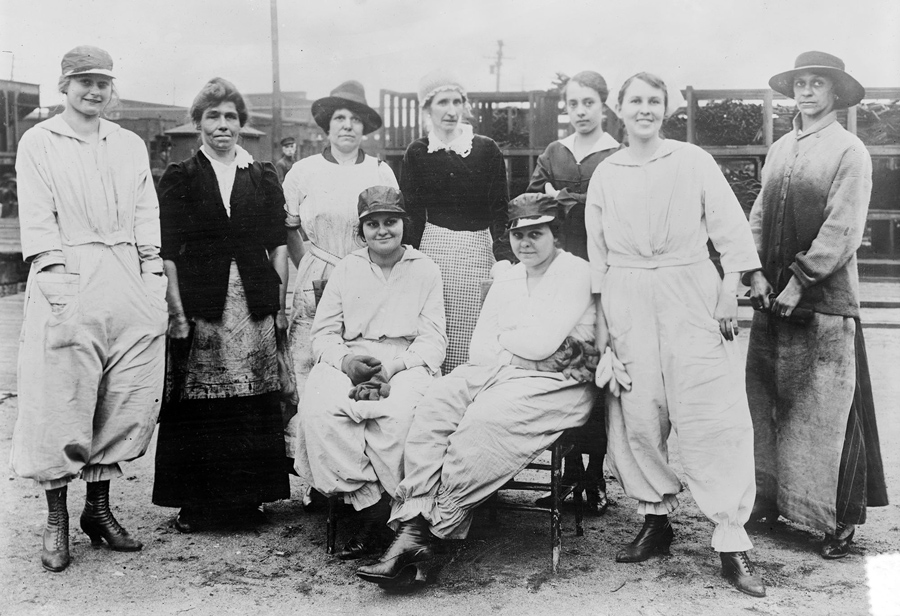
It is unlikely that Crosswaithe will show his face, mainly because he doesn’t care. He has stated publicly that the mill is his business and he will run it as he sees fit. If the workers don’t like their wages, they are free to look elsewhere. The truth of the matter is that the mill is in financial difficulty and Crosswaithe is scrambling to keep the business operating. There is an abundance of cotton mills throughout the country driving the prices down.
Maria Desjardin decides that enough is enough and against Dominic’s wishes that she not be involved she makes phone calls and organizes rallies. It has a mild adverse effect on the business and it is the first heated conversations they have in their relationship. He agrees with her but wants her out of sight. Today she is at the forefront of the protestors. She is also the loudest.
“It’s not fair that your ladies work so hard for wages that are unequal”
The other women, Emma included, along with twelve of their friends and acquaintances and a handful of husbands are making a racket and waving hand drawn placards, demanding equal rights. Denise wanted to be there but had to work at the store, especially since Maria organized the rally and she hasn’t told Dominic. The suffragette movement has been slow to reach Moncton, but these are the same ladies that are most vocal for equality. Other woman are afraid of their husbands, or their employers or their disagreeable families to be involved publicly, some write letters of protest, others say and do nothing. The bunch gathered are just as verbal as their leader.
“Give woman the same money as the men!”
“Tell Crosswaithe that we demand an audience!”
“How can you sleep knowing women are treated so unfairly?”
“We want some answers!”
 The commotion is being witnessed by people on the periphery, not involved but intrigued by the uncommon sight of woman creating such a disturbance. Most of the protestors are in everyday wear but one is with elegant jacket and skirts of the latest fashion, namely Mildred Van Geist. Van Geist is not as boisterous but her presence lends gravity to the cause. Much to her husband’s chagrin, she too has an effect on his banking business. Men in delivery carts, people walking to work or going to the hospital up the street, are watching. Not everyone is sympathetic, especially domineering males.
 At the opposite end of the building, so too is a loose group of workers staring, lingering at the worker’s entrance, fronted by three burly men glaring at the woman with hateful glazes who are shaking their fists at them and yelling abuse. Maria shakes her fist back at them, as do others. The men take offence and advance on the crowd but are only a few steps away when the shift whistle blares calling them to work. More fist waves and the workers disappear in the side entrance while those ending their workday hustle away from the crowd, knowing what’s going on and have been warned by their supervisors to give no heed to the disruptive behaviour out front, to ignore the ideas they are spreading. The women especially are reminded of how fortunate they are to have a job. None hang around.
From the front doors comes a portly man, tie askew, trousers bagging at the knees. Angry eyes bulge from a hairless head except for a few wisps around small ears. The mouth is almost a snarl. Behind him is two ruffians that work in the warehouse. They’re known for their quick temper and heavy lifting has made them strong. The mill manager, Wade Flanagan, is a misogynist and finds aggressive females annoying, especially this troublesome Desjardin woman that has been disrupting their peace. Stepping closely to Maria he waves for attention. The crowd quiets except for their leader. Maria has arms akimbo, a folded umbrella hanging on one arm and an unhappy expression.
“Where’s Crosswaithe?” she demands.
Flanagan flips his hand as if the idea is absurd. His voice is raspy and pompous.

“Mr. Crosswaithe does not have time for you troublemakers. Nor do we. I’d advise you to leave the premises at once, you are on private property. We’ve called the police as well and they should be here soon, so it’s better you go peacefully.”
Pointing his finger at Maria, his voice lowers, more spiteful. She hears him quite clearly amidst the clamour of the crowd.
“I know who you are Miss Desjardin, I’d advise you to be more careful. One can only wonder what your fiancée must think. Perhaps he should remember who buy’s his jewellery and pays for his services, certainly not these peasants you care so much about. Mr. Crosswaithe is a very big part of the financial community her in Moncton and can be influential. Do you know that word, influential, as in advising his associates to buy elsewhere? Hmm?”
Maria is about to let loose with a barrage of unkind words when a deeper voice calls for calm.
“Quiet everyone, quiet. People stop your yelling. You two in the back, un-ball those fists. Stop waving that umbrella so threateningly young lady. Mr. Flanagan, perhaps you could step back a bit and tell me what’s going on here.”
 The police officer is thick chested and tall, authority and a shiny badge makes people stop their fidgeting and they close in to hear what is being said. Officer Melanson steps between Maria and Flanagan who are staring darts at each other. Maria starts to complain when Melanson holds a hand out to wait her turn. Nodding at the manager, he prompts him once more.
 “What’s all the fuss about her now, Flanagan?”
Chin in the air he points at Maria.
“She’s egging this bunch of rowdies on, Officer. It’s disrupting our business and they are on private property as well. We’d like them to disperse as soon as possible. They make such foolish demands, asking for Crosswaithe of all things, as if he has time to deal with these troublemakers. I’d like it if you and your fellow officer I see over there to get this crowd moving. In fact I demand it!”
Melanson doesn’t like the manager’s attitude and knows a few of the women here. He is also aware of the unfair labor practices in the factories but he must uphold the law. Turning to Maria, he tries a half smile begging her indulgence.
“So its troublemakers you are, ladies and gents? You know we can’t have that. You’ll need to go home now. You’re holding up traffic and there are delivery carts waiting to get in and you are on someone else’s property.”
The group lower their cards and their shoulders, some starting to move on wending through a crowd of gatherers, some of which are not friendly. Maria respects the law and doesn’t want any trouble, only to be listened to. She watches Flanagan beam a smug look at the thinning assembly and she sees all the rottenness in his manner.
“You’ll not get away with this much longer Mister. The indecent way you treat your women.”
Flanagan can see that the police are moving people away and feels he has won. Only she can hear him.
“It’s better than most deserve. Humph!”
 Despising him so much, she doesn’t even think. Running forward with umbrella raised, she whacks him on the head. Before Officer Melanson can contain her she’s hit him several times. One of the blows from the long stem of her weapon hit him on the nose and made it bleed. Another to the side of the head makes it on the next day’s front page of the Transcript. The flash from the photographer’s camera apparatus catches another of Maria being escorted to the police car.
 Flanagan rushes into the building with his blood stained handkerchief held tightly to his nose. The two bodyguards block the entrance. Putting Maria in the back seat, the other officer drives and Melanson sits beside her, his manner abrupt, asking her questions while taking notes. What’s her name? Where does she live? Etc. They take Maria home. Since Dominic has been back, she moved in with Emma where they were going to take her but she convinces Officer Melanson that she is needed at work and he will know where she is. She promises to go directly to her aunt’s place after work. Melanson can be a soft touch sometimes for a pretty girl. Trusting her to her word he does as she asks. When they arrive, before she is allowed out of the car, she is chastised severely by Melanson for her actions, it’s possible that Flanagan may lay charges against her for assault. There’s a tinge of sympathy in his voice when he reaches over to open the other car door so she can get out.
“You’ll not able to do any protesting if you’re sitting in jail. Stay off their property. Don’t go anywhere until we tell you to. You could still be in a lot of trouble. Otherwise the day is still long, I hope the rest is more peaceful Miss Desjardins.”
Maria knows enough to keep quiet, the realization of what she’s done sinks in. She begins to worry about Dominic’s reaction. She hopes he’s outback doing repairs. Lifting her skirts to slide out, she steps carefully onto the driveway, waving over her shoulder.
“Thank you Officer.”
 Thank you faithful reader for joining us this week. I hope you enjoyed the excerpt. I would love to hear your comments.
July 7, 2018
The Body On The Undwerwater Road by Chuck Bowie
Chuck is Back! The First & Fourth.

I expect you've heard of the Firth of Forth, an estuary (firth) of the River Forth in Scotland, well this is the First and the Fourth for the Scribbler and Chuck Bowie.
First time for the Scribbler and the Fourth visit from Chuck Bowie of Fredericton, New Brunswick.
And Donovan's Back Too!
Chuck's fourth novel, The Body on the Underwater Road, is ready to launch on July 27th at Westminster Books in Fredericton and as a special treat for all you faithful readers Chuck is back to tells us about writing this series.
I've got my copy and it's next on my list.

Make sure you follow the links below to catch up on Chuck's previous visits.
Take it away my friend,
The Perils of Coming Home
- Chuck Bowie, July, 2018
- Written for The South Branch Scribbler
Thomas Wolfe suggests you can never go home again. As I think of that phrase, I think about those who say a river constantly changes. So, if you stick a foot in, pull it out and place it in exactly the same spot, it will be a different experience, because that previous cubic foot of water has moved on, and the sand and pebbles beneath your foot have shifted. Try visiting your childhood home, and imagine it is exactly as it was when you were seven years old. Or ten. This will not work. You have moved on. A new owner—several new owners!—have changed the old homestead in so many little ways. That vibe of nostalgia or childhood simplicity is gone, together with the plaid sofa and giant flowered wallpaper.
 I am in the middle (or maybe nearing the end, I’m not sure) of writing a suspense-thriller series. I’ve finished Book 4, actually: The Body on the Underwater Road. As I mentioned, it’s a thriller so it has murder, bad guys, action, shenanigans, quite serious stuff weaving a plot designed to keep you interested and entertained.
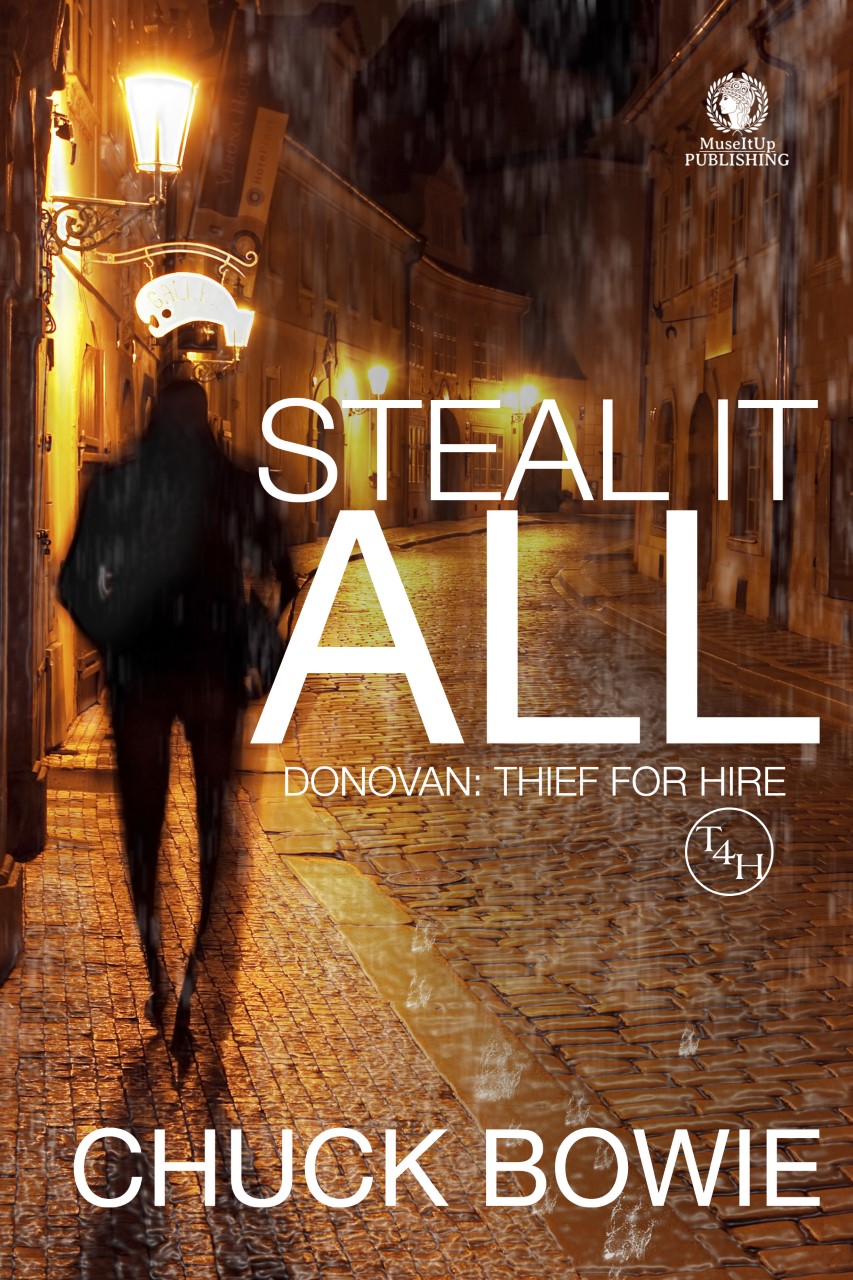
 I’ve written three other thrillers as well. The first: Three Wrongs is of the classic variety, with a detailed back story to help you understand why my contract thief is so complex. The second novel: AMACAT is somewhat lighter in tone, but with similar ‘thriller’ elements. I digress to an extent with my third novel: Steal It All, in that it is formatted a bit like a police procedural, and I stray a bit from the ‘loner with his own moral code’ approach.
But Book 4 is different, in a couple of ways.
 In The Body—may I call it The Body? (I suppose I could call it TBOTUR; I do like acronyms)—I have written the bulk of the novel with scenes of New Brunswick, my home province. The opportunity cost of such a decision is I fail in my attempt to incorporate four countries in the plot setting(s). This was a conscious decision, where I wished to return home, so to speak, and write a tale set in my backyard. I wanted to show off my home province to you, Gentle Reader, who may have never got here to visit. Shame on you! by the way, for not having made this attempt.
 My protagonist, Donovan, is a contract thief who travels the world, separating owners from their material goods, and he does this for great profit. It’s Robin Hood, basically, minus the messy middle element of altruism and generous heart. So, he steals from the rich, and gives to the less rich: himself. But I digress. Anyway, our man Donovan visits a charming New Brunswick seaside town in an attempt to solve a crime and coincidentally cut down on the murdering of tourists.
 In hindsight, I now see The Body differs in at least two ways from the other books in the same series. As I mentioned, we visit three locales, but only two countries. I hope my readers don’t feel ripped off; in fact, I’ve had one article written where the reviewer found this reduction in exotic travel to be a tad disappointing.
 The other way, though, that Book 4 differs is with fewer narrative arcs to the plot. We find a primary plot, and a secondary plot. Simple. However, what I attempted to do in this case was to analyze an extended family dynamic. In doing so, I wanted to permit the reader to peek through the curtains into someone’s family (someone very rich, in this case) and visualize what home can mean to a fractured, dysfunctional family. My little irony is I do this in my back yard.
I believe I stayed true to my character’s development as a contract thief seeking redemption. And if you, Gentle Reader, read about the Parker clan and somehow think even more highly about your own eccentric brood, well, all the better!
And now back to Mr. Thomas Wolfe. Why can you never go home again? I do not actually believe this, at least, not literally. One can certainly come home, but one cannot expect it to be the same as before. So, I bring our protagonist Donovan to New Brunswick, but somehow, the novel, while still a thriller, is…different. I became interested in how people can change, and I didn’t focus as much on all-action-all-the-time writing. (There is action; I quite like the trouble I’ve placed my characters in, especially toward the end! But I hope you can ‘see’ the towns, the beaches, the estates, the vineyard…)
I tried to add depth to the characters and their families, make them more human, make them real. In doing so, I brought you to quiet, nothing-ever-happens New Brunswick. And I made stuff happen. I hope you like it.
I’m already thinking about Book 5, where I return to lots of action, very bad people, and who knows? Maybe a theft or two. Won’t you come along for the ride?
An Excerpt from The Body on the Underwater Road. (Copyright held by the author. Used with permission)
Montauk
 An old Ford pickup rolled down a coastline country lane skirting the North Shore of Long Island Sound, a few miles from Port Jefferson. Moonlight glanced off the remaining piece of his rear-view mirror, but the faint glow on the gray primer coat turned the truck into a ghostly image of itself. The muffler, one of the few things that worked well, burbled low and smooth, attracting little attention. The lone occupant sat behind the wheel, radio off, his left elbow outside the opened window, catching a bit of the late-night breeze.
 The trucked traveled well under the speed limit, further reducing its engine’s sound to a murmur. Harry Rafuse made an abrupt turn into an almost-hidden drive without slowing, slipped the truck into neutral and coasted the remaining fifty feet. The pine branches caressed the passenger side on the way by, making a swishing sound as the Ford came to a stop near a dark building. The engine ticked as it cooled, but other than that, few sounds broke the still night air. He opened the door. His key was ready as he slid from the truck seat and then took care to bring the door to, but not closing it so as to make the latch sound, and in a moment he was inside the small storage shed.
There were no windows and Harry had the lights on as soon as the door was completely shut. He stood at a slight bend since there was no space to stand properly, peering down the tiny path through the middle of the single room. For a building with such an impoverished exterior, its contents were startling in their grandeur. The rear quarter of the compact room was packed to the rafters with scores of paintings. Beside them rested a few European cabinets and hutches, moving van blankets separating the lowers from the uppers. As he moved to the back, he brushed against wooden crates containing art pieces, mementos, statuary, and vases. Hundreds of pieces of antique jewellery rested in glass cases on shelves above the crates. Beside him, individually boxed, were unique, one-off artefacts, most of which had proven provenances, causing their value to quadruple.
“What do you think, Harry? Have we hit the seven million mark yet?” He grinned in the dim light. It would have been so much easier to unload it all in the shops of Manhattan, or in the galleries in the outlying boroughs. But these pieces were known. Known to have been stolen, known to be the trigger that would set the police dogs on him. He shook his head. I’m not going to jail because of laziness. I’ll just have to ship them off a ways, set them loose in Canada, someplace I’m not known. That would certainly change my status. I don’t think the cousins would turn their noses up at me if I coasted into their snobby driveways in a Ferrari.
 Harry thought of an incident the other day, when a plainclothes detective knocked on his door for a chat. Did he know about the MacQuart estate having been robbed in April? Did he have any information to share regarding a ruby-and-emerald bracelet, turn of the century, crafted in India? No? Was he sure? Of course I was sure. I was sure not going to chat with you about my business. Jerk.
 But that was an anomaly, a crime of opportunism. More than half of the contents of this room came from a single source. An awful grin began to twist his face. I get the goods, and the insurance money changed hands. Sure, someone lost out, but isn’t that the cost of doing business? He laid a hand on the nearest crate, the one containing the MacQuart bracelet. It calmed him to be so close to such wealth, knowing it would soon be shoring up the cupboard-is-bare Rafuse bank account. He smiled.
Some collectors love this shit. Can’t get enough of it. All Harry saw was crap that needed to be converted into greenbacks. The cop, together with the news he received from his now-ex colleague Waugh reinforced his need to leave town. The sooner he split this burg and landed in St. Andrews, the better. And that French guy. He’s going to be just the ticket to unload a big chunk of this, once I move it into Canada. He seemed hungry for business. I’ll give him the business, all right. Thank you Chuck for being our featured guest this week.
 For you readers that want to learn more about Chuck and his stories, please follow the links to his website and his previous visits. www.chuckbowie.ca August 2015November 2015August 2016
June 30, 2018
Writing doesn't have to be lonely!
Hello Everybody!
 Today's post is a re-blog from an interview that one of my guests posted on her website. Janice Spina has been a guest twice on the Scribbler and invited me to be a guest on hers - www.jemsbooks.com I wanted to share it with you this week.
 Writing, they say, can be a lonely hobby (career, job, what have you) and perhaps that's so when you sit down to write, make up stories, you're all alone listening to your imagination. But the writing world is not an isolated spot. There are so many helpful authors and writer's out there that reach out to help each other and it's a wonderful feeling. I like to think that the Scribbler is such a place - a hangout for artists, authors, photographer's and creative people. We only have each other when it comes to reaching a new audience and hopefully, hopefully, readers will discover your books and stories. There have been so many helpful people that have been kind to me featuring me on their blog or website, for which I am most thankful. A few of them you might want to visit. Susan Toy - www.susantoy.com Chris the Reading Ape - https://thestoryreadingapeblog.com
Tina Frisco - https://tinafrisco.comChuck Bowie - http://www.chuckbowie.ca/ Interview with Author Allan Hudson!
Posted on June 27, 2018 by jjspina
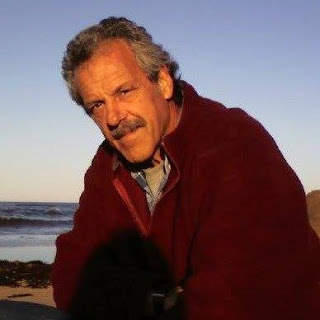
ALLAN HUDSONPlease welcome author Allan Hudson to Jemsbooks Blog Author Interview Segment. Thank you, Allan, for coming today. I’ll turn over the reins to you now. I’m looking forward to learning more about you. Thank you, Janice, for having me as a guest on your popular blog. It’s great to be here. Please tell us something about yourself.I live on the east coast of Canada, in the province of New Brunswick. I’m married to a terrific lady and her name is Gloria. I’m a father, step-father and a grampy and I don’t think I could be happier. I’ve had two careers in my lifetime being involved in the jewelry business for many years as a sales representative and I’m also a carpenter. At present I work at both. Self-employed, building and repairing things during the first days of the week and I work part-time at Peoples Jewelers. I’m getting close to retirement and am looking forward to having more time to write.
Jspina: You certainly are creative, Allan – working in jewelry and a carpenter! I’m impressed.
When did you know that you wanted to be an author? I’ve always been an avid reader as I think all authors are. I can’t remember a specific time when I thought I might like to write my own stories until I saw an ad for a creative writing course. I attended this course and knew then that writing was something I wanted to do. However, I didn’t get started until I was 56. One of my favorite authors, Bryce Courtenay, started writing when he was in his fifties. I was inspired by his testimony that it was never too late. A prod from my wife one time when I was talking about writing got me started. Can’t remember her exact words, but it was something along the line that I talked about it enough and I should just sit down and do it. I haven’t stopped since.
Jspina: It’s nice to have such a supportive spouse.
What process do you need in order to write?I prefer early mornings and no distractions. I have a spot in my garage set up with my laptop, coffee perc, scratch pad and notes where I get most of my writing done in the warmer weather. When the cold starts setting in, I work in my house where we have a work station for our computer.
Jspina: Whatever works for your muse – go with it.
How do you come up with ideas for your stories? That’s always a tough question even though I have many things I’d like to write about. Looking back at what I’ve written, many ideas come from places and subjects I read about, either in other novels or magazines. For example, in my last novel,
Wall of War
, I read about the Incas and Peru and was captivated. I knew when I started that the story would have some of both. Sometimes the ideas come from my own surroundings, from people I know or observe, from my work.
That’s always a tough question even though I have many things I’d like to write about. Looking back at what I’ve written, many ideas come from places and subjects I read about, either in other novels or magazines. For example, in my last novel,
Wall of War
, I read about the Incas and Peru and was captivated. I knew when I started that the story would have some of both. Sometimes the ideas come from my own surroundings, from people I know or observe, from my work.
(photo credit - Steve Halama - Unsplash)
Jspina: Sounds fascinating, Allan.
What projects are you currently working on?I’m three quarters of the way through my third novel which is different from the first two in that it is historical fiction, rather than an action/adventure novel. It begins in 1911 with the grandfather of my main character from the first two novels. I am trying a different format from the historical fiction novels I’ve read. The novel will cover one decade, 1911 – 1920 in the life of Dominic Alexander. Rather than chapters, the book will be divided in years and what the highlights of each year are. I’m thrilled how it’s taking shape. My hope is for a series of decades in each novel (long-term planning). I’ve also outlined the third Drake Alexander Adventure.
Jspina: It’s nice to mix things up a little.
What hobbies do you have when you are not writing? Writing has become hobby number one. I’m a stained glass artisan and upon retirement, I hope to incorporate my love of woodworking and stained glass into projects when not writing. (photo credit - Stephanie Krist - Unsplash)
Jspina: Now, that is quite a talent to be able to do so many things.
What advice would you give prospective authors?Looking back at when I started writing, I knew nothing of publishing and marketing. I was completely overwhelmed at what the Internet has to offer in the way of help, publishers, scams, advice, get rich schemes, etc. I would recommend being leery of many things a new writer will be exposed to and to befriend other authors and gain from their experience. I also suggest joining a writing association and/or a writer’s group. These folks will offer wonderful help and all have been down the same road so they can answer many questions and help with your writing. Most of all, keep writing as often as you can.
Jspina: Yes, I agree, Allan. It can be daunting. But with all the wonderful fellow authors out there to lend a hand, we can succeed.
If you could travel anywhere in the world, where would you go? If I could, I would take three months and visit the places I’ve written about, Bangladesh, Peru, Scotland and Mongolia. I’ve always been intrigued by these destinations and would love to visit them. (photo credit - John Salzarulo - Unsplash)
Jspina: I hope you get the chance to see all these wonderful places one day.
If you could have one wish, what would it be?I suppose I should wish for something unselfish, like world peace or a cure for cancer which would be the top of my list. But if I could have a personal wish, it would be a book contract. To write for a living would be my ultimate pleasure.
Jspina: Hear, Hear! I guess all authors want the same thing.
10.What would you do if you were not a writer?
Exactly what I’m doing. I enjoy building things. I love serving people with their jewelry decisions because it’s all about love.
Jspina: Keep doing all these things you love and be happy and content in your life, Allan.
Please share your books with us and a synopsis of each.
Dark Side of a Promise is the first Drake Alexander Adventure.
It’s been three years since Amber Payne died. The man responsible has not been held accountable. They know who he is but no one knows where he`s hiding. Law enforcement have been unsuccessful in their pursuit and have basically given up. Her brother, Williston Payne, turns to his best friend Drake Alexander, an ex-Canadian Commando, to find the man and bring him in…or kill him.
Both Alexander and Payne have the money, the time and the people. They only need his whereabouts. Payne digs deep and with his contacts, Bartolo Rizzato, the man they seek, has been seen in Bangladesh, the most unlikely of countries they anticipated he would surface from.
The men lead a group of staunch ex-soldiers, a lusty French expatriate and a stalwart Bengali cop through the streets and rivers of Dhaka in the chase of their quarry only to discover crimes more terrible in their objectives. The only link connecting the trail of victims is a disturbing mark left on the torsos, the same as found on Amber Payne.
Wall of War is the second Drake Alexander Adventure.

Deep in the wilderness of the Peruvian Andes lies a monument hidden for centuries. Who were the builders? Why was it abandoned? What secrets does it reveal?
In 1953, an amateur rock climber makes a startling discovery. Overwhelmed by the choices he must make, the mountaineer completes his ascent deciding he will document his findings and present them to his superiors as soon as possible. It will take another fifty years before anyone reads what he wrote.
In 2004 news of the strange revelation reaches Drake Alexander. He will become involved whether he likes it or not. People very dear to him are plunged into a nightmare of avarice, impairment and death. Using all his skills as an ex-soldier, with accomplices he can trust, can he save his tormented friends from the raiders that thirst for the secret that lies within the mountains?
Allan’s novels are available on Amazon as an e-book or hard copy.
Here are the links to Allan’s books and social media.
Wall of War – amazon.ca https://tinyurl.com/y98lppwr amazon.com https://tinyurl.com/ya2mfw5t Dark Side of a Promise – this book is not available at present – undergoing new cover - soon!Blog – www.southbranchscribbler.comFacebook – https://www.facebook.com/southbranchscribbler/?ref=settingsTwitter – https://twitter.com/hudson_allanGoogle+ – https://plus.google.com/u/0/+allanhudson1953 Thank you, Allan, for coming today. It was a pleasure to get to know you and your books better. I wish you all the best with all your future endeavors and travels.
Thank you, readers, for stopping by to read about another talented author. Please check out Allan Hudson’s books on above links and don’t forget to show an author some love by leaving a review.
REMEMBER: READING GIVES YOU WINGS TO FLY! SOAR WITH JEMSBOOKS.COM ALL YEAR THROUGH! HAPPY READING! READING IS GOOD FOR YOUR HEALTH!
Blessings & Hugs,
Janice
 Today's post is a re-blog from an interview that one of my guests posted on her website. Janice Spina has been a guest twice on the Scribbler and invited me to be a guest on hers - www.jemsbooks.com I wanted to share it with you this week.
 Writing, they say, can be a lonely hobby (career, job, what have you) and perhaps that's so when you sit down to write, make up stories, you're all alone listening to your imagination. But the writing world is not an isolated spot. There are so many helpful authors and writer's out there that reach out to help each other and it's a wonderful feeling. I like to think that the Scribbler is such a place - a hangout for artists, authors, photographer's and creative people. We only have each other when it comes to reaching a new audience and hopefully, hopefully, readers will discover your books and stories. There have been so many helpful people that have been kind to me featuring me on their blog or website, for which I am most thankful. A few of them you might want to visit. Susan Toy - www.susantoy.com Chris the Reading Ape - https://thestoryreadingapeblog.com
Tina Frisco - https://tinafrisco.comChuck Bowie - http://www.chuckbowie.ca/ Interview with Author Allan Hudson!
Posted on June 27, 2018 by jjspina

ALLAN HUDSONPlease welcome author Allan Hudson to Jemsbooks Blog Author Interview Segment. Thank you, Allan, for coming today. I’ll turn over the reins to you now. I’m looking forward to learning more about you. Thank you, Janice, for having me as a guest on your popular blog. It’s great to be here. Please tell us something about yourself.I live on the east coast of Canada, in the province of New Brunswick. I’m married to a terrific lady and her name is Gloria. I’m a father, step-father and a grampy and I don’t think I could be happier. I’ve had two careers in my lifetime being involved in the jewelry business for many years as a sales representative and I’m also a carpenter. At present I work at both. Self-employed, building and repairing things during the first days of the week and I work part-time at Peoples Jewelers. I’m getting close to retirement and am looking forward to having more time to write.
Jspina: You certainly are creative, Allan – working in jewelry and a carpenter! I’m impressed.
When did you know that you wanted to be an author?
 I’ve always been an avid reader as I think all authors are. I can’t remember a specific time when I thought I might like to write my own stories until I saw an ad for a creative writing course. I attended this course and knew then that writing was something I wanted to do. However, I didn’t get started until I was 56. One of my favorite authors, Bryce Courtenay, started writing when he was in his fifties. I was inspired by his testimony that it was never too late. A prod from my wife one time when I was talking about writing got me started. Can’t remember her exact words, but it was something along the line that I talked about it enough and I should just sit down and do it. I haven’t stopped since.
Jspina: It’s nice to have such a supportive spouse.
What process do you need in order to write?I prefer early mornings and no distractions. I have a spot in my garage set up with my laptop, coffee perc, scratch pad and notes where I get most of my writing done in the warmer weather. When the cold starts setting in, I work in my house where we have a work station for our computer.
Jspina: Whatever works for your muse – go with it.
How do you come up with ideas for your stories?
 That’s always a tough question even though I have many things I’d like to write about. Looking back at what I’ve written, many ideas come from places and subjects I read about, either in other novels or magazines. For example, in my last novel,
Wall of War
, I read about the Incas and Peru and was captivated. I knew when I started that the story would have some of both. Sometimes the ideas come from my own surroundings, from people I know or observe, from my work.
That’s always a tough question even though I have many things I’d like to write about. Looking back at what I’ve written, many ideas come from places and subjects I read about, either in other novels or magazines. For example, in my last novel,
Wall of War
, I read about the Incas and Peru and was captivated. I knew when I started that the story would have some of both. Sometimes the ideas come from my own surroundings, from people I know or observe, from my work. (photo credit - Steve Halama - Unsplash)
Jspina: Sounds fascinating, Allan.
What projects are you currently working on?I’m three quarters of the way through my third novel which is different from the first two in that it is historical fiction, rather than an action/adventure novel. It begins in 1911 with the grandfather of my main character from the first two novels. I am trying a different format from the historical fiction novels I’ve read. The novel will cover one decade, 1911 – 1920 in the life of Dominic Alexander. Rather than chapters, the book will be divided in years and what the highlights of each year are. I’m thrilled how it’s taking shape. My hope is for a series of decades in each novel (long-term planning). I’ve also outlined the third Drake Alexander Adventure.
Jspina: It’s nice to mix things up a little.
What hobbies do you have when you are not writing?
 Writing has become hobby number one. I’m a stained glass artisan and upon retirement, I hope to incorporate my love of woodworking and stained glass into projects when not writing. (photo credit - Stephanie Krist - Unsplash)
Jspina: Now, that is quite a talent to be able to do so many things.
What advice would you give prospective authors?Looking back at when I started writing, I knew nothing of publishing and marketing. I was completely overwhelmed at what the Internet has to offer in the way of help, publishers, scams, advice, get rich schemes, etc. I would recommend being leery of many things a new writer will be exposed to and to befriend other authors and gain from their experience. I also suggest joining a writing association and/or a writer’s group. These folks will offer wonderful help and all have been down the same road so they can answer many questions and help with your writing. Most of all, keep writing as often as you can.
Jspina: Yes, I agree, Allan. It can be daunting. But with all the wonderful fellow authors out there to lend a hand, we can succeed.
If you could travel anywhere in the world, where would you go?
 If I could, I would take three months and visit the places I’ve written about, Bangladesh, Peru, Scotland and Mongolia. I’ve always been intrigued by these destinations and would love to visit them. (photo credit - John Salzarulo - Unsplash)
Jspina: I hope you get the chance to see all these wonderful places one day.
If you could have one wish, what would it be?I suppose I should wish for something unselfish, like world peace or a cure for cancer which would be the top of my list. But if I could have a personal wish, it would be a book contract. To write for a living would be my ultimate pleasure.
Jspina: Hear, Hear! I guess all authors want the same thing.
10.What would you do if you were not a writer?
Exactly what I’m doing. I enjoy building things. I love serving people with their jewelry decisions because it’s all about love.
Jspina: Keep doing all these things you love and be happy and content in your life, Allan.
Please share your books with us and a synopsis of each.
Dark Side of a Promise is the first Drake Alexander Adventure.

It’s been three years since Amber Payne died. The man responsible has not been held accountable. They know who he is but no one knows where he`s hiding. Law enforcement have been unsuccessful in their pursuit and have basically given up. Her brother, Williston Payne, turns to his best friend Drake Alexander, an ex-Canadian Commando, to find the man and bring him in…or kill him.
Both Alexander and Payne have the money, the time and the people. They only need his whereabouts. Payne digs deep and with his contacts, Bartolo Rizzato, the man they seek, has been seen in Bangladesh, the most unlikely of countries they anticipated he would surface from.
The men lead a group of staunch ex-soldiers, a lusty French expatriate and a stalwart Bengali cop through the streets and rivers of Dhaka in the chase of their quarry only to discover crimes more terrible in their objectives. The only link connecting the trail of victims is a disturbing mark left on the torsos, the same as found on Amber Payne.
Wall of War is the second Drake Alexander Adventure.

Deep in the wilderness of the Peruvian Andes lies a monument hidden for centuries. Who were the builders? Why was it abandoned? What secrets does it reveal?
In 1953, an amateur rock climber makes a startling discovery. Overwhelmed by the choices he must make, the mountaineer completes his ascent deciding he will document his findings and present them to his superiors as soon as possible. It will take another fifty years before anyone reads what he wrote.
In 2004 news of the strange revelation reaches Drake Alexander. He will become involved whether he likes it or not. People very dear to him are plunged into a nightmare of avarice, impairment and death. Using all his skills as an ex-soldier, with accomplices he can trust, can he save his tormented friends from the raiders that thirst for the secret that lies within the mountains?
Allan’s novels are available on Amazon as an e-book or hard copy.
Here are the links to Allan’s books and social media.
Wall of War – amazon.ca https://tinyurl.com/y98lppwr amazon.com https://tinyurl.com/ya2mfw5t Dark Side of a Promise – this book is not available at present – undergoing new cover - soon!Blog – www.southbranchscribbler.comFacebook – https://www.facebook.com/southbranchscribbler/?ref=settingsTwitter – https://twitter.com/hudson_allanGoogle+ – https://plus.google.com/u/0/+allanhudson1953 Thank you, Allan, for coming today. It was a pleasure to get to know you and your books better. I wish you all the best with all your future endeavors and travels.
Thank you, readers, for stopping by to read about another talented author. Please check out Allan Hudson’s books on above links and don’t forget to show an author some love by leaving a review.
REMEMBER: READING GIVES YOU WINGS TO FLY! SOAR WITH JEMSBOOKS.COM ALL YEAR THROUGH! HAPPY READING! READING IS GOOD FOR YOUR HEALTH!
Blessings & Hugs,
Janice
June 23, 2018
Jeff’s Musical Car with Jeff Boudreau.
Something Different this week!
 Istumbled upon this interesting and original website recently while searching for music from local musician Josee Mills. Jeff has a unique concept for introducing musical talent. Simply put, he drives them around in his vehicle, recording and taping them while they talk and play music. He manages a YouTube channel which showcases his guests. He is kind enough to share some information in a 4Q Interview. Read on.
 Click on the links between the questions and see for yourself!

4Q: Where did this ingenious idea come from Jeff?
JB:Working in television business for over 15 years, I have always been fascinated with video and TV production. When GoPro cameras first came out, I knew I wanted to have one. I mounted one in the front of my car one day to use it as a dashcam in hopes of capturing something spectacular on the road. One day, I was driving around with my son and he was singing along to a Ramones song I was listening to so I decided to turn my camera facing the car’s interior. Once I took a look at the footage, I decided to take it a step further and invited one of my long-time friends Crystal Kirk for what would become the first ever Jeff’s Musical Car video. The rest is history~
 **Musician Josee Mills
https://youtu.be/PPqKcNaSjI0
4Q: When did you start doing this and how often do you post to YouTube or your website?
JB:I just celebrated my 5 year anniversary in November of 2017. I have released over 300 videos as of today and I release a new episode every Sunday evening.
 **Musician Sass Jordan https://youtu.be/Ll2RXzNJFqw
 4Q: Share a childhood memory or anecdote with us.
JB: Music has been a passion for me for as long as I can remember. I used to get a weekly allowance as a young teenager and as soon as I had money, I would head straight to the local record store in Bathurst to buy 2 CDs. I couldn’t get enough!
 **Musician Natalie MacMaster
https://youtu.be/FwiPz0O3954
4Q: How do you line up your musicians with everyone’s different schedules and do you always take the same route?
JB:When I first started my series, I did all the bookings. Now that I’m gaining popularity thanks to social media video shares etc, I often have artists contacting me. As for the route, I usually take Main Street in Moncton because it’s slow moving and there aren’t a lot of potholes.

**Musician Jesse Cook https://youtu.be/pW42bkDRDAg
Thank you Jeff for being our guest this week and telling us about Jeff’s Musical Car.

For those of you that want to listen to some very good music in an original setting, or check out a band before you buy the music, then drop by at these links.
www.facebook.com/jeffsmusicalcar This note is from Jeff's FaceBook page: I'm closing in on half a million views between all of my videos! It's been a while since I said hello and thanks but I really do appreciate the support I get from everyone. Every video share, video like, Facebook page invite helps me tremendously. It's getting easier for me to spark up conversations with big label bands and I don't plan on stopping anytime soon. I also hope this series continues to spark interest in supporting your local music scenes and introducing you to new music. Thanks!
@jeffsmusicalcar (twitter and Instagram)
June 16, 2018
Guest Author Jeremy Thomas Gilmer of New Brunswick.
I’m always surprised at the fount of talent from our small province and Jeremy is a vibrant part of our writing community. We met through a writing group in Fredericton and I’m pleased to have him as a guest this week. He is nice enough to answer some questions for a 4Q Interview and as a bonus is sharing one of his stories.
 Jeremy Thomas Gilmer was born in Saint John, New Brunswick, Canada and spent his childhood in Canada, Europe, Africa and the Caribbean. He has worked in a number of different occupations, from climbing instructor to construction, soil mechanics and engineering. He has spent the last twenty years working on international mining projects in South America, Africa and the Arctic. He did not attend University. He has recently relocated to Fredericton, New Brunswick. His short story ‘Congo River, County Antrim’ was long listed for the CBC Canada Writes short story prize in 2015.
 4Q: You are presently the Kira Writer in Residence in ST. Andrews. Please tell us about this experience and how it came about.
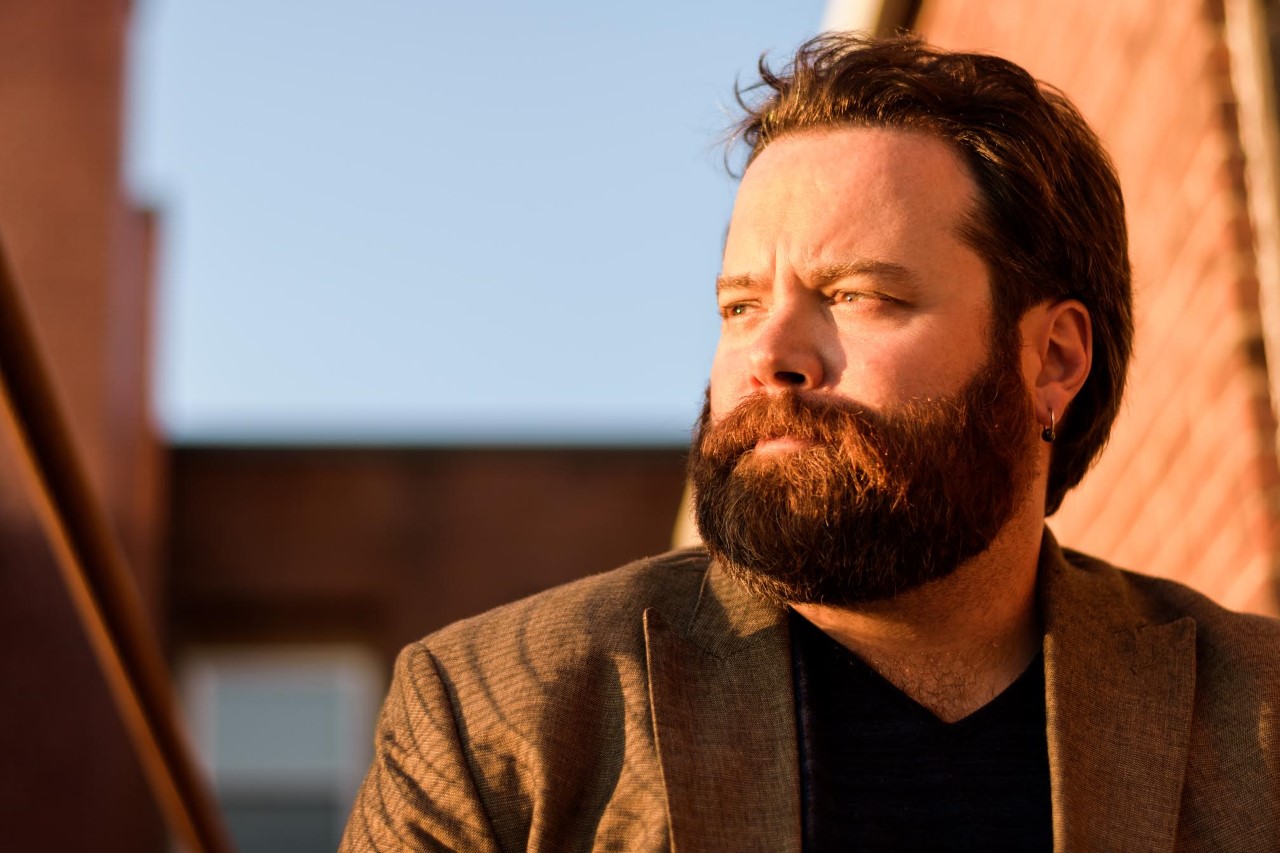 JG: Being selected for KirA came very much out of the blue and I applied without much hope of winning it, but with the idea that the process of applying and getting my name and work in front of people would be a good move. Roger Moore, the poet and academic was the WiR there last year and he was very keen for me to apply. As I write this I am preparing for July and I am so looking forward to fully focusing on writing without the push and pull of other work(s) affecting that. I am hoping to complete a collection of short stories which I have been working on for some time, and of which the included story will be a part. So far the people at KirA have been fabulous to interact with and I am excited to spend time with the other artists who will be there is July, it is quite a group. It’s a truly international endeavor and I encourage anyone with an interest to apply for next year.
 (Photo credit: Dillon Anthony)
4Q: We’re always interested in where an author’s ideas and/or inspiration comes from. What’s your take on this Jeremy?
JG: This is a question that has often baffled me. Most writers I know have a deficit of time and perhaps energy, but almost never ideas. I am struck by story ideas walking down the street, brushing my teeth or driving. To be fair, I have spent much of my life being exposed to new and different places, people and cultures, and this very much shows in my work. For me, it is often an image, a smell, a place or a sound that triggers an idea. It isn’t always fully formed, but seems to shape itself around what mental furniture happens to be filling my head and heart at the time. As for inspiration, much of my work revolves around war, conflict, migration and their effects on the human landscape. There is no shortage of these things in the world today, and I am trying to tell the stories in between, the strange and sometimes very subtle ways people’s lives intersect and change in reaction to the changing world around them.
 To people who want to generate ideas for their own writing, I have a few suggestions. Creative writing classes and courses are where you can learn your craft, the technical skills with which you build the architecture of your stories, but the ideas, the music, must come from you. You need to live to have stories to tell. Go spend time with strangers learning to do things you don’t know how to do. Get away from what you know and get into places that are completely alien to you. If you don’t know yourself, you can’t write about others. I don’t know a single, great writer who has not gone out into the world and lived. Here is a hint, if it doesn’t scare you a bit, you aren’t doing it right.
 4Q: Please share a childhood memory or anecdote with us.
 JG:My childhood and young adulthood was full of wonder. Jungles and deserts and oceans, it was not your average childhood. We were living in Jebba, Nigeria and I would have been maybe two or three. It was a very isolated place at the time, where we were. I was playing in the back yard and I fell and deeply cut my forehead. Now, parents know that a cut like that will bleed terribly. We had no doctors close by and my parents were in a panic, so on a neighbor’s advice they took me to a local tailor who was able to sew up the cut with a needle and thread. At the time there were issues with security and children, so my father had hired a Tuareg tribesman named Chin Chin, to basically be my bodyguard. Following the treatment I was extremely sick for three days, and for those three days Chin Chin sat outside my bedroom window and kept watch. My father told me that except for the occasional bathroom break he did not leave that spot for three days. My mother told me they had to force him to eat and drink, so upset was he that I was injured while in his care. The first faces I remember are of my parents and of him. I recall being carried high in the air on his shoulders, walked around the village and I remember being spoken to in Arabic and Tamasheq. These are images and sounds that remain very powerful to me and likely always will. I have a picture with little me, naked as a jaybird sitting on Chin Chin’s shoulders, in what must have been 45 degree heat. I still have this jagged scar on my forehead, I often run my finger over it while I am writing. I guess it is kind of a touchstone.
 4Q: What’s on your agenda for the future Jeremy? What are you working on?
 JG:First is this collection. Following that, I have a couple of novels in development, quietly sitting in files waiting to have attention paid to them. Both require some further travel to flesh out a bit. I also have another short story collection in the wings, some written and some gestating. I expect the next two to three years to be rather full, but it very good ways. I am someone who deeply enjoys the process, the work, and the roads that lead to the finished thing, whatever that thing is.
 For a real treat, Jeremy is sharing one of his short stories.(Copyright belongs to the author. Used with permission)
Stars
They climbed, higher and higher into the evening. The mass of the mountain was visible even in the dark, the stars obscured by the shape of it against the night sky. Efe lead Thomas by the hand, as they came around the bend and the sky came into view, he felt for a moment as if he could touch it, the blue black rolling with the dots of light and blinking satellites. Thomas’ hand gripped his tightly. It was just below freezing, which for the time of year was a kindness.
They walked up and up the trail following lit signs that told them in French where they were going. They passed a few people descending the trail, heading back to chalets and huts, warm fires and schnapps. They came through a narrow passage in the rock and the flat of the lookout opened before them. Efe sat Thomas down on a rock and he thought of the first time he had come here, with the boy’s mother. Before work and before pregnancy, before perfect mornings and nights of fighting.
“It won’t be long.”
“I know, Papa.”
He remembered their first trip here, it was the first time she had left Nigeria, she had actually only been out of Lagos twice, to see family in Jebba, and he saw her pursed lips and narrow eyes as she looked across Geneva. Nothing was good, or right for her. Not the apartment in Versoix, not the buses or trains, especially not the food.

He thought of those first days, returning to a crying baby in the crib, wet diapers, her hidden under the covers, weeping muffled by the TV and the duvet. It would always take so long before he could touch her, hold her. She would not go near the baby for hours, he wondered what happened during the day, while he worked. He thought of the two of them, mother and baby, her staring at him from across the room.
He could remember her magic, her visions. In Lagos she could see a car accident before it happened. She knew the sex of a cousin’s baby before it was born, she could tell you the color of a Sunrise, dark purple or brilliant yellow, before the sun crept out of its home and burst onto the day’s canvas. He had always loved these things in her, it was honestly what had drawn him to her once they were courting. But there was always a sadness, a knowledge that she would not share. Something that followed her, and later them. He often wondered what she saw, what she feared in their union.
Thomas sat next to him, close to him, and wrapped the wool blanket around them both, leaning into his father in that way he did. He thought of the hours and days he spent away from his boy, in tunnels and labs, blinking lights and screens, graphs and displays. He did his own magic here, playing with the very bits of the universe that made everything. Machines the size of cities were at his fingertips, yet, he could not know who was calling before the phone rang. Her voice calmly telling him, it will ring in a moment, your sister from Accra.
And then, he thought of losing her before he knew she was gone. Nights spent smashing atoms deep underground while the mother of his child struggled with the dark of her night. He remembered her last words, dragging a weary bag to some train she would not name. I cannot even see him, that is what she said.
Thomas gasped, and sat upright.
“It is coming, Papa! I can hear it!”
Efe looked up into the night, just in time to catch three, perfect flashes. The meteors lit the sky. One for each of them. He felt the sting of a fishhook in his throat as his eyes filled. Thomas touched his wet cheeks.
“Why tears, Papa.”
Efe removed the boy’s dark glasses, his cream colored eyes opening to the bright sky.
“Your Mother also knew when they were coming. You have her gift, my Love.”
The boy smiled at the thought, as the stars spun.
Thank you Jeremy for being our guest this week.

For those of you who are interested in discovering more about Jeremy and his writing, please visit the following links.

Facebook- Jeremy Thomas Gilmer Writer
jeremythomasgilmer.com
Guest Author Jeremy Gilmer of New Brunswick.
I’m always surprised at the fount of talent from our small province and Jeremy is a vibrant part of our writing community. We met through a writing group in Fredericton and I’m pleased to have him as a guest this week. He is nice enough to answer some questions for a 4Q Interview and as a bonus is sharing one of his stories.
Jeremy Thomas Gilmer was born in Saint John, New Brunswick, Canada and spent his childhood in Canada, Europe, Africa and the Caribbean. He has worked in a number of different occupations, from climbing instructor to construction, soil mechanics and engineering. He has spent the last twenty years working on international mining projects in South America, Africa and the Arctic. He did not attend University. He has recently relocated to Fredericton, New Brunswick. His short story ‘Congo River, County Antrim’ was long listed for the CBC Canada Writes short story prize in 2015. 4Q: You are presently the Kira Writer in Residence in ST. Andrews. Please tell us about this experience and how it came about.
JG: Being selected for KirA came very much out of the blue and I applied without much hope of winning it, but with the idea that the process of applying and getting my name and work in front of people would be a good move. Roger Moore, the poet and academic was the WiR there last year and he was very keen for me to apply. As I write this I am preparing for July and I am so looking forward to fully focusing on writing without the push and pull of other work(s) affecting that. I am hoping to complete a collection of short stories which I have been working on for some time, and of which the included story will be a part. So far the people at KirA have been fabulous to interact with and I am excited to spend time with the other artists who will be there is July, it is quite a group. It’s a truly international endeavor and I encourage anyone with an interest to apply for next year. (Photo credit: Dillon Anthony)
4Q: We’re always interested in where an author’s ideas and/or inspiration comes from. What’s your take on this Jeremy?
JG: This is a question that has often baffled me. Most writers I know have a deficit of time and perhaps energy, but almost never ideas. I am struck by story ideas walking down the street, brushing my teeth or driving. To be fair, I have spent much of my life being exposed to new and different places, people and cultures, and this very much shows in my work. For me, it is often an image, a smell, a place or a sound that triggers an idea. It isn’t always fully formed, but seems to shape itself around what mental furniture happens to be filling my head and heart at the time. As for inspiration, much of my work revolves around war, conflict, migration and their effects on the human landscape. There is no shortage of these things in the world today, and I am trying to tell the stories in between, the strange and sometimes very subtle ways people’s lives intersect and change in reaction to the changing world around them.
To people who want to generate ideas for their own writing, I have a few suggestions. Creative writing classes and courses are where you can learn your craft, the technical skills with which you build the architecture of your stories, but the ideas, the music, must come from you. You need to live to have stories to tell. Go spend time with strangers learning to do things you don’t know how to do. Get away from what you know and get into places that are completely alien to you. If you don’t know yourself, you can’t write about others. I don’t know a single, great writer who has not gone out into the world and lived. Here is a hint, if it doesn’t scare you a bit, you aren’t doing it right. 4Q: Please share a childhood memory or anecdote with us.
JG:My childhood and young adulthood was full of wonder. Jungles and deserts and oceans, it was not your average childhood. We were living in Jebba, Nigeria and I would have been maybe two or three. It was a very isolated place at the time, where we were. I was playing in the back yard and I fell and deeply cut my forehead. Now, parents know that a cut like that will bleed terribly. We had no doctors close by and my parents were in a panic, so on a neighbor’s advice they took me to a local tailor who was able to sew up the cut with a needle and thread. At the time there were issues with security and children, so my father had hired a Tuareg tribesman named Chin Chin, to basically be my bodyguard. Following the treatment I was extremely sick for three days, and for those three days Chin Chin sat outside my bedroom window and kept watch. My father told me that except for the occasional bathroom break he did not leave that spot for three days. My mother told me they had to force him to eat and drink, so upset was he that I was injured while in his care. The first faces I remember are of my parents and of him. I recall being carried high in the air on his shoulders, walked around the village and I remember being spoken to in Arabic and Tamasheq. These are images and sounds that remain very powerful to me and likely always will. I have a picture with little me, naked as a jaybird sitting on Chin Chin’s shoulders, in what must have been 45 degree heat. I still have this jagged scar on my forehead, I often run my finger over it while I am writing. I guess it is kind of a touchstone. 4Q: What’s on your agenda for the future Jeremy? What are you working on?
JG:First is this collection. Following that, I have a couple of novels in development, quietly sitting in files waiting to have attention paid to them. Both require some further travel to flesh out a bit. I also have another short story collection in the wings, some written and some gestating. I expect the next two to three years to be rather full, but it very good ways. I am someone who deeply enjoys the process, the work, and the roads that lead to the finished thing, whatever that thing is. For a real treat, Jeremy is sharing one of his short stories.(Copyright belongs to the author. Used with permission)
Stars
They climbed, higher and higher into the evening. The mass of the mountain was visible even in the dark, the stars obscured by the shape of it against the night sky. Efe lead Thomas by the hand, as they came around the bend and the sky came into view, he felt for a moment as if he could touch it, the blue black rolling with the dots of light and blinking satellites. Thomas’ hand gripped his tightly. It was just below freezing, which for the time of year was a kindness.
They walked up and up the trail following lit signs that told them in French where they were going. They passed a few people descending the trail, heading back to chalets and huts, warm fires and schnapps. They came through a narrow passage in the rock and the flat of the lookout opened before them. Efe sat Thomas down on a rock and he thought of the first time he had come here, with the boy’s mother. Before work and before pregnancy, before perfect mornings and nights of fighting.
“It won’t be long.”
“I know, Papa.”
He remembered their first trip here, it was the first time she had left Nigeria, she had actually only been out of Lagos twice, to see family in Jebba, and he saw her pursed lips and narrow eyes as she looked across Geneva. Nothing was good, or right for her. Not the apartment in Versoix, not the buses or trains, especially not the food.
He thought of those first days, returning to a crying baby in the crib, wet diapers, her hidden under the covers, weeping muffled by the TV and the duvet. It would always take so long before he could touch her, hold her. She would not go near the baby for hours, he wondered what happened during the day, while he worked. He thought of the two of them, mother and baby, her staring at him from across the room.
He could remember her magic, her visions. In Lagos she could see a car accident before it happened. She knew the sex of a cousin’s baby before it was born, she could tell you the color of a Sunrise, dark purple or brilliant yellow, before the sun crept out of its home and burst onto the day’s canvas. He had always loved these things in her, it was honestly what had drawn him to her once they were courting. But there was always a sadness, a knowledge that she would not share. Something that followed her, and later them. He often wondered what she saw, what she feared in their union.
Thomas sat next to him, close to him, and wrapped the wool blanket around them both, leaning into his father in that way he did. He thought of the hours and days he spent away from his boy, in tunnels and labs, blinking lights and screens, graphs and displays. He did his own magic here, playing with the very bits of the universe that made everything. Machines the size of cities were at his fingertips, yet, he could not know who was calling before the phone rang. Her voice calmly telling him, it will ring in a moment, your sister from Accra.
And then, he thought of losing her before he knew she was gone. Nights spent smashing atoms deep underground while the mother of his child struggled with the dark of her night. He remembered her last words, dragging a weary bag to some train she would not name. I cannot even see him, that is what she said.
Thomas gasped, and sat upright.
“It is coming, Papa! I can hear it!”
Efe looked up into the night, just in time to catch three, perfect flashes. The meteors lit the sky. One for each of them. He felt the sting of a fishhook in his throat as his eyes filled. Thomas touched his wet cheeks.
“Why tears, Papa.”
Efe removed the boy’s dark glasses, his cream colored eyes opening to the bright sky.
“Your Mother also knew when they were coming. You have her gift, my Love.”
The boy smiled at the thought, as the stars spun.
Thank you Jeremy for being our guest this week.
For those of you who are interested in discovering more about Jeremy and his writing, please visit the following links.
Facebook- Jeremy Thomas Gilmer Writer
jeremythomasgilmer.com