Allan Hudson's Blog, page 36
March 19, 2019
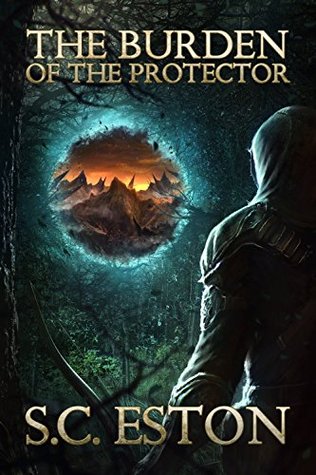
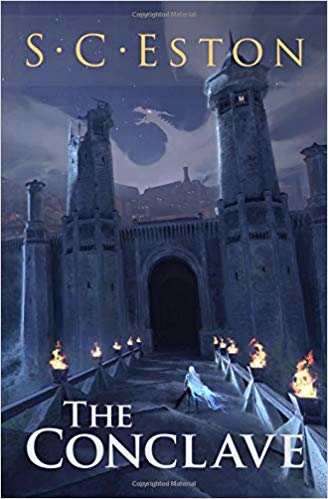
Part 2 of Logbox - a story by S.C.Eston
As promised, Part Two of Logbox.If you missed Part one GO HERE
Mr Eston Is back.
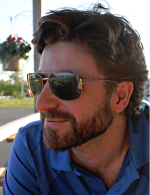
Steve was a guest recently on the Scribbler. If you missed his previous visit and bio, please go here. Since then I’ve been visiting his website - www.sceston.ca - and reading his short stories. I really enjoyed Logbox and he’s kind enough to share it with us this week in three parts.
Part one - Sunday March 17thPart two – TodayPart three – Thursday March 21st
(Copyright is held by the author. Used with permission)

Kirta was the destination. A prison. A slave pit. A series of tunnels. Some call it the Endless Mines. I do not know where this place is. I just know it exists and that from now forward, it is the only place there is. The only place there will ever be. It does feel endless. I have walked a very small portion of it. The shafts are many, and I have yet to see the bottom of one. There is no sky here. I yearn to breathe open air. The whole place is caverns, rocks, and dirt. I can’t remember the warm feeling of sunrays prickling my skin. Or the color of natural light. I have been here dozens of years. I must now be in my fifties, maybe early sixties. I feel like an old man but do not know my age any longer. I simply don’t. We are miners. Prisoners, yes, but mainly miners. From the ground we take out rare metals and raw materials. We are not told for whom or for what. When trying to figure it out, I come back to the lift, to the vision of the Floating City. How it seemed to get lower and farther away. My mind cannot comprehend where the lift would have taken us. We were going up, toward the skies. Yet here there are only tunnels and darkness.
My cell is a blank cavern, a small cavity, really, with a cot in a corner and a little basin sometimes filled with dirty water or bouillon. I don’t know who dug it out, or how many lived here before me, or how many were imprisoned here. Many, I imagine. It doesn’t matter.
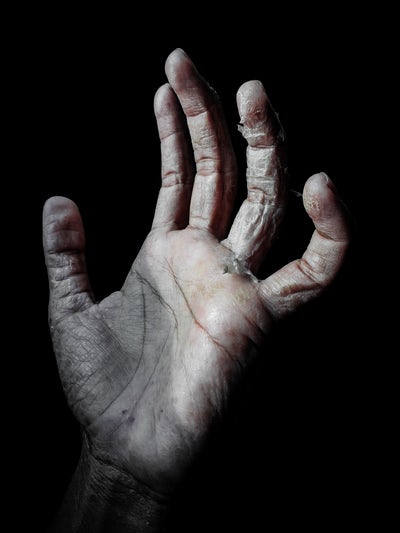 Photo by Nazim Zaim - UnsplashThis is an impossibly hard life. Harder than the Red Streets. My hands are covered in calluses and cuts. My skin has turned gray. I used to be quick and agile. I am now heavy and strong, my forearms as wide as my head. Strength and endurance are the required attributes here. If you want to live, and most of us do—stupid instinct—then you get stronger and bigger and tougher. The more you can extract from the ground, the better you are treated.
 Although I took a liking to this little gadget box, I tried to return it to Anedia again today. I pretended it was broken, but she was not fooled. The last few days, something happened to her, again. Inside the mines, I stay as close to her as I can, as long as I can. It gives me something to do, a purpose of some kind. But our cells are apart, and when the night periods come, she moves outside my reach and becomes easy prey. # About Anedia. This place, it brings all of us down, to a robot state, crushing our hopes and our wills. But not Anedia’s. Earlier I listened to my previous recordings and stumbled upon the section where I remembered thinking that Anedia would eventually deteriorate, simmer down, and die inside. But she never did. I do not understand it. She is small and young, weak, one could say. Defenseless might be a better word. Although she never complains, I know it is harder for her than most. The sad tale is told in the marks on her body. The bruises. The way she limps or can’t sit down properly. She takes everything stoically and always smiles when she first sees me at the start of a new day. Or a fresh day. That is how she describes it. Fresh. Seeing her treated that way is the only thing left capable of stirring any emotion in me. It is painful. Equally painful every single time.
She is from the Floating City. Or Prominence, as she calls it. She never said it, but there is her brown skin, marked by long hours in the sun. There is also something in her manner, the way she stands, her head high. A sophistication. I always imagined the people of the grand city to be weak and spoiled and arrogant. But Anedia tells a different story. She has a sweetness about her. She is full of zest and positivity. She is caring. All things we don’t see much of in this place. With reason. Anedia has altered my perception of the people living in the Floating City. Maybe those living up there, those shitting on us, dumping their detritus and garbage on the Low Lands, are not all bad after all. Anyway, Anedia doesn’t deserve to be here. She may be the only one who doesn’t.
 Photo by Stefano Pollio - UnsplashMost of the workers have committed one crime or another. Those from the Red Streets are certainly guilty of some form of sin. Like I said before, I killed. I killed in the Red Streets, and I killed in Kirta. I am not going anywhere.
But Anedia did nothing, absolutely nothing, except be the daughter of an influential man. I don’t understand mega-companies and large corporations. I know complex organizations control most of the power in the Floating City and major regions in the Low Lands. I know of money but have never used it, never had a use for it. But that is as far as my knowledge goes. It is already more than I care to know. What I understand is survival. Salvage and trade. Anedia was captured to force her father to consent to the merger of two corporations. He is a powerful man. He is also a despicable human being. The bastard didn’t back down.
Hello. My previous entry is the story Anedia told me, or what I remember of it. Let it be recorded that I believe her.
Okay, here it is. See, it is still working. I took good care of it. I’d like you to say a few words. This is your creation, and since you won’t take it back, the least you can do is say a few words. Don’t be modest and just say something, anything. I don’t know. You decide. Say your name. Sorry, I don’t think I got that. Let me get closer. There. Try again. Anedia. See. That was easy, wasn’t it? Say a little more. I…am dying.
[silence] Hello. [silence]
She is gone. I keep listening to her voice. To the way she said her own name, different from the way I had been pronouncing it. I keep listening to the casual way she admitted she was dying. She was too young to go, but maybe it was best. I asked to be allowed to keep her company during her last days. They allowed it. They, who took advantage of her when she was around. Decency, for once. It says a lot about her, if not about this place. She was weak and sick but went in her sleep. I have no idea what sickness took her. I hope she didn’t feel alone in the end. I hope she knew someone cared about her. She loved me. So she said. She saw something in me that isn’t there. I loved her too, although I was not able to say it to her. One more regret. She felt like family, like a younger sister, a younger version of Unie. It was the damn barrier that blocked me from talking. She was from the Floating City. Maybe she was too young to feel it. Maybe it is not the same for those above. I just know that for those of the Low Lands, the Red Streets, or anywhere else, it is not possible to bring that barrier down. We look up, every day, and see what could be. We envy. We hate. We dream too, but mostly we hate. I’ve made a lot of what could be called friends since my arrival in this place. Anedia is not the first to die. But she is the first I will truly miss.
 Photo by Kym Ellis - Unspalsh
To be continued...….
www.sceston.ca


March 17, 2019
Guest Author S.C. Eston - Logbox - A Short Story.
Mr Eston Is back.
Steve was a guest recently on the Scribbler. If you missed his 4Q Interview and bio, please go here. Since then I’ve been visiting his website - www.sceston.ca - and reading his short stories. I really enjoyed Logbox and he’s kind enough to share it with us this week in three parts.
Part one today. Part two – Tuesday March 19th Part three – Thursday March 21st
(Copyright is held by the author. Used with permission)

Logbox
Not working…
[noise]
…don’t really understand how…
Did…
[noise]
…break it?
I…no! What are you…
[noise]
…I was just teasing.
Anedia, just take it back.
[silence]
Hello?
…
…like this.
See, Nethu. Just here. Press. Not too hard and only once. You’ll have to be careful. You have large fingers.
Devices like this one are old. You can’t find them any longer. Not even in the Low Lands. Or so I’ve heard. Too heavy. Poor sound quality. But they work well. The design is good. Simple, you know. Easy to fix and replicate. I saw it for the first time in one of the Twelve Museums of Old. Yes, I fixed that one too.
So…so while we’re here, it will have to do.
I like it.
You like it? Good.
But you should keep it. It is yours.
No, it’s yours. Really is. You need a distraction.
Okay, just to be safe, keep it close to your mouth, just so, see? When you talk, I mean. Talk into it and it will record everything you say.
And when you are done, just another button. Right here…
#
This thing…the recording diary I am holding, the one you are listening to. It was a gift.
I don’t know why Anedia gave it away.
“A present,” she said. “Just for you.”
She was so excited I couldn’t say no. I didn’t want it. I still don’t. Don’t want to use it either.
But here I am.
Anedia, she deserved to keep it. It took her so long to salvage all the parts and even longer to put it together and get it working. Since she came, she has been working on this.
How long has it been since she arrived?
Anedia would know. She keeps track of time. Three years? Maybe four? It feels like she arrived yesterday. The days before she came are hazy, all the same, as of another time.
She found the casing at the entrance of shaft B41. It was tipped on its side, half covered in the dirt, for anyone to find. But no one did. No one was looking for it, except Anedia.
The instant she found it, she knew what it was.
“Do you know what this little treasure is?” she asked me.
I had no idea. I didn’t care. Seriously, at that time on that day, I didn’t even want to talk to her. I found her zest as annoying as anything could be. I didn’t get it. The only thing worse was her crystalline voice. I remember thinking: She is new. Like the rest of us, she will simmer, deteriorate, and die inside.
“It is a diary box,” she said. “Do you think they will let me keep it?”
I didn’t think they would, but what did I know? Not much, it seems.
 She was dedicated to it. It was her project. Every moment she had, she worked on the metallic black box, adding to it, testing it, connecting wires, tightening screws. After and before the daily work shift, during lunch, forfeiting food sometimes, before going to sleep, before all of us were awake. Even in the tunnels she had it on her, attached to her suit belt. She was always on alert for that missing piece, that component that would bring her one step closer to making it work.
Maybe this gadget is what keeps her going. Keeps her smiling. Anedia, she has it hard. Most women do, but she is younger than most.
What will she do now? Start another project?
It is a strange thing. I didn’t want to befriend her. I don’t know how it happened.
And now I have this box.
#
I am Nethu.
I used to be a salvager from the clans of the Red Streets, on the western fringe of the Low Lands, along the Black Metallic Sea.
I’m starting with my origins, but I doubt this box will ever be found. In the unlikely event it is, I doubt whoever hears this will have heard of the Red Streets.
Let me be honest. I killed.
Many a time and a time too many.
I…survived, one could say, but I feel no pride in mouthing it out loud.
My home was located in the remnants of an old brick building, a place of grandeur. Or it would have been, if its construction were completed, giving it the shape it was meant to have. The creator had vision, I’ll give him that. It should have been a tall tower, hundreds of floors, challenging even the Pillars in stature. Not really, but you see what I mean.
In reality, it was only the shadow of something notable.
I hated it.
The building was abandoned for unknown reasons. Not that anyone had time to care. My parents chose the place because it offered shelter and some measure of security. About this, they were right. It had ten solid floors, the top of which didn’t have a roof. Many walls were in shambles. An easy spot to defend, easy to disappear into.
There were six in my family, and I was the youngest. Our parents were taken when I was twelve. My mother was the glue holding us together. Shortly after the taking, my two brothers left, swearing not to meet the same fate. That left Unie and me behind.
Unie, sister dear, how I miss you.
I had not expected the feeling to be that strong. It’s an exposed gash that will just not heal.
Unie, she was the toughest. She taught me everything. How to navigate the Black Metallic Sea to hunt for salvage, how to steal and trade for food and clothes and sometimes even lodging when we would leave on a recovery trip for weeks on end. She showed me how to network and build ties with the other clans, how to choose alliances. She knew how to read the clouds, predict storms and the next arrivals. It was a special gift. She would look at the sky and see what no one could and predict the drop zone. Maybe she heard it on the wind. That is what she liked to say. She said a great many things. Most of which I don’t remember.
One I do.
“Do not be blind,” she used to murmur in my ear while we waited for the next drop, hidden behind an old crushed bed, or the broken panel of a walk-way, or any other unusable debris. “This place is just a pit, a large pit of trash. Everything here thrown away by those above.”
 Photo by Kenny Luo - UnsplashI never believed her when she talked about the Black Metallic Sea that way. For me, the place was a realm of treasures. I loved that part of my life. The only part I have fond memories of. From the Red Streets, it’s not possible to glimpse the Floating City. I used to dream of it as drifting on clouds, some kind of paradise, a place where I would one day travel.
Now, I know Unie was right.
Our destiny was inevitable.
Unie was taken when I was sixteen. I was taken at twenty-four. After Unie left, I tried hard to forge better alliances, to find people I could trust. It worked for a while.
But the day came when I was betrayed. Same as my parents, same as my sister.
It always ends this way in the Red Streets. It is a hard life, without surprises, without unknowns. That is why my brothers tried to escape. They knew how it would end for our family. They didn’t make it as far as I did. But who can blame them for trying?
Although nobody knew where those taken went, some facts existed. When the Legion came, it always had an exact number of troopers, one perfect hundred of them, dressed in metal armour, with rifles, not afraid to use them. Most often, they wanted twenty of us. It didn’t matter too much which twenty. Experience taught us that the sooner we provided them with the required quota, the sooner they would leave. Meaning fewer casualties.
So, alliances. It always came back to alliances. They chose who would be sacrificed away.
Like I said, I killed one too many. I don’t remember who, or why, or for what. But for it I was ensnared and bound and put with a group of thirty in the mud of the plaza.
Thirty, because that gave the Legion enough to choose from, in case they didn’t approve of some.
But that time, luck was not with me, with none of us. The Legion took all thirty.
There is only one more memory I’d like to share about that part of my life, and it is the glimpse I stole of the Floating City. Or Prominence, as Anedia calls it.
I will never forget the view. It was from a lift. An elevator going up. I could tell because of the clouds, receding below. We were all piled up, one on top of the other, bound, incapable of moving. I was not supposed to awaken.
 Photo by Zbynek Burival - UnsplashOn my side, looking between the heads of two others, I saw what I knew to be the Floating City. I couldn’t see the Low Lands, even less the Red Streets, but the Floating City, I could.
It stood on the horizon, on a plateau, so vast in scale as to be almost infinite. It was a sight to numb the mind. There were millions of lights, shining, mostly white but of all colors. The city took the shape of a series of towers, some tall, some short, some fat, some thin. I could easily imagine them being made completely of some shiny metal, or even glass, or maybe both. Below and all around, were clouds. Mostly those large puffy ones. It seemed like they were hugging the city. And while I was entranced with the view, a part of my mind could not forget that somewhere farther down, one would find the Low Lands.
I looked as long as I could, stretching my neck until it hurt. It took only minutes before I was discovered.
The next thing I remember is this cell.
To be continued…….
www.sceston.ca
March 9, 2019
Wood Fired Blown Glass Artist Curtis Dionne. 4Q Interview
Another first for the Scribbler.
It seems to be that glass blowing must be one of the most difficult crafts to do. Curtis was introduced to me by a fellow artist and he is most kind to answer some questions for us. Curtis and his fiancee Charlotte are the founders and owner of the Glass Roots Art Gallery in Riverview, New Brunswick.
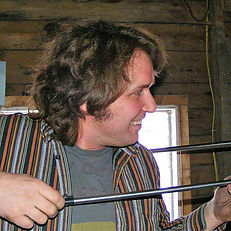 Curtis Dionne started blowing glass in 2003. He was trained by internationally acclaimed glass blower Daniel Vargas for four years in Maple Ridge, British Colombia. He grew up traveling all over North America and is now settled in Atlantic Canada to make his mark in the art community.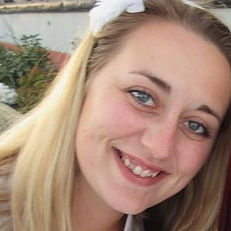
Charlotte is our everything! She assists Curtis in the studio (and in Life!), she is one of our sales associates, and she runs the farm that is the setting of our gallery and studio. She always has a smile, and she goes the extra mile to ensure our customers are happy with our products and services.
4Q: Before we chat about your art, let’s talk about Grass Roots Inc and the exciting things happening at present.

CD: Glass Roots is the company I started more than 10 years ago to facilitate the business needs of my glass art. It has been evolving and taking different forms but always driven by the art of glass blowing. It had always been my intention to use Glass Roots Inc as an umbrella organization to represent a collective of glass artists working from a shared facility. My mandate is to cultivate the glass art community in NB. things have moved and developed quite slowly in our very rural and isolated setting. Also, there are so few glass artists with no public studio or education facility anywhere in the Maritimesto draw from or take part in. In recent months have decided to relocate my gallery closer to an urban center in order to help things move more quickly and all year round. I realizethat with so few glass artists that I may need to reach out to artists in other mediums. So at the drop of a hat i promptly secured a gallery location and put out call for artists. After just a month I now show work and carry products in my gallery from over 50 local artist of great quality! It seems the entire art community in the area was in need of a place to show and sell their work. Now, our location at 406 Coverdale Road. Riverview NB, is quickly becoming anart and culture destination. We feature a beautiful exhibit space that is currently booked 2 years ahead for solo artist shows. All of this development only encourages me more, to continue laying the building blocks for a public access glass art center with classes and access to hot shop equipment for beginners and established artists in glass.
4Q: I expect that glass blowing must be difficult. How did you get started and can you briefly explain the process.
 CD: Becoming glass blower is a metamorphosis of life. You must exercise dedication, persistence, and patience. Nobody learns this craft quickly or easily. It has been said to be the most difficult hand craft to master.
As a teenager I had become inspired by glass art by age 15. It was then that I had chosen craft for my lifestyle path. I had considered wood and clay as possible mediums yet dreamed of glass. It was by chance that I met internationally recognized glass maestro, Danielle Vargas. His skills a versatility in glass were so broad and so natural that I knew there was no other person in the country that could offer me as much. I began taking classes every Saturday while I worked as a roofer to pay for the expensive lessons. After 6 months the Vargas's offered me an apprenticeship. They would start me at minimum wage and offer me a dollar per hour raise each year. They asked for a 5 year commitment and I gave them my absolute dedication. It was there that I learned to dance, sing and breath with glass.
Danielle Vargas successfully transported an entire form of art from his hometown of Guadalajara Mexico to Canada where his influence can be demonstrated coast to coast.
4Q: Please share a childhood memory or anecdote with us.
 CD: I was born in Vancouver. Yet I moved around the country constantly throughout my childhood often attending new schools 2 or 3 times a year. A catalyst to this uprooted life perhaps was the burning of our family home when I was 8. My parents would not come to own another home after that. It was truly one of my last memories of living in the community that I was born in. I can remember seeing the smoke from across town and all the fire trucks rushing buy and feeling sorry for whoever it was that was losing everything at that moment. As it is, only fragments of memories of people that I once knew and scattered family members across the country are my roots. But, as roots cling to rocks in search of nourishing pockets of soil, I have found the fertile ground I need here in the Maritimes to raise my children and begin a new generation.
4Q: Where does your inspiration come from Curtis? What makes you decide to do a certain piece?
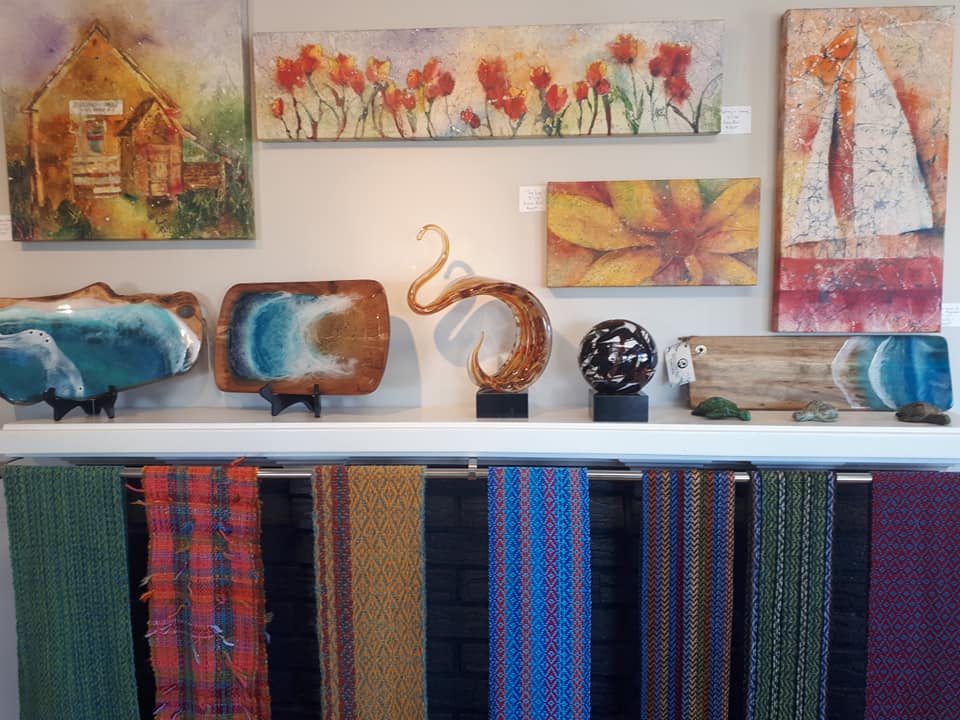 CD: The glass speaks to me. Not as a voice in my head, but more like a star in the sky that guides sailors home. The glass wants to reveal itself. It wants people to notice it in all its forms. It is only glass that captures light and colour. It has the ability to distort or focus vision much like the human eye. Silica I simply the most fascinating and important material on the planet. It is ancient and shrouded in mystery. It is modern and the basis for all of human kinds technology. Glass will absorb any known element of the universe and show it to us in a way of beauty. It is through glass and light that we are able to view the cosmos light years away. More than just sanitary and infinitely recyclablevessels, glass gives us sight, technology, and science. Glass is present in every aspect of our lives and will become increasingly important throughout the future as there are infinite formulas and uses for this beautiful material.
4Q: This week at Glass Roots, amid all the amazing glass and art, Susan Jardine has a showing until March 30th. We talked about this last week Go Here.
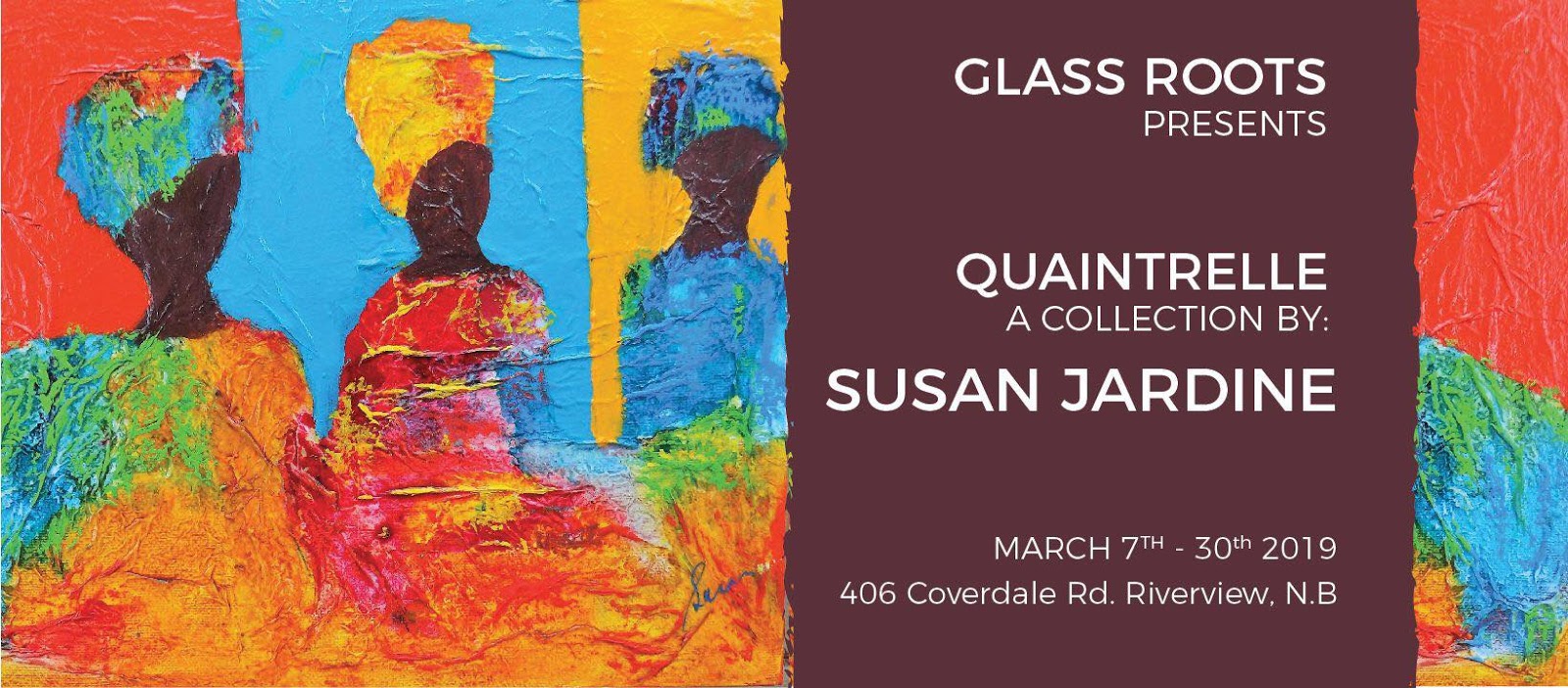
Please visit Glass Roots by following these links.
www.glassrootsnb.ca
www.facebook.com/cdglassrootsinc/

Thank you so much Curtis for sharing your thoughts with our readers. Looking forward to visiting you at the Gallery.

Thank you for visiting the Scribbler. Tell us your thoughts. Go ahead, leave a comment.
March 2, 2019
Guest Artist Susan Jardine of Shediac, New Brunswick
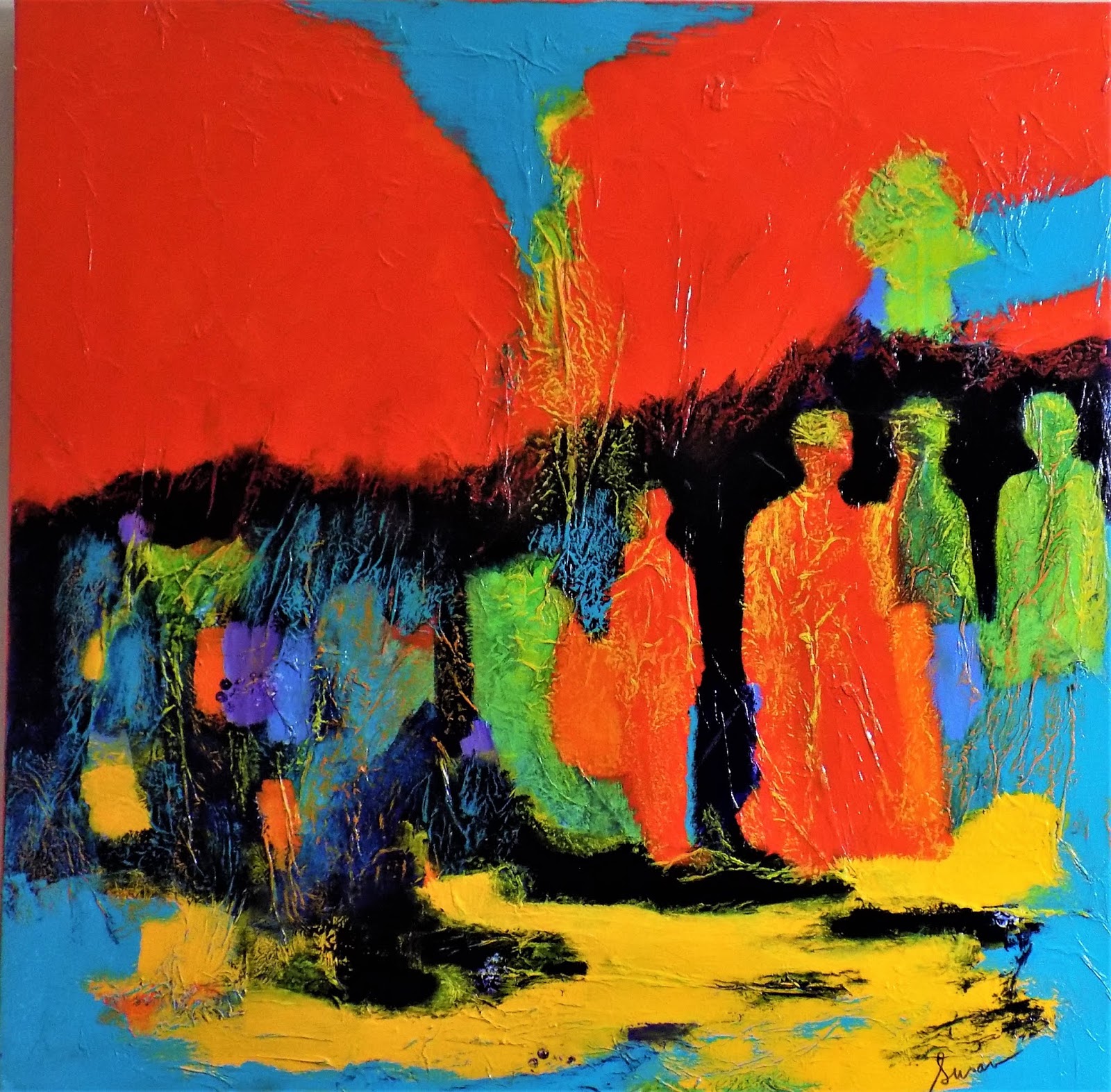
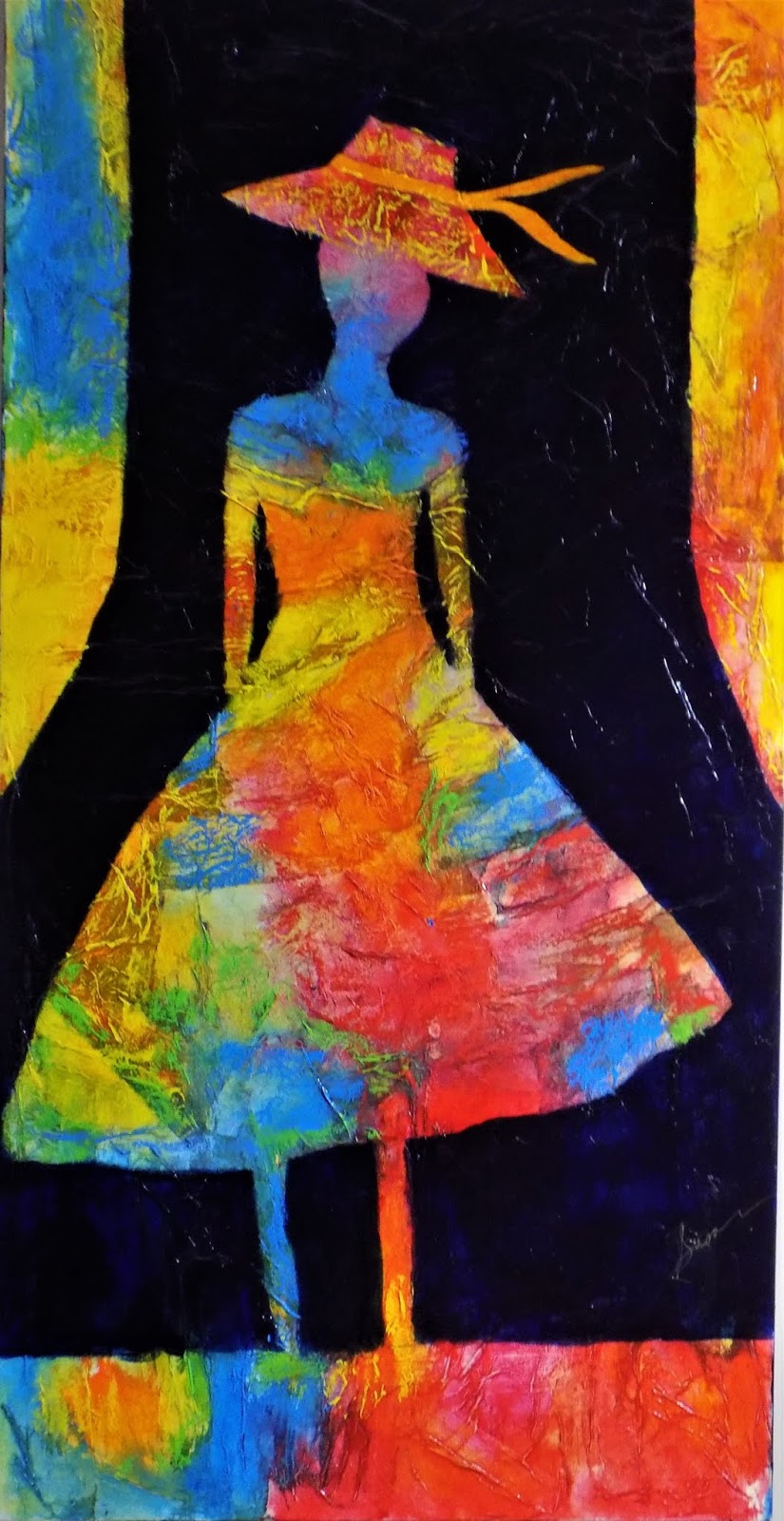 I recently attended a friendly gathering of artists and authors at a friend’s house. I didn’t know most people there but was welcomed warmly by these happy strangers. A lady with a pleasant smile introduced herself. Later we talked and I discovered she is an artist of considerable talent. I’ve been able to see some of her work and am impressed with her use of colors and the warm images they portray.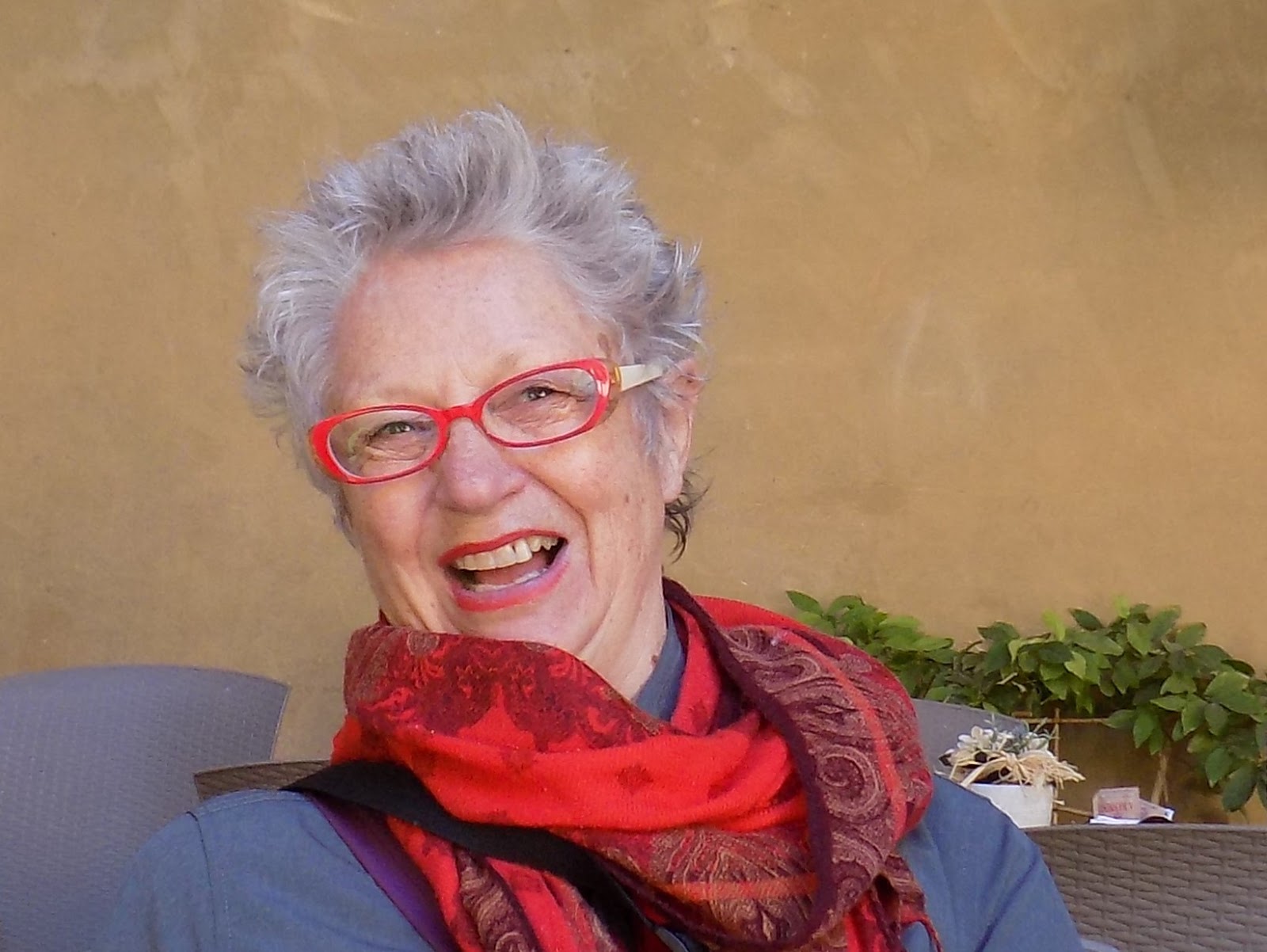
Susan has agreed to a 4Q Interview.
Please note: This is a special time for Susan. Her debut showing at Glass Roots Art Gallery takes place March 3rd to 7th. (See question # 2)
4Q: Have you always painted Susan or was this something you discovered later?

I have pieces in art collections all across Canada, in California, the Carolinas, Scotland, Shanghai, Sweden. I try to do something for my art practice daily whether it is painting, viewing works of other painters, teaching myself new techniques, giving workshops, etc. Recently I have been exploring abstract portraiture, altered books, cold wax and oil painting, and painting on Yupo paper.
4Q: What inspires your work?
SJ: I recently wrote this as an Artist’s Statement along with a quote that I feel helps understand my approach“The creation of something new is not accomplished by the intellect but by the play instinct acting from inner necessity. The creative mind plays with the objects it loves.” -Carl Jung
Life should be colourful, expressive and full of texture.
When I am painting, I feel full of joy and wonder that the colours and textures are coming from what I place on the canvas. I am in a state of joy and can only hope that the viewers of my art feel some of that joy.
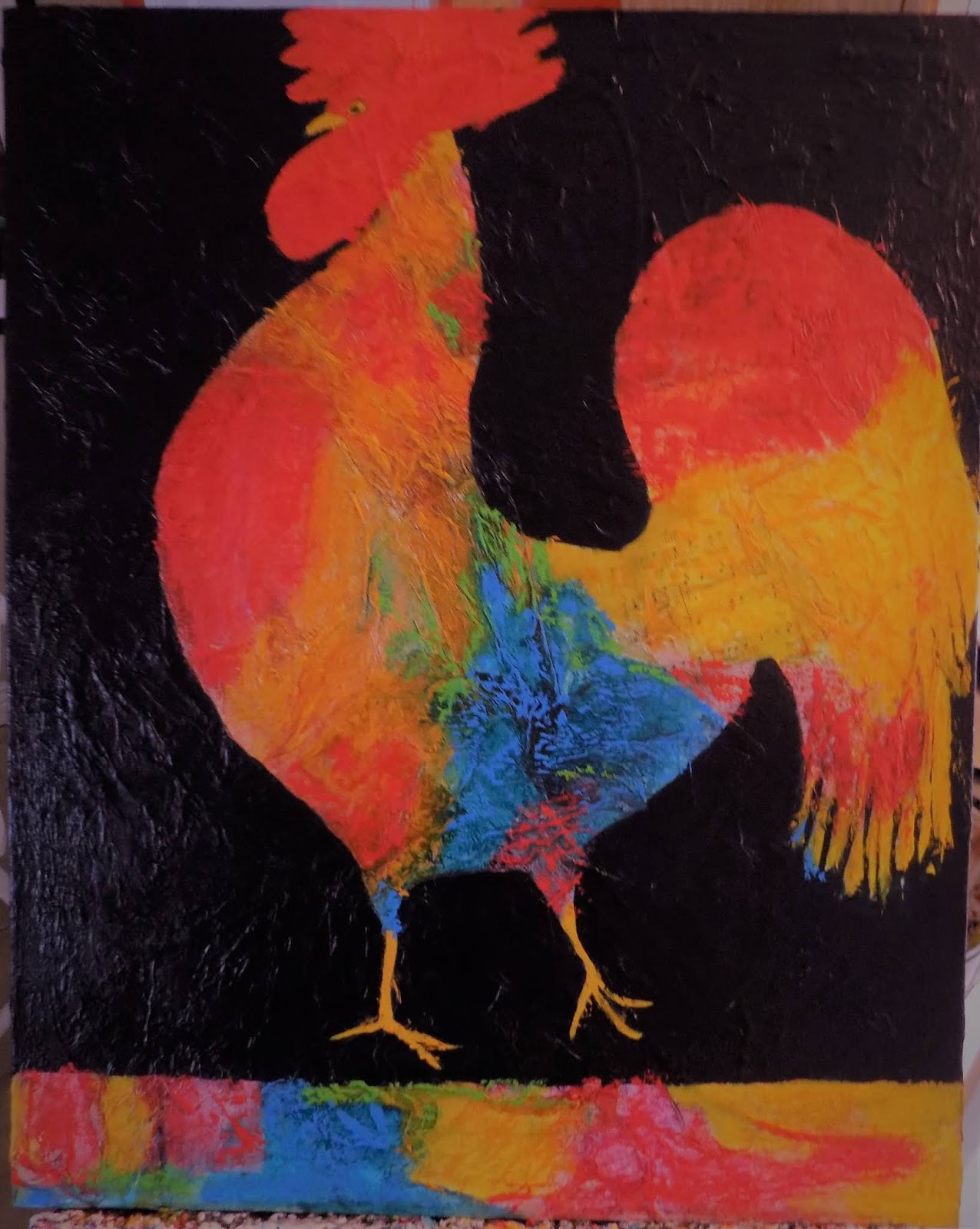
I am also a great believer in the theory that the artist ought to get out of the way of the painting and let it reveal itself. I do not start my paintings with any preconceived notion of what it might reveal. I love to use inks, and collage in a very random way to create the imprimatura. I then spend a great of deal of time looking at the results from every angle to determine the next step. Very often the painting will reveal itself as a part of things and events that have been on my mind. Recently my works have been centered around the problem of the millions of women who have “disappeared” from many countries. This has resulted in a series called “Quaintrelle”.

As I sit surrounded by the art I have created, I sneak looks at the pieces and make up stories about them that make me smile. I hope that the viewers of my art have the same reaction.
4Q: Please share a childhood memory or anecdote.
SJ: I attended a three room school house in the small fishing village of Murry River, PEI for three and a half years. I clearly remember being chastised by the teacher, may have been Hazel McPhee, about my not colouring in the lines. I have a memory of being mocked for my rendition of an easter bunny made with pussy willows. I remember too that Mrs. McPhee started what she called a secret service. The note that was handed to me furtively suggested that I report on how many of my classmates spoke with a new student in the school. I was not happy to do this as I felt spying on my fellow students was not the right thing to do, so I did not.
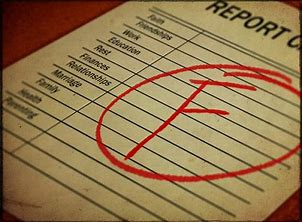
I got an “F” on my report card for cooperation or whatever they categorized it then. All the rest of my report card was A’s and B’s. When our family was transferred to Campbellton NB during the year, Mrs. McPhee had revised my report card to read “B’ in that category for my new school. All that to say, I don’t necessarily like to live within “the lines”. I often tell my workshop participants that there are no rules, except those that encourage civility, in my creative art workshops.
4Q: I noticed from the postcard you gave me that you do workshops. Tell us about them and when they take place.
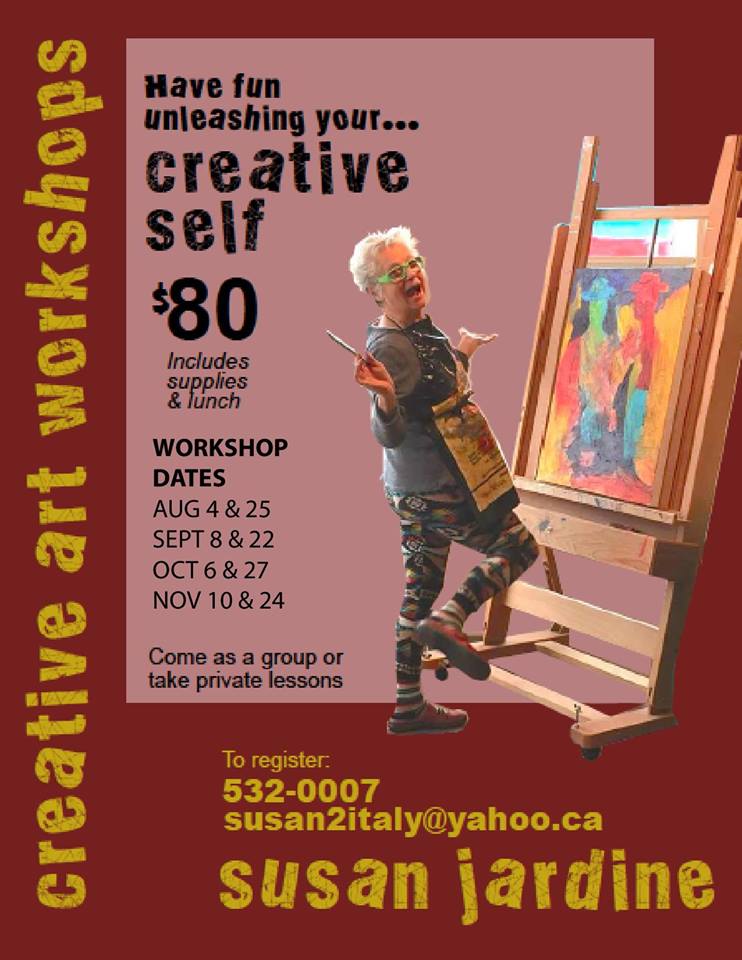 SJ:I do conduct Creative Art Workshops in my home studio and have done so for 7 or 8 years now ever since someone asked if I did them. When I worked for an institution I loved the part of my job where I facilitated adult learning so giving art workshops allows me to follow another passion of mine. I love to come with new ideas to help people express them creatively. My workshops in my home studio are usually run twice a month. I supply all materials, and a lunch. I can comfortably accommodate 5 people for 6 hours of fun and creativity for $80.00. I can also go off site and do workshops for up to 15 people.
Contact Information: 506-532-0007 or e-mail susan2italy@yahoo.ca Facebook
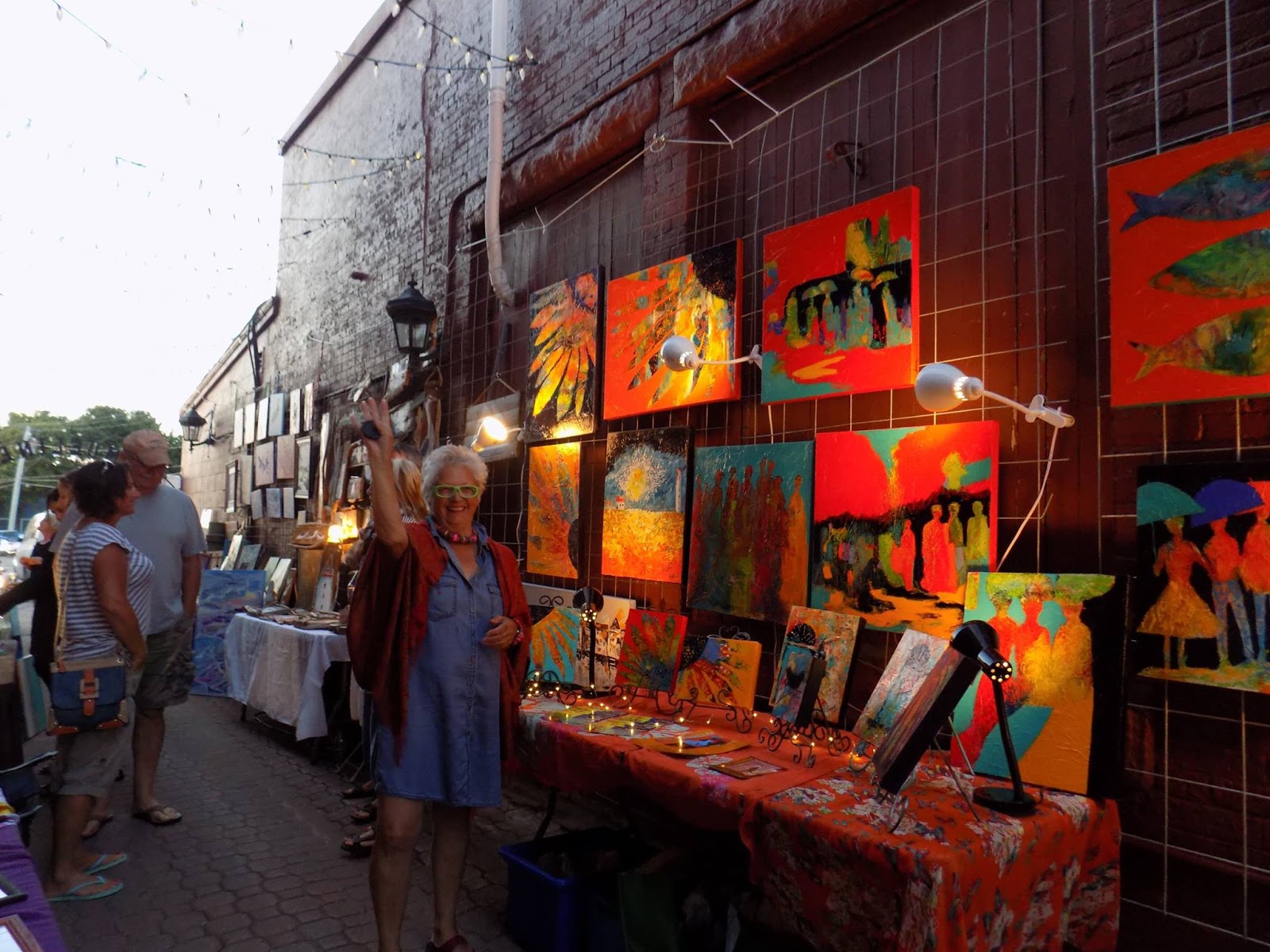
Thank you, Susan for being our guest this week.
A special thanks to all you that visit the Scribbler. Please let us know what you think by leaving a comment below!
February 23, 2019
Guest Author Bobby Nash of Bethlehem, Georgia.
He’s back!
The Scribbler has the pleasure of hosting Mr. Nash previously when he shared an excerpt from Alexandra Holzer’s Ghost Gal: The Wild Hunt. If you missed Bobby’s first visit, please follow this LINK. We’re happy to have him return for a 4Q Interview and an excerpt from his latest work.

An award-winning author, Bobby Nash writes novels, comic books, short stories, novellas, graphic novels, and the occasional screenplay for a variety of publishers. Bobby is a member of the International Association of Media Tie-in Writers and International Thriller Writers. On occasion, Bobby appears in movies and TV shows, usually standing behind your favorite actor.
He was named Best Author in the 2013 Pulp Ark Awards. Rick Ruby, a character co-created by Bobby & Sean Taylor also snagged Best New Pulp Character of 2013. Bobby has been nominated for the 2014 New Pulp Awards and Pulp Factory Awards for his work. Bobby's novel, Alexandra Holzer's Ghost Gal: The Wild Hunt won a Paranormal Literary Award in the 2015 Paranormal Awards. The Bobby Nash penned episode of Starship Farragut "Conspiracy of Innocence" won the Silver Award in the 2015 DC Film Festival. Bobby's novel, Snow Drive was nominated for Best Novel in the 2018 Pulp Factory Awards. Bobby's story in The Ruby Files Vol. 2 "Takedown" won the 2018 Pulp Factory Award for Best Short Story.
For more information on Bobby Nash please visit him at www.bobbynash.com, www.ben-books.com, and across social media.
4Q: Many of your stories fit into the horror genre. What draws you to these kind of stories?
 BN: I love thrillers. There’s something exciting about feeling that tingle on the back of your neck or that creepy feeling going up your spine while reading a thriller that gets the blood pumping. As a writer, if I can evoke those kind of feelings in my readers without the atmospheric music or mood lighting, I an a happy writer.
4Q: You’ve co-written several novels with Chuck Miller. Tell us about that experience.
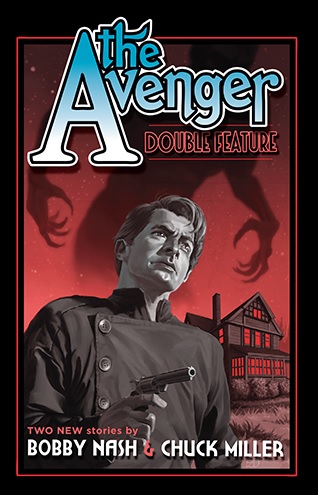 BN: Not really. Chuck and I have never co-written anything together. He and I both have a story in The Avenger Double Feature. We did not collaborate on the writing of the book, but we did work together to promote it, did some podcasts together, that sort of thing.
4Q: Please share a childhood anecdote or memory.
BN: For a time, my mom was a stay at home mom. My brother was two years old at the time. I was at school. My dad was at work. Mom went to wash some dishes and looked out the window over the sink and saw a monkey standing on the wooden fence that separated our front yard from our back yard. Suffice to say, this confused her as we did not own a monkey.
 Calls to animal control, the police, etc. yielded no results. None of them believed my parents when they called, assuming it was a prank. So, for two weeks in 1982, I had a monkey living in my back yard. To our parent’s frustration, I, and the other local neighborhood kids, played with it, fed it, and generally had a ball knowing we had a monkey. Eventually, my parents called a local news channel. They did a story on the monkey living in our back yard. Suddenly, animal control and the police took the report seriously and swarmed into the neighborhood like stormtroopers, terrifying the monkey, which led them on a merry chase. The irony is, any of us kids could have walked the monkey right to them, but they chose another way. Sadly, the scare tactics works and the monkey bit someone and was then killed. It wasn’t rabid, thankfully, but we learned after the fact that it had been pregnant, which made it even more tragic. The prevailing theory was that it had been a pet someone had let loose in the wild. That has never been confirmed, but it makes as good of a theory as anything else.
4Q: When we visit your website, there is an invitation to support your writing by visiting Patreon. Tell us about this.
 BN: Patreon is a site where patrons of the arts can support their favorite creators with a monthly donation to help them continue creating. The creators offer up specials for their patrons as well. My patrons who pledge $5 or more are enrolled in the ebook of the month club. They get one of my books each month, plus patrons get new books as they release in ebook form. Some months, it’s one book. Others, it’s four or five. I also run a weekly serialized novel as a patreon exclusive. Patrons get a chapter each week. When it’s finished, they will get the ebook also and then it will be put on sale to the general public. They also get sneak peeks at upcoming projects, behind the scenes info, giveaways, and discounts on books. In return, the little bit of money helps me buy books, go to conventions, or maybe pay a bill here or there. I have patron tiers at $1, $3, $5, $10, and $20, or patrons can choose a custom amount. You can learn more about my Patreon page at
www.patreon.com/bobbynash
BN: Patreon is a site where patrons of the arts can support their favorite creators with a monthly donation to help them continue creating. The creators offer up specials for their patrons as well. My patrons who pledge $5 or more are enrolled in the ebook of the month club. They get one of my books each month, plus patrons get new books as they release in ebook form. Some months, it’s one book. Others, it’s four or five. I also run a weekly serialized novel as a patreon exclusive. Patrons get a chapter each week. When it’s finished, they will get the ebook also and then it will be put on sale to the general public. They also get sneak peeks at upcoming projects, behind the scenes info, giveaways, and discounts on books. In return, the little bit of money helps me buy books, go to conventions, or maybe pay a bill here or there. I have patron tiers at $1, $3, $5, $10, and $20, or patrons can choose a custom amount. You can learn more about my Patreon page at
www.patreon.com/bobbynash
4Q: Anything else you’d like to mention?
BN: I appreciate everyone who has visited me on social media, patreon, at conventions, visited my websites, bought and/or read my books, and left reviews. It is appreciated.
My small press imprint, BEN Books recently got a new website. You can visit the new BEN Books at www.ben-books.com for news and updates. There are several BEN Books releases coming in 2019, including collections of my older stories.
SNOW FALLS EXCERPT Written by Bobby Nash
(copyright held by author - used with permission)
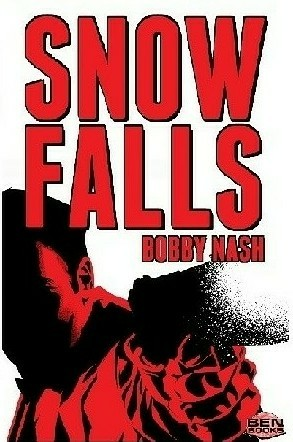
Abraham Snow knew he was about to die----and the thought of it pissed him off to no end.
Everything had been going according to plan.
Before it all went to hell, everything was moving forward as laid out. The meet was set. All of the details had been checked and rechecked. Every i had been dotted, every t crossed. It had taken him years to get this far inside, but he was finally getting a face to face with Miguel Ortega. The man was a ghost, a legend. Ortega was a phantom that law enforcement operatives all over the world had been chasing for decades. No one had even come close to catching the elusive Miguel Ortega despite the fact that he was rumored to have his hands in everything from the drug trade to arms dealings and human trafficking to murder for hire. There was a good reason for this, however, and Agent Snow was one of a select few people alive that knew the truth.
Miguel Ortega was an alias.
It was a code name frequently used by less than reputable men and women who preferred to remain anonymous while keeping their questionable business dealings close to the vest. This alias provided the Ortega’s of the world with a sense of security. Snow had finally made it past the middlemen and low-level goons inside the organization belonging to the Miguel Ortega he was after.
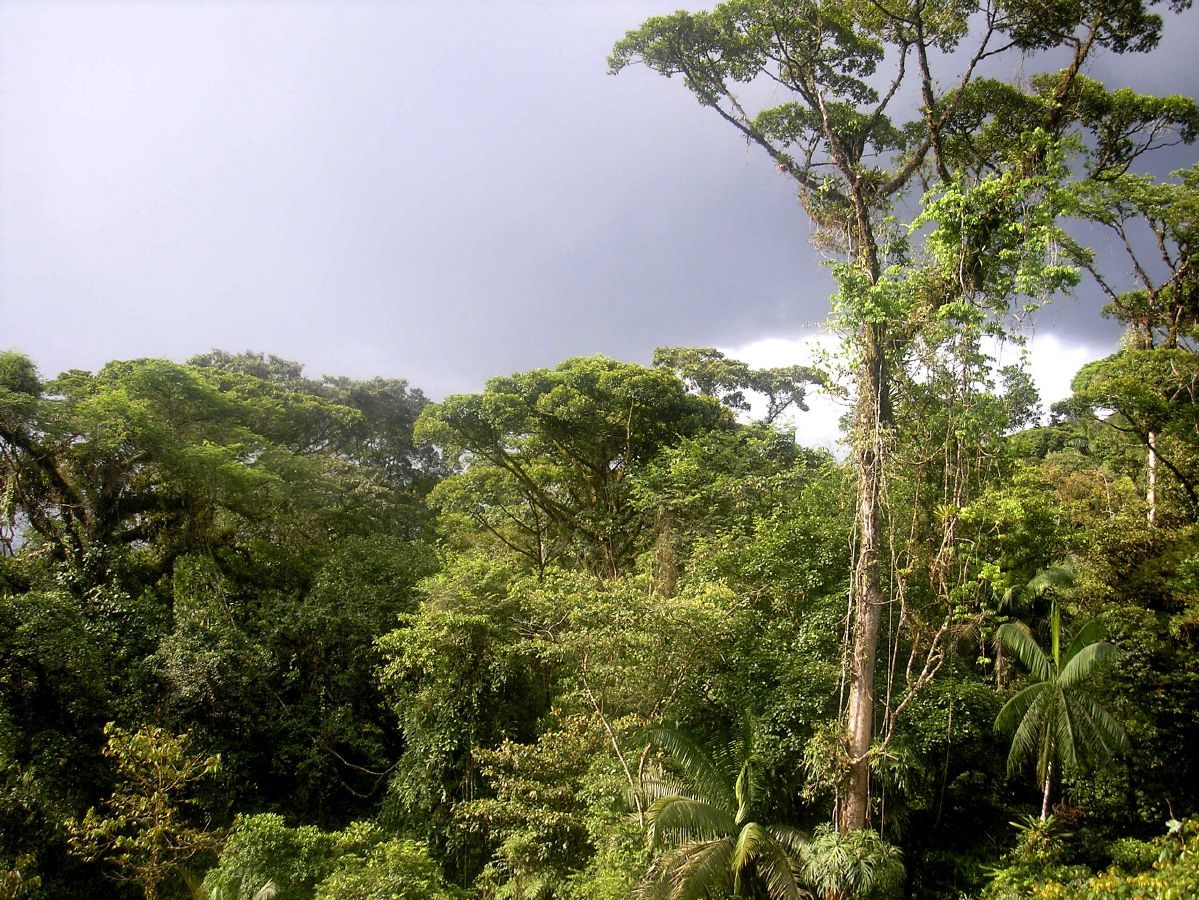 That’s how Abraham Snow, in his alias as James Shepperd, found himself standing on the blisteringly hot tarmac of a tiny smuggler’s airfield in the middle of a South American jungle in a suit, sans tie, standing next to a beautiful woman named Daniella Cordoza. She was Ortega’s right hand and was as dangerous as she was alluring in her formfitting custom dress. They both stood out of place against the jungle backdrop. Snow didn’t trust her, but he needed Cordoza to get to her employer.
One minute everything was going according to plan.
The next-- well, the next minute was not so good. Time moved as though it was trapped in amber. The man in the white suit was all smiles as they walked to meet one another across the airstrip’s tarmac. Snow was finally getting his face to face. It was the first step in the final chapter of his undercover operation.
“Agent Snow.” the man said once he was within earshot.
It took half a second to realize what he had said. Snow did a double take. Ortega had called him by his real name, Abraham Snow, not the James Shepperd alias he had been working under the past eighteen months. How the hell does he know my name?
“I think you’ve got me mixed up with someone else, Mr. Ortega. My name is…” Snow started, but it was no use. He could tell by the man’s demeanor that there would be no fast-talking his way out of this one.
His cover was blown.
Somehow, someway, someone had sold him out. The list of possible rats was small. Only a handful of people knew his true identity and most of them he had known and trusted for years. His mind raced through the possible scenarios-- a leak inside the Pentagon or the CIA, a compromised asset, or a mistake he’d made himself, a slip up that had given him away. Each of these played across his mind in less time than it took to realize how deep in the shit he was at that moment.
He was all alone.
There was no backup close by, no one to swoop in and save the day.
Snow reached for the gun tucked into his belt behind his back.
Ortega moved faster.
Still smiling, he pulled the Glock-30 from a shoulder holster and squeezed the trigger.
Snow felt the first impact, but it wasn’t until the second that he realized he had been shot. The next thing he knew, he was knocked off his feet, flying backward through the air. Snow dropped to the asphalt, unmoving, blood leaking out of two very large holes in his body. A tingling sensation in his extremities told him that the blood loss was substantial. Despite the humid clime, he felt a chill run through him.
He was dying.
Ortega had only fired three shots. The first clipped Agent Snow’s arm, spinning him around. The second missed completely. The third hit its mark, center mass.
 Snow stared up into a brilliant blue sky punctuated with a few fluffy white clouds as blood pooled beneath him. Above him, Ortega and his companion stood and looked down at him. He was smiling, but she wasn’t. That surprised him. Although they had been intimate with one another, neither of them had pretended it was anything more than a physical convenience. For him, she had simply been another asset to get him closer to his target.
Mission accomplished.
He had found Ortega.
Surprisingly, he didn’t finish the job. After a moment, Miguel Ortega shook his head, turned and walked away, out of Snow’s line of sight, presumably back to his plane. Daniella Cordoza stayed a moment longer and he thought he saw sadness in her eyes, although he couldn’t be sure of anything as he lay there gasping for air.
And then she was gone.
He assumed she had a plane to catch.
Snow’s vision grayed around the edges as he struggled to catch his breath. Then, surprisingly, followed the sensation of flight, as if gravity no longer held sway over him. Trees and clouds flashed past his vision at dizzying speeds until gravity re
asserted itself and he crashed back to Earth.And just like that it was all over.
All that remained was darkness----and pain.
© 2019 Bobby Nash and BEN Books www.ben-books.comwww.bobbynash.comwww.bobbynash.comwww... https://mewe.com/i/bobby.nash2
Thank you Bobby for being our guest once more. Good luck with all your writing.

My pleasure. Thanks for having me.Bobby
February 17, 2019
Guest Author Patrick Bowmaster of Massachusetts, US
Patrick is a published author who has generously agreed to be our guest this week with a 4Q Interview and is sharing an excerpt from What the Little Dog Witnessed: The True Crime of Ed Hubbard & Willie Roberts from Pulpular Media.
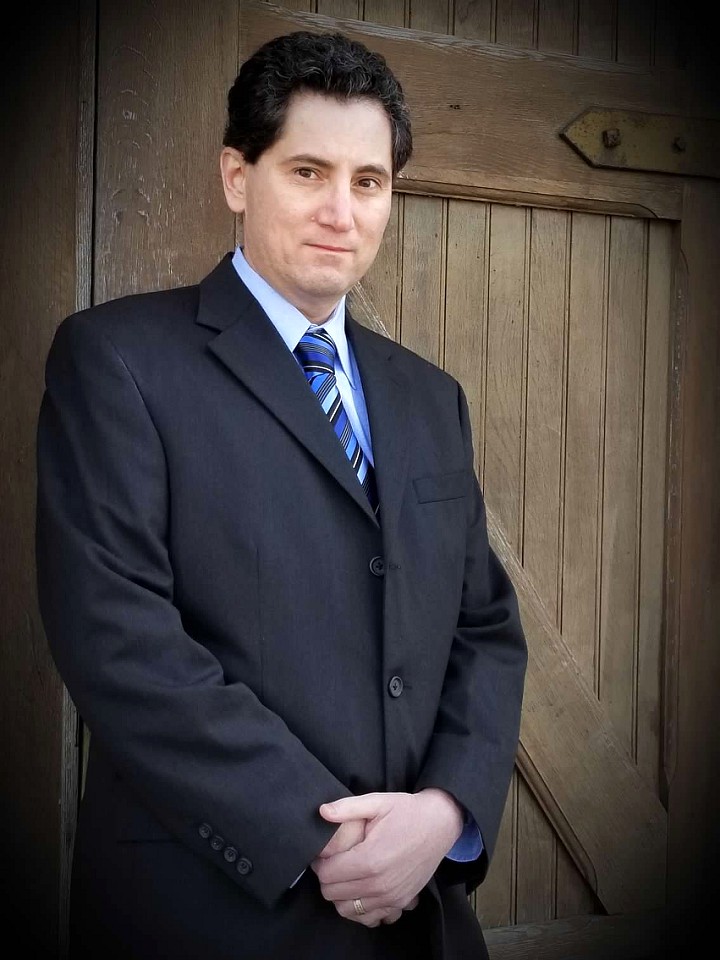
Patrick Bowmaster is an experienced freelance historian and writer who has written for both scholarly and popular audiences and published widely. His writing has been cited in at least thirty historical works including four books published by university presses, two Ph.D. dissertations, two scholarly bibliographies and one foreign language title. Patrick's unpublished research and graduate student writing can be found in the collections of several leading research universities and other prominent repositories. He has been mentioned in the acknowledgmentsof nine historical works. Patrick is a career archivist and records manager who holds both an M.L.I.S. and an M.A. in History. He is a native of New York who now lives with his wife, child and a cat in Massachusetts.
4Q: You’re quoted as a “crime writer”. What do you think draws us as readers and authors to writer and/or read about crime?
 PB: We all agree that in order to have a civilization we need a certain amount of laws. Most of us feel that obeying these laws is our duty as good citizens since we elected the people who made them. I believe that those who view things differently and act outside of the law are interesting to the rest of us. I also feel that studying crime makes us better equipped to avoid becoming the victim of crime.
4Q: Please tell us about your writing, what inspires you?
 PB: I discovered a long time ago that if you publish on something about which little or nothing is known, you become the authority on the subject. I’m inspired to write on topics that allow me to break new ground. My aim has always been to write on complex subjects in such a way that the average reader of nonfiction will find it both understandable and enjoyable.
4Q: Please share a childhood memory or anecdote.
 PB: When I was almost four, I went with my family on a vacation to the Walt Disney World Resort, in Orlando, Florida. We stayed at the Fort Wilderness Campground. I loved playing in a series of log forts on a playground at the campground. I have a very clear memory of it. Something that I do not recall about the same trip is that I somehow ended up getting on a tram without my family. I had to make the loop and come back to where I got on. I gave them such a scare that they never forgot it.
4Q: What’s next for Patrick Bowmaster, the author.
PB: I am currently seeking a publisher for a book I am writing on my uncle. His name was Harry J. Schmitt. He was the type of person who seemed to be good at everything and wanted to be the best at everything he did. As a very young boy he won yo-yo championships. He was an expert musician and had a good singing voice. He tested so high on an IQ test that he was able to combine three years of junior high school into two and begin college when he was only 16. In addition to being a star student he was also a star athlete. He played varsity baseball in high school and college and was offered tryouts by two major league baseball teams. He graduated as the top Air Force ROTC cadet at Queens College in 1956. He wanted to be a jet pilot but an inner year issue disqualified him.
 He trained as a navigator and played semiprofessional baseball while doing so. The year before he died he decided to go to Harvard Law school. His ultimate dream was to go into politics. He lost his life after ejecting from a Northrop F-89 Scorpion fighter-interceptor jet. My family has an incredible collection of documents, artifacts and photographs related to my uncle. His story will be illustrated richly.
An Excerpt from What the Little Dog Witnessed: The True Crime of Ed Hubbard & Willie Roberts.
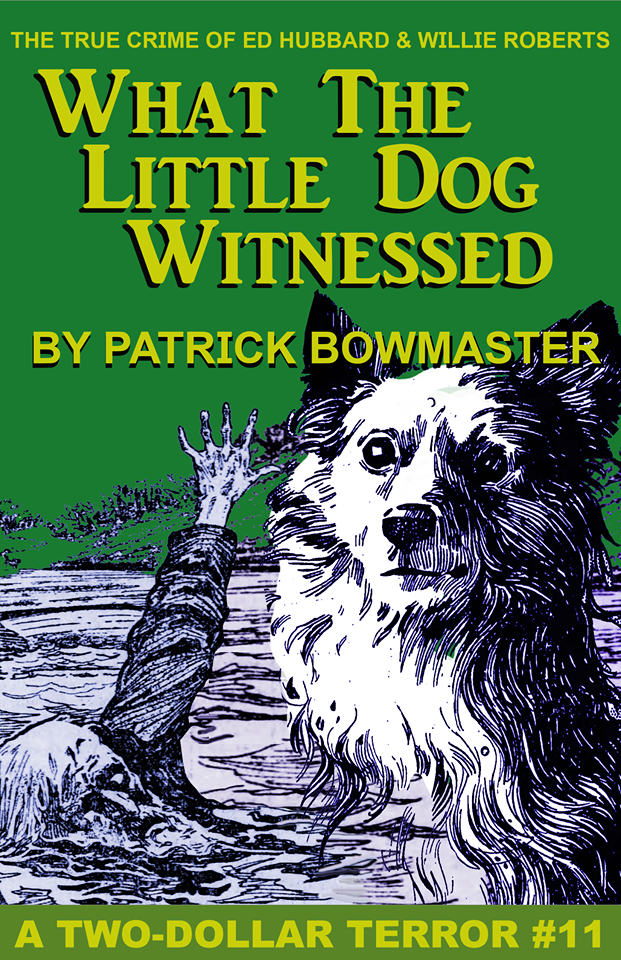
This is how Pulpular Publishing describes Patrick’s book;
"A conniving couple finds a deadly way to rid a farmer of his wealth, but the little dog Jim isn’t going to let them get away with murdering his master. Career convict and con artist Ed Hubbard and his accomplice Willie Roberts, a young and attractive prostitute, set out to play a long game against the farmer Pleas Burns, who owned a spread on the Spring River in Arkansas. But Willie grows tired of waiting and pressures Hubbard to “fix the old man.” Even with a backstory of multiple marriages, extramarital affairs, an incompetent judge, an extremely messy divorce, a death sentence, two jail breaks, incest, a connection to one of the most infamous criminal gangs of the 1930s, three murders, a terrible miscarriage of justice, and two sensational murder trials, the most fascinating part of the story is an amazing and heroic canine."
Not long after dawn on June 30, 1905, an elderly, wealthy farmernamed William Pleasant “Pleas” Burns and his houseguest of theprevious several days, Edward “Ed” Hubbard, walked a shortdistance to Burns’s Ferry on the Spring River, about two miles north of the townof Black Rock, in Lawrence County, Arkansas.
Burns unlocked the skiff that served as his ferryboat and he and Hubbardbegan boarding. A loud bark resounded from under the stairs to the backdoor ofthe farmhouse. It was Jim, a little, scraggly black-and-white mutt, the farmer’s loyalcompanion. He had just awoken, bounded down to the water and attempted tojoin the men on the boat.
“Don’t let’s take the dog,” said Hubbard, giving poor Jim a kick. “He mightfollow me after we get across and get lost.”
It was Jim’s usual practice to accompany his master when passengers wereferried across the river. He had done so on countless occasions. But the kickdeterred him, and as the skiff left the riverbank, he remained behind. Jim’swhimpering betrayed the fact that he was not at all happy about this. Twice, thescrappy little canine dove into the river and swam toward the boat. Both timesHubbard drove him off.
As the ferryboat neared the midpoint of the Spring River, Burns was on hisfeet when Hubbard moved toward him from behind. With a shove he attemptedto force the farmer into the water. Burns fell forward, a portion of his body inthe water and the remainder in the skiff. His life in jeopardy, he tried to righthimself. But the twenty-one-year-old Hubbard was nearly fifty years younger thanthe feeble, elderly man and had little difficulty grabbing Burns by both feet andflipping him over the side into the river.
For my book’s trailer see: https://www.youtube.com/watch?v=rCaH7SHnrF0&t=5s
For your readers wanting to know more about Patrick and his writing, please follow these links.
Facebook Author’s Page: Patrick Bowmaster’s Author’s Page
Facebook: Patrick A. Bowmaster
Twitter: @PBowmaster
My blog about my book: https://patrickbowmaster.wordpress.com/blog/
My Amazon link: https://www.amazon.com/What-Little-Dog-Witnessed-AbTwo-Dollar-ebook/dp/B07C4BNWNR/ref=sr_1_1?s=books&ie=UTF8&qid=1544907363&sr=1-1&keywords=patrick+bowmaster
Thank you Patrick for being our guest this week. Best of luck in your future stories & Happy Writing.

Hello wonderful readers. Thanks for visiting the Scribbler. Please leave a comment below. Don't be shy!
February 9, 2019
Guest Author Angela Wren of the UK.
Like Mysterys? I do too!
So this week, we are pleased to have Angela Wren as our guest. She has kindly agreed to a 4Q Interview and is sharing a brief extract from Montbel.
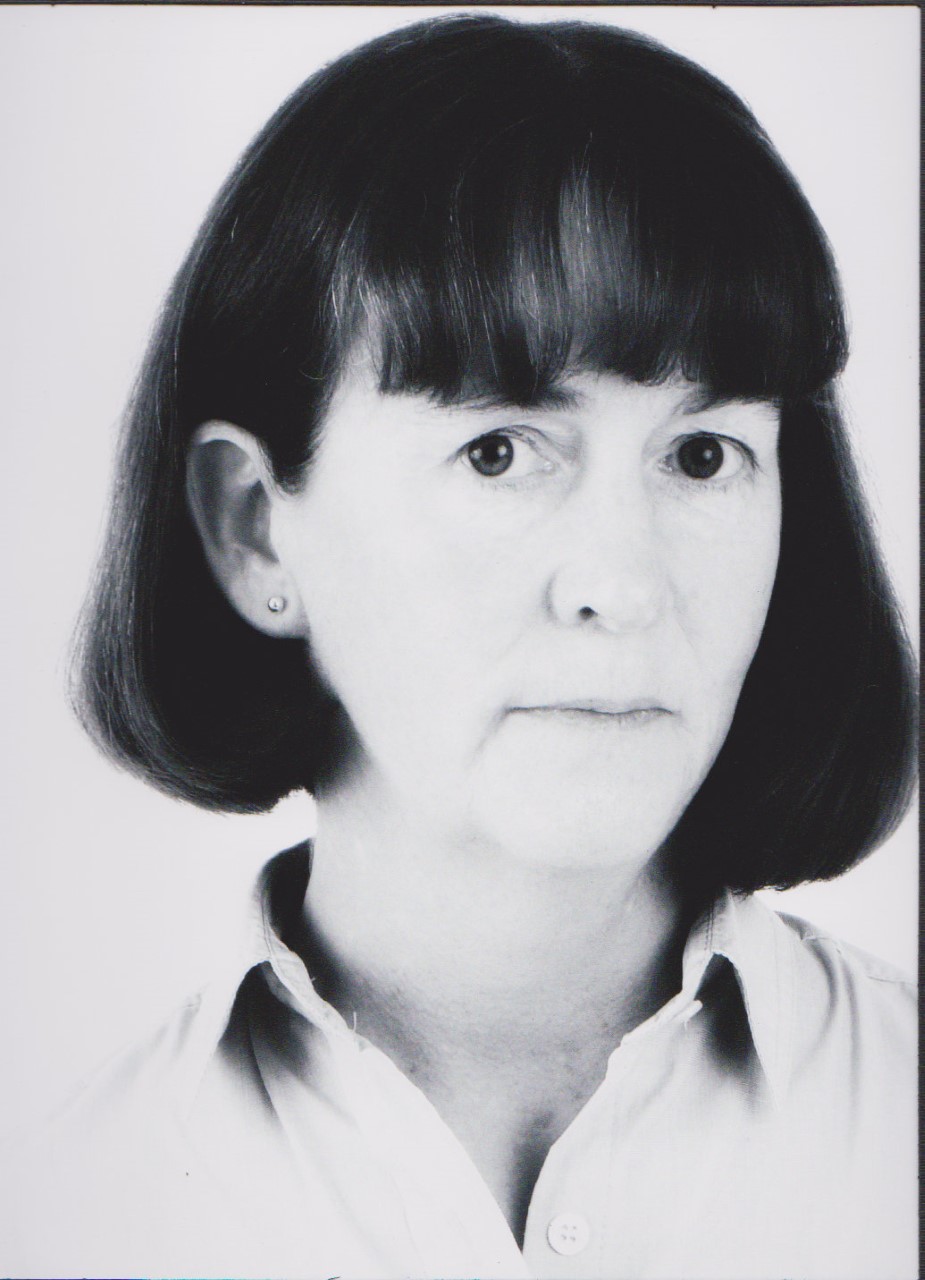
Having followed a career in Project and Business Change Management, I now work as an Actor and Director at a localtheatre. I’ve been writing, in a serious way, since 2010. My work in project management has always involved drafting, so writing, in its various forms, has been a significant feature throughout my adult life. I particularly enjoy the challenge of plotting and planning different genres of work. My short stories vary between contemporary romance, memoir, mystery and historical. I also write comic flash-fiction and have drafted two one-act plays that have been recorded for local radio. The majority of my stories are set in France where I like to spend as much time as possible each year.
4Q: We met on Susan Toy’s recommendation page and as a result I have ordered the first novel in your Detective Jacques Forêt series, Messandrierre. I was intrigued by the subject matter and look forward to reading it. Tell us about your detective.
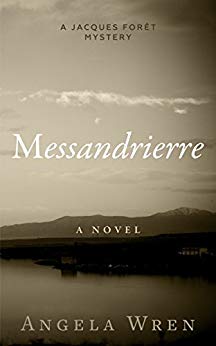 AW:Thank you and I hope you enjoy the story. Jacques is a really great guy. He began his police career in the Judiciaire(the equivalent of Scotland Yard in London) in Paris and quickly became an Inspecteur Principal(in the British police that would be the rank of Detective Inspector). But, while working on a particular case he was injured, and it took him some time to recover from the wound. It also caused him to re-assess his life and his priorities. After talking to his boss, he secured a post in the rural gendarmerie, moved to the Cévennes in south-central France and that's the location for Messandrierre.
Jacques is intelligent, he loves puzzles, and he is steely and determined. He always gets the baddies, and he does that through honest hard work and carefully following the evidence. He can be a bit of a maverick, though, if feels he needs to be and that it will deliver the desired result.
He has his flaws, too, as we all do. You'll never find him taking a lift as he always uses the stairs. He also has a grudging acceptance of computers and technology, but he recognises the usefulness of such aids. He's always very fair and honest in his dealings with the villagers in Messandrierre, and can be relied upon when one of the local farmers needs a helping hand… and the rest; I'll let you find out for yourself, Allan.
*** Since the interview was prepared by Angela and myself, I did receive Messandrierre and read it. A terrific story.
4Q: I compliment you on your cover choices. Please tell us about their development.
 Photo by Angela WrenAW: Thanks, I absolutely love them too. My publisher, Crooked Cat, did the artwork. We had an exchange of emails about the look and feel of the covers. I was very keen that we tried to capture the loneliness and silence of that part of France. It is an upland area, and the actual village that I use as my model for my fictional village of Messandrierre sits at around a 1000m above sea-level. The landscape is pear-green in spring and jewelled by clumps of genêt; it gets parched by the scorching summer sun, the acres of trees become a rich tapestry of red, gold and brown in autumn and in winter, if the wind is from the east, the snow can come early and stay late.
Because of the geography, the towns and villages are small and sparse. The city of Mende, despite being the préfecturefor the département of Lozère, only has a population of around 13,000. By comparison, Leeds in Yorkshire, is a town of equal importance and has a population of 780,000. In the books, I try to convey that smallness along with the impact of the geography on the ordinary people who live there. So, my characters have to endure the changeable, and sometimes challenging, weather. And, it was an overnight change in the weather that sparked the initial idea for the whole series of books. On September 27th, 2007 I woke up to snow and a stunningly beautiful landscape covered in a glistening white blanket. Shortly afterwards, my thoughts turned to murder and how easy it would be to hide one's misdeeds with snow.
All of this was also conveyed to my publisher through our e-discussions, and I sent them some photos too so that they could get a real feel for the area. About four months later I opened an email and saw the cover of Messandrierre for the first time, and I was bowled over with delight. I even cried… but just a bit.

4Q: Please share a childhood memory or anecdote.
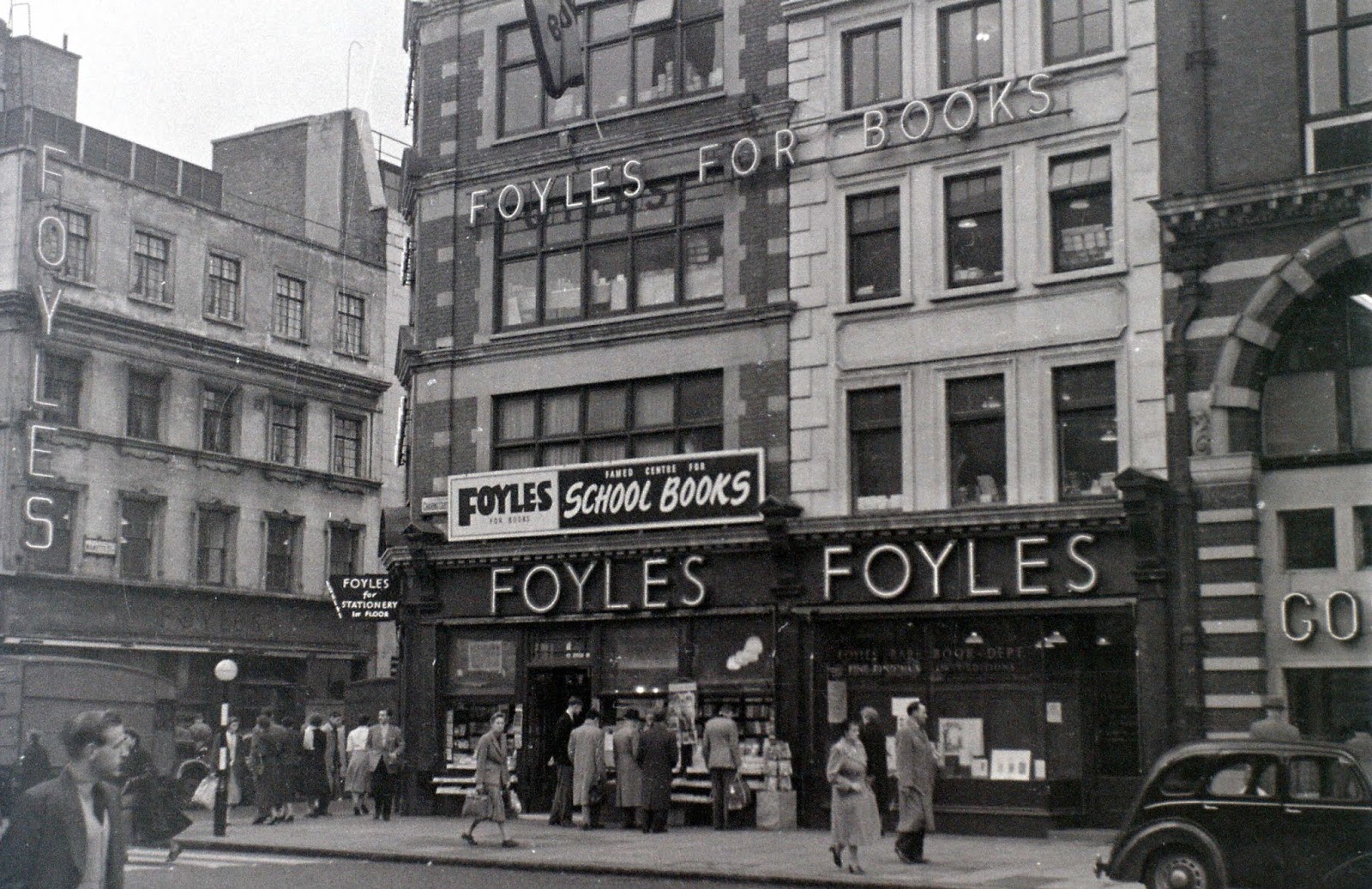 AW: I suppose one of my most enduring memories is of being taken to Foyles bookstore on Charing Cross Road in London by my Dad. I was about 4, and I was told that I could choose a book for myself. I remember being completely over-awed by the acres and acres of shelves and books. I did eventually make a selection, and that little rag book went with me everywhere for some considerable time afterwards. It was so frequently read that my Mum used to put it in the washing machine and iron it for me! Sadly, I no longer have it so, if I didn't read it to destruction, then the washing machine must have done the job instead. However, that visit to Foyles, set me on the path of becoming a collector and my house is full of shelves which in turn are full of books and I can happily spend hour after hour in bookstores.
4Q: Tells us about your favorite authors and inspirations.
AW: Wow! That's a really big question and who do I choose? I guess I have to start with the brothers Grimm, Perrault and Anderson. I loved fairy tales as a child, and I still do. I even write them occasionally. Shakespeare has to be on my list too. I've been reading, learning and reciting him since I was six years old. At one point I even decided I was going to be Shakespeare when I grew up! I'm still working on that one. At about 12/13, I discovered Agatha Christie, and then I read everything she had written including her short stories. I still re-read her books from time to time. Dickens, Wilkie Collins, D H Lawrence, Thomas Hardy, Nathaniel Hawthorne and of course, Austin and the Brontes. More modern writers that I love are Minette Walters, James Patterson, Peter James, John Grisham. Oh, I almost forgot, I'm an absolute Robert Louis Stevenson groupie.
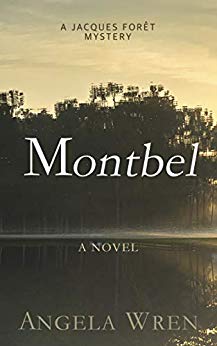
An excerpt from, Montbel, my third Jacques Forêt mystery.
la lettre
…families fracture, Monsieur Forêt. No one desires it or intends it, but it happens. A harsh, unforgiving word begets a rash and revengeful action, and a sliver of ice takes hold in a dark corner of the hearts of those at odds with each other. And there it wedges itself, the frost gradually deepening and destroying. One of us has to stop the cold, as this impasse can continue no longer. I have to put things right with my son, Monsieur…
june 3rd, 2011
For those interested in knowing more about Angela and her writing, please follow these links.
Amazon UK
Amazon US
Website : www.angelawren.co.uk
Blog : www.jamesetmoi.blogspot.com
Facebook : Angela Wren
Goodreads : Angela Wren
Contact an author : Angela Wren
Thank you Angela for being our guest this week. I look forward to more of your stories. Happy Writing!

Thank you, Allan, and I hope regular readers enjoy the post.
February 2, 2019
Returning Guest Author Bretton Loney of Halifax, NS.
Any Hockey Fans out there?
 Bretton was our guest several weeks ago when we talked about his novel The Last Hockey Playerand he shared the first two chapters of this intriguing story. As a very kind gesture, he sent me a copy of the novel as a gift. When I received it, I meant to glance at it and get back to it later but became immediately captivated by the story. Not at all what I expected. I thoroughly enjoyed the book. I’m happy to say he has agreed to a 4Q Interview.
Please go HERE to read Loney’s bio and the excerpt from his last visit.

4Q: Please tell us how this went from a short story to a novel and what inspired the short story.
BL:As odd as it sounds, the seeds of this dystopian novel of survival in a bleak, wintery Nova Scotia came to me in 2007, in the midst of a sunny winter vacation in Cuba with my wife and friends. I awoke from a dream about playing hockey on a cold pond some time in a bleak future. I quickly scribbled down a few lines and it became the basis of a short story called Hockey Night in the Canadas which has appeared in two Canadian literary magazines over the years – subTerrain in British Columbia and Between the Lines: A Journal of Hockey Literature, out of Saskatchewan.
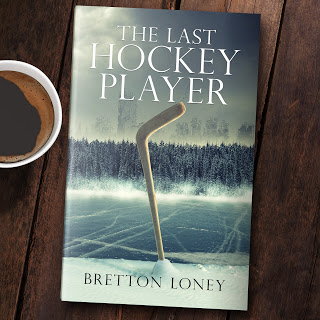
People told me that there was a full novel in that short story, including my very wise wife, Karen Shewbridge. After half a dozen years, I too began to see the possibilities. Three years later, after a great deal of help and support from my wife and children, my writer’s circle and my editor, I had a published novel.
In the end I think the combination of imbibing a few too many Bucaneros beer in Cuba as well as good friends and great music inspired the original story idea.
4Q: Would it be safe to suggest you are a hockey fan?
BL:I am a fan and played until, at age 50, I had to hang my skates up due to a bad knee. I come from a hockey family. My father played hockey and so did my two brothers. My youngest brother, Troy, played for about a decade in the NHL and won two Stanley Cups with the Pittsburgh Penguins in the Mario Lemieux days. These days I am at the rink watching my grandson play, which is a blast.

4Q: Please share a childhood memory or anecdote with us.
BL: I remember walking home on Saturday
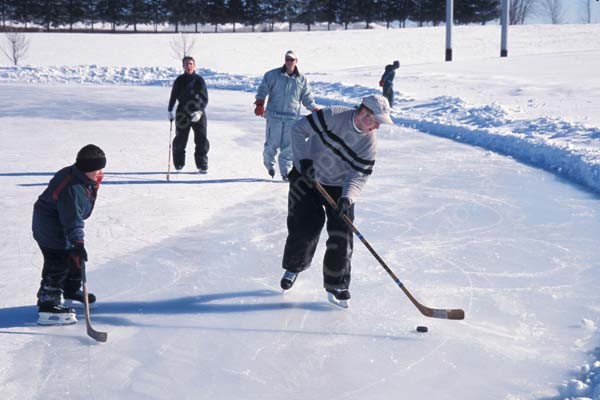 mornings from Tiny Mite hockey practice. We had a cold rink and my feet would be frozen and start to thaw out as I walked home with all my hockey gear on and my Dad’s old canvas duffel bag swung over my shoulder.
 The roads were so slippery I could practically skate along them in my rubber boots and the sun overhead was so bright that its rays bouncing off the snow banks pierced my eyes. My feet hurt and my eyes were sore, but I went back to practice, again and again, every Saturday. I wouldn’t have missed it for the world.
4Q: What can we expect in the future from Bretton Loney, the author?
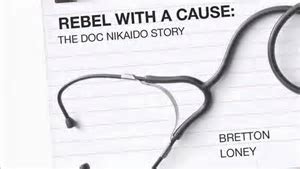 BL:Something totally different. My first book Rebel With A Cause: The Doc Nikaido Storywas a traditional biography of a very untraditional doctor in my home town in southern Alberta. Dr. Nikaido’s life was forever changed by the resettlement of Japanese-Canadians during World War Two.
My second book, The Last Hockey Player, was a dystopian novel. My next book will be a novel too. The only thing it will have in common with this book is that it will be set in Nova Scotia. Hopefully, in three to five years time my idea will have grown into a full novel.
For you readers that missed Bretton’s first visit and the link above, please go HERE to read the first two chapters of The Last Hockey Player.
Thank you once more Bretton for being our guest. All the best with your writing.
Thank you also dear readers for visiting. Take a minute or two and leave a comment below.

January 26, 2019
Guest Author Hazel Manuel of Paris and the Loire Valley of France.
A quote from Hazel’s website:
“I write books that explore living life in a way that doesn't make me want to scream."
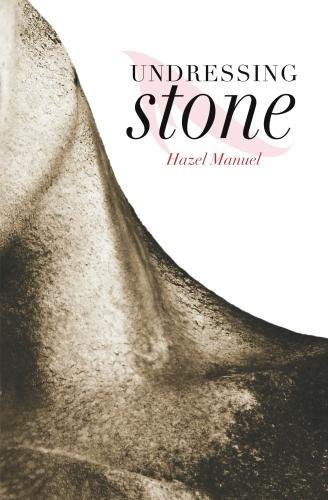
We are so excited to have this talented writer as our guest this week. Hazel has agreed to a 4Q Interview and is sharing an excerpt from her novel - Undressing Stone.
 Hazel Manuel is a UK born novelist whose writing follows a career in education, first as a teacher/lecturer and after as a business leader within the education sector. Having fallen in love with a French man she met in India, Hazel now lives and writes in Paris. Hazel’s route into writing was an unusual one, which draws on her time as CEO and MD of two successful education companies. Having moved from the corporate world into full-time writing, Hazel enjoys exploring those deeper aspects of what it means to be living and striving in our modern world. Through themes of uncertainty, loss, obsession, power, change and fear, and of questioning life and the self, the reader travels with her characters through an archetypical inner journey that is fundamentally satisfying because it could equally be their own. Since becoming a full-time writer, Hazel’s books have received international attention. She travels often, giving talks and running workshops at literary festivals and writing retreats. Hazel has been Writer in Residence for Your Writeful Place in France and the UK and at the Sivananda Ashram in Southern India where she was commissioned to write a book about Ashram life. She runs a writer’s group for aspiring novelists in Paris and one for prisoners at Styal Women’s prison in the UK.
4Q: Undressing Stone sounds like an intriguing story. Can you tell us about it and what inspired it.
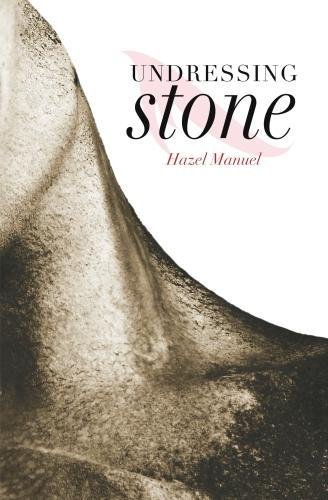 HM: I loved writing Undressing Stone. It is an often quoted cliché that when we are old we will regret what we didn’t do more than what we did. I wanted to explore the idea of completely reimagining your life. The main character, Sian is asked by her therapist ‘if you were able, how would you redesign your life?’ I wanted to take a women who people would generally describe as ‘ordinary’ on a journey of transformation – both in terms of her life situation and psychologically – and to see where that would lead her.
 Secondly, I wanted to examine the idea that despite the fact that we are taught that work is paramount in terms of our success, that for many people it can be difficult to find fulfillment in the usual 9 – 5 grind. I wanted to explore the notion that what we do to earn money is not necessarily the most fulfilling or defining part of our lives.
And thirdly, I wanted to write an ode to introverts. I believe that the ways in which we measure success are inherently geared towards more extrovert qualities – being ‘go-getting,’ forceful, flamboyant are often synonyms for being ambitious, confident and assertive. Undressing Stone challenges this idea and explores some of the ways that introverts often struggle in a world that ignores or devalues the ways in which they express themselves and engage with the world.
4Q: Our writing is like our children and asking you to pick your favorite is difficult, but backed into a corner, which novel was the most fun to write and why?
HM: A difficult question indeed! I believe that our first novel is like our first love – it will always hold a special place in the writer’s heart. Kanyakumari is very special for me for so many reasons. It opened the way for me to make a life as a writer. It is set in India which is a country that has called me back time and time again. And it explores themes which remain interesting to me – not least of which, what is ‘home?’
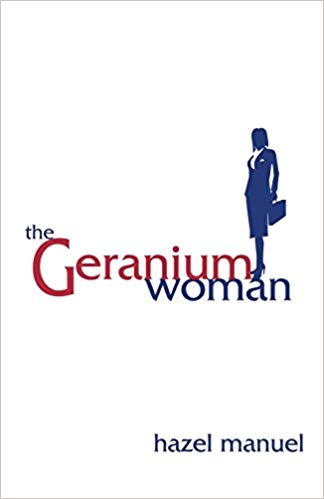
The Geranium Woman was hugely satisfying to write. It explores female leadership, and whether or not business can be a force for good. Both of great interest to me, and so pertinent themes in today’s world. Plus it was fun writing a woman with two lovers
And of course, a writer should always love their most current book. I felt such a sense of loss when I finished writing Undressing Stone. I felt so at home in Sian’s world. And I loved writing the gothic-mystery element of the story.
4Q: Please share a childhood anecdote or memory with our readers.
 HM: I was eight years old when I first became aware of a dream. It wasn’t an actual dream, but rather an image or an idea. A sense of story began to form in my imagination. I don’t know where it came from – perhaps from fairy-tales or from myths and legends. Or maybe it was just an eight-year-old’s expression of the mysteries inherent in growing up. In any case, the story began with a quest - a dark path winding off into some undefined future with something deeply profound – transformational even - at its end. Perhaps the quest was about becoming the adult I’d eventually be; finding wholeness, or finding home. I don’t know. I called it ‘The Search for the Big Orange Poetry Flower.’ I knew that I had to look for this flower and that my search would end in India. I like to think that this strange dream is why I set my first novel there – that Kanyakumari - the first book I wrote – was the flower that lay at the end of my quest.

4Q: Please tell us about your writing habits. What works best for you?
HM: I always say that the job of a writer involves four things – writing, reading, thinking and marketing. I’m lucky enough to be able to write full-time. I don’t write every day but I do one or more of these four activities every weekday. I’ve always been a daydreamer and If I didn’t take the time to dream, to engage with ideas and themes, to explore, then I wouldn’t have stories to write. I see reading as integral to the job of a writer. To learn about what works and what doesn’t, to be inspired, to be surprised, to learn and grow as a writer. And of course marketing is important because I want people to read my stories, so I spend time networking, developing my social media platform, engaging with my readers.

When I write it is in long blocks of time – full days and often weeks at a time. I start with a theme that I want to explore and the story develops from there. I don’t usually know the ending of my books when I start writing them and this keeps me excited by the story. Often I like to immerse myself in one character – if I am writing a multi-viewpoint book I spend weeks – sometimes more - in just one point of view so that I can fully realizethat particular character. And I spend a lot of time editing – I really enjoy that part of the process.
An Excerpt from Undressing Stone
Prologue - Saint Vey, Rural France
‘Never let the internet make a decision for you.’ I can’t remember now what Arwel had been talking about, but not wanting to do his bidding, that’s exactly what I did. I, Sian Evans, a fifty-something divorcee moved from Cardiff to Saint Vay - a four-house hamlet tucked away in a forgotten corner of ancient France, perfect for farmers, old people and escapees. I went because the internet told me to. And I loved the fact that Arwel was furious. ‘Good grief Sian, how can you possibly move there?!’ He had been adamant that living alone in rural France I’d immediately overdose or be eaten by French savages. At least there was no chance of the first occurrence, since I’d stopped taking my medication a month before and had no plans to resume. I didn’t tell Arwel that of course. My dear ex-husband, for reasons he would insist are motivated by my own good, would have been unimpressed. My shrink might have been less troubled - after all it’s partly his fault I went.
‘Where is home?’ That was the title of the on-line quiz that sent me here eleven months, three weeks and two days ago. The answer apparently, was France. “You’re chic and sophisticated,” the quiz proclaimed once I’d answered questions such

as which scene inspires me most (a picture of wine and cheese on a checked table-cloth) and which celebrity I’d date (I didn’t recognise any of them). “You can be introverted, but you enjoy good food and fine wine. You understand that life is short but you know how to savour it.” I wasn’t sure about the chic and sophisticated part, so Paris was out. Rural France it was.
Home. A small word but so cavernous. Home just now is my little cottage, the garden and the field behind. I’m sitting on an old wooden bench sipping a glass of wine as I typically do at sunset, the scent of wet leaves and wood-smoke suffusing the usual tirade of buzzings, twitterings and rustlings. The meadow as ever is a restless sea of live things: Crickets, gendarmes, chaffinches, pigeons, a little cat grey with a bent leg. Two big hares lope past occasionally cocking their long ears at the slightest sound, but I haven’t seen them tonight. And there are bats, small ones that fly out of the shadows at the turn of the day. All this life makes it impossible to be alone. I don’t feel restless though. It’s as though I’m at the still centre of it all. Or something like that.
 The sun is setting. That isn’t a metaphor, it actually is setting. It’s that time of the evening when the trees turn black and spikey and the world takes on that melancholic sort of air, like it regrets the futility of the day’s exertions and wants to wallow in self-pity for a while. I like this time of day. Especially here. Strange to think it’s always sunset somewhere. When I first arrived, I used to try to work out when the sun would set in Wales. And in India. I don’t do that anymore. One sunset is all we can have at a time and it makes no sense to go chasing someone else’s. Mine, this evening is rather a dull affair, cold and not very colourful at all. ‘A glorious sunset,’ people say. Since I arrived I’ve been hoping for one worthy of the term, the kind that people who write and sometimes those who don’t, try to be poetic about by using too many adjectives. In any case, my sun has probably sunk behind the horizon now, it’s hard to tell because it’s cloudy. Again, not a metaphor although, being post-menopausal I can see how some might say I protest too much on that front.
Eleven months is more than long enough to acquire habits. I’ve acquired plenty since I arrived. And they’re not a French re-packaging of those I had in Cardiff. Back then, the first thing I’d do each morning was to dredge the night. Depending on how busy I’d been, this could take some time. Dreams, wakefulness, fears, worries, all the night time dwellers of an overactive mind would be excavated and picked over. I’d consider my discoveries, wary, mistrustful – whatever we try to suppress will come out in our dreams. I don’t do that anymore. I don’t need to. These days, either on waking, or on the now rare occasion that sleep has eluded me, on hearing the dawn chorus - the countryside is so noisy - I note my mind’s nocturnal output, and simply acknowledge it.
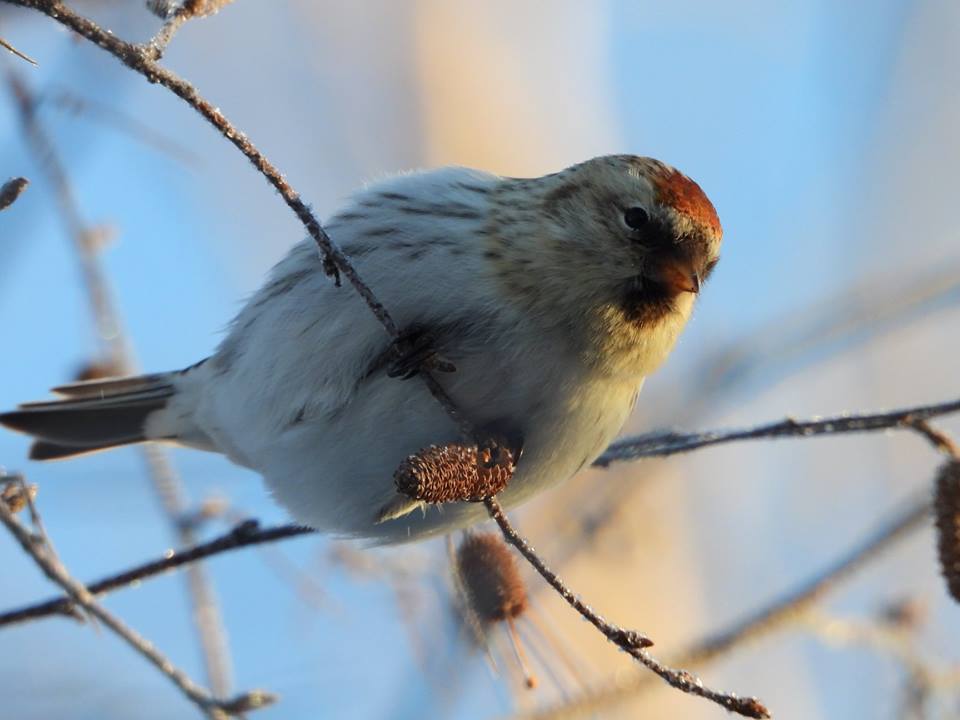 Photo by Robert ShortallThis morning, I woke with the birds, having left the shutters of my little cottage open. I lay in bed listening to amorous pigeons and twittery little things that were probably martins of some sort, competing with enthusiastic chaffinches whose elaborate warbling ends with the proclamation ‘it’s reeeeeal!’ Truth birds. I stretched languidly enjoying the warmth of my duvet in the early morning chill, and thought about coffee. It’s then that it occurred to me. I don’t think I dreamt it, not that I remember anyhow. It wasn’t a flash of inspiration either. Some residue from the shifting images of my recent sojourn in my head - or wherever we go when we sleep - something made me realize: I was finally naked under my clothes.
To discover more about Hazel and her novels, please follow these links.
http://www.hazelmanuel.net

Thank you Hazel for being our guest this week. All the best with your writing.
HM: Thank you so much for featuring me and my work, your questions were so interesting – I loved thinking about them and how to answer.
A special thank you to my visitors and readers. Please leave a comment, don't be shy. Click on the comment link below.
January 20, 2019
Guest Author Stephen Bentley of the Philippines, formerly of the UK.
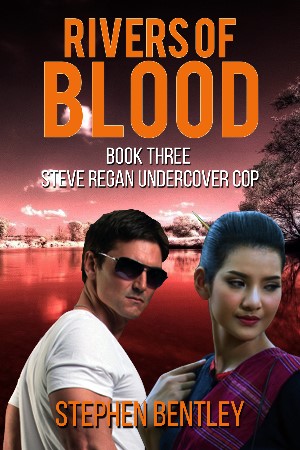
Who can tell a detective story better than a former policeman, or a trial lawyer? Stephen Bentley has been both. He is kind enough to be our guest this a week, sharing his thoughts in a 4Q Interview and sharing an excerpt from his newest novel - Rivers of Blood.
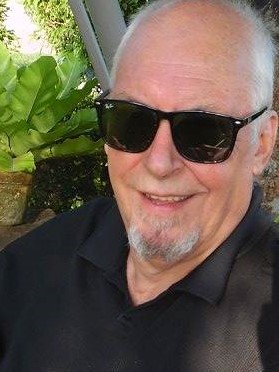
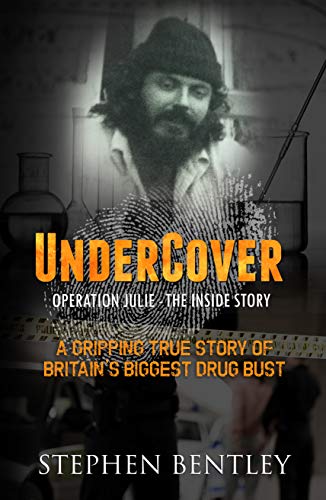
Stephen Bentley is a former UK police Detective Sergeant and barrister (criminal trial attorney). He is now a freelance writer and an occasional contributor to Huffington Post UK on undercover policing. His memoir 'Undercover: Operation Julie - The Inside Story' is a frank account of his undercover detective experiences during Operation Julie - an elite group of detectives who successfully investigated one of the world's largest drug rings. Stephen also writes crime fiction in a fast-paced plot-driven style including the fictional Steve Regan Undercover Cop Series. When he isn't writing, Stephen follows the (mis)fortunes of Liverpool Football Club from afar and relaxes on the beaches of the Philippines with his family where he now lives.
He would like you to know that he will donate a portion of all book sales royalties to the James Bulger Memorial Trust, a UK registered charity.
Website and Social Media
4Q: Tell us about Steve Regan, the Undercover Cop.
SB: Before I do, may I just correct one thing. Rivers of Blood is not novel length. All three books in the series are novellas designed to tell a story at its natural length.
Regan? He is not me. You need to read one of my answers below to grasp the meaning of that. He’s British, hails from Liverpool and has that typical humor common in that city. He detests routine, paperwork and bureaucracy.
He was a regular detective before becoming an undercover agent, infiltrating OCG’s – organized crime gangs with a regular police department. His fine undercover skills bring him to the notice of a secret UK government department.
Regan drinks beer, smokes cigarettes and likes the ladies. They also like him. Owing to the nature of his work, he is unafraid to take risks and go out on a limb.
He’s nobody’s fool and recognizes one of the hazards of his work – identity confusion. The somewhat controversial title of Book 1 in the series is a nod to that state of mind but expressed graphically.
4Q:Two of your books are now available in audiobook format. Do you think listening rather than reading adds anything to the enjoyment of a book?
SB: Yes, I do have an opinion on this. My first book in the Steve Regan series was also my first fiction book. I must confess, with the benefit of hindsight, I could have started it in better fashion such as more action. Some early reader reviews justifiably did mention that. Yet, the thing is with the audiobook version, the listener seems not to be bothered by that as they are fascinated with the excellent narration of my story. It intrigues me as it seems to be the case when we read, we “hear” our voice. Now, that inner voice may not be doing justice to the written word. But put those same words into the mouth of a professional narrator and it holds the listener’s attention.
4Q: Please share a childhood memory or anecdote with us.
SB:I was about six and sports crazy even then. My teacher asked a question of the class: “how many seasons of the year are there?”
I can tell you my hand was first up. The teacher said, “Stephen, what is your answer?” Proudly and confidently, I replied, “Two, Miss.”
“Two?” she queried looking puzzled, “and what may they be?”
“Football and cricket, Miss.”

The teacher belly laughed. I did not know why or understand until she said, “Good answer, but what about winter, spring, summer, and autumn (fall)?”
The penny dropped. My first real taste of embarrassment. In her wisdom, she related this story to my parents. I was reminded of it for many years at family gatherings.
4Q: Rivers of Blood is the third book in the Undercover Cop series. Tell us about the first two books.
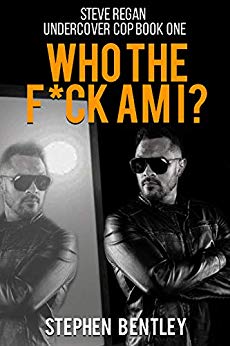 SB: Book 1 Who The F*ck Am I? sees Regan infiltrating a worldwide drug ring. The opening mirrors my own factual experiences on Operation Julie, Britain’s biggest drug bust.
 In real life and while undercover, I met a Mafia-connected gangster who involved me, the undercover cop, in a conspiracy to import huge amounts of cocaine into the UK from Bolivia via Miami.
The gangster was reported to have been dealt with by the DEA and sentenced to a 25-year prison sentence. But was he?
Moving from fact to fiction in Book 1, Regan is tempted to cross the line, go rogue as he needs money to help his mother who has been diagnosed with a terminal illness.
This leads him into infiltrating a South American/Miami-based cartel. Regan gets involved in one deal with a drug lord.
But is everyone who they say they are?
I wrote about my real undercover days in Undercover: Operation Julie – The Inside Story .
Book 2, Dilemma sees Regan back and this time he’s alone and undercover in a seedy area of Thailand on the trail of a Texan expatriate, Les Watkins, the biggest drug smuggler in South East Asia.
Using himself as the bait, Regan attempts to score a $50,000 deal with the Thai mafia in an effort to get closer to his target.
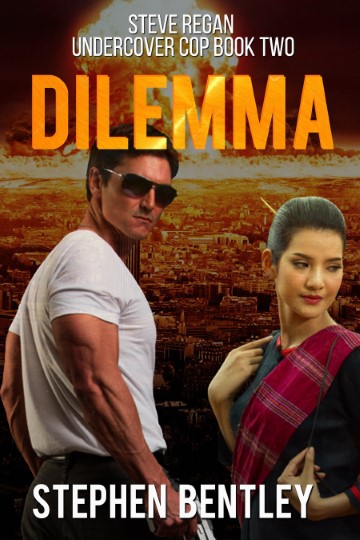 As he finds himself embroiled deeper into the operation, Regan suspects Watkins may be connected to Regan's nemesis, ruthless Mafia boss Carlo Vitale, who has fled the United States following a triple bombing and assassination of three crime family heads.
Besides staying alive, Regan has other problems when he suddenly finds himself facing the worst dilemma an undercover cop can face.
Excerpt from Rivers of Blood, Book 3 Steve Regan Undercover Cop now on pre-order (release date March 1 2019)
 I offered coffee. They got mugs from the kitchen and poured coffee for themselves and topped up mine. They were both relaxed. I liked that. Relaxed in manner and dress. Both wore loud Hawaiian-style shirts and blue jeans. Both sported tans befitting any true-blue Aussie. They didn’t look or act like cops. I was now also relaxed. I knew I was with good guys, professionals. “You got the recording device?” Kenny spoke again. “Yes, and it’s working,” I said. “Just one thing,” said Wally. “What’s that?” I asked. “You think it best if you are tooled up when you meet this guy?” Wally said. “Yeah, I do. For two reasons. One, I’m a hitman. Two, I got insurance if it all goes to shit,” I said. Wally handed me a 9mm semi-automatic. I checked it out. There was thirteen in the clip and nothing in the chamber. I slipped the safety on and stuck it into the shoulder holster Wally gave me. “Okay.” I said, “I’m as ready as I’m going to be. Let’s do it.” *** Wally drove once more with Kenny as front passenger. I sat in the rear. We drove for about twenty minutes to a large sports stadium. He parked on the huge but empty car park. We waited. I had a sudden thought. “Does this fucking informant know who I am?” “He has no idea. He doesn’t even know we are cops. That’s how we know he’s a top-class reliable informant. He reports back to his handler talking about us two as bad guys.” “Cool!” I said. A six-foot five-inch giant strode toward the car. “That’s him,” Wally said. I was happy I was tooled-up. This guy could be a handful if it all went down the pan. The giant rapped on Kenny’s window with knuckles the size of golf balls. I saw the swastika tattoo on the back of his hand. Kenny hit the power button and the window slid down silently. The giant spoke, “Let’s talk over there.” He pointed towards an old trestle table and some plastic chairs probably left there by someone who had set up a hotdog stall on the car park. The four of us sat down. Wally spoke first, “Brad, this is the guy I was telling you about. He’s a pro and out-of-town.” Brad looked at me and said, “Got a name?” “I got one, thanks. All you need to know is I’m Mr. Smith. You can call me John.” Brad said, “John Smith?” “Yeah. You have a problem with that?” “No, not so far.” Brad paused before saying, “I got to check you over. Make sure you’re not wearing a wire. Okay?” “Please yourself,” I said. Brad patted me down, checked the small of my back then said, “Drop yer pants.” I unfastened my belt, unzipped my jeans and dropped them to my knees. “Satisfied? Or maybe you want to see my dick?” Brad showed no emotion. He said, “Yeah, satisfied. Can’t be too sure these days. Feds everywhere.” It was hard not to smile. Brad spoke again, “Right, you come with me. I’ll introduce you to the man who’s going to fund the contract. You two can fuck off now. Thanks for bringing him here.” Kenny and Wally walked over to the car and drove off leaving Brad and me alone on the car park. ‘This is where the fun starts,’ I thought. I was right.
 No sooner had Kenny and Wally driven off, a blue pick-up truck drove on to the car park and stopped next to us. Two skinheads jumped out. One pinned my arms back and the other shoved a bag over my head. It was black and made of cloth. It stunk of petrol. I couldn’t see a thing. Both skinheads bundled me into the rear seat of the truck. I could feel my gun removed from the holster I was wearing. I sat and didn’t make a sound. I heard someone say, “Get this fucking ute moving. Let’s go!” I knew a ‘ute’ was Strine for a utility vehicle or pick-up truck. I reckon it was twenty minutes before we pulled up and the driver turned off the engine. I heard the rear passenger door open and I was pulled out of the truck. I still couldn’t see a thing. I heard a door opened. It sounded like a big door on industrial or retail premises unlike a house door. I heard it close behind me with a clang confirming I wasn’t in someone’s home. I could feel a hand in the small of my back; it pushed me, propelling me a few yards until I felt hands on my shoulders. I was twisted to walk in a new direction. This all reminded me of the game we used to play as kids, blindman’s bluff, but this was no game. I could smell cigarette smoke. I stumbled over something and the hands pushed me down. I was now sat on the chair that I had stumbled on a few seconds earlier. Then I could see. The black cloth bag had been whipped from my head. I saw him sat behind a large desk. The desk was between the two of us. I guess Brad and the skinheads were stood behind me somewhere. I couldn’t see anyone except the man behind the desk. He spoke. “Do you know who I am?” He asked. “No idea,” I replied. “Good. I’m told you can get rid of someone for us.” “I can get rid of anyone you want if the price is right. That’s what I do.” “You can call me Pat,” said the man behind the desk. He was about forty years old. He was either bald or had shaved off all his hair. It was difficult to tell which. He had a full beard that ran down to his chest but no moustache. He shaved above his upper lip. I noticed more than anything his cold, blue eyes. Pat stubbed out a cigarette into a large metal ashtray perched on top of the desk. It was next to a telephone. ‘That reminds me.’ I thought. “Mind if I smoke?” Pat nodded. I was relieved. I got out one cigarette from my pack and pulled out ‘Jack’s’ lighter. I pressed the small button on the base and ignited the lighter. I lit my cigarette.
This is the conversation recorded and later transcribed for evidential purposes: Pat: “You were saying. So? what’s the right price?” Me: “Depends.” Pat: “On what?” Me: “Is the target high or low profile?” Pat: ‘He’s high profile. A politician we must eliminate before our country is fucking ruined.” Me: “I don’t care about politics. It’s just work to me. But it presents more risks if he’s a politician. More risks to me, that is.” Pat: “How much then?” Me: “Twenty plus expenses.” Pat whistles. Pat: “Thousand?” Me: “Yes.” Pat: “That’s three months’ profits from our grow.” Me: “It’s up to you. You’re hiring. Not me.” Pat: “You’re a cool dude.” Me: “It’s what keeps me alive.” Pat: “How would you do it?” Me: “I don’t know yet who you want hit.” Pat: “Paul Carter.” Me: “And…?” Pat: “And what?” Me. Who is he exactly?” Pat: “A government minister, a high-up.” Me: “I’ll need to scope him. Get to know his movements, even when he takes a dump. Only then will I know the best way to rub him out. I take it you do want him dead?” Pat: “Sure do. Him and all the other mother-fuckers too. They are all too soft on abbos, Vietnamese, all the other coloured immigrants. This is a white country and will always be white if we’ve got anything to do with it. White is might. White is right.” I felt myself shudder but it didn’t show. I said, “Right. We have a deal. Twenty thousand and five expenses.” Pat: “Five?” Me: “Yeah five. Business class return, good hotel to lie low, sundry expenses. All paid by wire to my offshore account. Fifty percent down and the rest when the job’s done.” Pat: “So that’s twenty-five total. Twelve and a half up front?” Me: “That’s right. Here’s my card with my bank details. Get rid of it after you have paid me in full.” Pat looked at the business card. Pat: “John Smith?” Me: “Yes, that’s me. If we’re finished, which we are, then maybe one of your helpers can drop me off in the city?” Pat: “No problem. Brad, you heard the man.” Me: “One more thing. Gun please.” Pat handed the gun back to me and I slid it back in the shoulder holster
End of Excerpt
Universal Book Links to Rivers of Blood http://mybook.to/riversofbloodAmazon Kindle All other eBook formats at Books2Read
Thank you, Stephen, for being our guest this week. All the best with your writing.
SB It was great and I really enjoyed it, Thank you for the opportunity.