Tim Prasil's Blog, page 22
November 24, 2021
A Book Report on Douglas Grant’s The Cock Lane Ghost
In Historic Ghosts and Ghost Hunters (1908), H. Addington Bruce discusses the famous case of a poltergeist at Epworth Rectory. He explains that evidence for the two-month haunting comes from 1) letters written in 1716, as the phenomena was occurring, 2) more letters written in 1726 along with some additional documents, and 3) an article published in 1784. When one compares these accounts — written across almost 70 years — one finds “remarkable discrepancies between the earlier and later versions.” Looking only at the first batch’s letters written by people who were actually there, “the haunting is reduced to a matter of knocks, groans, tinglings, squeaks, creakings, crashings, and footsteps,” says Bruce. The secondhand and/or long-after-the-fact evidence makes things a lot more interesting: for instance, ghostly turkey-gobbling and spectral silk-rustling are added. However, it’s not nearly as reliable as the firsthand, as-it-happened stuff.
A failure to weigh the reliability of evidence is my single quibble with Douglas Grant’s otherwise impressive and engaging book The Cock Lane Ghost. Published in 1965, it’s become a standard reference for those intrigued by London’s alleged (and probably faked) haunting of 1762. And intriguing it is, what with communication with a ghost being established via a system of one knock for yes and two knocks for no. If that wasn’t exciting enough, the ghost used its knocks to accuse a man of murder! Or so it was said. It’s never really been settled what exactly was going on.
Perhaps more important is the impact the case had on London in the 1760s and internationally for a very long time afterward. It’s an influential case, one almost every ghost hunter today should know something about. In addition, those interested in the Spiritualism movement of the mid-1800s can learn a few things because the Cock Lane story foreshadows the Fox sisters/Rochester story in some startling ways.
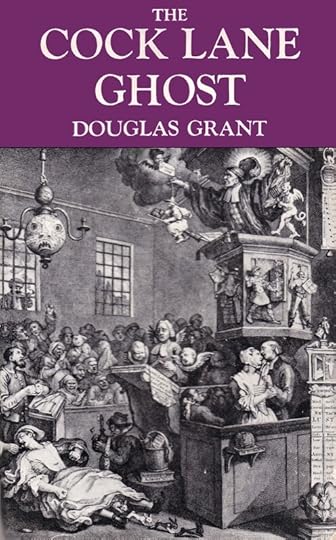
Along with newspaper and magazine articles printed in 1762, Grant adds court transcripts and public records to flesh out the history. He makes the complicated narrative fairly easy to follow, revealing how deeply the events divided London into believers and skeptics. Once the haunting was legally ruled to be a fraud, satirical playwrights and poets mocked those gullible enough to have believed it, and Grant devotes a couple of chapters to this backlash. The book’s illustrations are pretty interesting, too.
What the Book Doesn’t DoHowever, Grant does not delve into the tradition of “knocking ghosts” preceding the one alleged to have manifested on Cock Lane. Nor does he explore the even longer lineage of ghosts seeking to bring their murderers to justice (think Hamlet’s father). Beyond those poets and playwrights, Grant doesn’t really look at the subsequent impact/influence of Cock Lane, either. This makes it a good introductory book for those who simply want to learn the basics of the case itself.
As I suggest above, Grant also does not address the reliability of evidence, even though many of the ghost’s alleged manifestations happened a couple of years before they were claimed to have happened — claimed by people who would then be convicted for fakery! To begin to sort out some of what I’m talking about here, I created a time line, which I call The Cock Lane Ghost TARDIS. Be my companion as we travel through time and space to survey Trusted Archival Research Documents in Sequence. (Some of you might chuckle ever so slightly at what I just did there.)
— Tim (whose doctorate degree means he can rightly be called The Doctor)
Like books about ghosts? Read more reviews in my“A Book Report on…” series.


November 21, 2021
What Do You Think of the Ending of This Week’s Tale Told?
I have a theory about film: If you have a very good film with a bad ending, then you have a bad film. If you have a mediocre film or a good film with a brilliant ending, then you have an almost brilliant film.
This week’s episode of Tales Told When the Windows Rattle features a story titled “Selenitha,” by Arthur Lucas. I really like Lucas’s premise: after showing off in front of his buddies, a guy discovers he has the power to control others, a power he comes to very much regret. I like some of the scenes, too. At the same time, I confess “Selenitha” is not one of my favorites of Season One. A couple of descriptive passages could have been trimmed — but that’s pretty typical of fiction from the 1800s. It’s really the happily-ever-after ending that bugs me. It has a “tacked-on” feel to it. Applying what Ray Bradbury says about films, Lucas’s very last line leaves me with a slightly unpleasant aftertaste regarding the work overall.
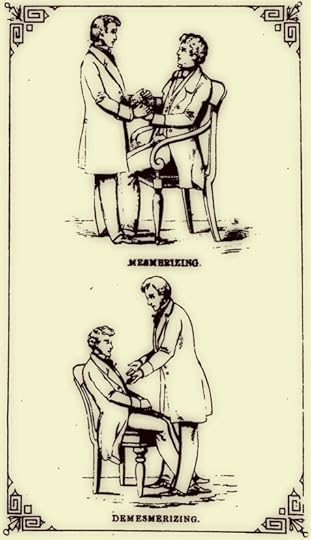 From William Davey’s The Illustrated Practical Mesmerist: Curative and Scientific (1854)
I’m curious if others feel the same way — or if what amounts to a single, final sentence just isn’t enough to matter that much. Feel free to leave a comment below if you listen to or watch the episode here in the Brom Bones Books rec room. If you’d rather, you can comment at the Tales Told YouTube channel. (Compliments are also humbly and gratefully accepted.)
— Tim
November 14, 2021
Is It Too Early to Push the Yuletide Storytelling Angle?
There’s a yearly tradition of complaining about how — fast on the heels of Halloween — retail stores start pushing Christmas merchandise and playing Christmas music. I get why it’s annoying, too. At least, wait until National Gingerbread Cookie Day! (And why isn’t that tasty holiday an international thing, am I right?)
I don’t want to repeat the same sort of mistake by promoting this week’s episode of Tales Told When the Windows Rattle as part of my effort to revitalize the tradition of telling winter tales and ghost stories around Christmas. Thus, I’m in a quandary of the worst kind: a veritable and verifiable quandary! Should I promote this episode as the second Vera Van Slyke ghostly mystery featured on the series? Is there more appeal in the fact that it’s set is on Cape Cod? The title, “An Unanchored Man,” refers to a crusty sea captain, which is probably redundant because aren’t all sea captains crusty? I guess those are all rather nice, but would they inspire anyone to listen to my reading of this seaside ghost story?
The ghostly phenomenon turns out to be pretty unusual! But if I play up that angle, I’ll creep toward giving away the big reveal. One must never give away one’s big reveal.
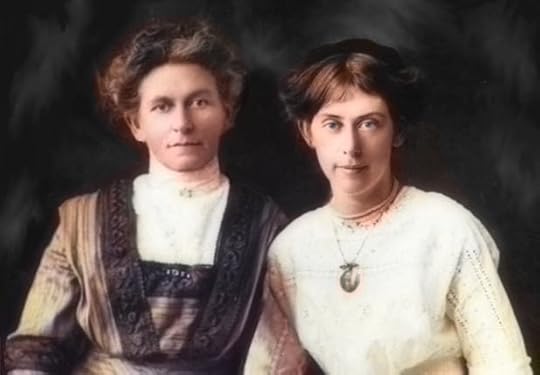 Vera Van Slyke (1868-1941) and Ludmila “Lida” Bergson (1882-1958), née Prášilová, a.k.a. Lucille Parsell
Well, all I can think to say is that, with this episode, Season One of Tales Told is halfway over. My earlier readings, including the stories by Ambrose Bierce and Edgar Allan Poe, remain in place. In fact, the master plan is to have all ten readings uploaded so that folks can pick and choose what they want to hear once the Yuletide season is upon us.
In the meantime, though, feel free to wander through the Tales Told rec room at this site. You can choose the video or the audio-only version, and even download the latter to transfer to your iPod. (Does anyone still have an iPod? Why, yes, thank you — I still have an iPod!) If you’re more of a YouTubular person, the videos are also there, and I hope you think long and hard about subscribing to the Tales Told channel.
Now, if you’ll excuse me, I have to start making plans for National Gingerbread Cookie Day.
— Tim
November 7, 2021
Tales Told 1.04: This Ain’t Cornwall’s First Ghosteo!
This week’s episode of Tales Told When the Windows Rattle features a supernatural story set on the Cornish coast during November. “Tremewen Grange” (1867) follows a pretty basic pattern: man visits Cornwall, man goes out for a smoke on a stormy night, man witnesses a creepy phantom face, man learns who died the next morning. Still, this piece is perfect for fireside storytelling, I think. In fact, it’s framed as exactly that — a story told to an eager group of listeners gathered around a cheery hearth in winter.
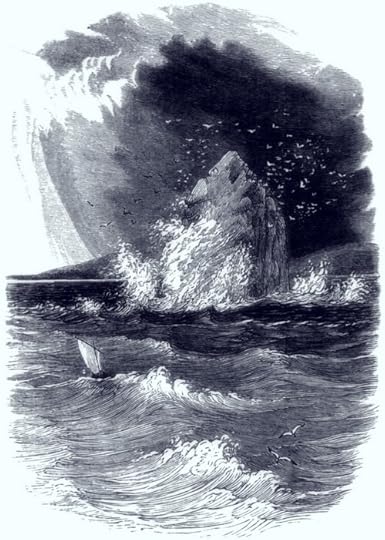 The frontispiece of Michael Penguyne; Or, Fisher Life on the Cornish Coast (1873)
Here on the Great Plains of North America, we have a saying: “This ain’t my first rodeo.” It basically means “Yes, I’m familiar with that concept.” In Cornwall, they might have a variation on it: “This ain’t my first haunting.” The British county is steeped in Celtic tradition and rich in ghostlore. If listening to “Tremewen Grange” sparks your interest for more, one place to start is Bottrell’s Traditions and Hearthside Stories of West Cornwall (1873). “The I’an’s Ghosts” (p. 122) or “A Legend of Pargwarra” (p. 149) — or “The Slighted Damsel of Gwinear” (p. 229) or “A Ghostly Ship’s Bell” (p. 277) — might keep the Halloween mood moody while setting the stage for some Yuletide ghost stories to come.
You can find my reading of “Tremewen Grange” at the Tales Told YouTube Channel, where I hope you’ll consider subscribing. Otherwise, you can pull up a chair right here in the Tales Told rec room, where along with the video, you also have the option to listen to or download an audio-only version.
— Tim
October 31, 2021
4 Online Halloween Treats!
 1
1
I’ve been looking for ways to better earn the name Brom Bones Books, and I came upon this interesting video — featuring the very interesting historian of cookery, Jonathan Townsend. It inspires me to get back into baking.
By the way, ginger cakes also appear in Herman Melville’s short story “Bartleby, the Scrivener” (1853). The scriveners, who spend their days copying legal documents, send out the office’s twelve-year-old assistant to bring back snacks. Melville writes:
Also, they sent Ginger Nut very frequently for that peculiar cake—small, flat, round, and very spicy—after which he had been named by them. Of a cold morning when business was but dull, Turkey would gobble up scores of these cakes, as if they were mere wafers—indeed they sell them at therate of six or eight for a penny—the scrape of his pen blending with the crunching of the crisp particles in his mouth. Of all the fiery afternoon blunders and flurried rashnesses of Turkey, was his once moistening a ginger-cake between his lips, and clapping it on to a mortgage for a seal.
 2
2
Ever hear of a writer named Edgar Allan Poe? He’s not very well known, which explains why a lot people misspell his name Edgar ALLEN Poe. Or do they do that simply to irritate stuffy know-it-alls like me? Anyway, here’s the third episode of Tales Told when the windows rattle, spotlighting my dramatic reading of Poe’s “The Facts of M. Valdemar’s Case.”
 3
3 Kansas Public Radio produces a great show called The Retro Cocktail Hour. It’s actually two hours long, and it’s described as “the home of space age pop and incredibly strange music.” Every year, this program has a Halloween special, and you’ll be amazed at how much spooky, silly music Darrell Brogdon, the host, has collected over the years. This music is perfect for a festive, costumed gathering — or for a solitary walk through a fogbound graveyard.
 4
4 Daniel Cooke, a writer and voice actor, invited other voice actors and anyone else who follows him on Twitter to record and send him lines from “The Raven,” by Edgar Allan Poe. I helped! Dan then stitched the many parts together to create this international reading:
Maybe one or two of these will make your Halloween a bit more historical, literary, musical, and/or poetic!
— Tim
October 27, 2021
Wherever I Go: Edgar Allan Poe!
Have I told you this story before? A few years back, a guy in a heavy coat and big hat — mind you, he was wearing this warm outerwear in the middle of a hot Oklahoma summer! — anyway, he sat next to me at a bar. He showed me a manuscript. An old, yellowed manuscript — maybe a hundred years old or even more. And I saw that it was made up of limericks!
100 limericks!
Well, long story short: this odd man sold me that manuscript, saying that there was reason to believe the limericks might’ve been written by none other than Edgar Allan Poe! Oh, I was skeptical. Needless to say, I was skeptical. Still, what if I could find proof of authorship — and what if that authorship had been sailed by Poe himself! Man, that would’ve been something…
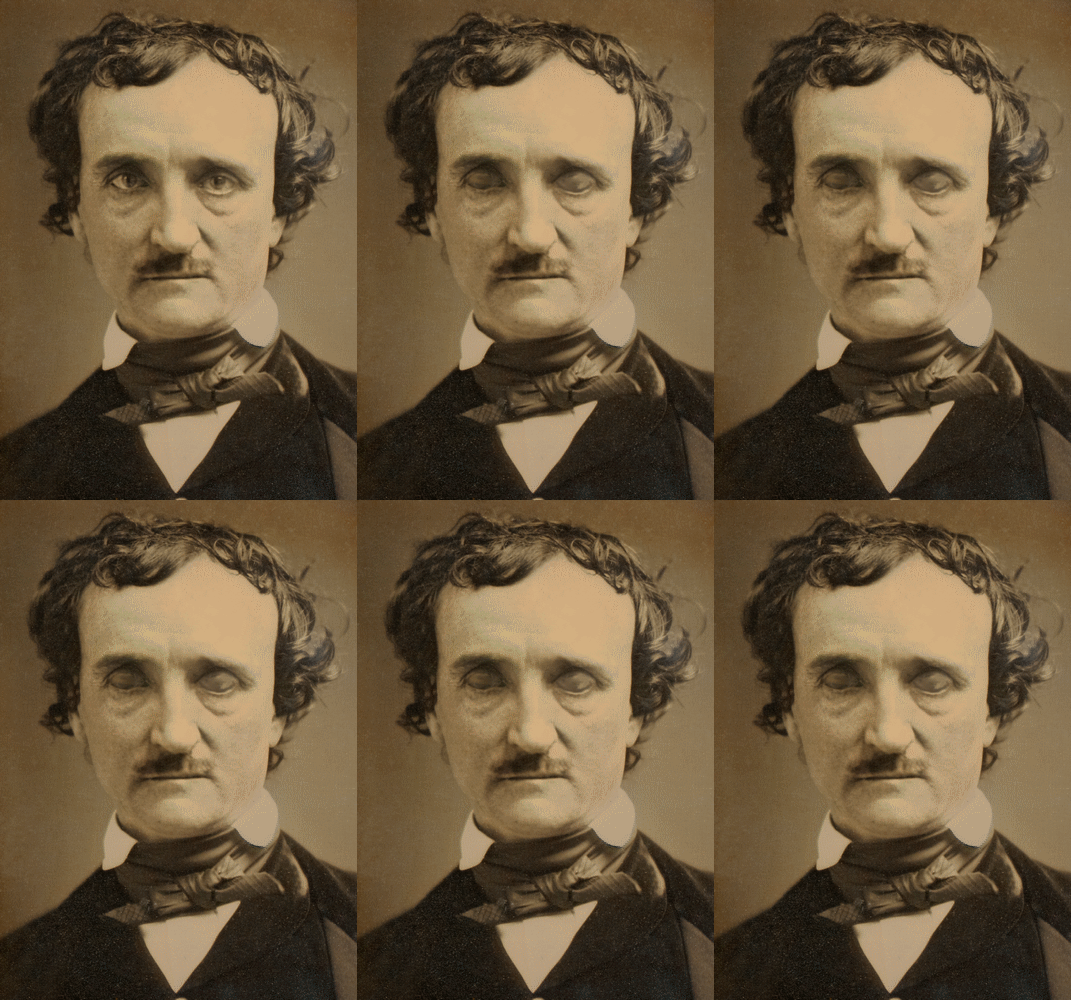
Alas, I’ve never found conclusive evidence for or against Poe having written those limericks. But I did publish them in a little book presumptuously titled The Lost Limericks of Edgar Allan Poe. But they’re probably all a hoax. (But then Poe pulled more than one hoax.)
I mention this because, on Sunday, I’ll be adding to the celebration of Halloween with my dramatic reading of “The Facts of M. Valdemar’s Case,” also known as “The Facts in the Case of M. Valdemar.” It’s not typical of Poe’s horror, which relies on dank catacombs or old castles or neglected streets. Spooky settings to create gloomy atmosphere, I mean. Instead, “Facts” mimics a scientific report. Apparently, some of the original readers thought it was a scientific report! (Did I mention that Poe liked the occasional hoax?) In fact, it’s tempting to approach this piece as more a work of early science fiction than of horror.
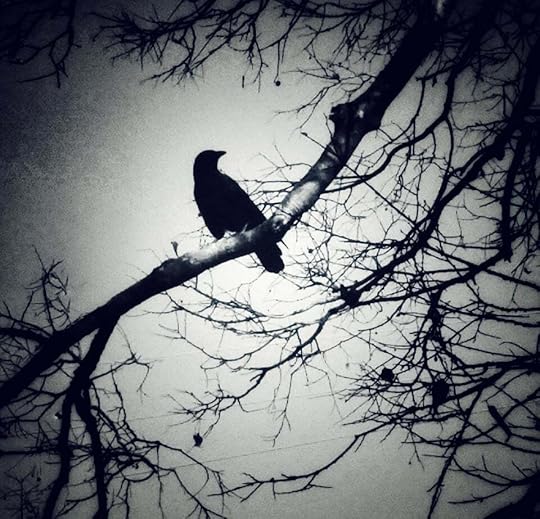 Not really a raven — just a crow — but, hey, this happy bird was only a block or two from my apartment!
Meanwhile, I also recorded a couple of lines for an international reading of Poe’s “The Raven,” scheduled to be released on Halloween, too. I’m not 100% certain about the details, so I’ll let you know more on Sunday.
Learn more about the limericks here. My reading of “Facts” will be on the Tales Told When the Windows Rattle YouTube channel, and the audio portion is already up here in the Tales Told rec room.
— Tim
October 24, 2021
Tales Told Two! A Vera Van Slyke Story Set Near Where I Grew Up
This week’s episode of Tales Told When the Windows Rattle spotlights a Vera Van Slyke adventure set not far from where I spent most of my childhood. In fact, I rode my bike to Stickney House once or twice. It’s great to see that there’s now a plan to renovate the weird, old place.
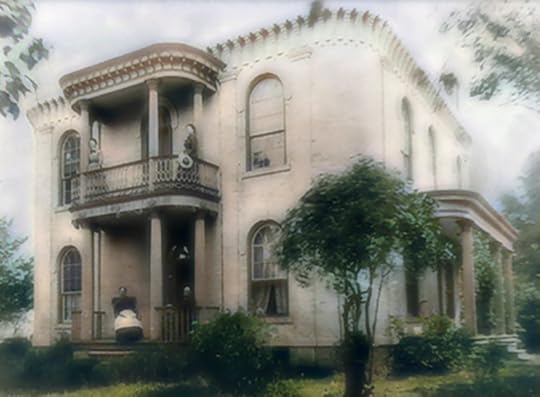 Stickney House as it looked around 1901, when Vera Van Slyke allegedly investigated it
What makes Stickney House weird are its corners. They’re rounded, and — despite a theory that’s widely accepted in the region — I don’t believe anyone really knows why. Voiced by the character Mrs. Haase, that theory involves the Stickneys being Spiritualists and the rounded corners being somehow involved with the séances they held inside. It might very well be true — and I sure believed it when I was a kid — but now? Now, I stand with the character Dr. Kling. I’ll remain skeptical until I see evidence from, say, a letter written by George Stickney, an entry in Sylvia Stickney’s diary, a blurb in a newspaper from the 1800s, or some other historical document that suggests the Stickneys actually did hold those séances. Not claims made a century or so later.
Don’t get me wrong. I love the legend. But I also know that some people lean hard on legends, and legends are often imaginative explanations of how something got the way it is. As also discussed in this week’s story, there are other possibilities. Boring possibilities, mind you. But possible possibilities.
To better understand whatever it is I’m talking about, listen to “Dark and Dirty Corners” at the Tales Told YouTube channel (and maybe subscribe while you’re there?) or in the rec room here.
— Tim
October 20, 2021
What I (Quickly) Learned About the Witch Hunts in Seventeenth-Century England
A while back, I mentioned a project I’m working on — THE DETAILS OF WHICH THE WORLD IS NOT YET PREPARED! I’m still not ready to divulge what I’m up to, but so far, the project has steered me down really interesting, unexpected pathways. That earlier excursion involved the history of haunted houses where skeletal remains — often said to have been found long after the ghostly manifestations had ended — were reported in an effort to substantiate the paranormal activity there.
More recently, I needed to give myself a crash course in witch hunting in England during the 1600s. I’m still many, many miles from being an expert, but I found a few historical works online that might provide a rough orientation to anyone else interested in wandering along this highway of human horrors. The first work on my suggested reading list is actually a German one, written long before the seventeenth century. Still, Heinrich Kramer’s Malleus Maleficarum (1487) is frequently cited as foundational work. It is a strident call to vanquish witches, built on the assumption that they are league with Satan. (How this terribly prejudiced view impacted perfectly benign “cunning folk,” those who held pre- or non-Christian beliefs, or otherwise innocent people is far too complicated a topic for me to handle here.) The Internet Archive is a great source for early editions of Kramer’s work in various languages, including the original Latin. Montague Summers’ 1928 English translation is available there, too.
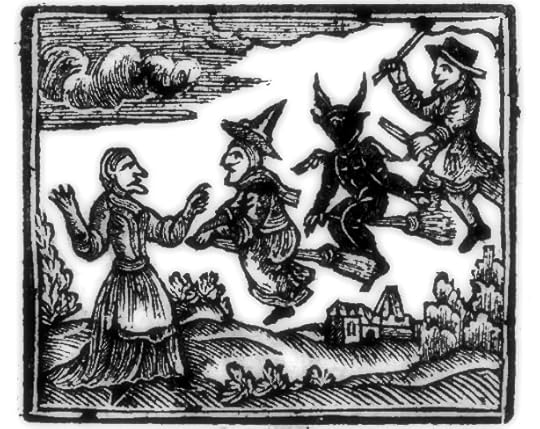 From
A Famous History of the Lancaster Witches
(1780)
From
A Famous History of the Lancaster Witches
(1780)Next, we jump to England and almost the 1600s. No less a personage than King James — the same man who commissioned a new version of the Bible — wrote a book that includes his advice on identifying and trying witches. It’s titled Daemonologie (1597). James writes as someone who believes in the reality of witchcraft, but he also urges restraint in dealing with accusations against them. He knew that some such claims were fraudulent. In other words, he wasn’t completely swept up in the witch-hunting craze, but given his lofty status and his clear reinforcement of the reality of witches, he very likely contributed to the torture and execution of many in the coming century. (On a curious side note, some say this book also influenced Shakespeare’s portrayal of the witches in Macbeth.) The Internet Archive offers a reprint of the first edition of Daemonologie, and the University of Michigan has an html version.
Another work I found that encourages those involved in witch trials to exercise caution is Richard Bernard’s A Guild to Jury-Men (1627). Again, Bernard believed witches were real in an era when not everyone agreed! Nonetheless, his second chapter is about natural diseases that can be misinterpreted as bewitchment. His third chapter deals with people who have deliberately faked being bewitched for various reasons. In both cases, he advises his readers to stand on guard against such situations. Here’s an element of this history of which I wasn’t fully aware, and I’m glad I was reminded to never over-generalize about people in the past. Of course, the witch hunts had very real, very terrible results, and it had its extremists. However, there was a spectrum of viewpoints regarding what was happening. Google Books has an early edition of Bernard’s guide and U of Michigan’s version is here.
 From Saducismus Triumphatus (1681)
One of the scarier works is written by Matthew Hopkins, the self-proclaimed “Witch-Finder General.” Hopkins made a career out of persecuting supposed witches, coercing their confessions even if it meant going outside the law. Toward the end of his campaign, his methods and results were challenged, so he wrote a defense of what he had done. It’s called The Discovery of Witches (1647). Unfortunately, I’ve only been able to find a facsimile of the original at HathiTrust, which I believe is restricted to the U.S. for copyright reasons. The rest of the world might have better luck at the U of Michigan’s site.
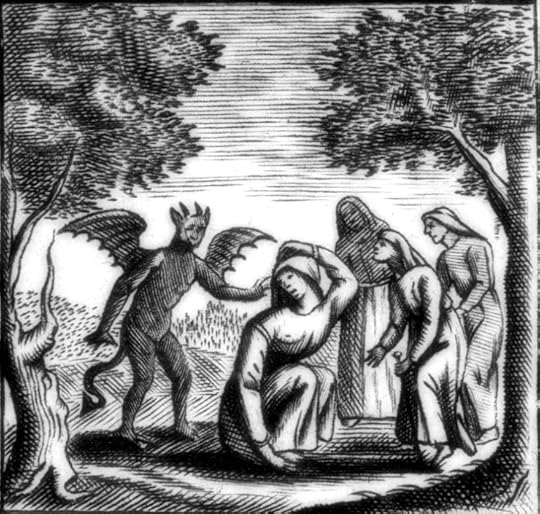
Finally, there’s Joseph Glanvill’s Saducismus Triumphatus; or, Full and Plain Evidence Concerning Witches and Apparitions (1681). Glanvill earned a place on my Ghost Hunter Hall of Fame for his investigative work in the Drummer of Tedworth case. But he ends his chronicle of the strange manifestations at the Mompessons’ house by strongly suggesting they stemmed from a vengeful witch (or perhaps “wizard”). In later centuries, Catherine Crowe and then Harry Price diagnosed the phenomena suffered by the Mompessons as the work of a poltergeist. You can decide for yourself by looking at the first of Glanvill’s “Relations” in the Internet Archive copy or in the version at good ol’ U. of Michigan.
If anyone has additional recommendations — or comments on/corrections to what’s above — please provide them below.
— Tim
October 17, 2021
It Begins.
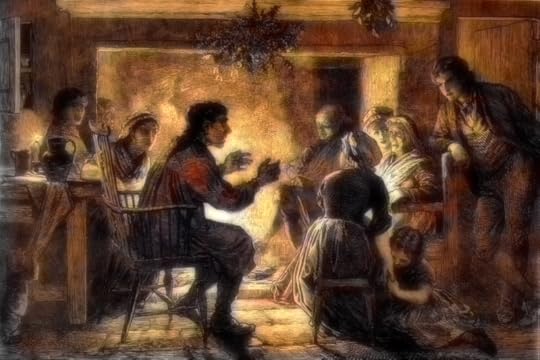
Tales Told when the windows rattle, a YouTube series featuring my readings of scary stories chosen from the Brom Bones Books catalog, has begun. The first episode spotlights “A Stranger,” by Ambrose Bierce.
There are nine more episodes to come, and they will be posted on Sundays. (There’s an extra special one for Halloween by some guy named Poe.)
 “A Ghost Story,” by George Thomas, from Illustrated London News 45 (Dec., 1864) pp. 44-45
 But YouTube isn’t the only place to find them. Visit the Tales Told rec room here, and you’ll be able to choose from watching the video or listening to the audio by itself or downloading that audio for offline listening.
— Tim
If you have a mind to, please subscribe to the Tales Told YouTube channel. Otherwise, enjoy them here!
October 13, 2021
A Gentle Reminder: Tales Told when the windows rattle Debuts Sunday, October 17th
I’ve just put the finishing touches on the video that will launch Tales Told when the windows rattle, a YouTube series. The series will also be available in the Tales Told rec room here at BromBonesBooks.com. Even better, the rec room will also offer options to listen to — or to download — the audio by itself.
Here’s the trailer:
Sunday’s story will be Ambrose Bierce’s “A Stranger.” This is a nice way to begin, since it’s a story about a campfire story. You see, Tales Told invites folks to escape the harsh weather, sit down by a warm fire, and listen to a scary story. It’s my contribution to the revitalization of this centuries-old tradition. How old is it? Well, I’ve put together a sort of history charting it here.
Season One has a total of ten episodes, scheduled for Sundays from October 17 through December 19. I hope you can attend this Sunday’s debut! But if not, that’s fine. Once posted, the videos and audio will remain available.
— Tim