Tim Prasil's Blog, page 25
March 28, 2021
Railroad Hauntings You Can Still Visit: Big Bull Tunnel in Virginia
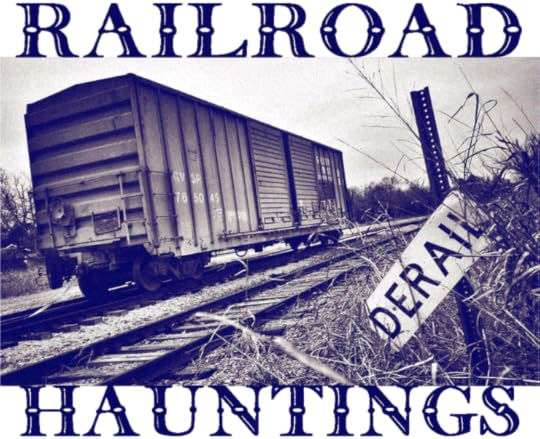
As I work on After the End of the Line: Railroad Hauntings in Literature and Lore, I thought it would be fun to see if any of the spooky railways that I find in my historical research can still be visited and are still being discussed as paranormal hot spots. I’ve already found one that is. It’s Big Bull Tunnel in Wise County, which is in Virginia and close to the Kentucky border.
First, here’s an article from the August 6, 1905, issue of the Birmingham Age-Herald: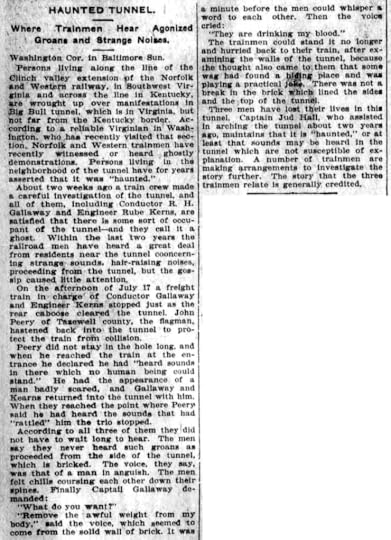
Now, here are a few websites that show 1) the Bull Tunnel is still there and 2) some say it’s still haunted:
In her very well-researched article at Virginia Creeper, Laura Wright says: “Today, the tunnel is still used and still suspected of being haunted. Hikers visit the structure, but should be warned the tunnel is on private property and trains still pass through.”
A site called Anomalien says: “Today Big Bull Tunnel is just as haunted as it ever was – the sounds are still heard by anybody that goes near and train crews hold their breath as they pass through.” Hmmm. Heard by anybody?
Even if you don’t hear anything there, Beth at Only In Your State suggests the spot is a tantalizing one: “Whether or not you believe in the ghostly echoes of trapped engineers, it’s hard to deny that this site is amazing.” Titled “What Lies Beneath the Streets of This Virginia City Is Creepy Yet Amazing,” the post comes with some very nice photos.
Please leave a comment if you have visited — or plan to visit — or have tried to visit — Big Bull Tunnel! I’d love to hear about your experience. That said, Wright’s advice to be very careful is certainly well worth heeding.
— Tim


March 21, 2021
Measuring “Most Haunted” Status with the Prasil Scale of Hauntedness
Most haunted county in England? — Yorkshire (based on number of reported hauntings)
Most haunted province in Canada? — British Columbia (based on Canadian consensus)
Most haunted state in the United States? — Well, maybe Texas (based on the findings of Ghosts of America) or perhaps California (based on “how many times our paranormal teams have been called to investigate”), but neither Texas nor California is one of the five most haunted states (based on Twitter and YouTube data).
Casting a much wider net, one might consider enjoying a tour of the 20 Most Haunted Places in the World. Disappointingly, the method of measuring hauntedness used to make these 20 choices is unexplained.
There’s a proud history to declaring “most haunted” status. In the early 1900s, Borley Rectory won in the category of Most Haunted House in England while, in the late 1800s, Ballechin House was considered the Most Haunted House in Scotland. A few decades earlier, my beloved Washington Irving referred to Sleepy Hollow — the real place in New York State — as “still one of the most haunted places in this part of the country.” Again, the yardstick for measuring hauntedness in these three cases is left behind in the work shed (or wherever else one leaves one’s yardstick behind).
Of course, the claim of “most haunted” is more hyperbole or a way to grab attention than an actual measurement based on objective and empirical quantification. Despite this, I thought I’d take a shot at inventing a scale to measure such things. It’s pretty straightforward. One records the points of specific manifestations at any given haunted site, then adds them up. Most points = most haunted. I call it the Prasil Scale of Hauntedness, and you’ll probably hate it.
Visual PhenomenaOrbs caught on camera: 1 point. Okay, maybe it’s not just dust.
Lights flickering: 5 points. Hopefully, just faulty wiring.
Witnessing doors opening and closing on their own: 10 points. Fingers crossed for drafts.
Spotting human-shaped figure: 25 points. Add 5 points for walking or comparable movement. Deduct 5 points for shadow figures because “the pareidolia is strong in this one.”
Knocking or rolling: 5 points. Could be rats. Yeah, that’s it. Rats playing bocce ball.
Crashes: 5 points. Could be rats again. Now, they’re just messing with you.
Footsteps: 10 points. Oh, classic stuff!
Snippets of conversation caught electronically (i.e., EVP): 15 points. Probably nothing more than bleed-through from a parallel reality.
Music boxes or other music: 20 points. Yeeesch!
Whispers or muttering heard without special equipment: 30 points. Add 10 points for screams.
Laughter: X points. Seriously? You’re hearing disembodied laughter, and you’re concerned about accruing points?
Spider-web feeling: 5 points. Probably those rats again. They conspire with spiders.
Weird smell: 10 points. Might be supernatural, but it might be the cheap cologne of that investigation team member who gets peeved when someone suggests everyone smile for the promotional picture. You know — the guy who thinks everyone has to scowl like you’re on an album cover of a 1980s hair band. Honestly, don’t get me started…
Cold spots (or warm/humid spots): 20 points. Another classic, but what if it’s something like being in a spectral swimming pool? I’ll stop there.
Touched by a clammy hand: 100 points. Get OUT! Get out NOW!
Writing discovered on the mirror: 10 points. Have I mentioned those pesky rats? They’ll stop at nothing.
A ball bouncing down the stairs into view: 15 points. Proceed with caution — you might be in a horror movie.
Objects (re)moved from last known location: 25 points. You know, toddlers do that. Move things from place to place just because they can. I sure hope we don’t all become toddlers in the Afterlife.
Pets responding to something “invisible”: 30 points. Definitely creepy, but — if it’s a cat — check to make sure the focus beam of your camera is off.
Well, this is a start, even if it’s a really bad start. Feel free to scribble it all out and start over. My thanks (and apologies) to the good folks at the Big Séance Parlor, a Facebook group, for helping me come up with specific spectral manifestations.
— Tim
March 17, 2021
An Interesting — If Minor — Discovery Regarding the Term “Ghost Hunter”
I really don’t know why I hadn’t checked the British Newspaper Archive earlier in my effort to trace the term “ghost hunter” back to its earliest appearances in print. I’m Scrooge-ishly frugal — and the BNA costs some money — so that might be why. The Library of Congress here in the U.S. offers their Chronicling America for free, and The National Library of Wales does the same with Welsh newspapers.
Ahem! I’m looking at you right now, British Library. And, yes, my arms are crossed. My eyebrows are raised. My foot?
Tapping.
To their credit (I guess), the British Library does offer three free pages. I used one of them to discover something I already kind of knew. The term “ghost hunter” goes back at least as far as reports on the Hammersmith ghost incident. These articles appeared in early 1804. I had already found two such sources using “ghost hunters,” and I linked them on my page about Francis Smith in the Ghost Hunter Hall of Fame. Smith, it turns out, started the 1800s by giving ghost hunting a reputation for zealousness. He shot a man, thinking he either was a ghost or, more likely, was pretending to be a ghost. Turns out, the victim was simply dressed for work.
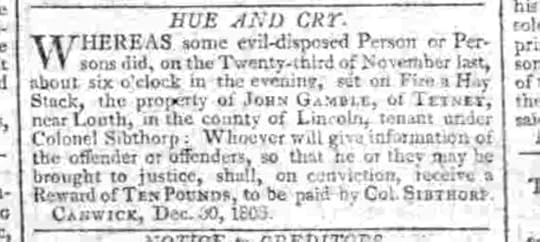 An announcement on the same page as the Hammersmith report confirming that the term “ghost hunter” was in print by 1804. (A reward of 10£ was also offered there to catch the culprit behind the ghost scare.)
In a report on the case, The Lincoln, Rutland, and Stamford Mercury provides one of the best and freshest looks at those events. Fittingly, this article was published on Friday the 13th of January, 1804! It says:
A person named Smith, a Custom-house officer, with a few others, lured by the hope of the reward, determined to watch the phantom, and for that purpose, provided themselves with arms, and took post in Black Lion-lane….The ill-fated man [being a brick-layer] was dressed as usual in his white flannel jacket; and having parted with his sister, proceeded along Black Lion-lane, where the ghost-hunters were lying in wait.
As I say, tragedy ensued. There are more details on my now-updated page about Smith.
I guess it’s cool that I have another piece of evidence showing that ghost hunting — even the word “ghost hunter” — has a checkered history, one longer than some suggest. I’ve read some researchers who say the tradition started in the mid- to late-1800s, when the Fox Sisters sparked a significant wave of Spiritualism and when the Society for Psychical Research was organized.
Certainly, ghost hunting became “a thing” in the Victorian era (1837-1901). But historians should always ask themselves if they’ve dug deeply enough.
— Tim
March 14, 2021
The Hound of the Seven Mounds: A Vera Van Slyke Ghostly Mystery Is Off to the Proofreaders!
The third chronicle in the Vera Van Slyke Ghostly Mysteries series is coming along nicely. Those who have read either or both of the first two chronicles, Help for the Haunted and Guilt Is a Ghost, know that they’ve come to me via my great-grandaunt. She recorded these investigations with ghost hunter Vera Van Slyke for her immediate family — her husband first, and then her daughter — instead of for publication. This explains why they’re especially in need of some editing before I release them to the public.
I’m always intrigued by how something my ancestor says strikes me as pretty ridiculous at first. “Surely, Lida is making this up!” I say. Then I’ll do some simple research, and BOOM! Lida’s not making it up. It’s historically accurate!
For instance, Arthur Conan Doyle attributed the death of George Edward Stanhope Molyneux Herbert, fifth Earl of Carnarvon, to something like a mummy curse. Lord Carnarvon, you see, sponsored the expedition that found — and opened — King Tutankhamen’s sarcophagus in 1923. Yep! The creator of Sherlock Holmes said the death could maybe possibly be the result of an “elemental,” a supernatural being summoned to ensure long-lasting protection of the sacred burial site.
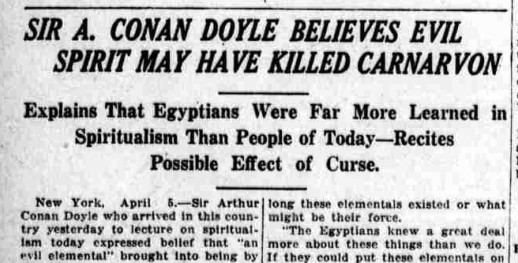
I knew the great author had become an evangelical for Spiritualism in the last phase of his life, but this seemed a bit much. Yet my great-grandaunt’s chronicle also mentions that, the prior year, Conan Doyle predicted that radio communication with spirits was within reach. Did he really believe this? It seems almost as if he was just stirring the pot, just saying things to get into the papers.
Vera Van Slyke was pretty charitable about the things Conan Doyle was claiming in the early 1920s. After watching him give a lecture on Spiritualism, she says: “[E]ven if he doesn’t fully believe in radio contact with the dearly departed—even if he doesn’t believe in fairies—you must admire the man’s championing a very fascinating view of the world.” In earlier years, Vera had been quite discerning — both picky and persnickety — regarding which supernatural phenomena she considered real. Ghosts are certainly real. Spiritualist mediums are completely fake. Clairvoyance is doubtful-but-maybe. Interestingly, in this forthcoming chronicle, Vera admits that she once spotted a leprechaun!
Had Vera become more open-minded by 1923? Or did it just not matter much to her anymore? My guess is the latter. Like so many others who had lived through the Great War and the Spanish Flu pandemic — Vera had grown jaded and disillusioned. According to my ancestor, she was even struggling to stay interested in ghosts. Maybe she admired Conan Doyle’s ability to combat disillusionment with, well, illusionment.
That said, the weird being called “the Hound” by the residents of the Seven Mounds, a rural community in Oklahoma, does seem to restore her sense of wonderment. It’s hardly a run-of-the-mill ghost, you see. Or you will see once The Hound of the Seven Mounds is available for purchase in a couple of months. In the meantime, Help for the Haunted and Guilt Is a Ghost are currently at a reduced price.
— Tim
March 7, 2021
$3 Off Each Vera Van Slyke Ghostly Mysteries Novel (in Anticipation of the Next One)!
I lowered the price of Help for the Haunted: A Decade of Vera Van Slyke Ghostly Mysteries and Guilt Is a Ghost: A Vera Van Slyke Ghostly Mystery by $3 (US). This gives you the chance to either meet the great ghost hunter or to catch up on her investigations. You see, there’s a third book on its way!
That third adventure, titled The Hound of the Seven Mounds: A Vera Van Slyke Ghostly Mystery, involves a strange entity lurking across the pastures of a rural Oklahoma community in 1923. Is it a cruel “elemental,” a spirit conjured to protect and avenge those buried in the ancient burial mounds that dot the landscape? Witnesses describe the weird being as dog-faced — and it’s gathering a pack of fierce dogs around itself — so is it a werewolf? And if it’s all just a hoax, it’s become a dangerous and deadly one. Only the shrewd insight and ghost-hunting experience of Vera Van Slyke can solve this riddle!
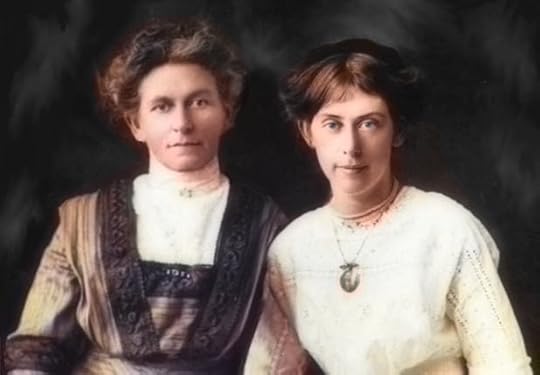
Those who have read Help for the Haunted or Guilt Is a Ghost know that I inherited the manuscripts for those investigations from my great-grandaunt, Ludmila Prášilová (shown to right of Van Slyke in the photo above). My ancestor chronicled the cases she had shared with Vera for her husband, who died in World War One. I worried that those might be the last of the memoirs of the woman who died with the name Lida Bergson. However, I recently heard from a distant relative, one who wishes to remain anonymous and about whom I knew nothing. She had come across the first two books and then contacted me. More chronicles existed! These had been penned for Lida’s daughter, Vera Rose, and had been passed along another branch of the family.
I should have The Hound of the Seven Mounds edited and available within a couple of months. (Note to self: get going on the cover!) In the meantime, find out about Help for the Haunted here and Guilt Is a Ghost here. Remember, they’re both on sale, but only until this third book becomes available.
— Tim
February 27, 2021
My Crocker Land Fixation Has Melted Now
I’ve posted the last page in the chilly Charting Crocker Land annex of BromBonesBooks.com. I became a bit fixated on this project, doing research and writing for it when other things — book-related things — probably should have taken precedence. But maybe it’s out of my system now, and I can focus more effectively on those other projects.
In that last page, I explore whether or not Robert Peary was intentionally lying about having seen Crocker Land. There’s some very good evidence to support the conclusion that he was, and I lean toward agreeing with that conclusion. Still, to my knowledge, the famous explorer left no written confession. No icy gun. Despite this lack of conclusive evidence, I’ve seen sources suggesting that Peary’s having made up Crocker Land is an undeniable fact, not a speculative attempt to mind-read a dead man. There’s the blunt description of Crocker Land on Wikipedia’s page about phantom islands: “A hoax invented by the famous Arctic explorer Robert E. Peary to gain more financial aid from George Crocker, one of his financial bankers [sic].” There’s the even blunter statement in the tellingly titled essay “Lies of the North,” by Duncan Frye: “It was all bullshit.”
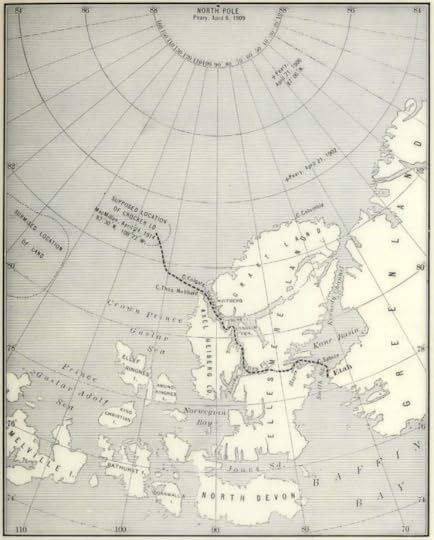
My own research into the matter certainly didn’t settle the issue, but I did find a couple of points that inspired me to squint and tilt my head. You can find out exactly what those points are on the page titled Was It All an Arctic Apparition — or a Cold Calculation? If you haven’t been following my progress on this project, it makes sense to start at the base camp of Charting Crocker Land.
— Tim
February 14, 2021
The Boys of Crocker Land Calendar Is Just a Mirage
I finished another page for my Charting Crocker Land project. It’s titled “To Plant a Flag on Crocker Land: The Quest for Verification.” The upshot? There is no land at Crocker Land. Whatever Peary claimed to have seen during his 1906 Arctic expedition was probably just a mirage. The next and final page will explore if indeed a mirage explains everything or if Peary was faking it all to impress George Crocker, the millionaire who contributed a lot of money to his expeditions and, yep, the man for whom Peary named Crocker Land.
In the process of working on this stuff, I put together seven “duo-portraits” of the key figures in the Crocker Land saga. Five more and I’ll have enough to release a calendar featuring “The Boys of Crocker Land.”
Click to view slideshow.Something tells me there’s not very much of a market for such a calendar, however, so please, please calm down!
You can visit this most recent page here, but if you haven’t been following my progress, it makes sense to start at Base Camp (which I redesigned for easier navagation and to which I’ve added a short Recommended Online Readings section).
— Tim
January 31, 2021
Nothing to Report
Well, nothing much to report.
I went ahead and posted A Timeline of Crocker Land and Other Mapped Mirages of the Arctic. It’s interesting to see that Robert Peary’s “sighting” of Crocker Land had precedents, such as Plover Land and Keenan Land, and it wasn’t the last Arctic “phantom island” to be reported.
I’ll continue to tweak this timeline, but there’s already enough there to inch me toward thinking Peary wasn’t knowingly lying about Crocker Land in order to curry favor with one of his wealthiest supporters. That Peary was doing so seems to be the dominant view these days. Follow that “phantom island” link above, for instance, and you’ll see the Wikipedia page bluntly describes Crocker Land as: “A hoax invented by the famous Arctic explorer Robert E. Peary to gain more financial aid from George Crocker, one of his financial bankers.” (Ahem, shouldn’t that be “backers”?) I intend to write a page that explores this attempt to mind read Peary. There are good reasons to believe Peary intended to fool folks. And yet other Arctic explorers claimed to have seen distant land — and it turned out to be a mirage afterward. It is a thing.
Meanwhile, work on After the End of the Line: Railroad Hauntings in Literature and Lore proceeds, and I’ll have some big news about the next Vera Van Slyke Ghostly Mystery in a few weeks. Until then, please enjoy these three nineteenth-century illustrations for Washington Irving’s “A Legend of Sleepy Hollow.” In each, Icabod Crane is being chased out of town (and away from Katrina Van Tassel) by the Headless Horseman — or could that possibly be none other than our wily boy Brom Bones?
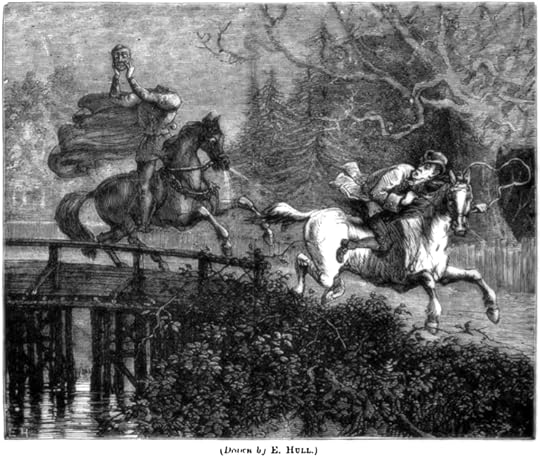 From
Cassell’s Illustrated Readings
. (This illustrator seems not to have read the story carefully. Irving gives good evidence it was a pumpkin or jack-o’-lantern, not an actual head, that had been thrown at Icabod.)
From
Cassell’s Illustrated Readings
. (This illustrator seems not to have read the story carefully. Irving gives good evidence it was a pumpkin or jack-o’-lantern, not an actual head, that had been thrown at Icabod.)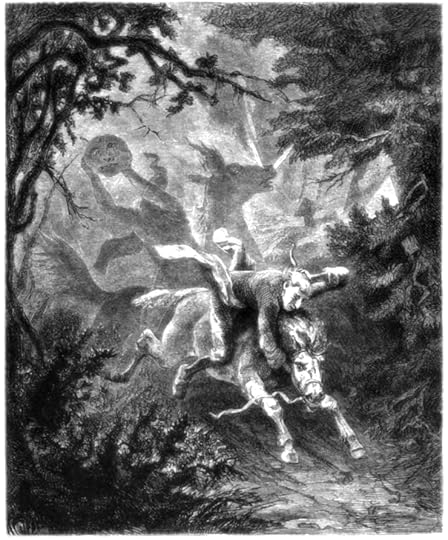 From
The Sketch Book
From
The Sketch Book
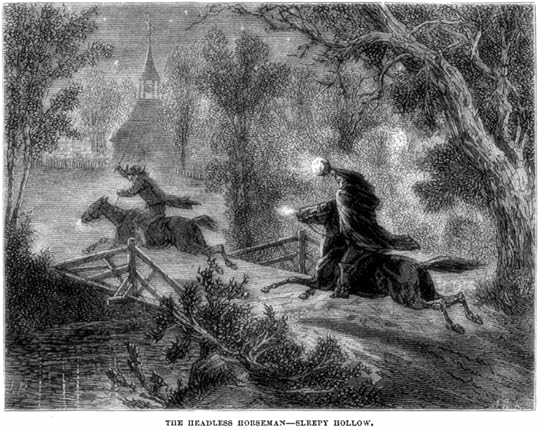 From “The Romance of the Hudson,” Harper’s New Monthly
I had these illustrations on my computer and couldn’t figure out what exactly to do with them. Maybe someone else will.
— Tim
January 17, 2021
“Charting Crocker Land” Is Begun and Last Year’s BBB Best Sellers
I’ve done enough work on my “Charting Crocker Land” project to open it to public perusal. So far, I’ve discovered that Robert Peary’s 1907 claim of glimpsing previously undiscovered territory near the North Pole fits pretty well with what others were saying about what’s likely to be found in the Arctic Sea. In addition, some important folks defended the probability that Crocker Land was real. Meanwhile, other important folks suggested it was unlikely.
Frederick Cook, Peary’s rival in the race to the North Pole, changed his stance regarding Crocker Land as time passed. At first, he gave Peary the benefit of the doubt. Once Donald MacMillan returned empty-handed from his 1913 Crocker Land Expedition, Cook said he knew all along Peary had been mistaken. I’m learning that Cook — and probably Peary — were a couple of rascals. Here’s Cook in his civies and his work clothes:
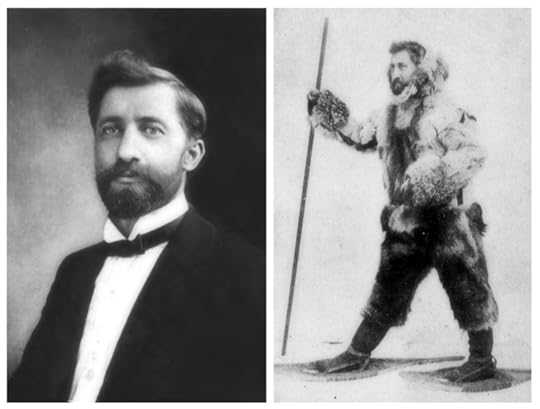 Dr. Fredrick Albert Cook (1865-1940)
In other news, this has been the first time in Brom Bones Books’ two-years-and-some-change history that I can look at the previous year and draw some meaningful conclusions. I’m pleased to announce the BBB Best Sellers List:
The Lost Limericks of Edgar Allan PoeThe Victorian Ghost Hunters CasebookGhostly Clients & Demonic Culprits: The Roots of Occult Detective FictionExactly how much this will shape my future book projects, I don’t know. Probably very little.
Here’s the link to the Charting Crocker Land main page. The links to the books are above.
— Tim
January 3, 2021
2 Excursions for 2021: Railroad Hauntings and Charting Crocker Land
I have at least two trips planned for the new year, and I’ll be traveling without ever leaving my desk chair for both.
The first is the next volume of the Phantom Traditions Library: After the End of the Line: Railroad Hauntings in Literature and Lore. So far, the PTL has focused on short fiction, though each volume includes an appendix of related non-fiction. After the End of the Line will be something a bit different. There will still be plenty of short fiction — all of it about haunted train tunnels or signal stations, phantom locomotives, or victims of the iron horse who come back as ghosts. But this volume will also include a few works of narrative poetry along with newspaper reports and other non-fiction about those same phenomena. Maybe more than any other kind of ghost story, the lines were very thin between fictional, poetic, and journalistic accounts of railroad hauntings during the 1800s/early 1900s. At least, it’s clear that there was a lot of cross-influence between them.
Here’s a mock-up of the cover:
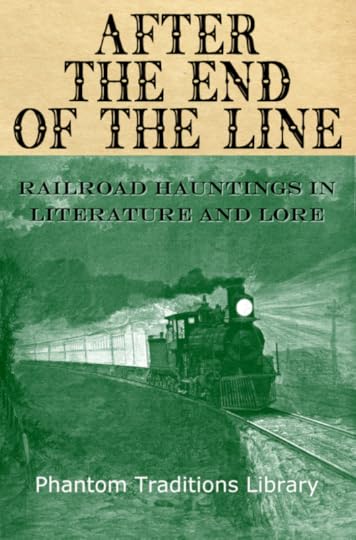
This anthology is scheduled to arrive in summer, so there’s plenty of time before you need to swing by the depot to pick it up.
The other excursion is to a place that never was. And yet it appears on some maps of the Arctic! In a book chronicling his 1906 effort to reach the North Pole, the great explorer Robert Peary claimed he had spotted a significant landmass rising from the Arctic Sea. He named it Crocker Land, a nod to George Crocker, who had financed Peary’s expedition. The surface of the world was pretty much mapped by the early 1900s, and this would have been a very significant discovery. Yep, very significant if Peary hadn’t experienced a mirage — or wasn’t flat out lying, as many have since argued.
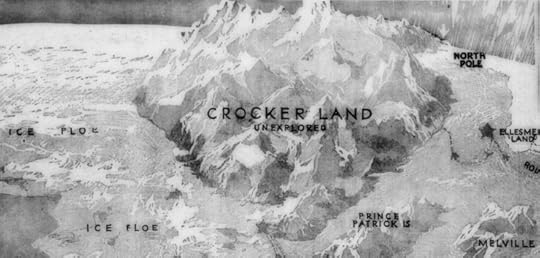 Crocker Land as depicted in The San Francisco Call, July 27, 1913, p 12.
You see, subsequent searches for the place proved it wasn’t really there. Nonetheless, I’m fascinated by the polar regions, by the history of its exploration, and by this unique chapter of such exploration. At some point this year, I’ll start a page (one probably linked to other pages) charting the story of Crocker Land. Is there a history book here? Probably not. Others have already written that. Is there inspiration for some speculative fiction set in Crocker Land? Maybe an alternate history tale? Good heavens, yes! Look for my Charting Crocker Land project to be added to the For Fun and Edification wing of this website in the coming months.
What’s that you ask? Does the Crocker Land saga really fits with the rest of the Brom Bones Books website? It’s not especially ghostly, after all. But it is chilly and phantasmal! That’s close enough for me.
— Tim