
Bill Treasurer's Blog, page 12
May 5, 2021
You’ve Reached the Top. What Comes Next?

Imagine building a long and positive track record as a leader. You’ve earned your stripes through hard work, persistence, and dedication. You have invested time creating opportunities to grow and develop people and organizations. You’ve made a real, positive, and enduring difference in the lives of those you’ve led. The organization and those around you are better off because of your leadership. You are at the top of your game.
Much of the excitement of leadership comes from the opportunities that leaders are able to identify, shape, and utilize. In a very real way, leaders are opportunity creators. One of my previous books, Leaders Open Doors, high-lights the central leadership responsibility of opening doors of opportunity for others. There is something completely energizing and gratifying about using your influence for the good of others. For this reason, leaders are constantly on the lookout for skill- stretching, spirit- stirring, and standard- raising opportunities— for the people they lead, and for themselves.
What happens when this excitement and fulfillment of creating opportunities begins to fade? When you’ve reached the top as a leader, what comes on the other side of all that success? Cresting.
What makes cresting so challenging for the seasoned leader is that there are fewer doors of opportunity to charge through. The fewer opportunities there are, the more uncomfortable the leader gets. The leader may feel acutely fearful or panicked. Time is running out! he may think. There were so many other things I’d hoped to accomplish, but I’m not going to be able to get them all done!
So common is this phenomenon that there’s even a term for it: Torschlusspanik. The word first appeared in the Middle Ages and is literally translated as “gate- closing panic.” In medieval times, when many European cities were enclosed fortresses, city residents would need to get back through the city gates by nightfall or risk getting locked out. The consequences of not getting through the gate on time could be serious, such as freezing to death, getting attacked by marauding thieves, or being eaten by wild animals!
As it relates to leadership, Torschlusspanik has an added dimension of melancholy, brought on by a pronounced fear of missing out. Soon the leader will be left outside the organization’s gates, part of its history but exiled from its future. All of the leader’s wonderful accomplishments pale in comparison to the infinite number of opportunities he or she will not experience.
So, yes, leaders open doors, but when the opportunities to do so start to close, they will feel less useful or important. Life is more vibrant and fulfilling inside the city walls than it is when you’re left outside as the sun is setting.
The transition of a leader’s career from the top of the crest to the other side can actually be a beautiful thing. This is the time when your wisdom is ripest, when the bulk of your legacy has been established, and when your influence has left a tangible and positive mark. At this stage of your leadership career, you are a leader in full.
What are some examples of when you “crested” past the top of your skill or expertise? What opportunities are you now facing that you fear are closing fast?
Image by Free-Photos from Pixabay
The post You’ve Reached the Top. What Comes Next? appeared first on Giant Leap Consulting.


April 21, 2021
Use Courage—Not Fear—To Manage Your Team

Years ago, I wrote an international bestselling management book called, Courage Goes to Work. I’ve taught the concepts of courage-building in the workplace all over the world. One of the most profound principles is that when managers stop leading with fear and begin infusing courage in the workplace, there is a dramatic and positive effect that impacts everyone. The transformation is powerful and worth the shift in mindset and approach managers bring to the team and the company.
Stop Stoking The FearManagers fill people with fear to motivate them, often for reasons of efficiency and immaturity. It simply takes less time, thought, and technique to bark orders than to motivate people according to their interest, passion, and capabilities. So managers justify their behavior with excuses like, “I’m too busy to coddle people” and “I’m paid to get results, not be nice to people.” The way they see it, encouragement is a waste of time.
You can harness fear’s energy in ways that allow people to do courageous things.
Workers have a way of acting in their own worst interests when managers overload them with fear. Like flailing about at the sight of a bee, thinking that the best way to keep from getting stung is to wave hysterically, the actions of workers who are managed with fear are often dramatic and disproportionate to the fear being faced.

Fear makes workers clam up, restricting the flow of feedback necessary for keeping managers from making bad decisions. For example, fear heightens workers’ suspicions of one another, undermining the trust that interpersonal relationships need to flourish. Fear causes workers to be unduly preoccupied with safety, strangling their willingness to take risks and extend their skills. Subsequently, fear lowers morale, damages relationships, erodes trust, and builds resentment. Ultimately, fear lowers confidence, standards, and profits.
The Benefits of EncouragementWorkers led by courage are more engaged, committed, optimistic, loyal, and change embracing.
Encouragement does, as fear-stoking managers argue, take time. But, providing encouragement to workers is an investment of time, not a waste of it. There are better ways to use fear than threatening workers. You can harness fear’s energy in ways that allow people to do courageous things. A far better and more impactful approach is to inspire people by helping them to find their personal courage.
Workers led by courage are more engaged, committed, optimistic, loyal, and change embracing. Why wouldn’t they be? Imagine working for a boss whose vision was so bold that it excited you. Or working for a manager who valued mistake-making as a natural and necessary part of your professional development. Imagine working for a manager who saw ass-kicking as a repulsive, manipulative, and dishonest thing.
Then go a step further and imagine what the whole company might look like if all managers led by putting courage into their workers. It would be a workplace where you could implicitly trust the motives and intentions of everyone around you. You could speak the unvarnished truth. You could make more forward-falling mistakes to serve the company better.
Courage Goes To WorkWhen you bring courage into the workplace, it goes to work for the team and your business. Moreover, there is an undeniable transformation that happens within your people that they’ll never forget. Give everyone the gift that lasts a lifetime—something they can use professionally and personally. Provide them with precious and practical courage. They’ll thank you and remember you for it.
The post Use Courage—Not Fear—To Manage Your Team appeared first on Giant Leap Consulting.
Use Courage—Not Fear To Manage Your Team
Years ago, I wrote an international bestselling management book called, Courage Goes to Work. I’ve taught the concepts of courage-building in the workplace all over the world. One of the most profound principles is that when managers stop leading with fear and begin infusing courage in the workplace, there is a dramatic and positive effect that impacts everyone. The transformation is powerful and worth the shift in mindset and approach managers bring to the team and the company.
Stop Stoking The FearManagers fill people with fear to motivate them, often for reasons of efficiency and immaturity. It simply takes less time, thought, and technique to bark orders than to motivate people according to their interest, passion, and capabilities. So managers justify their behavior with excuses like, “I’m too busy to coddle people” and “I’m paid to get results, not be nice to people.” The way they see it, encouragement is a waste of time.
You can harness fear’s energy in ways that allow people to do courageous things.
Workers have a way of acting in their own worst interests when managers overload them with fear. Like flailing about at the sight of a bee, thinking that the best way to keep from getting stung is to wave hysterically, the actions of workers who are managed with fear are often dramatic and disproportionate to the fear being faced.
Fear makes workers clam up, restricting the flow of feedback necessary for keeping managers from making bad decisions. For example, fear heightens workers’ suspicions of one another, undermining the trust that interpersonal relationships need to flourish. Fear causes workers to be unduly preoccupied with safety, strangling their willingness to take risks and extend their skills. Subsequently, fear lowers morale, damages relationships, erodes trust, and builds resentment. Ultimately, fear lowers confidence, standards, and profits.
The Benefits of EncouragementWorkers led by courage are more engaged, committed, optimistic, loyal, and change embracing.
Encouragement does, as fear-stoking managers argue, take time. But, providing encouragement to workers is an investment of time, not a waste of it. There are better ways to use fear than threatening workers. You can harness fear’s energy in ways that allow people to do courageous things. A far better and more impactful approach is to inspire people by helping them to find their personal courage.
Workers led by courage are more engaged, committed, optimistic, loyal, and change embracing. Why wouldn’t they be? Imagine working for a boss whose vision was so bold that it excited you. Or working for a manager who valued mistake-making as a natural and necessary part of your professional development. Imagine working for a manager who saw ass-kicking as a repulsive, manipulative, and dishonest thing.
Then go a step further and imagine what the whole company might look like if all managers led by putting courage into their workers. It would be a workplace where you could implicitly trust the motives and intentions of everyone around you. You could speak the unvarnished truth. You could make more forward-falling mistakes to serve the company better.
Courage Goes To WorkWhen you bring courage into the workplace, it goes to work for the team and your business. Moreover, there is an undeniable transformation that happens within your people that they’ll never forget. Give everyone the gift that lasts a lifetime—something they can use professionally and personally. Provide them with precious and practical courage. They’ll thank you and remember you for it.
The post Use Courage—Not Fear To Manage Your Team appeared first on Giant Leap Consulting.
April 12, 2021
Leaders Don’t Freak Out
 Edited April 12, 2021
As a leader, stress is inevitable. However, it is what you do with that stress that makes all the difference. You can either let stress take you down, or you can let it energize and motivate you. Whatever you do, don’t freak out.
The leaders we most admire are those who remain composed when the potential for anxiety is high.
Before starting my business, I spent six years at Accenture, one of the world’s largest management consulting firms. How large? Over 300000 employees and nearly $35 billion in revenue.
Peter Drucker said that consulting companies’ problem is that when you build the beast, you have to feed the beast. Partners at Accenture were under tremendous pressure to both deliver value to our clients and generate more revenue…always in that order.
The Stress TollDuring my last two years at the firm, I served as Accenture’s first full-time internal executive coach. I had a clientele of 35 partners and associate partners. I can tell you that many partners felt the pressure to grow the business. Stress takes a toll. Often that toll is felt most by the people being led by the leader. The default option for a lot of leaders is to externalize their stress toward the people they lead. If you’ve ever gotten your head bitten off by your boss or watched your boss freak out over some minor mistake, you’ve experienced your leader’s stress firsthand.
The leaders we most admire are those who remain composed when the potential for anxiety is high. We feel most confident in our leaders when they are levelheaded and reasonable. In my case, the leader who made the best and biggest impression on me was Hines Brannan. He had (and still has) humble confidence that only years of experience can give a leader. Discover more about this influential man.
The default option for a lot of leaders is to externalize their stress toward the people they lead.
Who is the levelheaded leader who made all the difference in your life? Who is the leader who refused to freak out? Share your thoughts in the comments.
My advice to leaders everywhere: Don’t freak out.
The post Leaders Don’t Freak Out appeared first on Giant Leap Consulting.
March 22, 2021
Risk-Taking Advice From America’s Greatest Mountaineer
 Updated March 22, 2021
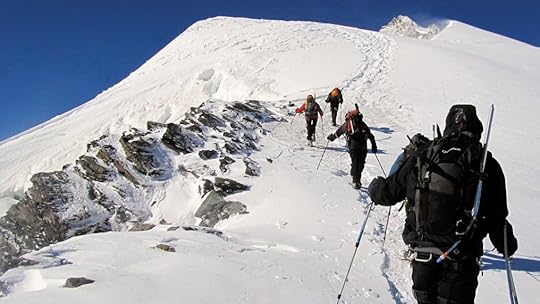
Ed Viesturs is arguably the greatest American mountaineer that ever lived, or more accurately, lives. Ed has a reputation for being a calculated risk-taker, who refuses to compromise safety because of ambition.
As a result, he has summited Mount Everest seven times, almost all without supplemental oxygen. Ed helped people off the mountain during the ill-fated expedition in 1996, which cost the lives of eight people and was featured in two motion pictures, both titled, Everest. Ed has also climbed all 14 of the world’s 8000-meter summits (over 26000 feet) – also known as the “eight-thousanders.”
When facing danger, your inner wisdom is the best guide.
I came to admire Ed during the writing of my first book, Right Risk. Having been a professional high diver, I wrote the book to help explain why some people are drawn toward risk while others are repelled by it. I wrote about Ed in the book, and since then he’s become one of my risk-taking role models.

I recently caught up with Ed as part of a client engagement that I’m bringing him in to. Risk is an ever-present part of a mountain climber’s reality. As Ed explained, “When I get on a plane with five other climbers, there’s a chance that one or two of us won’t be coming home.”
So what does Ed think is central to accessing risk?
“Listen to the mountain. The mountain decides whether I climb, not me. The mountain has been there for millions of years. I need to continually remind myself that I’m just a visiting guest. I need to respect the mountain. It tells me whether I get to climb, I don’t get to decide.”
Risk-taking Tips from a MountaineerWhen you choose a life of high stakes, being disciplined gives you better odds.
Ed shared some additional risk-taking tips that are well worth heeding.
Reject Outside Pressure: You’ll likely make a lousy risk decision if you base it on the influence of outside pressure. Professional mountain climbers face pressure from many sources, including the media, equipment sponsors, paying clients, etc. “There’s a huge difference between feeling that I have to do something and knowing what I should do. Feeling that you have to take a risk is usually a red flag that you’ve lost perspective and choice.”Instinct Matters: When facing danger, your inner wisdom is the best guide. “Whether I climb or don’t climb often comes down to instinct. If something doesn’t feel right at the gut level, I won’t do it. I’ve learned to trust that instinct.”Have the Courage to Say No: The closer you get to the summit, the greater the temptation to keep climbing. The ambition of hungry “yes” can cloud one’s judgment. “It takes courage to stop in your tracks and climb back down the mountain before reaching the summit. But because conditions change rapidly up there, sometimes walking back down is the choice that will keep you alive.”Longevity in a sport like mountain climbing is a precious thing. There’s a reason that Ed is a mountaineering legend: he’s disciplined about taking risks. When you choose a life of high stakes, being disciplined gives you better odds. For Ed, a thrilling adventure never trumps staying alive. As he says, “Getting up is optional, getting down is mandatory.”

You don’t have to be a mountain climber to benefit from Ed’s advice. When you’re leading a complex project, or evaluating a big investment, or standing at the threshold of a consequential decision, you’ll better your odds by listening to your inner wisdom, rejecting the notion that you have to make the bold move, and having the backbone to say “no” when the temptation to say “yes” is skewing your judgment.
Ed’s right – your odds of taking a successful risk comes down to listening to the mountain.
Originally shared on Huffington Post.
Image credit: atmstudio
The post Risk-Taking Advice From America’s Greatest Mountaineer appeared first on Giant Leap Consulting.
March 3, 2021
Surprising Life Lessons Thanks to a Special Plant

I’ve always lived in my head a little too much. Drawn to ideas and ideals, I’m attracted to lofty philosophies and neglectful of attending to what’s right in front of me. So at the start of this year, I decided I would begin a daily practice of caring for a little plant that my wife had put in my office.
Daily Practice
Now, bear in mind that my wife knows I can be neglectful. She must have known she was taking a risk by expecting me to water a plant each day, much less setting it outside on the guardrail outside my office so it could soak up the sunlight. But my wife loves the man I am trying to become as much as the man I actually am, so entrusting me with caring for the plant could have been part of her designs to help me become the better man. Daily practice is hard for me. It takes patience and attending to this moment. It means caring right now, and not when a better time suits me. And tend to it, I did. Watering it, giving it sunlight, and talking to it—I did it all with love and gentility.
When we give our full presence, concentration, and best-selves to what is right in front of us, we take better care of everything around us.
Yesterday, my wife came to my office and asked me why the plant was on the guardrail. Proudly, I told her, “Because I’m becoming a better, more caring person. I’m giving the plant daily sunlight.”
She smiled big, hardly containing herself, and said, “It’s a fake plant!”
Both of us burst out laughing, though my face was much redder than hers.
All Things Are Real
Years ago, I read Care of the Soul by Thomas Moore. A former monk, and Jungian psychotherapist, Moore suggests we care for inanimate things with the same love and attention we care for living creatures. When we give our full presence, concentration, and best-selves to what is right in front of us, we take better care of everything around us. All things, living and non-living, are made up of the same cosmos material of protons, neutrons, and electrons, after all. Perhaps it’s not a coincidence that I had brought a new copy of the book just before setting out on my journey to become a better plant owner.
Whatever your beliefs or daily practices, it seems to me people should aim to leave our world and our planet a little better off than we found it. My commitment is to take better care of the things around me, both living and non-living.
 All things are real—even the fake ones. And real or fake, all things are deserving of our care. So today, like yesterday, I put my beautiful fake plant back on the guardrail so that it could bask in the real sunlight.
The post Surprising Life Lessons Thanks to a Special Plant appeared first on Giant Leap Consulting.
February 24, 2021
Let Go of that Ego. Leading Isn’t About YOU.

I’ve recently started pulling together some guidance to share with people new to their leadership roles. Given how broad the topic is, there’s a lot of advice to share! There is one piece of wisdom that can take years to appreciate: harness your ego.
Yes, people prefer following a confident leader. There is a point at which, though, confidence tips over into conceit, and the leader’s priority shifts from the people whom he or she is privileged to lead to him or herself. The change from confidence to arrogance, at the core, is a shift from selflessness to selfishness. When a leader starts becoming all about themselves, they often lose their followers’ confidence—portending the end of the leader’s tenure.
When everyone tells you how great you are, you may start to enjoy—and believe it.
Maybe You’re Not So Great?
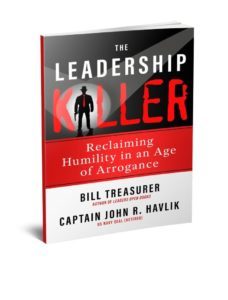
Pick up your local newspaper on any given day, and there’s likely to be a story about some ego-centric leader whose boneheaded words or deeds revealed their conceit. In 2018, I co-authored a book with John “Coach” Havlik, retired Navy SEAL Captain, titled The Leadership Killer: Reclaiming Humility in the Age of Arrogance. We provide scores of examples of seemingly respectable leaders, right up until the point at which they decimated their careers and reputation by shifting from selflessness to selfishness. Leadership can be powerfully seductive. When everyone tells you how great you are, you may start to enjoy—and believe it.
While facilitating a corporate town hall in front of 300 employees, I asked the CEO of a longtime client, “What is the one vital leadership attribute you didn’t appreciate in your early career”? He was quick to answer, “humility.” He explained, “Early on, I just wanted to win in all situations because winning equated to results. Over time, maybe through maturity, I came to value the input of those around me more and more. Without the knowledge and advice of so many of the people in this room, the people who built this company, we never would have become as successful as we are. Nobody likes to be led by a blowhard.”
When you’re new in a leadership role, it’s tempting to over-direct people by spending more time telling than listening.
Do You Think You Have All The Answers?
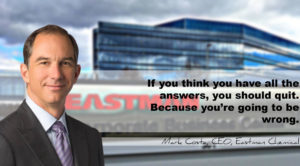 When you’re new in a leadership role, it’s tempting to over-direct people by spending more time telling than listening. It’s a dangerous game, though, because you’re always having to know more than the people you’re leading, which as you become responsible for bigger teams becomes impossible. Mark Costa, the CEO of Eastman Chemicals, got it right when he said, “If you think you have all the answers, you should quit. Because you’re going to be wrong.”
As you progress in your leadership career, whether you’re a new leader or a seasoned veteran, you would be wise to remember the First Law of Leadership: It’s not about you! It’s about the people and organization you’re leading. At the end of your career, the best evidence of your success will be that you’ve left people better off than you found them and the organization better off than you found it.
The post Let Go of that Ego. Leading Isn’t About YOU. appeared first on Giant Leap Consulting.
February 18, 2021
Keep Your Leadership Ego in Perspective

As you progress in your leadership career and grow in influence, rank, and stature, never lose sight of the fact that you’re just a speck in an infinite universe, like every other human being who ever lived. It doesn’t matter how much money you make, how many people you lead, or how many grand achievements you amass; you will meet the same fate as everyone else.
…your ego is both your greatest ally and worst enemy.
Regardless of stature, no one escapes the descending ceiling which closes upon each of us, mercilessly, with each passing day. The old Italian proverb sums it up well, “At the end of the game, the king and the pawn go back in the same box.”

The Ego’s Default Mode
Faced with its mortality, what’s an ego to do? Precisely what it’s always done! It protects you from harm and danger. Self-preservation is the ego’s most basic function. Even if it means defending you from inescapable realities like your imperfections. In this way, your ego is both your greatest ally and worst enemy. Without self-discipline and humility, which I explain in my book, “The Leadership Killer: Reclaiming Humility in an Age of Arrogance,” co-authored with Captain John R. Havlik, US Navy Seal (retired)–your ego can come to inflate your sense of self to the point where all that matters is gratifying your own needs, prioritizing your desires, and perpetuating your leadership existence.
…the only one who can deflate your ego is YOU.
The ego can puff up your self-importance until you come to view those around you as irrelevant and expendable. The bigger the ego gets, the more objectified and insignificant others will become unless they have big egos. In which case, you’ll view them as competitive threats which, driven by their ego and insecurities, could puncture the thin membrane of your leadership facade.

Humility Vs. Ego
How you keep hubris in check is by grounding yourself in humility and deep gratitude for what you have achieved and what you have to offer future leaders. Don’t let your ego get the best of you. Because shockingly, when it comes down to it, no one is as special as they want to think they are. That recognition is how we humble ourselves, how we humble ourselves to others and ourselves. And, the only one who can deflate your ego is YOU.
The post Keep Your Leadership Ego in Perspective appeared first on Giant Leap Consulting.
February 11, 2021
Naive Leaders And Their Comeuppance

When described through a pair of rose-colored glasses, the idea of leadership as an easy career doesn’t do the naive leader any favors. Why? Because it’s not just misleading, it’s an outright lie. Leadership is messy, challenging, and you will get things wrong–more than once. Usually, it comes in the form of a swift kick in the gluteus maximus and frequently out of nowhere. I wrote a forthright book about what you can expect in between the high points of leading others. When things get real, as I describe in my book, “A Leadership Kick in the Ass,” is when you learn some of the most valuable lessons in your career.
Naive LeadersBefore moving into a leadership role, there is an innocent naivete about what leadership will entail.
Before moving into a leadership role, there is an innocent naivete about what leadership will entail. The more deluded a new leader is about leadership before becoming a leader, the more badly an ass-kicking stings. The starting assumption about leadership is that your ideas will be listened to, valued, and heeded.
From afar, it looks attractive as if the leadership practice boiled down to issuing orders, imparting wisdom, developing underlings, effecting results, and reaping the rewards. It all seems pretty straightforward.

Once you become a leader, you learn that leadership is not all sunshine and lollipops. Leadership is more about those being lead than the person doing the leading. Leaders are successful to the extent that they help others become successful. Self-determination has very little to do with it. Leaders are almost entirely dependent on the output, performance, and growth of their leading people.
Unless the leader focuses intensely on building up others’ capability and successes, his or her leadership potential will never be fully realized.
Leaders need followers more than followers need leaders. Followers make leaders successful. The core truth obscured by the delusion that leadership is about the leader is that, to excel, a leader can only do well by helping others do well. Unless the leader focuses intensely on building up others’ capability and successes, his or her leadership potential will never be fully realized. The people whom the leader is leading are the whole point of leadership.
Kicked by RealityAfter getting psychologically kicked by the hard realities of leading others, new and naive leaders may seriously question their competence and sanity. This isn’t what I signed up for, they may think. Why suffer through all this one-upmanship, second-guessing, poor attitudes, and political nonsense? During my leadership development programs, I have new leaders answer this simple question: At the end of your leadership career, what will have made the challenge of leadership worthwhile? The most frequent answer is this: “I will have built other leaders who are building other leaders.”

When you are privileged to lead others, your influence can impact the trajectories of people’s entire careers, potentially helping them become more courageous, just, and humane. When you do it right, the best of you may bring out the best in others in the process, and they may become inspired to lead too.
Leadership is not just hard for you; it’s hard, period.
The starting point of effective leadership development (and real leadership change) is recognizing that leadership is hard. Starting with this presumption helps mitigate overconfidence, inspire earnest preparation, and activate a deeper and more authentic commitment to lead. Ultimately, by soberly and thoughtfully assessing how crazy hard leadership is, you’ll stop freaking out about having to lead. Leadership is not just hard for you; it’s hard, period. Do you want to lead? Deal with it.
The post Naive Leaders And Their Comeuppance appeared first on Giant Leap Consulting.
January 20, 2021
Leadership and the Art of Performance

Edited January 2021
Leadership is a role, a part you play in front of many audiences. It’s a part that comes with many expected and unexpected demands. Finding the balance, what you are truly responsible for versus what you assume responsibility for, is the difference between whether or not you succumb to the Leadership Killer.
In the classical (and stereotypical) view of leadership, you’re expected to carry yourself with a commanding presence so that people know you’re “in charge.” You’re expected to have more experience and knowledge than those you’re leading and to have timely and accurate answers to their many questions. You are presumed to be strong to the point of being unshakeable and invulnerable. When things get dicey, you’re supposed to push interference out of the way and say, “I got this!”
Some employees respond best when you treat them as equals.

During a conversation about the pressures of leading others, an executive vice president of an electrical company commented, “What makes leadership so hard is that everyone needs you to play a different part. Some employees respond best when you treat them as equals. But with others, if you do that you’ll lose their respect. They work best following a chain of command, and they respond better when you give them explicit directives. Some want you to be an authority figure, some want you to be a coach, some want you to be a friend. And you may not even actually be any of those things, but to keep them motivated, you try to play the part they expect.”
Some leaders get so wrapped up in the performance that they don’t know how to step out of it.
Different Leadership Strokes for Different Folks
As he suggests, the leadership role requires versatility. Sometimes it calls for you to be tough, direct, and blatantly honest. Other times it requires you to be compassionate, caring, and friendly. It makes no difference that you’re authentic disposition is; the role of leadership sometimes demands that you act against who you actually are. This is not unlike being an actor when some parts require that you “play against type.”

The danger of over-attending to the role of a leader is that you may start to lose sight of your true self. Some leaders get so wrapped up in the performance that they don’t know how to step out of it. They stay in a constant state of theatrics, pretending to be invulnerable, strong, and in control. All the while their true self goes unnourished, and, before long, they become the proverbial man in the gray flannel suit, a shell of a human being, all work and no soul.
This is what the Killer wants. Hubris’s work will be much easier if you have no sense of self, no depth and dimension, and no sense of identity beyond your leadership role. Hubris will be in a much better position to shape and define you when you have no earthly idea who you are outside of your role of leader.
Check your performance level. As a leader, put your role in perspective by considering:
Who are your stakeholders?
Which people are relying upon YOU?
Who can’t do a good job unless YOU do a good job?
Who do YOU depend on to do your job effectively?
How are your relationships with the people who have a stake in your being an effective leader?
Which connections deserve more attention?
The post Leadership and the Art of Performance appeared first on Giant Leap Consulting.


