
Bill Treasurer's Blog, page 8
January 11, 2023
The Extraordinary Ordinary Leader

What a leader does every day may seem ordinary, but ordinary things done consistently are what it takes to be extraordinary.
You look uniquely familiar. You, the one who has learned to believe in yourself, trust yourself, and follow the quiet inner voice that says, “Why not me?” You don’t think you’re “better” than other people; you’ve just learned through ups and downs, the gruel and the grind, and ordeals and adventures that you can find a way to overcome obstacles and finish the landing. And when you do, you make improvements so you can land closer to perfect next time. There is always more to do and better ways to do it.
You’re an achiever, someone blessed with divine discontent. You’re never fully satisfied with where you are because you know that with creativity, ingenuity, and effort, any “great job” of today can be outdone tomorrow. Yes, you like to compete, and yes, you like to win. But winning is so much sweeter when you beat your own best, competing against yourself and topping your last big achievement. You want others to top themselves too. You expect more of yourself … and others.
Impatience and the Extra-Ordinary LeaderYou’re impatient, yes, but in a way that brings urgency to the task at hand, not in a way that adds to the risk or jeopardizes progress. Your impatience is connected to your passion; you know that the pursuit of the outcomes will lift everyone’s skills and deepen their experience. Progress turns on the engine of urgency. You keep your foot on the throttle because it moves things forward. You give a rip.
You’re a learner, a seeker, a curious venturer. You’re alert, interested, and engaged, and when you aren’t, you scan the landscape for something new to reenergize your brain cells. Your learning is perpetual because you’re never done. You want answers that are more precise, accurate, truthful, and enduring. You study, review and challenge. And know that skepticism is part of the calculation and thoughtfulness that lead to decisions and actions that are safer, sounder, and more likely to succeed.
You’re a leader. And you’re just getting started.
You pay attention to others who have traveled further down the road, accomplished grander things, or overcome bigger obstacles. And go out of your way to learn about the experiences and stories of those who are commonly ignored, dismissed, or excluded. You are humble enough to listen to everyone and smart enough to heed advice coming from anyone. Your aim is to use whatever advantages you have enjoyed making the workplace more fair, just, and equitable for everyone. You use your voice to amplify the concerns of those whose voices are too often suppressed. You treat no one as lesser. Ever.
Leadership isn’t EasyYou haven’t had it easy. You’ve experienced setbacks, barriers, and people who weren’t on your side. Despite that, or because of it, you strive to see and expect the best in others — even those who withhold those courtesies from you. You’re a believer in human potential. As much as you believe in your own abilities, you know that your game is upped by people who play an upped game. So you take the time to teach, coach, and serve others. You have little interest in going it alone, as your goals and aspirations are bigger than you could achieve all on your own. Besides, working with fiercely independent individuals who choose to put the team’s interests above their own is more fun than flying solo.
You haven’t had it easy. You’ve experienced setbacks, barriers, and people who weren’t on your side.
Some of you can calculate numbers in your head. Some of you have always been “good with people.” Others have a knack for pinpointing risks. Some of you have spatial awareness and can conceptualize what finished rooms or buildings will look like before they are built. Some of you excel at forecasting scenarios and setting the master plan. Though the talents may be different, all of you have proven yourself to yourself. Many times over, whether in school, on the sports field, or in how responsibly you’ve performed your first jobs, you’ve shown up and gotten the job done. You know you’re going to have to prove yourself to many others in the future. And you’re up to that challenge. In fact, you relish it.
You’re a leader. And you’re just getting started.
This post excerpted from Leadership Two Words at a Time originally appeared on SmartBrief.
Photo by Kelly Sikkema on Unsplash.
The post The Extraordinary Ordinary Leader appeared first on Giant Leap Consulting.


December 21, 2022
Taking a Moment to Pause

During this time of year, we are often overwhelmed. Schedules are full and there are never enough hours in the day. But while you are busy rushing from one thing to the next, I offer this reminder from my book Leadership to Words at a Time, to pause, breathe and reflect.
Set aside time at the beginning of each day for contemplative silence, i.e., meditation. Starting each day with quiet reflection has a healthy centering effect. It readies you for what’s to come, easing you into your day. It’s restorative in that it replenishes whatever was extracted from you the day before. It lowers your stress so you can better handle the stressors you’re likely to face later. Taking a moment to pause makes you more passionate about and devoted to your work. And it helps reconnect you to your principles and ideals and recommits you to living with good character.
Taking a moment to pause helps reconnect you to your principles and ideals and recommits you to living with good character.
Getting centered through a few minutes of peaceful prayer brings composure to your leadership, steadying your nerves so you can bring forth your best. It offers a moment of pleasant peace in a sometimes unpleasant, unpeaceful world. Certainly, this is a better way to start the day than arguing with your kids while wolfing down a microwaved breakfast burrito.
Pause to Cultivate ComposureThe important thing is that you learn to cultivate composure so you can view situations without the interference of your own hang-ups and insecurities and make decisions more objectively. Freeing up mental space and letting go of your anxieties, resentments, and judgments, allows you to objectively consider where and how to do better in your personal and professional life. Don’t overthink it. What matters is that you set aside some quiet time at the start of each day to create some inner tranquility so you can listen to your inner voice.
Set aside some quiet time at the start of each day to create some inner tranquility so you can listen to your inner voice.
Once you’ve quieted your mind, you start observing situations more compassionately and objectively. This helps you consider your own contribution to things that have gone wrong. All while helping you get clear on the actions you can take to make things right. Meditative reflection makes you thoughtful. And, in my opinion, is as essential to your leadership life as mentorship, education, and experience.
What does your morning routine look like? Too busy? What steps could you take to make contemplative reflection a part of it?
The post Taking a Moment to Pause appeared first on Giant Leap Consulting.
December 14, 2022
The Gift of Opportunity

As we approach the holiday season, gifts are on many of our minds. As a leader, one of the greatest gifts you can give your team is the gift of opportunity. Opportunities are the venues where people can try themselves, test themselves, better themselves, and even find themselves. The leader’s job is to match the opportunity to the person and to help the person, and the organization, grow and develop.
Hey, leading can be hard, right? The pressure to perform only gets more intense as you go along. Opportunity, though, has a way of lightening the leadership load. So this holiday season, why not give the gift of opportunity and help remove some of the burden? Here are six ways to do just that!
The Proving Ground OpportunityLeaders provide people with proving-ground opportunities where others can test their mettle and grow their skills. They take a chance on our still latent or yet-to-be-tested skills.
An example is the company leader who tasked a promising young executive with giving a two-hour presentation to 300 customers. The leader had noticed her potential in smaller venues and knew she was ready for a bigger challenge. By nudging her into her discomfort zone, he helped lift her standards, confidence, and ambitions.
The proving-ground opportunity allows employees to gain confidence and learn to trust themselves and their abilities.
The Gift of a Thought ShiftInspire your team to develop uncommon ideas by using novel approaches. Consider, for example, the chief marketing officer (CMO) of a large manufacturer of paper plates, cups, and napkins. For too long his team defaulted to one idea for increasing sales: discounting.
Inspire your team to develop uncommon ideas by using novel approaches.
To get more imaginative ideas, the CMO arranged for a down-home employee picnic at the local park. There were picnic tables with checkered tablecloths, a grill sizzling with burgers and hotdogs, a cooler full of soda, and a volleyball net. Of course, there was something else too: lots of the company’s plates, cups, and napkins. The place settings weren’t just commodities; they were an essential part of the family experience. By getting people away from the ordinary work environment, the CMO opened up a space for them to think in a more inspired way.
A Second ChanceInnovation is partly a function of experimentation. It’s easy to tell people you want them to take chances, but the proof is in how you respond when they make mistakes. Too many leaders are quick to punish and slow to forgive. Have a higher tolerance for mistake-making. These second chances foster a culture where people feel safe to experiment and take risks.
When people are making an effort to push themselves to grow and are doing their best for their organizations, chances are they will fall short sometimes. They will make mistakes. There will be setbacks. Stretching, as long as individuals learn from their mistakes, is applauded when you give the gift of grace through second chances.
The Opportunity for Personal TransformationEffective leaders help close the gap between who we are and who we are capable of becoming. Being a leader often requires being a “velvet hammer”—delivering feedback in a way that is smooth enough to get through, but forceful enough to bring about behavior change.
Effective leaders help close the gap between who we are and who we are capable of becoming.
One leader privately but bluntly told a schmoozy people-pleasing employee that he was becoming a brown-noser. The leader added the velvet by telling his employee that he was creative and smart enough not to have to kiss people’s tails to get ahead. Ultimately the leader’s message was positive and gave the employee permission to care less about others and more about doing his job well.
The Gift of an Open HeartThe single most important question that leaders must answer for employees is: “Do you care about me?” If you say you care but you never smile, rarely ask for or use their input, or don’t say “thank you,” you don’t really care about them. And they know it.
The final gift that effective leaders can give this season is a caring heart. Leadership that’s anchored to humility is grounded. As long as people know that you have an open heart, they will let you push them, give them tough feedback, and ask them to do more.
This post is based on my book Leaders Open Doors and the post “Six Doors Effective Leaders Open For Their Employees” which originally appeared in Training And Development Magazine.
Photo by Ben White on Unsplash.
The post The Gift of Opportunity appeared first on Giant Leap Consulting.
November 22, 2022
Inspiring Courage

I founded Giant Leap Consulting with a mission to inspire people and organizations to have more courage. I choose inspiring courage as our mission because I agree with Aristotle,
“Courage is the first of human qualities because it is the quality which guarantees the others.”
In other words, courage is the most important virtue because it makes all the other virtues possible. If that is true, then courage should also be the first virtue of business. Courage, after all, is the lifeblood of leadership, entrepreneurialism, and innovation. In fact, courage is so critical to these things that they can’t exist without it.
While courage may be the premier business virtue, in many workplaces it is desperately lacking. Workers are either too comfortable to change or too afraid to try new things. Or, both! When workers’ actions are directed by comfort and fear, underperformance will always be the result. As a manager, you need to be keenly aware of the dangers that comfort and fear present and equipped with strategies for mitigating them.
If the last few years are a forecast for the future, the workplace is and will continue to be fraught with daily challenges—challenges that may provoke fear, stress, or even excitement; but challenges nonetheless. These challenges can, potentially, inspire our courage or undermine our performance. As a leader, it is important to help individuals access their own courage and enlarge their capacity to be courageous so that they can meet these challenges with more confidence and less trepidation. Consider the stories of the leaders, heroes, and people you admire. Most often their success hinged on courageous moments during which they did something hard, challenging, or scary and kept moving forward.
As a leader, it is important to help individuals access their own courage and enlarge their capacity to be courageous.
Building courage in your organization can help transform the culture of an organization by, potentially, driving out fear. The evidence is overwhelming that fear-based organizations have low levels of employee engagement and productivity. By driving out fear and building courage in the workforce, you elevate performance. People become much more willing to seek out challenges, to aspire to a higher standard, and to create a bold future when they are operating out of confidence, courage, and conviction . . . rather than fear.
Inspiring Courage in LeadersPeople have high, and often conflicting, expectations of leaders. At once, we expect leaders to be reasonable but passionate, decisive but inclusive, visionary but explicit, and powerful but humble. We also want leaders who are rational but emotionally intelligent, caring but impartial, and profit-driven but people-oriented.
The list of expectations is so long and contradictory that the aspiring leader is right to ask, “Where on earth do I start?!” The answer is courage.
When it comes to the performance, effectiveness, and impact of a leader, getting courage right has many peripheral benefits. It is courage that enables a leader to face troubling times, suffer through hardships, and step up to challenges. Courage gives leadership its backbone.
It is courage that enables a leader to face troubling times, suffer through hardships, and step up to challenges.
That’s true in life, but it is also true in the workplace. Courage connects to pretty much every facet of organizational performance. Leadership takes courage, for example, because it requires making bold decisions that some people won’t agree with or support. Innovation takes courage because innovation requires creating ideas that are ground-breaking and tradition-defying. Sales takes courage because it requires knocking on the doors of prospects over and over in the face of rejection. Courage is so central to concepts like leadership, innovation, and sales that they don’t exist in the absence of courage. Yet, surprisingly, despite the central role that courage plays in organizational success until now there have been few training programs devoted solely to building courage in the workplace.
And all of this points to one time-tested fact. People perform better when they are courageous and confident than when they are anxious and afraid.
As a leader, you are in a position to have a meaningful and positive impact on people’s lives, personally and professionally. When people become more courageous, amazing things happen. When people are encouraged to build their courage, they walk away with clearer goals, sharper focus, and more loyalty—to themselves and to the organizations they serve. Under your guidance, many participants will become “unstuck” and many more will have career breakthroughs. The best advice for you to follow, whether you are an individual contributor or leader is this: Be courageous.
What would your teams look like if everyone showed up with more courage each day?
Bill Treasurer is the founder of Giant Leap Consulting, a courage-building company that has designed, developed, and delivered comprehensive leadership programs to thousands of leaders across the globe. Also, he is the author of six published leadership books, including Courage Goes to Work which this post is based on. To bring courageous leadership to your organization, check out our courage-building courses.
The post Inspiring Courage appeared first on Giant Leap Consulting.
November 16, 2022
Why We Can’t Just Play it Safe

In a world that continually reminds us about how unsafe it is, it is difficult to maintain a “play it safe” approach. From political divisions to a tumultuous stock market to polluted skies, we are buffeted by the reckless risks of others. In an increasingly compressed and frenetic world, we are like billiard balls being smacked around in somebody else’s pool-hall hustle.
Ironically, those who play it safe may be in the greatest danger. When we don’t take risks we get stuck in a rut of safety. Over time, we become trapped inside our own life, like a pearl confined to its shell. Life becomes stale and boring. We grow resentful of ourselves for letting our grand passions languish. We tell ourselves, there’s got to be something more out there for me. But we know we’ll never find it unless we take more risks.
Risk is InevitableGiven risk’s inevitability and its central role in living a fulfilled life, combined with the realities of an increasingly risk-intense world, knowing how to take risks should be a part of everyone’s core life curriculum. Rather than let risks be inflicted on you by happenstance, today’s realities dictate that you learn to initiate them yourself. As a friend of mine likes to say,
“You’re either part of the bulldozer, or you’re part of the pavement.”
Fortunately, “being part of the bulldozer” does not mean you have to act like it. Unlike many of the risks that are imposed on you from the outside, the risks you take can be anchored to steadfast principles that serve to strengthen your life instead of undermining it.
It’s time to take more deliberate and intentional risks, despite an increasingly complex world. When you make smart and courageous choices, by taking risks that most reflect your personal value system, you are setting yourself up for success. These types of risks, regardless of outcomes, are always deemed successful because they are taken with a clean conscience and clear calling. They are at once deliberate, life-affirming, and closely aligned with one’s deepest core values. Take the risks that stand for something.
Risks that Stand for SomethingSome examples are the decision whether or not to get married, have children, or confront a loved one. Or when we are considering joining a social cause, converting to a different religious denomination, or switching political parties. In our work lives, we face risks when we grapple with whether to sign on for a position that is beyond our skills, accept an overseas assignment, expose a company impropriety, or elevate a ground-breaking but tradition-defying idea. For better or for worse, the choices we make in such instances can have enduring consequences.
Take a moment and reflect on these two things:
The greatest risk you’ve ever taken.The risk you’ve always wanted to take but have been too afraid to do so.Most of us have a big risk decision that we are grappling with. The quality of our lives improves in direct proportion to our ability to take on challenging risks. Not all risks are the right risks, but when you ensure it is aligned with your values, you are on the right track.
For many of us, our greatest regrets revolve around a risk we didn’t take because we were too afraid. Or a risk that we took for all the wrong reasons that turned out disastrously. There are risks all around us. Before we even step out our door we are bombarded by risks. So taking risks is not an option. Choose to take the risks that can propel you forward instead of holding you back.
This post is based on an excerpt from my book, Right Risk: 10 Powerful Principles for Taking Giant Leaps with Your Life.
Photo by Max Harlynking on Unsplash.
The post Why We Can’t Just Play it Safe appeared first on Giant Leap Consulting.
October 19, 2022
Fighting Lost Motivation with Goal Setting

Updated October 2022
Quiet quitting has been a buzzword and a source of much back and forth on social media. As you know from my latest book, Leadership Two Words at a Time, I am all about two-word phrases. But quiet quitting doesn’t actually explain the phenomenon that is happening in workplaces all over the country and in every industry. A better phrase might be lost motivation.
Workloads have doubled, inflation just continues to rise, and pay raises, if given at all, are not even coming close to bridging the gap. Employees are left wondering why they are working so hard in the first place. And following a period of geographical disconnect from organizations for many, they have lost sight not only of their goals but the goals of the organization.
Most people perform better and are more motivated when they are heading toward a goal. Especially one that they have had a part in choosing. As such, if you’re a leader, it is essential perhaps now more than ever that your team members know how to set goals and create action-based plans to achieve them. No one is born knowing how to set goals. It’s a skill that you will need to impart and nurture as you work with them.
When structured mindfully, goals incorporate five specific characteristics that facilitate and ensure their successful execution.
5 Characteristics of Successful Goal Setting:Clarity. Clear goals are Specific, Measurable, Actionable, Realistic, and Time-bound (SMART). When a goal is clear and specific, the team member knows what needs to be done and what is expected.Challenge. We are often motivated by achievement, so we’ll judge a goal by how difficult we perceive it to be. If it is too easy, we won’t give it as much attention and energy. However, if it demands us to stretch ourselves in order to achieve the recognition of a job well done, we are more likely to be motivated to excel.Commitment. For goal setting to be effective, the goal needs to be agreed upon and understood. While this doesn’t mean you negotiate every goal with every team member, there is value in engaging the very people working towards the goal. The harder the goal, the more commitment is needed.Task Complexity. For goals that are highly complex, we have to not only give people sufficient time to meet it, but actually provide the time to practice or learn skills that are necessary for success. The purpose of goal setting is successful achievement. Be careful that the conditions around the goal support the success rather than stifle it.Feedback. Incorporating feedback into the goal setting process allows for expectations to be clarified, difficulty to be adjusted, and recognition to be given. In particular, when a goal is long-term in nature, it’s important to set benchmarks that help employees gauge their success and see their achievement.Choosing ObjectivesOnce your team member’s goals are defined, each goal should be “drilled down” with specific objectives and measures. Objectives can be thought of as the yardstick; measures can be thought of as the exact location on the yardstick of each goal area, and both short-term and long-term objectives and measures should be defined.
When determining objectives and measures it can be helpful to ask these questions.
How will you know when this goal is achieved?What, exactly, will be different around when the goal is attained?Without goals and the process of goal setting, anyone can feel adrift. They may be tuned in to your words of wisdom. But they need the opportunity to directly apply the principles you’re teaching. As a leader, help your team create and implement goals. But goals alone won’t completely address the lost motivation that many are experiencing. Consistent conversations, in as little as 15 minutes, can help a small spark of motivation continue to burn.
Think back to a significant achievement you accomplished at work. Was it the result of a goal or goals? How was your level of motivation impacted by the goal?
The post Fighting Lost Motivation with Goal Setting appeared first on Giant Leap Consulting.
October 12, 2022
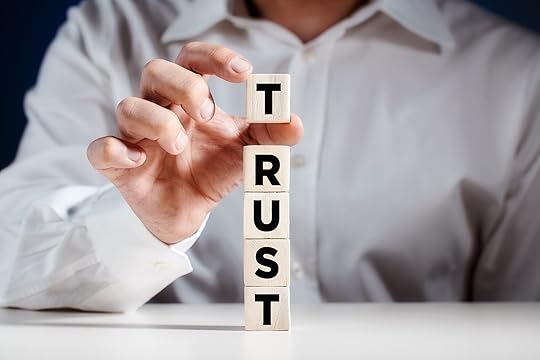
Building Trust in 15 Minutes
Last month I had the privilege of having Ken Blanchard join me for a webinar in support of my latest book. Ken is a leadership luminary whom I’ve long admired. He is the author or co-author of over sixty books, including the classic, The One Minute Manager, co-authored with Spencer Johnson. Dr. Blanchard and I are both members of ISA, an association of organizational development and instructional design companies. Each year members of ISA gather for a business retreat to continue to grow and develop ourselves so that we can all better serve our clients.
While at the retreat one evening, I arrived late for dinner and sat down by myself at a table in the far back of the conference room. All the other tables had been taken up, which turned out to be my good fortune. Soon after I sat down, Ken and his wife Margie walked in and sat down at my table. I was kind of nervous because, as a leadership development practitioner, I was very familiar with Dr. Blanchard’s books and research on leadership. I had been introduced to his Situational Leadership Model, developed with Dr. Paul Hersey, in graduate school over thirty years ago. His influence in the field spanned decades before that. Yet here he was in the flesh, a giant in the field of leadership development, sitting right next to me.
Dr. Blanchards Advice on Building TrustFiguring I’d better take advantage of the opportunity, I asked Dr. Blanchard if he could sum up much of his work with one key leadership lesson, what would it be? He smiled and said, “Great leaders take the time to build trust with the people they lead. Investing the time to build trust with people is what separates average leaders from great ones. The amazing thing is how little time it takes to build that trust.”
Great leaders take the time to build trust with the people they lead.
Dr. Blanchard went on to explain that if a leader simply invests fifteen minutes of quality time every week or two by building trust with direct reports, everything is transformed. The key is what happens in those fifteen minutes. It can’t be about having the person report their status on assignments or what the person is doing to advance the leader’s agenda. No, those fifteen minutes must be solely focused on the human being— not the “worker”—in front of them. How are they doing? How’s life? What is important to them right now? How are things going in their career? Is there any support they need from me or anything they feel I should know so I can be a better leader for them? Fifteen minutes devoted just to them.
The Leader Serves the TeamDr. Blanchard has written a lot about Servant Leadership. The idea that leaders serve those they lead, not the other way around. The leader is there to provide access to resources, remove roadblocks, and provide an environment where everyone can do great work. The leader serves the team. That means dedicating time to each individual team member. The fifteen minutes Dr. Blanchard suggests is about getting to know each individual team member and building trust with them. Doing so gives you a keen understanding of what they hope to achieve with their career. What their priorities and goals are. And what drives and motivates them. Knowing these things will help you be a better leader for them because you’ll have a much clearer picture of how to best serve them.
Investing the time to build trust with people is what separates average leaders from great ones.
As if to punctuate the point, Dr. Blanchard added, “Any leader who says they can’t find fifteen minutes a week for a direct report is full of baloney!”
If you want to take action building trust with your team, and you’re not full of baloney, start today. Schedule individual fifteen-minute check-in meetings with each direct report. Decide with them how frequently you’ll meet for future check-ins. I recommend at least once every two weeks. If this seems overwhelming, begin by choosing one direct report to spend fifteen minutes with each week. A small investment of time, when executed with consistency can have exponential returns.
What is your key leadership advice? Bonus points if you can put it in two words!
This post is based on an excerpt from Leadership Two Words at a Time.
The post Building Trust in 15 Minutes appeared first on Giant Leap Consulting.
September 21, 2022
Why Two Words?
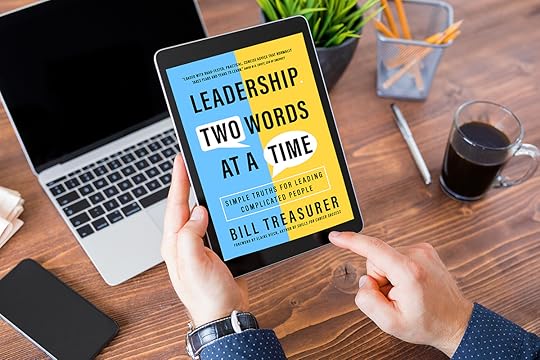
Over the course of twenty-five years, across thousands of hours, I have coached hundreds of leaders from all ranks. Over time, I noticed that leaders were far more likely to benefit from a coaching conversation, to act on commitments made during those conversations, when they were left with brief, memorable headers about the insights that we discussed. Often the insights were captured in two simple words. Two words. Following a coaching session, for example, one leader started mentally reciting the words “calm confidence.” He used these two words when preparing to attend meetings with executives whom he found intimidating.
Another somewhat negative leader benefitted by continually reminding herself to “practice gratitude.”
Another learned to control his urge to always chime in by simply remembering to “talk less” to be a better listener.
Many leaders who struggled to set boundaries benefited from the words “personal fidelity.”
Simple two-word phrases often had a neutralizing effect on situations that leaders formerly found charged, intimidating, or baffling. Hard situations were made easier to face just by simplifying how they were described. “In the fewest words possible,” I started to ask my coachees, “sum up the solution to the challenging situation we just discussed.” The fewer words they used, the clearer the coachees got and the more bearable their situations became.
Leadership Two Words at a TimeTen years ago, I started stockpiling some of the two-word concepts that my coaching conversations centered around. A pattern developed. Many of the two-word headers described important ideas that most leaders struggle with or need to know. As time went on, I would add to the list. As the list of two-word essentials grew, I recognized that they could prove especially useful to new leaders. There is a huge amount to learn as you transition into a new leadership role. But these lessons can be more manageable, understandable, and actionable when carved up into two-word leadership essentials.
Leadership as a practice will always be hard—but it doesn’t have to be hard to understand. In fact, the basic building blocks of being a good leader are surprisingly easy to understand once succinctly explained. Years of coaching taught me that many essential leadership lessons and important truths can be summed up in two words.
Leadership as a practice will always be hard—but it doesn’t have to be hard to understand.
The concepts themselves may be robust and full, but they can be grasped and comprehended immediately, and, with a little practice and effort, fully mastered. Leadership Two Words at a Time catalogs the two-word imperatives that are essential for new leader effectiveness, removing complexity and confusion. When your leadership role gets overwhelming—and it will get overwhelming—you’ll be much better off if you simply focus on taking things two words at a time.
Leadership Two Words at a Time will be released on September 27th. It was written for the new leader. As many seasoned leaders can attest, when you move into your first leadership role, nobody hands you a playbook. And that is exactly what I intend this book to be.
What is the most important leadership lesson that you have learned? Sum it up in two words and comment below.
The post Why Two Words? appeared first on Giant Leap Consulting.
September 14, 2022
Terminal Redlining

When Fast Paced Turns into RedliningRedlining (verb): An unsafe, unhealthy, unsustainable condition whereby a leader and/or team are over-worked and under-resourced for unreasonable amounts of time.
My company was once hired to develop a leadership program for a fast-growing communications company headquartered in the Southwest. The program consisted of leadership ‘summits’ where we spent a day every other month focused on an important aspect of leadership. One of the workshops focused on Leading Culture, which was to help the emerging leaders identify the company’s own unique culture, and to have them consider what aspects of the culture no longer serve the company well and might need to shift. Interesting discussions ensued, and one word started surfacing again and again: redlining.
Everyone enjoyed being part of a fast-growing company. They loved winning work away from bigger and more established competitors and working with marquee clients. They felt loyal to the company leaders and appreciated their openness to forward-moving ideas. And they liked being part of a company where you could receive more responsibility, and more opportunities to make more money, than some of their competitors where younger people had to ‘wait their turn.’ There was an entrepreneurial energy that felt electric like everyone was on a winning team. All of that was uber-energizing. But…
Everyone also felt like they were maxed out.
Everyone also felt like they were maxed out. The fury of incoming orders and the ridiculous workload each order created felt all-consuming. It felt like all the success the company was enjoying was untenable. More than one person used the word ‘redlining’ to describe the experience – like each leader had the throttle all the way open and that every day the company’s RPMs were deeper into the red zone and the engine was about to blow. People were at once energized, exhausted, and…terrified.
Redlining and BurnoutIt’s exciting to be a part of a fast-moving company or culture. Every day is different and time flies as we reach the end of the day with still more to do. To keep up with work (and the Joneses) we push past our limits. This would be ok, if this sprint to the finish line was at the end of a race, followed by a long period of rest. But we often spend each day in this zone. Waking up just as tired and stressed as the moment we laid our heads down.
What does self-care look like for you, and what positive impact could it have on your leadership?
When cars are pushed like this day after day, mile after mile, they break. If you have ever watched a big race on tv each car has its own personal team to make sure it can recover quickly and continue to run at the redline for a few more trips around. Often, the best pit stops and crews can make or break a race.
Of course, we aren’t cars. We don’t have pit crews or spare parts at the ready when our engines burn out. So we need to be more proactive. And yes “self-care” is a buzzword right now, but in this context, I am referring to things that can help you shift from the redline to neutral. Help us slow down, cool off and get reenergized for the next day or week.
Shifting into NeutralSlowing down looks a little bit different for everyone. What does self-care look like for you, and what positive impact could it have on your leadership? And if your first thought is, “I am already overwhelmed and overworked. I don’t have time for self-care.” Then you may need it more than you think! To check out three low-investment, high-return ways of practicing self-care, click the links below:
Get outside.Go for a walk.Eat healthy.Today’s furious business environment, and the pressures it comes with, have accurately been described as permanent whitewater; tumultuous rapids with water crashing over big boulders. Take a moment today to think about what self-care might look like for you.
This post is based on a passage from Bill’s soon-to-be-released book Leadership Two Words at a Time: Simple Truths for Leading Complicated People.
The post Terminal Redlining appeared first on Giant Leap Consulting.
August 17, 2022
Why “Always Be Hustling” Is Bad Leadership Advice

Updated August 2022
In the mid 1990’s, a regional communications company launched a billboard advertising campaign that implored people to “Never Stand Still!” The underlying message was that to be successful, you must perpetually be on the go. God forbid you be still! Stillness is for weaklings and has-beens; the new breed of winners are those who are furiously busy and fully accessible. The ad was essentially saying: If you want to avoid missing out on emerging opportunities, you’ve got to be continually refreshed with up-to-date information. You need “all the news all the time,” and you’ve got to be electronically connected. You’ll be productive only to the extent that you are permanently interruptible.
Today, we see this same advice, day in and day out, as “entrepreneurship” trends upward. “Always be hustling!” This slogan is printed on billboards, across ads, pasted in Instagram captions, printed on T-shirts and coffee mugs, and adorns office walls as inspirational posters.
But “Never Stand Still” and “Always Be Hustling” are terrible pieces of advice. And dangerous, too.If you are never still, you’ll never access what I call your golden silence. In my book, Right Risk, I emphasize the importance of finding a silence that emanates from the center of yourself, where your best decisions and your risks are calculated and taken with clarity. If you’re always hustling, then your risks will be taken in a haze of distraction.
Instead, standing still is exactly what we need to do before taking a risk.
Standing still teaches us composure and poise. Stillness helps focus the risk-taker. It enables her to regulate her emotions and discern the right course of action.
The importance of stillness was well described by Oprah Winfrey in an editorial in O Magazine. In running her production company, Harpo, Oprah was pulled in many different directions by many different people. To get centered, she walks into the closet, sits on the floor, and–in her words–goes “still as a stone.” She writes, “When I walk out, I am centered on what’s most important and can make decisions based on what’s right for me, not on what everyone else wants or needs. I’ve learned that the more stressful or chaotic things are on the outside, the calmer you need to be on the inside.”
The French mathematician Blaise Pascal famously said that all of man’s problems stem from the inability to sit alone quietly in a room.
Those words are more relevant today than they were in his time. We seem to have lost the ability to saunter, to carry on a lingering conversation, to kick back and relax. Instead, anxiety and worry are talked about with pride. With a good deal of self-importance, business leaders often talk about what keeps them up at night or how they’re always hustling and grinding. Imagine if stress-induced insomnia were an actual key to professional success! Fortunately, it isn’t.
Busyness has become the preoccupation of our age.The only quiet moment we seem to get is that brief interlude in the morning while we are waiting for our computer to boot up, or social media to load. We seem hell-bent on keeping ourselves distracted. We crank up the radio volume in our car. Subscribe to podcasts and apps and platforms. Unwind with binge-watching Netflix. Cut deals on our smartphone at the playground, and spoon-feed our minds with Internet news. Then work harder to buy more laborsaving devices. And the more we acquire, the unhappier we seem to get. For as much as our phones and tech have put us in touch with others, they have put us way out of touch with ourselves.
Slowing down, drawing boundaries, and centering yourself helps you get to know the real you.
The problem with “always hustling” and the boundary-less world is just that–we have no boundaries. We allow the world in with no filter to help us decide the relative importance of this information. When everything is urgent, all things get trivialized. Henry Thoreau’s writing is instructive here. He noted that when we fritter back and forth at the whim of the external world, we dull our ability to prioritize what is truly important. In his last book, Walking, he writes that this kind of undisciplined thinking results in more than just mental laziness. It can permanently profane how we think.
The scariest part for most “hustlers?” They’re afraid to stop…because they might not feel comfortable with the company they keep (themselves).But slowing down, drawing boundaries, and centering yourself helps you get to know the real you. You’ll find that, over time and with practice, the more you can teach yourself to be still, the stronger your self-assurance will grow. With this growth is the clarity you need as a leader.
Real leaders don’t hustle 24/7. They prioritize their goals and go after them with a steady centeredness. They take risks that will provide big returns because they know which ones will best serve them, not the whims of the external world.
The post Why “Always Be Hustling” Is Bad Leadership Advice appeared first on Giant Leap Consulting.


