
Bill Treasurer's Blog, page 9
August 10, 2022
The Power of Influence

In this excerpt from his upcoming book, Leadership Two Words at a Time: Simple Truths for Leading Complicated People Bill explores the power of influence that leaders hold. Often this influence is simply those around you mimicking your attitudes and behaviors. As a leader, you must be conscious of, and intentional with, the power of your role modeling to influence the behavior of others.
Dress CodeYears ago, I facilitated an offsite meeting with the president of a bank and his senior executive team about whether to modify the bank’s dress code. You may find this hard to believe, but there was a time when many professions required employees to dress in their ‘Sunday best’ – suit and tie for men, below-the-knees dresses, and pantyhose for women.
Then, in the early 1990s, some businesses decided to get a little less stuffy…one day a week. On ‘Casual Fridays’ men could put on their khakis and a polo shirt and ditch their sportscoats, and women could wear open-toed shoes and higher-hemmed dresses or pants. Some leaders struggled with the transition, fearing that dressing casually would send an impression that the business was lowering its standards.
Weighing InDuring the offsite, the president asked to hear the perspectives of his senior executive team. It was quiet at first– as if people didn’t feel safe sharing their true perspectives. Finally, someone spoke up, saying, “Shouldn’t we dress like our customers? Dressing like we do may be sending the impression that we think we’re ‘above’ them, making them feel like we’re looking down at them.”
The first comment inspired another person to speak up, “I agree, dressing above them is condescending. Plus, many of our customers come during their lunch break from work, and from what I see, many of their businesses are starting to dress more casually. Shouldn’t we follow their lead?” Other execs expressed similar thoughts, and as they did, nearly every head in the room was shaking ‘yes’ – except one: the president’s.
Before the president weighed in with his opinion, it was clear that his team uniformly supported moving to a Casual Friday dress code. Then, with a small cough of annoyance, the president spoke. “What you all said surprises and disappoints me. Our bank has long prided itself on professionalism, and much of that is projected by what we wear. If there is any business where customers need to feel confident that their investments are being used wisely and maturely, it’s ours. We have a fiduciary responsibility to care for people’s money! We must project conservatism and intelligence and conformity. Our customers need to know that every one of us will give them the same exact standard of professionalism and that we’ll manage their money just as they would. How we dress is the first impression they get of our standards of professionalism.”
The Power of InfluenceWhat happened next taught me the power of leadership role modeling and how easily people will contort their own preferences and opinions to get in alignment with a leader – even when they don’t truly agree with him or her. People started rewinding what they had said before the president had spoken. One person said, “Well when you put it that way, I can see how dressing casually, even one day a week, would send the wrong impression.” Another chimed in, “You know, you’re right. I hadn’t considered that we wouldn’t be perceived as good stewards of people’s money if our dress suggested that we were ‘casual’ or ‘informal.’”
One by one, everyone backed down and found a way to conform with the leader’s opinion. The only person who remained unchanged was the leader himself. It was clear that he wasn’t genuinely interested in hearing people’s perspectives, he just wanted to voice his own preferences and make others yield to it. It was as comical as it was tragic.
The story of how people get in line with their leader’s viewpoints plays out every day throughout the world. Though the situations vary, the overarching theme is the same: groups of individuals come to conform to their leader’s preferences. Taking their cues from the leader, some will even adopt the leader’s behavioral and communication styles. It’s a form of twisted loyalty, mimicry, and sometimes subjugation. Consciously, and more often unconsciously, people will sacrifice their own values and individuality to clone themselves after the leader. Though often thought of negatively, leaders have the power to positively influence others through their behaviors as well.
For powerful tips on how to model principles for your team, buy Bill’s new book here.
Photo by Ruthson Zimmerman on Unsplash.
The post The Power of Influence appeared first on Giant Leap Consulting.


July 20, 2022
Supporting a New Leader

Taking on a new leadership role is always challenging. New responsibilities. New team members. And new roles to play. But today, as organizations are facing the Great Resignation, remote and hybrid work environments, and overall economic uncertainty, the challenges facing a new leader are even greater.
While the realities facing new leaders are unprecedently novel, challenging, and anxiety-provoking, the meager amount of support and training that has historically been provided to new leaders remains sadly unchanged. According to Development Dimensions Inc.’s Global Leadership Forecast, 83% of organizations say it’s important to develop leaders, but only 5% have fully implemented plans to do so. Organizations may not be intentionally setting new leaders up to fail, but they likely aren’t setting them up for success either.
Another startling fact, 50% to 70% of new leaders fail. And 40% of these new leaders, fail within the first 18 months. Companies usually look to their top-performing employees to promote and fill leadership roles within the organization. So why are these top-performing team members so often underperforming in a leadership role? The answer comes back to support and training.
Promoting a New LeaderIn our current employment market, promotions are happening without much forewarning. The new leadership position is often in response to someone leaving the organization unexpectedly, providing no opportunity for on-the-job training or a handing off of the reigns. No space to share the ins and outs of the role and the strengths and weaknesses of the team. This type of training is by far the best, but when that isn’t an option, there are ways to ensure that the new leader has the basic leadership skills they need to be effective in any situation.
Provide a MentorI have written about it before, but the power of having a mentor can not be underestimated. When the going gets tough for a new leader, a voice of reason and experience can help. When they are struggling with making a choice, an unbiased mentor might provide just the insight they need. It is helpful if the mentor has performed a similar duty within the organization, but not necessary. According to Forbes, a good mentor is someone who is motivated and energized, cares about developing others, and is willing to commit their time.
Establish Regular CommunicationFrom the start make it clear that you are there to support the new leader. Establish meetings at regular intervals to work through challenges, and provide feedback. There will be setbacks as your team members try to transition from performer to conductor. Some of the biggest challenges are often in the areas of delegation, communication, and accountability. Expect struggles. Timely feedback and encouragement can go a long way in showing the new leader that you care about their success.
Provide Leadership Development OpportunitiesLeadership is hard. But it doesn’t have to be hard to understand. The intricacies and learning needed for one particular role may be specific to only one trainee. But many leadership development opportunities or courses can address the overarching truths to lead people successfully. This can be done through outside leadership development courses or can be built into mentoring or follow-up meetings. No matter how it is delivered, helping your team members learn and put into practice the essential for leadership will build a firm foundation.
The habits, practices, and mindset you help new leaders adopt early in their leadership tenure will set the trajectory for the rest of their leadership career. What they learn now will impact how they lead throughout their leadership journey.
The post Supporting a New Leader appeared first on Giant Leap Consulting.
July 13, 2022
Leading Away From Comfort
Updated July 2022
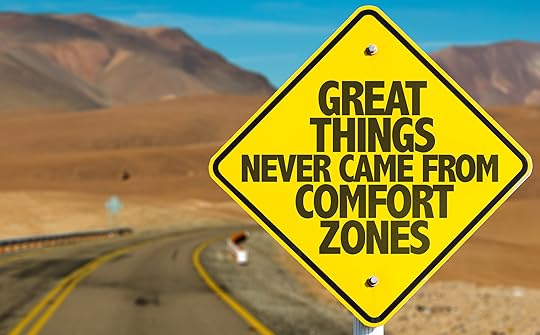
It may surprise you that your job as a leader is to make people uncomfortable. Why? Because people learn, develop, and progress in a zone of discomfort, not comfort.
It is in the pursuit of challenges that are hard, scary, and uncomfortable that people discover their worth, and convert potential into actual skills.
Most good career opportunities, for example, are – at least on some level – uncomfortable and cause anxiety. Leading a group of employees for the very first time is an opportunity. It’s also uncomfortable. When you are asked to make a new product pitch to the board of directors, it is an opportunity. It is also uncomfortable. When you are slotted to be your boss’s successor, it is an opportunity. It’s also uncomfortable. If something is uncomfortable, there’s a good chance that it is also an opportunity for personal growth and professional advancement.
Ginny Rometty, the former CEO of IBM, says, “Growth and comfort don’t coexist.” Over the course of her career she purposefully sought out work roles where, for a little while, she was in over her head. Doing so ensured that she’d have to quickly learn new skills to stay above water. She attributes much of her success – she is, after all, the first female CEO of the storied company – to her willingness to embrace discomfort.
The Two EssentialsAs a leader, there are two essentials relative to discomfort. First, you have to step into your own discomfort zone. This is the best way to model the importance of doing so to others. Joe Forehand, the former CEO of Accenture, calls this leadership by “sweaty palms.” You have to occasionally do things that are so challenging that they ignite the physiological responses that both fear and excitement provoke (e.g., sweaty palms, stomach butterflies, racing heartbeat, etc.).
The second essential is to nudge people into their discomfort zone so that they stretch their skills and capabilities. The idea isn’t to get people to do wildly uncomfortable things, just willfully uncomfortable things. When employees are pushed too far into discomfort, they may get paralyzed with fear, their performance will suffer, and they’ll resent you. They need to know that you’re asking them to do uncomfortable things to promote their growth and career advancement.
In order for this to work, you need to know your employees’ goals, aspirations, and areas for growth, and then provide uncomfortable opportunities to promote those aims. For example, if you’ve got a painfully introverted worker who also aspires to be a leader, you might have that person lead the weekly status meeting in your absence. Conversely, if you’ve got an employee who’s extraverted to a fault, and oblivious about how everyone else perceives him or her, you might have that person be the note taker at the same meeting, instructing the über–extravert not to talk, only to listen and scribe. The opportunities you provide as a leader should be outside of those areas where people already feel comfortably skilled.
This post originally ran at the Human Capital Institute. It is reused with permission.
The post Leading Away From Comfort appeared first on Giant Leap Consulting.
June 22, 2022
A Tool Kit for Productive Meetings

Meetings. Love them or hate them, most of us have them on our schedule. In fact, there is a good chance you have one on your calendar today. In the era of hybrid and remote work, these seem to be happening at an even higher rate in an attempt to maintain communication and connection. But are these meetings really accomplishing that, or really anything at all?
Let’s start by looking at some statistics:There are approximately 55 million meetings held each week. That’s at least 11 million per day and over a billion per year.Harold Reimer, a researcher in the field of meetings, estimates that on average, a company loses $800,000 per year because of “meeting recovery” syndrome. (working harder to make up the time that was lost in the meeting)65% of employees agree that meetings prevent them from completing their own work.A 3M survey of 2,800 executives revealed that the average employee spends 6 hours per week in meetings in which 35% of the time is wasted.Professionals average 25.6 meetings a week, or 5.1 per day. Meetings have increased 69.7% since before lockdown when the average was only 15.1 meetings per week.More than 37 billion is spent on unproductive meetings each year.Studies suggest half of all meeting time is wasted because there is no agenda, people show up late, and people wander way off-topic.Techniques for Keeping Meetings FocusedDespite being so frustrating, meetings are important. They are where direction gets set and decisions get made. Provided, of course, that they are run well. Having facilitated productive and unproductive meetings, I’d like to share some meeting techniques that, hopefully, will help you hate meetings less!
Before sharing the techniques, I need to make one important point: above all, make sure the meeting is a good use of everyone’s time! When people feel that having attended the meeting was worthwhile and valuable, they won’t bellyache about the meeting.
Here are some techniques to help you make good use of everyone’s meeting time.
POW and AgendasMake sure that everyone agrees on the POW (purpose, outcome, and why) of the meeting. This will help you stay focused. Also using agendas will keep meetings focused on the meeting objective or desired outcome. Refer to the Techniques for Preventing Meeting Problems section for more details.
Parking Lot/Idea BankA Parking Lot is a place to “park” the ideas that are off-subject. It is a very simple technique to manage unrelated ideas—ideas that you want to save, but are not relevant to the meeting’s topic or objective. Some facilitators call this an Idea Bank or an Idea Bin. (We think “bank” has a better connotation than “bin.”) Post a flipchart on the wall and title it “Parking Lot” or “Idea Bank.” Whenever someone brings up issues or ideas that are off-subject, simply record them on the chart. Be sure that you follow up later on these issues and ideas.
Decisions/Action Items/Open IssuesCapturing and reporting key outcomes of the meeting are critical for follow-up activities. Rather than keeping minutes in the traditional narrative, the recorder can post three flip charts on the wall and title them “Issues,” “Decisions,” and “Action Items.” Then the recorder can add items to the flip charts when appropriate. If you use these charts, you may not need a separate “Parking Lot” chart.
The Action Items should include the following columns: What, By Whom, By When, Resources Needed, and Performance Indicators. The latter answers the question “How we will know if we did a good job?”
Clarifying Issues or ProblemsMany groups have difficulty focusing on the issue or problem at hand. Often everyone is not clear about what the issue or problem actually is. Sometimes, they may not agree on what the issue problem is. The following technique can help define or clarify the issue or problem.
Pag/Pau (Problem as Given/Problem as Understood)This technique allows everyone to share his or her understanding of the problem.
Record the problem statement on a flipchart. Some groups find it helpful to write the problem statement in the form of a question. For example, you may write, “How can we improve the functioning of our department?” Then ask participants to state the problem as they understand it. They may state the problem as, “How can we serve our customers better?” or “How can we be more productive?” or “How can we eliminate waste?”
The techniques from this post are an excerpt from a meeting resource kit I contributed to by Becky Jarrell called Powerful Meetings. I encourage you to give it a read and explore how you can really make meetings something that moves your business forward and builds strong connections within your organization.
The post A Tool Kit for Productive Meetings appeared first on Giant Leap Consulting.
June 15, 2022
When Your Strengths Cast a Shadow

There’s been a lot written about “strength-based” development approaches in recent years. Research suggests that you’re better off building on your natural strengths and talents than trying to improve your weaknesses. The usefulness of the strength-based approach explains its popularity. It makes good sense: put yourself in situations where your gifts and talents can be put to good use, and you’ll increase the likelihood of being successful. As the great motivational theorist Abraham Maslow said, “A musician must make music, an artist must paint, a poet must write if he is to be ultimately at peace with himself.
And while strengths are good things. But too much of a good thing is often a very bad thing. Past a certain point, our strengths start to cast a shadow. The leader who is comfortable speaking in public may turn into an attention hog always seeking the limelight. And the leader who is a gifted critical thinker may become overly critical of others. The leader who has great interpersonal skills may place too much emphasis on subjective criteria when making decisions. And while it is true that every leader should develop and nurture his or her unique gifts and talents, this is not where development should end. To be fully developed as a leader, you need to go further.
Every leader needs to be keenly aware that strengths can become overly potent, sometimes toxically so. The strength of drive can give way to dominance, which can become the weakness of intimidation. Likewise, the strength of confidence can slip over into the weakness of arrogance. Every leader is made up of sunshine and shadows. Paying attention only to the shiny parts of your leadership causes your shadow to grow, practically ensuring a kick in the saltshaker.
When that kick comes, and it happens to all of us, how do you learn and grow from it? Because here is one fundamental truth about a butt kick: if you refuse to learn the lessons it can provide, a harder and more painful kick is sure to follow. As the saying goes, “If you don’t learn the lesson, you have to repeat the class.”
Here are some quick tips for ensuring that you’re ready to benefit from whatever kicks you may next endure:
Focus on the long game. A kick is just a momentary speed bump on your longer leadership career. The spike in pain will eventually yield worthwhile lessons and changes. Focus on where you ultimately want your career to end up, not the detour it may have taken.Learn from your feelings. Pay close attention to the feelings that come up for you after you get kicked. Identify what you’re feeling, precisely. Do you feel embarrassed, fearful, resentful, or something else? Then ask yourself, “What information is this feeling trying to give me?” and “What is the lesson this feeling is trying to teach me?”Remember, discomfort = growth. Comfort may be comfortable, but it’s also stagnant. You don’t grow in a zone of comfort. You grow, progress, and evolve in a zone of discomfort. The more uncomfortable the kick feels the more growth can result.Broaden your view of courage. Being vulnerable, open, and receptive to change is a form of courage. Hard-charging types wrongly see courage as being fearless. Nothing could be further from the truth. Courage is fearful. The simplest definition of courage is “acting despite being afraid.” Courage requires fear. As long as you keep moving forward, it’s when there’s a knot in your stomach, a lump in your throat, and sweat on your palms that your courage is doing its job.Don’t be oblivious to yourself. How much might it be costing you to remain loyal to your ignorance? Self-exploration and discovery can be painful, but what is more painful in the long run is being a stunted human being, incapable of acknowledging, assimilating, or shoring up your shortcomings.Be your own project. Lots of people lead projects better than they lead themselves. Think about what it takes to lead a great project. You start by identifying your desired outcomes, you put together a timeline and pinpoint critical milestones, you marshal the resources the project will need to be successful, and you identify metrics to track progress. Guess what? You can manage your kick recovery the exact same way.Stay present. Rather than try to avoid all that surfaces for you during and immediately after the humiliating event, fully immerse yourself in the experience. What feelings come up for you? What fears are at work? How might your feelings and fears serve you once the entire experience plays out? What are you learning and how can you put those lessons to good use?As much as self-discovery can be painful, it is also fantastically rewarding. The journey to the center of one’s self is the most important voyage you’ll ever take. It’s how you become a whole person, truly knowing the full dimensions of your talents, idiosyncrasies, and deepest desires.
Ultimately, if you let it, a humiliating kick can be the entry point for a richer, fuller, and more complete understanding of yourself, as a leader, and as a human being. Armed with that knowledge, you’ll be better able to use your strengths— and actively mitigate the shadows your strengths sometimes cause—so they better serve you and others. Abraham Maslow sums it well: “What is necessary to change a person is to change his awareness of himself.”
How do your strengths cast a shadow? What can you do today to prevent the kick in the pants that may come down the road?
This post is an excerpt from A Leadership Kick in the Ass.
Photo by Matthew Ansley on Unsplash.
The post When Your Strengths Cast a Shadow appeared first on Giant Leap Consulting.
May 18, 2022
When Faced with a Problem, Create Opportunities
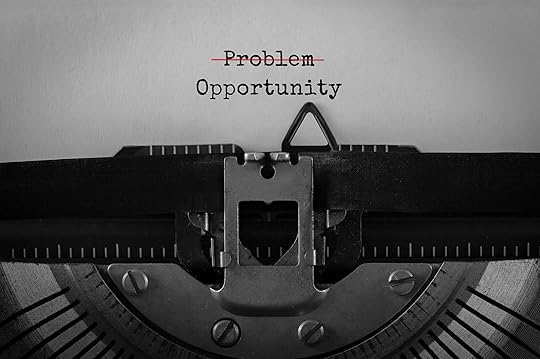
Do you aim to be a problem-focused leader or an opportunity-focused leader? Many work environments place a premium on leaders with critical thinking and problem-solving skills. However, that premium often places too much emphasis on being critical and dealing with problems. In such workplaces, leaders can become downers, always harping on what’s wrong and what needs to be fixed. Such leaders often resort to stoking people’s fears to motivate them to get things done. But great leaders look at problems and create opportunities.
Focusing on opportunity instead of problems is not just a matter of semantics. The following are some specific impacts of making it a goal to create opportunities.
Opportunity PullsLeading by stoking people’s fears provokes anxiety and negative thoughts of impending painful consequences. Opportunities, on the other hand, are hopeful situations that evoke positive thoughts of pleasurable rewards. Leadership is most effective when it moves people toward a desired outcome, rather than getting them to run away from a bad outcome. Opportunity attracts; fear repels. Opportunity points in the right direction.
When you are talking about opportunities, you are talking about the conditions you want, instead of the conditions you want to prevent from happening. Because outcomes often follow the direction of our thoughts, it’s best to focus on what you want. Saying, “Our opportunity is to keep the ball in the air,” is better than “Whatever you do, don’t drop that ball!” Opportunity activates the imagination. We “take advantage of” or “capitalize on” opportunities. They are conditions that don’t yet exist and require people’s hard work and imagination to be fully exploited.
Opportunity Inspires CourageOpportunities are not “sure things” and the positive outcome you hope to create is not guaranteed. Thus, opportunities come with potential risks. The risk is what infuses the pursuit of opportunities with excitement. Opportunity begets opportunity. Wouldn’t you rather have your employees coming to you with new ideas and opportunities they want you to support, instead of problems they want you to resolve? When you model opportunistic thinking, you increase the likelihood of building a self-sufficient, “can do” spirit among employees.
Opportunity Attracts
Opportunity is more powerful even than conquerors and prophets.
—Benjamin Disraeli
Fear and excitement prompt the same neurological responses. Think for a moment about what happens to you, physiologically, when you are really, really afraid. Your heart races, your palms sweat, your breath gets faster and shorter, and your stomach teems with butterflies. Fear and excitement are both high arousal states. Although there are almost no neurological or physiological differences, there is one critical distinction between the conditions of fear and excitement—you experience fear as displeasure and excitement as pleasure. Thus you move toward situations that provide pleasure and avoid situations that provoke displeasure. By viewing and explaining situations as opportunities, you create a field of excitement where employees are more apt to face challenges than shirk them.
A leader’s primary job is to actively create opportunities that bring about real and concrete benefits. A leader should leave us better off than they found us. Great leaders don’t sell hope. In fact, they don’t sell anything. They build. Experiment. Act. Create. By relentlessly focusing on creating opportunities for customers and employees, they open lots and lots of doors.
How will you change your perspective and look at problems as opportunities?
Like What You’ve Read? Check Out My Book, Leaders Open Doors.
The post When Faced with a Problem, Create Opportunities appeared first on Giant Leap Consulting.
May 11, 2022
What is Essential to Leadership?

Imagine that the organization you work for is charged with developing a leadership training program that was built around the essentials that all leaders must know. What would you include? The list of what we expect leaders to know and do is long and often contradictory. We expect leaders to have a vision and think strategically yet be tactical and operational. And strong and confident yet humble and gracious. Our leaders should want to aggressively grow the organization yet minimize and mitigate risk. We want leaders to be decisive yet inclusive, bold yet calculated, strong yet friendly, firm yet flexible, etc., etc.
What makes it difficult to prioritize what’s most essential to leadership is that we judge our leaders against too many criteria. Plus, what’s essential for a senior leader is probably not the same thing as what’s essential for a new leader. Given that, what would you include in your leadership program?
So What is Essential to Leadership?For the last 30 years, I’ve been a practitioner of leadership development. In 2002 I founded Giant Leap Consulting, and since that time we’ve developed leadership programs that have been experienced by thousands of leaders across the globe. Many of those programs are multi-year in length, and most are focused on the development of new leaders. The rich participant conversations that emerge during those programs – literally thousands of them – have enhanced our understanding of what’s most essential to leading others.
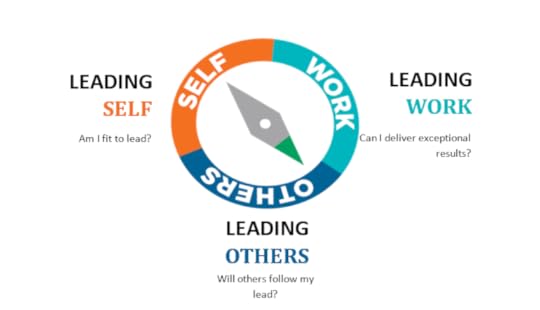
We believe that there are multiple dimensions to the idea of leadership essentialism. At the highest level, what matters most is a leader’s fitness to lead, and that fitness is expressed in three distinct ways: Leading Yourself, Leading People, and Leading Work. Each type of fitness can be expressed by a question: Do I know who I am as a leader? Will others follow my lead? Can I inspire exceptional results?
 Leading Yourself
When it comes to Leading Yourself, what’s essential is that you are self-aware and clearheaded about your strengths and where those strengths can have the most positive impact. Leading Yourself also involves understanding the diminishing returns that the overuse of your strengths is likely to have. All of this requires a deep level of self-exploration, the kind that can be aided by a coach or counselor. Because when you know who you are, you become better able to understand the kinds of people you need to surround yourself with to offset or counterbalance your strengths and limitations. The examined life should lead you to become much more comfortable in your own skin, a reflection of authentic confidence.
Leading OthersLeading Others involves a different focus and different set of skills than Leading Yourself. Before you move into a leadership role, you were likely a strong individual contributor. Your bosses took notice of your productivity and performance and rewarded you by promoting you into a leadership role. But crossing off items on your own to-do list is vastly different than inspiring great performance out of a team. Getting the best out of others requires fostering a psychologically safe environment where people feel free to express themselves and do their best work. It means being more than operationally smart, it means being emotionally intelligent. It also means being emotionally mature and composed, especially on the days when people around you aren’t being those things. As a leader, it means involving people so they feel a high degree of ownership over whatever tasks they are assigned.
Leading WorkLeading Work means mastering business fundamentals such as planning, organizing, staffing, and controlling. It requires being business-minded and taking an interest in industry trends and how they are likely to impact the organization. In addition, leading work involves influencing goals, plans, processes, systems, and metrics in a way that creates efficiencies and optimizes operations.
As mentioned, there’s a lot that goes into being an effective leader. But the ingredients that go into great leadership become easier to organize when divided among the three most essential leadership domains, for example…
Leading Yourself:Self-discipline and personal organizationWork/life balanceSelf-care and wellnessPersonal goal setting and self-accountabilityProfessionalismPersonal courageLeading Others:Employee engagementDiversity and inclusionEffective communicationOptimizing conflictPerformance coachingLeading teams / teambuildingInfluence and persuasionEmotional IntelligenceLeading Work:Business ethics and valuesVisioning and Strategic thinkingExecution, profitability, & levers of job performanceCustomer relationships, satisfaction, and loyaltyEntrepreneurship and market developmentBusiness partnerships and joint venturesManaging and calculating RiskThe list of topics under each leadership essential will always be long and in flux. But rather than getting overwhelmed by all the topics that leaders need to be trained on, pay more attention to the 3 ways the leaders need to be fit. Because no leader should be expected to be perfect. No leader could possibly live up to all the shifting criteria against which we judge a leader’s effectiveness. But all leaders should be fit to lead. Fit to lead themselves. Fit to lead others. And fit to lead the work.
Bill Treasurer is the founder of Giant Leap Consulting, a courage-building company that has designed, developed, and delivered comprehensive leadership programs to thousands of leaders across the globe. ALso he is the author of six published leadership books, including the forthcoming Leadership Two Words at a Time. Bill and Giant Leap have worked with such renowned organizations as NASA, eBay, Lenovo, Southern Company, Walsh Construction, Spanx, the Social Security Administration, and the U.S. Department of Veterans Affairs. Giant Leap’s newest program is Bill Treasurer’s Leadership Essentials Academy, a comprehensive, self-paced online leadership program that includes over 65 video lessons, downloadable guides, and advice from leadership luminaries. Learn more at Courage Building Courses (mykajabi.com)
The post What is Essential to Leadership? appeared first on Giant Leap Consulting.
April 20, 2022
Confidently Humble
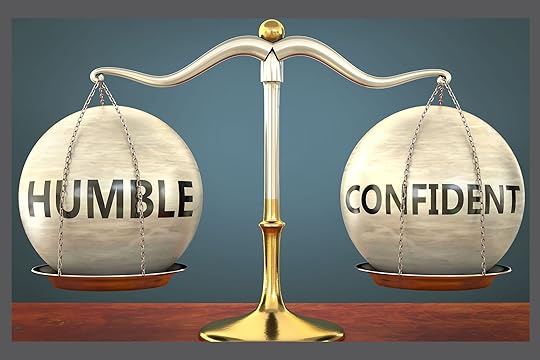
Any person in a leadership position needs to have and demonstrate confidence. People look to their leaders to make decisions, lead change and make tough calls and that requires confidence. But the best leaders also have a value that is less talked about in the world of leadership, and that is humility. So how does a leader find the balance and become confidently humble? Find out in this expert from my book A Leadership Kick in the Ass.
OverconfidenceWhen we believe in ourselves more than we should, when we put more stock in our skills and capabilities than they actually warrant, when we start all tasks from the presumption that “I got this,” overconfidence begins to distort our leadership. Overconfidence causes us to make decisions impulsively fast. Overconfidence causes us to trust our judgment over the judgment of others. And overconfidence causes us to be dismissive toward those whom we perceive as slowing us down or not having the power to further our goals.
The most obvious and embellished example of overconfidence is the Pighead leader, who often steps over (or on!) people they view as getting in the way of their goals. Their motto is, “If you’re not part of the bulldozer, you’re part of the pavement.” Butt kicks stemming from overconfidence are the natural blowback of selfish leadership, often coming in the form of backstabbing or betrayal by the people we have led (or, more often, misled). As Julius Caesar said, “Et Tu, Brute?”
UnderconfidenceWhen we are preoccupied with the potential for failure at the start of every task, when we hyperfocus on risk mitigation, and when we continually delay decisions by deferring them for others’ approval, underconfidence is at work. Underconfidence causes us to be timid, hesitant, and un-original. When we lack confidence, we don’t trust our ideas, much less fight for them. We cede to the ideas, perspectives, and preferences of others. Consequently, we lose the opportunity to shape decisions and effect change.
It is underconfidence, as you might have guessed, that causes the Weakling leader to lack a backbone. The Weakling leader defends neither himself nor those he is leading (or misleading!). Butt kicks stemming from prolonged under-confidence are often connected to the loss of respect among your bosses, your peers, those you’re leading, and ultimately, yourself. When you don’t take steps to build your own confidence, you are disrespecting yourself. Collectively, the hesitancy, timidity, indecision, and lack of respect caused by underconfidence add up to the loss of both leadership potency and relevance.
Confidently HumbleA leader’s choice of how to lead needs to take into account what followers will follow. Followers won’t follow leaders who lead through intimidation and who don’t care about them. They also won’t follow weakness and cowardice. Most especially, they won’t follow leaders who diminish them and make them feel small. What they will follow is a leader who embodies strong values, paints a clear and hopeful vision of the future, acts with reasonability and composure, solicits and acts on their input, and makes people feel proud of themselves. Followers follow leaders who are confidently humble.
For our leadership to be assertive, decisive, and firm, we need to have confidence. For our leadership to be authentic, giving, and supportive, we need to have humility. Confidence and humility are complementary and counterbalancing forces that fortify the potency of leadership. When our actions are directed by confidence and humility, we are truly operating out of our best selves. The leadership ideal, then, is to become a leader who is both highly confident and genuinely humble. You’ve gotten to this place when you respect those you lead as much as you respect yourself.
What does a confidently humble leader look like?What does a confidently humble leader look like? First, they are comfortable in their skin. That comfort stems from the self-respect that seasoning and experience provide. They know that they have earned their place. They have capitalized on the lessons they learned from all of the butt kickings they’ve had along the way. Their self-worth doesn’t come from what others think about them; it comes from living in alignment with a value system that they honor and uphold. Principals matters to them, providing a source of strength and guiding their decisions and choices.
The confidently humble leader states their views assertively and constructively, not to trump others, but to add their perspective. When situations require, they can be forceful and direct, but never in a way that is demeaning toward others. To them, people are not objects. The people they are leading make the job meaningful and worthwhile, and their growth and development are how they assess their effectiveness. The confidently humble leader knows that they don’t have all the answers, and doesn’t expect themself to. They are eager to get the input, perspective, and help of the people they are leading and know that they are eager to give it. Leadership isn’t threatened by strong opinions or personalities. Above all, they value people who are candid, thoughtful, and authentic. They, too, are all those things.
The post Confidently Humble appeared first on Giant Leap Consulting.
April 13, 2022
New Leaders and the Realities of the Leadership Role

For new leaders, in particular, setbacks are inevitable. In the same way, people without children can’t really know what it’s like to have kids until they do, you can’t really know what it’s like to be a leader until you actually lead. Even organizations that invest in leadership development struggle with helping new leaders fully comprehend what it means to lead.
Leadership programs often emphasize the operational mechanics of leading— planning, organizing, budgeting, or content that leans more toward management, such as delegating, time management, and giving feedback. What most leadership programs neglect to cover, but that new leaders quickly discover, is that leadership is massively freakin’ hard. What is left out is how political, shifting, and unpredictable leadership is.
Also absent is how much the emotional aspects of leading overshadow and often interfere with the mechanical ones. Consequently, the excitement of finally moving into a leadership role, sometimes after years of toiling among the rank and file, quickly gives way to intense feelings of pressure, anxiety, and inadequacy. After moving into their first leadership role, new leaders are often dumbstruck by how ill-prepared they are for leading others.
The startling discovery that leading others is way harder than first imagined is often a leader’s first setback, laying the groundwork for bigger setbacks and wake-up calls that are sure to come. Here are just a few of the raw realities that quickly confront new leaders.
Adults are big babies.You lead people, and people are fickle, quirky, and often petty. On occasion, even experienced employees will act childish, like grown-up toddlers wearing bigger clothes and sporting larger and more fragile egos. Sure, they can be smart, passionate, and upstanding too. The problem is unpredictability. On any given day, in any given work situation, it is hard to predict which people are going to act like adults and which are going to act like whiney, sniveling, irritable babies. Some people will respond to your feedback receptively; others will get defensive or stew with resentment. And some days you’ll be the biggest baby in the room— usually when you think everyone around you is acting infantile.
Demands are relentless and unforgiving.You’re only deemed successful as a leader if you get results. The drive to produce results is incessant. No matter how well you do this quarter, or with this project, or with this customer, you’ll be expected to do more and better next time. Your reputation is always on the line. The pressure is multiplied by the fact that people are counting on you to not let them down. Your organization holds you to the same expectation. And when the needs of your direct reports conflict with the needs of the company, you’ll be caught in the vise of competing demands.
Making people uncomfortable is your job.Leadership has everything to do with creating, managing, and effecting change, which, by definition, is uncomfortable. People prefer comfort. That said, human beings (and organizations) don’t grow in a zone of comfort. We grow, progress, and evolve in a zone of discomfort. The harsh reality is that your job as a leader is to make people uncomfortable. Doing otherwise breeds complacency. Thus, you have to constantly be stretching people toward higher goals and standards. But guess what? People generally don’t appreciate you making them uncomfortable.
The cavalry isn’t coming to rescue new leaders.Self-reliance is a hallmark of strong leadership. You’ll sometimes feel under siege from the volume and intensity of the challenges you’re facing. Regardless, you’ll be expected to bring them to resolution— without the aid of a handbook. Leadership can be a lonely endeavor. With no cavalry to rescue you, you’re forced to grope your way through, often making things up as you go along. As a result, you’ll often feel like a fake on the inside while straining to portray confidence on the outside.
The biggest problem is mostly you.Leaders are not like everybody else. The reason that people don’t put in the same obnoxious hours you do, don’t view all tasks as urgent, don’t click their heels and say “Yessir!” to every directive, and don’t deliver twenty-four-carat quality is that they shouldn’t. Neither should you. But often you do, mostly to the detriment of their results and your health. Leaders often get in their own way by being overly judgmental, holding people to unrealistic standards, and caring more for results than people. You’ll be blind to all of this, of course. Your direct reports won’t have the courage to tell you about your contribution to the insanity.
Faced with such startling realities, the attraction of leading that held the new leader’s gaze before moving into a leadership role quickly loses its luster. During this honeymoon-is-over stage, new leaders question whether they even want to be leaders anymore. Leadership, the new leader realizes, is a messy business.
This post is an excerpt from A Leadership Kick in the Ass.
Photo by Marten Bjork on Unsplash.
The post New Leaders and the Realities of the Leadership Role appeared first on Giant Leap Consulting.
March 23, 2022
The Impact of Organizational Culture

Webster’s dictionary defines the word culture as the integrated pattern of human behavior that includes thought, speech, action, and artifacts and depends on man’s capacity for learning and transmitting knowledge to succeeding generations. Dr. Stephen Covey, says that culture is the shared value system of people as manifest in their behavior. The Accounting office of the US Government states that culture is the underlying assumptions, beliefs, attitudes, and expectations shared by an organization. No matter how you define it, your organizational culture is clear to everyone who walks through the front door. And in the current staffing environment, it also determines who walks out.
There are four types of organizational culture:THE COMPETITIVE CULTUREThis culture is fast-moving and highly competitive. And there is a constant drive to constantly outdo what you’ve done before. Much of the focus is on financial growth and winning work. Examples include brokerage firms, law firms, and construction companies. Such cultures are often stressful environments in which to operate. Only the strong survive.
THE SERVICE CULTUREIn service cultures, pleasing the customer comes first. Decisions are always made with the client’s view in mind. How well the company serves its customer is seen as a differentiator. As such, service cultures constantly strive to make things “user friendly” in order to create customer loyalty. For example, the Ritz-Carlton, American Express “Platinum” Card, and LL Bean.
THE INNOVATIVE CULTURECompanies that rely on innovation for their livelihood incessantly strive to attract new customers (and wow current customers) with leading-edge technologies and approaches. For example, an organization with an innovative culture, values creativity above all else. Innovative cultures have a big appetite for risk-taking, and, as such, the work environment in an innovative culture is often high-energy. Such companies as Pixar, Apple, and Gore-Tex fall into this category.
THE BUREAUCRATIC CULTUREBureaucratic cultures value consistency and process adherence. In such cultures, predictability is valued more than creativity, and following “the rules” is more important than striving for improvements. The average employee tenure in bureaucratic cultures is much higher than in the other cultures, often because in such cultures “seniority rules.” Public services and government agencies fit into this category.
“Organizational cultures are created in part by leaders, and one of the most decisive functions of leadership is the creation, the management, and sometimes even the destruction of culture.”
From Organizational Culture and Leadership, by Edgar Schein
By design, each of these cultures is in place to support the very specific nature of each industry. But what happens when an organization with a bureaucratic culture needs to innovate quickly. Or when the staffing issues that are deeply affecting our service industry shift pleasing the customer into a secondary position. The nature of work has changed dramatically over the last two years, and companies have had to take a look at long-ingrained cultures and begin to influence change. For years Giant Leap has regularly led workshops on understanding and leading culture and here are a few suggestions:
Don’t oversimplify culture.Don’t confuse it with the company’s climate or stated philosophy. Culture underlies and largely determines these other variables. Trying to change the philosophy or climate, however, without first understanding the deeper underlying culture will be a futile effort.
Don’t think of it as “touchy-feely.”The impact of culture goes far beyond the human element of the organization and influences the organization’s basic mission and goals.
Don’t assume that you can control the culture as you can control many other aspects of the company.Culture is influenced by everyone within the organization, and by external realities outside the organization. Culture may end up controlling the leader rather than being controlled by him or her.
Don’t assume that all the aspects of an organization’s culture are important.Some elements of an organization’s culture may have little impact on its functioning, but the leader must distinguish which elements are important, and focus on those.
All organizations have worked harder than ever these last few years. It has been a daily struggle to meet the changing requirements, shortages, and overall disruption. In addition to the cultures above, it is time to introduce a new culture of rest. This doesn’t mean laziness or lack of drive or motivation. It means a well-earned break after a period of hard work. A reward at the end of a struggle. A vacation shouldn’t be the only time you rest. Encourage your team to rest throughout the day as well. Frequent breaks during the workday not only improve productivity but also improve overall morale.
So take a look at the culture of your organization. How might you be influencing the culture that surrounds your company’s mission and goals?
Together with a culture of work, there must be a culture of leisure as gratification. To put it another way: People who work must take the time to relax, to be with their families, to enjoy themselves, read, listen to music, play a sport. ~Pope Francis
Photo by Proxyclick Visitor Management System on Unsplash.
The post The Impact of Organizational Culture appeared first on Giant Leap Consulting.


