Bill Treasurer's Blog, page 13
January 18, 2021
We Should All be Like Woody
It’s not often that I’ll be bought to tears while working. Yesterday morning, while pulling together material for an upcoming workshop on motivation, I was reminded of a getaway my wife Shannon and I had taken and an extraordinary person we met during the trip.
Every so often, Shannon and I will make time for a sanity check in the form of a weekend escape from our three teens. In 2017, we headed to The Homestead, a magnificent grand dame resort in Hot Springs, Virginia. Neither of us had been there before.
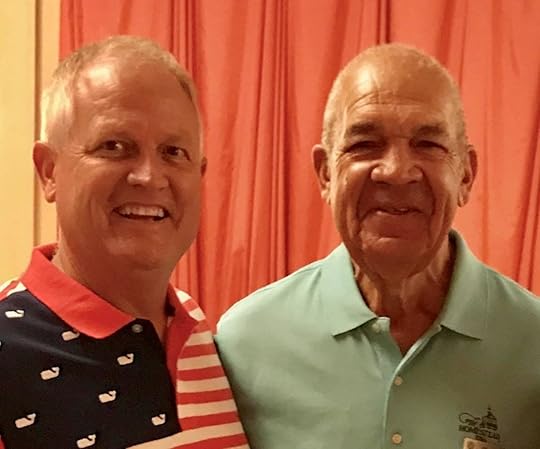
Meeting Woody Pettus…he had worked his way up from the horse stables to eventually become maître d’ of the resort’s main restaurant.
On the first morning of our long weekend, we were seated for breakfast by a warm, magnanimous man named Woody Pettus. Have you ever met someone that you could instantly tell was someone special? Woody was that person. He welcomed us like we were relatives he had been missing for years. Our conversation was strangely meaningful given how brief it was.
As we left the restaurant, I noticed a sign on the wall commending Woody for 55 years of service. It explained that five generations of his family had also worked at the resort, and he had worked his way up from the horse stables to eventually become maître d’ of the resort’s main restaurant.
The next day, Woody greeted us even more warmly, wanting to know what our plans for the day were, and how we had spent our previous day. As he made the rounds to each table, I watched as some guests, clearly long-time resort guests, got up from their tables and hugged Woody.
Fifty Years of MotivationWhat is it that motivates someone to come to the same place of work everyday for over 50 years with the same enthusiasm?
Race is a complicated subject in the United States, especially in the South, even more especially in Virginia. Hot Springs is a few hours down the road from Richmond, the home of the capital of the confederacy. Seeing aging white men hug this older black gentleman was at once surprising and beautiful.
After breakfast, I asked Woody if I could speak to him privately for a moment. I said, “Woody, you seem to love your job as much as any person I’ve ever met. One of the areas that my business focuses on is motivation. What is it that motivates someone to come to the same place of work everyday for over 50 years with the same enthusiasm?” He smiled and said, “Human beings.”
He went on to explain that he enjoys learning about other people’s lives, and loves hearing people’s stories. Over the years, he explained, he had watched guests raise children, celebrate marriages, and take vacations together, and many of them had become true friends. He looked forward to their visits. After our chat, I asked Woody if he would take a picture with me, and that I was going to include him and the wisdom he had just shared in future workshops on motivation.
Love and Light“Darkness cannot drive out darkness; only light can do that. Hate cannot drive out hate; only love can do that.”
So, why was I crying at my desk yesterday? As I was updating slides for the motivation workshop, I came across the picture of Woody and me. I did a quick Google search and discovered that he had died in 2018, about a year after retiring. In his obituary, it was noted that resort guests would plan their trips around whether or not Woody would be working. Over 100 colleagues and long-time guests attended a reception at the resort after his death, in a new resort restaurant named in his honor: Woody’s.
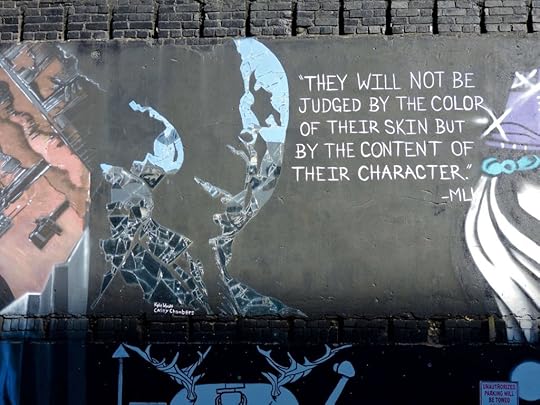
Today is Martin Luther King, Jr. Day. I am reminded of a quote that seems to epitomize what Woody was all about. “Darkness cannot drive out darkness; only light can do that. Hate cannot drive out hate; only love can do that.”
I think the world could use more light and love. The kind that Woody gave.
The post We Should All be Like Woody appeared first on Giant Leap Consulting.


January 6, 2021
Never Underestimate the Power of Knowing Your People
As a leader, knowing your people has a powerful and long-lasting impact. But the pendulum of effect swings two ways–positive and negative.
A manager who is indifferent to his staff will leave individuals feeling disposable and unremarkable. However, a boss who takes time for personal connections can alter life outcomes for the better.
Get to know your people beyond the tasks they do.
4 Skills for Developing Relationships with Your Staff
Know your employees.
Above all, have extensive knowledge about the backgrounds, needs, and desires of your people. Get to know your people beyond the tasks they do. Ask them directly about their career goals and aspirations–what do they want to get out of their job?
Keep in mind the goal isn’t to introduce or interrogate. It’s to gain insight into their dreams, strength, and motivations.

Match suitedness.
Draw connections between the opportunity and the development needs of your employees. This involves continuously be on the lookout for options that can advance your employees’ careers. For instance, when opportunities are identified, ask yourself whose growth and development would this opportunity most advance?
Envision the desired results.
Next, have a clear picture of the desired benefits that given opportunities present for the employees and the organization. Do some future-casting with your employee. Think through the potential benefits–to the employee and the organization–that could emerge if the opportunity is accomplished. After that, give some thought to the actions that will have to occur to maximize the probability of success.
…when you know your employees’ aims, and you’ve assigned them an ideal opportunity, you can’t help but take a strong interest in their success.

Provide ongoing support.
Genuinely want and support your employees’ success. In fact, when you know your employees’ aims, and you’ve assigned them an ideal opportunity, you can’t help but take a strong interest in their success.
Stay involved by periodically asking what support they need from you, removing barriers that might block their progress, and offering encouragement and guidance when they hit roadblocks and bottlenecks. This is a natural part of knowing your people.
In conclusion, the more you cultivate these skills, the more you will see opportunities to open doors for others. The altruistic efforts you make will offer them a better future professionally and personally while affording you remarkable leadership opportunities.
The post Never Underestimate the Power of Knowing Your People appeared first on Giant Leap Consulting.
December 21, 2020
Ho, ho, ho…and Merry Christmas!
Here’s to a Merry Christmas, a Happy New Year, and a grateful so long, farewell to 2020 from Giant Leap Consulting’s Chief Encouragement Officer, Bill Treasurer. 
https://www.giantleapconsulting.com/wp-content/uploads/2020/12/BT-Christmas-Vid-2020.mp4
December 16, 2020
2021 WILL REQUIRE YOUR Very BEST!

Hey GLC readers! It is December 2020, and what a year it has been. Total craziness!
I think it’s safe to say that all of us are tired of social distancing, washing our hands countless times during the day, and deciding when we walk into a grocery store if having to wear a mask is an infringement of our First Amendment rights. The COVID-19 pandemic has certainly required adjustments and flexibility on how we live, how we do business, and how we act around each other.
…leaders will have to rely on their personal courage to step up and make major decisions that hopefully will be in the best interests and safety of their company, workers, shareholders, and families.
Many businesses continue to suffer, and many workers continue to be unemployed. Effective communication and accountability practices and principles have also suffered. But in some cases, companies have flourished during the pandemic. And why? The most common explanation is that leadership adjusted their ways of doing “business as usual” and modified their production practices to serve the demands of pandemic survival better.

In a past blog, I wrote about how the instructors in SEAL training repeatedly put the officers in the class into uncomfortable scenarios to see how they would lead under duress and test their courage to step up and take charge of the situation. Their standards were formidable and relentless, much like the ongoing pandemic. But there were two things I repeatedly told myself that helped me better understand why the instructors were so demanding of officers. They were: (1) I volunteered for this program, so if I didn’t like it, I could ring the bell and quit anytime I wanted, and (2) knowing the instructors were testing us to make sure that if/when we graduated, we were ready for the daunting demands of being a leader in the SEAL Teams.
You asked to be a leader…make the call.
So, as we approach the new year, the need to remain flexible and adjust accordingly because pandemic disruptions will continue. And as leaders, there is still little to no existing business models, theories, or previous experience to draw upon…leaders will have to rely on their personal courage to step up and make major decisions that hopefully will be in the best interests and safety of their company, workers, shareholders, and families.
Are you up to these leadership challenges?
Coach’s tip(s) of the month: 2021 will require those in charge to adhere to good, common sense leadership fundamentals. Specifically:

– Lead from the front. Do not hide when things get tough, nor refrain from making the hard decisions. You asked to be a leader…make the call.
– Be visible. Workers need (and want) to see their leaders making decisions, especially in times of uncertainty. You asked to be a leader…make yourself accessible.
– Be accountable. Hold yourself accountable first and foremost. You asked to be a leader…the buck starts and stops with you.
HAPPY HOLIDAYS!
Leadership: Accept it, attack it, make it happen!
December 3, 2020
The Courage to Be Courageous

I once coached a professional named Bob who was considering three separate job offers. All were well-known companies, but one was of particular renown. Its name carried a certain pedigree that eclipsed the others. Bob had settled his mind on one of the lesser offers, rationalizing that this particular job most resembled the roles that he had had in the past—roles that no longer challenged him, as he had mentioned in the course of earlier discussions.
Any risk situation has a grand continuum: You are either moving in the direction of your courage or moving in the direction of your cowardice.
What’s Fear Got to Do with It?
Sensing there was more to it, I asked him to describe his impressions about the more prominent company. He said that many of the people who worked there had Ivy League degrees (which he didn’t) and/or graduate degrees (which he had). Although they had offered him the job, he said that he was afraid he wouldn’t cut it. I now understood that the issue wasn’t about skill compatibility; it was about Bob’s personal insecurities, it was about his fear. I probed further, “Bob, what exactly are you afraid of?” He thought for a second and said, “I guess I am afraid that everyone will be smarter than me, that my ideas won’t be valued. If that happens, they’ll fire me.”
Directed by Bob’s answer, I asked him another, more courage-provoking, question: If fear weren’t an issue, which job would you choose? Without hesitation, he selected the one he was most afraid of.

As Bob’s story illustrates, fear often indicates something about yourself that you are avoiding. Left unaddressed, life will bombard you with a litany of opportunities to confront these “issues” until you finally resolve them. Each time you avoid the issue, you stuff it further into your psyche. But knowing that dealing with the issue represents your growth, your psyche throws the issue back up until you finally confront it, as if to say, if you don’t learn the lesson, you have to repeat the class.
Through coaching, Bob was able to see that not only did the job he was afraid of represent an opportunity to gain experience working in a world-class organization, it also represented an ideal opportunity to explore and, more importantly, to overcome his deep-rooted feelings of low self-worth. But to benefit from both opportunities, he would have to muster up the courage to be courageous and to face his fear. Ultimately he did. He chose the opportunity he was most afraid of.
Fortified with more courage, you are then capable of facing more fearful situations.
Courage Capability
Any risk situation has a grand continuum: You are either moving in the direction of your courage or moving in the direction of your cowardice. When you face your fears, your Courage Capability expands, enlarging your capacity for dealing with future fears. In this way, demonstrating courage is itself a form of encouragement in that it fills you with greater levels of courage. Fortified with more courage, you are then capable of facing more fearful situations. For example, as a young professional you might find it petrifying to give a presentation to ten people. However, as you progress in your career and gain more experience with public speaking, you are able to comfortably address larger and larger audiences. In this example, the number of additional audience members reflects the degree of expansion of your Courage Capability.
Of course, the opposite is also true. In situations where you allow fear to prevent yourself from having something you want, you enlarge your Cowardice Capability. And the more cowardice you exhibit, the more it grows because cowardice feeds on the diminishment of courage. On a certain level, this is also quantifiable. For example, the person who is afraid to take the risk of asking for a raise can calculate his cowardice as the difference between his current salary and the adjusted salary he feels he deserves but is too afraid to ask for (assuming, of course, that he would have gotten the raise).

Virtue of Courage
People don’t like using the word coward. They look for softer, less offensive terms. But just because we don’t like the word doesn’t mean cowardice isn’t real. Cowardice is as real as courage. One exists in relation to the other. Furthermore, just as there have been times in your life when you’ve been courageous, the chances are, at some point in your life you’ve been a coward as well. Most acts of cowardice, however, go unnoticed and remain concealed within the confines of your heart. Cowardice comes in compromising your principles, allowing your boundaries to be crossed, in failing to demonstrate personal fidelity, and in not taking a stand for what you believe in. You could spend your whole life being a coward and no one would know it but you.
Having the courage to be courageous means backing up courageous actions with a courageous attitude.
Having the courage to be courageous means backing up courageous actions with a courageous attitude. It means holding a clear picture of yourself being courageous and continuously asking yourself, how would the courageous person I want to become act in this fearful situation that I am faced with today? It means first believing in the virtue of courage and then acting in a courageous manner.
When it comes to courage, you have to believe it to be it.
To learn more about ways you can be courageous, contact Giant Leap Consulting.
November 18, 2020
Having an “Edison Moment”
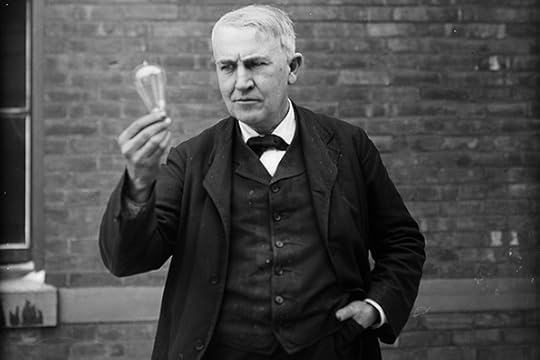
Today’s post comes courtesy of Craig Atkinson, vice president of communications and strategic services at The Walsh Group.
What would you do if you lost it all? How would you react? What would you say? Would you break or rise to the occasion with strength you didn’t know you had? Would you become immobilized or spring into action? When we experience a sudden and significant threat, we face a test I like to call an “Edison Moment.”
On December 9, 1914, legendary American businessman and inventor Thomas Edison was sitting down to dinner when a man rushed to his home with news that a large fire was burning at Edison’s Menlo Park, CA, workshop complex. By the time Edison and his son, Charles, arrived on the scene, almost all the structures, which were filled with combustible materials and chemicals, were ablaze. Edison watched as his huge portions of his life’s work, decades of priceless research, prototypes, and special equipment, burned to ashes before his very eyes. The buildings, which Edison had assumed were fireproof, were grossly underinsured.
Upon seeing the scope of the destruction, Edison’s response might surprise most people. When Charles asked his father, “What should we do?” Edison turned to his son and said with almost childlike wonder, “Go and get your mother and all of her friends. They’ll never see a fire like this again!”
One might assume that Edison, aged sixty-seven at the time, would fall apart or give in upon realizing he had just lost almost everything. Instead, Edison said with a wry smile to his son, “It’s all right. We’ve just got rid of a lot of rubbish.” Edison promised to start rebuilding the next morning and to retain all his employees. He kept his promise. One year later, Thomas Edison Industries was back operating at full speed and chalked up $10 million in revenue.
We have been living through some of the most surreal and distressing months in the history of our country. There is no instruction manual or standard operating procedure for how to feel, what to say, or what to do in an “Edison Moment” like the one we are in now, and that can drive us to despair and hopelessness. I certainly hope we will never see “a fire like this again.” Yet, no matter how difficult it is to remain optimistic, we are called to face this moment with courage, action, and even humor. An “Edison Moment” reminds us that our resilience springs from our deep interconnectedness and our unlimited capacity to grow, learn and renew.
November 5, 2020
Risk for the Right Reasons

Risk-taking is by definition a little (or a lot) scary, but it can also reveal the best in us. When we’re acting out our convictions and putting concrete action to our deeply-held values, the risks are generally worth it, and can actually be an exciting, positive thing rather than a frightening one.
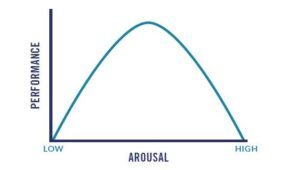
In 1908 two American psychologists, Robert Yerkes and J.D. Dodson, began researching the relationship between arousal and peak performance. Their work resulted in the establishment of the Yerkes-Dotson Law, which suggests that performance increases with mental and physiological arousal…but only up to a point. After reaching a certain threshold, arousal (such as that caused by anxiety/fear) has diminishing performance returns.
The upward part of the curve below can be thought of as energy-producing, while the downward part of the curve can be thought of as energy-sapping (e.g., stress). Facing a personal risk, one needs to consider the severity of the potential outcomes, and the likelihood of that outcome occurring. The threshold at which arousal begins to have diminishing returns is unique to each individual, but the curve will look pretty similar to this:
So how do we make sure we’re finding the right mix of risk, and that we’re taking them for the right reasons? Let the five P’s of Risk guide you! If your risk meets all these thresholds, you should feel good about moving forward.
PASSION:
By arousing the strongest, most untamed parts of our nature, and stirring up the wild mustangs in our soul, our passion gives us the raw energy and wherewithal to suffer through the anguishing moments that often accompany risk. If the risk might end in a positive outcome you’re particularly passionate about, you’ll weather the storm.
PURPOSE:
Purpose serves to harness our passions and give them direction. Ask, “How will this risk make me a more complete person? How will this risk further my life’s purpose? How will it help me get to where I want to go?” A clear answer to these questions can serve as a visible goal to keep you determined through the difficult moments of risk.
PRINCIPLE:
The “right” risks are governed by a set of values that are both essential and virtuous. Risks are essentially decisions, and when facing a decision of consequences, principles form a set of criteria against which the risk can be judged. If it aligns with your beliefs and goals, you can feel better about taking the dive. (And trust me on that—the cover of one of my books on risk has a photo of me literally jumping—on fire—from a high-dive in front of 2000 spectators. I know all about a risky dive!)
PREROGATIVE:
Will you be taking this risk as a matter of personal choice, or because someone imposed it on you? Generally, risks that are an exercise of our own free will turn out better than ones we take on the orders of someone else. Smart risk takers view the power to choose as a privilege, and then honor it as such. By consistently making choices at a conscious level, they are better able to make superior judgment calls at an instinctual level—in fastmoving situations.
PROFIT:
A meaningful risk should come with a real potential for gain. Risks are, well, risky. And in exchange for assuming the potential risk of hardship, you are entitled to some real and unequivocal upside—if you weren’t, the potential downsides have nothing to counterbalance them. Notice, however, that Profit is the fifth “P.” It’s the criteria that should be assessed last. Lead the decision-making with your passion and principles, and then back it up with logical profit assessment before committing.
Want to learn more tips on how to take risks more thoughtfully and decisively while reducing the chance of wiping out? Check out Risk Taking and Decision Making: How to Stack The Odds In Your Favor, a workbook from Giant Leap’s head-risk-taker and Fortune 500 business coach Bill Treasurer. Designed for quick study and applied use, the book will help you take smart and beneficial risks in your business and personal life.
October 14, 2020
5 Leadership Lessons from Powerful Women

October is National Women’s Small Business Month, a time for us to reflect on and appreciate the work of women entrepreneurs in this country and all the contributions they’ve made. In the spirit of this important month, let’s dive into some lessons from a few of the world’s most impactful women leaders.
“Leadership is about making others better as a result of your presence and making sure that impact lasts in your absence.” —Sheryl Sandberg
Leadership can be tricky to define, but Sheryl Sandberg has captured its essence very well here. The Facebook COO hits upon an important facet of leadership: what defines a leader is how they improved the lives and skills of those they lead. It’s not about self-aggrandizement or taking advantage of others just because you’re in a position of power over them. Leaders are there to enable and empower the people around them, to be relied upon for those who need help or direction.
“I pick up the details that drive the organization insane. But sweating the details is more important than anything else.” —Indra Nooyi
The former CEO of PepsiCo and Amazon board member’s focus on the little things is an important lesson to keep in mind. The “tiny details” are anything but unimportant. Small choices have chain reactions that impact huge swaths of your company, department, or project, even if it isn’t obvious. Remember that just like your organization is built on a foundation of many lower-level employees, so too is it built on a foundation of small decisions. One unattended detail at the base of your organization could become a crack that spreads upward and threatens the stability of everything. Sweat the small stuff—it’s your job as a leader to know what little details to be mindful of and to make sure everything is in order.
“It’s much, much better to talk to one another than about one another.” —Angela Merkel
As the first female Chancellor of Germany and the country’s leader since 2005, it goes without saying that Angela Merkel has had some success working alongside others. While you could read this quote in a social or personal context meaning “don’t gossip,” what this really highlights is a contrast between good leaders and bad leaders that often goes unnoticed: cooperation versus competition. Good leaders work with others and sort out differences so that they can proceed toward a common goal, while bad leaders try to create conflict among others as a way of getting ahead by keeping others down. Be a leader that people want to succeed, that people know wants them to succeed; a rising tide lifts all boats.
“I’m less concerned about whether being a good corporate citizen burnishes a company’s reputation. That’s just an added benefit. I believe it’s a responsibility, and there is no negotiating on responsibilities.” —Ursula Burns
Ursula Burns was the first black woman CEO of a Fortune 500 company, Xerox, in 2009—which also made her the first woman to succeed another woman as head of a Fortune 500 company. The greater good a company does beyond profit is impossible to separate from the company itself, and good leaders understand the importance of setting expectations for how the company approaches its place among the rest of the world. Burns is an advocate for ethical leadership and leads by example—appointed by President Obama in 2009, she helped to lead the White House National STEM program until 2016. And as she suggested, if you’re doing public or community good solely to save face, you’re doing it for the wrong reasons, and missing out on a major opportunity to demonstrate the power of an effective leader to create positive impacts on the world.
“We can’t save the world by playing by the rules, because the rules have to be changed.” —Greta Thunberg
An unconventional leader for sure, but the 17-year-old Thunberg has led her entire young generation to greater levels of awareness about climate change and spurred greater commitments from many of the world’s largest governments because of her passionate speeches and inspired leadership. Outside of the context of dealing with climate change, this quote from Thunberg underscores the need for new ways of thinking when “the way we’ve always done it” isn’t working. Leadership isn’t solely about following the rules and making sure those you lead get in line. How many times have you worked in an environment where everyone involved wanted to do things differently, but they were told that change was impossible? Leaders heed the call for change when they hear it from those they are responsible for leading, or even better: empower those people to take charge on change when the situation calls for it.
For more lessons on being a powerful leader like these five women, take a look at Giant Leap’s leadership development services.
October 7, 2020
Women in Charge!
by John Havlik
Well, it’s October, and kids are back in school, bars, restaurants, and businesses are re-opening en masse, sports are back in force (thank you, college football!), the Tampa Bay Lightning are the hockey champions of the world (sorry for being a homer), and regrettably, both POTUS and FLOTUS recently tested positive for COVID-19. This year continues to amaze and baffle us, and no doubt has everyone wondering how the rest of the year will unfold.
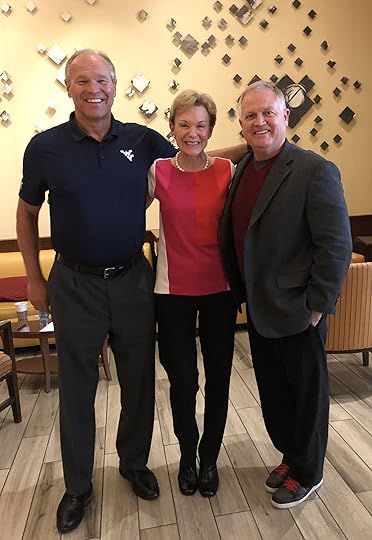
October is National Women’s Small Business Month, and a great time to recognize female leaders and how they pave the way for others. In light of this month’s theme of Women in Leadership, I’d like to talk a little about my experience working for one of my favorite leaders when I was deployed to the Philippines as the deputy commander of a Joint Special Operations Task Force (JSOTF): the Honorable Kristie Kenney.
Kenney was the U.S. Ambassador to the Philippines then, and our Task Force had special operations personnel located throughout the country, directly supporting Armed Forces of the Philippines (AFP) counter-terrorism operations. It was a very dynamic time, and the combined forces (U.S. and AFP) did an amazing job of winning the “hearts and minds” of the Philippine people, while significantly deterring and defeating terrorist threats in the country.
Ambassador Kenney was extremely popular.
Wherever she traveled in the Philippines, she received rock-star-level receptions and turnouts by the local populace. She was demanding and expected only the highest quality work from those on the embassy staff and the JSOTF. But she was also fair and consistent, and I always felt I knew exactly what she wanted because she was so straightforward in her guidance.
I will always remember my first office call with Ambassador Kenney at the U.S. Embassy in Manila shortly after I took over the deputy commander job. After some trivial bantering about our favorite sports teams (the Ambassador was—and is—a HUGE sports fan), she looked at me and simply said, “Coach, what the JSOTF does for Philippines and U.S. is extremely important and highly visible, and the embassy receives a lot of media inquiries from the national press and other local media outlets about the U.S. military presence in the Philippines. All I ask from you is that you keep me informed about everything and anything that concerns the JSOTF, so that I am never surprised. Like the press inquiries, I frequently receive personal calls from both high ranking Philippine and U.S. government and military officials about the doings of the JSOTF. For me to respond in a timely manner and prevent any potential political backlash or unwanted media attention, you need to keep me informed. That means any time of the day or night, any day of the week. Do you understand?”
I simply responded, “Yes ma’am. Got it.”
And with that, I left her office and did my best for the next seven months to keep her and the embassy staff informed (and not surprised) about JSOTF operations.
Other than my post 9/11 assignment to Bahrain, I consider my deployment to the Philippines and working for Ambassador Kenney as the most rewarding operational service of my military career. She remains a good friend and mentor, graciously agreed to be interviewed by Bill and me, and subsequently endorsed our book. Whenever I need some sage advice (or want to talk sports), I contact the Ambassador!
Coach’s tip of the month: If you want to stay gainfully employed…keep the boss informed, and don’t let them be surprised!
That’s it! Be safe, and I will talk with you all again in December. Don’t forget to vote next month!
Leadership: Accept it, attack it, make it happen!
September 21, 2020
Thank U Covid

Back in March, when Covid-19 upended humanity, my first response, like so many others, was to freak out. I worried, “What if this pandemic decimates my business and savings?!” The fear was paralyzing.
Within a week, though, my fears gave way to the actions I could take to deal with the realities we were all facing.
With the help of a team of supporters, Giant Leap pivoted to a virtual training model, which, thankfully, stabilized the business and allowed the company to continue serving our customers.
Now that we’re half-a-year into the pandemic, my fear has been transformed into gratitude.
Now that we’re half-a-year into the pandemic, my fear has been transformed into gratitude.
For almost 25-years my life had been nomadic, traveling to various clients across the country, and spending as much time sleeping in hotels as at home. It took the pandemic for me to realize how lousy, and frankly unhealthy, the roadie life actually is. Since March, I’ve been able to eat dinner with my family, spend quality time with my kids, and sleep on my own pillow.
To be clear, I take Covid-19 very seriously, and, yes, I am a mask-wearer. I’ve known a number of people who contracted the virus and I don’t wish it on anyone. That said, I am grateful that the pandemic has made me homebound, at least temporarily. Being at home has enabled me to be much more involved in the development of my three teenage kids. We’ve had rich conversations about social justice, politics, and personal responsibility, all while enjoying Asheville’s beautiful mountains and rivers together.
Honestly, being homebound has made me a more present, more attentive, and more involved father and husband.
Honestly, being homebound has made me a more present, more attentive, and more involved father and husband.
There’s a song by female rocker Alanis Morrisette that I love, titled Thank U. In the song she expresses gratitude for all of life’s good and not-so-good. She thanks, among other things, disillusionment, frailty, consequence, and even terror. I get where she’s coming from. Flowers grow out of the nutrients that compost provides. Bad stuff can cause good stuff, so even the bad stuff deserves our good thanks.
As I write this today, I’m headed to Alabama to lead my first in-person workshop since March – fittingly enough on managing change.
And guess what? I’m grateful for that, too.