
Bill Treasurer's Blog, page 16
February 5, 2020
You Don’t Need to be a Hero to Have Everyday Courage

From every vantage point, be it political courage, military courage, moral courage, or physical courage, courage is most often defined as an extraordinary feat, an action taken while enduring exceptional hardship or challenge. To be thought of as “courageous,” we seemingly have to defy our very natures, that is, the deeply rooted impulse toward self-preservation. Courage, as we have been endlessly told, is the rare occurrence, the exception to the rule, the outlier.
Some of the most celebrated books of all time have been written about courage. Former U.S. President John F. Kennedy won a Pulitzer Prize for Profiles in Courage, in which he profiled senators and congressmen who courageously moved against the tide of popular opinion. Steven Crane penned one of the most influential and bestselling works in American literature, the classic Civil War novel The Red Badge of Courage. In 2007, Senator John McCain co-authored Why Courage Matters, which became a New York Times bestseller.
It is precisely those times when your knees are shaking, your voice is unsteady, and your stomach is teeming with rioting butterflies that you are being courageous—provided, of course, that you are moving through your fear.
Courage is often defined as acting despite being afraid. The essential, and perhaps counterintuitive, element of this definition is that it is not the absence of fear. In other words, courage is not fearless. In fact, it is the opposite. Courage is fearful. It is precisely those times when your knees are shaking, your voice is unsteady, and your stomach is teeming with rioting butterflies that you are being courageous—provided, of course, that you are moving through your fear.

When the term “courage” is limited only to the heroes among us, we begin to abdicate our own responsibility to be more courageous. By inflating courage to a standard so high that it can only be attained by an exceptional few, we suck the air out of our own space to be courageous—to the point of extinguishing the brave little pilot lights that flicker in our souls waiting to ignite. We begin to deify our heroes, making us small and them uncomfortable. We start to think, I am not like them. Which leads us to, I am no hero. Which concludes with, I am not courageous.
If we judge acts of courage solely against a standard of exceptionality, we risk moving courage too far beyond our own reach. By reserving courage only for war heroes, political mavericks, or people of perfect moral character, it becomes inaccessible to all of us who aren’t these things.
It may well be that there are two varieties of courage: one for people who have done extraordinary things, like walking on the moon, and one for those of us right down here on Earth.
… by focusing on everyday courage, we make it more accessible, understandable, and desirable.
The reality is that few people will ever shoot a gun at an enemy or use the bully pulpit to persuade the populace or take a rocket to the moon. But all people, personally and professionally, will face a foe, suffer injustice, and face uphill challenges.
The first kind of courage is admired for its exceptionality. The second kind occurs more regularly and can be thought of as everyday courage. Rather than focus on the rare and nearly unattainable kind of courage, by focusing on everyday courage, we make it more accessible, understandable, and desirable. In this way, courage is not just for heroes anymore.

While it is common to include fear in the definition of courage, the definition needs to include another element too: discomfort. Acts of courage are acts of discomfort. Were they not, more people would be courageous more often. When we avoid acting courageously, it is not just because we are afraid, it is because of how uncomfortable acting with courage requires us to be. Thus, it is important to factor the idea of discomfort into a well-rounded definition of courage.
Whether you are a hero or an everyday person, in the end, courage is acting on what is right, despite being afraid or uncomfortable, when facing situations involving pain, risk, opportunity, uncertainty, or intimidation. Fear is fear—it’s the ability to overcome it that makes us courageous.


January 23, 2020
Look Someone In the Eye If You Want The Job Done Right

Edited for 2020
Greetings GLC readers! I hope 2020 is going well as you work on all those resolutions, with being a better “communicator” as your #1. If not, it should be, because as leaders, your ability to effectively communicate via any available means (social media, video, written, etc.) is critical to your mission/business success.
Unfortunately, with the development of social media, we’ve forgotten to use the most important and influential means of communication. In layman’s terms, we’ve forgotten how to look someone in the eye and talk to them one-on-one.
During my last Iraq deployment, I was the Deputy Commander of the U.S. special operations headquarters unit overseeing all Special Operations Forces (SOF) operations in Iraq. On 21 October 2011, former President Obama announced that the full withdrawal of all U.S. military personnel from Iraq would be accomplished by the end of that year. A no-later-than exit date of 19 December was directed, so that gave us approximately two months to plan on how we would move all the equipment and personnel out of country to meet the President’s decree. A daunting task to say the least, but in true special ops fashion, my boss looked me in the eye and said something inspirational to the effect of “Make it happen, Coach.”

4 Key Things I DID To Make It Happen:
Delegation
First, I had to teach an officer on the staff with 26 yrs of military service how to “delegate.” This officer was a good friend, but he liked to get into “the weeds” too much, and get his hands dirty more than direct others what to do. This “training” took about 30 seconds because I quickly emphasized that what I really needed him to do was get the staff on board as quickly as possible to immediately start the tedious inventory of all the equipment accumulated after 10 years of sustained combat operations, then ultimately move that equipment and all personnel to various locations around Iraq as the 19 December date got closer.
Strategic Planning
Once he was trained, I worked with that same officer to develop a Plan of Action & Milestones (POA&M). I used this tool throughout my naval career as it provided all hands with a comprehensive checklist and timeline of critical events, the dates these events needed to be accomplished, and who on the staff was responsible for action.
Consistent Meetings
Once the POA&M was developed, I started weekly department head meetings to review and keep the staff leaders informed of the status of our withdrawal, because these folks conducted daily interactions with U.S. conventional military and U.S. State Department support units that were critical to safely moving our people and equipment around (and ultimately) out of Iraq. As 19 December got closer, these weekly meetings quickly became daily (and sometimes hourly) sessions as POA&M events were completed and/or changed.

Direct Communication
And finally, as needed, but usually before any major personnel/equipment move (which were many), I sat the entire staff down either in person and/or via secure video teleconferences to remote locations around Iraq, and had my Chief of Staff and the Operations folks update the staff on how the withdrawal was going, and highlight what the boss’s expectations of them were as we got closer to the 19 December exit date. These sit-downs were invaluable, by keeping everyone informed while affording them a venue to ask and get timely answers to any questions they might have had.
Coach’s Tip(S) For This Month:
Talk to your people! Look them in the eye and tell them what you expect from them! The total withdrawal of all U.S. military personnel and equipment out of Iraq as directed by President Obama by the end of 2011 was successfully accomplished by leaders talking directly with their people, and not by sending out countless emails and/or directives for them to read (and hopefully follow).
Utilize a tool such as POA&M (Plan of Action and Milestones) for any project major events, especially if it involves significant changes to the way you normally do business.
January 8, 2020
Do You Know Why You Need a Strategic Plan?

To communicate company goals internally and externally, your business must have a strategic plan. But why?
Say your 2020 objective is to increase revenue by 20%, but you don’t tell anyone. How can you reasonably expect to achieve that goal? Don’t carry the burden of a secret expectation and then get mad at everyone else for missing the mark. You need to communicate this objective and find a team of people who are inspired to tie up their laces, show up with their game face, and stick to the plan.
Strategic planning requires getting everyone aligned around clear goals and expectations so they can advance the overall mission of the organization. As a leader, it’s your job to introduce these four key questions and get the stakeholders involved in the answers:
Where are we today?
Where do we want to be tomorrow?
How will we close the gap?
What will we do to monitor our progress?
Sounds easy enough, right? Just four little questions and then the year is all planned out and that 20% increase is all but guaranteed.
Wrong.

A good strategic plan takes time, collaboration, lots of effort, and plenty of compromises. As a courageous leader, this is what you signed up for—hard work and the willingness to dig deep, make tough decisions, and take risks along the way.
Once the plan is set, it also falls on you to put the plan into action. If your goals leave people feeling uninspired, stressed out, or over-worked, then they will lack the motivation to complete them.
Goals that motivate have common characteristics worthy of consideration as you plan ahead:
Clarity. Specific, Measurable, Actionable, Realistic, and Time-bound (SMART). When a goal is clear and specific, people know what needs to be done and what is expected.
Challenge. We are motivated by achievement, so we’ll judge a goal by how difficult we perceive it to be. If it is too easy, we won’t give it as much attention and energy. However, if it demands us to stretch ourselves to achieve the recognition of a job well done, we are more likely to be motivated to excel.
Commitment. For goal-setting to be effective, the goals must be agreed upon and understood. While this doesn’t mean you negotiate with every employee, there is value in engaging the people working toward those goals.
Complexity. For highly-complex goals, provide people sufficient time to learn the skills to be successful.
Feedback. Incorporating feedback into the goal-setting process allows for expectation clarification, necessary adjustment, and personal recognition. In particular, when a goal is long-term in nature, it’s important to set benchmarks that help people gauge their success and see their achievement.
Now you can get to work on that plan!
Once the goals are defined, you need to determine objectives and ways to measure them. Otherwise, you did a lot of work for no reason. The true purpose of creating a strategic plan, communicating your goals, involving your people, setting objectives, and measuring them, is so that in the end, you will have RESULTS. Hopefully, they will amount to the tangibles you set out to achieve.
A strategic plan only happens with exceptional communication and clear goal-setting. Challenging your leadership skills with activities like this is how you grow into your position and how you help your organization grow.

If creating and implementing a strategic plan is brand new to you and your team OR you’re searching for a way to change up how your company has been going about it, reach for my book, Do-It-Yourself Strategic Planning. In it, I provide a proven framework to help leaders build on their operational and tactical knowledge to think more strategically.
December 23, 2019
Happy Holidays from GLC’s Chief Encouragement Officer, Bill Treasurer
On behalf of all of us at Giant Leap Consulting, here’s a holiday message from our own Bill Treasurer.
https://www.giantleapconsulting.com/wp-content/uploads/2019/12/GLC-Christmas.mp4
December 19, 2019
When It Comes to Courageous Leadership, Coach Says, “Follow Your LB3s”!
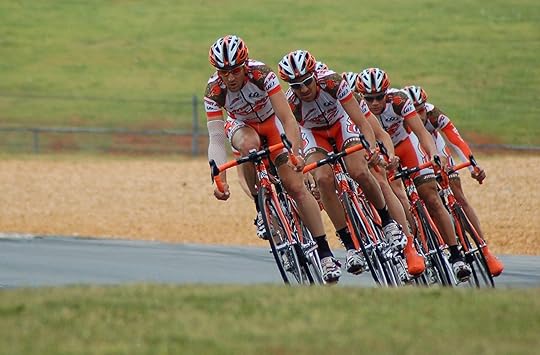
Hey GLC readers! It’s December already. Where exactly did 2019 go? It just seems like last month that I was doing my annual holiday blog to you all about being deployed over the holidays. This month’s theme will be a bit different as Bill asked me to write a little about courageous leadership from the “boots on the ground” perspective.
Throughout SEAL training, the instructors (mostly enlisted) derived great pleasure from putting the officers in the class into uncomfortable scenarios to see how they would lead under duress. They did this to test our decision-making skills and personal courage to step up and take charge. Daily, the instructors reinforced to us that to be an effective SEAL officer, we would need to have the courage to lead from the front and to be able to make a decision when it was required. Their standards were formidable and relentless, and at times, left me questioning my potential as a leader. Some days, I left training wondering if I had what it took to be a SEAL officer.
I’ll always remember one of the salty SEAL Master Chiefs putting down his beverage, looking me straight in the eye and calmly saying, “Sir, if you can’t quickly analyze what’s going on around you and make the call, we don’t want (or need) you in the Teams.”
But there were two things I repeatedly told myself at the end of the day as I was lying in bed, hoping to get a couple of hours of much-needed sleep before starting the rigorous routine all over again the next day. They were: (1) I volunteered for this program, so if I didn’t like it, I could ring the bell and quit anytime I wanted, and (2) the instructors are testing us to make sure that if/when we graduated, we were ready for the lofty expectations of being a SEAL officer.
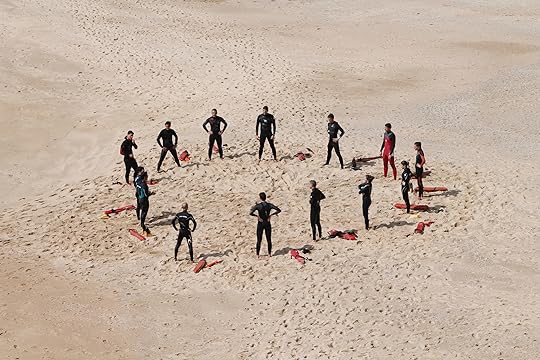
When I finally got to SEAL Team ONE after graduation, I was redirected one Friday as I was leaving a favorite SEAL watering hole by two very senior enlisted SEALs, both highly decorated numerous times for valor in Vietnam. Over a couple more toddies, they both stressed to me that to be successful as a SEAL officer, it would be prudent of me to keep my mouth shut and listen to the advice of my enlisted SEALs because they had the experience that I didn’t, and that when the time called for it, what the platoon members really wanted was an officer who led from the front and who wasn’t afraid to make a decision. I’ll always remember one of the salty SEAL Master Chiefs putting down his beverage, looking me straight in the eye and calmly saying, “Sir, if you can’t quickly analyze what’s going on around you and make the call, we don’t want (or need) you in the Teams.” I took his message to heart and did my best to follow that advice throughout my naval career.
Coach’s tip(s) of the month: If you want to be a courageous “boots on the ground” leader, then I recommend following the LB3s:
– Lead from the front. Don’t hide in the rear with the gear.
– Be visible. The troops need (and want) to see you making the decisions.
– Be consistent. Personally act like you preach. No double standards.
– Be accountable. You’re in charge, so the buck starts and stops with you.
Happy Holidays! See you all in 2020!
December 9, 2019
Keeping the Faith and Gratitude Alive All Yearlong

In keeping with last month’s sentiment of gratitude, I found myself writing what turned out to be a tribute to my grandmother, who my family affectionately called, “GooGoo.” It was the introduction to my newsletter, something I pen every month, and after it was done, I moved on to the next dozen or so tasks I had to accomplish that particular day.
That deep feeling of gratitude and the desire and willingness to share it with others doesn’t need to be left to only one month a year.
The curious thing about it is, you never know when what you write will resonate more deeply with people. I wrote that intro on a weekend, a few days before the newsletter was sent. What had been front and center and laser-focused had moved away from the forefront — until I started receiving emails from readers. What I had written about GooGoo’s life, and the impact it had on me, struck a chord with many people.
That deep feeling of gratitude and the desire and willingness to share it with others doesn’t need to be left to only one month a year. For those of you who may not have read the newsletter, here’s why I am so grateful for her…
GooGoo was a hero to my brother, two sisters, and me. She was full of hugs and giggles, and each of us felt like she loved us the most, because of the singular attention we received from her. In my case, when I was feeling like a failure, GooGoo would remind me that I was a child of God and was just as good as everyone else. She loved me to the point of helping me believe in myself.

GooGoo didn’t have an easy life. Her husband, my mother’s father and my grandfather, died in a car accident when my mother was two. Later, when she remarried, she had a child with Down’s Syndrome. Still later, she would care for her mother as she declined with dementia. After that, she would lose a son, my 31-year-old uncle, to brain cancer. Yet through it all, she remained devoted to her faith. I remember asking her once how she could possibly believe in God after having suffered through so much in life. She was surprised by my question and said, “Are you kidding me? How do you think I got through all that. Keep the faith!”
The entire time I knew GooGoo, she lived in a two-bedroom apartment, most of the time by herself. On weekends, my siblings and I would fight about who got to sleep at GooGoo’s. On weekends when I was the winner, I loved indulging in conspiracy theories with her, most of which were drawn from her subscription to The National Enquirer. She’d also let me stay up late and watch Johnny Carson. But most of all, we would laugh at old stories and silly jokes.
Ours was a beautiful relationship coming to the only end it could, full of grace, love, and gratitude.
While in college, GooGoo and I kept up a regular correspondence, her notes were always full of encouragement and optimism. After college, I moved to Atlanta where the economy was booming. It was there that I learned GooGoo, like her son, had developed brain cancer. While I called her often, eventually, my mom encouraged me to come home to say my goodbyes. I thought hard about what I wanted to say to this wonderful, independent, optimistic, and deeply faithful woman. The only words that came to mind were simply, “Thank you.” I flew up to my home in New York and headed to New Rochelle Hospital, where GooGoo was being treated.
After spending time reminiscing, I got ready to leave. As I did, GooGoo took my hands, looked me deep in the eyes, and said, “Thank you, Billy. You’ve been a wonderful grandson, and I love you very much.” I could hardly move. The person who had affected my character more than any other was thanking me.

That moment wasn’t about saying our peace — nothing had remained unsaid. It was about confirming our love before a long voyage of separation. After I walked a few steps outside the hospital room, I stood against the wall and wept like a child. Ours was a beautiful relationship coming to the only end it could, full of grace, love, and gratitude. Our shared moment of gratitude remains one of my most cherished memories.
There were so many character-shaping lessons I learned from GooGoo that it’s hard to catalog them all. One thing stands out, though, and that is to be grateful for everything life gives you – the joys and the tragedies. Giving thanks, GooGoo taught me, isn’t a seasonal decision, it’s a way of living. Don’t take anything or anyone for granted. Say “thank you” and mean it. Count your blessings and share them when you can. Rember to keep the faith. You’ll have a much better chance of finding peace and joy if you do.
November 25, 2019
Don’t Forget to Express Gratitude with Intention and Meaning
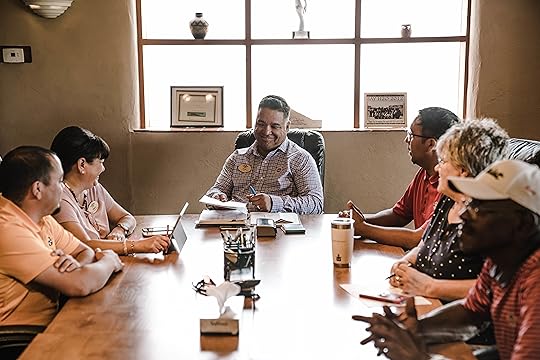
Saying “Thank You” (and meaning it) isn’t always easy. But, when done right, it can mean so much.
If you’ve read the book that Bill Treasurer and I co-authored, “The Leadership Killer: Reclaiming Humility in an Age of Arrogance,” you know that Chapter 5 details the story of how my own hubris took me down, and how I had to leave the Navy after 13+ years of service because of my two-time failure to be selected for a promotion. The chapter isn’t easy for me to read, and I can tell you it wasn’t easy to write. It brought back some bad memories. It was also the first time I’ve told the story of how my ego and sense of invincibility as a Navy SEAL was shattered and taken from me. Finding my way after having lost something that I worked so hard to achieve and loved so much, led to a very dark period of my life. I was angry, frustrated, and extremely resentful.
Humbled but Not Defeated
The beauty of the story, as I detail in Chapter 6, is that even though I was humbled and at my lowest, I didn’t quit. Through the constant encouragement of a small group of family, friends, and colleagues, I was able to get back into the Navy, resurrect my military career, and be a SEAL again for another 17+ years. I’m forever grateful to those select few who believed in me and encouraged me to not ring the bell and give up! I appreciated every day I was back in uniform, and through experiencing adversity and failure, I came back a better officer and person!
As I write this blog on Veteran’s Day, I’m forever grateful for my time in service and the opportunity to work with, and lead, some brave Americans.
During my career, I was always amazed at the ability of a few select commanders to “work” a crowd of sailors and/or soldiers they were visiting. They could walk into a dining facility and easily make their rounds by sitting down and mingling with the tables full of military personnel, talk with them, shake some hands, share stories, and hand out some challenge coins. Their visits and time spent with the troops saying “Thank You” was invaluable to esprit de corps and morale, and it was a trait that I tried to emulate as I advanced as a leader.

As I write this blog on Veteran’s Day, I’m forever grateful for my time in service and the opportunity to work with and lead some brave Americans. I’m also thankful to know that there continues to be a steady supply of young Americans willing to volunteer and swear to defend this great country of ours, anytime and anywhere!
Coach’s tip(s) of the month:
Be grateful and gracious. Like Bill and I wrote in our book, always be grateful for those whose lives you impact through your leadership, and always be thankful for those who further your life as well!
Say “Thank You” often and freely, and when you say it…. MEAN IT!!
Happy Thanksgiving! See you all in December!
November 11, 2019
Why I’m Grateful for Courageous Honesty

Years ago, when I learned that I sucked at leading, I was a nomad, traveling and hurling myself off 100-foot towers into small pools at amusement parks throughout North America. I had just become the captain of the U.S. high-diving team and was responsible for leading a troupe of young, high-flying athletes and ensuring they consistently performed in tip-top shape. It was my first leadership role, and I was a damn good leader—or so I thought. The team was performing decently, and after all, I was the captain!
“You call that diving? You looked like flying polka dancers!”
Each day, my teammates and I would perform an aerial exhibition for amusement park patrons. We’d start by performing Olympic-style dives from the 3-meter springboard. Next, we’d do a comedy routine in which an audience member (a diver we planted in the audience) challenged one of our teammates to a diving competition. After that, we entertained the crowd with clown dives. The show culminated with a diver scaling a 100-foot high diving ladder and hurling himself toward the water, traveling at speeds more than 50 miles an hour before hitting a small pool that was 10-feet deep.
We were young and arrogant, and I had the biggest ego among us.

Trying to Lead with Fear
One day, after what I thought was a lousy performance, as the park guests exited the aquatheater, I let the team have it. “That show was a total disaster,” I barked. “You call that diving? You looked like flying polka dancers! If this is the kind of team I’m saddled with, I have serious concerns about the park extending our contract.”
“Listen up. The next show better be the best one we’ve ever done, or I’m going to start cutting the team,” I threatened. “I’m not going to let you embarrass me like that.”
There, I thought. That’ll teach ’em.
A Dose of Courageous Honesty
After what I thought was an impressive display of leadership and grit, a fellow diver came up to me and reasonably tried to explain that maybe my approach wasn’t as sensational as I’d thought. But, being stubborn, I endeavored to argue. The next words from his mouth, though at the time stung, I am forever grateful for. He said, “Treasurer, you suck at leading.”
Leadership change often requires a startling blow, and these words were the jolt I needed and deserved. I was utterly humiliated. After licking my wounds of embarrassment, I set out to become a better leader. I started reading books on leadership, observing leaders I admired, and trying different leadership approaches. Respect, I learned, can’t be forced. It has to be earned. Eventually, I decided to go to graduate school, and I did my thesis on the relationship between leadership style and effectiveness.
What makes the experience of being humiliated so valuable to a leader’s development is that it is through humiliation that one gains humility.
Humiliation is powerful, meaningful, and revealing. It strips away the layers of defensiveness that our egos devote so much time to building and fortifying. To be humiliated is to be vulnerable, exposed, and defenseless—all things the ego vigilantly guards against. What makes the experience of being humiliated so valuable to a leader’s development is that it is through humiliation that one gains humility.

Finding Gratitude in the End
Sometimes it’s hard to find gratitude in the painful lessons in life, but this is the time of year to deeply reflect on a time when you learned a lesson the hard way. Did you benefit from someone telling you the truth? What was the outcome? How did it make you a better person? I’ll never be able to thank my teammate enough for his courageous honesty and how it shaped my life today.
October 31, 2019
October 24, 2019
Let Them Fail!

The following is an original blog post by Coach Jim Johnson. Coach Johnson is a professional motivational speaker, team performance & leadership coach, and author of , “A Coach & A Miracle.”
Let us cut right through the chase! A well-known fact shared among professionals is the fear of failure. “What if I fail?” is a haunting question that terrorizes the best of us. Yet another shared fact among the most successful professionals is the epiphany we all experience following our greatest defeats. From Michael Jordan to Steve Jobs, to Barbara Corcoran, to Tom Landry, the list goes on… We were all raised from the ashes of defeat and have a story behind the glory.
Why Let Them Fail?
It is important to allow room for failure. The journey from the fall and rise of failure develops courage. When you read about one of the top and best-known brand in the brokerage business, The Corcoran Group, you will find Barbara is not afraid to share her humble beginning that includes, “straight D’s in high school and college and 20 jobs by the time she turned 23!” I believe she shares her humble beginnings for the same reason I begin my Dreams Can Come True keynote with, “my boss fired me from my first major coaching position,” because people need to know there are wins after defeats.
Those who choose to rise after a blowing defeat experience a sudden and striking realization, which is their courage to move forward. Failure is a breeding ground for courage. As with Barbara Corcoran, after her early years of defeat she realized she had the courage to take a momentous risk; Barbara quit her job, borrowed $1,000, and started her own company in New York City!
“Without that one fail moment you will be lock into thinking small, leading less, and few to no wins.” ~Coach Jim Johnson
Where Do You Let Them Fail?
In my Keynote I share the video clip of that miracle night that earned JMac the ESPY Award. What people do not see is the tiresome moments JMac spent at practice. Working with the team and learning drills alongside his teammates, allowed JMac to fail in a safe nurturing environment. As a leader, we must create those moments and safe learning environments where our team members may fail while learning from their failure. I invited JMac to be a part of our team. I wholeheartedly embraced JMac, as did the entire team. This is what builds courage. Leaders must take the lead in promoting this positive environment. In behooves leaders to create a realistic learning environment, allow all team members an opportunity to step into that “learnership role,” then supervise and refine as they are learning.

Now Let Them Fail!
When I signaled for JMac to go on to the court, I had no idea the outcome. What I did know is that I fully equipped JMac to perform at his best. When my audience watch the video clip, they gasp as they relive that night, witnessing the 1st miss of JMac’ s first shot. Then the magic happens, in the words of JMac, “I was hot as a pistol.”
We all know life is unpredictable. We are not able to guarantee a win. However, wins will come! Tom Landry began his coaching career losing every single game in his first year as head coach in the NFL and ended it as one of the greatest coaches of all time! The developer of the cleaning product formula 409 failed 408 times before, the result he called the product, Formula 409.
“Think Bigger, Lead Better, Win More!” ~ Coach Jim Johnson


