
Bill Treasurer's Blog, page 20
December 20, 2018
Give the Gift of Your Courageous Trust

Learning how to trust others is a difficult feat. It requires a certain amount of powerlessness, and for most of us, that feeling creates discomfort. However, if we learn how to trust ourselves in our innate abilities, we find the courage to believe in others. As leaders, having faith in those who follow us is the only way everyone continues to grow. There’s inherent reciprocity in its offering.
The act of trusting often requires letting go of our need to control outcomes or people, our defense mechanisms, and our preconceptions about what is “right.” For hard-driving controlling types, such as the coffee-clutching professionals who make up much of today’s workforce, this goes against the grain of everything they stand for. Trust runs counter to the take-charge ethos that typifies today’s business world. In many companies, the most valued employees are those who, when encountering challenging situations, control chaos, force order, and take decisive action. As the Roman poet, Virgil said, “Fortune favors the bold.”
Courageous trust is a tricky concept.

On the one hand, you need your employees to trust you so they follow your direction enthusiastically. On the other hand, you have to monitor their performance, which, if done too closely, often feels distrusting. Plus many managers work in companies layered with systems that are inherently suspicious. When you’re an extension of a system that doesn’t trust them, workers are likely to say, “Sure, I’ll trust you…just as soon as you get the company to stop random drug testing, monitoring our emails, and making us submit time reports.”
If the manager doesn’t trust that the employee will get the job done, he will grab the task back and do it himself—or worse, he won’t even give the task to the employee in the first place.
New managers, in particular, are challenged with trusting. Consider, for example, how hard it is for new managers to delegate important tasks to employees. In such instances, if the employee screws up, it can reflect on the manager, not the employee. Consequently, many new managers struggle to fully let go of delegated tasks, choosing to hover above direct reports like smothering parents. In doing so, they keep themselves mired in tasks they should have outgrown by this stage in their careers.
Delegation involves not acting on the temptation to grab the task back from the employee. The ability to delegate is directly proportional to how much trust a manager has in an employee. Trust doesn’t come easily to new managers (or immature experienced ones), because it involves intentionally refraining from controlling an outcome (or a person). If the manager doesn’t trust that the employee will get the job done, he will grab the task back and do it himself—or worse, he won’t even give the task to the employee in the first place.

The result is a sort of leadership dependency whereby workers wait to be told what to do like baby birds waiting to be fed.
When this happens, a dangerous SPILL cycle begins: the leader keeps doing the tasks, which keeps the workers from gaining skills to do the tasks, which keeps the leaders from doing tasks, et cetera…
Trust is risky. When you trust, you become vulnerable to actions that are beyond your direct control.
Your success becomes dependent upon someone else’s actions.
The challenge here is one of reliance; you have to give up direct control and rely on the actions of others. It is this lack of control that makes trust so difficult.
Trusting YOU can harm ME. Because of this risk, it takes courage to place trust in others. Good leaders are the ones who take the time to weather the trust falls and place their faith in the ones who catch them time and time again.


December 14, 2018
Don’t Rest on Last Year’s Laurels

Hey GLC followers!
2018 is coming to an end, and no doubt many of you are asking yourselves: “Where did the year go?”
I know I am, and whenever I do, I can quickly answer that question each time I see a copy of the book, The Leadership Killer: Reclaiming Humility in an Age of Arrogance. What a fun and awesome year it’s been writing, editing, strategizing, and finally releasing the book for the public to enjoy reading! Thanks to all who purchased a copy, and for those who haven’t, it’s not too late to order a few books for last minute Christmas presents!
In November, I had the great pleasure to speak for a fifth time to a different division of The Walsh Group, a multi-billion dollar construction company headquartered in Chicago. Like my previous presentations with Walsh, I loved sharing some “sea stories” with the audience on motivation and leading high performing teams.
Whether you’re sitting in a boardroom, on the battlefield, or on a playing field, you have to continuously evaluate and accordingly adjust your organization’s goals, mission, vision, and daily operations…even if you’re kicking butt!
This respective division at Walsh is one of their top performers, and in 2018, they had another banner year. It was a lot of fun to be part of the dinner the night before the talk, where they promoted a large group of unknowing middle managers/supervisors for their outstanding performance during the year! Walsh takes great pride in taking care of the members of their “family,” and it’s this recognition of loyalty and performance by Walsh that keeps me coming back to Chicago to speak whenever they ask!

The next morning, the division vice-president praised his managers for their great work, continuously highlighting the successes that made 2018 their top performing year in company history! My talk, scheduled promptly after lunch, served as a reminder to the group that 2018 was over, and challenged the audience to keep charging as they head into 2019!
My main message to the group was that after 29 years of leading super Type A special operators, and swimming with and coaching world class level swimmers, I learned that good leaders and coaches continuously challenge their top performing individuals, otherwise they will get bored very quickly and their performance will ultimately decline.
I learned that good leaders and coaches continuously challenge their top performing individuals, otherwise they will get bored very quickly and their performance will ultimately decline.
Coach’s tip(s) for this month: Resist the urge to rest on past successes.
Whether you’re sitting in a boardroom, on the battlefield, or on a playing field, you have to continuously evaluate and accordingly adjust your organization’s goals, mission, vision, and daily operations…even if you’re kicking butt! Why? Because your competition is doing anything and everything in their power to knock you off your pedestal.
Don’t get complacent in 2019! Stay aggressive and focused on the bigger picture!
HAPPY HOLIDAYS!!!
December 5, 2018
Find the Acceptance in a Holiday Butt Kick

Tis the season for a kick in the butt?!? Well, not exactly. Truly valuable leadership lessons can happen anytime. It’s what you take away from it that makes you feel like either a frosty and resentful boss or a happy and courageous leader. The key to the latter is the measure of acceptance you find within yourself.
The leader who gets too cozy with their inflated ego, who loses sight of the actual PEOPLE behind their PEOPLE, are the ones who will feel the inevitable thwack. That kick means that they’re off their game, their leadership is called into question, and that they’re on the ropes. The embarrassment and humiliation cut deep. After all, it’s probably been a long while since someone made them feel right-sized. Consequently, the event is initially painful. The end result is that good and rewarding things can grow out of the pain. But, bear in mind, the growth is contingent upon the acceptance.
Here are five tips that will help you choose acceptance over rejection:
Answer the holy question. Here are the four most important words in the English language: What do you want? Think of your answer in lifelong terms. What kind of person do you want to be? What kind of ideals do you want to stand for? What kind of mark do you want to leave on the world? When you see your butt kicks as events that can actually move you closer to your desires, do they become less threatening?
Be courageous. Initially, you feel raw and vulnerable. It takes courage to allow yourself to feel these feelings. Courage isn’t found in comfort.
Control what you can. We don’t get to choose, for example, the timing of the kick, who delivers it, or how much it hurts. But we get to manage how we react. Acceptance is easier when you have some semblance, however small, of control.
Reduce judgment, increase honesty. When your butt kick comes, don’t waste time obsessing about all the ways you’ve let yourself down. Instead, get out a piece of paper and list all the ways you may have contributed. Be rigorously honest. Identify the lessons you’ll carry forward to prevent similar instances in the future.
Surrender. Nearly all of life’s greatest lessons come down to these two words: let go. Only by releasing your tight grip on how you wanted things to be can you fully accept things as they are. Let go of the condition that existed so you can grab hold of the better leader you can be.
To be sure, the butt kick doesn’t feel good in the moment regardless of when it takes place. It’s not supposed to. It’s meant to jar you awake and refocus your priorities. Once you weather the punt gracefully, you’ll possess the seasonal gifts of acceptance and humility and that is worth the temporary discomfort. Now go forth, make merry, and be good to the people you’re fortunate enough to lead!
November 29, 2018
Open The Door to Your Heart this Season

Do you care about me? This is what most people want to know when they work for you. They may not say it directly, but it is the core question that defines the relationship between you and the people you lead. When people believe the answer is “yes,” they will be more committed to their work, and to you. But when they think the answer is “no,” their commitment to their job and their loyalty to you will suffer.
As a practical matter, it’s a good idea to care about your people. When they know you care about them, they will care about you and your success.
To be a leader means getting results. But when the drive for results monopolizes a leader’s attention, people become the lesser priority. When a leader cares more about the “ends” (results) and less about the “means” (people), he becomes susceptible to treating people like objects. You’ll hear it in his language—he’ll refer to people as “resources,” as if they were interchangeable parts sitting on a machinery shelf. He’ll stress the importance of resource planning to manage the budget and schedule. He’ll plead with the bosses for more resources to enlarge the capacity of his department. The leader is the machinist and his resources are his machine parts.
Caring Begets Caring
As a practical matter, it’s a good idea to care about your people. When they know you care about them, they will care about you and your success. In fact, you’ll know that you’re truly a leader who cares when the people you lead start seeking and valuing your input, when they take an interest in your career aspirations, and when they are actively supportive of you. And when your people care about you, they’ll help you get better results.

Showing That You Care
Showing how you much you care doesn’t come easily for some leaders, especially the more introverted and analytical types. Keep it simple and let your actions speak louder than words. Don’t just tell people you care about them, show them by opening yourself up to the people in your office. Here’s how:
Get out of your office. Don’t cloister. Walk the halls and dedicate a few hours each day to not looking at a screen of any sort.
Smile more. People won’t approach you if you’re a perpetual grump.
Set up a LinkedIn profile so people can view your educational background and career.
Display a few pictures of your life outside of work.
If your company sponsors a softball league, or folks get together for a trivia night, join in the fun.
Take time to attend the holiday office party and approach people by using their first name.

Doing these things may feel uncomfortable at first and that’s ok. The outcome will benefit you and those you lead. The extra care you display will go far in earning the trust you need and want from everyone in the office, not just this holiday season, but all year round.
November 14, 2018
Thank YOU!

Hey, GLC followers! A big month for Bill and me as our book, The Leadership Killer: Reclaiming Humility in an Age of Arrogance, was officially released on October 30th. The book launch team did an outstanding job and the process has been fun to watch! I recently returned from Bangor, ME where I did a book signing event at Husson University. It was an awesome trip and I’m very grateful to the 100+ Bangorians who came out for the event and bought books. Thank You!!
I enjoyed every minute of my time in the Navy, and if they allowed it, I’d go back and do it all again!
On Veterans Day, I typically have a lot of family and friends text, email, or personally tell me “Thank You” for my 31+ years of military service. I’ve always felt awkward when they do because I don’t quite know how I should respond back to them…if at all. I’m extremely appreciative that they both remember and recognize my time in the Navy, and I usually respond back with something witty or prophetic like “You’re Welcome” or “Easy Day.” But the truth is that I’ve never felt that anyone had to thank me. I enjoyed every minute of my time in the Navy, and if they allowed it, I’d go back and do it all again!

As I mentioned in my December 2017 blog, I loved being deployed during Thanksgiving and/or Christmas. “Why” you may ask? And the only answer I can think of is that deep down inside of me it just felt right. To me, I was with “family.” I was with my platoon and/or working with fellow servicemembers, doing whatever job we were assigned in defense of the greatest country in the world. What else can be more noble or honorable? To me…absolutely nothing!
As a deployed leader, I also felt it was vitally important that I devoted extra attention to the morale of my subordinates and co-workers during the holidays, many of whom did not feel the same as I did, but ultimately recognized that being overseas was part of the job they volunteered for.
Now there were indeed some perks to being deployed or stationed overseas during the holidays. The care packages from home and friends were more frequent and often contained a bit more of the goodies we couldn’t get overseas. Additionally, the base morale and recreation leadership worked tirelessly to make us all feel like we were home, adorning the base facilities and buildings with plenty of holiday decorations, frills, and wintery trim! Extra attention was always given to the dining facility, where there was no shortage of wintery bells and whistles displayed, and never was one lacking for great food and holiday sweets!

As a deployed leader, I also felt it was vitally important that I devoted extra attention to the morale of my subordinates and co-workers during the holidays, many of whom did not feel the same as I did, but ultimately recognized that being overseas was part of the job they volunteered for. I did my best to ensure that every member of my command had a place to go for a holiday dinner, and we even had “White Elephant” types of gift exchanges so that every command member got a present of some kind. These simple events were critical to individual morale and command “esprit de corps,” and helped to take away a little bit of the natural loneliness folks felt being far away from home.
Coach’s tip(s) for this month: Reach out to one of your local veterans organizations/USO and see what you can do to support our deployed servicemembers. Consider sending a care package.
Finally, recognize the families of those overseas. The upcoming holidays are naturally a stressful time for most but think of the added worry of those having a loved one deployed to some remote location, helping to keep this country and its citizens safe. It’s not easy. Thank them and make sure they are doing OK! Heck, better than OK!
HAPPY THANKSGIVING!
November 13, 2018
Hey! Thanks for That Kick in the Ass!

It’s not often that you hear someone express gratitude for a kick in the ass. If you’re a leader just starting out, or someone who has made a career of leading others, you may be in need of a swift one. As you begin to heal from the sting, and your ego returns to its right size, you’ll be writing “thank you” notes to the ones who delivered it.
All leaders worth their salt will get a psychological kick in the rear end eventually. It is a critical and inevitable part of the leadership experience.
Why Do I Need a Kick?
At some point, every leader is confronted with the reality that his or her leadership is seriously and substantially flawed. In my book, A Leadership Kick in the Ass, I stress that it is at this precise moment when a leader faces a choice: learn and grow or remain blindly loyal to ignorance. All leaders worth their salt will get a psychological kick in the rear end eventually. It is a critical and inevitable part of the leadership experience. Choosing to learn from it requires exploring the leader you’ve become and clarifying the leader you want to be. It also involves suffering through temporary embarrassment and insecurity. As the renowned psychologist, Carl Jung said, “There is no coming into consciousness without pain.”

Some leaders refuse to accept any culpability when they get kicked, choosing to double down on their conviction that their way of leading is “right,” regardless of how the people they’re leading respond to their leadership. They view the kick not as a learning experience to embrace, but as an insult to reject.
So Where’s the Gratitude?
How leaders deal with, or fail to deal with, butt-kick moments will make all the difference toward their future effectiveness, impact, and well-being as leaders. In fact, a good old fashion kick in the tail can be the turning point in one’s career — the moment at which a leader stops swimming against the tide of her limitations.
Ass-kick moments are important because they can make you set aside a false leadership identity so that a more genuine and grounded identity can emerge.
These stark and startling moments can rattle your confidence to the core, often provoking serious thoughts of rejoining the nonleader ranks or quitting altogether. But these moments can also be the starting point where you assess your strengths, clarify your values, and develop an authentic and true leadership voice and style.
Ass-kick moments are important because they can make you set aside a false leadership identity so that a more genuine and grounded identity can emerge. These events have the potential to inspire what I call transformative humiliation* and when that transformation happens, you’ll be more respectful of yourself and those around you. Thus, your leadership experiences preceding the kick are just a prelude to the real leadership story that begins afterward.

When you get kicked, you have the opportunity to wipe yourself off, straighten yourself out, and lead with integrity. It’s a second (or third) chance to hone your skills and gain experiential humility while on the job. If that doesn’t give you an overwhelming sense of gratitude, I suggest taking your kicked butt out the door and on to another profession. Because let’s be honest, you were never meant to be a leader, were you?
*Transformative humiliation refers to the positive behavioral change that results from experiences that are embarrassing, leveling, and painful. Properly navigated, such experiences can cause you to become more grounded, real, and humble, resulting in a leadership style and approach that are uniquely your own. Transformative humiliation is often the entry point for genuine humility and positive leadership change.
October 18, 2018
How Will YOU Use Your Leadership Power?

Happy October GLC Readers!
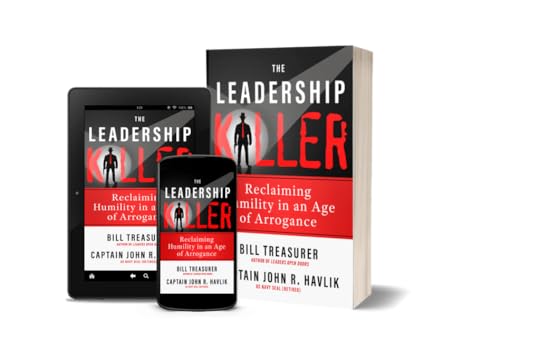
It’s a big month for Bill and me, as our book The Leadership Killer: Reclaiming Humility in an Age of Arrogance, will be officially released on October 30th! I can’t wait for you to read it, because it highlights hubris (aka BIG EGO) as the single most lethal leadership flaw, and offers insightful stories and actionable strategies to the reader to help them become, and more importantly stay, a more effective, confident, and humble leader.
The book also helps the reader answer two timeless leadership questions: “How will I use my leadership power?”, and “Will you lead or will you rule?” It’s a timely book for what is currently happening in our country and in the world today and I’m confident you’ll enjoy its perspective!
When I first got into the SEALs, there were a lot of senior officers and enlisted leaders who tried to change me into a more vocal and “in your face” type of leader because they didn’t like my more reserved and stoic way of doing business. They were always quick to point out that SEALs and what they did was special, and that leading these super warriors required officers who were louder and more gung ho than the norm.
I felt these seasoned leaders didn’t want to take the time to understand that my style was more comfortable and effective for me than it may have been for them or my fellow junior officer contemporaries.
This “professional development” advice always surprised me, because I had never failed to get the job done in any of my SEAL leadership billets. These folks just felt that I needed to be more vocal. It was this poor “my way or the highway” leadership advice that kept me from asking anyone to be my mentor (or “sea daddy”).
I felt these seasoned leaders didn’t want to take the time to understand that my style was more comfortable and effective for me than it may have been for them or my fellow junior officer contemporaries.
But, to appease leadership (and keep my performance rankings high), I tried to become that more vocal leader, an officer more “out there.” What I quickly realized was that this style wasn’t me and that the only thing I was becoming was a more ineffective ruler, and not a more effective leader.
I also found myself becoming more of a bad person, my growing hubris consistently compromising my core values and blocking my ability to use my leadership power to its fullest (and best) extent, just so that I could be louder.
What I quickly realized was that this style wasn’t me and that the only thing I was becoming was a more ineffective ruler, and not a more effective leader.
So, much to the dismay of my senior officers, I reverted back to the leadership style that best worked for me.
Did I take heat for it? Absolutely! But what I learned is that to be the best leader I could be, I needed to be true to myself and not listen to those who were trying to change me into someone that I wasn’t comfortable being.

Coach’s tip(s) for this month: Be true to yourself as a leader, and fight the urge towards becoming a supervisor someone else thinks you should be! It will require some intestinal fortitude on your part, but in the end, seniors and followers will respect you more for standing your ground!
APT John “Coach” Havlik , USN (Ret), retired from the Navy in 2014 after 31 years of distinguished service in the Naval Special Warfare (SEAL) community. He has served on SEAL teams on both coasts, including the famed SEAL Team SIX. Coach completed graduate studies at the Naval War College in Newport, RI, receiving an M.A. in National Security and Strategic Studies. He graduated from West Virginia University with a B.S. in Business Administration and is a 2017 inductee into the WVU Sports Hall of Fame.
Coach Havlik is a Special Advisor to Giant Leap Consulting and regularly speaks about leading high-performance teams under arduous and stressful conditions. John Havlik and Bill Treasurer are authors of the forthcoming book, The Leadership Killer: Reclaiming Humility In an Age of Arrogance (October 2018).
October 17, 2018
How Arrogance Kills Leadership

When Chip R. Bell offered to write a guest blog for John and me, I said, “heck, yeah!” Chip’s a great friend and fellow high-flying road warrior. He’s also the author of more than 20 books. Incidentally, he’s also a Ph.D., and a decorated Vietnam vet. As one of the most recognized authorities on thought leadership, we were eager to read his words of wisdom and insight.
Chip….take it away…

“Doors!” the sound tech’s voice boomed. And hundreds of employees poured into the giant hotel ballroom. Room lights dimmed as the spotlights bathed the massive stage revealing a colorful, themed background. Sounding like the voice of God, the sound tech again spoke: “Ladies and gentlemen, the CEO of Acme Manufacturing, Jan Topdog.”
The CEO, carefully scripted through a teleprompter and supported by dazzling slides, gave the financial history and the projected goals. The scene was a carbon copy of a gazillion other big deal meetings held in hundreds of ballrooms around the world. But, this one was different.
Arrogance kills leadership; authenticity fuels its power and influence.
Without warning the CEO moved beyond the teleprompter to the edge of the stage. The speech changed from one of pragmatism to one of passion. As the CEO began to talk about the power of the company’s vision and the value of every employee, big tears began to fall to the stage floor.
Overflowing emotion necessitated several long pauses to regain composure. As the CEO completed the final sentence there was a long silence. The audience sat overwhelmed by what they had just witnessed. Then, they leaped to their feet for an awkwardly long-standing ovation. Even the “way too serious” contract sound techs were on their feet!

It was not the tears that moved this audience. It was the CEO’s courage to be unabashedly authentic—to be publicly real. Whether the emotion displayed is anger, compassion, pain, or joy, the humility of leaders changes the nature of the connection and invites a valued link with others. Arrogance kills leadership; authenticity fuels its power and influence.
Leaders too often associate their mantle of authority with a requirement for egotistical detachment. “I don’t care if my employees like me,” the swashbuckling ruler announces, “I just want them to respect me.” Such a view is often a preamble to emotional distance and calculated encounters. The headlong pursuit of aloofness as the expression of authority invites employee evasiveness, not employee enthusiasm. It triggers reserve, not respect. An open-door policy is not about a piece of furniture. It is about an attitude of vulnerability.
Leaders too often associate their mantle of authority with a requirement for egotistical detachment.
The great Sam Rayburn, longtime Speaker of the House was fond of saying, “Any jackass can kick down a barn, but it takes a good carpenter to build one.” It is a poignant metaphor of growing a unit, business, or corporation. Any leader can demand obedience, but it takes humble leaders to bring out the best contribution in those they lead.
The Leadership Killer by leadership authority Bill Treasurer and former Navy SEAL commander John Havlik is the blueprint for how to avoid letting your leadership be killed by rank, arrogance, aloofness, and ego. Humility nurtures an atmosphere of realness, not role-ness. And, it makes all the difference in your capacity to influence commitment, not just compliance. Read the book and then share it with a friend you know could use its profound wisdom.
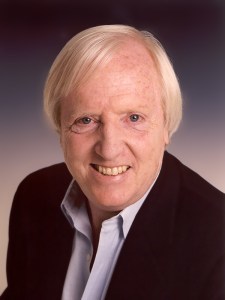 Dr. Chip R. Bell is a customer loyalty and management keynote speaker, trainer and best-selling author. Global Gurus has ranked Dr. Bell among the top three keynote speakers in the world for customer service in four of the past five years. He has worked numerous Fortune 500 companies, associations, and government organizations. He can be reached at www.chipbell.com.
October 11, 2018
Sex and the Misleading Leader

The leader who believes himself to be entitled to violate the body and injure the spirit of another human being as a perk that stems for his power is spiritually bankrupt and morally dead. Leadership is one of the most widely studied subjects there is. Yet, despite the umpteen thousands of books and an endless stream of blogs, podcasts, and seminars on the subject, too many leaders still miss the central point of leadership: bettering the lives of those you lead. Too many leaders focus on their own needs while neglecting the needs of those they are privileged to lead.
When you’re in a leadership role, and you make satisfying your own needs your primary focus, you start to believe your special and that you matter more than others. It’s a small leap from selfishness to immorality, and soon the self-focused leader starts mistreating or abusing others if doing so serves the leader’s interests or desires.
The #metoo movement has brought to the forefront the degree to which self-centered leaders take advantage of people and situations to get what they want. While the movement has intensified the focus on these types of leaders, the immoral abuse of power is an ancient leadership itself. In fact, the very first story ever put to the written word, The Epic of Gilgamesh, is about selfish and immoral leadership. Gilgamesh, the king of Uruk, brings us the idea of droit de seigneur, or “lord’s right,” which is the right of the leader to exercise jus primae noctis – the king gets to deflower the community’s virgins on their wedding nights. Why? Because he can, that’s why.
So How Did We Get Here?
In part, we can attribute the abuse of power to behavioral latitude, the “because I can” freedom that tempts morality away from leadership. The unwritten understanding that leaders and followers share is that when you’re the one who sets the rules, judges others’ performance, and doles out the rewards, you have more unimpeded freedom than those who don’t get to do those things. Others serve at your pleasure and are accountable to you, not the other way around.

In my new book, The Leadership Killer: Reclaiming Humility in an Age of Arrogance, which I co-authored with Captain John Havlik, Navy SEAL (retired), we address the single most lethal characteristic that abusive leaders share: hubris. It is hubris that allows a leader to substitute the “because I can” rationality in place of “because I should” or “because it’s right.”
The leader who believes himself to be entitled to violate the body and injure the spirit of another human being as a perk that stems for his power is spiritually bankrupt and morally dead.
What is hubris? According to Merriam-Webster, is defined as “exaggerated pride or self-confidence.” Other authorities define it as dangerous overconfidence. In ancient Greece, the word had to do with an abuser gaining pleasure out of humiliating a victim, and included a strong sexual connotation. Hubristic leadership, as the Greek definition suggests, is at the very heart of the #MeToo abuses of leadership power.
The Weinstein Fallout
Hubris was definitely at work on Harvey Weinstein’s infamous casting couch. In 2017, the New York Times broke the story that Harvey Weinstein, co-founder of Miramax films and co-chairman of The Weinstein Compay was accused of sexual harassment, assault, and rape. The report led to his firing, the dissolution of his marriage, and his arrest on rape charges.
Let me be clear, there is a no more heinous example of a hubris-directed leader than the leader who uses his power to satisfy his sexual urges. It is the ultimate act of leadership selfishness. The leader who uses sex as a bargaining chip, or, as in Weinstein’s case, as the tribute you must pay to step past a velvet rope, is a leader whose soul has been fully corrupted by hubris. Let’s also be clear that this type of power abuse is not about sex. It’s about gratifying oneself at the expense and degradation of another. It’s about control. It’s about domination. It’s about ego. The leader who believes himself to be entitled to violate the body and injure the spirit of another human being as a perk that stems for his power is spiritually bankrupt and morally dead.

We had already started writing our book before the Weinstein incident became worldwide news. At that time, we already had plenty of examples of compromised leaders – they were the reason we wrote the book. Our goal was to be a part of the solution, to identify the culprit of what makes leaders go wrong, and maybe save a few before they do. The Weinstein debacle solidified our purpose and increased our urgency to reach fat-egoed leaders before they could do more damage.
Without earnestly putting the needs and interests of those you lead above your own, you will end up doing a lot of damage – to yourself and to them.
Put Hubris in Check
As we make clear in the book, hubris is THE leadership KILLER. It’s a deadly affliction that requires self-discipline, self-governess, and selflessness to remedy. In other words, the solution to hubris is humility. Without earnestly putting the needs and interests of those you lead above your own, you will end up doing a lot of damage – to yourself and to them.
Being a good leader doesn’t require being a bad person, and if you know what to look out for, you can keep your ego and hubris in check and become (and stay) a leader who is effective, successful, and good.
October 4, 2018
Millennials Want Mentors, But They Want Them Their Way

For years, society has vilified millennials for their perceived sense of entitlement, intrusive addiction to technology, and presumed laziness. Yet, if you look around the workplace right now, you’ll probably notice that this “apathetic” generation is taking up a lot of the desks and chairs. Millennials aren’t going anywhere, but our outdated opinions about them need to clock out. This generation is anxious to succeed and they seek out opportunities to learn. With the right mentor, a millennial has the potential to be a great leader.
More than one in three (35%) working Americans are millennials. And unlike other generations, their entire life has been shaped by technology. Baby Boomers, Gen Xers, and Gen Ys have difficulty relating to their disparate upbringing and life experiences which may contribute to the sheer amount of criticism unfairly dumped on them. Whatever your take may be, this age has a lot to offer companies and those who want to mentor them. Millennials are ASKING to be mentored. Moreover, they are demanding it as part of their employment, and good on them!
Millennials aren’t going anywhere, but our outdated opinions about them need to clock out.
A responsible employer gladly provides and encourages mentorship because it helps the mentee, the mentor, and the employer. But what exactly are the millennials needing and how do we bridge this extraordinary generational gap?
First, as a mentor, you need to know your audience, or in this case, your generation. Understand how they learn and what speaks to them on an emotional level. When you appreciate what brings meaning to their life and work, you just may have a future leader in the making.

So, how do you mentor a millennial?
Don’t micromanage. As a mentor, you have your own responsibilities and tasks to complete. Set an example of not micromanaging your mentee by…NOT micromanaging. Show them what needs to be done, how to do it, and then give them the autonomy to do it themselves.
Allow mistakes. Mentees (even millennials) make mistakes. Let them fail. They need to in order to learn, bounce back, and go back at it again. You’ll be doing them a lifelong favor.
Communicate openly. Provide feedback, make it constructive, and do it often. They are familiar with a little handholding and respond well to open dialogue. Take advantage of their open ears.
Create meaning. This group is exceedingly altruistic! With a strong commitment to social justice and community service, an effective leader will show up inside and outside of the office to demonstrate that these principles matter personally and professionally.
Have respect. Millennials are highly educated. They worked harder than any other generation, academically and financially, to matriculate and graduate from college and university. Show them that you appreciate their efforts and their intellects.
Encourage transparency. Be honest with a millennial mentee and they’ll be honest with you. They want to know that their opinions are being heard and not echoing around in a vast and empty chamber.
Lead by example. Take an inventory of your own leadership traits. What have you done recently to improve your skills and personal development?
Be honest with a millennial mentee and they’ll be honest with you. They want to know that their opinions are being heard and not echoing around in a vast and empty chamber.
The goal of the mentor/mentee relationship is to provide guidance and support at the beginning of employment, but it doesn’t have to stop there. Developing a long-term relationship with a mentee can result in the development of someone with an aptitude for leadership. The millennial/mentor relationship is no different. It may require new techniques and strategies, but being a good leader means having the ability to pivot and acquire new tactics and approaches. Taking on this new challenge just may cause you to gain respect for a generation that’s been criticized for all the wrong reasons and force you to grow in ways you never anticipated.


