
Bill Treasurer's Blog, page 18
July 17, 2019
3 Ways My Coaching Course Will Change Your Career

As a coach, if you’re not constantly searching for ways to improve yourself, why should you expect your coachees to? Effective coaching, whether for the coach or coachee, is about personal growth and improvement. Reaping that growth requires ongoing evaluation, goal-setting, and action. While self-evaluation is uncomfortable, it’s always worth it in the long-run (and often in the short-run too!).
Becoming a better, more effective coach requires dedication and commitment to a lifetime of learning.
In my two decades of leadership coaching and consulting, I’ve learned that willingly and intentionally embracing vulnerability is an act of self-respect. As I’ve written in my books, the journey to the center of yourself is the most wonderful adventure a person can take. This philosophy is the foundation of my roles as a coach, leader, father, and husband. This year, it’s even inspired me to design a coaching course that will teach you how to do the same.
Introducing Q Cards: Fast Start Course
Become An Effective Coach Faster
Becoming a better, more effective coach requires dedication and commitment to a lifetime of learning. The most versatile tool that a coach has is a suite of powerful questions. It’s your questioning that will make all the difference to the transformation of the coachee in front of you. So I thought, “What would have vastly improved my effectiveness when I was first starting out as a coach 20 years ago?” My answer? — An organized framework of powerful questions that can be used to help coachees have breakthroughs in their lives. That answer led me to create Q Cards, and I’m proud to introduce them to you. Using this tool, you’ll have substantial and meaningful engagement with your coachees in half the time.
Three Powerful Ways to Enhance Your Coaching Effectiveness
1) Answer the “Holy Shift” Question
Here’s one example of a powerful question, and it’s only four words. In my opinion, they’re the most important words you’ll ever learn in the English language. And the question is, in any given situation that might be exasperating you, when you are frustrated, you’re not getting to where you want to get to, when you’re perplexed by some complicated situation that is setting your hair on fire, ask yourself: WHAT DO YOU WANT? Ask your coachee and ask YOURSELF. The answer could change your career completely — and in some cases, just in time.
While your knowledge and expertise to do your job effectively are vital to your success at work, your emotional intelligence can also affect your success.
2) Measure Your EQ
On a scale of 1-10, how does your EQ rank? Good coaches are “emotionally intelligent.” Emotional intelligence (EQ) relates to your ability to understand your own emotions and the emotions of people with whom you interact. While your knowledge and expertise to do your job effectively are vital to your success at work, your emotional intelligence can also affect your success. If your EQ is low, odds are you won’t have meaningful connections with coachees. However, if your EQ is too high, you may have difficulty removing your coaching hat at the end of the day and may want to consider how to devise and maintain emotionally healthy boundaries.
Asking tough questions sometimes leads to surprising answers that we never expected — from others and from ourselves.
3) Embrace Your Imperfections
How do you handle personal mistakes? Denying your shortcomings impacts your coaching abilities. Owning up to your weaknesses and leading from a place of connection instead of fear (of being found out as being imperfect) will make you a more relatable and compelling coach. Regardless of station, people can often sense when others are putting up a façade, plus that wall you build around yourself to hide your flaws also does a pretty good job of keeping your coachees out. Besides, mistakes don’t have to be personal failures, as the perfectionist believes — they can be mile-markers on the winding road of progress.
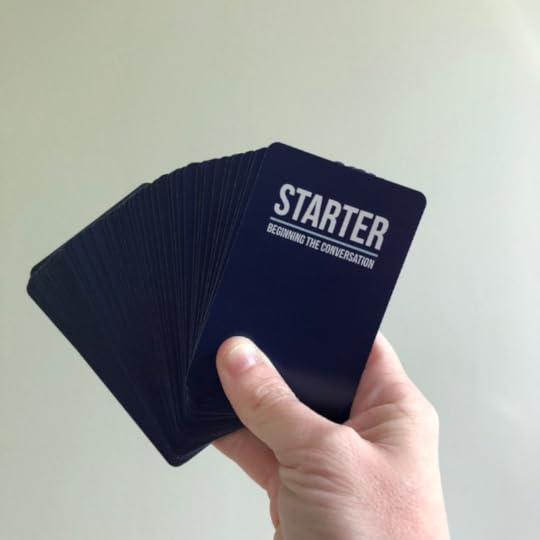
When you challenge yourself, you challenge those with whom you work. Asking tough questions sometimes leads to surprising answers that we never expected — from others and from ourselves. I designed this Q Cards course as a means to help coaches become more effective and to facilitate meaningful conversations between them and coachees, but what I’ve found is that it is so much more. It’s a tool for deep personal work between people. If you are looking to accomplish breakthroughs in coachees’ thoughts, decisions, and actions, this is the tool for you. But be warned, you may experience the same results and find your coaching career forever enhanced.


July 5, 2019
How High Diving Prepared Me for a Life of Coaching

Before I became an organizational development professional, I was a professional high diver with the U.S. High Diving Team. Every day for seven years, I climbed to the top of a hundred-foot ladder, stood atop a one-foot-by-one-foot perch, and hurled myself off — plummeting 10 stories down at speeds of more than fifty miles per hour into a pool that was only ten feet deep.
Fifteen hundred high dives, all completed with no parachute, no bungee, and no safety gear. Just me and a Speedo.
Keep in mind, I’m a high diver who remains terrified of heights.
There are best practices to follow to ensure you’re getting the most from your coachees. After all, you want them performing graceful dives, not thunderous bellyflops.
What would possess a guy so petrified of heights to become a high diver? I wrote my book, Right Risk: 10 Powerful Principles for Taking Giant Leaps with Your Life, to figure out the answer to that question. The front cover has a picture of me diving while on fire. No kidding.
Much of the reason I was able to face my fear was because of a coach who held me accountable to my potential. He would nudge me into my discomfort zone and have me jump from 10 feet. Then he’d let me keep diving there until I gained confidence and skills. When it became easy or boring, he’d move me up to a higher height. By modulating between comfort and discomfort, my coach helped me face my fears and activate my courage.

The coaching work I do now is inspired by these experiences and life lessons. I’ve learned that coaching is all about elevating the performance of an individual, group, or organization. There are best practices to follow to ensure you’re getting the most from your coachees. After all, you want them performing graceful dives, not thunderous bellyflops.
Consider this: Bring to mind a mentor or boss who made a positive impression on you. What did they do right? What motivated you? Now reflect on a leader who caused you to perform less than your best. What could they have done differently that would have inspired you?
When other people’s lives are enhanced, and they perform at a higher level, coaches know they’ve done their job. It’s a matter of:
Establishing clear goals,
Opening lines of honest communication,
Managing expectations,
Providing constructive feedback, and,
Measuring results.
When the coach and coachee are fully committed to a plan and a process, both can expect a high return on the investment in the coaching relationship.

Metaphorically, a coachee shouldn’t take one jump from 100 feet without first taking 100 jumps from one foot.
During my coaching career, I’ve had the opportunity to work with people all over the world. I’ve come to believe that everybody is tasked with facing “high dives” – personally and professionally. Rather than forcing a coachee to take a giant leap all at once, which can be overwhelming, it’s better to work with the coachee on first performing incremental “lead-ups.” Metaphorically, a coachee shouldn’t take one jump from 100 feet without first taking 100 jumps from one foot.
So much of successful coaching comes down to courage. Great coaches help coachees face fear by intentionally and thoughtfully taking uncomfortable actions. Indeed, the most meaningful and noble work of a coach is to help a coachee activate, nurture, and strengthen their inner courage. With courage, all people become capable of taking whatever high dives will move their lives and careers forward.
June 27, 2019
Now That the Conflict Is Over, How Do I Recover?

In June, we focused on workplace conflict and how, as a leader, you can recognize it, deal with it, and turn it into opportunities for your team. But none of that is to say that conflict is easy or fun or something you immediately get over. In time, and with experience, it will get easier. Because if you stay in your role as a leader, you will see your share of conflict. It’s how you handle the scrapes and bumps along the way that will be the measure of your true mettle.
Moving Past Conflict
Have you ever worked with a mentor or business role model and wondered, “How do they do it without breaking down?”
Here’s a fundamental truth from my book, A Leadership Kick in the Ass: your mentors and role models learn from every move they make, every failure they experience, and they refine the process as they go along. They’re not afraid to experiment as they move forward.
Think back to the last time you learned a lesson the hard way. Maybe it was that last team project conflict?
How did you react?
Did you make changes to become better and stronger?
Or did you stick yourself in the conviction of “having to be right?”
If you chose the former, you are already 98% closer to aligning your practice with your mentors and those who have been successful before you.

7 Key Leadership Moves to Right the Ship
It doesn’t matter what industry you’re in, what company model you have, or even what your unique career goals are. Each one of your leadership mentors, business role models, and personal life icons practices these seven key leadership moves to regularly recover and grow stronger as a leader, and you should, too:
Focus on the long game. A kick in the leadership pants is just a momentary speed bump on your longer leadership career. The spike in pain will eventually yield to worthwhile lessons and changes. Focus on where you ultimately want your career to end up, not the detour it may have taken.
Learn from your feelings. Pay close attention to the feelings that come up for you after you fail or fall short. Identify what you’re feeling, precisely. Do you feel embarrassed, resentful, fearful, something else? Then ask yourself, “What information is this feeling trying to give me?” and “What is the lesson this feeling is trying to teach me?”
Remember, discomfort = growth. Comfort may be comfortable, but it’s also stagnant. You don’t grow in a zone of comfort. You grow, progress, and evolve in a zone of discomfort. The more uncomfortable that moment felt, the more growth can result from it.

Broaden your view of courage. Being vulnerable, open and receptive to change is a form of courage. Hard-charging types wrongly see courage as being fearless. Nothing could be further from the truth. Courage is fearful. The simplest definition of courage is “acting despite being afraid.” Courage requires fear. As long as you are moving forward, it’s when there’s a knot in your stomach, a lump in your throat and sweat on your palms that your courage is doing its job.
Don’t be oblivious to yourself. How much might it be costing you to remain loyal to your ignorance? Self-exploration and discovery can be painful, but what is more painful in the long run is being a stunted human being, incapable of acknowledging, assimilating and shoring up your shortcomings.
Be your own project. Lots of people lead projects better than they lead themselves. Think about what it takes to lead a great project. You identify your desired outcomes, you put together a timeline, you create milestones, and you gather the resources you need to execute the project and make it successful. You also use metrics to track your progress. You can manage your leadership hard lessons the same way!
Stay present. Fully immerse yourself in your experience. What feelings come up for you? What fears are at work? What are you learning and how can it be put to good use?
As much as this self-discovery can be painful, it can be vastly rewarding. The journey to the center of yourself is the most important one you’ll ever take. It’s how you become a whole person, and a wholly unique leader. Don’t mimic your mentors on the superficial stuff–biohacking, morning routines, what books they read, what they eat and who they socialize with–but go deeper to do the real work that requires facing what it takes to be great and lead others.
Want to know more about conflict and how to RESOLVE IT? Find my book, Unlocking Horns: Courageous Conflict at Work, on Amazon now!
June 18, 2019
When There’s Conflict—Deal With It!

It’s your first day as a “leader” and you’re basking in the glow of your advancement! Life is good, your ego is riding high from your promotion, your first cup of morning coffee is perfect, and you’re thinking this is easy…what can go wrong? And then the phone rings.
During my time as a naval officer, I don’t remember a day of not having some sort of “conflict” to deal with.
You answer it, and on the other end is your boss screaming at you saying “We (specifically YOU) have a problem! Someone in your division cost us a big money project because of their poor attitude and performance. Find out who it was and fix it ASAP!!” And suddenly your bright, sunny day becomes a thunderstorm of conflict resolution.
Can You Avoid Conflict as a Leader?
One of Merriam-Webster’s definitions of “conflict” is: “a serious disagreement or argument, typically a protracted one.” Whatever definition you use, conflict is no fun, and as a leader, it’s generally unavoidable.

During my time as a naval officer, I don’t remember a day of not having some sort of “conflict” to deal with. Quite frequently, it was administrative in nature, like completing paperwork that I had been putting off, or maybe conducting a few “counseling” sessions for one (or more) of my platoon SEALs who had been a bit too rambunctious on liberty. Whatever the “conflict,” it was a nuisance and always took away time from more positive things that I would rather have been doing. And, as I got more senior in rank, conflict resolution became more frequent and complex.
Leaders Have to Check Their Egos
My simplest example of conflict resolution was when I was coordinating military assets (planes, ships, etc) for a major training exercise where SEALs would be participating. I had initially arranged for the use of a submarine to support one training event, and during a follow-on exercise planning meeting, a group of Marines said they needed the submarine at the same day/time that the SEALs would be using it, and because they felt that they had higher priority, the submarine was theirs.
Whatever the “conflict,” it was a nuisance and always took away time from more positive things that I would rather have been doing.
To make a long story short, I identified the senior Marine in the group (who just happened to be the same rank as I was at the time) and suggested that we (just he and I) sit down and compare each other’s exercise schedules. He reluctantly agreed, and what we quickly found out was that the SEALs would be off the submarine well BEFORE the Marines needed it later that same day.

So, by checking our egos and eliminating the service rivalry emotions, we were able to come to a positive (and more professional) resolution where the SEALs and the Marines could BOTH use the submarine during the exercise.
Coach’s tip(s) for the month:
Don’t run away from conflict or worse, try to ignore it. Accept it as being a big part of your job as a leader/supervisor/manager. Learn how to manage it.
Get smart on conflict resolution. Become familiar with the five conflict resolution strategies developed by Kenneth Thomas and Ralph Kilmann: Avoiding, Defeating, Compromising, Accommodating, and Collaborating. No doubt you will need to use one (or all of them) sometime as a leader.
Don’t waffle when resolving conflict. As a leader, YOU will need to make hard decision(s). Figure out what’s best for the company/organization, make the call, and then stick by it.
That’s it for this month! See you all in July!
June 6, 2019
Strong Leaders Turn Conflict Into Opportunities for Change
As a leader, you should expect a fair amount of uncomfortable conflict as part of your role. Conflict is an inevitable part of the job. At some point in time, members of your team will disagree with you, or with each other. But, conflict actually can be an impetus for necessary change. If handled correctly, conflict can offer opportunities for leaders and team members to know each other better, and for increased respect and harmony throughout the organization.
But how do you address conflict successfully? Here are 5 strategies that will have you managing conflict and your team like a seasoned leader:
COMMUNICATE OPENLY: It does no one any good to let a problem fester. Get the problem out in the open. Address the conflict. Begin the discussion so that you can define the problem.
IDENTIFY DIFFERENCES AND SIMILARITIES: Once the problem is defined, identify the points that you agree on. Finding common ground will help you to work together. Follow that by identifying the differences in your perspectives. That way you delimit what the conflict is actually about.
RESPECT OPPOSING POINTS OF VIEW: After you have identified differences and similarities, state back exactly what you believe the point of view of the other person to be. Then make sure they do the same. Doing so ensures that each side understands where the other is coming from and can often offer opportunities for further clarification.

STAY CALM: Throughout the whole process, be sure to keep cool, stay calm, and keep your emotions out of it. If necessary, take a break so either side can calm down.
INITIATE MUTUAL PROBLEM SOLVING: After you’ve gone through all the preceding steps, identify a list of alternatives that is satisfying to each of you.
Conflict isn’t always easy, but it is an essential part of leadership. What is more important than whether you have conflict is how you handle conflict as a leader.
What other strategies have you found to be effective in dealing with conflict?
May 22, 2019
What Is Woke Leadership?

I’ve been thinking a lot recently about the idea of “woke” leadership. The word “woke” has become prominent in the current cultural zeitgeist, and came to the forefront through recent movements to bring about sexual, lifestyle, and racial justice.
To be clear, the term “woke” is provocative and has hints of elitism because it insinuates that some people have a higher degree of consciousness or intellectual depth about the world around them.
“Woke” is a political term of African-American origin that I first learned about when I read The New Jim Crow by Michelle Alexander. The book itself is a wakeup call for racial justice, and after reading it you too will be “woke.” Or at least I felt woke to racial injustices I formally ignored, minimized, or unconsciously or implicitly contributed to.
To be clear, the term “woke” is provocative and has hints of elitism because it insinuates that some people have a higher degree of consciousness or intellectual depth about the world around them. They see the matrix while everyone else is blind to it. But if we allow ourselves to consider the word more plainly in its relation to our own individual experience, it takes on a different significance.
My wokeness is personal, and being woke doesn’t mean I’m better than those who haven’t had my experience.
For example, most of my life I didn’t really see or take an interest in people with special needs. I’m embarrassed to say that, but I know it’s true. All that changed, however, when my daughter was born with cerebral palsy and deafness. Then I became “woke” to the needs and challenges of the disabled community.

My wokeness is personal, and being woke doesn’t mean I’m better than those who haven’t had my experience. It does mean, however, that I have a certain obligation to share my conversion experience from an unengaged bystander to an engaged advocate of the disabled community.
Wokeness Is a Journey
One team I previously worked with was tasked with exploring issues related to diversity in their workplace. The team worked for a large construction company and was struggling to identify qualified women and underrepresented minority candidates to fill construction management roles. While there were two women already on the team, the other four team members were white males.
Throughout the course of their year-long evaluation of diversity issues, the team had many arguments about “entitlements” and “tokenism” and “merit.” Slowly, through a lot of touchtone honesty and hard conversations, the men came to realize that although they believed in diversity at an intellectual level, at a deeper level they felt threatened. They felt if they embraced diversity too much that they were somehow conceding that their own achievements were not fully based on merit alone or that their achievements were not fully of their own making.
As it relates to leadership, being woke means first to actively strive to illuminate your blind spots so you can mitigate whatever damage they may be causing, and thus lead in a healthier, more effective, and more enjoyable way.
The end result was a team that had gone on its own journey to wokeness, involving a serious and sober exploration of implicit bias and its negative consequences.
Similarly, I once worked with a command and control leader who dominated everyone around him. The dude got results, but often created a boatload of wreckage in his wake. Then he went through a 360-degree feedback process whereby his boss, peers, and direct reports gave him anonymous feedback about his leadership style and approach.
He read words like “harsh,” “hot-head,” and “obnoxious.” Seeing the unassailable data and evidence laid out in front of him left him nowhere to hide. He went from assuming that he was a great and dominant leader to becoming starkly aware of what a jerk he had become. He was stung into wokeness, which proved to be just the impetus he needed to make many positive changes in his style and approach. He was no longer blind to himself.

As it relates to leadership, being woke means first to actively strive to illuminate your blind spots so you can mitigate whatever damage they may be causing, and thus lead in a healthier, more effective, and more enjoyable way. It means recognizing that you need followers more than they need you, because engaged and skilled followers get superior results. Being woke means focusing on bettering their lives and careers through your service to them.
In other words, being woke means understanding leadership has never been about the leader—it’s about those being led. It’s not about you.
Woke Up People!
When I boil down what it means to be a woke leader, these are the characteristics that come to mind:
You care about others and want to help them succeed.
You start by presuming that others have good intent and aren’t out to get you or undermine your leadership.
You’re comfortable in your own skin and are keenly aware of your imperfections.
You place a high value on courage and refuse to turn away from challenging people or situations.
You seek to bring those with different perspectives closer and you embrace and value diversity.
You sidestep drama and act before the chaos.
You’re fully committed to creating a just, equitable, and humane world.
What comes to YOUR mind when you think about being a woke leader?
May 15, 2019
You Gotta Trust Your People!

Hey GLC readers! This month’s blog highlights the 10th anniversary of Bill’s book “Courage Goes to Work.” It’s especially fitting that I address “trust,” because as a leader, it takes a tremendous amount of trust (and courage) to inspire your workers to move out of their comfort zones, embrace their fears, and challenge themselves without you interfering. A courageous workforce, that has their leader’s total trust, is a more energetic, innovative, and productive workforce.
From Day 1 in SEAL training, officers are taught that to be successful in training (and ultimately in their careers once they graduate), they have to have implicit trust in their men and let them do their jobs without micromanaging them. Why? Because you quickly learn in training that a leader can’t do it all, and you must rely on your men to complete the work that you simply can’t do.

Also, an officer learns that the corporate knowledge and expertise that he needs to be successful lies within the enlisted SEALs in his squad, platoon, and/or SEAL Team. This reality is particularly highlighted when an officer is planning for a mission, in that, they are too often “into the weeds” on working the specifics on how the operation will be executed, and not able to address all the corresponding assignments required for mission success. It’s here where a SEAL officer has to rely on his fellow team members and delegate out to them the associated tasks that need to be done for mission success like gear/equipment testing and preparation, supporting asset coordination, logistical coordination, etc.
A courageous workforce, that has their leader’s total trust, is a more energetic, innovative, and productive workforce.
It can be a daunting task for any leader to “let go.” Why? Because if things go wrong, that leader is ultimately accountable, and failure could lead to demotion, or even worse, being fired. An occasional “butt chewing” by a senior officer/official can be tolerated, but getting fired or relieved is the worst case scenario for any leader in any profession. That’s why “trusting your people” is a difficult concept for many leaders/supervisors to grasp on to.
Coach’s tip(s) for the month: To inspire “courage,” and best build “trust” in a workforce, I recommend:
Start simple, then aim high. To build trust, a leader should initially assign their people simpler tasks that they can perform successfully. This is important because as your people complete these, they are building their own self-confidence, plus building your trust in them to handle assignments of greater responsibility and complexity in the future. Everyone has heard it before—you have to learn to crawl before you can walk, and you have to learn to walk before you can run. Start simple, then aim high!

Train your people. In the SEALs, I ensured that each platoon specialist was thoroughly trained and had all the required qualifications to do their jobs safely and effectively. Once fully trained and qualified, it was important that these specialists worked in the respective department at the SEAL Team (Diving, Communications, Intelligence, etc) to get as much hands-on experience before they deployed and did it for real. If your people aren’t adequately trained, they can’t step outside of their comfort zones to try harder and more complex assignments.
It can be a daunting task for any leader to “let go.”
Trust your gut. Pick the “best qualified” people for the toughest assignments, and avoid picking your “best friend.” Picking your buddy/friend is not courageous leadership, it’s the easy way out, and it only leads to inefficiency and angst. If someone isn’t qualified, don’t assign them something they can’t handle. Making the hard (and right) call is part of being the boss.
That’s it for this month! See you all in June!
May 13, 2019
Why the Difference Between Incidental and Intentional Courage Matters

You are a courageous person.
I know that because I know that you have done courageous things in your life already. You were courageous the day your parents dropped you off at summer camp for your first time.
You were courageous as an aspiring thespian in your high school play when the curtain went up and you were staring at 800 classmates.
You were courageous in college when you contested the rotten grade your inept English professor gave you.
It took courage for you to walk into your boss’ office and say, “I’d like a raise.”
Before making the shift from incidental to intentional courage, it’s easy to view life as a series of situations that life dumps on you, whether you’re ready or not.
You are courageous. But, in all likelihood, you have been courageous through happenstance, not intentionality. It’s not like you consciously sought out the above-mentioned situations just to experience your courage, right? Yours has been an act of incidental courage. Your courage manifested itself as a byproduct for engaging with fear. Most often you’ve fallen into your courage as a reluctant participant.

It is healthy to shift your courage from incidental to intentional. All it takes is making a deep commitment to acting consistently courageous, that is, a commitment to living a life of courage. Instead of waiting to respond to situations with courage, you actively seek out opportunities to be courageous. You constantly ask yourself questions like:
In what areas of my life do I need to be more courageous?
What is the next courageous thing I need to do?
Besides me, who needs my courage most?
You answer the “holy question” — what do YOU want?
Before making the shift from incidental to intentional courage, it’s easy to view life as a series of situations that life dumps on you, whether you’re ready or not.
But when you act with courageous intentionality, you become a sort of storm-chaser, actively searching for challenging opportunities in which to apply your courage. The shift moves you from someone who life happens “to,” to someone who makes life happen.
Remember, you are already a courageous person. The question is, are you incidentally courageous or intentionally courageous?
April 18, 2019
Ebbing Causes Problems for Many Mid-career Leaders

At some point in the middle stage of your leadership career, it’s common to be consumed with the thought, “there must be something more.” The job of a leader, which looked so enviable when you were younger and at lower levels, feels less satisfying than you had imagined.
You are spread so thin that, when it comes to your attention, everyone seems to get a little gypped—including yourself.
The headaches are frequent, pressures are unrelenting, and the rewards less satisfying than you had hoped. Worse, everyone is depending on you: your boss, your employees, your clients, and your family. You are spread so thin that, when it comes to your attention, everyone seems to get a little cheated—including yourself.

Something else may nag you at this stage, something more troublesome.
You feel like you’re selling small portions of your soul each day. You find yourself making decisions at work that go against the principles you hold outside work. With each small compromise of your principles, you feel like your “work” self and your “real” self are becoming increasingly disconnected. You’re becoming someone you never thought you would be: a sell-out. You worry that you’re selling your soul, but you’re not sure who the buyer is.
When your enthusiasm for leading ebbs, you’ll call into question everything associated with your current and future identity as a leader.
I call this mid-career leadership stage “ebbing.” Not every leader experiences this distinct low point, but those who do fear that it extends indefinitely.
What if this is all there is? They worried what if becoming a more senior leader just brings more headaches, more pressure, more compromises, more ass-kicking, and less with fulfillment? How much of my soul am I willing to sell?

Think of it this way, ebbing is a time of reflection and reassessment when you’ll have more questions than answers.
The questions you grapple with during the ebbing stage are well worth answering because they will influence the kind of leader you will ultimately be. If you find yourself deep in the ebb, pay close attention to the questions that surface for you. Recognize that, eventually, the tide will roll back in, and the decisions you make during the ebb may end up defining the extent to which your leadership makes a positive difference in the lives of those whom your leadership will touch.
Here are some questions for the ebbing leader to consider:
Who do I aim to be as a leader?
What true difference do I hope to make through my leadership?
How do I wish to treat people while I’m leading?
How do I wish to be treated as a leader?
What principles will I uphold?
What compromises am I willing to make?
What actions do I need to take to close the gap between the leader I aim to be and the leader I am today?
Can I become the leader I want to become by working where I work today?

When your enthusiasm for leading ebbs, you’ll call into question everything associated with your current and future identity as a leader. Rather than endure it, embrace it as an essential part of your leadership development. Do that, and you’ll benefit from what you learn when you become a senior leader.
April 10, 2019
What’s Next for Me and My Career?

So, you’ve been in your initial supervisory position for a reasonable amount of time to show everyone interested your blossoming leadership mojo. You think you finally have a handle on what is expected of you in the job, despite the natural bumps along the road as you initially took over and discovered what being a “leader” means.
With time, you have come to feel that both you and your division are finally on the right path, doing good things for the company. Yes, the hours have been longer, much more is expected of you, and the occasional closed-door sessions with your boss trying to explain why things haven’t gone as planned weren’t very fun, but the positives of being in charge have outweighed all the negatives.
You think you finally have a handle on what is expected of you in the job, despite the natural bumps along the road as you initially took over and discovered what being a “leader” means.
Or maybe everything about being a supervisor so far has been negative, you hate your job and being in charge, and you’re really tired of taking the heat every time something goes wrong.
However you feel, it’s totally natural to start considering (or questioning) what’s next for you.

In the SEALs, there is a mid-career decision that every junior officer has to make about his future in the Teams, and ultimately, the Navy. It happens around the 6-9 year mark when an officer is a Lieutenant, and usually as they are completing their Platoon Commander assignment. It can be a tough call for some because, in reality, an officer only has two options to choose from:
Decide to stay in and make the Navy a career, and hope to be selected for career-enhancing assignments as an Operations Officer, then an Executive Officer, and ultimately a Commanding Officer. All these billets involve increased responsibility/authority and the opportunity to continue to lead larger numbers of special operators, but they also are considered paper-pushing administrative jobs, where you get to excel as an “email warrior.” Yes, every SEAL officer has to maintain his parachuting/diving/demolitions qualifications throughout his career, but after being in charge of an operational SEAL platoon, those “running and gunning” opportunities that an officer dreams of during Hell Week become few and far between as they become older and more senior in rank.
Decide to get out of the Navy, and take their talents into the civilian world, where the employment opportunities (and pay) are much greater.
Always remember that being a leader isn’t for everyone, and if you recognize that you won’t be able to handle the increased responsibilities associated with higher positions of authority, the better it is for everyone involved if you step aside.

Coach’s tip(s) for the month: If (and when) you hit that mid-career leadership decision point in your life, I recommend:
– Sitting down and listing all the pros/cons of moving on or out.
– Discuss your options with your family, co-workers, mentors, etc.
– Make the decision that feels right for you.
– Attack what’s next……..and NEVER LOOK BACK!
Always remember that being a leader isn’t for everyone, and if you recognize that you won’t be able to handle the increased responsibilities associated with higher positions of authority, the better it is for everyone involved if you step aside. It’ll be ok because leaders need good followers also!
That’s it for this month! See you all in May!


