
Bill Treasurer's Blog, page 15
June 8, 2020
The Question We All Must Answer

Throughout your life and career, there is a critical question each person must continually ask themselves. It’s a question that clarifies what you’re committed to, and the decisions and actions that will embody that commitment. It’s a question that moves you off the safe sidelines and out into the less settled places where courage is most needed. It’s a question that forces personal responsibility and accountability. The question is: where do I stand?
The most powerful way of reducing ignorance is an intimate and individual encounter with the object of one’s ignorance.
I grew up around racism in an affluent suburb of New York City, Larchmont, that could be accurately described as “lily-white.” Some of the earliest jokes I ever laughed at were blatantly racist. I heard the “N-word” a lot. I’m not proud to own up to it, but I’ve said the word more than a few times.
The most powerful way of reducing ignorance is an intimate and individual encounter with the object of one’s ignorance. When I was nineteen, I fell in love for the first time. I met my girlfriend, “Mo,” at springboard diving camp at the University of Indiana. Mo had a zest for life, an audacious nature, and knew how to put me in my place like no one ever had. I couldn’t believe someone so attractive loved me, too.

Mo was white, but when she was young, her parents had divorced, and her mother had married a black man. So by the time Mo and I fell in love, her family was entirely multi-racial. It included a white sister, black step-brother, black and white cousins, and bi-racial children.
Eventually, I found myself living with Mo and her family in Green Bay, Wisconsin. Over time, I came to know that each person in her family, white, black, or bi-racial, was just like me. Each person had dreams, hopes, hurts, and fears. We all had aspirations, integrity, and worth.
I stand with black human beings who are just like me, wanting a better, stronger, safer, more unified, and diverse America.
Holding hands and saying grace over Sunday meals, laughing at TV shows, enjoying outdoor barbeques, having arguments, attending church, celebrating birthdays, and cheering for the same football team (Go Packers!) changed me. As a NY white boy living with an interracial family, I came to love the people whose color was different than my own. It has been more than three decades since I had that experience. I am proud to say my three children have never heard the N-word uttered in my home. They never will. Jesus said, loving thy neighbor as thyself is a commandment. No exceptions.

Where do I stand? You know the answer already. I stand in solidarity with those who are protesting for racial justice and equality, in a country whose laws are structurally designed to deny those things to black Americans. I stand with black human beings who are just like me, wanting a better, stronger, safer, more unified, and diverse America. I am heartened to say, some of my clients are standing in the same place.
How do YOU answer the question: where do I stand? Do you feel good about your answer?
I recently took part in a video series on race relations with Ahli Moore. I hope you’ll take the time to watch them!


June 3, 2020
You’ve Got This! By Backing Yourself More and Doubting Less

This month’s first guest blog is from Margie Warrell. Margie’s latest book is You’ve Got This: The Life-changing Power of Trusting Yourself.
Her new book couldn’t be more timely, as amplifying the inner voice of self-encouragement is supremely important during these unusually tense times. Just after its launch, Margie had to lean on the very tools she had written about when her husband contracted COVID-19. That’s not the way most authors hope to authenticate a book!
I highly recommend buying copies of her book so you can give them to everyone who could use some encouragement right now! — Bill T.
The good news is that courage—our ability to discern smart risks from foolish ones and take action amid our fears—is a skill. — Margie Waddell
This pandemic has disrupted all our lives, jolting many from their comfort zone. As we look toward a future mired with uncertainty, the greatest challenge we face is reigning in the fear that can constrict our response to it.
Enter courage.
Of course, courage takes many forms. While it’s often associated with heroism on the battlefield or the daring pursuit of bold peaks, more often it’s the everyday choices we make to embrace discomfort, defy our doubts, and trust in ourselves more deeply.

So whatever problems you’re facing right now, take a moment to consider whether you’re operating from fear instead and how that may be working against you—putting you at risk of becoming less secure, not more so.
This isn’t about denying the risks or downplaying threats. Rather, it’s about not letting fear sit in the driver’s seat of decision making, keeping you from backing yourself more, doubting yourself less, and taking the very actions that will make you more secure long after this crisis is over.
The good news is that courage—our ability to discern smart risks from foolish ones and take action amid our fears—is a skill. As such, it can be learned and strengthened with practice.
Here are four ways to help you do just that.
1. Ground yourself in “self-certainty”
During storms, oaks take deeper roots. So in the midst of this “global storm,” we must look within ourselves for the certainty that eludes us elsewhere.
A study at Stanford University validated “attitude certainty” as a form of psychological safety net that helps us keep fear in check under pressure. So invest time to get crystal clear about the core values you want to guide your decisions (e.g. courage, compassion, connection, or community) and the attitude you want to embody. Doing so will help you navigate the unchartered terrain ahead with more self-certainty, less self-doubt.
Let’s face it, if we could just flick a switch and be a poster child for confidence and courage, there’d be far fewer stressed out, overanxious, people in the world.
2. Embrace your humanity
Let’s face it, if we could just flick a switch and be a poster child for confidence and courage, there’d be far fewer stressed out, overanxious, people in the world. The truth is that you’re human. In turbulent times like this, it’s easy to get “triggered” and find yourself feeling anxious, overwhelmed, sad, and angry. We, humans, emote before we even reason. That means we’ll often fall short of being the person we aspire to be. Which is why it is so important to embrace your fallibility and own your fears. If you don’t, they’ll own you.
The compassion that doesn’t include ourselves is incomplete. So try being a little kinder to yourself. This isn’t an excuse for poor behavior. Rather, it’s a call to get off your own back and give yourself permission to feel your emotions all the way through. To quote Robert Frost: “The only way out is through.”

Even just 90 seconds of “feeling your feelings” can loosen their hold over you, short circuit the instinctive “fight/flight/freeze” fear response and activate the more evolved, higher functioning part of your brain. In turn, this enables you to harness your full cognitive horsepower for the challenges at hand.
Successful people do things others don’t.
Naming what you are feeling also helps. In fact, a study by UCLA found that simply labeling your emotions can avoid descending into a downward spiral of “What if?”, fear-casting anxiety.
So practice self-compassion. You’re not perfect. You never will be. But most of all, you’re not supposed to be. As I wrote in my new book, You’ve Got This! The Life-Changing Power of Trusting Yourself, it’s through embracing your vulnerability that you can access your greatest courage.
3. Prioritize what empowers
Successful people do things others don’t. They prioritize practices that help them do everything else better. While your regular routines and rituals are always important, in the midst of crisis—when so much can pull you off your A-game—they become “mission-critical.”
In March, my husband Andrew was hospitalized for Covid-19 (from which he has now fully recovered). Ironically enough, his hospitalization was the same week my new book You’ve Got This! was released. Needless to say, it invited me to a walk my own talk in trusting in myself and not in my doubts. And that I did. In fact, I tripled down on my advice to “prioritize” what empowers—physically, mentally, emotionally, and spiritually.
I’m happy to say that it paid off as my daily exercise (albeit confined to indoors), journaling, and meditations kept me “on purpose” in my work, calm with our four children, and optimistic for our future. Doubling down on those activities that help you bring your bravest self to your challenges will expand your bandwidth to thrive under pressure; to harness the best in yourself and in those around you. And when you do get thrown off your A-game (which is inevitable), you’ll recover faster. If you’re unsure where to start you may want to read this Forbes column on building resilience.

4. Raise your sights and trust your self
This crisis will pass. When it does, some will be positioned to prosper in whatever brave new world emerges ahead. So while it’s natural to focus on mitigating immediate risks and solving the most pressing problems, don’t lose sight of the horizon or neglect the less pressing, but no less important, opportunities just the other side of this pandemic.
Focusing solely on the negative aspects of any situation reduces our peripheral vision. Literally. Likewise, if all you’re doing is focusing on all the doors that have closed, you’ll be unable to see, much less seize, new ones that are opening or waiting to be opened.
Raising your sights to the post-crisis horizon will widen your lens and unlock more creative and resourceful thinking. It will embolden you to rethink outdated assumptions, reimagine new possibilities and come up with smarter ways of adding value for stakeholders. Ways that transcend paradigms of “how things are done.” In times like this, those four words are lethal.
What you focus on expands. So focus on creating a future that inspires you rather than dwelling on one that scares you.
Each time you act in the presence of your fear, you dilute its power and amplify your own.
As I wrote in You’ve Got This!, when we dare to trust that we have everything required to meet whatever each moment holds of us, it unleashes the potential to do more, contributes more, and become more of the person we have it within us to be.
What would you do today if you dared to trust that you have everything required to lead the change you want to see—in yourself, your family, your team, your organization and the world at large?
Speak from that place. Live from that place. Lead from that place.
Each time you act in the presence of your fear, you dilute its power and amplify your own.
You’ve got this!
Margie Warrell is an international speaker on brave leadership. Her latest book is You’ve Got This! The Life-Changing Power of Trusting Yourself (Wiley.)
May 20, 2020
Leading in Times of Crisis: Follow the 7 Cs

A few weeks ago I reached out to my friend and colleague Dan Roberts to see if he’d share his “7 Cs” of leadership with you. Dan is the CEO of Ouellette & Associates, and well known in the technology world. He is the author of multiple books, including the top-rated “Confessions of a Successful CIO.” More than that, Dan is a great guy – full of positive energy, big ideas, and seasoned insights. I can honestly say, I think I’ve enjoyed every single conversation I’ve ever had with Dan. When you read this blog post, I’m sure you’ll understand why.
Oh, one more thing, Dan totally “gets” what courage is all about! Read on… Bill T.
The past couple of months have been a whirlwind. With so much change and chaos and uncertainty all around us, a lot of us have had our heads down, plowing through, getting the things done that we have to get done. For the IT teams and leaders that I work with, it’s been nothing short of herculean when you consider all the work that’s been accomplished in such a short amount of time — getting their companies set up for remote work, quickly executing on digital transformation plans they’ve had in development, and making sure the pivot is seamless, both at an operational level as well as for their customers.
While change is often driven by systems and external events, leading change is very much about people.
Those efforts have paid off in a big way. But as we move out of this first phase, there’s a risk of facing a “gold medal moment.” That’s what Olympians often experience after the big, all-consuming goal is behind them. When you muscle through a huge task and get to the other side of it successfully, it’s enormously satisfying, but sometimes it’s also a bit of a letdown. Now what? you wonder.
One thing I’ve discovered over my 30-plus years of working with and studying top leaders is that they share certain qualities that enable them to not just thrive in times of crisis but also stay focused on the future and drive more ongoing value to the business. As a result, they’re shaping the story that comes next rather than getting stuck playing defense over and over again.
I call the traits inherent in top leaders the 7 Cs: Courage, Customer Centricity, Change, Cultivate, Communication, Collaboration, Culture.

How Great Leaders “Cs” the Day
Here’s a closer look at just a few of these seven leadership essentials. Consider how you might target your own leadership development with the 7 Cs in mind so that you can “Cs” the day with a more strategic eye to the future.
Change:
For years, we’ve talked about change being the constant in business, but lately, the pace of change has accelerated dramatically. In other words, if you think things are busy and changing now, just wait. Top IT leaders are acutely aware of this. Not only do they have to embrace change, but they’re also often the ones who have to shepherd change through the entire enterprise. And then turn on a dime and do it again. And do it again.
While change is often driven by systems and external events, leading change is very much about people. The best leaders understand that successful change hinges on their ability to bring people along and to help those affected by change understand, embrace, and ultimately accept it. In addition to effective tools, processes, and structure, it takes a high level of interpersonal skill to do this well.
Cultivate:
Cultivating is also about people. In a hyper-digitized world, companies are increasingly concerned about whether or not they have the in-house skills and talent to support their critical business transformation efforts. This is why top leaders are relentlessly focused on attracting, growing, engaging, and retaining the best talent. They’re putting the strategies and systems in place to assess where they are today, understand how the industry and job functions are evolving, and identify the gaps so they can make sure their workforce is future-ready.
It’s not accurate to say effective leaders are customer focused; in fact, they’re customer-obsessed.
The best leaders are also continually cultivating their own knowledge and skills, because they know that to stagnate means to fall behind. After all, there’s no textbook for these times. In a world of constant disruption and ongoing uncertainty, a learning mindset is your best asset.
Customer centricity:
It’s not accurate to say effective leaders are customer focused; in fact, they’re customer-obsessed. With precision and intention, they look at the critical Moments of Truth that impact their business partners and clients, and then they use those insights to fuel how they “show up” with others. That’s how they’re consistently able to earn trust and build their credibility.
Customer-obsessed leaders and their teams aren’t just getting invited to pivotal business meetings — they’re spearheading them, because they’re looking beyond the immediate and helping drive more value to the business. Whether they’re meeting with internal or external customers, this is how they stand apart as Strategic Partners and “Innovative Anticipators.”

Communication:
Communication is one of any leader’s most important skills, especially in times of crisis. Great leaders pull together diverse information and then synthesize it to articulate an inspiring vision. Getting the right input, asking the right questions, driving the right conversations, winning trust with engaged stakeholders — all of these rely on communication skills.
Particularly now, this isn’t something a team can script out for you. With people working remotely and juggling personal and professional struggles, employees need and increasingly expect authenticity from their leaders. The best of the best are showing their humanity by being transparent, candidly sharing what they can, admitting it when they don’t have all the answers, and communicating in more frequent and personal ways.
Every leader faces tough situations — that’s what crisis leadership is all about — but as one CIO told me, courage is a choice.
Courage:
There’s a reason why I kicked off my 7 Cs webinar series with a conversation with my good friend Bill Treasurer, who literally wrote the book on courage. I can’t think of a time when leadership courage was more needed than it is today. Every leader faces tough situations — that’s what crisis leadership is all about — but as one CIO told me, courage is a choice. That means it’s up to us to decide: Will we make the tough call, or not? Will we take the risk, or will we kick the can down the road?
Great leaders know that they have to push themselves outside their comfort zones, because the things that allowed them to be successful yesterday won’t cut it tomorrow. Opportunities will emerge from this crisis, but we have to be willing to take the risks and get a little uncomfortable. As leaders, if we can’t display that kind of courage, we can’t expect anyone else to either.
MIT’s George Westerman noted that there has never been a better time to be a great CIO, nor a worse time to be an average one. The same is true for any leader today. We can choose to retreat — and, by default, let others fill the void — or we can rise to the occasion and shape our own future. If you’re ready to shift from defense to offense, take a page from these top leaders and start by focusing on the 7 Cs.
Dan Roberts is a 30-year IT veteran who’s considered one of the best-connected thought leaders in the CIO and HCM spaces. The CEO of Ouellette & Associates, Dan is the author of two top-rated books, “Unleashing the Power of IT” and “Confessions of a Successful CIO.” He also writes the “CIO Whisperers” blog on CIO.com and produces IT Pack’s “Alpha Insights with Dan Roberts” series.
May 7, 2020
Creative Leadership Inspires Inventive Results

Real leadership opportunities can be found regardless of a global pandemic such as COVID-19. In particular, a challenge most leaders face is how to inspire workplace-creativity. This can be especially difficult given the increase in teleworking these days.
There are plenty of clock punchers out there—folks who are physically working, but mentally retired. Elevating people to higher standards of performance and inspiring useful ideas requires igniting their imaginations. Open-door leaders, leaders who are dedicated to opening doors for others rather than for themselves, are keen to prevent complacency and lethargy. They know that the mental grooves of habit eventually form roots of routine. When people see things the way they’ve always seen them, everything stays the same, dulling work to the point of drudgery.
The quickest way to get stale, retread, and uninspired ideas is to situate everyone where they do their routine work and have routine meetings.
Inspiring creativity and imagination often requires disrupting people’s mental routine and catching them off guard. Consider the marketing meeting at a large manufacturer of paper plates held to figure out how to reach more customers.
Backyard Barbeque Brainstorm
To the people who spent most of their working life centered on this commodity product, the answer was simple discounting. Whenever the company wanted to increase market share, they would simply pump out more Sunday coupons. But the temporary discount-driven boost in market share would often come at the expense of lower profit margins.

As a result, the division’s leader wanted his employees to be more imaginative than just defaulting to discounting all the time. He wanted them to remember that they weren’t just selling plates, cups, and napkins, they were working for a brand that was deeply connected to the family experience.
To lift his employees out of the rut of discount thinking, the division leader conducted a brainstorming meeting at a beautiful community park near the corporate headquarters. The meeting was different because it was set up as a backyard barbecue. There were picnic tables with red-and-white checkered tablecloths, an outdoor grill sizzling with hot dogs and hamburgers, even outdoor games like horseshoe and tetherball.
When it comes to inspiring great ideas, the climate you create to gather those ideas matters a lot.
Of course, there was also something else: lots of the company’s plates, cups, and napkins. They weren’t just commodities; they were an essential part of the experience. This division leader used the picnic to help his employee shift their thinking away from commodities and towards values and traditions.
Contrast this leader’s approach to inspiring people’s imagination to the alternative, which you have probably experienced.
Conference Room Coma
Your boss likely gathered everyone in the same old meeting room—the one where people usually drone over monthly accounting reports to get lots of great ideas. You probably had to hunt all over the building to find a flip chart and then search again to find a marker that actually worked. As a real “bonus,” the 2 p.m. meeting was just in time for everyone’s after lunch coma to set in. After everyone arrived, your boss, standing next to a white piece of flip chart paper and holding a black marker, gleefully said, “Okay everyone, let’s get creative!”
The quickest way to get stale, retread, and uninspired ideas is to situate everyone where they do their routine work and have routine meetings. When it comes to inspiring great ideas, the climate you create to gather those ideas matters a lot. Any boss can hold a boring meeting in a tired conference room. By contrast, any boss can also hold an inspiring gathering at the local park but few do.

By choosing to get people outside their thinking routines and away from the four-walled environments of their workplace, the division leader in the first example helped shift people’s thinking for the better. When they started percolating new marketing and product ideas, the word “discounting” never came up. Instead, they started talking about creative marketing campaigns designed to inspire the feelings of a warm summer afternoon. They talked about partnering with an outdoor grill company. They talked about creating an interactive website where customers could swap their favorite picnic recipes.
By shifting people’s thinking and getting them away from the ordinary work environment, the open door leader opened up space for them to think in a more inspired way. During unusual times like now, how creative can you be with helping your team to explore creative solutions and find new solutions? You may have to dig deeper than you’ve dug in your career. But, that’s what will boost your leadership skills over the long haul and end up creating more opportunities (and opening doors) for you.
April 22, 2020
You Still Have a Job to Do!

So, so much has happened since my last blog in February. We’ve experienced a worldwide pandemic declaration, “stay at home” directives, social distancing, work stoppages/shutdowns, furloughs, virtual classrooms and workspaces, incessant doom/gloom reporting on all social media platforms and news outlets, and even worse, daily displays of the poorest leadership practices and decision-making from all levels of national/state/local government.
What the hell is going on? When will we ever get back to “normal”?

As some of you know, I’m pursuing my EdD at the University of Pennsylvania. After one of my virtual doctoral classes last month, a cohort member reached out to classmates for recommendations on how they could conduct quarterly performance management check-ins with their team members during this unprecedented pandemic period. Below are the three specific questions my classmate asked, followed by my recommendations (two cents) in italics.
How do I have this discussion?
It’s tough, especially since you’re addressing performance in times where your people may have little to no control over factors that may be affecting that performance and their numbers. But these discussions should still be done because it’s part of a leader’s job, and a leader must keep their workers focused on the long-term goals…however chaotic those may be right now.
It’s ok to highlight that company leadership may not have all the answers, and that mistakes may be made, but that all hands are working hard together…
What I recommend is to do your best to stay on schedule, keep it simple, state the facts, and try not to speculate too much on the future. Most importantly, try, try, try to keep any/all emotion out of it. This is very hard to do, but it must be done. Some empathy is ok since you may be experiencing the same fears/uncertainties that everyone else is, but that should only go so far.
2. Is this even important considering what’s going on in the world?
My two cents are “Yes.” As a leader/manager/supervisor, you must do your best to keep your people focused and remind them of what is expected of them…even in crisis. They (and you) have a job to do, and all contribute towards business continuity and, ultimately, company resiliency when societal “normal” returns.
3. Do you even care (person vs. production)?
Leader empathy can work well here, but only to a point. Leaders should keep their eyes on the prize (so to speak).

I also offered up a few “dos/don’ts” for their discussions. Specifically:
“Do” let your people know that everyone (including the company leadership) is experiencing the same trials and tribulations as they are, so they are not alone.
“Do” start the discussion addressing something positive about their performance.
“Do” address the facts of their performance. Highlight both the good and the bad, and offer suggestions on ways they could improve (if required).
“Do” let your people talk (and listen to what they have to say). Let them vent, but remember to quickly get them back on course. Prolonged venting goes nowhere.
“Do” ask, “How can I help you?” Note: “Don’t” promise something that may be too difficult to keep.
“Do” let people know that everyone is working hard to do what’s right to get through this unprecedented pandemic. It’s ok to highlight that company leadership may not have all the answers, and that mistakes may be made, but that all hands are working hard together to learn from them, and try not to do them again.
“Do” end your discussion on a positive note. Highlight victories…however small they may be.
I hope this helps or at least gives you some things to consider. The best “crisis leadership” practice I found while in the military was just being a good listener. Communicate often, and never forget that your people are looking at you for the sanity and common sense required by leaders in crisis.
Stay safe! Together we will get through this!
Talk with you all again in June!
April 7, 2020
7 Ways To Recover And Be Stronger After A Hard Leadership Lesson

Have you ever worked with a mentor or business role model and wondered, “How do they do it every day without breaking down?”
Here’s a fundamental truth from my book, A Leadership Kick in the Ass: your mentors and role models learn from every move they make, every failure they experience, and they refine the process as they go along. They’re not afraid to experiment as they move forward.
Think back to the last time you learned a lesson the hard way. How did you react? Did you make changes to become better and stronger? Or did you stick yourself in the conviction of “having to be right?”
If you chose the former, you are already 98% closer to aligning your practice with your mentors and those who have been successful before you.

It doesn’t matter what industry you’re in, what company model you have, or even what your unique career goals are. Each one of your leadership mentors, business role models, and personal life icons practices these seven key leadership moves to regularly recover and grow stronger as a leader, and you should, too:
Focus on the long game. A kick in the leadership pants is just a momentary speed bump on your longer leadership career. The spike in pain will eventually yield to worthwhile lessons and changes. Focus on where you ultimately want your career to end up, not the detour it may have taken.
Learn from your feelings. Pay close attention the feelings that come up for you after you fail or fall short. Identify what you’re feeling, precisely. Do you feel embarrassed, resentful, fearful, something else? Then ask yourself, “What information is this feeling trying to give me?” and “What is the lesson this feeling is trying to teach me?”
Remember, discomfort = growth. Comfort may be comfortable, but it’s also stagnant. You don’t grow in a zone of comfort. You grow, progress, and evolve in a zone of discomfort. The more uncomfortable that moment felt, the more growth can result from it.
Broaden your view of courage. Being vulnerable, open and receptive to change is a form of courage. Hard-changing types wrongly see courage as being fearless. Nothing could be further from the truth. Courage is fearful. The simplest definition of courage is “acting despite being afraid.” Courage requires fear. As long as you are moving forward, it’s when there’s a knot in your stomach, a lump in your throat and sweat on your palms that your courage is doing its job.
Don’t be oblivious to yourself. How much might it be costing you to remain loyal to your ignorance? Self-exploration and discovery can be painful, but what is more painful in the long run is being a stunted human being, incapable of acknowledging, assimilating and shoring up your shortcomings.
Be your own project. Lots of people lead projects better than they lead themselves. Think about what it takes to lead a great project. You identify your desired outcomes, you put together a timeline, you create milestones, and you gather the resources you need to execute the project and make it successful. You also use metrics to track your progress. You can manage your leadership hard lessons the same way!
Stay present. Fully immerse yourself in your experience. What feelings come up for you? What fears are at work? What are you learning and how can it be put to good use?

As much as this self-discovery can be painful, it can be vastly rewarding. The journey to the center of yourself is the most important one you’ll ever take. It’s how you become a whole person, and a wholly unique leader.
Don’t mimic your mentors on the superficial stuff–biohacking, morning routines, what books they read, what they eat and who they socialize with–but go deeper to do the real work that requires facing what it takes to be great and lead others.
March 26, 2020
Now That the Conflict Is Over, How Do I Recover?

Edited March 2020
Conflicts aren’t comfortable. As a leader, you can bet you’re going to experience them, and some will be more challenging than others because the circumstances surrounding them will be more challenging. Look at the situation we’re in now, for instance. Our struggles are unlike anything we’ve ever experienced, and everyone is finding themselves facing a multitude of things for the first time.
What you want to focus on is that it will become easier. How do we know this to be true? Because with time and practice, everything becomes more straightforward. As a leader, if you’re experiencing conflict in the face of extraordinary times, it’s how you handle the scrapes and bumps along the way that will be the measure of your true mettle.
Moving Past Conflict
Have you ever worked with a mentor or business role model and wondered, “How do they do it without breaking down?”
Here’s a fundamental truth from my book, A Leadership Kick in the Ass: your mentors and role models learn from every move they make, every failure they experience, and they refine the process as they go along. They’re not afraid to experiment as they move forward.
Think back to the last time you learned a lesson the hard way. Maybe it was that last team project conflict?
How did you react?
Did you make changes to become better and stronger?
Or did you stick yourself in the conviction of “having to be right?”
If you chose the former, you are already 98% closer to aligning your practice with your mentors and those who have been successful before you.

7 Key Leadership Moves to Right the Ship
It doesn’t matter what industry you’re in, what company model you have, or even what your unique career goals are. Each one of your leadership mentors, business role models, and personal life icons practices these seven key leadership moves to regularly recover and grow stronger as a leader, and you should, too:
Focus on the long game. A kick in the leadership pants is just a momentary speed bump on your longer leadership career. The spike in pain will eventually yield to worthwhile lessons and changes. Focus on where you ultimately want your career to end up, not the detour it may have taken.
Learn from your feelings. Pay close attention to the feelings that come up for you after you fail or fall short. Identify what you’re feeling, precisely. Do you feel embarrassed, resentful, fearful, something else? Then ask yourself, “What information is this feeling trying to give me?” and “What is the lesson this feeling is trying to teach me?”
Remember, discomfort = growth. Comfort may be comfortable, but it’s also stagnant. You don’t grow in a zone of comfort. You grow, progress, and evolve in a zone of discomfort. The more uncomfortable that moment felt, the more growth can result from it.

Broaden your view of courage. Being vulnerable, open and receptive to change is a form of courage. Hard-charging types wrongly see courage as being fearless. Nothing could be further from the truth. Courage is fearful. The simplest definition of courage is “acting despite being afraid.” Courage requires fear. As long as you are moving forward, it’s when there’s a knot in your stomach, a lump in your throat and sweat on your palms that your courage is doing its job.
Don’t be oblivious to yourself. How much might it be costing you to remain loyal to your ignorance? Self-exploration and discovery can be painful, but what is more painful in the long run is being a stunted human being, incapable of acknowledging, assimilating and shoring up your shortcomings.
Be your own project. Lots of people lead projects better than they lead themselves. Think about what it takes to lead a great project. You identify your desired outcomes, you put together a timeline, you create milestones, and you gather the resources you need to execute the project and make it successful. You also use metrics to track your progress. You can manage your leadership hard lessons the same way!
Stay present. Fully immerse yourself in your experience. What feelings come up for you? What fears are at work? What are you learning and how can it be put to good use?
As much as this self-discovery can be painful, it can be vastly rewarding. The journey to the center of yourself is the most important one you’ll ever take. It’s how you become a whole person, and a wholly unique leader. Don’t mimic your mentors on the superficial stuff–biohacking, morning routines, what books they read, what they eat and who they socialize with–but go deeper to do the real work that requires facing what it takes to be great and lead others.
Want to know more about conflict and how to RESOLVE IT? Find my book, Unlocking Horns: Courageous Conflict at Work, on Amazon now!
March 23, 2020
Why Senior Leaders Don’t Use Tech
Edited March 2020
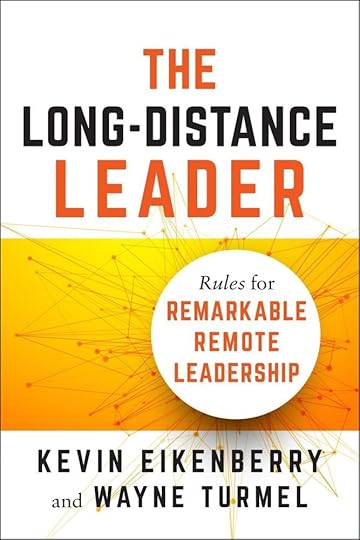
Most people agree that technology is critical for helping get remote work done. They also agree that good leaders communicate using every tool at their disposal to keep the team connected and the work humming along. But as we researched for The Long-Distance Leader, we saw an interesting paradox: Some of the best and most long-standing leaders are the worst adopters of new communication technologies.
Research from MIT/Sloan School of Business and others indicate that leaders (and the more Senior the title, the more this tends to be true) are some of the last to adopt a technology. They’re also more likely to use a lower-tech solution even though they know it may not be as effective. Why is that?
Here are some of the reasons why that might be happening:
Senior leaders tend to be more…”senior.” While age doesn’t automatically equate to resistance to technology, we are at a unique time in business. Many people holding senior leadership positions entered the corporate world 30 or more years ago. This was when email was still going to be a fad, and if it wasn’t, it would cure all our communication problems. (It was a more innocent time.) When it comes to technology, there is a severe knowledge and skills gap between the last of the Baby Boomers and digital natives in the workplace. They haven’t grown up with technology such an integral part of the way they think.
They don’t want to lose face. Most people who are leaders have earned their success, and enjoy a certain level of prestige associated with their roles. When you have to admit that you need special training on a tool, or have no idea what other people are talking about, or are afraid of just looking silly in front of your folks, it’s easy to try and avoid exposure by just not putting yourself in a position to expose your ignorance or discomfort. If your boss won’t set up a web meeting without having his or her assistant do it, this may be the reason.
It’s worked so far. While some people believe that technology can overcome a lot of communication problems, senior leaders have learned that people skills, experience, and face to face conversation has helped them achieve their current levels of success. By applying those evergreen skills, they can still get their jobs done, even if it takes a little more work or they’re a bit less comfortable with how things are going.
They are highly skeptical, and for good reason. Remember Betamax? It was a much better technology than VHS. Or when the future of training was laser disks and satellite hookups? Or how Goldmine was the future of sales and they spent hundreds of thousands of dollars on a radically new CRM that was going to change business forever? A lot of executives and managers have been caught up in fads only to see that technology become obsolete before the last check is cut. Consumer technology is now leading the way, and businesses are generally slow to follow. That might be frustrating if you have an app you think your team should use, but cut the boss some slack. She’s seen this movie (or at least a similar one) before.
None of this, of course, means that leaders should simply avoid using technology they don’t like, or makes them uncomfortable. Nor does it mean that they should expect people to just accept working inefficiently because it’s always been done that way and if it was good enough for them…
In The Long-Distance Leader: Rules for Remarkable Remote Leadership, the case is made that using the right technology for the job at hand, is more important than using the latest, fastest, or even the cheapest. Form follows function. Sometimes that means the old ways work best (pick up the phone, darn it!) and sometimes it means the boss will have to take time to learn the tools the team uses.
Nobody said this leadership thing was easy.
About The Authors:

Kevin Eikenberry is founder and Chief Potential Officer of the Kevin Eikenberry Group. He’s been named one of Inc.com’s Top 100 Leadership and Management Experts in the World, and is the author of several books, including Remarkable Leadership.
Wayne Turmel is the co-founder of The Remote Leadership Institute and the author of many books, including ATD’s 10 Steps to Successful Virtual Presentations.
Together, Kevin and Wayne have created the definitive guide to remote leadership, The Long-Distance Leader: Rules for Remote Leadership.
March 4, 2020
F.E.A.R. — Failure is to be Expected, Be Ready for It

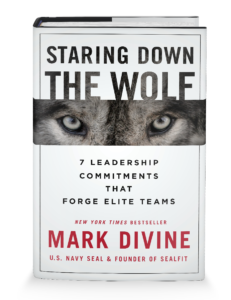
This month, we welcome guest blogger, Mark Divine. Mark is a retired Navy SEAL Commander, founder of SEALFIT and Unbeatable Mind, and New York Times bestselling author of The Way of the SEAL, Unbeatable Mind, and his newly released Staring Down the Wolf.
On TV, you see the elite Navy SEALs demonstrating uncommon physical and tactical skills such as swimming an ungodly number of miles in the ocean with sharks all around, shooting things from a mile away, blowing things up, jumping out of perfectly good airplanes, going around corners fast in high-speed boats, crossing enemy beaches effortlessly, and nailing the worst of the bad guys with a smile.
The theory is that the temporary discomfort of dealing with emotionally charged issues is always deemed better than the long-term pain of ignoring them.
However, what you will not see is the considerable time those elite warriors spend developing the skills of mental and emotional control. For example, brutally honest communications amongst the team is standard operating procedure, which ensures that emotional development is done in real-time. Things are not swept under the rug to be ignored later on. The theory is that the temporary discomfort of dealing with emotionally charged issues is always deemed better than the long-term pain of ignoring them.
This practice is a necessity when lives are on the line. In the Special Ops world, every operator is both a leader and a teammate. That means that everyone must carry his or her weight… and character is more important than rank or role. Even as the commanding officer of a team (equal to a VP of a large company or CEO of an SMB), if you are the source of dysfunction and aren’t willing to admit it or work on it, you are invited to leave. This happens from the earliest stages of selection and training and continues for an entire career. Emotional control is developed through mess-ups. The structure of the SOF organization forces some depth of character development. The radical focus on the character of the individual and the culture of the team is fundamental to their success.
Special operations leaders are far from perfect. They exhibit the same flaws like everyone else. I certainly did, and so did my teammates. Everybody struggles with the consequences of fear, hidden biases, and negative conditioning—no matter how well trained they are in controlling their minds and emotions. However, even though many leaders and teams in the special ops forces fail when their flawed character gets in the way… as a whole, the force continues to dominate the enemy.
No matter how smart and skilled you are as a leader, it is your emotional awareness and skillful (or not) communications that define your character.
Why is that? I believe it is because the SOF organizations are structured to shape culture in a way that fosters courage, trust, respect, growth, excellence, resiliency, and alignment… the seven commitments I introduce in my book Staring Down the Wolf. When the structure of an organization can shape culture powerfully around these seven commitments, then it is more likely to rout out issues arising from the negative conditioning of any single leader. The organization itself becomes resilient and responsive to volatility, rather than reactionary to it. It is confident amid uncertainty. It is fluid and can navigate complexity. It will fail forward fast to deal with ambiguity. That is how special ops deal with VUCA.

But most business leaders don’t have the structure and culture of a SEAL team to back them up. That means they have to get their own shadow cleared up and provide the growth opportunity for the team to do the same work. That is how a leader can stop being the limiting factor in their team’s success.
Bottom line: The soft underbelly of leadership development that few want to, or even know how to address, is that emotional shadow is SOP, and it torches culture if left unchecked. No matter how smart and skilled you are as a leader, it is your emotional awareness and skillful (or not) communications that define your character. The emotional depths of your character will dictate how the team responds to you. So, if you have unresolved bias, negative conditioning or are stuck in an overly egoic personality structure, then you will not succeed at the level you aspire to, or that you have the potential for.
Emotional development is hard work. Doing it is also a pre-requisite to tapping your full potential and exploding that of your team. Deep emotional work is the next frontier for vertical leadership development.
Failure is to be expected. Be ready for it.
– Mark Divine
February 19, 2020
Put Yourself Out There With Courage!

Happy New Year…? I know we’re almost a full two months into 2020, but since I didn’t write a blog last month, I figured I’d get a pass for waiting this long to pass on my salutations!
Anyone who knows me will tell you that I can be initially tough to approach and socially reserved until I get to really know someone. During my first big leadership job in the Navy, I quickly realized that to be a more effective leader, I had to work on what I wasn’t very good at, and that was to get out of my “quiet” zone. I had to put myself more out in front of people, make myself more “available” to the sailors who worked for me, and most importantly, open myself up to their feedback (both positive and negative).
Turn off your computer, leave your cell phone in your office, get up from your desk and make time to walk around and meet the people that work for you.
Opening up was extremely awkward and difficult for me, but over time I was able to become more comfortable and confident in both my professional and social interactions with the sailors (and families) of my command.
Coach’s tip(s) for this month:
Here are three courageous things I did to open up:
To get more comfortable in front of large groups of people, I would take time every morning to “hold quarters,” ensuring all hands were present and ready for duty, and pass information on current events and other relevant unit information. Holding quarters forced me out of my social shell, put the spotlight squarely on me, and significantly improved my public speaking.
Every week, I made time to “walk the deckplates.” During these walkabouts, I made it a point to meet all my sailors, shake their hands, and learn their names, their backgrounds, their families, and most importantly, the issues that were affecting them (and ultimately the unit). My sailors learned over time that my weekly wanderings were an opportunity for them to talk directly to leadership. I was always amazed at what I learned, and how positively my sailors responded to me because I was taking time out of my busy schedule to talk and learn about them!
I was (and still am) horrible with names (especially first names). I wanted to change that name retention weakness, so during one of our seasonal uniform inspections, I made it a point to walk through the ranks of all my assigned sailors, shake their hands, look them in the eye and call them by their first name. Of the approximately 200 assigned personnel, I remembered the first names of all my sailors except for one. The irony of the story was that several months later that one sailor whose first name I couldn’t remember was selected as the command’s Sailor of the Year as my very best performer! How foolish do you think I felt??

Bottom line…. GET OUT THERE! Don’t be afraid as a leader to open up to the people that work for you!
Turn off your computer, leave your cell phone in your office, get up from your desk and make time to walk around and meet the people that work for you. They have the answers to any/all questions in whatever profession you’re in, but YOU as their leader must have the personal “courage” to put yourself out there and shake their hand, look them in the eye and talk to them. I can’t say it enough…. it’s truly unbelievable what you can learn, while also highlighting how much you don’t know!
That’s it for February! With my new commitments as a doctoral student, I’ll only be doing blogs every other month this year, so I’ll talk with you all again in April!


