
Bill Treasurer's Blog, page 21
September 26, 2018
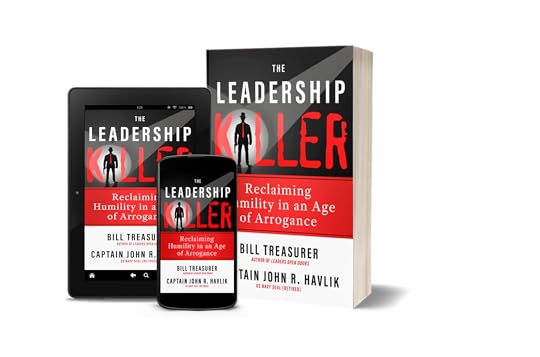
The Leadership Killer is Available for Pre-Sale!
Will You Survive Leadership Success?
This question does not get asked nearly enough, though it should be a part of any leadership program, column, or book. Those who aren’t equipped for the challenges to humility that accompany success, they often find out the answer to this question too late.
Almost every day a news story breaks about a leader in industry, politics, or entertainment who has misbehaved and taken advantage of his power. This is the result of hubris, dangerous overconfidence which has told these individuals that they are special and better than others and so can act in ways that “normal” people cannot. Of course, these types of leaders are always doomed to fail—putting yourself ahead of those you’re supposed to be leading is a guarantee you’ll be on your way out before long—and depending on how notable their organization is, we all get to watch their fall from grace. It’s a shame, we often say, to see good leaders go bad.
But they don’t have to. With the right tools, knowledge, and mindset, hubris can’t touch even the most successful of us. That’s what me and my good friend—Captain John Havlik, US Navy (retired)—set out to teach with our new book, The Leadership Killer: Reclaiming Humility in an Age of Arrogance.
The Leadership Killer provides tools for beginning and rising leaders to learn how hubris can take hold, how to keep it in check, and how to remain confident without being arrogant. Filled with firsthand insights on our own successes and failures as leaders, lessons to be taken from other leaders (both those who have conquered their hubris and those who let it get the best of them), and actionable tips for remaining an effective and humble leader, John and I wrote this book to warn tomorrow’s leaders of the dangers of ego-based leadership and to give them a fighting chance to beat back arrogance when it rears its head.

John and I met almost 40 years ago on the swimming team at West Virginia University, and though our careers diverged significantly after graduation (me in the private sector, consulting for various companies and then starting Giant Leap, and John in the Navy, eventually joining various elite SEAL operation teams during his 31-year naval career), we came together to write this book to address what is clearly an increase in leadership arrogance out everywhere you look. Leaders are wreaking havoc not only on the people that rely on them, but on their own careers due to poor, ego-driven choices. No one starts this way—hubris is the trenchcoat-clad figure quietly following behind success, waiting for a chance to strike, and with this book, readers will be able to steer clear of its attempts to ambush them.
I hope that you or a leader you know can use The Leadership Killer as a guide through the tricky side-effects of leadership success—please let us know via our contact page how it helps you!
The Leadership Killer is on pre-sale now in both paperback and digital formats, and will be released on October 30th.


September 14, 2018
Healing Heroes One Family at a Time

Hello GLC readers and Happy September! I thought I’d use this month’s article to talk a little about Boulder Crest Retreat.
Boulder Crest has two locations in Virginia and Arizona that provide free, world-class, short-duration, high-impact retreats for combat veterans and their families. Founded in 2013, Boulder Crest exists to solve the current mental health crisis and to heal military members, veterans, and their families dealing with PTSD and combat-related stress, so they can live productive, fulfilling, and service-oriented lives back at home.
The signature program at Boulder Crest is called Warrior PATHH (Progressive and Alternative Training for Healing Heroes), and it is the nation’s first non-clinical program designed to cultivate and facilitate Posttraumatic Growth amongst those struggling with PTSD and/or combat stress. The goal of Warrior PATHH is to enable attendees to transform times of deep struggle into profound strength and growth.

This program is led by both veteran and civilian instructors who have walked the road from struggle to strength, and they leverage their own experiences to guide attendees. Warrior PATHH is an 18-month program that begins with an extremely intense 7-day training program at one of the retreats in either Virginia or Arizona.
Since retiring in 2014, I’ve had the great opportunity to attend several Boulder Crest fundraising events around the country, where I’ve been able to speak about Warrior PATHH. As a proud PATHH graduate, I’m able to share my personal experiences with the audience about a wellness program that I firmly support, because I personally saw it save the life of a fellow classmate who was having a difficult time coping with his own life difficulties. PATHH was intense, as I often tell audiences that it was my emotional Hell Week, but well worth it in the long run!

Coach’s tip(s) for this month: Lots of active military members and veterans, along with their families, are suffering the effects of PTSD and/or combat stress! Foundations like Boulder Crest exist to help those who voluntarily swore to defend this great country of ours against all of our enemies trying to destroy our freedoms! As you all may know, Bill and I co-authored a book (The Leadership Killer: Reclaiming Humility in an Age of Arrogance), which is available for pre-sale now! Bill and I have mutually decided to donate 20% of the book royalties from the pre-sale date of 15 Sept to the end of 2018 to Boulder Crest to help their efforts!!
Bill and I hope by purchasing our book, we all can contribute in some small way to helping those who need assistance now! For more information on Boulder Crest, please check out their website: www.bouldercrestretreat.org.
Thanks, GLC Community!
 CAPTAIN JOHN “COACH” HAVLIK, U.S. NAVY SEAL (RETIRED), led special operations teams around the world during his 31-year naval career, to include the Naval Special Warfare Development Group, the SEAL’s most elite operational unit. CAPT Havlik was a nationally-ranked swimmer, and is a member of the West Virginia University Sports Hall of Fame and Mountaineer Legends Society. Learn more at CoachHavlik.com.
September 6, 2018
Signs You May Be a Weakling Leader (And How to Fix it)
There are two distinctly dysfunctional leaders in the workplace. In a recent blog, we discussed the Pighead. He’s the leader full of arrogance who risks losing followers because people can’t and won’t trust him. Then there’s the Weakling. This leader suffers from a lack of confidence, eventually making her impotent and incompetent.
Leadership is often a function of dominance; if your talent or personality outdominates that of your peers, you’re more likely to be tapped for leadership roles than they are. Because of this, a Weakling leader may, for a time, be less identifiable than his or her Pigheaded counterparts. The Weakling leader did something, after all, to deserve a leadership position.
Pigheads are bold and obvious, though, and the ineffective nature of Weakling leaders takes longer to be revealed. Think, for example of the most arrogant leader you have ever worked for. Now think of the weakest leader you ever worked for. The Pighead comes to mind much quicker than the Weakling, right?
[image error]
Weaklings Won’t Take the Risk
One hallmark of the Weakling is the unwillingness to take risks. They play it safe by staying quiet in meetings, rarely sharing their opinions or preferences. By flying under the radar, the Weakling avoids conflict by never having to defend their own ideas and views. They opt for adopting the thoughts and opinions of their supervisors and implementing directives they may not agree with. It’s a form of camouflage that avoids the risk of putting the Weakling out there for everyone to see.
The Fear Factor Frightens Them
Weakling leaders suffer from fear in all its malevolent forms: fear of displeasing authority, fear of messing up, fear of being “found out” as an imposter, and fear of success and being obliged to meet perpetually escalating performance standards to name a few. The more immersed in fear the Weakling leader is, the more withheld he is likely to be. Fear inhibits the willing expression of strength.
[image error]
Preventing the Weakling Within
The positive news about Weaklings is they are not oblivious. In fact, they are often quite conscious and fully aware of what the right course of action is – they just don’t take it. Right actions are hard actions. But in order to move into the power of great leadership, you must learn to take risks and overcome fears. Try these tips:
Tally the cost of withheld strength . Identify the strengths that you might be withholding from applying. Tally the cost of your withheld strength. What had holding back cost your career? What might it be costing those you’re leading?
Have a personal fidelity . Identify the stronger leader you’d be proud to be. How is that leader different from the leader you are today? Identify three actions you can take to close the gap. Be faithful to your future leader self.
Get courageously unsafe . Ask yourself, “In what ways am I playing it too safe at work?” Based on your answer, identify three specific actions that would nudge you outside your comfort zone. Moving into discomfort causes you to confront fear and will build your courage and your confidence.
Speak up already ! Sit down with a notepad and a pen and write down your point of view about leadership. Do the same about current decisions that are under way in your organization. State your point of view at the next appropriate occasion. Let your bosses know your thoughts, especially if they run counter to the group. Speak more truth.
Every leader carries a dormant germ of a Pighead and a Weakling inside. They represent the two opposing strains of leadership influenza that every leader needs to guard against for fear of activating them. Once you succumb to either type of behavior, recovering your leadership health is nearly impossible without a swift kick in the tail.
[image error]
Do you know a Weakling?
Is it harder to work for a Pighead or a Weakling?
Which one are you?
Enjoying these blog posts? Follow Giant Leap Consulting on Facebook and follow Bill Treasurer on LinkedIn and Twitter. “The Leadership Killer: Reclaiming Humility in an Age of Arrogance” officially goes on sale in paperback and ebook on October 30, but you can purchase it on Amazon pre-sale starting September 10th! Opt-in to the newsletter for updates and join Bill and John’s Excellent Book Launch Team.
September 5, 2018
Announcing “The Leadership Killer: Reclaiming Humility in an Age of Arrogance”
We’re excited to announce a new book forthcoming from the GLC team!
In a time where the abuse of power is on the precipice of being normalized, we need to shine a light on what kills leadership and what strengthens it. In The Leadership Killer: Reclaiming Humility in an Age of Arrogance, co-authors Bill Treasurer and retired U.S. Navy Seal John Havlik examine the role of hubris in leadership and how it damages the leader’s effectiveness, morals, and harms the people they’re supposed to be inspiring and leading.
Recognizing that leadership shouldn’t equate to rampant mistreatment, grandiosity, and narcissism, “The Leadership Killer: Reclaiming Humility in an Age of Arrogance” seeks to help aspiring, early-stage, and experienced leaders alike answer a critical question: “How will I use my leadership power?”
Bill Treasurer, a globally renowned author and executive development trainer, co-authored this provocative book with retired U.S. Navy SEAL Captain John Havlik. Their unique and differing backgrounds — civilian and military — provide context and insight ranging from elite military teams, special forces, global companies and organizations. “The Leadership Killer” also contains complementary stories from recognizable leaders and actionable strategies for the readers.
[image error]
In their book, Treasurer and Havlik expose the biggest leadership flaw, how to recognize when it rears its ugly head, and how to overcome it. Become a great leader by checking your ego at the door, squashing arrogance, and creating an environment that promotes humility.
“The Leadership Killer: Reclaiming Humility in an Age of Arrogance” officially goes on sale in paperback and ebook on October 30, but you can purchase it on Amazon pre-sale starting September 10th! Opt-in to the newsletter for updates and join Bill and John’s Excellent Book Launch Team.

Bill Treasurer is the founder of Giant Leap Consulting, a courage-building company, and author of four other books, including the international bestseller Courage Goes to Work. Treasurer has worked with thousands of new and experienced leaders throughout the world, at such places as NASA, Saks Fifth Avenue, UBS Bank, Lenovo, Accenture, eBay, and the U.S. Department of Veterans Affairs. Treasurer is a former member of the U.S. High Diving Team, and attended West Virginia University on a full scholarship. @BTreasurer www.BillTreasurer.com

John “Coach” Havlik, U.S. Navy SEAL (Retired), led special operations teams in classified and unclassified operations around the world while assigned to various SEAL teams throughout his 31-year naval career, to include the Naval Special Warfare Development Group, the SEAL’s most elite operational unit. CAPT Havlik was a nationally-ranked swimmer and Olympic Trials qualifier, and coached at several major universities. He is a member of the West Virginia University Sports Hall of Fame and Mountaineer Legends Society. www.CoachHavlik.com @CoachHavlik
The coauthors have know each other since being teammates on the West Virginia University Swimming and Diving team back in the 1980s. Both pursued very different career paths after college, where Bill Treasurer has written four other books and has worked with thousands of new and experienced leaders around the world, and Captain John Havlik, U.S. Navy SEAL (Retired), led special operations teams in classified and unclassified operations around the world while assigned to various SEAL teams throughout his 31-year naval career, to include the Naval Special Warfare Development Group, the SEAL’s most elite operational unit.
People are already raving about The Leadership Killer: Reclaiming Humility in an Age of Arrogance.”
“There are two really “hard to answer questions” about leadership. The first is, “With all the money and time being spent on leadership development, why don’t we have better leaders?” The second question comes less frequently, but is even more difficult. “Why do we have so many leaders who attain high positions and then fail?” This book insightfully addresses the more puzzling question. It contains a relevant and timely message for every leader to reflect upon, namely “Have I succumbed to the demon of arrogance?” Fortunately, it also provides practical steps to help all those who lead to move away from hubris and toward humility.”
Jack Zenger and Joe Folkman, co-founders of Zenger-Folkman and co-authors of the best-selling Extraordinary Leader
The Leadership Killer is an uncannily timely book about a regrettably timeless problem. The disease of hubris has been killing leaders—and innocent bystanders—forever. But the infection, it seems, has spread, and Bill Treasurer and John Havlik thankfully remind us that it’s time for a mass inoculation of the only known antidote: humility. The Leadership Killer is both a disturbing book and a comforting one. It’s unsettling to be reminded of the ruinous costs of excessive pride and self-confidence, yet it’s also reassuring to be reminded that there is a cure. The stories and examples are humbling reminders of how easy it is to fall prey to the disease, and the prescriptions they offer in the form of coaching tips are simple things we can each do to stay healthy and humble. The Leadership Killer is an important book for this moment in history, and it should be read by every leader who wishes not only to achieve success but also to sustain it over time.
Jim Kouzes, coauthor of The Leadership Challenge , and the Dean’s Executive Fellow of Leadership, Leavey School of Business, Santa Clara University
“The Leadership Killer is the literary equivalent of a super tough workout or a day of SEAL training. It forces you to re-examine your ‘why’ and push past your limits. Bill Treasurer and Coach Havlik wrote a book every leader must read.”
Rear Admiral Kerry Metz, USN (Retired), Former SEAL and first Commander of Special Operations Command North
In a world where leadership seems to be about who is the loudest and most outlandish, Bill and John’s new book, The Leadership Killers, reminds us that humility and integrity still is, and always will be, what matters most. This book is timely for those who care about leadership authenticity, and raising everyone’s game.
Mark Divine is a retired SEAL Commander, founder and CEO of SEALFIT, inc., and Unbeatable, LLC, and the NYT bestselling author of The Way of the SEAL and Unbeatable Mind.
Filled with examples of the seductive nature of leadership, authors, Bill Treasurer and John Havlik show us why it’s so easy to be sucked into believing leadership equates to superiority. The examples define how arrogance may be masquerading as confidence and that the only real cure for hubris is humility. This is a book that needed to be written—for the events of today and the leaders of tomorrow. Read this book. Don’t jeopardize your career, integrity, and reputation. It is surely a wakeup call for all of us. The 10 Tips for Thriving Leadership should be hung on every leader’s wall.
Elaine Biech, Author #1 Bestseller The Washington Post, The Art and Science of Training
September 4, 2018
If You Are a Pig-Headed Leader, Don’t Expect Loyalty in Return

There is no bigger turnoff than arrogance in a leader. Followers will afford a leader a lot of power as long as they know that power is tethered to humility. People want to know that no matter how much success you’ve achieved, no matter how much influence and authority you have, you haven’t forgotten your roots.
But if a leader’s ego becomes inflated and untethered from the grounding influence of humility, followers will unfollow the leader fast.

Why Do Leaders Think They’re Special?
It’s easy to get seduced into thinking you’re special when you’re in a position of leadership.
First, leaders are in smaller numbers, so it makes them comparatively rare. Not everyone gets to be one.
Second, leaders get more perks. They get bigger titles, bigger workspaces, and bigger salaries. Naturally, bigger egos can follow.
Finally, leaders get a lot more behavioral latitude. Nobody challenges them when they show up late for a meeting, interrupt people, or skirt company policies which employees at lower levels have to comply.
For example, the senior executives of one company I worked with instituted a company-wide time-reporting system so that the minute-by-minute actions of employees could be accounted for, but exempted themselves from having to use the system, explaining that their time fluctuated too much to accurately monitor.

Keep Your Ego in Check
Given the special treatment leaders get, is it any wonder that some begin to think of themselves as the focal point of leadership rather than the people they’re leading? They think they’re special because, well they are—at least according to the construct of leadership as it exists in most workplaces.
It takes an enormous amount of leadership self-discipline and restraint to keep your ego in check when the idea that you’re special is constantly being reinforced. It’s well worth doing, though. Arrogant leadership rarely engenders true loyalty. Followers quickly lose faith in a leader who cares only about enlarging their own power. Leadership arrogance nearly always leads to follower disloyalty.

What Kind of Leader Are You?
Are you in a leadership role right now, or do you aspire to be? How will you keep from getting seduced into thinking you matter more than the people you’re leading?
What actions can you take to prevent yourself from becoming a Pig-head?!
Like my blog posts? Join my new book launch team! “The Leadership Killers” is about how to stay humble when you’re in a leadership role.
August 23, 2018
Why Senior Leaders Don’t Use Tech
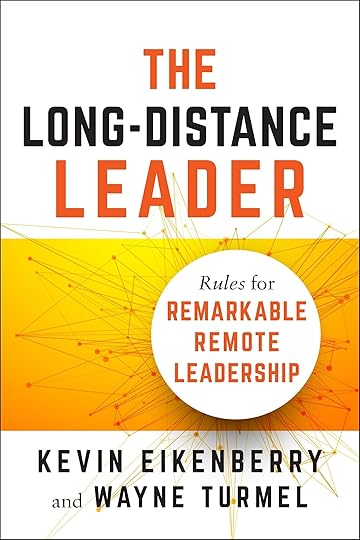
Most people agree that technology is critical for helping get remote work done. They also agree that good leaders communicate using every tool at their disposal to keep the team connected and the work humming along. But as we researched for The Long-Distance Leader, we saw an interesting paradox: Some of the best and most long-standing leaders are the worst adopters of new communication technologies.
Research from MIT/Sloan School of Business and others indicate that leaders (and the more Senior the title, the more this tends to be true) are some of the last to adopt a technology. They’re also more likely to use a lower-tech solution even though they know it may not be as effective. Why is that?
Here are some of the reasons why that might be happening:
Senior leaders tend to be more…”senior.” While age doesn’t automatically equate to resistance to technology, we are at a unique time in business. Many people holding senior leadership positions entered the corporate world 30 or more years ago. This was when email was still going to be a fad, and if it wasn’t, it would cure all our communication problems. (It was a more innocent time.) When it comes to technology, there is a severe knowledge and skills gap between the last of the Baby Boomers and digital natives in the workplace. They haven’t grown up with technology such an integral part of the way they think.
They don’t want to lose face. Most people who are leaders have earned their success, and enjoy a certain level of prestige associated with their roles. When you have to admit that you need special training on a tool, or have no idea what other people are talking about, or are afraid of just looking silly in front of your folks, it’s easy to try and avoid exposure by just not putting yourself in a position to expose your ignorance or discomfort. If your boss won’t set up a web meeting without having his or her assistant do it, this may be the reason.
It’s worked so far. While some people believe that technology can overcome a lot of communication problems, senior leaders have learned that people skills, experience, and face to face conversation has helped them achieve their current levels of success. By applying those evergreen skills, they can still get their jobs done, even if it takes a little more work or they’re a bit less comfortable with how things are going.
They are highly skeptical, and for good reason. Remember Betamax? It was a much better technology than VHS. Or when the future of training was laser disks and satellite hookups? Or how Goldmine was the future of sales and they spent hundreds of thousands of dollars on a radically new CRM that was going to change business forever? A lot of executives and managers have been caught up in fads only to see that technology become obsolete before the last check is cut. Consumer technology is now leading the way, and businesses are generally slow to follow. That might be frustrating if you have an app you think your team should use, but cut the boss some slack. She’s seen this movie (or at least a similar one) before.
None of this, of course, means that leaders should simply avoid using technology they don’t like, or makes them uncomfortable. Nor does it mean that they should expect people to just accept working inefficiently because it’s always been done that way and if it was good enough for them…
In The Long-Distance Leader: Rules for Remarkable Remote Leadership, the case is made that using the right technology for the job at hand, is more important than using the latest, fastest, or even the cheapest. Form follows function. Sometimes that means the old ways work best (pick up the phone, darn it!) and sometimes it means the boss will have to take time to learn the tools the team uses.
Nobody said this leadership thing was easy.
About the authors:

Kevin Eikenberry is founder and Chief Potential Officer of the Kevin Eikenberry Group. He’s been named one of Inc.com’s Top 100 Leadership and Management Experts in the World, and is the author of several books, including Remarkable Leadership.
Wayne Turmel is the co-founder of The Remote Leadership Institute and the author of many books, including ATD’s 10 Steps to Successful Virtual Presentations.
Together, Kevin and Wayne have created the definitive guide to remote leadership, The Long-Distance Leader: Rules for Remote Leadership.
August 16, 2018
Coach Havlik, What Makes a Good Leader?

Hey GLC readers! August is here, school is starting, and the summer is almost over…….where exactly did it go?
We’ve all read articles by authors telling us how to be better leaders. So, I thought with this month’s post I would share with you all the leadership traits of the finest officer I ever worked for during my 31-year Navy career.
What was unusual about this extremely positive working relationship was that this particular officer was a Surface Warfare Officer (SWO) by trade, a Navy ship driver when he wasn’t sitting behind a desk, and not a fellow SEAL that I had grown accustomed to working for. SWO’s are part of the conventional Big Navy, and SEALs are unconventional, so in general, when a SWO and a SEAL are paired together, they don’t mix or play (work) well together.
When I started my new staff job, I was leery of my new supervisor.
Would he be like all the other SWOs I’d heard about so far during my career: a condescending workaholic tyrant who loved to “eat their young?”
My suspicions were quickly laid to rest during my initial sit down, when he looked me in the eye and told me: “Coach, you can swim as much as you want, you can work out as much as you want, you can jump out of perfectly good airplanes and/or dive as much as you want, but when I need something from you, I expect timely, quality work, and I need you around to answer any questions I may have. If you can’t do that, we aren’t going to work well together. Any questions?”
Stunned by the bluntness (and simplicity) of my new boss’s direction, I quickly regained my bearing, looked my boss in the eye and said “No questions, sir. Got it!”
Thus started my best two-year assignment ever in the Navy.
What was so good about this officer?
He was “solid.” His core values as a person were good to go.
He was reliable.
He was fair.
He was consistent.
He had a backbone, so he could make a decision!

Coach’s tip(s) for this month: The best leaders aren’t always the biggest, baddest, or loudest!
My boss, the guy I was supposed to hate working for, was diminutive in stature, not as physically fit as he would’ve liked because of the time demands of his job, and extremely quiet by nature.
But he was smart, took care of his people, and taught us all how to be better officers.
To me, his very best quality was that he always found time for me when I had a question/needed help, and he always had my back.
Ultimately, that’s what we owe our people as leaders!
CAPT John “Coach” Havlik , USN (Ret), retired from the Navy in 2014 after 31 years of distinguished service in the Naval Special Warfare (SEAL) community. He has served on SEAL teams on both coasts, including the famed SEAL Team SIX. Coach completed graduate studies at the Naval War College in Newport, RI, receiving an M.A. in National Security and Strategic Studies. He graduated from West Virginia University with a B.S. in Business Administration and is a 2017 inductee into the WVU Sports Hall of Fame.
Coach Havlik is a Special Advisor to Giant Leap Consulting and regularly speaks about leading high performance teams under arduous and stressful conditions. John Havlik and Bill Treasurer are authors of the forthcoming book, The Leadership Killer: Reclaiming Humility In an Age of Arrogance (fall 2018).
August 8, 2018
Here’s Why You Should Be Honest About Your Imperfections

Nobody’s perfect, as the old saw goes, but each of us can be perfectly imperfect. I read somewhere (though I don’t remember where—I confess to having an imperfect memory!) that great quilt makers like to sew a single imperfect stitch among their patchwork, as an act of homage to our fallibility as humans. There’s a beauty in imperfection as a contrast against which the rest of us can emerge and be most appreciated. While I’m not saying “screw up on purpose,” acknowledging our imperfections is to accept ourselves for what we are and allow us to distinguish our more admirable qualities.
“There’s a beauty in imperfection as a contrast against which the rest of us can emerge and be most appreciated.”
Embrace Your Authentically Imperfect Self
Being honest with others, and yourself, about your imperfections involves risk. Others could end up making fun of you, or worse, use your imperfection to their advantage. But the alternative, living behind a tightly constructed façade of perfection, is worse, and ultimately soul-crushing. Pretending to be someone you aren’t is a fast-track to a therapist’s office. Speaking from experience, much of the work done in therapy is about accepting and embracing your true, down-deep, authentically imperfect self. This work often means dismantling whatever carefully constructed disguise of perfection you may have built to please others, or to keep from looking at yourself honestly. Frankly, it means getting acquainted with the uglier parts of your nature, and figuring out how to make peace with them. If, instead, you deny your imperfections, you unconsciously strengthen their hold on you, forcing you to devise new ways of remaining concealed behind a mask of perfection, as you endlessly try to evade everyone else’s insincerity detectors. There are consequences to this approach both immediately and down the road.
“Pretending to be someone you aren’t is a fast-track to a therapist’s office.”
The Consequences of Denial
First, it’s going to impact your ability to connect with or lead those around you. Owning up to your shortcomings and leading from a place of connection instead of fear (of being found out as being imperfect) will make you a more relatable and effective leader. Regardless of station, people can often sense when others are putting up a façade, plus: that wall you build around yourself to hide your flaws also does a pretty good job of keeping others out.
“Mistakes don’t have to be personal failures, as the perfectionist believes—they can be mile-markers on the winding road of progress.”
Second, trying to be a perfectionist is an ultimately joyless endeavor. No one and nothing can be perfect, so choosing not to be satisfied until you are perfect is an impossible standard you’re setting for yourself, which will lead to loads of entirely unnecessary disappointments. Accept your flaws, don’t reject them—by valuing your shortcomings for giving you character, you can celebrate quirkiness and humanness and give yourself a break. Mistakes don’t have to be personal failures, as the perfectionist believes—they can be mile-markers on the winding road of progress.
And if you’re so afraid of making a mistake, you’ll be less likely to take the risks you need to succeed in the first place. When you allow yourself to be perfectly imperfect, you come to appreciate risk-taking as a process of discovery, full of shortfalls and setbacks, but also serendipity and satisfaction.
Being human doesn’t mean triumphing over our imperfections, but triumphing with them. Because, hey, pobody’s nerfect.
Are you interested in learning how to put your mistakes to work? Seeing how the fruits of your risks can create a more empathic and confident leader? Get your copy of Right Risk by author, Bill Treasurer.
July 18, 2018
Leaders Never Take Safety For Granted

Happy July, GLC readers! I was watching the 4th of July fireworks, when the theme of this month’s article came to me: Explosions! Big, loud ones…with lots of booms!
Now what, you may ask: What do explosions have to do with leadership? Well, I’ll explain that piece at the end, but all the firework detonations reminded me of the loudest, and most personal Boom! I ever experienced, almost two decades ago.
Nineteen years ago, I was on deployment in Guam. On that particular Friday afternoon, my platoon, along with another SEAL platoon, were scheduled to conduct Fast Rope training with a Guam-based U.S. Navy helicopter unit. Fast roping is a technique utilized by the military to insert troops from a helicopter into places where the helicopter itself cannot land. It’s fast, fun, exciting, and a little risky, but all part of the job of being a SEAL. After several hours of fast roping, both platoons returned to the helicopter hangar. It was time to debrief, clean up and get ready for a big 3-day weekend of liberty!
As I was bending over my backpack to retrieve my civilian clothes and change out of my flight suit, I heard a loud Boom! The sound split across the our eardrums, echoing through the hangar.
I stood up, looking in the direction of the noise. My 40 fellow SEALs and I were in shock. There, in the back of the hangar, a fellow SEAL from my sister platoon stood frozen, holding a smoking pistol. He was just as in shock as the rest of us. I felt something strange and looked down.
There was a hole in the right sleeve of my flight suit, a hole caused by the bullet that was fired from the pistol of my fellow SEAL warrior.
As I pulled the sleeve of my flight suit back, there was a bleeding hole in my right forearm. Within seconds, the other SEALs around me had me down on the ground, and my platoon corpsman (medic) began applying bandages to the wound, immobilizing my arm so I could be placed into a gurney and moved to one of the helicopters we had just finished training with for an immediate medical evacuation.
I won’t go into all the sordid details of the post-shooting, but I was flown to the U.S. Naval Hospital on Guam, where they performed emergency surgery to remove the bullet from my arm.
Luckily for me, the bullet missed all of the major tendons and nerves in my forearm, and except for some minor muscle loss, I left the operating room with a pretty cool scar and a great story!
Within a month of the shooting, I had fully recovered and returned to full duty, able to complete the remainder of the deployment.
Coach’s Tips For The Month:
As a leader…
…You should never take safety for granted…whatever profession you’re in! You would think that the negligent SEAL who shot me would’ve known the proper procedures to render a firearm safe, but he got careless, forgot them.. .and I paid the price with a bullet in my arm! Luckily, no one else in the hangar was hurt, or worse case killed, by a stray bullet.
…Train, train, train, train your people. When they think they’re good to go, train them some more ! It’s your responsibility as a leader to prevent stupid accidents like the above from happening!
CAPT John “Coach” Havlik, USN (Ret), retired from the Navy in 2014 after 31 years of distinguished service in the Naval Special Warfare (SEAL) community. He has served on SEAL teams on both coasts, including the famed SEAL Team SIX. Coach completed graduate studies at the Naval War College in Newport, RI, receiving an M.A. in National Security and Strategic Studies. He graduated from West Virginia University with a B.S. in Business Administration and is a 2017 inductee into the WVU Sports Hall of Fame.
Coach Havlik is a Special Advisor to Giant Leap Consulting and regularly speaks about leading high performance teams under arduous and stressful conditions. John Havlik and Bill Treasurer are authors of the forthcoming book, The Leadership Killer (fall 2018).
July 11, 2018
Tips To Create a Legacy When You’re a Senior Leader

The transition of your career from the top of the crest to the other side can actually be a beautiful thing. You made it. You’ve led a team toward success. You’ve accomplished a lot.
This is the time when your wisdom is ripest, when the bulk of your legacy has been established, and when your influence has left a tangible and positive mark. At this stage of your leadership career, you are a leader in full.
At this stage of your leadership career, you are a leader in full.
It’s worth noting that the leadership influence of many leaders became fully expressed later in life:
Benjamin Franklin was seventy when he signed the Declaration of Independence.
Ronald Reagan was sixty-nine when he became president, and seventy-seven when he left office.
Golda Meir became prime minister of Israel when she was seventy-one.
While your leadership career may span many years, the current average retirement age in the United States is sixty-two. Given that average life expectancies have been steadily growing, figuring out what to do with all that accumulated leadership wisdom and influence before you retire will help soften whatever challenges arise at the gates of your career close.
Tips For Senior Leadership Who Want to Leave a Legacy
The good news is, if you’re a senior leader, odds are you’ve had your butt kicked so many times over the years, perhaps even by a few pipsqueak younger bosses or employees. Here are some tips to ensure your legacy is well rounded and not just a show:
1. Get Over Yourself
Yes, yes, we all know how you bootstrapped your career from the ground up, you earned everything you’ve gotten and without you, this company would be nothing. But guess what? We don’t care. And neither should you. We love you best when you’re just being you, minus the martyrdom.
2. Experience The World of The Young Ones
Yup, the greenhorns don’t do things the way you and your generation did. They cut corners, slough off, and kiss ass. But remember, you did all that, too, early in your career. Plus, new leaders today are way more tech savvy, are tapped into a global community, and are helping the company be socially conscious. They may even do a better job of having an outside-of-work identity that you ever did.
Do yourself a favor: get closer to their world instead of expecting the to reside in yours.
3. Mentor More
You’ve got a lot of value to add, especially when it comes to mentoring new leaders. There’s a good chance that your own career was advanced by many leader intercessors along the way. Now it’s your turn to be a pivot person. New leaders need seasoned leaders to become good leaders. Your legacy depends on it!
4. Divert Your Power
The gates are closing on your career, but that doesn’t mean you won’t be able to apply your leadership influence. If you’re not serving on a nonprofit board already, do so. Your community needs your wisdom, connections and influence! Find places to serve at VolunteerMatch.org, Idealist.org, and Bridgespan.org.
Experience matters. Your experience matters. When it comes to crafting a legacy, the best thing you can do is find ways to pass on your knowledge, experience and wisdom in a way that benefits not you or your ego, but those who will follow in your path. Help create an enduring future through good leadership.
With the right attitude, a kick in the ass can be the beginning to your golden age as a leader. Learn more in Bill Treasurer’s book, A Leadership Kick In The Ass, available here.


